

Mapping the Role of Digital Health Technologies in Prevention and Control of COVID-19 Pandemic: Review of the Literature
Open accessThe DOI matches its Crossref record; 39 of the 39 references it cites were found in a registry or an index.
Abstract
Summary: Background: Coronavirus Disease (COVID-19) is currently spreading exponentially around the globe. Various digital health technologies are currently being used as weapons in the fight against the pandemic in different ways by countries. The main objective of this review is to explore the role of digital health technologies in the fight against the COVID-19 pandemic and address the gaps in the use of these technologies for tackling the pandemic. Methods: We conducted a scoping review guided by the Joanna Briggs Institute guidelines. The articles were searched using electronic databases including MEDLINE (PubMed), Cochrane Library, and Hinari. In addition, Google and Google scholar were searched. Studies that focused on the application of digital health technologies on COVID-19 prevention and control were included in the review. We characterized the distribution of technological applications based on geographical locations, approaches to apply digital health technologies and main findings. The study findings from the existing literature were presented using thematic content analysis. Results: A total of 2,601 potentially relevant studies were generated from the initial search and 22 studies were included in the final review. The review found that telemedicine was used most frequently, followed by electronic health records and other digital technologies such as artificial intelligence, big data, and the internet of things (IoT). Digital health technologies were used in multiple ways in response to the COVID-19 pandemic, including screening and management of patients, methods to minimize exposure, modelling of disease spread, and supporting overworked providers. Conclusion: Digital health technologies like telehealth, mHealth, electronic medical records, artificial intelligence, the internet of things, and big data/internet were used in different ways for the prevention and control of the COVID-19 pandemic in different settings using multiple approaches. For more effective deployment of digital health tools in times of pandemics, development of a guiding policy and standard on the development, deployment, and use of digital health tools in response to a pandemic is recommended.
Overview
The claims and statistics of this paper haven’t been checked yet.
Free: it reads the open-access text and checks the first 5 claims that cite a source we can check. Create a free account to check every claim.
Integrity signals
Registry
Cites
Statistics
Figures
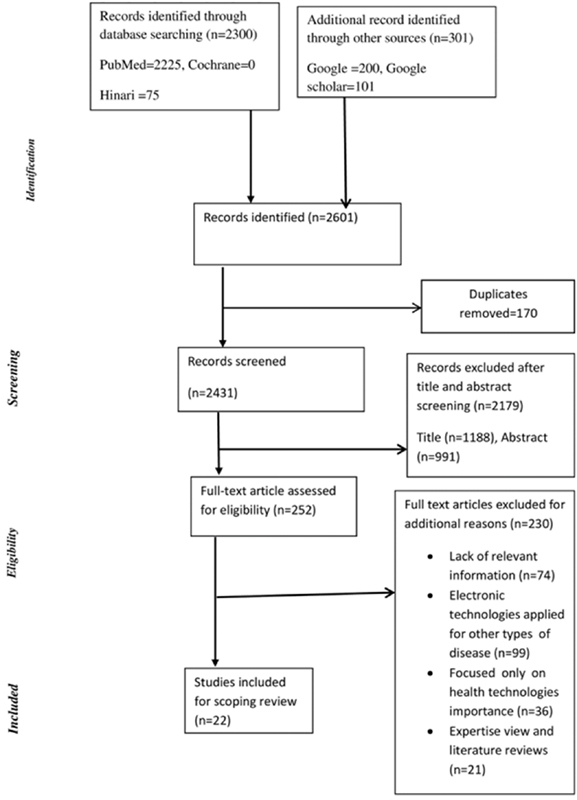
Verification
Claims the paper makes
The claims and statistics of this paper haven’t been checked yet.
Free: it reads the open-access text and checks the first 5 claims that cite a source we can check. Create a free account to check every claim.
Claims other papers make about this one
Each is checked against this paper’s own text: does it say what the citing paper says it does?
The cited source says what the claim attributes to it.
In the citing paper
“The COVID-19 pandemic has underscored the significance of telemedicine in maintaining uninterrupted health care delivery while mitigating the risk of virus transmission [13-18].”
From Public and Research Interest in Telemedicine From 2017 to 2022: Infodemiology Study of Google Trends Data and Bibliometric Analysis of Scientific Literature (2024) · cites this paper as [13]
Self-check
Percentages, sums and reported differences re-computed from the paper’s own numbers.
The self-check needs the paper’s full text.
Citations
Cites
Scoping studies: towards a methodological framework
Arksey, H., & O'Malley, L. (2005) · International Journal of Social Research Methodology · doi:10.1080/1364557032000119616 · Cited by 36,742 · cited 1×
“Based on the methodological framework for scoping reviews [12], we were able to present our narrative account of findings in two ways.”
Telehealth for global emergencies: Implications for coronavirus disease 2019 (COVID-19)
Smith, A. C., Thomas, E., Snoswell, C. L., Haydon, H., Mehrotra, A., Clemensen, J., & Caffery, L. J. (2020) · Journal of Telemedicine and Telecare · doi:10.1177/1357633x20916567 · Cited by 1,828 · cited 4×
“…distancing [15]; • To care for, consult with, and to screen patients during the COVID-19 pandemic where clinical service is not well organized [16] ; • To identify barriers to the implementation of telehealth during the control of the COVID-19 pandemic [17]; • To enable patients to connect…”
InfluentialTelehealth transformation: COVID-19 and the rise of virtual care
Wosik, J., Fudim, M., Cameron, B., Gellad, Z. F., Cho, A., Phinney, D., Curtis, S., Roman, M., Poon, E. G., Ferranti, J., et al. (2020) · Journal of the American Medical Informatics Association · doi:10.1093/jamia/ocaa067 · Cited by 1,581 · cited 1×
“…care at a distance for the three phases of stay-at-home: (1) outpatient care, (2) initial COVID-19 hospital surge, and (3) post-COVID recovery [22]; • To develop and test the feasibility of a virtual care program and automated e-mail notifications for self-isolating outpatients diagnosed with…”
Video consultations for covid-19
Greenhalgh, T., Wherton, J., Shaw, S., & Morrison, C. (2020) · BMJ · doi:10.1136/bmj.m998 · Cited by 866 · cited 1×
“This is also supported by a WHO review in which disparities in digital literacy and access to equipment, broadband, and the internet are important for increasing the effectiveness of telemedicine on COVID- 19 pandemic prevention [37].”
Reeves, J. J., Hollandsworth, H. M., Torriani, F. J., Taplitz, R., Abeles, S., Tai-Seale, M., Millen, M., Clay, B. J., & Longhurst, C. A. (2020) · Journal of the American Medical Informatics Association · doi:10.1093/jamia/ocaa037 · Cited by 429 · cited 4×
“…from customs and immigration databases to supplement, in turn, centralized cloud-based health records maintained by national health institutes [13, 32]; • Using EHRs to explore the need for national digital health technology on prevention and control of COVID-19 and to illustrate how new…”
InfluentialFagherazzi, G., Goetzinger, C., Rashid, M. A., Aguayo, G. A., & Huiart, L. (2020) · Journal of Medical Internet Research · doi:10.2196/19284 · Cited by 426 · cited 2×
“It has been reported that DHTs such as telehealth, when used for health surveys and data collec-a previously unknown SARS virus variant [1, 4].”
COVID-19 and telemedicine: Immediate action required for maintaining healthcare providers well-being
Moazzami, B., Razavi-Khorasani, N., Dooghaie Moghadam, A., Farokhi, E., & Rezaei, N. (2020) · Journal of Clinical Virology · doi:10.1016/j.jcv.2020.104345 · Cited by 388 · cited 4×
“In this scoping review, the most frequently used technologies were telemedicine, including telehealth and mHealth [6, 15-24, 27-31], and electronic health records [13, 14, 26, 32].”
InfluentialTaking connected mobile-health diagnostics of infectious diseases to the field
Wood, C. S., Thomas, M. R., Budd, J., Mashamba-Thompson, T. P., Herbst, K., Pillay, D., Peeling, R. W., Johnson, A. M., McKendry, R. A., & Stevens, M. M. (2019) · Nature · doi:10.1038/s41586-019-0956-2 · Cited by 323 · cited 1×
“Applications of digital health technologies like artificial intelligence, telehealth, mobile health, big data, 5G, and the Internet of Things (IoT) may be useful to support the control of a pandemic [5, 6].”
Prediction of the Epidemic Peak of Coronavirus Disease in Japan, 2020
Kuniya, T. (2020) · Journal of Clinical Medicine · doi:10.3390/jcm9030789 · Cited by 271 · cited 1×
“This will help public health decision-makers to develop COVID-19 pandemic prevention and control strategies [33, 34].”
Rapid implementation of a COVID-19 remote patient monitoring program
Annis, T., Pleasants, S., Hultman, G., Lindemann, E., Thompson, J. A., Billecke, S., Badlani, S., & Melton, G. B. (2020) · Journal of the American Medical Informatics Association · doi:10.1093/jamia/ocaa097 · Cited by 252 · cited 3×
“In this scoping review, the most frequently used technologies were telemedicine, including telehealth and mHealth [6, 15-24, 27-31], and electronic health records [13, 14, 26, 32].”
Research works printed but not linked: 1
- Kahn J P Digital contact tracing for pandemic response: Ethics and governance guidance. Johns Hopkins University Press 2020
Cited by
Lokmic‐Tomkins, Z., Bhandari, D., Bain, C., Borda, A., Kariotis, T. C., & Reser, D. H. (2023) · International Journal of Environmental Research and Public Health · doi:10.3390/ijerph20054542 · Cited by 122
“This deployment facilitated safer patient screening and management; minimised exposure of healthcare workers and the public to the COVID-19 virus; improved modelling of disease spread; and supported communication between patients and their families or healthcare workers [1].”
BackgroundMajeed, A., & Hwang, S. O. (2021) · Symmetry · doi:10.3390/sym14010016 · Cited by 105
“We invite interested readers to the previous study for more details about each service in the context of ongoing pandemic [78].”
BackgroundLivieri, G., Mangina, E., Protopapadakis, E. D., & Panayiotou, A. G. (2025) · Frontiers in Digital Health · doi:10.3389/fdgth.2025.1474956 · Cited by 90
Abdolkhani, R., Petersen, S., Walter, R., Zhao, L., Butler-Henderson, K., & Livesay, K. (2022) · JMIR Nursing · doi:10.2196/40348 · Cited by 57
“Indeed, health care systems are investing much effort and focus on establishing long-term strategies to integrate digital health care models into routine practices and equip clinical professionals with knowledge and expertise to apply digital technologies efficiently [5].”
BackgroundThe role of digital health in pandemic preparedness and response: securing global health?
Ezenwaji, C. O., Alum, E. U., & Ugwu, O. P.-C. (2024) · Global Health Action · doi:10.1080/16549716.2024.2419694 · Cited by 51
“In a scoping review of literature, Tilahun et al. [11] reported that these technologies served multiple objectives, including patient screening and management, exposure reduction, disease simulation, and healthcare provider assistance.”
BackgroundAtim, M. G., Kajogoo, V. D., Amare, D., Said, B., Geleta, M., Muchie, Y., Tesfahunei, H. A., Assefa, D. G., & Manyazewal, T. (2021) · Risk Management and Healthcare Policy · doi:10.2147/rmhp.s328004 · Cited by 49
Lazarevic, N., Pizzuti, C., Rosic, G., Bœhm, C., Williams, K., & Caillaud, C. (2023) · npj Digital Medicine · doi:10.1038/s41746-023-00792-0 · Cited by 45
“As a cohort, participants outlined that an ideal pregnancy app should: (1) provide holistic care for preconception, prenatal and postnatal support, (2) include credible information developed by experts/clinicians, (3) ensure data privacy and security, (4) include a patient-healthcare provider communication tool, (5) i…”
BackgroundHuusko, J., Kinnunen, U., & Saranto, K. (2023) · BMC Health Services Research · doi:10.1186/s12913-023-09316-8 · Cited by 44
“During the pandemic, digital health technologies were used for patient screening and treatment as well as to support healthcare providers [38].”
BackgroundMethodZou, C., Harvard, A., Qian, J., & Fox, B. I. (2023) · DIGITAL HEALTH · doi:10.1177/20552076231191050 · Cited by 34
“13–15 During the pandemic, DHTs played essential roles in aiding diagnosing, monitoring, screening, and prognosticating the infection.(16,17) As a result, DHT usage for older adults surged in 2020.”
BackgroundFord, K. L., West, A. B., Bucher, A., & Osborn, C. Y. (2022) · Frontiers in Digital Health · doi:10.3389/fdgth.2022.831093 · Cited by 32
“The public health recommendation to social distance during the pandemic increased dependence on mobile devices for work, household maintenance, and social connections (3).”
BackgroundModelo de maturidade de serviços de telessaúde para o cenário brasileiro (TMSMM.BR)
Silva, A. B., Pisa, I. T., Lopes, P. R. D. L., & Messina, L. A. (2025) · Revista Gestão & Saúde · doi:10.26512/1679-09442025v16e59113 · Cited by 28
Wang, J. J., Singh, R. K., Miselis, H. H., & Stapleton, S. (2022) · JMIR Medical Education · doi:10.2196/32183 · Cited by 29
“In 2020, social distancing limitations due to COVID-19 catalyzed unprecedented developments in digital health [7-9].”
BackgroundLivesay, K., Petersen, S., Walter, R., Zhao, L., Butler-Henderson, K., & Abdolkhani, R. (2023) · JMIR Nursing · doi:10.2196/46819 · Cited by 23
“The COVID-19 pandemic has accelerated the use of digital health innovations, such as virtual consultations, remote patient monitoring, and digital transformation, associated with the speed of change in providing treatment and care during the pandemic [7].”
BackgroundMaugeri, A., Barchitta, M., Basile, G., & Agodi, A. (2024) · Journal of Medical Internet Research · doi:10.2196/50088 · Cited by 20
“The COVID-19 pandemic has underscored the significance of telemedicine in maintaining uninterrupted health care delivery while mitigating the risk of virus transmission [13-18].”
BackgroundAssaye, B. T., Kassa, M., Mengistie, M. B., Tizie, S. B., & Shimie, A. W. (2023) · Digital Health · doi:10.1177/20552076231180436 · Cited by 18
Tahmasbi, F., Toni, E., Javanmard, Z., Kheradbin, N., Nasiri, S., & Sadoughi, F. (2025) · Archives of Public Health · doi:10.1186/s13690-025-01590-8 · Cited by 17
“These reviews primarily focused on specific services and applications, such as telemedicine, mobile health, and artificial intelligence, during pandemics [7, 14].”
Mudzengi, D. L., Chomutare, H., Nagudi, J., Ntshiqa, T., Davis, J. L., Charalambous, S., & Velen, K. (2024) · JMIR mhealth and uhealth · doi:10.2196/53211 · Cited by 15
“Mobile health (mHealth) technologies have become increasingly popular tools for facilitating data collection and delivery of health services worldwide [1,2].”
Frid, S. A., Amat-Fernández, C., Expósito, M. A. F., Muñoz-Mateu, M., Valachis, A., Sisó‐Almirall, A., & Grau, I. (2024) · JCO Clinical Cancer Informatics · doi:10.1200/cci.24.00014 · Cited by 15
“12,13 These digital health tools have the potential to be cost-effective, enhancing care while alleviating the economic burden.”
BackgroundGogishvili, M., Arora, A. K., White, T. M., & Lazarus, J. V. (2024) · Communications Medicine · doi:10.1038/s43856-024-00645-1 · Cited by 12
Monteleone, G., Terzulli, G., Cefaloni, F., Bonini, M., & Richeldi, L. (2023) · Respiration · doi:10.1159/000533621 · Cited by 12
“This idea was con fi rmed by Tilahun and colleagues, who found that digital health technologies ameliorate the infection-control in several settings [25].”
BackgroundManaging Pandemics with Health Informatics
Dixon, B. E., Holmes, J. H., & Informatics, S. E. F. T. I. Y. S. O. M. P. W. H. (2021) · Yearbook of Medical Informatics · doi:10.1055/s-0041-1726504 · Cited by 13
HealthTech in ensuring the resilience of communities in the post-pandemic period
Пахненко, О., & Pudło, T. (2023) · Health Economics and Management Review · doi:10.21272/hem.2023.2-03 · Cited by 11
Encuentra, E. H., Robles, N., Angulo-Brunet, A., Cullen, D., & del Arco, I. (2024) · Journal of Medical Internet Research · doi:10.2196/49227 · Cited by 11
“…worldwide with different approaches and purposes regarding, for example, the dissemination of public information for prevention, the understanding of the disease, the generation of diagnostic tools, or the sharing of real-time data for surveillance and control of the spread of the infection [1].”
The Role of Artificial Intelligence in the Medical Field
Kapa, S. (2023) · Journal of Computer and Communications · doi:10.4236/jcc.2023.1111001 · Cited by 16
Cossio, A., Bautista-Gómez, M. M., Alexander, N. D. E., del Castillo, A. M., Castro, M. D. M., Castaño-Grajales, P. Y., Gutiérrez-Poloche, Y. H., Zuluaga, L. S., Vargas-Bernal, L., Andres Navarro, C., et al. (2023) · American Journal of Tropical Medicine and Hygiene · doi:10.4269/ajtmh.22-0805 · Cited by 10
Ménard, A., Maharaj, A., Harb, S., Fraser, S., & O’Sullivan, T. L. (2025) · JMIR Aging · doi:10.2196/69373 · Cited by 9
“This exclusion exacerbates their risk during disasters, underscoring the urgent need for inclusive strategies to enhance digital literacy and ensure equitable access to disaster preparedness resources [90].”
Emerging Applications of Biomedical Science in Pandemic Prevention and Control: A Review
Weerarathna, I. N., Luharia, A. A., Tivaskar, S. P., Nankong, F. A., & Raymond, D. (2023) · Cureus · doi:10.7759/cureus.44075 · Cited by 11
Kuziemsky, C. E., Liaw, S., Leston, M., Pearce, C. M., Jonnagaddala, J., & de Lusignan, S. (2022) · Yearbook of Medical Informatics · doi:10.1055/s-0042-1742502 · Cited by 10
“core micro level tasks like home monitoring, virtual health assessments, medication review, education and support for patients and families and coordination between family doctors [7-8].”
BackgroundAizaz, M., Khan, F., Ali, B., Ahmad, S., Naseem, K., Mishra, S., Abbas, F. A., & Yang, G. (2023) · Health and Technology · doi:10.1007/s12553-023-00792-w · Cited by 13
“Several aspects might have been acquired about using DHTs for public health problems regarding major outbreaks, such as SARS, H1N1, and Ebola [14–16].”
BackgroundUmer, A. A., Abdella, K., Tekle, Y., Debebe, A., Manyazewal, T., Yuya, M., & Mohammed, H. (2021) · Frontiers in Public Health · doi:10.3389/fpubh.2021.753867 · Cited by 8
Bamgboje‐Ayodele, A., McPhail, S., Brain, D., Taggart, R., Burger, M., Bruce, L., Holtby, C., Pradhan, M., Simpson, M., Shaw, T. J., et al. (2023) · BMJ Open · doi:10.1136/bmjopen-2023-075009 · Cited by 7
“22 23 In a recent study investigating the alignment of key stakeholders’ priorities for patient-facing digital health technologies, the authors found a mismatch between prioritisation criteria for the stakeholder groups citing that external policy, regulatory demands, internal organisational…”
BackgroundHealth Data, Information, and Knowledge Sharing for Addressing the COVID-19
Soualmia, L. F., Hollis, K. F., Fleur Mougin, A., & Brigitte Séroussi, A. (2021) · Yearbook of Medical Informatics · doi:10.1055/s-0041-1726541 · Cited by 8
“in their survey for the Special Topic section showed the successes of digital health technologies as support for prevention and control of the COVID-19 [18].”
BackgroundSilva, A. B., Pisa, I. T., Messina, L. A., Pelogi, A. P. S., Tenório, J. M., Sousa, F. S., Santos, D. L., Maia, J., Filha, I. G. D. A., Guedes, A. C. C. M., et al. (2024) · BMC Health Services Research · doi:10.1186/s12913-024-10723-8 · Cited by 6
“Modalities of telehealth emerged during the COVID-19 pandemic [1].”
BackgroundRole of digital technology in epidemic control: a scoping review on COVID-19 and Ebola
Abebe, G. F., Alie, M. S., Yosef, T., Asmelash, D., Dessalegn, D., Adugna, A., & Girma, D. (2025) · BMJ Open · doi:10.1136/bmjopen-2024-095007 · Cited by 6
“17 The use of contact tracing apps, remote patient monitoring and telemedicine has allowed healthcare providers to track the spread of the virus, monitor patients’ vital signs and symptoms, and provide medical care remotely.”
Context Sensitive Health Informatics: The Role of Informatics in Global Pandemics
Online, C. S. H. I. (. C. 2., Marcilly, R., Peute, L., Kuziemsky, C. E., Xinxin, Z., Elkin, P. L., & Nøhr, C. G. (2021) · Studies in health technology and informatics · doi:10.3233/shti286 · Cited by 6
Pathak, K. P., Gaire, T., Laya, A., Neumann, A. P. F. M., Conti, M. D. S. B., Cohrs, F. M., de Mello, M. A. F., Mattos, E. B. T., & Ramos, L. R. (2021) · Research Society and Development · doi:10.33448/rsd-v10i14.21776 · Cited by 5
Karnwal, A., Nesterova, N., Saklani, N., Rehman, A.-U., Pant, G., Garg, N., Mishra, S., Ghorai, T. K., Kumar, G., & Kumar, D. (2026) · Informatics in Medicine Unlocked · doi:10.1016/j.imu.2026.101769 · Cited by 4
Integrating Virtual and Physical Interactions through higher-order networks to control epidemics
Lamata-Otín, S., Reyna-Lara, A., & Gómez‐Gardeñes, J. (2024) · Chaos Solitons & Fractals · doi:10.1016/j.chaos.2024.115592 · Cited by 4
Ullah, A., William, W., Bradley, F., Nelson, P. A., Dowding, D., Morciano, M., & Cullum, N. A. (2023) · BMC Infectious Diseases · doi:10.1186/s12879-022-07939-6 · Cited by 4
“…and effectiveness of digital technologies to fight COVID-19 has mostly focused on national-level experiences, comparing the use of big data, artificial intelligence, cloud computing, 5G, etc., for remote health services, communication, tracking, and monitoring in the fight against COVID-19 [9–12].”
Abera, A., & Wana, D. (2024) · Journal of Degraded and Mining Lands Management · doi:10.15243/jdmlm.2024.113.5817 · Cited by 4
Patil, M. K., Chaudhari, H. S., Pawar, S. P., Chaudhari, R. M., Lovhare, R. B., & Patil, M. B. (2025) · Asian Journal of Research in Pharmaceutical Sciences · doi:10.52711/2231-5659.2025.00024 · Cited by 3
The Importance of Contextual Understanding in Solving the Last Mile Problem
Kuziemsky, C., Nøhr, C. G., Marcilly, R., Peute, L., Zhu, X., & Elkin, P. L. (2021) · Studies in health technology and informatics · doi:10.3233/shti210625 · Cited by 3
Hayashi, T., & Bito, S. (2024) · BMC Medical Informatics and Decision Making · doi:10.1186/s12911-024-02542-y · Cited by 3
Nasri, S., Fatemi, M., Nazeri, N., & Ghazinoory, S. (2024) · Health Research Policy and Systems · doi:10.1186/s12961-024-01148-0 · Cited by 3
“…analysis, assessment, and identification of strengths and weaknesses), online platforms (communication and collaboration between innovators at the global level, transfer of health data, and participation in R&D to develop innovative solutions) [22, 63], medical equipment and communication networks.”
BackgroundTaiwan's digital divide during the COVID‐19 pandemic and its implications for e‐public services
Chang, C. C., & Wong, N. W. M. (2025) · Asian Politics & Policy · doi:10.1111/aspp.70005 · Cited by 2
35 Data Management in Emergency Response Research
van Loen, H., Badio, M., & Herrewege, Y. V. (2024) · Springer eBooks · doi:10.1007/978-3-031-48408-7_55 · Cited by 2
Healthcare digitalization: Insights from Croatia's experience and lessons from the COVID-19 pandemic
Malešević, A., & Čartolovni, A. (2025) · Elsevier eBooks · doi:10.1016/b978-0-443-30168-1.00003-7 · Cited by 2
Banerjee, S., Gupta, S., & Koner, S. (2022) · Elsevier eBooks · doi:10.1016/b978-0-12-821318-6.00012-8 · Cited by 3
Etkileşimli Dijital Ders Malzemelerinin Kullanımı: Müzik Eğitimi Alanında Bir Araştırma
Akyıldız, M., Büyük, K., KESKİN, U., & Tunalı, S. (2023) · Journal of Digital Technologies and Education · doi:10.5281/zenodo.10439845 · Cited by 2
Lippolis, E. (2024) · Elsevier eBooks · doi:10.1016/b978-0-443-13681-8.00015-1 · Cited by 2
Digital mentoring on expressing breast milk for working mothers
Sarimin, D. S., Pasambo, Y., & Desyani, N. L. J. (2024) · British Journal of Midwifery · doi:10.12968/bjom.2024.32.6.296 · Cited by 1
Impact of Technology on Global Health Initiatives
Mugisha Emmanuel, K. (2025) · NEWPORT INTERNATIONAL JOURNAL OF RESEARCH IN MEDICAL SCIENCES · doi:10.59298/nijrms/2025/6.2.6673 · Cited by 1
Turay, Z. D., Koroma, M. J., Fofanah, H. I., & Kaitibi, D. B. (2026) · International Journal of Advanced Research · doi:10.21474/ijar01/22515 · Cited by 1
Dijital Sağlık Teknolojileri Üzerine Yayınlanmış Akademik Çalışmaların Bibliyometrik Analizi
Kaçak, H. (2023) · Journal of Digital Technologies and Education · doi:10.5281/zenodo.10439841 · Cited by 1
Evaluation and Prototype of Health Counseling LLM Using the Turing TestPreprint
Nakamura, K. D., Tatsuoka, H., Miyakawa, T., Ishii, H., Onishi, M., & Ohyama, Y. (2024) · Preprints.org · doi:10.20944/preprints202408.1614.v1 · Cited by 1
Awa, F., Guasti, P., Gurram, A., Sawicki, O., Avalos-Reyes, E., Aubert, R. E., & Johnson, K. (2022) · doi:10.2196/preprints.39691
Teoria do conhecimento em enfermagem no contexto da pandemia da Covid-19
Carvalho, C. M. D. L., & de Sousa, L. B. (2022) · TikiBooks · doi:10.22491/teoria_conhecimento
International Business Paradigm in the Post-Pandemic Era: The Role of Literacy and Digitalization
Banerjee, S., Koner, S., & Gupta, S. (2022) · Advances in business strategy and competitive advantage book series · doi:10.4018/978-1-6684-3749-0.ch010
Liu, Y., Xu, Y. L. N., & Li, C. (2023) · Journal of Artificial Intelligence Practice · doi:10.23977/jaip.2023.060304
“SARS-CoV-2 immunity and nonpharmaceutical interventions (NPIs) such as contact tracing, quarantine, and social distancing are critical for controlling the spread of COVID-19 [3].”
BackgroundSummary Proceedings of the 22nd Annual Sessions of the Perinatal Society of Sri Lanka 2023
Editor-in-Chief (2024) · Sri Lanka Journal of Perinatal Medicine · doi:10.4038/sljpm.v5i1.77
Elyta, E., & Herlan, H. (2024) · Politicon Jurnal Ilmu Politik · doi:10.15575/politicon.v6i2.32879
“Health care services must make use of advancements in technology, information, and communication that have been brought about by the digitization of the globe (Tilahun et al., 2021).”
BackgroundUllah, A., William, W., Bradley, F., Nelson, P. A., Dowding, D., Morciano, M., & Cullum, N. (2024) · Figshare · doi:10.6084/m9.figshare.26563540
Silva, A. B., Pisa, I. T., Messina, L. A., Pelogi, A. P. S., Tenório, J. M., Sousa, F. S., Santos, D. L., Maia, J., Filha, I. G. D. A., Guedes, A. C. C. M., et al. (2024) · Figshare · doi:10.6084/m9.figshare.25479133
Silva, A. B., Pisa, I. T., Messina, L. A., Pelogi, A. P. S., Tenório, J. M., Sousa, F. S., Santos, D. L., Maia, J., Filha, I. G. D. A., Guedes, A. C. C. M., et al. (2024) · Figshare · doi:10.6084/m9.figshare.25478832
Silva, A. B., Pisa, I. T., Messina, L. A., Pelogi, A. P. S., Tenório, J. M., Sousa, F. S., Santos, D. L., Maia, J., Filha, I. G. D. A., Guedes, A. C. C. M., et al. (2024) · Figshare · doi:10.6084/m9.figshare.26697788
Silva, A. B., Pisa, I. T., Messina, L. A., Pelogi, A. P. S., Tenório, J. M., Sousa, F. S., Santos, D. L., Maia, J., Filha, I. G. D. A., Guedes, A. C. C. M., et al. (2024) · Figshare · doi:10.6084/m9.figshare.26697785
Parraguez Montenegro, L. D. C. (2021) · renati
In Vitro Models for Emerging Infectious Disease Detection and Host–Pathogen Interaction Studies
Ezrari, S., Ikken, A., Grari, O., Ouzine, M., Lahmer, M., Saddari, A., & Maleb, A. (2026) · Applied Microbiology · doi:10.3390/applmicrobiol6010010 · Cited by 1
“Digital health technologies play a key role in outbreaks by bringing health services to the patient, improving diagnostics, surveilling outbreaks, and controlling the spread of infections [95–97].”
Saúde digital e Covid-19 nos BRICS: a liderança da China e a perspectiva do Brasil na pandemia
Alencar, N. E. S. (2025) · LA Referencia (Red Federada de Repositorios Institucionales de Publicaciones Científicas)
The Role of Technology in Tackling Global Health Challenges
Saatchi, A. G. (2026) · IGI Global eBooks · doi:10.4018/979-8-3373-3341-0.ch001
Prisyazhnaya, N. V., & Vershinina, V. A. (2026) · Sociology of Medicine · doi:10.17816/socm707609
Huusko, J. (2023) · UEF eRepo (University of Eastern Finland) · Cited by 2
Metadata
- Authors
- Tilahun, B., Gashu, K. D., Mekonnen, Z. A., Endehabtu, B. F., & Angaw, D. A.
- Affiliations
- University of Gondar (ET)
- Federal Ministry of Health (ET)
- Corresponding author
- Tilahun, Binyam
- ORCID
- Venue
- Yearbook of Medical Informatics
- Publisher
- Georg Thieme Verlag KG
- Published
- 2021-08
- Volume
- 30
- Issue
- 01
- Pages
- 026-037
- ISSN
- 0943-4747 (ISSN-L)
- 2364-0502
- PMC
- PMC8416203
- OpenAlex
- W3197843492
- Cited by
- 65
- References
- 39
- Citations by year
- 2026: 3 · 2025: 9 · 2024: 21 · 2023: 16 · 2022: 10 · 2021: 6
- FWCI
- 2.02
- Type
- journal article
- Language
- en
- Open access
- hybrid
- doi.org
- Licence
- Locations
- Yearbook of Medical Informatics (publishedVersion, cc-by-nc-nd)
- PubMed Central (publishedVersion, cc-by-nc-nd)
- PubMed (publishedVersion)
- Topics
- Physical Sciences › Computer Science › Information Systems › COVID-19 Digital Contact Tracing
- Physical Sciences › Computer Science › Information Systems › Healthcare during COVID-19 Pandemic
- Health Sciences › Medicine › Public Health, Environmental and Occupational Health › Telemedicine and Telehealth Implementation
- Keywords
- COVID-19 pandemic, digital health technologies, pandemic prevention and control, telemedicine, mobile health, electronic health records, artificial intelligence, big data, Internet of Things, epidemic modeling, patient screening, provider support, digital health policy
- MeSH terms
- COVID-19, Artificial Intelligence, Medical Informatics Applications, Telemedicine, Information Management, Biomedical Technology
About these checks
Registry, retraction, Cites and statistics results are computed, not judged, with one exception: a printed reference that no index lists is read once by a model before it counts as a citation error. Claims are extracted by a model and kept only when their quote appears verbatim in the text; each cited source is then checked, with a model’s help, for whether it says what the claim relies on. Those verdicts can be wrong — read the claim’s quote and the cited source before relying on one.
Statistics and arithmetic are recomputed, not judged.
Confidence bands are shown only for fields calibrated on our annotated test set. None is calibrated yet, so no band is shown.
What counts as a claim ›How we measure confidence ›How we check this ›
Are you an author, or do you see a problem with this page? Request a review
Data sources
Bibliographic data: Semantic Scholar, OpenAlex, Crossref.
Contains information from the Semantic Scholar Academic Graph Datasets, made available under the ODC Attribution License (ODC-BY 1.0).
Semantic Scholar’s data is described in: Kinney, R., et al. (2023). The Semantic Scholar Open Data Platform. arXiv:2301.10140.
