

The DOI matches its Crossref record; 33 of the 33 references it cites were found in a registry or an index.
Efficacy of Wolbachia-Infected Mosquito Deployments for the Control of Dengue
Open accessAbstract
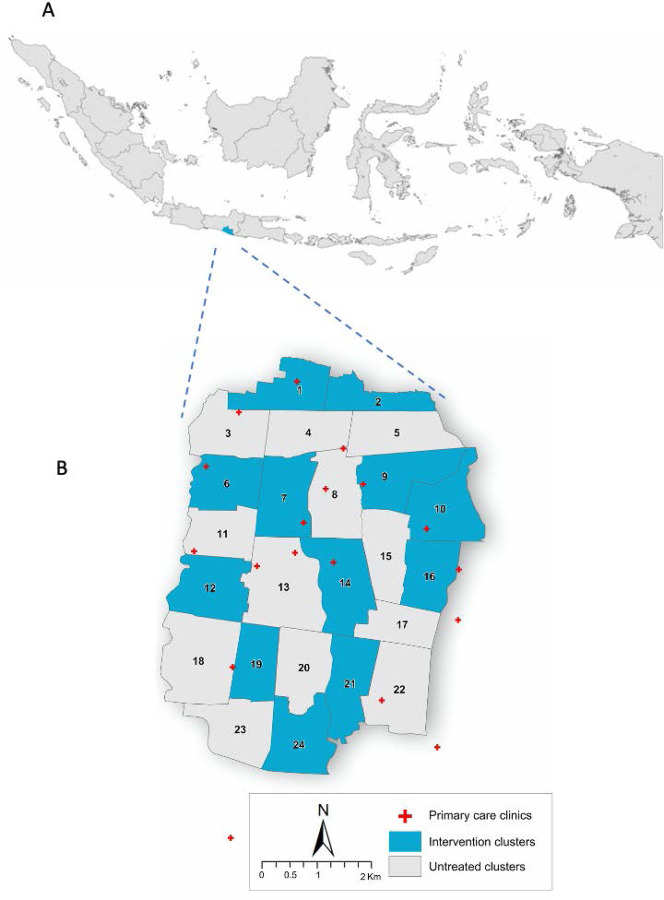
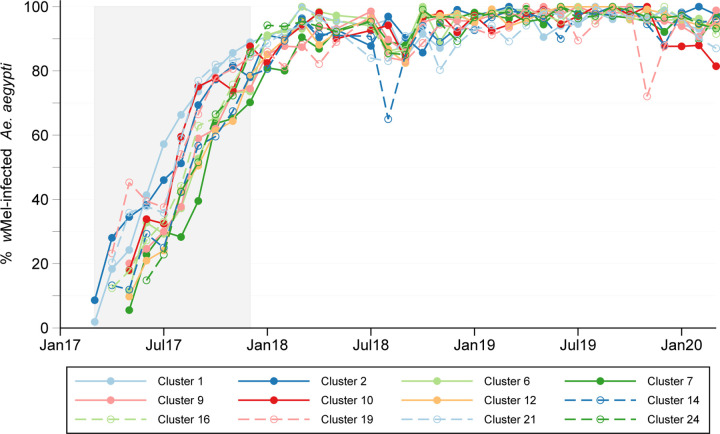
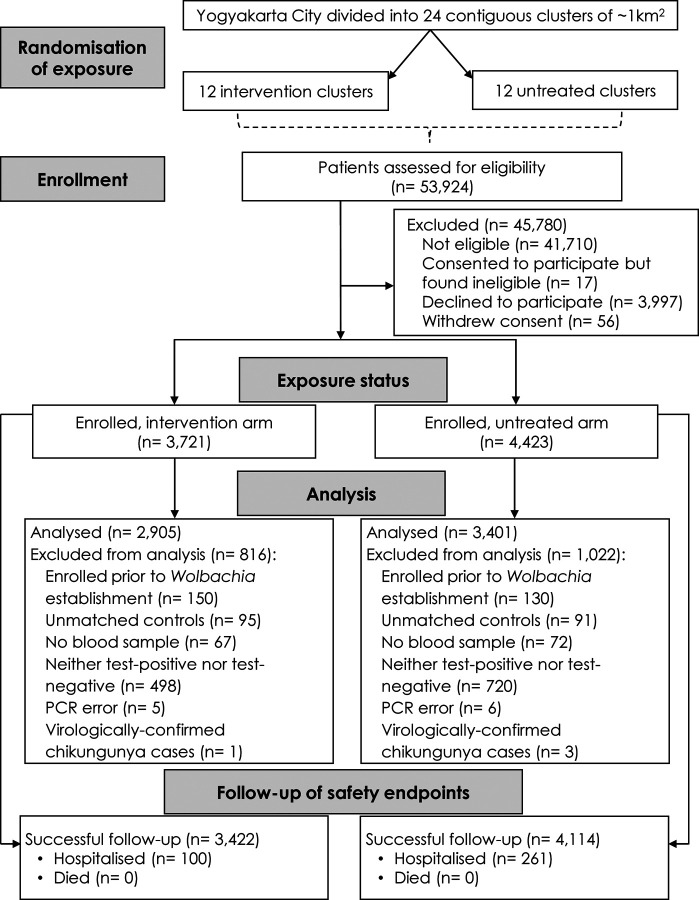
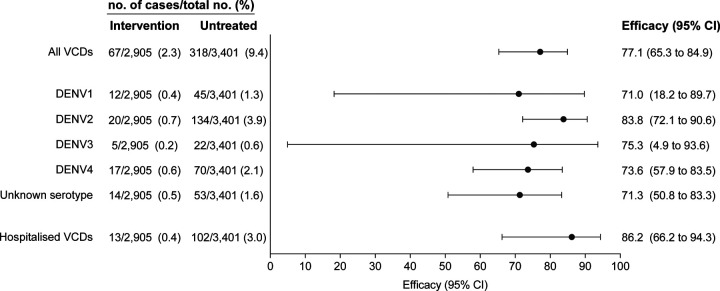
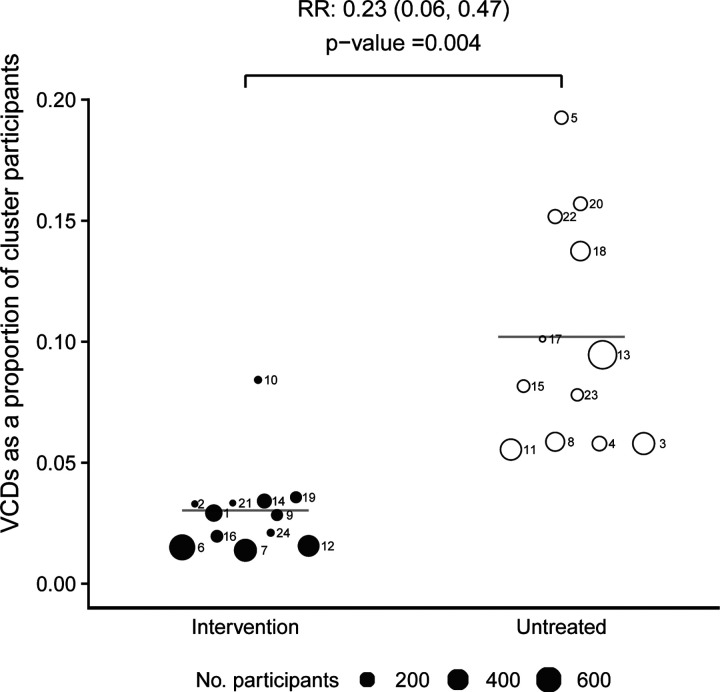
BACKGROUNDAedes aegypti mosquitoes infected with the wMel strain of Wolbachia pipientis are less susceptible than wild-type A. aegypti to dengue virus infection. METHODSWe conducted a cluster-randomized trial involving releases of wMel-infected A. aegypti mosquitoes for the control of dengue in Yogyakarta, Indonesia.We randomly assigned 12 geographic clusters to receive deployments of wMel-infected A. aegypti (intervention clusters) and 12 clusters to receive no deployments (control clusters).All clusters practiced local mosquito-control measures as usual.A testnegative design was used to assess the efficacy of the intervention.Patients with acute undifferentiated fever who presented to local primary care clinics and were 3 to 45 years of age were recruited.Laboratory testing was used to identify participants who had virologically confirmed dengue (VCD) and those who were testnegative controls.The primary end point was symptomatic VCD of any severity caused by any dengue virus serotype. RESULTSAfter successful introgression of wMel into the intervention clusters, 8144 participants were enrolled; 3721 lived in intervention clusters, and 4423 lived in control clusters.In the intention-to-treat analysis, VCD occurred in 67 of 2905 participants (2.3%) in the intervention clusters and in 318 of 3401 (9.4%) in the control clusters (aggregate odds ratio for VCD, 0.23; 95% confidence interval [CI], 0.15 to 0.35; P = 0.004).The protective efficacy of the intervention was 77.1% (95% CI, 65.3 to 84.9) and was similar against the four dengue virus serotypes.The incidence of hospitalization for VCD was lower among participants who lived in intervention clusters (13 of 2905 participants [0.4%]) than among those who lived in control clusters (102 of 3401 [3.0%]) (protective efficacy, 86.2%; 95% CI, 66.2 to 94.3). CONCLUSIONSIntrogression of wMel into A. aegypti populations was effective in reducing the incidence of symptomatic dengue and resulted in fewer hospitalizations for dengue among the participants.(Funded by the Tahija Foundation and others; AWED ClinicalTrials.govnumber, NCT03055585; Indonesia Registry number, INA-A7OB6TW.)
Overview
The claims and statistics of this paper haven’t been checked yet.
Run the check — free, no account needed. It reads the open-access text and checks the sources it cites.
Integrity signals
Registry
Cites
Statistics
Figures
Verification
Claims the paper makes
The claims and statistics of this paper haven’t been checked yet.
Run the check — free, no account needed. It reads the open-access text and checks the sources it cites.
Self-check
Percentages, sums and reported differences re-computed from the paper’s own numbers.
The self-check needs the paper’s full text.
Citations
Cites
Simmons, C. P., Farrar, J., Châu, N. V. V., & Wills, B. A. (2012) · New England Journal of Medicine · doi:10.1056/nejmra1110265 · Cited by 1,765
Self-citationA Wolbachia Symbiont in Aedes aegypti Limits Infection with Dengue, Chikungunya, and Plasmodium
Moreira, L. A., Iturbe‐Ormaetxe, I., Jeffery, J. A. L., Lu, G., Pyke, A. T., Hedges, L. M., Rocha, B. C., Hall‐Mendelin, S., Day, A., Riegler, M., et al. (2009) · Cell · doi:10.1016/j.cell.2009.11.042 · Cited by 1,734
Self-citationThe wMel Wolbachia strain blocks dengue and invades caged Aedes aegypti populations
Walker, T., Johnson, P. H., Moreira, L. A., Iturbe‐Ormaetxe, I., Frentiu, F. D., McMeniman, C. J., Leong, Y. S., Dong, Y., Axford, J. K., Kriesner, P., et al. (2011) · Nature · doi:10.1038/nature10355 · Cited by 1,374
Self-citationThe global burden of dengue: an analysis from the Global Burden of Disease Study 2013
Stanaway, J. D., Shepard, D. S., Undurraga, E. A., Halasa, Y. A., Coffeng, L. E., Brady, O. J., Hay, S. I., Bedi, N., Benseñor, I. M., Castañeda-Orjuela, C. A., et al. (2016) · The Lancet Infectious Diseases · doi:10.1016/s1473-3099(16)00026-8 · Cited by 1,125
Stable Introduction of a Life-Shortening Wolbachia Infection into the Mosquito Aedes aegypti
McMeniman, C. J., Lane, R. V., Cass, B. N., Fong, A. W. C., Sidhu, M. S., Wang, Y., & O’Neill, S. L. (2009) · Science · doi:10.1126/science.1165326 · Cited by 930
Self-citationPan, X., Zhou, G., Wu, J., Bian, G., Lü, P., Raikhel, A. S., & Xi, Z. (2011) · Proceedings of the National Academy of Sciences · doi:10.1073/pnas.1116932108 · Cited by 581
Wolbachia Blocks Currently Circulating Zika Virus Isolates in Brazilian Aedes aegypti Mosquitoes
Dutra, H. L. C., Rocha, M. N., Dias, F. B. S., Mansur, S. B., Caragata, E. P., & Moreira, L. A. (2016) · Cell Host & Microbe · doi:10.1016/j.chom.2016.04.021 · Cited by 504
Bowman, L. R., Donegan, S., & McCall, P. J. (2016) · PLOS Neglected Tropical Diseases · doi:10.1371/journal.pntd.0004551 · Cited by 449
Establishment of Wolbachia Strain wAlbB in Malaysian Populations of Aedes aegypti for Dengue Control
Nazni, W. A., Hoffmann, A. A., NoorAfizah, A., Cheong, Y. L., Mancini, M. V., Golding, N., Kamarul, G. M. R., Karim, M. A. A., Thohir, H., NurSyamimi, H., et al. (2019) · Current Biology · doi:10.1016/j.cub.2019.11.007 · Cited by 394
Alternative strategies for mosquito-borne arbovirus control
Achee, N. L., Grieco, J. P., Vatandoost, H., Seixas, G., Pinto, J., Ching-NG, L., Martins, A. J., Juntarajumnong, W., Corbel, V., Gouagna, L., et al. (2019) · PLoS neglected tropical diseases · doi:10.1371/journal.pntd.0006822 · Cited by 365
Research works printed but not linked: 1
- Department of Control of Neglected Tropical Diseases, Special Programme for Research and Training in Tropical Diseases. Dengue: guidelines for diagnosis, treatment, prevention and control. Geneva: World Health Organization, 2009.
Cited by
Sorted by citations
Items 301–400 of 648
Geographical Characteristics of Culex tritaeniorhynchus and Culex orientalis Microbiomes in Korea
Lee, J., Lee, H. I., & Kwon, H. W. (2024) · Insects · doi:10.3390/insects15030201 · Cited by 4
Economic optimization of Wolbachia ‐infected Aedes aegypti release to prevent dengue
Hollingsworth, B., Cho, C., Vella, M. R., Roh, H., Sass, J., Lloyd, A. L., & Brown, Z. S. (2024) · Pest Management Science · doi:10.1002/ps.8086 · Cited by 4
Al‐Amin, H. M., Gyawali, N., Graham, M. C., et al. (2025) · Scientific Reports · doi:10.1038/s41598-025-98093-x · Cited by 4
Utkuzova, A. M., Chertkova, E. A., Kryukova, N. A., Malysh, J. M., & Tokarev, Y. S. (2025) · Insects · doi:10.3390/insects16050464 · Cited by 4
Risks of releasing imperfect Wolbachia strains for arbovirus control
Salje, H., & Jiggins, F. M. (2024) · The Lancet Microbe · doi:10.1016/s2666-5247(24)00072-7 · Cited by 4
Thorpe, C. J., Wang, X., Munderloh, U. G., et al. (2021) · Insects · doi:10.3390/insects12110968 · Cited by 4
Shimooka, M., Sakurai, Y., Muramatsu, Y., et al. (2021) · Insects · doi:10.3390/insects12121056 · Cited by 4
Allman, M. J., Slack, A. J., Abello, N. P., et al. (2022) · Pathogens · doi:10.3390/pathogens11030373 · Cited by 4
Self-citationDetection of Wolbachia in Mosquitoes (Diptera: Culicidae) in the State of Maranhão, Brazil
Chaves, E. B., Nascimento-Pereira, A. C., Pinto, J. L. M., et al. (2022) · Journal of Medical Entomology · doi:10.1093/jme/tjac092 · Cited by 4
The opportunities of research parasitism: A case study using the Barcode of Life Data System (BOLD)
Pilgrim, J. (2022) · GigaScience · doi:10.1093/gigascience/giac123 · Cited by 4
Thomas, C., Michaud, C., Gaillet, M., et al. (2023) · Current Tropical Medicine Reports · doi:10.1007/s40475-023-00289-6 · Cited by 4
Overgaard, H. J., Linn, N. Y. Y., Kyaw, A. M. M., Braack, L., Tin, M. W., Bastien, S., Velde, F. V., Echaubard, P., Zaw, W., Mukaka, M., et al. (2023) · Wellcome Open Research · doi:10.12688/wellcomeopenres.18027.2 · Cited by 4
The burden of dengue in children and risk factors of transmission in nine districts in Sri Lanka
Jeewandara, C., Karunananda, M. V., Fernando, S., Danasekara, S., Jayakody, G., Arulkumaran, S., Samaraweera, N. Y., Kumarawansha, S., Sivaganesh, S., Amarasinghe, P. G., et al. (2024) · Journal of Medical Virology · doi:10.1002/jmv.29394 · Cited by 4
A brief description of the epidemiology of dengue in Dili, Timor-Leste, 2018–2022
Machado, F. D. N., Draper, A. D. K., dos Santos, F. B. A., et al. (2024) · Communicable Diseases Intelligence · doi:10.33321/cdi.2024.48.16 · Cited by 4
Overview ofAedes aegyptiand Use in Laboratory StudiesPreprint
Wohl, M. P., & McMeniman, C. J. (2022) · Cold Spring Harbor Protocols · doi:10.1101/pdb.top107651 · Cited by 4
The Burden of Dengue and Risk Factors of Transmission in Nine Districts in Sri LankaPreprint
Jeewandara, C., Karunananda, M. V., Fernando, S., Danasekara, S., Jayakody, G., Arulkumaran, S., Samaraweera, N. Y., Kumarawansha, S., Sivaganesh, S., Amarasinghe, P. G., et al. (2023) · medRxiv · doi:10.1101/2023.04.23.23288986 · Cited by 4
Rapid evolution of Wolbachia genomes in mosquito cell culturePreprint
Martinez, J., & Sinkins, S. P. (2023) · bioRxiv (Cold Spring Harbor Laboratory) · doi:10.1101/2023.09.20.558649 · Cited by 4
El clima y la epidemia del dengue
Llanos‐Cuentas, A., & Altamirano-Quiroz, A. (2023) · Revista Médica Herediana · doi:10.20453/rmh.v34i4.5140 · Cited by 4
Padilha, K. P., Garcia, G. A., Teles-de-Freitas, R., Gnonhoue, F. J., David, M. R., Corrêa-Antônio, J., de Oliveira, F., Brito, L. P., Dias, L. D. S., Martins, A. J., et al. (2025) · bioRxiv (Cold Spring Harbor Laboratory) · doi:10.1101/2025.07.29.667468 · Cited by 4
Gu, X., Gill, A., Yang, Q., et al. (2024) · bioRxiv (Cold Spring Harbor Laboratory) · doi:10.1101/2024.09.15.613162 · Cited by 4
Unveiling Wolbachia transcriptomic signature in the arboviral vector Aedes aegypti
Mejías, S., Jiménez, N. E., Conca, C., Salgado, J. C., & Gerdtzen, Z. P. (2025) · Frontiers in Cellular and Infection Microbiology · doi:10.3389/fcimb.2025.1538459 · Cited by 3
Meeting Report on an Integrated Research Agenda for Mosquito-Borne Arboviruses
Ulrich, A. K., Moua, N. M., Mack, A., Imai, N., Staples, J. E., Mehr, A. J., Ostrowsky, J., Leighton, T., Cehovin, A., Fay, P. C., et al. (2025) · Open Forum Infectious Diseases · doi:10.1093/ofid/ofaf395 · Cited by 3
Pérez-Ramos, D. W., & Caragata, E. P. (2025) · Frontiers in Immunology · doi:10.3389/fimmu.2025.1648091 · Cited by 4
Wolbachia-Based Biocontrol of Aedes aegypti: Current Progress, Challenges, and Future Prospects
Ahamed, A., Ali, S., & Hoque, M. (2025) · Journal of Invertebrate Pathology · doi:10.1016/j.jip.2025.108468 · Cited by 3
Hancock, P. A., Hui, T. J., Epopa, P. S., et al. (2025) · BMC Biology · doi:10.1186/s12915-025-02414-5 · Cited by 3
Santos, V. S. V., & Pereira, B. B. (2025) · Journal of Toxicology and Environmental Health Part B · doi:10.1080/10937404.2025.2570725 · Cited by 4
Integrating mosquito genomics into simulation modeling: opportunities for better-informed biocontrol
Rašić, G., & Marshall, J. M. (2025) · Current Opinion in Insect Science · doi:10.1016/j.cois.2025.101456 · Cited by 3
Nunez, C. A., Eslick, G. D., Teutsch, S. M., et al. (2025) · Scandinavian Journal of Infectious Diseases · doi:10.1080/23744235.2025.2580966 · Cited by 3
Outdoor biting by malaria vectors: what are the options for intervention?
Braack, L., & MacDonald, M. B. (2025) · Malaria Journal · doi:10.1186/s12936-025-05689-9 · Cited by 3
Improving Wolbachia-based control programs in urban settings: Insights from spatial modeling
Florez, D., Cortez, R., Hyman, J. M., & Qu, Z. (2025) · PLoS neglected tropical diseases · doi:10.1371/journal.pntd.0013787 · Cited by 3
Alanazi, G. K., Ahmed, Y. A., & Al-Obaisi, Y. (2026) · Vector-Borne and Zoonotic Diseases · doi:10.1177/15303667251415105 · Cited by 3
Thompson, K. F., Lyons, S. A., Malone, K., et al. (2026) · Tropical Medicine and Infectious Disease · doi:10.3390/tropicalmed11030066 · Cited by 3
Marinotti, O., Paldi, N., & Gorla, D. E. (2026) · Scandinavian Journal of Infectious Diseases · doi:10.1080/23744235.2026.2668001 · Cited by 5
Lau, M., Dutra, H. L. C., Jones, M. J., et al. (2023) · PLoS neglected tropical diseases · doi:10.1371/journal.pntd.0011616 · Cited by 3
Pérez-Guerra, C. L., Rosado-Santiago, C., Ramos, S. A., et al. (2024) · PLOS Global Public Health · doi:10.1371/journal.pgph.0002744 · Cited by 3
Special Topics from Asian Countries
Sawabe, K., Wangdi, T., Somboon, P., et al. (2024) · Entomology monographs · doi:10.1007/978-981-97-4406-0_10 · Cited by 3
Bunyamwera Virus Infection of Wolbachia-Carrying Aedes aegypti Mosquitoes Reduces Wolbachia Density
Lefteri, D. A., Rainey, S. M., Murdochy, S. M., et al. (2024) · Viruses · doi:10.3390/v16081336 · Cited by 3
Ismail, N. A., Haikhah, J., Fauziah, E. T., Prabasunu, M. A., Rahma, F. H., Siswanto, S., & Widyasari, V. (2024) · GERMS · doi:10.18683/germs.2024.1438 · Cited by 3
Johnson, R. M., Breban, M. I., Nolan, B. L., Sodeinde, A., Ott, I. M., Ross, P. A., Gu, X., Grubaugh, N. D., Perkins, T. A., Brackney, D. E., et al. (2025) · Nature Communications · doi:10.1038/s41467-025-62352-2 · Cited by 3
Impact of larval diet on fitness outcomes of Aedes aegypti mosquitoes infected with wAlbB and wMelM
Yatim, M. F. M., Ross, P. A., Gu, X., et al. (2025) · Parasites & Vectors · doi:10.1186/s13071-025-06978-7 · Cited by 3
Rosyad, H. R., Geater, A. F., Indriani, C., et al. (2022) · Journal of Public Health and Development · doi:10.55131/jphd/2022/200205 · Cited by 3
Self-citationMejia, A. J., Jimenez, L., Dutra, H. L. C., Perera, R. M., & McGraw, E. A. (2022) · Heredity · doi:10.1038/s41437-022-00553-x · Cited by 3
Overgaard, H. J., Linn, N. Y. Y., Kyaw, A. M. M., Braack, L., Tin, M. W., Bastien, S., Velde, F. V., Echaubard, P., Zaw, W., Mukaka, M., et al. (2022) · Wellcome Open Research · doi:10.12688/wellcomeopenres.18027.1 · Cited by 3
Wang, B., Dufault, S. M., Small, D. S., & Jewell, N. P. (2023) · The Annals of Applied Statistics · doi:10.1214/22-aoas1684 · Cited by 3
Self-citationBellavere, E., & Venturino, E. (2023) · Journal of Biological Systems · doi:10.1142/s0218339023500195 · Cited by 3
The first confirmed outbreak of chikungunya reported in Timor-Leste, 2024
Machado, F. D. N., Draper, A. D. K., Fernandes, A. M., et al. (2024) · Communicable Diseases Intelligence · doi:10.33321/cdi.2024.48.17 · Cited by 3
Wilastonegoro, N. N., Andriani, S., Sebong, P. H., et al. (2024) · Gates Open Research · doi:10.12688/gatesopenres.15015.3 · Cited by 3
Castelli, M., Nardi, T., Giovannini, M., et al. (2024) · Biology Letters · doi:10.1098/rsbl.2024.0310 · Cited by 3
Wolbachia strain w MelM disrupts egg retention by Aedes aegypti females prevented from ovipositing
Ross, P. A., Yeatman, E., Berran, M. S., Gu, X., Hoffmann, A. A., & van Heerwaarden, B. (2024) · Applied and Environmental Microbiology · doi:10.1128/aem.01491-24 · Cited by 3
Ritchie, I. T., Needles, K. T., Leigh, B. A., et al. (2022) · iScience · doi:10.1016/j.isci.2022.105327 · Cited by 3
The Wolbachia CinB Nuclease is Sufficient for Induction of Cytoplasmic IncompatibilityPreprint
Sun, G., Zhang, M., Chen, H., et al. (2021) · bioRxiv (Cold Spring Harbor Laboratory) · doi:10.1101/2021.10.22.465375 · Cited by 3
Lutrat, C., Burckbuchler, M., Olmo, R. P., et al. (2022) · bioRxiv (Cold Spring Harbor Laboratory) · doi:10.1101/2022.03.11.483912 · Cited by 3
Pujhari, S. K., Hughes, G. L., Pakpour, N., et al. (2023) · bioRxiv (Cold Spring Harbor Laboratory) · doi:10.1101/2023.05.31.543096 · Cited by 3
Otani, S., Lucati, F., Eberhardt, R., et al. (2025) · Research Square · doi:10.21203/rs.3.rs-6119176/v1 · Cited by 3
Scavo, N. A., Juarez, J. G., Chaves, L. F., Fernández‐Santos, N. A., Carbajal, E. S., Perkin, J., Londono-Renteria, B. L., & Hamer, G. L. (2024) · PLoS neglected tropical diseases · doi:10.1371/journal.pntd.0011953 · Cited by 2
Modeling the efficacy of Wolbachia in malaria control with limited public health resources
Jain, H., & Sinha, A. K. (2025) · Nonlinear Analysis Real World Applications · doi:10.1016/j.nonrwa.2025.104325 · Cited by 2
Dengue virus epidemic: physical vector control success in Timor-Leste
Chan, E. Y. Y., Dubois, C., Chan, C.-Y. A., et al. (2025) · The Lancet · doi:10.1016/s0140-6736(25)00326-5 · Cited by 2
Dengue, Dengue Hemorrhagic Fever, and Severe Dengue
Halstead, S. B. (2025) · Elsevier eBooks · doi:10.1016/b978-0-323-82763-8.00184-9 · Cited by 2
Paratransgenesis: Overview, Current Perspectives, and Future Research Needs for Malaria Control
Oziegbe, O., Okeke, C. C., & Esho, D. O. (2025) · Springer eBooks · doi:10.1007/978-3-031-86002-7_16 · Cited by 2
Naufal, M. A., Hapsari, H., Gunawan, T. D., et al. (2025) · Asian Pacific Journal of Tropical Medicine · doi:10.4103/apjtm.apjtm_644_24 · Cited by 2
Schmidt, T. L., Endersby‐Harshman, N. M., Mills, T. J. T., et al. (2025) · Evolutionary Applications · doi:10.1111/eva.70119 · Cited by 2
Hakim, M. S., Fatima, M., Martina, B. E. E., & Goeijenbier, M. (2025) · Virology · doi:10.1016/j.virol.2025.110628 · Cited by 2
Kaur, R., Kalra, M., Imchen, M., et al. (2025) · Cell Reports · doi:10.1016/j.celrep.2025.116416 · Cited by 2
Deubiquitylases and nucleases in bacterial symbiont-induced cytoplasmic incompatibility
Oladipupo, S. O., & Hochstrasser, M. (2025) · Biochemical Society Transactions · doi:10.1042/bst20253047 · Cited by 2
Hertanti, N. S., & Chuang, Y. (2025) · Journal of Advanced Nursing · doi:10.1111/jan.70365 · Cited by 2
Population genetic diversity and natural Wolbachia infection in Aedes aegypti from Pakistan
Khan, J., Lin, D., Al‐Jawabreh, A., et al. (2025) · Parasites & Vectors · doi:10.1186/s13071-025-07134-x · Cited by 2
Kato, Y., Oi, A., Dohmae, N., et al. (2025) · BMC Biology · doi:10.1186/s12915-025-02460-z · Cited by 2
Update on emerging and re-emerging vector-borne diseases
Micheletti, C. A., Crawford, M. W., Messer, W. B., et al. (2025) · The American Journal of the Medical Sciences · doi:10.1016/j.amjms.2025.11.012 · Cited by 2
Ethical and equitable approaches in AI for vector-borne disease management
Williams, J. J., Angelidou, I. A., Cholvi-Simó, M., Kadriaj, P., Martinou, A. F., Nadejda, M., Ong, S., Sadak, F., Skuhrovec, J., Velo, E., et al. (2025) · AI and Ethics · doi:10.1007/s43681-025-00933-z · Cited by 4
da Rocha, S. K. L., Dutra, K. D. A., de Lima, B. N., et al. (2025) · Algal Research · doi:10.1016/j.algal.2025.104498 · Cited by 2
Current Insights into Superinfection Exclusion in Insect-Specific Orthoflaviviruses
Chan, J. J. X., Zhao, Z., Vieira, C. J. D. S. P., Goh, J., & Slonchak, A. (2026) · Viruses · doi:10.3390/v18010115 · Cited by 2
Savellini, G. G., Alessandri, G., Beligni, G., et al. (2026) · Microbiology Spectrum · doi:10.1128/spectrum.01867-25 · Cited by 2
Štrimaite, M., Bailey, H., Keyhanfar, D., Lee, R., & Williams, G. R. (2026) · Pharmaceuticals · doi:10.3390/ph19030478 · Cited by 2
Sanou, R., Mwanga, E. P., Sow, B. B. D., et al. (2026) · Scientific Reports · doi:10.1038/s41598-026-46306-2 · Cited by 2
Adapting Africa’s vector surveillance systems to monitor gene-drive mosquitoes in malaria control
Okumu, F. O., Finda, M. F., Odero, J. O., Aboagye‐Antwi, F., Adeogun, A. O., Atta-Obeng, C., Baldini, F., Bouyer, J., Burkot, T. R., Churcher, T. S., et al. (2026) · Trends in Parasitology · doi:10.1016/j.pt.2026.03.010 · Cited by 2
Multi-omics insights into mosquito insecticide resistance for integrated vector management
Li, J., & Wang, Q.-Y. (2026) · PeerJ · doi:10.7717/peerj.21083 · Cited by 2
Turner, H. C., Hung, T. M., Brady, O. J., Velayudhan, R., Dorigatti, I., & Clapham, H. E. (2026) · PLoS neglected tropical diseases · doi:10.1371/journal.pntd.0014395 · Cited by 3
Akintola, A. A., Sulaimon, L. A., Adeniyi, K. A., & Hwang, U. W. (2026) · Frontiers in Microbiology · doi:10.3389/fmicb.2026.1884326 · Cited by 2
Samantsidis, G.-R., & Buchon, N. (2026) · Frontiers in Immunology · doi:10.3389/fimmu.2026.1885857 · Cited by 2
Tiley, K., Entwistle, J., Thomas, B. V., et al. (2023) · Gates Open Research · doi:10.12688/gatesopenres.14300.1 · Cited by 2
Sri-Pathmanathan, C., Bao, H., Diluka, P. A. E., et al. (2023) · The Journal of Infectious Diseases · doi:10.1093/infdis/jiad439 · Cited by 2
Self-citationSex or poison? Genetic pest management in the 21st century
Alphey, L. (2023) · BMC Biology · doi:10.1186/s12915-023-01785-x · Cited by 2
Hajra, D., Kirthivasan, N., & Chakravortty, D. (2024) · ACS Infectious Diseases · doi:10.1021/acsinfecdis.3c00554 · Cited by 2
Limits on modelling the thermal sensitivity of Wolbachia
Ross, P. A., & Hoffmann, A. A. (2024) · Nature Climate Change · doi:10.1038/s41558-024-02062-7 · Cited by 2
Lau, M., Valdez, A., Jones, M. J., Aranson, I. S., Hoffmann, A. A., & McGraw, E. A. (2024) · PLoS neglected tropical diseases · doi:10.1371/journal.pntd.0012305 · Cited by 2
da Silva, L. M. I., da Silva, J. I., da Silva, A. F., Dezordi, F. Z., Machado, L. C., Qin, S., Fan, H., Tong, Y., Campos, T. D. L., Paiva, M. H. S., et al. (2024) · Microorganisms · doi:10.3390/microorganisms12112206 · Cited by 2
The infectivity of virus particles from Wolbachia-infected Drosophila
Asselin, A. K., & Johnson, K. N. (2025) · BMC Microbiology · doi:10.1186/s12866-024-03722-6 · Cited by 2
Horizons of the Future: Preparedness and Response
da Silva, L. M. I., Maciel‐de‐Freitas, R., Paiva, M. H. S., & Wallau, G. L. (2025) · Current topics in microbiology and immunology · doi:10.1007/82_2025_292 · Cited by 2
Trends and cross-country inequalities in dengue, 1990–2021
Zhou, M., He, Y. M., Wu, L., et al. (2025) · PLoS ONE · doi:10.1371/journal.pone.0316694 · Cited by 2
Westphal, C., Stanhope, S. R., Cooper, W., et al. (2025) · Mathematical Biosciences & Engineering · doi:10.3934/mbe.2025071 · Cited by 2
Progress in research on mosquito-borne viruses: Understanding infection, transmission, and control
Wang, Z., Liang, Y., Wang, Y., Li, T., & Cheng, G. (2025) · Infectious Diseases & Immunity · doi:10.1097/id9.0000000000000173 · Cited by 2
How billions of hacked mosquitoes and a vaccine could beat the deadly dengue virus
Pinto, L. (2025) · Nature · doi:10.1038/d41586-025-02918-8 · Cited by 2
Smith, T. A., Felber, L. N., Alexander, N. D. E., Aboa, P. E. B., Adjobi, C. N., Zahouli, J. Z. B., & Müller, P. (2026) · Trials · doi:10.1186/s13063-026-09597-4 · Cited by 2
Externalities modulate the effectiveness of the Wolbachia release programme
Ooi, E. E., & Wilder‐Smith, A. (2022) · The Lancet Infectious Diseases · doi:10.1016/s1473-3099(22)00497-2 · Cited by 2
Evaluation of Implementation of Dengue Hemorrhagic Fever Surveillance
Izhati, Q. A., Astuti, F. D., & Fadly, A. (2023) · Disease Prevention and Public Health Journal (DPPHJ) · doi:10.12928/dpphj.v17i1.5452 · Cited by 2
As treated analyses of cluster randomized trials
Fogelson, A., Landsiedel, K., Dufault, S. M., et al. (2024) · The Annals of Applied Statistics · doi:10.1214/23-aoas1846 · Cited by 2
Self-citationAdnyana, I. M. D. M., Eljatin, D. S., Sudaryati, N. L. G., Adiwinoto, R. P., Raza, S. M., & da Cruz, Z. V. (2024) · Journal of Medicine and Health Technology · doi:10.12962/j30466865.v1i1.1172 · Cited by 3
Bubnell, J. E., Begne, P. F., Ulbing, C. K. S., et al. (2021) · bioRxiv (Cold Spring Harbor Laboratory) · doi:10.1101/2021.01.15.426050 · Cited by 2
wMel replacement of dengue-competent mosquitoes is robust to near-term climate changePreprint
Vásquez, V., Kueppers, L. M., Rašić, G., & Marshall, J. M. (2022) · bioRxiv (Cold Spring Harbor Laboratory) · doi:10.1101/2022.10.12.511962 · Cited by 2
Metadata
- Authors
- Utarini, A., Indriani, C., Ahmad, R. A., Tantowijoyo, W., Arguni, E., Ansari, M. R., Supriyati, E., Wardana, D. S., Meitika, Y., Ernesia, I., Nurhayati, I., Prabowo, E., Andari, B., Green, B. R., Hodgson, L., Cutcher, Z., Rancès, E., Ryan, P. A., O’Neill, S. L., Dufault, S. M., Tanamas, S. K., Jewell, N. P., Anders, K. L., & Simmons, C. P.
- Affiliations
- Universitas Gadjah Mada (ID)
- ORCID
- Venue
- New England Journal of Medicine
- Publisher
- Massachusetts Medical Society
- Published
- 2021-06-10
- Volume
- 384
- Issue
- 23
- Pages
- 2177-2186
- ISSN
- 0028-4793 (ISSN-L)
- 1533-4406
- PMC
- PMC8103655
- OpenAlex
- W3172070999
- Cited by
- 649
- References
- 33
- Citations by year
- 2026: 121 · 2025: 143 · 2024: 127 · 2023: 121 · 2022: 96 · 2021: 40
- FWCI
- 84.34
- Type
- journal article
- Language
- en
- Open access
- hybrid
- doi.org
- Licence
- cc-by
- Locations
- New England Journal of Medicine (publishedVersion, cc-by)
- PubMed (publishedVersion)
- PubMed Central (acceptedVersion, cc-by)
- LSHTM Research Online (London School of Hygiene and Tropical Medicine) (acceptedVersion)
- Funders
- Wellcome Trust (212914)
- National Institute of Allergy and Infectious Diseases (R01AI148127)
- Topics
- Health Sciences › Medicine › Public Health, Environmental and Occupational Health › Mosquito-borne diseases and control
- Life Sciences › Agricultural and Biological Sciences › Insect Science › Insect symbiosis and bacterial influences
- Health Sciences › Medicine › Public Health, Environmental and Occupational Health › Dengue and Mosquito Control Research
- Keywords
- Wolbachia, wMel strain, Aedes aegypti, dengue control, mosquito release, dengue virus, test-negative design, protective efficacy, dengue hospitalization, mosquito control, Yogyakarta, dengue serotypes, dengue surveillance, dengue prevention
- MeSH terms
- Mosquito Vectors, Adolescent, Adult, Aedes, Animals, Child, Child, Preschool, Communicable Disease Control, Dengue, Dengue Virus, Female, Humans, Indonesia, Male, Middle Aged, Incidence, Wolbachia, Young Adult
About these checks
Registry, retraction, Cites and statistics results are computed, not judged, with one exception: a printed reference that no index lists is read once by a model before it counts as a citation error. Claims are extracted by a model and kept only when their quote appears verbatim in the text; each cited source is then checked, with a model’s help, for whether it says what the claim relies on. Those verdicts can be wrong — read the claim’s quote and the cited source before relying on one.
Statistics and arithmetic are recomputed, not judged.
Confidence bands are shown only for fields calibrated on our annotated test set. None is calibrated yet, so no band is shown.
What counts as a claim ›How we measure confidence ›How we check this ›
Are you an author, or do you see a problem with this page? Request a review
