

The dilemma and countermeasures of educational data ethics in the age of intelligence
Open accessThe DOI matches its Crossref record; 42 of the 42 references it cites were found in a registry or an index.
Abstract
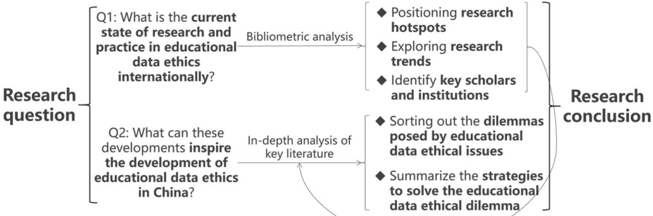
With the advent of the era of intelligent education, artificial intelligence and other technologies are being integrated into education, so that more educational data can be collected, processed, and analyzed. However, educational data ethics is an important factor that hinders the application of educational data. Thus, it is important to ensure privacy and security by reasonable use of educational data. As such, this research focuses on analysis of hot-points, trends in development and problems of educational data ethics in existing research using bibliometric analysis. Based on in-depth analysis, this study proposes targeted problem-solving strategies, and future developmental direction for learner-centered educational data ethics in the era of intelligent education. This study found three major problems in the educational data ethics: (a) violation of privacy during data collection, storage, and sharing, (b) the deprivation of the ability of educational subjects to make independent choices by prediction of educational data, (c) and the lack of “forgetting ability” based on data as the evaluation standard, which is one of the restrictions on the development of educational subjects. This research proposes that the corresponding problem-solving strategy in China should be learner-centered, combined with technologies such as blockchain, 5 G technology, and federated learning to form targeted solutions from different levels. Firstly, it is necessary to establish a standard system and related platforms of educational data from the macro level. Second, the research-practice dual channels should make efforts to build a new ecology of educational data. Third, schools and teachers must appropriately apply educational data in evaluation. Finally, this study provides direction and guidance for other countries or regions in researching educational data ethics.
Overview
The claims and statistics of this paper haven’t been checked yet.
Free: it reads the open-access text and checks the first 5 claims that cite a source we can check. Create a free account to check every claim.
Integrity signals
Registry
Cites
Statistics
Figures
Verification
Claims the paper makes
The claims and statistics of this paper haven’t been checked yet.
Free: it reads the open-access text and checks the first 5 claims that cite a source we can check. Create a free account to check every claim.
Claims other papers make about this one
Each is checked against this paper’s own text: does it say what the citing paper says it does?
The source backs part of the claim, not all of it — or backs it for a different population, condition or comparison.
In the citing paper
“In contrast, heuristic approaches, including time-based, data-driven, and mixed-data strategies, are commonly used to determine when to stop reviewing (e.g., Guan et al., 2023; Huang et al., 2022; Scherer & Campos, 2022; Zhang et al., 2023).”
From Screening Smarter, Not Harder: A Comparative Analysis of Machine Learning Screening Algorithms and Heuristic Stopping Criteria for Systematic Reviews in Educational Research (2024) · cites this paper as Guan et al., 2023
Experimental — accuracy not yet measuredThe cited source says what the claim attributes to it.
In the citing paper
“Whilst this realisation is not lost on the AIEd field, with at least four evidence syntheses published specifically on the topic in the last two years (Guan et al., 2023;Mahmood et al., 2022;Rios-Campos et al., 2023;Yu & Yu, 2023), 29 this meta review indicates that the issue remains pressing.”
From A meta systematic review of artificial intelligence in higher education: a call for increased ethics, collaboration, and rigour (2024) · cites this paper as Guan et al., 2023
Self-check
Percentages, sums and reported differences re-computed from the paper’s own numbers.
The self-check needs the paper’s full text.
Citations
Cites
The ethics of algorithms: Mapping the debate
Mittelstadt, B. D., Allo, P., Taddeo, M., Wachter, S., & Floridi, L. (2016) · Big Data & Society · doi:10.1177/2053951716679679 · Cited by 4,567 · cited 1×
“As in other fi elds, data-driven decision-making can lead to discrimination due to private information in the data (Mittelstadt et al., 2016).”
BackgroundA Review of Artificial Intelligence (AI) in Education from 2010 to 2020
Zhai, X., Chu, X., Chai, C. S., Jong, M. S. Y., Istenic, A., Spector, M., Liu, J.-B., Yuan, J., & Li, Y. (2021) · Complexity · doi:10.1155/2021/8812542 · Cited by 1,364 · cited 1×
“…state of research for speci fi c technologies and education integration, such as a review of the current state of research and practices regarding AI applied to educational contexts, where ethical issues are one of the challenges caused by AI applications in educational contexts (Zhai et al., 2021).”
BackgroundAn open source machine learning framework for efficient and transparent systematic reviews
van de Schoot, R., de Bruin, J., Schram, R., Zahedi, P., de Boer, J., Weijdema, F., Kramer, B., Huijts, M., Hoogerwerf, M., Ferdinands, G., et al. (2021) · Nature Machine Intelligence · doi:10.1038/s42256-020-00287-7 · Cited by 1,157 · cited 1×
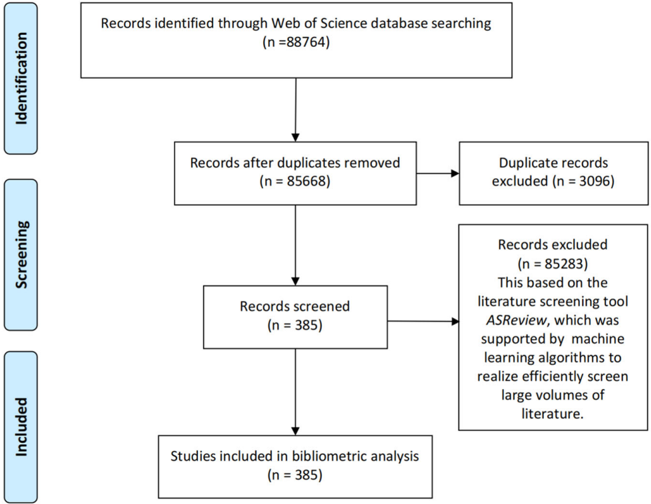
“To improve the ef fi ciency of literature screening, we used ASReview software, which was used in many review articles, to perform screening based on machine learning algorithms (van de Schoot et al., 2021).”
MethodEducational Data Mining and Learning Analytics
Baker, R. S., & Inventado, P. S. (2014) · Learning Analytics · doi:10.1007/978-1-4614-3305-7_4 · Cited by 1,029
Artificial intelligence and education in China
Knox, J. (2020) · Learning, Media and Technology · doi:10.1080/17439884.2020.1754236 · Cited by 489 · cited 1×
“Owing to the particularity of China ’ s political, economic, and cultural background, the central government ’ s policies play an important role in solving ethical issues of educational data (Knox, 2020).”
Co-Designing a Real-Time Classroom Orchestration Tool to Support Teacher–AI Complementarity
Holstein, K., McLaren, B. M., & Aleven, V. (2019) · Journal of Learning Analytics · doi:10.18608/jla.2019.62.3 · Cited by 390 · cited 1×
“…data between different systems and platforms cannot be exchanged, so it is dif fi cult for teachers to directly integrate data between different systems or platforms to gain a comprehensive understanding of learners, which requires teachers to have higher skills and literacy (Holstein et al., 2019).”
BackgroundEthics as a Service: A Pragmatic Operationalisation of AI Ethics
Morley, J., Elhalal, A., Garcia, F., Kinsey, L., Mökander, J., & Floridi, L. (2021) · Minds and Machines · doi:10.1007/s11023-021-09563-w · Cited by 266 · cited 1×
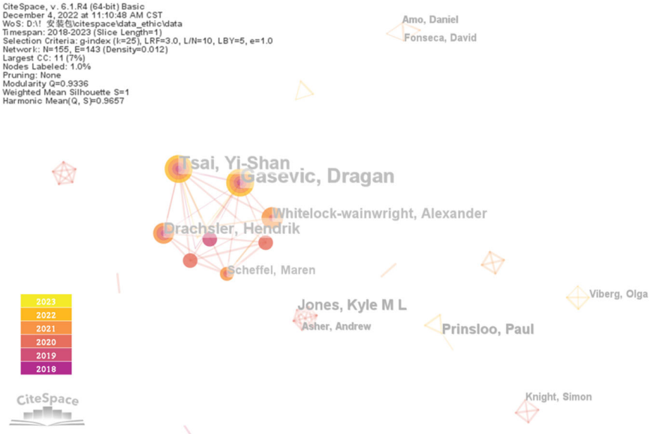
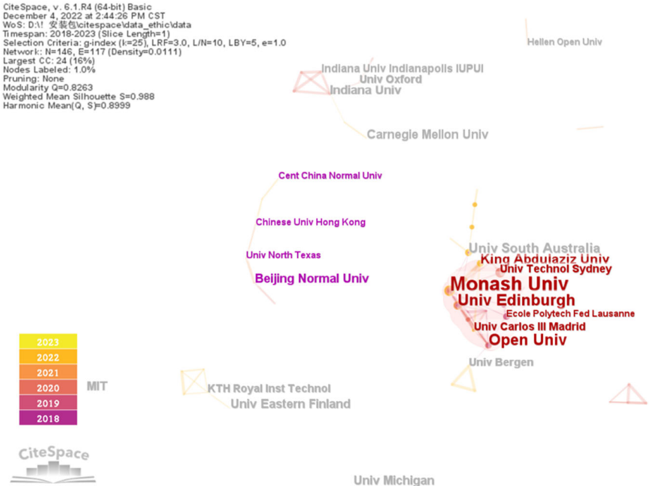
“…related research institutions working with Indiana University have focused not only on the ethical issues raised by the integration of AI into educational contexts (Morley et al., 2021), but also on data ethics and privacy issues in other educational contexts such as libraries (Jones et al., 2020).”
BackgroundStudent privacy in learning analytics: An information ethics perspective
Rubel, A., & Jones, K. M. L. (2016) · The Information Society · doi:10.1080/01972243.2016.1130502 · Cited by 240 · cited 2×
“Furthermore, based on educational data processing and analysis results, such as learning analytics, educators ’ decision-making can have unconscious or conscious biases towards learners (Rubel & Jones, 2016), which in turn leads to biases in decision-making or even mistakes.”
BackgroundDelete: The Virtue of Forgetting in the Digital Age
Mayer-Schönberger, V. (2011) · doi:10.1515/9781400838455 · Cited by 204
Big data in education: a state of the art, limitations, and future research directions
Baig, M. I., Shuib, L., & Yadegaridehkordi, E. (2020) · International Journal of Educational Technology in Higher Education · doi:10.1186/s41239-020-00223-0 · Cited by 199 · cited 1×
“Baig et al. (2020) literature review of 40 primary studies published from 2014 to 2019 shows that ethics is an important direction of development.”
Background
Research works printed but not linked: 21
- 3. Baker RS, Inventado PS (2014) Educational data mining and learning analytics. In: Larusson J., White B. (eds) Learning analytics. Springer, New York, NY CDT (2021a) Technological school safety initiatives: considerations to protect all students. Retrieved June 24, 2022 from https://www.brennancenter.org/sites/ default/files/analysis/20190524schoolsafety.pdf CDT (2021b) Data ethics in education and the social sector: what does it mean and why does it matter? Retrieved June 24, 2022 from https://cdt.org/insights/ report-data-ethics-in-education-and-the-social-sector-what-does-it-mean- and-why-does-it-matter/
- 8. Gao X (2021) Establishing a new form of government governance to adapt to the digital age. Exp Free View 04:141-146+179-180, https://kns.cnki.net/kcms/ detail/detail.aspx?FileName=TSZM202104021&DbName=DKFX2021
- 12. Gu X, Li S (2021) Artificial intelligence education brain: a technical framework for data-driven educational governance and teaching innovation. CET China Educ Technol 01:80-88. https://kns.cnki.net/kcms/detail/detail.aspx? FileName=ZDJY202101012&DbName=CJFQ2021
- 24. Li A, Shu H, Gu X (2021) Building an educational artificial intelligence brain: the technical architecture and implementation path of the educational data middle platform. Educ Res 27(03):96-103. https://kns.cnki.net/kcms/detail/ detail.aspx?FileName=JFJJ202103011&DbName=CJFQ2021
- 25. Li L, Yuan S, Jin Y (2021) Review of blockchain-based federated learning. Appl Res Comput 38(11):3222-3230. https://doi.org/10.19734/j.issn.1001-3695.2021. · doi:10.19734/j.issn.1001-3695.2021
- 28. Li Y, Chen X, Sun D, Zhu Y, Zhai X (2021) From "Transparent People" to "Practitioner": Challenges and Responses to Information Security in Higher Education: implications from 2021 EDUCAUSE Horizon Report (Informa- tion Security Edition). J Dist Educ 39(03):11-19. https://kns.cnki.net/kcms/ detail/detail.aspx?FileName=YCJY202103003&DbName=CJFQ2021
- 29. Ma Y, Bai M, Zhou Z (2017) Development of artificial intelligence in education in China in smart education era--An interpretation and enlightenment of preparing for the future of artificial intelligence. e-Educ Res 38(03):123-128. https://kns.cnki.net/kcms/detail/detail.aspx?FileName= DHJY201703021&DbName=CJFQ2017
- Onorato M (2013) Transformational leadership style in the educational sector: an empirical study of corporate managers and educational leaders. Acad Educ Leadersh J 17(1):33–47. https://www.proquest.com/scholarly-journals/transformational-leadership-style-educational/docview/1368593704/se-2?accountid=10659
- 37. Onorato M (2013) Transformational leadership style in the educational sector: an empirical study of corporate managers and educational leaders. Acad Educ Leadersh J 17(1):33-47. https://www.proquest.com/scholarly-journals/ transformational-leadership-style-educational/docview/1368593704/se-2? accountid=10659 Open Data Institute (2021) Data Ethics Canvas. Retrieved June 24, 2022 from https://theodi.org/article/the-data-ethics-canvas-2021/
- 38. Pentland A (2014) Social physics: How good ideas spread-the lessons from a new science. Penguin Press People's Republic of China (2021a) Data Security Law of the People's Republic of China. Retrieved June 24, 2022 from http://en.npc.gov.cn.cdurl.cn/2021-06/ 10/c_689311.htm People's Republic of China (2021b) Personal Information Protection Law of the People's Republic of China. Retrieved June 24, 2022 from http://en.npc.gov. cn.cdurl.cn/2021-12/29/c_694559.htm
- 50. Tang H, Zhang J (2020) Limits of big data application in education. J East China Norm Univ (Educ Sci) 38(10):60-68. https://kns.cnki.net/kcms/detail/detail. aspx?FileName=HDXK202010005&DbName=CJFQ2020
- 56. Wang J, Chen S, Wang L, Yang X (2016) The analysis of research hot spot and trend on big data in education based on CiteSpace. Mod Educ Technol 26(02):5-13. https://kns.cnki.net/kcms/detail/detail.aspx?FileName= XJJS201602002&DbName=CJFQ2016
- 57. Wang S, Wang Y (2020) The connotation, key characteristics and communication model of 5G+ education. ChongQing High Educ Res 8(02):35-47. https:// kns.cnki.net/kcms/detail/detail.aspx?FileName= YXXY202002004&DbName=CJFQ2020
- 58. Wang Z, Dan J (2021) How to construct the education data governance system- Taking the successful experience of Kentucky as an example. Mod Dist Educ Res 33(01):77-86. https://kns.cnki.net/kcms/detail/detail.aspx?FileName= XDYC202101010&DbName=CJFQ2021
- 59. Yang J, Liang R (2017) Challenges and reform of university classroom teaching model in the age of big data. e-Educ Res 38(08):111-115. https://kns.cnki.net/ kcms/detail/detail.aspx?FileName=DHJY201708020&DbName=CJFQ2017
- 60. Yang Q (2020) Health QR code, human deep datafication and construction of forgetting ethics. Expl Free View 09:123-129+160-161. https://kns.cnki.net/ kcms/detail/detail.aspx?FileName=TSZM202009026&DbName=DKFX2020
- 61. Yang X, Yu S (2015) The architecture and key support technologies of smart education. China Educ Technol 01:77-84+130, https://kns.cnki.net/kcms/ detail/detail.aspx?FileName=ZDJY201501015&DbName=CJFQ2015
- 62. Yuan Y (2021) Study on the platform design of the national credit bank of voca- tional education based on "Internet Plus". China Educ Technol 04:84-90. https://kns.cnki.net/kcms/detail/detail.aspx?FileName= ZDJY202104011&DbName=CJFQ2021
- 66. Zhang H, Wang M, Li G (2021) The development status of frontier technology of blockchain security and privacy protection. Inform Technol Netw Secur 40(05):7-12. https://kns.cnki.net/kcms/detail/detail.aspx?FileName= WXJY202105002&DbName=CJFQ2021
- 67. Zhong S, Tang Y (2018) Research on the orientation and route of educational innovative development in the age of artificial intelligence. e-Educ Res 39(10):15-20+40, https://kns.cnki.net/kcms/detail/detail.aspx?FileName= DHJY201810004&DbName=CJFQ2018
- 68. Zhou X, Tang W(2020) Research on the ethical consciousness of university edu- cation management under the background of big data J Qiqihar Univ (Philos Soc Sci Edn) 10:166-169 https://kns.cnki.net/kcms/detail/detail.aspx?
Cited by
Bond, M., Khosravi, H., De Laat, M., Bergdahl, N., Negrea, V., Oxley, E., Pham, P., Chong, S. W., & Siemens, G. (2024) · International Journal of Educational Technology in Higher Education · doi:10.1186/s41239-023-00436-z · Cited by 852
“Whilst this realisation is not lost on the AIEd field, with at least four evidence syntheses published specifically on the topic in the last two years (Guan et al., 2023; Mahmood et al., 2022; Rios-Campos et al., 2023; Yu & Yu, 2023), 29 this meta review indicates that the issue remains pressing.”
BackgroundBa, S., Yang, L., Yan, Z., Looi, C. K., & Gašević, D. (2025) · Computers and Education Open · doi:10.1016/j.caeo.2025.100284 · Cited by 91
Zhu, H., Sun, Y., & Yang, J. (2025) · Humanities and Social Sciences Communications · doi:10.1057/s41599-025-05252-6 · Cited by 196
“The privacy of educational subjects during data collection, storage, and sharing can be violated (Guan et al., 2023), which may be caused by the following factors.”
InfluentialCampos, D. G., Fütterer, T., Gfrörer, T., Lavelle-Hill, R., Murayama, K., König, L., Hecht, M., Zitzmann, S., & Scherer, R. (2024) · Educational Psychology Review · doi:10.1007/s10648-024-09862-5 · Cited by 75
“Hence, more and more researchers are turning to learning algorithms to automate this screening phase (e.g., Guan et al., 2023; Huang et al., 2022; Scherer & Campos, 2022; Zhang et al., 2023).”
Educational data mining: a 10-year review
Kalita, E., Oyelere, S. S., Gaftandzhieva, S. N., Rajesh, K. N. V. P. S., Jagatheesaperumal, S. K., Mohamed, A. S. A., Elbarawy, Y. M., Desuky, A. S., Hussain, S., Çifçi, M. A., et al. (2025) · Discover Computing · doi:10.1007/s10791-025-09589-z · Cited by 97
“Based on in-depth analysis, Guan and his colleagues [35] found three core problems in educational data ethics (violation of privacy during data collection, storage, and sharing; the deprivation of the ability to make independent choices by prediction of educational data; the lack of “forgetting…”
Metadata
- Authors
- Guan, X., Feng, X., & Islam, A. Y. M. A.
- Affiliations
- East China Normal University (CN)
- Jiangsu University (CN)
- Corresponding author
- Feng, Xiang
- Islam, A.Y.M. Atiquil
- Venue
- Humanities and Social Sciences Communications
- Published
- 2023-04-01
- Volume
- 10
- Issue
- 1
- ISSN
- 2055-1045 (ISSN-L)
- 2662-9992
- OpenAlex
- W4362581117
- Semantic Scholar
- 84ed5580cd6c3b41d1a11065350289760bb251c3
- Cited by
- 55
- References
- 41
- Citations by year
- 2026: 12 · 2025: 18 · 2024: 10 · 2023: 15
- FWCI
- 13.79
- Type
- journal article
- Language
- en
- Open access
- gold
- doi.org
- Licence
- cc-by
- creativecommons.org/licenses/by/4.0 (tdm)
- creativecommons.org/licenses/by/4.0 (vor)
- Locations
- Humanities and Social Sciences Communications (publishedVersion, cc-by)
- RePEc: Research Papers in Economics (submittedVersion)
- DOAJ (DOAJ: Directory of Open Access Journals) (submittedVersion, cc-by-sa)
- Funders
- Science and Technology Commission of Shanghai Municipality (21ZR1419100)
- Topics
- Physical Sciences › Computer Science › Artificial Intelligence › Ethics and Social Impacts of AI
- Social Sciences › Education › Artificial Intelligence in Education
- Social Sciences › Education › Digital Education and Society
- Keywords
- smart education, artificial intelligence in education, student privacy, data security, learner autonomy, algorithmic prediction, data deletion, blockchain, federated learning, 5G, research-practice integration
About these checks
Registry, retraction, Cites and statistics results are computed, not judged, with one exception: a printed reference that no index lists is read once by a model before it counts as a citation error. Claims are extracted by a model and kept only when their quote appears verbatim in the text; each cited source is then checked, with a model’s help, for whether it says what the claim relies on. Those verdicts can be wrong — read the claim’s quote and the cited source before relying on one.
Statistics and arithmetic are recomputed, not judged.
Confidence bands are shown only for fields calibrated on our annotated test set. None is calibrated yet, so no band is shown.
What counts as a claim ›How we measure confidence ›How we check this ›
Are you an author, or do you see a problem with this page? Request a review
Data sources
Bibliographic data: Semantic Scholar, OpenAlex, Crossref.
Contains information from the Semantic Scholar Academic Graph Datasets, made available under the ODC Attribution License (ODC-BY 1.0).
Semantic Scholar’s data is described in: Kinney, R., et al. (2023). The Semantic Scholar Open Data Platform. arXiv:2301.10140.
