

Effectiveness of citizen journalism: evaluating the credibility, bias, and impact of user-generated news content in the digital age
Open accessThe DOI matches its Crossref record; 34 of the 34 references it cites were found in a registry or an index; 1 of the 8 sources its claims cite were checked for support.
Abstract
This research investigates the shift of citizen journalism during the 21st century with special attention to how new technologies affected the whole process of news production, distribution, and public participation. With the help of online platforms and the internet, a great deal of society has been given the opportunity to speak up and has started to participate in the news-making and distribution through social media and other internet channels.
Overview
CoChat Summary
TL;DR
This paper examines how citizen journalism has reshaped news production and distribution in the digital age, using a quantitative survey of 486 Indian respondents to assess perceived credibility, bias, and influence on public opinion. It concludes that user-generated news is fast and democratizing but undermined by misinformation, bias, and the absence of formal gatekeeping.
Key findings
- The survey results indicate that citizen reporting produces "speedy, unpretentious, and public-influencing news," but that it "struggles against a major trustworthiness issue caused by misinformation and bias."
- The paper frames these tensions through Gatekeeping Theory and Media Ecology Theory, arguing that gatekeeping has become "distributed" across platforms, algorithms, communities, and citizen journalists themselves, which both widens coverage and increases misinformation and sensationalism.
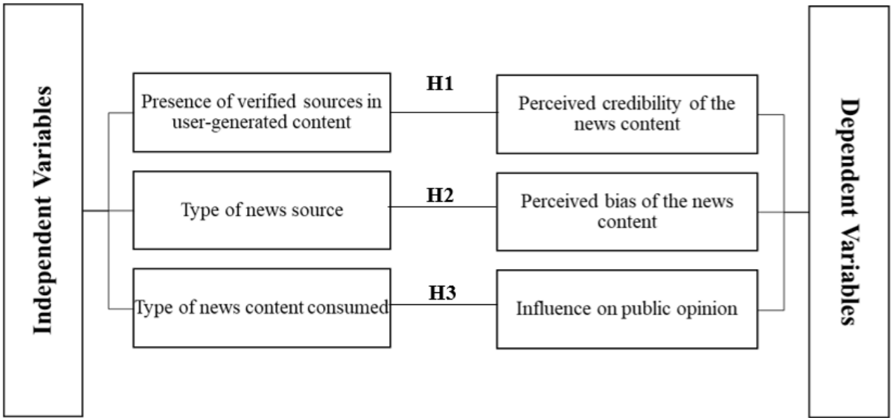
- Three hypotheses are proposed: (H1) user-generated news with verified sources is perceived as more credible than content without verified sources; (H2) citizen journalism content is perceived as more biased than traditional journalism covering the same event; (H3) exposure to user-generated news on social media has a stronger influence on public opinion than exposure to traditional news sources. (The truncated text does not report the hypothesis test results.)
- The paper recommends media literacy training, verification practices, and ethical standards to sustain trust in citizen journalism.
Methods
- Quantitative design using an online, self-reported survey conducted over four months, from early January 2025 through the end of March, in India, chosen for its rapidly evolving digital news ecosystem and active citizen journalism on Twitter, YouTube, and Facebook.
- Purposive sampling; 486 responses obtained. Eligibility required engaging with citizen journalism at least three times a week; respondents were drawn mainly from urban and semi-urban areas with high internet penetration.
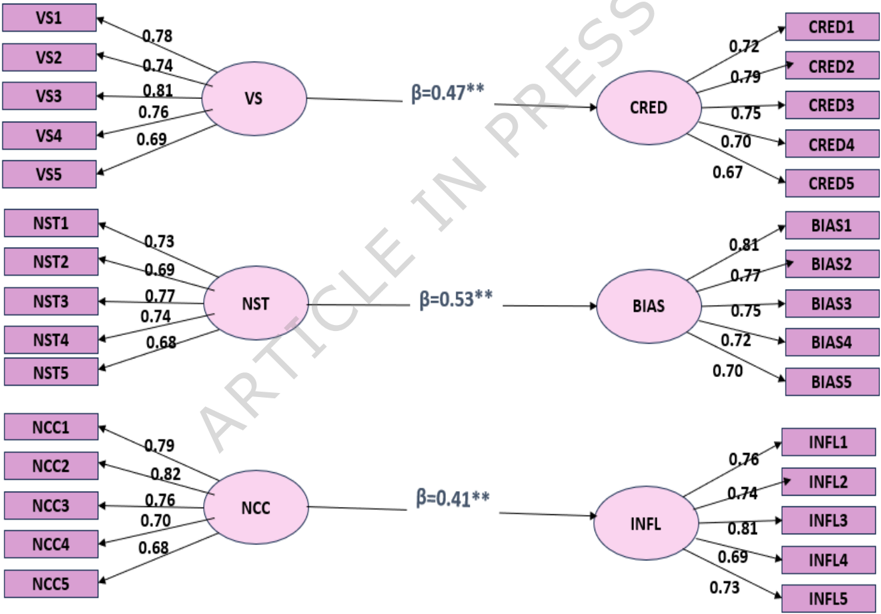
- Analyses: descriptive statistics and reliability analyses, confirmatory factor analysis (CFA) and latent construct modeling, with exploratory factor analysis and structural equation modeling planned. A power analysis (medium effect size f² = 0.15, power 0.80, α = 0.05, up to 5 predictors) gave a minimum required sample of nearly 92, so the 486 responses exceeded requirements.
Limitations
- Not stated in the paper (the truncated text contains no explicit limitations section).
- Evident from the text: the sample is purposive and restricted to urban/semi-urban Indian respondents who already engage heavily with citizen journalism, which limits generalizability; all measures are self-reported perceptions rather than observed accuracy or bias; and the survey period is described inconsistently (stated as four months but dated January through the end of March).
Model-written summary of a shortened version of the paper’s full text (it is longer than we read). Check it against the paper before relying on it.
Integrity signals
Registry
Cites
Statistics
Figures
Verification
Claims the paper makes
0 Valid · 1 Not valid · 5 Not checked · 8 Own results and interpretations
A result the paper reports from its own data — it cites no other source for it, so there is none to check. The quote shows it is in the paper.
In the paper
“it struggles against a major trustworthiness issue caused by misinformation and bias”
plainstates a cause- Asserted: passes — The authors put it forward as true.
- Checkable: passes — It can be checked against evidence.
- Load-bearing: passes — The paper’s conclusions depend on it.
- Based: passes — The paper gives a reason why it holds.
None of the sources cited for this claim could be matched to a paper, so there is nothing to check it against.
In the paper
“For exploratory factor analysis and structural equation modeling, a final sample of 486 respondents was considered statistically adequate under the criteria set by Hair (2019) and Kline (2023).”
What the sources say
- Not matchedcites Hair (2019)
An author–year citation the paper’s reference list doesn’t settle. We don’t search these by name.
- Not matchedcites Kline (2023)
An author–year citation the paper’s reference list doesn’t settle. We don’t search these by name.
plainn = 486- Asserted: passes — The authors put it forward as true.
- Checkable: passes — It can be checked against evidence.
- Load-bearing: passes — The paper’s conclusions depend on it.
- Based: passes — The paper gives a reason why it holds.
- Not matched
None of the sources cited for this claim have been checked yet.
In the paper
“The digital age, however, has completely changed the classical gatekeeping model (Valdeón, 2022).”
§ 2. Theoretical framework, literature review, and hypothesis development > 2.1 Theoretical Framework and Hypothesis Development
What the sources say
- Not checked yetcites Valdeón, 2022 matched to “Gatekeeping, ideological affinity and journalistic translation” (2022) source
Checked before — its earlier verdict is held back until a new check runs.
plainstates a cause- Asserted: passes — The authors put it forward as true.
- Checkable: passes — It can be checked against evidence.
- Load-bearing: passes — The paper’s conclusions depend on it.
- Based: passes — The paper gives a reason why it holds.
- Not checked yet
In the paper
“The collapse of conventional gatekeeping structures has also contributed to a proliferation of more misinformation and sensationalism (Røsok-Dahl & Kristine Olsen, 2024).”
§ 2. Theoretical framework, literature review, and hypothesis development > 2.1 Theoretical Framework and Hypothesis Development
What the sources say
- Not matchedcites Røsok-Dahl & Kristine Olsen, 2024
An author–year citation the paper’s reference list doesn’t settle. We don’t search these by name.
plainstates a cause- Asserted: passes — The authors put it forward as true.
- Checkable: passes — It can be checked against evidence.
- Load-bearing: passes — The paper’s conclusions depend on it.
- Based: passes — The paper gives a reason why it holds.
- Not matched
1 reference still to check
A free account verifies the references that are still open.
- Probably not a substantial claim. 7
- It may state two separate claims as one. 6
Self-check
Percentages, sums and reported differences re-computed from the paper’s own numbers.
Each contradiction between two passages listed here was confirmed by an independent check.
Rated minor: it would not touch a result — a value no result rests on, a p-value that stays on the same side of the significance level, or a conflict that is clerical, resolved elsewhere in the paper, or outside its own findings.
In the paper
§ 3. Research Methodology
“over a period of four months”
§ 3. Research Methodology
“from early January 2025 through the end of March.”
Citations
Cites
Statistical Power Analysis for the Behavioral Sciences
Cohen, J. (2013) · doi:10.4324/9780203771587 · Cited by 25,373
Comparison of convenience sampling and purposive sampling
Etikan, I. (2016) · American Journal of Theoretical and Applied Statistics · doi:10.11648/j.ajtas.20160501.11 · Cited by 11,412 · cited 1×
“Purposive sampling is best used as it allows the use of speci fi c criteria to choose respondents (Etikan et al. 2016).”
A First Course in Factor Analysis
Comrey, A. L., & Lee, H. B. (2013) · doi:10.4324/9781315827506 · Cited by 4,546
Lewin, K. (1947) · Human Relations · doi:10.1177/001872674700100103 · Cited by 3,493
The “Gate Keeper”: A Case Study in the Selection of News
White, D. M. (1950) · Journalism Quarterly · doi:10.1177/107769905002700403 · Cited by 1,250
Shoemaker, P. J., & Vos, T. (2009) · doi:10.4324/9780203931653 · Cited by 1,079
Using social media marketing in the digital era: A necessity or a choice
Khanom, M. T. (2023) · International Journal of Research in Business and Social Science (2147-4478) · doi:10.20525/ijrbs.v12i3.2507 · Cited by 169
Mhlanga, D., Denhere, V., & Moloi, T. (2022) · Education Sciences · doi:10.3390/educsci12070464 · Cited by 110 · cited 1×
“T he landscape of news consumption and production has undergone a revolution in the last few years owing to digital technologies (Mhlanga et al. 2022). digital The use of technologies has been made possible by the wide-spread internet access (Dovbysh 2021).”
Media and Policy Making in the Digital Age
Grossman, E. (2022) · Annual Review of Political Science · doi:10.1146/annurev-polisci-051120-103422 · Cited by 104
Is citizen journalism dead? An examination of recent developments in the field
Mutsvairo, B., & Salgado, S. (2022) · Journalism · doi:10.1177/1464884920968440 · Cited by 68
Participative Gatekeeping: The Intersection of News, Audience Data, Newsworkers, and Economics
Blanchett, N. (2021) · Digital Journalism · doi:10.1080/21670811.2020.1869053 · Cited by 65
From Gatekeeper to Gate-opener: Open-Source Spaces in Investigative Journalism
Müller, N., & Wiik, J. (2021) · Journalism Practice · doi:10.1080/17512786.2021.1919543 · Cited by 65
Wang, S. (2020) · Digital Journalism · doi:10.1080/21670811.2020.1851279 · Cited by 63
Luna, J. P., Toro, S., & Valenzuela, S. (2022) · Social Media + Society · doi:10.1177/20563051221077308 · Cited by 60
On the impossibility of breaking the echo chamber effect in social media using regulation
Avin, C., Daltrophe, H., & Lotker, Z. (2024) · Scientific Reports · doi:10.1038/s41598-023-50850-6 · Cited by 58
Gatekeeping, ideological affinity and journalistic translation
Valdeón, R. A. (2022) · Journalism · doi:10.1177/1464884920917296 · Cited by 54 · cited 1×
“The digital age, however, has completely changed the classical gatekeeping model (Valdeón 2022).”
Visual User-Generated Content Verification in Journalism: An Overview
Khan, S. A., Sheikhi, G., Opdahl, A. L., Rabbi, F., Stoppel, S., Trattner, C., & Dang‐Nguyen, D. (2023) · IEEE Access · doi:10.1109/access.2023.3236993 · Cited by 53
Tandoc, E. C., & Seet, S. K. (2022) · Journalism Practice · doi:10.1080/17512786.2022.2110929 · Cited by 47
Hochstein, R. E., Harmeling, C. M., & Perko, T. (2025) · Journal of the Academy of Marketing Science · doi:10.1007/s11747-023-00982-y · Cited by 45
Salonen, M., Olbertz-Siitonen, M., Uskali, T., & Laaksonen, S.-M. (2022) · Journalism Practice · doi:10.1080/17512786.2022.2034520 · Cited by 43
Røsok-Dahl, H., & Olsen, R. K. (2024) · Journalism · doi:10.1177/14648849241255701 · Cited by 40
Olsen, R. K., Solvoll, M. K., & Futsæter, K.-A. (2022) · Journalism and Media · doi:10.3390/journalmedia3010014 · Cited by 28
Beyond Text: Multimodal Credibility Assessment Approaches for Online User-Generated Content
Choudhary, M., Chouhan, S. S., & Rathore, S. S. (2024) · ACM Transactions on Intelligent Systems and Technology · doi:10.1145/3673236 · Cited by 20
Reader, B. (2018) · Journalism · doi:10.1177/1464884918767595 · Cited by 20
Salaudeen, M. A. (2022) · Journalism Practice · doi:10.1080/17512786.2021.1892517 · Cited by 20
Online news media website ranking using user-generated content
Karimi, S., Shakery, A., & Verma, R. M. (2020) · Journal of Information Science · doi:10.1177/0165551519894928 · Cited by 12
(2024) · doi:10.3390/socsci13050266 · Cited by 11
“journalists are just employees”: Examining Journalistic Autonomy from an Audience Perspective
Gajardo, C., & Mellado, C. (2024) · Journalism Studies · doi:10.1080/1461670x.2024.2416062 · Cited by 8
War journalism in the digital age: The interaction between professionals and user-generated content
Lysenko, L. (2024) · Revista Amazonia Investiga · doi:10.34069/ai/2024.84.12.17 · Cited by 5
Protecting the citizen: Political journalists as gatekeepers in the digital age
Lilleker, D. G., & Thompson, S. (2021) · Routledge eBooks · doi:10.4324/9780429284571-27 · Cited by 3
Ojebuyi, B. R. (2023) · Media and Communication Theory in Africa · doi:10.1007/978-3-031-14717-3_5 · Cited by 2
Research works printed but not linked: 9
- Abbasi MMH, Zahoor S, Munir M (2024) Citizen Journalism: Influence of Citizen–Generated Content on Mental Health. Ann Hum Soc Sci 5(3):75–87
- Akpuruku LD, Joe SC, Justice C (2024) Dynamics of citizen journalism and professional media in Rivers State. Dynamics 7:159–172
- Bahari E, Sualman I (2025) The Role of Newswav in Promoting Citizen Journalism in Malaysia: Impact, Challenges, And Ethical Considerations. J Media Inf Warf 18(1):41–53
- Cinar A (2024) Media ecology in journalism: A phenomenological study of the adaptation strategies of senior journalists. Media Studies Review 12:45–58
- Creswell JW, Creswell JD (2018) Research design: Qualitative, quantitative, and mixed methods approaches, 5th ed. Sage Publications
- McLuhan M (1994) Understanding media: The extensions of man. MIT press
- Segun K (2024) Exploring the Impact of Citizen Journalism on Traditional Media. Int J Hum Res Soc Sci Stud 1(3):63–73
- Stephanie EC (2024) The Impact of Citizen Journalism on Local Culture and Public Participation: Analyzing Community Engagement and Media Influence. Kampret J 4(1):34–41
- Surendran D (2024) A study on the impact of citizen journalism platforms on public opinion formation among youtH. Doctoral dissertation, St Teresa’s College (Autonomous), Ernakulam
Cited by
Moses, M. M. (2026) · Journal of Media and Communication Studies · doi:10.5897/jmcs2025.0859 · Cited by 1
The realisation of citizen journalism through analysis of OhmyNews written by university students
Sa, E. (2026) · Media Practice and Education · doi:10.1080/25741136.2026.2655177
Najibi-Goñi, M., Onaindia, I. A., & Garai-Artetxe, E. (2026) · Journalism Practice · doi:10.1080/17512786.2026.2632898
Metadata
- Authors
- Zhou, S.
- Affiliations
- Leshan Normal University (CN)
- Corresponding author
- Zhou, Songcheng
- Venue
- Humanities and Social Sciences Communications
- Published
- 2025-12-16
- Volume
- 12
- Issue
- 1
- ISSN
- 2055-1045 (ISSN-L)
- 2662-9992
- OpenAlex
- W4417361386
- Cited by
- 3
- References
- 24
- Citations by year
- 2026: 3
- FWCI
- 5.72
- Type
- journal article
- Language
- en
- Open access
- gold
- doi.org
- Licence
- cc-by-nc-nd
- creativecommons.org/licenses/by-nc-nd/4.0 (tdm)
- creativecommons.org/licenses/by-nc-nd/4.0 (vor, 6 d)
- Locations
- Humanities and Social Sciences Communications (publishedVersion, cc-by-nc-nd)
- DOAJ (DOAJ: Directory of Open Access Journals) (submittedVersion, cc-by-sa)
- Topics
- Social Sciences › Communication › Journalism and Media Studies
- Social Sciences › Communication › News Media Framing and Political Communication
- Social Sciences › Sociology and Political Science › Misinformation and Its Impacts
- Keywords
- citizen journalism, user-generated content, news credibility, media bias, misinformation, media literacy, gatekeeping, professional journalists, social media, news production, news verification
About these checks
Registry, retraction, Cites and statistics results are computed, not judged, with one exception: a printed reference that no index lists is read once by a model before it counts as a citation error. Claims are extracted by a model and kept only when their quote appears verbatim in the text; each cited source is then checked, with a model’s help, for whether it says what the claim relies on. Those verdicts can be wrong — read the claim’s quote and the cited source before relying on one.
The claim verdicts this report counts are experimental: their accuracy is not yet measured.
A language model drew the claims from the paper on 2026-10-07, under version 3 of the claim definition (model deepseek-v4.1-flash, prompt extract-v3).
A second model labelled each claim on 2026-10-07 (model jev-1.13-20260917, definition revision gold-guideline-v0.2).
Statistics and arithmetic are recomputed, not judged.
Confidence bands are shown only for fields calibrated on our annotated test set. None is calibrated yet, so no band is shown.
What counts as a claim ›How we measure confidence ›How we check this ›
Are you an author, or do you see a problem with this page? Request a review
Data sources
Bibliographic data: Semantic Scholar, OpenAlex, Crossref.
Contains information from the Semantic Scholar Academic Graph Datasets, made available under the ODC Attribution License (ODC-BY 1.0).
Semantic Scholar’s data is described in: Kinney, R., et al. (2023). The Semantic Scholar Open Data Platform. arXiv:2301.10140.
