

Blockade of activin type II receptors with a dual anti-ActRIIA/IIB antibody is critical to promote maximal skeletal muscle hypertrophy
Open accessThe DOI matches its Crossref record; 46 of the 46 references it cites were found in a registry or an index.
Abstract
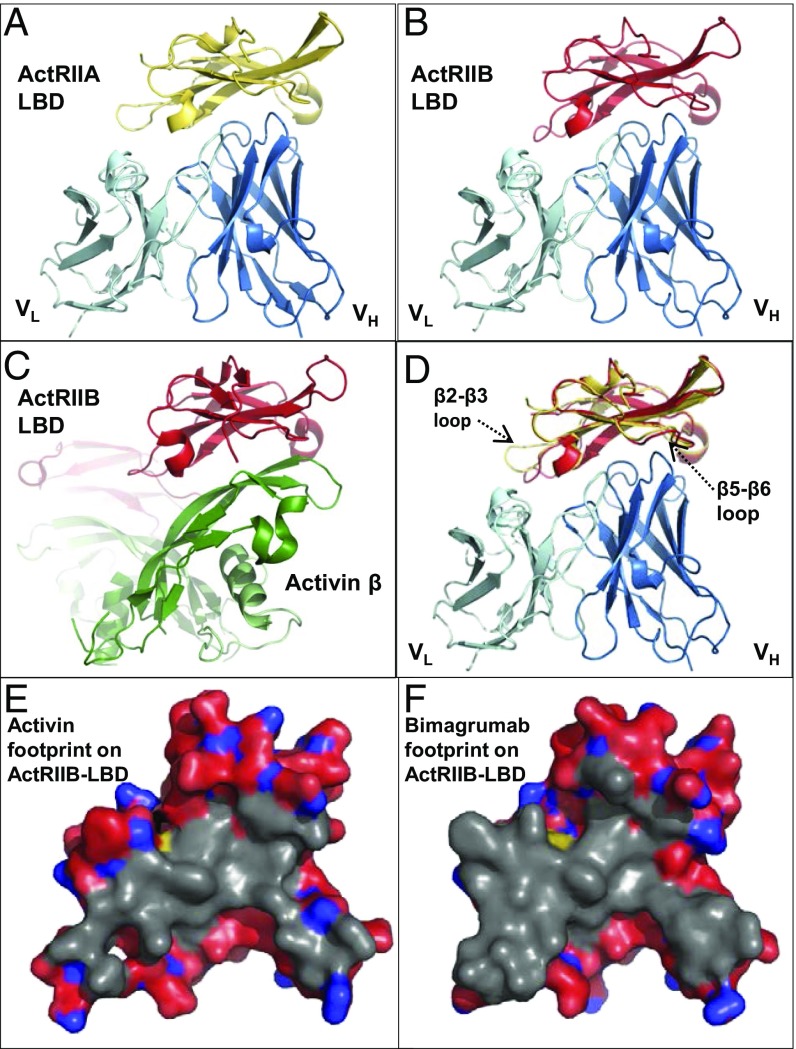
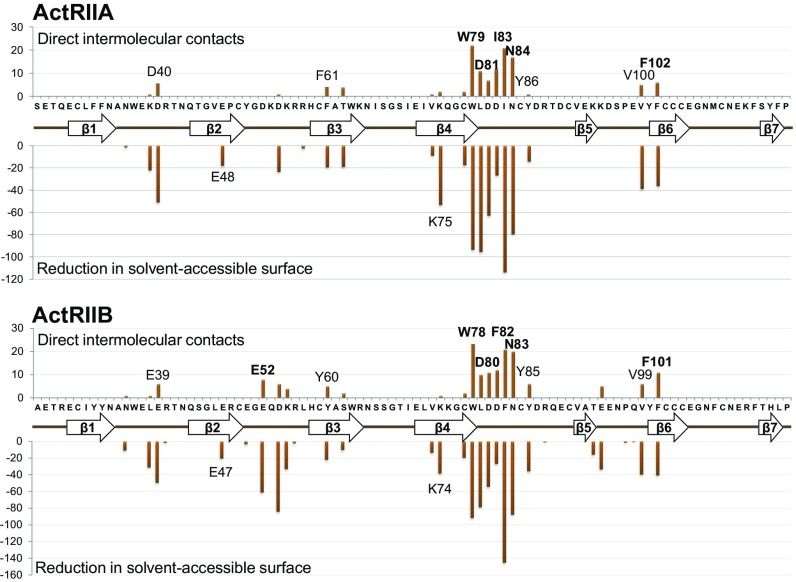
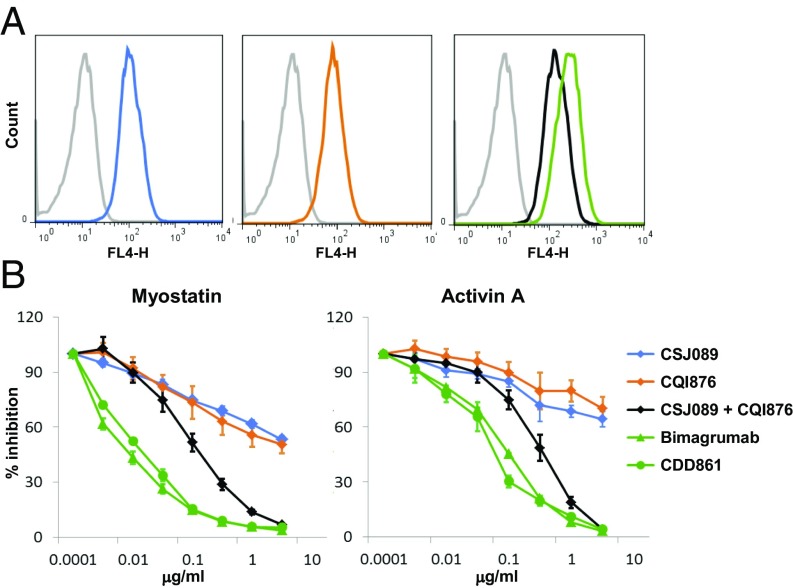
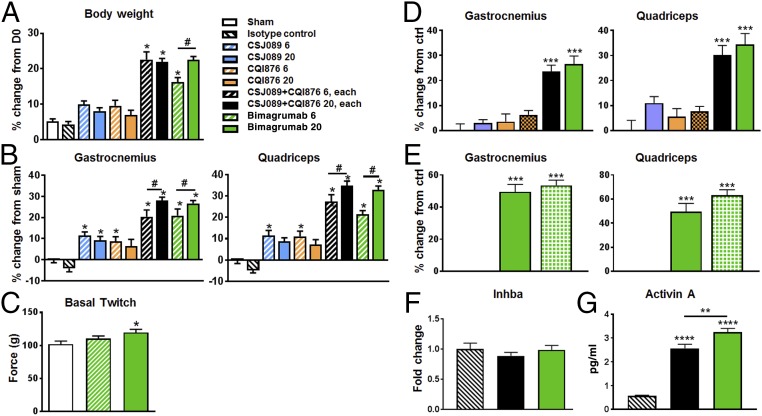
Significance: We recently reported that activin type II receptors (ActRIIs) blockade using bimagrumab could positively impact muscle wasting in mice and humans. However, the specific role of each individual ActRII at regulating adult muscle mass had not been clarified. Here, we highlight the importance of concomitant neutralization of both ActRIIs in controlling muscle mass. Through comparison with single specificity antibodies, we uncover unique features related to bimagrumab and its neutralizing interactions with both ActRIIA and ActRIIB at the structural and cellular levels and in vivo in adult mice. The need for simultaneous engagement and neutralization of both ActRIIs to generate a strong skeletal muscle response confers unique therapeutic potential to bimagrumab, in the context of muscle wasting conditions.
Overview
The claims and statistics of this paper haven’t been checked yet.
Free: it reads the open-access text and checks the first 5 claims that cite a source we can check. Create a free account to check every claim.
Integrity signals
Registry
Cites
Statistics
Figures
Verification
Claims the paper makes
The claims and statistics of this paper haven’t been checked yet.
Free: it reads the open-access text and checks the first 5 claims that cite a source we can check. Create a free account to check every claim.
Claims other papers make about this one
Each is checked against this paper’s own text: does it say what the citing paper says it does?
The source backs part of the claim, not all of it — or backs it for a different population, condition or comparison.
In the citing paper
“blocking these receptors can result in profound muscle growth in animals and humans18–22”
From GDF8 and activin A blockade protects against GLP-1–induced muscle loss while enhancing fat loss in obese male mice and non-human primates (2025) · cites this paper as [20]
Experimental — accuracy not yet measuredIn the citing paper
“Furthermore, no changes were observed in fiber type composition of muscle treated with BYM338, indicating that hypertrophy occurred regardless of fiber type [37].”
From Antibody blockade of activin type II receptors preserves skeletal muscle mass and enhances fat loss during GLP-1 receptor agonism (2024) · cites this paper as [37]
Self-check
Percentages, sums and reported differences re-computed from the paper’s own numbers.
The self-check needs the paper’s full text.
Citations
Cites
Regulation of skeletal muscle mass in mice by a new TGF-p superfamily member
McPherron, A. C., Lawler, A. M., & Lee, S.-J. (1997) · Nature · doi:10.1038/387083a0 · Cited by 4,013
Double muscling in cattle due to mutations in the myostatin gene
McPherron, A. C., & Lee, S.-J. (1997) · Proceedings of the National Academy of Sciences · doi:10.1073/pnas.94.23.12457 · Cited by 2,039
Myostatin Mutation Associated with Gross Muscle Hypertrophy in a Child
Schuelke, M., Wagner, K. R., Stolz, L. E., Hübner, C., Riebel, T., Kömen, W., Braun, T., Tobin, J. F., & Lee, S.-J. (2004) · New England Journal of Medicine · doi:10.1056/nejmoa040933 · Cited by 1,399
Reversal of Cancer Cachexia and Muscle Wasting by ActRIIB Antagonism Leads to Prolonged Survival
Zhou, X., Wang, J. L., Lu, J., Song, Y., Kwak, K. S., Jiao, Q., Rosenfeld, R., Chen, Q., Boone, T., Simonet, W. S., et al. (2010) · Cell · doi:10.1016/j.cell.2010.07.011 · Cited by 940
Induction of Cachexia in Mice by Systemically Administered Myostatin
Zimmers, T. A., Davies, M. V., Koniaris, L. G., Haynes, P., Esquela, A. F., Tomkinson, K. N., McPherron, A. C., Wolfman, N. M., & Lee, S.-J. (2002) · Science · doi:10.1126/science.1069525 · Cited by 907
Restoring systemic GDF11 levels reverses age-related dysfunction in mouse skeletal muscle
Sinha, M., Jang, Y. C., Oh, J., Khong, D., Wu, E. Y., Manohar, R., Miller, C., Regalado, S. G., Loffredo, F. S., Pancoast, J. R., et al. (2014) · Science · doi:10.1126/science.1251152 · Cited by 824
Rebbapragada, A., Benchabane, H., Wrana, J. L., Celeste, A. J., & Attisano, L. (2003) · Molecular and Cellular Biology · doi:10.1128/mcb.23.20.7230-7242.2003 · Cited by 565
Signaling pathways controlling skeletal muscle mass
Egerman, M. A., & Glass, D. J. (2014) · Critical Reviews in Biochemistry and Molecular Biology · doi:10.3109/10409238.2013.857291 · Cited by 555 · cited 1×
“S muscle wasting occurs in a variety of pathophysiological settings, including sepsis, renal failure, diabetes, chronic obstructive pulmonary disease, and cancer (1).”
BackgroundSelf-citationGDF11 increases with age and inhibits skeletal muscle regeneration
Egerman, M. A., Cadena, S. M., Gilbert, J. A., Meyer, A., Nelson, H. N., Swalley, S. E., Mallozzi, C., Jacobi, C., Jennings, L. L., Clay, I., et al. (2015) · Cell Metabolism · doi:10.1016/j.cmet.2015.05.010 · Cited by 527 · cited 1×
“The best characterized ligands are myostatin [also known as growth and differentiation factor 8 (GDF8)] (7–9) and activin A (10–13), while there is some uncertainty with regard to the contribution of GDF11 (13–15) at regulating muscle mass and function, although it has been demonstrated that administration of GDF11 in…”
BackgroundSelf-citationInhibition of myostatin in adult mice increases skeletal muscle mass and strength
Whittemore, L.-A., Song, K., Li, X., Aghajanian, J., Davies, M., Girgenrath, S., Hill, J. J., Jalenak, M., Kelley, P., Knight, A., et al. (2003) · Biochemical and Biophysical Research Communications · doi:10.1016/s0006-291x(02)02953-4 · Cited by 503
Cited by
Items 101–157 of 157
Mini review: Gene therapy targets for aging-associated diseases
Shchukina, E., Eremin, I. I., Mazunin, I., & Alexey, M. (2025) · Biochemical and Biophysical Research Communications · doi:10.1016/j.bbrc.2025.152708 · Cited by 6
Mishra, D., & Mohapatra, L. (2026) · Biochemical Pharmacology · doi:10.1016/j.bcp.2026.117813 · Cited by 7
Myokines: A potential key factor in development, treatment, and biomarker of sarcopenia
Aoi, W. (2021) · Elsevier eBooks · doi:10.1016/b978-0-12-822146-4.00006-5 · Cited by 6
Upregulation of CCL5/RANTES Gene Expression in the Diaphragm of Mice with Cholestatic Liver Disease
Morales, V., González, A., & Cabello‐Verrugio, C. (2023) · Advances in experimental medicine and biology · doi:10.1007/978-3-031-26163-3_11 · Cited by 5
Therapeutic potential of muscle growth promoters in a stress urinary incontinence model
Yang, J., Balog, B. M., Deng, K., Hanzlicek, B., Rietsch, A. M., Kuang, M., Hatakeyama, S., Lach‐Trifilieff, E., Zhu, H., & Damaser, M. S. (2020) · American Journal of Physiology-Renal Physiology · doi:10.1152/ajprenal.00122.2020 · Cited by 5
Self-citationAguirre, F. S., Valero‐Breton, M., Cabrera, D., Peñailillo, L., Otero, C., Fredes, C., & Cabello‐Verrugio, C. (2025) · European Journal of Translational Myology · doi:10.4081/ejtm.2025.13365 · Cited by 4
Boido, M., Butenko, O., Filippo, C., Schellino, R., Vrijbloed, J. W., Fariello, R. G., & Vercelli, A. (2020) · PLoS ONE · doi:10.1371/journal.pone.0228653 · Cited by 4
Shi, A., He, C., Otten, K., Wu, G., Forouzanfar, T., Wüst, R. C. I., & Jaspers, R. T. (2024) · Journal of Cellular Physiology · doi:10.1002/jcp.31418 · Cited by 3
New Developments in Targeting Cancer Cachexia
Miller, J. D., Ramage, M. I., & Skipworth, R. J. E. (2022) · Springer eBooks · doi:10.1007/978-3-031-09518-4_10 · Cited by 3
Cadena, S. M., Bogdanovich, S., Khurana, T. S., Pullen, A. E., Pearsall, R. S., Curran, E., Faucette, R., Lane, J., Seehra, J. S., Lachey, J. L., et al. (2026) · PLoS ONE · doi:10.1371/journal.pone.0342666 · Cited by 2
BMPR2 Dosage Gates BMP9/10 Signaling Output in Pulmonary Artery Endothelium
Chu, K., Thamilselvan, V., Crawford, A. N., Yu, P. B., & Martínez-Hackert, E. (2026) · Cells · doi:10.3390/cells15060492 · Cited by 2
Angkawidjaja, C., & Torashima, T. (2019) · Acta Crystallographica Section F Structural Biology Communications · doi:10.1107/s2053230x1901238x · Cited by 2
Hashchyshyn, V., Параняк, Н., Tymochko-Voloshyn, R. I., Vovkanych, A., Музика, Ф., Стефанишин, М., & Борецький, Ю. (2022) · Спортивна медицина фізична терапія та ерготерапія · doi:10.32652/spmed.2022.1.121-129 · Cited by 2
Rodrigues, M. R. D. C. (2023) · Digital Library of Theses and Dissertations (Universidade de São Paulo) · doi:10.11606/d.42.2023.tde-05022024-134049 · Cited by 2
Qin, Q., Li, J., Shao, Y., Liu, L., & Luo, Z. (2025) · Brazilian Journal of Medical and Biological Research · doi:10.1590/1414-431x2024e14368 · Cited by 1
Zhao, F., Yan, J., Liu, Z., Pan, D., Wang, Y., Li, L., Suo, S., Dang, K., Li, D., Dang, Y., et al. (2025) · Food Research International · doi:10.1016/j.foodres.2025.118157 · Cited by 1
Lisco, G., Tullio, A. D., Disoteo, O., Dicorato, P., Tortora, A., Geronimo, V. D., & Triggiani, V. (2026) · Reviews in Endocrine and Metabolic Disorders · doi:10.1007/s11154-026-10033-w · Cited by 1
Yu, X., Jia, S., & Shen, D. (2026) · BIO Web of Conferences · doi:10.1051/bioconf/202623702005 · Cited by 1
A C. elegans-to-Mouse Discovery Framework for Prioritizing Sarcopenia Interventions
Cho, Y., Seo, H., Jung, C. H., Ahn, J., & Hahm, J. (2026) · Aging and Disease · doi:10.14336/ad.2026.0758 · Cited by 1
Bimagrumab in Muscle Wasting and Obesity: The Rest of the Story
von Haehling, S. (2026) · JCSM Communications · doi:10.1002/rco2.70053 · Cited by 1
Durán, J., & Estrada, M. (2018) · Frontiers in Pharmacology · doi:10.3389/fphar.2018.00381 · Cited by 1
McIlvenna, L. C. (2021) · Victoria University Research Repository (Victoria University) · Cited by 2
The role of plakoglobin in adipocyte expansion and obesity
Azar, F. A. (2025) · doi:10.71781/254 · Cited by 1
Behnam, M., Jazi, A. A., Faramarzi, M., & Talebi, A. (2019) · DOAJ (DOAJ: Directory of Open Access Journals) · doi:10.22122/jims.v36i502.10576
Molecular Mechanism of Muscle Wasting in CKD
Watanabe, H., Enoki, Y., & Maruyama, T. (2020) · Springer eBooks · doi:10.1007/978-981-15-2365-6_2
Watanabe, H., Kato, H., Enoki, Y., Maeda, H., & Maruyama, T. (2020) · Springer eBooks · doi:10.1007/978-981-15-7793-2_9
Weihrauch, M. (2019) · edoc (University of Basel) · doi:10.5451/unibas-007157178
Cremer, M., Rooks, D., Fretault, N., Schubert-Tennigkeit, A. A., & Papanicolaou, D. A. (2021) · The Novartis Repository (Novartis)
Kirk, B., Zanker, J., Phu, S., & Duque, G. (2021) · Wiley eBooks · doi:10.1002/9781119597896.ch11
Eid, A. A., Njeim, R., Khuri, F. R., & Thomas, D. K. (2022) · Wiley eBooks · doi:10.1002/9781119000822.hfcm125.pub2
Shi, C. (2023) · University of Groningen research database (University of Groningen / Centre for Information Technology) · doi:10.33612/diss.824283598
Kulkarni, P., Pandey, R., Kumar, A., Arya, N., & Das, S. (2024) · Elsevier eBooks · doi:10.1016/b978-0-443-15968-8.00017-x
Exploring the Myostatin Activation Pathway: A Promising Target for Treating Muscle Atrophy
Quintanilha, D. B., & Santos, H. F. D. (2025) · Journal of Chemical Information and Modeling · doi:10.1021/acs.jcim.5c00639
High-fat diet induced obesity and anti-activin receptor antibody: Effects on bone properties in mice
Bromer, F. D., Lodberg, A., Sylow, L., Carlsson, M., Andersen, C. B. F., Thomsen, J. S., & Brüel, A. (2025) · Bone Reports · doi:10.1016/j.bonr.2025.101878
Jaime, D., Fish, L. A., Madigan, L. A., Xi, C., Piccoli, G., Ewing, M. D., Blaauw, B., & Fallon, J. R. (2024) · Figshare · doi:10.6084/m9.figshare.26659651
Jaime, D., Fish, L. A., Madigan, L. A., Xi, C., Piccoli, G., Ewing, M. D., Blaauw, B., & Fallon, J. R. (2024) · Figshare · doi:10.6084/m9.figshare.26659648
The Effects Of Maternal Immunization Against Myostatin On Post-hatch Chicken Growth
Mishra, R. K. (2021) · ScholarSpace (University of Hawaii at Manoa)
Towards Development of a Vaccine Against Muscle Atrophy
Foroughishafiei, A. (2023) · eScholarship (California Digital Library)
UNDERSTANDING HOW ACTIVINS CONTRIBUTE TO TGFß1 PROFIBROTIC SIGNALIING IN CHRONIC KIDNEY DISEASE
Soomro, A. (2023) · MacSphere (McMaster University) · doi:10.71548/10225
Gerlach, I., Koch, M., Gatto, G., Lackmann, J., Lehmann, H. C., Schroeter, M., & Kohle, F. (2026) · Acta Neuropathologica Communications · doi:10.1186/s40478-026-02277-z
Ciarloni, A., Salvio, G., Bordoni, M., Giacchetti, G., & Balercia, G. (2026) · Biomedicines · doi:10.3390/biomedicines14040778
Parenté, A. (2019) · theses.fr (ABES) · doi:10.70675/3d9a23f5z3546z46f1z957cz5d167994539d
Identification of new levers to fight muscle atrophy : benefit of the hibernating brown bear model
Cussonneau, L. (2022) · theses.fr (ABES) · doi:10.70675/1a11a81bzf829z4ba2zba9az6f3f4841c773
Yu, X., Jia, S., & Shen, D. (2026) · Springer Link (Chiba Institute of Technology) · doi:10.1051/bioconf/202623702005/pdf
A Lineup for Next Anti-Obesity Medicines: Beyond Incretin-Based Pharmacotherapy
Lee, S. M., Song, H., & Kwon, Y. O.-S. (2026) · Pharmaceuticals · doi:10.3390/ph19071047
Zhang, N., Long, Y., Xu, Z., Chen, G., Wang, A., Chen, W., Chen, Z., Liang, Z., Leung, K., & Chen, L. (2026) · bioRxiv (Cold Spring Harbor Laboratory) · doi:10.64898/2026.07.09.737400
Putting the brakes on muscle growth: Myostatin as regulator of disuse atrophy
Nieuwenhuijsen, D. H. C., Eggelbusch, M., & Wüst, R. C. I. (2026) · Experimental Physiology · doi:10.1113/ep093732
Exerkines in precision management of metabolic diseases
Jin, L., Lin, Y., Zheng, Y., Wang, A., Liao, P., Luo, Y., Sui, Z., Ni, X., Zhang, J., Shen, Q., et al. (2026) · Chinese Medical Journal · doi:10.1097/cm9.0000000000004200
p38MAPK- and Akt/mTOR-Mediated Signaling Underlies the Pro-Myogenic Effects of Ginsenoside Rg5
Rodrigues, A., Martins, T. M., & Lopes, B. (2025) · Specialty journal of Pharmacognosy Phytochemistry and Biotechnology · doi:10.51847/jjz1nekhqe
Packer, M., Gomberg‐Maitland, M., Tedford, R. J., Langleben, D., Vachiéry, J., & Borlaug, B. A. (2026) · Circulation · doi:10.1161/circulationaha.126.081957
de Carvalho, J. F., Churilov, L., & de Araujo, R. P. C. (2026) · Molekulyarnaya Meditsina (Molecular medicine) · doi:10.29296/24999490-2026-04-10
Metadata
- Authors
- Morvan, F., Rondeau, J.-M., Zou, C., Minetti, G., Scheufler, C., Scharenberg, M., Jacobi, C., Brebbia, P., Ritter, V., Toussaint, G., Koelbing, C., Leber, X., Schilb, A., Witte, F., Lehmann, S., Koch, E., Geisse, S., Glass, D. J., & Lach-Trifilieff, E.
- Affiliations
- MusculoSkeletal Diseases, Novartis Institutes for Biomedical Research, 4002 Basel, Switzerland;
- Novartis Institutes for BioMedical Research (CH)
- Novartis (Switzerland) (CH)
- MorphoSys (Germany) (DE)
- Chemical Biology and Therapeutics, Novartis Institutes for Biomedical Research, Cambridge, MA 02139
- ORCID
- Venue
- Proceedings of the National Academy of Sciences
- Publisher
- National Academy of Sciences
- Published
- 2017-11-06
- Volume
- 114
- Issue
- 47
- Pages
- 12448-12453
- ISSN
- 0027-8424 (ISSN-L)
- 1091-6490
- PMC
- PMC5703284
- OpenAlex
- W2767554184
- Cited by
- 142
- References
- 46
- Citations by year
- 2026: 15 · 2025: 21 · 2024: 11 · 2023: 12 · 2022: 9 · 2021: 21 · 2020: 27 · 2019: 18 · 2018: 8
- FWCI
- 5.92
- Type
- journal article
- Language
- en
- Open access
- hybrid
- doi.org
- Licence
- Locations
- Proceedings of the National Academy of Sciences (publishedVersion, cc-by-nc-nd)
- PubMed Central (publishedVersion, cc-by-nc-nd)
- PubMed (publishedVersion)
- DORA PSI (Paul Scherrer Institute) (submittedVersion, cc-by-nc-nd)
- The Novartis Repository (Novartis) (submittedVersion)
- Funders
- Paul Scherrer Institut
- Novartis Institutes for BioMedical Research
- Topics
- Life Sciences › Biochemistry, Genetics and Molecular Biology › Molecular Biology › Muscle Physiology and Disorders
- Life Sciences › Biochemistry, Genetics and Molecular Biology › Molecular Biology › TGF-β signaling in diseases
- Life Sciences › Biochemistry, Genetics and Molecular Biology › Genetics › Genetics and Physical Performance
- Keywords
- activin type II receptor, ActRIIA, ActRIIB, bimagrumab, myostatin, activin A, skeletal muscle hypertrophy, TGF-beta signaling, receptor antagonism, competitive binding, cachexia, muscle atrophy, GDF11
- MeSH terms
- Animals, Antibodies, Monoclonal, Dose-Response Relationship, Drug, Humans, Hypertrophy, Male, Recombinant Proteins, Signal Transduction, Mice, SCID, Rats, Wistar, Crystallography, X-Ray, Muscle, Skeletal, Antibodies, Blocking, Wasting Syndrome, Bone Morphogenetic Proteins, Activins, Activin Receptors, Type II, Mice, Rats, Growth Differentiation Factors, Myostatin, HEK293 Cells, Antibodies, Monoclonal, Humanized
About these checks
Registry, retraction, Cites and statistics results are computed, not judged, with one exception: a printed reference that no index lists is read once by a model before it counts as a citation error. Claims are extracted by a model and kept only when their quote appears verbatim in the text; each cited source is then checked, with a model’s help, for whether it says what the claim relies on. Those verdicts can be wrong — read the claim’s quote and the cited source before relying on one.
Statistics and arithmetic are recomputed, not judged.
Confidence bands are shown only for fields calibrated on our annotated test set. None is calibrated yet, so no band is shown.
What counts as a claim ›How we measure confidence ›How we check this ›
Are you an author, or do you see a problem with this page? Request a review
Data sources
Bibliographic data: Semantic Scholar, OpenAlex, Crossref.
Contains information from the Semantic Scholar Academic Graph Datasets, made available under the ODC Attribution License (ODC-BY 1.0).
Semantic Scholar’s data is described in: Kinney, R., et al. (2023). The Semantic Scholar Open Data Platform. arXiv:2301.10140.
