

Blockade of activin type II receptors with a dual anti-ActRIIA/IIB antibody is critical to promote maximal skeletal muscle hypertrophy
Open accessThe DOI matches its Crossref record; 46 of the 46 references it cites were found in a registry or an index.
Abstract
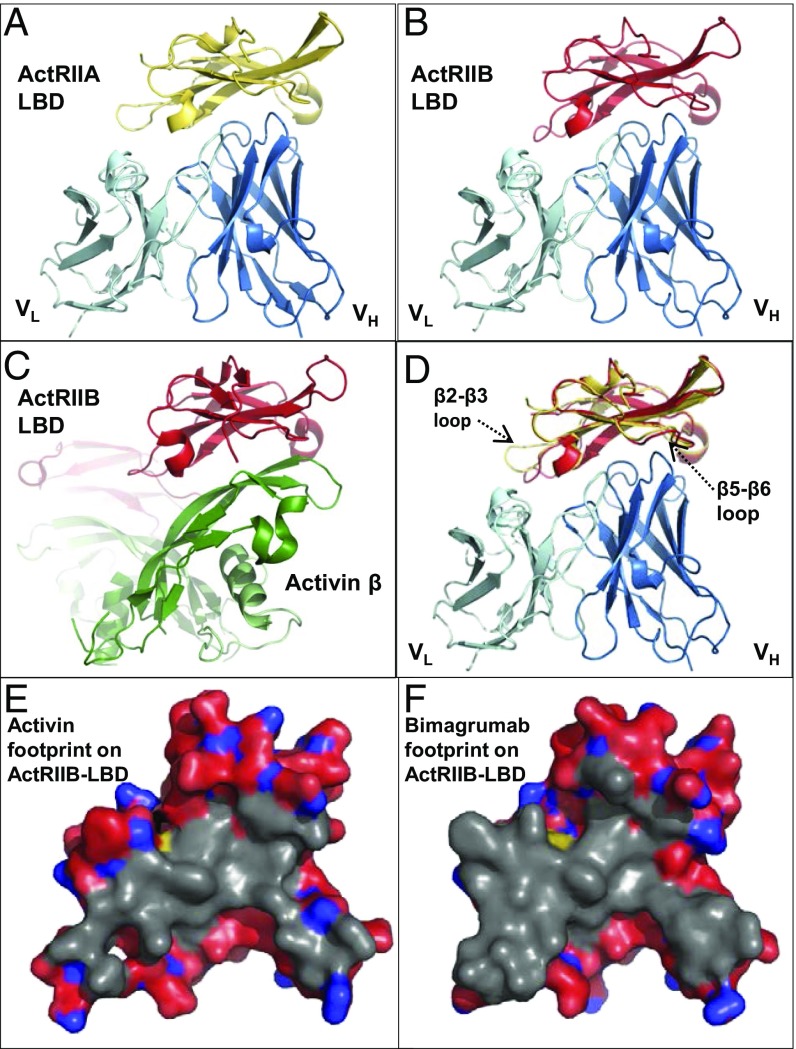
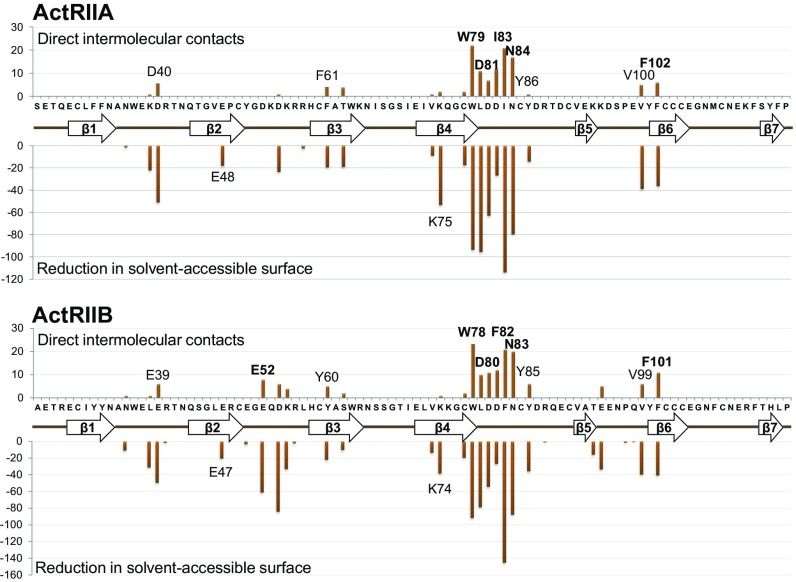
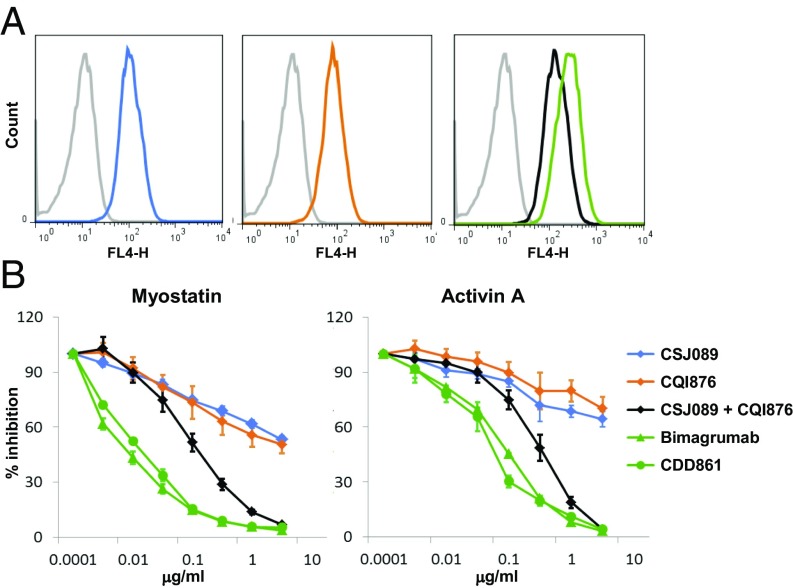
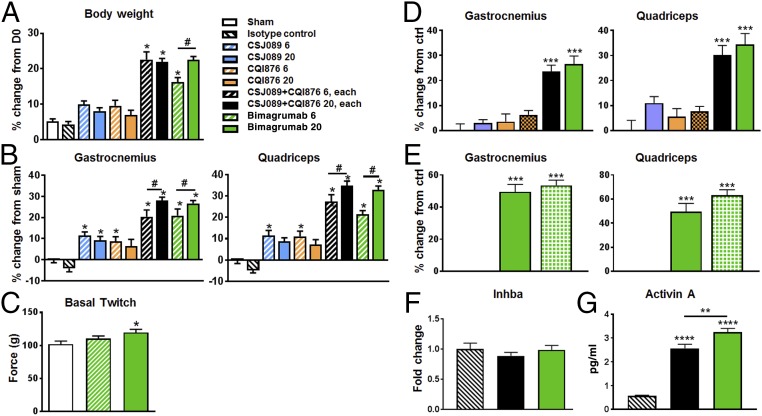
Significance: We recently reported that activin type II receptors (ActRIIs) blockade using bimagrumab could positively impact muscle wasting in mice and humans. However, the specific role of each individual ActRII at regulating adult muscle mass had not been clarified. Here, we highlight the importance of concomitant neutralization of both ActRIIs in controlling muscle mass. Through comparison with single specificity antibodies, we uncover unique features related to bimagrumab and its neutralizing interactions with both ActRIIA and ActRIIB at the structural and cellular levels and in vivo in adult mice. The need for simultaneous engagement and neutralization of both ActRIIs to generate a strong skeletal muscle response confers unique therapeutic potential to bimagrumab, in the context of muscle wasting conditions.
Overview
The claims and statistics of this paper haven’t been checked yet.
Free: it reads the open-access text and checks the first 5 claims that cite a source we can check. Create a free account to check every claim.
Integrity signals
Registry
Cites
Statistics
Figures
Verification
Claims the paper makes
The claims and statistics of this paper haven’t been checked yet.
Free: it reads the open-access text and checks the first 5 claims that cite a source we can check. Create a free account to check every claim.
Claims other papers make about this one
Each is checked against this paper’s own text: does it say what the citing paper says it does?
The source backs part of the claim, not all of it — or backs it for a different population, condition or comparison.
In the citing paper
“blocking these receptors can result in profound muscle growth in animals and humans18–22”
From GDF8 and activin A blockade protects against GLP-1–induced muscle loss while enhancing fat loss in obese male mice and non-human primates (2025) · cites this paper as [20]
Experimental — accuracy not yet measuredIn the citing paper
“Furthermore, no changes were observed in fiber type composition of muscle treated with BYM338, indicating that hypertrophy occurred regardless of fiber type [37].”
From Antibody blockade of activin type II receptors preserves skeletal muscle mass and enhances fat loss during GLP-1 receptor agonism (2024) · cites this paper as [37]
Self-check
Percentages, sums and reported differences re-computed from the paper’s own numbers.
The self-check needs the paper’s full text.
Citations
Cites
Regulation of skeletal muscle mass in mice by a new TGF-p superfamily member
McPherron, A. C., Lawler, A. M., & Lee, S.-J. (1997) · Nature · doi:10.1038/387083a0 · Cited by 4,013
Double muscling in cattle due to mutations in the myostatin gene
McPherron, A. C., & Lee, S.-J. (1997) · Proceedings of the National Academy of Sciences · doi:10.1073/pnas.94.23.12457 · Cited by 2,039
Myostatin Mutation Associated with Gross Muscle Hypertrophy in a Child
Schuelke, M., Wagner, K. R., Stolz, L. E., Hübner, C., Riebel, T., Kömen, W., Braun, T., Tobin, J. F., & Lee, S.-J. (2004) · New England Journal of Medicine · doi:10.1056/nejmoa040933 · Cited by 1,399
Reversal of Cancer Cachexia and Muscle Wasting by ActRIIB Antagonism Leads to Prolonged Survival
Zhou, X., Wang, J. L., Lu, J., Song, Y., Kwak, K. S., Jiao, Q., Rosenfeld, R., Chen, Q., Boone, T., Simonet, W. S., et al. (2010) · Cell · doi:10.1016/j.cell.2010.07.011 · Cited by 940
Induction of Cachexia in Mice by Systemically Administered Myostatin
Zimmers, T. A., Davies, M. V., Koniaris, L. G., Haynes, P., Esquela, A. F., Tomkinson, K. N., McPherron, A. C., Wolfman, N. M., & Lee, S.-J. (2002) · Science · doi:10.1126/science.1069525 · Cited by 907
Restoring systemic GDF11 levels reverses age-related dysfunction in mouse skeletal muscle
Sinha, M., Jang, Y. C., Oh, J., Khong, D., Wu, E. Y., Manohar, R., Miller, C., Regalado, S. G., Loffredo, F. S., Pancoast, J. R., et al. (2014) · Science · doi:10.1126/science.1251152 · Cited by 824
Rebbapragada, A., Benchabane, H., Wrana, J. L., Celeste, A. J., & Attisano, L. (2003) · Molecular and Cellular Biology · doi:10.1128/mcb.23.20.7230-7242.2003 · Cited by 565
Signaling pathways controlling skeletal muscle mass
Egerman, M. A., & Glass, D. J. (2014) · Critical Reviews in Biochemistry and Molecular Biology · doi:10.3109/10409238.2013.857291 · Cited by 555 · cited 1×
“S muscle wasting occurs in a variety of pathophysiological settings, including sepsis, renal failure, diabetes, chronic obstructive pulmonary disease, and cancer (1).”
BackgroundSelf-citationGDF11 increases with age and inhibits skeletal muscle regeneration
Egerman, M. A., Cadena, S. M., Gilbert, J. A., Meyer, A., Nelson, H. N., Swalley, S. E., Mallozzi, C., Jacobi, C., Jennings, L. L., Clay, I., et al. (2015) · Cell Metabolism · doi:10.1016/j.cmet.2015.05.010 · Cited by 527 · cited 1×
“The best characterized ligands are myostatin [also known as growth and differentiation factor 8 (GDF8)] (7–9) and activin A (10–13), while there is some uncertainty with regard to the contribution of GDF11 (13–15) at regulating muscle mass and function, although it has been demonstrated that administration of GDF11 in…”
BackgroundSelf-citationInhibition of myostatin in adult mice increases skeletal muscle mass and strength
Whittemore, L.-A., Song, K., Li, X., Aghajanian, J., Davies, M., Girgenrath, S., Hill, J. J., Jalenak, M., Kelley, P., Knight, A., et al. (2003) · Biochemical and Biophysical Research Communications · doi:10.1016/s0006-291x(02)02953-4 · Cited by 503
Cited by
Role of Skeletal Muscle in Insulin Resistance and Glucose Uptake
Merz, K. E., & Thurmond, D. C. (2020) · Comprehensive Physiology · doi:10.1002/cphy.c190029 · Cited by 494
Role of Myokines in Regulating Skeletal Muscle Mass and Function
Lee, J. H., & Jun, H.-S. (2019) · Frontiers in Physiology · doi:10.3389/fphys.2019.00042 · Cited by 432
“Growing evidence indicates that increasing myostatin and its analog activin A contribute to the incidence of muscle atrophy (Morvan et al., 2017).”
BackgroundBone morphogenetic protein receptor signal transduction in human disease
Gomez‐Puerto, M. C., Iyengar, P. V., García de Vinuesa, A., ten Dijke, P., & Sanchez‐Duffhues, G. (2019) · The Journal of Pathology · doi:10.1002/path.5170 · Cited by 235
“Musculoskeletal Sarcopenia, cachexia, Duchenne muscular dystrophy ActRII-Fc, ActRII ab, Follistatin (NCT01519349) Fracture healing OP-1/BMP7(NCT00679328) Osteoarthritis OP-1/BMP7 (NCT01111045) Muscular dystrophy ActRIIA-Fc, ActrRIIB-Fc [58] Fibrodysplasia ossificans progressiva ALK2 LDN-193189, LDN-212854/ALK2 kinase…”
BackgroundMultimodal cell atlas of the ageing human skeletal muscle
Lai, Y., Ramírez-Pardo, I., Isern, J., An, J., Perdiguero, E., Serrano, A. L., Li, J., García-Domínguez, E., Segalés, J., Guo, P., et al. (2024) · Nature · doi:10.1038/s41586-024-07348-6 · Cited by 205
Understanding cachexia in the context of metastatic progression
Biswas, A. K., & Acharyya, S. (2020) · Nature Reviews Cancer · doi:10.1038/s41568-020-0251-4 · Cited by 197
Current and investigational medications for the treatment of sarcopenia
Rolland, Y., Dray, C., Vellas, B., & Barreto, P. D. S. (2023) · Metabolism · doi:10.1016/j.metabol.2023.155597 · Cited by 195
Rooks, D., Swan, T., Goswami, B., Filosa, L. A., Bunte, O., Panchaud, N., Coleman, L. A., Miller, R. R., Garcia Garayoa, E., Praestgaard, J., et al. (2020) · JAMA Network Open · doi:10.1001/jamanetworkopen.2020.20836 · Cited by 177
Self-citationPathophysiological mechanisms leading to muscle loss in chronic kidney disease
Wang, X. H., Mitch, W. E., & Price, S. R. (2022) · Nature Reviews Nephrology · doi:10.1038/s41581-021-00498-0 · Cited by 170
Activin type II receptor signaling in cardiac aging and heart failure
Roh, J. D., Hobson, R., Chaudhari, V., Quintero, P., Yeri, A., Benson, M., Xiao, C., Zlotoff, D., Bezzerides, V., Houstis, N., et al. (2019) · Science Translational Medicine · doi:10.1126/scitranslmed.aau8680 · Cited by 147
Self-citationTargeting the myostatin signaling pathway to treat muscle loss and metabolic dysfunction
Lee, S.-J. (2021) · Journal of Clinical Investigation · doi:10.1172/jci148372 · Cited by 143
Stefanakis, K., Kokkorakis, M., & Mantzoros, C. S. (2024) · Metabolism · doi:10.1016/j.metabol.2024.156057 · Cited by 142
Sarcopenia in Chronic Kidney Disease: Factors, Mechanisms, and Therapeutic Interventions
Watanabe, H., Enoki, Y., & Maruyama, T. (2019) · Biological and Pharmaceutical Bulletin · doi:10.1248/bpb.b19-00513 · Cited by 135
Siddiqui, J. A., Pothuraju, R., Jain, M., Batra, S. K., & Nasser, M. W. (2020) · Biochimica et Biophysica Acta (BBA) - Reviews on Cancer · doi:10.1016/j.bbcan.2020.188359 · Cited by 135
Nunn, E., Jaiswal, N., Gavin, M., Uehara, K., Stefkovich, M., Drareni, K., Calhoun, R., Lee, M., Holman, C. D., Baur, J. A., et al. (2024) · Molecular Metabolism · doi:10.1016/j.molmet.2024.101880 · Cited by 126
Age-related bone loss and sarcopenia in men
Laurent, M. R., Dedeyne, L., Dupont, J., Mellaerts, B., Dejaeger, M., & Gielen, E. (2019) · Maturitas · doi:10.1016/j.maturitas.2019.01.006 · Cited by 123
Myostatin/Activin Receptor Ligands in Muscle and the Development Status of Attenuating Drugs
Rodgers, B. D., & Ward, C. W. (2022) · Endocrine Reviews · doi:10.1210/endrev/bnab030 · Cited by 111
Understanding of sarcopenia: from definition to therapeutic strategies
Kim, J. W., Kim, R., Choi, H., Lee, S., & Bae, G. (2021) · Archives of Pharmacal Research · doi:10.1007/s12272-021-01349-z · Cited by 109
Myostatin Inhibitors: Panacea or Predicament for Musculoskeletal Disorders?
Suh, J., & Lee, Y. (2020) · Journal of Bone Metabolism · doi:10.11005/jbm.2020.27.3.151 · Cited by 104
Sarcopenia and Diabetes: A Detrimental Liaison of Advancing Age
Lisco, G., Disoteo, O. E., De Tullio, A., De Geronimo, V., Giagulli, V. A., Monzani, F., Jirillo, E., Cozzi, R., Guastamacchia, E., De Pergola, G., et al. (2023) · Nutrients · doi:10.3390/nu16010063 · Cited by 101
Muscle Wasting in Chronic Kidney Disease: Mechanism and Clinical Implications—A Narrative Review
Cheng, T.-C., Huang, S.-H., Kao, C., & Hsu, P. (2022) · International Journal of Molecular Sciences · doi:10.3390/ijms23116047 · Cited by 101
Scalable protein design using optimization in a relaxed sequence space
Frank, C., Khoshouei, A., Fuβ, L., Schiwietz, D., Putz, D., Weber, L., Zhao, Z., Hattori, M., Feng, S., de Stigter, Y., et al. (2024) · Science · doi:10.1126/science.adq1741 · Cited by 82
Impaired Exercise Tolerance in Heart Failure: Role of Skeletal Muscle Morphology and Function
Tucker, W. J., Haykowsky, M. J., Seo, Y., Stehling, E., & Forman, D. E. (2018) · Current Heart Failure Reports · doi:10.1007/s11897-018-0408-6 · Cited by 96
Supraphysiologic Administration of GDF11 Induces Cachexia in Part by Upregulating GDF15
Jones, J. E., Cadena, S. M., Gong, C., Wang, X., Chen, Z., Wang, S. X., Vickers, C., Chen, H., Lach-Trifilieff, E., Hadcock, J. R., et al. (2018) · Cell Reports · doi:10.1016/j.celrep.2018.01.044 · Cited by 85
Self-citationMarceca, G. P., Londhe, P., & Calore, F. (2020) · Frontiers in Oncology · doi:10.3389/fonc.2020.00298 · Cited by 95
Myostatin: a skeletal muscle chalone
Lee, S.-J. (2023) · Annual Review of Physiology · doi:10.1146/annurev-physiol-012422-112116 · Cited by 84
Myostatin: Basic biology to clinical application
Esposito, P. B., Picciotto, D., Battaglia, Y., Costigliolo, F., Viazzi, F. C., & Verzola, D. (2022) · Advances in clinical chemistry · doi:10.1016/bs.acc.2021.09.006 · Cited by 85
Advances in research on pharmacotherapy of sarcopenia
Feike, Y., Liu, Z., & Chen, W. (2021) · Aging Medicine · doi:10.1002/agm2.12168 · Cited by 82
Cancer-Mediated Muscle Cachexia: Etiology and Clinical Management
Siff, T. E., Parajuli, P., Razzaque, M. S., & Atfi, A. (2021) · Trends in Endocrinology and Metabolism · doi:10.1016/j.tem.2021.03.007 · Cited by 77
Nissinen, T. A., Hentilä, J., Penna, F., Lampinen, A., Lautaoja-Kivipelto, J. H., Fachada, V., Holopainen, T., Ritvos, O., Kivelä, R., & Hulmi, J. J. (2018) · Journal of Cachexia Sarcopenia and Muscle · doi:10.1002/jcsm.12310 · Cited by 72
Principles of the activin receptor signaling pathway and its inhibition
Lodberg, A. (2021) · Cytokine & Growth Factor Reviews · doi:10.1016/j.cytogfr.2021.04.001 · Cited by 62
Antimyostatin Treatment in Health and Disease: The Story of Great Expectations and Limited Success
Nielsen, T. L., Vissing, J., & Krag, T. O. B. (2021) · Cells · doi:10.3390/cells10030533 · Cited by 61
Lee, S.-J., Lehar, A., Liu, Y., Ly, C. H., Pham, Q.-M., Michaud, M., Rydzik, R., Youngstrom, D. W., Shen, M. M., Kaartinen, V., et al. (2020) · Proceedings of the National Academy of Sciences · doi:10.1073/pnas.2019263117 · Cited by 59
“Although the initial publication of this monoclonal antibody (bimagrumab, or BYM338) reported that it had over 200-fold higher affinity for ACVR2B compared to ACVR2, subsequent studies showed that by X-ray crystallography analysis, BYM338 is capable of blocking the ligand-binding domain of both receptors (47).”
Rooks, D., Petricoul, O., Praestgaard, J., Bartlett, M., Laurent, D., & Roubenoff, R. (2020) · Journal of Cachexia, Sarcopenia and Muscle · doi:10.1002/jcsm.12639 · Cited by 54
Mastaitis, J. W., Gomez, D., Raya, J. G., Li, D., Min, S., Stec, M., Kleiner, S., McWilliams, T., Altarejos, J. Y., Murphy, A. J., et al. (2025) · Nature Communications · doi:10.1038/s41467-025-59485-9 · Cited by 53
Development of Pharmacotherapies for the Treatment of Sarcopenia
Rooks, D., & Roubenoff, R. (2019) · The Journal of Frailty & Aging · doi:10.14283/jfa.2019.11 · Cited by 46
Advances in sarcopenia: mechanisms, therapeutic targets, and intervention strategies
Zheng, Y., Feng, J., Yu, Y., Ling, M., & Wang, X. (2024) · Archives of Pharmacal Research · doi:10.1007/s12272-024-01493-2 · Cited by 50
Heitman, K., Alexander, M. S., & Faul, C. (2024) · International Journal of Molecular Sciences · doi:10.3390/ijms25105117 · Cited by 51
Thakir, T. M., Wang, A. R., Decker-Farrell, A. R., Ferrer, M., Guin, R. N., Kleeman, S. O., Levett, L. M., Zhao, X., & Janowitz, T. (2025) · Journal of Clinical Investigation · doi:10.1172/jci191934 · Cited by 46
Hoogaars, W. M. H., & Jaspers, R. T. (2018) · Advances in experimental medicine and biology · doi:10.1007/978-981-13-1435-3_8 · Cited by 45
Therapeutic Implications of miRNAs for Muscle-Wasting Conditions
Yedigaryan, L., & Sampaolesi, M. (2021) · Cells · doi:10.3390/cells10113035 · Cited by 44
Real-Hohn, A., Navegantes, C., Ramos, K., Ramos-Filho, D., Cahuê, F., Galina, A., & Salerno, V. P. (2018) · PLOS ONE · doi:10.1371/journal.pone.0202784 · Cited by 43
Pettersen, K., Andersen, S. B., van der Veen, A., Nonstad, U., Hatakeyama, S., Lambert, C., Lach‐Trifilieff, E., Moestue, S. A., Kim, J., Grønberg, B. H., et al. (2019) · Journal of Cachexia Sarcopenia and Muscle · doi:10.1002/jcsm.12489 · Cited by 44
Self-citationPTH (1–34) and growth hormone in prevention of disuse osteopenia and sarcopenia in rats
Brent, M. B., Brüel, A., & Thomsen, J. S. (2018) · Bone · doi:10.1016/j.bone.2018.02.017 · Cited by 40
Sarcopenia in chronic kidney disease: from bench to bedside
Kim, D. W., & Song, S. H. (2023) · The Korean Journal of Internal Medicine · doi:10.3904/kjim.2022.338 · Cited by 40
Hofbauer, L. C., Witvrouw, R., Varga, Z., Shiota, N., Cremer, M., Tanko, L. B., Rooks, D., Auberson, L. Z., Arkuszewski, M., Fretault, N., et al. (2021) · The Lancet Healthy Longevity · doi:10.1016/s2666-7568(21)00084-2 · Cited by 38
Baccam, A., Sviercovich, A., Rocchi, M., Moresi, V., Seelaender, M. C. L., Li, Z., Adamo, S., Xue, Z., & Coletti, D. (2019) · Frontiers in Physiology · doi:10.3389/fphys.2019.00401 · Cited by 37
Micro(RNA)-managing muscle wasting
Sannicandro, A. J., Soriano‐Arroquia, A., & Goljanek‐Whysall, K. (2019) · Journal of Applied Physiology · doi:10.1152/japplphysiol.00961.2018 · Cited by 35
The TGFβ type I receptor TGFβRI functions as an inhibitor of BMP signaling in cartilage
Wang, W., Chun, H., Baek, J., Sadik, J., Shirazyan, A., Razavi, P., Lopez, N., & Lyons, K. M. (2019) · Proceedings of the National Academy of Sciences · doi:10.1073/pnas.1902927116 · Cited by 35
Mediators and clinical treatment for cancer cachexia: a systematic review
Cao, Z., Scott, A. M., Hoogenraad, N. J., & Osellame, L. D. (2021) · JCSM Rapid Communications · doi:10.1002/rco2.30 · Cited by 34
Dagbay, K. B., Treece, E. R., Streich, F. C., Jackson, J., Faucette, R., Nikiforov, A., Lin, S. C., Boston, C., Nicholls, S. B., Capili, A. D., et al. (2020) · Journal of Biological Chemistry · doi:10.1074/jbc.ra119.012293 · Cited by 33
Systemic Blockade of ACVR2B Ligands Protects Myocardium from Acute Ischemia-Reperfusion Injury
Magga, J. M., Vainio, L., Kilpiö, T., Hulmi, J. J., Taponen, S., Lin, R., Ramste, M. O., Szabó, Z., Gao, E., Rahtu‐Korpela, L., et al. (2019) · Molecular Therapy · doi:10.1016/j.ymthe.2019.01.013 · Cited by 33
SLIT3 promotes myogenic differentiation as a novel therapeutic factor against muscle loss
Cho, H. J., Kim, H., Lee, Y., Moon, S. A., Kim, J., Kim, H., Kim, M. J., Yu, J., Kim, K., Baek, I., et al. (2021) · Journal of Cachexia Sarcopenia and Muscle · doi:10.1002/jcsm.12769 · Cited by 32
Li, J., Fredericks, M., Cannell, M., Wang, K., Sako, D., Maguire, M. C., Grenha, R., Liharska, K., Krishnan, L., Bloom, T., et al. (2021) · Journal of Clinical Investigation · doi:10.1172/jci138634 · Cited by 32
activin-2 is required for regeneration of polarity on the planarian anterior-posterior axis
Cloutier, J. K., McMann, C. L., Oderberg, I. M., & Reddien, P. W. (2021) · PLoS Genetics · doi:10.1371/journal.pgen.1009466 · Cited by 30
Mechanisms of sarcopenia in liver cirrhosis and the role of myokines
Geladari, E. V., Alexopoulos, T. A., Kontogianni, M. D., Vasilieva, L., Mani, I., & Alexopoulou, A. A. (2023) · Annals of Gastroenterology · doi:10.20524/aog.2023.0804 · Cited by 30
Signaling networks governing skeletal muscle growth, atrophy, and cachexia
Joshi, A. S., da Silva, M. T., Kumar, S., & Kumar, A. (2025) · Skeletal Muscle · doi:10.1186/s13395-025-00397-z · Cited by 27
The emerging role of activins in renal disease
Mehta, N., & Krepinsky, J. C. (2019) · Current Opinion in Nephrology & Hypertension · doi:10.1097/mnh.0000000000000560 · Cited by 26
Lodberg, A., van der Eerden, B. C. J., Boers-Sijmons, B., Thomsen, J. S., Brüel, A., van Leeuwen, J. P. T. M., & Eijken, M. (2019) · The FASEB Journal · doi:10.1096/fj.201801969rr · Cited by 25
Gonzalez Trotter, D., Donahue, S., Wynne, C., Ali, S., Parasoglou, P., Boyapati, A., Mohammadi, K., Musser, B. J., Meier, P., Mastaitis, J., et al. (2025) · Nature Communications · doi:10.1038/s41467-025-59380-3 · Cited by 23
Self-citationActivation of β-catenin in mesenchymal progenitors leads to muscle mass loss
Kajabadi, N., Low, M., Jacques, E., Lad, H., Tung, L. W., Babaeijandaghi, F., Gamu, D., Zelada, D., Wong, C. K., Chang, C.-K., et al. (2023) · Developmental Cell · doi:10.1016/j.devcel.2023.02.009 · Cited by 23
Ginsenoside Rg5 promotes muscle regeneration via p38MAPK and Akt/mTOR signaling
Kim, R., Kim, J. W., Choi, H., Oh, J., Kim, T. H., Go, G.-Y., Lee, S.-J., & Bae, G. (2023) · Journal of Ginseng Research · doi:10.1016/j.jgr.2023.06.004 · Cited by 23
Are we giving too much weight to lean mass loss?
Bolte, J., Smelter, A. A., & Norton, L. (2025) · Molecular Metabolism · doi:10.1016/j.molmet.2025.102253 · Cited by 22
Alterations in pectoralis muscle cell characteristics after radiation of the human breast in situ
Wallner, C., Drysch, M., Hahn, S. A., Becerikli, M., Puscz, F., Wagner, J. M., Sacher, M., Sogorski, A., Dadras, M., Lehnhardt, M., et al. (2019) · Journal of Radiation Research · doi:10.1093/jrr/rrz067 · Cited by 22
The Fight Against Obesity Escalates: New Drugs on the Horizon and Metabolic Implications
Tsilingiris, D., Liatis, S., Dalamaga, Μ., & Kokkinos, A. D. (2020) · Current Obesity Reports · doi:10.1007/s13679-020-00378-x · Cited by 23
Liu, Y., Lehar, A., Rydzik, R., Chandok, H., Lee, Y., Youngstrom, D. W., George, J., Matzuk, M. M., Germain‐Lee, E. L., & Lee, S. (2021) · Proceedings of the National Academy of Sciences · doi:10.1073/pnas.2111401118 · Cited by 21
Pharmacokinetics and Pharmacodynamics of Bimagrumab (BYM338)
Pétricoul, O., Nazarian, A., Schuehly, U., Schramm, U., David, O. J., Laurent, D., Præstgaard, J., Roubenoff, R., Papanicolaou, D. A., & Rooks, D. (2022) · Clinical Pharmacokinetics · doi:10.1007/s40262-022-01189-0 · Cited by 20
The MuSK-BMP pathway maintains myofiber size in slow muscle through regulation of Akt-mTOR signaling
Jaime, D., Fish, L. A., Madigan, L. A., Xi, C., Piccoli, G., Ewing, M. D., Blaauw, B., & Fallon, J. R. (2024) · Skeletal Muscle · doi:10.1186/s13395-023-00329-9 · Cited by 19
Abu-Nejim, H., & Becker, R. C. (2025) · Current Atherosclerosis Reports · doi:10.1007/s11883-025-01350-7 · Cited by 16
MeCP2 regulates Gdf11, a dosage-sensitive gene critical for neurological function
Bajikar, S. S., Anderson, A. G., Zhou, J., Durham, M. A., Trostle, A. J., Wan, Y., Liu, Z., & Zoghbi, H. Y. (2023) · eLife · doi:10.7554/elife.83806 · Cited by 16
Mathematical Model of Muscle Wasting in Cancer Cachexia
Farhang‐Sardroodi, S., & Wilkie, K. P. (2020) · Journal of Clinical Medicine · doi:10.3390/jcm9072029 · Cited by 16
Supraphysiologic Administration of GDF11 Induces Cachexia in Part by Upregulating GDF15
Jones, J. E., Cadena, S. M., Gong, C., Wang, X., Chen, Z., Wang, S. X., Vickers, C., Chen, H., Lach‐Trifilieff, E., Hadcock, J. R., et al. (2018) · Cell Reports · doi:10.1016/j.celrep.2018.03.024 · Cited by 16
Self-citationGDF11 and aging biology - controversies resolved and pending
Driss, L. B., Lian, J., Walker, R. G., Howard, J. A., Thompson, T. B., Rubin, L. L., Wagers, A. J., & Lee, R. T. (2023) · The Journal of Cardiovascular Aging · doi:10.20517/jca.2023.23 · Cited by 15
Wen, J., Ansari, U., Shehabat, M., Ansari, Z., Syed, B., Razick, A. A., Razick, D., Akhtar, M., & Frezza, E. (2025) · Journal of Diabetes · doi:10.1111/1753-0407.70119 · Cited by 15
Structures of activin ligand traps using natural sets of type I and type II TGFβ receptors
Goebel, E. J., Kattamuri, C., Gipson, G. R., Krishnan, L., Chavez, M., Czepnik, M., Maguire, M. C., Grenha, R., Håkansson, M., Logan, D. T., et al. (2021) · iScience · doi:10.1016/j.isci.2021.103590 · Cited by 15
Exploiting common aspects of obesity and cancer cachexia for future therapeutic strategies
Molocea, C., Tsokanos, F., & Herzig, S. (2020) · Current Opinion in Pharmacology · doi:10.1016/j.coph.2020.07.006 · Cited by 15
Allulose Attenuated Age‐Associated Sarcopenia via Regulating IGF‐1 and Myostatin in Aged Mice
Kim, J., Kwon, E., & Han, Y. (2021) · Molecular Nutrition & Food Research · doi:10.1002/mnfr.202100549 · Cited by 14
Advancements in Drug Delivery Systems for the Treatment of Sarcopenia: An Updated Overview
Najm, A., Moldoveanu, E.-T., Niculescu, A.-G., Grumezescu, A. M., Beuran, M., & Gașpar, B. S. (2024) · International Journal of Molecular Sciences · doi:10.3390/ijms251910766 · Cited by 13
Bromer, F. D., Lodberg, A., Eijken, M., Andersen, C. B. F., Poulsen, M. F., Thomsen, J. S., & Brüel, A. (2025) · Journal of Cachexia Sarcopenia and Muscle · doi:10.1002/jcsm.13718 · Cited by 13
Blocking myostatin: muscle mass equals muscle strength?
Anker, M. S., von Haehling, S., & Springer, J. (2020) · Journal of Cachexia Sarcopenia and Muscle · doi:10.1002/jcsm.12647 · Cited by 13
Zheng, Y., Yu, Y., Feng, J., Ling, M., & Wang, X. (2024) · Journal of Agricultural and Food Chemistry · doi:10.1021/acs.jafc.3c09002 · Cited by 12
Forti, K. M., Weisman, G. A., & Jasmer, K. J. (2024) · Journal of Oral Biology and Craniofacial Research · doi:10.1016/j.jobcr.2024.03.005 · Cited by 12
A skeletal muscle atlas shows neuromuscular junction adaptations to growth and atrophy
Campanario, S., Grima-Terrén, M., Rommelfanger, M., Orso, S. D., Feng, X., Cisneros, A., Ramírez‐Pardo, I., Calls, A., Yang, B. A., Ko, K. D., et al. (2026) · Developmental Cell · doi:10.1016/j.devcel.2026.03.010 · Cited by 12
Redman, J. S., Kaspar, M., & Puri, P. (2022) · Translational Gastroenterology and Hepatology · doi:10.21037/tgh-20-236 · Cited by 12
Vaughan, D., Ritvos, O., Mitchell, R., Kretz, O., Lalowski, M. M., Amthor, H., Chambers, D., Matsakas, A., Pasternack, A. H., Collins‐Hooper, H., et al. (2020) · European Journal of Translational Myology · doi:10.4081/ejtm.2019.8737 · Cited by 12
Szabó, Z., Vainio, L., Lin, R., Swan, J., Hulmi, J. J., Rahtu‐Korpela, L., Serpi, R., Laitinen, M., Pasternack, A. H., Ritvos, O., et al. (2020) · The FASEB Journal · doi:10.1096/fj.201903074rr · Cited by 12
MicroRNAs as potential therapeutic targets for muscle wasting during cancer cachexia
Sannicandro, A. J., McDonagh, B., & Goljanek‐Whysall, K. (2020) · Current Opinion in Clinical Nutrition & Metabolic Care · doi:10.1097/mco.0000000000000645 · Cited by 12
Khan, M. H., Fatima, M., Adnan, A. B., Jawaid, A., Hassan, S. M., Talal, M., Rahim, S., Mughal, Z. U. N., Patel, A. O., & Singh, A. K. (2025) · Annals of Medicine and Surgery · doi:10.1097/ms9.0000000000003584 · Cited by 11
Elashry, M. I., Schneider, V. C., Heimann, M., Wenisch, S., & Arnhold, S. (2025) · Journal of Developmental Biology · doi:10.3390/jdb13010005 · Cited by 11
Promising and Upcoming Treatments in Myositis
Smith, L. N., & Paik, J. J. (2020) · Current Rheumatology Reports · doi:10.1007/s11926-020-00943-2 · Cited by 11
Exercise-induced myokines in metabolic regulation: mechanisms, mimetics, and translational potential
Aslam, M. A., Lee, J., Bowen, T. S., & Huh, J. Y. (2026) · Archives of Pharmacal Research · doi:10.1007/s12272-026-01624-x · Cited by 10
Kim, J. H., Kim, J., Jang, J., Jang, J., Jin, D., Kim, Y., & Jin, H. (2021) · Molecules · doi:10.3390/molecules26092676 · Cited by 10
Neuron-derived neurotrophic factor protects against dexamethasone-induced skeletal muscle atrophy
Ozaki, Y., Ohashi, K., Otaka, N., Ogawa, H., Kawanishi, H., Takikawa, T., Fang, L., Tatsumi, M., Takefuji, M., Enomoto, T., et al. (2022) · Biochemical and Biophysical Research Communications · doi:10.1016/j.bbrc.2022.01.028 · Cited by 10
Egerman, M. A., Zhang, Y., Donné, R., Xu, J., Gadi, A., McEwen, C., Salmon, H. A., Xiong, K., Bai, Y., Germino, M., et al. (2025) · Skeletal Muscle · doi:10.1186/s13395-025-00373-7 · Cited by 9
Self-citationNovel molecular targets of muscle wasting in cancer patients
Miller, J. D., & Skipworth, R. J. E. (2019) · Current Opinion in Clinical Nutrition & Metabolic Care · doi:10.1097/mco.0000000000000555 · Cited by 9
Carlsson, M., Frank, E., Màrmol, J. M., Ali, M. S., Raun, S. H., Battey, E., Andersen, N. R., Irazoki, A., Lund, C., Henríquez‐Olguín, C., et al. (2025) · Molecular Metabolism · doi:10.1016/j.molmet.2025.102261 · Cited by 9
Skeletal muscle growth to combat diabetes and obesity: the potential role of muscle‐secreted factors
Sammut, M. J., Thorne, B. R., & Melling, C. W. J. (2025) · Obesity · doi:10.1002/oby.24223 · Cited by 8
Kim, J. H., Kim, J. H., Sutikno, L. A., Lee, S. B., Jin, D., Hong, Y., Kim, Y. S., & Jin, H. (2019) · PLoS ONE · doi:10.1371/journal.pone.0215298 · Cited by 8
Shi, C., Zijlstra, S. N., de Wit, S., Meijers, W. C., Aboumsallem, J. P., Silljé, H. H. W., & de Boer, R. A. (2023) · American Journal of Physiology-Heart and Circulatory Physiology · doi:10.1152/ajpheart.00223.2023 · Cited by 8
Wang, J., Zhang, K., Hou, X., Yue, W., Yang, H., Chen, X., Wang, J., & Wang, C. (2020) · PeerJ · doi:10.7717/peerj.9673 · Cited by 8
Precise, Specific, and Sensitive De Novo Antibody Design Across Multiple CasesPreprint
Bang, Y., Cha, H., Cho, K., Gu, J., Gwak, D., Han, Y.-H., Hong, M., Kang, S., Kwon, S., Lee, C., et al. (2025) · bioRxiv (Cold Spring Harbor Laboratory) · doi:10.1101/2025.03.09.642274 · Cited by 8
Metadata
- Authors
- Morvan, F., Rondeau, J.-M., Zou, C., Minetti, G., Scheufler, C., Scharenberg, M., Jacobi, C., Brebbia, P., Ritter, V., Toussaint, G., Koelbing, C., Leber, X., Schilb, A., Witte, F., Lehmann, S., Koch, E., Geisse, S., Glass, D. J., & Lach-Trifilieff, E.
- Affiliations
- MusculoSkeletal Diseases, Novartis Institutes for Biomedical Research, 4002 Basel, Switzerland;
- Novartis Institutes for BioMedical Research (CH)
- Novartis (Switzerland) (CH)
- MorphoSys (Germany) (DE)
- Chemical Biology and Therapeutics, Novartis Institutes for Biomedical Research, Cambridge, MA 02139
- ORCID
- Venue
- Proceedings of the National Academy of Sciences
- Publisher
- National Academy of Sciences
- Published
- 2017-11-06
- Volume
- 114
- Issue
- 47
- Pages
- 12448-12453
- ISSN
- 0027-8424 (ISSN-L)
- 1091-6490
- PMC
- PMC5703284
- OpenAlex
- W2767554184
- Cited by
- 142
- References
- 46
- Citations by year
- 2026: 15 · 2025: 21 · 2024: 11 · 2023: 12 · 2022: 9 · 2021: 21 · 2020: 27 · 2019: 18 · 2018: 8
- FWCI
- 5.92
- Type
- journal article
- Language
- en
- Open access
- hybrid
- doi.org
- Licence
- Locations
- Proceedings of the National Academy of Sciences (publishedVersion, cc-by-nc-nd)
- PubMed Central (publishedVersion, cc-by-nc-nd)
- PubMed (publishedVersion)
- DORA PSI (Paul Scherrer Institute) (submittedVersion, cc-by-nc-nd)
- The Novartis Repository (Novartis) (submittedVersion)
- Funders
- Paul Scherrer Institut
- Novartis Institutes for BioMedical Research
- Topics
- Life Sciences › Biochemistry, Genetics and Molecular Biology › Molecular Biology › Muscle Physiology and Disorders
- Life Sciences › Biochemistry, Genetics and Molecular Biology › Molecular Biology › TGF-β signaling in diseases
- Life Sciences › Biochemistry, Genetics and Molecular Biology › Genetics › Genetics and Physical Performance
- Keywords
- activin type II receptor, ActRIIA, ActRIIB, bimagrumab, myostatin, activin A, skeletal muscle hypertrophy, TGF-beta signaling, receptor antagonism, competitive binding, cachexia, muscle atrophy, GDF11
- MeSH terms
- Animals, Antibodies, Monoclonal, Dose-Response Relationship, Drug, Humans, Hypertrophy, Male, Recombinant Proteins, Signal Transduction, Mice, SCID, Rats, Wistar, Crystallography, X-Ray, Muscle, Skeletal, Antibodies, Blocking, Wasting Syndrome, Bone Morphogenetic Proteins, Activins, Activin Receptors, Type II, Mice, Rats, Growth Differentiation Factors, Myostatin, HEK293 Cells, Antibodies, Monoclonal, Humanized
About these checks
Registry, retraction, Cites and statistics results are computed, not judged, with one exception: a printed reference that no index lists is read once by a model before it counts as a citation error. Claims are extracted by a model and kept only when their quote appears verbatim in the text; each cited source is then checked, with a model’s help, for whether it says what the claim relies on. Those verdicts can be wrong — read the claim’s quote and the cited source before relying on one.
Statistics and arithmetic are recomputed, not judged.
Confidence bands are shown only for fields calibrated on our annotated test set. None is calibrated yet, so no band is shown.
What counts as a claim ›How we measure confidence ›How we check this ›
Are you an author, or do you see a problem with this page? Request a review
Data sources
Bibliographic data: Semantic Scholar, OpenAlex, Crossref.
Contains information from the Semantic Scholar Academic Graph Datasets, made available under the ODC Attribution License (ODC-BY 1.0).
Semantic Scholar’s data is described in: Kinney, R., et al. (2023). The Semantic Scholar Open Data Platform. arXiv:2301.10140.
