

The DOI matches its Crossref record; 30 of the 31 references it cites were found in a registry or an index.
Militarization fails to enhance police safety or reduce crime but may harm police reputation
Open accessAbstract
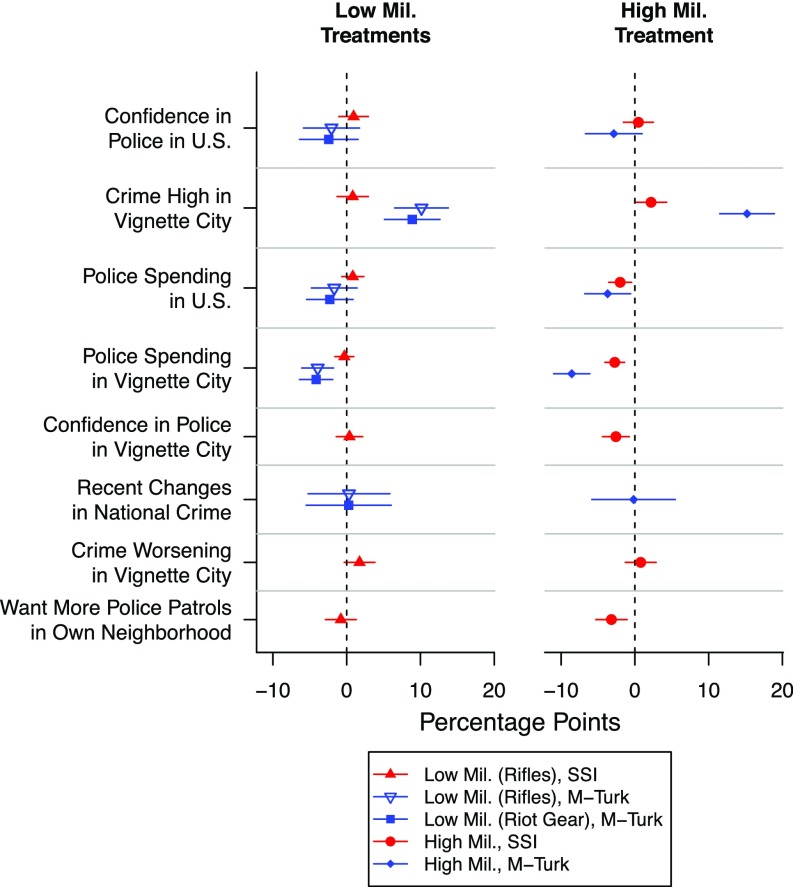
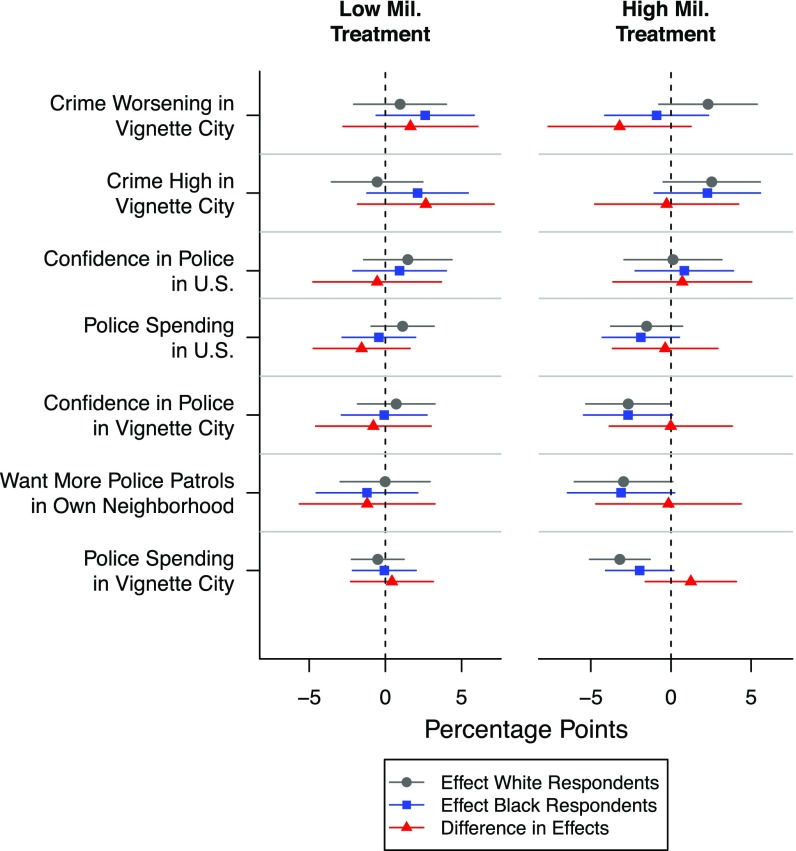
The increasingly visible presence of heavily armed police units in American communities has stoked widespread concern over the militarization of local law enforcement. Advocates claim militarized policing protects officers and deters violent crime, while critics allege these tactics are targeted at racial minorities and erode trust in law enforcement. Using a rare geocoded census of SWAT team deployments from Maryland, I show that militarized police units are more often deployed in communities with large shares of African American residents, even after controlling for local crime rates. Further, using nationwide panel data on local police militarization, I demonstrate that militarized policing fails to enhance officer safety or reduce local crime. Finally, using survey experiments-one of which includes a large oversample of African American respondents-I show that seeing militarized police in news reports may diminish police reputation in the mass public. In the case of militarized policing, the results suggest that the often-cited trade-off between public safety and civil liberties is a false choice.
Overview
The claims and statistics of this paper haven’t been checked yet.
Run the check — free, no account needed. It reads the open-access text and checks the sources it cites.
Integrity signals
Registry
Cites
Statistics
Figures
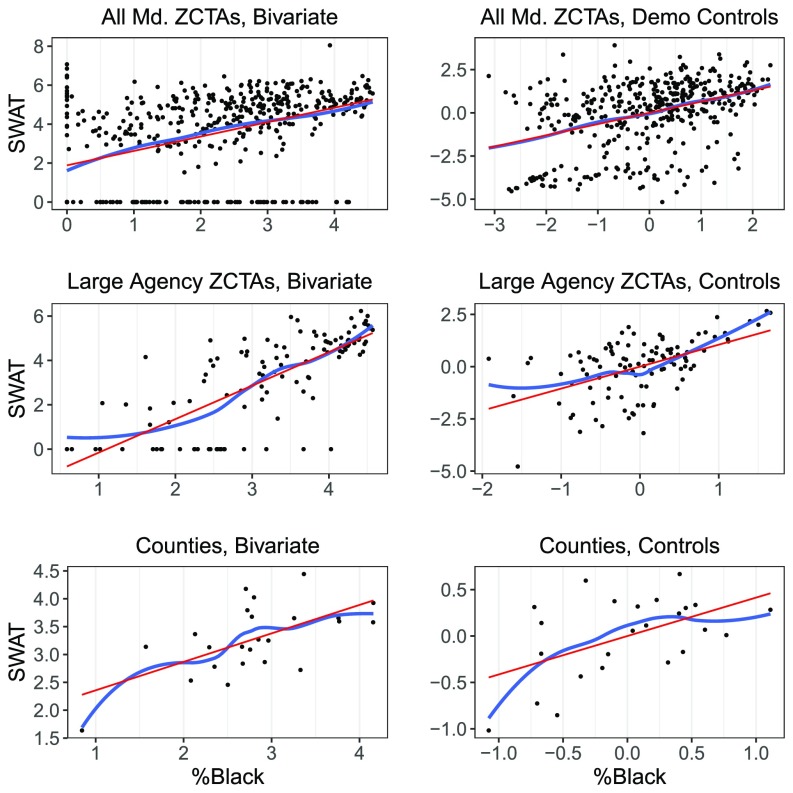
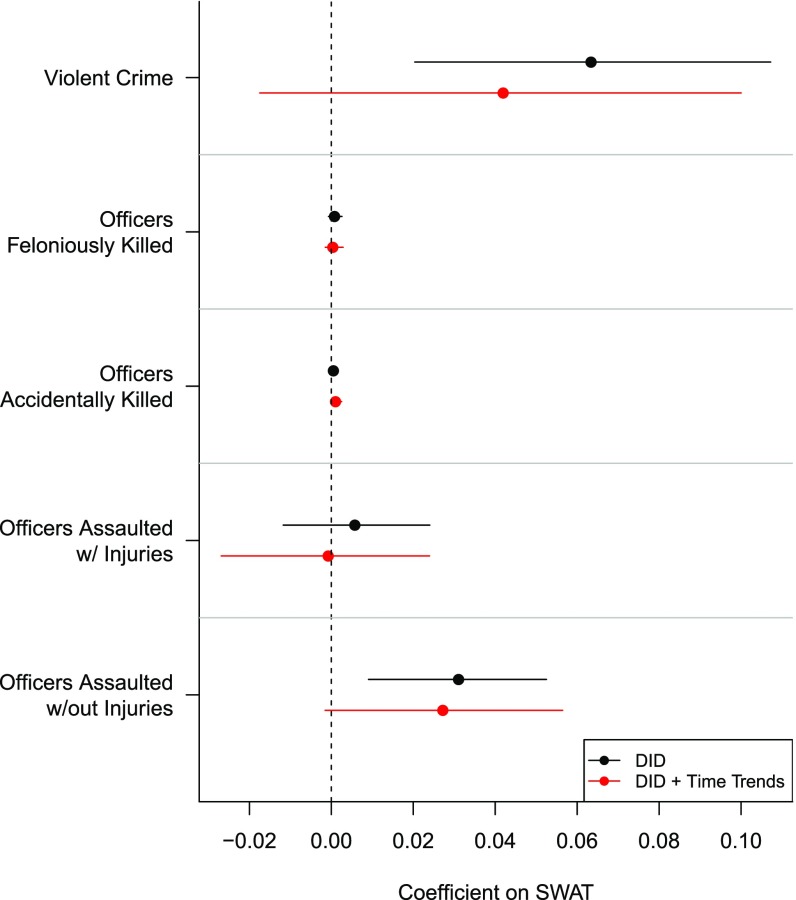
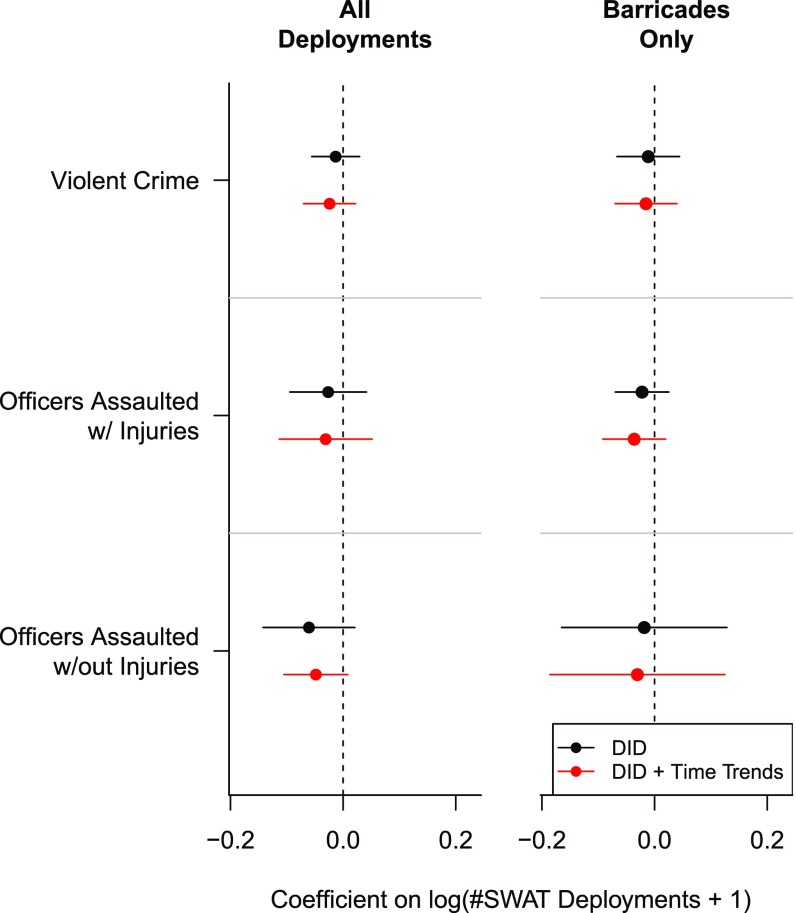
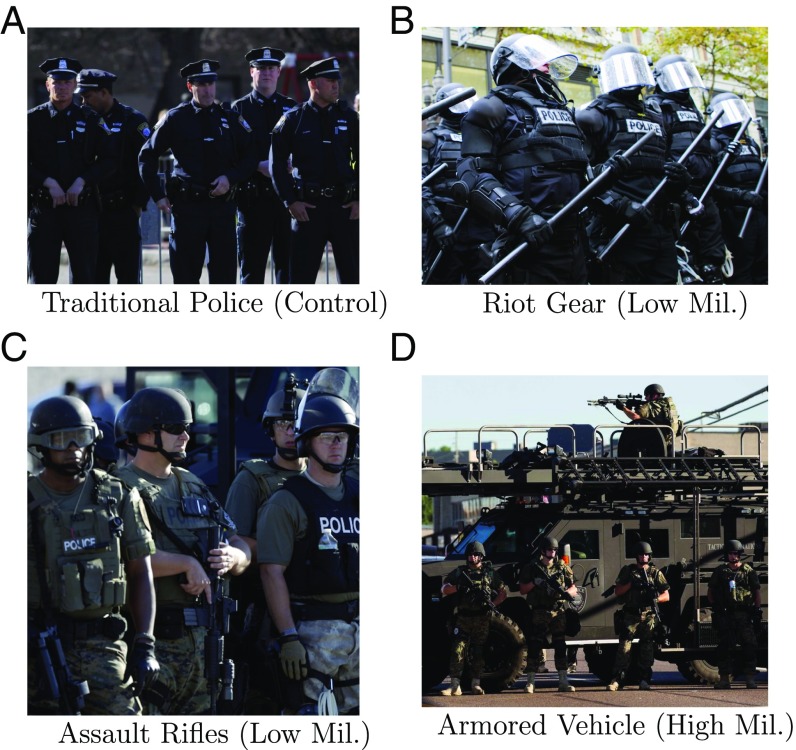
Verification
Claims the paper makes
The claims and statistics of this paper haven’t been checked yet.
Run the check — free, no account needed. It reads the open-access text and checks the sources it cites.
Self-check
Percentages, sums and reported differences re-computed from the paper’s own numbers.
The self-check needs the paper’s full text.
Citations
Cites
Mostly Harmless Econometrics: An Empiricist's Companion
Angrist, J. D., & Pischke, J.-S. (2009) · doi:10.1515/9781400829828 · Cited by 9,467
The new Jim Crow: mass incarceration in the age of colorblindness
(2010) · Choice Reviews Online · doi:10.5860/choice.48-1766 · Cited by 4,414
THE LIMITS OF THE SOVEREIGN STATE: Strategies of Crime Control in Contemporary Society
GARLAND, D. (1996) · The British Journal of Criminology · doi:10.1093/oxfordjournals.bjc.a014105 · Cited by 1,714
Gross, K. S., Brandner, D. D., Martinez, L. A., Olive, M. F., Meisel, R. L., & Mermelstein, P. G. (2016) · PLoS ONE · doi:10.1371/journal.pone.0162755 · Cited by 1,610
Seeing Black: Race, Crime, and Visual Processing.
Eberhardt, J. L., Goff, P. A., Purdie, V. J., & Davies, P. G. (2004) · Journal of Personality and Social Psychology · doi:10.1037/0022-3514.87.6.876 · Cited by 1,208
Legitimacy and Cooperation: Why Do People Help the Police Fight Crime in Their Communities?Preprint
Tyler, T. R., & Fagan, J. A. (2006) · SSRN Electronic Journal · doi:10.2139/ssrn.887737 · Cited by 830
From the War on Poverty to the War on Crime
Hinton, E. (2016) · Harvard University Press eBooks · doi:10.4159/9780674969223 · Cited by 763
Lerman, A. E., & Weaver, V. M. (2014) · University of Chicago Press eBooks · doi:10.7208/chicago/9780226137971.001.0001 · Cited by 656
Militarization and Policing--Its Relevance to 21st Century Police
Kraska, P. B. (2007) · Policing A Journal of Policy and Practice · doi:10.1093/police/pam065 · Cited by 469
Militarizing American Police: The Rise and Normalization of Paramilitary Units
Kraska, P. B., & Kappeler, V. E. (1997) · Social Problems · doi:10.2307/3096870 · Cited by 464
Research works printed but not linked: 1
- ; Institute for Intergovernmental Research, After-action assessment of the police response to the August 2014 demonstrations in Ferguson, Missouri. COPS Office Critical Response Initiative (Office of Community Oriented Policing Services, Washington, DC, 2015).
Cited by
Sorted by citations
Predict and Surveil: Data, Discretion, and the Future of Policing
Brayne, S. (2020) · doi:10.1093/oso/9780190684099.001.0001 · Cited by 334
Administrative Records Mask Racially Biased Policing
KNOX, D., LOWE, W., & MUMMOLO, J. (2020) · American Political Science Review · doi:10.1017/s0003055420000039 · Cited by 314
Self-citationA field experiment on community policing and police legitimacy
Peyton, K., Sierra-Arévalo, M., & Rand, D. G. (2019) · Proceedings of the National Academy of Sciences · doi:10.1073/pnas.1910157116 · Cited by 254
The Militarization of Law Enforcement: Evidence from Latin America
Flores‐Macías, G. A., & Zarkin, J. (2019) · Perspectives on Politics · doi:10.1017/s1537592719003906 · Cited by 249
Procedural justice training reduces police use of force and complaints against officers
Wood, G., Tyler, T. R., & Papachristos, A. V. (2020) · Proceedings of the National Academy of Sciences · doi:10.1073/pnas.1920671117 · Cited by 215
Metadata
- Authors
- Mummolo, J.
- Affiliations
- Princeton University (US)
- Corresponding author
- Mummolo, Jonathan
- ORCID
- Mummolo, Jonathan
- Venue
- Proceedings of the National Academy of Sciences
- Publisher
- National Academy of Sciences
- Published
- 2018-08-20
- Volume
- 115
- Issue
- 37
- Pages
- 9181-9186
- ISSN
- 0027-8424 (ISSN-L)
- 1091-6490
- PMC
- PMC6140536
- OpenAlex
- W2888438187
- Cited by
- 231
- References
- 31
- Citations by year
- 2026: 21 · 2025: 38 · 2024: 21 · 2023: 45 · 2022: 24 · 2021: 24 · 2020: 43 · 2019: 12 · 2018: 3
- FWCI
- 89.21
- Type
- journal article
- Language
- en
- Update notices
- correction (2021-06-28)
- Open access
- hybrid
- doi.org
- Licence
- Locations
- Proceedings of the National Academy of Sciences (publishedVersion, cc-by-nc-nd)
- Europe PMC (PubMed Central) (publishedVersion, cc-by-nc-nd)
- PubMed Central (publishedVersion, cc-by-nc-nd)
- PubMed (publishedVersion)
- Funders
- National Science Foundation (15-571)
- Topics
- Social Sciences › Political Science and International Relations › Policing Practices and Perceptions
- Social Sciences › Sociology and Political Science › Criminal Justice and Corrections Analysis
- Social Sciences › Political Science and International Relations › Military and Defense Studies
- Keywords
- police militarization, SWAT teams, police officer safety, crime rates, African American community, racial disparities in policing, police reputation, public trust in law enforcement, civil liberties
- MeSH terms
- Black or African American, Civil Rights, Crime, Humans, Maryland, Law Enforcement
About these checks
Registry, retraction, Cites and statistics results are computed, not judged, with one exception: a printed reference that no index lists is read once by a model before it counts as a citation error. Claims are extracted by a model and kept only when their quote appears verbatim in the text; each cited source is then checked, with a model’s help, for whether it says what the claim relies on. Those verdicts can be wrong — read the claim’s quote and the cited source before relying on one.
Statistics and arithmetic are recomputed, not judged.
Confidence bands are shown only for fields calibrated on our annotated test set. None is calibrated yet, so no band is shown.
What counts as a claim ›How we measure confidence ›How we check this ›
Are you an author, or do you see a problem with this page? Request a review
