

Atmosphere-ocean oxygen and productivity dynamics during early animal radiations
Open accessThe DOI matches its Crossref record; 81 of the 81 references it cites were found in a registry or an index; 24 of the 81 sources its claims cite were checked for support.
Abstract
Significance We have discovered 2 major oceanic anoxic events (OAEs) in the early Cambrian at the time when animals markedly diversified. We present a multiproxy constraint on the global biogeochemical cycles to show that these events, in contrast to most younger OAEs, could have been driven by declining atmospheric O 2 levels, plausibly set off by the appearance of bioturbating animals. Pulses of animal appearances may have occurred at different times on different continents, but the last pulse occurred after the OAEs and at a time when we predict higher marine productivity and O 2 levels in the surface oceans suggesting energy supply into the marine food chain was maximal.
Overview
CoChat Summary
TL;DR
This paper uses uranium isotopes in Terreneuvian marine carbonates, plus carbon-sulfur-strontium isotope mass-balance modeling, to reconstruct early Cambrian ocean oxygenation and atmospheric pO2. The authors argue that two major early Cambrian oceanic anoxic events were driven mainly by declining atmospheric O2 and linked to evolving benthic animals, with later animal radiations occurring under higher surface-ocean O2 and productivity.
Key findings
- The authors analyzed δ238U in 187 and δ34S in 93 marine carbonate rock samples from 6 localities across 3 paleocontinents, spanning most of the Terreneuvian.
- They identify 2 major early Cambrian oceanic anoxic events (OAEs), with large negative δ238U excursions of about −0.4‰ correlated with positive δ13C excursions (>4‰); they interpret this as global expansion of anoxic water masses.
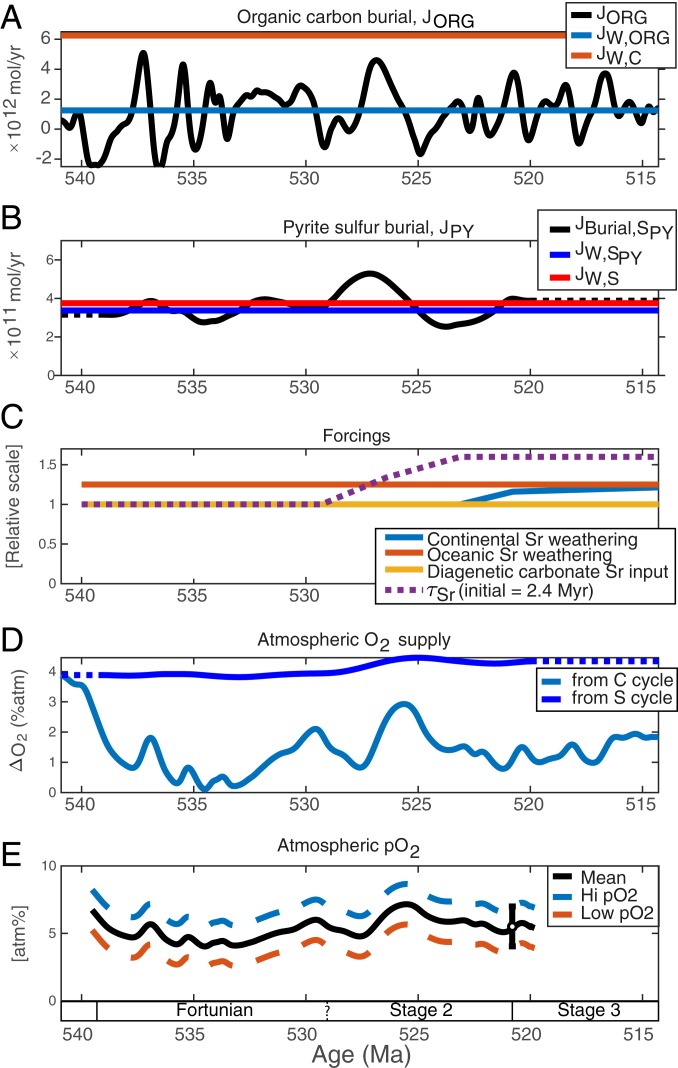
- Their reconstruction suggests atmospheric pO2 declined from ~7 atm% at the Precambrian–Cambrian boundary to a minimum of ~4 atm% at ~533 Ma, then rose during the OAEs and settled at ~6 atm% after the second OAE.
- The modeled ocean oxygenation state oscillated strongly: at peak anoxia, fU = 100 ± 28% and δ238U = −0.80 ± 0.05‰; during peak oxia, fU ~18 ± 16% and δ238U = −0.40 ± 0.05‰.
- They estimate Terreneuvian surface-ocean dissolved O2 was ~40 to 110 μmol·kg−1, above the cited severe-hypoxia threshold of ~9 μmol·kg−1, and argue the late Terreneuvian (Tommotian) pulse of animal appearances occurred when surface-ocean O2 and productivity were higher.
Methods
- The study combines high-resolution geochemical sampling of Terreneuvian carbonate rocks with uranium, sulfur, and strontium isotope measurements and mass-balance modeling.
- Sample set: 187 carbonate samples for δ238U and 93 for δ34S, from 6 localities in China, Siberia, and Morocco; ages were assigned using a global age model combining chronostratigraphic, biostratigraphic, and chemostratigraphic data.
- Analytical approach: carbonate-associated elements were measured by ICP-MS, mineralogy by powder X-ray diffraction, δ238U by double-spike isotope analysis, and δ34S by conventional sulfate extraction and mass spectrometry; the isotope records were then used in mass-balance models to reconstruct atmospheric pO2 and global marine productivity.
Limitations
- The paper states that carbon, sulfur, and strontium isotope records do not uniquely determine absolute atmospheric pO2, and that shelfal processes and diagenesis might push these signals in different directions.
- The authors note that the age model is uncertain, which affects the predicted atmospheric pO2 trajectory, though they argue the main features are robust.
- Evident from the text: the proxy approach can be influenced by local depositional and diagenetic effects, so the authors had to screen for alteration and use smoothing/interpolation; they also acknowledge that links between fossil appearance pulses and environmental change remain tentative because of possible stratigraphic/preservational biases.
Model-written summary. Check it against the paper before relying on it.
Integrity signals
Registry
Cites
Statistics
Figures
Verification
Claims the paper makes
17 Valid · 8 Not valid · 29 Not checked · 77 Own results and interpretations
The sources with a verdict support this claim; the rest weren’t checked yet, have no full text we could read, or their verdicts aren’t rated yet.
In the paper
“The δ238U proxy has been applied to better constrain oceanic anoxic events (OAEs) in the past and reliably recorded negative δ238U excursions at times when anoxic water masses expanded in the oceans (19–23).”
§ Atmosphere–ocean oxygen and productivity dynamics during early animal radiations > The Uranium Isotope Proxy for Global Seafloor Oxygenation
What the sources say
- Supportedcites [19] Dahl T. W., Uranium isotopes distinguish two geochemically distinct stages during the later Cambrian SPICE event. Earth Planet. Sci. Lett. 401, 313– 326 (2014). 25684783 PMC4326682 source
The Uranium isotope geochemistry section states that more negative seawater δ238U implies increased uranium burial in anoxic settings. The Results and discussion section reports a negative δ238U excursion during the SPICE event and interprets its onset as indicating developing anoxia and euxinia; it also says the agreement among isotope excursions supports a global seawater signal. (LLM, conf=0.90)
- Not checked — no full text of the sourcecites [20] Montoya-Pino C., Global enhancement of ocean anoxia during Oceanic Anoxic Event 2: A quantitative approach using U isotopes. Geology 38, 315– 318 (2010). source
- Not checked — no full text of the sourcecites [21] Brenchley P. J., Marshall J. D., Underwood C. J., Do all mass extinctions represent an ecological crisis? Evidence from the Late Ordovician. Geol. J. 36, 329– 340 (2001). source
- Not checked — no full text of the sourcecites [22] Elrick M., Global-ocean redox variation during the middle-late Permian through Early Triassic based on uranium isotope and Th/U trends of marine carbonates. Geology 45, 163– 166 (2017). source
- Not checked — no full text of the sourcecites [23] Lau K. V., Marine anoxia and delayed Earth system recovery after the end-Permian extinction. Proc. Natl. Acad. Sci. U.S.A. 113, 2360– 2365 (2016). 26884155 PMC4780601 source
boostedstates an association- Asserted: passes — The authors put it forward as true.
- Checkable: passes — It can be checked against evidence.
- Load-bearing: passes — The paper’s conclusions depend on it.
- Based: passes — The paper gives a reason why it holds.
- Supported
The cited sources support only part of this claim — read each source’s verdict below.
In the paper
“Model calculations suggest that oceans still would have been homogeneous in U isotope composition during the Cambrian, despite potentially greater U burial in anoxic settings that were generally more common at the time (19).”
§ Atmosphere–ocean oxygen and productivity dynamics during early animal radiations > The Uranium Isotope Proxy for Global Seafloor Oxygenation
What the sources say
- Partly supportedcites [19] Dahl T. W., Uranium isotopes distinguish two geochemically distinct stages during the later Cambrian SPICE event. Earth Planet. Sci. Lett. 401, 313– 326 (2014). 25684783 PMC4326682 sourceExperimental — accuracy not yet measured
Section 2 treats seawater U as a global isotope reservoir, and Section 4.1 models Cambrian conditions with larger euxinic areas and enhanced burial. But the model assumes a global seawater composition; the cited passages do not show calculations testing whether Cambrian oceans remained isotopically homogeneous despite that burial. (LLM, conf=0.82)
hedged- Asserted: passes — The authors put it forward as true.
- Checkable: passes — It can be checked against evidence.
- Load-bearing: passes — The paper’s conclusions depend on it.
- Based: passes — The paper gives a reason why it holds.
- Partly supported
The cited sources support only part of this claim — read each source’s verdict below.
In the paper
“Attempts to test the food and oxygenation hypotheses have given ambiguous results (7, 9, 14, 15), in part due to insufficient spatial and/or temporal resolution of the available paleo-O2 and paleoproductivity proxies.”
§ Atmosphere–ocean oxygen and productivity dynamics during early animal radiations > Abstract
What the sources say
- Not checked — no full text of the sourcecites [7] Boyle R. A., Stabilization of the coupled oxygen and phosphorus cycles by the evolution of bioturbation. Nat. Geosci. 7, 671– 676 (2014). source
- Partly supportedcites [9] Chen X., Rise to modern levels of ocean oxygenation coincided with the Cambrian radiation of animals. Nat. Commun. 6, 7142 (2015). 25980960 PMC4479002 sourceExperimental — accuracy not yet measured
The paper’s opening section says the oxygen–Cambrian evolution link has been elusive and that early Cambrian ocean redox conditions remain controversial. The Discussion calls for high-resolution palaeoenvironmental studies, but the paper does not attribute the ambiguity specifically to insufficient spatial or temporal resolution of paleo-O2 and paleoproductivity proxies, nor does it assess ambiguous tests of the food hypothesis. (LLM, conf=0.83)
- Partly supportedcites [14] Dahl T. W., Devonian rise in atmospheric oxygen correlated to the radiations of terrestrial plants and large predatory fish. Proc. Natl. Acad. Sci. U.S.A. 107, 17911– 17915 (2010). 20884852 PMC2964239 sourceExperimental — accuracy not yet measured
The Abstract (page not provided) says oxygen levels could not be quantified from the cited proxies and that models give divergent Paleozoic oxygen estimates, supporting uncertainty about oxygenation. It does not address tests of a food hypothesis or attribute the ambiguity to insufficient spatial or temporal resolution of paleo-O2 or paleoproductivity proxies. (LLM, conf=0.78)
- Not checked — no full text of the sourcecites [15] Sperling E. A., Statistical analysis of iron geochemical data suggests limited late Proterozoic oxygenation. Nature 523, 451– 454 (2015). 26201598 source
plainstates a cause- Asserted: passes — The authors put it forward as true.
- Checkable: passes — It can be checked against evidence.
- Load-bearing: passes — The paper’s conclusions depend on it.
- Based: passes — The paper gives a reason why it holds.
The cited sources that could be checked couldn’t confirm or dispute this claim.
In the paper
“A careful inspection of the U shale record on a total organic carbon-normalized basis and statistical analyses (SI Appendix, Fig. S11) allows us to reject a previous conjecture that the oceanic U inventory steadily increased from the Neoproterozoic into the Cambrian (8).”
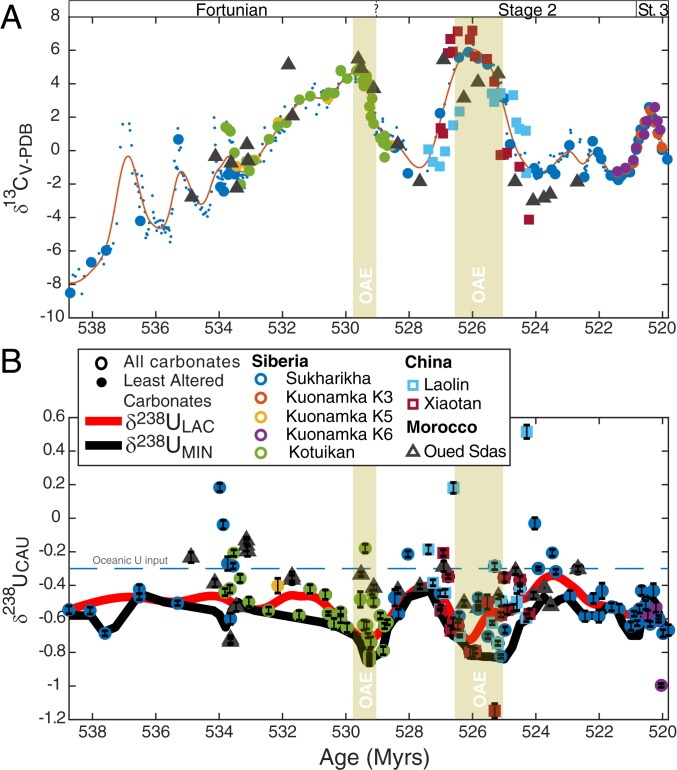
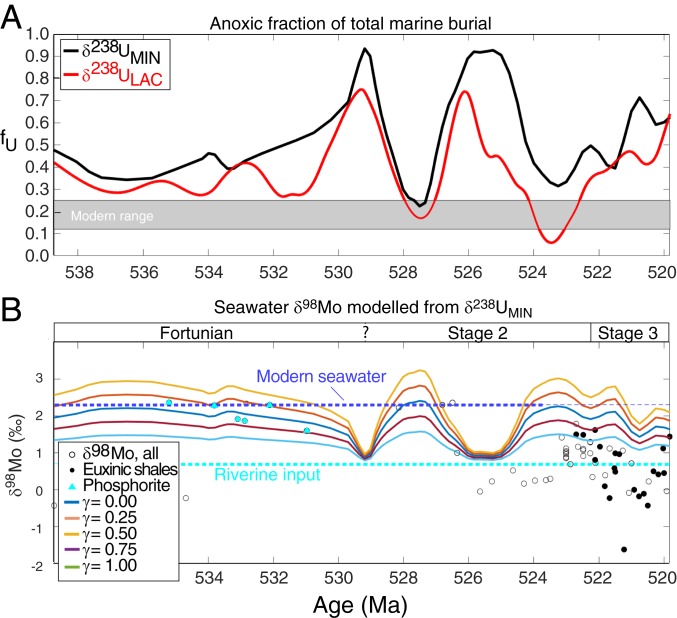
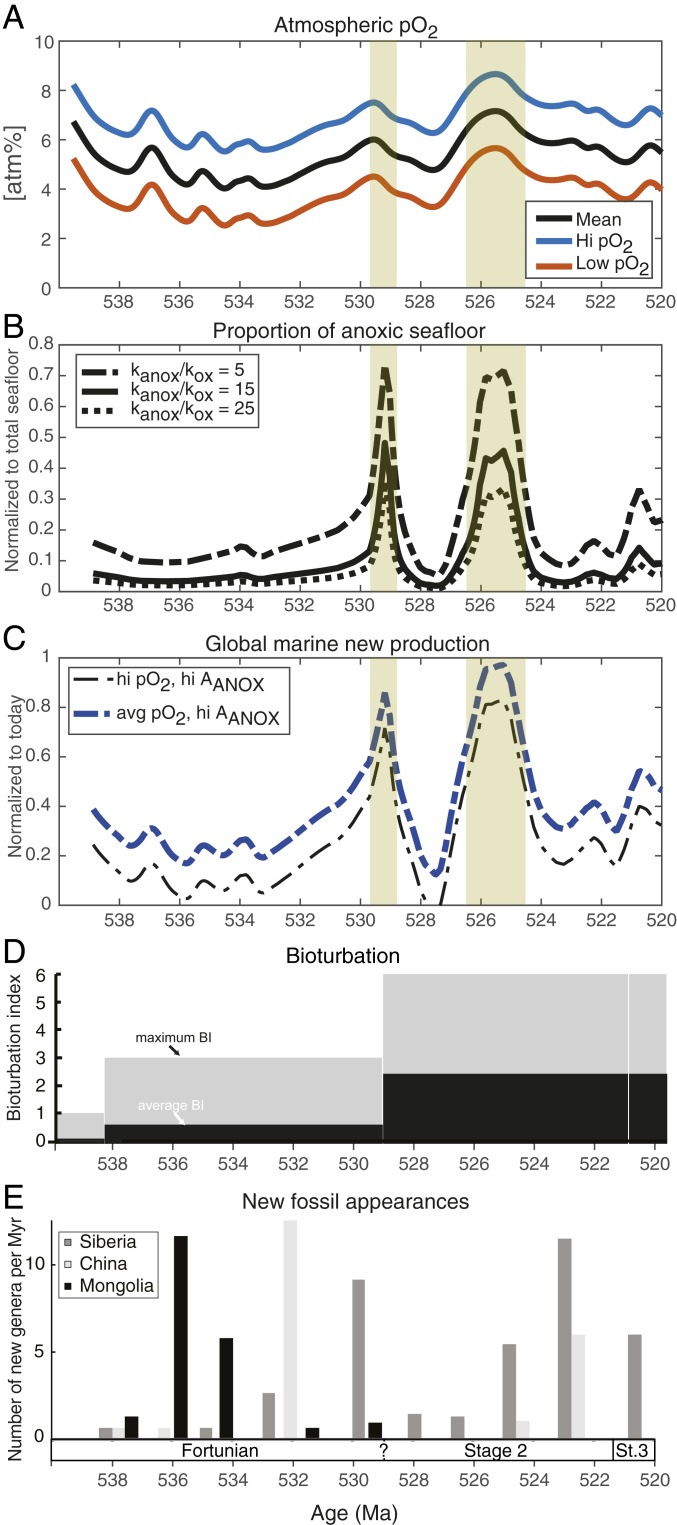
§ Atmosphere–ocean oxygen and productivity dynamics during early animal radiations > Discussion > Massive Expansions in the Extent of Seafloor Anoxia. The uranium isotope record indicates that the modeled oxygenation state of the early Cambrian oceans was neither steady nor monotonous (7–9, 47, 48), but rather oscillated dramatically in concert with changes to the global marine carbon cycle as indicated by the δ13C curve. Fig. 4A shows the calculated proportion of total marine U burial occurring in anoxic marine settings (fU) from the estimated seawater δ238U trends. The calculation assumes a constant U input from rivers and a constant isotope fractionation between seawater and the U sinks. The change in weathering regime favoring more granitic than basaltic rock weathering should not affect the concentration or isotope composition oceanic input (18, 49). The modern oceans have a homogenous δ238U composition of −0.39 ± 0.04‰ (all errors are 2 SE) slightly below riverine input and crustal rocks (−0.30 ± 0.03‰) due to isotope fractionation occurring when U is buried in reducing sediments (18). Given that 12 to 25% of marine U burial occurs in anoxic sediments with a large positive +0.5 ± 0.1‰ offset from seawater today, all other U sinks (mainly carbonates and reducing sediments below oxic waters) carry an average isotopic offset of −0.01 ± 0.06‰ (18, 45, 50). Applying these constants to the Terreneuvian implies that the early Fortunian (∼539 to 532 Ma) oceans were initially less oxygenated than today (δ238U = −0.6 ± 0.1‰, fU = 59 ± 27%). Over millions of years, the modeled oxygenation state of the oceans oscillated between extreme anoxia and extreme oxia with respect to marine U cycling. At peak anoxia, essentially all marine U burial occurred in anoxic settings (δ238U = −0.80 ± 0.05, fU = 100 ± 28%) and oceans were as oxygenated as today during peak oxia in the immediate aftermath of the events (fU ∼ 18 ± 16%, δ238U = −0.40 ± 0.05‰). In the latest part of the Terreneuvian (“Tommotian,” ∼525 to 521 Ma, fU = 69 ± 22%, δ238U = −0.65 ± 0.05‰), oceans returned to an intermediately anoxic state before the major radiation of arthropods, when a brief and dynamically distinct ocean oxygenation episode is inferred from Siberian sections at 521 to 520 Ma, as seen in Figs. 2B and 4A (45). A first-order estimate for the areal proportion of anoxic seafloor (AANOX) can be derived from fU and the ratio of average U burial rates in anoxic and oxic continental shelf settings (rANOX/rOX = 15 ± 10; SI Appendix):rANOXAANOX/rOX(1–AANOX)=fU/(1–fU).[4]The estimated seafloor area only includes areas where sedimentation occurs at rates relevant for continental shelves, since anoxia in areas with little or no sediment accumulation will go undetected. The U burial fluxes in oxic and anoxic settings are assumed to scale with seawater uranium concentration in a similar fashion and therefore cancel out in Eq. 4. The resulting anoxic seafloor coverage on a sedimentation-weighted basis is shown in Fig. 6B. During peak anoxia, we find that anoxic water masses might have expanded across 70 to 80% of the continental shelf areas. These OAEs in the Terreneuvian would have affected all redox-sensitive metal marine cycles and their isotopes. For example, the oceanic U inventory is predicted to decrease ∼2- to 4-fold during some Phanerozoic OAEs, due to higher U removal rate in anoxic settings relative to oxic settings (19, 23, 51). Interestingly, uranium enrichments in Moroccan carbonates systematically oscillate with about the predicted amplitude in concert with the putative Terreneuvian OAEs (see details in SI Appendix) (33). However, most other sections do not show clear stratigraphic patterns in U contents and U/Th ratios. A dramatic increase in U abundances in shales has been interpreted as evidence for Terreneuvian ocean oxygenation (8). However, the U content in both carbonates and shales predominantly reflect processes in the local depositional environment that affect the U content of sediments more than the subtle variations in the size of the marine U inventory. For example in carbonates, the U content can vary 100-fold depending the relative abundances of primary carbonate minerals and the extent of early diagenetic U loss. U enrichments found in shales are dependent on their total organic carbon content (52). A careful inspection of the U shale record on a total organic carbon-normalized basis and statistical analyses (SI Appendix, Fig. S11) allows us to reject a previous conjecture that the oceanic U inventory steadily increased from the Neoproterozoic into the Cambrian (8). The changes in global ocean oxygenation state can be independently verified in the molybdenum isotope record, especially if hydrogen sulfide was abundant in the expanding anoxic water masses. This connection appears because both molybdenum and uranium are well-mixed elements in the oceans, and the isotope compositions of seawater (δ98Mo, δ238U) are both positively related to the proportion of global sediment burial in oxygenated settings. Local processes tend to drive the 2 isotope systems in opposite directions, such that the carbonate δ238U record is equal to or higher than seawater δ238U, therefore overestimating global ocean oxygenation, whereas the δ98Mo record in shales adopt seawater δ98Mo or lower values, therefore underestimating global ocean oxygenation. In principle, this relationship means that the combination of the two isotope systems brackets the global ocean oxygenation state. In Fig. 4B, we show the predicted seawater δ98Mo curves derived from the δ238U record if changes in seawater composition were dictated primarily by sediment burial in anoxic marine settings (details in SI Appendix). The comparison of model and data suggests that ∼90% of all shale samples carry a −1 to −2‰ offset of the δ98Mo values relative to the predicted seawater δ98Mo composition, in good agreement with observations from modern open marine euxinic settings (45). A few samples plot in the forbidden zone above the modeled seawater δ98Mo curves. However, this offset can be ascribed to inaccurate age assignment of the shales (up to ∼1 to 2 My), since there is no chemostratigraphic or chronostratigraphic control that can be used to correlate the siliciclastic sediments to the carbonate record at this temporal resolution. Therefore, the δ238U record from carbonates can be viewed as superior to the existing shale-based Mo isotope record in terms of reliably recording secular changes in global extent of seafloor oxygenation. Nevertheless, the δ98Mo record and model independently verify the large oscillations in marine oxygenation and have low values, similar to the Proterozoic average (∼1.0‰), during peak anoxia and values as high as the modern (up to 2.3‰) during peak oxia, corresponding to the proportion of oxic Mo removal that occurs with marine Mn-oxide burial. The Mo isotope data demand a substantial Mn-oxide sink for Mo before and between the OAEs (25 to 75%) comparable to today (41 ± 3%) and somewhat smaller (0 to 25%) after the OAEs (53). As a large part of this Mo sink occurs in the deep abyssal oxygenated settings in the ocean today, the high Mo isotope values (>1.5‰) before and in between OAEs suggest that oxygenation was a global phenomenon that expanded well beyond the continental shelves and into the deep ocean where Mn-oxide deposition is common in oxygenated areas (14).
What the sources say
- Could not verifycites [8] Sperling E. A., Oxygen, ecology, and the Cambrian radiation of animals. Proc. Natl. Acad. Sci. U.S.A. 110, 13446– 13451 (2013). 23898193 PMC3746845 sourceExperimental — accuracy not yet measured
Split into 2 atoms — 0 confirmed, 0 partially supported, 0 disputed, 0 misattributed, 2 unverifiable. Expand the claim to see per-atom verdicts.
plain- Asserted: passes — The authors put it forward as true.
- Checkable: passes — It can be checked against evidence.
- Load-bearing: passes — The paper’s conclusions depend on it.
- Based: passes — The paper gives a reason why it holds.
- Could not verify
The cited sources support only part of this claim — read each source’s verdict below.
In the paper
“As a large part of this Mo sink occurs in the deep abyssal oxygenated settings in the ocean today, the high Mo isotope values (>1.5‰) before and in between OAEs suggest that oxygenation was a global phenomenon that expanded well beyond the continental shelves and into the deep ocean where Mn-oxide deposition is common in oxygenated areas (14).”
§ Atmosphere–ocean oxygen and productivity dynamics during early animal radiations > Discussion > Massive Expansions in the Extent of Seafloor Anoxia. The uranium isotope record indicates that the modeled oxygenation state of the early Cambrian oceans was neither steady nor monotonous (7–9, 47, 48), but rather oscillated dramatically in concert with changes to the global marine carbon cycle as indicated by the δ13C curve. Fig. 4A shows the calculated proportion of total marine U burial occurring in anoxic marine settings (fU) from the estimated seawater δ238U trends. The calculation assumes a constant U input from rivers and a constant isotope fractionation between seawater and the U sinks. The change in weathering regime favoring more granitic than basaltic rock weathering should not affect the concentration or isotope composition oceanic input (18, 49). The modern oceans have a homogenous δ238U composition of −0.39 ± 0.04‰ (all errors are 2 SE) slightly below riverine input and crustal rocks (−0.30 ± 0.03‰) due to isotope fractionation occurring when U is buried in reducing sediments (18). Given that 12 to 25% of marine U burial occurs in anoxic sediments with a large positive +0.5 ± 0.1‰ offset from seawater today, all other U sinks (mainly carbonates and reducing sediments below oxic waters) carry an average isotopic offset of −0.01 ± 0.06‰ (18, 45, 50). Applying these constants to the Terreneuvian implies that the early Fortunian (∼539 to 532 Ma) oceans were initially less oxygenated than today (δ238U = −0.6 ± 0.1‰, fU = 59 ± 27%). Over millions of years, the modeled oxygenation state of the oceans oscillated between extreme anoxia and extreme oxia with respect to marine U cycling. At peak anoxia, essentially all marine U burial occurred in anoxic settings (δ238U = −0.80 ± 0.05, fU = 100 ± 28%) and oceans were as oxygenated as today during peak oxia in the immediate aftermath of the events (fU ∼ 18 ± 16%, δ238U = −0.40 ± 0.05‰). In the latest part of the Terreneuvian (“Tommotian,” ∼525 to 521 Ma, fU = 69 ± 22%, δ238U = −0.65 ± 0.05‰), oceans returned to an intermediately anoxic state before the major radiation of arthropods, when a brief and dynamically distinct ocean oxygenation episode is inferred from Siberian sections at 521 to 520 Ma, as seen in Figs. 2B and 4A (45). A first-order estimate for the areal proportion of anoxic seafloor (AANOX) can be derived from fU and the ratio of average U burial rates in anoxic and oxic continental shelf settings (rANOX/rOX = 15 ± 10; SI Appendix):rANOXAANOX/rOX(1–AANOX)=fU/(1–fU).[4]The estimated seafloor area only includes areas where sedimentation occurs at rates relevant for continental shelves, since anoxia in areas with little or no sediment accumulation will go undetected. The U burial fluxes in oxic and anoxic settings are assumed to scale with seawater uranium concentration in a similar fashion and therefore cancel out in Eq. 4. The resulting anoxic seafloor coverage on a sedimentation-weighted basis is shown in Fig. 6B. During peak anoxia, we find that anoxic water masses might have expanded across 70 to 80% of the continental shelf areas. These OAEs in the Terreneuvian would have affected all redox-sensitive metal marine cycles and their isotopes. For example, the oceanic U inventory is predicted to decrease ∼2- to 4-fold during some Phanerozoic OAEs, due to higher U removal rate in anoxic settings relative to oxic settings (19, 23, 51). Interestingly, uranium enrichments in Moroccan carbonates systematically oscillate with about the predicted amplitude in concert with the putative Terreneuvian OAEs (see details in SI Appendix) (33). However, most other sections do not show clear stratigraphic patterns in U contents and U/Th ratios. A dramatic increase in U abundances in shales has been interpreted as evidence for Terreneuvian ocean oxygenation (8). However, the U content in both carbonates and shales predominantly reflect processes in the local depositional environment that affect the U content of sediments more than the subtle variations in the size of the marine U inventory. For example in carbonates, the U content can vary 100-fold depending the relative abundances of primary carbonate minerals and the extent of early diagenetic U loss. U enrichments found in shales are dependent on their total organic carbon content (52). A careful inspection of the U shale record on a total organic carbon-normalized basis and statistical analyses (SI Appendix, Fig. S11) allows us to reject a previous conjecture that the oceanic U inventory steadily increased from the Neoproterozoic into the Cambrian (8). The changes in global ocean oxygenation state can be independently verified in the molybdenum isotope record, especially if hydrogen sulfide was abundant in the expanding anoxic water masses. This connection appears because both molybdenum and uranium are well-mixed elements in the oceans, and the isotope compositions of seawater (δ98Mo, δ238U) are both positively related to the proportion of global sediment burial in oxygenated settings. Local processes tend to drive the 2 isotope systems in opposite directions, such that the carbonate δ238U record is equal to or higher than seawater δ238U, therefore overestimating global ocean oxygenation, whereas the δ98Mo record in shales adopt seawater δ98Mo or lower values, therefore underestimating global ocean oxygenation. In principle, this relationship means that the combination of the two isotope systems brackets the global ocean oxygenation state. In Fig. 4B, we show the predicted seawater δ98Mo curves derived from the δ238U record if changes in seawater composition were dictated primarily by sediment burial in anoxic marine settings (details in SI Appendix). The comparison of model and data suggests that ∼90% of all shale samples carry a −1 to −2‰ offset of the δ98Mo values relative to the predicted seawater δ98Mo composition, in good agreement with observations from modern open marine euxinic settings (45). A few samples plot in the forbidden zone above the modeled seawater δ98Mo curves. However, this offset can be ascribed to inaccurate age assignment of the shales (up to ∼1 to 2 My), since there is no chemostratigraphic or chronostratigraphic control that can be used to correlate the siliciclastic sediments to the carbonate record at this temporal resolution. Therefore, the δ238U record from carbonates can be viewed as superior to the existing shale-based Mo isotope record in terms of reliably recording secular changes in global extent of seafloor oxygenation. Nevertheless, the δ98Mo record and model independently verify the large oscillations in marine oxygenation and have low values, similar to the Proterozoic average (∼1.0‰), during peak anoxia and values as high as the modern (up to 2.3‰) during peak oxia, corresponding to the proportion of oxic Mo removal that occurs with marine Mn-oxide burial. The Mo isotope data demand a substantial Mn-oxide sink for Mo before and between the OAEs (25 to 75%) comparable to today (41 ± 3%) and somewhat smaller (0 to 25%) after the OAEs (53). As a large part of this Mo sink occurs in the deep abyssal oxygenated settings in the ocean today, the high Mo isotope values (>1.5‰) before and in between OAEs suggest that oxygenation was a global phenomenon that expanded well beyond the continental shelves and into the deep ocean where Mn-oxide deposition is common in oxygenated areas (14).
What the sources say
- Partly supportedcites [14] Dahl T. W., Devonian rise in atmospheric oxygen correlated to the radiations of terrestrial plants and large predatory fish. Proc. Natl. Acad. Sci. U.S.A. 107, 17911– 17915 (2010). 20884852 PMC2964239 sourceExperimental — accuracy not yet measured
The Mo-cycle modeling section (page unavailable) says the rise to about 2.0‰ from the Silurian into the Devonian requires a substantial deepwater oxic Mo sink, and it links deep-ocean oxic Mo removal with Mn-oxides. It does not establish a >1.5‰ threshold or identify high values specifically before and between oceanic anoxic events. (LLM, conf=0.85)
hedgedstates a possible cause- Asserted: passes — The authors put it forward as true.
- Checkable: passes — It can be checked against evidence.
- Load-bearing: passes — The paper’s conclusions depend on it.
- Based: passes — The paper gives a reason why it holds.
- Partly supported
61 more claims · 7 with their cited sources checked
Create a free account to see all 131 claims and to verify the 2 references still open.
- It may state two separate claims as one. 57
- Probably not a substantial claim. 12
Claims other papers make about this one
Each is checked against this paper’s own text: does it say what the citing paper says it does?
The source backs part of the claim, not all of it — or backs it for a different population, condition or comparison.
In the citing paper
“Seawater δ238U compilations from both carbonate and siliciclastic rocks suggest that multiple oscillations in global marine redox conditions occurred at 1- to 10-Ma timescales [e.g., (38–40)].”
From Sea level controls on Ediacaran-Cambrian animal radiations (2024) · cites this paper as [39]
Experimental — accuracy not yet measuredThe source backs part of the claim, not all of it — or backs it for a different population, condition or comparison.
In the citing paper
“Integrating δ238Ucarb and carbonate-associated sulfate (δ34SCAS) isotopic data reveals that supposed OOEs in the Ediacaran-Cambrian interval occur synchronously with changes to the global marine carbon cycle, as indicated by co-occurring trends in δ13Ccarb data from the same samples, in addition to trends in coeval data revealed by regional and global chemostratigraphic correlation (39, 46, 47).”
From Sea level controls on Ediacaran-Cambrian animal radiations (2024) · cites this paper as [39]
Experimental — accuracy not yet measuredThe source backs part of the claim, not all of it — or backs it for a different population, condition or comparison.
In the citing paper
“Increasing δ13Ccarb and δ34SCAS (rising limbs) and δ238Ucarb falling limbs then captures marine deoxygenation conducive to the progressive burial of organic carbon and pyrite, driving a long-term build-up of atmospheric oxygen (39, 46).”
From Sea level controls on Ediacaran-Cambrian animal radiations (2024) · cites this paper as [39]
Experimental — accuracy not yet measuredThe source backs part of the claim, not all of it — or backs it for a different population, condition or comparison.
In the citing paper
“For instance, sulfur and uranium isotope systematics indicate multiple intense spikes in the pervasiveness of marine anoxia during the early (∼530 Mya) and late (∼500 Mya) Cambrian (Dahl et al. 2019, Gill et al. 2011)”
From The History of Ocean Oxygenation (2022) · cites this paper as Dahl et al. 2019
Experimental — accuracy not yet measuredThe cited source says what the claim attributes to it.
In the citing paper
“while there appear to have been transient intervals of ocean oxygenation intensity that may have been similar to that of the modern Earth (Dahl et al. 2019).”
From The History of Ocean Oxygenation (2022) · cites this paper as Dahl et al. 2019
Citations
Cites
The rise of oxygen in Earth's early ocean and atmosphere
Lyons, T. W., Reinhard, C. T., & Planavsky, N. J. (2014) · Nature · doi:10.1038/nature13068 · Cited by 2,810
A Chronology of Paleozoic Sea-Level Changes
Haq, B. U., & Schutter, S. R. (2008) · Science · doi:10.1126/science.1161648 · Cited by 1,623 · cited 1×
“Second, a change in ocean circulation patterns perhaps linked to slowly rising sea levels may have stratified the oceans and made some parts of the oceans more prone to expanding anoxia even without atmospheric pO2 decline, once again initiating the positive-feedback loop involving P regeneration in anoxic basins (64).”
Erwin, D. H., Laflamme, M., Tweedt, S. M., Sperling, E. A., Pisani, D., & Peterson, K. J. (2011) · Science · doi:10.1126/science.1206375 · Cited by 1,336 · cited 1×
“One hypothesis is that rising O2 availability in the marine realm allowed the evolution of carnivory, which in turn drove predator–prey “arms races” and concomitant diversification (3, 8).”
GEOCARBSULF: A combined model for Phanerozoic atmospheric O2 and CO2
Berner, R. A. (2006) · Geochimica et Cosmochimica Acta · doi:10.1016/j.gca.2005.11.032 · Cited by 1,120
Tracing the stepwise oxygenation of the Proterozoic ocean
Scott, C., Lyons, T. W., Bekker, A., Shen, Y., Poulton, S. W., Chu, X., & Anbar, A. D. (2008) · Nature · doi:10.1038/nature06811 · Cited by 1,098
The Absolute Chronology and Thermal Processing of Solids in the Solar Protoplanetary Disk
Connelly, J. N., Bizzarro, M., Krot, A. N., Nordlund, Å., Wielandt, D., & Ivanova, M. A. (2012) · Science · doi:10.1126/science.1226919 · Cited by 917 · cited 2×
“Chemical purification was conducted using 4 sequential ion chromatography columns to ensure high U purity of the analyzed solution similar tothereferencestandardsolution(CRM-145)(72).”
Self-citationGlobal distribution of naturally occurring marine hypoxia on continental margins
Helly, J. J., & Levin, L. A. (2004) · Deep Sea Research Part I: Oceanographic Research Papers · doi:10.1016/j.dsr.2004.03.009 · Cited by 767 · cited 1×
“25% of the seafloor is overlain by anoxic water masses similar to modern productivity and oxygen levels (newp′ = o′ = 1) and the formula gives a fairly sharp transition of AANOX from 23 to 77% as atmospheric pO2 declines from 13 to 8 atm%, consistent with biogeochemical models for the spatial distribution of oxygen in…”
Statistical analysis of iron geochemical data suggests limited late Proterozoic oxygenation
Sperling, E. A., Wolock, C. J., Morgan, A. S., Gill, B. C., Kunzmann, M., Halverson, G. P., Macdonald, F. A., Knoll, A. H., & Johnston, D. T. (2015) · Nature · doi:10.1038/nature14589 · Cited by 637 · cited 1×
“Attempts to test the food and oxygenation hypotheses have given ambiguous results (7, 9, 14, 15), in part due to insufficient spatial and/or temporal resolution of the available paleo-O2 and paleoproductivity proxies.”
Self-citationVan Cappellen, P., & Ingall, E. D. (1994) · Paleoceanography · doi:10.1029/94pa01455 · Cited by 511 · cited 1×
“Hence, we suggest that limited O2 supply from the atmosphere could have initiated the expansion of anoxia in some areas of the continental shelves, and that expanding anoxia ultimately continued via an accelerating feedback loop acting to increase productivity by efficient recycling of P released from expanding seaflo…”
Natural fractionation of 238U/235U
Weyer, S., Anbar, A. D., Gerdes, A., Gordon, G. W., Algeo, T. J., & Boyle, E. A. (2008) · Geochimica et Cosmochimica Acta · doi:10.1016/j.gca.2007.11.012 · Cited by 509
Cited by
Dahl, T. W., & Arens, S. K. M. (2020) · Chemical Geology · doi:10.1016/j.chemgeo.2020.119665 · Cited by 160
Self-citationSedimentary Ce anomalies: Secular change and implications for paleoenvironmental evolution
Zhang, K., & Shields, G. A. (2022) · Earth-Science Reviews · doi:10.1016/j.earscirev.2022.104015 · Cited by 158
The redox structure of Ediacaran and early Cambrian oceans and its controls
Li, C., Shi, W., Cheng, M., Jin, C., & Algeo, T. J. (2020) · Science Bulletin · doi:10.1016/j.scib.2020.09.023 · Cited by 140
Wei, G.-Y., Planavsky, N. J., He, T., Zhang, F., Stockey, R. G., Cole, D. B., Lin, Y.-B., & Ling, H.-F. (2021) · Earth-Science Reviews · doi:10.1016/j.earscirev.2021.103506 · Cited by 122
“12 of strongly anoxic or euxinic deep seawater (Wei et al., 2018; Dahl et al., 2019).”
BackgroundInfluentialBuatois, L. A., Mángano, M. G., Minter, N. J., Zhou, K., Wisshak, M., Wilson, M. A., & Olea, R. A. (2020) · Science Advances · doi:10.1126/sciadv.abb0618 · Cited by 129
Uranium isotopes in marine carbonates as a global ocean paleoredox proxy: A critical review
Zhang, F., Lenton, T. M., del Rey, Á., Romaniello, S. J., Chen, X., Planavsky, N. J., Clarkson, M. O., Dahl, T. W., Lau, K. V., Wang, W., et al. (2020) · Geochimica et Cosmochimica Acta · doi:10.1016/j.gca.2020.05.011 · Cited by 117
Self-citationThe History of Ocean Oxygenation
Reinhard, C. T., & Planavsky, N. J. (2022) · Annual Review of Marine Science · doi:10.1146/annurev-marine-031721-104005 · Cited by 91
“…isotope systematics indicate multiple intense spikes in the pervasiveness of marine anoxia during the early (∼530 Mya) and late (∼500 Mya) Cambrian (Dahl et al. 2019, Gill et al. 2011), while there appear to have been transient intervals of ocean oxygenation intensity that may have been similar…”
BackgroundEvidence for high organic carbon export to the early Cambrian seafloor
Cheng, M., Li, C., Jin, C., Wang, H., Algeo, T. J., Lyons, T. W., Zhang, F., & Anbar, A. (2020) · Geochimica et Cosmochimica Acta · doi:10.1016/j.gca.2020.01.050 · Cited by 85
Drivers of the global phosphorus cycle over geological time
Zhao, M., Mills, B. J. W., Poulton, S. W., Wan, B., Xiao, K., Guo, L., & Guo, Z. (2024) · Nature Reviews Earth & Environment · doi:10.1038/s43017-024-00603-4 · Cited by 111
“The onset of bioturbation in the early Cambrian is thought to have substantially increased global marine phosphorus burial 47,129 , which in turn reduced primary productivity and oxygen generation, leading to further deoxygenation of the ocean–atmosphere system 54,185,186 .”
Variability in Sulfur Isotope Records of Phanerozoic Seawater Sulfate
Present, T. M., Adkins, J. F., & Fischer, W. W. (2020) · Geophysical Research Letters · doi:10.1029/2020gl088766 · Cited by 87
“…et al. (1981) 30 Used age model in Bernasconi et al. (2017), and assigned additional data from Western Alps to Rhaetian (Loprieno et al., 2011) Dahl et al. (2019) 35 Ages provided in paper Das et al. (1990) 6 Updated Michigan Basin chronostratigraphy from Rine et al. (2017) Davies & Krouse…”
MethodExtensive marine anoxia associated with the Late Devonian Hangenberg Crisis
Zhang, F., Dahl, T. W., Lenton, T. M., Luo, G., Shen, S., Algeo, T. J., Planavsky, N. J., Liu, J., Cui, Y., Qie, W., et al. (2020) · Earth and Planetary Science Letters · doi:10.1016/j.epsl.2019.115976 · Cited by 80
Self-citationZhang, T., Li, Y., Fan, T., Da Silva, A.-C., Shi, J., Gao, Q., Kuang, M., Liu, W., Gao, Z., & Li, M. (2022) · Earth and Planetary Science Letters · doi:10.1016/j.epsl.2022.117420 · Cited by 71
Dahl, T. W., Hammarlund, E. U., Rasmussen, C. M. Ø., Bond, D. P. G., & Canfield, D. E. (2021) · Earth-Science Reviews · doi:10.1016/j.earscirev.2021.103748 · Cited by 72
“(Dahl et al., 2019; Lu et al., 2020).”
BackgroundMethodInfluentialSelf-citationWei, G.-Y., Planavsky, N. J., Tarhan, L. G., He, T., Wang, D., Shields, G. A., Wei, W., & Ling, H.-F. (2020) · Earth and Planetary Science Letters · doi:10.1016/j.epsl.2020.116361 · Cited by 62
Sea level controls on Ediacaran-Cambrian animal radiations
Bowyer, F. T., Wood, R. A., & Yilales, M. (2024) · Science Advances · doi:10.1126/sciadv.ado6462 · Cited by 54
“…the Ediacaran-Cambrian interval occur synchronously with chang-es to the global marine carbon cycle, as indicated by co-occurring trends in δ 13 C carb data from the same samples, in addition to trends in coeval data revealed by regional and global chemostratigraphic correlation ( 39 , 46 , 47 ).”
BackgroundMethodLeRoy, M. A., Gill, B. C., Sperling, E. A., McKenzie, N. R., & Park, T. S. (2021) · Palaeogeography Palaeoclimatology Palaeoecology · doi:10.1016/j.palaeo.2020.110209 · Cited by 54
Self-citationBioturbation feedbacks on the phosphorus cycle
Tarhan, L. G., Zhao, M., & Planavsky, N. J. (2021) · Earth and Planetary Science Letters · doi:10.1016/j.epsl.2021.116961 · Cited by 49
Chen, B., Hu, C., Mills, B. J. W., He, T., Andersen, M. B., Chen, X., Liu, P., Lu, M., Newton, R. J., Poulton, S. W., et al. (2021) · Earth and Planetary Science Letters · doi:10.1016/j.epsl.2021.117274 · Cited by 49
“…et al., 2005; Zhou et al., 2017) Uranium isotope record (red squares, this study; blue squares from(Zhang et al., 2018; 2019; Wei et al., 2018; Dahl et al., 2019) and blue shading represent the values above the modern ocean. d. Strontium isotope record (red diamonds, this study; dark blue…”
Background238U, 235U and 234U in seawater and deep-sea corals: A high-precision reappraisal
Kipp, M. A., Li, H., Ellwood, M. J., John, S. G., Middag, R., Adkins, J. F., & Tissot, F. L. H. (2022) · Geochimica et Cosmochimica Acta · doi:10.1016/j.gca.2022.09.018 · Cited by 52
Li, Z., Cao, M., Loyd, S. J., Algeo, T. J., Zhao, H., Wang, X., Zhao, L., & Chen, Z. (2020) · Precambrian Research · doi:10.1016/j.precamres.2020.105741 · Cited by 52
The uranium isotopic record of shales and carbonates through geologic time
Chen, X., Tissot, F. L. H., Jansen, M. F., Bekker, A., Liu, C. X., Nie, N. X., Halverson, G. P., Veizer, J., & Dauphas, N. (2021) · Geochimica et Cosmochimica Acta · doi:10.1016/j.gca.2021.01.040 · Cited by 51
Wei, W., Frei, R., Gilleaudeau, G. J., Li, D., Wei, G., Huang, F., & Ling, H. (2020) · Palaeogeography Palaeoclimatology Palaeoecology · doi:10.1016/j.palaeo.2020.109598 · Cited by 46
Self-citationRedox dynamics of later Cambrian oceans
Gill, B. C., Dahl, T. W., Hammarlund, E. U., LeRoy, M. A., Gordon, G. W., Canfield, D. E., Anbar, A. D., & Lyons, T. W. (2021) · Palaeogeography Palaeoclimatology Palaeoecology · doi:10.1016/j.palaeo.2021.110623 · Cited by 48
Self-citationDynamic and synchronous changes in metazoan body size during the Cambrian Explosion
Zhuravlev, A. Y., & Wood, R. (2020) · Scientific Reports · doi:10.1038/s41598-020-63774-2 · Cited by 38
Lu, X., Dahl, T. W., Zheng, W., Wang, S., & Kendall, B. (2020) · Geochimica et Cosmochimica Acta · doi:10.1016/j.gca.2020.08.032 · Cited by 45
Self-citationA diverse Ediacara assemblage survived under low-oxygen conditions
Cherry, L. B., Gilleaudeau, G. J., Grazhdankin, D. V., Romaniello, S. J., Martin, A. J., & Kaufman, A. J. (2022) · Nature Communications · doi:10.1038/s41467-022-35012-y · Cited by 42
del Rey, Á., Havsteen, J. C., Bizzarro, M., & Dahl, T. W. (2020) · Geochimica et Cosmochimica Acta · doi:10.1016/j.gca.2020.06.002 · Cited by 37
Self-citationControls on silica enrichment of lower cambrian organic-rich shale deposits
Gao, P., He, Z., Lash, G. G., Zhou, Q., & Xiao, X. (2021) · Marine and Petroleum Geology · doi:10.1016/j.marpetgeo.2021.105126 · Cited by 38
Frei, R., Xu, L., Frederiksen, J. A., & Lehmann, B. (2021) · Chemical Geology · doi:10.1016/j.chemgeo.2021.120061 · Cited by 42
Frei, R., Lehmann, B., Xu, L., & Frederiksen, J. A. (2020) · Chemical Geology · doi:10.1016/j.chemgeo.2020.119785 · Cited by 39
Li, Z., Zhang, M., Chen, Z., Algeo, T. J., Zhao, L., & Zhang, F. (2021) · Global and Planetary Change · doi:10.1016/j.gloplacha.2021.103561 · Cited by 34
Ediacaran–Cambrian bioturbation did not extensively oxygenate sediments in shallow marine ecosystems
Cribb, A. T., van de Velde, S., Berelson, W. M., Bottjer, D. J., & Corsetti, F. A. (2023) · Geobiology · doi:10.1111/gbi.12550 · Cited by 36
“…layers for other aerobic infauna (c.f. Mángano & Buatois, 2017), nor were they likely capable of causing such significant changes to the redox structure of the seafloor that it resulted in altered biogeochemical cycles that influenced atmospheric oxygen concentrations (c.f. Dahl et al., 2019).”
BackgroundUranium isotope evidence for extensive shallow water anoxia in the early Tonian oceans
Zhang, F., Stockey, R., Xiao, S., Shen, S., Dahl, T. W., Wei, G., Cao, M., Li, Z., Kang, J., Cui, Y., et al. (2022) · Earth and Planetary Science Letters · doi:10.1016/j.epsl.2022.117437 · Cited by 29
Self-citationZhuravlev, A. Y., Wood, R. A., & Bowyer, F. T. (2023) · Science Advances · doi:10.1126/sciadv.adh2558 · Cited by 29
Francovschi, I., Grădinaru, E., Li, H., Shumlyanskyy, L. V., & Ciobotaru, V. (2021) · Precambrian Research · doi:10.1016/j.precamres.2020.106062 · Cited by 29
UID: The uranium isotope database
Li, H., & Tissot, F. L. H. (2022) · Chemical Geology · doi:10.1016/j.chemgeo.2022.121221 · Cited by 29
Zhu, B., Yang, T., Wang, J., Chen, X., Pan, W., & Chen, Y. Q. (2021) · Marine and Petroleum Geology · doi:10.1016/j.marpetgeo.2021.105434 · Cited by 30
Salinity variation and hydrographic dynamics in the early Cambrian Nanhua Basin (South China)
Cheng, M., Zhang, Z., Jin, C., Wei, W., Wang, H., Algeo, T. J., & Li, C. (2023) · Science China Earth Sciences · doi:10.1007/s11430-022-1044-9 · Cited by 28
“…have proposed that the early Cambrian global ocean was characterized by episodic oxygenation events based on sedimentary Mo- and U-isotopes and paired C-S isotope data, many of which were collected from the Nanhua Basin (Chen et al., 2015; Dahl et al., 2019; He et al., 2019; Wei et al., 2020).”
BackgroundLife on the Edge: The Cambrian Marine Realm and Oxygenation
Pruss, S. B., & Gill, B. C. (2023) · Annual Review of Earth and Planetary Sciences · doi:10.1146/annurev-earth-031621-070316 · Cited by 32
“In addition, the redox state of the oceans during this interval appears to have been highly variable with transient episodes of increased deoxygenation (Dahl et al. 2014, 2017, 2019; Gill et al. 2011; He et al. 2019; Zhang et al. 2023; Zhao et al. 2023).”
BackgroundInfluentialSelf-citationLi, S., Wignall, P. B., & Poulton, S. W. (2024) · Chemical Geology · doi:10.1016/j.chemgeo.2024.122565 · Cited by 33
Marine redox and nutrient dynamics linked to the Cambrian radiation of animals
Liu, Y., Bowyer, F. T., Zhu, M., Xiong, Y., He, T., Han, M., Tang, X., Zhang, J., & Poulton, S. W. (2024) · Geology · doi:10.1130/g52220.1 · Cited by 27
Stable ocean redox during the main phase of the Great Ordovician Biodiversification Event
del Rey, Á., Rasmussen, C. M. Ø., Calner, M., Wu, R., Asael, D., & Dahl, T. W. (2022) · Communications Earth & Environment · doi:10.1038/s43247-022-00548-w · Cited by 25
Self-citationZhuravlev, A. Y., Mitchell, E. G., Bowyer, F., Wood, R., & Penny, A. (2022) · Nature Communications · doi:10.1038/s41467-022-35283-5 · Cited by 24
Shi, J., Fan, T., Jin, Z., Liu, Q., Zhang, T., Ming, J., & Bo, W. (2023) · Journal of Geophysical Research Solid Earth · doi:10.1029/2023jb027050 · Cited by 22
“There is some controversy as to whether the variability patterns in the Earth-Moon system simulated from Phanerozoic data are applicable in the Precambrian (Coughenour et al., 2009; Daher et al., 2021; Green et al., 2017).”
BackgroundTracking the evolution of seawater Mo isotopes through the Ediacaran–Cambrian transition
Ye, Y., Wang, H., Wang, X., Zhai, L., Wu, C., Canfield, D. E., & Zhang, S. (2020) · Precambrian Research · doi:10.1016/j.precamres.2020.105929 · Cited by 22
Dong, L.-H., Wei, W., Yu, C.-L., Hou, Z., Zeng, Z., Chen, T., & Huang, F. (2021) · Analytical Chemistry · doi:10.1021/acs.analchem.0c04800 · Cited by 20
Zhang, T., Li, Y., Fan, T., Lash, G. G., Gao, Z., & Fan, Q. (2020) · Palaeogeography Palaeoclimatology Palaeoecology · doi:10.1016/j.palaeo.2020.110011 · Cited by 18
Clarkson, M. O., Sweere, T., Chiu, C. F., Hennekam, R., Bowyer, F. T., & Wood, R. A. (2023) · Earth-Science Reviews · doi:10.1016/j.earscirev.2022.104306 · Cited by 21
Low oxygen but dynamic marine redox conditions permitted the Cambrian Radiation
Alexander, R. D., Zhuravlev, A. Y., Bowyer, F. T., Pichevin, L., Poulton, S. W., Kouchinsky, A., & Wood, R. A. (2025) · Science Advances · doi:10.1126/sciadv.ads2846 · Cited by 24
“1, A and B) ( 11 – 13 ).”
Self-citationMarine oxygenation, deoxygenation, and life during the Early Paleozoic: An overview
Zhang, J., Edwards, C. T., Diamond, C., Lyons, T. W., & Zhang, Y. (2021) · Palaeogeography Palaeoclimatology Palaeoecology · doi:10.1016/j.palaeo.2021.110715 · Cited by 18
Branching archaeocyaths as ecosystem engineers during the Cambrian radiation
Manzuk, R. A., Maloof, A. C., Kaandorp, J. A., & Webster, M. (2022) · Geobiology · doi:10.1111/gbi.12521 · Cited by 13
“…area has investigated [A] chemical environmental change like oxygenation (Berkner & Marshall, 1965; Canfield et al., 2007; Catling et al., 2005; Dahl et al., 2019) or nutrient fluxes (Brasier & Lindsay, 2001; Peters & Gaines, 2012; Squire et al., 2006), [B] novel ecological feedbacks (Bottjer…”
BackgroundSelf-citationRutledge, R., Gilleaudeau, G. J., Remírez, M., Kaufman, A. J., Lyons, T. W., Bates, S. M., & Algeo, T. J. (2024) · Geochimica et Cosmochimica Acta · doi:10.1016/j.gca.2024.01.007 · Cited by 15
Li, J., Azmy, K., & Kendall, B. (2022) · Chemical Geology · doi:10.1016/j.chemgeo.2022.120882 · Cited by 16
Wang, W.-Q., Zhang, F., Shen, S., Bizzarro, M., Garbelli, C., Zheng, Q.-F., Zhang, Y., Yuan, D., Shi, Y., Cao, M., et al. (2022) · Earth and Planetary Science Letters · doi:10.1016/j.epsl.2022.117714 · Cited by 14
Self-citationPašava, J., Ackerman, L., Žák, J., Veselovský, F., Creaser, R. A., Svojtka, M., Luais, B., Pour, O., Šebek, O., Trubač, J., et al. (2020) · Palaeogeography Palaeoclimatology Palaeoecology · doi:10.1016/j.palaeo.2020.110195 · Cited by 15
Mass Extinction Coincided With Expanded Continental Margin Euxinia During the Cambrian Age 4
Chang, C., Hu, W., Huang, K., Wang, Z., & Zhang, X. (2023) · Geophysical Research Letters · doi:10.1029/2023gl105560 · Cited by 13
Refining the carbonate-associated iodine redox proxy with leaching experiments
Zhang, K., Tarbuck, G., & Shields, G. A. (2023) · Chemical Geology · doi:10.1016/j.chemgeo.2023.121896 · Cited by 10
“It has been applied to extract the least contaminated or altered carbonate Sr, U, and Ba isotopes, and REE (e.g., Bailey et al., 2000; Li et al., 2011; Tostevin et al., 2016; Dahl et al., 2019; Lin et al., 2020; Chen and Zhou, 2023).”
MethodLu, X., Edwards, C. T., & Kendall, B. (2022) · Geochimica et Cosmochimica Acta · doi:10.1016/j.gca.2022.11.028 · Cited by 12
del Rey, Á., Frýda, J., Calner, M., Frýdová, B., Zhang, F., Wang, C., Planavsky, N. J., & Dahl, T. W. (2023) · Global and Planetary Change · doi:10.1016/j.gloplacha.2023.104248 · Cited by 13
Self-citationGilleaudeau, G. J., Chen, X., Romaniello, S. J., Akam, S., Wittkop, C. A., Katsev, S., Anbar, A. D., & Swanner, E. D. (2025) · Geochimica et Cosmochimica Acta · doi:10.1016/j.gca.2025.01.011 · Cited by 12
Wang, H., Wang, D., Wei, G., Ling, H., Struck, U., Wei, W., Yao, S., Cheng, C., Li, J., Sun, Y., et al. (2021) · Precambrian Research · doi:10.1016/j.precamres.2021.106501 · Cited by 11
Fu, F., Zou, C., Zhao, Z., Pan, S., Wang, W., Luo, C., Hua, G., Lu, G., Yuan, M., Yin, J., et al. (2025) · Marine and Petroleum Geology · doi:10.1016/j.marpetgeo.2025.107438 · Cited by 8
Repeated occurrences of marine anoxia under high atmospheric O 2 and icehouse conditions
Chen, J., Li, S., Zhang, S., Isson, T. T., Dahl, T. W., Planavsky, N. J., Zhang, F., Wang, X., Shen, S., & Montañez, I. P. (2025) · Proceedings of the National Academy of Sciences · doi:10.1073/pnas.2420505122 · Cited by 16
Self-citationVind, J., Ofili, S., Mänd, K., Соэсоо, А., & Kirsimäe, K. (2023) · Chemical Geology · doi:10.1016/j.chemgeo.2023.121746 · Cited by 12
Geological evidences and mechanisms for oceanic anoxic events during the Early Paleozoic
Zhang, J., Li, C., & Zhang, Y. (2021) · Chinese Science Bulletin (Chinese Version) · doi:10.1360/tb-2021-0535 · Cited by 9
Wang, H., Deng, Q., Cheng, B., Zhang, H., Liao, Z., & Peng, P. (2022) · Palaeogeography Palaeoclimatology Palaeoecology · doi:10.1016/j.palaeo.2022.111160 · Cited by 11
The record of sea water chemistry evolution during the Ediacaran–Cambrian from early marine cements
Xiong, Y., Wood, R. A., & Pichevin, L. (2022) · The Depositional Record · doi:10.1002/dep2.211 · Cited by 11
“Where known, carbonate uranium isotope (δ238U) values show an antithetical pattern with δ13C values, where decreasing values of δ238U are proposed to represent global expansions of anoxic, or more specifically euxinic, conditions (Dahl et al., 2019).”
BackgroundInfluentialTarhan, L. G., Nolan, R. Z., Westacott, S., Shaw, J. O., & Pruss, S. B. (2023) · Geobiology · doi:10.1111/gbi.12560 · Cited by 8
Climatic-oceanic destabilization facilitated the euxinic expansion in the early Cambrian oceans
Cao, G., Liu, S., Liu, P., Zhao, Y., Liu, Y., Li, D., Guo, X., Zhang, Y., Yang, L., Zhang, Z., et al. (2025) · Global and Planetary Change · doi:10.1016/j.gloplacha.2025.104925 · Cited by 8
Self-citationSub-millimeter molybdenum and uranium isotopes track millennial redox events in the Cambrian ocean
Zhao, Z., Hougård, I. W., Zou, C., Dickson, A. J., Dai, S., Jing, Z., Nielsen, A. T., Ju, P., Guo, Z., Basu, A., et al. (2025) · Communications Earth & Environment · doi:10.1038/s43247-025-02722-2 · Cited by 6
“Both elements occur as dissolved anionic compounds with a conservative behavior in oxic seawater, which is re fl ected in their long residence times in the Cambrian(~100 kyr) 10,27,28 andmodernocean(~400 kyr) 29,30 .”
Self-citationZheng, Y., Tang, Q., Liu, P., Sun, J., Yao, X., Hao, W., Yang, X., Guo, J., Uesugi, K., Komiya, T., et al. (2021) · Journal of Geophysical Research Biogeosciences · doi:10.1029/2020jg006102 · Cited by 10
Terminal Ediacaran–Terreneuvian revolutions in Siberia
Marusin, V. V. (2024) · Earth-Science Reviews · doi:10.1016/j.earscirev.2024.105009 · Cited by 8
Xiong, Y., Chen, B., Sun, X., Chen, K., Chraiki, I., Yang, A., Hu, C., Sun, Z., Pan, B., Yang, C., et al. (2025) · Gondwana Research · doi:10.1016/j.gr.2025.05.003 · Cited by 8
Chanchai, W., Nelson, L. L., Smith, E. F., Hardisty, D. S., Lonsdale, M. C., Burke, J. E., & Lau, K. (2025) · Geobiology · doi:10.1111/gbi.70039 · Cited by 7
“However, the redox proxy records compiled in Bowyer et al. (2024) are from sections in Morocco, Siberia, and South China that have limited age constraints and do not preserve a complete record of the BACE (Cherry et al. 2022; Dahl et al. 2019; Wei et al. 2018; Zhang, Xiao, et al. 2018).”
InfluentialLi, J., & Azmy, K. (2023) · Chemical Geology · doi:10.1016/j.chemgeo.2023.121891 · Cited by 7
Appearance of SSFs in earliest Cambrian seas of South China linked to salinity conditions
Liu, Z., & Algeo, T. J. (2025) · Chemical Geology · doi:10.1016/j.chemgeo.2025.122761 · Cited by 6
Evidence for low sulfate and anoxic deep waters in early Cambrian
Gong, Y., Li, D., Li, M., Sun, L., Zhang, X., Cui, Y., Fu, Y., Xu, Y., & Shen, Y. (2024) · Palaeogeography Palaeoclimatology Palaeoecology · doi:10.1016/j.palaeo.2024.112281 · Cited by 5
Self-citationWei, T., Cai, C., Xiong, Y., Bowyer, F. T., & Poulton, S. W. (2025) · Geological Society of America Bulletin · doi:10.1130/b37869.1 · Cited by 6
Constraining Shallow Seawater Oxygenation for the Yangtze Platform During the Early Cambrian
Frank, A. B., Klaebe, R., Xu, L., & Frei, R. (2021) · Paleoceanography and Paleoclimatology · doi:10.1029/2021pa004282 · Cited by 6
Khan, I., Gao, Z., Wang, G., Luo, Q., Jamil, M., Zhong, N., & Sun, Y. (2026) · Palaeogeography Palaeoclimatology Palaeoecology · doi:10.1016/j.palaeo.2026.113781 · Cited by 4
Wang, Y., Wignall, P. B., Peakall, J., Baas, J. H., & Poulton, S. W. (2025) · Geological Society London Special Publications · doi:10.1144/sp556-2025-17 · Cited by 4
Hu, D., Sun, L., Xu, Y., Zhang, X., Zhang, X., & Shen, Y. (2025) · Chemical Geology · doi:10.1016/j.chemgeo.2025.122890 · Cited by 5
Ke, W., Wei, G., Yin, Y., Yu, Z., He, T., Zhu, M., & Ling, H. (2024) · Global and Planetary Change · doi:10.1016/j.gloplacha.2024.104596 · Cited by 4
Xu, Q., Zhu, Y., Chen, S., Liu, Y., & George, S. C. (2024) · Marine and Petroleum Geology · doi:10.1016/j.marpetgeo.2024.106812 · Cited by 4
Wang, Z., Huang, K., Lu, Y., Luo, J., Ju, P., & Meng, Z. (2021) · Earth Science-Journal of China University of Geosciences · doi:10.3799/dqkx.2021.088 · Cited by 5
Orbitally‐Driven Nutrient Pulses Linked to Early Cambrian Periodic Oxygenation and Animal Radiation
Zhang, Y., Mills, B. J. W., Newton, R. J., He, T., Roper, A., Yang, T., & Zhu, M. (2025) · Geophysical Research Letters · doi:10.1029/2025gl118689 · Cited by 8
“…marine anoxia predicted at the onset of Stage 3 is absent in the uranium‐isotope record but manifest in the local iron‐speciation record (Liu et al., 2024) and molybdenum isotope record (Dahl et al., 2019), highlighting the need for additional global redox proxy work to test this modeled scenario.”
A High-Resolution Multispectral Macro-Imager for Geology and Paleontology
Manzuk, R. A., Singh, D., Mehra, A., Geyman, E., Edmonsond, S., & Maloof, A. C. (2022) · GSA Today · doi:10.1130/gsatg533a.1 · Cited by 3
Self-citationLi, J., & Azmy, K. (2023) · Marine and Petroleum Geology · doi:10.1016/j.marpetgeo.2023.106408 · Cited by 4
Cascading oxygen loss shoreward in the oceans: Insights from the Cambrian SPICE event
Sørensen, A. L., & Dahl, T. W. (2024) · One Earth · doi:10.1016/j.oneear.2024.05.011 · Cited by 3
Self-citationLuemba, M., Chen, Z., Chai, Z., Chen, Y., Heritier, N.-R., & Matamba, R. (2025) · Sedimentary Geology · doi:10.1016/j.sedgeo.2025.106878 · Cited by 2
Li, J., Wen, H., Fan, H., Zhang, Y., & Yang, Y. (2024) · Palaeogeography Palaeoclimatology Palaeoecology · doi:10.1016/j.palaeo.2024.112215 · Cited by 3
Marusin, V. V. (2025) · Russian Geology and Geophysics · doi:10.2113/rgg20254910 · Cited by 3
THE ARROWS IN ORGANISM-SUBSTRATE INTERACTIONS
Mángano, M. G. (2021) · Palaios · doi:10.2110/palo.2021.054 · Cited by 2
“We are beginning to unravel the geochemical impact of the onset of penetrative bioturbation in early Paleozoic marine sediments (Boyle et al. 2014, 2018; Dahl et al. 2019).”
BackgroundLuemba, M., Chen, Z., Liu, K., Chai, Z., Chen, Y. Q., Matamba, R., & Ntibahanana, M. (2024) · Palaeogeography Palaeoclimatology Palaeoecology · doi:10.1016/j.palaeo.2024.112632 · Cited by 2
Li, D., Li, M., Qi, Y., Zhao, G., Fu, J. G., Guo, F., Zhang, C., Guan, J., & Zhang, S. (2025) · Precambrian Research · doi:10.1016/j.precamres.2025.107796 · Cited by 1
Self-citationZhu, Z., Hou, J., Zhu, G., Li, X., & Li, M. (2025) · Earth Science-Journal of China University of Geosciences · doi:10.3799/dqkx.2024.129 · Cited by 1
Zhu, B., Hsinhsiung, L. U., Chen, Y. Q., & Yang, T. (2025) · Palaeogeography Palaeoclimatology Palaeoecology · doi:10.1016/j.palaeo.2025.113158 · Cited by 1
Brown, C. N., Purkis, S. J., Gischler, E., & Oehlert, A. M. (2025) · Sedimentology · doi:10.1111/sed.70044 · Cited by 2
Zhang, L., Wu, Y., Liu, Q., Duan, C., Yang, B., Chang, S., Ye, Y., Xing, C., Wang, X., Lang, X., et al. (2026) · Global and Planetary Change · doi:10.1016/j.gloplacha.2026.105367 · Cited by 3
Earth system instability explains redox paradox during late Cambrian SPICE event
Sheng, K., Li, Z., Zhou, J., Lin, Y.-B., Xiong, G., Ren, G., Chen, Z., Lenton, T. M., Shen, S., & Zhang, F. (2026) · Science Advances · doi:10.1126/sciadv.aeb9224 · Cited by 2
Metadata
- Authors
- Dahl, T. W., Connelly, J. N., Li, D., Kouchinsky, A., Gill, B. C., Porter, S., Maloof, A. C., & Bizzarro, M.
- Affiliations
- University of Copenhagen (DK)
- Nanjing University (CN)
- Swedish Museum of Natural History (SE)
- Virginia Tech (US)
- University of California, Santa Barbara (US)
- Princeton University (US)
- Corresponding author
- Dahl, Tais W.
- ORCID
- Venue
- Proceedings of the National Academy of Sciences
- Publisher
- National Academy of Sciences
- Published
- 2019-09-09
- Volume
- 116
- Issue
- 39
- Pages
- 19352-19361
- ISSN
- 0027-8424 (ISSN-L)
- 1091-6490
- PMC
- PMC6765300
- OpenAlex
- W2973143043
- Semantic Scholar
- 58a9e8a86d1e46373b417a709ecd1ac64634d7cb
- Cited by
- 113
- References
- 79
- Citations by year
- 2026: 9 · 2025: 21 · 2024: 13 · 2023: 15 · 2022: 16 · 2021: 21 · 2020: 18
- FWCI
- 10.45
- Type
- journal article
- Language
- en
- Open access
- hybrid
- doi.org
- Licence
- Locations
- Proceedings of the National Academy of Sciences (publishedVersion, cc-by-nc-nd)
- Europe PMC (PubMed Central) (publishedVersion, cc-by-nc-nd)
- PubMed Central (publishedVersion, cc-by-nc-nd)
- PubMed (publishedVersion)
- Research at the University of Copenhagen (University of Copenhagen) (publishedVersion, cc-by-nc-nd)
- VTechWorks (Virginia Tech) (submittedVersion, cc-by-nc-nd)
- Funders
- National Science Foundation
- Villum Fonden (DNRF97, 616027-STARDUST2ASTEROIDS, VKR023127)
- National Research Foundation
- Danmarks Grundforskningsfond (VKR023127, DNRF#97, 616027-STARDUST2ASTEROIDS)
- National Natural Science Foundation of China (41672026)
- Topics
- Physical Sciences › Earth and Planetary Sciences › Paleontology › Paleontology and Stratigraphy of Fossils
- Physical Sciences › Earth and Planetary Sciences › Paleontology › Evolution and Paleontology Studies
- Physical Sciences › Earth and Planetary Sciences › Atmospheric Science › Geology and Paleoclimatology Research
- Keywords
- oceanic anoxic events, Lower Cambrian, atmospheric oxygen, ocean primary productivity, biogeochemical cycles, animal diversification, bioturbation, marine food chain, paleo-oxygenation
- MeSH terms
- Animals, Atmosphere, Carbonates, Biological Evolution, Isotopes, Oceans and Seas, Oxygen, Photosynthesis, Seawater, Time, Uranium, Ecosystem, Earth, Planet, Geologic Sediments
About these checks
Registry, retraction, Cites and statistics results are computed, not judged, with one exception: a printed reference that no index lists is read once by a model before it counts as a citation error. Claims are extracted by a model and kept only when their quote appears verbatim in the text; each cited source is then checked, with a model’s help, for whether it says what the claim relies on. Those verdicts can be wrong — read the claim’s quote and the cited source before relying on one.
The claim verdicts this report counts are experimental: their accuracy is not yet measured.
A language model drew the claims from the paper on 2026-10-10, under version 3 of the claim definition (model deepseek-v4.1-flash, prompt extract-v3).
A second model labelled each claim on 2026-10-10 (model jev-1.13-20260917, definition revision gold-guideline-v0.2).
Cited sources are checked with a language model’s help (gpt-6-sol).
Statistics and arithmetic are recomputed, not judged.
Confidence bands are shown only for fields calibrated on our annotated test set. None is calibrated yet, so no band is shown.
What counts as a claim ›How we measure confidence ›How we check this ›
Are you an author, or do you see a problem with this page? Request a review
Data sources
Bibliographic data: Semantic Scholar, OpenAlex, Crossref.
Contains information from the Semantic Scholar Academic Graph Datasets, made available under the ODC Attribution License (ODC-BY 1.0).
Semantic Scholar’s data is described in: Kinney, R., et al. (2023). The Semantic Scholar Open Data Platform. arXiv:2301.10140.
