

The DOI matches its Crossref record; 87 of the 92 references it cites were found in a registry or an index.
RNA polymerases as moving barriers to condensin loop extrusion
Open accessPublished version of a preprint
Abstract
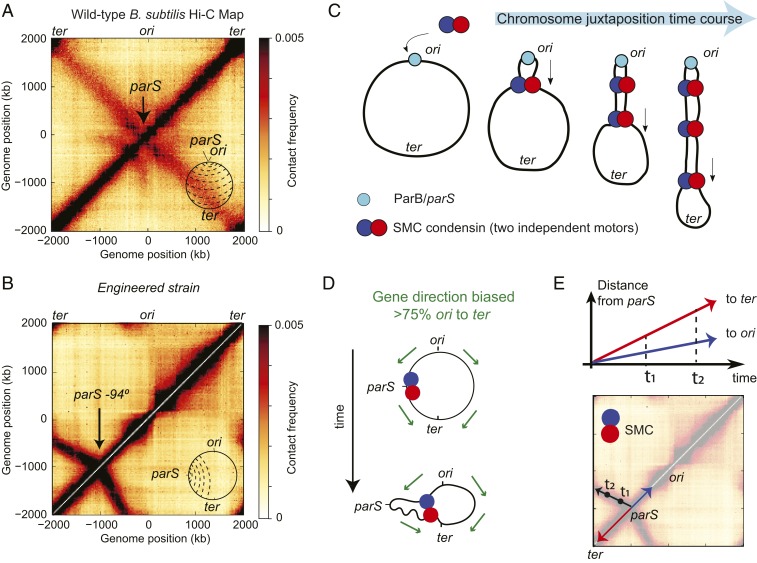
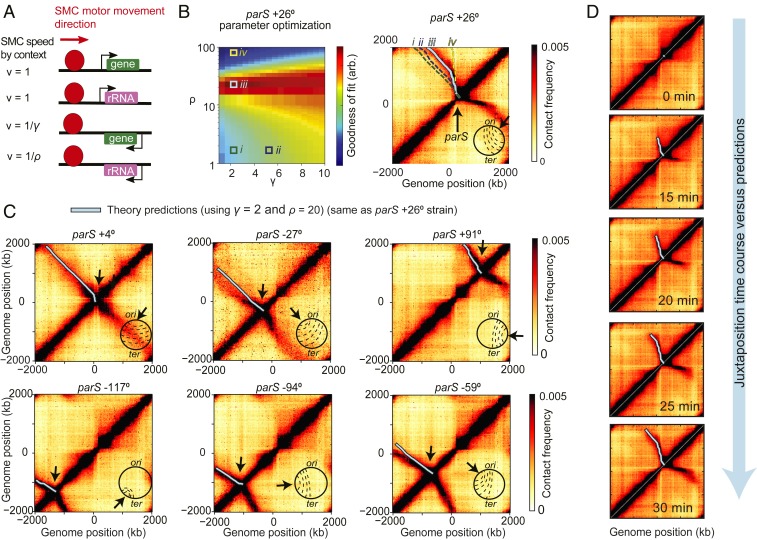
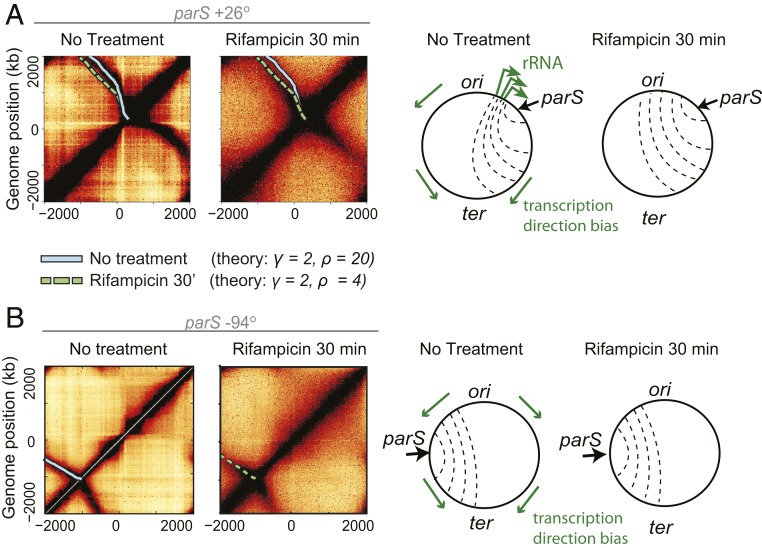
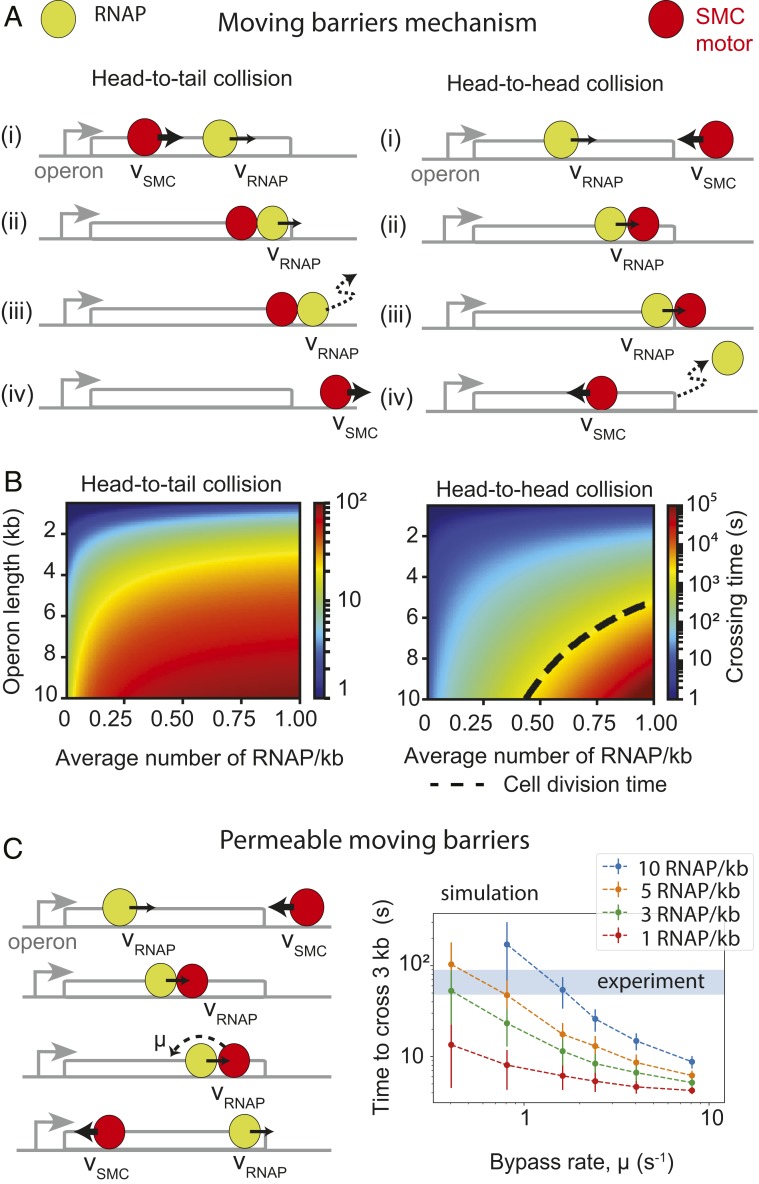
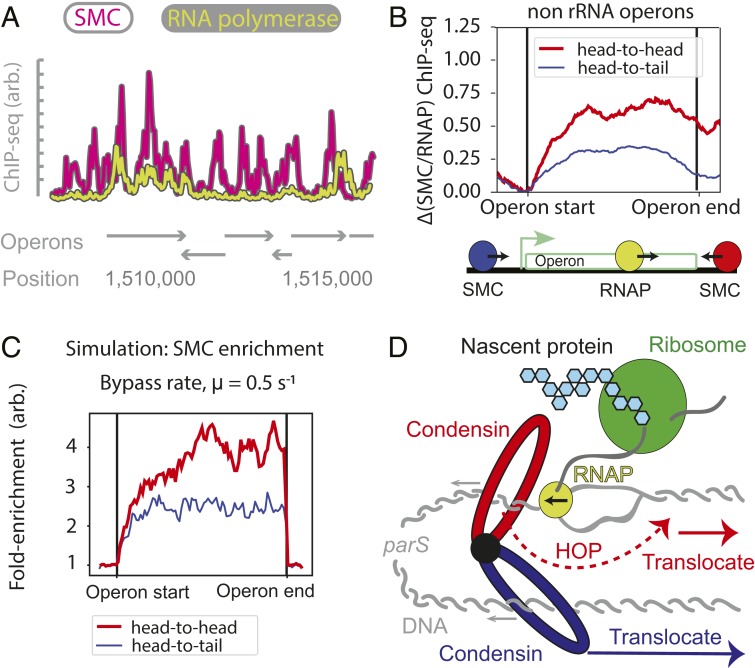
To separate replicated sister chromatids during mitosis, eukaryotes and prokaryotes have structural maintenance of chromosome (SMC) condensin complexes that were recently shown to organize chromosomes by a process known as DNA loop extrusion. In rapidly dividing bacterial cells, the process of separating sister chromatids occurs concomitantly with ongoing transcription. How transcription interferes with the condensin loop-extrusion process is largely unexplored, but recent experiments have shown that sites of high transcription may directionally affect condensin loop extrusion. We quantitatively investigate different mechanisms of interaction between condensin and elongating RNA polymerases (RNAPs) and find that RNAPs are likely steric barriers that can push and interact with condensins. Supported by chromosome conformation capture and chromatin immunoprecipitation for cells after transcription inhibition and RNAP degradation, we argue that translocating condensins must bypass transcribing RNAPs within ∼1 to 2 s of an encounter at rRNA genes and within ∼10 s at protein-coding genes. Thus, while individual RNAPs have little effect on the progress of loop extrusion, long, highly transcribed operons can significantly impede the extrusion process. Our data and quantitative models further suggest that bacterial condensin loop extrusion occurs by 2 independent, uncoupled motor activities; the motors translocate on DNA in opposing directions and function together to enlarge chromosomal loops, each independently bypassing steric barriers in their path. Our study provides a quantitative link between transcription and 3D genome organization and proposes a mechanism of interactions between SMC complexes and elongating transcription machinery relevant from bacteria to higher eukaryotes.
Overview
The claims and statistics of this paper haven’t been checked yet.
Run the check — free, no account needed. It reads the open-access text and checks the sources it cites.
Integrity signals
Registry
Cites
Statistics
Figures
Verification
Claims the paper makes
The claims and statistics of this paper haven’t been checked yet.
Run the check — free, no account needed. It reads the open-access text and checks the sources it cites.
Claims other papers make about this one
Each is checked against this paper’s own text: does it say what the citing paper says it does?
The cited source says what the claim attributes to it.
In the citing paper
“although RNAP can act as a moving barrier that significantly impedes SMC extrusion at highly transcribed operons.60”
From Bringing the genetically minimal cell to life on a computer in 4D (2026) · cites this paper as [60]
Self-check
Percentages, sums and reported differences re-computed from the paper’s own numbers.
The self-check needs the paper’s full text.
Citations
Cites
Formation of chromosomal domains by loop extrusion
Fudenberg, G., Imakaev, M., Lu, C., Goloborodko, A., Abdennur, N., & Mirny, L. A. (2016) · Cell Reports · doi:10.1016/j.celrep.2016.04.085 · Cited by 2,003
Cohesin Loss Eliminates All Loop Domains
Rao, S. S. P., Huang, S.-C., Glenn St Hilaire, B., Engreitz, J. M., Perez, E. M., Kieffer-Kwon, K.-R., Sanborn, A. L., Johnstone, S. E., Bascom, G. D., Bochkov, I. D., et al. (2017) · Cell · doi:10.1016/j.cell.2017.09.026 · Cited by 1,883
Formation of Chromosomal Domains by Loop Extrusion
Fudenberg, G., Imakaev, M., Lu, C. W., Goloborodko, A., Abdennur, N. A., & Mirny, L. (2015) · bioRxiv · doi:10.1101/024620 · Cited by 1,858
Self-citationSanborn, A. L., Rao, S. S. P., Huang, S.-C., Durand, N. C., Huntley, M. H., Jewett, A. I., Bochkov, I. D., Chinnappan, D., Cutkosky, A., Li, J., et al. (2015) · Proceedings of the National Academy of Sciences · doi:10.1073/pnas.1518552112 · Cited by 1,730 · cited 2×
“, trapped at transcription start sites by rifampicin) are directional barriers to condensin translocation, akin to CTCFs as directional barriers to cohesin in eukaryotes (4), or an RNAPindependent mechanism generates the “baseline asymmetry” of chromosome juxtaposition at loci outside of rRNA operons.”
Nora, E. P., Goloborodko, A., Valton, A.-L., Gibcus, J. H., Uebersohn, A., Abdennur, N., Dekker, J., Mirny, L. A., & Bruneau, B. G. (2017) · Cell · doi:10.1016/j.cell.2017.05.004 · Cited by 1,709 · cited 6×
“One can hypothesize that RNAP has a directional effect on condensin translocation, like the effect of CTCF proteins on cohesin in eukaryotes (4).”
InfluentialSelf-citation遺伝子の分子生物学 = Molecular biology of the gene
Watson, J. D., Hopkins, N., Roberts, J. W., Steitz, J., Weiner, A., 松原, 謙., 中村, 桂., 三浦, 謹., 今成, 啓., 菊池, 京., et al. (1970) · doi:10.1016/0378-1119(88)90351-4 · Cited by 1,486 · cited 2×
“…do not have coupled transcription and translation, there is transcription-coupled splicing, and the spliceosome is of similar size to the ribosome (58), making the whole complex of a globular diameter > 70 nm. Future experiments will be needed to test whether SMCs can bypass steric barriers…”
InfluentialCodling, E. A., Plank, M. J., & Benhamou, S. (2008) · Journal of The Royal Society Interface · doi:10.1098/rsif.2008.0014 · Cited by 1,482 · cited 2×
“Rudner [2], Leonid A.”
BackgroundReal-Time Kinetics of Gene Activity in Individual Bacteria
Golding, I., Paulsson, J., Zawilski, S. M., & Cox, E. C. (2005) · Cell · doi:10.1016/j.cell.2005.09.031 · Cited by 1,468 · cited 1×
“tclockwise(i) = tclockwise,operon(i) + tclockwise,rRNA(i) + tclockwise,tRNA(i) (3)”
Iterative correction of Hi-C data reveals hallmarks of chromosome organization
Imakaev, M., Fudenberg, G., McCord, R. P., Naumova, N., Goloborodko, A., Lajoie, B. R., Dekker, J., & Mirny, L. A. (2012) · Nature Methods · doi:10.1038/nmeth.2148 · Cited by 1,423 · cited 4×
“4A, right), when a translocating condensin encounters a transcribing RNAP, condensin is stalled and pushed back to the transcription termination site (condensin has a very low stall force measured in vitro (10) compared to RNAP (50)).”
BackgroundInfluentialSelf-citationTwo independent modes of chromatin organization revealed by cohesin removal
Schwarzer, W., Abdennur, N., Goloborodko, A., Pekowska, A., Fudenberg, G., Loe-Mie, Y., Fonseca, N. A., Huber, W., Haering, C. H., Mirny, L., et al. (2017) · Nature · doi:10.1038/nature24281 · Cited by 1,196
Self-citation
Cited by
Sorted by citations
Regulation of gene expression by cis-acting long non-coding RNAs
Gil, N., & Ulitsky, I. (2019) · Nature Reviews Genetics · doi:10.1038/s41576-019-0184-5 · Cited by 736
Genome folding through loop extrusion by SMC complexes
Davidson, I. F., & Peters, J. (2021) · Nature Reviews Molecular Cell Biology · doi:10.1038/s41580-021-00349-7 · Cited by 531
Two major mechanisms of chromosome organization
Mirny, L. A., Imakaev, M., & Abdennur, N. A. (2019) · Current Opinion in Cell Biology · doi:10.1016/j.ceb.2019.05.001 · Cited by 232
“Alongside these two major mechanisms, additional processes (pairing of homologs and sisters[80,81]), transcription[52,59,86] and affinities between specific genomic regions mediated by specific molecular complexes (polycomb[91], splicing factors[89], etc.”
BackgroundSelf-citationTranscription shapes 3D chromatin organization by interacting with loop extrusion
Banigan, E. J., Tang, W., van den Berg, A. A., Stocsits, R. R., Wutz, G., Brandão, H. B., Busslinger, G. A., Peters, J., & Mirny, L. A. (2023) · Proceedings of the National Academy of Sciences · doi:10.1073/pnas.2210480120 · Cited by 238
Self-citationLoop extrusion: theory meets single-molecule experiments
Banigan, E. J., & Mirny, L. A. (2020) · Current Opinion in Cell Biology · doi:10.1016/j.ceb.2020.04.011 · Cited by 169
Self-citationChromosome organization by one-sided and two-sided loop extrusion
Banigan, E. J., van den Berg, A. A., Brandão, H. B., Marko, J. F., & Mirny, L. A. (2020) · eLife · doi:10.7554/elife.53558 · Cited by 146
“The symmetry of the juxtaposed chromosome arms implies that bSMC should be a two-sided LEF (Brandão et al., 2019; Wang et al., 2017) .”
BackgroundMethodResultInfluentialSelf-citationDNA-loop extruding condensin complexes can traverse one another
Kim, E., Kerssemakers, J., Shaltiel, I. A., Haering, C., & Dekker, C. (2019) · Nature · doi:10.1038/s41586-020-2067-5 · Cited by 145
Uyehara, C. M., & Apostolou, E. (2023) · Cell Reports · doi:10.1016/j.celrep.2023.112068 · Cited by 143
Computer vision for pattern detection in chromosome contact maps
Matthey-Doret, C., Baudry, L., Breuer, A., Montagne, R., Guiglielmoni, N., Scolari, V., Jean, E., Campeas, A., Chanut, P. H., Oriol, E., et al. (2020) · Nature Communications · doi:10.1101/2020.03.08.981910 · Cited by 137
MCM complexes are barriers that restrict cohesin-mediated loop extrusion
Dequeker, B., Scherr, M. J., Brandão, H. B., Gassler, J., Powell, S. T., Gáspár, I., Flyamer, I. M., Lalic, A., Tang, W., Stocsits, R. R., et al. (2020) · Nature · doi:10.1038/s41586-022-04730-0 · Cited by 132
Self-citationSMC complexes can traverse physical roadblocks bigger than their ring size
Pradhan, B., Barth, R., Kim, E., Davidson, I., Bauer, B. W., van Laar, T., Yang, W., Ryu, J.-K., van der Torre, J., Peters, J., et al. (2021) · bioRxiv · doi:10.1101/2021.07.15.452501 · Cited by 125
Principles of meiotic chromosome assembly revealed in S. cerevisiae
Schalbetter, S. A., Fudenberg, G., Baxter, J., Pollard, K. S., & Neale, M. J. (2019) · Nature Communications · doi:10.1038/s41467-019-12629-0 · Cited by 140
RNA polymerase II is required for spatial chromatin reorganization following exit from mitosisPreprint
Zhang, S., Übelmesser, N., Josipovic, N., Forte, G., Slotman, J., Chiang, M., Gothe, H., Gusmao, E., Becker, C., Altmuller, J., et al. (2020) · bioRxiv · doi:10.1101/2020.10.27.356915 · Cited by 105
“This is reminiscent of the condensin-polymerase antagonism reported for bacteria ( 34 ) and flies ( 33 ) and inferred by super-resolution imaging in mESCs ( 59 ).”
Spatial organization of transcribed eukaryotic genes
Leidescher, S., Ribisel, J., Ullrich, S., Feodorova, Y. N., Hildebrand, E. M., Galitsyna, A. A., Bultmann, S., Link, S., Thanisch, K., Mulholland, C. B., et al. (2022) · Nature Cell Biology · doi:10.1038/s41556-022-00847-6 · Cited by 115
Self-citationCTCF as a boundary factor for cohesin-mediated loop extrusion: evidence for a multi-step mechanism
Hansen, A. S. (2020) · Nucleus · doi:10.1080/19491034.2020.1782024 · Cited by 101
DNA-loop-extruding SMC complexes can traverse one another in vivo
Brandão, H. B., Ren, Z., Karaboja, X., Mirny, L. A., & Wang, X. (2021) · Nature Structural & Molecular Biology · doi:10.1038/s41594-021-00626-1 · Cited by 90
“Because previous studies showed that two motor activities of the same LEF are independent of each other, we allowed continued extrusion by a motor subunit, even if the other subunit’s translocation was blocked 9,10,29 .”
BackgroundResultInfluentialSelf-citationTranscriptional enhancers and their communication with gene promoters
Ray-Jones, H., & Spivakov, M. (2021) · Cellular and Molecular Life Sciences · doi:10.1007/s00018-021-03903-w · Cited by 81
“However, a study in bacteria suggests that a related chromatin “ring” (condensin II complex) recovers quickly from the encounters with the elongating RNAP machinery [389].”
BackgroundOudelaar, A. M., Harrold, C. L., Hanssen, L. L. P., Telenius, J. M., Higgs, D. R., & Hughes, J. R. (2019) · Nature Communications · doi:10.1038/s41467-019-13404-x · Cited by 80
A cohesin traffic pattern genetically linked to gene regulationPreprint
Valton, A.-L., Venev, S. V., Mair, B., Khokhar, E. S., Tong, A. H. Y., Ušaj, M., Chan, K. S. K., Pai, A. A., Moffat, J., & Dekker, J. (2021) · bioRxiv (Cold Spring Harbor Laboratory) · doi:10.1101/2021.07.29.454218 · Cited by 15
“Previous studies have shown that condensin and RNA polII can interplay (Brandão et al., 2019) and it has been shown in yeast that cohesin could be pushed by the transcription machinery (Lengronne et al., 2004).”
BackgroundCondensin-driven loop extrusion on supercoiled DNA
Kim, E., Gonzalez, A., Pradhan, B., van der Torre, J., & Dekker, C. (2021) · Nature Structural & Molecular Biology · doi:10.1038/s41594-022-00802-x · Cited by 72
“This may explain the accumulation of condensins near transcription 8,22,23 and replication sites 24 .”
BackgroundHighly structured homolog pairing reflects functional organization of the Drosophila genome
Abed, J. A., Erceg, J., Goloborodko, A. A., Nguyen, S. C., McCole, R. B., Saylor, W., Fudenberg, G., Lajoie, B. R., Dekker, J., Mirny, L. A., et al. (2019) · Nature Communications · doi:10.1038/s41467-019-12208-3 · Cited by 73
Self-citationOrder and stochasticity in the folding of individual Drosophila genomes
Ulianov, S. V., Zakharova, V. V., Galitsyna, A. A., Kos, P. I., Polovnikov, K. E., Flyamer, I. M., Mikhaleva, E. A., Khrameeva, E. E., Germini, D., Logacheva, M. D., et al. (2021) · Nature Communications · doi:10.1038/s41467-020-20292-z · Cited by 64
Nuclear and genome dynamics underlying DNA double-strand break repair
Chiolo, I., Altmeyer, M., Legube, G., & Mekhail, K. (2025) · Nature Reviews Molecular Cell Biology · doi:10.1038/s41580-025-00828-1 · Cited by 78
Dynamics of the compartmentalized Streptomyces chromosome during metabolic differentiation
Lioy, V. S., Lorenzi, J.-N., Najah, S., Poinsignon, T., Leh, H., Saulnier, C., Aigle, B., Lautru, S., Thibessard, A., Lespinet, O., et al. (2021) · Nature Communications · doi:10.1038/s41467-021-25462-1 · Cited by 65
Reed, K. S. M., Davis, E. S., Bond, M. L., Cabrera, A., Thulson, E., Quiroga, I. Y., Cassel, S., Woolery, K. T., Hilton, I. B., Won, H., et al. (2022) · Cell Reports · doi:10.1016/j.celrep.2022.111567 · Cited by 56
“This suggests that the causal arrow between looping and transcription might point both ways: DNA loop formation may contribute to increased transcription of target genes, but very high levels of transcription could contribute to the weakening loops by antagonizing loop extrusion, as observed previously (Busslinger et…”
BackgroundMethodNomidis, S. K., Carlon, E., Gruber, S., & Marko, J. (2022) · bioRxiv · doi:10.1093/nar/gkac268 · Cited by 48
“subtilis consistent with bsSMCRNAP collisions forcing bsSMC backwards along DNA (61).”
BackgroundRules of engagement for condensins and cohesins guide mitotic chromosome formation
Samejima, K., Gibcus, J., Abraham, S., Cisneros-Soberanis, F., Samejima, I., Beckett, A., Pučeková, N., Abad, M. A., Medina-Pritchard, B., Paulson, J. R., et al. (2024) · bioRxiv · doi:10.1101/2024.04.18.590027 · Cited by 43
“The ability of loop-extruding SMCs to bypass each other ( 9 ) or large DNA-bound obstacles ( 68 ) has been observed in single-molecule experiments, and bypassing of bacterial SMCs was revealed using engineered bacterial chromosomes ( 69 ).”
BackgroundSelf-citationRinaldi, L., Fettweis, G., Kim, S., Garcia, D. A., Fujiwara, S., Johnson, T. A., Tettey, T. T., Ozbun, L. L., Pegoraro, G., Puglia, M., et al. (2022) · Science Advances · doi:10.1126/sciadv.abj8360 · Cited by 47
“Recent biophysical studies revealed that nucleosomes and other protein complexes restrict cohesin translocation ( 18 ), suggesting that transcriptional processes and chromatin remodelers could promote the cohesin translocation along the DNA strand ( 18 , 19 ).”
Constricted migration is associated with stable 3D genome structure differences in cancer cells
Golloshi, R., Playter, C., Freeman, T. F., Das, P., Raines, T. I., Garretson, J. H., Thurston, D., & McCord, R. P. (2022) · EMBO Reports · doi:10.15252/embr.202052149 · Cited by 53
“Meanwhile, our observation that local punctate interactions change around sites where gene expression changes echo previous evidence that collisions between loop extrusion and transcription can influence local contact patterns (Brandao et al , 2019).”
Bignaud, A., Cockram, C. A., Borde, C., Groseille, J., Allemand, E., Thierry, A., Marbouty, M., Mozziconacci, J., Espéli, O., & Koszul, R. (2024) · Nature Structural & Molecular Biology · doi:10.1038/s41594-023-01178-2 · Cited by 42
“However, it has been shown that HEG (that results in strong TIDs) represent permissive barriers to cohesin loop extrusions in other species such as Bacillus subtilis 43 .”
InfluentialXerD unloads bacterial SMC complexes at the replication terminus
Karaboja, X., Ren, Z., Brandão, H. B., Paul, P., Rudner, D. Z., & Wang, X. (2021) · Molecular Cell · doi:10.1016/j.molcel.2020.12.027 · Cited by 41
“subtilis suggest that loop extrusion by SMC complexes is mediated by two “handcuffed” rings (Brandão et al., 2019; Wang et al., 2015).”
Self-citationCondensin DC loads and spreads from recruitment sites to create loop-anchored TADs in C. elegans
Kim, J., Jimenez, D., Ragipani, B., Zhang, B., Street, L., Kramer, M., Albritton, S., Winterkorn, L., Morao, A., & Ercan, S. (2022) · bioRxiv · doi:10.1101/2021.03.23.436694 · Cited by 38
“Notably, bacterial SMC complex speed 44 in vivo reduces through a head on conflict with transcription [68, 72, 74].”
BackgroundLimits of chromosome compaction by loop-extruding motors
Banigan, E., & Mirny, L. (2018) · bioRxiv · doi:10.1101/476424 · Cited by 37
Self-citationDNA double-strand break end synapsis by DNA loop extrusion
Yang, J. H., Brandão, H. B., & Hansen, A. S. (2023) · Nature Communications · doi:10.1038/s41467-023-37583-w · Cited by 36
“We assume uniform LEF extrusion speed throughout the genome and that only BEs may stall LEF extrusion, while it has been shown that other non-BE elements such as RNA polymerases could also act as partial extrusion barriers [5,8,9].”
Self-citationRules of engagement for condensins and cohesins guide mitotic chromosome formation
Samejima, K., Gibcus, J. H., Abraham, S., Cisneros-Soberanis, F., Samejima, I., Beckett, A. J., Pucekova, N., Abad, M. A., Spanos, C., Medina‐Pritchard, B., et al. (2025) · Science · doi:10.1126/science.adq1709 · Cited by 78
Self-citationMesselink, J. J. B., van Teeseling, M. C. F., Janssen, J., Thanbichler, M. R., & Broedersz, C. P. (2021) · Nature Communications · doi:10.1038/s41467-021-22189-x · Cited by 31
Bringing the genetically minimal cell to life on a computer in 4D
Thornburg, Z. R., Maytin, A., Kwon, J., Brier, T. A., Gilbert, B. R., Fu, E., Gao, Y.-L., Quenneville, J., Wu, T., Li, H., et al. (2026) · Cell · doi:10.1016/j.cell.2026.02.009 · Cited by 44
Cohesin organizes 3D DNA contacts surrounding active enhancers in C. elegansPreprint
Kim, J., Wang, H., & Ercan, S. (2025) · Genome Research · doi:10.1101/gr.279365.124 · Cited by 31
“In the bacterial and mammalian systems, RNA polymerase II functions as a moving barrier for loop extrusion (33, 43).”
Deng, L., Zhao, Z., Liu, L., Zhong, Z., Xie, W., Zhou, F., Xu, W. Q., Zhang, Y., Deng, Z., & Sun, Y. (2023) · Proceedings of the National Academy of Sciences · doi:10.1073/pnas.2222045120 · Cited by 37
“Together with the recent report on the interplay between elongating RNA polymerases (RNAPs) and condensin (44), these results hint that the evolution of the gene’s high expression is partly through the directional convergence between”
BackgroundUnderstanding and Engineering Chromatin as a Dynamical System across Length and Timescales
Johnstone, C. P., Wang, N., Sevier, S. A., & Galloway, K. E. (2020) · Cell Systems · doi:10.1016/j.cels.2020.09.011 · Cited by 36
Navigating the crowd: visualizing coordination between genome dynamics, structure, and transcription
Shaban, H. A., Barth, R., & Bystricky, K. (2020) · Genome biology · doi:10.1186/s13059-020-02185-y · Cited by 28
“The bulky transcriptional machinery is likely to influence the position of cohesinmediated DNA loops [96, 168] (Fig.”
BackgroundCohesin forms fountains at active enhancers in C. elegans
Lüthi, B. N., Semple, J. I., Haemmerli, A., Thapliyal, S., Ghadage, K., Stojanovski, K., D’Asaro, D., Das, M., Gilbert, N., Glauser, D. A., et al. (2025) · Nature Communications · doi:10.1038/s41467-025-67302-6 · Cited by 28
“A similar interplay between transcription and loop extrusion has been observed in Bacteria and WAPL/CTCF-depleted mammalian cells, where loop extrusion is impeded by polymerases, while SMC complexes might be pushed by transcribing complexes 19,51 – 53 .”
Control of transcription elongation and DNA repair by alarmone ppGpp
Weaver, J. W. A., Proshkin, S., Duan, W., Epshtein, V., Gowder, M., Bharati, B., Afanaseva, E., Mironov, A., Serganov, A., & Nudler, E. (2023) · Nature Structural & Molecular Biology · doi:10.1038/s41594-023-00948-2 · Cited by 29
Choppakatla, P., Dekker, B., Cutts, E. E., Vannini, A., Dekker, J., & Funabiki, H. (2020) · bioRxiv · doi:10.1101/2020.12.20.423657 · Cited by 29
“Furthermore, large protein complexes such as RNA polymerases are able to limit loop extrusion by SMC protein complexes, such as bacterial condensins and eukaryotic cohesins (Brandão et al., 2019; Hsieh et al., 2020; Krietenstein et al., 2020).”
BackgroundLoop-extruders alter bacterial chromosome topology to direct entropic forces for segregation
Harju, J., van Teeseling, M. C. F., & Broedersz, C. P. (2024) · Nature Communications · doi:10.1038/s41467-024-49039-w · Cited by 27
“To test our predictions, we construct a simulation scheme for loop-extrusion on a replicating bacterial chromosome, by adapting a previously published algorithm for a single bacterial chromosome [32, 33], with system parameters modelled after C.”
Transcription regulates the spatio-temporal dynamics of genes through micro-compartmentalization
Salari, H., Fourel, G., & Jost, D. (2024) · Nature Communications · doi:10.1038/s41467-024-49727-7 · Cited by 35
“Recentstudies, both experimentalandtheoretical, have proposedthat the loop extrusion mechanism, which plays a crucial role in the formation of TADs, might have an impact on the transcription machinery 23,38,46,47,54 .”
InfluentialESA1 regulates meiotic chromosome axis and crossover frequency via acetylating histone H4
Wang, Y., Zhai, B., Tan, T., Xiao, Y., Zhang, J., Song, M., Tan, Y., Yang, X., Chu, T., Zhang, S., et al. (2021) · Nucleic Acids Research · doi:10.1093/nar/gkab722 · Cited by 30
“The depletion of Esa1 suppresses transcription thus reduces chromosome bound RNA polymerases, which may work as moving barriers (102).”
BackgroundMorao, A., Kim, J., Obaji, D., Sun, S., & Ercan, S. (2021) · bioRxiv · doi:10.1101/2021.11.30.470639 · Cited by 25
“On one hand, high concentrations of transcribing RNA Pol II have been proposed to act as permeable barriers that slow condensin loop extrusion (Brandão et al., 2019; Tran et al., 2017).”
BackgroundA Kaleidoscope of Keratin Gene Expression and the Mosaic of Its Regulatory Mechanisms
Kalabusheva, E. P., Shtompel, A. S., Rippa, A. L., Ulianov, S. V., Razin, S. V., & Vorotelyak, E. A. (2023) · International Journal of Molecular Sciences · doi:10.3390/ijms24065603 · Cited by 26
Sonnenberg, C. B., Kahlke, T., & Haugen, P. (2020) · BMC Genomics · doi:10.1186/s12864-020-07117-5 · Cited by 22
Bacterial chromosome organization by collective dynamics of SMC condensins
Miermans, C. A., & Broedersz, C. (2018) · Journal of the Royal Society Interface · doi:10.1098/rsif.2018.0495 · Cited by 21
A low Smc flux avoids collisions and facilitates chromosome organization in Bacillus subtilis
Anchimiuk, A., Lioy, V., Bock, F., Minnen, A., Boccard, F., & Gruber, S. (2021) · eLife · doi:10.7554/elife.65467 · Cited by 19
“RNA polymerase is a known impediment for Smc DNA translocation (Brandão et al., 2019).”
BackgroundInfluentialChromatin architecture is a flexible foundation for gene expression
Misteli, T., & Finn, E. H. (2021) · Nature Genetics · doi:10.1038/s41588-021-00813-2 · Cited by 24
A functional overlap between actively transcribed genes and chromatin boundary elementsPreprint
Harrold, C. L., Gosden, M. E., Hanssen, L. L. P., Stolper, R. J., Downes, D. J., Telenius, J. M., Biggs, D., Preece, C., Alghadban, S., Sharpe, J. A., et al. (2020) · bioRxiv (Cold Spring Harbor Laboratory) · doi:10.1101/2020.07.01.182089 · Cited by 18
“316 In this model highly transcribed genes might form a barrier to loop extrusion (66), due to 317 accumulation of large amounts of transcriptional machinery and regulatory factors.”
BackgroundBond, M. L., Davis, E. S., Quiroga, I. Y., Dey, A., Kiran, M., Love, M. I., Won, H., & Phanstiel, D. H. (2023) · Genome Research · doi:10.1101/gr.277397.122 · Cited by 16
Understanding transcription across scales: From base pairs to chromosomes
Vos, S. M. (2021) · Molecular Cell · doi:10.1016/j.molcel.2021.03.002 · Cited by 18
Dynamic 3D Locus Organization and Its Drivers Underpin Immunoglobulin Recombination
Rogers, C. H., Mielczarek, O., & Corcoran, A. E. (2021) · Frontiers in Immunology · doi:10.3389/fimmu.2020.633705 · Cited by 16
“Does loop extrusion work in concert with diffusion based mechanisms for distal VH genes, whereby stalling of the loop acts to tether a number of genes in close proximity to the recombination center, obviating the need for juxtaposed CBEs? It is also feasible that other loop impeding mechanisms, such as transcription (…”
BackgroundIntegrative studies of 3D genome organization and chromatin structure
Stefano, M. D., & Cavalli, G. (2022) · Current Opinion in Structural Biology · doi:10.1016/j.sbi.2022.102493 · Cited by 23
The TFIIH complex is required to establish and maintain mitotic chromosome structure
Haase, J., Chen, R., Parker, W. M., Bonner, M. K., Jenkins, L. M., & Kelly, A. E. (2021) · bioRxiv · doi:10.7554/elife.75475 · Cited by 16
“…histones H3 and H4 on chromatin ( Shintomi et al., 2015 ), we used mouse sperm, which have previously been shown to condense in a condensin-dependent manner in Xenopus egg extracts ( Shintomi et al., 2017 ) but which contain very low levels of histones H3 and H4 ( Brykczynska et al., 2010 ).”
Physical models of bacterial chromosomes
Harju, J., & Broedersz, C. (2023) · Molecular Microbiology · doi:10.1111/mmi.15257 · Cited by 15
“Despite such challenges, bottom-up models can provide conceptual insight into how various molecular mechanism control bacterial chromosome organization.”
Gizzi, A. M. C. (2021) · Frontiers in Genetics · doi:10.3389/fgene.2021.780822 · Cited by 13
“, 2004), possibly by the action of RNA polymerases (Heinz et al., 2018; Brandão et al., 2019).”
BackgroundGenome organization via loop extrusion, insights from polymer physics models
Ghosh, S. K., & Jost, D. (2019) · Briefings in Functional Genomics · doi:10.1093/bfgp/elz023 · Cited by 24
“Along this line, recent experiments showed that transcription may influence cohesin localization [108,109] or translocation [77, 103] but may also act as moving barriers against condensin progression [104].”
BackgroundThe SMC Hinge is a Selective Gate for Obstacle Bypass
Liu, H. W., Roisné-Hamelin, F., Taschner, M., Collier, J., Srinivasan, M., & Gruber, S. (2025) · Nature Communications · doi:10.1038/s41467-025-65408-5 · Cited by 11
“…protein,which loadsbsuSmc complexes ontothe chromosome at parS sites near the replication origin. bsuSmc loading at parS sites aligns their translocation with replication forks and most transcription units, minimizing the risk of head-on collisions 33,34 .”
The dynamic role of cohesin in maintaining human genome architecture
Agarwal, A., Korsak, S., Choudhury, A., & Plewczyński, D. (2023) · BioEssays · doi:10.1002/bies.202200240 · Cited by 14
“[92,93] Specifically, RNA polymerases can act as moving barriers for cohesin, and cohesin velocity depends on the direction of gene transcription.”
BackgroundLiang, Z., Zhao, L., Ye, A. Y., Lin, S. G., Zhang, Y., Guo, C., Dai, H., Ba, Z., & Alt, F. W. (2023) · Proceedings of the National Academy of Sciences · doi:10.1073/pnas.2306564120 · Cited by 16
Telomeres stall DNA loop extrusion by condensin
Analikwu, B. T., Deshayes, A., van der Torre, J., Guérin, T. M., Katan, A. J., Béneut, C., Barth, R., Phipps, J., Scolari, V. F., Veaute, X., et al. (2025) · Cell Reports · doi:10.1016/j.celrep.2025.115900 · Cited by 23
Insights in bacterial genome folding.
Yáñez-Cuna, F. O., & Koszul, R. (2023) · Current Opinion in Structural Biology · doi:10.1016/j.sbi.2023.102679 · Cited by 12
RNA polymerase backtracking results in the accumulation of fission yeast condensin at active genes
Rivosecchi, J., Jost, D., Vachez, L., Gautier, F. D., Bernard, P., & Vanoosthuyse, V. (2021) · Life Science Alliance · doi:10.26508/lsa.202101046 · Cited by 20
“One prediction of the permeable moving barrier model is that the orientation of transcription impacts the distribution pattern of condensin (Brandão et al, 2019).”
InfluentialRNAP II antagonizes mitotic chromatin folding and chromosome segregation by condensin
Lebreton, J., Colin, L., Chatre, E., & Bernard, P. (2024) · Cell Reports · doi:10.1016/j.celrep.2024.113901 · Cited by 10
Transcription induces context-dependent remodeling of chromatin architecture during differentiation
Chahar, S., Zouari, Y. B., Salari, H., Molitor, A. M., Kobi, D., Maroquenne, M., Erb, C., Mossler, A., Karasu, N., Jost, D., et al. (2023) · PLoS Biology · doi:10.1371/journal.pbio.3002424 · Cited by 19
Meiotic chromosome organization and crossover patterns
Shang, Y.-L., Tan, T.-C., Fan, C., Nie, H., Wang, Y., Yang, X., Zhai, B., Wang, S., & Zhang, L.-R. (2022) · Biology of Reproduction · doi:10.1093/biolre/ioac040 · Cited by 11
“The reduction of Esa1-mediated histone acetylation may reduce chromosome-bound RNA polymerases, which may increase cohesin movement speed along chromatin to generate larger chromatin loops and shorter axes [117].”
BackgroundTelomere protein arrays stall DNA loop extrusion by condensinPreprint
Analikwu, B. T., Deshayes, A., van der Torre, J., Guérin, T. M., Katan, A., Béneut, C., Barth, R., Phipps, J., Scolari, V., Veaute, X., et al. (2023) · bioRxiv · doi:10.1101/2023.10.29.564563 · Cited by 10
“For instance, RNA polymerases have been reported to stall SMC complexes at highly transcribed genes, perhaps as a consequence of DNA coverage by so-called polymerase trains 32,38–41 .”
BackgroundGenome folding dynamics during the M-to-G1-phase transition
Zhang, H., & Blobel, G. A. (2023) · Current Opinion in Genetics & Development · doi:10.1016/j.gde.2023.102036 · Cited by 13
Can aggressive cancers be identified by the “aggressiveness” of their chromatin?
Gurova, K. V. (2022) · BioEssays · doi:10.1002/bies.202100212 · Cited by 9
“Candidate barriers for these loops are G-rich sequences frequently found at promoters capable of forming G-quadruplex (G4) structures when not covered with nucleosomes, transcription termination sites (TTS) of actively transcribed genes, and RNAPII at the TTS. are less stable and have significantly less cohesin based…”
BackgroundInfluentialChromatin insulators in gene regulation and 3D genome organization
Sultana, H., Kunar, R., & Matera, A. G. (2025) · Biochemical Society Transactions · doi:10.1042/bst20253036 · Cited by 12
“Large proteins such as RNAPolII may also interfere with loop extrusion [65].”
LoopSage: An Energy-Based Monte Carlo approach for the Loop Extrusion Modelling of Chromatin
Korsak, S., & Plewczynski, D. (2024) · bioRxiv · doi:10.1101/2024.01.10.574968 · Cited by 9
“…how loop extrusion impacts chromatin folding and the global chromatin structure, examining the effects of different types of LE (one-sided, two-sided, symmetrical, asymmetrical) [16, 18, 20] and exploring the influence of other protein remodelers, such as RNApII, on cohesin dynamics [21–24].”
BackgroundColin, L., Reyes, C., Berthezene, J., Maestroni, L., Modolo, L., Toselli, E., Chanard, N., Schaak, S., Cuvier, O., Gachet, Y., et al. (2023) · eLife · doi:10.7554/elife.89812 · Cited by 12
“Rather, by analogy with the accumulation of condensin at highly expressed genes ( Brandão et al., 2019 ; Rivosecchi et al., 2021 ), we speculate that arrays of Taz1 proteins tightly bound to telomere repeats might create a permeable barrier onto which condensin molecules accumulate.”
BackgroundInterplay between regulatory elements and chromatin topology in cellular lineage determination
Shukla, V., Cetnarowska, A., Hyldahl, M., & Mandrup, S. (2022) · Trends in Genetics · doi:10.1016/j.tig.2022.05.011 · Cited by 15
In vitro dynamics of DNA loop extrusion by structural maintenance of chromosomes complexes
Rutkauskas, M., & Kim, E. (2024) · Current Opinion in Genetics & Development · doi:10.1016/j.gde.2024.102284 · Cited by 6
Transcriptional units form the elementary constraining building blocks of the bacterial chromosomePreprint
Bignaud, A., Cockram, C. A., Allemand, E., Mozziconnacci, J., Espéli, O., & Koszul, R. (2022) · bioRxiv · doi:10.1101/2022.09.16.507559 · Cited by 7
“…multiple consequences for DNA transactions, including transcription, DNA repair, and segregation, as well as contribute to the regulation of the extrusion of large DNA loops by bacteria condensins as they travel along the chromosome (Mäkelä and Sherratt 2020; Wang et al. 2017; Brandão et al. 2019).”
Costea, J., Schoeberl, U., Malzl, D., von der Linde, M., Fitz, J., Gupta, A., Makharova, M., Goloborodko, A., & Pavri, R. (2022) · bioRxiv · doi:10.1101/2022.04.26.489407 · Cited by 7
Piveteau, V., Dupont, C., Salari, H., Dumont, A., Savocco, J., Jost, D., & Piazza, A. (2026) · The EMBO Journal · doi:10.1038/s44318-026-00748-6 · Cited by 13
“…DC) loaded at rex sites on the X chromosome in XX hermaphrodites C. elegans animals (Morao et al, 2022), which enabled studying the loop extrusion activities of these SMCs and identify roadblocks in vivo with Hi-C (Morao et al, 2022; Brandão et al, 2019, 2021; Wang et al, 2017; Tran et al, 2017).”
Condensin loop extrusion properties, roadblocks, and role in homology search in S. cerevisiae
Piveteau, V., Dupont, C., Salari, H., Dumont, A., Savocco, J., Jost, D., & Piazza, A. (2026) · bioRxiv · doi:10.1101/2024.09.12.612585 · Cited by 6
“…loaded at rex sites on the X chromosome in XX hermaphrodites C. elegans animals (Morao et al , 2022), which enabled studying the loop extrusion activities of these SMCs and identify roadblocks in vivo with Hi-C (Morao et al , 2022; Brandão et al , 2021, 2019; Wang et al , 2017; Tran et al , 2017).”
Yamauchi, M., Brandani, G., Terakawa, T., & Takada, S. (2025) · bioRxiv · doi:10.1101/2024.04.29.591782 · Cited by 6
“…it is essential to reveal what happens from a molecular point of view when the SMC complexes encounter obstacles on DNA, such as RNA polymerase (Brandão et al., 2019; Pradhan et al., 2022), chromatin proteins (Pradhan et al., 2022; Yamaura et al., 2024), transcription factors, and other SMC…”
Replisomes restrict SMC translocation in vivo
Liao, Q., Brandão, H. B., Ren, Z., & Wang, X.-D. (2025) · Nature Communications · doi:10.1038/s41467-025-62596-y · Cited by 6
“In the absence of DNA replication, SMCs translocating from the terminus to the origin still move against these dense RNA polymerases and might be slowed down by them 29,37,39,44 .”
InfluentialSelf-citationScalvini, B., Schießel, H., Golovnev, A., & Mashaghi, A. (2022) · iScience · doi:10.1016/j.isci.2022.103866 · Cited by 9
“Recent studies have suggested that the transcriptional activity of RNA polymerase might be the driver behind the cohesin ring displacement yielding loop extrusion (Brandão et al., 2019; Lengronne et al., 2004).”
BackgroundBonato, A., Jang, J., Kim, D., Moon, K.-W., Michieletto, D., & Ryu, J. (2025) · Nucleic Acids Research · doi:10.1093/nar/gkaf725 · Cited by 7
“Whilst this model can elegantly explain the bypassing of other SMCs [ 28 , 37 , 38 ] and large road-blocks [ 39 , 40 ], it cannot explain directed motion.”
Liquid condensates: a new barrier to loop extrusion?
Selivanovskiy, A. V., Molodova, M. N., Khrameeva, E. E., Ulianov, S. V., & Razin, S. V. (2025) · Cellular and Molecular Life Sciences · doi:10.1007/s00018-024-05559-8 · Cited by 6
“Broad cohesin ChIP-seq peaks are also thought to result from elongating RNAPII, which acts as a “moving barrier” to LE [93–95].”
Yuan, T., Yan, H., Li, K., Surovtsev, I. V., King, M. C., & Mochrie, S. G. J. (2024) · Genome biology · doi:10.1186/s13059-024-03432-2 · Cited by 7
A dual‐function SNF2 protein drives chromatid resolution and nascent transcript removal in mitosis
Carmo, C., Coelho, J., Silva, R. D., Tavares, A., Boavida, A., Gaetani, P., Guilgur, L. G., Martinho, R. G., & Oliveira, R. A. (2023) · EMBO Reports · doi:10.15252/embr.202256463 · Cited by 6
“However, studies in bacteria showed that condensins can bypass the transcriptional machinery despite a reduction of speed upon their encounter (Brandao et al , 2019).”
A universal polymer signature in Hi-C resolves cohesin loop density and supports monomeric extrusion
Polovnikov, K., & Starkov, D. (2026) · Proceedings of the National Academy of Sciences · doi:10.1073/pnas.2534385123 · Cited by 3
“Two-sidedloopextrusionwasimplementedbycoupling1D stochasticmodelofcohesinkineticsto3Dpolymerdynamics,whereeachcohesin was represented as an additional harmonic bond between two beads (5, 79).”
FACT depletion demonstrates a role for nucleosome organization in TAD formation
Mauksch, C., Zhu, Y., Velychko, T., Sagropoulou, S., Aljahani, A., Ramasamy, S., Žumer, K., & Oudelaar, A. M. (2025) · Molecular Systems Biology · doi:10.1038/s44320-025-00165-7 · Cited by 5
“…leads to a global reduction in transcription levels ( Ž umer et al, 2024) and that the process of transcription in fl uences 3D genome organization (Banigan et al, 2023; Barshad et al, 2023; Brandão et al, 2019; Busslinger et al, 2017; Hsieh et al, 2020; Zhang et al, 2023; Zhang et al, 2021).”
USP7 promotes IgA class switching through stabilizing RUNX3 for germline transcription activation
Zhao, B., Xia, Z., Yang, B., Guo, Y., Zhou, R., Gu, M., Liu, M., Li, Q., Bai, W., Huang, J., et al. (2024) · Cell Reports · doi:10.1016/j.celrep.2024.114194 · Cited by 6
Context-dependent transcriptional remodeling of TADs during differentiationPreprint
Chahar, S., Zouari, Y. B., Salari, H., Molitor, A., Kobi, D., Maroquenne, M., Erb, C., Mossler, A., Karasu, N., Jost, D., et al. (2022) · bioRxiv · doi:10.1101/2022.07.01.498405 · Cited by 4
Lagunov, T. A., Gridina, M. M., Nurislamov, A. R., Kulikova, T., Maslova, A., Константинов, В. Ф., Popov, A., Krasikova, A., & Fishman, V. (2026) · Nucleic Acids Research · doi:10.1093/nar/gkag316 · Cited by 5
“Previous studies have demonstrated that RNA polymerase can act as a "moving barrier" to extruding complexes in bacteria (35), yeast (36), slime mold Dictyostelium discoideum (38) and even for vertebrate cohesin (37).”
HIRA-dependent provision of histone H3.3 in active chromatin ensures genome compartmentalisationPreprint
Karagyozova, T., Gatto, A., Forest, A., Quivy, J., Marti-Renom, M., Mirny, L., & Almouzni, G. (2024) · bioRxiv · doi:10.1101/2024.08.27.609896 · Cited by 3
“Such insulation is believed to result from ability of transcribing RNA Pol II to slow-down cohesin and even push it back, known as “the moving barrier" mechanism seen both in mammals and in bacteria (Banigan et al., 2023; Brandão et al., 2019).”
BackgroundSelf-citationLoops are geometric catalysts for DNA integration
Battaglia, C., & Michieletto, D. (2023) · bioRxiv · doi:10.1093/nar/gkae484 · Cited by 3
“In bacteria, structural-maintenance-of-chromosome (SMC) proteins ( 51 ,52 ) and nucleoid associated proteins ( 53 ) also play a major role in forming DNA loops in vivo ( 54 ) (30–420 kb).”
BackgroundFine-tuning of the Smc flux facilitates chromosome organization in B. subtilis
Anchimiuk, A., Lioy, V., Minnen, A., Boccard, F., & Gruber, S. (2020) · bioRxiv · doi:10.1101/2020.12.04.411900 · Cited by 3
RNA polymerase backtracking drives the accumulation of fission yeast condensin at active genes
Rivosecchi, J., Vachez, L., Gautier, F., Bernard, P., & Vanoosthuyse, V. (2020) · bioRxiv · doi:10.1101/2020.11.13.381434 · Cited by 3
Deciphering the 3D genome organization across species from Hi-C data
Shkolikov, A., Galitsyna, A. A., & Gelfand, M. S. (2025) · Nucleic Acids Research · doi:10.1093/nar/gkaf1516 · Cited by 3
“Recent studies suggest that genes themselves can serve as insulating elements [ 36 , 37 ], even without loop extrusion in yeast [ 38 ].”
Metadata
- Authors
- Brandão, H. B., Paul, P., van den Berg, A. A., Rudner, D. Z., Wang, X., & Mirny, L. A.
- Affiliations
- Harvard University (US)
- Indiana University Bloomington (US)
- Massachusetts Institute of Technology (US)
- Corresponding author
- Wang, Xindan
- Mirny, Leonid A.
- Venue
- Proceedings of the National Academy of Sciences
- Publisher
- National Academy of Sciences
- Published
- 2019-09-23
- Volume
- 116
- Issue
- 41
- Pages
- 20489-20499
- ISSN
- 0027-8424 (ISSN-L)
- 1091-6490
- PMC
- PMC6789630
- OpenAlex
- W2975167630
- Cited by
- 143
- References
- 92
- Citations by year
- 2026: 15 · 2025: 20 · 2024: 14 · 2023: 28 · 2022: 23 · 2021: 21 · 2020: 14 · 2019: 7
- FWCI
- 5.38
- Type
- journal article
- Language
- en
- Open access
- hybrid
- doi.org
- Licence
- Locations
- Proceedings of the National Academy of Sciences (publishedVersion, cc-by-nc-nd)
- bioRxiv (Cold Spring Harbor Laboratory) (acceptedVersion, cc-by-nc-nd)
- PubMed Central (publishedVersion, cc-by-nc-nd)
- PubMed (publishedVersion)
- DSpace@MIT (Massachusetts Institute of Technology) (submittedVersion, cc-by-nc)
- Funders
- HHS | National Institutes of Health (GM086466, GM073831, GM114190)
- IU | Indiana University Bloomington (Start-up funds)
- Gouvernement du Canada | Natural Sciences and Engineering Research Council of Canada (PGS-D)
- Topics
- Life Sciences › Biochemistry, Genetics and Molecular Biology › Molecular Biology › Genomics and Chromatin Dynamics
- Life Sciences › Biochemistry, Genetics and Molecular Biology › Genetics › Bacterial Genetics and Biotechnology
- Life Sciences › Biochemistry, Genetics and Molecular Biology › Molecular Biology › DNA Repair Mechanisms
- Keywords
- condensin, DNA loop extrusion, RNA polymerase, sister chromatid separation, SMC complex, steric barrier, transcription, 3D genome organization, ribosomal DNA, operon, chromosome conformation capture, chromatin immunoprecipitation
- MeSH terms
- Adenosine Triphosphatases, Bacillus subtilis, Bacterial Proteins, Chromosomes, Bacterial, DNA-Binding Proteins, Protein Binding, DNA-Directed RNA Polymerases, RNA, Ribosomal, Transcription, Genetic, Genome, Bacterial, Multiprotein Complexes
About these checks
Registry, retraction, Cites and statistics results are computed, not judged, with one exception: a printed reference that no index lists is read once by a model before it counts as a citation error. Claims are extracted by a model and kept only when their quote appears verbatim in the text; each cited source is then checked, with a model’s help, for whether it says what the claim relies on. Those verdicts can be wrong — read the claim’s quote and the cited source before relying on one.
Statistics and arithmetic are recomputed, not judged.
Confidence bands are shown only for fields calibrated on our annotated test set. None is calibrated yet, so no band is shown.
What counts as a claim ›How we measure confidence ›How we check this ›
Are you an author, or do you see a problem with this page? Request a review
