

Host nutrient milieu drives an essential role for aspartate biosynthesis during invasive Staphylococcus aureus infection
Open accessThe DOI matches its Crossref record; 52 of the 52 references it cites were found in a registry or an index.
Abstract
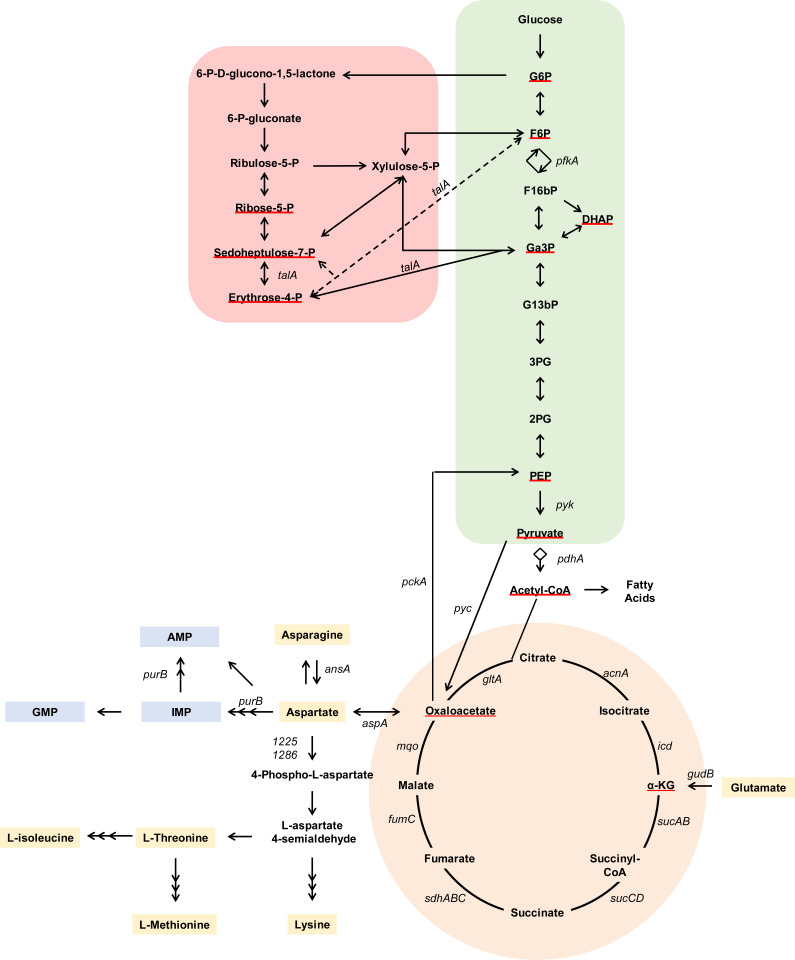
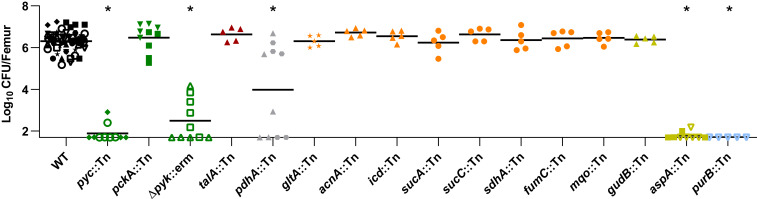
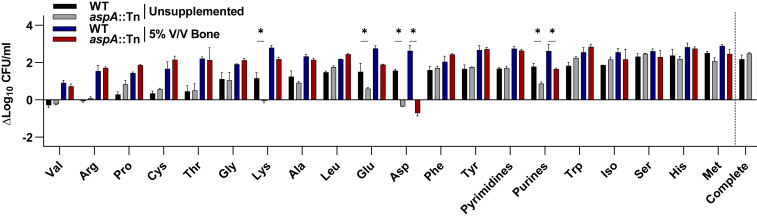
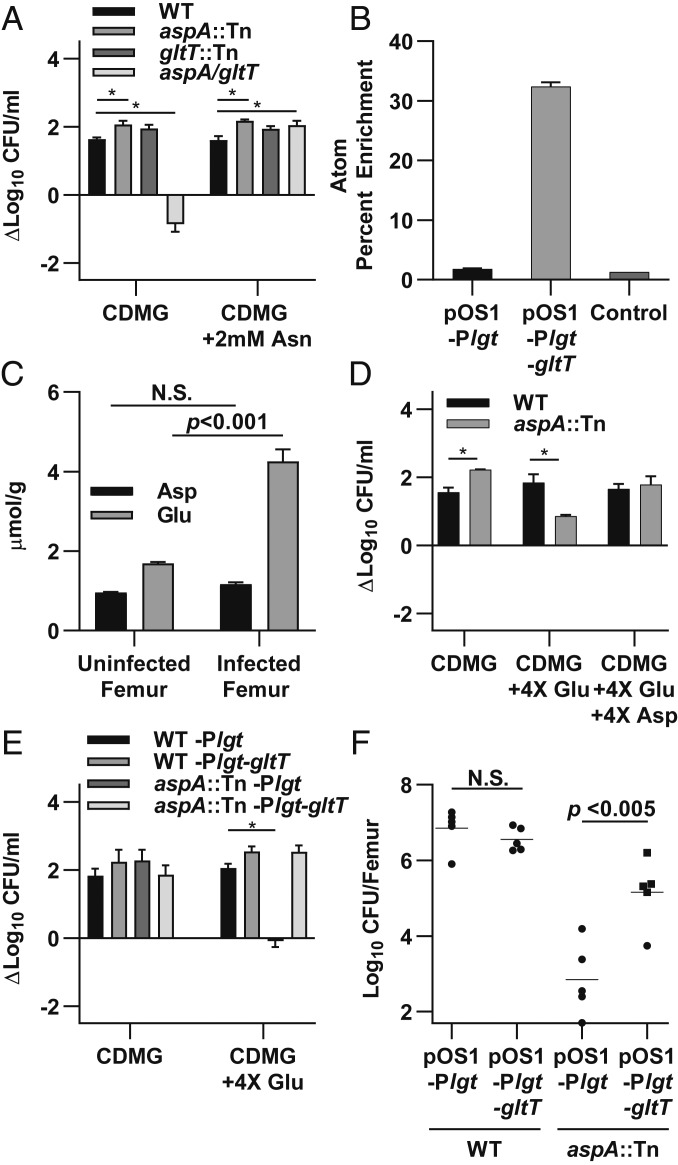
Significance: Staphylococcus aureus can infect a diverse array of host environments. The broad tissue tropism of S. aureus requires metabolic flexibility to utilize the variety of nutrient sources found within target organ systems. In this work, we conducted a systematic analysis of the central metabolic pathways required for S. aureus survival during bone infection, one of the most frequent sites of invasive staphylococcal disease. We show that S. aureus requires aspartate biosynthesis to survive during bone infection, despite possessing an aspartate transporter, due to inhibition of aspartate utilization by the amino acid glutamate. Our results reveal a crucial role for inflammation-associated shifts in the host nutrient milieu for determining the metabolic pathways utilized by S. aureus during invasive infection.
Overview
The claims and statistics of this paper haven’t been checked yet.
Free: it reads the open-access text and checks the first 5 claims that cite a source we can check. Create a free account to check every claim.
Integrity signals
Registry
Cites
Statistics
Figures
Verification
Claims the paper makes
The claims and statistics of this paper haven’t been checked yet.
Free: it reads the open-access text and checks the first 5 claims that cite a source we can check. Create a free account to check every claim.
Claims other papers make about this one
Each is checked against this paper’s own text: does it say what the citing paper says it does?
The source backs part of the claim, not all of it — or backs it for a different population, condition or comparison.
In the citing paper
“Numerous pathogens including S. aureus , enteropathogenic E . coli and M. tuber culosis rely heavily on host amino acids and fatty acids as essential nutrients to establish infection 194-197 .”
From Nutritional immunity: the battle for nutrient metals at the host–pathogen interface (2022) · cites this paper as [194]
Experimental — accuracy not yet measuredThe source backs part of the claim, not all of it — or backs it for a different population, condition or comparison.
In the citing paper
“Importantly, limitation of non- metal nutrients also has a critical role in restricting bacterial pathogenicity by stressing the metabolic needs of bacterial pathogens in host tissue environments.”
From Nutritional immunity: the battle for nutrient metals at the host–pathogen interface (2022) · cites this paper as [194]
Experimental — accuracy not yet measuredIn the citing paper
“This adaptability enables the pathogen to efficiently switch between different energy sources depending on nutrient availability in the host [136].”
From Staphylococcus aureus: A Review of the Pathogenesis and Virulence Mechanisms (2025) · cites this paper as [136]
In the citing paper
“Additionally, S. aureus can utilize amino acids as carbon and nitrogen sources through deamination and incorporation into central metabolic pathways [136].”
From Staphylococcus aureus: A Review of the Pathogenesis and Virulence Mechanisms (2025) · cites this paper as [136]
Self-check
Percentages, sums and reported differences re-computed from the paper’s own numbers.
The self-check needs the paper’s full text.
Citations
Cites
Lew, D. P., & Waldvogel, F. A. (2004) · The Lancet · doi:10.1016/s0140-6736(04)16727-5 · Cited by 1,883
Supporting aspartate biosynthesis is an essential function of respiration in proliferating cells
Sullivan, L. B., Gui, D. Y., Hosios, A. M., Bush, L. N., Freinkman, E., & Vander Heiden, M. G. (2015) · Cell · doi:10.1016/j.cell.2015.07.017 · Cited by 1,173
Fey, P. D., Endres, J. L., Yajjala, V. K., Widhelm, T. J., Boissy, R. J., Bose, J. L., & Bayles, K. W. (2013) · mBio · doi:10.1128/mbio.00537-12 · Cited by 973 · cited 1×
“Transposon mutants were created by phi-85 – mediated transduction of disrupted alleles from the respective mutants obtained from the NARSA transposon library (46).”
Schaible, U. E., & Kaufmann, S. H. E. (2004) · Nature Reviews Microbiology · doi:10.1038/nrmicro1046 · Cited by 945
Prevalence of Staphylococcus aureus Nasal Colonization in the United States, 2001–2002
Kuehnert, M. J., Kruszon‐Moran, D., Hill, H. A., McQuillan, G., McAllister, S. K., Fosheim, G., McDougal, L. K., Chaitram, J., Jensen, B., Fridkin, S. K., et al. (2006) · The Journal of Infectious Diseases · doi:10.1086/499632 · Cited by 659 · cited 1×
“S aureus is a gram-positive human pathogen that causes life-threatening, invasive disease, imposing a significant healthcare burden in the United States and globally (1).”
Boles, B. R., Thoendel, M., Roth, A. J., & Horswill, A. R. (2010) · PLoS ONE · doi:10.1371/journal.pone.0010146 · Cited by 408 · cited 1×
“Strain LAC (AH1263) served as theWT background unless otherwise stated (45).”
At the Crossroads of Bacterial Metabolism and Virulence Factor Synthesis in Staphylococci
Somerville, G. A., & Proctor, R. A. (2009) · Microbiology and Molecular Biology Reviews · doi:10.1128/mmbr.00005-09 · Cited by 392
Reactive oxygen species induce antibiotic tolerance during systemic Staphylococcus aureus infection
Rowe, S. E., Wagner, N. J., Li, L., Beam, J. E., Wilkinson, A. D., Radlinski, L. C., Zhang, Q., Miao, E. A., & Conlon, B. P. (2019) · Nature Microbiology · doi:10.1038/s41564-019-0627-y · Cited by 302 · cited 2×
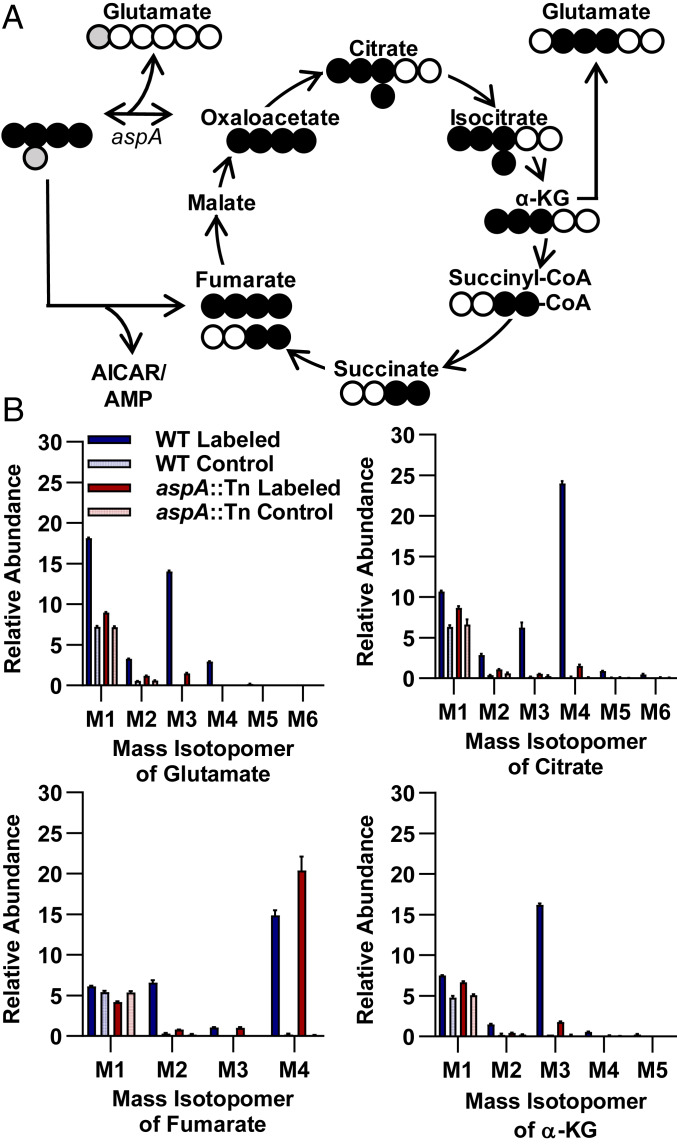
“Interestingly, in WT S. aureus , [ 13 C 4 , 15 N]Asp was observed to contribute to TCA-cycle intermediates in the presence of glucose, suggesting that, despite catabolite repression of some TCA-cycle enzymes, some TCA-cycle activity still occurs in vitro, which may impact antibiotic tolerance (33).”
Bone Cells: Biochemical and Biological Studies after Enzymatic Isolation
Peck, W. A., Birge, S. J., & Fedak, S. A. (1964) · Science · doi:10.1126/science.146.3650.1476 · Cited by 283
Nucleotide Biosynthesis Is Critical for Growth of Bacteria in Human Blood
Samant, S., Lee, H., Ghassemi, M., Chen, J., Cook, J. L., Mankin, A. S., & Neyfakh, A. A. (2008) · PLoS Pathogens · doi:10.1371/journal.ppat.0040037 · Cited by 270
Cited by
Nutritional immunity: the battle for nutrient metals at the host–pathogen interface
Murdoch, C. C., & Skaar, E. P. (2022) · Nature Reviews Microbiology · doi:10.1038/s41579-022-00745-6 · Cited by 701
Staphylococcus aureus: A Review of the Pathogenesis and Virulence Mechanisms
Touaitia, R., Mairi, A., Ibrahim, N. A., Basher, N. S., Idres, T., & Touati, A. (2025) · Antibiotics · doi:10.3390/antibiotics14050470 · Cited by 273
“Additionally, S. aureus can utilize amino acids as carbon and nitrogen sources through deamination and incorporation into central metabolic pathways [136].”
Zhang, Y., Chen, R., Zhang, D., Qi, S., & Liu, Y. (2023) · Biomedicine & Pharmacotherapy · doi:10.1016/j.biopha.2023.114295 · Cited by 198
Tomlinson, K. L., Lung, T. W. F., Dach, F., Annavajhala, M. K., Gabryszewski, S. J., Groves, R. A., Drikic, M., Francoeur, N. J., Sridhar, S. H., Smith, M. L., et al. (2021) · Nature Communications · doi:10.1038/s41467-021-21718-y · Cited by 153
Immunometabolic crosstalk during bacterial infection
Rosenberg, G., Riquelme, S. A., Prince, A. S., & Avraham, R. (2022) · Nature Microbiology · doi:10.1038/s41564-022-01080-5 · Cited by 158
Antivirulence Strategies for the Treatment of Staphylococcus aureus Infections: A Mini Review
Ford, C. A., Hurford, I. M., & Cassat, J. E. (2021) · Frontiers in Microbiology · doi:10.3389/fmicb.2020.632706 · Cited by 132
Self-citationIntracellular Staphylococcus aureus and host cell death pathways
Soe, Y. M., Bedoui, S., Stinear, T. P., & Hachani, A. (2021) · Cellular Microbiology · doi:10.1111/cmi.13317 · Cited by 88
“This host–pathogen glycolytic interplay has also been reported during S. aureus bone infection, whereby metabolic competition with the host ensures durable bacterial colonisation (Potter et al., 2020).”
BackgroundQuorum Sensing and Toxin Production in Staphylococcus aureus Osteomyelitis: Pathogenesis and Paradox
Butrico, C. E., & Cassat, J. E. (2020) · Toxins · doi:10.3390/toxins12080516 · Cited by 65
“The presence of glucose results in preferential use of glycolysis over other pathways such as the tricarboxylic acid (TCA) cycle, pentose phosphate pathway, and gluconeogenesis [154].”
BackgroundSelf-citationConsequences of Metabolic Interactions during Staphylococcus aureus Infection
Lung, T. W. F., & Prince, A. S. (2020) · Toxins · doi:10.3390/toxins12090581 · Cited by 70
“aureus variants that are able to maintain infection [6,9].”
BackgroundInfluentialKorshoj, L. E., & Kielian, T. (2024) · Nature Communications · doi:10.1038/s41467-024-54581-8 · Cited by 51
“Genes for aspartate biosynthesis ( aspB ) and a non-ribosomal peptide synthase producing a protease inhibitor ( ausA ), both with links to virulence, were also induced in bio fi lm speci fi cally following M Φ exposure 145,146 .”
Crosstalk Between Staphylococcus aureus and Innate Immunity: Focus on Immunometabolism
Horn, C. M., & Kielian, T. (2021) · Frontiers in Immunology · doi:10.3389/fimmu.2020.621750 · Cited by 47
“aureus, undergo their own metabolic programming (10, 11), often in direct competition with responding immune cells.”
Digital Insights Into Nucleotide Metabolism and Antibiotic Treatment Failure
Lopatkin, A. J., & Yang, J. H. (2021) · Frontiers in Digital Health · doi:10.3389/fdgth.2021.583468 · Cited by 51
“aureus cells with transposon insertions in purB fail to establish bone infections in mice (73) and deletion of purine biosynthesis genes prevents uropathogenic E.”
BackgroundKim, G.-L., Hooven, T. A., Norambuena, J., Li, B., Boyd, J. M., Yang, J. H., & Parker, D. (2021) · mBio · doi:10.1128/mbio.00814-21 · Cited by 38
“001), adding to its attenuated phenotype during bone infection (31).”
BackgroundNovack, D. V., & Cassat, J. E. (2020) · Journal of Bone and Mineral Research · doi:10.1002/jbmr.4279 · Cited by 43
“and responses to hypoxia are critical components necessary for bacterial proliferation in bone.((34,36,37)) Moving forward, there is an opportunity to apply unbiased analyses such as RNA sequencing and TnSeq across diverse animal models of osteomyelitis to understand how disease mechanism, bacteriology, host genetics,…”
BackgroundSelf-citationZeden, M. S., Gallagher, L. A., Bueno, E., Nolan, A. C., Ahn, J., Shinde, D. D., Razvi, F., Sladek, M. F., Burke, Ó., O’Neill, E., et al. (2023) · PLoS Pathogens · doi:10.1371/journal.ppat.1011536 · Cited by 39
Cheng, H., Yang, Y., Wang, Y., Jiqiang, G., Jiao, X., Huang, D., An, M., Yao, X., Chu, P. K.-H., & Zhang, X. (2024) · Advanced Functional Materials · doi:10.1002/adfm.202405421 · Cited by 32
Inflammasome-mediated glucose limitation induces antibiotic tolerance in Staphylococcus aureus
Beam, J. E., Wagner, N. J., Lu, K., Parsons, J. B., Fowler, V. G., Rowe, S. E., & Conlon, B. P. (2023) · iScience · doi:10.1016/j.isci.2023.107942 · Cited by 36
“aureus metabolic activity during infection.(53) Spatiotemporal variation in nutrient availability can cause bacteria to enter an antibiotic tolerant state.”
BackgroundCoordination of CcpA and CodY Regulators in Staphylococcus aureus USA300 Strains
Poudel, S., Hefner, Y., Szubin, R., Sastry, A. V., Gao, Y., Nizet, V., & Palsson, B. Ø. (2022) · mSystems · doi:10.1128/msystems.00480-22 · Cited by 28
Reslane, I., Halsey, C. R., Stastny, A., Cabrera, B., Ahn, J., Shinde, D. D., Galac, M. R., Sladek, M. F., Razvi, F., Lehman, M. K., et al. (2022) · mBio · doi:10.1128/mbio.00395-22 · Cited by 29
“aureus relies on aspartate biosynthesis for proliferation and survival during bone infection due to excess glutamate in infected tissues that inhibits aspartate acquisition (11).”
BackgroundElgrail, M. M., Chen, E., Shaffer, M. G., Srinivasa, V. R., Griffith, M. P., Mustapha, M. M., Shields, R. K., Tyne, D. V., & Culyba, M. J. (2022) · Infection and Immunity · doi:10.1128/iai.00001-22 · Cited by 30
Zeden, M. S., Burke, Ó., Vallely, M., Fingleton, C., & O’Gara, J. P. (2021) · PLoS Pathogens · doi:10.1371/journal.ppat.1009093 · Cited by 26
“Although GltT does not transport glutamate [16], high concentrations of glutamate in bone tissue block GltT activity including GltT-mediated aspartate transport, making de novo aspartate biosynthesis essential for S.”
BackgroundThe delicate balance of bacterial purine homeostasis
Grove, A. (2025) · Discover Bacteria. · doi:10.1007/s44351-025-00025-7 · Cited by 29
“It is also of note that purB is essential for growth for species such as Campylobacter jejuni and S. aureus even in rich medium, suggesting that salvage reactions alone cannot generate adequate levels of AMP (and ATP) [120, 121].”
GltS regulates biofilm formation in methicillin-resistant Staphylococcus aureus
Shibamura-Fujiogi, M., Wang, X., Maisat, W., Koutsogiannaki, S., Li, Y., Chen, Y., Lee, J. C., & Yuki, K. (2022) · Communications Biology · doi:10.1038/s42003-022-04239-2 · Cited by 22
Butrico, C. E., Klopfenstein, N., Green, E. R., Johnson, J., Peck, S. H., Ibberson, C. B., Serezani, C. H., & Cassat, J. E. (2023) · Infection and Immunity · doi:10.1128/iai.00529-22 · Cited by 26
“aureus survival and disease pathogenesis in vivo during osteomyelitis (16, 18, 23).”
BackgroundSelf-citationGao, S., Wang, Y., Yuan, S., Zuo, J., Jin, W., Shen, Y., Grenier, D., Yi, L., & Wang, Y. (2024) · Microbiological Research · doi:10.1016/j.micres.2024.127655 · Cited by 23
Chia, M., Ng, A. H. Q., Ravikrishnan, A., Mohamed Naim, A. N., Wearne, S., Common, J., & Nagarajan, N. (2026) · Nature Biotechnology · doi:10.1038/s41587-025-02797-4 · Cited by 18
Nicolas, A., Deplanche, M., Commère, P., Diot, A., Genthon, C., da Silva, W. M., Azevedo, V., Germon, P., Jamme, H., Guédon, É., et al. (2022) · Frontiers in Cellular and Infection Microbiology · doi:10.3389/fcimb.2022.854242 · Cited by 20
Zou, H., Shen, Y., Li, C., & Li, Q. (2022) · Infection and Drug Resistance · doi:10.2147/idr.s343292 · Cited by 18
Regulatory dynamics of arginine metabolism in Staphylococcus aureus
Reslane, I., Watson, G. F., Handke, L. D., & Fey, P. D. (2024) · Biochemical Society Transactions · doi:10.1042/bst20240710 · Cited by 16
Alkam, D., Jenjaroenpun, P., Ramírez, A. M., Beenken, K. E., Spencer, H. J., & Smeltzer, M. S. (2021) · Infection and Immunity · doi:10.1128/iai.00718-20 · Cited by 20
“, purB) attenuates virulence in a murine osteomyelitis model (36), and we have shown that”
BackgroundBatchelder, J. I., TAYLOR, A. J., & Mok, W. W. K. (2024) · mBio · doi:10.1128/mbio.02714-24 · Cited by 17
Isolation and characterization of persisters of the pathogenic microorganism Staphylococcus aureus
Liu, S., Laman, P., Jensen, S., van der Wel, N. N., Kramer, G., Zaat, S. A. J., & Brul, S. (2024) · iScience · doi:10.1016/j.isci.2024.110002 · Cited by 17
Vibrio splendidus infection induces dysbiosis in the blue mussel and favors pathobiontic bacteria
Cheikh, Y. B., & Travers, M. (2022) · Microbiological Research · doi:10.1016/j.micres.2022.127078 · Cited by 12
Lu, M., He, R., Li, C., Liu, Z., Chen, Y., Yang, B., Zhang, X., & Yu, B. (2023) · Frontiers in Cellular and Infection Microbiology · doi:10.3389/fcimb.2023.1187543 · Cited by 11
“aureus utilizes a dynamic nutrient environment inside the host, as host consumption and release of nutrients are altered by widespread cell death and inflammation (Potter et al., 2020).”
BackgroundZhu, D., Chen, F., Qiang, H., & Han, Q. (2024) · Scientific Reports · doi:10.1038/s41598-024-63219-0 · Cited by 14
“As metabolic alterations in macrophages play a role in osteomyelitis 23 , we further investigated the impact of SETD2 on glycolysis in these cells.”
BackgroundChen, F., Zhao, Q., Yang, Z., Chen, R., Pan, H., Wang, Y., Liu, H., Cao, Q., Gan, J., Liu, X., et al. (2024) · PLoS Pathogens · doi:10.1371/journal.ppat.1012425 · Cited by 17
Leseigneur, C., Boucontet, L., Duchateau, M., Pizarro‐Cerdá, J., Matondo, M., Colucci‐Guyon, E., & Dussurget, O. (2022) · eLife · doi:10.7554/elife.79941 · Cited by 13
Potter, A. D., Baiocco, C. M., Papin, J. A., & Criss, A. K. (2023) · mSystems · doi:10.1128/msystems.01265-22 · Cited by 12
“Post-transcriptional regulation including allosteric modulation of metabolic enzymes (56) and substrate competition for available enzymes or transport ers (57) can also prevent the catabolism of amino acids.”
BackgroundSelf-citationKorshoj, L. E., Shi, W., Duan, B., & Kielian, T. (2021) · Frontiers in Immunology · doi:10.3389/fimmu.2021.670931 · Cited by 8
“This provides an opportunity for pathogens to manipulate host defenses through substrate competition that can ultimately suppress pro-inflammatory responses by biasing leukocytes towards an anti-inflammatory state (55, 56).”
BackgroundThe crafty opponent: the defense systems of Staphylococcus aureus and response measures
Hou, H., Yang, L., Jin, Y., Chen, S., Long, J., Duan, G., & Yang, H. (2022) · Folia Microbiologica · doi:10.1007/s12223-022-00954-9 · Cited by 8
“However, many SCV isolates have no defined auxotrophism (Edwards 2012), and various mutations in the electron transport chain leading to SCV were not observed in some clinical isolates (Proctor 2019).”
BackgroundEdwardsiella tarda Attenuates Virulence upon Oxytetracycline Resistance
Liu, Y., Chen, X.-W., Tian, S.-Q., Tan, X.-H., & Peng, B. (2024) · Journal of Proteome Research · doi:10.1021/acs.jproteome.4c00303 · Cited by 7
Graphene Oxide Mimics Biological Signaling Cue to Rescue Starving Bacteria
Jackman, J. A., Yoon, B. K., Mokrzecka, N., Kohli, G. S., Valle‐González, E. R., Zhu, X., Pumera, M., Rice, S. A., & Cho, N. (2021) · Advanced Functional Materials · doi:10.1002/adfm.202102328 · Cited by 7
Mai, Z., Li, J., Zhan, Z., Tian, X., Hou, W., He, M., & Shi, C. (2025) · Foods · doi:10.3390/foods14152566 · Cited by 9
“ASP is an essential metabolic intermediate, and the pathogen must rely on endogenous ASP synthesis to sustain purine biosynthesis and survival [33].”
Mujchariyakul, W., Walsh, C. J., Giulieri, S. G., Cramond, C., Cao, K. L., Stinear, T. P., Howden, B. P., Guérillot, R., & Hachani, A. (2026) · mSystems · doi:10.1128/msystems.01183-25 · Cited by 11
Ghavam, M. (2024) · BMC Complementary Medicine and Therapies · doi:10.1186/s12906-024-04562-7 · Cited by 6
Zeden, M. S., Gallagher, L. A., Bueno, E., Nolan, A. C., Ahn, J., Shinde, D., Razvi, F., Sladek, M., Burke, Ó., O’Neill, E., et al. (2023) · doi:10.1101/2023.03.03.530734 · Cited by 4
“aureus, from its capacity to proliferate within the 92 host, to the control of antibiotic resistance (22, 37-41).”
BackgroundMicrogeography of staphyloccoci in human tissue explains antibiotic failurePreprint
Tripathi, V., Morin, B., Antelo-Varela, M., Loriol, A. A., Kurg, K., Jakonia, S., Ehsan, A., Herbert, S., Ferrand, A., Sauteur, L., et al. (2025) · bioRxiv (Cold Spring Harbor Laboratory) · doi:10.1101/2025.09.12.675782 · Cited by 7
“All tested musculoskeletal isolates S. aureus were auxotrophic for various amino acids 81,82 (Extended Data Fig.”
Zheng, A. O., Sher, A., Fridman, D., Musante, C. J., & Young, J. D. (2022) · Biotechnology Journal · doi:10.1002/biot.202000427 · Cited by 4
“[3] MFA has been applied to systematically identify gene targets for inhibiting pathogens,[4] to elucidate enzyme functions,[5] and to optimize biological production of fuels and renewable chemicals.”
MethodSelf-citationAlexander, A. M., Luu, J. M., Raghuram, V., Bottacin, G., van Vliet, S., Read, T. D., & Goldberg, J. B. (2024) · Microbiology · doi:10.1099/mic.0.001445 · Cited by 5
Iqbal, A., Tumpa, Z. H., Wittliff, W. W., Blank, B. J., Abuaita, B. H., & Beavers, W. N. (2025) · Microbiology Spectrum · doi:10.1128/spectrum.01685-25 · Cited by 2
Dghoughi, Y., Varin-Simon, J., Gangloff, S. C., Colin, M., & Reffuveille, F. (2025) · Biofilm · doi:10.1016/j.bioflm.2025.100325 · Cited by 3
Zeouk, I. (2023) · Notulae Scientia Biologicae · doi:10.55779/nsb15111402 · Cited by 3
Quorum Sensing in Staphylococcus aureus
Ahmed, S., Hasan, H. M., & Tawfeeq, H. K. (2024) · Mağallaẗ ʻulūm al-rāfidayn · doi:10.33899/rjs.2024.183429 · Cited by 3
“When glucose is present, glycolysis takes precedence above other routes including the tricarboxylic acid cycle, the pentose phosphate pathway, and gluconeogenesis (Potter et al. , 2020).”
BackgroundYousief, S. W., Abdelmalek, N., Bojer, M. S., Ma, Y., Guerra, P. R., Nisar, S., Olsen, J. E., & Paglietti, B. (2025) · iScience · doi:10.1016/j.isci.2025.114261 · Cited by 2
“82 These results reveal distinct, tissue-tailored adaptations and expose vulnerabilities that could be leveraged for precision antimicrobial strategies.”
Bai, J., Zheng, J., Chi, W., Yu, B., Sun, J., Feng, Z., & Yang, Y. (2026) · Microbiological Research · doi:10.1016/j.micres.2026.128451 · Cited by 1
Gautam, A. K., Yadav, R., Gupta, B. K., Tiwari, N., & Singh, C. (2026) · International Journal of Critical Illness and Injury Science · doi:10.4103/ijciis.ijciis_129_25 · Cited by 1
Nolan, A. C., Kelly, J. B., Ahn, J., Shinde, D., Thomas, V. C., Zeden, M. S., & O’Gara, J. P. (2026) · Antimicrobial Agents and Chemotherapy · doi:10.1128/aac.00377-26 · Cited by 1
“Asparagine serves as a precursor for purine biosynthesis (9), and its depletion may contribute to, or be a consequence of, disrupted purine homeostasis in MRSA treated with Gua.”
Butrico, C. E., Klopfenstein, N., Green, E. R., Johnson, J., Peck, S. H., Ibberson, C. B., Serezani, C. H., & Cassat, J. E. (2022) · bioRxiv (Cold Spring Harbor Laboratory) · doi:10.1101/2022.11.30.518635
Self-citationAlexander, A. M., Luu, J. M., Raghuram, V., Bottacin, G., van Vliet, S., Read, T. D., & Goldberg, J. B. (2023) · bioRxiv (Cold Spring Harbor Laboratory) · doi:10.1101/2023.07.24.550428
“The ancestral gene was amplified from wild-type JE2 using primers: 5’-AGAGCTCGAGATGGCTCTATTCAAGAG-3’ and 5’-AGATGGATCCTTAAATTGATTTTAAATATTCTTGAC-3’ and cloned downstream of the plgT promoter, as described in Potter et al. (2020).”
BackgroundMethodInfluentialZeden, M. S. (2024) · mSphere · doi:10.1128/msphere.00632-23
“…models of infection under controlled growth conditions and understand ing how and when amino acids or other nutrients are transported into S. aureus cells may help us identify specific druggable targets for the development of novel therapeutics against staphylococcal infections (13, 14).”
BackgroundMunneke, M. J., Freiberg, J. A., & Skaar, E. P. (2025) · Microbiology Spectrum · doi:10.1128/spectrum.00640-25 · Cited by 1
“vertebrate host environments, S. aureus employs strategies to acquire essential nutrients, including metals (2, 3), amino acids (4, 5), and nucleotides (6, 7).”
Immunometabolic Responses upon Bacterial Infections
Soni, V., & Upadhyay, A. (2026) · Springer eBooks · doi:10.1007/978-3-031-46895-7_8
Britt, E. A., Markle, L., Bui, T. I., Gill, A. L., Ricciardi, B. F., & Gill, S. R. (2026) · bioRxiv (Cold Spring Harbor Laboratory) · doi:10.64898/2026.02.25.707959
O’Brien, K., Miller, J. J., Johnson, R. J., Hoops, G. C., & John, A. R. O. (2026) · bioRxiv (Cold Spring Harbor Laboratory) · doi:10.64898/2026.03.26.714663
“36 Strains lacking enzymes involved in pyruvate metabolism, such as pyruvate kinase ( pyk) or the E1 subunit of PDHC (pdhA) are attenuated in survival during bone infection, suggesting that FrmB mediated regulation of PDHC may also be important in the context of bone tissue infection (supplemental…”
Influence de l'environnement périprothétique sur la formation de biofilm de Staphylococcus aureus
Lamret, F. (2022) · theses.fr (ABES) · doi:10.70675/235f4c45zc707z48dfza12cz382376e0a4e1
Abdelmalek, N., Yousief, S. W., Bojer, M. S., Olsen, J., Rubino, S., & Paglietti, B. (2026) · Microbiology Spectrum · doi:10.1128/spectrum.03585-25
Boucherabine, S., Giddey, A. D., Nassar, R., Mohamed, L., Verma, S., Soares, N. C., & Senok, A. C. (2026) · Frontiers in Microbiology · doi:10.3389/fmicb.2026.1798070
“Metabolomic analysis provided further insights into the adaptive strategies of MRSA, highlighting tailored responses to the blood-stream milieu, possibly through the leverage of host lipids and adjustment of the purine/amino acid metabolism to thrive during invasive infection (Potter et al., 2020).”
Chen, F., Yin, Y., Liu, S., Chen, H., Wang, Y., Li, B., Jin, Y., & Wang, H. (2026) · iScience · doi:10.1016/j.isci.2026.116272
“28,29 While MRSA possesses ll OPEN ACCESS a diverse arsenal of toxins, including alpha-toxin, the success of a lineage involves more than just the production of toxins that damage the host.”
Gu, Z., Xie, Z., Lu, Z., Xu, S., Huang, Q., Zhao, L., Liu, F., & Zhang, B. (2026) · Food Bioscience · doi:10.1016/j.fbio.2026.109712
Ibrahim, A. E., Salam, A., Wani, N. A., Salim, M., Ahmad, E. Y., Hassan, S., & Oueis, E. (2026) · European Journal of Medicinal Chemistry · doi:10.1016/j.ejmech.2026.119345
Farchoukh, W., Sleem, B., Hammad, A. M., Yammine, J., Saghieh, S., & Kassim, R. A. (2026) · Biomedical Journal · doi:10.1016/j.bj.2026.101045
Azhar, M. A., Mir, T. A., Ahmed, S., Assiri, A. M., & Broering, D. C. (2026) · Frontiers in Microbiology · doi:10.3389/fmicb.2026.1915213
“S. aureus responds to the nutrient and oxygen-poor bone micro-environment with metabolic reprogramming and metabolic shifts to less respiration and more fermentation, followed by activation of stress-adaptation pathways, including sigB (Potter et al., 2020).”
Metadata
- Authors
- Potter, A. D., Butrico, C. E., Ford, C. A., Curry, J. M., Trenary, I. A., Tummarakota, S. S., Hendrix, A. S., Young, J. D., & Cassat, J. E.
- Affiliations
- Vanderbilt University Medical Center (US)
- Vanderbilt University (US)
- Corresponding author
- Cassat, James E.
- ORCID
- Venue
- Proceedings of the National Academy of Sciences
- Publisher
- National Academy of Sciences
- Published
- 2020-05-15
- Volume
- 117
- Issue
- 22
- Pages
- 12394-12401
- ISSN
- 0027-8424 (ISSN-L)
- 1091-6490
- PMC
- PMC7275739
- OpenAlex
- W3024716087
- Cited by
- 73
- References
- 52
- Citations by year
- 2026: 14 · 2025: 9 · 2024: 13 · 2023: 9 · 2022: 14 · 2021: 10 · 2020: 4
- FWCI
- 1.21
- Type
- journal article
- Language
- en
- Open access
- hybrid
- doi.org
- Licence
- Locations
- Proceedings of the National Academy of Sciences (publishedVersion, cc-by-nc-nd)
- PubMed Central (publishedVersion, cc-by-nc-nd)
- PubMed (publishedVersion)
- Funders
- HHS | NIH | National Institute of Allergy and Infectious Diseases (R01AI132560, R01AI145992, K08AI113107, T32AI11254, F31AI133970, F30AI138424)
- HHS | NIH | National Institute of General Medical Sciences (T32GM007347)
- HHS | NIH | National Institute of Diabetes and Digestive and Kidney Diseases (R01DK106348)
- HHS | NIH | National Cancer Institute (U01CA235508)
- Topics
- Health Sciences › Medicine › Infectious Diseases › Antimicrobial Resistance in Staphylococcus
- Life Sciences › Biochemistry, Genetics and Molecular Biology › Genetics › Bacterial Genetics and Biotechnology
- Life Sciences › Biochemistry, Genetics and Molecular Biology › Biotechnology › Bacterial Cancer Therapy
- Keywords
- Staphylococcus aureus, aspartate biosynthesis, bone infection, osteomyelitis, bacterial metabolism, glutamate inhibition, inflammation, metabolic flexibility
- MeSH terms
- Nutrients, Animals, Aspartic Acid, Disease Models, Animal, Female, Humans, Mice, Inbred C57BL, Osteomyelitis, Staphylococcal Infections, Staphylococcus aureus, Mice
About these checks
Registry, retraction, Cites and statistics results are computed, not judged, with one exception: a printed reference that no index lists is read once by a model before it counts as a citation error. Claims are extracted by a model and kept only when their quote appears verbatim in the text; each cited source is then checked, with a model’s help, for whether it says what the claim relies on. Those verdicts can be wrong — read the claim’s quote and the cited source before relying on one.
Statistics and arithmetic are recomputed, not judged.
Confidence bands are shown only for fields calibrated on our annotated test set. None is calibrated yet, so no band is shown.
What counts as a claim ›How we measure confidence ›How we check this ›
Are you an author, or do you see a problem with this page? Request a review
Data sources
Bibliographic data: Semantic Scholar, OpenAlex, Crossref.
Contains information from the Semantic Scholar Academic Graph Datasets, made available under the ODC Attribution License (ODC-BY 1.0).
Semantic Scholar’s data is described in: Kinney, R., et al. (2023). The Semantic Scholar Open Data Platform. arXiv:2301.10140.
