

Adherence to suicide reporting guidelines by news shared on a social networking platform
Open accessThe DOI matches its Crossref record; 38 of the 40 references it cites were found in a registry or an index.
Abstract
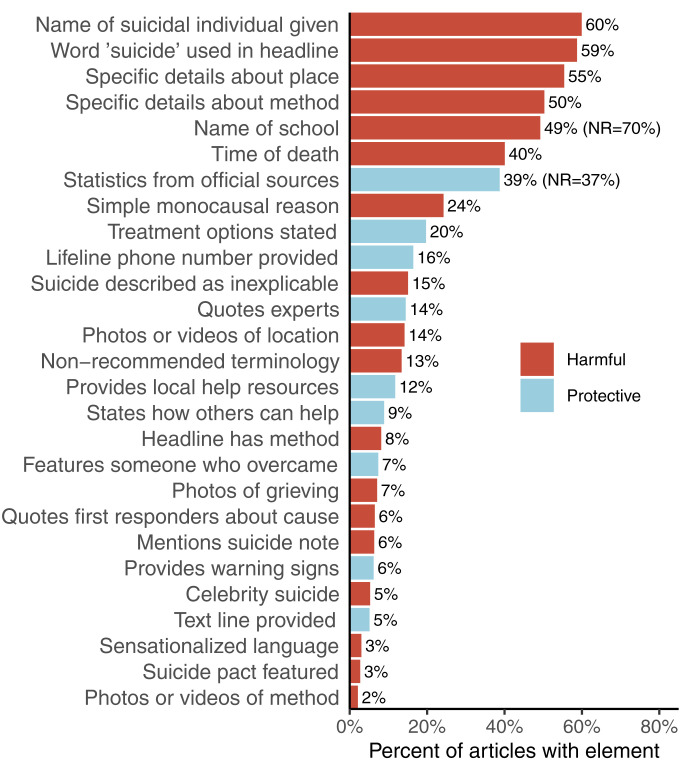
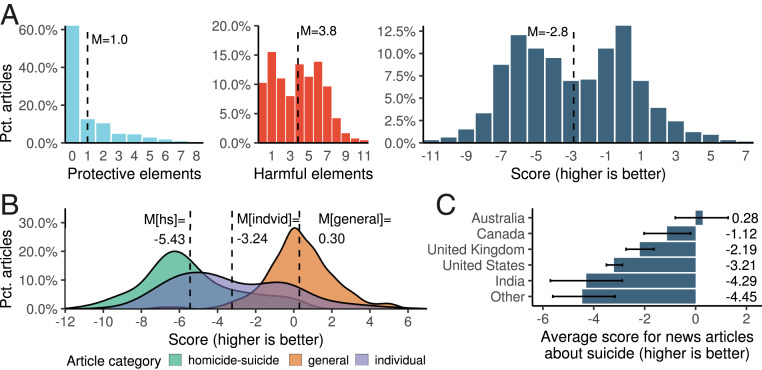
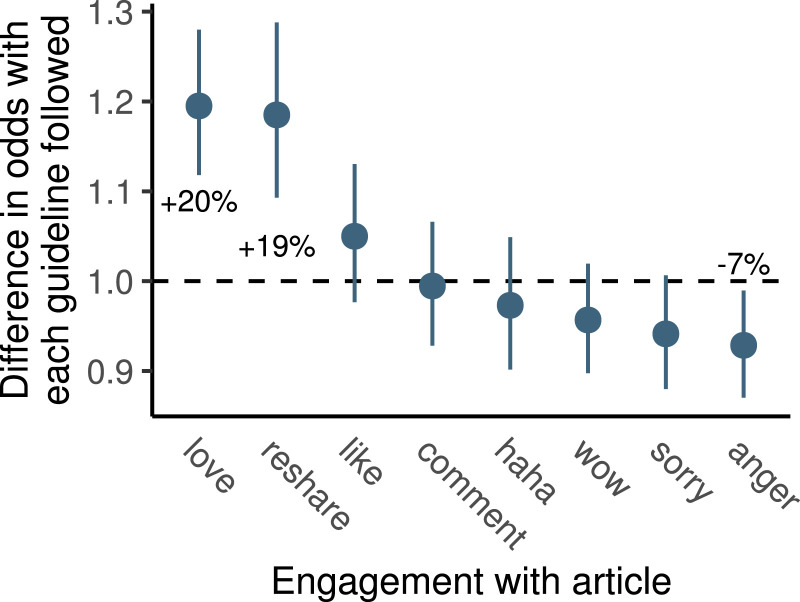
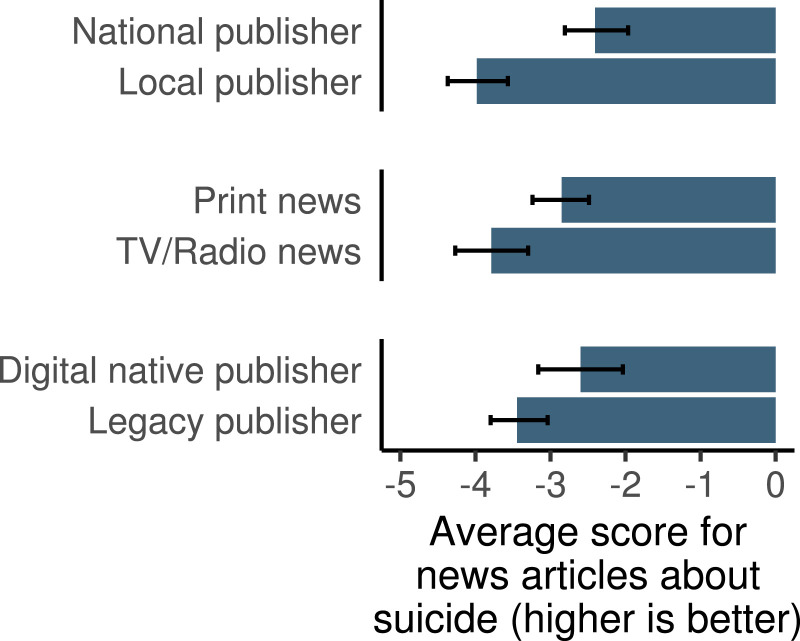
Rates of suicide in the United States are at a more than 20-y high. Suicide contagion, or spread of suicide-related thoughts and behaviors through exposure to sensationalized and harmful content is a well-recognized phenomenon. Health authorities have published guidelines for news media reporting on suicide to help prevent contagion; however, uptake of recommendations remains limited. A key barrier to widespread voluntary uptake of suicide-reporting guidelines is that more sensational content is perceived to be more engaging to readers and thus enhances publisher visibility and engagement; however, no empirical information exists on the actual influence of adherence to safe-reporting practices on reader engagement. Hence, we conducted a study to analyze adherence to suicide-reporting guidelines on news shared on social media and to assess how adherence affects reader engagement. Our analysis of Facebook data revealed that harmful elements were prevalent in news articles about suicide shared on social media while the presence of protective elements was generally rare. Contrary to popular perception, closer adherence to safe-reporting practices was associated with a greater likelihood of an article being reshared (adjusted odds ratio [AOR] = 1.19, 95% confidence interval [CI] = 1.10 to 1.27) and receiving positive engagement ("love" reactions) (AOR = 1.20, 95% CI = 1.13 to 1.26). Mean safe-reporting scores were lower in the US than other English-speaking nations and variation existed by publisher characteristics. Our results provide empirical evidence that improved adherence to suicide-reporting guidelines may benefit not only the health of individuals, but also support publisher goals of reach and engagement.
Overview
The claims and statistics of this paper haven’t been checked yet.
Free: it reads the open-access text and checks the first 5 claims that cite a source we can check. Create a free account to check every claim.
Integrity signals
Registry
Cites
Statistics
Figures
Verification
Claims the paper makes
The claims and statistics of this paper haven’t been checked yet.
Free: it reads the open-access text and checks the first 5 claims that cite a source we can check. Create a free account to check every claim.
Claims other papers make about this one
Each is checked against this paper’s own text: does it say what the citing paper says it does?
The cited source says what the claim attributes to it.
In the citing paper
“Several studies have been undertaken to examine adherence to guidelines in traditional and new media.284,285”
From The Lancet Commission on ending stigma and discrimination in mental health (2022) · cites this paper as [285]
Self-check
Percentages, sums and reported differences re-computed from the paper’s own numbers.
The self-check needs the paper’s full text.
Citations
Cites
Sick individuals and sick populations
Rose, G. (2001) · International Journal of Epidemiology · doi:10.1093/ije/30.3.427 · Cited by 3,736 · cited 1×
“Indeed, leading public health strategies that create seemingly small shifts in the distribution of exposure to risk factors, result in sizable population-level reductions in death (36).”
Experimental evidence of massive-scale emotional contagion through social networks
Kramer, A. D. I., Guillory, J. E., & Hancock, J. T. (2014) · Proceedings of the National Academy of Sciences · doi:10.1073/pnas.1320040111 · Cited by 3,687 · cited 1×
“Additionally, with regards to public health strategies focused on increasing positive content, while previous research on the Facebook platform has indicated that increased viewing of positive content is associated with increased positive sentiment in subsequent posts made by viewers (43), no study has assessed whethe…”
World health statistics 2016 : monitoring health for the SDGs, sustainable development goals
de la Salud, O. M. (2016) · Virtual Defense Library (Ministerio de Defensa) · Cited by 3,285
Computing inter‐rater reliability and its variance in the presence of high agreement
Gwet, K. L. (2008) · British Journal of Mathematical and Statistical Psychology · doi:10.1348/000711006x126600 · Cited by 2,167 · cited 1×
“Raw interrater agreement percentage is presented in the SI Appendix as well as the Gwet’s AC1 statistic, an interrater statistic with more reliable performance than Cohen’s Kappa in assessing items with low prevalence (28, 29).”
Phillips, D. P. (1974) · American Sociological Review · doi:10.2307/2094294 · Cited by 1,063 · cited 1×
“In the field of mental health, the spread of suicidal behaviors between individuals is known as the Werther effect, named after an 18th century Goethe novel, in which a young man kills himself after a romantic rejection; the publication of the novel purportedly led to an increase in suicides and resulted in bans of th…”
Wongpakaran, N., Wongpakaran, T., Wedding, D., & Gwet, K. L. (2013) · BMC Medical Research Methodology · doi:10.1186/1471-2288-13-61 · Cited by 1,041 · cited 1×
“Raw interrater agreement percentage is presented in the SI Appendix as well as the Gwet’s AC1 statistic, an interrater statistic with more reliable performance than Cohen’s Kappa in assessing items with low prevalence (28, 29).”
Role of media reports in completed and prevented suicide: Werther v. Papageno effects
Niederkrotenthaler, T., Voracek, M., Herberth, A., Till, B., Strauss, M., Etzersdorfer, E., Eisenwort, B., & Sonneck, G. (2010) · British Journal of Psychiatry · doi:10.1192/bjp.bp.109.074633 · Cited by 719 · cited 9×
“Furthermore, previous research has demonstrated that media content which poorly adheres to the suicide-reporting guidelines causes objective health harms, such as increases in deaths from suicide clusters and increased suicide rates (14, 16).”
InfluentialMortality in the United States
(1840) · The Boston Medical and Surgical Journal · doi:10.1056/nejm184002260220306 · Cited by 648
Suicide Mortality in the United States, 1999-2017.
Hedegaard, H. B., Curtin, S. C., & Warner, M. (2018) · PubMed · Cited by 485
Media contagion and suicide among the young
Gould, M., Jamieson, P., & Romer, D. (2003) · American Behavioral Scientist · doi:10.1177/0002764202250670 · Cited by 429 · cited 1×
“Spread of suicide-related behaviors may occur due to multiple mechanisms—such as altering social norms about suicide, encouraging identification with an individual with similar characteristics or life circumstances, or implicitly suggesting a viable means of suicide to vulnerable individuals—and is supported by social…”
Research works printed but not linked: 2
- Substance Abuse and Mental Health Services Administration, Key substance use and mental health indicators in the United States: Results from the 2017 National Survey on Drug Use and Health (HHS Publication No. SMA 18-5068, NSDUH Series H-53), (Center for Behavioral Health Statistics and Quality, Substance Abuse and Mental Health Services Administration, Rockville, MD, 2018).
- World Health Organization, Department of Mental Health and Substance Abuse, Preventing Suicide: A Resource for Media Professionals, (World Health Organization, Geneva, 2008).
Cited by
The Lancet Commission on ending stigma and discrimination in mental health
Thornicroft, G., Sunkel, C., Alikhon Aliev, A., Baker, S., Brohan, E., el Chammay, R., Davies, K., Demissie, M., Duncan, J., Fekadu, W., et al. (2022) · The Lancet · doi:10.1016/s0140-6736(22)01470-2 · Cited by 748
“284,285 With the exception of a small number of countries, including Canada 286 and Australia, they are rarely adhered to.”
BackgroundMittal, S., & Choudhury, M. D. (2023) · CHI Conference on Human Factors in Computing Systems · doi:10.1145/3544548.3580834 · Cited by 46
“[131], who examined how news shared on Facebook adhered to suicidereporting guidelines.”
BackgroundInfluentialShoib, S., Chandradasa, M., Nahidi, M., Amanda, T. W., Khan, S., Saeed, F., Swed, S., Mazza, M., Nicola, M. D., Martinotti, G., et al. (2022) · International Journal of Environmental Research and Public Health · doi:10.3390/ijerph192013001 · Cited by 30
“However, Facebook needs to adhere to suicide-reporting guidelines, as harmful content is frequently seen and should prevent the glorification of suicidal deaths [37,38].”
BackgroundAssessing Suicide Reporting in Top Newspaper Social Media Accounts in China: Content Analysis Study
Lai, K., Li, D., Peng, H., Zhao, J., & He, L. (2021) · JMIR Mental Health · doi:10.2196/26654 · Cited by 28
“In addition, a US study on suicide reporting on Facebook revealed that 16% of suicide news contained a hotline phone number, a higher percentage than in China but still low overall [36].”
BackgroundInfluentialNg, Y. P., Pheh, K. S., Panirselvam, R. R., Chan, W. L., Lim, J. B. Y., Lim, J. T. Y., Leong, K. K., Bartlett, S., Tay, K. W., & Chan, L. F. (2021) · Frontiers in Psychology · doi:10.3389/fpsyg.2021.673287 · Cited by 25
Metadata
- Authors
- Sumner, S. A., Burke, M., & Kooti, F.
- Affiliations
- Centers for Disease Control and Prevention (US)
- Meta (United States) (US)
- Corresponding author
- Sumner, Steven A.
- Venue
- Proceedings of the National Academy of Sciences
- Publisher
- National Academy of Sciences
- Published
- 2020-07-06
- Volume
- 117
- Issue
- 28
- Pages
- 16267-16272
- ISSN
- 0027-8424 (ISSN-L)
- 1091-6490
- PMC
- PMC7368318
- OpenAlex
- W3038650763
- Cited by
- 29
- References
- 40
- Citations by year
- 2026: 4 · 2025: 3 · 2024: 5 · 2023: 4 · 2022: 4 · 2021: 7 · 2020: 2
- FWCI
- 1.70
- Type
- journal article
- Language
- en
- Open access
- hybrid
- doi.org
- Licence
- Locations
- Proceedings of the National Academy of Sciences (publishedVersion, cc-by-nc-nd)
- PubMed Central (publishedVersion, cc-by-nc-nd)
- PubMed (publishedVersion)
- RePEc: Research Papers in Economics (submittedVersion)
- Topics
- Social Sciences › Psychology › Clinical Psychology › Suicide and Self-Harm Studies
- Social Sciences › Communication › Journalism and Media Studies
- Social Sciences › Health › Social Media in Health Education
- Keywords
- suicide reporting guidelines, suicide contagion, media coverage of suicide, social media sharing, Facebook, reader engagement, cross-national comparison, sensationalism
- MeSH terms
- Suicide Prevention, Humans, Suicide, United States, Odds Ratio, Guidelines as Topic, Guideline Adherence, Social Networking, Social Media
About these checks
Registry, retraction, Cites and statistics results are computed, not judged, with one exception: a printed reference that no index lists is read once by a model before it counts as a citation error. Claims are extracted by a model and kept only when their quote appears verbatim in the text; each cited source is then checked, with a model’s help, for whether it says what the claim relies on. Those verdicts can be wrong — read the claim’s quote and the cited source before relying on one.
Statistics and arithmetic are recomputed, not judged.
Confidence bands are shown only for fields calibrated on our annotated test set. None is calibrated yet, so no band is shown.
What counts as a claim ›How we measure confidence ›How we check this ›
Are you an author, or do you see a problem with this page? Request a review
Data sources
Bibliographic data: Semantic Scholar, OpenAlex, Crossref.
Contains information from the Semantic Scholar Academic Graph Datasets, made available under the ODC Attribution License (ODC-BY 1.0).
Semantic Scholar’s data is described in: Kinney, R., et al. (2023). The Semantic Scholar Open Data Platform. arXiv:2301.10140.
