

Identification of the initial nucleocapsid recognition element in the HIV-1 RNA packaging signal
Open accessThe DOI matches its Crossref record; 65 of the 65 references it cites were found in a registry or an index.
Abstract
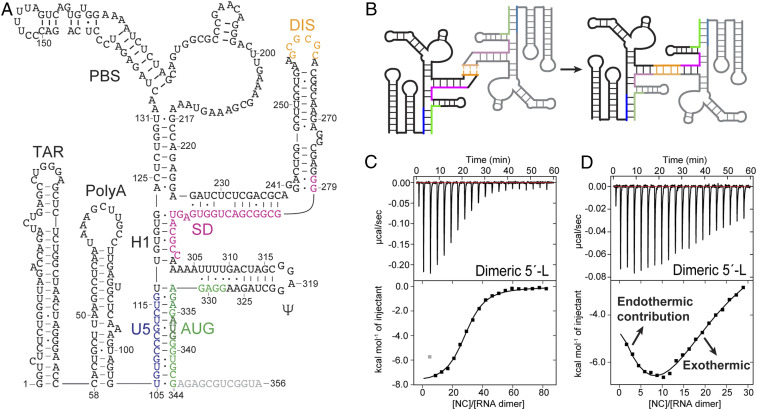
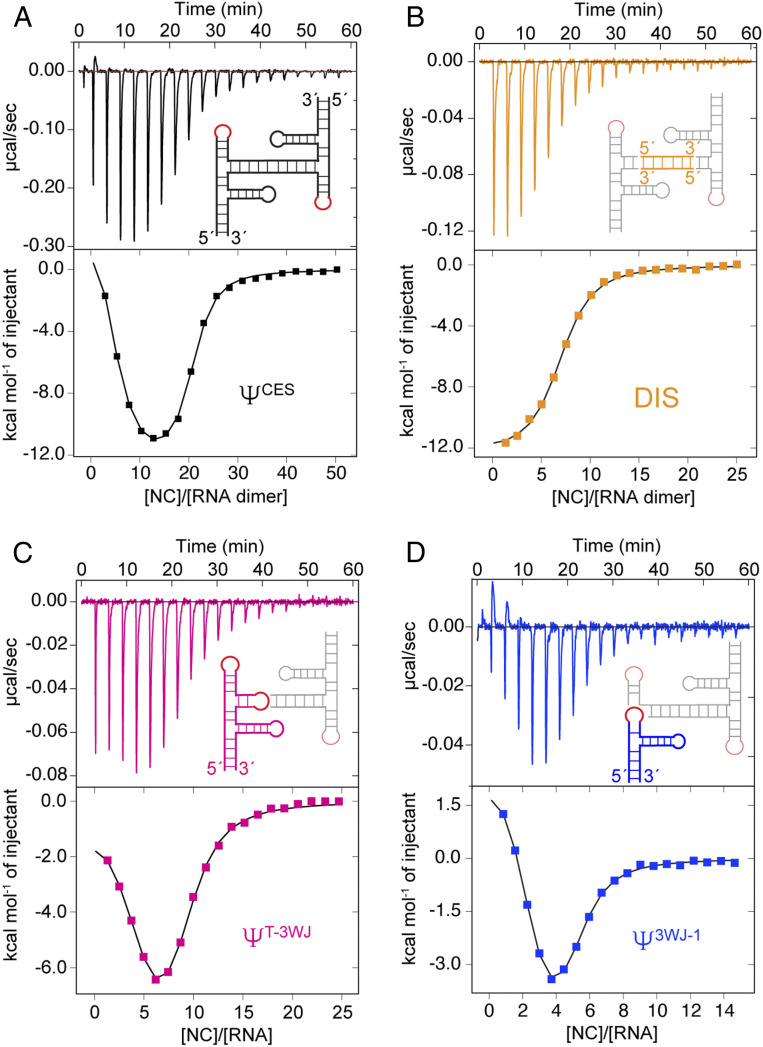
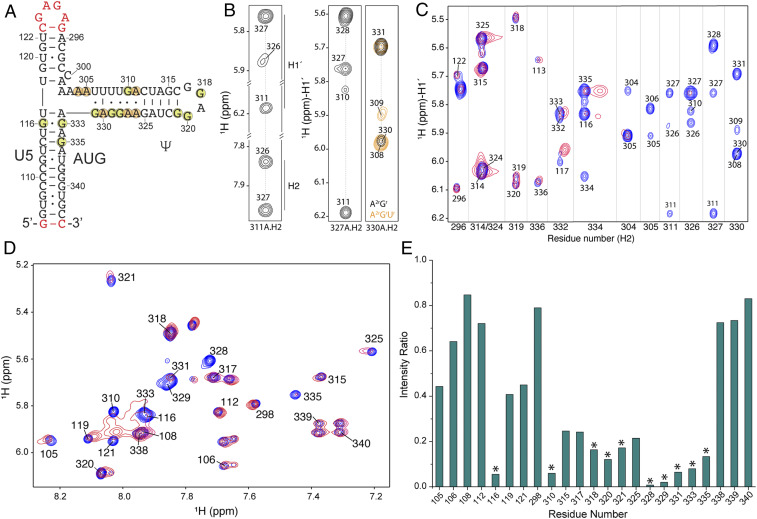
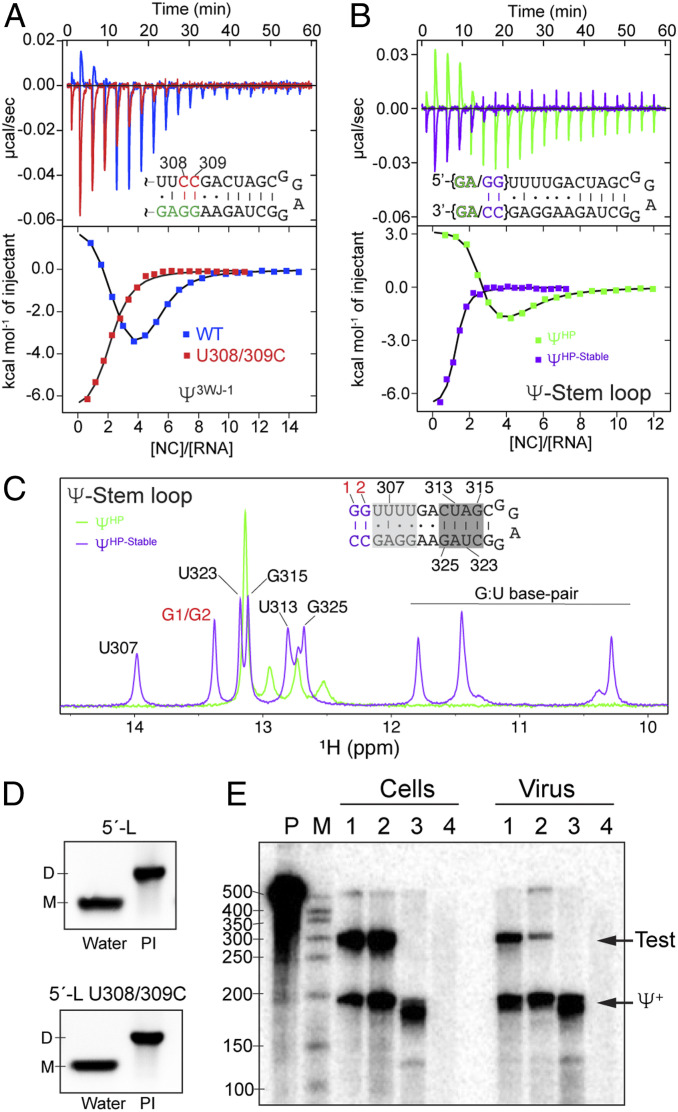
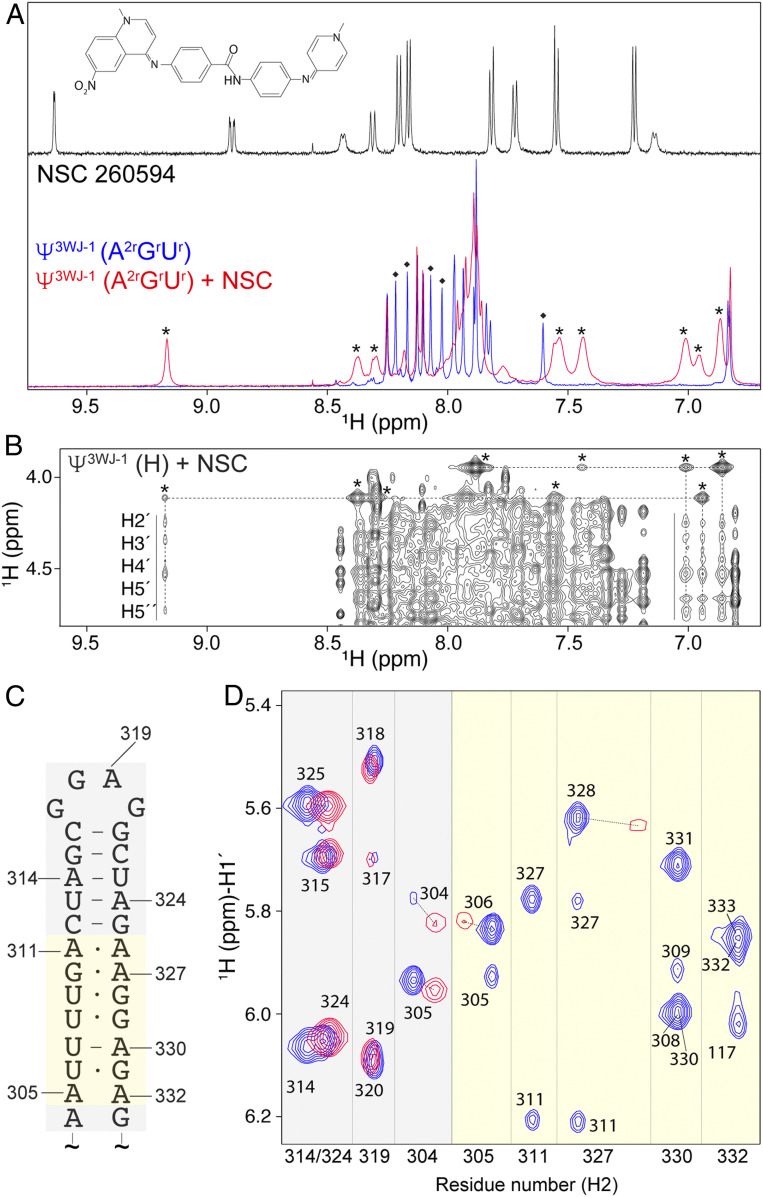
Significance: Understanding the molecular determinants of retroviral genome packaging is important for drug discovery and development of vectors for gene delivery. We show that the HIV-1 leader, which contains the RNA elements necessary for genome packaging, binds approximately two dozen copies of the cognate NC protein with affinities ranging from ∼40 nM to 1.4 µM. Binding to the four highest-affinity “initial” binding sites occurs with endothermic energetics attributed to NC-induced localized RNA melting. Mutations that stabilize these sites inhibit NC binding in vitro and RNA packaging in transfected cells. A small-molecule inhibitor of RNA packaging binds specifically to the initial NC binding sites and stabilizes the RNA structure. Our findings identify a potential RNA Achilles’ heel for HIV therapeutic development.
Overview
The claims and statistics of this paper haven’t been checked yet.
Free: it reads the open-access text and checks the first 5 claims that cite a source we can check. Create a free account to check every claim.
Integrity signals
Registry
Cites
Statistics
Figures
Verification
Claims the paper makes
The claims and statistics of this paper haven’t been checked yet.
Free: it reads the open-access text and checks the first 5 claims that cite a source we can check. Create a free account to check every claim.
Claims other papers make about this one
Each is checked against this paper’s own text: does it say what the citing paper says it does?
The cited source says what the claim attributes to it.
In the citing paper
“It is responsible for the specific recognition and selective packaging of the viral packaging signal (Psi, Ψ) located in the 5′-leader region of the viral genome, enabling the incorporation of two copies of genomic RNA into nascent virions amid a vast excess of cellular RNA (15).”
From Research progress on HIV-1 structural proteins and antiviral therapies (2026) · cites this paper as [15]
Self-check
Percentages, sums and reported differences re-computed from the paper’s own numbers.
The self-check needs the paper’s full text.
Citations
Cites
NMR with Proteins and Nucleic Acids
Wüthrich, K. (1986) · Europhysics News · doi:10.1051/epn/19861701011 · Cited by 7,989
Boussif, O., Lezoualc'h, F., Zanta, M. A., Mergny, M. D., Scherman, D., Demeneix, B., & Behr, J. P. (1995) · Proceedings of the National Academy of Sciences · doi:10.1073/pnas.92.16.7297 · Cited by 6,247 · cited 1×
“To generate virions for RNA packaging analysis, 293T cells at 70% confluence in 10-cm plates were cotransfected with a total of 6 μ g of plasmid DNA that included one test vector plasmid and NL4-3 GPP at an ∼ 1:1 molar ratio using polyethylenimine (64).”
NMR of Proteins and Nucleic Acids
(2006) · Nuclear Magnetic Resonance · doi:10.1039/9781847555236-00336 · Cited by 5,863
Using NMRView to Visualize and Analyze the NMR Spectra of Macromolecules
Johnson, B. A. (2004) · Protein NMR Techniques · doi:10.1385/1-59259-809-9:313 · Cited by 1,027 · cited 1×
“All NMR data were processed with NMRFx (62) and analyzed with NMRViewJ (63).”
HIV-1 assembly, budding, and maturation
Sundquist, W. I., & Krausslich, H.-G. (2012) · Cold Spring Harbor Perspectives in Medicine · doi:10.1101/cshperspect.a006924 · Cited by 814
Structure of the HIV-1 Nucleocapsid Protein Bound to the SL3 Ψ-RNA Recognition Element
De Guzman, R. N., Wu, Z. R., Stalling, C. C., Pappalardo, L., Borer, P. N., & Summers, M. F. (1998) · Science · doi:10.1126/science.279.5349.384 · Cited by 659 · cited 3×
“Since HIV-1 NC binds with high affinity to unpaired or weakly paired guanosines (39), we also performed NC titration experiment with a G H -labeled Ψ 3WJ − 1 sample (Fig.”
InfluentialSelf-citationRetroviral Recombination and Reverse Transcription
Hu, W.-S., & Temin, H. M. (1990) · Science · doi:10.1126/science.1700865 · Cited by 598
Aldovini, A., & Young, R. A. (1990) · Journal of Virology · doi:10.1128/jvi.64.5.1920-1926.1990 · Cited by 546
Hu, W. S., & Temin, H. M. (1990) · Proceedings of the National Academy of Sciences · doi:10.1073/pnas.87.4.1556 · Cited by 476 · cited 1×
“Both strands of the dimeric gRNA are used for strand transfer-mediated recombination during reverse transcription (7 – 9), which enhances HIV-1 fitness by maintaining genetic integrity and promoting ge-netic diversity under natural or chemotherapeutic stresses (10, 11).”
Fragments of the HIV-1 Tat Protein Specifically Biand TAR RNA
Weeks, K. M., Ampe, C., Schultz, S. C., Steitz, T. A., & Crothers, D. M. (1990) · Science · doi:10.1126/science.2205002 · Cited by 444 · cited 1×
“…response region (TAR) that stimulates transcription, a primer binding site for initiation of reverse transcription (PBS), a dimer initiation site that promotes genome dimerization (DIS), the major splice donor site (SD), a polyadenylation signal (polyA), and the gag start codon (AUG) (3, 18 – 22).”
Research works printed but not linked: 1
- Coffin J. M., Hughes S. H., Varmus H. E., Retroviruses, (Cold Spring Harbor Laboratory Press, Plainview, NY, 1997). 21433340
Cited by
Bruinsma, R., Wuite, G. J. L., & Roos, W. H. (2021) · Nature Reviews Physics · doi:10.1038/s42254-020-00267-1 · Cited by 122
White, J. A., Wu, F., Yasin, S., Moskovljevic, M., Varriale, J., Dragoni, F., Camilo-Contreras, A., Duan, J., Zheng, M. Y., Tadzong, N. F., et al. (2023) · Journal of Clinical Investigation · doi:10.1172/jci165245 · Cited by 88
“ITC titration profiles for 5′-LWT exhibited a characteristic endothermic contribution to NC binding (Figure 3C) (37), but profiles for both mutants lack this feature (Figure 3, D and E).”
BackgroundMethodInfluentialSelf-citationNano-DMS-MaP allows isoform-specific RNA structure determination
Bohn, P. S., Gribling-Burrer, A.-S., Ambi, U. B., & Smyth, R. P. (2023) · Nature Methods · doi:10.1038/s41592-023-01862-7 · Cited by 63
5′-Cap sequestration is an essential determinant of HIV-1 genome packaging
Ding, P., Kharytonchyk, S., Kuo, N., Cannistraci, E., Flores, H., Chaudhary, R., Sarkar, M., Dong, X., Telesnitsky, A., & Summers, M. F. (2021) · Proceedings of the National Academy of Sciences · doi:10.1073/pnas.2112475118 · Cited by 51
Self-citationNearest neighbor rules for RNA helix folding thermodynamics: improved end effects
Zuber, J., Schroeder, S. J., Sun, H., Turner, D. H., & Mathews, D. H. (2022) · Nucleic Acids Research · doi:10.1093/nar/gkac261 · Cited by 58
“GU pairs play important roles in RNA structure and function as sites for binding metal ions (19,20), therapeutics (21), proteins or metabolites (22).”
Metadata
- Authors
- Ding, P., Kharytonchyk, S., Waller, A., Mbaekwe, U., Basappa, S., Kuo, N., Frank, H. M., Quasney, C., Kidane, A., Swanson, C., Van, V., Sarkar, M., Cannistraci, E., Chaudhary, R., Flores, H., Telesnitsky, A., & Summers, M. F.
- Affiliations
- Howard Hughes Medical Institute (US)
- University of Michigan (US)
- University of Maryland, Baltimore County (US)
- Corresponding author
- Telesnitsky, Alice
- Summers, Michael F.
- ORCID
- Venue
- Proceedings of the National Academy of Sciences
- Publisher
- National Academy of Sciences
- Published
- 2020-07-09
- Volume
- 117
- Issue
- 30
- Pages
- 17737-17746
- ISSN
- 0027-8424 (ISSN-L)
- 1091-6490
- PMC
- PMC7395439
- OpenAlex
- W3041039652
- Semantic Scholar
- cdd47675c090f6fb313ce46268aca8442c4373d6
- Cited by
- 69
- References
- 65
- Citations by year
- 2026: 6 · 2025: 9 · 2024: 12 · 2023: 7 · 2022: 14 · 2021: 17 · 2020: 4
- FWCI
- 5.67
- Type
- journal article
- Language
- en
- Open access
- hybrid
- doi.org
- Licence
- Locations
- Proceedings of the National Academy of Sciences (publishedVersion, cc-by)
- PubMed Central (publishedVersion, cc-by)
- PubMed (publishedVersion)
- Maryland Shared Open Access Repository (USMAI Consortium) (submittedVersion, cc-by)
- Digital Repository at the University of Maryland (University of Maryland College Park) (cc-by)
- Funders
- HHS | NIH | National Institute of Allergy and Infectious Diseases (AI150498, AI150470)
- HHS | NIH | National Institute of General Medical Sciences (GM008663, GM118987)
- Topics
- Life Sciences › Immunology and Microbiology › Virology › HIV Research and Treatment
- Life Sciences › Biochemistry, Genetics and Molecular Biology › Molecular Biology › RNA and protein synthesis mechanisms
- Life Sciences › Biochemistry, Genetics and Molecular Biology › Molecular Biology › DNA and Nucleic Acid Chemistry
- Keywords
- nucleocapsid protein, RNA-protein interactions, three-way junction, RNA secondary structure, virus-like particles, small molecule inhibitors, HIV treatment
- MeSH terms
- Base Sequence, Binding Sites, Nucleic Acid Conformation, Protein Binding, RNA, Viral, HIV-1, HIV Infections, Genome, Viral, Virus Assembly, Nucleocapsid, Nucleocapsid Proteins, Regulatory Sequences, Ribonucleic Acid
About these checks
Registry, retraction, Cites and statistics results are computed, not judged, with one exception: a printed reference that no index lists is read once by a model before it counts as a citation error. Claims are extracted by a model and kept only when their quote appears verbatim in the text; each cited source is then checked, with a model’s help, for whether it says what the claim relies on. Those verdicts can be wrong — read the claim’s quote and the cited source before relying on one.
Statistics and arithmetic are recomputed, not judged.
Confidence bands are shown only for fields calibrated on our annotated test set. None is calibrated yet, so no band is shown.
What counts as a claim ›How we measure confidence ›How we check this ›
Are you an author, or do you see a problem with this page? Request a review
How to cite
Cite CoChat for the checks on this page, and the paper for its own findings.
- This page
- CoChat. (2026). Citation check: Identification of the initial nucleocapsid recognition element in the HIV-1 RNA packaging signal. https://app.cochat.ai/papers/10.1073/pnas.2008519117
- The paper
- Ding, P., Kharytonchyk, S., Waller, A., Mbaekwe, U., Basappa, S., Kuo, N., Frank, H. M., Quasney, C., Kidane, A., Swanson, C., Van, V., Sarkar, M., Cannistraci, E., Chaudhary, R., Flores, H., Telesnitsky, A., & Summers, M. F. (2020). Identification of the initial nucleocapsid recognition element in the HIV-1 RNA packaging signal. Proceedings of the National Academy of Sciences. https://doi.org/10.1073/pnas.2008519117
Data sources
Bibliographic data: Semantic Scholar, OpenAlex, Crossref.
Contains information from the Semantic Scholar Academic Graph Datasets, made available under the ODC Attribution License (ODC-BY 1.0).
Semantic Scholar’s data is described in: Kinney, R., et al. (2023). The Semantic Scholar Open Data Platform. arXiv:2301.10140.
