

Deconstructing Methanosarcina acetivorans into an acetogenic archaeon
Open accessThe DOI matches its Crossref record; 69 of the 69 references it cites were found in a registry or an index.
Abstract
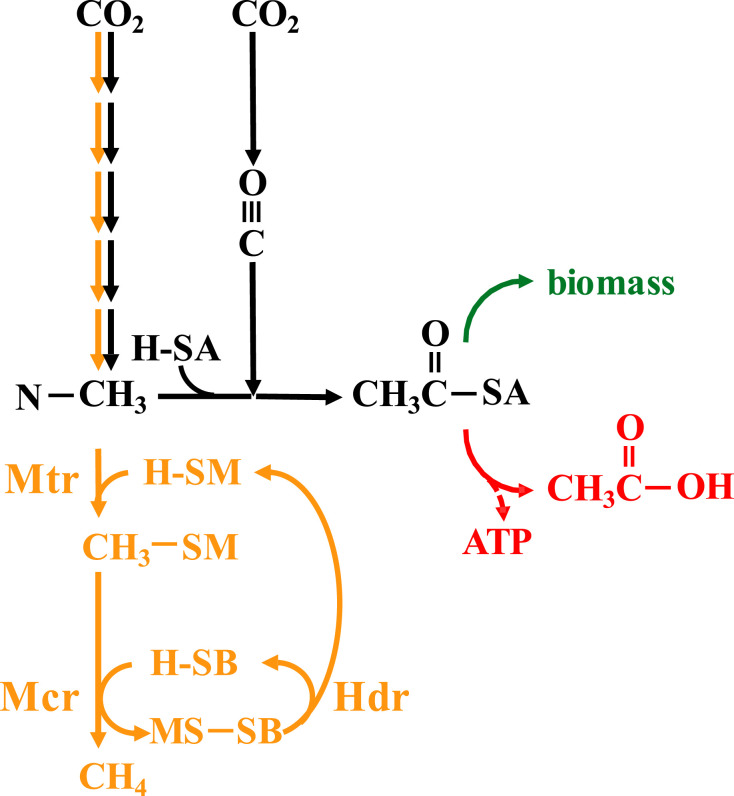
Significance: The reductive acetyl-coenzyme A (acetyl-CoA) pathway is the only carbon fixation pathway that can also be used for energy conservation like it is known for acetogenic bacteria. In methanogenic archaea, this pathway is extended with one route toward acetyl-CoA formation for anabolism and another route toward methane formation for catabolism. Which of these traits is ancestral in evolution has not been resolved. By diverging virtually all substrate carbon from methanogenesis to flow through acetyl-CoA, Methanosarcina acetivorans can be converted to an acetogenic organism. Being able to deconstruct methanogenic into the seemingly simpler acetogenic energy metabolism provides compelling evidence that methanogens are not nearly as metabolically limited as previously thought and suggests that methanogenesis might have evolved from the acetyl-CoA pathway.
Overview
The claims and statistics of this paper haven’t been checked yet.
Free: it reads the open-access text and checks the first 5 claims that cite a source we can check. Create a free account to check every claim.
Integrity signals
Registry
Cites
Statistics
Figures
Verification
Claims the paper makes
The claims and statistics of this paper haven’t been checked yet.
Free: it reads the open-access text and checks the first 5 claims that cite a source we can check. Create a free account to check every claim.
Claims other papers make about this one
Each is checked against this paper’s own text: does it say what the citing paper says it does?
The source backs part of the claim, not all of it — or backs it for a different population, condition or comparison.
In the citing paper
“In addition, acetogens and some methanogens can generate ATP in the acetyl-CoA pathway using substrate-level phosphorylation via acetyl-phosphate (Schöne et al., 2022).”
From Serpentinization as the source of energy, electrons, organics, catalysts, nutrients and pH gradients for the origin of LUCA and life (2023) · cites this paper as Schöne et al., 2022
Experimental — accuracy not yet measuredThe cited source says what the claim attributes to it.
In the citing paper
“The acetyl-CoA pathway is a biochemical fossil that links acetogens and methanogens via functional, ecological and ancient evolutionary aspects (Martin, 2020; Schöne et al., 2022).”
From Serpentinization as the source of energy, electrons, organics, catalysts, nutrients and pH gradients for the origin of LUCA and life (2023) · cites this paper as Schöne et al., 2022
The cited source says what the claim attributes to it.
In the citing paper
“Schöne et al. (2022) found that with considerable genetic manipulation, a methanogen could be converted into acetogenic physiology, reflecting ancient physiological connections between the two groups and possibly uncovering an ancestral state of ATP synthesis via substrate level phosphorylation prior to the origin of chemiosmotic ATP synthesis.”
From Serpentinization as the source of energy, electrons, organics, catalysts, nutrients and pH gradients for the origin of LUCA and life (2023) · cites this paper as Schöne et al., 2022
Self-check
Percentages, sums and reported differences re-computed from the paper’s own numbers.
The self-check needs the paper’s full text.
Citations
Cites
Bradford, M. M. (1976) · Analytical Biochemistry · doi:10.1016/0003-2697(76)90527-3 · Cited by 255,302 · cited 2×
“The protein in cell fractions was quantified with the method of Bradford (59) using bovine serum albumin as standard.”
MethodTrimmomatic: a flexible trimmer for Illumina sequence data
Bolger, A. M., Lohse, M., & Usadel, B. (2014) · Bioinformatics · doi:10.1093/bioinformatics/btu170 · Cited by 65,548 · cited 1×
“39 (63) was used for quality filtering of the raw reads and Bowtie2 (64) for the mapping on the reference genome M.”
MethodFast gapped-read alignment with Bowtie 2
Langmead, B., & Salzberg, S. L. (2012) · Nature Methods · doi:10.1038/nmeth.1923 · Cited by 56,400 · cited 2×
“39 (63) was used for quality filtering of the raw reads and Bowtie2 (64) for the mapping on the reference genome M.”
MethodCurrent protocols in molecular biology
Sargent, T. (1988) · Analytical Biochemistry · doi:10.1016/0003-2697(88)90147-9 · Cited by 7,205
Perez-Riverol, Y., Csordas, A., Bai, J., Bernal-Llinares, M., Hewapathirana, S., Kundu, D. J., Inuganti, A., Griss, J., Mayer, G., Eisenacher, M., et al. (2019) · Nucleic Acids Research · doi:10.1093/nar/gky1106 · Cited by 6,693 · cited 3×
“The mass spectrometry proteomics data have been deposited to the ProteomeXchange Consortium via the PRIDE (72) (https://www.”
MethodEnergy conservation in chemotrophic anaerobic bacteria
Thauer, R. K., Jungermann, K., & Decker, K. (1977) · Bacteriological Reviews · doi:10.1128/br.41.1.100-180.1977 · Cited by 4,146
The ecology and biotechnology of sulphate-reducing bacteria
Muyzer, G., & Stams, A. J. M. (2008) · Nature Reviews Microbiology · doi:10.1038/nrmicro1892 · Cited by 2,436 · cited 1×
“, acetogenic and sulfate-reducing bacteria) (44, 45), methanogenic archaea are metabolically very restricted, both regarding the range of electron donors they use, which include only H2, C1 compounds, acetate, and a few secondary alcohols (31), and electron acceptors (CO2 and methyl groups), which all lead to the form…”
BackgroundSemi-supervised learning for peptide identification from shotgun proteomics datasets
Käll, L., Canterbury, J. D., Weston, J., Noble, W. S., & MacCoss, M. J. (2007) · Nature Methods · doi:10.1038/nmeth1113 · Cited by 2,424
Methanogenic archaea: ecologically relevant differences in energy conservation
Thauer, R. K., Kaster, A.-K., Seedorf, H., Buckel, W., & Hedderich, R. (2008) · Nature Reviews Microbiology · doi:10.1038/nrmicro1931 · Cited by 2,184 · cited 2×
“Together with HdrE, HdrD constitutes the terminal oxidoreductase of the respiratory chain of Methanosarcina species (8) (SI Appendix, Fig.”
BackgroundThe Growth of Micro-organisms in Relation to their Energy Supply
BAUCHOP, T., & ELSDEN, S. R. (1960) · Microbiology · doi:10.1099/00221287-23-3-457 · Cited by 945
Research works printed but not linked: 5
- K. R. Sowers, K. M. Noll, “ Techniques for anaerobic growth” in Methanogens, K. R. Sowers, H. J. Schreier, Eds. (Cold Spring Harbor Laboratory Press, Plainview, NY, vol. 2, 1995), pp. 15– 47.
- Georg-August-University Goettingen, MEAM7. Sequence Read Archive. https://www.ncbi.nlm.nih.gov/sra/?term=SRR13272466. Deposited 18 December 2020.
- Georg-August-University Goettingen, MEAM3. Sequence Read Archive. https://www.ncbi.nlm.nih.gov/sra/?term=SRR13272467. Deposited 18 December 2020.
- Georg-August-University Goettingen, MEAM8. Sequence Read Archive. https://www.ncbi.nlm.nih.gov/sra/?term=SRR13272468. Deposited 18 December 2020.
- Georg-August-University Goettingen, MEAM4. Sequence Read Archive. https://www.ncbi.nlm.nih.gov/sra/?term=SRR13272469. Deposited 18 December 2020.
Cited by
Correa, S. S., Schultz, J., Lauersen, K. J., & Rosado, A. S. (2022) · Journal of Advanced Research · doi:10.1016/j.jare.2022.07.011 · Cited by 169
Schwander, L., Brabender, M., Mrnjavac, N., Wimmer, J. L. E., Preiner, M., & Martin, W. F. (2023) · Frontiers in Microbiology · doi:10.3389/fmicb.2023.1257597 · Cited by 65
“The acetyl-CoA pathway is a biochemical fossil that links acetogens and methanogens via functional, ecological and ancient evolutionary aspects (Martin, 2020; Schöne et al., 2022).”
BackgroundMethodPoehlein, A., Zeldes, B. M., Flaiz, M., Böer, T., Lüschen, A., Höfele, F., Baur, K. S., Molitor, B., Kröly, C., Wang, M., et al. (2024) · Bioresource Technology · doi:10.1016/j.biortech.2024.131913 · Cited by 59
Self-citationDeep-branching acetogens in serpentinized subsurface fluids of Oman
Colman, D. R., Kraus, E. A., Thieringer, P. H., Rempfert, K., Templeton, A. S., Spear, J. R., & Boyd, E. S. (2022) · Proceedings of the National Academy of Sciences · doi:10.1073/pnas.2206845119 · Cited by 45
“Indeed, recent experimental evidence has confirmed the close resemblance of the reductive acetyl-CoA pathways of acetogens and methanogens via the disruption of methane-producing genes downstream of the reductive acetyl-CoA pathway in the methanogen Methanosarcina acetivorans, leading to its conversion to an acetogen…”
BackgroundBrabender, M., Henriques Pereira, D. P., Mrnjavac, N., Schlikker, M. L., Kimura, Z.-I., Sucharitakul, J., Kleinermanns, K., Tüysüz, H., Buckel, W., Preiner, M., et al. (2024) · Proceedings of the National Academy of Sciences · doi:10.1073/pnas.2318969121 · Cited by 42
“3) is likely due to the more negative midpoint potential of Fe 0 in reaction to the divalent ion relative to the other metals tested (57, 67) or to differences in H 2 chemisorption among metals tested (57), or both.”
Gupta, D. K., Chen, K., Elliott, S. J., & Nayak, D. D. (2024) · Nature Communications · doi:10.1038/s41467-024-47564-2 · Cited by 41
New perspectives for biotechnological applications of methanogens
Contreras, G., Thomsen, J., Pfitzer, M., Hafenbradl, D., Kostner, D., Holtmann, D., Schmitz, R. A., Rother, M., & Molitor, B. (2022) · Current Research in Biotechnology · doi:10.1016/j.crbiot.2022.10.001 · Cited by 39
Self-citationBao, J., Mateos, E. D. D., & Scheller, S. (2022) · ACS Synthetic Biology · doi:10.1021/acssynbio.2c00137 · Cited by 44
“Recently, the methanogen Methanosarcina acetivorans was re-engineered to no longer depend on methane production for its energy metabolism 9 , and thereby it might serve as an example where a methanogen could be utilized for generating an increased repertoire of new potential products, besides just…”
BackgroundSelf-citationGTP before ATP: The energy currency at the origin of genes
Mrnjavac, N., & Martin, W. F. (2024) · Biochimica et Biophysica Acta (BBA) - Bioenergetics · doi:10.1016/j.bbabio.2024.149514 · Cited by 35
“…of energy conservation [9,17,57] because they are the most common organophosphate used for ATP syntheses via substrate-level phosphorylation [15], and because they are formed during the process of H 2 -dependent CO 2 reduction in acetogens [49] and under some conditions in methanogens [33].”
Obligate autotrophy at the thermodynamic limit of life in a new acetogenic bacterium
Frolov, E. N., Elcheninov, A. G., Gololobova, A. V., Toshchakov, S. V., Novikov, A. A., Lebedinsky, A. V., & Kublanov, I. V. (2023) · Frontiers in Microbiology · doi:10.3389/fmicb.2023.1185739 · Cited by 33
“1 Among Archaea, only for Methanosarcina acetivorans and Archaeoglobus fulgidus and only with the low-potential CO as the electron donor was the energy conservation via acetogenesis reported (Rother and Metcalf, 2004; Henstra et al., 2007; Schöne et al., 2022).”
BackgroundUnveiling the unique role of iron in the metabolism of methanogens: A review
Ma, Y., Qu, Y., Yao, X., Xia, C., Lv, M., Lin, X., Zhang, L., Zhang, M., & Hu, B. (2024) · Environmental Research · doi:10.1016/j.envres.2024.118495 · Cited by 28
Microbial ecology of serpentinite-hosted ecosystems
Colman, D. R., Templeton, A. S., Spear, J. R., & Boyd, E. S. (2025) · The ISME Journal · doi:10.1093/ismejo/wraf029 · Cited by 24
“These results are consistent with laboratory experiments demonstrating that canonical methanogens can be engineered to conduct acetogenesis via targeted deletions of genes encoding proteins involved in methanogenesis pathways [72].”
Pu, Q., Meng, B., Huang, J., Zhang, K., Liu, J., Liu, Y., Abdelhafiz, M. A., & Feng, X. (2025) · Biogeosciences · doi:10.5194/bg-22-1543-2025 · Cited by 23
Russell, M. J. (2023) · Frontiers in Microbiology · doi:10.3389/fmicb.2023.1145915 · Cited by 25
A non-methanogenic archaeon within the order Methanocellales
Suzuki, S., Ishii, S., Chadwick, G. L., Tanaka, Y., Kouzuma, A., Watanabe, K., Inagaki, F., Albertsen, M., Nielsen, P. H., & Nealson, K. H. (2024) · Nature Communications · doi:10.1038/s41467-024-48185-5 · Cited by 17
“Overall, I found many of the observations to be of high interest to the broad community interested in serpentinizing environments.”
Evidence for corrin biosynthesis in the last universal common ancestor
Modjewski, L. D., Karavaeva, V., Mrnjavac, N., Knopp, M., Martin, W. F., & Sousa, F. L. (2025) · The FEBS Journal · doi:10.1111/febs.17367 · Cited by 15
“Both acetogens and methanogens inhabit H 2 - producing hydrothermal systems today [69,70] and might present windows into the physiology and habitat of the first cells [47,69 – 72].”
Laird, M. G., Adlung, N., Koivisto, J. J., & Scheller, S. (2023) · ChemBioChem · doi:10.1002/cbic.202300595 · Cited by 16
Self-citationChadwick, G. L., Dury, G. A., & Nayak, D. D. (2024) · Applied and Environmental Microbiology · doi:10.1128/aem.02220-23 · Cited by 15
ATP requirements for growth reveal the bioenergetic impact of mitochondrial symbiosis
Martin, W. F. (2025) · Biochimica et Biophysica Acta (BBA) - Bioenergetics · doi:10.1016/j.bbabio.2025.149564 · Cited by 15
“Methanogens cannot grow from glucose [81] or carbon substrates larger than pyruvate [82,83].”
The Moon‐Forming Impact and the Autotrophic Origin of Life
Mrnjavac, N., Wimmer, J. L. E., Brabender, M., Schwander, L., & Martin, W. F. (2023) · ChemPlusChem · doi:10.1002/cplu.202300270 · Cited by 13
Hot prospects: harnessing thermophilic microbes for syngas fermentation
Galani, A., Sipkema, D., & Sousa, D. Z. (2025) · Trends in biotechnology · doi:10.1016/j.tibtech.2025.04.017 · Cited by 13
Nitrogen metabolism pathways and functional microorganisms in typical karst wetlands
Chen, C., Ai, J., Chen, L., Li, Y., Tang, X., & Li, J. (2024) · Environmental Science and Pollution Research · doi:10.1007/s11356-024-32587-5 · Cited by 12
“It was also the most essential Methanogenium in anaerobic digestion (He et al. 2019; Schöne et al. 2022).”
Mitigating methane emissions and promoting acetogenesis in ruminant livestock
Mrutu, R. I., Abdussamad, A. M., Umar, K., Abdulhamid, A., & Farny, N. G. (2025) · Frontiers in Animal Science · doi:10.3389/fanim.2025.1489212 · Cited by 11
Progresses and challenges of engineering thermophilic acetogenic cell factories
Bourgade, B., & Islam, M. A. (2024) · Frontiers in Microbiology · doi:10.3389/fmicb.2024.1476253 · Cited by 10
Pyruvate-dependent growth of Methanosarcina acetivorans
Richter, M., Sattler, C., Schöne, C., & Rother, M. (2024) · Journal of Bacteriology · doi:10.1128/jb.00363-23 · Cited by 9
Self-citationMethanothermobacter thermautotrophicus and Alternative Methanogens: Archaea-Based Production
Mühling, L., Baur, T., & Molitor, B. (2024) · Advances in biochemical engineering, biotechnology · doi:10.1007/10_2024_270 · Cited by 10
Saini, J., Deere, T. M., Chanderban, M., McIntosh, G. J., & Lessner, D. J. (2022) · Trends in Microbiology · doi:10.1016/j.tim.2022.10.001 · Cited by 9
Song, B., Guo, H., Deng, Z., Chen, L., Ren, H., & Xu, X. (2024) · Process Safety and Environmental Protection · doi:10.1016/j.psep.2024.08.069 · Cited by 8
Saranya, S., & Chellapandi, P. (2025) · Journal of Basic Microbiology · doi:10.1002/jobm.70015 · Cited by 8
Nature AND nurture: enabling formate‐dependent growth in Methanosarcina acetivorans
Bao, J., Somvanshi, T., Tian, Y., Laird, M. G., Garcia, P. S., Schöne, C., Rother, M., Borrel, G., & Scheller, S. (2025) · FEBS Journal · doi:10.1111/febs.17409 · Cited by 9
Self-citationBonitatibus, S. C., Pham, R., Weitz, A. C., Muñoz, M. M. L., Li, B., Metcalf, W. W., Nair, S. K., & Elliott, S. J. (2025) · Journal of Biological Chemistry · doi:10.1016/j.jbc.2025.110380 · Cited by 7
“…the organisms Chlorobaculum tepidum ( Ct ), Magnetococcus marinus ( Mm ), and Ma , which are all presumed to engage in reductive chemistry (5, 28, 29), as well as compare with the oxidative PFOR from D. africanus known for its key metabolic role in coupling lactate fermentation with sulfate…”
The early evolution of the glycolytic pathway from autotrophic origins to glycogen and back
Modjewski, L., Johnsen, U., Schönheit, P., & Martin, W. F. (2025) · FEMS Microbiology Reviews · doi:10.1093/femsre/fuaf049 · Cited by 6
“While methanogens can be engineered to grow for several cell divisions from SLP (Bock and Schönheit 1995 , Schöne et al. 2022 ), none are known to use SLP for energy metabolism in nature.”
Schöne, C., Poehlein, A., & Rother, M. (2023) · Applied and Environmental Microbiology · doi:10.1128/aem.02161-22 · Cited by 6
Self-citationEditorial: The methane moment - Cross-boundary significance of methanogens: Preface
Lyu, Z., Rotaru, A., Pimentel, M., Zhang, C., & Rittmann, S. K. ‐. R. (2022) · Frontiers in Microbiology · doi:10.3389/fmicb.2022.1055494 · Cited by 5
“, 2021), acetate (Schone et al., 2022), enzymes (Lyu et al.”
Carbon monoxide oxidation expands the known metabolic capacity in anaerobic methanotrophic consortia
Guo, Y., Utter, D. R., Murali, R., & Orphan, V. J. (2026) · Nature Communications · doi:10.1038/s41467-026-71433-9 · Cited by 4
Zhang, S., Chen, Y., Wang, S., Yang, Q. Y., Leng, H., Zhao, P., Guo, L., Dai, L., Bai, L., & Cha, G. (2024) · Applied and Environmental Microbiology · doi:10.1128/aem.00691-24 · Cited by 4
Li, S., Liu, Y., Wang, W., Liu, Y., & Ji, M. (2025) · FEMS Microbiology Ecology · doi:10.1093/femsec/fiaf001 · Cited by 3
Mentrup, A., Scheitz, L. V., Wallenfang, T., & Rother, M. (2025) · Microbial Biotechnology · doi:10.1111/1751-7915.70105 · Cited by 2
“For CO-dependent cultivation, the medium contained 60 mM piperazine-N,N′-bis(2-ethanesulfonic acid) (PIPES), pH 7.4, as buffer (Schöne et al. 2022).”
InfluentialSelf-citationCorte, D. D., Dlugosch, L., Srivastava, A., Simon, M., Hansell, D. A., Bercovici, S. K., & Orellana, M. V. (2025) · Environmental Microbiology Reports · doi:10.1111/1758-2229.70170 · Cited by 2
“This finding suggests that the reductive acetyl-CoA pathway may function in tandem with methane metabolism among Euryarchaeota, such as Methanosarcinales (Figures 5a and 6) (Schöne et al. 2022).”
Ecology of methyl-coenzyme M reductase encoding Thermoproteota
Jay, Z. J., Kellom, M., Eloe‐Fadrosh, E. A., & Hatzenpichler, R. (2025) · Current Opinion in Microbiology · doi:10.1016/j.mib.2025.102699 · Cited by 2
Physiological barriers for glucose utilization in Methanosarcina acetivoransPreprint
Sattler, C., Richter, M., & Rother, M. (2024) · bioRxiv (Cold Spring Harbor Laboratory) · doi:10.1101/2024.08.21.609014 · Cited by 3
Self-citationNguyen, V. P. T., Keller, S., & Scheller, S. (2024) · bioRxiv (Cold Spring Harbor Laboratory) · doi:10.1101/2024.01.08.574666 · Cited by 1
“This assay was developed using cell-free lysates from M. acetivorans (strain WWM73) grown on methanol (MeOH) [21,22].”
MethodResultInfluentialSelf-citationLUCA and the Origins of Cellular Life
Mrnjavac, N., Schwander, L., & Martin, W. F. (2024) · Elsevier eBooks · doi:10.1016/b978-0-443-15750-9.00050-1
Anjali, P., Kapley, A., & Qureshi, A. (2025) · Microorganisms for sustainability · doi:10.1007/978-981-96-3748-5_2 · Cited by 1
Salvi, A. M., Hines, C., & Buan, N. R. (2025) · Journal of Bacteriology · doi:10.1128/jb.00257-25
Characterization of the Final Enzyme in the Coenzyme M Biosynthesis Pathway in Methanosarcina
Hines, C. (2024) · Lincoln (University of Nebraska) · Cited by 1
Bao, J., Somvanshi, T., Tian, Y., & Scheller, S. (2026) · FEMS Microbiology Letters · doi:10.1093/femsle/fnag061
“In previous studies, Mtr has been deleted in Methanosarcina acetivorans and Methanosarcina barkeri , leading to strains that cannot grow solely on methanol or acetate but require methyl group reduction coupled to acetate oxidation (We-lander and Metcalf 2005 , Schöne et al. 2022 , Bao et al. 2025 ).”
Self-citationPeng, K., Sun, M., Zeng, W., Zhang, Q., Wang, Y., Xiang, S., Liu, Y., & Cui, X. (2026) · Bioresource Technology · doi:10.1016/j.biortech.2026.135455
Laird, M. G. (2026) · Aaltodoc (Aalto University)
Metadata
- Authors
- Schöne, C., Poehlein, A., Jehmlich, N., Adlung, N., Daniel, R., von Bergen, M., Scheller, S., & Rother, M.
- Affiliations
- Technische Universität Dresden (DE)
- University of Göttingen (DE)
- Helmholtz Centre for Environmental Research (DE)
- Aalto University (FI)
- Department of Molecular Systems Biology, Helmholtz Centre for Environmental Research, 04318 Leipzig, Germany;
- Corresponding author
- Rother, Michael
- ORCID
- Venue
- Proceedings of the National Academy of Sciences
- Publisher
- National Academy of Sciences
- Published
- 2022-01-06
- Volume
- 119
- Issue
- 2
- ISSN
- 0027-8424 (ISSN-L)
- 1091-6490
- PMC
- PMC8764690
- OpenAlex
- W4205598697
- Cited by
- 51
- References
- 68
- Citations by year
- 2026: 3 · 2025: 15 · 2024: 21 · 2023: 6 · 2022: 6
- FWCI
- 5.25
- Type
- journal article
- Language
- en
- Open access
- hybrid
- doi.org
- Licence
- Locations
- Proceedings of the National Academy of Sciences (publishedVersion, cc-by-nc-nd)
- PubMed Central (publishedVersion, cc-by-nc-nd)
- PubMed (publishedVersion)
- Aaltodoc (Aalto University) (submittedVersion, cc-by-nc-nd)
- Funders
- Graduate Academy of the Technische Universität Dresden (n.a.)
- Novo Nordisk Foundation (NNF19OC0055464)
- Academy of Finland (326020)
- Topics
- Physical Sciences › Energy › Renewable Energy, Sustainability and the Environment › Anaerobic Digestion and Biogas Production
- Life Sciences › Biochemistry, Genetics and Molecular Biology › Molecular Biology › Microbial metabolism and enzyme function
- Physical Sciences › Environmental Science › Environmental Engineering › Microbial Fuel Cells and Bioremediation
- Keywords
- Methanosarcina acetivorans, methanogenesis, acetogenesis, carbon monoxide, adaptive evolution, targeted gene disruption, metabolic flexibility, archaeal metabolism
- MeSH terms
- Acetyl Coenzyme A, Archaea, Carbon Dioxide, Carbon Monoxide, Methane, Genome, Methanosarcina, Methanomicrobiaceae, Proteome
About these checks
Registry, retraction, Cites and statistics results are computed, not judged, with one exception: a printed reference that no index lists is read once by a model before it counts as a citation error. Claims are extracted by a model and kept only when their quote appears verbatim in the text; each cited source is then checked, with a model’s help, for whether it says what the claim relies on. Those verdicts can be wrong — read the claim’s quote and the cited source before relying on one.
Statistics and arithmetic are recomputed, not judged.
Confidence bands are shown only for fields calibrated on our annotated test set. None is calibrated yet, so no band is shown.
What counts as a claim ›How we measure confidence ›How we check this ›
Are you an author, or do you see a problem with this page? Request a review
Data sources
Bibliographic data: Semantic Scholar, OpenAlex, Crossref.
Contains information from the Semantic Scholar Academic Graph Datasets, made available under the ODC Attribution License (ODC-BY 1.0).
Semantic Scholar’s data is described in: Kinney, R., et al. (2023). The Semantic Scholar Open Data Platform. arXiv:2301.10140.
