

The 103,200-arm acceleration dataset in the UK Biobank revealed a landscape of human sleep phenotypes
Open accessThe DOI matches its Crossref record; 59 of the 59 references it cites were found in a registry or an index.
Abstract
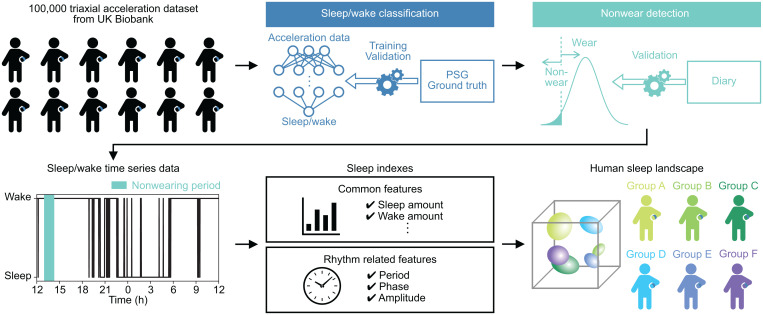
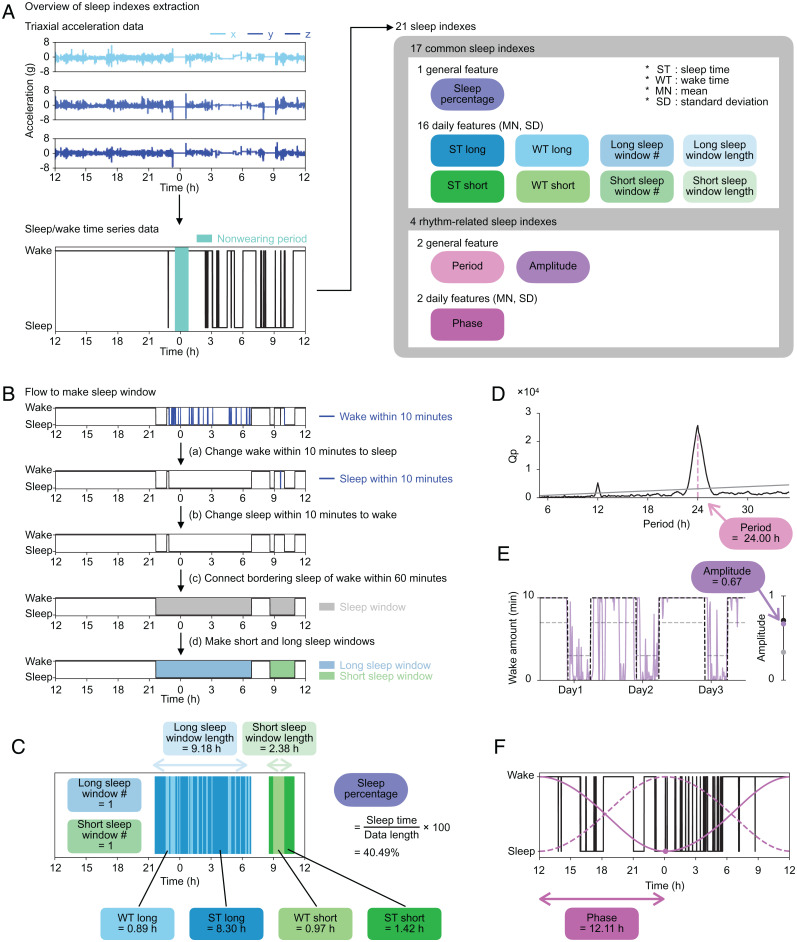
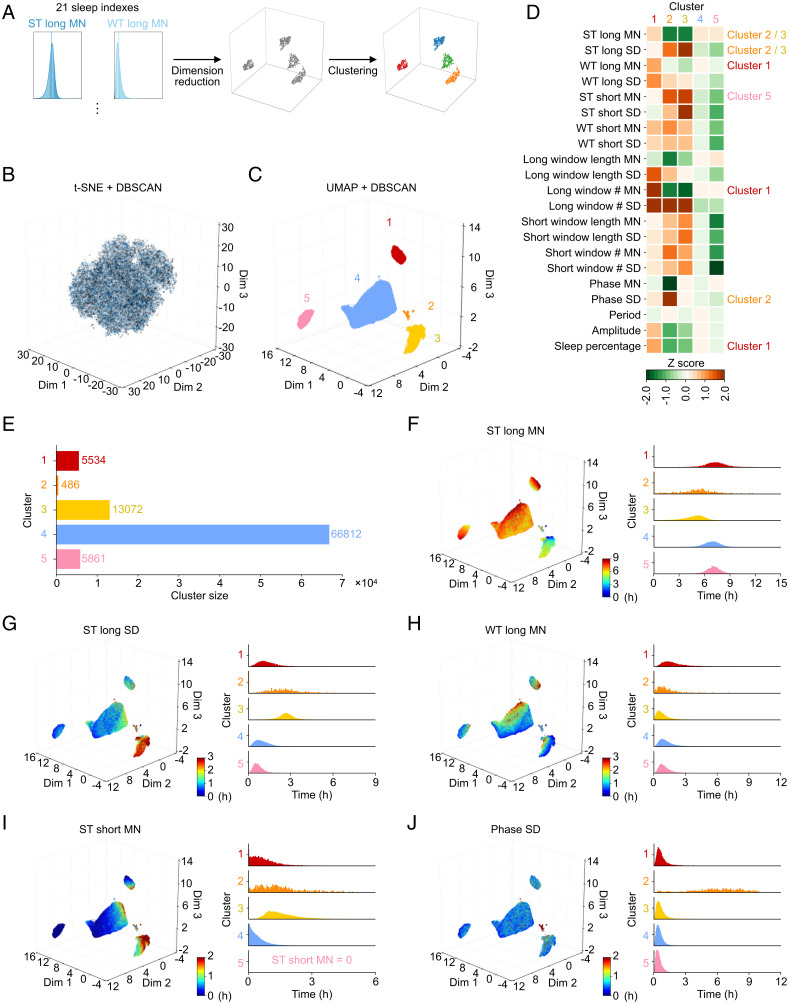
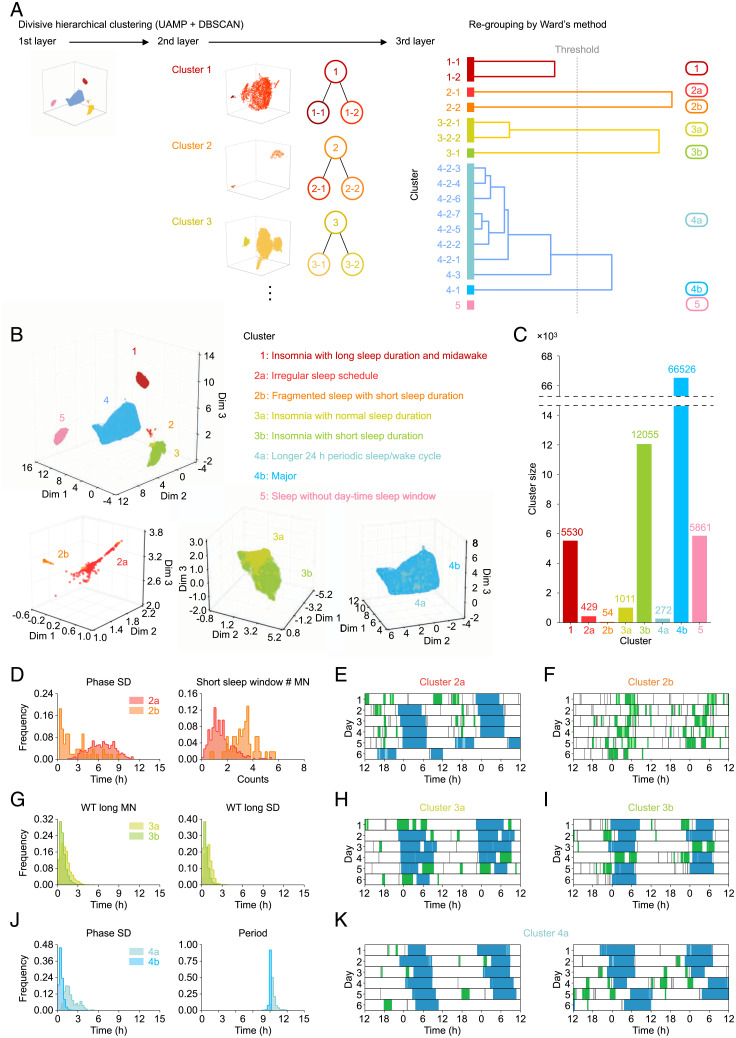
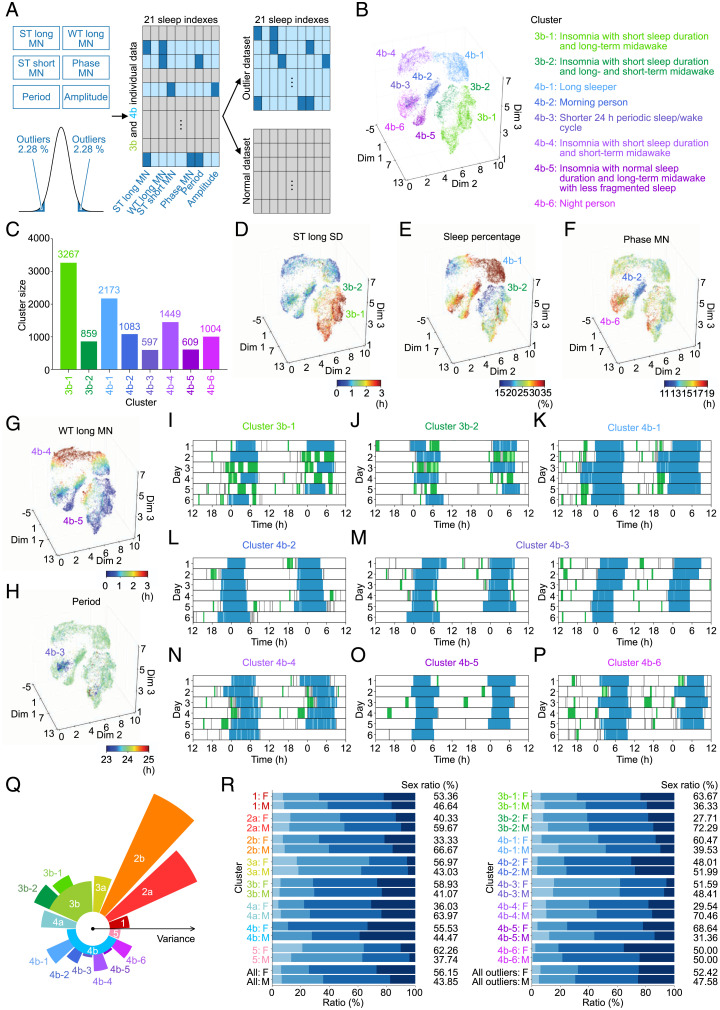
Human sleep phenotypes can be defined and diversified by both genetic and environmental factors. However, some sleep phenotypes are difficult to evaluate without long-term, precise sleep monitoring, for which simple yet accurate sleep measurement is required. To solve this problem, we recently developed a state-of-the-art sleep/wake classification algorithm based on wristband-type accelerometers, termed ACCEL (acceleration-based classification and estimation of long-term sleep-wake cycles). In this study, we optimized and applied ACCEL to large-scale analysis of human sleep phenotypes. The clustering of an about 100,000-arm acceleration dataset in the UK Biobank using uniform manifold approximation and projection (UMAP) dimension reduction and density-based spatial clustering of applications with noise (DBSCAN) clustering methods identified 16 sleep phenotypes, including those related to social jet lag, chronotypes (“morning/night person”), and seven different insomnia-like phenotypes. Considering the complex relationship between sleep disorders and other psychiatric disorders, these unbiased and comprehensive analyses of sleep phenotypes in humans will not only contribute to the advancement of biomedical research on genetic and environmental factors underlying human sleep patterns but also, allow for the development of better digital biomarkers for psychiatric disorders.
Overview
The claims and statistics of this paper haven’t been checked yet.
Free: it reads the open-access text and checks the first 5 claims that cite a source we can check. Create a free account to check every claim.
Integrity signals
Registry
Cites
Statistics
Figures
Verification
Claims the paper makes
The claims and statistics of this paper haven’t been checked yet.
Free: it reads the open-access text and checks the first 5 claims that cite a source we can check. Create a free account to check every claim.
Claims other papers make about this one
Each is checked against this paper’s own text: does it say what the citing paper says it does?
The source backs part of the claim, not all of it — or backs it for a different population, condition or comparison.
In the citing paper
“Similarly, features of sleep-wake time series can directly capture insomnia-like patterns in sleep related to DM6,34,43,44.”
From Sleep and temperature data from wearable devices support noninvasive detection of diabetes mellitus in a large-scale, retrospective analysis (2026) · cites this paper as [43]
Experimental — accuracy not yet measuredIn the citing paper
“existing actigraphy-based sleep studies on large health datasets have only focused on the differentiation between sleep and wakefulness4,9–11 without evaluating variations in the stages of sleep.”
From Self-supervised learning of accelerometer data provides new insights for sleep and its association with mortality (2024) · cites this paper as [11]
Self-check
Percentages, sums and reported differences re-computed from the paper’s own numbers.
The self-check needs the paper’s full text.
Citations
Cites
Diagnostic and Statistical Manual of Mental Disorders
American Psychiatric Association (2013) · doi:10.1176/appi.books.9780890425596 · Cited by 116,369
The Pittsburgh Sleep Quality Index: a new instrument for psychiatric practice and research
Buysse, D. J., Reynolds, C. F., Monk, T. H., Berman, S. R., & Kupfer, D. J. (1989) · Psychiatry Research · doi:10.1016/0165-1781(89)90047-4 · Cited by 35,234
Initial sequencing and analysis of the human genome
International Human Genome Sequencing Consortium, Whitehead Institute for Biomedical Research, C. F. G. R., Lander, E. S., Linton, L. M., Birren, B., Nusbaum, C., Zody, M. C., Baldwin, J., Devon, K., Dewar, K., et al. (2001) · Nature · doi:10.1038/35057062 · Cited by 24,216
(1996) · Cited by 20,179
The sequence of the human genome
Venter, J. C., Adams, M. D., Myers, E. W., Li, P. W., Mural, R. J., Sutton, G. G., Smith, H. O., Yandell, M., Evans, C. A., Holt, R. A., et al. (2001) · Science · doi:10.1126/science.1058040 · Cited by 13,909
Sudlow, C., Gallacher, J., Allen, N., Beral, V., Burton, P., Danesh, J., Downey, P., Elliott, P., Green, J., Landray, M., et al. (2015) · PLOS Medicine · doi:10.1371/journal.pmed.1001779 · Cited by 12,728
The UK Biobank resource with deep phenotyping and genomic data
Bycroft, C., Freeman, C., Petkova, D., Band, G., Elliott, L. T., Sharp, K., Motyer, A., Vukcevic, D., Delaneau, O., O’Connell, J., et al. (2018) · Nature · doi:10.1038/s41586-018-0579-z · Cited by 8,876
Validation of the Insomnia Severity Index as an outcome measure for insomnia research
Bastien, C. (2001) · Sleep Medicine · doi:10.1016/s1389-9457(00)00065-4 · Cited by 8,067
Vogelstein, B., Papadopoulos, N., Velculescu, V. E., Zhou, S., Diaz, L. A., & Kinzler, K. W. (2013) · Science · doi:10.1126/science.1235122 · Cited by 7,863
Genome sequencing in microfabricated high-density picolitre reactors
Margulies, M., Egholm, M., Altman, W. E., Attiya, S., Bader, J. S., Bemben, L. A., Berka, J., Braverman, M. S., Chen, Y.-J., Chen, Z., et al. (2005) · Nature · doi:10.1038/nature03959 · Cited by 7,693
Cited by
The sleep–circadian interface: A window into mental disorders
Meyer, N., Lok, R., Schmidt, C., Kyle, S. D., McClung, C. A., Cajochen, C., Scheer, F. A. J. L., Jones, M. W., & Chellappa, S. L. (2024) · Proceedings of the National Academy of Sciences · doi:10.1073/pnas.2214756121 · Cited by 219
Lim, D., Jeong, J., Song, Y. M., Cho, C., Yeom, J. W., Lee, T., Lee, J.-B., Lee, H., & Kim, J. K. (2024) · npj Digital Medicine · doi:10.1038/s41746-024-01333-z · Cited by 107
“Instead, we used comprehensive sleep features that demonstrated its ability to classify various sleep phenotypes 21 .”
InfluentialNyhuis, C. C., & Fernández‐Mendoza, J. (2023) · Journal of Sleep Research · doi:10.1111/jsr.13910 · Cited by 61
“…renewed interest in the past few years in applying cluster-analytic techniques to identify insomnia phenotypes based on objective (Kao et al., 2021; Katori et al., 2022; McCloskey et al., 2019; Miller et al., 2016) or subjective (Blanken et al., 2019; Edinger et al., 1988; Sánchez-Ortuño &…”
GloUTCI-M: a global monthly 1 km Universal Thermal Climate Index dataset from 2000 to 2022
Yang, Z., Peng, J., Liu, Y., Jiang, S., Cheng, X., Liu, X., Dong, J., Hua, T., & Yu, X. (2024) · Earth system science data · doi:10.5194/essd-16-2407-2024 · Cited by 52
Insomnia Phenotypes, Cardiovascular Risk and Their Link to Brain Health
Fernández‐Mendoza, J. (2025) · Circulation Research · doi:10.1161/circresaha.125.325686 · Cited by 56
Yuan, H., Plekhanova, T., Walmsley, R., Reynolds, A. C., Maddison, K. J., Bucan, M., Gehrman, P., Rowlands, A., Ray, D. W., Bennett, D., et al. (2024) · npj Digital Medicine · doi:10.1038/s41746-024-01065-0 · Cited by 40
“Furthermore,existingactigraphy-basedsleepstudiesonlarge health datasets have only focused on the differentiation between sleep and wakefulness 4,9 – 11 without evaluating variations in the stages of sleep.”
BackgroundA real-time, personalized sleep intervention using mathematical modeling and wearable devices
Song, Y. M., Choi, S. J., Park, S. H., Lee, S. J., Joo, E. Y., & Kim, J. K. (2023) · SLEEP · doi:10.1093/sleep/zsad179 · Cited by 48
Diffusion tensor imaging analysis along the perivascular space in the UK biobank
Clark, O. J., Delgado-Sánchez, A., Cullell, N., Corrêa, S. A. L., Krupiński, J., & Ray, N. J. (2024) · Sleep Medicine · doi:10.1016/j.sleep.2024.05.007 · Cited by 37
Recent Progress in Long-Term Sleep Monitoring Technology
Yin, J., Xu, J., & Ren, T. (2023) · Biosensors · doi:10.3390/bios13030395 · Cited by 40
“analyzed over 100,000 data sets and analyzed the classification of 16 sleep problems [132].”
BackgroundImpact of insomnia on ovarian cancer risk and survival: a Mendelian randomization study
Wang, H., Reid, B. M., Richmond, R. C., Lane, J. M., Saxena, R., Gonzalez, B. D., Fridley, B. L., Redline, S. S., Tworoger, S. S., & Wang, X. (2024) · EBioMedicine · doi:10.1016/j.ebiom.2024.105175 · Cited by 25
“52 Future work of subtyping insomnia and leveraging objective sleep measures, such as actigraphy or polysomnography, are needed to better understand the relationship between insomnia and EOC to improve treatment.”
BackgroundKageyama, I., Kurata, K., Miyashita, S., Lim, Y., Sengoku, S., & Kodama, K. (2022) · International Journal of Environmental Research and Public Health · doi:10.3390/ijerph192416427 · Cited by 26
Five million nights: temporal dynamics in human sleep phenotypes
Viswanath, V. K., Hartogenesis, W., Dilchert, S., Pandya, L., Hecht, F. M., Mason, A. E., Wang, E. J., & Smarr, B. L. (2024) · npj Digital Medicine · doi:10.1038/s41746-024-01125-5 · Cited by 20
“Researchers have developed a promising large-scale sleep data clustering model to identify clusters of sleepwith insomnia-like characteristics 2 .”
BackgroundTakeuchi, H., Ishizawa, T., Kishi, A., Nakamura, T., Yoshiuchi, K., & Yamamoto, Y. (2024) · Journal of Medical Internet Research · doi:10.2196/49669 · Cited by 21
“Advancements in mobile and wearable sensing technologies enable the objective measurement of habitual sleep behaviors across multiple days [29-31].”
BackgroundUsing New Technologies and Wearables for Characterizing Sleep in Population-based Studies
Jaiswal, S. J., Pawelek, J., Warshawsky, S., Quer, G., Trieu, M., Pandit, J. A., & Owens, R. L. (2024) · Current Sleep Medicine Reports · doi:10.1007/s40675-023-00272-7 · Cited by 17
“These data have already led to novel sleep-related observations such as insight into possible sleep phenotypes, despite the modest duration of recording (only 7 days) and lack of use of PSG [20, 21].”
Skeldon, A. C., Garcia, T. R., Cleator, S. F., della Monica, C., Ravindran, K. K. G., Revell, V. L., & Dijk, D. (2023) · PLoS Computational Biology · doi:10.1371/journal.pcbi.1011743 · Cited by 23
“Understanding, at an individual level, the endogenous versus exogeneous factors determining different sleep phenotypes [5] will facilitate the design of more effective, personalised treatments.”
BackgroundFudolig, M. I., Bloomfield, L. S. P., Price, M., Bird, Y. M., Hidalgo, J. E., Kim, J. N., Llorin, J., Lovato, J. L., McGinnis, E. W., McGinnis, R. S., et al. (2024) · Digital Biomarkers · doi:10.1159/000539487 · Cited by 17
“While most use descriptive statistics of these metrics in the clustering algo-rithm, more recent work used features extracted from the raw sleep-wake time series from more than 100,000 individuals to infer sleep phenotypes related to insomnia [21].”
Neural correlates of device-based sleep characteristics in adolescents
Ma, Q., Sahakian, B. J., Zhang, B., Li, Z., Yu, J., Li, F., Feng, J., & Cheng, W. (2025) · Cell Reports · doi:10.1016/j.celrep.2025.115565 · Cited by 16
Rigny, L., Fletcher‐Lloyd, N., Capstick, A., Nilforooshan, R., & Barnaghi, P. M. (2024) · Communications Medicine · doi:10.1038/s43856-024-00646-0 · Cited by 15
“For a comparison of k ∈ [2, 25] across models, see Supplementary Fig.”
Perrault, A. A., Kebets, V., Kuek, N. M. Y., Cross, N. E., Tesfaye, R., Pomares, F. B., Li, J., Chee, M. W. L., Dang‐Vu, T. T., & Yeo, B. T. T. (2025) · PLoS Biology · doi:10.1371/journal.pbio.3003399 · Cited by 18
Roberts, D. M., Schade, M. M., Master, L., Honavar, V., Nahmod, N. G., Chang, A., Gartenberg, D., & Buxton, O. M. (2023) · Sleep Health · doi:10.1016/j.sleh.2023.07.001 · Cited by 12
SleepPPG-Net2: deep learning generalization for sleep staging from photoplethysmography
Attia, S., Shani‐Hershkovich, R., Tabakhov, A., Ang, A. S., Oksenberg, A., Tauman, R., & Behar, J. A. (2025) · Physiological Measurement · doi:10.1088/1361-6579/ae1a34 · Cited by 21
“The inclusion of accelerometry data (Katori et al 2022, Fonseca et al 2023) could possibly further improve the performance of sleep staging by improving the discrimination between wake and sleep in particular.”
Kim, M., Kwasny, M., Bailey, S. C., Benavente, J. Y., Zheng, P., Bonham, M., Luu, H. Q., Cecil, P., Agyare, P., O’Conor, R. M., et al. (2023) · BMJ Open · doi:10.1136/bmjopen-2023-071899 · Cited by 12
Mechanisms Linking Insomnia and Cardiometabolic Disease Risk
Fernández‐Mendoza, J. (2025) · Arteriosclerosis Thrombosis and Vascular Biology · doi:10.1161/atvbaha.125.322880 · Cited by 13
Sleep Research in the Era of AI
Göktepe-Kavis, P., Aellen, F. M., Alnes, S. L., & Tzovara, A. (2024) · Clinical and Translational Neuroscience · doi:10.3390/ctn8010013 · Cited by 10
“One recent study has shown the strong potential of wearable devices to identify sleep patterns outside the lab, in a large population, using data from a large cohort of participants, compiled from the UK-Biobank [38].”
BackgroundHuijben, I. A. M., van Sloun, R. J. G., Pijpers, A., Overeem, S., & van Gilst, M. M. (2025) · Journal of Neuroscience Methods · doi:10.1016/j.jneumeth.2025.110516 · Cited by 6
Roberts, W., McKee, S. A., Miranda, R., & Barnett, N. P. (2024) · American Psychologist · doi:10.1037/amp0001193 · Cited by 7
Keshmiri, S., Tomonaga, S., Mizutani, H., & Doya, K. (2024) · Computers in Biology and Medicine · doi:10.1016/j.compbiomed.2024.108335 · Cited by 4
Yuan, H., Plekhanova, T., Walmsley, R., Reynolds, A. C., Maddison, K. J., Bucan, M., Gehrman, P., Rowlands, A., Ray, D. W., Bennett, D., et al. (2023) · doi:10.1101/2023.07.07.23292251 · Cited by 3
Perrault, A. A., Kebets, V., Kuek, N. M. Y., Cross, N. E., Tesfaye, R., Pomares, F. B., Li, J., Chee, M. W. L., Dang‐Vu, T. T., & Yeo, B. T. T. (2024) · bioRxiv (Cold Spring Harbor Laboratory) · doi:10.21203/rs.3.rs-4078779/v1 · Cited by 3
Preventive circadian medicine: improving health with sleep checkups
Minami, Y., Kishi, A., & Ueda, H. R. (2025) · npj Biological Timing and Sleep · doi:10.1038/s44323-025-00047-z · Cited by 3
“49 .”
Self-citationHaruna, M., Fujita, M., Matsuzaki, M., Shiraishi, M., Hikita, N., Suetsugu, Y., Sato, Y., Yonezawa, K., Tanaka, M., Ohori, R., et al. (2025) · Methods and Protocols · doi:10.3390/mps8060128 · Cited by 2
“Both devices use the ACCEL algorithm [54,55], developed by the research group of co-researcher Hiroki R. Ueda, to identify and analyze 24-h sleep/wake rhythms based on the movement of accelerometers on the arms.”
InfluentialDeep phenotyping of insomnia: a multimodal assessment protocol
Lee, Y., Kim, S., Kim, S., Pack, S. P., Lee, H., & Cho, C. (2025) · Frontiers in Psychiatry · doi:10.3389/fpsyt.2025.1696593 · Cited by 4
“However, such approaches are limited by the extreme complexity and heterogeneity of datasets and lack of subjective assessments (19, 20).”
Tesfaye, R., & Gehrman, P. (2024) · Springer eBooks · doi:10.1007/978-3-031-62723-1_10 · Cited by 1
Beyond the Circadian Rhythm: Variable Cycles of Regularity Found in Long-Term Sleep Tracking
Chung, J. W., Yuan, R. K., Zitting, K., Chen, J., Xu, N. G., Daskalova, N., & Huang, J. J. S. (2025) · CHI Conference on Human Factors in Computing Systems · doi:10.1145/3706598.3713868 · Cited by 3
Variability and predictability in human sleep
Leguia, M. G., Jähnig, C., van Maren, E., Friedrichs‐Maeder, C., Duun‐Henriksen, J., Kjær, T. W., Tzovara, A., Schindler, K. A., Herrera, C. G., Adamantidis, A., et al. (2025) · Brain Communications · doi:10.1093/braincomms/fcaf469 · Cited by 1
“22 While (minimally) invasive, our measurement of longitudinal EEG in the community can surpass peripheral measurements, as it can resolve sleep dynamics characterized by evolving spectral composition over time.”
Zhou, Y., Pan, J., Cheng, H., Li, X., Zhang, W., Huang, H., Liu, K., Fang, L., Ma, W., Xia, Y., et al. (2025) · BMC Psychiatry · doi:10.1186/s12888-025-07648-9 · Cited by 1
“Finally, a recent effort using portable sleep assessments extracted insomnia-related subtypes from a large-scale cohort, but clinical interpretations of these subtypes were not provided [17].”
Shi, S., & Natsume, T. (2024) · bioRxiv (Cold Spring Harbor Laboratory) · doi:10.1101/2024.05.21.595254 · Cited by 2
“Furthermore, we developed an algorithm to quantify three critical metrics of circadian rhythm: period, phase, and amplitude (15,17) (Figures 2b-e) .”
MethodSelf-citationViswanath, V. K., Navaneethan, S., Burks, J. H., Soltani, S., Kasl, P., Hartogensis, W., Dilchert, S., Hecht, F. M., Mason, A. E., Wang, E. J., et al. (2026) · Communications Medicine · doi:10.1038/s43856-026-01501-0
“The secondary sleep features (Supplementary Data 2) were extracted based on prior work by Katori et al. and Viswanath et al. 43,44 that aimed to develop sleep phenotypes (digital phenotypes focused on sleep) from nightly activity data that better diversi fi ed the variety of sleep behaviors people exhibit.”
InfluentialHuman Sleep Landscape Revealed by Large-scale Sleep Analysis
Kishi, A., Sato, H., Minami, Y., & Ueda, H. R. (2022) · Seibutsu Butsuri · doi:10.2142/biophys.62.357
Self-citationDoherty, A., Yuan, H., Plekhanova, T., Walmsley, R., Reynolds, A., Maddison, K., Bucan, M., Gehrman, P., Rowlands, A., Ray, D., et al. (2023) · doi:10.21203/rs.3.rs-3275989/v1
The two fundamental shapes of sleep heart rate dynamics and their connection to mental healthPreprint
Fudolig, M. I., Bloomfield, L. S. P., Price, M., Bird, Y. M., Hidalgo, J. E., Kim, J. H., Llorin, J., Lovato, J. L., McGinnis, E. W., McGinnis, R. S., et al. (2023) · doi:10.31234/osf.io/3cqdn
(2023) · Earth system science data · doi:10.5194/essd-2023-379-rc1
Keshmiri, S., Tomonaga, S., Mizutani, H., & Doya, K. (2024) · bioRxiv (Cold Spring Harbor Laboratory) · doi:10.1101/2024.01.21.576502
“These included the pain severity [20], sleep patterns [21], behavioral traits in smartphone use [22], and the potential correlate of HRV and physical activity [23].”
BackgroundMethodGarduno, A. C., Viswanath, V., Smarr, B. L., McEvoy, L. K., Xiao, Q., Full, K. M., Gallo, L. C., Parada, H., Crandall, C. J., Cauley, J. A., et al. (2024) · The Journals of Gerontology Series A · doi:10.1016/j.sleep.2023.11.064
Peng, J. (2024) · Earth system science data · doi:10.5194/essd-2023-379-ac2
Peng, J. (2024) · Earth system science data · doi:10.5194/essd-2023-379-ac1
Underlying scinece for a guide to maintain physical and mental health of long working physicians
Wada, H., Shirahama, R., Ueda, Y., Hosokawa, M., Tsuda, T., & Tanigawa, T. (2024) · SANGYO EISEIGAKU ZASSHI · doi:10.1539/sangyoeisei.2024-007-a · Cited by 1
Bedeutung des circadianen Rhythmus bei psychischen Störungen
Cajochen, C., & Garbazza, C. (2024) · Elsevier eBooks · doi:10.1016/b978-3-437-21054-9.00007-0
Howard, G. C. (2024) · Oxford University Press eBooks · doi:10.1093/oso/9780197664797.002.0004
Howard, G. C. (2024) · Oxford University Press eBooks · doi:10.1093/oso/9780197664797.003.0001
Howard, G. C. (2024) · Oxford University Press eBooks · doi:10.1093/oso/9780197664797.003.0014
Whitehouse, A. (2024) · Oxford University Press eBooks · doi:10.1093/oso/9780197664797.002.0006
Howard, G. C. (2024) · Oxford University Press eBooks · doi:10.1093/oso/9780197664797.003.0013
Howard, G. C. (2024) · Oxford University Press eBooks · doi:10.1093/oso/9780197664797.003.0015
Howard, G. C. (2024) · Oxford University Press eBooks · doi:10.1093/oso/9780197664797.002.0008
Howard, G. C. (2024) · Oxford University Press eBooks · doi:10.1093/oso/9780197664797.002.0007
Howard, G. C. (2024) · Oxford University Press eBooks · doi:10.1093/oso/9780197664797.003.0006
Howard, G. C. (2024) · Oxford University Press eBooks · doi:10.1093/oso/9780197664797.003.0011
Howard, G. C. (2024) · Oxford University Press eBooks · doi:10.1093/oso/9780197664797.003.0007
Howard, G. C. (2024) · Oxford University Press eBooks · doi:10.1093/oso/9780197664797.003.0002
Howard, G. C. (2024) · Oxford University Press eBooks · doi:10.1093/oso/9780197664797.003.0003
Howard, G. C. (2024) · Oxford University Press eBooks · doi:10.1093/oso/9780197664797.003.0008
Howard, G. C. (2024) · Oxford University Press eBooks · doi:10.1093/oso/9780197664797.003.0012
Howard, G. C. (2024) · Oxford University Press eBooks · doi:10.1093/oso/9780197664797.003.0009
Howard, G. C. (2024) · Oxford University Press eBooks · doi:10.1093/oso/9780197664797.003.0010
Howard, G. C. (2024) · Oxford University Press eBooks · doi:10.1093/oso/9780197664797.003.0004
Howard, G. C. (2024) · Oxford University Press eBooks · doi:10.1093/oso/9780197664797.003.0005
The Biology of Us: The Living World All Around and In Us
Howard, G. C. (2024) · doi:10.1093/oso/9780197664797.001.0001 · Cited by 1
Howard, G. C. (2024) · Oxford University Press eBooks · doi:10.1093/oso/9780197664797.002.0003
Designing Systems for Long-term Sensemaking
Chung, J. W., & Huang, J. J. S. (2025) · ACM International Joint Conference on Pervasive and Ubiquitous Computing (UbiComp) · doi:10.1145/3714394.3750547
“Researchers can now conduct large-scale investigations on routine phenotypes [36, 56] and investigate people’s long-term behaviors in their naturalistic settings [9, 23, 26, 30, 39, 47, 52, 56, 58, 58, 59].”
岸哲史 (2025) · Nippon Jibiinkoka Tokeibugeka Gakkai Kaiho(Tokyo) · doi:10.3950/jibiinkotokeibu.128.12_1311
Soehner, A. M., Kissel, N. J., Hasler, B. P., Franzen, P. L., Levenson, J. C., Clark, D. B., Buysse, D. J., & Wallace, M. L. (2026) · medRxiv · doi:10.64898/2026.03.05.26347744
Kisigo, G., Issarow, B., Fadhil, S. P., Ruselu, G., Ponsiano, F., Garbindi, A., Mgema, E., Willkens, M. A., Ayieko, P., Lees, S., et al. (2026) · Sleep Epidemiology · doi:10.1016/j.sleepe.2026.100142 · Cited by 1
Pejovic, S., Shang, Y., Kong, L., He, F., Fernández‐Mendoza, J., Lenker, K. P., Athanasiou, N., Li, Y. K., & Vgontzas, A. N. (2026) · Journal of the American Heart Association · doi:10.1161/jaha.125.045898
“16 Despite these important findings, longitudinal studies examining association of ISSD and heart disease and/or CBVD including stroke remain limited.”
Metadata
- Authors
- Katori, M., Shi, S., Ode, K. L., Tomita, Y., & Ueda, H. R.
- Affiliations
- The University of Tokyo (JP)
- RIKEN Center for Biosystems Dynamics Research (JP)
- Toranomon Hospital (JP)
- Corresponding author
- Ueda, Hiroki R.
- Venue
- Proceedings of the National Academy of Sciences
- Publisher
- National Academy of Sciences
- Published
- 2022-03-18
- Volume
- 119
- Issue
- 12
- Pages
- e2116729119-e2116729119
- ISSN
- 0027-8424 (ISSN-L)
- 1091-6490
- PMC
- PMC8944865
- OpenAlex
- W4220660065
- Cited by
- 75
- References
- 58
- Citations by year
- 2026: 4 · 2025: 14 · 2024: 44 · 2023: 10 · 2022: 3
- FWCI
- 16.33
- Type
- journal article
- Language
- en
- Open access
- hybrid
- doi.org
- Licence
- Locations
- Proceedings of the National Academy of Sciences (publishedVersion, cc-by)
- PubMed Central (publishedVersion, cc-by)
- PubMed (publishedVersion)
- Funders
- Medical Research Council (MC_PC_17228)
- Japan Society for the Promotion of Science (21K15136, 18H05270, 20H05903)
- Topics
- Social Sciences › Psychology › Experimental and Cognitive Psychology › Sleep and related disorders
- Life Sciences › Neuroscience › Endocrine and Autonomic Systems › Circadian rhythm and melatonin
- Social Sciences › Psychology › Experimental and Cognitive Psychology › Sleep and Work-Related Fatigue
- Keywords
- sleep phenotypes, sleep-wake classification, social jetlag, chronotype, sleep disorders, mental illness, digital biomarkers, UK Biobank
- MeSH terms
- Acceleration, United Kingdom, Humans, Phenotype, Sleep, Sleep Wake Disorders, Biological Specimen Banks
About these checks
Registry, retraction, Cites and statistics results are computed, not judged, with one exception: a printed reference that no index lists is read once by a model before it counts as a citation error. Claims are extracted by a model and kept only when their quote appears verbatim in the text; each cited source is then checked, with a model’s help, for whether it says what the claim relies on. Those verdicts can be wrong — read the claim’s quote and the cited source before relying on one.
Statistics and arithmetic are recomputed, not judged.
Confidence bands are shown only for fields calibrated on our annotated test set. None is calibrated yet, so no band is shown.
What counts as a claim ›How we measure confidence ›How we check this ›
Are you an author, or do you see a problem with this page? Request a review
Data sources
Bibliographic data: Semantic Scholar, OpenAlex, Crossref.
Contains information from the Semantic Scholar Academic Graph Datasets, made available under the ODC Attribution License (ODC-BY 1.0).
Semantic Scholar’s data is described in: Kinney, R., et al. (2023). The Semantic Scholar Open Data Platform. arXiv:2301.10140.
