

Implicit data crimes: Machine learning bias arising from misuse of public data
Open accessThe DOI matches its Crossref record; 56 of the 56 references it cites were found in a registry or an index.
Abstract
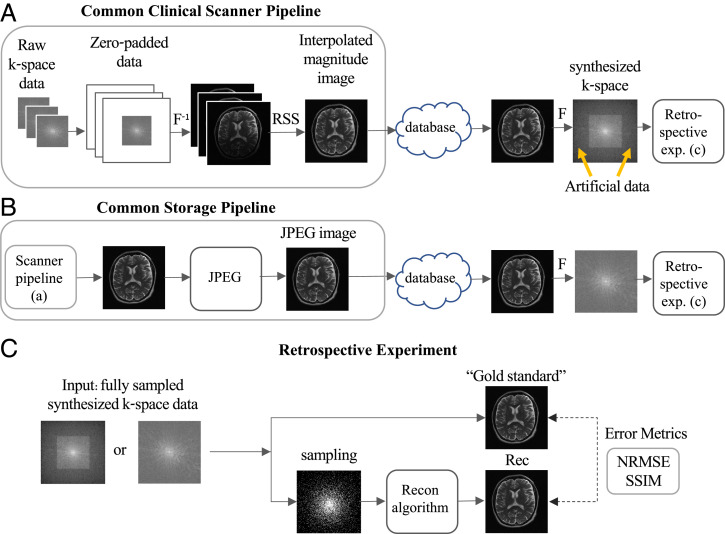
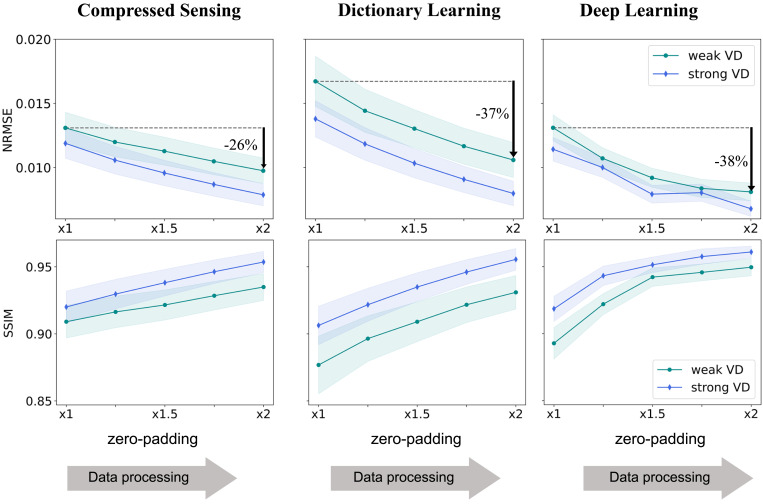
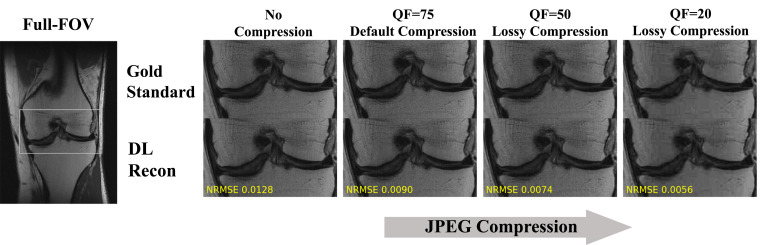
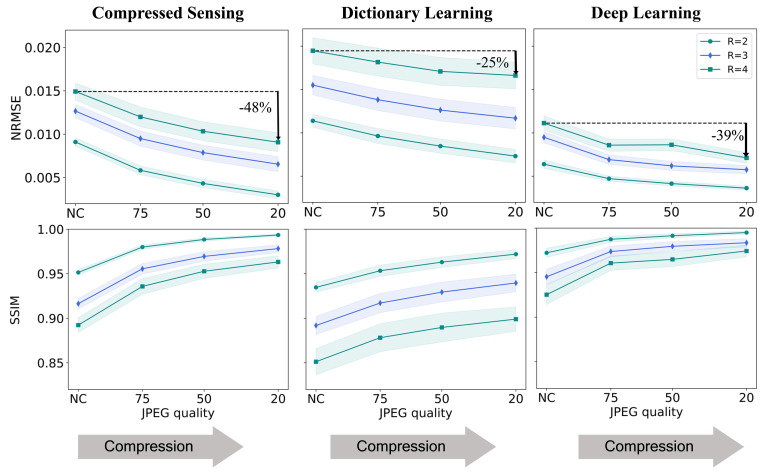
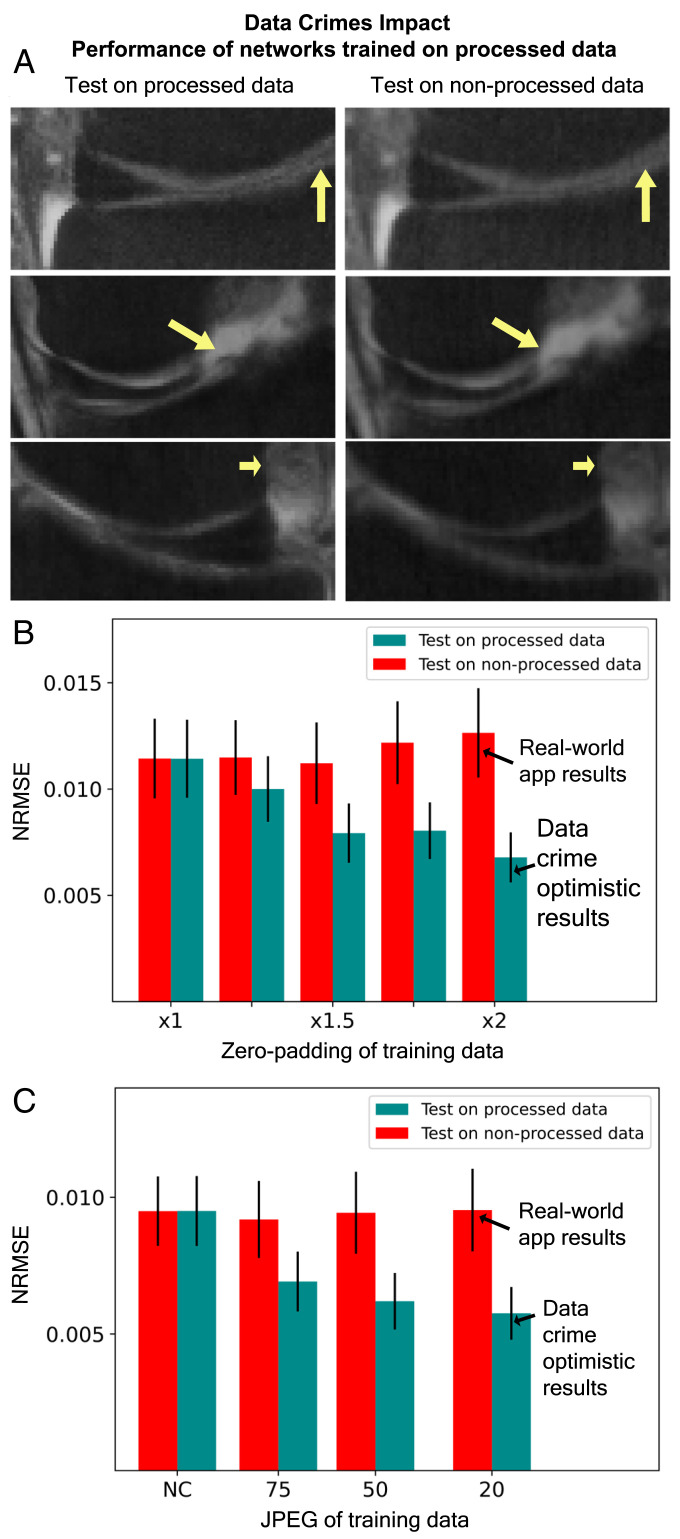
Significance: Public databases are an important resource for machine learning research, but their growing availability sometimes leads to “off-label” usage, where data published for one task are used for another. This work reveals that such off-label usage could lead to biased, overly optimistic results of machine-learning algorithms. The underlying cause is that public data are processed with hidden processing pipelines that alter the data features. Here we study three well-known algorithms developed for image reconstruction from magnetic resonance imaging measurements and show they could produce biased results with up to 48% artificial improvement when applied to public databases. We relate to the publication of such results as implicit “data crimes” to raise community awareness of this growing big data problem.
Overview
The claims and statistics of this paper haven’t been checked yet.
Free: it reads the open-access text and checks the first 5 claims that cite a source we can check. Create a free account to check every claim.
Integrity signals
Registry
Cites
Statistics
Figures
Verification
Claims the paper makes
The claims and statistics of this paper haven’t been checked yet.
Free: it reads the open-access text and checks the first 5 claims that cite a source we can check. Create a free account to check every claim.
Claims other papers make about this one
Each is checked against this paper’s own text: does it say what the citing paper says it does?
The source backs part of the claim, not all of it — or backs it for a different population, condition or comparison.
In the citing paper
“Models trained on different public datasets generate biased outcomes as the process of data collection and processing is hidden [129].”
From Artificial intelligence bias in medical system designs: a systematic review (2023) · cites this paper as [129]
Experimental — accuracy not yet measured
Self-check
Percentages, sums and reported differences re-computed from the paper’s own numbers.
The self-check needs the paper’s full text.
Citations
Cites
U-Net: Convolutional Networks for Biomedical Image Segmentation
Ronneberger, O., Fischer, P., & Brox, T. (2015) · Lecture notes in computer science · doi:10.1007/978-3-319-24574-4_28 · Cited by 99,404
Adam: A Method for Stochastic Optimization
Kingma, D. P., & Ba, J. (2014) · arXiv · doi:10.48550/arxiv.1412.6980 · Cited by 98,946
Image quality assessment: from error visibility to structural similarity
Wang, Z., Bovik, A. C., Sheikh, H. R., & Simoncelli, E. P. (2004) · IEEE Transactions on Image Processing · doi:10.1109/tip.2003.819861 · Cited by 57,892
ImageNet Large Scale Visual Recognition Challenge
Russakovsky, O., Deng, J., Su, H., Krause, J., Satheesh, S., Ma, S., Huang, Z., Karpathy, A., Khosla, A., Bernstein, M., et al. (2015) · International Journal of Computer Vision · doi:10.1007/s11263-015-0816-y · Cited by 39,380
A Fast Iterative Shrinkage-Thresholding Algorithm for Linear Inverse Problems
Beck, A., & Teboulle, M. (2009) · SIAM Journal on Imaging Sciences · doi:10.1137/080716542 · Cited by 11,952
$rm K$-SVD: An Algorithm for Designing Overcomplete Dictionaries for Sparse Representation
Aharon, M., Elad, M., & Bruckstein, A. (2006) · IEEE Transactions on Signal Processing · doi:10.1109/tsp.2006.881199 · Cited by 9,451
Methods of conjugate gradients for solving linear systems
Hestenes, M. R., & Stiefel, E. (1952) · Journal of Research of the National Bureau of Standards · doi:10.6028/jres.049.044 · Cited by 8,132
Sparse MRI: The application of compressed sensing for rapid MR imaging
Lustig, M., Donoho, D., & Pauly, J. M. (2007) · Magnetic Resonance in Medicine · doi:10.1002/mrm.21391 · Cited by 6,952
Self-citationSENSE: Sensitivity encoding for fast MRI
Pruessmann, K. P., Weiger, M., Scheidegger, M. B., & Boesiger, P. (1999) · Magnetic Resonance in Medicine · doi:10.1002/(sici)1522-2594(199911)42:5<952::aid-mrm16>3.0.co;2-s · Cited by 6,251
A Survey on Bias and Fairness in Machine Learning
Mehrabi, N., Morstatter, F., Saxena, N., Lerman, K., & Galstyan, A. (2022) · ACM Computing Surveys · doi:10.1145/3457607 · Cited by 5,812
Research works printed but not linked: 3
- F. Ong, S. Amin, S. Vasanawala, M. Lustig, Mridata.org: An open archive for sharing MRI raw data. Proc. Intl. Soc. Mag. Reson. Med. 26, 1 (2018).
- E. Shimron, J. I. Tamir, K. Wang, M. Lustig, “Subtle inverse crimes: Naïvely using publicly available images could make reconstruction results seem misleadingly better!” in Proceedings of the Annual Meeting of the International Society of Magnetic Resonance in Medicine (ISMRM) (ISMRM, 2021).
- F. Ong, M. Lustig, “SigPy: A python package for high performance iterative reconstruction” in Proceedings of the Annual Meeting of the International Society of Magnetic Resonance in Medicine (ISMRM, 2019).
Cited by
Items 101–137 of 137
Heckel, R. (2025) · Oxford University Press eBooks · doi:10.1093/oso/9780198947172.003.0010
Heckel, R. (2025) · Oxford University Press eBooks · doi:10.1093/oso/9780198947172.003.0013
Heckel, R. (2025) · Oxford University Press eBooks · doi:10.1093/oso/9780198947172.003.0005
Heckel, R. (2025) · Oxford University Press eBooks · doi:10.1093/oso/9780198947172.003.0001
Heckel, R. (2025) · Oxford University Press eBooks · doi:10.1093/oso/9780198947172.002.0006
Heckel, R. (2025) · Oxford University Press eBooks · doi:10.1093/oso/9780198947172.003.0007
Heckel, R. (2025) · Oxford University Press eBooks · doi:10.1093/oso/9780198947172.005.0001
Solving inverse problems with optimization tasks
Heckel, R. (2025) · Oxford University Press eBooks · doi:10.1093/oso/9780198947172.003.0002
Heckel, R. (2025) · Oxford University Press eBooks · doi:10.1093/oso/9780198947172.002.0003
Datasets and evaluation of image reconstruction methods
Heckel, R. (2025) · Oxford University Press eBooks · doi:10.1093/oso/9780198947172.003.0014
Coordinate-based multi-layer perceptrons
Heckel, R. (2025) · Oxford University Press eBooks · doi:10.1093/oso/9780198947172.003.0012
Signal reconstruction with un-trained neural networks
Heckel, R. (2025) · Oxford University Press eBooks · doi:10.1093/oso/9780198947172.003.0011
Advanced reconstruction problems
Heckel, R. (2025) · Oxford University Press eBooks · doi:10.1093/oso/9780198947172.003.0015
Sparse modelling and sparse signal reconstruction
Heckel, R. (2025) · Oxford University Press eBooks · doi:10.1093/oso/9780198947172.003.0004
Signal reconstruction by imposing generative priors
Heckel, R. (2025) · Oxford University Press eBooks · doi:10.1093/oso/9780198947172.003.0009
Heckel, R. (2025) · Oxford University Press eBooks · doi:10.1093/oso/9780198947172.003.0003
Alsalihi, N. K. A., Kadaim, A. J., Jasim, A. R. O., Qasim, M. T., Sulaiman, S. K., Hamad, M. T., Salman, Z. N., Fashakh, A. M., & Jebur, M. Q. (2025) · International Conference on Cyber Resilience (ICCR) · doi:10.1109/iccr67387.2025.11292565
Get the image: Machine learning for MR image reconstruction
Wang, S., Wu, R., Heckel, R., Jacob, M., & Shimron, E. (2025) · Advances in magnetic resonance technology and applications · doi:10.1016/b978-0-443-14109-6.00007-9
Self-citationApplication of Machine Learning Techniques for Effective Diabetes Management
Sunday, S. M. (2025) · International Journal of Advanced Engineering and Management Research · doi:10.51505/ijaemr.2025.1517
頭部CT画像における顔情報の再現性に関する研究 : 顔識別防止技術の開発
Uchida, T. (2023) · Institutional Repositories DataBase (IRDB) · doi:10.15083/0002011653
Learning strategies for computational MRI
Gossard, A. (2022) · theses.fr (ABES) · doi:10.70675/2b95420fz3469z4ac3z989ez6e02d45a033e
Deep learning for partial volume correction in SPECT imaging
Kaprélian, T. (2025) · theses.fr (ABES) · doi:10.70675/7fb45775zf8c4z4961z9589z9be8710187f8
On Hallucinations in Inverse Problems: Fundamental Limits and Provable Assessment MethodsPreprint
Iagaru, D., Gottschling, N. M., Hansen, A. C., & Garnier, J. C. (2026) · arXiv (Cornell University) · doi:10.48550/arxiv.2605.13146
“Inspired by descriptions of AI hallucinations in inverse problems in various applications, see § 1 and [2,3,8,36,40,42,43,54,58,59], we provide a definition of hallucinations that formalises these descriptions.”
Frenklak, E., Arefeen, Y., & Tamir, J. I. (2026) · IEEE International Symposium on Biomedical Imaging (ISBI) · doi:10.1109/isbi61048.2026.11516069
Self-citationRotkopf, L. T., Schlimbach, M., Holzschuh, J. C., Schlemmer, H., Kleesiek, J., & Rempe, M. (2026) · arXiv (Cornell University) · doi:10.48550/arxiv.2605.22327
“The comparison across acquired and synthetic k-space also extends concerns that synthetic k-space can inflate reconstruction performance (27) to segmentation tasks.”
Priors learned from legacy reconstructions inherit undetectable overconfidencePreprint
Siahkoohi, A., & Alemohammad, S. (2026) · arXiv (Cornell University) · doi:10.48550/arxiv.2607.21721
“In seismic imaging, generative priors are trained on archives of migrated or inverted sections (Siahkoohi and Herrmann, 2021; Siahkoohi et al., 2021; Baldassari et al., 2023; Siahkoohi et al., 2023; Shi et al., 2024) and on legacy or benchmark velocity models (Wang et al., 2023; Yin et al., 2024); in medical imaging,…”
CausalShift: A Modular, Plugin-Based Framework for Dataset Shift Handling in Machine Learning
Shuang, S., Pozi, M. S. M., & Farid, N. F. N. M. (2026) · Applied Sciences · doi:10.3390/app16157604
Generating Synthetic Datasets for the Financial Industry: A CT-GAN Based Approach
Sonata, I., & Heryadi, Y. (2026) · International Conference on Intelligent Engineering and Next-Gen Healthcare Systems (IEHNS) · doi:10.1109/iehns68708.2026.11607215
“This bias can occur because public dataset is often pre-processed through hidden processing procedures that can change or distort the datasets's original features [12].”
Evaluating the Safety of Deep Learning-Based Brain MRI ReconstructionPreprint
Mai, D. T., Pham, T. V., Dang, T. N. T., & Kang, J. J. (2026) · arXiv (Cornell University) · doi:10.48550/arxiv.2608.28714
“Many algorithmic studies evaluate on retrospectively undersampled single-centre data, which flatters performance relative to prospective multi-centre use; where the public data were themselves pre-processed before undersampling, that inflation is larger again [53].”
Uncertainty-weighted dual-domain consistency for self-supervised accelerated MRI reconstruction
Li, X., Huang, J., Zhou, G., & Yu, Z. (2026) · Biomedical Physics & Engineering Express · doi:10.1088/2057-1976/aea428
“To address potential concerns regarding ‘implicit data crimes’ [46], we clarify the data formats and processing steps for each dataset.”
Multi-contrast MRI acceleration via post-reconstruction fusion
Nazarov, A., Kiryati, N., Roizen, D., Kerpel, A., Hoffmann, C., Greenberg, G., & Mayer, A. (2026) · Medical Image Analysis · doi:10.1016/j.media.2026.104297
Wang, C., Ming, X., Liao, X., You, J., & Zhang, X. (2026) · Advanced Engineering Informatics · doi:10.1016/j.aei.2026.105338
Xiao, L., Wu, S., Xiao, V., Song, Y., Gu, C., 马建伟, Wu, X., & Fournier, A. (2026) · arXiv (Cornell University) · doi:10.48550/arxiv.2609.35400
“Data transformations and feature construction should preserve physically meaningful structure and avoid operations that obscure causal signals or introduce systematic bias (37, 70).”
InfluentialSynthesizing raw multicoil MRI data with a deep generative framework
Deveshwar, N., & Larson, P. E. Z. (2026) · Journal of medical imaging · doi:10.1117/1.jmi.13.s1.s11211
The Verifier Is Part of the Simulator: Evidence-View Gaming in Agentic Equation DiscoveryPreprint
Oikonomou, O., & Raonić, B. (2026) · arXiv (Cornell University) · doi:10.48550/arxiv.2611.01334
Metadata
- Authors
- Shimron, E., Tamir, J. I., Wang, K., & Lustig, M.
- Affiliations
- University of California, Berkeley (US)
- The University of Texas at Austin (US)
- Corresponding author
- Shimron, Efrat
- Venue
- Proceedings of the National Academy of Sciences
- Publisher
- National Academy of Sciences
- Published
- 2022-03-21
- Volume
- 119
- Issue
- 13
- Pages
- e2117203119-e2117203119
- ISSN
- 0027-8424 (ISSN-L)
- 1091-6490
- PMC
- PMC9060447
- OpenAlex
- W4221051856
- Cited by
- 112
- References
- 53
- Citations by year
- 2026: 8 · 2025: 42 · 2024: 20 · 2023: 31 · 2022: 11
- FWCI
- 30.10
- Type
- journal article
- Language
- en
- Open access
- hybrid
- doi.org
- Licence
- Locations
- Proceedings of the National Academy of Sciences (publishedVersion, other-oa)
- PubMed Central (publishedVersion, cc-by)
- PubMed (publishedVersion)
- eScholarship (California Digital Library) (submittedVersion, cc-by)
- Funders
- HHS | National Institutes of Health (U24 EB029240-01, R01EB009690, R01HL136965)
- Topics
- Physical Sciences › Computer Science › Artificial Intelligence › Ethics and Social Impacts of AI
- Health Sciences › Medicine › Radiology, Nuclear Medicine and Imaging › Advanced MRI Techniques and Applications
- Social Sciences › Education › Academic integrity and plagiarism
- Keywords
- machine learning bias, data pipelines, magnetic resonance imaging, image reconstruction, big data ethics, algorithmic fairness
- MeSH terms
- Machine Learning, Algorithms, Crime, Image Processing, Computer-Assisted, Bias
About these checks
Registry, retraction, Cites and statistics results are computed, not judged, with one exception: a printed reference that no index lists is read once by a model before it counts as a citation error. Claims are extracted by a model and kept only when their quote appears verbatim in the text; each cited source is then checked, with a model’s help, for whether it says what the claim relies on. Those verdicts can be wrong — read the claim’s quote and the cited source before relying on one.
Statistics and arithmetic are recomputed, not judged.
Confidence bands are shown only for fields calibrated on our annotated test set. None is calibrated yet, so no band is shown.
What counts as a claim ›How we measure confidence ›How we check this ›
Are you an author, or do you see a problem with this page? Request a review
Data sources
Bibliographic data: Semantic Scholar, OpenAlex, Crossref.
Contains information from the Semantic Scholar Academic Graph Datasets, made available under the ODC Attribution License (ODC-BY 1.0).
Semantic Scholar’s data is described in: Kinney, R., et al. (2023). The Semantic Scholar Open Data Platform. arXiv:2301.10140.
