

The DOI matches its Crossref record; 42 of the 42 references it cites were found in a registry or an index.
Measuring the social benefits of water quality improvements to support regulatory objectives: Progress and future directions
Open accessAbstract
Proceedings of the National Academy of Sciences (PNAS), a peer reviewed journal of the National Academy of Sciences (NAS) - an authoritative source of high-impact, original research that broadly spans the biological, physical, and social sciences.
Overview
The claims and statistics of this paper haven’t been checked yet.
Run the check — free, no account needed. It reads the open-access text and checks the sources it cites.
Integrity signals
Registry
Cites
Statistics
Figures
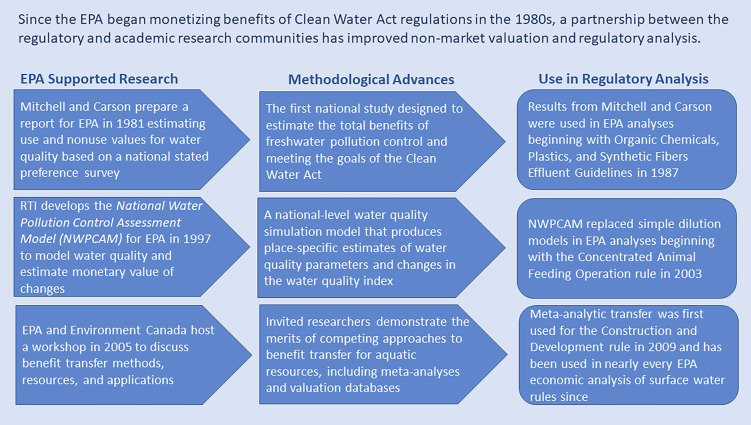
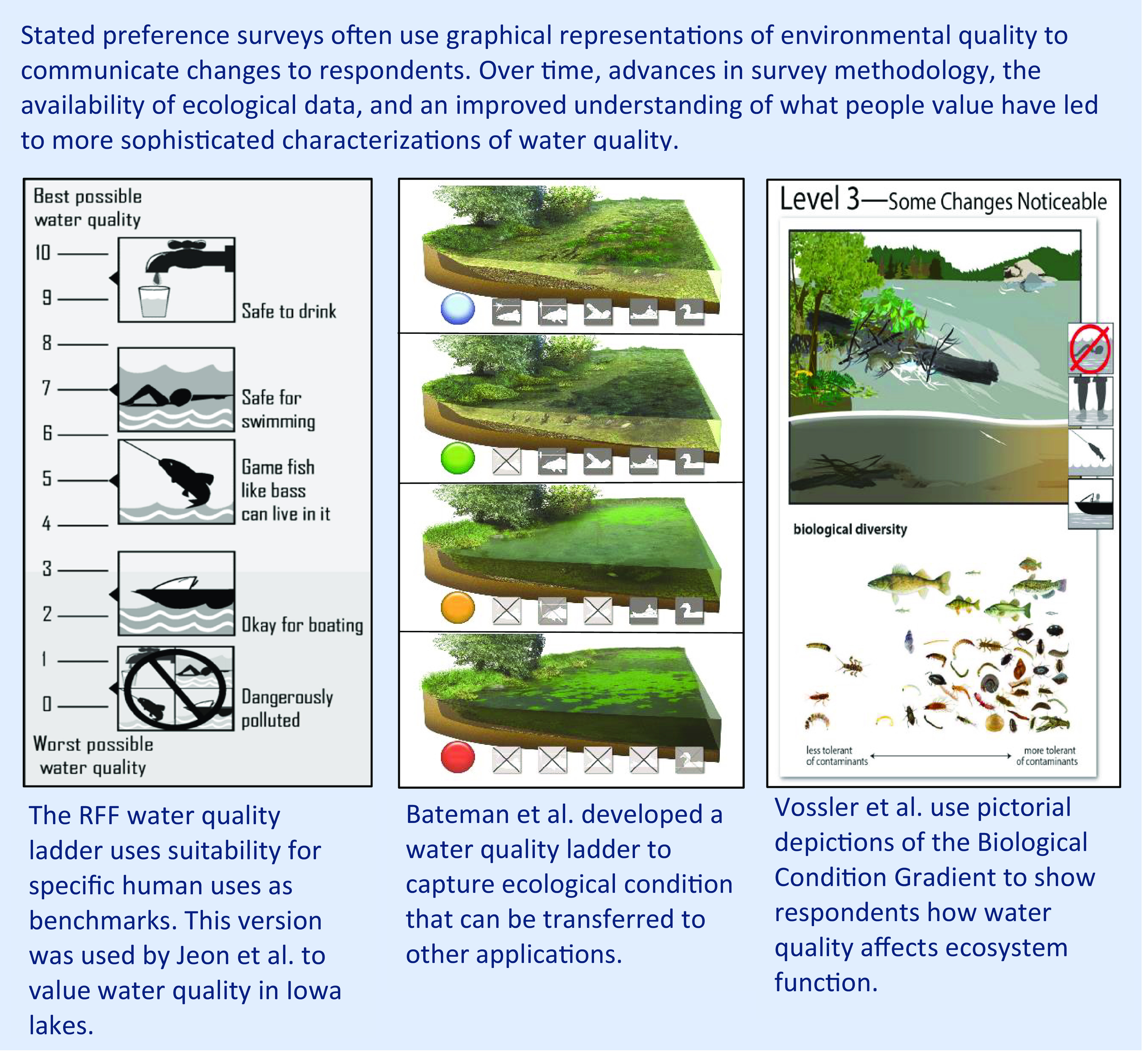
Verification
Claims the paper makes
The claims and statistics of this paper haven’t been checked yet.
Run the check — free, no account needed. It reads the open-access text and checks the sources it cites.
Claims other papers make about this one
Each is checked against this paper’s own text: does it say what the citing paper says it does?
The source backs part of the claim, not all of it — or backs it for a different population, condition or comparison.
In the citing paper
“Technical difficulties receive greater attention and are congruent with the insights of several researchers [87,88] who reported that technological obstacles ' leap over social and legal issues. '”
From Reinvigorating algal cultivation for biomass production with digital twin technology - a smart sustainable infrastructure (2024) · cites this paper as [87]
Experimental — accuracy not yet measured
Self-check
Percentages, sums and reported differences re-computed from the paper’s own numbers.
The self-check needs the paper’s full text.
Citations
Cites
Irreversible climate change due to carbon dioxide emissions
Solomon, S., Plattner, G.-K., Knutti, R., & Friedlingstein, P. (2009) · Proceedings of the National Academy of Sciences · doi:10.1073/pnas.0812721106 · Cited by 3,217
Environmental Preservation, Uncertainty, and Irreversibility
Arrow, K. J., & Fisher, A. C. (1974) · The Quarterly Journal of Economics · doi:10.2307/1883074 · Cited by 1,573
Contemporary Guidance for Stated Preference Studies
Johnston, R. J., Boyle, K., Adamowicz, W., Bennett, J., Brouwer, R., Cameron, T. A., Hanemann, W. M., Hanley, N. D., Ryan, M., Scarpa, R., et al. (2017) · Journal of the Association of Environmental and Resource Economists · doi:10.1086/691697 · Cited by 1,566
A Comprehensive Review on Water Quality Parameters Estimation Using Remote Sensing Techniques
Gholizadeh, M., Melesse, A., & Reddi, L. (2016) · Sensors · doi:10.3390/s16081298 · Cited by 1,122
Recreational demand for clean water: evidence from geotagged photographs by visitors to lakes
Keeler, B., Wood, S. A., Polasky, S., Kling, C. L., Filstrup, C. T., & Downing, J. (2015) · Frontiers in Ecology and the Environment · doi:10.1890/140124 · Cited by 276
Bateman, I. J., Brouwer, R., Ferrini, S., Schaafsma, M., Barton, D. N., Dubgaard, A., Hasler, B., Hime, S., Liekens, I., Ståle Navrud, A., et al. (2011) · Environmental and Resource Economics · doi:10.1007/s10640-011-9476-8 · Cited by 234
Johnston, R. J., Besedin, E. Y., Iovanna, R., Miller, C. J., Wardwell, R. F., & Ranson, M. H. (2005) · Canadian Journal of Agricultural Economics/Revue canadienne d agroeconomie · doi:10.1111/j.1744-7976.2005.04018.x · Cited by 202
Spatial Preference Heterogeneity: A Choice Experiment
Brouwer, R., Martín-Ortega, J., & Berbel, J. (2010) · Land Economics · doi:10.3368/le.86.3.552 · Cited by 189
U.S. Environmental Protection Agency Valuation of Surface Water Quality Improvements
Griffiths, C. W., Klemick, H., Massey, D. M., Moore, C. C., Newbold, S., Simpson, D. M., Walsh, P. J., & Wheeler, W. (2012) · Review of Environmental Economics and Policy · doi:10.1093/reep/rer025 · Cited by 148
The low but uncertain measured benefits of US water quality policy
Keiser, D. A., Kling, C. L., & Shapiro, J. (2018) · Proceedings of the National Academy of Sciences · doi:10.1073/pnas.1802870115 · Cited by 143
Research works printed but not linked: 4
- A. J. Lyke, Discrete Choice Models to Value Changes in Environmental Quality: A Great Lakes Case Study (The University of Wisconsin-Madison, 1993).
- U.S. Environmental Protection Agency “International Workshop on Benefits Transfer and Valuation Databases: Are We Heading in the Right Direction?” (U.S. Environmental Protection Agency Washington DC 2005).
- R. T. Carson, The Stated Preference Approach to Environmental Valuation (Taylor & Francis Group, United Kingdom), vol. I–III.
- A. M. Freeman III, J. A. Herriges and C. L. Kling, The Measurement of Environmental and Resource Values: Theory and Methods (Routledge, 2014).
Cited by
Sorted by citations
Drinking water safety improvement and future challenge of lakes and reservoirs
Zhang, Y., Deng, J., Zhou, Y., Zhang, Y., Qin, B., Song, C., Shi, K., Zhu, G., Hou, X., Zhang, Y., et al. (2024) · 中国科学通报:英文版 · doi:10.1016/j.scib.2024.06.018 · Cited by 59
Sheik, A. G., Kumar, A., Ansari, F. A., Raj, V., Peleato, N. M., Patan, A. K., Kumari, S., & Bux, F. (2024) · Algal Research · doi:10.1016/j.algal.2024.103779 · Cited by 37
Vossler, C. A., Dolph, C. L., Finlay, J. C., Keiser, D. A., Kling, C. L., & Phaneuf, D. J. (2023) · Proceedings of the National Academy of Sciences · doi:10.1073/pnas.2120251119 · Cited by 22
Estimating biotic integrity to capture existence value of freshwater ecosystems
Hill, R. A., Moore, C. C., Doyle, J. M., Leibowitz, S. G., Ringold, P. L., & Rashleigh, B. (2023) · Proceedings of the National Academy of Sciences · doi:10.1073/pnas.2120259119 · Cited by 17
Emerging 3D Printed Polymers and Composites for Water Quality Preservation
Harun‐Ur‐Rashid, M., Imran, A. B., & Susan, M. A. B. H. (2023) · Elsevier eBooks · doi:10.1016/b978-0-323-95486-0.00010-7 · Cited by 11
Metadata
- Authors
- Moore, C. C., Corona, J., Griffiths, C., Heberling, M. T., Hewitt, J. A., Keiser, D. A., Kling, C. L., Massey, D. M., Papenfus, M., Phaneuf, D. J., Smith, D. J., Vossler, C. A., & Wheeler, W.
- Affiliations
- Environmental Protection Agency (US)
- University of Massachusetts Amherst (US)
- Cornell University (US)
- University of Wisconsin–Madison (US)
- University of Tennessee at Knoxville (US)
- Corresponding author
- Moore, Chris C.
- ORCID
- Venue
- Proceedings of the National Academy of Sciences
- Publisher
- National Academy of Sciences
- Published
- 2023-04-24
- Volume
- 120
- Issue
- 18
- Pages
- e2120247120-e2120247120
- ISSN
- 0027-8424 (ISSN-L)
- 1091-6490
- PMC
- PMC10160971
- OpenAlex
- W4366816417
- Cited by
- 23
- References
- 42
- Citations by year
- 2026: 6 · 2025: 8 · 2024: 4 · 2023: 5
- FWCI
- 4.68
- Type
- journal article
- Language
- en
- Open access
- hybrid
- doi.org
- Licence
- Locations
- Proceedings of the National Academy of Sciences (publishedVersion, cc-by-nc-nd)
- PubMed Central (publishedVersion, cc-by-nc-nd)
- PubMed (publishedVersion)
- Funders
- U.S. Environmental Protection Agency
- Topics
- Social Sciences › Economics, Econometrics and Finance › Economics and Econometrics › Economic and Environmental Valuation
- Physical Sciences › Environmental Science › Water Science and Technology › Environmental Science and Water Management
- Social Sciences › Economics, Econometrics and Finance › Economics and Econometrics › Socioeconomics of Resources and Conservation
- Keywords
- water quality, social benefits, water quality improvement, water quality regulation, regulatory objectives, ecosystem services
- MeSH terms
- Quality Improvement, Water Quality
About these checks
Registry, retraction, Cites and statistics results are computed, not judged, with one exception: a printed reference that no index lists is read once by a model before it counts as a citation error. Claims are extracted by a model and kept only when their quote appears verbatim in the text; each cited source is then checked, with a model’s help, for whether it says what the claim relies on. Those verdicts can be wrong — read the claim’s quote and the cited source before relying on one.
Statistics and arithmetic are recomputed, not judged.
Confidence bands are shown only for fields calibrated on our annotated test set. None is calibrated yet, so no band is shown.
What counts as a claim ›How we measure confidence ›How we check this ›
Are you an author, or do you see a problem with this page? Request a review
