

Are general circulation models obsolete?
Open accessThe DOI matches its Crossref record; 102 of the 102 references it cites were found in a registry or an index.
Abstract
Traditional general circulation models, or GCMs—that is, three-dimensional dynamical models with unresolved terms represented in equations with tunable parameters—have been a mainstay of climate research for several decades, and some of the pioneering studies have recently been recognized by a Nobel prize in Physics. Yet, there is considerable debate around their continuing role in the future. Frequently mentioned as limitations of GCMs are the structural error and uncertainty across models with different representations of unresolved scales and the fact that the models are tuned to reproduce certain aspects of the observed Earth. We consider these shortcomings in the context of a future generation of models that may address these issues through substantially higher resolution and detail, or through the use of machine learning techniques to match them better to observations, theory, and process models. It is our contention that calibration, far from being a weakness of models, is an essential element in the simulation of complex systems, and contributes to our understanding of their inner workings. Models can be calibrated to reveal both fine-scale detail and the global response to external perturbations. New methods enable us to articulate and improve the connections between the different levels of abstract representation of climate processes, and our understanding resides in an entire hierarchy of models where GCMs will continue to play a central role for the foreseeable future.
Overview
The claims and statistics of this paper haven’t been checked yet.
Free: it reads the open-access text and checks the first 5 claims that cite a source we can check. Create a free account to check every claim.
Integrity signals
Registry
Cites
Statistics
Figures
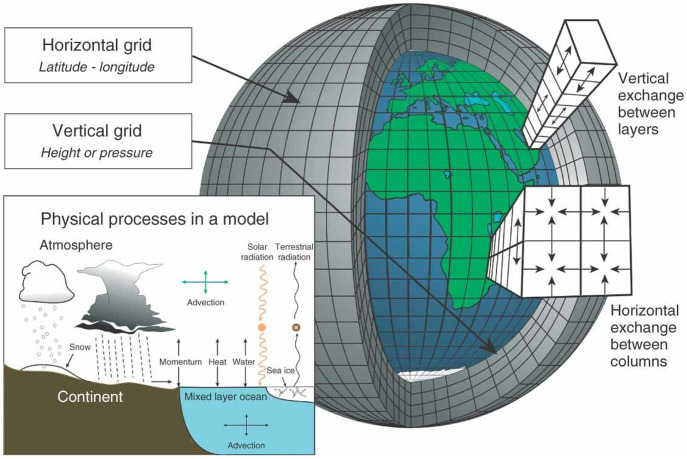
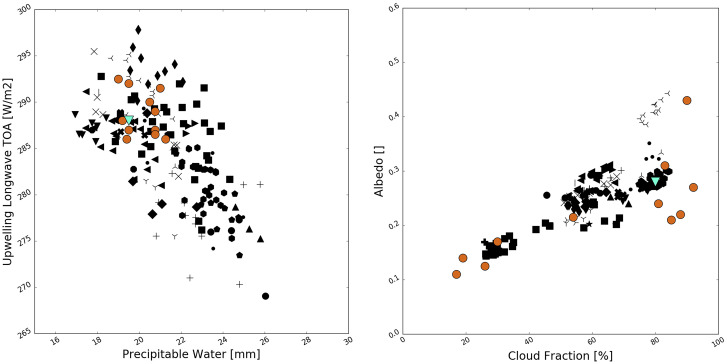
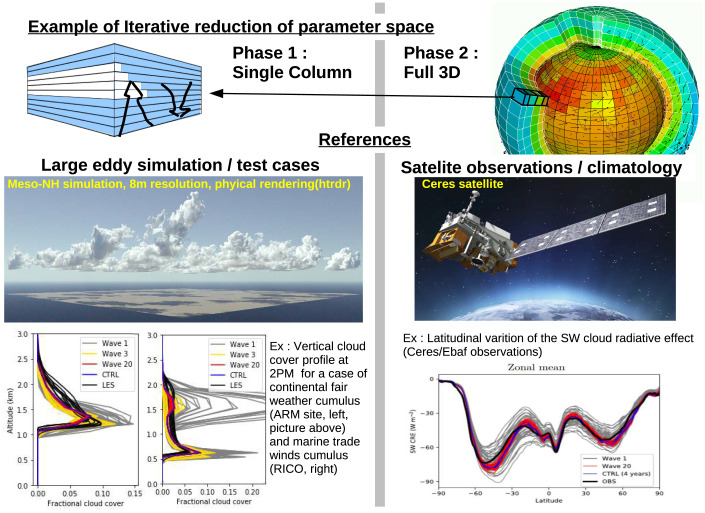
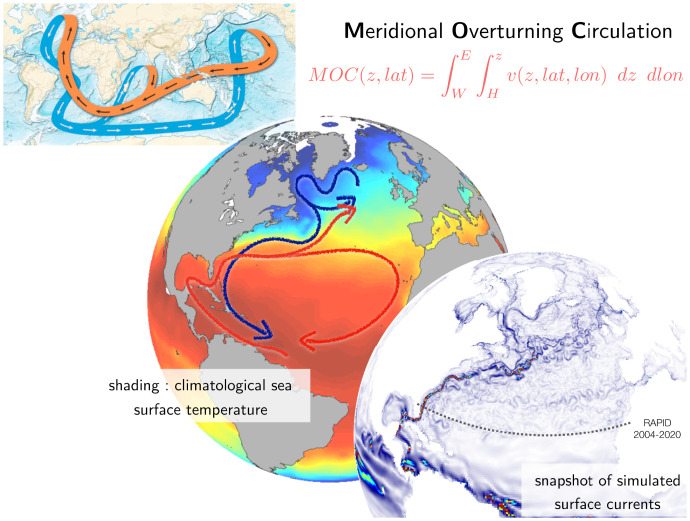
Verification
Claims the paper makes
The claims and statistics of this paper haven’t been checked yet.
Free: it reads the open-access text and checks the first 5 claims that cite a source we can check. Create a free account to check every claim.
Self-check
Percentages, sums and reported differences re-computed from the paper’s own numbers.
The self-check needs the paper’s full text.
Citations
Cites
Highly accurate protein structure prediction with AlphaFold
Jumper, J., Evans, R., Pritzel, A., Green, T., Figurnov, M., Ronneberger, O., Tunyasuvunakool, K., Bates, R., Žídek, A., Potapenko, A., et al. (2021) · Nature · doi:10.1038/s41586-021-03819-2 · Cited by 43,764 · cited 1×
“example, can decipher the structure of complex molecules directly from data (17).”
BackgroundClimate Change 2007: The Physical Science Basis.
Schiavon, S., & Zecchin, R. (2007) · eScholarship (California Digital Library) · Cited by 16,994
Physics-informed machine learning
Karniadakis, G. E., Kevrekidis, I. G., Lu, L., Perdikaris, P., Wang, S., & Yang, L. (2021) · Nature Reviews Physics · doi:10.1038/s42254-021-00314-5 · Cited by 8,718
More Is Different: Broken symmetry and the nature of the hierarchical structure of science.
Anderson, P. W. (1972) · Science · doi:10.1126/science.177.4047.393 · Cited by 4,018
Digital Twin in manufacturing: A categorical literature review and classification
Kritzinger, W., Karner, M., Traar, G., Henjes, J., & Sihn, W. (2018) · IFAC-PapersOnLine · doi:10.1016/j.ifacol.2018.08.474 · Cited by 3,612
The potential to narrow uncertainty in regional climate predictions.
Hawkins, E., & Sutton, R. (2009) · Bulletin of the American Meteorological Society · doi:10.1175/2009bams2607.1 · Cited by 2,732 · cited 1×
“Finally, F and its time rate of change (usually ignored for weather, although not for climate) is also uncertain, as emissions trajectories are unpredictable (29).”
BackgroundThe quiet revolution of numerical weather prediction
Bauer, P., Thorpe, A., & Brunet, G. (2015) · Nature · doi:10.1038/nature14956 · Cited by 2,729 · cited 4×
“Just as data assimilation techniques for constraining trajectories toward a time series of observations led to major improvements in NWP (20), these new methods, based on data from process models such as CRMs, or observations, as well imposing physical constraints, hold out the possibility of efficiently approaching t…”
BackgroundMethodInfluentialInteraction of a Cumulus Cloud Ensemble with the Large-Scale Environment, Part I
Arakawa, A., & Schubert, W. H. (1974) · Journal of the Atmospheric Sciences · doi:10.1175/1520-0469(1974)031<0674:ioacce>2.0.co;2 · Cited by 2,481
Collapse and rapid resumption of Atlantic meridional circulation linked to deglacial climate changes
McManus, J. F., Francois, R., Gherardi, J.-M., Keigwin, L. D., & Brown-Leger, S. (2004) · Nature · doi:10.1038/nature02494 · Cited by 2,234
Causes of Higher Climate Sensitivity in CMIP6 Models
Zelinka, M. D., Myers, T. A., McCoy, D. T., Po‐Chedley, S., Caldwell, P. M., Ceppi, P., Klein, S. A., & Taylor, K. E. (2020) · Geophysical Research Letters · doi:10.1029/2019gl085782 · Cited by 1,747 · cited 1×
“Boundary layer convection is responsible for shallow clouds, and requires at least 10× higher resolution; this is, in fact, one of the largest sources of uncertainty in the current generation of models (51).”
Background
Research works printed but not linked: 3
- J. G. Charney., Carbon Dioxide and Climate: A Scientific Assessment (National Academies, 1979).
- L. Jackson, P. Forster, The role of climate model emulators in the IPCC 6th assessment report: An online workshop for the scientific community (2021).
- Princeton University, “News conference for 2021 Nobel Prize in Physics: Syukuro Manabe” (video recording 2021). https://www.youtube.com/watch?v=BUtzK41Qpsw. Accessed 12 October 2022.
Cited by
Items 101–118 of 118
Response of the Indian and African monsoons to anthropogenic climate change
Guilbert, M. (2023) · theses.fr (ABES) · doi:10.70675/7e4bcc93z69e0z4888za72ez2b396a596192
Contrasting land carbon uptake responses to El Niño–Southern Oscillation across North AmericaPreprint
Sun, W., Foster, K., Shiga, Y. P., Merder, J., Randazzo, N. A., & Michalak, A. M. (2026) · doi:10.5194/egusphere-2026-880
Miniandi, N. D., Jamal, M. H., Muhammad, M. K. I., & Shahid, S. (2026) · Theoretical and Applied Climatology · doi:10.1007/s00704-026-06223-w
“However, their coarse spa - tial resolution (100–250 km) and systematic biases limit their reliability for regional-scale applications (Riahi et al. 2017 ; Balaji et al. 2022; Zhang et al. 2022).”
Topography-albedo feedback reinforces the transition to a younger Arctic ice pack
Gluckman, D. E., Evans, T. P., & Golden, K. M. (2026) · Communications Earth & Environment · doi:10.1038/s43247-026-03636-3
“Despite our current understanding, there is signi fi cant uncertainty in both short and long-term projections of Arctic sea ice by generalcirculation models (GCMs) 7 .”
Accurate, Efficient, and Explainable Deep Learning Approaches for Environmental Science ProblemsPreprint
Shi, J. (2026) · arXiv (Cornell University) · doi:10.48550/arxiv.2605.19366
Closing the gap between statistical and scientific workflows for improved forecasts in ecology
der Meersch, V. V., Regetz, J., Davies, T. J., & Wolkovich, E. M. (2026) · Philosophical Transactions of the Royal Society A Mathematical Physical and Engineering Sciences · doi:10.1098/rsta.2024.0612
The variability fingerprint of a warming world informing climate risk and solutions
Wang, Y., & Turvey, C. G. (2026) · Scientific Reports · doi:10.1038/s41598-026-54733-4
Nasser, A., & Adcroft, A. (2026) · arXiv (Cornell University) · doi:10.48550/arxiv.2606.17497
“Accurate numerical treatment of transport processes is central to predictive simulations of geophysical flows [1], astrophysical flows [2], and engineering fluid dynamics [3].”
Park, J.-S., Park, J.-Y., Ham, Y., Kim, J.-H., & Jeon, W. J. (2026) · Earth System Dynamics · doi:10.5194/esd-17-795-2026
Li, N., Zhang, J., Zhang, J., Yang, H., Zhao, B., & Li, S. (2026) · Atmosphere · doi:10.3390/atmos17070644
Toward Ocean Model-Driven Robotic Exploration
Mendes, R., Duarte, A. F., Azevedo, L., Bernacchi, L., de Sousa, J. B., Pereira, J., Gabriel, B. A. C., Bogas, J., Cunha, M. R., Rodrigues, C. F., et al. (2026) · Oceanography · doi:10.5670/oceanog.2026.e209
“Furthermore, dense grids of sampled oceanographic data have the potential to fuel developments that target existing gaps in modeling skill when different levels of spatial and temporal resolution are considered (Balaji et al. 2022).”
Shahzadi, A., Batool, A., Ali, Z., Adnan, H., Ali, A., Khan, N., Kartal, V., Niaz, R., & Bhatti, S. H. (2026) · Acta Geophysica · doi:10.1007/s11600-026-02017-w
“Global circulation models (GCMs) are mathematical instruments used in climate research (Balaji et al. 2022; Verma et al. 2024).”
Observation‐Based Constraints on Future Runoff Projections for Large Reservoirs
Jiang, H., Wang, K., Yu, J., Li, X., & Liu, X. (2026) · Earth s Future · doi:10.1029/2026ef008106
“To leverage observational constraints and improve the reliability of multi‐model outputs for historical simulations and future projections of Earth system variables, we recommend that subsequent studies evaluate the ensemble best approach wherever overlapping observation‐based data are available, as it outperforms the…”
InfluentialMachine learning in climate model workflows: A comprehensive review
Popoola, K., Ahmed, M., Nicholson, S., Narayanagari, S. P., & Ajani, A. A. (2026) · Next research. · doi:10.1016/j.nexres.2026.102572
Energy-Aware Earth System Science: A Community RoadmapPreprint
Colfescu, I., Bracco, A., Moraw, K., Lu, C., Bareford, M., Beucler, T., Bollasina, M., Bilbao-Ludena, J. C., Christensen, H., DiGioia, S., et al. (2026) · arXiv (Cornell University) · doi:10.48550/arxiv.2610.23216
“Balaji (2021) argues that, as gains from faster chips slow with the end of Dennard scaling, machine learning offers a way back down the Charney Ladder (see also Balaji et al., 2022).”
Young, P. C. (2026) · Springer eBooks · doi:10.1007/978-3-032-23929-7_1
A simulation-pretrained deep learning model for monthly global temperature-field prediction
Guan, X., Zheng, J., & Zhang, X. (2026) · Theoretical and Applied Climatology · doi:10.1007/s00704-026-06710-0
The calibration deficit: a challenge for Earth system simulation and emulationPreprint
Cox, P. M., Durran, D. R., Eyring, V., Schneider, T., Watson‐Parris, D., Williamson, D., & Balaji, V. (2026) · doi:10.5194/egusphere-2026-6437
Self-citation
Metadata
- Authors
- Balaji, V., Couvreux, F., Deshayes, J., Gautrais, J., Hourdin, F., & Rio, C.
- Affiliations
- Princeton University (US)
- Centre National de la Recherche Scientifique (FR)
- Centre de Recherches sur la Cognition Animale, Centre de Biologie Intégrative, Université de Toulouse, CNRS, Université Paul Sabatier (UPS), 31062 Toulouse, France
- Corresponding author
- Balaji, V.
- Venue
- Proceedings of the National Academy of Sciences
- Publisher
- National Academy of Sciences
- Published
- 2022-11-14
- Volume
- 119
- Issue
- 47
- Pages
- e2202075119-e2202075119
- ISSN
- 0027-8424 (ISSN-L)
- 1091-6490
- PMC
- PMC9704743
- OpenAlex
- W4308964494
- Semantic Scholar
- ace8207281bed0d4ff946b117162827f7cc1493c
- Cited by
- 84
- References
- 97
- Citations by year
- 2026: 16 · 2025: 31 · 2024: 23 · 2023: 14
- FWCI
- 6.77
- Type
- journal article
- Language
- en
- Open access
- hybrid
- doi.org
- Licence
- Locations
- Proceedings of the National Academy of Sciences (publishedVersion, cc-by)
- PubMed Central (publishedVersion, cc-by)
- PubMed (publishedVersion)
- arXiv (Cornell University) (submittedVersion)
- NOAA Institutional Repository (submittedVersion, cc-by)
- HAL (submittedVersion, other-oa)
- arXiv (Cornell University)
- Funders
- Agence Nationale de la Recherche (ANR-17-MPGA-0010)
- DOC | National Oceanic and Atmospheric Administration (NA18OAR4320123)
- Topics
- Physical Sciences › Environmental Science › Global and Planetary Change › Climate variability and models
- Physical Sciences › Earth and Planetary Sciences › Atmospheric Science › Meteorological Phenomena and Simulations
- Physical Sciences › Earth and Planetary Sciences › Oceanography › Oceanographic and Atmospheric Processes
- Keywords
- global climate models, model calibration, model resolution, unresolved scales, structural uncertainty, machine learning, climate modeling, model hierarchy, climate sensitivity
- MeSH terms
- Climate, Computer Simulation, Forecasting, Physics, Climate Change
About these checks
Registry, retraction, Cites and statistics results are computed, not judged, with one exception: a printed reference that no index lists is read once by a model before it counts as a citation error. Claims are extracted by a model and kept only when their quote appears verbatim in the text; each cited source is then checked, with a model’s help, for whether it says what the claim relies on. Those verdicts can be wrong — read the claim’s quote and the cited source before relying on one.
Statistics and arithmetic are recomputed, not judged.
Confidence bands are shown only for fields calibrated on our annotated test set. None is calibrated yet, so no band is shown.
What counts as a claim ›How we measure confidence ›How we check this ›
Are you an author, or do you see a problem with this page? Request a review
Data sources
Bibliographic data: Semantic Scholar, OpenAlex, Crossref.
Contains information from the Semantic Scholar Academic Graph Datasets, made available under the ODC Attribution License (ODC-BY 1.0).
Semantic Scholar’s data is described in: Kinney, R., et al. (2023). The Semantic Scholar Open Data Platform. arXiv:2301.10140.
