

Reliably assessing the electronic structure of cytochrome P450 on today’s classical computers and tomorrow’s quantum computers
Open accessThe DOI matches its Crossref record; 80 of the 80 references it cites were found in a registry or an index.
Abstract
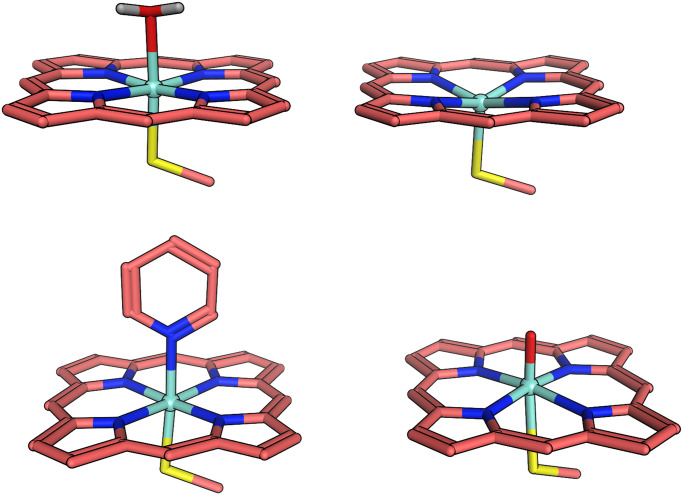
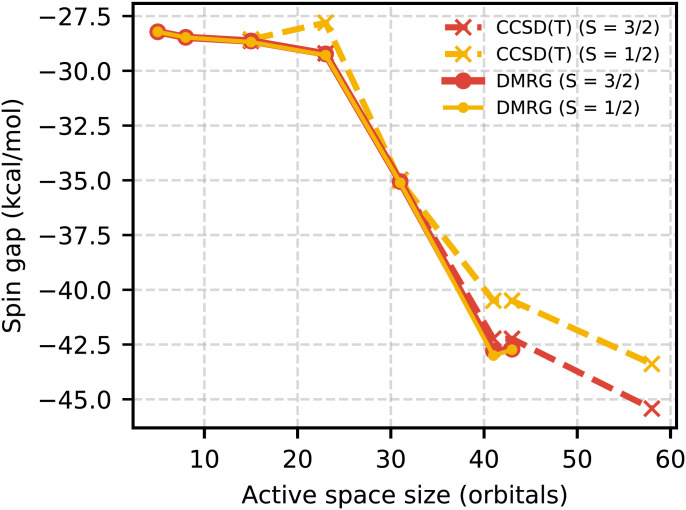
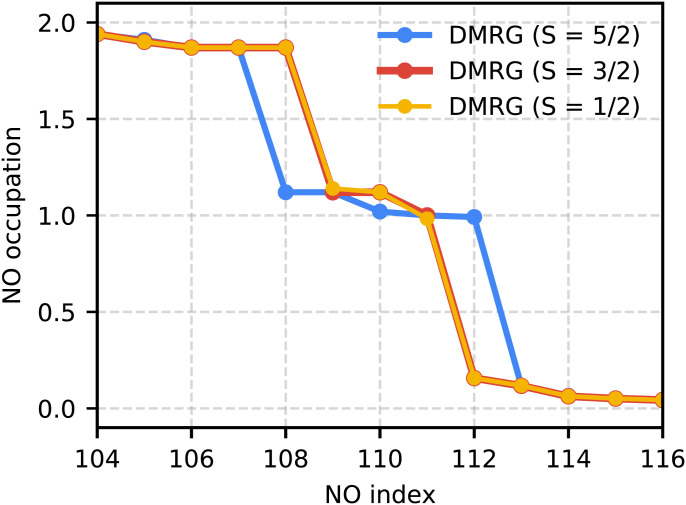
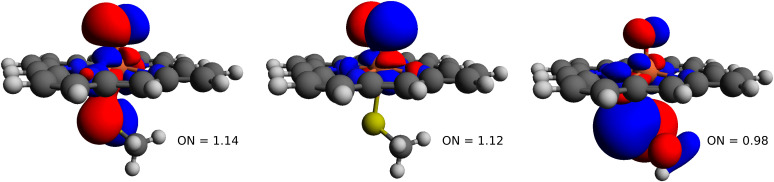
An accurate assessment of how quantum computers can be used for chemical simulation, especially their potential computational advantages, provides important context on how to deploy these future devices. To perform this assessment reliably, quantum resource estimates must be coupled with classical computations attempting to answer relevant chemical questions and to define the classical algorithms simulation frontier. Herein, we explore the quantum computation and classical computation resources required to assess the electronic structure of cytochrome P450 enzymes (CYPs) and thus define a classical–quantum advantage boundary. This is accomplished by analyzing the convergence of density matrix renormalization group plus n -electron valence state perturbation theory (DMRG+NEVPT2) and coupled-cluster singles doubles with noniterative triples [CCSD(T)] calculations for spin gaps in models of the CYP catalytic cycle that indicate multireference character. The quantum resources required to perform phase estimation using qubitized quantum walks are calculated for the same systems. Compilation into the surface code provides runtime estimates to compare directly to DMRG runtimes and to evaluate potential quantum advantage. Both classical and quantum resource estimates suggest that simulation of CYP models at scales large enough to balance dynamic and multiconfigurational electron correlation has the potential to be a quantum advantage problem and emphasizes the important interplay between classical computations and quantum algorithms development for chemical simulation.
Overview
The claims and statistics of this paper haven’t been checked yet.
Free: it reads the open-access text and checks the first 5 claims that cite a source we can check. Create a free account to check every claim.
Integrity signals
Registry
Cites
Statistics
Figures
Verification
Claims the paper makes
The claims and statistics of this paper haven’t been checked yet.
Free: it reads the open-access text and checks the first 5 claims that cite a source we can check. Create a free account to check every claim.
Claims other papers make about this one
Each is checked against this paper’s own text: does it say what the citing paper says it does?
The cited source says what the claim attributes to it.
In the citing paper
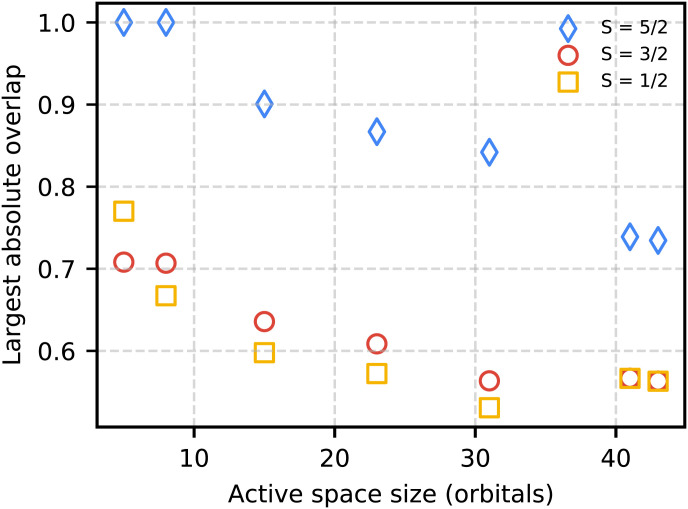
“The cost of estimating the correct ground state energy depends directly on the overlap of the initial state with the ground state, and it becomes progressively more expensive as the overlap with the correct ground state decreases [20, 48–50].”
From Drug design on quantum computers (2024) · doi:10.1038/s41567-024-02411-5 · cites this paper as [20]
Self-check
Percentages, sums and reported differences re-computed from the paper’s own numbers.
The self-check needs the paper’s full text.
Citations
Cites
Dunning, T. H. (1989) · The Journal of Chemical Physics · doi:10.1063/1.456153 · Cited by 31,648 · cited 1×
“To create the active-space models, the orbitals of the high-spin restricted open-shell Hartree-Fock (ROHF) state in the correlation-consistent polarized valence double zeta (cc-pVDZ) basis (44) were localized with the Pipek–Mezey localization scheme (45) to yield a set of local orbitals for each compound.”
Density matrix formulation for quantum renormalization groups
White, S. R. (1992) · Physical Review Letters · doi:10.1103/physrevlett.69.2863 · Cited by 7,702
A full coupled-cluster singles and doubles model: The inclusion of disconnected triples
Purvis, G. D., & Bartlett, R. J. (1982) · The Journal of Chemical Physics · doi:10.1063/1.443164 · Cited by 6,466
Coupled-cluster theory in quantum chemistry
Bartlett, R. J., & Musiał, M. (2007) · Reviews of Modern Physics · doi:10.1103/revmodphys.79.291 · Cited by 3,343
Second-order perturbation theory with a CASSCF reference function
Andersson, K., Malmqvist, P. A., Roos, B. O., Sadlej, A. J., & Wolinski, K. (1990) · The Journal of Physical Chemistry · doi:10.1021/j100377a012 · Cited by 3,331 · cited 1×
“Progress has been made with various flavors of multireference perturbation theory (17, 18) and multireference coupled-cluster theory (19), but a balanced description of electron correlation outside of the active space remains a major challenge.”
Čížek, J. (1966) · The Journal of Chemical Physics · doi:10.1063/1.1727484 · Cited by 3,074
Surface codes: Towards practical large-scale quantum computation
Fowler, A. G., Mariantoni, M., Martinis, J. M., & Cleland, A. N. (2012) · Physical Review A · doi:10.1103/physreva.86.032324 · Cited by 3,059
Many-Body Perturbation Theory and Coupled Cluster Theory for Electron Correlation in Molecules
Bartlett, R. J. (1981) · Annual Review of Physical Chemistry · doi:10.1146/annurev.pc.32.100181.002043 · Cited by 2,118
Introduction of n-electron valence states for multireference perturbation theory
Angeli, C., Cimiraglia, R., Evangelisti, S., Leininger, T., & Malrieu, J.-P. (2001) · The Journal of Chemical Physics · doi:10.1063/1.1361246 · Cited by 1,951
Pipek, J., & Mezey, P. G. (1989) · The Journal of Chemical Physics · doi:10.1063/1.456588 · Cited by 1,835 · cited 1×
“To create the active-space models, the orbitals of the high-spin restricted open-shell Hartree-Fock (ROHF) state in the correlation-consistent polarized valence double zeta (cc-pVDZ) basis (44) were localized with the Pipek–Mezey localization scheme (45) to yield a set of local orbitals for each compound.”
Research works printed but not linked: 1
- J. J. Goings., Data for “Reliably assessing the electronic structure of cytochrome P450 on today’s classical computers and tomorrow’s quantum computers.” Zenodo. https://zenodo.org/record/5941130. Deposited 1 February 2022. PMC9499570 36095200
Cited by
Items 101–200 of 210
Cortes, C. L., Rocca, D., Gonthier, J. F., Ollitrault, P. J., Parrish, R. M., Anselmetti, G.-L., Degroote, M., Moll, N., Santagati, R., & Streif, M. (2024) · Physical Review A · doi:10.1103/physreva.110.022420 · Cited by 9
Self-citationDigital-analog quantum genetic algorithm using Rydberg-atom arrays
Llenas, A., & Lamata, L. (2024) · Physical Review A · doi:10.1103/physreva.110.042603 · Cited by 9
“This capability is especially relevant in quantum chemistry [3], where accurately finding the ground state energies of complex molecules is crucial for various applications including combustion [4], batteries [5, 6], and catalysts [7], and where quantum simulations hold great promise.”
BackgroundEarly quantum computing applications on the path towards precision medicine
Flöther, F. F. (2024) · Elsevier eBooks · doi:10.1016/b978-0-323-98808-7.00001-1 · Cited by 9
Nishio, S., Oba, Y., & Kurashige, Y. (2023) · Physical Chemistry Chemical Physics · doi:10.1039/d3cp03520d · Cited by 9
Pushing the Limits of Quantum Computing for Simulating PFAS ChemistryPreprint
Dimitrov, E., Sánchez‐Sanz, G., Nelson, J., ORiordan, L., Doyle, M., Courtney, S., Kannan, V., Naseri, H., Garcia, A. G., Tricker, J., et al. (2023) · arXiv (Cornell University) · doi:10.48550/arxiv.2311.01242 · Cited by 9
“Due to the large resource requirements of other quantum algorithms, such as quantum phase estimation,[31] for computational chemistry problems, VQE is likely to remain the de facto method in this field for foreseeable future.”
MethodSelf-citationChallenges and Advances in the Simulation of Targeted Covalent Inhibitors Using Quantum Computing
Chaudhuri, S., Huynh, B. C., Amory, R., Rogers, D. M., Cranney, A., Martínez-Martínez, L. Á., Macrì, T., Jones, G., Sheridan, E., Khedkar, A., et al. (2025) · The Journal of Physical Chemistry Letters · doi:10.1021/acs.jpclett.5c01680 · Cited by 8
Modal Analysis on Quantum Computers via Qubitization
Lee, Y., & Kanno, K. (2025) · IEEE International Conference on Quantum Computing and Engineering (QCE) · doi:10.1109/qce65121.2025.00237 · Cited by 9
“…reduced the number of necessary non-Clifford gates (at the expense of a moderate number of qubits), see e.g. [5], [6], [7], [8], [9], [10], [11], [12], [13], 1 Strictly speaking, one needs to prepare a suitable initial quantum state to compute a specific eigenvalue, which in general cannot…”
Gratsea, K., & Otten, M. (2025) · arXiv (Cornell University) · doi:10.48550/arxiv.2510.26547 · Cited by 8
“Specifically, quantum ground state energy estimation (GSEE) algorithms are extensively studied in the field [2] and hold the potential to provide highly accurate estimations with significant industrial impact [1, 3, 4].”
Quantum Advantage in Computational Chemistry?
Gundlach, H., Sharkey, K. L., Lynch, J., Hazoglou, V., Hsu, K.-C., Dukatz, C., Crane, E., Walczyk, K., Bodziak, M., Galatsanos-Dueck, J., et al. (2025) · IEEE International Conference on Quantum Computing and Engineering (QCE) · doi:10.1109/qce65121.2025.00249 · Cited by 7
“While many biological systems can be treated with lower-accuracy methods, numerous important drug complexes and enzymes exhibit strong electronic correlation, especially those with transition metal centers such as Cytochrome P450, which features an iron center [5].”
Comparing Classical and Quantum Ground State Preparation HeuristicsPreprint
Gratsea, K., Kottmann, J. S., Johnson, P. D., & Kunitsa, A. A. (2024) · arXiv (Cornell University) · doi:10.48550/arxiv.2401.05306 · Cited by 7
“Unfortunately, the quantum resources needed to solve this task for industrial applications is many millions of physical qubits [5, 6] and the computations can take days to months to run.”
BackgroundMethodInfluentialDutkiewicz, A., White, A. F., Low, G. H., DePrince, A. E., Harrigan, M. P., Kieferova, M., Babbush, R., Berry, D. W., & Rubin, N. C. (2026) · arXiv (Cornell University) · doi:10.48550/arxiv.2607.15358 · Cited by 7
Self-citationImproving the Runtime of Quantum Phase Estimation for Chemistry through Basis Set Optimization
Ollitrault, P. J., Gonthier, J. F., Rocca, D., Anselmetti, G.-L., Degroote, M., Moll, N., Santagati, R., & Streif, M. (2025) · Journal of Chemical Theory and Computation · doi:10.1021/acs.jctc.5c01512 · Cited by 6
“Techniques like double factorization (DF) 11 − 14 and tensor hypercontraction (THC) 15,16 for matrix factorization, as well as symmetry shifting methods 17 − 20 have led to substantial resource savings.”
Self-citationGoings, J. J., Shin, K., Noh, S., Kyoung, W., Kim, D., Baek, J., Roetteler, M., Epifanovsky, E., & Zhao, L. (2025) · Journal of Chemical Theory and Computation · doi:10.1021/acs.jctc.5c01351 · Cited by 6
Self-citationLow-depth Gaussian State Energy EstimationPreprint
Rendon, G., & Johnson, P. D. (2023) · arXiv (Cornell University) · doi:10.48550/arxiv.2309.16790 · Cited by 6
“However, a series of recent work [8, 9] has predicted that the quantum computers needed to run this version of QPE for classically intractable instances would be far beyond the capabilities of near-term devices.”
BackgroundDividing and Conquering the Van Vleck CatastrophePreprint
Simon, S., Anselmetti, G.-L., Santagati, R., Degroote, M., Moll, N., Streif, M., & Wiebe, N. (2025) · arXiv (Cornell University) · doi:10.48550/arxiv.2504.03465 · Cited by 6
“First resource estimates for determining the ground state energy of various industrially relevant systems [6, 7, 18–20] with quantum phase estimation (QPE) assumed the availability of an initial state that has a substantial overlap with the ground state.”
Self-citationUtility-Scale Quantum Computational Chemistry
Castaldo, D., & Reiher, M. (2026) · The Journal of Physical Chemistry Letters · doi:10.1021/acs.jpclett.6c00888 · Cited by 5
Galatsanos-Dueck, J. (2024) · DSpace@MIT (Massachusetts Institute of Technology) · Cited by 5
Deka, K., & Zak, E. (2025) · Journal of Chemical Theory and Computation · doi:10.1021/acs.jctc.4c01722 · Cited by 4
Szczepanik, M., Nagy, Á., & Zak, E. J. (2026) · Quantum Science and Technology · doi:10.1088/2058-9565/ae9d1b · Cited by 4
Stroschein, T., Castaldo, D., & Reiher, M. (2026) · Physical Review Research · doi:10.1103/zy63-92c4 · Cited by 4
“Looking more closely at problems in (bio)chemistry[14–16], catalysis[17], and condensed matter physics[18] and materials science[19, 20], realizing these advantages [21] remains challenging due to limitations in current quantum hardware.”
Yamaguchi, K., Isobe, H., Shoji, M., Kawakami, T., & Miyagawa, K. (2023) · Molecules · doi:10.3390/molecules28207119 · Cited by 4
Quantum algorithm for simulating non-adiabatic dynamics at metallic surfacesPreprint
Lang, R. A., Jain, P. L., Arrazola, J. M., & Motlagh, D. (2026) · arXiv (Cornell University) · doi:10.48550/arxiv.2601.16264 · Cited by 4
“High-impact proposals, such as large-scale electronic structure calculations [1–6], face a long and costly path to realization due to their large resource requirements, while proposals for applications with a shorter horizon, such as simulation of spin models [7–10], are not generally believed to…”
Faster matrix product state preparation by exploiting symmetry-induced block-sparsityPreprint
Rupprecht, F., & Wölk, S. (2026) · arXiv (Cornell University) · doi:10.48550/arxiv.2605.28489 · Cited by 4
“The overall cost for the implementation of U ′ ∗ is then To benchmark our scheme, we choose some strongly correlated molecular systems used in various papers about ground-state energy estimation [24, 32] and initial state preparation [8, 15, 42].”
Huang, X., Niu, L., Chen, J., Li, L., Hayat, K., & Liu, W. (2024) · Critical Reviews in Environmental Science and Technology · doi:10.1080/10643389.2024.2365907 · Cited by 3
“Facing these dilemmas, a recent study (Goings et al., 2022) evaluated classical resources for simulating the active space of CYP enzymes through several classical electronic structure meth-ods, which include the density matrix renormalization group plus n -electron valence state perturbation theory…”
InfluentialChristopoulou, G., Paola, C. D., Elzinga, F., Jallat, A., Ramo, D. M., & Krompiec, M. (2024) · Physical Chemistry Chemical Physics · doi:10.1039/d3cp05167f · Cited by 3
Administration, U. A. S. F. H. R. A., Alexeev, Y., USDOE Office of Science (SC), Eidenbenz, S., Mezzacapo, A., & Pakin, S. (2023) · OSTI OAI (U.S. Department of Energy Office of Scientific and Technical Information) · doi:10.2172/2280557 · Cited by 3
Modelling Heterogeneous Catalysis using Quantum Computers: An academic and industry perspectivePreprint
Hariharan, S., Kinge, S., & Visscher, L. (2024) · ChemRxiv · doi:10.26434/chemrxiv-2024-d2l1k-v2 · Cited by 3
Introduction to Quantum Computing for Business
Groenland, K. (2025) · Amsterdam University Press eBooks · doi:10.1515/9789048568994 · Cited by 2
Garrett, M. C., Ponkratov, D., & Qiu, W. (2025) · Marine Technology Society Journal · doi:10.4031/mtsj.59.1.6 · Cited by 2
Kanasugi, S., Nakagawa, Y. O., Matsumoto, N., Hidaka, Y., Maruyama, K., & Oshima, H. (2026) · npj Quantum Information · doi:10.1038/s41534-026-01384-y · Cited by 2
“However, the implementation of QPE for practical chemistry problems demands deep quantum circuits with long coherence times and extensive quantum gate resources [9, 10], making it a long-term goal contingent on the realization of fault-tolerant quantum computers (FTQC).”
Toffoli Requires Six Quantum Neighbor Gates
Huang, K., & Palsberg, J. (2026) · ACM Transactions on Quantum Computing · doi:10.1145/3787463 · Cited by 2
The DiQuNET Architecture for the Control of Quantum Processors: The Case Study of Trapped Ions
Castillo, S. (2026) · IEEE Access · doi:10.1109/access.2026.3665594 · Cited by 2
What is the future role of quantum computation in drug discovery?
Schusteritsch, G., Wright, D. W., Green, A. G., & Stojevic, V. (2025) · Emerging Topics in Life Sciences · doi:10.1042/etls20240012 · Cited by 2
Fault-tolerant quantum algorithmsPreprint
Casares, P. A. M. (2023) · arXiv (Cornell University) · doi:10.48550/arxiv.2301.08057 · Cited by 2
Miessen, A. (2025) · arXiv (Cornell University) · doi:10.48550/arxiv.2508.21504 · Cited by 2
Amory, R., Brook, J. D., Chaudhuri, S., Dowinton, O., Gentinetta, G., Hayes, C. J., Hirst, J., Huynh, B. C., Inzani, K., Jones, G., et al. (2025) · ChemRxiv · doi:10.26434/chemrxiv-2025-z7q0b · Cited by 2
CovAngelo: A hybrid quantum-classical computing platform for accurate and scalable drug discoveryPreprint
Evenseth, L. S. M., Galewski, K., Jarnicki, W., Lafiosca, P., Patel, V. N., Rajchel-Mieldzioć, G., Šimka, M., Szczepanik, M., & Zak, E. J. (2026) · arXiv (Cornell University) · doi:10.48550/arxiv.2604.10487 · Cited by 2
Kim, J., Cho, J., Jeong, H., Min, D., Choi, J., Hong, J., & Kim, J. (2025) · IEEE/ACM International Symposium on Microarchitecture (MICRO) · doi:10.1145/3725843.3756026 · Cited by 1
Drug Discovery with Quantum Machine Learning
Pyrkov, A., Aliper, A., Bezrukov, D. S., & Zhavoronkov, A. A. (2026) · Springer eBooks · doi:10.1007/978-3-031-98022-0_10 · Cited by 1
Han, D. B., Hu, K.-Y., Lim, H., & Kim, H. W. (2026) · The Journal of Physical Chemistry Letters · doi:10.1021/acs.jpclett.5c03857 · Cited by 1
Trotter error and orbital transformations in quantum phase estimation
Kronenberger, M. L., Eraković, M., & Reiher, M. (2026) · Molecular Physics · doi:10.1080/00268976.2026.2681062 · Cited by 1
Accelerating Computation in Quantum LDPC Code
Cho, J., Jeong, H., Kim, J., Choi, J., Hong, J., & Kim, J. (2026) · International Conference on Architectural Support for Programming Languages and Operating Systems (ASPLOS) · doi:10.1145/3779212.3790122 · Cited by 1
Quantum algorithm for the collision-coalescence of cloud droplets
Ueno, K., & Miura, H. (2026) · Physical Review Applied · doi:10.1103/ffxz-ttw7 · Cited by 1
“We focus on the T gate because it requires significantly more computational time than the Clifford gates [37].”
Manenti, R., & Motta, M. (2023) · Oxford University Press eBooks · doi:10.1093/oso/9780198787488.005.0003 · Cited by 1
Assessing Finite Scalability in Early Fault-Tolerant Quantum Computing for Homogeneous CatalystsPreprint
Zhou, Y., Caesura, A., Buda, C., Jackson, X. J., Abuan, C. M., & Guo, S. (2025) · arXiv (Cornell University) · doi:10.48550/arxiv.2511.10388 · Cited by 1
Machine learning assisted Quantum Error Correction and Quantum Feedback Control
Meinerz, K. (2024) · Kölner Universitäts PublikationsServer (Universität zu Köln) · Cited by 1
Spin-Pure Variational Energies and Spin Gaps for P450 Compound I across Correlated Active SpacesPreprint
Bäcker, U. (2026) · Zenodo (CERN European Organization for Nuclear Research) · doi:10.5281/zenodo.19140859 · Cited by 1
Accurate ground state energy estimation with noise and imperfect state preparationPreprint
Dutkiewicz, A., O'Brien, T. E., & Polla, S. (2026) · arXiv (Cornell University) · doi:10.48550/arxiv.2603.21873 · Cited by 1
“With Lemmas 22 and 23 in hand, we have established that the required sampling subroutine can be implemented in the ideal setting, in the presence of global depolarising noise, and under arbitrary noise using PEC.”
Unitaria: Quantum Linear Algebra via Block EncodingsPreprint
Deiml, M., Hüttenhofer, O., Mosco, R., Kottmann, J. S., & Peterseim, D. (2026) · arXiv (Cornell University) · doi:10.48550/arxiv.2605.10768 · Cited by 2
“Application areas include computational mechanics [11], fluid dynamics [12], and quantum chemistry [13, 14, 15, 16].”
Nuclear Many-Body Systems as Benchmarks for Quantum ComputingPreprint
Yoshida, S., Baroni, A., Miyagi, T., & Rrapaj, E. (2026) · arXiv (Cornell University) · doi:10.48550/arxiv.2607.08047 · Cited by 1
“Quantum chemistry has become a leading example of this development, thanks to both the scientific relevance of molecular simulation and the maturity of its benchmark culture for ground-state energy estimation [8, 9].”
Senjean, B., Yalouz, S., & Saubanère, M. (2022) · SciPost Physics · doi:10.21468/scipost.report.5731
Senjean, B., Yalouz, S., & Saubanère, M. (2022) · SciPost Physics · doi:10.21468/scipost.report.5276
Manenti, R., & Motta, M. (2023) · Oxford University Press eBooks · doi:10.1093/oso/9780198787488.003.0006
Microwave resonators for superconducting devices
Manenti, R., & Motta, M. (2023) · Oxford University Press eBooks · doi:10.1093/oso/9780198787488.003.0013
(2023) · Oxford University Press eBooks · doi:10.1093/oso/9780198787488.002.0003
The rotating wave approximation
Manenti, R., & Motta, M. (2023) · Oxford University Press eBooks · doi:10.1093/oso/9780198787488.005.0001
Manenti, R., & Motta, M. (2023) · Oxford University Press eBooks · doi:10.1093/oso/9780198787488.003.0004
Manenti, R., & Motta, M. (2023) · Oxford University Press eBooks · doi:10.1093/oso/9780198787488.003.0007
Quantum simulation of Hamiltonian eigenstates
Manenti, R., & Motta, M. (2023) · Oxford University Press eBooks · doi:10.1093/oso/9780198787488.003.0012
Manenti, R., & Motta, M. (2023) · Oxford University Press eBooks · doi:10.1093/oso/9780198787488.003.0002
Quantum simulation of Hamiltonian dynamics
Manenti, R., & Motta, M. (2023) · Oxford University Press eBooks · doi:10.1093/oso/9780198787488.003.0011
Manenti, R., & Motta, M. (2023) · Oxford University Press eBooks · doi:10.1093/oso/9780198787488.003.0009
The molecular Hamiltonian in second quantization
Manenti, R., & Motta, M. (2023) · Oxford University Press eBooks · doi:10.1093/oso/9780198787488.005.0004
Manenti, R., & Motta, M. (2023) · Oxford University Press eBooks · doi:10.1093/oso/9780198787488.003.0005
Manenti, R., & Motta, M. (2023) · Oxford University Press eBooks · doi:10.1093/oso/9780198787488.003.0008
Oblivious amplitude amplification lemma
Manenti, R., & Motta, M. (2023) · Oxford University Press eBooks · doi:10.1093/oso/9780198787488.005.0005
Manenti, R., & Motta, M. (2023) · Oxford University Press eBooks · doi:10.1093/oso/9780198787488.005.0006
Manenti, R., & Motta, M. (2023) · Oxford University Press eBooks · doi:10.1093/oso/9780198787488.003.0003
Manenti, R., & Motta, M. (2023) · Oxford University Press eBooks · doi:10.1093/oso/9780198787488.003.0001
Manenti, R., & Motta, M. (2023) · Oxford University Press eBooks · doi:10.1093/oso/9780198787488.003.0014
(2023) · Oxford University Press eBooks · doi:10.1093/oso/9780198787488.002.0005
(2023) · Oxford University Press eBooks · doi:10.1093/oso/9780198787488.002.0004
Manenti, R., & Motta, M. (2023) · Oxford University Press eBooks · doi:10.1093/oso/9780198787488.003.0010
Modelling Heterogeneous Catalysis using Quantum Computers: An academic and industry perspectivePreprint
Hariharan, S., Kinge, S., & Visscher, L. (2024) · ChemRxiv · doi:10.26434/chemrxiv-2024-d2l1k
Kitaev–Ising-J1-J2 Model: A Density Matrix Renormalization Group Study
Kapranov, A. V., & Akzyanov, R. S. (2026) · Journal of Experimental and Theoretical Physics Letters · doi:10.1134/s0021364026600448
“In the presence of the topological regime (KSL) there is no magnetic order and , but the specific spin product”
Introducing tools to quantify the performance of quantum computing algorithms and their applications
Gratsea, K. (2024) · UPCommons institutional repository (Universitat Politècnica de Catalunya) · doi:10.5821/dissertation-2117-424234
4 Timelines: When can we expect a useful quantum computer?
Groenland, K. (2025) · Amsterdam University Press eBooks · doi:10.1515/9789048568994-005
Practical quantum advantage in drug discovery and development on today’s quantum resourcesPreprint
Hong, R. S., Liu, Y. M., Mukherjee, A., Gopal, A., Banerjee, R., Chen, Y., & Sheikh, A. Y. (2025) · ChemRxiv · doi:10.26434/chemrxiv-2025-r9kv4
Kanno, S., Kobayashi, T., Keithley, K., & Gao, Q. (2025) · ACS Omega · doi:10.1021/acsomega.4c09568
Sandwich test for Quantum Phase EstimationPreprint
Tulsi, A. (2025) · arXiv (Cornell University) · doi:10.48550/arxiv.2507.23716
Technologies for Scaling Silicon-MOS Quantum Processors
Gilbert, W. (2023) · UNSWorks (University of New South Wales, Sydney, Australia) · doi:10.26190/unsworks/24622
Introduction to Quantum Computing for Business
Groenland, K. (2025) · Econstor (Econstor) · doi:10.5117/9789048568987
Quantum algorithms for near-term quantum computers
Anderson, L. W. (2024) · Oxford University Research Archive (ORA) (University of Oxford) · doi:10.5287/ora-o0moqywjn
Anselmetti, G.-L. R. (2023) · Kölner Universitäts PublikationsServer (Universität zu Köln)
Quantum Complexity, Simulation, and Random Access Memory
Zhu, S. (2024) · DigitalGeorgetown (Georgetown University Library)
Matrix product state preparation algorithms on quantum computers
Araruna, V. C. (2024) · UPCommons institutional repository (Universitat Politècnica de Catalunya)
Heade kvantveaparanduskoodide otsing
Aitsen, D. (2025) · DSpace repository (University of Tartu)
Mizuno, A., Nakayoshi, T., Mizutani, E., Hiratsuka, M., Kato, K., & Oda, A. (2026) · Biological and Pharmaceutical Bulletin · doi:10.1248/bpb.b26-00029
Quantum parameter estimation for early fault-tolerant quantum simulation
Dutkiewicz, A. J. (2026) · Leiden Repository (Leiden University) · doi:10.60602/1887-4304494
Small Molecule Drug Discovery Enhanced by Quantum AI
Karim, M., Sojib, N., Khan, M. Z. I., & Roosan, D. (2026) · Springer eBooks · doi:10.1007/978-3-032-19536-4_8
Challenges in the simulation of enzymatic transition states with emerging multireference characterPreprint
Kasper, V., Ray, S., & Kaiser, M. (2026) · arXiv (Cornell University) · doi:10.48550/arxiv.2607.09769
“…is reliable for enzymes whose chemistry is gen-uinely single-reference, such as proton transfers and main-group organic transformations, but it breaks down for metalloenzymes where transition-metal centers introduce strong static correlation that a single reference determinant cannot capture [31].”
Quantum multiscale modeling: a hierarchy of algorithms for complex chemical systems
Hariharan, S., Schoutens, K., Kinge, S., & Visscher, L. (2026) · Digital Discovery · doi:10.1039/d6dd00494f
“[51, 52] The information transmitted through the Scale I → Scale II interface—ground-state adsorption energies ∆ E ads andactivation barriers E a —is conventionally condensed into classical Arrhenius-or Eyring-type rate expressions.”
Sugisaki, K., Tachi, Y., Terabe, M., & Tezuka, H. (2026) · arXiv (Cornell University) · doi:10.48550/arxiv.2608.04481
“…for chemically important target systems, such as FeMo cofactor (FeMoco) in the active site of nitrogenase [26–28] and iron–sulfur complexes [Fe n S n ] as model systems of FeMoco [29], cytochrome P450 [30], and so on [31–33], in order to clarify the molecular dependence of quantum simulation costs.”
Oumarou, O. (2026) · Kölner Universitäts PublikationsServer (Universität zu Köln)
Meyer, L., Schmid, A., Braun, S., & Keller, L. (2026) · Pharmacophore · doi:10.51847/ytvqqiwlce
Quantum Chemistry in Drug Design: Applications, Challenges, and the Need for Speed
Tautermann, C. S., Degroote, M., & Ries, B. (2026) · Methods in molecular biology · doi:10.1007/978-1-0716-5420-0_11
Self-citationImproved Quantum Algorithms for Simulating Many-Body Systems
Simon, S. (2026) · TSpace (University of Toronto)
Method for Transforming Neural Networks for Use in the Context of Non-Classical Computing
Хмельницький, А. А. (2026) · Електронний архів наукових та освітніх матеріалів КПІ ім. Ігоря Сікорського (КПІ ім. Ігоря Сікорського)
Quantum computing in drug discovery
Gadbail, H. N., Rewatkar, R. M., Jumde, N. R., Manker, M., Nagre, P., & Zade, S. (2026) · Frontiers in Drug Discovery · doi:10.3389/fddsv.2026.1815176
Metadata
- Authors
- Goings, J. J., White, A., Lee, J., Tautermann, C. S., Degroote, M., Gidney, C., Shiozaki, T., Babbush, R., & Rubin, N. C.
- Affiliations
- Google (United States) (US)
- Quantum Simulation Technologies, Inc., Boston, MA 02135
- Boehringer Ingelheim (Germany) (DE)
- Corresponding author
- Babbush, Ryan
- Rubin, Nicholas C.
- ORCID
- Venue
- Proceedings of the National Academy of Sciences
- Publisher
- National Academy of Sciences
- Published
- 2022-09-12
- Volume
- 119
- Issue
- 38
- Pages
- e2203533119-e2203533119
- ISSN
- 0027-8424 (ISSN-L)
- 1091-6490
- PMC
- PMC9499570
- OpenAlex
- W4295308763
- Cited by
- 127
- References
- 78
- Citations by year
- 2026: 18 · 2025: 28 · 2024: 33 · 2023: 42 · 2022: 6
- FWCI
- 8.97
- Type
- journal article
- Language
- en
- Open access
- hybrid
- doi.org
- Licence
- Locations
- Proceedings of the National Academy of Sciences (publishedVersion, cc-by)
- PubMed Central (publishedVersion, cc-by)
- PubMed (publishedVersion)
- arXiv (Cornell University) (submittedVersion)
- arXiv (Cornell University) (cc-by)
- Topics
- Physical Sciences › Computer Science › Artificial Intelligence › Quantum Computing Algorithms and Architecture
- Physical Sciences › Physics and Astronomy › Atomic and Molecular Physics, and Optics › Advanced Chemical Physics Studies
- Physical Sciences › Physics and Astronomy › Atomic and Molecular Physics, and Optics › Quantum many-body systems
- Keywords
- cytochrome P450, quantum advantage, quantum chemistry simulation, CCSD(T), spin gap, multireference character, phase estimation, surface code, quantum resource estimation, electron correlation
- MeSH terms
- Computer Simulation, Computers, Cytochrome P-450 Enzyme System, Electrons, Models, Chemical, Quantum Theory
About these checks
Registry, retraction, Cites and statistics results are computed, not judged, with one exception: a printed reference that no index lists is read once by a model before it counts as a citation error. Claims are extracted by a model and kept only when their quote appears verbatim in the text; each cited source is then checked, with a model’s help, for whether it says what the claim relies on. Those verdicts can be wrong — read the claim’s quote and the cited source before relying on one.
Statistics and arithmetic are recomputed, not judged.
Confidence bands are shown only for fields calibrated on our annotated test set. None is calibrated yet, so no band is shown.
What counts as a claim ›How we measure confidence ›How we check this ›
Are you an author, or do you see a problem with this page? Request a review
Data sources
Bibliographic data: Semantic Scholar, OpenAlex, Crossref.
Contains information from the Semantic Scholar Academic Graph Datasets, made available under the ODC Attribution License (ODC-BY 1.0).
Semantic Scholar’s data is described in: Kinney, R., et al. (2023). The Semantic Scholar Open Data Platform. arXiv:2301.10140.
