

Motor Dysfunction in Type 5 Adenylyl Cyclase-null Mice
Open accessThe DOI matches its Crossref record; 27 of the 27 references it cites were found in a registry or an index.
Abstract
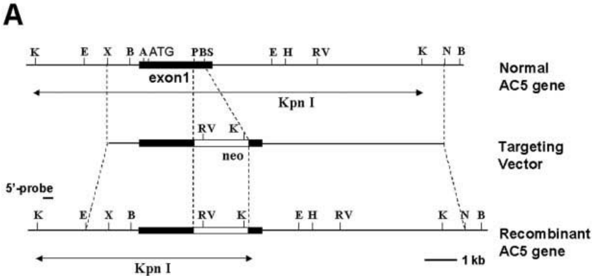
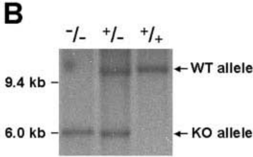
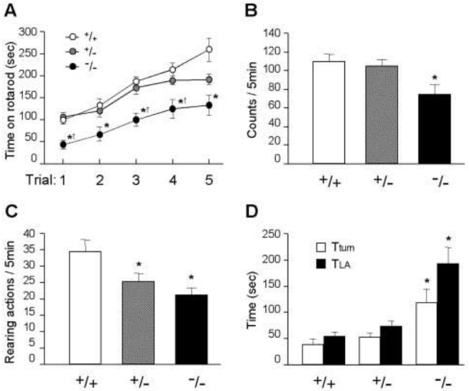
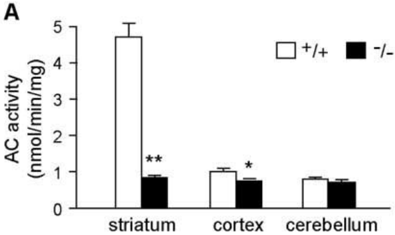
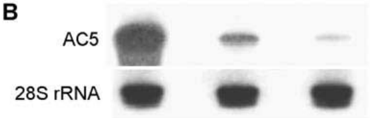
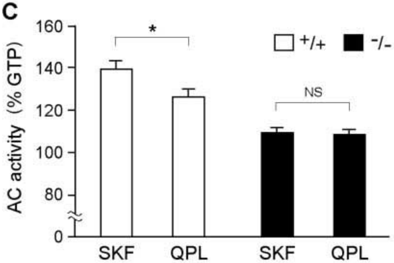
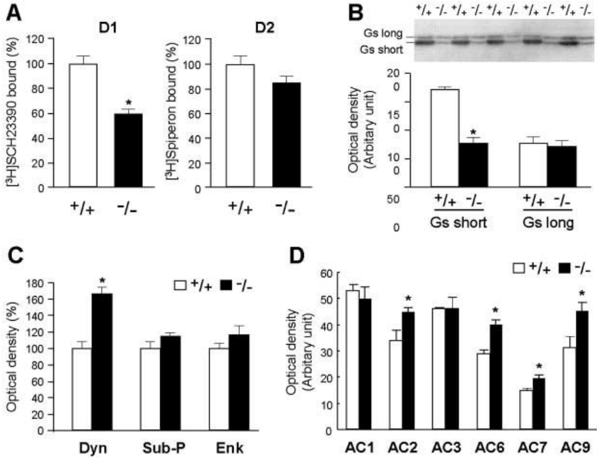
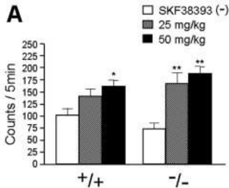
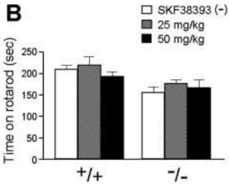
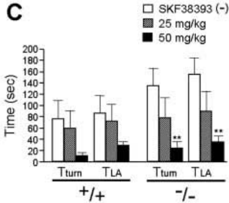
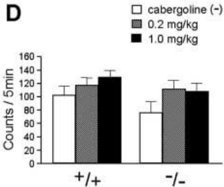
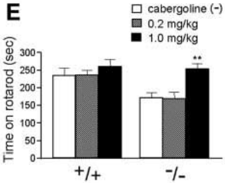
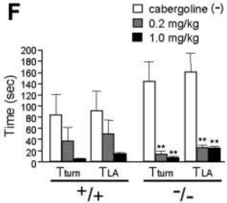
Various neurotransmitters, such as dopamine, stimulate adenylyl cyclase to produce cAMP, which regulates neuronal functions. Genetic disruption of the type 5 adenylyl cyclase isoform led to a major loss of adenylyl cyclase activity in a striatum-specific manner with a small increase in the expression of a few other adenylyl cyclase isoforms. D1 dopaminergic agonist-stimulated adenylyl cyclase activity was attenuated, and this was accompanied by a decrease in the expression of the D1 dopaminergic receptor and G(s)alpha. D2 dopaminergic agonist-mediated inhibition of adenylyl cyclase activity was also blunted. Type 5 adenylyl cyclase-null mice exhibited Parkinsonian-like motor dysfunction, i.e. abnormal coordination and bradykinesia detected by Rotarod and pole test, respectively, and to a lesser extent locomotor impairment was detected by open field tests. Selective D1 or D2 dopaminergic stimulation improved some of these disorders in this mouse model, suggesting the partial compensation of each dopaminergic receptor signal through the stimulation of remnant adenylyl cyclase isoforms. These findings extend our knowledge of the role of an effector enzyme isoform in regulating receptor signaling and neuronal functions and imply that this isoform provides a site of convergence of both D1 and D2 dopaminergic signals and balances various motor functions.
Overview
The claims and statistics of this paper haven’t been checked yet.
Free: it reads the open-access text and checks the first 5 claims that cite a source we can check. Create a free account to check every claim.
Integrity signals
Registry
Cites
Statistics
Figures
Verification
Claims the paper makes
The claims and statistics of this paper haven’t been checked yet.
Free: it reads the open-access text and checks the first 5 claims that cite a source we can check. Create a free account to check every claim.
Claims other papers make about this one
Each is checked against this paper’s own text: does it say what the citing paper says it does?
The source backs part of the claim, not all of it — or backs it for a different population, condition or comparison.
In the citing paper
“In contrast to the cardiovascular system and the metabolic system, in the central nervous system AC5 deletions tend to be detrimental, specifically in the reward circuitry of the brain and motor systems.”
From Physiological roles of mammalian transmembrane adenylyl cyclase isoforms (2022) · cites this paper as [354]
Experimental — accuracy not yet measured
Self-check
Percentages, sums and reported differences re-computed from the paper’s own numbers.
The self-check needs the paper’s full text.
Citations
Cites
Goodman & Gilman's The Pharmacological Basis of Therapeutics
Brunton, L. L. (1985) · Cited by 7,321
Goodman and Gilman's the Pharmacological Basis of Therapeutics
Stigelman, W. H., & Pharm, D. (1986) · Military Medicine · doi:10.1093/milmed/151.1.386 · Cited by 6,782
D 1 and D 2 Dopamine Receptor-regulated Gene Expression of Striatonigral and Striatopallidal Neurons
Gerfen, C. R., Engber, T. M., Mahan, L. C., Susel, Z., Chase, T. N., Monsma, F. J., & Sibley, D. R. (1990) · Science · doi:10.1126/science.2147780 · Cited by 2,967
Reversal of Neuropathology and Motor Dysfunction in a Conditional Model of Huntington's Disease
Yamamoto, A., Lucas, J. J., & Hen, R. (2000) · Cell · doi:10.1016/s0092-8674(00)80623-6 · Cited by 1,067
Regulation and Role of Adenylyl Cyclase Isoforms
Hanoune, J., & Defer, N. (2001) · Annual Review of Pharmacology and Toxicology · doi:10.1146/annurev.pharmtox.41.1.145 · Cited by 691
Parkinsonian-like locomotor impairment in mice lacking dopamine D2 receptors
Baik, J.-H., Picetti, R., Saiardi, A., Thiriet, G., Dierich, A., Depaulis, A., Le Meur, M., & Borrelli, E. (1995) · Nature · doi:10.1038/377424a0 · Cited by 650
Adenylyl cyclases and the interaction between calcium and cAMP signalling
Cooper, D. M. F., Mons, N., & Karpen, J. W. (1995) · Nature · doi:10.1038/374421a0 · Cited by 600
Hersch, S., Ciliax, B., Gutekunst, C., Rees, H., Heilman, C., Yung, K., Bolam, J., Ince, E., Yi, H., & Levey, A. (1995) · The Journal of Neuroscience · doi:10.1523/jneurosci.15-07-05222.1995 · Cited by 483
Matsuura, K., Kabuto, H., Makino, H., & Ogawa, N. (1997) · Journal of Neuroscience Methods · doi:10.1016/s0165-0270(96)02211-x · Cited by 422
Gerfen, C. R., Miyachi, S., Paletzki, R., & Brown, P. (2002) · The Journal of Neuroscience · doi:10.1523/jneurosci.22-12-05042.2002 · Cited by 373
Research works printed but not linked: 1
- Hess, E. J., Battaglia, G., Norman, A. B., and Creese, I. (1987) Mol. Pharmacol. 31, 50 -57
Cited by
Mammalian G Proteins and Their Cell Type Specific Functions
Wettschureck, N., & Offermanns, S. (2005) · Physiological Reviews · doi:10.1152/physrev.00003.2005 · Cited by 1,166
“Mice lacking adenylyl cyclase V show an attenuated D1-receptor/Golf-mediated adenylyl cyclase activation in the striatum (298).”
BackgroundNeve, K. A., Seamans, J. K., & Trantham‐Davidson, H. (2004) · Journal of Receptors and Signal Transduction · doi:10.1081/lrst-200029981 · Cited by 837
“One finding that is difficult to reconcile with a model of D1 receptor signaling that includes a central role for a cyclic AMP/PKA cascade is that a null mutation of adenylate cyclase 5 enhances D1 agonist-stimulated locomoter activity even though D1 receptor stimulation of adenylate cyclase activity is almost abolish…”
BackgroundSadana, R., & Dessauer, C. W. (2009) · Neurosignals · doi:10.1159/000166277 · Cited by 361
Regulation and organization of adenylyl cyclases and cAMP
COOPER, D. M. F. (2003) · Biochemical Journal · doi:10.1042/bj20031061 · Cited by 356
Adenylyl Cyclase–A-kinase Anchoring Protein Complexes: The Next Dimension in cAMP Signaling
Dessauer, C. W. (2009) · Molecular Pharmacology · doi:10.1124/mol.109.059345 · Cited by 254
“AC5 and AKAP150 are highly expressed in striatum, and both exhibit defects in motor coordination when deleted (Iwamoto et al., 2003; Tunquist et al., 2008).”
BackgroundDessauer, C. W., Watts, V. J., Ostrom, R. S., Conti, M., Dove, S., & Seifert, R. (2017) · Pharmacological Reviews · doi:10.1124/pr.116.013078 · Cited by 201
Physiological roles of mammalian transmembrane adenylyl cyclase isoforms
Ostrom, K. F., LaVigne, J. E., Brust, T. F., Seifert, R., Dessauer, C. W., Watts, V. J., & Ostrom, R. S. (2022) · Physiological Reviews · doi:10.1152/physrev.00013.2021 · Cited by 131
Chen, Y.-Z. (2012) · Archives of Neurology · doi:10.1001/archneurol.2012.54 · Cited by 128
“The observation that D1 or D2 dopaminergic stimulation improved some but not all the motor deficits in the Adcy5 knockout mice suggests that other ACs present in striatum, including the highly homologous AC6, cannot fully replace the functions of AC5.(26) It is unclear what causes myokymia in human diseases.”
BackgroundInfluentialGain‐of‐function ADCY5 mutations in familial dyskinesia with facial myokymia
Chen, Y., Friedman, J. R., Chen, D., Chan, G. C. ‐., Bloss, C. S., Hisama, F. M., Topol, S. E., Carson, A. R., Pham, P. H., Bonkowski, E. S., et al. (2014) · Annals of Neurology · doi:10.1002/ana.24119 · Cited by 126
ADCY5 -related dyskinesia: Broader spectrum and genotype–phenotype correlations
Chen, D.-H., Méneret, A., Friedman, J. R., Korvatska, O., Gad, A., Bonkowski, E. S., Stessman, H. A., Doummar, D., Mignot, C., Anheim, M., et al. (2015) · Neurology · doi:10.1212/wnl.0000000000002058 · Cited by 122
“ADCY5 is highly expressed in striatum, a region involved in modulating movement, and ADCY5 knock-out mice display a parkinsonian phenotype.(4) Overexpression of either mutated protein in HEK293 cells increased cAMP accumulation,(2) suggesting a gain-offunction effect.”
BackgroundOkumura, S., Kawabe, J.-I., Yatani, A., Takagi, G., Lee, M.-C., Hong, C., Liu, J., Takagi, I., Sadoshima, J., Vatner, D. E., et al. (2003) · Circulation Research · doi:10.1161/01.res.0000086986.35568.63 · Cited by 124
Self-citationTransient Calcium and Dopamine Increase PKA Activity and DARPP-32 Phosphorylation
Lindskog, M., Kim, M., Wikström, M. A., Blackwell, K. T., & Kotaleski, J. H. (2006) · PLoS Computational Biology · doi:10.1371/journal.pcbi.0020119 · Cited by 128
“This earlier result was critically dependent on the presence of a Ca4CaM-stimulated form of AC; however, the predominant form of AC in striatum is type 5 [70,71], which is not stimulated by calcium.”
BackgroundDopamine Receptor Signaling and Current and Future Antipsychotic Drugs
Boyd, K. N., & Mailman, R. B. (2012) · Handbook of Experimental Pharmacology · doi:10.1007/978-3-642-25761-2_3 · Cited by 107
“Signaling—Non-cyclase D1–mediated signaling clearly occurs (Leonard et al., 2003a; Leonard et al., 2003b; Mailman et al., 1986a), and evidence for a cAMP/PKA-independent signaling pathway has been shown in studies of adenylate cyclase V deficient mice (Iwamoto et al., 2003).”
BackgroundGαo is a major determinant of cAMP signaling in the pathophysiology of movement disorders
Muntean, B. S., Masuho, I., Dao, M. T., Sutton, L. P., Zucca, S., Iwamoto, H., Patil, D. N., Wang, D., Birnbaumer, L., Blakely, R., et al. (2021) · Cell Reports · doi:10.1016/j.celrep.2021.108718 · Cited by 113
“Movement disorder is also associated with ADCY5 mutations (OMIM: 606703), and again, motor learning deficits are observed in AC5 KO mice (Iwamoto et al., 2003; Kheirbek et al., 2009).”
BackgroundInhibitors of membranous adenylyl cyclases
Seifert, R., Lushington, G. H., Mou, T.-C., Gille, A., & Sprang, S. R. (2012) · Trends in Pharmacological Sciences · doi:10.1016/j.tips.2011.10.006 · Cited by 104
“Specifically, AC5 knockout leads to extrapyramidal motor disorders, alcohol addiction and stress-related behavioural problems [42-44].”
BackgroundHervé, D. (2011) · Frontiers in Neuroanatomy · doi:10.3389/fnana.2011.00048 · Cited by 110
Rangel‐Barajas, C., Silva, I., Lopéz-Santiago, L. M., Aceves, J., Erlij, D., & Florán, B. (2010) · Neurobiology of Disease · doi:10.1016/j.nbd.2010.08.018 · Cited by 104
“The observations of Iwamoto et al. (2003) who found that mice that lack AC5 expression (AC50KO) have impaired responses to D1 receptor stimulation and abnormal motor function are consistent with this conclusion.”
Expression and functions of adenylyl cyclases in the CNS
Devasani, K., & Yao, Y. (2022) · Fluids and Barriers of the CNS · doi:10.1186/s12987-022-00322-2 · Cited by 110
“Loss of ADCY5 results in Parkinson-like motor dysfunction and locomotor impairment [40].”
BackgroundAdenylyl Cyclase Type 5 Contributes to Corticostriatal Plasticity and Striatum-Dependent Learning
Kheirbek, M. A., Britt, J. P., Beeler, J. A., Ishikawa, Y., McGehee, D. S., & Zhuang, X. (2009) · The Journal of Neuroscience · doi:10.1523/jneurosci.3343-09.2009 · Cited by 93
“Because AC5 is a direct downstream target of DA signaling (Iwamoto et al., 2003) and the role of DA in regulating corticostriatal plasticity and striatum-dependent behaviors is well established (Packard and Knowlton, 2002; Reynolds and Wickens, 2002), it is likely that the behavioral deficits seen in AC5KO mice is dir…”
BackgroundMethodResultInfluentialSelf-citationViggiano, D. (2008) · Behavioural Brain Research · doi:10.1016/j.bbr.2008.06.033 · Cited by 98
“Accumbens lesion by 6OHDA [112,130] 5 adenylyl cyclase-KO mice (striatal deficit-Parkinson like) [103]”
A mechanistic review on GNAO1-associated movement disorder
Feng, H., Khalil, S., Neubig, R. R., & Sidiropoulos, C. (2018) · Neurobiology of Disease · doi:10.1016/j.nbd.2018.05.005 · Cited by 93
Cyclic AMP synthesis and hydrolysis in the normal and failing heart
Guellich, A., Mehel, H., & Fischmeister, R. (2014) · Pflügers Archiv - European Journal of Physiology · doi:10.1007/s00424-014-1515-1 · Cited by 91
“Some locomotor difficulties were also present [55].”
MethodA de novoADCY5 mutation causes early‐onset autosomal dominant chorea and dystonia
Carapito, R., Paul, N., Untrau, M., Le Gentil, M., Ott, L., Alsaleh, G., Jochem, P., Radosavljevic, M., Le Caignec, C., David, A., et al. (2015) · Movement Disorders · doi:10.1002/mds.26115 · Cited by 76
Adenylyl cyclases as innovative therapeutic goals
Pavan, B., Biondi, C., & Dalpiaz, A. (2009) · Drug Discovery Today · doi:10.1016/j.drudis.2009.07.007 · Cited by 87
Cardiac cAMP: production, hydrolysis, modulation and detection
Boularan, C., & Galès, C. (2015) · Frontiers in Pharmacology · doi:10.3389/fphar.2015.00203 · Cited by 83
Clinical and Genetic Overview of Paroxysmal Movement Disorders and Episodic Ataxias
Garone, G., Capuano, A., Travaglini, L., Graziola, F., Stregapede, F., Zanni, G., Vigevano, F., Bertini, E., & Nicita, F. (2020) · International Journal of Molecular Sciences · doi:10.3390/ijms21103603 · Cited by 78
Ho, D., Yan, L., Iwatsubo, K., Vatner, D. E., & Vatner, S. F. (2010) · Heart Failure Reviews · doi:10.1007/s10741-010-9183-5 · Cited by 68
“Since AC5 is also expressed in the brain, particularly the striatum, it is conceivable that central neural mechanisms may be important either for the beneficial effects of AC5 inhibition or even be responsible for some adverse effects [189–195].”
BackgroundSelf-citationAn Update on the Phenotype, Genotype and Neurobiology of ADCY5‐Related Disease
Ferrini, A., Steel, D., Barwick, K. E., & Kurian, M. A. (2021) · Movement Disorders · doi:10.1002/mds.28495 · Cited by 67
Mouse models to study G-protein-mediated signaling
Wettschureck, N., Moers, A., & Offermanns, S. (2004) · Pharmacology & Therapeutics · doi:10.1016/j.pharmthera.2003.10.005 · Cited by 79
Shedding light on the role of cAMP in mammalian sperm physiology
Balbach, M., Beckert, V., Hansen, J. N., & Wachten, D. (2017) · Molecular and Cellular Endocrinology · doi:10.1016/j.mce.2017.11.008 · Cited by 69
Subcellular Location of PKA Controls Striatal Plasticity: Stochastic Simulations in Spiny Dendrites
Oliveira, R. F., Kim, M., & Blackwell, K. L. (2012) · PLoS Comput. Biol. · doi:10.1371/journal.pcbi.1002383 · Cited by 51
“Gaolf coupled D1 type receptors connect dopamine stimulation to activation of adenylate cyclase [30,31], with type 5 being the major type in the striatum [32].”
BackgroundChoreographing the adenylyl cyclase signalosome: sorting out the partners and the steps
Ostrom, R. S., Bogard, A. S., Gros, R., & Feldman, R. D. (2011) · Naunyn-Schmiedeberg s Archives of Pharmacology · doi:10.1007/s00210-011-0696-9 · Cited by 62
“AC5 disruption is associated with increased longevity and protection against stress (Yan et al. 2007) but Parkinson-like motor dysfunction (Iwamoto et al. 2003).”
BackgroundGolgb1 regulates protein glycosylation and is crucial for mammalian palate development
Lan, Y., Zhang, N., Liu, H., Xu, J., & Jiang, R. (2016) · Development · doi:10.1242/dev.134577 · Cited by 63
“Because neither Itgb5 null mice nor Adcy5 null mice have palate defects (Huang et al., 2000; Iwamoto et al., 2003) and since ocd/ocd rats exhibit syndromic cleft palate associated with a Golgb1 disruption (Katayama et al., 2011), the Golgb1ivs9+1G>A mutation became a prime candidate for causing…”
BackgroundMiller, J. N., Kovács, A., & Pearce, D. A. (2014) · Human Molecular Genetics · doi:10.1093/hmg/ddu428 · Cited by 59
Dy-Hollins, M., Chang, F., Jesus, S. D., Anselm, I. A., Mahant, N., Zeilman, P., Rodan, L. H., Foote, K. D., Tan, W., Eskandar, E. N., et al. (2016) · Journal of Child Neurology · doi:10.1177/0883073816635749 · Cited by 56
Control of Striatal Signaling by G Protein Regulators
Xie, K., & Martemyanov, K. A. (2011) · Frontiers in Neuroanatomy · doi:10.3389/fnana.2011.00049 · Cited by 56
“Jacqueline McGinty, University of South Carolina, USA Venetia Zachariou, University of Crete, Greece *Correspondence: Kirill A. Martemyanov , Department of Neuroscience, The Scripps Research Institute, 130 Scripps Way, #3C2, Jupiter, FL 33458, USA. e-mail: kirill@scripps.edu Signaling via…”
BackgroundADCY5–Related Dyskinesia: Improving Clinical Detection of an Evolving Disorder
Vijiaratnam, N., Bhatia, K. P., Lang, A. E., Raskind, W. H., & Espay, A. J. (2019) · Movement Disorders Clinical Practice · doi:10.1002/mdc3.12816 · Cited by 52
Kovács, A., & Pearce, D. A. (2015) · Disease Models & Mechanisms · doi:10.1242/dmm.018804 · Cited by 51
Mann, L., Heldman, E., Bersudsky, Y., Vatner, S. F., Ishikawa, Y., Almog, O., Belmaker, R. H., & Agam, G. (2009) · Bipolar Disorders · doi:10.1111/j.1399-5618.2009.00762.x · Cited by 52
Self-citationXie, K., Masuho, I., Shih, C.-C., Cao, Y., Sasaki, K., Lai, C. W. J., Han, P., Ueda, H., DESSAUER, C. W., Ehrlich, M. E., et al. (2015) · eLife · doi:10.7554/elife.10451 · Cited by 48
“In agreement with this idea, mice lacking AC5 or Gg7 show profound deficits in motor learning and coordination (Iwamoto et al., 2003; Kheirbek et al., 2009; Sasaki et al., 2013).”
BackgroundInfluentialMutation of SLC35D3 Causes Metabolic Syndrome by Impairing Dopamine Signaling in Striatal D1 Neurons
Zhang, Z., Hao, C., Li, C., Zang, D., Zhao, J. C., Li, X., Wei, A., Wei, Z., Yang, L., He, X., et al. (2014) · PLoS Genetics · doi:10.1371/journal.pgen.1004124 · Cited by 41
Dopamine Receptor Signaling: Intracellular Pathways to Behavior
Romanelli, R. J., Williams, J. T., & Neve, K. A. (2009) · Humana Press eBooks · doi:10.1007/978-1-60327-333-6_6 · Cited by 51
Evaluation of the antibradykinetic actions of 5-HT1A agonists using the mouse pole test
Ohno, Y., Shimizu, S., Imaki, J., Ishihara, S., Sofue, N., Sasa, M., & Kawai, Y. (2008) · Progress in Neuro-Psychopharmacology and Biological Psychiatry · doi:10.1016/j.pnpbp.2008.04.005 · Cited by 38
“The pole test is now widely used as a valid model for evaluation of movement disorders associated with dopaminergic deficits in response to various drug treatments, ischemic brain damage, and genetic manipulations (Bouet et al., 2007; Fernagut et al., 2003; Iwamoto et al., 2003; Matsuura et al., 1997; Singh et al., 20…”
BackgroundMethodWang, H.-F., & Liu, F. (2005) · Neuroscience · doi:10.1016/j.neuroscience.2005.04.008 · Cited by 44
Nair, A. G., Bhalla, U. S., & Kotaleski, J. H. (2016) · PLoS Computational Biology · doi:10.1371/journal.pcbi.1005080 · Cited by 38
“During postnatal development most of the AC1 is replaced by AC5, and AC5 is the predominant functional enzyme in adult organisms [31,79,80].”
BackgroundLithium preferentially inhibits adenylyl cyclase V and VII isoforms
Mann, L., Heldman, E., Shaltiel, G., Belmaker, R. H., & Agam, G. (2008) · The International Journal of Neuropsychopharmacology · doi:10.1017/s1461145707008395 · Cited by 40
Postsynaptic movement disorders: clinical phenotypes, genotypes, and disease mechanisms
Abela, L., & Kurian, M. A. (2018) · Journal of Inherited Metabolic Disease · doi:10.1007/s10545-018-0205-0 · Cited by 35
A cAMP Pathway Underlying Reward Prediction in Associative Learning
Kheirbek, M. A., Beeler, J. A., Ishikawa, Y., & Zhuang, X. (2008) · The Journal of Neuroscience · doi:10.1523/jneurosci.4115-08.2008 · Cited by 32
“Recent studies have identified non-cAMP-dependent DA receptor signaling pathways in MSNs mediating DA-dependent behaviors (Beaulieu et al., 2005).”
BackgroundMethodResultInfluentialSelf-citationJeong, H. J., Kim, D. W., Woo, S. J., Kim, H. R., Kim, S. M., Jo, H. S., Park, M., Kim, D., Kwon, O., Hwang, I. K., et al. (2012) · Molecules and Cells · doi:10.1007/s10059-012-2255-8 · Cited by 31
Clinical diagnostic exome sequencing in dystonia: Genetic testing challenges for complex conditions
Powis, Z., Towne, M. C., Hagman, K. D. F., Blanco, K., Palmaer, E., Castro, A., Sajan, S. A., Radtke, K., Feyma, T. J., Juliette, K., et al. (2019) · Clinical Genetics · doi:10.1111/cge.13657 · Cited by 31
“This current patient also has cerebral degenerative disease similar to the mouse homozygous Adcy5 null Parkinson-like phenotype.(19) However, the patient's features of seizures, osteopenia, scoliosis, and cortical visual impairment have not been previously reported.”
BackgroundDeletion of the Chd6 exon 12 affects motor coordination
Lathrop, M. J., Chakrabarti, L., Eng, J., Rhodes, C. H., Lutz, T., Nieto, A., Liggitt, H. D., Warner, S., Fields, J. L., Stöger, R. J., et al. (2010) · Mammalian Genome · doi:10.1007/s00335-010-9248-8 · Cited by 30
“The pole test is used to identify bradykinesis and also is indicative of muscle strength (Berardelli et al. 2001; Bouet et al. 2007) and proper dopaminergic neuronal signaling (Iwamoto et al. 2003; Matsuura et al. 1997).”
MethodCurrent challenges in the pathophysiology, diagnosis, and treatment of paroxysmal movement disorders
Delorme, C., Giron, C., Bendetowicz, D., Méneret, A., Mariani, L., & Roze, E. F. (2020) · Expert Review of Neurotherapeutics · doi:10.1080/14737175.2021.1840978 · Cited by 31
An adenylyl cyclase signaling pathway predicts direct dopaminergic input to vestibular hair cells
Drescher, M. J., Cho, W. J., Folbe, A. J., Selvakumar, D., Kewson, D., Abu-Hamdan, M., Oh, C. K., Ramakrishnan, N. A., Hatfield, J. S., Khan, K. M., et al. (2010) · Neuroscience · doi:10.1016/j.neuroscience.2010.09.051 · Cited by 27
“AC6 expression is enhanced in the knockout for AC5 (Iwamoto et al., 2003) and AC5 protein is reduced in the AC6 knockout (Tang et al., 2008).”
BackgroundInfluentialStudy of gene function based on spatial co-expression in a high-resolution mouse brain atlas
Liu, Z., Yan, S. F., Walker, J. R., Zwingman, T. A., Jiang, T., Li, J., & Zhou, Y. (2007) · BMC Systems Biology · doi:10.1186/1752-0509-1-19 · Cited by 29
“The gene Adcy5 encodes adenylate cyclase 5, which is believed to be the major isoform responsible for the adenylyl cyclase activity in mouse striatum and was suggested to be a convergence site for both dopamine D1 and D2 signaling pathways [17,18].”
BackgroundMethodWang, S.-C., Lin, J., & Chern, Y. (2009) · Neurosignals · doi:10.1159/000200076 · Cited by 28
Compensation between FOXP transcription factors maintains proper striatal function
Ahmed, N. I., Khandelwal, N., Anderson, A. G., Oh, E., Vollmer, R. M., Kulkarni, A., Gibson, J. R., & Konopka, G. (2024) · Cell Reports · doi:10.1016/j.celrep.2024.114257 · Cited by 26
“Thus, re-introduction of Foxp1 at an early postnatal time point was sufficient to restore behavioral impairments observed in adult Foxp1/2 D1 mice.”
Olianas, M. C., Dedoni, S., & Onali, P. (2012) · Neurochemistry International · doi:10.1016/j.neuint.2012.10.005 · Cited by 25
Functional Selectivity of Dopamine D1 Receptor Signaling: Retrospect and Prospect
Yang, Y. (2021) · International Journal of Molecular Sciences · doi:10.3390/ijms222111914 · Cited by 23
“These findings supported the involvement of D1R-mediated AC5 activation in the motor symptoms of Parkinson’s disease [47,48,67].”
BackgroundResultIwamoto, T., Iwatsubo, K., Okumura, S., Hashimoto, Y., Tsunematsu, T., Toya, Y., Hervé, D., Umemura, S., & Ishikawa, Y. (2004) · FEBS Letters · doi:10.1016/s0014-5793(04)00333-3 · Cited by 22
Self-citationExpanding the ADCY5 phenotype toward spastic paraparesis: A mutation in the M2 domain
Waalkens, A. J. E., Vansenne, F., van der Hout, A. H., Zutt, R., Mourmans, J., TOLOSA, E. S., de Koning, T. J., & Tijssen, M. A. J. (2018) · Neurology Genetics · doi:10.1212/nxg.0000000000000214 · Cited by 21
“Mutations are likely to have a gain-of-function effect based on increased cyclic adenosine-39, 59-monophosphate accumulation.(4)”
BackgroundMototani, Y., Okamura, T., Goto, M., Shimizu, Y., Yanobu‐Takanashi, R., Ito, A., Kawamura, N., Yagisawa, Y., Umeki, D., Nariyama, M., et al. (2018) · Pflügers Archiv - European Journal of Physiology · doi:10.1007/s00424-018-2124-1 · Cited by 25
“The expression levels of dopamine receptors (D1R-D3R) as well as M4R (the major isoform in adult striatum) were similar in WT and GRIN3KO [2, 12] (Fig.”
ResultSelf-citationSuita, K., Fujita, T., Cai, W., Hidaka, Y., Jin, H., Prajapati, R., Umemura, M., Yokoyama, U., Sato, M., Knollmann, B. C., et al. (2018) · Pflügers Archiv - European Journal of Physiology · doi:10.1007/s00424-018-2121-4 · Cited by 19
“While salutary effect of AC5 deficiency in mice has been reported as described above [13, 26, 27, 43], it should be noted that AC5 deficient mice exhibited motor dysfunction [12].”
BackgroundSelf-citationBrain distribution of genes related to changes in locomotor activity
Mignogna, P., & Viggiano, D. (2010) · Physiology & Behavior · doi:10.1016/j.physbeh.2010.01.026 · Cited by 19
“t1:17 Gamma-aminobutyric acid (GABA-B) receptor, 1 (Gabbr1) [63] Yamaguchi sarcoma viral (v-yes-1) oncogene homolog (Lyn) [64] Connexin 36, gap junction membrane channel protein alpha 9 (Gja9) [65] t1:18 Gamma-aminobutyric acid (GABA) B receptor 2 (Gabbr2) [66] Methyl CpG binding protein 2 (MeCP2) [67] Glucagon-like p…”
BackgroundVidarabine is neither a potent nor a selective AC5 inhibitor
Seifert, R. (2014) · Biochemical Pharmacology · doi:10.1016/j.bcp.2013.12.025 · Cited by 18
Lee, Y. P., Kim, D. W., Kang, H. W., Hwang, J. H., Jeong, H. J., Sohn, E. J., Kim, M. J., Ahn, E. H., Shin, M. J., Kim, D., et al. (2012) · FEBS Journal · doi:10.1111/j.1742-4658.2012.08574.x · Cited by 17
Kinast, L., von der Ohe, J., Burhenne, H., & Seifert, R. (2012) · Naunyn-Schmiedeberg's Archives of Pharmacology · doi:10.1007/s00210-012-0759-6 · Cited by 15
“However, like AC2, AC5 is also expressed in the brain, and an important role of AC5 in the regulation of extrapyramidal movements has been convincingly demonstrated by different groups (Lee et al. 2002; Iwamoto et al. 2003).”
BackgroundAtiallah, I. E., Ponterio, G., Meringolo, M., Martella, G., Sciamanna, G., Tassone, A., Montanari, M., Mancini, M., Castagno, A. N., Yu-Taeger, L., et al. (2024) · Neurobiology of Disease · doi:10.1016/j.nbd.2024.106403 · Cited by 15
“Drugs were purchased from Tocris Cookson (UK) and Sigma Aldrich.”
MethodAbramow-Newerly, W., Lipina, T. V., Abramow‐Newerly, M., Kim, D., Bechard, A. R., ., G. X., Clapcote, S. J., & Roder, J. (2006) · Amyotrophic Lateral Sclerosis · doi:10.1080/14660820500443000 · Cited by 15
“The influence of body weight is an important consideration when interpreting motor function test data, especially in late-onset screens, as normal laboratory mice gain weight as they age (15).”
BackgroundSánchez‐Zavaleta, R., Ávalos‐Fuentes, J. A., González‐Hernández, A. V., Recillas‐Morales, S., Paz‐Bermúdez, F. J., Leyva‐Gómez, G., Cortés, H., & Florán, B. (2022) · Synapse · doi:10.1002/syn.22246 · Cited by 16
“ACIV can be discarded since no report of such isoform in Str we found (Fan et al., 2009; Iwamoto et al., 2003;Mons et al., 1998; Sanabra & Mengod, 2011).”
BackgroundAdenylyl Cyclase 5: A New Clue in the Search for the "Fountain of Youth"?
Chester, J. A., & Watts, V. J. (2007) · Science s STKE · doi:10.1126/stke.4132007pe64 · Cited by 17
“A subsequent report indicated that AC5−/− mice exhibit Parkinson’s disease (PD)–like motor behaviors that include impairments in locomotor activity, coordination, and initiation of movement (20).”
BackgroundAdenylyl Cyclases as Therapeutic Targets in Neuroregeneration
Tomczak, J., Kapsa, A., & Boczek, T. (2025) · International Journal of Molecular Sciences · doi:10.3390/ijms26136081 · Cited by 14
“Loss of AC5 in knockout mice results in motor deficits resembling parkinsonian symptoms, including bradykinesia and impaired coordination, indicating that other AC isoforms such as AC1 or AC6 cannot fully compensate for AC5 function [107].”
PDE10A mutations help to unwrap the neurobiology of hyperkinetic disorders
Whiteley, E. L., Tejeda, G. S., Baillie, G. S., & Brandon, N. J. (2019) · Cellular Signalling · doi:10.1016/j.cellsig.2019.04.001 · Cited by 13
A molecular dissociation between cued and contextual appetitive learning
Kheirbek, M. A., Beeler, J. A., Chi, W., Ishikawa, Y., & Zhuang, X. (2010) · Learning & Memory · doi:10.1101/lm.1687310 · Cited by 12
“AC5KO mice, generated as previously described (Iwamoto et al. 2003), were backcrossed to C57BL/6 for eight generations.”
BackgroundMethodSelf-citationKCTD1 regulation of Adenylyl cyclase type 5 adjusts striatal cAMP signaling
Liao, Y., & Muntean, B. S. (2024) · Proceedings of the National Academy of Sciences · doi:10.1073/pnas.2406686121 · Cited by 11
“Overall, our data reflect previous work demonstrating that mice lacking AC5 exhibit significant impairments in striatal D1R and D2R signaling ( 71 ).”
Usmani, S. S., Jung, H., Zhang, Q., Kim, M. W., Choi, Y., Çağlayan, A. B., & Cai, D. (2024) · Nature Communications · doi:10.1038/s41467-024-53507-8 · Cited by 11
“For instance, loss of Adcy5 resultsinParkinson ’ sdisease-likedisorders 46 ,and Adcy7 islinked to familial major depression in both mice and humans 47,48 .”
Gαs, adenylyl cyclase, and their relationship to the diagnosis and treatment of depression
Schappi, J. M., & Rasenick, M. M. (2022) · Frontiers in Pharmacology · doi:10.3389/fphar.2022.1012778 · Cited by 11
“Likewise, AC5 knockout mice display Parkinsonian-type movement disorders (Iwamoto et al., 2003).”
BackgroundDisease model curation improvements at Mouse Genome Informatics
Bello, S. M., Richardson, J. E., Davis, A. P., Wiegers, T. C., Mattingly, C. J., Dolan, M. E., Smith, C. L., Blake, J. A., & Eppig, J. T. (2012) · Database · doi:10.1093/database/bar063 · Cited by 10
“(3) stated ‘We have demonstrated that the disruption of the AC5 [official symbol ADCY5] gene led to a major deficit in AC activity in a striatal specific manner and an abnormal coordination [.”
BackgroundForskolin-resistant Y1 adrenal cell mutants are deficient in adenylyl cyclase type 4
Al-Hakim, A., Rui, X., Tsao, J., Albert, P. R., & Schimmer, B. P. (2003) · Molecular and Cellular Endocrinology · doi:10.1016/j.mce.2003.10.066 · Cited by 13
Shi, Z., Wen, K., Sammudin, N. H., LoRocco, N. C., & Zhuang, X. (2025) · Molecular Psychiatry · doi:10.1038/s41380-025-03013-0 · Cited by 12
“Our and other groups ’ studies have demonstrated that dopamine signaling through AC5 and the cAMP pathway plays a central role in synaptic plasticity and appetitive learning [43, 45, 51, 124, 148, 149].”
Dopamine D 2 Receptor-Mediated Heterologous Sensitization of AC5 Requires Signalosome Assembly
Ejendal, K. F. K., DESSAUER, C. W., Hébert, T. E., & Watts, V. J. (2012) · Journal of Signal Transduction · doi:10.1155/2012/210324 · Cited by 11
“AC5 is expressed at high levels in the central nervous system and has been identified as a primary effector of D2 dopamine receptors in the striatum [9, 10].”
Expression of adenylyl cyclase-4 (AC-4) in Y1 and forskolin-resistant adrenal cells
Rui, X., Al-Hakim, A., Tsao, J., Albert, P. R., & Schimmer, B. P. (2004) · Molecular and Cellular Endocrinology · doi:10.1016/j.mce.2003.11.019 · Cited by 11
Olianas, M. C., Dedoni, S., & Onali, P. (2012) · Neurosignals · doi:10.1159/000335208 · Cited by 8
Bosse, K. E., Oginsky, M. F., Susick, L. L., Ramalingam, S., Ferrario, C. R., & Conti, A. C. (2017) · The Journal of Pharmacology and Experimental Therapeutics · doi:10.1124/jpet.117.242321 · Cited by 7
“(2011) reported that the dose of NB001 used in the present study (10 mg/kg) failed to influence anxiety or general motor behavior, which has been largely attributed to the other AC isoforms (AC5-8) (Iwamoto et al., 2003; Kim et al., 2008; Razzoli et al., 2010; Cruz et al., 2011).”
BackgroundMultiscale molecular simulations to investigate adenylyl cyclase‐based signaling in the brain
van Keulen, S. C., Martin, J., Colizzi, F., Frezza, E., Trpevski, D., Cirauqui, N., Vidossich, P., Röthlisberger, U., Kotaleski, J. H., Wade, R. C., et al. (2022) · Wiley Interdisciplinary Reviews Computational Molecular Science · doi:10.1002/wcms.1623 · Cited by 8
“Our starting structures were based on the homology models and docking results used in the MD simulations.(4) They are also compatible with new structures obtained by Korkhov et al.”
MethodCyclic Nucleotides in the Nervous System
Pittenger, C., Nestler, E. J., & Duman, R. S. (2012) · Elsevier eBooks · doi:10.1016/b978-0-12-374947-5.00022-5 · Cited by 9
The Effect of Stress on Motor Function in Drosophila
Chadha, A., & Cook, B. (2014) · PLoS ONE · doi:10.1371/journal.pone.0112076 · Cited by 8
“The effect of cAMP on motor behavior has been shown in a wide range of animal models, ranging from aplysia [45] to mammals [46].”
BackgroundKim, I. B., Kim, M.-H., Jung, S., Kim, W. K., Lee, J., Ju, Y. S., Webster, M. J., Kim, J. H., Kim, J., Kim, H. J., et al. (2024) · Experimental & Molecular Medicine · doi:10.1038/s12276-024-01284-1 · Cited by 6
Aberrant plasticity and "learned" motor inhibition in Parkinson's disease.
Zhuang, X. (2012) · PubMed · Cited by 6
SCHROEDER, J., Hummel, M., & Unterwald, E. M. (2004) · Pharmacology Biochemistry and Behavior · doi:10.1016/j.pbb.2004.06.004 · Cited by 6
Dehkhoda, F., Xing, J., Misganaw, D., Mutunduwe, K., Han, M. N., & Furness, S. G. B. (2026) · Pharmacology & Therapeutics · doi:10.1016/j.pharmthera.2026.109056 · Cited by 4
Pavan, B., Paganetto, G., & Dalpiaz, A. (2011) · Drug Discovery Today · doi:10.1016/j.drudis.2011.03.010 · Cited by 4
Does Vidarabine Mediate Cardioprotection via Inhibition of AC5?
Seifert, R. (2016) · Journal of Pharmacology and Experimental Therapeutics · doi:10.1124/jpet.116.234245 · Cited by 4
Emotional stress increases GluA2 expression and potentiates fear memory via adenylyl cyclase 5
Yang, Q., Abdulla, A., Farooq, M., Ishikawa, Y., & Liu, S. J. (2025) · Cell Reports · doi:10.1016/j.celrep.2024.115180 · Cited by 4
“22,37 Can locomotor activity deficits explain the failure to enhance conditioned freezing response after stress in AC5 KO mice?”
Self-citationDiscovery of Novel Adenylyl Cyclase Inhibitor by Cell-Based Screening
Mano, H., Ishimoto, T., Okada, T., Toyooka, N., & Mori, H. (2014) · Biological and Pharmaceutical Bulletin · doi:10.1248/bpb.b14-00283 · Cited by 4
Functional Selectivity at Dopamine Receptors
Mailman, R. B., Wang, Y., Kant, A., & Brown, J. T. (2009) · The Receptors · doi:10.1007/978-1-60327-335-0_10 · Cited by 3
Sloan, D. C., Liao, Y., Ray, F., & Muntean, B. S. (2025) · PLoS Biology · doi:10.1371/journal.pbio.3003117 · Cited by 2
“Motor learning deficits have been reported in Adcy5 KO mice [46] as well as genetic models that indirectly reduce AC5 level (e.g., Nf1 KO, Pdcl KO, Kctd1 knockdown) [47–49].”
Longueville, S., Yuan, R., Naon, C., Valjent, E., Pelosi, A., Roze, E. F., Mariani, L., Girault, J., & Hervé, D. (2025) · Neurobiology of Disease · doi:10.1016/j.nbd.2025.107071 · Cited by 2
DESSAUER, C. W. (2003) · AfCS-Nature Molecule Pages · doi:10.1038/mp.a000001.01 · Cited by 2
3.3 Intracellular Dopamine Signaling
Fisone, G. (2009) · Oxford University Press eBooks · doi:10.1093/acprof:oso/9780195373035.003.0008 · Cited by 3
Distinct Age-Specific Effects on Olfactory Associative Learning in C57BL/6 Substrains
Chen, H.-L., Chen, C. F., & Huang, H.-B. (2022) · Frontiers in Behavioral Neuroscience · doi:10.3389/fnbeh.2022.808978 · Cited by 3
Metadata
- Authors
- Iwamoto, T., Okumura, S., Iwatsubo, K., Kawabe, J.-I., Ohtsu, K., Sakai, I., Hashimoto, Y., Izumitani, A., Sango, K., Ajiki, K., Toya, Y., Umemura, S., Goshima, Y., Arai, N., Vatner, S. F., & Ishikawa, Y.
- Affiliations
- Yokohama City University (JP)
- Rutgers New Jersey Medical School (US)
- Corresponding author
- Ishikawa, Yoshihiro
- ORCID
- Venue
- Journal of Biological Chemistry
- Publisher
- Elsevier BV
- Published
- 2003-05
- Volume
- 278
- Issue
- 19
- Pages
- 16936-16940
- ISSN
- 0021-9258 (ISSN-L)
- OpenAlex
- W2108964834
- Cited by
- 118
- References
- 27
- Citations by year
- 2026: 2 · 2025: 5 · 2024: 5 · 2022: 5 · 2021: 4 · 2020: 3 · 2019: 3 · 2018: 5 · 2017: 5 · 2016: 6 · 2015: 5 · 2014: 9 · 2012: 16
- FWCI
- 1.73
- Type
- journal article
- Language
- en
- Open access
- hybrid
- doi.org
- Licence
- cc-by
- www.elsevier.com/tdm/userlicense/1.0/ (tdm)
- creativecommons.org/licenses/by/4.0/ (vor, 6378 d)
- Locations
- Journal of Biological Chemistry (publishedVersion, cc-by)
- PubMed (publishedVersion)
- Funders
- National Institutes of Health (7r29hl059729-05)
- National Heart, Lung, and Blood Institute (HL59139, P01HL059139, HL 59729)
- Topics
- Life Sciences › Biochemistry, Genetics and Molecular Biology › Molecular Biology › Receptor Mechanisms and Signaling
- Health Sciences › Medicine › Clinical Neurology › Parkinson's Disease Mechanisms and Treatments
- Life Sciences › Neuroscience › Cellular and Molecular Neuroscience › Neurotransmitter Receptor Influence on Behavior
- Keywords
- motor impairment, bradykinesia, dopamine D1 receptor, dopamine D2 receptor, striatum, Gs protein, cAMP signaling, dopamine receptor signaling, locomotor impairment
- MeSH terms
- Adenylyl Cyclases, Animals, Gene Expression Regulation, Isoenzymes, Motor Activity, Receptors, Dopamine, Signal Transduction, Mice, Knockout, Dopamine Agonists, Parkinsonian Disorders, Mice
About these checks
Registry, retraction, Cites and statistics results are computed, not judged, with one exception: a printed reference that no index lists is read once by a model before it counts as a citation error. Claims are extracted by a model and kept only when their quote appears verbatim in the text; each cited source is then checked, with a model’s help, for whether it says what the claim relies on. Those verdicts can be wrong — read the claim’s quote and the cited source before relying on one.
Statistics and arithmetic are recomputed, not judged.
Confidence bands are shown only for fields calibrated on our annotated test set. None is calibrated yet, so no band is shown.
What counts as a claim ›How we measure confidence ›How we check this ›
Are you an author, or do you see a problem with this page? Request a review
Data sources
Bibliographic data: Semantic Scholar, OpenAlex, Crossref.
Contains information from the Semantic Scholar Academic Graph Datasets, made available under the ODC Attribution License (ODC-BY 1.0).
Semantic Scholar’s data is described in: Kinney, R., et al. (2023). The Semantic Scholar Open Data Platform. arXiv:2301.10140.
