

Role of the Ada2 and Ada3 transcriptional coactivators in histone acetylation.
Open accessThe DOI matches its Crossref record; 38 of the 38 references it cites were found in a registry or an index.
Abstract
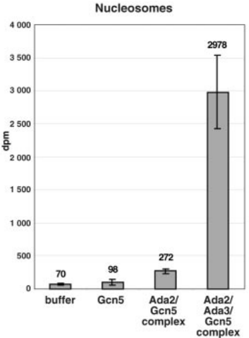
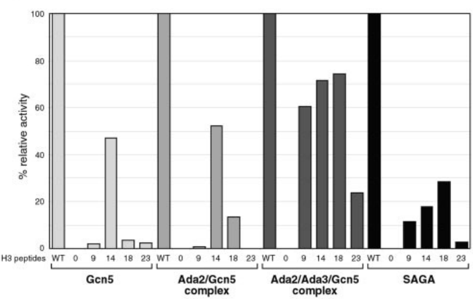
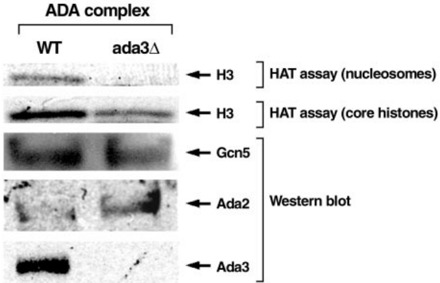
Previous studies have shown that the transcriptional coactivator protein Gcn5 functions as a catalytic histone acetyltransferase (HAT). In this work, we examine the roles of the Ada2 and Ada3 coactivator proteins that are functionally linked to Gcn5. We show that yeast Ada2, Ada3, and Gcn5 form a catalytic core of the ADA and Spt-Ada-Gcn5-acetyltransferase HAT complexes, which is necessary and sufficient in vitro for nucleosomal HAT activity and lysine specificity of the intact HAT complexes. We also demonstrate that Ada3 is necessary for Gcn5-dependent nucleosomal HAT activity in yeast extracts. Our results suggest that Ada2 potentiates the Gcn5 catalytic activity and that Ada3 facilitates nucleosomal acetylation and an expanded lysine specificity.
Overview
The claims and statistics of this paper haven’t been checked yet.
Free: it reads the open-access text and checks the first 5 claims that cite a source we can check. Create a free account to check every claim.
Integrity signals
Registry
Cites
Statistics
Figures
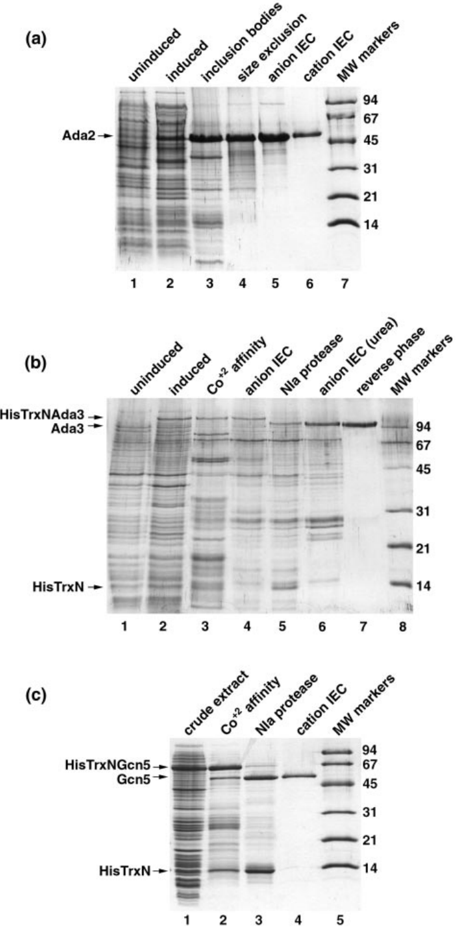
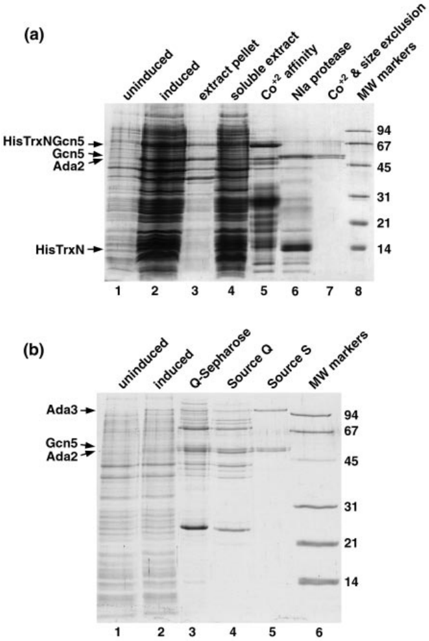
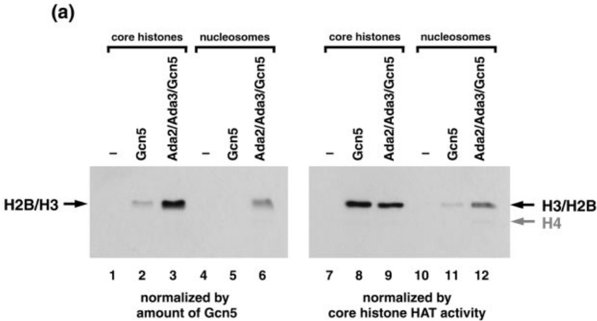
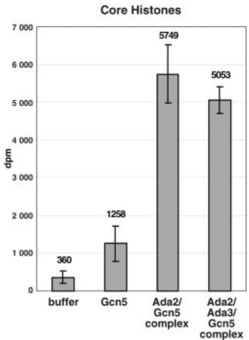
Verification
Claims the paper makes
The claims and statistics of this paper haven’t been checked yet.
Free: it reads the open-access text and checks the first 5 claims that cite a source we can check. Create a free account to check every claim.
Self-check
Percentages, sums and reported differences re-computed from the paper’s own numbers.
The self-check needs the paper’s full text.
Citations
Cites
Crystal structure of the nucleosome core particle at 2.8 Å resolution
Luger, K., Mäder, A. W., Richmond, R. K., Sargent, D. F., & Richmond, T. J. (1997) · Nature · doi:10.1038/38444 · Cited by 9,466
Calculation of protein extinction coefficients from amino acid sequence data
Gill, S. C., & von Hippel, P. H. (1989) · Analytical Biochemistry · doi:10.1016/0003-2697(89)90602-7 · Cited by 5,283
Acetylation of Histones and Transcription-Related Factors
Sterner, D. E., & Berger, S. L. (2000) · Microbiology and Molecular Biology Reviews · doi:10.1128/mmbr.64.2.435-459.2000 · Cited by 1,780
Brownell, J. E., Zhou, J., Ranalli, T., Kobayashi, R., Edmondson, D. G., Roth, S. Y., & Allis, C. D. (1996) · Cell · doi:10.1016/s0092-8674(00)81063-6 · Cited by 1,640
ALTERATION OF NUCLEOSOME STRUCTURE AS A MECHANISM OF TRANSCRIPTIONAL REGULATION
Workman, J. L., & Kingston, R. E. (1998) · Annual Review of Biochemistry · doi:10.1146/annurev.biochem.67.1.545 · Cited by 1,129
Grant, P. A., Duggan, L., Côté, J., Roberts, S. M., Brownell, J. E., Candau, R., Ohba, R., Owen-Hughes, T., Allis, C. D., Winston, F., et al. (1997) · Genes & Development · doi:10.1101/gad.11.13.1640 · Cited by 1,085
Self-citationUse of bacteriophage T7 lysozyme to improve an inducible T7 expression system
Studier, F. W. (1991) · Journal of Molecular Biology · doi:10.1016/0022-2836(91)90855-z · Cited by 802
Transcription-linked acetylation by Gcn5p of histones H3 and H4 at specific lysines
Kuo, M.-H., Brownell, J. E., Sobel, R. E., Ranalli, T. A., Cook, R. G., Edmondson, D. G., Roth, S. Y., & Allis, C. D. (1996) · Nature · doi:10.1038/383269a0 · Cited by 596
The histone tails of the nucleosome
Luger, K., & Richmond, T. J. (1998) · Current Opinion in Genetics & Development · doi:10.1016/s0959-437x(98)80134-2 · Cited by 521
Transcription-linked acetylation by Gcn5p of histones H3 and H4 at specific lysines
Otte, A. P. (1997) · UvA-DARE (University of Amsterdam) · Cited by 480
Research works printed but not linked: 2
- van Holde, K. E. (1989) Chromatin (Rich, A., series ed) Springer-Verlag, New York
- Pina, B., Berger, S., Marcus, G. A., Silverman, N., Agapite, J., and Guarente, L. (1993) Mol. Cell. Biol. 13, 5981-5989
Cited by
Items 101–200 of 236
The SAGA Subunit Ada2 Functions in Transcriptional Silencing
Jacobson, S. J., & Pillus, L. (2009) · Molecular and Cellular Biology · doi:10.1128/mcb.00542-09 · Cited by 42
“Further studies revealed a role for Ada2 in transcriptional activation, in part through its interaction with Gcn5 (41) to increase the HAT activity of Gcn5 (5, 14, 30).”
BackgroundGcn5-mediated Rph1 acetylation regulates its autophagic degradation under DNA damage stress
Li, F., Zheng, L., Chen, X., Zhao, X., Briggs, S. D., & Du, H. (2017) · Nucleic Acids Research · doi:10.1093/nar/gkx129 · Cited by 36
“Ada2 and Ada3, together with Gcn5, form the catalytic core of the SAGA complex and are also required for in vivo acetyltransferase activity (48).”
BackgroundSpt3 and Mot1 cooperate in nucleosome remodeling independently of TBP recruitment
Topalidou, I., Papamichos‐Chronakis, M., Thireos, G., & Tzamarias, D. (2004) · The EMBO Journal · doi:10.1038/sj.emboj.7600199 · Cited by 35
“Other SAGA components such as Ada2 and Ada3 have been implicated in the regulation and potentiation of the Gcn5 catalytic activity (Balasubramanian et al, 2002; Sterner et al, 2002), whereas others such as Taf 68 are involved in the recognition of nucleosomal histones by Gcn5 (Grant et al, 1998).”
BackgroundCatalysis by protein acetyltransferase Gcn5
Albaugh, B. N., & Denu, J. M. (2020) · Biochimica et Biophysica Acta (BBA) - Gene Regulatory Mechanisms · doi:10.1016/j.bbagrm.2020.194627 · Cited by 35
“For example, the “minimal” catalytic core complex composed of Gcn5, Ada2 and Ada3 showed more robust activity toward H3 peptide and free core histone versus Gcn5 alone[35][36].”
BackgroundHuang, J., & Tan, S. (2012) · Molecular and Cellular Biology · doi:10.1128/mcb.01131-12 · Cited by 34
“27), and pST44-yEsa1-Yng2(1-218)-HISNyEpl1(51-380) coexpression”
Self-citationHistone acetylation and deacetylation – Mechanistic insights from structural biology
Patel, A. B., He, Y., & Radhakrishnan, I. (2023) · Gene · doi:10.1016/j.gene.2023.147798 · Cited by 35
Epigenetic regulation of lignin biosynthesis in wood formation
Ma, H., Su, L., Zhang, W., Sun, Y., Li, D., Li, S., Lin, Y. J., Zhou, C., & Li, W. (2024) · New Phytologist · doi:10.1111/nph.20328 · Cited by 32
“The dynamic balance of histone acetylation and deacetylation is regulated by histone acetyltransferases (HATs) (Balasubramanian et al ., 2002; Berger, 2002) and histone deacetylases (HDAs or HDACs) (Roth & Allis, 1996; Kadosh & Struhl, 1997; Strahl & Allis, 2000).”
Fischer, V., Plassard, D., Ye, T., Reina‐San‐Martin, B., Stierlé, M., Tora, L., & Devys, D. (2021) · Cell Reports · doi:10.1016/j.celrep.2021.109598 · Cited by 33
“Tada2a specifically incorporates Gcn5/Pcaf within the ATAC HAT module, whereas Tada2b recruits Gcn5/Pcaf to the SAGA HAT module.”
BackgroundHuang, J., Dai, W., Xiao, D., Xiong, Q., Liu, C., Hu, J., Ge, F., Yu, X., & Li, S. (2022) · Nature Structural & Molecular Biology · doi:10.1038/s41594-022-00736-4 · Cited by 35
Direct Inhibition of Gcn5 Protein Catalytic Activity by Polyglutamine-expanded Ataxin-7
Burke, T. L., Miller, J. L., & Grant, P. A. (2013) · Journal of Biological Chemistry · doi:10.1074/jbc.m113.487538 · Cited by 36
“This association of Gcn5 with Ada3, via the bridging factor Ada2, has been found to increase the overall catalytic activity of Gcn5, to confer its ability to acetylate nucleosomes, and to increase its lysine site specificity across the histone H3 tail (19).”
BackgroundInfluentialSelf-citationGuelman, S. A., Suganuma, T., Florens, L. A., Weake, V. M., Swanson, S. K., Washburn, M. P., Abmayr, S. M., & Workman, J. L. (2006) · Molecular and Cellular Biology · doi:10.1128/mcb.00130-06 · Cited by 34
“Since Ada2 and Ada3 potentiate the nucleosomal HAT activity of Gcn5, it is likely that those three proteins reside in the same module within SAGA (1).”
BackgroundCharacterization of a metazoan ADA acetyltransferase complex
Soffers, J. H., Li, X., Saraf, A., Seidel, C. W., Florens, L. A., Washburn, M. P., Abmayr, S. M., & Workman, J. L. (2019) · Nucleic Acids Research · doi:10.1093/nar/gkz042 · Cited by 31
“Our findings are consistent with findings for a recombinant yeast ADA complex, which had a gel filtration estimated mass of 434 ± 64-kDa but had a calculated mass of 180 kDa for Gcn5-Ada2-Ada3 (21).”
ResultLin, C.-C., Lee, W.-J., Zeng, C.-Y., Chou, M.-Y., Lin, T.-J., Lin, C., Ho, M., & Shih, M. (2023) · PNAS Nexus · doi:10.1093/pnasnexus/pgad229 · Cited by 32
Barrios, A. F., Selleck, W., Hnatkovich, B., KRAMER, R., Sermwittayawong, D., & Tan, S. (2007) · Methods · doi:10.1016/j.ymeth.2006.08.007 · Cited by 31
Self-citationShamanin, V. A., Šekaric, P., & Androphy, E. J. (2008) · Journal of Virology · doi:10.1128/jvi.02466-07 · Cited by 41
“and is required for nucleosomal histone acetylation (1).”
BackgroundZhang, X., Zhou, Y., Liu, Y., Li, B., Tian, S., & Zhang, Z. (2024) · Journal of Fungi · doi:10.3390/jof10080522 · Cited by 32
“This enzyme is found in intact SAGA protein complexes, alongside ADA2 and ADA3, which associate with both free histones and nucleosomal histones, exhibiting robust HAT activity [18,23,24].”
BackgroundSnf1p Regulates Gcn5p Transcriptional Activity by Antagonizing Spt3p
Liu, Y., Xu, X., & Kuo, M. (2009) · Genetics · doi:10.1534/genetics.109.110957 · Cited by 34
“Upon associating with Ada2p and Ada3p, Gcn5p adopts the nucleosomal acetylation activity (Balasubramanian et al. 2002; Sterner et al. 2002b).”
The Molecular Basis of Spinocerebellar Ataxia Type 7
Goswami, R., Bello, A. I., Bean, J., Costanzo, K. M., Omer, B. S., Cornelio-Parra, D. V., Odah, R., Ahluwalia, A., Allan, S. K., Nguyen, N., et al. (2022) · Frontiers in Neuroscience · doi:10.3389/fnins.2022.818757 · Cited by 30
“These proteins enable Gcn5 to acetylate nucleosomes, as it can only acetylate free histones without them (Grant et al., 1997, 1998; Balasubramanian et al., 2002).”
BackgroundSklenar, A. R., & Parthun, M. R. (2004) · BMC Biochemistry · doi:10.1186/1471-2091-5-11 · Cited by 35
“In the context of the type A HAT complexes, the Ada2p, Ada3p and TAFII68 proteins have been shown to be important for expanding the substrate specificity of Gcn5p to allow for the acetylation of nucleosomal histones [49,63-68].”
BackgroundGrau, B., Popescu, C., Torroja, L., Ortuño‐Sahagún, D., Boros, I., & Ferrús, A. (2007) · Molecular and Cellular Biology · doi:10.1128/mcb.01307-07 · Cited by 28
“The three X heterochromatin rearrangements tested showed the dAda3 background effect, while Y heterochromatin (bw), euchromatic [Tp(2;2)Sco], and homologue-pairing (white and zeste) rearrangements have not.”
BackgroundZamostna, B., Novak, J., Vopalensky, V., Masek, T., Burysek, L., & Pospisek, M. (2012) · PLoS ONE · doi:10.1371/journal.pone.0041801 · Cited by 27
“Our results strongly suggest that the IL-1a precursor binds to the HAT/Core module consisting of Ada2, Ada3, Gcn5 and Sgf29 because these subunits are the only polypeptides shared by the SAGA and ADA complexes [10].”
BackgroundInfluentialDimeric structure of p300/CBP associated factor
Shi, S., Lin, J., Cai, Y., Yu, J., Hong, H., Ji, K., Downey, J. S., Lü, X., Chen, R., Han, J., et al. (2014) · BMC Structural Biology · doi:10.1186/1472-6807-14-2 · Cited by 27
“The additional components Ada2 and Ada3 (alteration/deficiency in activation) are required to form a minimal core complex that can efficiently acetylate histone octamer and nucleosome [24,25].”
BackgroundLin, C.-J., Hou, Y.-H., & Chen, Y.-L. (2019) · Medical Mycology · doi:10.1093/mmy/myz043 · Cited by 27
Histone Acetyltransferase Proteins Contribute to Transcriptional Processes at Multiple Levels
Torok, M. S., & Grant, P. A. (2004) · Advances in protein chemistry · doi:10.1016/s0065-3233(04)67007-0 · Cited by 27
Self-citationHoffmann, A., & Spengler, D. (2008) · Molecular and Cellular Biology · doi:10.1128/mcb.00842-08 · Cited by 28
“Activities following the cotransfection of increasing concentrations of two different PCAF [si-PCAF(1) and (2)] or one control (si-control) siRNA were normalized against Zac1 activation.”
BackgroundStribinskis, V., Heyman, H., Ellis, S. R., Steffen, M. C., & Martín, N. C. R. (2005) · Molecular and Cellular Biology · doi:10.1128/mcb.25.15.6546-6558.2005 · Cited by 27
“Therefore, we asked whether the SAGA complex is associated with Rpm2p transactivation ability.”
BackgroundThe SAGA continues: The rise of cis- and trans-histone crosstalk pathways
Strahl, B. D., & Briggs, S. D. (2020) · Biochimica et Biophysica Acta (BBA) - Gene Regulatory Mechanisms · doi:10.1016/j.bbagrm.2020.194600 · Cited by 28
“Nonetheless, other proteins were needed for Gcn5 to acetylate nucleosomal substrates [11,33].”
BackgroundBajpai, S. K., ., N., Pandita, S., Bahadur, A., & Verma, P. C. (2024) · Molecular Biology Reports · doi:10.1007/s11033-024-09300-3 · Cited by 25
“In yeast, the multi-subunit proteins ADA and SAGA [42] and additional subunits, including the ADA2 and ADA3 proteins, interact with the GCN5 protein to increase transcription activation [44].”
McCullough, S. D., & Grant, P. A. (2010) · Advances in protein chemistry and structural biology · doi:10.1016/s1876-1623(10)79005-2 · Cited by 30
“Consistent with this observation, Ada3 and TAF12 are required for Gcn5 to efficiently acetylate histones within nucleosomes (Grant et al., 1998; Balasubramanian et al., 2002).”
BackgroundSelf-citationHuang, J., Zhang, L., Liu, W., Liao, Q., Shi, T., Xiao, L., Hu, F., & Qiu, X. (2012) · Histochemistry and Cell Biology · doi:10.1007/s00418-012-0932-5 · Cited by 28
“Yeast ADA proteins play a role in the selection of the transcriptional initiation site, interact with basal transcription factors, and facilitate the acetylation of nucleosomal histones as components of the ADA/general control non-derepressible 5 (GCN5) histone acetyltransferase (HAT) complexes; their multiple and dis…”
BackgroundInfluentialCharles, G. M., Chen, C., Shih, S. C., Collins, S. R., Beltrão, P., Zhang, X., Sharma, T., Tan, S., Burlingame, A. L., Krogan, N. J., et al. (2011) · Proceedings of the National Academy of Sciences · doi:10.1073/pnas.1019735108 · Cited by 24
“The result also suggests that the requirements for acetylation of Rsc4 and nucleosomal histone tails differ, because previous work has revealed thatGcn5 alone does not acetylate nucleosomal histone H3 tails efficiently (14).”
BackgroundSelf-citationZheng, F., Cao, Y., Lv, X., Wang, L., Li, C., Zhang, W., Chen, G., & Liu, W. (2016) · Applied Microbiology and Biotechnology · doi:10.1007/s00253-016-8036-0 · Cited by 25
“…system, we demonstrated that conditional repression of Ada2, which together with Gcn5 and Ada3 constitutes the nucleosomal histone acetyltransferase activity of SAGA in yeast (Balasubramanian et al. 2002), resulted in very similar phenotypic characteristics to those by the repression of gcn5.”
BackgroundInfluentialSearle, N. E., Torres‐Machorro, A. L., & Pillus, L. (2017) · Genetics · doi:10.1534/genetics.116.197830 · Cited by 25
“…support a model in which Epl1 is physically required for promoting Esa1 enzymatic activity as a part of the piccolo-NuA4 and/or the NuA4 holo-complexes, much like Ada2 and Ada3, which act in a catalytic core to potentiate the activity of the Gcn5 acetyltransferase (Balasubramanian et al. 2002).”
BackgroundBiochemical and Structural Characterization of Recombinant Histone Acetyltransferase Proteins
Marmorstein, R. (2003) · Methods in enzymology on CD-ROM/Methods in enzymology · doi:10.1016/s0076-6879(03)76007-8 · Cited by 24
Acetylation of Rsc4p by Gcn5p Is Essential in the Absence of Histone H3 Acetylation
Choi, J. K., Grimes, D. E., Rowe, K. M., & Howe, L. J. (2008) · Molecular and Cellular Biology · doi:10.1128/mcb.00570-08 · Cited by 24
“The fact that the HAT interaction domain is not required to rescue the gcn5 sas3 synthetic phenotype and that Gcn5p must be incorporated into a HAT complex to acetylate nucleosomal histones (5, 13) suggests that the gcn5 sas3 synthetic lethality is a result of a failure of Gcn5p to acetylate a nonhistone substrate in…”
InfluentialActivation of a Poised RNAPII-Dependent Promoter Requires Both SAGA and Mediator
Lee, S. K., Fletcher, A. G. L., Zhang, L., Chen, X., Fischbeck, J. A., & Stargell, L. A. (2010) · Genetics · doi:10.1534/genetics.109.113464 · Cited by 28
“Consistent with this finding, the deletion of the HAT-related SAGA subunits, Ada2 and Ada3, which together with Gcn5 comprise the catalytic core (Balasubramanian et al. 2002), has little effect on CYC1 expression (Figure 6B).”
ResultBadri, K. R., Zhou, Y., Dhru, U., Aramgam, S., & Schuger, L. A. (2008) · Molecular and Cellular Biology · doi:10.1128/mcb.00333-08 · Cited by 26
“with histone acetyltransferase (HAT) activity, such as ADA, SAGA, and ATAC in yeast and STAGA, PCAF, and TFTC in mammals (4, 6, 10, 21, 50); histone deacetylase (HDAC) activity, such as silencing mediator of retinoic acid and thyroid hormone receptor (SMRT), complex cI/CoREST, and complex cII (16, 22, 25, 61, 62); and…”
BackgroundAwamleh, Z., Choufani, S., Cytrynbaum, C. S., Alkuraya, F. S., Scherer, S. W., Fernandes, S., Rosas, C., Louro, P., Dias, P., Neves, M. T., et al. (2022) · Human Molecular Genetics · doi:10.1093/hmg/ddac289 · Cited by 24
“The human alteration/deficiency in activation 3 protein, ADA3, is a NR coactivator and a component of the P/CAF complex (p300/CBP [CREB (cAMP-response-element binding protein)-binding protein]associated factor), which functions to link co-activators to histone acetylation and basal transcription machinery (35).”
BackgroundShukla, A., Lahudkar, S., Durairaj, G., & Bhaumik, S. R. (2011) · Biochemistry · doi:10.1021/bi201708z · Cited by 24
James, N., Landrieux, E., & Collart, M. A. (2007) · Genetics · doi:10.1534/genetics.107.076299 · Cited by 22
“Indeed, Gcn5p is the HAT enzyme and acetylates histones H2B and H3, whereas Ada2p and Ada3p are required for Gcn5p to acetylate nucleosomal histones (Grant et al. 1997; Sterner et al. 1999; Balasubramanian et al. 2002).”
BackgroundFerreiro, J. A., Powell, N. G., Karabetsou, N., Mellor, J., & Waters, R. (2006) · Nucleic Acids Research · doi:10.1093/nar/gkj501 · Cited by 21
“It is necessary for the HAT activity of Gcn5p (35) and to recruit the TATA-box-binding protein to Gcn5-dependent promoters (25).”
BackgroundTorres‐Zelada, E. F., Stephenson, R. E., Alpsoy, A., Anderson, B., Swanson, S. K., Florens, L. A., Dykhuizen, E. C., Washburn, M. P., & Weake, V. M. (2018) · Journal of Cell Science · doi:10.1242/jcs.214072 · Cited by 20
“All Gcn5 complexes share Sgf29 and Ada3 subunits, which, together with their respective Ada2 homolog, enable nucleosomal histone acetyltransferase activity (Balasubramanian et al., 2002; Grant et al., 1997; Spedale et al., 2012).”
BackgroundTranscriptional control of leukemogenesis by the chromatin reader SGF29
Barbosa, K., Deshpande, A. J., Perales, M., Xiang, P., Murad, R., Pramod, A. B., Minkina, A., Robertson, N., Schischlik, F., Lei, X., et al. (2023) · Blood · doi:10.1182/blood.2023021234 · Cited by 21
Kamata, K., Hatanaka, A., Goswami, G., Shinmyozu, K., Nakayama, J., Urano, T., Hatashita, M., Uchida, H., & Oki, M. (2013) · Genes to Cells · doi:10.1111/gtc.12075 · Cited by 21
“The catalytic component, Gcn5, together with Ada2 and Ada3, catalyzes acetylation by creating an open chromatin structure for the binding of transcription factors and the pre-initiation complex (Grant et al. 1999; Balasubramanian et al. 2002; RodriguezNavarro 2009; Bian et al. 2011).”
BackgroundGeng, Q., Li, H., Wang, D., Sheng, R., Zhu, H., Klosterman, S. J., Subbarao, K. V., Chen, J., Chen, F., & Zhang, D. (2022) · Frontiers in Microbiology · doi:10.3389/fmicb.2022.852571 · Cited by 21
“There is evidence that Ada2 enhances catalytic HAT activity, while Ada3 facilitates nucleosomal acetylation and expands the lysine specificity of Gcn5 in the complex (Balasubramanian et al., 2002).”
BackgroundArchitecture of the multi‐functional SAGA complex and the molecular mechanism of holding TBP
Shem, A. B., Pápai, G., & Schultz, P. (2020) · FEBS Journal · doi:10.1111/febs.15563 · Cited by 17
Hoke, S. M. T., Genereaux, J. L., Liang, G., & Brandl, C. J. (2008) · Journal of Molecular Biology · doi:10.1016/j.jmb.2008.09.088 · Cited by 17
Unbiased yeast screens identify cellular pathways affected in Niemann–Pick disease type C
Colaço, A., Fernández‐Suárez, M. E., Shepherd, D., Gal, L., Bibi, C., Chuartzman, S. G., Diot, A., Morten, K., Eden, E. R., Porter, F. D., et al. (2020) · Life Science Alliance · doi:10.26508/lsa.201800253 · Cited by 19
“One of the genes identified in the synthetic sick screen, ADA2, has been shown in yeast to potentiate the acetyltransferase activity of Gcn5 (28).”
BackgroundMohibi, S., Srivastava, S., Bele, A., Mirza, S., Band, H., & Band, V. (2016) · Molecular and Cellular Biology · doi:10.1128/mcb.00342-16 · Cited by 15
“ADA3 is essential for the HAT activity of p300 and 53 GCN5 containing HAT complexes towards histones (10-14) as well as of non-histone proteins 54”
BackgroundGcn5-mediated acetylation at MBF-regulated promoters induces the G1/S transcriptional wave
González‐Medina, A., Hidalgo, E., & Ayté, J. (2019) · Nucleic Acids Research · doi:10.1093/nar/gkz561 · Cited by 18
“The acetylation carried out by the HAT module allows the chromatin landscape to be opened up for binding of additional transcription factors and the pre-initiation complex (PIC) (34).”
BackgroundKAT tales: Functions of Gcn5 and PCAF lysine acetyltransferases in SAGA and ATAC
Dent, S. (2024) · Journal of Biological Chemistry · doi:10.1016/j.jbc.2024.107744 · Cited by 16
“Both are also important for activity of the KAT module toward nucleosomes, as well as other proteins (12, 23, 25, 31).”
BackgroundThe histone code of the fungal genus Aspergillus uncovered by evolutionary and proteomic analyses
Zhang, X., Noberini, R., Bonaldi, T., Collemare, J., & Seidl, M. F. (2022) · Microbial Genomics · doi:10.1099/mgen.0.000856 · Cited by 16
Vamos, E. E., & Boros, I. (2012) · FEBS Letters · doi:10.1016/j.febslet.2012.06.051 · Cited by 15
“The yADA2 SANT domain potentiated the catalytic function of yGCN5 and was important for acetylating nucleosomal histones [1,23].”
BackgroundMethodMittal, C., Culbertson, S. J., & Shogren‐Knaak, M. A. (2018) · Journal of Biological Chemistry · doi:10.1074/jbc.ra118.004487 · Cited by 12
“The purified enzyme was quantitated by Western blotting compared with known amounts of recombinantly expressed and purified Gcn5 that had been quantified by Bradford analysis, and SAGA stocks were typically prepared at a concentration between 80 and 150 nM. Activity of the purified enzyme was assessed with a synthetic…”
BackgroundInfluentialKamata, K., Goswami, G., Kashio, S., Urano, T., Nakagawa, R., Uchida, H., & Oki, M. (2013) · The Journal of Biochemistry · doi:10.1093/jb/mvt108 · Cited by 16
“Previous studies demonstrated that Sgf29, Ada2, Ada3 and Gcn5 form a HAT module and regulate HAT activity within the SAGA complex (24, 25, 27, 28, 37, 38); however, to date, a Gcn5-independent role of Sgf29 has not been identified in S.”
BackgroundSynthetic Chromatin Approaches To Probe the Writing and Erasing of Histone Modifications
Fierz, B. (2014) · ChemMedChem · doi:10.1002/cmdc.201300487 · Cited by 12
SGF29 and Sry pathway in hepatocarcinogenesis
Kurabe, N., Murakami, S., & Tashiro, F. (2015) · World Journal of Biological Chemistry · doi:10.4331/wjbc.v6.i3.139 · Cited by 12
Sahu, R. K., Singh, S., & Tomar, R. S. (2021) · Biochimica et Biophysica Acta (BBA) - Gene Regulatory Mechanisms · doi:10.1016/j.bbagrm.2021.194748 · Cited by 14
Pankotai, T., Zsindely, N., Vamos, E. E., Komonyi, O., Bodai, L., & Boros, I. (2013) · BMC Genomics · doi:10.1186/1471-2164-14-44 · Cited by 12
“Rather, the HAT activity of dSAGA complexes containing only dADA2bS seems to be generally decreased.”
BackgroundInfluentialCheng, C., Wang, W., Sun, M., Tang, R.-Q., Bai, L., Alper, H. S., & Zhao, X. (2022) · Frontiers in Microbiology · doi:10.3389/fmicb.2022.960114 · Cited by 12
“Ngg1p is required for histone acetyltransferase (HAT) activity, lysine specificity, and maintenance of SAGA structure (Balasubramanian et al., 2002).”
BackgroundChen, M., Liu, Y., Liu, Z., Su, L., Yan, L., Huang, Y., Huang, Y., Zhang, W., Xu, X., & Zheng, F. (2023) · mSphere · doi:10.1128/msphere.00299-23 · Cited by 15
“Among these subunits, Ada3 and Ada2 are required for the integrity of the HAT module (44), Ubp8 is the deubiquitinating enzyme within the DUB module (45), Spt20/ Spt7 are required for the integrity of the whole SAGA complex (46).”
BackgroundEustice, M., & Pillus, L. (2014) · Genetics · doi:10.1534/genetics.113.158824 · Cited by 13
Zencir, S., Sike, Á., Dobson, M. J., Ayaydin, F., Boros, I., & Topcu, Z. (2012) · Biochemical Journal · doi:10.1042/bj20120452 · Cited by 11
A synthetic non-histone substrate to study substrate targeting by the Gcn5 HAT and sirtuin HDACs
Rössl, A., Denoncourt, A. M., Lin, M.-S., & Downey, M. (2019) · Journal of Biological Chemistry · doi:10.1074/jbc.ra118.006051 · Cited by 12
“The dependence of acetylation on substrate on Ada2 and Ada3 is consistent with the known role of these binding partners in acetylation of histone tails (13).”
BackgroundLi, D.-D., Fuchs, B. B., Wang, Y., Huang, X.-W., Hu, D.-D., Sun, Y., Chai, D., Jiang, Y.-Y., & Mylonakis, E. (2017) · Future Microbiology · doi:10.2217/fmb-2017-0084 · Cited by 11
Site specificity analysis of Piccolo NuA4-mediated acetylation for different histone complexes
Kuo, Y., Henry, R. A., Tan, S., Côté, J., & Andrews, A. J. (2015) · Biochemical Journal · doi:10.1042/bj20150654 · Cited by 10
Self-citationZhu, Y., Hu, M., Ngowo, J., Gao, X., Chen, X., Yan, H., & Yu, W. (2021) · Archives of Insect Biochemistry and Physiology · doi:10.1002/arch.21838 · Cited by 8
Gao, J., Li, H., Tan, S., Zhou, R., & Lee, T.-H. (2025) · Nature Communications · doi:10.1038/s41467-025-65701-3 · Cited by 9
“We also tested H3 tail acetylation in situ with the Ada2/Ada3/Gcn5 complex 51,52 .”
Self-citationHistone Modifications and Transcription in Plants
Chua, Y. L., & Gray, J. C. (2018) · Wiley eBooks · doi:10.1002/9781119312994.apr0299 · Cited by 7
Hu, S.-J., Zheng, H., Li, X., Li, Z., Xu, C., Li, J., Liu, J.-H., Hu, W.-X., Zhao, X., Wang, J.-J., et al. (2023) · Microbiology Spectrum · doi:10.1128/spectrum.00281-23 · Cited by 6
“In the minimal complex, Ada2 activates the HAT activity of Gcn5 on histone peptides, while Ada3 is responsible for nucleosomal HAT activity (21).”
BackgroundTale of a multifaceted co-activator, hADA3: from embryogenesis to cancer and beyond
Chand, V., Nandi, D., Mangla, A. G., Sharma, P. K., & Nag, A. (2016) · Open Biology · doi:10.1098/rsob.160153 · Cited by 7
“ADA3 has been shown to regulate the substrate specificity of GCN5 HAT and thus enable GCN5 to act on its physiological substrate, chromatin [5].”
BackgroundThe Transcriptional Adaptor Protein ADA3a Modulates Flowering of Arabidopsis thaliana
Poulios, S., Dadarou, D., Gavriilidis, M., Mougiou, N., Kargios, N., Maliori, V., Hark, A. T., Doonan, J. H., & Vlachonasios, K. E. (2021) · Cells · doi:10.3390/cells10040904 · Cited by 6
“In Arabidopsis, ADA3a and ADA3b could act by enhancing the GCN5 action or interacting with transcription factors, as observed in yeast [13].”
BackgroundTan, S. (2012) · Biochemical Society Transactions · doi:10.1042/bst20110734 · Cited by 5
Self-citationFour domains of Ada1 form a heterochromatin boundary through different mechanisms
Kamata, K., Shinmyozu, K., Nakayama, J., Hatashita, M., Uchida, H., & Oki, M. (2016) · Genes to Cells · doi:10.1111/gtc.12421 · Cited by 5
Yu, C. K., Stephenson, C. J., Villamor, T. C., Dyba, T. G., Schulz, B. L., & Fraser, J. A. (2023) · Journal of Fungi · doi:10.3390/jof9121198 · Cited by 4
“HAT consists of four proteins, namely the histone acetyltransferase Gcn5 (a writer) which acetylates lysine in histones H3 and H2B, Ada2 and Ada3 which promote Gcn5 activity, and Sgf29 (a reader) which recognizes di-and tri-methylated H3K4 to direct HAT activity [12–15].”
BackgroundHistone-mediated transgenerational epigenetics
Cavalieri, V., & Spinelli, G. (2019) · Elsevier eBooks · doi:10.1016/b978-0-12-816363-4.00008-0 · Cited by 5
Fraser, O. A., Dewing, S. M., Usher, E. T., George, C., & Showalter, S. A. (2023) · Frontiers in Molecular Biosciences · doi:10.3389/fmolb.2022.1074743 · Cited by 4
“, 1999; Kuo and Andrews, 2013), although the Ada2/Gcn5 complex has previously been shown to also acetylate H3 at K18 in vitro (Balasubramanian et al., 2002).”
BackgroundArimbasseri, G. A., Shukla, A., Pradhan, A. K., & Bhargava, P. (2023) · Gene · doi:10.1016/j.gene.2023.147958 · Cited by 4
Identification and Analysis of Native HAT Complexes
McMahon, S. J., Doyon, Y., Côté, J., & Grant, P. A. (2003) · Methods in enzymology on CD-ROM/Methods in enzymology · doi:10.1016/s0076-6879(03)77008-6 · Cited by 5
Self-citationMechanisms of stimulation of SAGA-mediated nucleosome acetylation by a transcriptional activator
Culbertson, S. J., & Shogren‐Knaak, M. A. (2020) · Biochemistry and Biophysics Reports · doi:10.1016/j.bbrep.2020.100884 · Cited by 3
“When in a complex with Ada2 and Ada3, the specificity of Gcn5 expands to that of SAGA, acetylating four primary lysine residues on free and nucleosomal histone H3 [13], with even more sites of acetylation observed with the full complex [16,17].”
BackgroundInfluentialHistone Modifications and Transcription in Plants
Chua, Y. L., & Gray, J. C. (2007) · Blackwell Publishing Ltd eBooks · doi:10.1002/9780470988886.ch4 · Cited by 6
Roushan, M. R., Shao, S., Poledri, I., Hooykaas, P. J. J., & van Heusden, G. P. H. (2021) · Letters in Applied Microbiology · doi:10.1111/lam.13605 · Cited by 4
“ADA2 is a component of HAT complexes related to chromatin modifications (Berger et al. 1992; Grant et al. 1997; Balasubramanian et al. 2002).”
BackgroundThe CfAda2 regulates growth, development, and pathogenicity of Colletotrichum fructicola
Chen, Y., Wang, Y., Luo, J., Wang, H., Li, H., & Zhang, S. (2025) · Phytopathology Research · doi:10.1186/s42483-025-00379-5 · Cited by 2
“In yeast, Ada2 activates HAT activity of Gcn5 (Balasubramanian et al. 2002; Sun et al. 2018).”
The SAGA HAT module is tethered by its SWIRM domain and modulates activity of the SAGA DUB module
Haile, S. T., Rahman, S., Fields, J. K., Orsburn, B. C., Bumpus, N. N., & Wolberger, C. (2023) · Biochimica et Biophysica Acta (BBA) - Gene Regulatory Mechanisms · doi:10.1016/j.bbagrm.2023.194929 · Cited by 2
“On its own, Gcn5 acetylates histone H3 tail peptides but is only active on nucleosomes when it is in complex with both Ada2 and Ada3 [8, 26].”
BackgroundInfluentialLi, L., Luo, Q., Yang, S., Wang, H., Mu, Y., Guo, J., & Zhang, F. (2024) · Pest Management Science · doi:10.1002/ps.8496 · Cited by 2
Dynamic global acetylation remodeling during the yeast heat shock response
Hardman-Kavanaugh, R. E., Storey, A. J., Stuecker, T. N., Hood, S. E., Barrett‐Wilt, G. A., Krishnamurthi, V. R., Wang, Y., Byrum, S. D., Mackintosh, S. G., Edmondson, R. D., et al. (2026) · Genome biology · doi:10.1186/s13059-026-04194-9 · Cited by 2
“Given that most KATs and KDACs function within multi-protein complexes that help determine their activities [34–37], substrate specificity [38, 39], and/or localization [40], we next investigated whether heat shock could induce changes in the subunit composition of these complexes.”
Singh, R., & Tomar, R. S. (2025) · Molecular Microbiology · doi:10.1111/mmi.15362 · Cited by 2
“For activation of the FLO1 gene, the nucleosomal histones are hyperacetylated, mediated by Gcn5 and Sas3 histone acetyltransferases (HATs).”
InfluentialSAGA complex: Role in viability and development
Gurskiy, D. Y., Kopytova, D. V., Georgieva, S. G., & Nabirochkina, E. N. (2013) · Molecular Biology · doi:10.1134/s0026893313060071 · Cited by 3
Role of multifunctional coactivator complex SAGA in regulation of eukaryotic gene expression
Gurskiy, D. Y., Nabirochkina, E. N., & Kopytova, D. V. (2013) · Molecular Biology · doi:10.1134/s002689331306006x · Cited by 2
“Gene activa tion is followed by the ySpt8 dissociation from SAGA complex, while the main complex accompanies PolII and translocates nucleosomes from coding region of the gene [30, 31] (Fig.”
BackgroundMohibi, S., Srivastava, S., Band, H., & Band, V. (2013) · Cancer drug discovery and develogment/Cancer drug discovery and development · doi:10.1007/978-1-4614-8039-6_2 · Cited by 3
The role of human ADA2a in the regulation of p53 acetylation and stability
Huang, J., Zhang, L., Xiao, L., Xu, L., Hu, F., Shao, W., Liu, W., Mo, X., Shi, T., & Qiu, X. (2011) · Chinese Science Bulletin · doi:10.1007/s11434-010-4311-0 · Cited by 2
FACTORS INFLUENCING THE BEHAVIOR INTENTION OF E-BANKING TRANSACTIONS THROUGH MOBILE PHONES IN CHINA
Li, L., & Shiqian, W. (2018) · RePEc: Research Papers in Economics · Cited by 2
Yue, Y., Lu, T., Guo, X., Liu, B., Lv, S.-J., Abdalla, H. A. M., Lai, X., Zhang, R., Guo, J., Zhao, Y. J., et al. (2025) · Advanced Science · doi:10.1002/advs.202513169 · Cited by 4
Mattoo, R. U. H., Chen, D.-H., Bushnell, D. A., Tamir, S., & Kornberg, R. D. (2025) · Molecular Cell · doi:10.1016/j.molcel.2025.10.025 · Cited by 3
Chen, Y., Wang, Y., Luo, J., Li, H., & Zhang, S. (2026) · Virulence · doi:10.1080/21505594.2026.2622148 · Cited by 1
“…activity toward free histones, it did not acetylate nucleosomal histones; when Gcn5 binds to its interacting protein Ada2, it gained a slight ability to acetylate nucleosomal histones; further interaction with Ada3 significantly enhanced its acetylation activity on nucleosomal histones [13–15].”
Morse, R. H. (2024) · Elsevier eBooks · doi:10.1016/b978-0-12-814809-9.00002-0 · Cited by 1
Practical Approaches to Biological Network Discovery
Haynes, B. C. (2012) · Open Scholarship Institutional Repository (Washington University in St. Louis) · doi:10.7936/k72805pn · Cited by 1
“We also found that expression of both STE3α and SXI1α responds to the loss of Ada2 (Table 3.1), whereas no sexual development genes have been reported to be downstream of Gcn5 [68].”
BackgroundInfluentialZhang, S., Xu, L., Tang, Z., Wang, H., Gu, J., Sun, B., Zhang, W., Niu, D., & Feng, J. (2019) · Pathology - Research and Practice · doi:10.1016/j.prp.2019.03.036 · Cited by 1
Regulation of Flo11p-dependent adhesion in Saccharomyces cerevisiae
Fischer, C. (2005) · eDiss (Georg-August-Universität Göttingen) · doi:10.53846/goediss-607 · Cited by 2
Regulation of SAGA by the N-terminus of Spt7 in Saccharomyces cerevisiae
Dobransky, D. (2014) · Scholarship@Western (Western University)
Metadata
- Authors
- Balasubramanian, R., Pray-Grant, M. G., Selleck, W., Grant, P. A., & Tan, S.
- Affiliations
- Pennsylvania State University (US)
- University of Virginia (US)
- Corresponding author
- Tan, Song
- ORCID
- Tan, Song
- Venue
- Journal of Biological Chemistry
- Publisher
- Elsevier BV
- Published
- 2002-03
- Volume
- 277
- Issue
- 10
- Pages
- 7989-7995
- ISSN
- 0021-9258 (ISSN-L)
- OpenAlex
- W2077026916
- Cited by
- 233
- References
- 38
- Citations by year
- 2026: 4 · 2025: 6 · 2024: 8 · 2023: 11 · 2022: 8 · 2021: 6 · 2020: 13 · 2019: 9 · 2018: 9 · 2017: 7 · 2016: 9 · 2015: 4 · 2014: 10 · 2013: 16 · 2012: 8
- FWCI
- 4.53
- Type
- journal article
- Language
- en
- Open access
- hybrid
- doi.org
- Licence
- cc-by
- www.elsevier.com/tdm/userlicense/1.0/ (tdm)
- creativecommons.org/licenses/by/4.0/ (vor, 6788 d)
- Locations
- Journal of Biological Chemistry (publishedVersion, cc-by)
- PubMed (publishedVersion)
- Funders
- National Institutes of Health
- National Institute of General Medical Sciences (GM-60489, R01GM060489)
- National Institute of Diabetes and Digestive and Kidney Diseases (R01DK058646, DK-58646-01)
- Topics
- Life Sciences › Biochemistry, Genetics and Molecular Biology › Molecular Biology › Genomics and Chromatin Dynamics
- Life Sciences › Biochemistry, Genetics and Molecular Biology › Molecular Biology › Histone Deacetylase Inhibitors Research
- Life Sciences › Biochemistry, Genetics and Molecular Biology › Molecular Biology › Nuclear Structure and Function
- Keywords
- ADA2, ADA3, GCN5, histone acetylation, histone acetyltransferase, transcriptional coactivator, catalytic core, Saccharomyces cerevisiae
- MeSH terms
- p300-CBP-Associated Factor, Acetyltransferases, Catalysis, Chromatin, Chromatography, Ion Exchange, DNA-Binding Proteins, Electrophoresis, Polyacrylamide Gel, Fungal Proteins, Histones, Lysine, Nucleosomes, Peptides, Protein Binding, Protein Kinases, Proteins, Recombinant Proteins, Transcription Factors, Protein Structure, Tertiary, Saccharomyces cerevisiae Proteins, Histone Acetyltransferases
About these checks
Registry, retraction, Cites and statistics results are computed, not judged, with one exception: a printed reference that no index lists is read once by a model before it counts as a citation error. Claims are extracted by a model and kept only when their quote appears verbatim in the text; each cited source is then checked, with a model’s help, for whether it says what the claim relies on. Those verdicts can be wrong — read the claim’s quote and the cited source before relying on one.
Statistics and arithmetic are recomputed, not judged.
Confidence bands are shown only for fields calibrated on our annotated test set. None is calibrated yet, so no band is shown.
What counts as a claim ›How we measure confidence ›How we check this ›
Are you an author, or do you see a problem with this page? Request a review
Data sources
Bibliographic data: Semantic Scholar, OpenAlex, Crossref.
Contains information from the Semantic Scholar Academic Graph Datasets, made available under the ODC Attribution License (ODC-BY 1.0).
Semantic Scholar’s data is described in: Kinney, R., et al. (2023). The Semantic Scholar Open Data Platform. arXiv:2301.10140.
