

Role of the Ada2 and Ada3 transcriptional coactivators in histone acetylation.
Open accessThe DOI matches its Crossref record; 38 of the 38 references it cites were found in a registry or an index.
Abstract
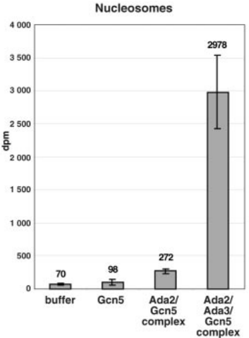
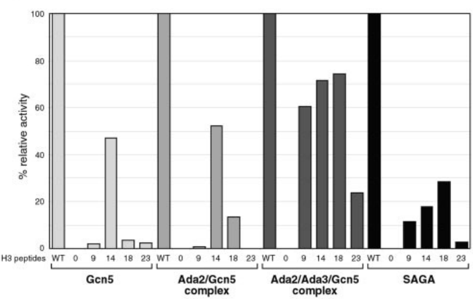
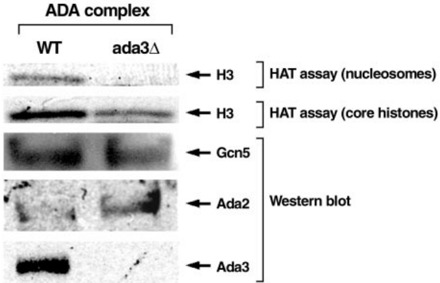
Previous studies have shown that the transcriptional coactivator protein Gcn5 functions as a catalytic histone acetyltransferase (HAT). In this work, we examine the roles of the Ada2 and Ada3 coactivator proteins that are functionally linked to Gcn5. We show that yeast Ada2, Ada3, and Gcn5 form a catalytic core of the ADA and Spt-Ada-Gcn5-acetyltransferase HAT complexes, which is necessary and sufficient in vitro for nucleosomal HAT activity and lysine specificity of the intact HAT complexes. We also demonstrate that Ada3 is necessary for Gcn5-dependent nucleosomal HAT activity in yeast extracts. Our results suggest that Ada2 potentiates the Gcn5 catalytic activity and that Ada3 facilitates nucleosomal acetylation and an expanded lysine specificity.
Overview
The claims and statistics of this paper haven’t been checked yet.
Free: it reads the open-access text and checks the first 5 claims that cite a source we can check. Create a free account to check every claim.
Integrity signals
Registry
Cites
Statistics
Figures
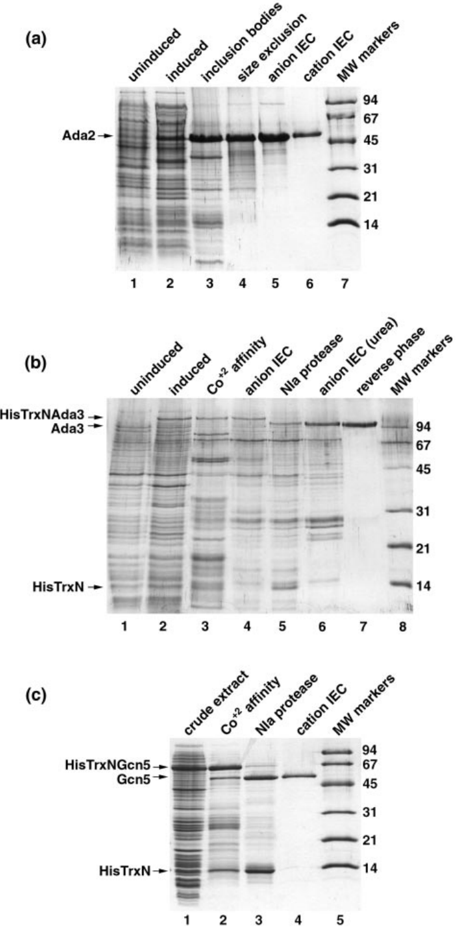
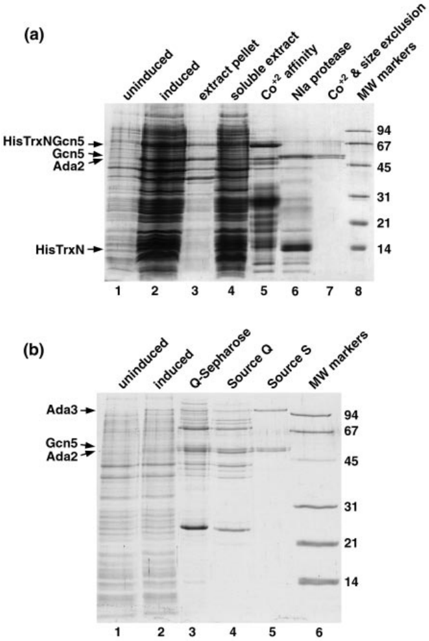
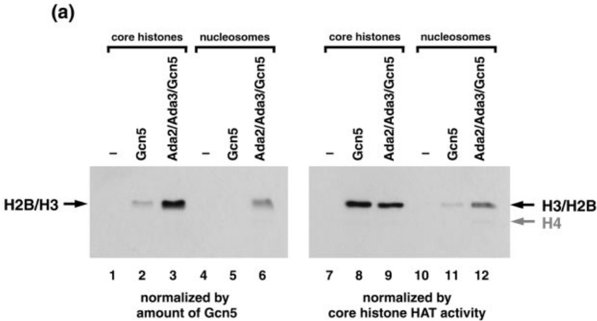
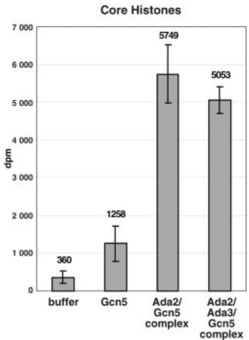
Verification
Claims the paper makes
The claims and statistics of this paper haven’t been checked yet.
Free: it reads the open-access text and checks the first 5 claims that cite a source we can check. Create a free account to check every claim.
Self-check
Percentages, sums and reported differences re-computed from the paper’s own numbers.
The self-check needs the paper’s full text.
Citations
Cites
Crystal structure of the nucleosome core particle at 2.8 Å resolution
Luger, K., Mäder, A. W., Richmond, R. K., Sargent, D. F., & Richmond, T. J. (1997) · Nature · doi:10.1038/38444 · Cited by 9,466
Calculation of protein extinction coefficients from amino acid sequence data
Gill, S. C., & von Hippel, P. H. (1989) · Analytical Biochemistry · doi:10.1016/0003-2697(89)90602-7 · Cited by 5,283
Acetylation of Histones and Transcription-Related Factors
Sterner, D. E., & Berger, S. L. (2000) · Microbiology and Molecular Biology Reviews · doi:10.1128/mmbr.64.2.435-459.2000 · Cited by 1,780
Brownell, J. E., Zhou, J., Ranalli, T., Kobayashi, R., Edmondson, D. G., Roth, S. Y., & Allis, C. D. (1996) · Cell · doi:10.1016/s0092-8674(00)81063-6 · Cited by 1,640
ALTERATION OF NUCLEOSOME STRUCTURE AS A MECHANISM OF TRANSCRIPTIONAL REGULATION
Workman, J. L., & Kingston, R. E. (1998) · Annual Review of Biochemistry · doi:10.1146/annurev.biochem.67.1.545 · Cited by 1,129
Grant, P. A., Duggan, L., Côté, J., Roberts, S. M., Brownell, J. E., Candau, R., Ohba, R., Owen-Hughes, T., Allis, C. D., Winston, F., et al. (1997) · Genes & Development · doi:10.1101/gad.11.13.1640 · Cited by 1,085
Self-citationUse of bacteriophage T7 lysozyme to improve an inducible T7 expression system
Studier, F. W. (1991) · Journal of Molecular Biology · doi:10.1016/0022-2836(91)90855-z · Cited by 802
Transcription-linked acetylation by Gcn5p of histones H3 and H4 at specific lysines
Kuo, M.-H., Brownell, J. E., Sobel, R. E., Ranalli, T. A., Cook, R. G., Edmondson, D. G., Roth, S. Y., & Allis, C. D. (1996) · Nature · doi:10.1038/383269a0 · Cited by 596
The histone tails of the nucleosome
Luger, K., & Richmond, T. J. (1998) · Current Opinion in Genetics & Development · doi:10.1016/s0959-437x(98)80134-2 · Cited by 521
Transcription-linked acetylation by Gcn5p of histones H3 and H4 at specific lysines
Otte, A. P. (1997) · UvA-DARE (University of Amsterdam) · Cited by 480
Research works printed but not linked: 2
- van Holde, K. E. (1989) Chromatin (Rich, A., series ed) Springer-Verlag, New York
- Pina, B., Berger, S., Marcus, G. A., Silverman, N., Agapite, J., and Guarente, L. (1993) Mol. Cell. Biol. 13, 5981-5989
Cited by
Functions of Site-Specific Histone Acetylation and Deacetylation
Shahbazian, M. D., & Grunstein, M. (2007) · Annual Review of Biochemistry · doi:10.1146/annurev.biochem.76.052705.162114 · Cited by 1,635
The General Transcription Machinery and General Cofactors
Thomas, M. C., & Chiang, C.-M. (2006) · Critical Reviews in Biochemistry and Molecular Biology · doi:10.1080/10409230600648736 · Cited by 925
“Clearly, Ada proteins and ataxin-7 facilitate the access of GCN5L to the activator-occupied chromatin template, allowing acetylation of nucleosomal core histones (Balasubramanian et al., 2002; Palhan et al., 2005).”
BackgroundCai, L., Sutter, B. M., Li, B., & Tu, B. P. (2011) · Molecular Cell · doi:10.1016/j.molcel.2011.05.004 · Cited by 701
“…of SAGA components Spt7p and Sgf73p is dependent on Ada3p (Figure 2D) suggest the possibility that acetylation of SAGA could function to stimulate its nucleosomal acetyltransferase activity and perhaps its activation or recruitment to growth genes (Balasubramanian et al., 2002; Wu et al., 1999).”
The diverse functions of histone acetyltransferase complexes
Carrozza, M. J., Utley, R. T., Workman, J. L., & Côté, J. (2003) · Trends in Genetics · doi:10.1016/s0168-9525(03)00115-x · Cited by 487
Papillomavirus E6 oncoproteins
Vande Pol, S. B., & Klingelhutz, A. J. (2013) · Virology · doi:10.1016/j.virol.2013.04.026 · Cited by 346
Hahn, S., & Young, E. T. (2011) · Genetics · doi:10.1534/genetics.111.127019 · Cited by 342
“…al. 2011); (2) a HAT module containing the HAT Gcn5, Sgf29, and the subunits Ada2 and Ada3, which modulate substrate specificity (Grant et al. 1999; Balasubramanian et al. 2002; M. Washburn and J. Workman, personal communication); (3) a four-subunit ubiquitin protease module (RodriguezNavarro et…”
BackgroundEpigenetics—An Epicenter of Gene Regulation: Histones and Histone‐Modifying Enzymes
Biel, M., Wascholowski, V., & Giannis, A. (2005) · Angewandte Chemie International Edition · doi:10.1002/anie.200461346 · Cited by 316
Multiple faces of the SAGA complex
Koutelou, E., Hirsch, C. L., & Dent, S. Y. (2010) · Current Opinion in Cell Biology · doi:10.1016/j.ceb.2010.03.005 · Cited by 261
“The ySAGA complex is modular in structure and has distinct functional units (Table 1) including a recruitment module (Tra1) [9,10]; acetylation module (Gcn5, Ada2, Ada3) [11-14]; TBP interaction unit (Spt3, Spt8) [13,15,16]; Dub module (Ubp8, Sus1, Sgf11 and Sgf73) [17-21]; and architecture unit (Spt7, Spt20, Ada1, TA…”
BackgroundInfluentialLi, S., Lin, Y.-C. J., Wang, P., Zhang, B., Li, M., Chen, S., Shi, R., Tunlaya-Anukit, S., Liu, X., Wang, Z., et al. (2019) · The Plant Cell · doi:10.1105/tpc.18.00437 · Cited by 271
“ADA2 increases the HAT activity of GCN5 (Balasubramanian et al., 2002).”
BackgroundPalhan, V. B., Chen, S., Peng, G.-H., Tjernberg, A., Gamper, A. M., Fan, Y., Chait, B. T., La Spada, A. R., & Roeder, R. G. (2005) · Proceedings of the National Academy of Sciences · doi:10.1073/pnas.0503505102 · Cited by 245
The Novel SLIK Histone Acetyltransferase Complex Functions in the Yeast Retrograde Response Pathway
Pray-Grant, M. G., Schieltz, D., McMahon, S. J., Wood, J. M., Kennedy, E. L., Cook, R. G., Workman, J. L., Yates, J. R., & Grant, P. A. (2002) · Molecular and Cellular Biology · doi:10.1128/mcb.22.24.8774-8786.2002 · Cited by 237
“In addition this association bestows upon Gcn5 an expanded lysine specificity (3, 20, 52, 65).”
BackgroundSelf-citationStructural basis for histone H2B deubiquitination by the SAGA DUB module
Morgan, M. T., Haj-Yahya, M., Ringel, A. E., Bandi, P., Brik, A., & Wolberger, C. (2016) · Science · doi:10.1126/science.aac5681 · Cited by 238
Roles of dynamic and reversible histone acetylation in plant development and polyploidy
Chen, Z. J., & Tian, L. (2007) · Biochimica et Biophysica Acta (BBA) - Gene Structure and Expression · doi:10.1016/j.bbaexp.2007.04.007 · Cited by 229
“In each complex, GCN5 coordinates with other common subunits such as the ADA2 and ADA3 proteins to stimulate transcriptional activation [35].”
BackgroundYeast Enhancer of Polycomb defines global Esa1-dependent acetylation of chromatin
Boudreault, A. A., Cronier, D., Selleck, W., Lacoste, N., Utley, R. T., Allard, S., Savard, J., Lane, W. S., Tan, S., & Côté, J. (2003) · Genes & Development · doi:10.1101/gad.1056603 · Cited by 220
“The well characterized histone H3specific HAT Gcn5 is also found in a smaller trimeric complex with Ada2 and Ada3 proteins, also present with Gcn5 in at least two other large complexes (Grant et al. GENES & DEVELOPMENT 1425 1997; Saleh et al. 1997; Sendra et al. 2000; Balasubramanian et al. 2002).”
BackgroundSelf-citationThe SAGA continues: expanding the cellular role of a transcriptional co-activator complex
Baker, S. P., & Grant, P. A. (2007) · Oncogene · doi:10.1038/sj.onc.1210603 · Cited by 214
“Although it remains unclear, how the other subunits of SAGA enable Gcn5 to acetylate nucleosomes, it is believed that Gcn5, Ada2 and Ada3 compose a catalytic core minimally capable of nucleosomal acetylation (Balasubramanian et al., 2002).”
BackgroundSelf-citationATAC is a double histone acetyltransferase complex that stimulates nucleosome sliding
Suganuma, T., Gutiérrez, J. L., Li, B., Florens, L., Swanson, S. K., Washburn, M. P., Abmayr, S. M., & Workman, J. L. (2008) · Nature Structural & Molecular Biology · doi:10.1038/nsmb.1397 · Cited by 194
Bhaumik, S. R., & Green, M. R. (2002) · Molecular and Cellular Biology · doi:10.1128/mcb.22.21.7365-7371.2002 · Cited by 182
“quired for Gcn5p’s HAT activity on nucleosomal histones (3).”
BackgroundA Decade of Histone Acetylation: Marking Eukaryotic Chromosomes with Specific Codes
Kimura, A., Matsubara, K., & Horikoshi, M. (2005) · The Journal of Biochemistry · doi:10.1093/jb/mvi184 · Cited by 166
Molecular Architecture of the S. cerevisiae SAGA Complex
Wu, P.-Y. J., Ruhlmann, C., Winston, F., & Schultz, P. (2004) · Molecular Cell · doi:10.1016/j.molcel.2004.06.005 · Cited by 167
Lee, K. K., Sardiu, M. E., Swanson, S. K., Gilmore, J. M., Torok, M., Grant, P. A., Florens, L., Workman, J. L., & Washburn, M. P. (2011) · Molecular Systems Biology · doi:10.1038/msb.2011.40 · Cited by 162
“Originally identified in yeast, the SAGA complex was subsequently shown to be evolutionarily conserved in every organism through humans”
BackgroundSelf-citationLee, K. K., Florens, L., Swanson, S. K., Washburn, M. P., & Workman, J. L. (2005) · Molecular and Cellular Biology · doi:10.1128/mcb.25.3.1173-1182.2005 · Cited by 165
“Although GCN5 alone possesses acetyltransferase activity in vitro, it is only active on core histones and requires Ada2 and Ada3 in order to acetylate nucleosomes (2).”
BackgroundHelmlinger, D., Hardy, S., Abou-Sleymane, G., Eberlin, A., Bowman, A. B., Gansmüller, A., Picaud, S., Zoghbi, H. Y., Trottier, Y., Tora, L., et al. (2006) · PLoS Biology · doi:10.1371/journal.pbio.0040067 · Cited by 165
“Thus, polyQ-expanded ATXN7 incorporation into yeast SAGA versus human TFTC/STAGA might have different effects on the structure, composition, and function of these complexes.”
InfluentialThe pST44 polycistronic expression system for producing protein complexes in Escherichia coli
Tan, S., Kern, R. C., & Selleck, W. (2005) · Protein Expression and Purification · doi:10.1016/j.pep.2004.12.002 · Cited by 165
Self-citationA Role for Gcn5 in Replication-Coupled Nucleosome Assembly
Burgess, R. J., Zhou, H., Han, J., & Zhang, Z. (2010) · Molecular Cell · doi:10.1016/j.molcel.2010.01.020 · Cited by 157
“Ada2, Ada3, and Gcn5 are known to form the core subunits of the SAGA, ADA, and SLIK complexes (Balasubramanian et al., 2002; Candau and Berger, 1996; Grant et al., 1997).”
BackgroundZhou, S., Jiang, W., Long, F., Cheng, S., Yang, W., Zhao, Y., & Zhou, D.-X. (2017) · The Plant Cell · doi:10.1105/tpc.16.00908 · Cited by 161
“The association of Gcn5 with the Ada proteins and Sgf29 in the complex enables Gcn5 to acetylate multiple lysine residues on nucleosomal histone H3 and is important for in vivo HAT activity (Grant et al., 1999; Balasubramanian et al., 2002; Bian et al., 2011).”
BackgroundShih, P.-Y., Liao, Y.-T., Tseng, Y.-K., Deng, F.-S., & Lin, C.-H. (2019) · Frontiers in Microbiology · doi:10.3389/fmicb.2019.00602 · Cited by 156
“In addition, the histone acetylation process on nucleosomes requires Ada3 (Ngg1) and Ada2 (Marcus et al., 1994; Balasubramanian et al., 2002).”
BackgroundCluster Analysis of Mass Spectrometry Data Reveals a Novel Component of SAGA
Powell, D. W., Weaver, C. M., Jennings, J. L., McAfee, K. J., He, Y., Weil, P. A., & Link, A. J. (2004) · Molecular and Cellular Biology · doi:10.1128/mcb.24.16.7249-7259.2004 · Cited by 147
“These results are consistent with the requirement of Ada3p for SAGA-mediated HAT activity (1).”
BackgroundResultInfluentialAnalysis of Spt7 Function in the Saccharomyces cerevisiae SAGA Coactivator Complex
Wu, P.-Y. J., & Winston, F. (2002) · Molecular and Cellular Biology · doi:10.1128/mcb.22.15.5367-5379.2002 · Cited by 142
“First, Gcn5 contains the catalytic activity for the histone acetyltransferase (HAT) activity of SAGA (8), and Gcn5’s HAT activity is modulated by the Ada2 and Ada3 proteins (2, 16, 39).”
BackgroundMcMahon, S. J., Pray-Grant, M. G., Schieltz, D. M., Yates, J. R., & Grant, P. A. (2005) · Proceedings of the National Academy of Sciences · doi:10.1073/pnas.0503493102 · Cited by 163
Self-citationIngvarsdottir, K., Krogan, N. J., Emre, N. C. T., Wyce, A., Thompson, N. J., Emili, A., Hughes, T. R., Greenblatt, J. F., & Berger, S. L. (2005) · Molecular and Cellular Biology · doi:10.1128/mcb.25.3.1162-1172.2005 · Cited by 136
“For example, certain subunits form subcomplexes and have similar biochemical or genetic functions, such as Gcn5/Ada2/Ada3 (3, 11, 46, 58), Spt3/Spt7/ Spt8 (7, 58), and Ada1/Spt20 (Ada5) (22, 58).”
BackgroundInfluentialMao, Y., Pavangadkar, K. A., Thomashow, M. F., & Triezenberg, S. J. (2006) · Biochimica et Biophysica Acta (BBA) - Gene Structure and Expression · doi:10.1016/j.bbaexp.2006.02.006 · Cited by 139
Histone H3 tail acetylation modulates ATP-dependent remodeling through multiple mechanisms
Chatterjee, N., Sinha, D., Lemma-Dechassa, M., Tan, S., Shogren-Knaak, M. A., & Bartholomew, B. (2011) · Nucleic Acids Research · doi:10.1093/nar/gkr535 · Cited by 127
“The yGcn5/Ada3/ Ada2 complex preferentially acetylates lysines 18, 14 and 9 in H3 and to a lesser extent lysine 23 (49).”
BackgroundMethodInfluentialSelf-citationKATs in cancer: functions and therapies
Farria, A., Li, W., & Dent, S. Y. R. (2015) · Oncogene · doi:10.1038/onc.2014.453 · Cited by 130
The Double-Histone-Acetyltransferase Complex ATAC Is Essential for Mammalian Development
Guelman, S., Kozuka, K., Mao, Y., Pham, V., Solloway, M. J., Wang, J., Wu, J., Lill, J. R., & Zha, J. (2009) · Molecular and Cellular Biology · doi:10.1128/mcb.01599-08 · Cited by 127
“5 83 19 (23) 52 (62) 10 (12) 2 (2) E11.”
BackgroundLuthra, R., Kerr, S. C., Harreman, M. T., Apponi, L. H., Fasken, M. B., Ramineni, S., Chaurasia, S. S., Valentini, S. R., & Corbett, A. H. (2006) · Journal of Biological Chemistry · doi:10.1074/jbc.m608741200 · Cited by 154
Gunderson, F. Q., & Johnson, T. (2009) · PLoS Genetics · doi:10.1371/journal.pgen.1000682 · Cited by 150
Architecture of the Saccharomyces cerevisiae SAGA transcription coactivator complex
Han, Y., Luo, J., Ranish, J. A., & Hahn, S. (2014) · The EMBO Journal · doi:10.15252/embj.201488638 · Cited by 133
Anzola, J. M., Sieberer, T., Ortbauer, M., Butt, H., Korbei, B., Weinhofer, I., Müllner, A. E., & Luschnig, C. (2010) · Proceedings of the National Academy of Sciences · doi:10.1073/pnas.0913918107 · Cited by 116
“These observations imply extended AtGCN5 specificity when acting in context of a SAGA-like complex, which resembles the situation described for yeast yGcn5 (21).”
BackgroundCrystal Structure of the LSD1/CoREST Histone Demethylase Bound to Its Nucleosome Substrate
Kim, S.-A., Zhu, J., Yennawar, N. H., Eek, P., & Tan, S. (2020) · Molecular Cell · doi:10.1016/j.molcel.2020.04.019 · Cited by 128
Self-citationChoi, J. K., & Howe, L. J. (2009) · Biochemistry and Cell Biology · doi:10.1139/o08-112 · Cited by 104
“Indeed, HAT catalytic subunits on their own generally exhibit very poor enzymatic activity (Balasubramanian et al. 2002; Berndsen et al. 2007).”
BackgroundTwo Drosophila Ada2 Homologues Function in Different Multiprotein Complexes
Kusch, T., Guelman, S. A., Abmayr, S. M., & Workman, J. L. (2003) · Molecular and Cellular Biology · doi:10.1128/mcb.23.9.3305-3319.2003 · Cited by 121
“Ada3 has been found in all GNAT complexes so far characterized (11, 33) and is essential for the acetyltransferase activities and specificities of these complexes (4).”
BackgroundNagy, Z., Riss, A., Fujiyama, S., Krebs, A. R., Orpinell, M., Jansen, P. W. T. C., Cohen, A., Stunnenberg, H. G., Kato, S., & Tora, L. (2009) · Cellular and Molecular Life Sciences · doi:10.1007/s00018-009-0199-8 · Cited by 123
“The first indication came from the discovery that in metazoans and in plants the yeast Ada2 protein, an adaptor having effect on the activity of GCN5 activity [36, 47], has two orthologues: ADA2a and ADA2b [31, 48, 49].”
BackgroundMulti-tasking on chromatin with the SAGA coactivator complexes.
Daniel, J. A., & Grant, P. A. (2007) · Mutation Research - Fundamental and Molecular Mechanisms of Mutagenesis · doi:10.1016/j.mrfmmm.2006.09.008 · Cited by 111
“This expansion of lysine specificity can also be reconstituted in vitro minimally with an Ada2/Ada3/Gcn5 trimer complex, biochemically demonstrating the role of these two Ada proteins in histone acetylation [52].”
BackgroundSelf-citationStructure of the GCN5 histone acetyltransferase bound to a bisubstrate inhibitor
Poux, A. N., Cebrat, M., Kim, C. M., Cole, P. A., & Marmorstein, R. (2002) · Proceedings of the National Academy of Sciences · doi:10.1073/pnas.222373899 · Cited by 111
Fan, Q., An, L., & Cui, L. (2004) · Eukaryotic Cell · doi:10.1128/ec.3.2.264-276.2004 · Cited by 128
“Genetic and biochemical studies demonstrate that the three adaptor proteins ADA2, ADA3, and GCN5 interact to form a catalytic core (11, 12, 22, 29, 44), which is sufficient to acetylate nucleosomal histones in vitro (2).”
BackgroundTimmers, H. T. M., & Tora, L. (2004) · Trends in Biochemical Sciences · doi:10.1016/j.tibs.2004.11.007 · Cited by 108
Survey on the PABC recognition motif PAM2
Albrecht, M., & Lengauer, T. (2004) · Biochemical and Biophysical Research Communications · doi:10.1016/j.bbrc.2004.02.024 · Cited by 108
Toward an Integrated Model of Capsule Regulation in Cryptococcus neoformans
Haynes, B. C., Skowyra, M. L., Spencer, S. J., Gish, S. R., Williams, M., Held, E. P., Brent, M. R., & Doering, T. L. (2011) · PLoS Pathogens · doi:10.1371/journal.ppat.1002411 · Cited by 103
“Sequence analysis suggests that other SAGA proteins are present in C. neoformans, but Gcn5 is the best conserved and the only one that has been characterized [31].”
BackgroundInfluentialThe CAG–polyglutamine repeat diseases: a clinical, molecular, genetic, and pathophysiologic nosology
Stoyas, C. A., & Spada, A. R. L. (2018) · Handbook of clinical neurology · doi:10.1016/b978-0-444-63233-3.00011-7 · Cited by 120
“TheHATandDUB activity of SAGA facilitate transcription by disassembling nucleosomes at the promoter region (Balasubramanian et al., 2002; Wyce et al., 2007), an activity that is conserved in human STAGA (McMahon et al., 2000; Lang et al., 2001; Liu et al., 2003, 2008; Gamper and Roeder, 2008).”
Helmlinger, D., Marguerat, S., Villén, J., Gygi, S. P., Bähler, J., & Winston, F. (2008) · Genes & Development · doi:10.1101/gad.1719908 · Cited by 113
“First, Gcn5 is a histone acetyltransferase (HAT) and, along with two other SAGA components, Ada2 and Ada3 (Ngg1), forms a functional module within SAGA that acetylates histone H3 on four residues—K9, K14, K18, and K23—within nucleosomal substrates (Grant et al. 1999; Balasubramanian et al. 2002).”
BackgroundThe ATAC acetyl transferase complex controls mitotic progression by targeting non‐histone substrates
Orpinell, M., Fournier, M. L., Riss, A., Nagy, Z., Krebs, A. R., Frontini, M., & Tora, L. (2010) · The EMBO Journal · doi:10.1038/emboj.2010.125 · Cited by 108
“Earlier observations suggested that the Gcn5-HAT activity in the ATAC complex may be positively regulated by the Ada2a and Ada3 subunits that are directly interacting with Gcn5 (Balasubramanian et al, 2002; Gamper et al, 2009).”
BackgroundLi, S., & Shogren‐Knaak, M. A. (2009) · Journal of Biological Chemistry · doi:10.1074/jbc.m809617200 · Cited by 98
ZZ Domain of CBP: an Unusual Zinc Finger Fold in a Protein Interaction Module
Legge, G. B., Martinez‐Yamout, M. A., Hambly, D. M., Trinh, T., Lee, B. M., Dyson, H. J., & Wright, P. E. (2004) · Journal of Molecular Biology · doi:10.1016/j.jmb.2004.08.087 · Cited by 103
mRNA export and gene expression: The SAGA–TREX-2 connection
García-Oliver, E., García-Molinero, V., & Rodríguez‐Navarro, S. (2011) · Biochimica et Biophysica Acta (BBA) - Gene Regulatory Mechanisms · doi:10.1016/j.bbagrm.2011.11.011 · Cited by 105
Pankotai, T., Komonyi, O., Bodai, L., Újfaludi, Z., Muratoglu, S. C., Ciurciu, A., Tora, L., Szabad, J., & Boros, I. (2005) · Molecular and Cellular Biology · doi:10.1128/mcb.25.18.8215-8227.2005 · Cited by 96
“Overall, these in vivo results indicate that Ada2a and -b exert different influences on the general histone acetylation observed on polytene chromosomes, and in agreement with the in vitro results, suggest that ADA2b, GCN5, and TAF10 can function together.”
BackgroundMethodInfluentialMultiple Mechanistically Distinct Functions of SAGA at the PHO5 Promoter
Barbaric, S., Reinke, H., & Hürz, W. (2003) · Molecular and Cellular Biology · doi:10.1128/mcb.23.10.3468-3476.2003 · Cited by 95
“SAGA contains three Ada subunits (Ada1, Ada2, and Ada3), a subgroup of Spt proteins (Spt3, Spt7, Spt8, and Spt20), five TATA-binding protein-associated factors (TafII17, TafII25, TafII60, TafII68, and TafII90), and TraI (48).”
BackgroundInfluentialSelleck, W., Fortin, I., Sermwittayawong, D., Côté, J., & Tan, S. (2005) · Molecular and Cellular Biology · doi:10.1128/mcb.25.13.5535-5542.2005 · Cited by 86
“efficiently (3), and four separate yeast Gcn5-containing com-”
BackgroundSelf-citationSAGA function in tissue-specific gene expression
Weake, V. M., & Workman, J. L. (2011) · Trends in Cell Biology · doi:10.1016/j.tcb.2011.11.005 · Cited by 97
The Bromodomain of Gcn5 Regulates Site Specificity of Lysine Acetylation on Histone H3
Cieniewicz, A. M., Moreland, L., Ringel, A. E., Mackintosh, S. G., Raman, A., Gilbert, T. M., Wolberger, C., Tackett, A. J., & Taverna, S. D. (2014) · Molecular & Cellular Proteomics · doi:10.1074/mcp.m114.038174 · Cited by 80
Histone target selection within chromatin: an exemplary case of teamwork
Lalonde, M.-E., Cheng, X., & Côté, J. (2014) · Genes & Development · doi:10.1101/gad.236331.113 · Cited by 81
“Similarly, the presence of Ada2 and Ada3 is required for Gcn5-containing complexes to act on chromatin (Sendra et al. 2000; Balasubramanian et al. 2002; Carrozza et al. 2003).”
BackgroundThe GCN5: its biological functions and therapeutic potentials
Haque, M. E., Jakaria, M., Akther, M., Cho, D.-Y., Kim, I., & Choi, D. (2021) · Clinical Science · doi:10.1042/cs20200986 · Cited by 88
Dai, X., Zhai, R., Lin, J., Wang, Z., Meng, D., Li, M., Mao, Y., Gao, B., Ma, H., Zhang, B., et al. (2023) · Nature Plants · doi:10.1038/s41477-022-01315-7 · Cited by 85
Sharma, V. M., Li, B., & Reese, J. C. (2003) · Genes & Development · doi:10.1101/gad.1039503 · Cited by 78
“Gcn5 is the catalytic subunit of SAGA, and Ada2 is required for the acetylation of nucleosomal substrates (Balasubramanian et al. 2002).”
BackgroundThe STAGA Subunit ADA2b Is an Important Regulator of Human GCN5 Catalysis
Gamper, A. M., Kim, J., & Roeder, R. G. (2009) · Molecular and Cellular Biology · doi:10.1128/mcb.00315-08 · Cited by 70
“(3), this subcomplex was suggested to form the catalytic cores”
BackgroundMethodResultInfluentialMartin, D. G. E., Grimes, D. E., Baetz, K., & Howe, L. J. (2006) · Molecular and Cellular Biology · doi:10.1128/mcb.26.8.3018-3028.2006 · Cited by 94
“In addition to Gcn5p, the SAGA, SLIK/SALSA, ADA, and HAT-A2 complexes also share Ada2p, and experimental evidence suggests that Ada2p is required to potentiate Gcn5p HAT activity (3, 63).”
BackgroundInterdependent Recruitment of SAGA and Srb Mediator by Transcriptional Activator Gcn4p
Qiu, H., Hu, C., Zhang, F., Hwang, G. J., Swanson, M. J., Boonchird, C., & Hinnebusch, A. G. (2005) · Molecular and Cellular Biology · doi:10.1128/mcb.25.9.3461-3474.2005 · Cited by 68
“By contrast, Gcn5p remained fully associated with myc-Ada2p in the ada1 , ada5 , and spt7 mutants, presumably reflecting an intact Ada2p/Ada3p/Gcn5p subcomplex in addition to the ADA complex in such mutants with disrupted SAGA (2).”
BackgroundThe SAGA chromatin-modifying complex: the sum of its parts is greater than the whole
Soffers, J. H., & Workman, J. L. (2020) · Genes & Development · doi:10.1101/gad.341156.120 · Cited by 73
“In vitro, the trimeric complex of Ada3, Ada2, and Gcn5 is sufficient for nucleosomal H3K9 and H3K14 acetylation (Balasubramanian et al. 2002).”
BackgroundDowney, M., Johnson, J. R., Davey, N. E., Newton, B. W., Johnson, T. L., Galaang, S., Seller, C. A., Krogan, N., & Toczyski, D. P. (2015) · Molecular & Cellular Proteomics · doi:10.1074/mcp.m114.043141 · Cited by 67
Howe, L. J., Kusch, T., Muster, N., Chaterji, R., Yates, J. R., & Workman, J. L. (2002) · Molecular and Cellular Biology · doi:10.1128/mcb.22.14.5047-5053.2002 · Cited by 86
“However, when incorporated into a complex with Ada2p and Ada3p, Gcn5p acetylates nucleosomes well (4, 24).”
BackgroundReyes-Dominguez, Y., Narendja, F., Berger, H., Gallmetzer, A., Fernandez-Martin, R., Garcia, I., Scazzocchio, C., & Strauss, J. (2008) · Eukaryotic Cell · doi:10.1128/ec.00184-07 · Cited by 62
“Gcn5p forms a ternary complex with Ada2p and Ada3p, a complex which is conserved in SAGA and ADA (2).”
BackgroundInfluentialCiurciu, A., Komonyi, O., Pankotai, T., & Boros, I. (2006) · Molecular and Cellular Biology · doi:10.1128/mcb.01401-06 · Cited by 65
“(D) Western blot of protein extracts of wild-type (1), dAda2a (2), dGcn5 (3), and dAda2b (4) L3 larvae developed with antibodies as indicated on the left.”
BackgroundAn Essential Role of Human Ada3 in p53 Acetylation
Nag, A., Germaniuk-Kurowska, A., Dimri, M., Sassack, M. A., Gurumurthy, C. B., Gao, Q., Dimri, G., Band, H., & Band, V. (2007) · Journal of Biological Chemistry · doi:10.1074/jbc.m610443200 · Cited by 64
Distinct regulatory mechanisms of eukaryotic transcriptional activation by SAGA and TFIID
Bhaumik, S. R. (2010) · Biochimica et Biophysica Acta (BBA) - Gene Regulatory Mechanisms · doi:10.1016/j.bbagrm.2010.08.009 · Cited by 76
“Gcn5, while Ada3 promotes acetylation and lysine specificity [95].”
Transcriptional alterations and chromatin remodeling in polyglutamine diseases
Helmlinger, D., Tora, L., & Devys, D. (2006) · Trends in Genetics · doi:10.1016/j.tig.2006.07.010 · Cited by 71
Gilbert, T. M., McDaniel, S. L., Byrum, S. D., Cades, J., Dancy, B. C. R., Wade, H., Tackett, A. J., Strahl, B. D., & Taverna, S. D. (2014) · Molecular & Cellular Proteomics · doi:10.1074/mcp.m114.038224 · Cited by 64
Kassem, S., Villányi, Z., & Collart, M. A. (2016) · Nucleic Acids Research · doi:10.1093/nar/gkw1059 · Cited by 64
“Previous studies have demonstrated that the in vitro acetylation function for Gcn5 at nucleosomal substrates requires Ada2 (36) and that it is Ada2 that connects Gcn5 to the rest of the SAGA complex (6).”
BackgroundRegulating Chromatin by Histone Acetylation
Steunou, A., Rossetto, D., & Côté, J. (2013) · Springer eBooks · doi:10.1007/978-1-4614-8624-4_4 · Cited by 66
A new chapter in the transcription SAGA
Samara, N. L., & Wolberger, C. (2011) · Current Opinion in Structural Biology · doi:10.1016/j.sbi.2011.09.004 · Cited by 69
Structural basis for activation of SAGA histone acetyltransferase Gcn5 by partner subunit Ada2
Sun, J., Paduch, M., Kim, S.-A., Kramer, R. M., Barrios, A. F., Lu, V., Luke, J., Usatyuk, S., Kossiakoff, A. A., & Tan, S. (2018) · Proceedings of the National Academy of Sciences · doi:10.1073/pnas.1805343115 · Cited by 57
“Ada2(1-120) includes the SANT domain known to enhance Gcn5’s catalytic activity as well as the ZZ zinc-binding domain.”
BackgroundMethodInfluentialSelf-citationSome organotin compounds enhance histone acetyltransferase activity
Osada, S., Nishikawa, J., Nakanishi, T., Tanaka, K., & Nishihara, T. (2004) · Toxicology Letters · doi:10.1016/j.toxlet.2004.10.009 · Cited by 56
Nucleosome competition reveals processive acetylation by the SAGA HAT module
Ringel, A. E., Cieniewicz, A. M., Taverna, S. D., & Wolberger, C. (2015) · Proceedings of the National Academy of Sciences · doi:10.1073/pnas.1508449112 · Cited by 57
“Angew Chem Int Ed Engl 50(22):5024–5032.”
InfluentialWhat do the structures of GCN5-containing complexes teach us about their function?
Helmlinger, D., Pápai, G., Devys, D., & Tora, L. (2020) · Biochimica et Biophysica Acta (BBA) - Gene Regulatory Mechanisms · doi:10.1016/j.bbagrm.2020.194614 · Cited by 51
The Ada2/Ada3/Gcn5/Sgf29 histone acetyltransferase module
Espinola-Lopez, J. M., & Tan, S. (2021) · Biochimica et Biophysica Acta (BBA) - Gene Regulatory Mechanisms · doi:10.1016/j.bbagrm.2020.194629 · Cited by 45
“Ada3 forms a ternary complex with Gcn5 and Ada2, apparently through interactions with Ada2 [5,6,8].”
BackgroundInfluentialSelf-citationRecombinant Protein Complex Expression in E. coli
Selleck, W., & Tan, S. (2008) · Current Protocols in Protein Science · doi:10.1002/0471140864.ps0521s52 · Cited by 54
Self-citationShukla, A., Bajwa, P., & Bhaumik, S. R. (2006) · Nucleic Acids Research · doi:10.1093/nar/gkl844 · Cited by 45
“Previous biochemical studies (36) have demonstrated that Gcn5p-HAT activity on nucleosomal histone H3 is dependent on the Ada2p and Ada3p components of SAGA.”
BackgroundDeletion of ADA2 Increases Antifungal Drug Susceptibility and Virulence in Candida glabrata
Yu, S.-J., Chang, Y.-L., & Chen, Y.-L. (2018) · Antimicrobial Agents and Chemotherapy · doi:10.1128/aac.01924-17 · Cited by 43
“Within the SAGA complex, Gcn5 is a histone acetyltransferase that mediates nucleosomal acetylation, and the site specificity of lysine acetylation on histones is potentiated by Ada2 and Ada3 (22).”
BackgroundhAda3 regulates p14ARF-induced p53 acetylation and senescence
Sekaric, P., Shamanin, V. A., Luo, J., & Androphy, E. J. (2007) · Oncogene · doi:10.1038/sj.onc.1210462 · Cited by 28
“Yeast ADA3 (alteration/deficiency in activation) is a transcriptional adapter protein and an essential component of HAT complexes required for nucleosomal histone acetylation (Grant et al., 1997; Balasubramanian et al., 2002).”
BackgroundFan, Q., An, L., & Cui, L. (2004) · Gene · doi:10.1016/j.gene.2004.04.005 · Cited by 43
Yu, Y., Zhao, F., Yue, Y., Zhao, Y. J., & Zhou, D. (2024) · Nature Plants · doi:10.1038/s41477-024-01623-0 · Cited by 45
“The isolated GCN5 protein could only acetylate free histones in vitro, whereas the addition of ADA2 and ADA3 or the presence of the SAGA and ADA complexes resulted in greater HAT activity on free histones and also on nucleosomal histones 13–15 .”
Epigenetik – ein Epizentrum der Genregulation: Histone und histonmodifizierende Enzyme
Biel, M., Wascholowski, V., & Giannis, A. (2005) · Angewandte Chemie · doi:10.1002/ange.200461346 · Cited by 47
Global reorganization of budding yeast chromosome conformation in different physiological conditions
Dultz, E., Tjong, H., Weider, E., Herzog, M., Young, B. P., Brune, C., Müllner, D., Loewen, C. J. R., Alber, F., & Weis, K. (2016) · The Journal of Cell Biology · doi:10.1083/jcb.201507069 · Cited by 42
A genome-wide screen in Saccharomyces cerevisiae reveals pathways affected by arsenic toxicity
Zhou, X. M., Arita, A., Ellen, T. P., Liu, X., Bai, J., Rooney, J. P., Kurtz, A. D., Klein, C. B., Dai, W. H., Begley, T. J., et al. (2009) · Genomics · doi:10.1016/j.ygeno.2009.07.003 · Cited by 48
“The component protein Gcn5 (general control nonderepressible 5) has histone acetyltransferase activity [29] and Ada2 potentiates Gcn5 acetyltransferase activity [30].”
Meng, G., Zhao, Y., Nag, A., Zeng, M., Dimri, G., Gao, Q., Wazer, D. E., Kumar, R., Band, H., & Band, V. (2004) · Journal of Biological Chemistry · doi:10.1074/jbc.m404482200 · Cited by 42
Sanz, A. B., García, R., Rodríguez-Peña, J. M., Nombela, C., & Arroyo, J. (2016) · Nucleic Acids Research · doi:10.1093/nar/gkw324 · Cited by 52
Ellisdon, A. M., Jani, D., Köhler, A., Hurt, E., & Stewart, M. (2009) · Journal of Biological Chemistry · doi:10.1074/jbc.m109.070839 · Cited by 41
The biochemical and genetic discovery of the SAGA complex
Grant, P. A., Winston, F., & Berger, S. L. (2020) · Biochimica et Biophysica Acta (BBA) - Gene Regulatory Mechanisms · doi:10.1016/j.bbagrm.2020.194669 · Cited by 38
“These results suggested that they might assemble into a single module within SAGA, and this was confirmed by in vitro biochemistry using purified proteins; moreover, additional experiments showed that histone and nucleosome acetylation required all three proteins in the module [92].”
BackgroundSelf-citationChurch, M. C., Smith, K. C., Alhussain, M. M., Pennings, S., & Fleming, A. B. (2017) · Nucleic Acids Research · doi:10.1093/nar/gkx028 · Cited by 50
The DUBm subunit Sgf11 is required for mRNA export and interacts with Cbp80 in Drosophila
Gurskiy, D. Y., Orlova, A. V., Vorobyeva, N. E., Nabirochkina, E. N., Краснов, А. Н., Shidlovskii, Y. V., Georgieva, S. G., & Kopytova, D. V. (2012) · Nucleic Acids Research · doi:10.1093/nar/gks857 · Cited by 39
Pankotai, T., Popescu, C., Martín, D., Grau, B., Zsindely, N., Bodai, L., Tora, L., Ferrús, A., & Boros, I. (2010) · Molecular and Cellular Biology · doi:10.1128/mcb.00142-10 · Cited by 44
“One class of shared components in several HAT complexes is the ADA (alteration/deficiency in activation) adaptor proteins (2).”
BackgroundStructure/Function Analysis of the Phosphatidylinositol-3-Kinase Domain of Yeast Tra1
Mutiu, A. I., Hoke, S. M. T., Genereaux, J. L., Hannam, C., MacKenzie, K. C., Jobin‐Robitaille, O., Guzzo, J., Côté, J., Andrews, B., Haniford, D. B., et al. (2007) · Genetics · doi:10.1534/genetics.107.074476 · Cited by 42
“In turn, the Ada proteins, Ada2 and Ngg1/Ada3 regulate the activity and substrate preference of Gcn5 (Balasubramanian et al. 2001).”
Background
Metadata
- Authors
- Balasubramanian, R., Pray-Grant, M. G., Selleck, W., Grant, P. A., & Tan, S.
- Affiliations
- Pennsylvania State University (US)
- University of Virginia (US)
- Corresponding author
- Tan, Song
- ORCID
- Tan, Song
- Venue
- Journal of Biological Chemistry
- Publisher
- Elsevier BV
- Published
- 2002-03
- Volume
- 277
- Issue
- 10
- Pages
- 7989-7995
- ISSN
- 0021-9258 (ISSN-L)
- OpenAlex
- W2077026916
- Cited by
- 233
- References
- 38
- Citations by year
- 2026: 4 · 2025: 6 · 2024: 8 · 2023: 11 · 2022: 8 · 2021: 6 · 2020: 13 · 2019: 9 · 2018: 9 · 2017: 7 · 2016: 9 · 2015: 4 · 2014: 10 · 2013: 16 · 2012: 8
- FWCI
- 4.53
- Type
- journal article
- Language
- en
- Open access
- hybrid
- doi.org
- Licence
- cc-by
- www.elsevier.com/tdm/userlicense/1.0/ (tdm)
- creativecommons.org/licenses/by/4.0/ (vor, 6788 d)
- Locations
- Journal of Biological Chemistry (publishedVersion, cc-by)
- PubMed (publishedVersion)
- Funders
- National Institutes of Health
- National Institute of General Medical Sciences (GM-60489, R01GM060489)
- National Institute of Diabetes and Digestive and Kidney Diseases (R01DK058646, DK-58646-01)
- Topics
- Life Sciences › Biochemistry, Genetics and Molecular Biology › Molecular Biology › Genomics and Chromatin Dynamics
- Life Sciences › Biochemistry, Genetics and Molecular Biology › Molecular Biology › Histone Deacetylase Inhibitors Research
- Life Sciences › Biochemistry, Genetics and Molecular Biology › Molecular Biology › Nuclear Structure and Function
- Keywords
- ADA2, ADA3, GCN5, histone acetylation, histone acetyltransferase, transcriptional coactivator, catalytic core, Saccharomyces cerevisiae
- MeSH terms
- p300-CBP-Associated Factor, Acetyltransferases, Catalysis, Chromatin, Chromatography, Ion Exchange, DNA-Binding Proteins, Electrophoresis, Polyacrylamide Gel, Fungal Proteins, Histones, Lysine, Nucleosomes, Peptides, Protein Binding, Protein Kinases, Proteins, Recombinant Proteins, Transcription Factors, Protein Structure, Tertiary, Saccharomyces cerevisiae Proteins, Histone Acetyltransferases
About these checks
Registry, retraction, Cites and statistics results are computed, not judged, with one exception: a printed reference that no index lists is read once by a model before it counts as a citation error. Claims are extracted by a model and kept only when their quote appears verbatim in the text; each cited source is then checked, with a model’s help, for whether it says what the claim relies on. Those verdicts can be wrong — read the claim’s quote and the cited source before relying on one.
Statistics and arithmetic are recomputed, not judged.
Confidence bands are shown only for fields calibrated on our annotated test set. None is calibrated yet, so no band is shown.
What counts as a claim ›How we measure confidence ›How we check this ›
Are you an author, or do you see a problem with this page? Request a review
Data sources
Bibliographic data: Semantic Scholar, OpenAlex, Crossref.
Contains information from the Semantic Scholar Academic Graph Datasets, made available under the ODC Attribution License (ODC-BY 1.0).
Semantic Scholar’s data is described in: Kinney, R., et al. (2023). The Semantic Scholar Open Data Platform. arXiv:2301.10140.
