

The DOI matches its Crossref record.
Changes in yields, essential oil and linalool contents of Coriandrum sativum varieties (var. vulgare Alef. and var. microcarpum DC.) harvested at different development stages
Abstract
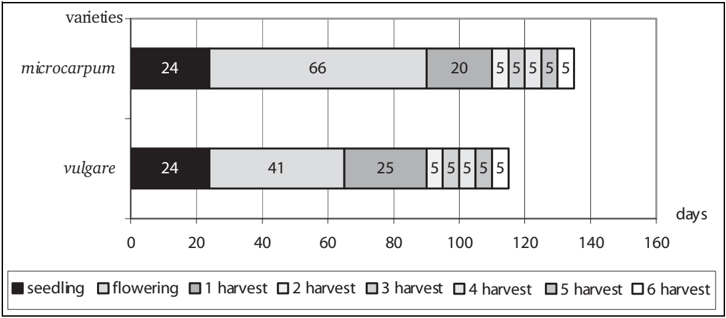
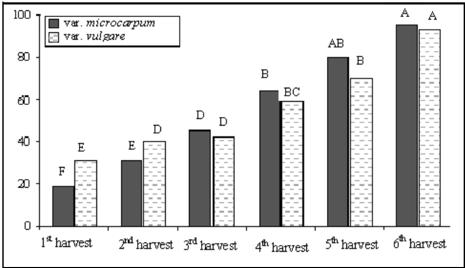
Summary: Coriander ( C. sativum ) belonging to Apiaceae family is one of the essential oil and spice plants in the world. Developmental stage at harvest is an important factor influencing the seed yield and essential oil quality in coriander. The adaptation and suitable harvesting stage for 2 coriander varieties (var. vulgare and var. microcarpum ) were determined in the temperate climatic conditions of the Central Black Sea region (Tokat) in Turkey during 1999-2000. The varieties were harvested at 6 different harvesting stages, from unripe-fruit to over ripened periods. The results indicated that var. microcarpum of coriander was more suitable for mild temperate climatic conditions of the Central Black Sea Region. The brown-fruit stage (45 days in var. vulgare and 40 days in var. microcarpum after the flowering) was the most suitable harvesting stage. Both early and late harvesting stages caused yield losses and lower linalool content.
Overview
The claims and statistics of this paper haven’t been checked yet.
Run the check — free, no account needed. It reads the open-access text and checks the sources it cites.
Integrity signals
Registry
Cites
Statistics
Figures
Verification
Claims the paper makes
The claims and statistics of this paper haven’t been checked yet.
Run the check — free, no account needed. It reads the open-access text and checks the sources it cites.
Claims other papers make about this one
Each is checked against this paper’s own text: does it say what the citing paper says it does?
In the citing paper
“coriander varieties show optimal seed yield and essential oil quality when harvested at the brownfruit stage, approximately 40-45 days after flowering (Telci et al. 2006).”
From Unlocking the Apiaceae: comprehensive advances in agronomy, biotechnology, phytochemistry, and health applications of major seed spices (2025) · cites this paper as Telci et al. 2006
Self-check
Percentages, sums and reported differences re-computed from the paper’s own numbers.
The self-check needs the paper’s full text.
Citations
Cites
No references could be resolved yet.
Research works printed but not linked: 4
- GOMEZ, K.A. and A.A. GOMEZ 1984: Statistical Procedures for Agricultural Research. John Wiley and Sons, Inc., New York.
- KIRICI, S., A. MERT and F. AYANOGLU 1997: Hatay Ekolojisinde Azot ve Fosforun Kişniş (Coriandrum sativum L.) de verim degerleri ile uçucu yag oranına etkisi. II. Tarla Bitkileri Sem- pozyumu (22-25 Eylul 1997), Samsun, pp.347-351 (in Turkish).
- LAWRENCE, B.M. 1993: A planning scheme to evaluate new ar- omatic plants for the flavor and fragrance industries, In: JANICK, J. and J.E. SIMON (eds): New crops. Wiley, New York, pp. 620-627.
- SMALL, E. 1997: Culinary Herbs. NRC Research Press, Ottowa.
Cited by
Singh, R., Choudhary, S., Kumari, V., Meena, R. S., Meena, N. K., Y, R., & Verma, A. K. (2025) · Journal of Agriculture and Ecology · doi:10.58628/jae-2521-101
Metadata
- Authors
- Telci, I., Bayram, E., & Avci, B.
- Affiliations
- Field Crops Department of Agricultural Faculty, Gaziosmanpasa University, Tokat, Turkey
- Field Crops Department of Agricultural Faculty, Aegean University, Bornova, Izmir, Turkey
- Venue
- European Journal of Horticultural Science
- Publisher
- CABI Publishing
- Published
- 2006-01-01
- Pages
- 267-271
- ISSN
- 1611-4426
- 1611-4434
- Cited by
- 9
- References
- 0
- Language
- en
About these checks
Registry, retraction, Cites and statistics results are computed, not judged, with one exception: a printed reference that no index lists is read once by a model before it counts as a citation error. Claims are extracted by a model and kept only when their quote appears verbatim in the text; each cited source is then checked, with a model’s help, for whether it says what the claim relies on. Those verdicts can be wrong — read the claim’s quote and the cited source before relying on one.
Statistics and arithmetic are recomputed, not judged.
Confidence bands are shown only for fields calibrated on our annotated test set. None is calibrated yet, so no band is shown.
What counts as a claim ›How we measure confidence ›How we check this ›
Are you an author, or do you see a problem with this page? Request a review
Data sources
Bibliographic data: Semantic Scholar, OpenAlex, Crossref.
Contains information from the Semantic Scholar Academic Graph Datasets, made available under the ODC Attribution License (ODC-BY 1.0).
Semantic Scholar’s data is described in: Kinney, R., et al. (2023). The Semantic Scholar Open Data Platform. arXiv:2301.10140.
