

Comparative effects of growth hormone, testosterone, and aromatase inhibitors on height gain in children and adolescents with idiopathic short statures: a network meta-analysis
Open accessThe DOI matches its Crossref record; 40 of the 40 references it cites were found in a registry or an index; none of the 20 sources its claims cite is checked for support yet.
Abstract
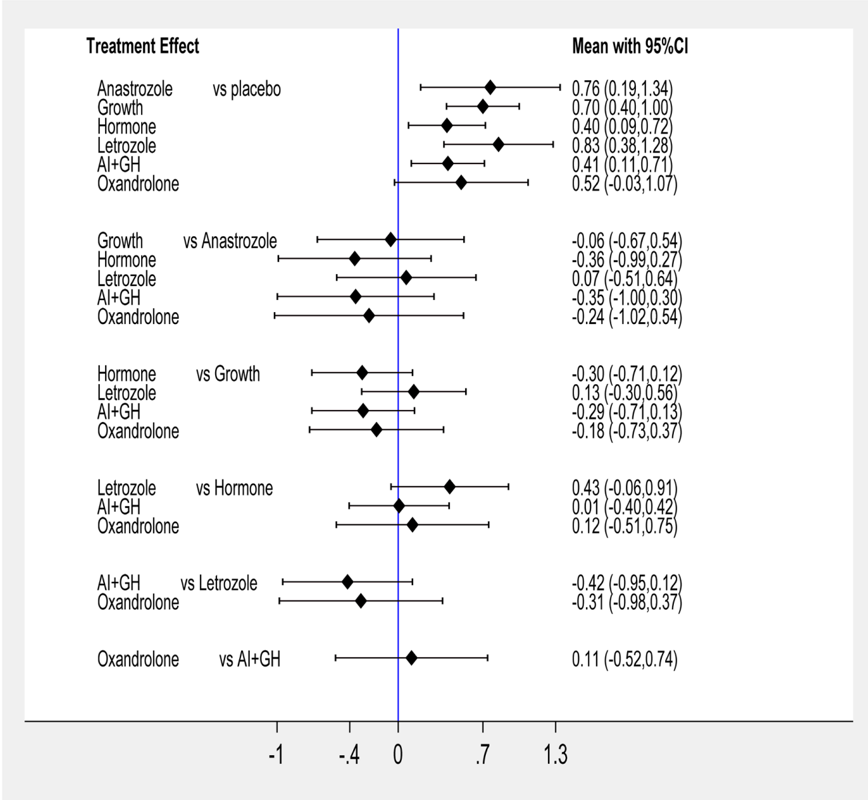
BACKGROUND: Idiopathic short stature (ISS) is defined as height more than two standard deviations below the mean for age and sex, without an identifiable pathological cause. Pharmacologic options such as growth hormone (GH), testosterone, and aromatase inhibitors (AIs) have been studied for their potential to promote height gain in affected children and adolescents. AIM: To compare the efficacy of GH, testosterone, and AIs in promoting height gain in children and adolescents with ISS, considering both individual and combination treatments using a network meta-analysis. SUBJECTS AND METHODS: This meta-analysis was conducted in accordance with the PRISMA 2020 guidelines. A systematic search was performed across PubMed, Embase, Web of Science, Google Scholar, Semantic Scholar, and ResearchRabbit. Eligible studies were selected on the basis of predefined inclusion criteria. Standardised mean differences (SMDs) and 95% confidence intervals (CIs) were calculated. Heterogeneity was assessed via the chi-square test and I2 index. Publication bias was evaluated via funnel plots and Egger's test. RESULTS: All the treatment groups (GH, anastrozole, letrozole, AI+GH) demonstrated significantly greater height gains than did the placebo group. Letrozole was associated with the greatest increase in height (SMD = 0.83, 95% CI = 0.38-1.28). No statistically significant differences were observed among the active treatments. Oxandrolone did not significantly differ from the placebo (SMD = 0.52, 95% CI = -0.03-1.07). CONCLUSION: GH, AIs, and combination therapies improve height in children and adolescents with ISS, with letrozole showing a modest advantage but no clear superiority, highlighting the need for individualised treatment.
Overview
CoChat Summary
TL;DR
This network meta-analysis of 19 studies found that GH, anastrozole, letrozole, and AI+GH produced significantly greater height gain than placebo in children and adolescents with idiopathic short stature, while oxandrolone did not significantly differ from placebo. Letrozole had the largest point estimate (SMD 0.83, 95% CI 0.38–1.28), but no active treatment was significantly superior to another.
Key findings
- Letrozole vs placebo: SMD 0.83 (95% CI 0.38–1.28); anastrozole vs placebo: SMD 0.76 (0.19–1.34); GH vs placebo: SMD 0.70 (0.40–1.00); AI+GH vs placebo: SMD 0.41 (0.11–0.71); testosterone/androgenic hormone vs placebo: SMD 0.40 (0.09–0.72). All these comparisons were statistically significant.
- Oxandrolone vs placebo: SMD 0.52 (95% CI −0.03–1.07), which was not statistically significant.
- No statistically significant differences were observed among the active treatments in pairwise comparisons.
- Cumulative probability ranking: letrozole 0.79, anastrozole 0.77, GH 0.70, oxandrolone 0.69, testosterone/androgenic hormone 0.65, AI+GH 0.65.
Methods
- PRISMA-guided systematic review and network meta-analysis; the abstract lists searches of PubMed, Embase, Web of Science, Google Scholar, Semantic Scholar, and ResearchRabbit, while the methods section lists PubMed, Embase, Cochrane Library, and Web of Science; final search was January 2025.
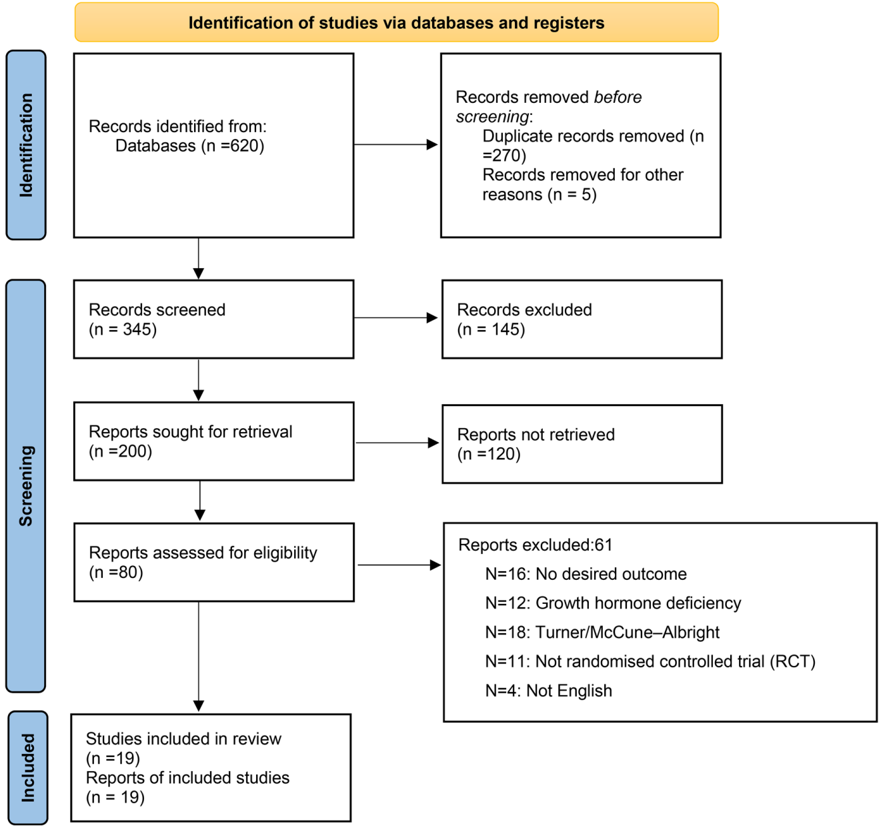
- Included participants aged 4–16 years with idiopathic short stature (≥2 SD below the population mean for age and sex) and no identifiable pathological cause; 19 studies were included after screening 620 records.
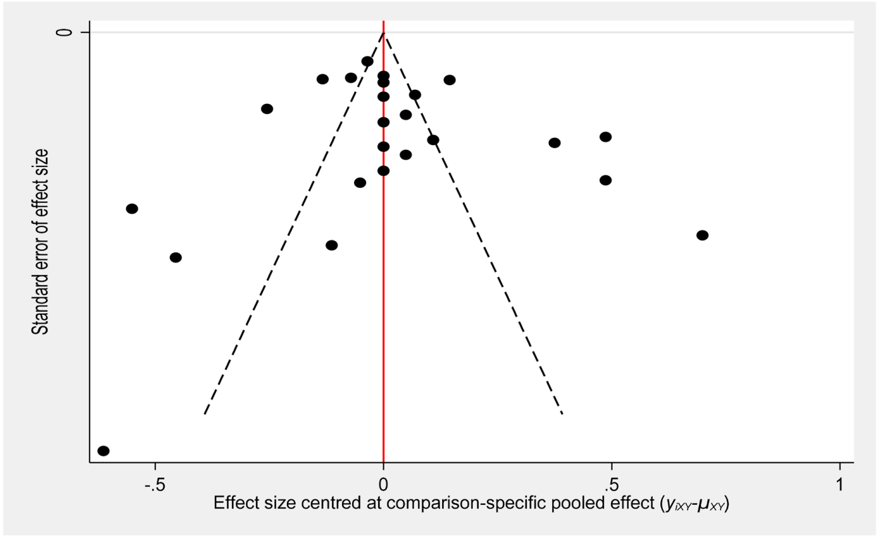
- Outcomes were height gain and height standard deviation score (HSDS), analyzed as continuous variables using standardized mean differences (SMDs) with 95% CIs; heterogeneity was assessed with the Q test and I², publication bias with funnel plots and Egger’s test, and treatment ranking with SuCRA probabilities using 10,000 simulations in STATA 17.0.
Limitations
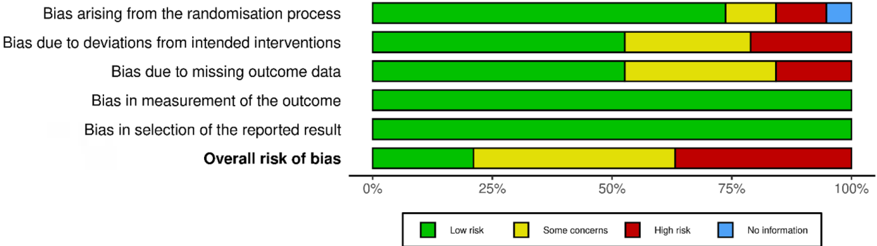
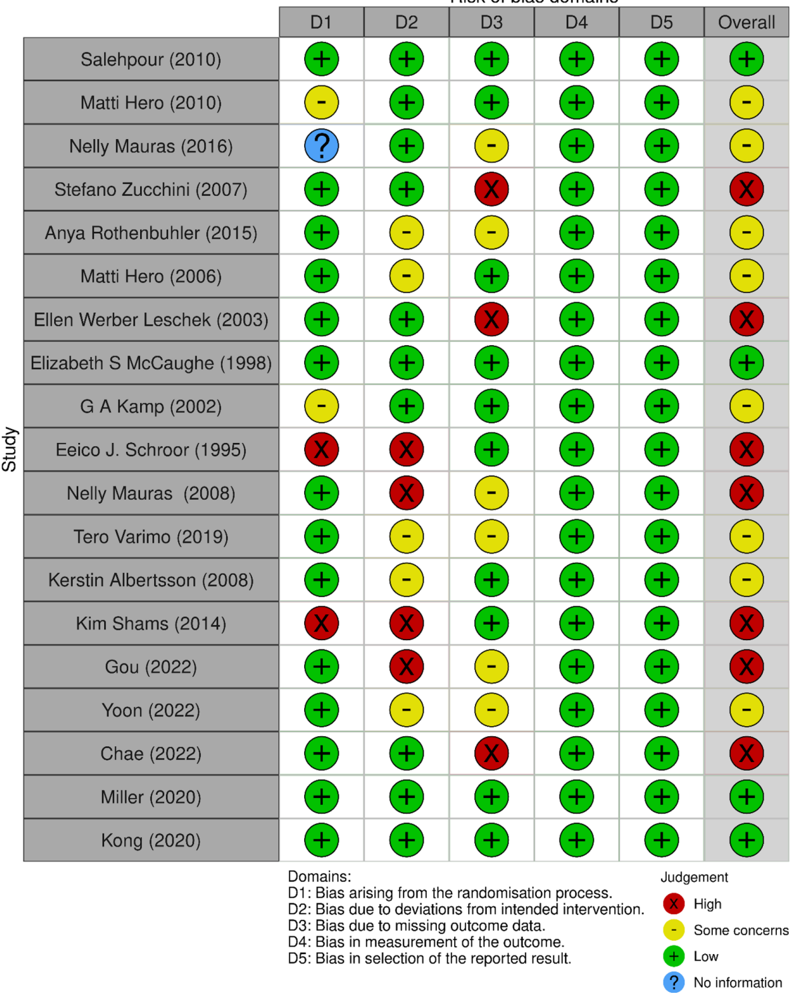
- The paper states: lack of full-text access for some studies and citation databases; some studies failed to report SD or predicted adult height; 7 of 19 included studies had high risk of bias in at least one key domain; some studies enrolled only boys, and limited sex-stratified data prevented subgroup analyses by sex; stratification by Tanner stage, age group, or sex was not possible due to limited reporting.
- The text makes evident: the abstract and methods section list different databases searched; the paper describes the included studies as randomized controlled trials, but Table 1 includes at least one retrospective chart review (Shams et al. 2014) and studies with varied designs and sex distributions.
Model-written summary. Check it against the paper before relying on it.
Integrity signals
Registry
Cites
Statistics
Figures



Verification
Claims the paper makes
0 Valid · 0 Not valid · 20 Not checked · 33 Own results and interpretations
A result the paper reports from its own data — it cites no other source for it, so there is none to check. The quote shows it is in the paper.
In the paper
“ultimately, 19 studies were included in this meta-analysis, as shown in Table 1”
- Also stated in: § Discussion · plain
“A total of 19 randomised controlled trials were included following rigorous selection on the basis of PRISMA guidelines.”
§ Comparative effects of growth hormone, testosterone, and aromatase inhibitors on height gain in children and adolescents with idiopathic short statures: a network meta-analysis > Study selection
plain- Asserted: passes — The authors put it forward as true.
- Checkable: passes — It can be checked against evidence.
- Load-bearing: passes — The paper’s conclusions depend on it.
- Based: passes — The paper gives a reason why it holds.
- Also stated in: § Discussion · plain
A result the paper reports from its own data — it cites no other source for it, so there is none to check. The quote shows it is in the paper.
In the paper
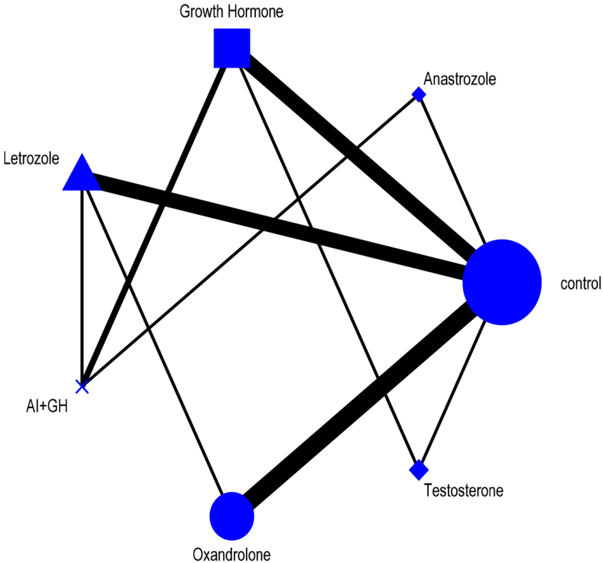
“For example, the connections between growth hormone, letrozole, and oxandrolone were associated with a greater number of patients included in these comparisons, highlighting the strength of evidence for these treatments.”
§ Comparative effects of growth hormone, testosterone, and aromatase inhibitors on height gain in children and adolescents with idiopathic short statures: a network meta-analysis > Network geometry
plainstates an association- Asserted: passes — The authors put it forward as true.
- Checkable: passes — It can be checked against evidence.
- Load-bearing: unclear — It is unclear whether the paper’s conclusions depend on it.
- Based: passes — The paper gives a reason why it holds.
A result the paper reports from its own data — it cites no other source for it, so there is none to check. The quote shows it is in the paper.
In the paper
“For anastrozole, the cumulative probability of producing greater height gain than placebo was estimated at 0.77, meaning that children receiving anastrozole had a greater chance of experiencing greater height increases than did 77% of children in the same age group receiving placebo.”
§ Comparative effects of growth hormone, testosterone, and aromatase inhibitors on height gain in children and adolescents with idiopathic short statures: a network meta-analysis > Cumulative probability
hedgedstates a cause- Asserted: passes — The authors put it forward as true.
- Checkable: passes — It can be checked against evidence.
- Load-bearing: passes — The paper’s conclusions depend on it.
- Based: passes — The paper gives a reason why it holds.
A result the paper reports from its own data — it cites no other source for it, so there is none to check. The quote shows it is in the paper.
In the paper
“Letrozole was associated with the greatest increase in height (SMD = 0.83, 95% CI = 0.38-1.28).”
- Also stated in: § Discussion · hedged
“Among the evaluated treatments, letrozole ranked highest in terms of efficacy, as indicated by its superior SMD in height gain.”
§ Comparative effects of growth hormone, testosterone, and aromatase inhibitors on height gain in children and adolescents with idiopathic short statures: a network meta-analysis > Abstract
plainstates an association- Asserted: passes — The authors put it forward as true.
- Checkable: passes — It can be checked against evidence.
- Load-bearing: passes — The paper’s conclusions depend on it.
- Based: passes — The paper gives a reason why it holds.
- Also stated in: § Discussion · hedged
A result the paper reports from its own data — it cites no other source for it, so there is none to check. The quote shows it is in the paper.
In the paper
“Oxandrolone did not significantly differ from the placebo (SMD = 0.52, 95% CI = -0.03-1.07).”
- Also stated in: § Main outcomes · hedged
“In contrast, oxandrolone had a comparable SMD of 0.83, but its 95% CI (-0.03 to 1.07) included zero, suggesting that it was not significantly different from the placebo.”
§ Comparative effects of growth hormone, testosterone, and aromatase inhibitors on height gain in children and adolescents with idiopathic short statures: a network meta-analysis > Abstract
plain- Asserted: passes — The authors put it forward as true.
- Checkable: passes — It can be checked against evidence.
- Load-bearing: passes — The paper’s conclusions depend on it.
- Based: passes — The paper gives a reason why it holds.
- Also stated in: § Main outcomes · hedged
18 more claims
Create a free account to see all 53 claims and to verify the 12 references still open.
- It may state two separate claims as one. 17
- Probably not a substantial claim. 18
Self-check
Percentages, sums and reported differences re-computed from the paper’s own numbers.
Each contradiction between two passages listed here was confirmed by an independent check.
Rated major: it would touch a result — a value a result rests on, reported and recomputed p-values on opposite sides of the significance level, two passages that conflict with no sign which is right, or a cited work retracted before this paper was published.
In the paper
§ Comparative effects of growth hormone, testosterone, and aromatase inhibitors on height gain in children and adolescents with idiopathic short statures: a network meta-analysis > Study inclusion criteria
“Studies were included if they enrolled participants aged 4-16 years with idiopathic short stature”
§ Comparative effects of growth hormone, testosterone, and aromatase inhibitors on height gain in children and adolescents with idiopathic short statures: a network meta-analysis > Conclusion
“| nelly mauras et al. (2016) | florida | 76 | Boy | 12-18 | 2 year |”
Rated minor: it would not touch a result — a value no result rests on, a p-value that stays on the same side of the significance level, or a conflict that is clerical, resolved elsewhere in the paper, or outside its own findings.
In the paper
§ Comparative effects of growth hormone, testosterone, and aromatase inhibitors on height gain in children and adolescents with idiopathic short statures: a network meta-analysis > Main outcomes
“In contrast, oxandrolone had a comparable SMD of 0.83, but its 95% CI (-0.03 to 1.07) included zero”
§ Comparative effects of growth hormone, testosterone, and aromatase inhibitors on height gain in children and adolescents with idiopathic short statures: a network meta-analysis > Additional information
“| oxandrolone vs. placebo | 0.52 | -0.03-1.07 | 0.69 | 0.48-0.85 | 0.000 |”
Rated minor: it would not touch a result — a value no result rests on, a p-value that stays on the same side of the significance level, or a conflict that is clerical, resolved elsewhere in the paper, or outside its own findings.
In the paper
§ Comparative effects of growth hormone, testosterone, and aromatase inhibitors on height gain in children and adolescents with idiopathic short statures: a network meta-analysis > Discussion
“The pooled evidence from existing trials revealed that letrozole demonstrated the greatest efficacy, with a height increase of 83%, followed by anastrozole (76%) and oxandrolone (52%).”
§ Comparative effects of growth hormone, testosterone, and aromatase inhibitors on height gain in children and adolescents with idiopathic short statures: a network meta-analysis > Additional information
“smD, standardised mean difference, a measure of effect size indicating the difference in height gain between treatments, expressed in standard deviation units”
Rated minor: it would not touch a result — a value no result rests on, a p-value that stays on the same side of the significance level, or a conflict that is clerical, resolved elsewhere in the paper, or outside its own findings.
In the paper
§ Comparative effects of growth hormone, testosterone, and aromatase inhibitors on height gain in children and adolescents with idiopathic short statures: a network meta-analysis > Network geometry
“The thickness of the lines in the network corresponds to the number of patients included in each treatment comparison.”
§ Comparative effects of growth hormone, testosterone, and aromatase inhibitors on height gain in children and adolescents with idiopathic short statures: a network meta-analysis > Conclusion
“the thickness of the connecting lines reflects the number of trials comparing the connected treatments.”
Citations
Cites
Assessing heterogeneity in meta-analysis: Q statistic or I² index?
Huedo-Medina, T. B., Sánchez-Meca, J., Marín-Martínez, F., & Botella, J. (2006) · Psychological Methods · doi:10.1037/1082-989x.11.2.193 · Cited by 4,256 · cited 1×
“The Q test and I 2 statistic were used to quantify heterogeneity (Huedo-Medina et al. 2006).”
Armijo‐Olivo, S., Stiles, C. R., Hagen, N. A., Biondo, P. D., & Cummings, G. G. (2012) · Journal of Evaluation in Clinical Practice · doi:10.1111/j.1365-2753.2010.01516.x · Cited by 1,539
Regression Methods to Detect Publication and Other Bias in Meta‐Analysis
Sterne, J. A. C., & Egger, M. (2005) · Publication Bias in Meta‐Analysis · doi:10.1002/0470870168.ch6 · Cited by 826 · cited 1×
“Publication bias was examined via funnel plot asymmetry and further assessed using Egger’s regression test (Sterne and Egger 2005).”
Cohen, P., Rogol, A. D., Deal, C. L., Saenger, P., Reiter, E. O., Ross, J. L., Chernausek, S. D., Savage, M. O., Wit, J. M., & participants, O. B. O. T. 2. I. C. W. (2008) · The Journal of Clinical Endocrinology & Metabolism · doi:10.1210/jc.2008-0509 · Cited by 737 · cited 2×
“For instance, Cohen et al. reported notable improvements in height following GH administration, underscoring its efficacy in this population (Hintz 1996; Cohen et al. 2008).”
InfluentialLeschek, E. W., Rose, S. R., Yanovski, J. A., Troendle, J. F., Quigley, C. A., Chipman, J. J., Crowe, B. J., Ross, J. L., Cassorla, F. G., Blum, W. F., et al. (2004) · The Journal of Clinical Endocrinology & Metabolism · doi:10.1210/jc.2003-031457 · Cited by 228 · cited 1×
“…ultimately, 19 studies were included in this meta-analysis, as shown in Table 1 (Schroor et al. 1995; McCaughey et al. 1998; Kamp et al. 2002; Leschek et al. 2004; Hero et al. 2006, 2010; Albertsson-Wikland et al. 2008; Zucchini et al. 2008; Mauras et al. 2008, 2016; Salehpour et al. 2010;…”
Mauras, N., Gonzalez de Pijem, L., Hsiang, H. Y., Desrosiers, P., Rapaport, R., Schwartz, I. D., Klein, K. O., Singh, R. J., Miyamoto, A., & Bishop, K. (2008) · The Journal of Clinical Endocrinology & Metabolism · doi:10.1210/jc.2007-1559 · Cited by 151 · cited 2×
“…1995; McCaughey et al. 1998; Kamp et al. 2002; Leschek et al. 2004; Hero et al. 2006, 2010; Albertsson-Wikland et al. 2008; Zucchini et al. 2008; Mauras et al. 2008, 2016; Salehpour et al. 2010; Shams et al. 2014; Rothenbuhler et al. 2015; Varimo et al. 2019; Kong et al. 2020; Miller et al.…”
Albertsson-Wikland, K., Aronson, A. S., Gustafsson, J., Hagenäs, L., Ivarsson, S. A., Jonsson, B., Kriström, B., Marcus, C., Nilsson, K. O., Ritzén, E. M., et al. (2008) · The Journal of Clinical Endocrinology & Metabolism · doi:10.1210/jc.2008-0707 · Cited by 142 · cited 1×
“…this meta-analysis, as shown in Table 1 (Schroor et al. 1995; McCaughey et al. 1998; Kamp et al. 2002; Leschek et al. 2004; Hero et al. 2006, 2010; Albertsson-Wikland et al. 2008; Zucchini et al. 2008; Mauras et al. 2008, 2016; Salehpour et al. 2010; Shams et al. 2014; Rothenbuhler et al. 2015;…”
The role of sex steroids in controlling pubertal growth
Perry, R. J., Farquharson, C., & Ahmed, S. F. (2008) · Clinical Endocrinology · doi:10.1111/j.1365-2265.2007.02960.x · Cited by 139 · cited 1×
“This risk highlights the importance of careful dosing and short-term use in selected patients (Perry et al. 2008).”
Hero, M., Wickman, S., & Dunkel, L. (2006) · Clinical Endocrinology · doi:10.1111/j.1365-2265.2006.02499.x · Cited by 128 · cited 1×
“…studies were included in this meta-analysis, as shown in Table 1 (Schroor et al. 1995; McCaughey et al. 1998; Kamp et al. 2002; Leschek et al. 2004; Hero et al. 2006, 2010; Albertsson-Wikland et al. 2008; Zucchini et al. 2008; Mauras et al. 2008, 2016; Salehpour et al. 2010; Shams et al. 2014;…”
Mauras, N., Ross, J. L., Gagliardi, P., Yu, Y. M., Hossain, J., Permuy, J., Damaso, L., Merinbaum, D., Singh, R. J., Gaete, X., et al. (2016) · The Journal of Clinical Endocrinology & Metabolism · doi:10.1210/jc.2016-2891 · Cited by 113 · cited 3×
“These findings support the possibility that using letrozole with growth hormone alone is more effective than letrozole alone (Mauras et al. 2016).”
InfluentialBinder, G. (2000) · Journal of Clinical Endocrinology & Metabolism · doi:10.1210/jc.85.1.245 · Cited by 106 · cited 4×
“…has been widely used in the treatment of ISS in several countries; however, its approval for this indication varies, and, in many regions, GH is only prescribed for conditions with defined causes such as growth hormone deficiency, Turner syndrome, or SHOX gene mutations (Binder et al. 2000).”
InfluentialYuen, K. C. J., Johannsson, G., Ho, K. K. Y., Miller, B. S., Bergadá, I., & Rogol, A. D. (2023) · Endocrine Connections · doi:10.1530/ec-22-0504 · Cited by 99
Treatment of Men for “Low Testosterone”: A Systematic Review
Huo, S., Scialli, A. R., McGarvey, S., Hill, E., Tügertimur, B., Hogenmiller, A., Hirsch, A. I., & Fugh-Berman, A. (2016) · PLOS ONE · doi:10.1371/journal.pone.0162480 · Cited by 97 · cited 1×
“Given its potential to accelerate skeletal maturation, testosterone should be used cautiously and preferably in selected cases where the risk of premature epiphyseal closure is low (Huo et al. 2016; Savage and Storr 2021).”
Hero, M., Toiviainen-Salo, S., Wickman, S., Mäkitie, O., & Dunkel, L. (2010) · Journal of Bone and Mineral Research · doi:10.1002/jbmr.56 · Cited by 97 · cited 1×
“…studies were included in this meta-analysis, as shown in Table 1 (Schroor et al. 1995; McCaughey et al. 1998; Kamp et al. 2002; Leschek et al. 2004; Hero et al. 2006, 2010; Albertsson-Wikland et al. 2008; Zucchini et al. 2008; Mauras et al. 2008, 2016; Salehpour et al. 2010; Shams et al. 2014;…”
Randomised trial of growth hormone in short normal girls
McCaughey, E. S., Mulligan, J., Voss, L. D., & Betts, P. R. (1998) · The Lancet · doi:10.1016/s0140-6736(00)80011-2 · Cited by 95
Management of Growth Disorders in Puberty: GH, GnRHa, and Aromatase Inhibitors: A Clinical Review
Mauras, N., Ross, J., & Mericq, V. (2023) · Endocrine Reviews · doi:10.1210/endrev/bnac014 · Cited by 93
Recent advances in the understanding and management of delayed puberty
Wei, C. H., & Crowne, E. C. (2015) · Archives of Disease in Childhood · doi:10.1136/archdischild-2014-307963 · Cited by 75 · cited 1×
“In contrast, testosterone is commonly used for pubertal induction in patients with delayed puberty (Abacı and Besci 2024; Wei and Crowne 2016).”
Growth hormone therapy in children: research and practice- A review
Collett-Solberg, P. F., Jorge, A. A. L., Boguszewski, M. C. S., Miller, B. S., Choong, C. S. Y., Cohen, P., Hoffman, A. R., Luo, X., Radovick, S., & Saenger, P. (2019) · Growth Hormone & IGF Research · doi:10.1016/j.ghir.2018.12.004 · Cited by 74 · cited 1×
“For example, a review by Collett-Solberg et al. concluded that, compared with monotherapy, combination therapy involving GH and AIs may offer superior height outcomes (Collett-Solberg et al. 2019).”
Idiopathic short stature: Management and growth hormone treatment
Wit, J. M., Reiter, E. O., Ross, J. L., Saenger, P. H., Savage, M. O., Rogol, A. D., & Cohen, P. (2008) · Growth Hormone & IGF Research · doi:10.1016/j.ghir.2007.11.003 · Cited by 54 · cited 1×
“In our country, AIs are not officially approved for the treatment of ISS (Wit et al. 2008).”
Salehpour, S., Alipour, P., Razzaghy-Azar, M., Ardeshirpour, L., Shamshiri, A., Monfared, M. F., & Gharib, A. (2010) · Hormone Research in Paediatrics · doi:10.1159/000315482 · Cited by 50 · cited 1×
“…1998; Kamp et al. 2002; Leschek et al. 2004; Hero et al. 2006, 2010; Albertsson-Wikland et al. 2008; Zucchini et al. 2008; Mauras et al. 2008, 2016; Salehpour et al. 2010; Shams et al. 2014; Rothenbuhler et al. 2015; Varimo et al. 2019; Kong et al. 2020; Miller et al. 2020; Chae et al. 2022; Gou…”
Irwig, M. S., Fleseriu, M., Jonklaas, J., Tritos, N. A., Yuen, K. C. J., Correa, R. R., Elhomsy, G. C., Garla, V. V., Jasim, S., Soe, K. K., et al. (2020) · Endocrine Practice · doi:10.4158/ps-2019-0540 · Cited by 42 · cited 1×
“The off-label use of these agents in ISS remains controversial and varies across health systems (Rosenbloom and Rivkees 2010; Irwig et al. 2020).”
Schroor, E. J., van Weissenbruch, M. M., Knibbe, P., & de Waal, H. A. D. (1995) · European Journal of Pediatrics · doi:10.1007/bf01958637 · Cited by 40 · cited 1×
“…because they included patients with specific diseases or syndromes. ultimately, 19 studies were included in this meta-analysis, as shown in Table 1 (Schroor et al. 1995; McCaughey et al. 1998; Kamp et al. 2002; Leschek et al. 2004; Hero et al. 2006, 2010; Albertsson-Wikland et al. 2008; Zucchini…”
Kelly, B. P., Paterson, W. F., & Donaldson, M. D. C. (2003) · Clinical Endocrinology · doi:10.1046/j.1365-2265.2003.01692.x · Cited by 40 · cited 1×
“Short-term testosterone therapy has been associated with Kelly height gains in several studies (Kelly et al. 2003; Cappa et al. 2025), including work by Cappa et al., although the long-term efficacy and safety of this therapy remain areas of ongoing investigation.”
Kamp, G. A., Zwinderman, A. H., van Doorn, J., Hackeng, W. H. L., Frölich, M. A., Schönaü, E., & Wit, J. M. (2002) · Clinical Endocrinology · doi:10.1046/j.1365-2265.2002.01575.x · Cited by 36 · cited 1×
“…diseases or syndromes. ultimately, 19 studies were included in this meta-analysis, as shown in Table 1 (Schroor et al. 1995; McCaughey et al. 1998; Kamp et al. 2002; Leschek et al. 2004; Hero et al. 2006, 2010; Albertsson-Wikland et al. 2008; Zucchini et al. 2008; Mauras et al. 2008, 2016;…”
Zucchini, S., Wasniewska, M. G., Cisternino, M., Salerno, M., Iughetti, L., Maghnie, M., Street, M. E., Caruso‐Nicoletti, M., & Cianfarani, S. (2007) · European Journal of Pediatrics · doi:10.1007/s00431-007-0576-y · Cited by 30 · cited 1×
“…Table 1 (Schroor et al. 1995; McCaughey et al. 1998; Kamp et al. 2002; Leschek et al. 2004; Hero et al. 2006, 2010; Albertsson-Wikland et al. 2008; Zucchini et al. 2008; Mauras et al. 2008, 2016; Salehpour et al. 2010; Shams et al. 2014; Rothenbuhler et al. 2015; Varimo et al. 2019; Kong et al.…”
Rothenbuhler, A., Linglart, A., & Bougnères, P. (2015) · International Journal of Pediatric Endocrinology · doi:10.1186/1687-9856-2015-4 · Cited by 27 · cited 1×
“…et al. 2004; Hero et al. 2006, 2010; Albertsson-Wikland et al. 2008; Zucchini et al. 2008; Mauras et al. 2008, 2016; Salehpour et al. 2010; Shams et al. 2014; Rothenbuhler et al. 2015; Varimo et al. 2019; Kong et al. 2020; Miller et al. 2020; Chae et al. 2022; Gou et al. 2022; Yoon et al. 2022).”
Yoon, J. Y., Cheon, C. K., Lee, J. H., Kwak, M. J., Kim, H.-J., Kim, Y. J., Lee, J. E., Chung, W. Y., Kim, J., & Yoo, J.-H. (2022) · Annals of Pediatric Endocrinology & Metabolism · doi:10.6065/apem.2142110.055 · Cited by 25 · cited 2×
“Similarly, a study by Yoon et al. (2022) examined the growth response in children with ISS and idiopathic growth hormone deficiency (GHD) after GH stimulation trials.”
Letrozole Monotherapy in Pre- and Early-Pubertal Boys Does Not Increase Adult Height
Varimo, T., Toiviainen-Salo, S., Raivio, T., Kerttula, L., Dunkel, L., & Hero, M. (2019) · Frontiers in Endocrinology · doi:10.3389/fendo.2019.00201 · Cited by 25 · cited 1×
“…et al. 2004; Hero et al. 2006, 2010; Albertsson-Wikland et al. 2008; Zucchini et al. 2008; Mauras et al. 2008, 2016; Salehpour et al. 2010; Shams et al. 2014; Rothenbuhler et al. 2015; Varimo et al. 2019; Kong et al. 2020; Miller et al. 2020; Chae et al. 2022; Gou et al. 2022; Yoon et al. 2022).”
Growth Hormone Treatment of Idiopathic Short Stature
Hintz, R. L. (2008) · Hormone Research · doi:10.1159/000185025 · Cited by 25 · cited 1×
“For instance, Cohen et al. reported notable improvements in height following GH administration, underscoring its efficacy in this population (Hintz 1996; Cohen et al. 2008).”
InfluentialGH Resistance Is a Component of Idiopathic Short Stature: Implications for rhGH Therapy
Savage, M. O., & Storr, H. L. (2021) · Frontiers in Endocrinology · doi:10.3389/fendo.2021.781044 · Cited by 23 · cited 2×
“The analysis was performed in accordance with the Preferred Reporting Items for Systematic Reviews and Meta-Analyses (PRISMA) guidelines (Savage and Storr 2021).”
Off-Label Use of Recombinant IGF-I to Promote Growth: Is It Appropriate?
Rosenbloom, A. L., & Rivkees, S. A. (2010) · The Journal of Clinical Endocrinology & Metabolism · doi:10.1210/jc.2009-2450 · Cited by 18 · cited 1×
“The off-label use of these agents in ISS remains controversial and varies across health systems (Rosenbloom and Rivkees 2010; Irwig et al. 2020).”
Shams, K., Cameo, T., Fennoy, I., Hassoun, A. A., Lerner, S. E., Aranoff, G. S., Sopher, A. B., Yang, C., McMahon, D. J., & Oberfield, S. E. (2014) · Journal of Pediatric Endocrinology and Metabolism · doi:10.1515/jpem-2013-0470 · Cited by 14 · cited 1×
“…Leschek et al. 2004; Hero et al. 2006, 2010; Albertsson-Wikland et al. 2008; Zucchini et al. 2008; Mauras et al. 2008, 2016; Salehpour et al. 2010; Shams et al. 2014; Rothenbuhler et al. 2015; Varimo et al. 2019; Kong et al. 2020; Miller et al. 2020; Chae et al. 2022; Gou et al. 2022; Yoon et al.…”
Miller, B. S., Ross, J., & Ostrow, V. (2020) · International Journal of Pediatric Endocrinology · doi:10.1186/s13633-020-00089-z · Cited by 14 · cited 5×
“The study by Miller et al. (2020) also compared the growth results of children with GHD and ISS treated with a combination of GH and AIs.”
InfluentialHeight outcomes in Korean children with idiopathic short stature receiving growth hormone treatment
Chae, H. W., Hwang, I.-T., Lee, J. E., So, C. H., Rhie, Y., Lim, J. S., Kwon, E. B., Yi, K. H., Kim, E. Y., Jo, C.-K., et al. (2022) · Frontiers in Endocrinology · doi:10.3389/fendo.2022.925102 · Cited by 14 · cited 1×
“…et al. 2004; Hero et al. 2006, 2010; Albertsson-Wikland et al. 2008; Zucchini et al. 2008; Mauras et al. 2008, 2016; Salehpour et al. 2010; Shams et al. 2014; Rothenbuhler et al. 2015; Varimo et al. 2019; Kong et al. 2020; Miller et al. 2020; Chae et al. 2022; Gou et al. 2022; Yoon et al. 2022).”
Gou, P., Cheng, X., Leng, J., & Su, N. (2022) · Therapeutics and Clinical Risk Management · doi:10.2147/tcrm.s363564 · Cited by 14
Wang, W., Wang, Y., Xiao, Y., Cao, N., & Wang, Y. (2023) · BMC Pediatrics · doi:10.1186/s12887-023-04429-9 · Cited by 14 · cited 1×
“Numerous clinical studies have demonstrated that GH therapy may improve height velocity and increase the predicted adult height, as calculated using bone age advancement, growth velocity trends, and parental target height (Wang et al. 2023).”
Efficacy and Safety of Growth Hormone (GH) Therapy in Patients with SHOX Gene Variants
Sodero, G., Arzilli, F., Malavolta, E., Lezzi, M., Comes, F., Villirillo, A., Rigante, D., & Cipolla, C. (2025) · Children · doi:10.3390/children12030325 · Cited by 9 · cited 1×
“GH therapy is officially approved for use in patients with growth disorders such as Turner syndrome, SHOX gene mutations, and growth hormone deficiency (Sodero et al. 2025).”
Delayed Puberty and Management of Treatment
Abacı, A. (2024) · Journal of Clinical Research in Pediatric Endocrinology · doi:10.4274/jcrpe.galenos.2024.2024-2-7 · Cited by 7
Cappa, M., Chioma, L., Bizzarri, C., Ubertini, G., d’Aniello, F., Todisco, T., & Loche, S. (2025) · Endocrine Abstracts · doi:10.1530/endoabs.110.p566 · Cited by 1 · cited 1×
“Short-term testosterone therapy has been associated with Kelly height gains in several studies (Kelly et al. 2003; Cappa et al. 2025), including work by Cappa et al., although the long-term efficacy and safety of this therapy remain areas of ongoing investigation.”
(2020) · doi:10.3785/j.issn.1008-9292.2020.04.06
Cited by
Reis, C. L. B., Luiz, K. G., Pedroso, G. L., Puls, G. L., Cassaro, L., Vieira, B. B., Romano, F. S., Küchler, É. C., Kirschneck, C., de Oliveira, D. S. B., et al. (2026) · Journal of Periodontology · doi:10.1002/jper.70068
Dutta, D., Mahajan, K., Mittal, A., Jena, S., Agarwal, K., & Kamrul-Hasan, A. B. M. (2026) · Endocrine Practice · doi:10.1016/j.eprac.2026.08.012
Tartarini, C., Trinati, E., Varriale, G., Sica, M., Vaiasuso, R., Barbato, A., Rossi, A., & Stagi, S. (2026) · The Journal of Clinical Endocrinology & Metabolism · doi:10.1210/clinem/dgag372
Liu, P., Lu, X., Huang, M., Li, M., Wang, W., & Dong, G. (2026) · Frontiers in Endocrinology · doi:10.3389/fendo.2026.1940392
“Aromatase inhibitors such as letrozole have shown advantages in inhibiting estrogen synthesis and delaying bone age progression, attracting attention especially in the regulation of abnormally accelerated puberty in males (7).”
Metadata
- Authors
- Zhang, T., Si, Y., & Wang, X.
- Affiliations
- Department of Pediatrics, Shandong Provincial Third Hospital
- Corresponding author
- Wang, Xiangyu
- ORCID
- Zhang, Tingting
- Venue
- Annals of Human Biology
- Publisher
- Informa UK Limited
- Published
- 2025-09-17
- Volume
- 52
- Issue
- 1
- Pages
- 2551531-2551531
- ISSN
- 0301-4460 (ISSN-L)
- 1464-5033
- OpenAlex
- W4414290388
- Cited by
- 4
- References
- 40
- Citations by year
- 2026: 4
- FWCI
- 1.65
- Type
- journal article
- Language
- en
- Open access
- gold
- doi.org
- Licence
- Locations
- Annals of Human Biology (publishedVersion, cc-by)
- PubMed (publishedVersion)
- DOAJ (DOAJ: Directory of Open Access Journals) (submittedVersion)
- Topics
- Health Sciences › Medicine › Endocrinology, Diabetes and Metabolism › Growth Hormone and Insulin-like Growth Factors
- Health Sciences › Medicine › Reproductive Medicine › Hypothalamic control of reproductive hormones
- Health Sciences › Medicine › Endocrinology, Diabetes and Metabolism › Hormonal and reproductive studies
- Keywords
- idiopathic short stature, growth hormone therapy, testosterone replacement therapy, aromatase inhibitors, letrozole, anastrozole, oxandrolone, height gain, children and adolescents, combination therapy
- MeSH terms
- Adolescent, Body Height, Child, Female, Growth Disorders, Humans, Male, Growth Hormone, Testosterone, Human Growth Hormone, Aromatase Inhibitors
About these checks
Registry, retraction, Cites and statistics results are computed, not judged, with one exception: a printed reference that no index lists is read once by a model before it counts as a citation error. Claims are extracted by a model and kept only when their quote appears verbatim in the text; each cited source is then checked, with a model’s help, for whether it says what the claim relies on. Those verdicts can be wrong — read the claim’s quote and the cited source before relying on one.
A language model drew the claims from the paper on 2026-11-28, under version 3 of the claim definition (model deepseek-v4.1-flash, prompt extract-v3).
A second model labelled each claim on 2026-11-28 (model jev-1.13-20260917, definition revision gold-guideline-v0.2).
Statistics and arithmetic are recomputed, not judged.
Confidence bands are shown only for fields calibrated on our annotated test set. None is calibrated yet, so no band is shown.
What counts as a claim ›How we measure confidence ›How we check this ›
Are you an author, or do you see a problem with this page? Request a review
Data sources
Bibliographic data: Semantic Scholar, OpenAlex, Crossref.
Contains information from the Semantic Scholar Academic Graph Datasets, made available under the ODC Attribution License (ODC-BY 1.0).
Semantic Scholar’s data is described in: Kinney, R., et al. (2023). The Semantic Scholar Open Data Platform. arXiv:2301.10140.
