

Chatbots for future docs: exploring medical students’ attitudes and knowledge towards artificial intelligence and medical chatbots
Open accessThe DOI matches its Crossref record; 37 of the 38 references it cites were found in a registry or an index.
Abstract
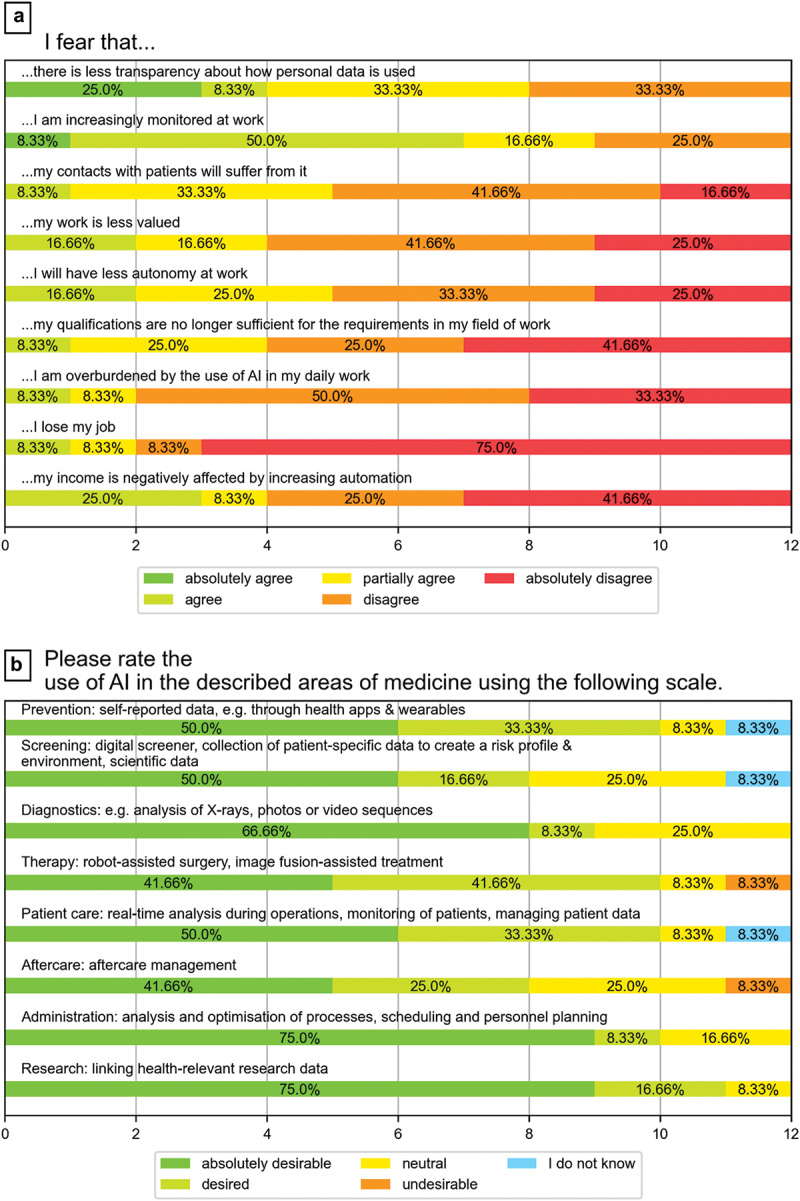
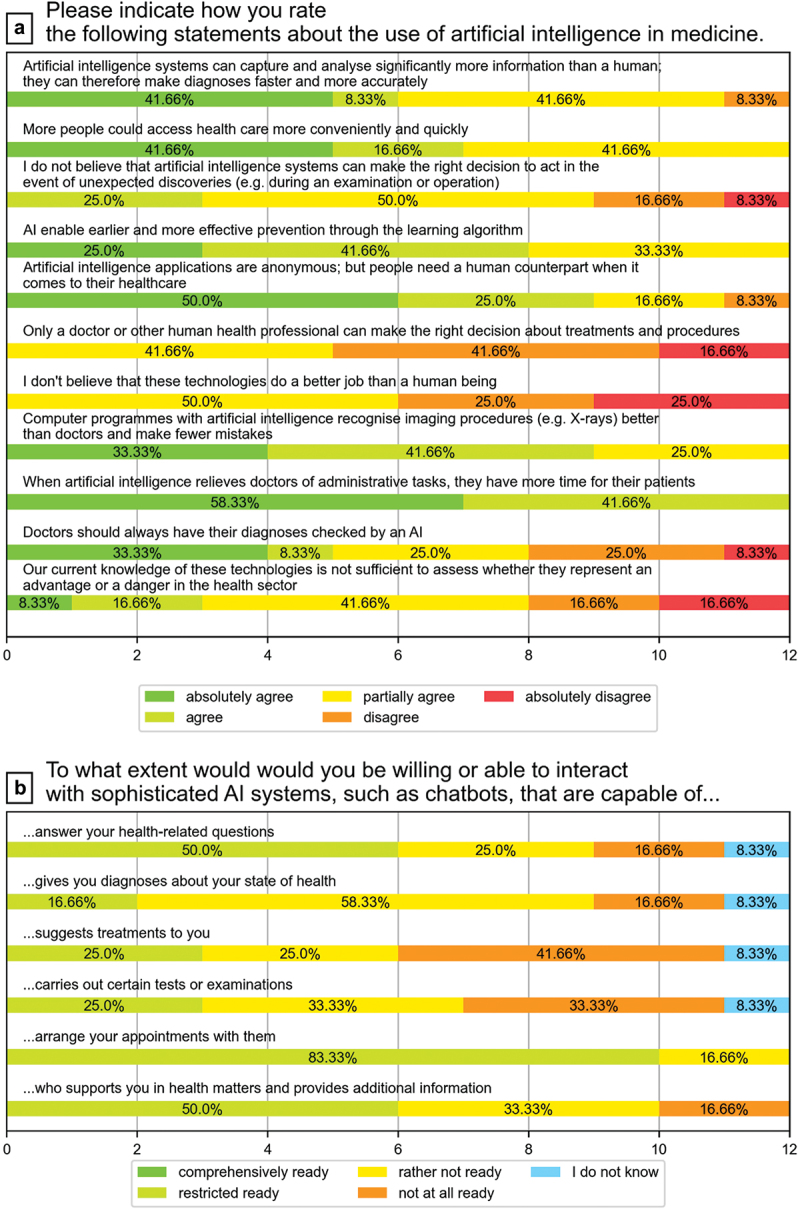
Artificial intelligence (AI) in medicine and digital assistance systems such as chatbots will play an increasingly important role in future doctor – patient communication. To benefit from the potential of this technical innovation and ensure optimal patient care, future physicians should be equipped with the appropriate skills. Accordingly, a suitable place for the management and adaptation of digital assistance systems must be found in the medical education curriculum. To determine the existing levels of knowledge of medical students about AI chatbots in particular in the healthcare setting, this study surveyed medical students of the University of Luebeck and the University Hospital of Tuebingen. Using standardized quantitative questionnaires and qualitative analysis of group discussions, the attitudes of medical students toward AI and chatbots in medicine were investigated. From this, relevant requirements for the future integration of AI into the medical curriculum could be identified. The aim was to establish a basic understanding of the opportunities, limitations, and risks, as well as potential areas of application of the technology. The participants (N = 12) were able to develop an understanding of how AI and chatbots will affect their future daily work. Although basic attitudes toward the use of AI were positive, the students also expressed concerns. There were high levels of agreement regarding the use of AI in administrative settings (83.3%) and research with health-related data (91.7%). However, participants expressed concerns that data protection may be insufficiently guaranteed (33.3%) and that they might be increasingly monitored at work in the future (58.3%). The evaluations indicated that future physicians want to engage more intensively with AI in medicine. In view of future developments, AI and data competencies should be taught in a structured way during the medical curriculum and integrated into curricular teaching.
Overview
The claims and statistics of this paper haven’t been checked yet.
Free: it reads the open-access text and checks the first 5 claims that cite a source we can check. Create a free account to check every claim.
Integrity signals
Registry
Cites
Statistics
Figures
Verification
Claims the paper makes
The claims and statistics of this paper haven’t been checked yet.
Free: it reads the open-access text and checks the first 5 claims that cite a source we can check. Create a free account to check every claim.
Claims other papers make about this one
Each is checked against this paper’s own text: does it say what the citing paper says it does?
The source backs part of the claim, not all of it — or backs it for a different population, condition or comparison.
In the citing paper
“This was also showed in previous studies that most of healthcare students have a positive attitude towards AI [19, 44–47].”
From Medical, dental, and nursing students’ attitudes and knowledge towards artificial intelligence: a systematic review and meta-analysis (2024) · cites this paper as [19]
Experimental — accuracy not yet measuredThe source backs part of the claim, not all of it — or backs it for a different population, condition or comparison.
In the citing paper
“Overall, in addition to positive attitudes toward AI, students generally expressed enthusiasm for integrating it into their future medical practice [70, 71]. Many believed AI had the potential to enhance and transform medicine by optimizing physicians’ workloads and reducing healthcare costs [42, 72, 73]. Additionally, students viewed AI as a supportive tool that can assist physicians, help”
From Artificial intelligence in undergraduate medical education: an updated scoping review (2025) · cites this paper as [42]
Experimental — accuracy not yet measuredThe source backs part of the claim, not all of it — or backs it for a different population, condition or comparison.
In the citing paper
“Similarly, we identified only 1 study examining learner attitudes toward generative AI in medical education [29]. The authors noted generally positive opinions albeit limited by unfamiliarity with these tools.”
From Opportunities, Challenges, and Future Directions of Generative Artificial Intelligence in Medical Education: Scoping Review (2023) · cites this paper as [29]
Experimental — accuracy not yet measuredThe cited source says what the claim attributes to it.
In the citing paper
“In contrast, a few of them employed either qualitative methods [38–40] or a mixed-methods approach [41–45].”
From Artificial intelligence in undergraduate medical education: an updated scoping review (2025) · cites this paper as [42]
Self-check
Percentages, sums and reported differences re-computed from the paper’s own numbers.
The self-check needs the paper’s full text.
Citations
Cites
Standards for Reporting Qualitative Research: A Synthesis of Recommendations
O’Brien, B. C., Harris, I. B., Beckman, T. J., Reed, D. A., & Cook, D. A. (2014) · Academic Medicine · doi:10.1097/acm.0000000000000388 · Cited by 12,211 · cited 2×
“This study followed the Standards for Reporting Qualitative Research [21] and presents a mixed-method study as part of a project supported by the Federal Ministry of Education and Research, Germany (BMBF The attitudes of participants regarding the topic of AI in medicine were quantitatively assessed by means of a stan…”
MethodQualitative Inhaltsanalyse : Grundlagen und Techniken
Mayring, P. (2003) · Cited by 6,519
Rajpurkar, P., Chen, E., Banerjee, O., & Topol, E. J. (2022) · Nature Medicine · doi:10.1038/s41591-021-01614-0 · Cited by 3,212 · cited 1×
“Furthermore, the digital networking of patients, hospitals, physicians and other healthcare services is enabling a shift from a physician-centric approach to more patient-centered treatment [5].”
BackgroundCombining Qualitative and Quantitative Methods in Information Systems Research: A Case Study1
Kaplan, B., & Duchon, D. (1988) · MIS Quarterly · doi:10.2307/249133 · Cited by 1,074 · cited 1×
“We combined quantitative and qualitative research methods in this study to achieve an in-depth analysis of the collected data [22].”
MethodChan, K. S., & Zary, N. (2019) · JMIR Medical Education · doi:10.2196/13930 · Cited by 877 · cited 2×
“According to current literature, although AI competencies are essential for medical practice, they are not comprehensively taught in medical education [7,11,12].”
BackgroundNadarzynski, T., Miles, O., Cowie, A., & Ridge, D. (2019) · DIGITAL HEALTH · doi:10.1177/2055207619871808 · Cited by 810 · cited 1×
“However, there are also raising concerns about chatbots potentially eroding diagnostic practice, being driven by business logic, and having limitations and incompleteness that may harm patients in emergency situations [18,19].”
BackgroundMedical students' attitude towards artificial intelligence: a multicentre survey
Pinto dos Santos, D., Giese, D., Brodehl, S., Chon, S. H., Staab, W., Kleinert, R., Maintz, D., & Baeßler, B. (2019) · European Radiology · doi:10.1007/s00330-018-5601-1 · Cited by 754 · cited 1×
“The majority were certain that they would not be replaced by AI in their jobs or that they would be less valued in their roles as future doctors, as other authors have stated in similar studies [27].”
ResultSit, C., Srinivasan, R., Amlani, A., Muthuswamy, K., Azam, A., Monzon, L., & Poon, D. S. (2020) · Insights into Imaging · doi:10.1186/s13244-019-0830-7 · Cited by 507 · cited 1×
“…great deal of uncertainty and skepticism regarding chatbots due to the lack of integration of AI topics into the medical curriculum (as yet), as well as a lack of knowledge about the basic conditions and legal and ethical requirements of AI use [33], reflecting findings from other studies [34–36].”
ResultHandbuch Methoden der empirischen Sozialforschung
(2014) · Springer eBooks · doi:10.1007/978-3-531-18939-0 · Cited by 441 · cited 1×
“As one student did not complete the course, we used the mean imputation procedure for the missing values after testing for normal distribution using the Kolmogorov-Smirnov test procedure [24,25].”
MethodHan, E.-R., Yeo, S., Kim, M.-J., Lee, Y.-H., Park, K.-H., & Roh, H. (2019) · BMC Medical Education · doi:10.1186/s12909-019-1891-5 · Cited by 393 · cited 2×
“Future physicians will not only need to be flexible in responding to different healthcare contexts but will also require the competence to adequately deal with procedures and applications involving AI and the accompanying big data [7].”
Background
Research works printed but not linked: 4
- Plange N, Feltgen N, Arbeitsgemeinschaft L. The “Nationaler Kompetenzbasierter Lernzielkatalog Medizin NKLM 2.0”-Implications for medical education in ophthalmology. Ophthalmologie. 2022 Nov 21. PubMed PMID: 36409352. 36409352
- Kuhn S. Transformation durch Bildung. Deutsches Ärzteblatt. 2018; 2018: 115.
- Neyer F, Felber J, Gebhardt C. Kurzskala zur Erfassung von Technikbereitschaft [Short scale for recording technology willingness]. In: GESIS - Leibniz Institute for Social Sciences. Zusammenstellung sozialwissenschaftlicher Items und Skalen (ZIS); 2016.
- Kirschner PA, De Bruyckere P. The myths of the digital native and the multitasker. In Teaching and Teacher EducationVol. 67 p. 135– 142; 2017 Oct. PubMed PMID: WOS:000411543800013; English.
Cited by
Items 101–186 of 186
Díaz-Guio, D. A., Infante-Villagrán, V. A., Ángel-Díaz, C., Montes, D., Díaz-Gómez, A. S., Pantoja, A., & Castaño, C. Y. M. (2026) · Educación Médica · doi:10.1016/j.edumed.2026.101172 · Cited by 5
AlAlwan, A. Q. M., & Lone, A. (2026) · Frontiers in Artificial Intelligence · doi:10.3389/frai.2026.1751367 · Cited by 6
“These results are consistent with previous studies reporting positive emotional responses toward educational chatbots (Ajlouni et al., 2023; Moldt et al., 2023; Acosta-Enriquez et al., 2024).”
Kochis, M. A., Parsons, M. Q., Rothman, D., PETRUSA, E. R., & Phitayakorn, R. (2024) · Global Surgical Education - Journal of the Association for Surgical Education · doi:10.1007/s44186-024-00292-z · Cited by 5
“In addition, while numerous studies have explored medical students’ perceptions of and desire to learn about AI as a clinical tool [16–22], their perspectives on AI as an educational tool , particularly in relation to the other resources they may already be using, have not been examined.”
Benites, J. A. C., Ramos, B. H. G., & Herrera-Trujillo, E. A. (2024) · IEEE International Conference on Advanced Learning Technologies on Education & Research (ICALTER) · doi:10.1109/icalter65499.2024.10819217 · Cited by 4
Enhancing Medical Information Retrieval with a Language Model
Natarajan, Y., Preethaa, K. R. S., Pandian, S., Geetha, S., & Senthilkumar, S. (2024) · International Conference on Cognitive Robotics and Intelligent Systems (ICC-ROBINS) · doi:10.1109/icc-robins60238.2024.10533903 · Cited by 4
“The versatile chatbot has found applications in the medical field, serving purposes from documentation to educational support and even potential use in medical analysis [7].”
BackgroundGrimaud, L. M., & Gathu, C. (2024) · JMIR Medical Education · doi:10.2196/57746 · Cited by 5
A Bibliometric Analysis and Visualization of Medical Artificial Intelligence Research
Liu, Y., & Mu, Y. (2024) · Emerald Group Publishing Limited eBooks · doi:10.1108/s2754-586520240000003005 · Cited by 4
Review on: Ethical Consideration in the Integration of AI Technologies in Mental Health Care
Verma, S., & Pathania, B. (2025) · International Conference on Inventive Systems and Control (ICISC) · doi:10.1109/icisc65841.2025.11187527 · Cited by 4
“Moreover, informed permission is a basic ethical principle, particularly in mental health, since patients have to fully understand the role artificial intelligence performs in their treatment, including its negative aspects[4] – [7].”
Tseng, P.-L., Hui-fang, Y., Cheng, S., Lai, H., Huang, C., Chen, J.-Y., & Tung, C.-Y. (2026) · INQUIRY The Journal of Health Care Organization Provision and Financing · doi:10.1177/00469580251411672 · Cited by 2
Public acceptance of LLM-driven healthcare chatbots in China: An empirical study
Qian, Y., Fu, Y., Chen, Y., Ke, L., & Zhao, X. (2026) · Digital Health · doi:10.1177/20552076261437614 · Cited by 4
Voices of the crowd: Exploring user evaluations of ChatGPT using structural topic modeling
Ding, K., Yang, Y., Zhao, D., Sun, X., & Wang, L. (2026) · Acta Psychologica · doi:10.1016/j.actpsy.2026.106827 · Cited by 2
Conversational Artificial Intelligence in Digital Healthcare: A Bibliometric Analysis
Visakh, P. R., Meena, P., & Anoop, V. S. (2023) · Lecture notes in computer science · doi:10.1007/978-3-031-36402-0_67 · Cited by 4
Future perspectives: the next fifty years of the International Association for the Study of Pain
Sommer, C., Calvo, M., Cerveró, F., & Loeser, J. D. (2023) · Pain · doi:10.1097/j.pain.0000000000003065 · Cited by 2
Implementation of a Virtual Patient Chatbot for Physiotherapy Students Training
Low, M. Y. H., Yeo, Y. H., Lee, C.-C., Lu, L., Lee, H. H., Soon, B. T. C., & Patel, N. S. (2023) · IEEE International Conference on Industrial Engineering and Engineering Management (IEEM) · doi:10.1109/ieem58616.2023.10407018 · Cited by 2
“[5] and [6] mentioned that educational chatbots save time and cost as they are always available, efficient, and scalable.”
BackgroundChérrez-Ojeda, I., Robles‐Velasco, K., Osorio, M. F., Gallardo-Bastidas, J. C., Vélez-León, E. M., Velastegui, M. A. L., Pauletto, P., Aguilar-Díaz, F. D. C., Squassi, A., Eras, S. P. G., et al. (2023) · SSRN Electronic Journal · doi:10.2139/ssrn.4527770 · Cited by 2
Medical Data Analysis Meets Artificial Intelligence (AI) and Internet of Medical Things (IoMT)
Diwakar, M., Singh, P., & Ravi, V. (2023) · Bioengineering · doi:10.3390/bioengineering10121370 · Cited by 3
Chen, S., & Huang, Y. (2023) · International Conference on Computer Engineering and Distance Learning (CEDL) · doi:10.1109/cedl60560.2023.00039 · Cited by 3
Berrami, H., Serhier, Z., Jallal, M., & Othmani, M. B. (2023) · Data & Metadata · doi:10.56294/dm2023115 · Cited by 3
Hussein, A. A., & Dhari, S. S. (2024) · ZAC conference series. · doi:10.70516/zaccsssh.v1i1.16 · Cited by 2
“In a study conducted by [20]., an investigation was carried out to determine students' views on using chatbots and artificial intelligence (AI) within medicine.”
BackgroundFalcon, R. M. G., Alcazar, R. M. U., Babaran, H. G., Caragay, B. D. B., Corpuz, C. A. A., Kho, M. V. S., Perez, A. C. N., & Isip-Tan, I. T. (2024) · MedEdPublish · doi:10.12688/mep.20590.1 · Cited by 9
“The content of the focus group discussion was primarily based on a previous study by Moldt et al ., which utilized an identical approach, with minor modifications (Moldt et al ., 2023).”
Athletic Training Educators’ Perceptions and Integration of Digital Health
Winkelmann, Z. K., Games, K. E., Annaccone, A. R., & Wilkerson, G. B. (2024) · Athletic Training Education Journal · doi:10.4085/1947-380x-24-043 · Cited by 2
Correa, F. S., Rohini, R., Patil, S., Das, S. R., Sairam, K., & Singh, J. (2024) · Seminars in Medical Writing and Education · doi:10.56294/mw2024493 · Cited by 3
Leveraging AI-Driven Health Informatics for Predictive Analytics in Chronic Disease Management
Sharma, P., Verma, V. V., Mane, M., Patil, S., Samal, A., Sruthi, M., & Faiz, A. (2024) · Seminars in Medical Writing and Education · doi:10.56294/mw2024507 · Cited by 1
AI Chatbots in Oral Communication for Higher Education Students: Threats or Opportunities
Aeni, N., Alsbbagh, Y. A. M. R., Taufik, M., Patandung, Y., Rika Kurnia., R., Muthmainnah, M., Wijayanti, T., & Yakin, A. M. A. (2025) · Lecture notes in networks and systems · doi:10.1007/978-981-96-3358-6_12 · Cited by 3
Huang, Z., Tian, L., Lin, H., Zheng, Y., Chin, M. P., Wang, H., Xu, P., & Chen, H. (2026) · Journal of Medical Education and Curricular Development · doi:10.1177/23821205251409499 · Cited by 1
Alamsyah, D. P., Morika, D., Siswanto, B., Othman, N. A., & Prasetio, T. R. (2025) · International Conference on Artificial Intelligence's Future Implementations (ICAIFI) · doi:10.1109/icaifi66942.2025.11326047 · Cited by 1
“Attitude toward AI and self-efficacy have a positive relationship in supporting the implementation of AI integration [25], [33], [34].”
Simba, R., Hussein, H., & Mwogosi, A. (2026) · Information and Learning Sciences · doi:10.1108/ils-11-2024-0143 · Cited by 4
Enhancing Medical Chatbots with RAG-Based Retrieval on Fine-Tuned DeepSeek Models
Harshida, M., Bhaskaru, O., Kumari, K. R., & Ahalya, N. (2025) · IEEE International Conference on Information Technology, Electronics and Intelligent Communication Systems (ICITEICS) · doi:10.1109/iciteics64870.2025.11340965 · Cited by 1
“Thishybrid model ensures real-time access to updated medical knowledge while maintaining domain specific adaptability through fine-tuning[11].”
Kumar, A., & Mans, K. B. (2026) · Korean journal of medical education · doi:10.3946/kjme.2025.104 · Cited by 1
Perceptions, Attitudes, and Use of AI by Medical Students: Mixed Methods Study
Paris, F., Garrouste, V., & Vuillaume, L. A. (2026) · JMIR Medical Education · doi:10.2196/91345 · Cited by 2
“However, they expressed concerns about ethical issues, the weakening of doctor-patient relationships, and AI’s limitations in unexpected scenarios [24-27].”
AI-Powered Scheduling and Workforce Management in Healthcare
Hiremath, C. V., Bhushan, A. V., & Halagatti, M. (2026) · Springer eBooks · doi:10.1007/978-981-95-8828-2_2 · Cited by 2
Rodriguez, A. E., Sambuceti, C., Gaitán-Buitrago, M. H., & Díaz-Guio, D. A. (2023) · Revista Latinoamericana de Simulación Clínica · doi:10.35366/114030 · Cited by 3
Analyzing an Interest in GPT 4o through Sentiment Analysis using CRISP-DM
Singgalen, Y. A. (2024) · Journal of Information Systems and Informatics · doi:10.51519/journalisi.v6i2.740 · Cited by 8
Health education and technological innovation: an unpostponable relationship
Castillo, V. S., & Cano, C. A. G. (2024) · Health Leadership and Quality of Life · doi:10.56294/hl2024.436 · Cited by 4
Ma, H., Law, E. L., Sun, X. S., Yang, W., He, X., Lawson, G., Zheng, H., Wang, Q., Li, Q., & Yuan, X. (2025) · International Journal of Human-Computer Studies · doi:10.1016/j.ijhcs.2025.103506 · Cited by 3
AI Influencing Factors among StudentsPreprint
Mishra, A. K., & Mishra, S. (2024) · SSRN Electronic Journal · doi:10.2139/ssrn.5037669 · Cited by 2
“The research conducted by Moldt et al. (2023) also complements these findings, particularly in the context of medical education.”
Dr. Google, fake news y ChatGPT: ¿cuántas horas por día estás conectada/o?
de Carvalho, T. D., & Ballvé, L. P. D. (2023) · ReDSal · doi:10.54789/rs.v2i1.22
Berrami, H., Serhier, Z., Jallal, M., & Othmani, M. B. (2024) · Lecture notes in networks and systems · doi:10.1007/978-3-031-48465-0_16
Єфремова, О. В., Humeniuk, V. V., Kalinichenko, O., Фоміна, Л. В., & Kokhan, D. (2024) · EDUWEB · doi:10.46502/issn.1856-7576/2024.18.01.9
“Current research has it that the use of artificial intelligence not only enables the identification of potential risks, but also reflects the provision of structured learning (Moldt et al., 2023).”
BackgroundLiu, Y., & Mu, Y. (2024) · Journal of Information Analysis · doi:10.53964/jia.2024007
“Digital assistance systems based on AI in medical treatment (e.g., chatbots) play an increasingly essential role in the interaction and communication between doctors and patients in the future [23] .”
BackgroundThe Digital Shift: Assessing ChatGPT’s Capability as a New Age Standardized Patient. (Preprint)Preprint
Cross, J., Kayalackakom, T., Robinson, R. E., Vaughans, A., Sebastian, R., Hood, R., Lewis, C., Devaraju, S., Honnavar, P., Naik, S., et al. (2024) · doi:10.2196/preprints.63353
AI and Patient Convenience: Usage of AI-Based Medical Chatbots for Medical Diagnosis via Smartphones
Paliwal, M., & Bapat, O. J. (2024) · Lecture notes in electrical engineering · doi:10.1007/978-981-97-2839-8_2
Kumar, G., Sharma, D., & Bhardwaj, B. (2025) · SSRN Electronic Journal · doi:10.2139/ssrn.5117274
Exploring Healthcare Students’ Perspectives on Artificial Intelligence in Healthcare
Zaitoun, E. A., Sherin, A., & Bayan, L. (2024) · International Arab Conference on Information Technology (ACIT) · doi:10.1109/acit62805.2024.10876903 · Cited by 1
Evaluating the Influence of Chatbots and AI Assistants on Medical Communication and Patient Trust
Chandana, P., Samrat, B., Suri, S., Majumder, R., Patil, S., & Sahu, P. K. (2024) · Seminars in Medical Writing and Education · doi:10.56294/mw2024495 · Cited by 2
Scope Review of the Use of Generative Artificial Intelligence in Nursing Education
陈, 冲. (2025) · Nursing Science · doi:10.12677/ns.2025.143046
Vijay, B., Swarup, L., Gandhi, A., Mehta, S., Kaushik, N., & Choudhury, S. (2024) · Seminars in Medical Writing and Education · doi:10.56294/mw2024502
Walz, T. N., Wood, D., Jimenez, J. M., Evans, G., & Barnes, B. W. (2025) · Military Medicine · doi:10.1093/milmed/usaf167 · Cited by 1
Healthcare Education in the AI Chatbot Era: The Hidden Trap
Aljuraid, R. (2025) · Studies in health technology and informatics · doi:10.3233/shti250785
Li, C., Tsuei, S. H., & Wu, H. (2025) · doi:10.2196/preprints.80604
Artificial Intelligence in UK Medical Education: A Framework for Curriculum Reform (Preprint)Preprint
Gaur, A., Shah, M. H., Rao, M. S., Tan, J. K., Fuad, M., Bhatti, T., Bharadwaj, H. R., & Ahmed, K. A. H. M. (2025) · doi:10.2196/preprints.81953
Giavina-Bianchi, B., Bianchi, M. G., Wolosker, N., Amaro, E., & Machado, B. S. (2025) · Einstein (São Paulo) · doi:10.31744/einstein_journal/2025ao1401 · Cited by 4
Mostafa, H. E., Moawed, D. M. N. A., Aboonq, M. S., & El-Din, E. A. A. (2025) · Research Square · doi:10.21203/rs.3.rs-7547303/v1
Mo, W., Singh, A., Ayobi, A., & Holloway, C. (2025) · International ACM SIGACCESS Conference on Computers and Accessibility (ASSETS) · doi:10.1145/3663547.3746340
“…functionality and design, including limited access to digital technologies, poor internet connectivity, power disruption, and low digital literacy [58], underscoring the ongoing challenges in implementing digital tools in LMICs [4, 7, 66], particularly the tensions around technology access [88]…”
InfluentialAmiri, H., Peiravi, S., Shojaee, S. S. R., Rouhparvarzamin, M., Nateghi, M. N., Etemadi, M. H., ShojaeiBaghini, M., Musaie, F., Anvari, M. H., & Anar, M. A. (2024) · Figshare · doi:10.6084/m9.figshare.26706867
Simoni, J., Mengual, E., Aschenbrenner-Noriega, I., Monforte-Martínez, C., Pérez-Merino, M., Sawczyn, G., Zurita, R., & Pereira, J. L. (2025) · MedEdPublish · doi:10.12688/mep.21319.1 · Cited by 7
“Studies of Canadian 11 and German medical students 12,13 , using mixed research methods, have reported inadequate training in this area and the need to incorporate AI in medical curricula.”
Yukish, H. Y., Singh, S., Yurchenko, N. B., & Fedoryka, N. Z. (2025) · Art of Medicine · doi:10.21802/artm.2025.4.36.94 · Cited by 1
“The results obtained in other studies were more similar to the responses of foreign students, as their respondents also more often believed that the use of AI programs would reduce the humanistic approach, negatively affect relationships, and could undermine patient trust in doctors [10, 14, 21].”
The Future of Work: AI’s Threat to Jobs and Economic Stability
Shafik, W. (2026) · Springer eBooks · doi:10.1007/978-3-032-09130-7_4 · Cited by 1
Ethical Considerations in AI-Enabled Healthcare
Aldemir, E., Bloom, C., Honeyman, S. I., & Vardanyan, R. (2026) · Biomedical visualization · doi:10.1007/978-3-032-06520-9_5 · Cited by 1
Paris, F., & Vuillaume, L. A. (2026) · doi:10.2196/preprints.91345
AI in Education: A Bibliometric Review of Global Trends, Key Themes, and Future Directions
Shehab, J. M., Marni, N., Zitawi, D. U. D. D. M. A., Ishak, F. I., & Kılıç, M. A. (2025) · International Conference on Artificial Intelligence for Sustainable Innovation (AI-SI) · doi:10.1109/ai-si66213.2025.11340919
“Similarly, [11] reported that while German medical students were eager to use AI, few received formal training to use it ethically or evaluate its outputs critically.”
Latent Profiles of Turkish Pre-Service Teachers’ Attitudes Toward Artificial Intelligence
Demirdiş, B. (2026) · Bartın University Journal of Faculty of Education · doi:10.14686/buefad.1710784 · Cited by 1
Perception of integrating an AI teaching module into medical education curriculum
Jamjoom, J. M., Alkhwaiter, F., Armosh, G., Alfarra, N., Murshid, S., Tamim, A., Tamim, H., Alhusseini, N. K., & Al-Hazzaa, S. A. F. (2026) · Frontiers in Medicine · doi:10.3389/fmed.2026.1774935 · Cited by 2
“These developments are considered crucial for training future physicians to operate in healthcare settings that are becoming increasingly reliant on technology (4, 5).”
Alkahtany, S. M., Almalky, H. A., Albahouth, H. S., Almutairi, E. S., Alatyan, M. H., Almohaimede, A. A., Al-Maflehi, N. S., & Al‐Madi, E. M. (2026) · European Journal Of Dental Education · doi:10.1111/eje.70140
Gan, W., Liu, Y., Lin, A., Tang, B., Jiang, A., Chang, Q., Zhu, L., Mou, W., Zeng, D., Xiao, M., et al. (2026) · BMC Medical Education · doi:10.1186/s12909-026-09084-z · Cited by 1
“Studies have been carried out in diverse regions, including the United Arab Emirates, Malaysia, Thailand, Germany, Austria, and Switzerland [20–24].”
Using chatbot in education – A systematic review and research agenda
Wut, T. M., Low, M. P., & Tam, K.-W. (2026) · Social Sciences & Humanities Open · doi:10.1016/j.ssaho.2026.102956 · Cited by 1
Evaluation of Medical Student Cultivation Quality Using a Hybrid Expert-Data Driven Approach
Yang, X., Shao, Y., Feng, J., Zhang, C., & Sun, P. (2026) · International Conference on Integrated Intelligence and Communication Systems (ICIICS) · doi:10.1109/iciics67880.2026.11483616
Groeneveld, S., Noon, G. B., Figeys, M., van Gemert‐Pijnen, J. E. W. C., Verdaasdonk, R. M., Morita, P. P., Esmail, S., van Os‐Medendorp, H., & den Ouden, M. E. M. (2026) · Healthcare · doi:10.3390/healthcare14121731
Rizwan, M., & Khalid, A. M. (2026) · HITEC medical and dental journal. · doi:10.69884/hmdj.5.2.3456
Assessment Of Risk Factors Associated With Hypertension Among Medical Students
Adil, S., Nudrat, F., Javed, F., Noor, E., Abdullah, M., Aurangzaib, M. Z., Soban, M., Eman, N. U., Fatima, S., Asmat, F., et al. (2026) · HITEC medical and dental journal. · doi:10.69884/hmdj.5.2.7658
Zhang, W., Han, J., Han, X., Xu, H., Wang, L., Lin, T., Tan, P., Peng, Z., & Zheng, X. (2026) · JMIR Medical Education · doi:10.2196/89411 · Cited by 3
Popa, D. I., Levai, C. M., Buleu, F. N., Burtic, S.-R., Militaru, M., Jugănaru, I., & Bratu, M. L. (2026) · International Medical Education · doi:10.3390/ime5030066 · Cited by 2
Nnadi, F. B., Odo, C. S., Onwubiko, S. V., Ugwu, E. O., Okolie, T. J., Onuh, S. C., Nwabineli, I. H., & Ekoh, P. C. (2026) · Social Work Education · doi:10.1080/02615479.2026.2711003
Türkseven, Ç. H., Sarı, B., AYDEMİR, H. C., Şengül, M., & Mızrak, M. (2026) · Journal of Health Sciences and Medicine · doi:10.32322/jhsm.1939919
Elnemr, N., Aref, S. R., Abdelmohsen, A. M., Elzeiny, N. A., & Eltayar, A. (2026) · Discover Education · doi:10.1007/s44217-026-02000-z
“Other documented barriers include technical difficulties, poor infrastructure, and insufficient support [6–10].”
Artificial intelligence in medical education: a scoping review
García, C., Tomasi, C. D., Becker, I. R. T., Lima, Y. F., Eckert, G. L., Martins, L. G. F., & Picalho, A. C. (2026) · Revista Bioética · doi:10.1590/1983-803420264102en
Inteligencia artificial en la formación médica: revisión de alcance
García, C., Tomasi, C. D., Becker, I. R. T., Lima, Y. F., Eckert, G. L., Martins, L. G. F., & Picalho, A. C. (2026) · Revista Bioética · doi:10.1590/1983-803420264102es
Inteligência artificial na formação médica: revisão de escopo
García, C., Tomasi, C. D., Becker, I. R. T., Lima, Y. F., Eckert, G. L., Martins, L. G. F., & Picalho, A. C. (2026) · Revista Bioética · doi:10.1590/1983-803420264102pt · Cited by 1
Linsi, A. N. M., Alamsyah, D. P., & Syamsuar, D. (2026) · International Conference on Smart Mechatronics (ICSMech) · doi:10.1109/icsmech69390.2026.11647128
“The role of social influence can also significantly influence the adoption of artificial intelligence [9].”
InfluentialAlvarado, J. E. G., Lagos, J. C. E., & Oyarvide, W. R. V. (2026) · Revista Tribunal · doi:10.59659/revistatribunal.v6i16.521
Development of AI competencies within the medical curriculum
Cevallos, M. B. M., López, D. F. V., Avalos, C. H. M., Morocho, B. C. H., Ameza, J. D. S., & León, M. L. (2026) · Frontiers in Medicine · doi:10.3389/fmed.2026.1899639 · Cited by 1
Nieminen, H., Kopra, J., Vartiainen, A., Raymond, B., Emilia, L., Mulvenna, M. D., & Lauri, K. (2026) · Behaviour and Information Technology · doi:10.1080/0144929x.2026.2716287 · Cited by 1
Plett, C., Galuppo, I., Koutsouleris, N., Schulze, T. G., Falkai, P., Horrer, A., & Wiegand, A. (2025) · JMIR Medical Education · doi:10.2196/88317
Use of Artificial Intelligence–Powered Educational Chatbots for Academic Work in Ghana
Yamoah, E. E., Ghansah, B., & Oppong, S. O. (2026) · Oxford University Press eBooks · doi:10.1093/9780197826706.003.0025
Criado, J. I., & Cid, C. J. (2026) · Information Polity · doi:10.1177/15701255261481616
Yang, M., Wang, Y., Mao, H., Zhou, J., 闫朝, Gao, J., Xu, M., & He, Z. (2026) · International Conference on Big Data and Intelligent Medicine (BDIMed) · doi:10.1145/3816325.3843672
Metadata
- Authors
- Moldt, J.-A., Festl-Wietek, T., Madany Mamlouk, A., Nieselt, K., Fuhl, W., & Herrmann-Werner, A.
- Affiliations
- University of Tübingen (DE)
- University of Tuebingen, Tuebingen, Germany
- Institute for Neuro- and Bioinformatics, University of Luebeck, Luebeck, Germany
- Corresponding author
- Moldt, Julia-Astrid
- ORCID
- Venue
- Medical Education Online
- Publisher
- Informa UK Limited
- Published
- 2023-02-28
- Volume
- 28
- Issue
- 1
- Pages
- 2182659-2182659
- ISSN
- 1087-2981 (ISSN-L)
- PMC
- PMC9979998
- OpenAlex
- W4322718967
- Semantic Scholar
- 84055f6939af6750efab2e54688a3361a412ccbb
- Cited by
- 186
- References
- 38
- Citations by year
- 2026: 40 · 2025: 55 · 2024: 64 · 2023: 27
- FWCI
- 7.41
- Type
- journal article
- Language
- en
- Open access
- gold
- doi.org
- Locations
- Medical Education Online (publishedVersion, cc-by)
- PubMed Central (publishedVersion, cc-by)
- PubMed (publishedVersion)
- DOAJ (DOAJ: Directory of Open Access Journals) (submittedVersion, cc-by-sa)
- Funders
- Deutsche Forschungsgemeinschaft
- Ministry of Education
- Topics
- Health Sciences › Medicine › Health Informatics › Artificial Intelligence in Healthcare and Education
- Social Sciences › Education › Innovations in Medical Education
- Social Sciences › Education › Artificial Intelligence in Education
- Keywords
- healthcare chatbots, artificial intelligence in healthcare, medical students, attitudes toward AI, AI knowledge, medical curriculum, data protection, workplace monitoring, data competencies, physician-patient communication
- MeSH terms
- Artificial Intelligence, Communication, Curriculum, Humans, Students, Medical, Knowledge
About these checks
Registry, retraction, Cites and statistics results are computed, not judged, with one exception: a printed reference that no index lists is read once by a model before it counts as a citation error. Claims are extracted by a model and kept only when their quote appears verbatim in the text; each cited source is then checked, with a model’s help, for whether it says what the claim relies on. Those verdicts can be wrong — read the claim’s quote and the cited source before relying on one.
Statistics and arithmetic are recomputed, not judged.
Confidence bands are shown only for fields calibrated on our annotated test set. None is calibrated yet, so no band is shown.
What counts as a claim ›How we measure confidence ›How we check this ›
Are you an author, or do you see a problem with this page? Request a review
Data sources
Bibliographic data: Semantic Scholar, OpenAlex, Crossref.
Contains information from the Semantic Scholar Academic Graph Datasets, made available under the ODC Attribution License (ODC-BY 1.0).
Semantic Scholar’s data is described in: Kinney, R., et al. (2023). The Semantic Scholar Open Data Platform. arXiv:2301.10140.
