

Chatbots for future docs: exploring medical students’ attitudes and knowledge towards artificial intelligence and medical chatbots
Open accessThe DOI matches its Crossref record; 37 of the 38 references it cites were found in a registry or an index.
Abstract
Artificial intelligence (AI) in medicine and digital assistance systems such as chatbots will play an increasingly important role in future doctor – patient communication. To benefit from the potential of this technical innovation and ensure optimal patient care, future physicians should be equipped with the appropriate skills. Accordingly, a suitable place for the management and adaptation of digital assistance systems must be found in the medical education curriculum. To determine the existing levels of knowledge of medical students about AI chatbots in particular in the healthcare setting, this study surveyed medical students of the University of Luebeck and the University Hospital of Tuebingen. Using standardized quantitative questionnaires and qualitative analysis of group discussions, the attitudes of medical students toward AI and chatbots in medicine were investigated. From this, relevant requirements for the future integration of AI into the medical curriculum could be identified. The aim was to establish a basic understanding of the opportunities, limitations, and risks, as well as potential areas of application of the technology. The participants (N = 12) were able to develop an understanding of how AI and chatbots will affect their future daily work. Although basic attitudes toward the use of AI were positive, the students also expressed concerns. There were high levels of agreement regarding the use of AI in administrative settings (83.3%) and research with health-related data (91.7%). However, participants expressed concerns that data protection may be insufficiently guaranteed (33.3%) and that they might be increasingly monitored at work in the future (58.3%). The evaluations indicated that future physicians want to engage more intensively with AI in medicine. In view of future developments, AI and data competencies should be taught in a structured way during the medical curriculum and integrated into curricular teaching.
Overview
The claims and statistics of this paper haven’t been checked yet.
Free: it reads the open-access text and checks the first 5 claims that cite a source we can check. Create a free account to check every claim.
Integrity signals
Registry
Cites
Statistics
Figures
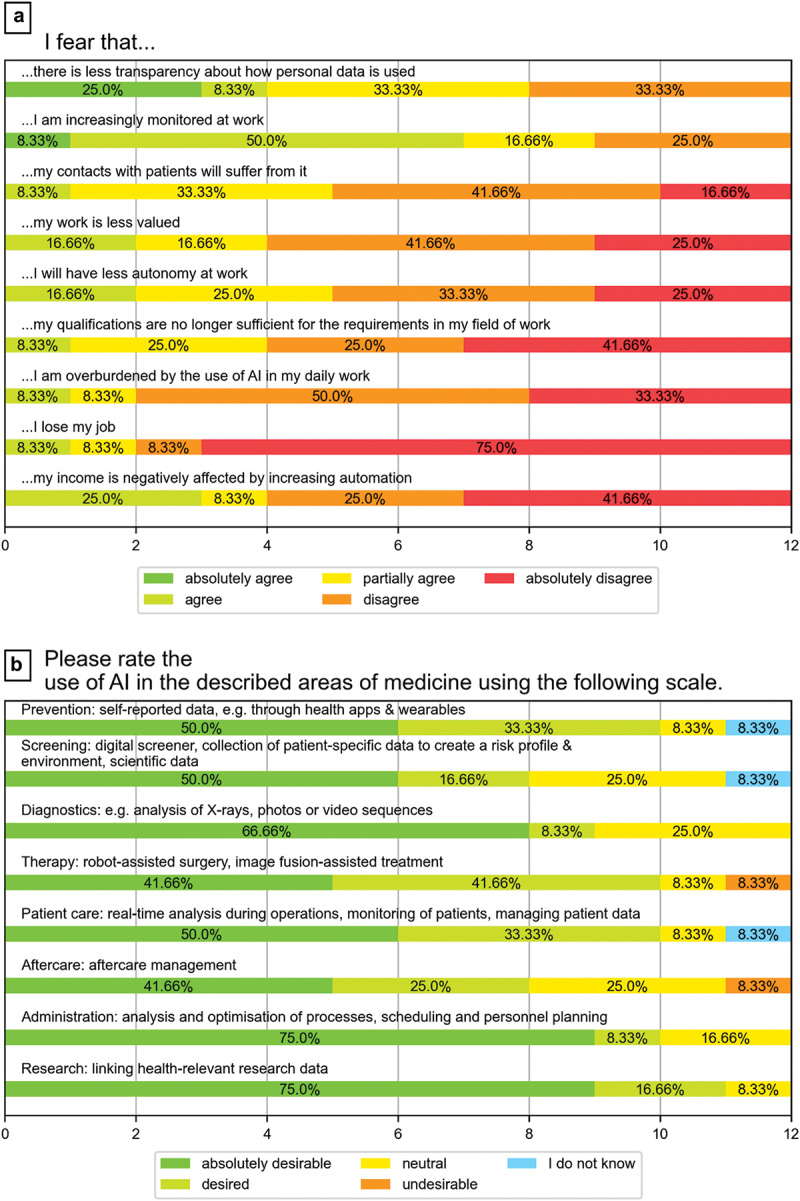
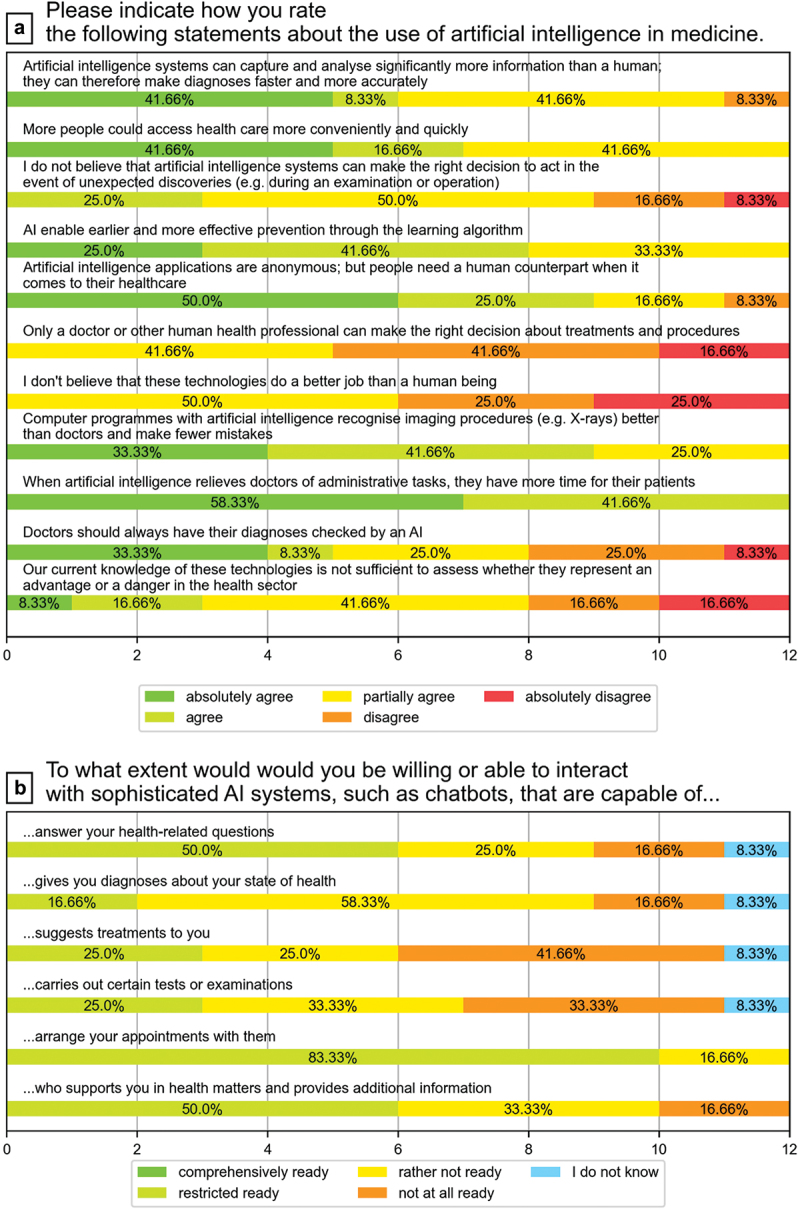
Verification
Claims the paper makes
The claims and statistics of this paper haven’t been checked yet.
Free: it reads the open-access text and checks the first 5 claims that cite a source we can check. Create a free account to check every claim.
Claims other papers make about this one
Each is checked against this paper’s own text: does it say what the citing paper says it does?
The source backs part of the claim, not all of it — or backs it for a different population, condition or comparison.
In the citing paper
“This was also showed in previous studies that most of healthcare students have a positive attitude towards AI [19, 44–47].”
From Medical, dental, and nursing students’ attitudes and knowledge towards artificial intelligence: a systematic review and meta-analysis (2024) · cites this paper as [19]
Experimental — accuracy not yet measuredThe source backs part of the claim, not all of it — or backs it for a different population, condition or comparison.
In the citing paper
“Overall, in addition to positive attitudes toward AI, students generally expressed enthusiasm for integrating it into their future medical practice [70, 71]. Many believed AI had the potential to enhance and transform medicine by optimizing physicians’ workloads and reducing healthcare costs [42, 72, 73]. Additionally, students viewed AI as a supportive tool that can assist physicians, help”
From Artificial intelligence in undergraduate medical education: an updated scoping review (2025) · cites this paper as [42]
Experimental — accuracy not yet measuredThe source backs part of the claim, not all of it — or backs it for a different population, condition or comparison.
In the citing paper
“Similarly, we identified only 1 study examining learner attitudes toward generative AI in medical education [29]. The authors noted generally positive opinions albeit limited by unfamiliarity with these tools.”
From Opportunities, Challenges, and Future Directions of Generative Artificial Intelligence in Medical Education: Scoping Review (2023) · cites this paper as [29]
Experimental — accuracy not yet measuredThe cited source says what the claim attributes to it.
In the citing paper
“In contrast, a few of them employed either qualitative methods [38–40] or a mixed-methods approach [41–45].”
From Artificial intelligence in undergraduate medical education: an updated scoping review (2025) · cites this paper as [42]
Self-check
Percentages, sums and reported differences re-computed from the paper’s own numbers.
The self-check needs the paper’s full text.
Citations
Cites
Standards for Reporting Qualitative Research: A Synthesis of Recommendations
O’Brien, B. C., Harris, I. B., Beckman, T. J., Reed, D. A., & Cook, D. A. (2014) · Academic Medicine · doi:10.1097/acm.0000000000000388 · Cited by 12,211 · cited 2×
“This study followed the Standards for Reporting Qualitative Research [21] and presents a mixed-method study as part of a project supported by the Federal Ministry of Education and Research, Germany (BMBF The attitudes of participants regarding the topic of AI in medicine were quantitatively assessed by means of a stan…”
MethodQualitative Inhaltsanalyse : Grundlagen und Techniken
Mayring, P. (2003) · Cited by 6,519
Rajpurkar, P., Chen, E., Banerjee, O., & Topol, E. J. (2022) · Nature Medicine · doi:10.1038/s41591-021-01614-0 · Cited by 3,212 · cited 1×
“Furthermore, the digital networking of patients, hospitals, physicians and other healthcare services is enabling a shift from a physician-centric approach to more patient-centered treatment [5].”
BackgroundCombining Qualitative and Quantitative Methods in Information Systems Research: A Case Study1
Kaplan, B., & Duchon, D. (1988) · MIS Quarterly · doi:10.2307/249133 · Cited by 1,074 · cited 1×
“We combined quantitative and qualitative research methods in this study to achieve an in-depth analysis of the collected data [22].”
MethodChan, K. S., & Zary, N. (2019) · JMIR Medical Education · doi:10.2196/13930 · Cited by 877 · cited 2×
“According to current literature, although AI competencies are essential for medical practice, they are not comprehensively taught in medical education [7,11,12].”
BackgroundNadarzynski, T., Miles, O., Cowie, A., & Ridge, D. (2019) · DIGITAL HEALTH · doi:10.1177/2055207619871808 · Cited by 810 · cited 1×
“However, there are also raising concerns about chatbots potentially eroding diagnostic practice, being driven by business logic, and having limitations and incompleteness that may harm patients in emergency situations [18,19].”
BackgroundMedical students' attitude towards artificial intelligence: a multicentre survey
Pinto dos Santos, D., Giese, D., Brodehl, S., Chon, S. H., Staab, W., Kleinert, R., Maintz, D., & Baeßler, B. (2019) · European Radiology · doi:10.1007/s00330-018-5601-1 · Cited by 754 · cited 1×
“The majority were certain that they would not be replaced by AI in their jobs or that they would be less valued in their roles as future doctors, as other authors have stated in similar studies [27].”
ResultSit, C., Srinivasan, R., Amlani, A., Muthuswamy, K., Azam, A., Monzon, L., & Poon, D. S. (2020) · Insights into Imaging · doi:10.1186/s13244-019-0830-7 · Cited by 507 · cited 1×
“…great deal of uncertainty and skepticism regarding chatbots due to the lack of integration of AI topics into the medical curriculum (as yet), as well as a lack of knowledge about the basic conditions and legal and ethical requirements of AI use [33], reflecting findings from other studies [34–36].”
ResultHandbuch Methoden der empirischen Sozialforschung
(2014) · Springer eBooks · doi:10.1007/978-3-531-18939-0 · Cited by 441 · cited 1×
“As one student did not complete the course, we used the mean imputation procedure for the missing values after testing for normal distribution using the Kolmogorov-Smirnov test procedure [24,25].”
MethodHan, E.-R., Yeo, S., Kim, M.-J., Lee, Y.-H., Park, K.-H., & Roh, H. (2019) · BMC Medical Education · doi:10.1186/s12909-019-1891-5 · Cited by 393 · cited 2×
“Future physicians will not only need to be flexible in responding to different healthcare contexts but will also require the competence to adequately deal with procedures and applications involving AI and the accompanying big data [7].”
Background
Research works printed but not linked: 4
- Plange N, Feltgen N, Arbeitsgemeinschaft L. The “Nationaler Kompetenzbasierter Lernzielkatalog Medizin NKLM 2.0”-Implications for medical education in ophthalmology. Ophthalmologie. 2022 Nov 21. PubMed PMID: 36409352. 36409352
- Kuhn S. Transformation durch Bildung. Deutsches Ärzteblatt. 2018; 2018: 115.
- Neyer F, Felber J, Gebhardt C. Kurzskala zur Erfassung von Technikbereitschaft [Short scale for recording technology willingness]. In: GESIS - Leibniz Institute for Social Sciences. Zusammenstellung sozialwissenschaftlicher Items und Skalen (ZIS); 2016.
- Kirschner PA, De Bruyckere P. The myths of the digital native and the multitasker. In Teaching and Teacher EducationVol. 67 p. 135– 142; 2017 Oct. PubMed PMID: WOS:000411543800013; English.
Cited by
A scoping review of artificial intelligence in medical education: BEME Guide No. 84
Gordon, M., Daniel, M., Ajiboye, A., Uraiby, H., Xu, N. Y., Bartlett, R., Hanson, J., Haas, M., Spadafore, M., Grafton-Clarke, C., et al. (2024) · Medical Teacher · doi:10.1080/0142159x.2024.2314198 · Cited by 679
Preiksaitis, C., & Rose, C. (2023) · JMIR Medical Education · doi:10.2196/48785 · Cited by 552
“[29] Need for further training in limitations Theme 6: Potential detriments to learning “Lastly, there is a need to delve deeper into the possible consequences of overdependence on LLMs in medical education.””
BackgroundInfluentialEffects of Generative Chatbots in Higher Education
Ilieva, G., Yankova, T., Klisarova-Belcheva, S., Dimitrov, A., Bratkov, M., & Angelov, D. (2023) · Information · doi:10.3390/info14090492 · Cited by 194
Holderried, F., Stegemann–Philipps, C., Herschbach, L., Moldt, J.-A., Nevins, A., Griewatz, J., Holderried, M., Herrmann-Werner, A., Festl-Wietek, T., & Mahling, M. (2024) · JMIR Medical Education · doi:10.2196/53961 · Cited by 156
“In particular, chatbots are of interest tool-wise in the area of virtual patients [21,22].”
BackgroundSelf-citationZahlan, A., Ranjan, R. P., & Hayes, D. (2023) · Technology in Society · doi:10.1016/j.techsoc.2023.102321 · Cited by 152
Zhu, W., Huang, L., Zhou, X., Li, X., Shi, G., Ying, J., & Wang, C. (2025) · International Journal of Human–Computer Interaction · doi:10.1080/10447318.2024.2323277 · Cited by 143
“For example, Moldt et al. (2023) attempted to investigate the knowledge and attitudes of university students towards AI and medical chatbots, in order to be able to find the right criteria for a course for students to utilize these technologies in the healthcare industry.”
Amiri, H., Peiravi, S., rezazadeh shojaee, S. S., Rouhparvarzamin, M., Nateghi, M. N., Etemadi, M. H., ShojaeiBaghini, M., Musaie, F., Anvari, M. H., & Asadi Anar, M. (2024) · BMC Medical Education · doi:10.1186/s12909-024-05406-1 · Cited by 149
“The study design of 19 studies was cross-sectional [20–38], and the rest followed a mixed methodology [18, 19, 39].”
BackgroundResultTeaching AI Ethics in Medical Education: A Scoping Review of Current Literature and Practices
Weidener, L., & Fischer, M. (2023) · Perspectives on Medical Education · doi:10.5334/pme.954 · Cited by 133
Students’ attitudes towards using ChatGPT as a learning tool: the case of the University of Jordan.
O. Ajlouni, A., Abd-Alkareem Wahba, F., & Salem Almahaireh, A. (2023) · International Journal of Interactive Mobile Technologies (iJIM) · doi:10.3991/ijim.v17i18.41753 · Cited by 116
Gökçearslan, Ş., Tosun, C., & Erdemir, Z. G. (2024) · International Journal of Technology in Education · doi:10.46328/ijte.600 · Cited by 112
Herrmann-Werner, A., Festl-Wietek, T., Holderried, F., Herschbach, L., Griewatz, J., Masters, K., Zipfel, S., & Mahling, M. (2024) · Journal of Medical Internet Research · doi:10.2196/52113 · Cited by 96
“The answers from GPT-4 were analyzed inductively and iteratively according to Mayring’s [21] qualitative content analysis, as described previously by our group [22].”
Self-citationArtificial intelligence for higher education: benefits and challenges for pre-service teachers
Kalniņa, D., Nīmante, D., & Baranova, S. (2024) · Frontiers in Education · doi:10.3389/feduc.2024.1501819 · Cited by 87
Wang, X., Fei, F., Wei, J., Huang, M., Xiang, F., Tu, J., Wang, Y., & Gan, J. (2024) · Frontiers in Public Health · doi:10.3389/fpubh.2024.1433252 · Cited by 133
Current status of ChatGPT use in medical education: potentials, challenges, and strategies
Xu, T., Weng, H., Liu, F., Yang, L., Luo, Y., Ding, Z., & Wang, Q. (2024) · Journal of Medical Internet Research · doi:10.2196/57896 · Cited by 84
“Despite students’ optimism toward ChatGPT [55], educators must underscore that it is not a panacea and guide students to adopt an objective and cautious stance [30].”
Tao, W., Yang, J., & Qu, X. (2024) · JMIR Medical Education · doi:10.2196/57132 · Cited by 71
Exploring the Possible Use of AI Chatbots in Public Health Education: Feasibility Study
Baglivo, F., De Angelis, L., Casigliani, V., Arzilli, G., Privitera, G. P., & Rizzo, C. (2023) · JMIR Medical Education · doi:10.2196/51421 · Cited by 69
“The critical evaluation of the answers provided by the chatbot not only enhanced students’ understanding of the correct responses but also stimulated conversations about the underlying concepts, resulting in a positive attitude of the participating students toward the tool [25].”
BackgroundSantamato, V., Tricase, C., Faccilongo, N., Iacoviello, M., & Marengo, A. (2024) · Applied Sciences · doi:10.3390/app142210144 · Cited by 119
“AI applications in medical diagnostics open new horizons for early disease detection and treatment personalization, promising significant improvements in recovery probabilities and care customization [12,15].”
Artificial intelligence in undergraduate medical education: an updated scoping review
Simoni, J., Urtubia-Fernandez, J., Mengual, E., Simoni, D. A., Royo, M., Egaña-Yin, D., Hertog, O. L. A., López-Ortiz, L., Muñoz-Tomás, A., Santiago-Martínez, P., et al. (2025) · BMC Medical Education · doi:10.1186/s12909-025-08188-2 · Cited by 62
ChatGPT versus a customized AI chatbot (Anatbuddy) for anatomy education: A comparative pilot study
Arun, G., Perumal, V., Urias, F. P. J. B., Ler, Y. E., Tan, B. W. T., Vallabhajosyula, R., Tan, E., Ng, O., Ng, K. B., & Mogali, S. R. (2024) · Anatomical Sciences Education · doi:10.1002/ase.2502 · Cited by 58
Medical Students’ Perspectives on Trust in Medical AI: A Quantitative Comparative Study
Kajanová, J., & Badrov, A. (2024) · Asian Journal of Ethics in Health and Medicine · doi:10.51847/36mpdz9az8 · Cited by 58
Chan, C. K. Y. (2025) · Behavioral Sciences · doi:10.3390/bs15030287 · Cited by 88
“As evidenced by Moldt et al. (2023), medical students expressed trust in chatbots for supportive tasks such as answering questions and providing basic information, while remaining cautious about their use in more sensitive areas like personal counselling.”
Shishehgar, S., Murray‐Parahi, P., Alsharaydeh, E., Mills, S., & Liu, X. (2025) · International Nursing Review · doi:10.1111/inr.70045 · Cited by 133
“This finding is in line with the belief of 83% of medical students in Germany who did not express any concern of being replaced by AI in the future (Moldt et al. 2023).”
InfluentialMedical students and ChatGPT: analyzing attitudes, practices, and academic perceptions
Abdelhafiz, A. S., Farghly, M. I., Sultan, E. A., Abouelmagd, M. E., Ashmawy, Y. M., & Elsebaie, E. H. (2025) · BMC Medical Education · doi:10.1186/s12909-025-06731-9 · Cited by 84
“Previous studies have explored the positive attitudes of students towards chatbots [21, 24].”
Moldt, J.-A., Festl-Wietek, T., Fuhl, W., Zabel, S., Claassen, M., Wagner, S., Nieselt, K., & Herrmann-Werner, A. (2024) · JMIR Medical Education · doi:10.2196/58355 · Cited by 47
Self-citationVeras, M., Dyer, J.-O., Rooney, M., Barros Silva, P. G., Rutherford, D., & Kairy, D. (2023) · JMIR Research Protocols · doi:10.2196/51873 · Cited by 47
“Students expressed a desire for more comprehensive AI education integrated into their medical curriculum, emphasizing the importance of preparing them for AI’s role in health care [35].”
BackgroundCherrez-Ojeda, I., Gallardo-Bastidas, J. C., Robles-Velasco, K., Osorio, M. F., Velez Leon, E. M., Leon Velastegui, M., Pauletto, P., Aguilar-Díaz, F. C., Squassi, A., González Eras, S. P., et al. (2024) · JMIR Medical Education · doi:10.2196/51757 · Cited by 46
“This aligns with the findings of the studies by Buabbas et al [29] and Moldt et al [31], where 78.7% and 83% of participants, respectively, expressed skepticism about AI eventually replacing the roles of physicians in the future.”
ResultInfluentialMedical Students’ Attitudes Toward AI in Medicine and their Expectations for Medical Education
Kimmerle, J., Timm, J., Festl-Wietek, T., Cress, U., & Herrmann-Werner, A. (2023) · Journal of Medical Education and Curricular Development · doi:10.1177/23821205231219346 · Cited by 46
Self-citationGenerative AI in Undergraduate Medical Education: A Rapid Review
Hale, J., Alexander, S., Wright, S. T., & Gilliland, K. (2024) · Journal of Medical Education and Curricular Development · doi:10.1177/23821205241266697 · Cited by 46
Understanding older adults’ acceptance of Chatbots in healthcare delivery: an extended UTAUT model
Yu, S., & Chen, T. (2024) · Frontiers in Public Health · doi:10.3389/fpubh.2024.1435329 · Cited by 76
The impact of Chat Generative Pre-trained Transformer (ChatGPT) on medical education
Heng, J. J. Y., Teo, D. B., & Tan, L. F. (2023) · Postgraduate Medical Journal · doi:10.1093/postmj/qgad058 · Cited by 40
Below average ChatGPT performance in medical microbiology exam compared to university students
Sallam, M., & Al-Salahat, K. (2023) · Frontiers in Education · doi:10.3389/feduc.2023.1333415 · Cited by 39
Tortella, F., Palese, A., Turolla, A., Castellini, G., Pillastrini, P., Landuzzi, M. G., Cook, C., Galeoto, G., Giovannico, G., Rodeghiero, L., et al. (2025) · BMC Medical Education · doi:10.1186/s12909-025-07176-w · Cited by 38
“Several surveys have also highlighted barriers such as over-reliance on technology [22, 26, 28, 32], concerns about the accuracy and reliability of answers [21, 22, 24, 26, 32, 34, 43], and issues related to plagiarism and lack of transparency [23, 26, 35, 37, 42].”
InfluentialBolgova, O., Ganguly, P. K., & Mavrych, V. (2025) · Anatomical Sciences Education · doi:10.1002/ase.70044 · Cited by 47
Anxiety about artificial intelligence from patient and doctor-physician
Li, W., & Liu, X. (2024) · Patient Education and Counseling · doi:10.1016/j.pec.2024.108619 · Cited by 54
Clinical Interviewing: An Essential but Neglected Method of Medicine
Fava, G. A., Sonino, N., Aron, D. C., Balon, R., Montiel, C. B., Cao, J., Concato, J., Eőry, A., Horwitz, R. I., Rafanelli, C., et al. (2024) · Psychotherapy and Psychosomatics · doi:10.1159/000536490 · Cited by 44
Transdermal Drug Delivery Systems Powered by Artificial Intelligence
Sabbagh, F., Zakrzewska, A., Rybak, D., Król, J., Abdi, A., Nakielski, P., & Pierini, F. (2025) · Advanced Healthcare Materials · doi:10.1002/adhm.202503030 · Cited by 45
Rueda de la Pedagogía para la Inteligencia Artificial: adaptación de la Rueda de Carrington
Jiménez-García, E., Orenes-Martínez, N., & Fraile, L. A. L. (2023) · RIED Revista Iberoamericana de Educación a Distancia · doi:10.5944/ried.27.1.37622 · Cited by 91
Influence of artificial intelligence and chatbots on research integrity and publication ethics
Kasani, P. H., Cho, K. H., Jang, J., & Yun, C. (2024) · Science Editing · doi:10.6087/kcse.323 · Cited by 40
“Chatbots can also assist educators by handling administrative tasks with less effort, thereby freeing up their time and energy for teaching and mentoring [17,18].”
Radionova, N., Ög, E., Wetzel, A.-J., Rieger, M. A., & Preiser, C. (2023) · Journal of Medical Internet Research · doi:10.2196/39219 · Cited by 39
“Training physicians to properly support this transformation process in the patient-physician relationship is the first effective step in the direction of self-determined health care for patients [59].”
Assessing ChatGPT’s capability as a new age standardized patient: qualitative study
Cross, J., Kayalackakom, T., Robinson, R. E., Vaughans, A., Sebastian, R., Hood, R., Lewis, C., Devaraju, S., Honnavar, P., Naik, S., et al. (2025) · JMIR Medical Education · doi:10.2196/63353 · Cited by 33
Hoffman, B. D., Oppert, M. L., & Owen, M. S. (2024) · Computers in Human Behavior Artificial Humans · doi:10.1016/j.chbah.2024.100086 · Cited by 56
Li, Z., & Xiao, Y. (2025) · BMC Medical Education · doi:10.1186/s12909-025-07669-8 · Cited by 39
“Additionally, 68.4% of Jordanian students emphasize the need for cautious AI introduction to mitigate biases and liability [82, 102].”
InfluentialAlghamdi, S. A., & Alashban, Y. I. (2024) · Journal of Radiation Research and Applied Sciences · doi:10.1016/j.jrras.2023.100815 · Cited by 56
Abuadas, M. H., & Albikawi, Z. F. (2025) · Journal of Human Behavior in the Social Environment · doi:10.1080/10911359.2025.2472852 · Cited by 38
Ghanem, O. A., Hagag, A. M., Kormod, M. E., El-Refaay, M. A., Khedr, A. M., Abozaid, O. M., Abdelmoaty, K. M., & Hamed, M. S. (2025) · BMC Medical Education · doi:10.1186/s12909-025-07329-x · Cited by 41
“It was adapted from previous studies and modified to capture the necessary data on students’ knowledge, attitudes, and practices regarding generative AI [17, 24, 25].”
ChatGPT as a Therapist Assistant: A Suitability StudyPreprint
Eshghie, M., & Eshghie, M. (2023) · SSRN Electronic Journal · doi:10.2139/ssrn.4423832 · Cited by 44
Opportunities and Challenges of Chatbots in Ophthalmology: A Narrative Review
Sabaner, M. C., Anguita, R., Antaki, F., Balas, M., Boberg‐Ans, L. C., Desideri, L. F., Grauslund, J., Hansen, M. S., Klefter, O. N., Potapenko, I. O., et al. (2024) · Journal of Personalized Medicine · doi:10.3390/jpm14121165 · Cited by 35
“Currently, clinicians are raising concerns about the reliability, limited knowledge or training of chatbots, implementation costs, ethical concerns, and the absence of regulatory approval for integrating AI-based LLM chatbots into routine practice [105–109].”
Transforming Nursing Education with Artificial Intelligence: A Systematic Review (2010–2025)
Alrazeeni, D. M., Alharrasi, M., Rony, M. K. K., Biswas, R. K., Tama, I. J., Halder, C. R., Deb, B., Bashar, F., & Akter, F. (2026) · SAGE Open Nursing · doi:10.1177/23779608261424597 · Cited by 47
“Machine learning algorithms predict patient trajectories and simulate out-patient decision-making work fl ows, often embedded in electronic health records (Moldt et al., 2023).”
Li, S., Mou, Y., & Xu, J. (2024) · International Journal of Human-Computer Interaction · doi:10.1080/10447318.2024.2411619 · Cited by 28
Perceptions and Use of Generative Artificial Intelligence in Medical Students: A Multicenter Survey
Tran, C., Hryciw, B. N., Moore, S. W., Chaput, A., & Seely, A. J. E. (2025) · Journal of Medical Education and Curricular Development · doi:10.1177/23821205251391969 · Cited by 22
“While previous research has reported the perceptions and beliefs of medical students toward generative AI, 9 – 12 this does not provide suf fi cient guidance for medical institutions to develop policies and curricular changes to responsibly address the real-world use of generative AI.”
InfluentialChatbots in higher education: a systematic review
Lambebo, E. A., & Chen, H. (2024) · Interactive Learning Environments · doi:10.1080/10494820.2024.2436931 · Cited by 37
“Medical chatbots also assist in administrative tasks such as scheduling appointments, managing patient records, providing information and support, enhancing engagement with medical students, and managing stress levels (Moldt et al., 2022; Moldt et al., 2023).”
Lo, N., & Chan, S. (2025) · SN Computer Science · doi:10.1007/s42979-025-04532-x · Cited by 21
“In some industries such as law or medicine, the advances offered by chatbot technologies are both radically disruptive and potentially threatening to the efficacy of practice [15 , 28].”
InfluentialALruwail, B., Alshalan, A., Thirunavukkarasu, A., Alibrahim, A., Alenezi, A. M., & Aldhuwayhi, T. Z. A. (2025) · Journal of Multidisciplinary Healthcare · doi:10.2147/jmdh.s499902 · Cited by 22
Reimagining healthcare education through nurturing AI-driven innovation
Mendes, J. M. (2025) · BMC Medical Education · doi:10.1186/s12909-025-08254-9 · Cited by 22
“Despite these innovations, healthcare professionals often lack the necessary training to engage critically and effectively with AI technologies [2, 11].”
Exploring Artificial Intelligence Readiness in Medical Students: Analysis of a Global Survey
Luong, J., Tzang, C.-C., McWatt, S. C., Brassett, C., Stearns, D. A., Sagoo, M. G., Kunzel, C., Sakurai, T., Chien, C.-L., Noël, G. P. J. C., et al. (2024) · Medical Science Educator · doi:10.1007/s40670-024-02190-x · Cited by 27
“A study conducted in Germany revealed a favorable perception of AI’s potential in future medical work, especially in administrative tasks and health data research [25].”
ChatGPT usage intention for tourism and hospitality customers
Abou‐Shouk, M., Abdelhakim, A., Elgarhy, S. D., Rabea, A., & Abdulmawla, M. (2025) · Tourism Recreation Research · doi:10.1080/02508281.2025.2465962 · Cited by 26
“…Park, 2020), four for easiness of use (Abdelhakim et al., 2023; El-Said & Al Hajri, 2022; Song et al., 2022), five for usefulness (Davis, 1989; Moldt et al., 2023; Song et al., 2022), six for attitude (Kaushik et al., 2015; Kazandzhieva & Filipova, 2019; Melián-Gon-zález et al., 2021; Moldt…”
Mirea, C.-M., Bologa, R., Toma, A., Clim, A., Plăcintă, D.-D., & Bobocea, A. (2025) · Applied Sciences · doi:10.3390/app15105785 · Cited by 37
Skalka, J., Przybyła‐Kasperek, M., Smyrnova‐Trybulska, E., Klimeš, C., Farana, R., Dagienė, V., & Dolgopolovas, V. (2025) · IEEE Access · doi:10.1109/access.2025.3573575 · Cited by 28
“The results suggest that while medical students are open to integrating AI into their field, they remain wary of privacy issues and the ethical implications of AI technologies [35].”
Arroyo-Machado, W., Ma, J., Chen, T., Johnson, T. P., Islam, S., Michalegko, L., & Welch, E. (2025) · PLOS One · doi:10.1371/journal.pone.0330416 · Cited by 15
(2023) · Journal of Applied Learning & Teaching · doi:10.37074/jalt.2023.6.2.36 · Cited by 15
Navigating the AI Revolution in Medicine—Adopting Strategies for Medical Education
Greengrass, C. J. (2024) · Medical Science Educator · doi:10.1007/s40670-024-02257-9 · Cited by 15
“Moreover, Sit et al. [20] report that medical students’ attitudes towards AI in medicine have been positive, with many acknowledging the benefits of AI training, as an integral component of medical education programmes and as being crucial for their preparedness in future healthcare settings [21].”
Ismail, N. A. S., Mageswaran, N., Bujang, S. M., & Besar, M. N. A. (2024) · Frontiers in Medicine · doi:10.3389/fmed.2024.1375982 · Cited by 26
Application of artificial intelligence in medical education: A meta-ethnographic synthesis
Li, W., Shi, H.-Y., Chen, X.-L., Lan, J., Rehman, A.-U., Ge, M., Shen, L.-T., Hu, F., Jia, Y., Li, X., et al. (2024) · Medical Teacher · doi:10.1080/0142159x.2024.2418936 · Cited by 22
Bentegeac, R., Florens, N., Maanaoui, M., Maisons, V., Lanot, A., Bobot, M., Brilland, B., Glowacki, F., Gerard, E., Hazzan, M., et al. (2025) · Clinical Kidney Journal · doi:10.1093/ckj/sfaf308 · Cited by 21
“Third, the AI-based nature of the interaction may have influenced student behavior, and the voluntary design could introduce selection bias favoring more motivated or tech-confident participants [48 ].”
From Text to Treatment: An Overview of Artificial Intelligence Chatbots in Healthcare
Singh, M., Mittal, M., Dewan, P., Kaur, A., Kaur, G., & Gupta, A. (2024) · International Conference on Computing for Sustainable Global Development · doi:10.23919/indiacom61295.2024.10498497 · Cited by 21
Cao, H., Hao, C., Zhang, T., Zheng, X., Gao, Z., Wu, J., Gan, L., Liu, Y., Zeng, X., & Wang, W. (2025) · Frontiers in Public Health · doi:10.3389/fpubh.2025.1605908 · Cited by 15
Şahin, M. F., Doğan, Ç., Topkaç, E. C., Şeramet, S., Tuncer, F. B., & Yazıcı, C. M. (2025) · World Journal of Urology · doi:10.1007/s00345-025-05499-3 · Cited by 12
Novel Blended Learning on Artificial Intelligence for Medical Students: Qualitative Interview Study
Oftring, Z. S., Deutsch, K., Tolks, D., Jungmann, F., & Kühn, S. (2025) · JMIR Medical Education · doi:10.2196/65220 · Cited by 22
“Although Alkhaaldi et al [36], Moldt et al [42], and Laupichler et al [31] found students to be more optimistic and accepting about AI applications, in Boillat et al’s [37] survey there was more skepticism among students regarding the potential harm of AI for patients and job safety within the…”
Artificial intelligence, applications and challenges in simulation-based education
Díaz-Guio, D. A., Henao, J. H., Pantoja, A., Arango, M. A., Díaz-Gómez, A. S., & Camps, A. (2023) · Colombian Journal of Anesthesiology · doi:10.5554/22562087.e1085 · Cited by 15
“Moreover, it can consider the context of previous input, making it very efficient and useful (19-21); however, it has given rise to much questioning in the academic and scientific world (16,22) .”
BackgroundAssessing digital competencies and AI ethics awareness among customers in the banking sector
Fundira, M., Edoun, E. I., Pradhan, A., & Mbohwa, C. (2024) · African Journal of Science Technology Innovation and Development · doi:10.1080/20421338.2024.2388619 · Cited by 16
“Improving digital competencies and AI ethics awareness among banking customers is crucial for addressing the implications of low AI ethics awareness in banking customers, mentioned above (Joshi and Aslekar 2022; Moldt et al. 2023).”
Exploring the Role of Mobile Apps for Insomnia in Depression: Systematic Review
Chiu, Y.-H., Lee, Y.-F., Lin, H., & Cheng, L. (2024) · Journal of Medical Internet Research · doi:10.2196/51110 · Cited by 18
Chiu, J., Castro, B., Ballard, I., Nelson, K., Zarutskie, P., Olaiya, O. K., Song, D., & Zhao, Y. (2025) · Medical Science Educator · doi:10.1007/s40670-025-02394-9 · Cited by 11
“This hesitancy may be due to limited exposure and a lack of understanding of the fundamental principles, legal implications, and ethical requirements surrounding AI use [11–14].”
Kumar, G., Sharma, D., & Bhardwaj, B. (2025) · The International Journal of Management Education · doi:10.1016/j.ijme.2025.101221 · Cited by 23
Li, C., Tsuei, S. H., & Wu, H. (2026) · JMIR Medical Education · doi:10.2196/80604 · Cited by 14
“Most have focused on AI knowledge [30-33] or attitudes toward AI applications [34-38].”
Zhang, Y., & Liu, X. (2024) · World Journal of Psychiatry · doi:10.5498/wjp.v14.i2.330 · Cited by 15
Salminen, J. O., Jung, S., Medina, J., Aldous, K. K., Azem, J. Y., Akhtar, W., Häyhänen, E., & Jansen, B. J. J. (2024) · International Academic Mindtrek Conference (Mindtrek) · doi:10.1145/3681716.3681727 · Cited by 13
The Utility and Limitations of Artificial Intelligence-Powered Chatbots in Healthcare
Hayat, J., Lari, M., Alherz, M., & Lari, A. (2024) · Cureus · doi:10.7759/cureus.73127 · Cited by 16
ChatGPT Review: A Sophisticated Chatbot Models in Medical & Health-related Teaching and Learning
Razak, N. I. A., Yusoff, M. F. M., & Rahmat, R. W. O. K. (2023) · Malaysian Journal of Medicine and Health Sciences · doi:10.47836/mjmhs.19.s12.12 · Cited by 18
“However, they express concerns about data protection that may be deprived [57].”
Malešević, A., Kolesárová, M., & Čartolovni, A. (2024) · BMC Medical Ethics · doi:10.1186/s12910-024-01092-2 · Cited by 15
“Previous studies have focused on Western countries such as Germany [48–50], Switzerland [37], the United Kingdom [39, 40], Canada [7, 10, 12], and Asian countries [11, 13, 51–58].”
BackgroundZhang, S., Yang, X., Zhang, L., Liu, H., Chen, X., Yang, X., Hu, Y., Liu, Q., & He, Y. (2025) · International Nursing Review · doi:10.1111/inr.70060 · Cited by 14
AssureAIDoctor- A Bias-Free AI Bot
Kumar, Y., Delgado, J., Kupershtein, E., Hannon, B. M., Gordon, Z., Li, J. J., & Morreale, P. A. (2023) · International Symposium on Networks, Computers and Communications (ISNCC) · doi:10.1109/isncc58260.2023.10323978 · Cited by 8
“Moldt et al. [21] provide insights into the views of future healthcare professionals on the use of AI in healthcare.”
BackgroundAlharbi, M. A., & Al-Ahdal, A. A. M. H. (2025) · SAGE Open · doi:10.1177/21582440251392080 · Cited by 18
“This concern is echoed in Germany, where Moldt et al. (2023) found that medical students lacked trust in ChatGPT due to data protection concerns, particularly in sensitive disciplines like medicine.”
Liu, M., Cheng, Y., Li, S., Wang, S., Du, F., Wei, X., Ai, Z., & Yan, S. (2025) · BMC Medical Education · doi:10.1186/s12909-025-08465-0 · Cited by 13
“…inherent in conventional educational paradigms frequently fails to adequately support personalized learning pathways, which is a critical deficiency systematically resolved by AI-powered adaptive learning platforms that implement real-time performance analytics-driven content optimization [21–23].”
Wolf, P., Madsen, E. S., & Steppe, J. A. (2024) · Knowledge Management Research & Practice · doi:10.1080/14778238.2024.2379922 · Cited by 13
“…of effectively integrating AI to boost organisational performance (Ali et al., 2023; Olan et al., 2022), the imperative of fostering trust and addressing ethical dilemmas, and the critical importance of data privacy and secure interactions with AI systems (Moldt et al., 2023; Nylund et al., 2023).”
InfluentialFrom Anatomy to Algorithm: Scope of AI-Assisted Diagnostic Competencies in Health Sciences Education
Galdames, I. S. (2024) · International Journal of Medical and Surgical Sciences · doi:10.32457/ijmss.v11i3.2818 · Cited by 10
Sorte, S. R., Rawekar, A. R. A., Rathod, S. B., & Gandhi, N. S. (2025) · Journal of Education and Health Promotion · doi:10.4103/jehp.jehp_1030_24 · Cited by 9
Babu, P. A., & Babu, B. S. (2025) · Cybernetics & Systems · doi:10.1080/01969722.2025.2577925 · Cited by 7
“Recent online chat services employed in healthcare allow effective and smooth interactions between patients and doctors through a smart response system (Moldt et al. 2023).”
Heilala, V., Kelly, R., Järvinen, M., & Hämäläinen, R. (2025) · Technological Forecasting and Social Change · doi:10.1016/j.techfore.2025.124493 · Cited by 6
AI in UK Medical Education: A Framework for Curriculum Reform
Gaur, A., Shah, M. H., Rao, M. S., Tan, J. K., Fuad, M., Bhatti, T., Bharadwaj, H. R., & Ahmed, K. A. H. M. (2026) · JMIR Medical Education · doi:10.2196/81953 · Cited by 8
“Nevertheless, skepticism remains regarding the reliability and transparency of AI systems, with concerns over the risk of overreliance on AI and its potential to perpetuate biases [12].”
Eğitim Amaçlı Tasarlanan Sohbet Robotları Üzerine Yapılan Çalışmaların İncelenmesi
Cevher, A. Y., & Yıldırım, S. (2024) · Türk Eğitim Bilimleri Dergisi · doi:10.37217/tebd.1301877 · Cited by 6
Berrami, H., Barkouk, A., Belayachi, N., Jallal, M., Serhier, Z., & Othmani, M. B. (2024) · International Conference on Circuit, Systems and Communication (ICCSC) · doi:10.1109/iccsc62074.2024.10616755 · Cited by 5
“Several studies have discussed the attitudes and use of AI among medical students [3–10], but to our knowledge we have not found any studies discussing the use of AI in the theoretical and practical teaching of medical students, which prompted us to carry out this study.”
BackgroundBarabas, L., Novotny, M., Jung, D., Müller, T., & Mertse, N. (2025) · Der Nervenarzt · doi:10.1007/s00115-025-01837-3 · Cited by 6
Chan, S. C. C., Young, H., & Parekh, R. (2025) · Medical Education · doi:10.1111/medu.70071 · Cited by 9
Chatbots in neurology and neuroscience: Interactions with students, patients and neurologists
Sandrone, S. (2024) · Brain Disorders · doi:10.1016/j.dscb.2024.100145 · Cited by 5
User Experience on a Virtual Patient Chatbot for Physiotherapy Student Training
Lee, C.-C., Low, M. Y. H., Lu, L., Lee, H. H., & Soon, B. T. C. (2023) · IEEE International Conference on Teaching, Assessment, and Learning for Engineering · doi:10.1109/tale56641.2023.10398237 · Cited by 4
Xian, W., Chen, G., Arya, V., & Chui, K. T. (2024) · International Journal on Semantic Web and Information Systems · doi:10.4018/ijswis.344037 · Cited by 4
Micallef Grimaud, L., & Gathu, C. (2024) · doi:10.2196/preprints.57746 · Cited by 3
Tran, H. V., Phuong, L. V. T., Cong, Q. N., & Tam, N. T. L. (2025) · Interactive Learning Environments · doi:10.1080/10494820.2025.2511238 · Cited by 3
“In addition, the study by Moldt et al. (2023) emphasized that students ’ positive attitudes toward AI and chatbots play an important role in the acceptance of technology in teaching.”
Alam, M. (2025) · Journal of Hospitality and Tourism Technology · doi:10.1108/jhtt-04-2025-0311 · Cited by 4
Díaz-Guio, D. A., Infante-Villagrán, V. A., Ángel-Díaz, C., Montes, D., Díaz-Gómez, A. S., Pantoja, A., & Castaño, C. Y. M. (2026) · Educación Médica · doi:10.1016/j.edumed.2026.101172 · Cited by 5
Metadata
- Authors
- Moldt, J.-A., Festl-Wietek, T., Madany Mamlouk, A., Nieselt, K., Fuhl, W., & Herrmann-Werner, A.
- Affiliations
- University of Tübingen (DE)
- University of Tuebingen, Tuebingen, Germany
- Institute for Neuro- and Bioinformatics, University of Luebeck, Luebeck, Germany
- Corresponding author
- Moldt, Julia-Astrid
- ORCID
- Venue
- Medical Education Online
- Publisher
- Informa UK Limited
- Published
- 2023-02-28
- Volume
- 28
- Issue
- 1
- Pages
- 2182659-2182659
- ISSN
- 1087-2981 (ISSN-L)
- PMC
- PMC9979998
- OpenAlex
- W4322718967
- Cited by
- 186
- References
- 38
- Citations by year
- 2026: 40 · 2025: 55 · 2024: 64 · 2023: 27
- FWCI
- 7.41
- Type
- journal article
- Language
- en
- Open access
- gold
- doi.org
- Locations
- Medical Education Online (publishedVersion, cc-by)
- PubMed Central (publishedVersion, cc-by)
- PubMed (publishedVersion)
- DOAJ (DOAJ: Directory of Open Access Journals) (submittedVersion, cc-by-sa)
- Funders
- Deutsche Forschungsgemeinschaft
- Ministry of Education
- Topics
- Health Sciences › Medicine › Health Informatics › Artificial Intelligence in Healthcare and Education
- Social Sciences › Education › Innovations in Medical Education
- Social Sciences › Education › Artificial Intelligence in Education
- Keywords
- healthcare chatbots, artificial intelligence in healthcare, medical students, attitudes toward AI, AI knowledge, medical curriculum, data protection, workplace monitoring, data competencies, physician-patient communication
- MeSH terms
- Artificial Intelligence, Communication, Curriculum, Humans, Students, Medical, Knowledge
About these checks
Registry, retraction, Cites and statistics results are computed, not judged, with one exception: a printed reference that no index lists is read once by a model before it counts as a citation error. Claims are extracted by a model and kept only when their quote appears verbatim in the text; each cited source is then checked, with a model’s help, for whether it says what the claim relies on. Those verdicts can be wrong — read the claim’s quote and the cited source before relying on one.
Statistics and arithmetic are recomputed, not judged.
Confidence bands are shown only for fields calibrated on our annotated test set. None is calibrated yet, so no band is shown.
What counts as a claim ›How we measure confidence ›How we check this ›
Are you an author, or do you see a problem with this page? Request a review
Data sources
Bibliographic data: Semantic Scholar, OpenAlex, Crossref.
Contains information from the Semantic Scholar Academic Graph Datasets, made available under the ODC Attribution License (ODC-BY 1.0).
Semantic Scholar’s data is described in: Kinney, R., et al. (2023). The Semantic Scholar Open Data Platform. arXiv:2301.10140.
