

Effect of a workplace-based learning program on clerkship students' behaviors and attitudes toward evidence-based medicine practice
Open accessThe DOI matches its Crossref record; 29 of the 29 references it cites were found in a registry or an index.
Abstract
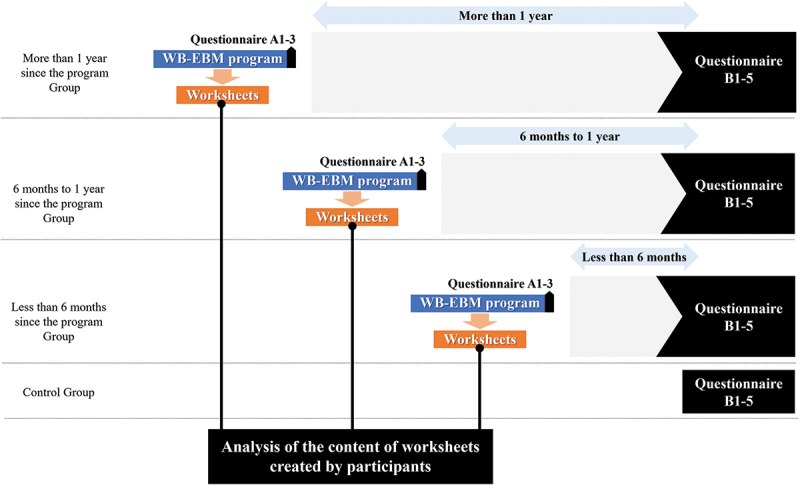
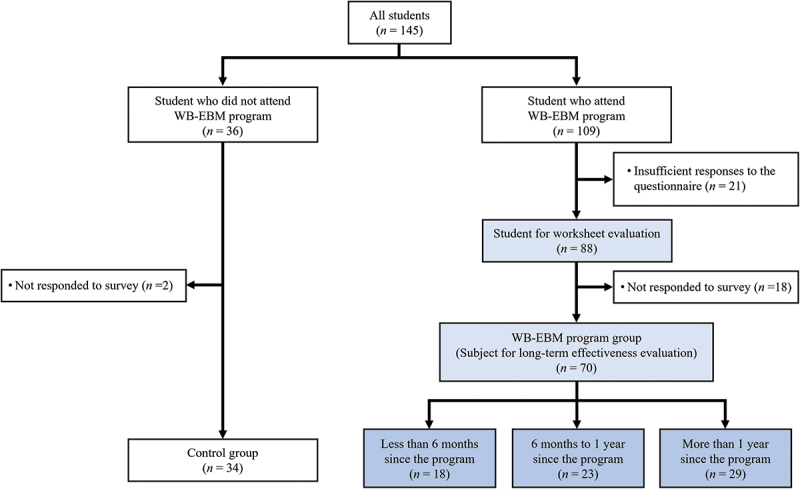
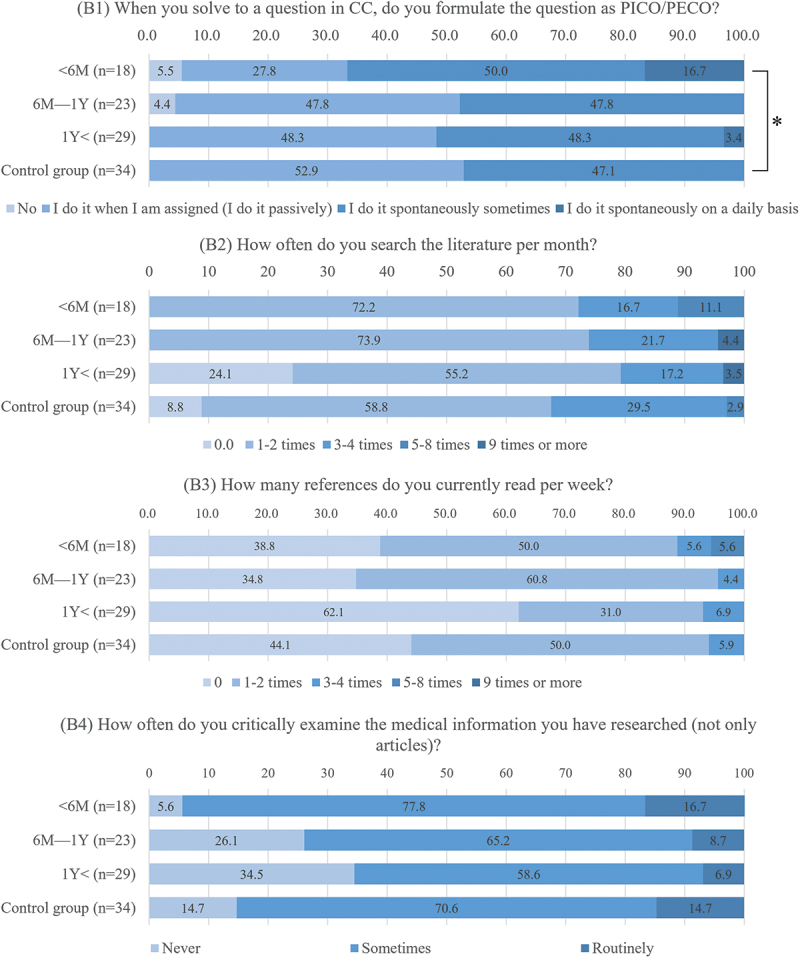
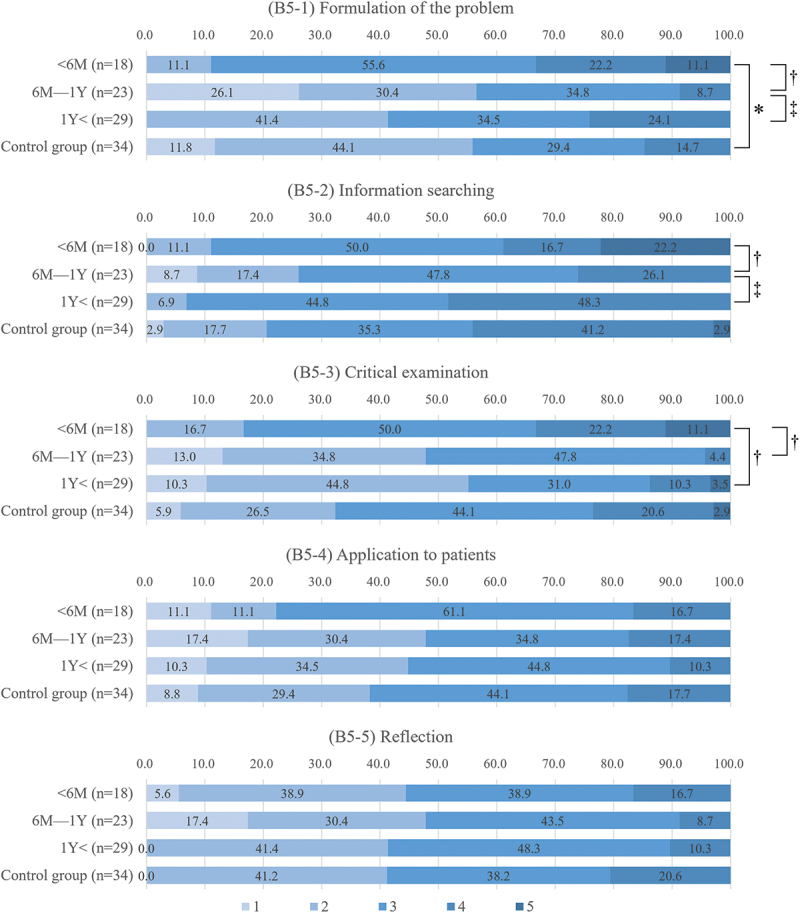
In clinical clerkship (CC), medical students can practice evidence-based medicine (EBM) with their assigned patients. Although CC can be a valuable opportunity for EBM education, the impact of EBM training, including long-term behavioral changes, remains unclear. One hundred and nine fourth- and fifth-year medical students undergoing CC at a medical school in Japan attended a workplace-based learning program for EBM during CC (WB-EBM), which included the practice of the five steps of EBM. The program's effect on the students' attitudes toward EBM in CC was assessed through questionnaires. A total of 88 medical students participated in the program. Responses to the questionnaire indicated high satisfaction with the WB-EBM program. The most common theme in students' clinical problems with their assigned patients was the choice of treatment, followed by its effect. Based on the responses in the post-survey for the long-term effects of the program, the frequency of problem formulation and article reading tended to increase in the 'within six months' group comprising 18 students who participated in the WB-EBM program, compared with the control group comprising 34 students who did not. Additionally, the ability to self-assess problem formulation was significantly higher, compared with the control group. However, among 52 students who participated in the WB-EBM program more than six months later, EBM-related behavioral habits in CC and self-assessments of the five steps of EBM were not significantly different from those in the control group. The WB-EBM program was acceptable for medical students in CC. It motivated them to formulate clinical questions and enhanced their critical thinking. Moreover, the WB-EBM program can improve habits and self-evaluations about EBM. However, as its effects may not last more than six months, it may need to be repeated across departments throughout CC to change behavior in EBM practice.
Overview
The claims and statistics of this paper haven’t been checked yet.
Free: it reads the open-access text and checks the first 5 claims that cite a source we can check. Create a free account to check every claim.
Integrity signals
Registry
Cites
Statistics
Figures
Verification
Claims the paper makes
The claims and statistics of this paper haven’t been checked yet.
Free: it reads the open-access text and checks the first 5 claims that cite a source we can check. Create a free account to check every claim.
Claims other papers make about this one
Each is checked against this paper’s own text: does it say what the citing paper says it does?
The cited source says what the claim attributes to it.
In the citing paper
“This is consistent with the hypothesis that clinical and methodological training may orient students toward an evidence-based approach; however, this interpretation cannot be substantiated on the basis of cross-sectional data alone (59).”
From Health misinformation, digital health literacy, and attitudes toward science among university students: an exploratory cross-sectional survey (2026) · cites this paper as [59]
Self-check
Percentages, sums and reported differences re-computed from the paper’s own numbers.
The self-check needs the paper’s full text.
Citations
Cites
Evidence based medicine: what it is and what it isn't
Sackett, D. L., Rosenberg, W. M. C., Gray, J. A. M., Haynes, R. B., & Richardson, W. S. (1996) · BMJ · doi:10.1136/bmj.312.7023.71 · Cited by 15,769 · cited 1×
“It is important for resolving clinical questions and promoting patient-centered care [1,2].”
BackgroundCOVID-19–Related Infodemic and Its Impact on Public Health: A Global Social Media Analysis
Islam, M. S., Sarkar, T., Khan, S. H., Mostofa Kamal, A.-H., Hasan, S. M. M., Kabir, A., Yeasmin, D., Islam, M. A., Amin Chowdhury, K. I., Anwar, K. S., et al. (2020) · The American Journal of Tropical Medicine and Hygiene · doi:10.4269/ajtmh.20-0812 · Cited by 1,178 · cited 1×
“For example, erroneous medical information regarding coro-navirus disease 2019 was disseminated, causing confusion even among medical professionals [4].”
BackgroundSicily statement on evidence-based practice
Dawes, M., Summerskill, W., Glasziou, P., Cartabellotta, A., Martin, J., Hopayian, K., Porzsolt, F., Burls, A., & Osborne, J. (2005) · BMC Medical Education · doi:10.1186/1472-6920-5-1 · Cited by 911 · cited 1×
“Considering the process of resolving clinical questions in CC, learning all five steps of EBM is encouraged [14].”
BackgroundHow Quickly Do Systematic Reviews Go Out of Date? A Survival Analysis
Shojania, K. G., Sampson, M., Ansari, M. T., Ji, J., Doucette, S., & Moher, D. (2007) · Annals of Internal Medicine · doi:10.7326/0003-4819-147-4-200708210-00179 · Cited by 838 · cited 1×
“While guidelines can certainly be useful, their contents can quickly become outdated [28,29].”
BackgroundGuyatt, G. H., Haynes, R. B., Jaeschke, R. Z., Cook, D. J., Green, L., Naylor, C. D., Wilson, M. C., Richardson, W. S., & for the Evidence-Based Medicine Working Group (2000) · JAMA · doi:10.1001/jama.284.10.1290 · Cited by 748
Shekelle, P. G., Ortiz, E., Rhodes, S., Morton, S. C., Eccles, M. P., Grimshaw, J. M., & Woolf, S. H. (2001) · JAMA · doi:10.1001/jama.286.12.1461 · Cited by 604
Mithoefer, M. C., Mithoefer, A. T., Feduccia, A. A., Jerome, L., Wagner, M., Wymer, J., Holland, J., Hamilton, S., Yazar-Klosinski, B., Emerson, A., et al. (2018) · The Lancet Psychiatry · doi:10.1016/s2215-0366(18)30135-4 · Cited by 439 · cited 1×
“In the first section, the original article ‘Phase II Study on MDMA-Assisted Psychotherapy for PTSD Patients’ published in The Lancet Psychiatry [20] was introduced to the students.”
BackgroundValidation of the Fresno test of competence in evidence based medicine
Ramos, K. D., Schafer, S., & Tracz, S. M. (2003) · BMJ · doi:10.1136/bmj.326.7384.319 · Cited by 390 · cited 1×
“In the future, the WB-EBM program and assessment of EBM competencies must be evaluated using a validated consensus-based test, such as the Fresno Test [31] and the Berlin Questionnaire [32].”
MethodFritsche, L., Greenhalgh, T., Falck-Ytter, Y., Neumayer, H.-H., & Kunz, R. (2002) · BMJ · doi:10.1136/bmj.325.7376.1338 · Cited by 336 · cited 1×
“In the future, the WB-EBM program and assessment of EBM competencies must be evaluated using a validated consensus-based test, such as the Fresno Test [31] and the Berlin Questionnaire [32].”
MethodA hierarchy of effective teaching and learning to acquire competence in evidenced-based medicine
Khan, K. S., & Coomarasamy, A. (2006) · BMC Medical Education · doi:10.1186/1472-6920-6-59 · Cited by 263 · cited 1×
“Clinically integrated EBM teaching is more effective than classroom teaching [10] and can best be taught during CC; however, it is not optimally practiced in clinical settings owing to multiple barriers, including difficulties in applying EBM skills learned in the classroom to clinical practice…”
Background
Research works printed but not linked: 2
- Kasai H, Saito G, Ito S, et al. Literature search skills of Japanese medical students in clinical clerkship - the current status and effects of brief guidance. Igaku Kyoiku/Med Educ (Japan). 2020; 51: 389– 399.
- Greenhalgh T. How to read a paper: The basics of evidence-based medicine. John Wiley & Sons; 2014.
Cited by
Karmi, H., Qawasmeh, H., Ahmad, R. K., Alkhateeb, S. S., Awawdeh, F., Douden, B., Zrineh, A., & Akwan, R. (2026) · BMC Medical Education · doi:10.1186/s12909-026-08750-6 · Cited by 3
“…often considered an ideal setting for clinically integrated EBM, yet EBM teaching is frequently not optimally enacted during rotations because learners struggle to translate classroom-acquired EBM skills into real-time clinical decision-making without deliberate workplace-based reinforcement [25].”
Wallerstedt, S. M., Garwicz, M., Henriksson, P., Mossberg, K., Naumburg, E., Wahlberg, J., & Moller, R. Y. (2025) · PLoS ONE · doi:10.1371/journal.pone.0321211 · Cited by 3
“Moreover, our finding that repeated learning activities across multiple clinical courses can enhance students’ learning of EBM aligns with recent research indicating that EBM habits and knowledge tend to decline after a single instructional program in the 4th or 5th year of the medical program [24].”
Sarcone, A., Pileggi, C., Nobile, C., Simeone, S., & Mercuri, C. (2026) · Frontiers in Public Health · doi:10.3389/fpubh.2026.1931903 · Cited by 1
Haliuchenka, V., Zhyltsou, I. V., & Skreblo, Y. (2025) · International Journal of Risk & Safety in Medicine · doi:10.1177/09246479251390453 · Cited by 1
“6,7 From our point of view, studying of EBM as a separate discipline in a university allows to use science-based approach in the process of education, to make the knowledge more structured and qualitative.”
MOREIRA, T. A., Pam, S. D., Cameron-Tomkinson, A., Parker, B., & Hopper, R. (2026) · Advances in Medical Education and Practice · doi:10.2147/amep.s622122
Metadata
- Authors
- Kasai, H., Saito, G., Takeda, K., Tajima, H., Kawame, C., Hayama, N., Shikino, K., Shimizu, I., Yamauchi, K., Asahina, M., Suzuki, T., & Ito, S.
- Affiliations
- Chiba University (JP)
- Chiba University Hospital (JP)
- Corresponding author
- Kasai, Hajime
- ORCID
- Venue
- Medical Education Online
- Publisher
- Informa UK Limited
- Published
- 2024-05-24
- Volume
- 29
- Issue
- 1
- Pages
- 2357411-2357411
- ISSN
- 1087-2981 (ISSN-L)
- PMC
- PMC11134098
- OpenAlex
- W4398769895
- Cited by
- 4
- References
- 29
- Citations by year
- 2026: 2 · 2025: 2
- FWCI
- 2.35
- Type
- journal article
- Language
- en
- Open access
- gold
- doi.org
- Licence
- Locations
- Medical Education Online (publishedVersion, cc-by-nc)
- PubMed Central (publishedVersion, cc-by-nc)
- PubMed (publishedVersion)
- DOAJ (DOAJ: Directory of Open Access Journals) (submittedVersion, cc-by-sa)
- Funders
- JSPS KAKENHI (JP21K17244)
- Topics
- Health Sciences › Health Professions › General Health Professions › Health Sciences Research and Education
- Social Sciences › Education › Innovations in Medical Education
- Health Sciences › Medicine › Public Health, Environmental and Occupational Health › Health and Medical Research Impacts
- Keywords
- evidence-based medicine, clinical rotations, workplace learning, medical students, critical thinking, long-term behavioral change, self-assessment, program acceptability
- MeSH terms
- Attitude of Health Personnel, Clinical Clerkship, Female, Humans, Japan, Male, Surveys and Questionnaires, Students, Medical, Workplace, Evidence-Based Medicine
About these checks
Registry, retraction, Cites and statistics results are computed, not judged, with one exception: a printed reference that no index lists is read once by a model before it counts as a citation error. Claims are extracted by a model and kept only when their quote appears verbatim in the text; each cited source is then checked, with a model’s help, for whether it says what the claim relies on. Those verdicts can be wrong — read the claim’s quote and the cited source before relying on one.
Statistics and arithmetic are recomputed, not judged.
Confidence bands are shown only for fields calibrated on our annotated test set. None is calibrated yet, so no band is shown.
What counts as a claim ›How we measure confidence ›How we check this ›
Are you an author, or do you see a problem with this page? Request a review
Data sources
Bibliographic data: Semantic Scholar, OpenAlex, Crossref.
Contains information from the Semantic Scholar Academic Graph Datasets, made available under the ODC Attribution License (ODC-BY 1.0).
Semantic Scholar’s data is described in: Kinney, R., et al. (2023). The Semantic Scholar Open Data Platform. arXiv:2301.10140.
