

Aaptamine – a dual acetyl – and butyrylcholinesterase inhibitor as potential anti-Alzheimer’s disease agent
Open accessThe DOI matches its Crossref record; 47 of the 48 references it cites were found in a registry or an index.
Abstract
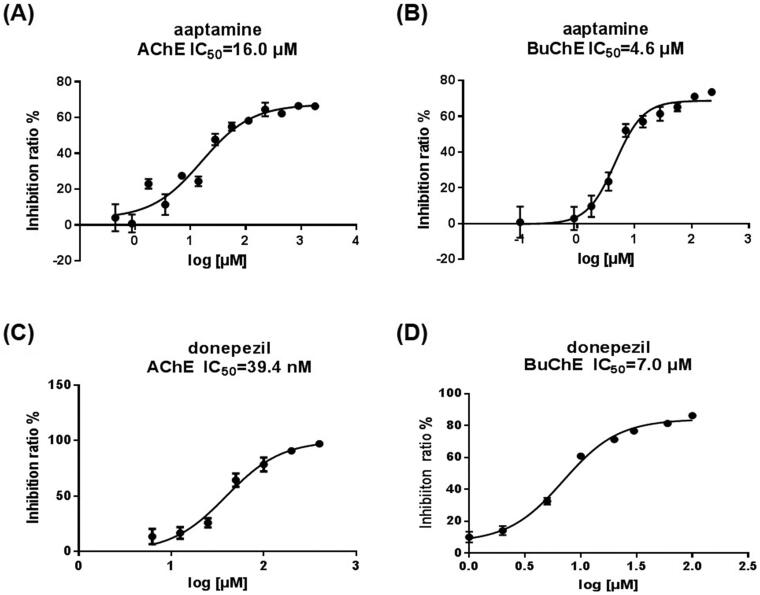
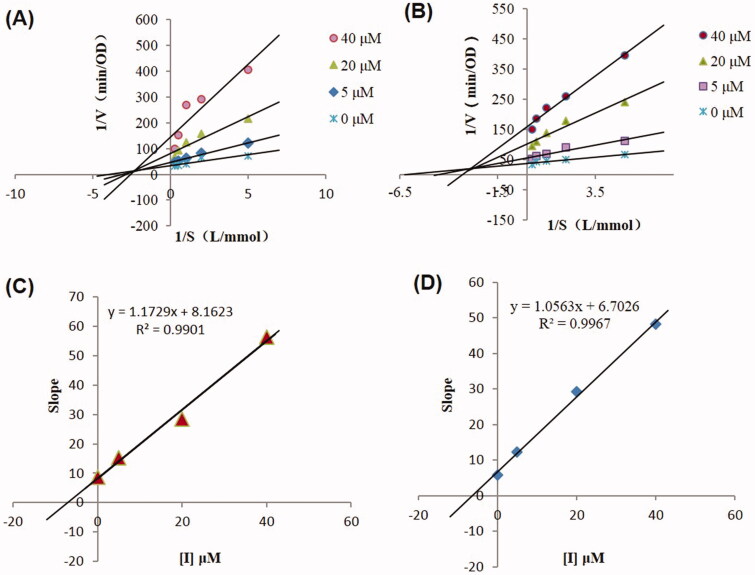
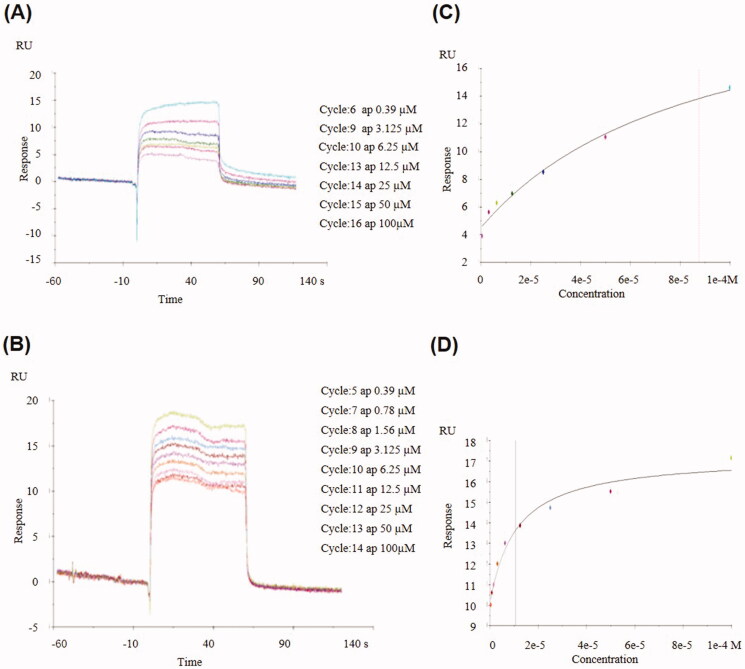
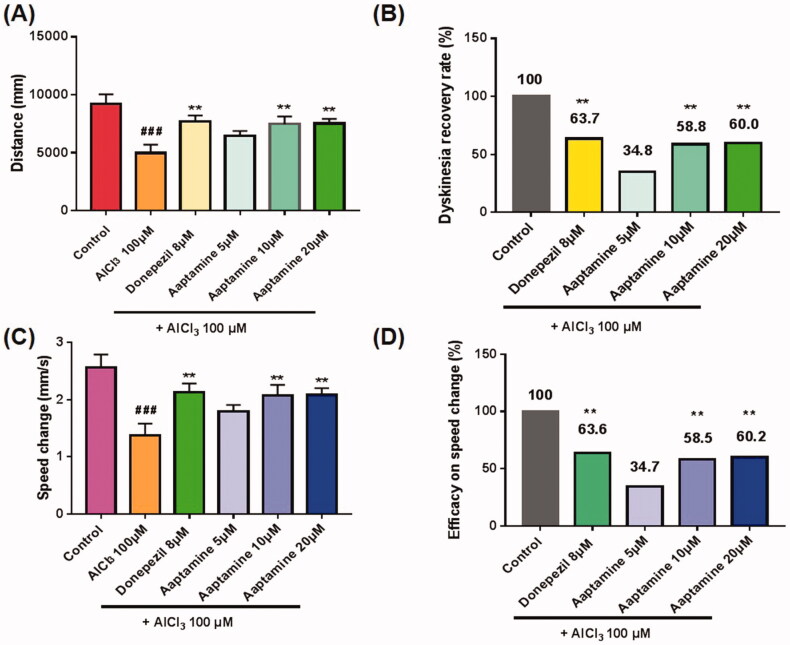
Context Alzheimer’s disease (AD) is a neurodegenerative disorder that affects millions of people worldwide. Acetylcholinesterase (AChE) and butyrylcholinesterase (BuChE) are promising therapeutic targets for AD.Objective To evaluate the inhibitory effects of aaptamine on two cholinesterases and investigate the in vivo therapeutic effect on AD in a zebrafish model.Materials and methods Aaptamine was isolated from the sponge Aaptos suberitoides Brøndsted (Suberitidae). Enzyme inhibition, kinetic analysis, surface plasmon resonance (SPR) and molecular docking assays were used to determine its inhibitory effect on AChE and BuChE in vitro. Zebrafish were divided into six groups: control, model, 8 μM donepezil, 5 , 10 and 20 μM aaptamine. After three days of drug treatment, the behaviour assay was performed.Results The IC50 values of aaptamine towards AChE and BuChE were 16.0 and 4.6 μM. And aaptamine directly inhibited the two cholinesterases in the mixed inhibition type, with Ki values of 6.96 ± 0.04 and 6.35 ± 0.02 μM, with Kd values of 87.6 and 10.7 μM. Besides, aaptamine interacts with the crucial anionic sites of AChE and BuChE. In vivo studies indicated that the dyskinesia recovery rates of 5 , 10 and 20 μM aaptamine group were 34.8, 58.8 and 60.0%, respectively, and that of donepezil was 63.7%.Discussion and conclusions Aaptamine showed great potential to exert its anti-AD effects by directly inhibiting the activities of AChE and BuChE. Therefore, this study identified a novel medicinal application of aaptamine and provided a new structural scaffold for the development of anti-AD drugs.
Overview
The claims and statistics of this paper haven’t been checked yet.
Free: it reads the open-access text and checks the first 5 claims that cite a source we can check. Create a free account to check every claim.
Integrity signals
Registry
Cites
Statistics
Figures
Verification
Claims the paper makes
The claims and statistics of this paper haven’t been checked yet.
Free: it reads the open-access text and checks the first 5 claims that cite a source we can check. Create a free account to check every claim.
Claims other papers make about this one
Each is checked against this paper’s own text: does it say what the citing paper says it does?
The source backs part of the claim, not all of it — or backs it for a different population, condition or comparison.
In the citing paper
“Targeting both AChE and Butyrylcholinesterase (BuChE) not only alleviates cognitive impairment in AD patients by increasing ACh levels but also serves as a disease-modifying agent, delaying the formation of Aβ plaques.527–529”
From Recent advances in Alzheimer's disease: Mechanisms, clinical trials and new drug development strategies. (2024) · cites this paper as [527]
Experimental — accuracy not yet measured
Self-check
Percentages, sums and reported differences re-computed from the paper’s own numbers.
The self-check needs the paper’s full text.
Citations
Cites
Ligand docking and binding site analysis with PyMOL and Autodock/Vina
Seeliger, D., & de Groot, B. L. (2010) · Journal of Computer-Aided Molecular Design · doi:10.1007/s10822-010-9352-6 · Cited by 2,623 · cited 1×
“The molecular simulation diagram is drawn by PyMOL software (Seeliger and de Groot 2010).”
MethodLane, C. A., Hardy, J., & Schott, J. M. (2018) · European Journal of Neurology · doi:10.1111/ene.13439 · Cited by 2,616
The cholinergic system in the pathophysiology and treatment of Alzheimer’s disease
Hampel, H., Mesulam, M.-M., Cuello, A. C., Farlow, M. R., Giacobini, E., Grossberg, G. T., Khachaturian, A. S., Vergallo, A., Cavedo, E., Snyder, P. J., et al. (2018) · Brain · doi:10.1093/brain/awy132 · Cited by 1,918 · cited 1×
“Many studies have revealed that AChE and BuChE are key players involved in the pathology of AD and may serve as potential therapeutic targets (Hampel et al. 2018).”
BackgroundAlzheimer's disease: Targeting the Cholinergic System
H. Ferreira-Vieira, T., M. Guimaraes, I., R. Silva, F., & M. Ribeiro, F. (2016) · Current Neuropharmacology · doi:10.2174/1570159x13666150716165726 · Cited by 1,551 · cited 1×
“The maintenance of acetylcholine (ACh) levels by inhibiting cholinesterase activity has been proven to be a successful way to relieve some cognitive and behavioural symptoms of AD (Ferreira-Vieira et al. 2016).”
BackgroundStructures of Human Acetylcholinesterase in Complex with Pharmacologically Important Ligands
Cheung, J., Rudolph, M. J., Burshteyn, F., Cassidy, M. S., Gary, E. N., Love, J., Franklin, M. C., & Height, J. J. (2012) · Journal of Medicinal Chemistry · doi:10.1021/jm300871x · Cited by 1,356 · cited 3×
“Crystal structures of recombinant human AChE in complex with Donepezil (4EY7) and BuChE with N-[1-(2,3-dihydro-1H-inden-2-yl)piperidin-3yl)methyl]-N-(2-(dimethylamino)ethyl)-2-naphthamide (4TPK) were obtained from the Protein databank (Cheung et al. 2012; Brus et al. 2014; Sakayanathan et al. 2019).”
BackgroundMethodInfluentialCurrent understanding of Alzheimer’s disease diagnosis and treatment
Weller, J., & Budson, A. (2018) · F1000Research · doi:10.12688/f1000research.14506.1 · Cited by 1,083 · cited 1×
“Cholinergic deficits resulting in the loss of brain-cell communication are the most popular hypothesis (Weller and Budson 2018).”
BackgroundA review on cholinesterase inhibitors for Alzheimer’s disease
Anand, P., & Singh, B. (2013) · Archives of Pharmacal Research · doi:10.1007/s12272-013-0036-3 · Cited by 709 · cited 1×
“Although new cholinesterase inhibitors, including naturally occurring or synthesized compounds, have been reported, of which only a small number are dual AChE-BuChE inhibitors (Anand and Singh 2013; Li et al. 2017; Moodie et al. 2019).”
BackgroundLi, Q., Yang, H., Chen, Y., & Sun, H. (2017) · European Journal of Medicinal Chemistry · doi:10.1016/j.ejmech.2017.03.062 · Cited by 322 · cited 1×
“Although new cholinesterase inhibitors, including naturally occurring or synthesized compounds, have been reported, of which only a small number are dual AChE-BuChE inhibitors (Anand and Singh 2013; Li et al. 2017; Moodie et al. 2019).”
BackgroundSelf-citationDhillon, S. (2021) · Drugs · doi:10.1007/s40265-021-01569-z · Cited by 293 · cited 2×
“market in 1998 due to hepatotoxicity (Dhillon 2021).”
BackgroundBrus, B., Košak, U., Turk, S., Pišlar, A., Coquelle, N., Kos, J., Stojan, J., Colletier, J.-P., & Gobec, S. (2014) · Journal of Medicinal Chemistry · doi:10.1021/jm501195e · Cited by 285
Saleem, S., & Kannan, R. R. (2018) · Cell Death Discovery · doi:10.1038/s41420-018-0109-7 · Cited by 239 · cited 1×
“Published articles have shown that the aluminium chloride (AlCl3)-induced zebrafish AD model can be used for screening potential anti-AD lead compounds (Caramillo and Echevarria 2017; Saleem and Kannan 2018; Pitchai et al. 2019).”
BackgroundKandiah, N., Pai, M.-C., Senanarong, V., Looi, I., Ampil, E., Park, K. W., Karanam, A. K., & Christopher, S. (2017) · Clinical Interventions in Aging · doi:10.2147/cia.s129145 · Cited by 229
Targeting beta-amyloid pathogenesis through acetylcholinesterase inhibitors
Castro, A., & Martinez, A. (2006) · Current Pharmaceutical Design · doi:10.2174/138161206778792985 · Cited by 207 · cited 1×
“Thus, AChE inhibitors with dual binding sites will not only stimulate the cholinergic system to alleviate cognitive deficits in AD patients, but also inhibit the production or aggregation of Ab (Castro and Martinez 2006).”
BackgroundTarget Enzyme in Alzheimer’s Disease: Acetylcholinesterase Inhibitors
Saxena, M., & Dubey, R. (2019) · Current Topics in Medicinal Chemistry · doi:10.2174/1568026619666190128125912 · Cited by 162 · cited 1×
“They are commonly used to treat mild-to-moderate AD and can only slow down neurodegeneration in patients with AD to some extent (Gomes et al. 2019; Saxena and Dubey 2019).”
BackgroundKošak, U., Brus, B., Knez, D., Žakelj, S., Trontelj, J., Pišlar, A., Šink, R., Jukič, M., Živin, M., Podkowa, A., et al. (2018) · Journal of Medicinal Chemistry · doi:10.1021/acs.jmedchem.7b01086 · Cited by 160
The biological activities of butyrylcholinesterase inhibitors
Zhou, S., & Huang, G. (2021) · Biomedicine & Pharmacotherapy · doi:10.1016/j.biopha.2021.112556 · Cited by 150 · cited 1×
“BuChE has been reported to compensate for the role of AChE in hydrolysing ACh during the middle and late stages of AD (Zhou and Huang 2022).”
BackgroundUsing the zebrafish model for Alzheimer’s disease research
Newman, M., Ebrahimie, E., & Lardelli, M. (2014) · Frontiers in Genetics · doi:10.3389/fgene.2014.00189 · Cited by 149 · cited 1×
“For example, whether zebrafish can be employed to model late-onset AD is debateable because they have the ability to regenerate neurons at a faster rate than that in mammals (Newman et al. 2014).”
BackgroundSynthesis of new donepezil analogues and investigation of their effects on cholinesterase enzymes
Sağlık, B. N., Ilgın, S., & Özkay, Y. (2016) · European Journal of Medicinal Chemistry · doi:10.1016/j.ejmech.2016.10.042 · Cited by 119
Natural cholinesterase inhibitors from marine organisms
Moodie, L. W. K., Sepčić, K., Turk, T., Frangež, R., & Svenson, J. (2019) · Natural Product Reports · doi:10.1039/c9np00010k · Cited by 111
Pietsch, M., & Gütschow, M. (2005) · Journal of Medicinal Chemistry · doi:10.1021/jm0508639 · Cited by 106
Design, synthesis, and AChE inhibitory activity of new benzothiazole–piperazines
Özkay, Ü. D., Can, Ö. D., Sağlık, B. N., Çevik, U. A., Levent, S., Özkay, Y., Ilgın, S., & Atlı, Ö. (2016) · Bioorganic & Medicinal Chemistry Letters · doi:10.1016/j.bmcl.2016.10.041 · Cited by 105
Zebrafish as a Model of Neurodevelopmental Disorders
de Abreu, M. S., Genario, R., Giacomini, A. C. V. V., Demin, K. A., Lakstygal, A. M., Amstislavskaya, T. G., Fontana, B. D., Parker, M. O., & Kalueff, A. V. (2020) · Neuroscience · doi:10.1016/j.neuroscience.2019.08.034 · Cited by 100 · cited 1×
“Thus, they have become an attractive and valuable model for drug screening because of certain advantages, including their small size, short generation time, rapid development and large numbers of offspring (Santana et al. 2012; de Abreu et al. 2020).”
BackgroundSang, Z., Wang, K., Han, X., Cao, M., Tan, Z., & Liu, W. (2018) · ACS Chemical Neuroscience · doi:10.1021/acschemneuro.8b00530 · Cited by 92 · cited 1×
“This experiment was based on the behaviour of the zebrafish; their swimming distance within a certain period of time was considered as an indicator, that is, the greater the distance, the better the ability of aaptamine to ameliorate dementia in the model (Sang et al. 2019).”
MethodAaptamine, an alkaloid from the sponge Aaptos suberitoides, functions as a proteasome inhibitor
Tsukamoto, S., Yamanokuchi, R., Yoshitomi, M., Sato, K., Ikeda, T., Rotinsulu, H., Mangindaan, R. E. P., de Voogd, N. J., van Soest, R. W. M., & Yokosawa, H. (2010) · Bioorganic & Medicinal Chemistry Letters · doi:10.1016/j.bmcl.2010.04.029 · Cited by 87 · cited 2×
“Previously, aaptamine was well-known as a potent antitumor agent via multiple mechanisms, such as activating the tumour suppressor p21, thus inducing cell cycle arrest and cell death as well as inhibiting the PI3K/AKT/GSK3b signalling pathway (Aoki et al. 2006; Tsukamoto et al. 2010; Jin et al. 2011; Stuhldreier et al…”
BackgroundSang, Z., Wang, K., Shi, J., Liu, W., Cheng, X., Zhu, G., Wang, Y., Zhao, Y., Qiao, Z., Wu, A., et al. (2020) · European Journal of Medicinal Chemistry · doi:10.1016/j.ejmech.2020.112180 · Cited by 79 · cited 1×
“We chose an 8lM dose of donepezil as the positive control according to the literature (Pan et al. 2019; Sang et al. 2019, 2020).”
MethodCan zebrafish be used as animal model to study Alzheimer's disease?
Santana, S., Rico, E. P., & Burgos, J. S. (2012) · Europe PMC (PubMed Central) · Cited by 76
Synthesis and Biological Evaluation of New Cholinesterase Inhibitors for Alzheimer’s Disease
Hussein, W., Sağlık, B. N., Levent, S., Korkut, B., Ilgın, S., Özkay, Y., & Kaplancıklı, Z. A. (2018) · Molecules · doi:10.3390/molecules23082033 · Cited by 74
Pan, H., Zhang, J., Wang, Y., Cui, K., Cao, Y., Wang, L., & Wu, Y. (2019) · Life Sciences · doi:10.1016/j.lfs.2019.02.046 · Cited by 71 · cited 1×
“We chose an 8lM dose of donepezil as the positive control according to the literature (Pan et al. 2019; Sang et al. 2019, 2020).”
MethodSelf-citationAaptamine, a spongean alkaloid, activates p21 promoter in a p53-independent manner
Aoki, S., Kong, D., Suna, H., Sowa, Y., Sakai, T., Setiawan, A., & Kobayashi, M. (2006) · Biochemical and Biophysical Research Communications · doi:10.1016/j.bbrc.2006.01.119 · Cited by 62 · cited 2×
“Previously, aaptamine was well-known as a potent antitumor agent via multiple mechanisms, such as activating the tumour suppressor p21, thus inducing cell cycle arrest and cell death as well as inhibiting the PI3K/AKT/GSK3b signalling pathway (Aoki et al. 2006; Tsukamoto et al. 2010; Jin et al. 2011; Stuhldreier et al…”
BackgroundNovel Cholinesterase Inhibitors Based on O-Aromatic N,N-Disubstituted Carbamates and Thiocarbamates
Krátký, M., Štěpánková, Š., Vorčáková, K., Švarcová, M., & Vinšová, J. (2016) · Molecules · doi:10.3390/molecules21020191 · Cited by 58
Delogu, G., Matos, M. J., Fanti, M., Era, B., Medda, R., Pieroni, E., Fais, A., Kumar, A., & Pintus, F. (2016) · Bioorganic & Medicinal Chemistry Letters · doi:10.1016/j.bmcl.2016.03.039 · Cited by 56 · cited 1×
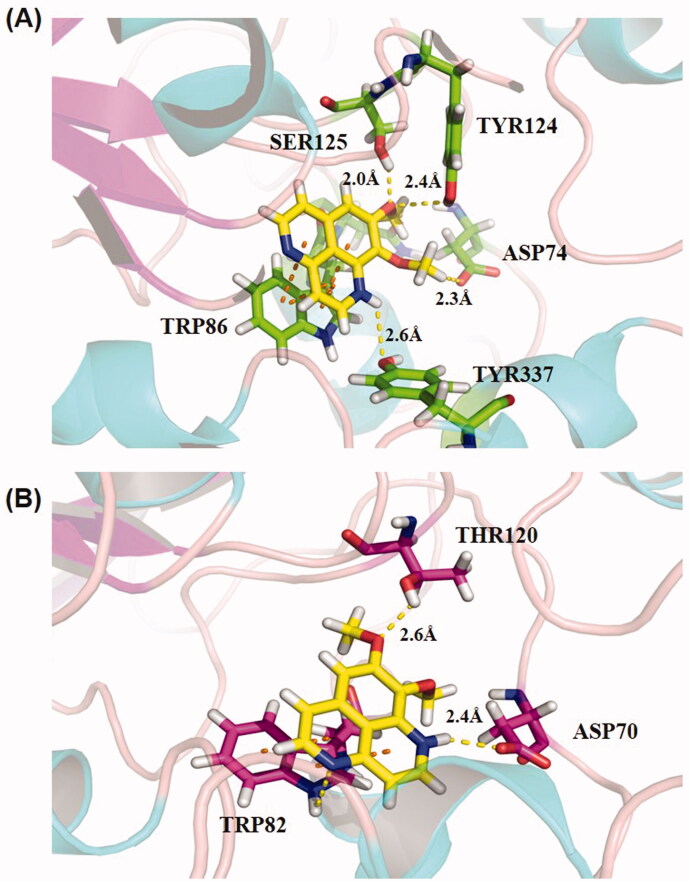
“As shown in Figure 3(B), the compound was embedded in the cavity of BuChE, thereby forming both p–p conjugation and hydrogen bonding with TRP82, a crucial anionic site of PAS that plays an important role in controlling the opening and closing of CAS (Delogu et al. 2016).”
BackgroundPitchai, A., Rajaretinam, R. K., & Freeman, J. L. (2019) · Medicines · doi:10.3390/medicines6020061 · Cited by 55 · cited 2×
“Zebrafish are rapidly emerging as valuable models for AD research (Pitchai et al. 2019).”
BackgroundGuo, Y., Yang, H., Huang, Z., Tian, S., Li, Q., Du, C., Chen, T., Liu, Y., Sun, H., & Liu, Z. (2020) · Molecules · doi:10.3390/molecules25030489 · Cited by 46 · cited 1×
“PAS can facilitate the movement of ACh towards CAS and therefore contribute to improving the catalytic efficiency of ACh (Guo et al. 2020).”
BackgroundA patent review of butyrylcholinesterase inhibitors and reactivators 2010–2017
Andrisano, V., Naldi, M., Simone, A. D., & Bartolini, M. (2018) · Expert Opinion on Therapeutic Patents · doi:10.1080/13543776.2018.1476494 · Cited by 41 · cited 1×
“This indicated that BuChE may act as a compensatory mechanism for ACh metabolism (Andrisano et al. 2018; Ko sak et al. 2018).”
BackgroundSynthesis and biological evaluation of 3-arylcoumarins as potential anti-Alzheimer's disease agents
Yang, J. W., Zhang, P., Hu, Y., Liu, T., Sun, J., & Wang, X. (2019) · Journal of Enzyme Inhibition and Medicinal Chemistry · doi:10.1080/14756366.2019.1574297 · Cited by 39 · cited 1×
“Moreover, increasing evidence supports the idea that dual AChE/BuChE inhibition can maximize the therapeutic efficacy in AD (Kandiah et al. 2017; Yang et al. 2019).”
BackgroundBowroju, S. K., Mainali, N., Ayyadevara, S., Penthala, N. R., Krishnamachari, S., Kakraba, S., Reis, R. J. S., & Crooks, P. A. (2020) · Molecules · doi:10.3390/molecules25163610 · Cited by 39 · cited 1×
“As the population ages, the number of patients is expected to reach 130 million worldwide by 2050 (Lane et al. 2018; Bowroju et al. 2020).”
BackgroundZebrafish as a Promising Tool for Modeling Neurotoxin-Induced Alzheimer’s Disease
Thawkar, B. S., & Kaur, G. (2021) · Neurotoxicity Research · doi:10.1007/s12640-021-00343-z · Cited by 37 · cited 1×
“Zebrafish AD model has been widely used in rapid screening of anti-AD potential therapeutic agents (Thawkar and Kaur 2021).”
MethodPang, X., Fu, H. Z., Yang, S., Wang, L., Liu, A., Wu, S., & Du, G. (2017) · Molecules · doi:10.3390/molecules22081254 · Cited by 31 · cited 4×
“sites also improved the catalytic efficiency, thus leading to higher inhibitory effects (Pang et al. 2017).”
BackgroundInfluentialAntiproliferative Effect of Aaptamine on Human Chronic Myeloid Leukemia K562 Cells
Jin, M., Zhao, W., Zhang, Y., Kobayashi, M., Duan, H., & Kong, D. (2011) · International Journal of Molecular Sciences · doi:10.3390/ijms12117352 · Cited by 30 · cited 2×
“Previously, aaptamine was well-known as a potent antitumor agent via multiple mechanisms, such as activating the tumour suppressor p21, thus inducing cell cycle arrest and cell death as well as inhibiting the PI3K/AKT/GSK3b signalling pathway (Aoki et al. 2006; Tsukamoto et al. 2010; Jin et al. 2011; Stuhldreier et al…”
BackgroundKim, J. H., Lee, S., Lee, H. W., Sun, Y. N., Jang, W.-H., Yang, S. Y., Jang, H. D., & Kim, Y. H. (2016) · International Journal of Biological Macromolecules · doi:10.1016/j.ijbiomac.2016.06.069 · Cited by 30 · cited 1×
“These valuable interactions might explain the strong inhibitory effect of aaptamine on BuChE (Kim et al. 2016; Pang et al. 2017).”
BackgroundKudryavtsev, D. S., Makarieva, T. N., Utkina, N. K., Santalova, Е. А., Kryukova, E. V., Methfessel, C., Tsetlin, V. I., Stonik, V. A., & Kasheverov, I. E. (2014) · Marine Drugs · doi:10.3390/md12041859 · Cited by 29 · cited 2×
“…to have a weak inhibitory effect on nicotinic acetylcholine receptors (nAChRs) of Torpedo californica Ayres (Torpedinidae) and humans and would cause some peripheral effects, such as muscle diastole, which seems contradictory to the results of the assays in this study (Kudryavtsev et al. 2014).”
ResultSakayanathan, P., Loganathan, C., Kandasamy, S., Valmiki, R. R., Kumaradhas, P., & Palvannan, T. (2019) · International Journal of Biological Macromolecules · doi:10.1016/j.ijbiomac.2019.08.168 · Cited by 28 · cited 2×
“Crystal structures of recombinant human AChE in complex with Donepezil (4EY7) and BuChE with N-[1-(2,3-dihydro-1H-inden-2-yl)piperidin-3yl)methyl]-N-(2-(dimethylamino)ethyl)-2-naphthamide (4TPK) were obtained from the Protein databank (Cheung et al. 2012; Brus et al. 2014; Sakayanathan et al. 2019).”
BackgroundMethodStuhldreier, F., Kassel, S., Schumacher, L., Wesselborg, S., Proksch, P., & Fritz, G. (2015) · Cancer Letters · doi:10.1016/j.canlet.2015.02.030 · Cited by 27 · cited 2×
“Previously, aaptamine was well-known as a potent antitumor agent via multiple mechanisms, such as activating the tumour suppressor p21, thus inducing cell cycle arrest and cell death as well as inhibiting the PI3K/AKT/GSK3b signalling pathway (Aoki et al. 2006; Tsukamoto et al. 2010; Jin et al. 2011; Stuhldreier et al…”
BackgroundAlzheimer’s disease in the zebrafish: where can we take it?
Caramillo, E. M., & Echevarria, D. J. (2017) · Behavioural Pharmacology · doi:10.1097/fbp.0000000000000284 · Cited by 26 · cited 1×
“Published articles have shown that the aluminium chloride (AlCl3)-induced zebrafish AD model can be used for screening potential anti-AD lead compounds (Caramillo and Echevarria 2017; Saleem and Kannan 2018; Pitchai et al. 2019).”
BackgroundAaptamine attenuates the proliferation and progression of non-small cell lung carcinoma
Gong, K., Miao, S., Yang, L., Wu, Y., Guo, J., Chen, W., Dai, J., Du, J., & Xi, S. (2020) · Pharmaceutical Biology · doi:10.1080/13880209.2020.1822420 · Cited by 21 · cited 1×
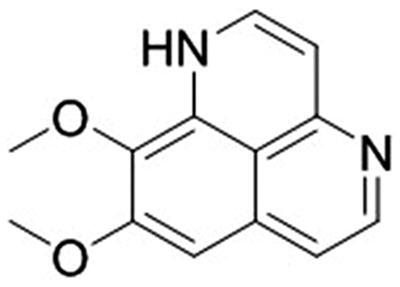
“The isolation of aaptamine was described in our previous work (Gong et al. 2020).”
BackgroundSelf-citationSpirocyclohexadienones as an Uncommon Scaffold for Acetylcholinesterase Inhibitory Activity
Gomes, R. C., Sakata, R. P., Almeida, W. P., & Coelho, F. (2018) · Medicinal Chemistry · doi:10.2174/1573406414666181109114214 · Cited by 10 · cited 1×
“They are commonly used to treat mild-to-moderate AD and can only slow down neurodegeneration in patients with AD to some extent (Gomes et al. 2019; Saxena and Dubey 2019).”
BackgroundYasuno, F., & Minami, H. (2021) · International Journal of Geriatric Psychiatry · doi:10.1002/gps.5522 · Cited by 7 · cited 2×
“some neuroprotective effects in patients within the AD continuum (Yasuno and Minami 2021).”
BackgroundInfluential
Cited by
Zhang, J., Zhang, Y., Wang, J., Xia, Y., Zhang, J., & Chen, L. (2024) · Signal Transduction and Targeted Therapy · doi:10.1038/s41392-024-01911-3 · Cited by 1,138
“526 527 – 529 The dual inhibitor of AChE and BuChE, compound 45 , signi fi cantly enhanced the learning and memory abilities of aged AD mice.”
BackgroundCarroll, A. R., Copp, B. R., Grkovic, T., Keyzers, R. A., & Prinsep, M. R. (2024) · Natural Product Reports · doi:10.1039/d3np00061c · Cited by 171
The mechanisms, hallmarks, and therapies for brain aging and age-related dementia
Jin, S., Lü, W., Zhang, J., Zhang, L., Tao, F., Zhang, Y., Hu, X., & Liu, Q. (2024) · Science Bulletin · doi:10.1016/j.scib.2024.09.005 · Cited by 44
Marine Natural Products in Inflammation‐Related Diseases: Opportunities and Challenges
Zhang, T., Ouyang, Z., Zhang, Y., Sun, H., Kong, L., Xu, Q., Qu, J., & Sun, Y. (2025) · Medicinal Research Reviews · doi:10.1002/med.22109 · Cited by 23
“Researchers have discovered that aaptamine exhibits strong potential in combating Alzheimer's disease (AD) by inhibiting acetylcholinesterase and butyrylcholinesterase [95].”
Pidaný, F., Křoustková, J., Mamun, A. A., Suchánková, D., Brazzolotto, X., Nachon, F., Chantegreil, F., Doležal, R., Pulkrabkova, L., Múčková, Ľ., et al. (2023) · European Journal of Medicinal Chemistry · doi:10.1016/j.ejmech.2023.115301 · Cited by 21
Metadata
- Authors
- Miao, S., He, Q., Li, C., Wu, Y., Liu, M., Chen, Y., Qi, S., & Gong, K.
- Affiliations
- Binzhou Medical University (CN)
- Wuhan Institute of Technology (CN)
- Corresponding author
- Qi, Shizhou
- Gong, Kaikai
- Venue
- Pharmaceutical Biology
- Publisher
- Informa UK Limited
- Published
- 2022-08-14
- Volume
- 60
- Issue
- 1
- Pages
- 1502-1510
- ISSN
- 0925-1618 (ISSN-L)
- 1388-0209
- 1744-5116
- PMC
- PMC9380430
- OpenAlex
- W4291471200
- Cited by
- 29
- References
- 48
- Citations by year
- 2026: 5 · 2025: 10 · 2024: 10 · 2023: 4
- FWCI
- 3.59
- Type
- journal article
- Language
- en
- Open access
- gold
- doi.org
- Licence
- Locations
- Pharmaceutical Biology (publishedVersion, cc-by)
- PubMed Central (publishedVersion, cc-by)
- PubMed (publishedVersion)
- DOAJ (DOAJ: Directory of Open Access Journals) (submittedVersion, cc-by-sa)
- Funders
- National Natural Science Foundation of China (81903537, 31900441, 81903102)
- Natural Science Foundation of Shandong Province (ZR2018BB024)
- Traditional Chinese Medicine Technology Development Foundation of Shandong (2019-0521)
- Science and Technology Development Foundation of Binzhou (2015ZC0304)
- Research Foundation of Binzhou Medical University (BY2015KYQD31, BY2017KJ17)
- Topics
- Health Sciences › Medicine › Pharmacology (medical) › Cholinesterase and Neurodegenerative Diseases
- Life Sciences › Neuroscience › Cellular and Molecular Neuroscience › Alzheimer's disease research and treatments
- Life Sciences › Biochemistry, Genetics and Molecular Biology › Molecular Biology › Enzyme function and inhibition
- Keywords
- aaptamine, Alzheimer's disease, acetylcholinesterase inhibition, butyrylcholinesterase inhibition, dual cholinesterase inhibitors, marine sponge natural products, zebrafish model, donepezil, mixed-type inhibition, enzyme kinetics, anti-Alzheimer drug candidates
- MeSH terms
- Donepezil, Acetylcholinesterase, Alzheimer Disease, Animals, Butyrylcholinesterase, Cholinesterase Inhibitors, Humans, Kinetics, Naphthyridines, Zebrafish, Molecular Docking Simulation
About these checks
Registry, retraction, Cites and statistics results are computed, not judged, with one exception: a printed reference that no index lists is read once by a model before it counts as a citation error. Claims are extracted by a model and kept only when their quote appears verbatim in the text; each cited source is then checked, with a model’s help, for whether it says what the claim relies on. Those verdicts can be wrong — read the claim’s quote and the cited source before relying on one.
Statistics and arithmetic are recomputed, not judged.
Confidence bands are shown only for fields calibrated on our annotated test set. None is calibrated yet, so no band is shown.
What counts as a claim ›How we measure confidence ›How we check this ›
Are you an author, or do you see a problem with this page? Request a review
Data sources
Bibliographic data: Semantic Scholar, OpenAlex, Crossref.
Contains information from the Semantic Scholar Academic Graph Datasets, made available under the ODC Attribution License (ODC-BY 1.0).
Semantic Scholar’s data is described in: Kinney, R., et al. (2023). The Semantic Scholar Open Data Platform. arXiv:2301.10140.
