

Containers of Stories: using co-design and digital augmentation to empower the museum community and create novel experiences of heritage at a house museum
Open accessThe DOI matches its Crossref record; 23 of the 23 references it cites were found in a registry or an index.
Abstract
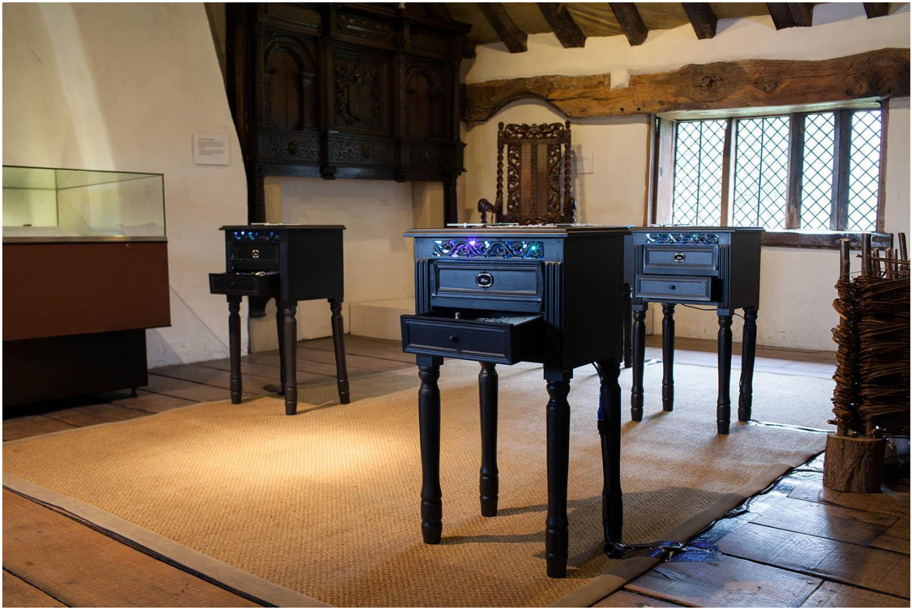
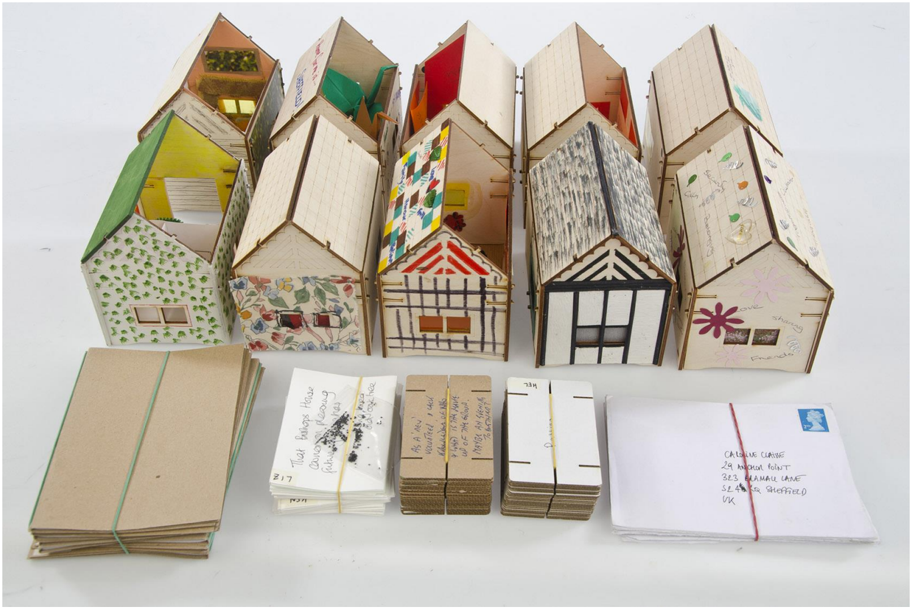
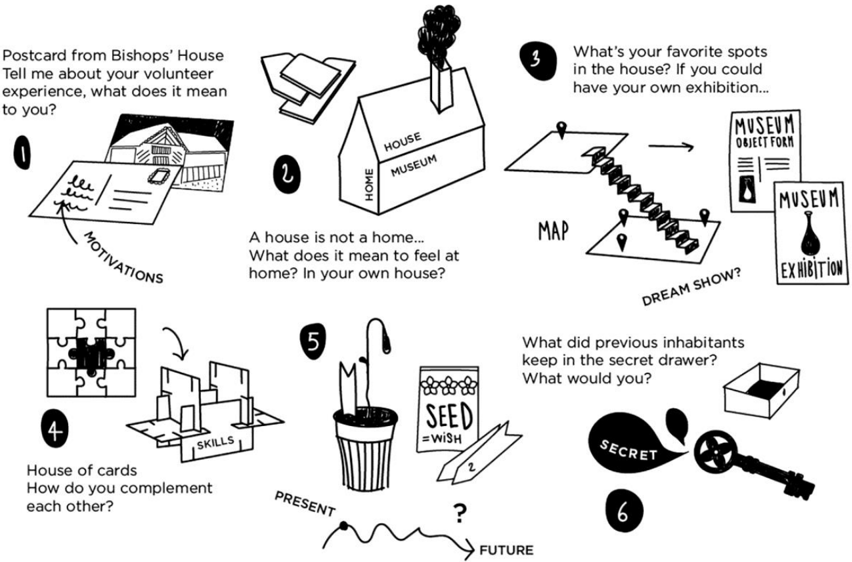
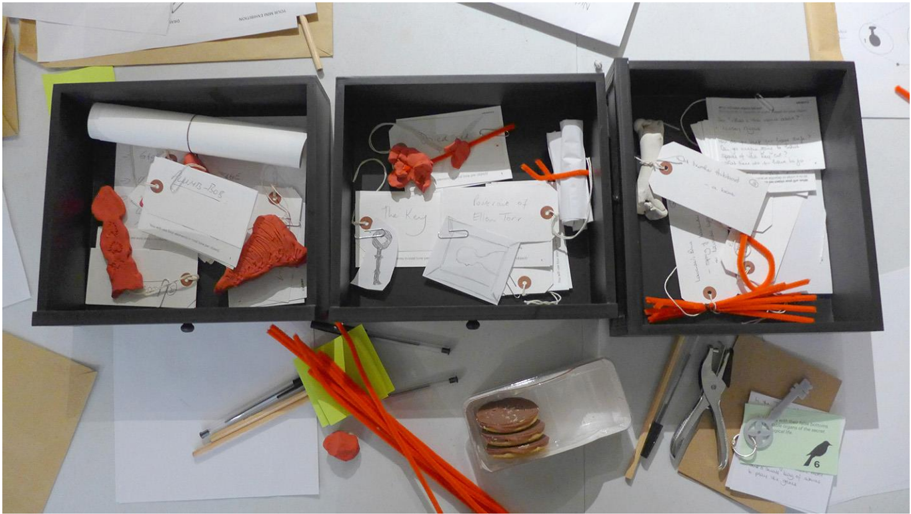
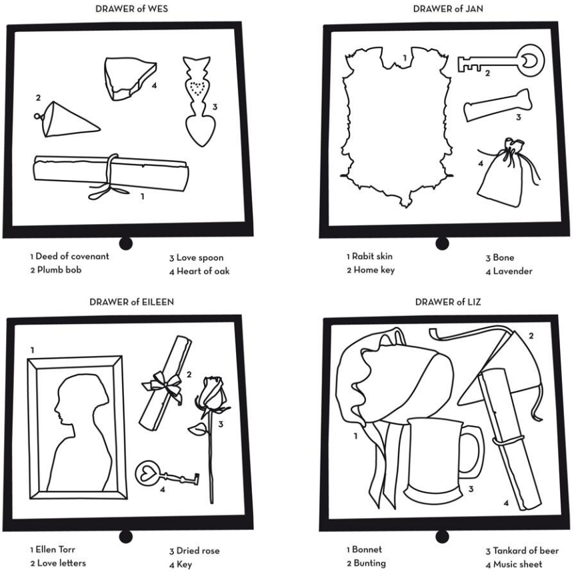
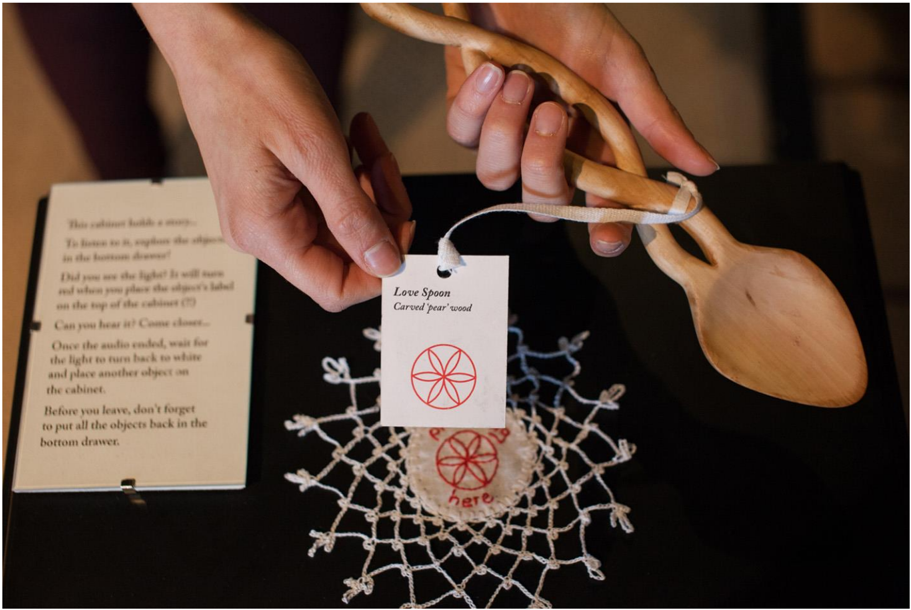
This paper presents current research on the design and evaluation of tangible interaction within house museums – a particular type of heritage site. Containers of Stories was an interactive installation co-designed with the volunteers at the Bishops’ House museum, one of the few surviving Tudor buildings in Sheffield, UK. Dating from the 16th century, the house was turned into a museum in the 1970s for its historical and social importance and is now managed by a community of local volunteers who constantly needs to increase both visitors’ interest and awareness of the place for its survival. The experience of co-designing Containers of Stories pushed the volunteers beyond day-to-day management toward more creative and curatorial roles. This paper gives insights on how this hybrid physical-digital installation succeeded in engaging visitors in new ways with heritage that has the potential to strengthen the resilience of the community.
Overview
The claims and statistics of this paper haven’t been checked yet.
Free: it reads the open-access text and checks the first 5 claims that cite a source we can check. Create a free account to check every claim.
Integrity signals
Registry
Cites
Statistics
Figures


Verification
Claims the paper makes
The claims and statistics of this paper haven’t been checked yet.
Free: it reads the open-access text and checks the first 5 claims that cite a source we can check. Create a free account to check every claim.
Claims other papers make about this one
Each is checked against this paper’s own text: does it say what the citing paper says it does?
The source backs part of the claim, not all of it — or backs it for a different population, condition or comparison.
In the citing paper
“Staff and volunteers play an important role here, as they weave stories and place by sharing with visitors a mixture of facts, speculation and anecdotes about the lives of previous residents [11] [12].”
From Crafting Critical Heritage Discourses into Interactive Exhibition Design (2020) · cites this paper as [12]
Experimental — accuracy not yet measuredThe source backs part of the claim, not all of it — or backs it for a different population, condition or comparison.
In the citing paper
“The cabinets were evaluated with 15 groups of visitors and findings [12] showed the impact of designing for tangible interaction [24] to promote emotional and personal engagement with the House.”
From Crafting Critical Heritage Discourses into Interactive Exhibition Design (2020) · cites this paper as [12]
Experimental — accuracy not yet measured
Self-check
Percentages, sums and reported differences re-computed from the paper’s own numbers.
The self-check needs the paper’s full text.
Citations
Cites
The publisher hasn’t deposited this paper’s reference list.
Research works printed but not linked: 10
- Boehner, K., Vertesi, J., Sengers, P., & Dourish, P. (2007). How HCI interprets the probes. Paper presented at the Proceedings of the SIGCHI Conference on Human Factors in Computing Systems, 1077-1086.
- Cross, N. (1982). Designerly ways of knowing. Design Studies, 3 (4), 221-227. Doi: 10.1016/0142694X(82)90040-0 · doi:10.1016/0142694x(82)90040-0
- Csikszentmihalyi, M., & Hermanson, K. (1999). Why does one want to learn. In The Educational Role of the Museum (pp. 146-160 ). Routledge.
- Dudley, S. (2013). Museum materialities: Objects, engagements, interpretations. Routledge.
- Falk, J. H. (2009). Identity and the museum visitor experience. Left Coast Press.
- Gaver, W. (2012). What should we expect from research through design? Paper presented at the Proceedings of the SIGCHI Conference on Human Factors in Computing Systems, 937-946.
- Halloran, J., Hornecker, E., Fitzpatrick, G., Millard, D. E., & Weal, M. J. (2005). The Chawton House Experience-Augmenting the Grounds of a Historic Manor House. In, Workshop - Re-Thinking Technology in Museums: Towards a New Understanding of People's Experience in Museums, Limerick, Ireland, 54-65. Retrieved from http://eprints.soton.ac.uk/id/eprint/261793
- Kara, H. (2015). Creative research methods in the social sciences: A practical guide. Policy Press.
- Petrelli, D., Dulake, N., Marshall, M. T., Kockelkorn, H., & Pisetti, A. (2016). Do it together: The effect of curators , designers, and technologists sharing the making of new interactive visitors' experiences. Proceedings of MW2016: Museums and the Web 2016, Los Angeles, 6-9 April 2016. Retrieved from http://mw2016.museumsandtheweb.com/paper/do-it-together-the-effect-ofcurators-designers-and-technologists-sharing-the-making-of-new-interactive-visitors-experiences/
- Vom Lehn, D., & Heath, C. (2005). Accounting for new technology in museum exhibitions. International Journal of Arts Management, 11-21. Retrieved from http://www.jstor.org/stable/41064849
Cited by
A Review of the Role of Social Media for the Cultural Heritage Sustainability
Liang, X., Lü, Y., & Martin, J. (2021) · Sustainability · doi:10.3390/su13031055 · Cited by 209
Digital 3D Technologies for Humanities Research and Education: An Overview
Münster, S. (2022) · Applied Sciences · doi:10.3390/app12052426 · Cited by 107
Human-Computer Interactions in Museums
Hornecker, E., & Ciolfi, L. (2019) · Synthesis lectures on human-centered informatics · doi:10.2200/s00901ed1v01y201902hci042 · Cited by 101
Self-citationHuman-Computer Interactions in Museums
Hornecker, E., & Ciolfi, L. (2019) · Synthesis lectures on human-centered informatics · doi:10.1007/978-3-031-02225-8 · Cited by 95
Self-citationArrigoni, G., Schofield, T., & Trujillo-Pisanty, D. (2019) · Museum Management and Curatorship · doi:10.1080/09647775.2019.1683880 · Cited by 59
Digital Augmentation of Historical Objects Through Tangible Interaction
Not, E., Cavada, D., Maule, S., Pisetti, A., & Venturini, A. (2019) · Journal on Computing and Cultural Heritage · doi:10.1145/3297764 · Cited by 48
Handbook of Digital 3D Reconstruction of Historical Architecture
Münster, S., Apollonio, F. I., Blümel, I., Fallavollita, F., Foschi, R., Grellert, M., Ioannides, M., Jahn, P. H., Kurdiovsky, R., Kuroczyński, P., et al. (2024) · Synthesis lectures on engineers, technology, and society · doi:10.1007/978-3-031-43363-4 · Cited by 51
Zhang, Y., Kaya, D. I., & van Wesemael, P. J. V. (2024) · Journal of Cultural Heritage · doi:10.1016/j.culher.2024.10.014 · Cited by 44
“The involvement of youth in decision-making can be ensured if the roles and responsibilities of youth are clearly stated in the participatory practices [ 81 , 82 ].”
Towards Critical Heritage in the wild: Analysing Discomfort through Collaborative Autoethnography
Bala, P., Sanches, P., Cesário, V., Leão, S., Rodrigues, C., Nunes, N. J., & Nisi, V. (2023) · Proceedings of the 2023 CHI Conference on Human Factors in Computing Systems · doi:10.1145/3544548.3581274 · Cited by 27
“This emphasis on dissemination is also often accompanied with an emphasis on education, with several digital artifacts exploring virtual or augmented reality [14, 50], serious games [71], social media [77] and tangible interaction [34, 95], in a variety of contexts (e.”
BackgroundCrafting Critical Heritage Discourses into Interactive Exhibition Design
Claisse, C., Petrelli, D., Ciolfi, L., Dulake, N., Marshall, M. T., & Durrant, A. C. (2020) · Proceedings of the 2020 CHI Conference on Human Factors in Computing Systems · doi:10.1145/3313831.3376689 · Cited by 30
Self-citationDesigning for cultural learning and reflection using IoT serious game approach
Huang, H., & Ng, K. H. (2020) · Personal and Ubiquitous Computing · doi:10.1007/s00779-020-01482-4 · Cited by 31
“The study highlights the power of touch and evocative stories when visitors engaged at personal and emotional levels with the objects and stories created by the volunteers [8].”
BackgroundZhao, Y., Lian, J., Zhang, Y., Song, S., & Yao, X. (2023) · Journal of the Association for Information Science and Technology · doi:10.1002/asi.24862 · Cited by 28
Social Media as a Medium to Promote Local Perception Expression in China’s World Heritage Sites
Liang, X., Hua, N., Martin, J., Dellapiana, E., Coscia, C., & Zhang, Y. (2022) · Land · doi:10.3390/land11060841 · Cited by 29
“At the Bishops’ House Museum, located in Sheffield, UK, digital augmentation helps engage visitors, in a codesign way, with architectural heritage [8].”
BackgroundInteracting with Heritage: On the Use and Potential of IoT Within the Cultural Heritage Sector
Marshall, M. T. (2018) · International Conference on Internet of Things: Systems, Management and Security (IOTSMS) · doi:10.1109/iotsms.2018.8554899 · Cited by 30
“Other connectivity issues can arise in sites located within cities, but where it is not possible to an internet connection within the building (such as some house museums [49]), or sites where it is not possible to run cabling and the construction of the site makes wireless connectivity difficult (such as some undergr…”
BackgroundMultisensory Interactive Storytelling to Augment the Visit of a Historical House Museum
Claisse, C., Petrelli, D., Dulake, N., Marshall, M. T., & Ciolfi, L. (2018) · 2018 3rd Digital Heritage International Congress (DigitalHERITAGE) held jointly with 2018 24th International Conference on Virtual Systems & Multimedia (VSMM 2018) · doi:10.1109/digitalheritage.2018.8810099 · Cited by 23
Self-citationGasca, A. M. C., Jacobs, J., Monroy‐Hernández, A., & Nebeling, M. (2022) · Designing Interactive Systems Conference · doi:10.1145/3532106.3533549 · Cited by 25
Design and Plural Heritages: Composing Critical Futures
Schofield, T., Foster Smith, D., Bozoglu, G., & Whitehead, C. (2019) · Proceedings of the 2019 CHI Conference on Human Factors in Computing Systems · doi:10.1145/3290605.3300236 · Cited by 19
Münster, S., Maiwald, F., Bruschke, J., Kröber, C., Sun, Y., Dworak, D., Komorowicz, D., Munir, I., Beck, C., & Münster, D. L. (2024) · Applied Sciences · doi:10.3390/app14051992 · Cited by 19
Co-Producing Collections: Re-imagining a Polyvocal Past with Cultural Probes
Schofield, T., Foster-Smith, D., Bozoğlu, G., & Whitehead, C. (2018) · Open Library of Humanities · doi:10.16995/olh.296 · Cited by 17
Memoryscapes: Designing Situated Narratives of Place through Heritage Collections
Rogage, K., Kirk, D. S., Charlton, J. I., Nally, C. V., Swords, J., & Watson, R. (2021) · International Journal of Human-Computer Interaction · doi:10.1080/10447318.2020.1865004 · Cited by 16
“It is of note that Claisse et al. (2017) point to how participatory design projects in the cultural heritage sector have explored inclusion of visitors, curators (and with their intervention) volunteers in the design process.”
BackgroundDesign synthesis: An act of Research through Design
Conference, R., Claisse, C., Daniela, P., & Dulake, N. (2019) · SHURA (Sheffield Hallam University Research Archive) (Sheffield Hallam University) · doi:10.6084/m9.figshare.7855826 · Cited by 15
Self-citationDesign of a Cultural Heritage Gesture-Based Puzzle Game and Evaluation of User Experience
Katsantonis, M. N., Manikas, A., & Mavridis, I. K. (2023) · Applied Sciences · doi:10.3390/app13095493 · Cited by 12
Experiencing Authenticity of the House Museums in Hybrid Environments
Miano, A., & Borsotti, M. (2023) · Multimodal Technologies and Interaction · doi:10.3390/mti7070072 · Cited by 10
Magical Realism and Augmented Reality: Designing Apps with Children in a Cultural Institution
Schofield, T., Trujillo-Pisanty, D., Arrigoni, G., Reynolds, K., & Pattinson, R. (2019) · Designing Interactive Systems Conference · doi:10.1145/3322276.3322293 · Cited by 10
“…to challenges for digital innovation in the cultural sector has motivated a significant body of previous research exploring, inter alia , the co-creation of tangible exhibits [17] co-designing displays [15,16] or assessing the digital literacy of museum staff to support innovation work [9].”
BackgroundMethodThe Role Of Digital Media In Maintaining Pakualaman Culture: Documentation And Community Engagement
Sekarningrum, A. A., & Lokita, R. A. M. (2024) · INJECT (Interdisciplinary Journal of Communication) · doi:10.18326/inject.v9i2.2440 · Cited by 9
Ress, S. A., & Cafaro, F. (2020) · Information · doi:10.3390/info12010015 · Cited by 9
“[71] describes a collaborative design process in which their researchers interacted with museum interpreters to create an interactive installation at a house museum in the U.”
BackgroundLoci Stories: Exploring Design for Polyvocality
Tsenova, V., Wood, G., & Kirk, D. S. (2023) · Designing Interactive Systems Conference · doi:10.1145/3563657.3596114 · Cited by 9
Curating (im)mobility: Peri‐urban agency in the Lwandle Migrant Labour Museum
Kappler, S. (2020) · Global Policy · doi:10.1111/1758-5899.12832 · Cited by 5
Visual Signifier for Large Multi-Touch Display to Support Interaction in a Virtual Museum Interface
Mahamad, S., Shuhaili, F. M., Sulaiman, S. B., Rambli, D. R. A., & Balogun, A. O. (2022) · Applied Sciences · doi:10.3390/app122111191 · Cited by 6
Empowering Young Voices: Prototyping Method for AR in Decolonisation Discussions
Caelenberghe, M., Lochrie, M., Burrows, J., Das, R., Mills, J. J., Law, J., & Zubair, M. S. (2023) · Electronic workshops in computing · doi:10.14236/ewic/bcshci2023.31 · Cited by 4
“This builds upon works by Nebeling (Nebeling et. al., 2018; Nebeling & Madier, 2019; Cárdenas Gasca et. al., 2022) and Ciolfi (Ciolfi et. al., 2008; Ciolfi et. al., 2016; Claisse et. al., 2017) within the sphere of prototyping with AR and museum interactions from an HCI perspective.”
Spanish house museums on the web and with the web: a galaxy of technologies
Mateo, S. P. (2021) · Museum Management and Curatorship · doi:10.1080/09647775.2021.1954978 · Cited by 4
“This concept of technology has been the object of numerous publications, especially in the fi eld of tangible locution interaction (Hornecker and Buur 2006) and analysed in some house museums, such as Bishop ’ s House in She ffi eld (Claisse, Ciol fi and Petrelli 2017).”
MethodThe Replica Project: Co-Designing a Discovery Engine for Digital Art History
di Lenardo, I. (2022) · Multimodal Technologies and Interaction · doi:10.3390/mti6110100 · Cited by 4
Nousir, A., Jones, L., Lin, F., Everrett, T., & Nabil, S. (2025) · Proceedings of the ACM on Human-Computer Interaction · doi:10.1145/3773073 · Cited by 2
“Our work builds on ‘Emergent’ [20], a miniature art gallery developed during the pandemic, and similar small-scale embedded exhibitions [30, 31].”
Using New Tools to Attract Visitors to Museums and Heritage Sites
Bassa, L., Smith, M., & Papp-Váry, Á. (2021) · Advances in hospitality, tourism and the services industry (AHTSI) book series · doi:10.4018/978-1-7998-8528-3.ch016 · Cited by 2
UX values framing: an authoring tool to capture children’s values for widening narratives
Caelenberghe, M., Lochrie, M., & Read, J. C. (2025) · Interacting with Computers · doi:10.1093/iwc/iwaf032 · Cited by 1
An Interdisciplinary Approach to Accessible Museum Exhibitions
Ayukawa, C., & Frankel, L. (2020) · Advances in intelligent systems and computing · doi:10.1007/978-3-030-51194-4_62 · Cited by 1
The augmented house: Crafting tangible interaction in house museums
Claisse, C. (2019) · Sheffield Hallam University · doi:10.7190/shu-thesis-00195
Self-citationTeideman, S. L. (2018) · Massey Research Online (Massey University)
Alarcón-Aranguren, L. M., (Colombia), U. D. C. U. P. Y. T., Vargas, Á. L. G., & (Colombia), U. D. C. (2024) · PASOS Revista de Turismo y Patrimonio Cultural · doi:10.25145/j.pasos.2024.22.032
The Impact of Digitalization on Museum Sustainability: Social Media and Sustainability
Selvakumar, P., & Manjunath, T. C. (2025) · IGI Global eBooks · doi:10.4018/979-8-3373-3800-2.ch007
Zhu, J., Xie, Q., & Ren, R. (2026) · Applied Spatial Analysis and Policy · doi:10.1007/s12061-026-09869-1
“Through this interactional process, city image is co-produced by institutional design intentions and user practices, with social media platforms providing the technological mediation (Claisse et al., 2017).”
Liu, J. (2026) · Museums & Social Issues · doi:10.1080/15596893.2026.2685267
“Digital media has the potential for such exclusions, providing platforms for polyvocality (Franke et al., 2024), co-creation (Derda, 2023), and community engagement (Claisse et al., 2017), yet this is only achievable when complemented by a critically oriented curatorial approach.”
Metadata
- Authors
- Claisse, C., Ciolfi, L., & Petrelli, D.
- Affiliations
- Sheffield Hallam University (GB)
- Corresponding author
- Claisse, Caroline
- Venue
- The Design Journal
- Publisher
- Informa UK Limited
- Published
- 2017-07-28
- Volume
- 20
- Issue
- sup1
- Pages
- S2906-S2918
- ISSN
- 1460-6925 (ISSN-L)
- 1756-3062
- OpenAlex
- W2611930488
- Cited by
- 40
- References
- 0
- Citations by year
- 2026: 2 · 2025: 3 · 2024: 5 · 2023: 6 · 2022: 5 · 2021: 4 · 2020: 5 · 2019: 7 · 2018: 3
- FWCI
- 69.46
- Type
- journal article
- Language
- en
- Open access
- hybrid
- doi.org
- Licence
- Locations
- The Design Journal (publishedVersion, cc-by)
- SHURA (Sheffield Hallam University Research Archive) (Sheffield Hallam University) (acceptedVersion)
- Virtual Community of Pathological Anatomy (University of Castilla La Mancha) (submittedVersion)
- Topics
- Social Sciences › Arts and Humanities › Museology › Museums and Cultural Heritage
- Physical Sciences › Computer Science › Human-Computer Interaction › Innovative Human-Technology Interaction
- Physical Sciences › Computer Science › Human-Computer Interaction › Interactive and Immersive Displays
- Keywords
- house museums, co-design, digital augmentation, tangible interaction, interactive installation, museum volunteers, community participation, heritage experience, visitor engagement, Tudor architecture, community resilience
About these checks
Registry, retraction, Cites and statistics results are computed, not judged, with one exception: a printed reference that no index lists is read once by a model before it counts as a citation error. Claims are extracted by a model and kept only when their quote appears verbatim in the text; each cited source is then checked, with a model’s help, for whether it says what the claim relies on. Those verdicts can be wrong — read the claim’s quote and the cited source before relying on one.
Statistics and arithmetic are recomputed, not judged.
Confidence bands are shown only for fields calibrated on our annotated test set. None is calibrated yet, so no band is shown.
What counts as a claim ›How we measure confidence ›How we check this ›
Are you an author, or do you see a problem with this page? Request a review
Data sources
Bibliographic data: Semantic Scholar, OpenAlex, Crossref.
Contains information from the Semantic Scholar Academic Graph Datasets, made available under the ODC Attribution License (ODC-BY 1.0).
Semantic Scholar’s data is described in: Kinney, R., et al. (2023). The Semantic Scholar Open Data Platform. arXiv:2301.10140.
