

Impacts of the CBAM on EU trade partners: consequences for developing countries
Open accessThe DOI matches its Crossref record; 47 of the 47 references it cites were found in a registry or an index.
Abstract
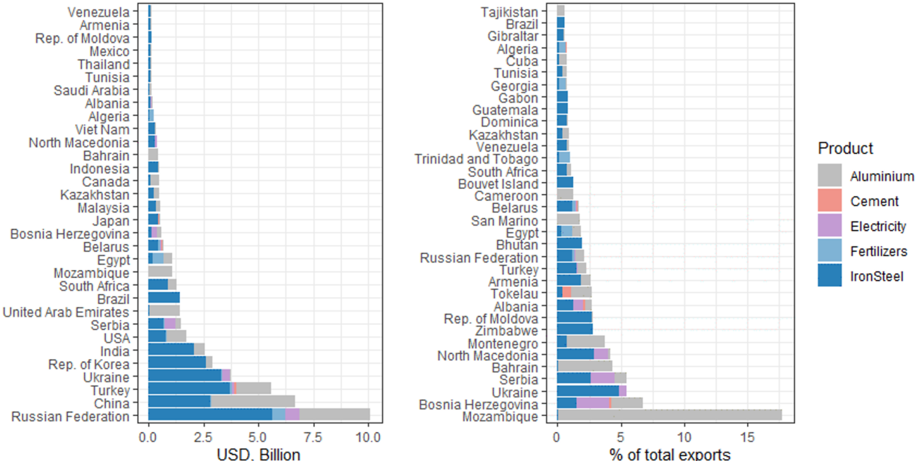
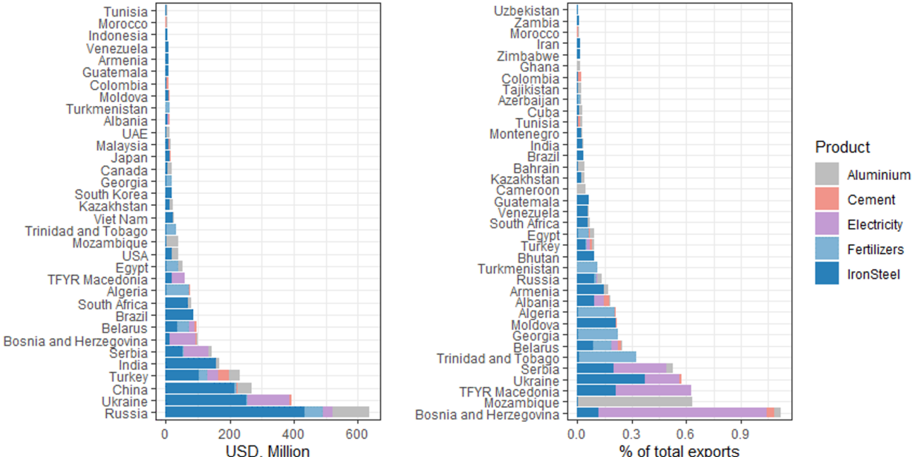
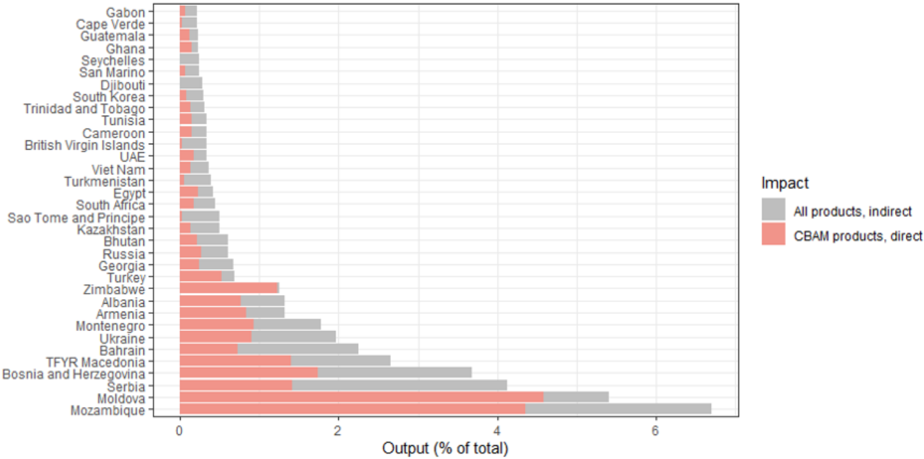
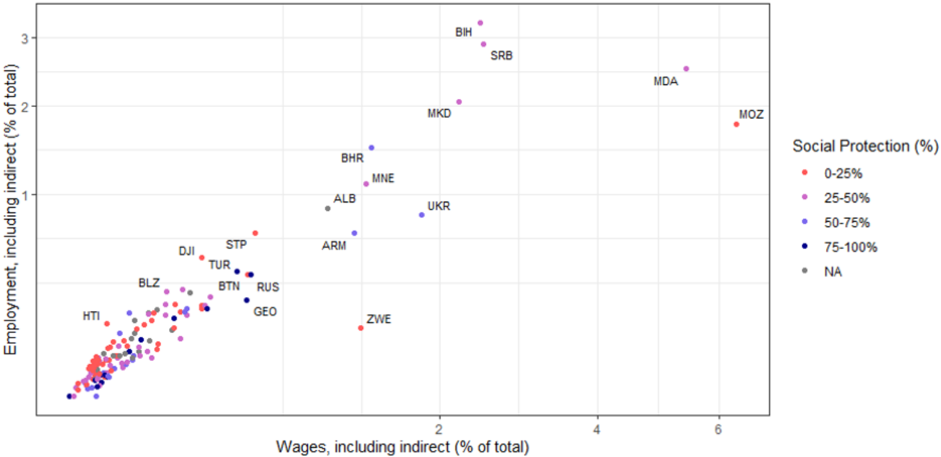
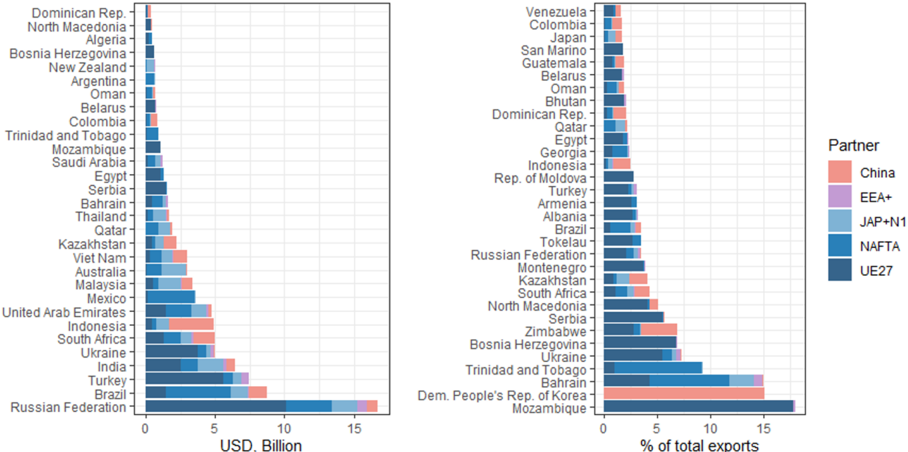
This article analyses the impact of the introduction of the Carbon Border Adjustment Mechanism (CBAM) on European Union (EU) trade partners, focusing especially on its potential socio-economic and external consequences for developing and emerging economies (EMDEs). It uses trade data and Multi-Regional Input-Output (MRIO) matrices to investigate the geographically and sectorally uneven distribution of CBAM’s potential impacts. The introduction of the CBAM by the EU is still under discussion. This mechanism, which seeks to reduce the incentives for firms to outsource their carbon emissions and promote a more generalised low-carbon transition, might disproportionally expose some non-EU economies. In absolute terms, Russia, China, Turkey, and Ukraine are the main EU trade partners in CBAM products, and hence the most exposed countries in external and socio-economic dimensions. In relative terms, the degree of exposure of economies that export CBAM products to Europe varies substantially, with many developing economies having more than 2% of their exports and 1% of their production impacted by this measure. East European economies, mainly in the Balkans, as well as Mozambique, Zimbabwe, and Cameroon in Africa, are the most exposed as far as the external dimension is concerned. In socio-economic terms, we can also include Morocco and Tajikistan to the group of most exposed economies. In the end, promoting the substitution of highly polluting technologies with green technologies seems notably easier in Europe than in EMDEs. Many jobs, tax revenues, and export revenues will be lost if the CBAM is implemented without taking into account the specificities of the EU’s trading partners. We discuss options to mitigate adverse consequences on EMDEs.
Overview
The claims and statistics of this paper haven’t been checked yet.
Free: it reads the open-access text and checks the first 5 claims that cite a source we can check. Create a free account to check every claim.
Integrity signals
Registry
Cites
Statistics
Figures
Verification
Claims the paper makes
The claims and statistics of this paper haven’t been checked yet.
Free: it reads the open-access text and checks the first 5 claims that cite a source we can check. Create a free account to check every claim.
Claims other papers make about this one
Each is checked against this paper’s own text: does it say what the citing paper says it does?
The source backs part of the claim, not all of it — or backs it for a different population, condition or comparison.
In the citing paper
“Estimates have shown that countries in northern Africa, the Balkans and the former Soviet Union would be negatively impacted by the introduction of the CBAM (Magacho et al. 2024).”
From The Securitization and Eurocentric Narratives in the European Union's Climate Policy and Diplomacy (2025) · cites this paper as Magacho et al. 2024
Experimental — accuracy not yet measured
Self-check
Percentages, sums and reported differences re-computed from the paper’s own numbers.
The self-check needs the paper’s full text.
Citations
Cites
Quantitative Input and Output Relations in the Economic Systems of the United States
Leontief, W. W. (1936) · The Review of Economics and Statistics · doi:10.2307/1927837 · Cited by 2,753 · cited 1×
“With respect to limitations of this analysis, the methodologies outlined and used in the previous sections are based on adaptations of the Leontief (1936) model, which is commonly used in economics to identify intersec-toral dependencies in the event of a demand shock.”
MethodBUILDING EORA: A GLOBAL MULTI-REGION INPUT–OUTPUT DATABASE AT HIGH COUNTRY AND SECTOR RESOLUTION
Lenzen, M., Moran, D., Kanemoto, K., & Geschke, A. (2013) · Economic Systems Research · doi:10.1080/09535314.2013.769938 · Cited by 1,407 · cited 1×
“We use the EORA-26 MRIO database (Lenzen et al., 2012; Lenzen et al., 2013) for 2015 to estimate the direct and indirect potential impacts on production, wages, and employment.”
MethodMapping the Structure of the World Economy
Lenzen, M., Kanemoto, K., Moran, D., & Geschke, A. (2012) · Environmental Science & Technology · doi:10.1021/es300171x · Cited by 1,004 · cited 1×
“We use the EORA-26 MRIO database (Lenzen et al., 2012; Lenzen et al., 2013) for 2015 to estimate the direct and indirect potential impacts on production, wages, and employment.”
MethodMeasuring the Upstreamness of Production and Trade Flows
Antràs, P., Chor, D., Fally, T., & Hillberry, R. (2012) · American Economic Review · doi:10.1257/aer.102.3.412 · Cited by 864 · cited 2×
“…it can be useful for comparing and contrasting economic structures, determining speci fi c sectors ’ relative economic/environmental importance (e.g. Antràs et al., 2012; Aldasoro & Angeloni, 2015; Cahen-Fourot et al., 2021; Piñero et al., 2019; Zhang, 2010; Zhang et al., 2020), and assessing…”
BackgroundEconomic complexity and the green economy
Mealy, P., & Teytelboym, A. (2022) · Research Policy · doi:10.1016/j.respol.2020.103948 · Cited by 506 · cited 1×
“Shifting from carbon-intensive industries to green industries (Mealy & Teytelboym, 2020) and technological changes within industries require large investments, which are costly for these economies (Ameli et al., 2021).”
BackgroundIn Vindication of the Ghosh Model: A Reinterpretation as a Price Model
Dietzenbacher, E. (1997) · Journal of Regional Science · doi:10.1111/0022-4146.00073 · Cited by 449
ON THE PLAUSIBILITY OF THE SUPPLY‐DRIVEN INPUT‐OUTPUT MODEL
Oosterhaven, J. (1988) · Journal of Regional Science · doi:10.1111/j.1467-9787.1988.tb01208.x · Cited by 404
Potential impacts and challenges of border carbon adjustments
Böhringer, C., Fischer, C., Rosendahl, K. E., & Rutherford, T. F. (2022) · Nature Climate Change · doi:10.1038/s41558-021-01250-z · Cited by 292 · cited 5×
“In the end, as noted by Böhringer et al. (2022), the CBAM raises more concerns about legal feasibility (see also Tamiotti, 2011) and practical implementation than about fundamental theory.”
BackgroundInfluentialBranger, F., & Quirion, P. (2014) · Ecological Economics · doi:10.1016/j.ecolecon.2013.12.010 · Cited by 273 · cited 1×
“Addressing equity by exempting some or all developing regions is another possibility, as suggested by (Brandi, 2021), even though this latter solution could, in speci fi c circumstances, undermine the legitimacy of the CBAM by creating new forms of carbon havens (Branger & Quirion, 2014a).”
BackgroundBorder adjustment for European emissions trading: Competitiveness and carbon leakage
Kuik, O., & Hofkes, M. (2010) · Energy Policy · doi:10.1016/j.enpol.2009.11.048 · Cited by 273
Research works printed but not linked: 3
- EUCommission ( 2021 ). Impact assessment report accompanying the document proposal for a regulation of the european parliament and of the council establishing a carbon border adjustment mechanism. Staff Document SWD/2021/643 final.
- Kuusi, T., Björklund, M., Kaitila, V., Kokko, K., Lehmus, M., Mechling, M., Oikarinen, T., Pohjola, J., Soimakallio, S., and Wang, M. ( 2020 ). Carbon border adjustment mechanisms andtheir economic impact on finland and the eu.
- UN ( 2003 ). UN comtrade . Geneva: United Nations.
Cited by
Perdana, S., & Vielle, M. (2022) · Energy Policy · doi:10.1016/j.enpol.2022.113245 · Cited by 198
Meng, J., Huo, J., Zhang, Z., Liu, Y., Mi, Z., Guan, D., & Feng, K. (2023) · Nature Communications · doi:10.1038/s41467-023-39449-7 · Cited by 132
Macroeconomic exposure of developing economies to low-carbon transition
Magacho, G., Espagne, É., Godin, A., Mantes, A., & Yılmaz, D. (2023) · World Development · doi:10.1016/j.worlddev.2023.106231 · Cited by 92
Self-citationWinners and losers of the EU carbon border adjustment mechanism. An intra-EU issue?
Amendola, M. (2024) · Energy Economics · doi:10.1016/j.eneco.2024.108139 · Cited by 62
The Carbon Border Adjustment Mechanism: Opportunities and Challenges for Non‐ EU Countries
Erdogdu, E. (2025) · WIREs Energy and Environment · doi:10.1002/wene.70000 · Cited by 52
Otto, S. (2025) · International Environmental Agreements Politics Law and Economics · doi:10.1007/s10784-025-09667-z · Cited by 51
Chu, L., Nam, T., Le, T. H. L., Ho, Q. A., & Dang, K. K. (2024) · Energy Policy · doi:10.1016/j.enpol.2024.114293 · Cited by 51
Jensen, L. (2024) · Resources Policy · doi:10.1016/j.resourpol.2024.105234 · Cited by 49
Li, M., Sun, Y., Xia, Y., Yang, Z., Chen, C., Yuan, Y., & Wang, P. (2025) · Energy Policy · doi:10.1016/j.enpol.2025.115014 · Cited by 48
The Impact of the EU Carbon Border Adjustment Mechanism on China’s Exports to the EU
Zhu, J., Zhao, Y., & Zheng, L. (2024) · Energies · doi:10.3390/en17020509 · Cited by 42
Cross-Border Risks of a Global Economy in Mid-Transition
Espagne, É., Oman, W., Mercure, J.-F., Svartzman, R., Volz, U., Pollitt, H., Semieniuk, G., & Campiglio, E. (2023) · IMF Working Paper · doi:10.5089/9798400254550.001 · Cited by 40
Chen, Z.-Y., Zhao, L., Cheng, L., & Qiu, R.-X. (2025) · Energy Policy · doi:10.1016/j.enpol.2024.114486 · Cited by 39
Johnson, C., Åhman, M., Nilsson, L. J., & Li, Z. (2025) · Nature Communications · doi:10.1038/s41467-025-64440-9 · Cited by 38
Lin, B., & Zhao, H. (2024) · Structural Change and Economic Dynamics · doi:10.1016/j.strueco.2024.09.005 · Cited by 38
Shuai, J., Wang, W., Liu, H., Huang, C., Yi, T., Zhao, Y., & Shuai, C. (2024) · Environmental Science and Pollution Research · doi:10.1007/s11356-024-32528-2 · Cited by 37
The EU carbon border adjustment mechanism: implications on Brazilian energy intensive industries
Perdana, S., Vielle, M., & Oliveira, T. D. (2023) · Climate Policy · doi:10.1080/14693062.2023.2277405 · Cited by 36
Zhang, W., & Sovacool, B. K. (2025) · Energy Strategy Reviews · doi:10.1016/j.esr.2025.101913 · Cited by 31
Carbon leakage in agriculture: when can a carbon border adjustment mechanism help?
Gabela, J. G. F., Spiegel, A., Stepanyan, D., Freund, F., Banse, M., Gocht, A., Söder, M., Heidecke, C., Osterburg, B., & Matthews, A. (2024) · Climate Policy · doi:10.1080/14693062.2024.2387237 · Cited by 29
Svartzman, R., Jaramillo, S. M., Althouse, J., Gabet, M., Gardes, C., Oman, W., Dunz, N., Salin, M., Espagne, É., Miller, H., et al. (2023) · HAL · doi:10.13140/rg.2.2.19054.59201 · Cited by 28
Self-citationThe Compound Injustice of the EU Carbon Border Adjustment Mechanism (CBAM)
Corvino, F. (2023) · Ethics Policy & Environment · doi:10.1080/21550085.2023.2272237 · Cited by 26
Feng, Y., & Zhu, Q. (2024) · International Journal of Operations & Production Management · doi:10.1108/ijopm-08-2023-0668 · Cited by 26
Wang, Q., Wang, X., & Li, R. (2025) · Humanities and Social Sciences Communications · doi:10.1057/s41599-025-05521-4 · Cited by 26
Bandung, U. I. N. S. G. D., & Wirdyansyah, D. M. (2025) · Indonesian Journal of Energy · doi:10.33116/ije.v8i2.292 · Cited by 24
Reforming ESG: a European and Global South perspective
Borghesi, S., Costantini, V., D’Amato, A., Dibattista, I., Koundouri, P., Li, Q., Mazzarano, M., Sterner, T., Tiwari, M. M., Vis, P., et al. (2025) · Environment and Development Economics · doi:10.1017/s1355770x24000366 · Cited by 22
Marchewka-Bartkowiak, K. (2023) · Current Opinion in Environmental Sustainability · doi:10.1016/j.cosust.2023.101390 · Cited by 22
The Geoeconomic Turn in EU Trade and Investment Policy: Implications for Developing Countries
Weinhardt, C., & Ville, F. D. (2024) · Politics and Governance · doi:10.17645/pag.8217 · Cited by 22
Maczionsek, M. I. J. H., Dillman, K. J., & Heinonen, J. T. (2023) · Journal of Cleaner Production · doi:10.1016/j.jclepro.2023.139750 · Cited by 20
Developing countries locked out of low-carbon technology trade
Bandara, P., Ray, R., Lu, J., & Gallagher, K. P. (2025) · Science · doi:10.1126/science.adu7731 · Cited by 20
Research on the Inhibitory Effect of the EU’s Carbon Border Adjustment Mechanism on Carbon Leakage
Lan, T., & Tao, R. (2024) · Sustainability · doi:10.3390/su16177429 · Cited by 18
The European Union’s CBAM: averting emissions leakage or promoting the diffusion of carbon pricing?
Mehling, M., Dolphin, G., & Ritz, R. A. (2025) · Journal of Environmental Policy & Planning · doi:10.1080/1523908x.2025.2591794 · Cited by 17
Reimagining carbon border adjustment mechanisms: A path to climate and development synergy
Nam, T. (2025) · Global Transitions · doi:10.1016/j.glt.2025.03.003 · Cited by 17
An Evermore Geoeconomic European Union? Exploring Critical Perspectives for Future Research
Couvreur, S., & Veselinovič, J. (2025) · JCMS Journal of Common Market Studies · doi:10.1111/jcms.13741 · Cited by 17
Clean energy challenges and innovation opportunities in Kazakhstan
Xenarios, S., Sembayeva, A., Tsani, S., Orazgaliyev, S., & Ansaganova, Z. (2024) · Environmental Research Communications · doi:10.1088/2515-7620/ad87b5 · Cited by 17
The varying levels of contrasting adaptation in Central Asia’s climate change politics
Skalamera, M. (2024) · Central Asian Survey · doi:10.1080/02634937.2024.2373086 · Cited by 16
Lim, J., & Kim, G. H. (2025) · Energy Reports · doi:10.1016/j.egyr.2025.01.005 · Cited by 15
Industrial European regions at risk within the Fit for 55: How far implementing CBAM can mitigate?
Perdana, S., & Vielle, M. (2024) · Renewable and Sustainable Energy Transition · doi:10.1016/j.rset.2024.100088 · Cited by 15
Pan, X., Gao, X. L., Wang, T., Xiong, W., Shao, T., Li, M., Ye, X., Wang, L., Wang, H., & Pang, J. (2025) · iScience · doi:10.1016/j.isci.2025.112483 · Cited by 15
Majumder, P., Mathur, S., & Pohit, S. (2024) · Green and Low-Carbon Economy · doi:10.47852/bonviewglce42022065 · Cited by 14
Tanaka, T., & Nagashima, F. (2025) · Journal of Environmental Management · doi:10.1016/j.jenvman.2025.126209 · Cited by 14
Firdausy, C. M., Zuhdi, F., Rambe, K. R., Nugraheni, R. D., Erwidodo, & Azahari, D. H. (2025) · Sustainable Futures · doi:10.1016/j.sftr.2025.100597 · Cited by 14
Das, K., & Bandyopadhyay, K. R. (2025) · International Environmental Agreements: Politics, Law and Economics · doi:10.1007/s10784-025-09662-4 · Cited by 13
“…studies (e.g. Eicke et al., 2021; UNCTAD, 2021; Perdana & Vielle, 2022; Xiaobei et al., 2022; Zhong & Pei, 2022; Gu et al., 2023; Lin & Zhao, 2023; Magacho et al., 2024) predict that CBAM would shift the economic burden of emissions reduction from EU to its developing country trading partners;…”
InfluentialPotential economic impacts of carbon tariffs on target countries: a systematic review
Ma, J., & Xu, J. (2024) · Climate Policy · doi:10.1080/14693062.2024.2407830 · Cited by 13
Groundstroem, F. (2023) · Climatic Change · doi:10.1007/s10584-023-03619-9 · Cited by 13
Harnessing market mechanisms for greenhouse gas reduction: A comprehensive review
You, W., Ryu, D., Webb, R. I., & Zhou, Q. (2025) · Environmental Impact Assessment Review · doi:10.1016/j.eiar.2025.107974 · Cited by 13
Shuai, J., Xiong, X., HUANG, C., Zhao, Y., Chen, X., & 帅传敏 (2025) · Journal of Cleaner Production · doi:10.1016/j.jclepro.2025.145517 · Cited by 13
Measuring the Cost of the European Union’s Carbon Border Adjustment Mechanism on Moroccan Exports
Morchid, W., HADDAD, E. A., & Savard, L. (2024) · Sustainability · doi:10.3390/su16124967 · Cited by 13
Ji, C., & Xu, Y. F. (2024) · Heliyon · doi:10.1016/j.heliyon.2024.e36134 · Cited by 13
Wang, J., Wen, J., Long, C., Yang, B. F., & Lin, J. (2025) · Applied Energy · doi:10.1016/j.apenergy.2025.126992 · Cited by 12
Tausch, L., & Althouse, J. (2025) · Ecological Economics · doi:10.1016/j.ecolecon.2025.108644 · Cited by 12
How to develop global energy-intensive sectors in the presence of carbon tariffs?
Deng, Y., Yin, M., Xu, X., Yu, L., Gao, G., & Ma, L. (2024) · Journal of International Financial Markets Institutions and Money · doi:10.1016/j.intfin.2023.101930 · Cited by 11
Chang, X., Lu, Y., & Tang, O. (2025) · Omega · doi:10.1016/j.omega.2025.103383 · Cited by 10
The Impact of the EU’s CBAM on China’s Carbon Emission Policy
Geng, R., Cai, Q., & Wang, H. (2024) · Climate · doi:10.3390/cli13010005 · Cited by 10
Ren, Y., Wang, M., & Wang, Q. (2025) · Journal of Industrial Ecology · doi:10.1111/jiec.70094 · Cited by 10
Relationship Between CO 2 Emissions and Trade: The Case of the EU
Steinhauser, D., Kittová, Z., & Khúlová, L. (2024) · Intereconomics · doi:10.2478/ie-2024-0009 · Cited by 10
Bayat, T., Özsalman, E., & Derindağ, Ö. F. (2025) · Environmental Science and Pollution Research · doi:10.1007/s11356-024-35861-8 · Cited by 10
Badi, I. A., & Musbah, J. I. (2026) · Journal of Urban Intelligence and Smart Systems · doi:10.59543/7cb1y774 · Cited by 10
Insight into border carbon adjustment: a visual bibliometric analysis from 2009 to 2024
Bao, X., & Jin, Y. (2025) · Humanities and Social Sciences Communications · doi:10.1057/s41599-025-05401-x · Cited by 9
Carbon Levy of the European Union:at the Intersection of Climate and Trade Policies
Strezhneva, M. V. (2023) · International Organisations Research Journal · doi:10.17323/1996-7845-2023-02-03 · Cited by 9
Kashbrasiev, R. V. (2024) · Finance: Theory and Practice · doi:10.26794/2587-5671-2024-28-2-178-191 · Cited by 9
Zhang, L., Wen, Z., Wang, Y., & Xu, M. (2026) · Communications Earth & Environment · doi:10.1038/s43247-026-03357-7 · Cited by 8
Kalpakchiev, T., Jacobs, B. C., Fraundorfer, M., Martín-Ortega, J., & Cordell, D. (2025) · Sustainability · doi:10.3390/su17041478 · Cited by 8
Ren, Y., Wang, M., Tian, J., & Chen, L. (2025) · Environmental Impact Assessment Review · doi:10.1016/j.eiar.2025.107868 · Cited by 8
Damborg, J., Nasiritousi, N., Linnér, B., & Neset, T. (2026) · Environmental Research Letters · doi:10.1088/1748-9326/ae2eea · Cited by 8
The impact of polycrisis on GPNs—a focus on the EU’s trade policy response to the climate crisis
Curran, L. (2025) · Journal of Economic Geography · doi:10.1093/jeg/lbaf026 · Cited by 8
Early signs that the EU carbon border adjustment mechanism is reshaping EU–India steel trade
Vriz, G. L., Cojoianu, T., Fischer, C., & Taschini, L. (2026) · Nature Climate Change · doi:10.1038/s41558-026-02607-y · Cited by 7
“It is both highly emissions intensive and deeply integrated into global value chains 10 , and evidence suggests that steel trade is sensitive to carbon pricing asymmetries 11 .”
A review of carbon-pricing studies for developing countries
van den Bergh, J. C. J. M., & Drews, S. (2025) · Climate and Development · doi:10.1080/17565529.2025.2506758 · Cited by 7
Beyond Treaties: Rethinking Legal Mechanisms for International Climate Governance
Budak, T. G. (2025) · Springer eBooks · doi:10.1007/978-3-031-86022-5 · Cited by 7
Mortha, A., Arimura, T. H., Takeda, S., Steubing, B. R. P., & Chesnokova, T. (2025) · Economic Analysis and Policy · doi:10.1016/j.eap.2025.07.019 · Cited by 6
Expanding carbon pricing boundaries and the EU CBAM: insights into China and India
Rocchi, P., Lobato, E. C., Bella, A. D., & Bosetti, V. (2026) · Journal of Cleaner Production · doi:10.1016/j.jclepro.2026.147652 · Cited by 6
Perdana, S., Vielle, M., & Li, R. (2026) · Review of World Economics · doi:10.1007/s10290-026-00635-6 · Cited by 6
Low carbon transition's macroeconomic impacts in Latin America
Magacho, G., Brancher, M. C., & Tausch, L. (2025) · Ecological Economics · doi:10.1016/j.ecolecon.2025.108868 · Cited by 6
Self-citationEmanuelsson, A. H., Rootzén, J., & Johnsson, F. (2024) · Energy Policy · doi:10.1016/j.enpol.2024.114413 · Cited by 6
The European Union’s CBAM: Averting Emissions Leakage or Promoting the Diffusion of Carbon Pricing?
Mehling, M., Dolphin, G., & Ritz, R. A. (2024) · Apollo (University of Cambridge) · doi:10.17863/cam.118383 · Cited by 6
Selling CBAM - Diplomacy for the European Union’s Carbon Border Adjustment Mechanism
Feist, M., Kuehner, A.-K., & Flachsland, C. (2024) · Publication Database PIK (Potsdam Institute for Climate Impact Research (PIK)) · doi:10.48485/pik.2024.010 · Cited by 6
The European Union Carbon Border Adjustment Mechanism as a Green Tax Policy Instrument
Aldeia, S. C. R. (2025) · Central European Economic Journal · doi:10.2478/ceej-2025-0006 · Cited by 6
Challenges and Controversies to the European CBAM from a Legal Perspective
Meng, H. (2024) · Advances in Economics Management and Political Sciences · doi:10.54254/2754-1169/81/20241752 · Cited by 6
Carneiro, G. S., Magacho, G., & Espagne, É. (2025) · Ecological Economics · doi:10.1016/j.ecolecon.2025.108907 · Cited by 5
Self-citationLi, D., Shen, B., & Xu, X. (2025) · Journal of the Operational Research Society · doi:10.1080/01605682.2025.2515151 · Cited by 5
Wang, J. C., Ma, Z., & Fan, X. (2026) · Economic Systems Research · doi:10.1080/09535314.2026.2651831 · Cited by 5
Carbon leakage and carbon tax differentiation: Evidence from a developing economy
Nguyen, D. C., & Lai, N. D. (2026) · Energy Economics · doi:10.1016/j.eneco.2026.109502 · Cited by 5
Helmet-wearing detection with small object recognition via improved YOLOv8 in complex environments
Zhang, W., Du, Y., & Wu, Z. (2026) · Digital Signal Processing · doi:10.1016/j.dsp.2026.106066 · Cited by 5
Tausch, L., & Magacho, G. (2025) · Economic Systems Research · doi:10.1080/09535314.2025.2520308 · Cited by 5
Self-citationGüven, D., & Kayalica, M. Ö. (2026) · Energy Conversion and Management · doi:10.1016/j.enconman.2026.121448 · Cited by 5
Ioannides, I., Eisele, K., Lanzano, C., Tondel, F., & de Lange, T. (2024) · Radboud Repository (Radboud University) · doi:10.2861/814975 · Cited by 5
Zwickl-Bernhard, S., Cretì, A., & Neumann, A. (2026) · Energy Economics · doi:10.1016/j.eneco.2026.109252 · Cited by 5
Impact of EU’s carbon border tax on South Asian trade partners
Sikdar, C. (2025) · Asia Europe Journal · doi:10.1007/s10308-025-00716-5 · Cited by 5
The Securitization and Eurocentric Narratives in the European Union's Climate Policy and Diplomacy
Mishra, A. (2025) · Contemporary European Politics · doi:10.1002/cep4.70019 · Cited by 4
Green Budgeting in South Korea: Issue Ownership and Ministerial Leadership
Minjung, K. I. M., & Cho, R. M. (2026) · Public Administration Review · doi:10.1111/puar.70133 · Cited by 4
Kittel, L., & Fahl, U. (2025) · Sustainability · doi:10.3390/su17062579 · Cited by 4
Hu, Y., & Luo, A.-L. (2026) · Energy Strategy Reviews · doi:10.1016/j.esr.2026.102200 · Cited by 4
Green Trade Barriers and Industrial Chain Resilience: Is Green Finance Still Effective?
Liu, S., & Wei, W. (2025) · Systems · doi:10.3390/systems13100867 · Cited by 4
Zheng, X.-X., Lu, Y., Jia, F., Koh, L. S. C., & Xiong, Y. (2026) · International Journal of Production Research · doi:10.1080/00207543.2026.2616421 · Cited by 4
Mohan, P. (2024) · Climate Policy · doi:10.1080/14693062.2024.2401855 · Cited by 4
Cost‐Benefit Analysis of the European Union Carbon Border Adjustment Mechanism in Fertilizer Trade
Crisci, N., Hossen, M. D., Muhammad, A., & Cho, S.-H. (2026) · Agribusiness · doi:10.1002/agr.70081 · Cited by 4
Aligning China’s local and national carbon markets under global carbon pricing
Dai, C., & Pollitt, M. G. (2025) · Energy and climate management. · doi:10.26599/ecm.2025.9400017 · Cited by 4
Becker, T., Montresor, S., & Losacker, S. (2026) · Journal of Economic Geography · doi:10.1093/jeg/lbag002 · Cited by 4
Climate club politics - the challenges of making a small group work on a global issue
Unger, C. (2026) · Energy Research & Social Science · doi:10.1016/j.erss.2026.104684 · Cited by 4
Çelik, G., Yücel, Ö., & Yilmaz, Z. (2025) · Journal of Cleaner Production · doi:10.1016/j.jclepro.2025.146141 · Cited by 4
Assessing the EU CBAM’s Impact on China-Europe Export Costs
Cheng, S., Sun, Y., Li, X., Li, W., & Ge, L. (2025) · Emerging Markets Finance and Trade · doi:10.1080/1540496x.2025.2533261 · Cited by 4
Bârã, A., Oprea, S., Georgescu, I. A., & Mărăcine, V. (2025) · Acta Oeconomica · doi:10.1556/032.2025.00157 · Cited by 4
Metadata
- Authors
- Magacho, G., Espagne, E., & Godin, A.
- Venue
- Climate Policy
- Publisher
- Informa UK Limited
- Published
- 2023-04-13
- Volume
- 24
- Issue
- 2
- Pages
- 243-259
- ISSN
- 1469-3062 (ISSN-L)
- 1752-7457
- OpenAlex
- W4365447267
- Cited by
- 213
- References
- 47
- FWCI
- 43.11
- Type
- journal article
- Language
- en
- Open access
- green
About these checks
Registry, retraction, Cites and statistics results are computed, not judged, with one exception: a printed reference that no index lists is read once by a model before it counts as a citation error. Claims are extracted by a model and kept only when their quote appears verbatim in the text; each cited source is then checked, with a model’s help, for whether it says what the claim relies on. Those verdicts can be wrong — read the claim’s quote and the cited source before relying on one.
Statistics and arithmetic are recomputed, not judged.
Confidence bands are shown only for fields calibrated on our annotated test set. None is calibrated yet, so no band is shown.
What counts as a claim ›How we measure confidence ›How we check this ›
Are you an author, or do you see a problem with this page? Request a review
Data sources
Bibliographic data: Semantic Scholar, OpenAlex, Crossref.
Contains information from the Semantic Scholar Academic Graph Datasets, made available under the ODC Attribution License (ODC-BY 1.0).
Semantic Scholar’s data is described in: Kinney, R., et al. (2023). The Semantic Scholar Open Data Platform. arXiv:2301.10140.
