

Direct and indirect effects of spliceosome disruption compromise gene regulation by nonsense-mediated mRNA decay
Open accessPublished version of a preprint
The DOI matches its Crossref record; 85 of the 85 references it cites were found in a registry or an index; none of the 90 sources its claims cite is checked for support yet.
Abstract
Pre-mRNA splicing, carried out in the nucleus by a large ribonucleoprotein machine known as the spliceosome, is functionally and physically coupled to the mRNA surveillance pathway in the cytoplasm called nonsense-mediated mRNA decay (NMD). The NMD pathway monitors for premature translation termination, which can result from alternative splicing, by relying on the exon junction complex (EJC) deposited on exon-exon junctions by the spliceosome. Recently, multiple genetic screens of human cell lines have identified numerous spliceosome components as putative NMD factors. Using publicly available RNA-seq datasets from K562 and HepG2 cells depleted of 18 different spliceosome components, we found that natural NMD-targeted mRNA isoforms were upregulated when catalytic spliceosome members were reduced. While some of this increase could be due to widespread pleiotropic effects of spliceosome dysfunction (e.g. reduced expression of NMD factors due to missplicing of their mRNAs), we identified that AQR, SF3B1, SF3B4, and CDC40 may have a more direct role in NMD. We also tested the hypothesis that increased production of novel NMD substrates may overwhelm the pathway to find a direct correlation between the amount of novel NMD substrates detected and the degree of NMD inhibition observed. Finally, similar transcriptome alterations and NMD substrate upregulation were observed in cells treated with spliceosome inhibitors and in cells derived from retinitis pigmentosa patients with mutations in PRPF8 and PRPF31. Overall, our results show that regardless of the cause, spliceosome disruption upregulates a broad set of NMD targets, which could contribute to cellular dysfunction in spliceosomopathies.
Overview
CoChat Summary
TL;DR
Spliceosome disruption—by depletion of catalytic components, chemical inhibitors, or disease-causing mutations—broadly upregulates endogenous NMD-targeted mRNA isoforms in human cells. The authors attribute this to a mix of direct effects on EJC-dependent NMD, especially for AQR, SF3B1, SF3B3, and CDC40, and indirect effects such as missplicing of NMD-factor mRNAs and overproduction of novel NMD substrates.
Key findings
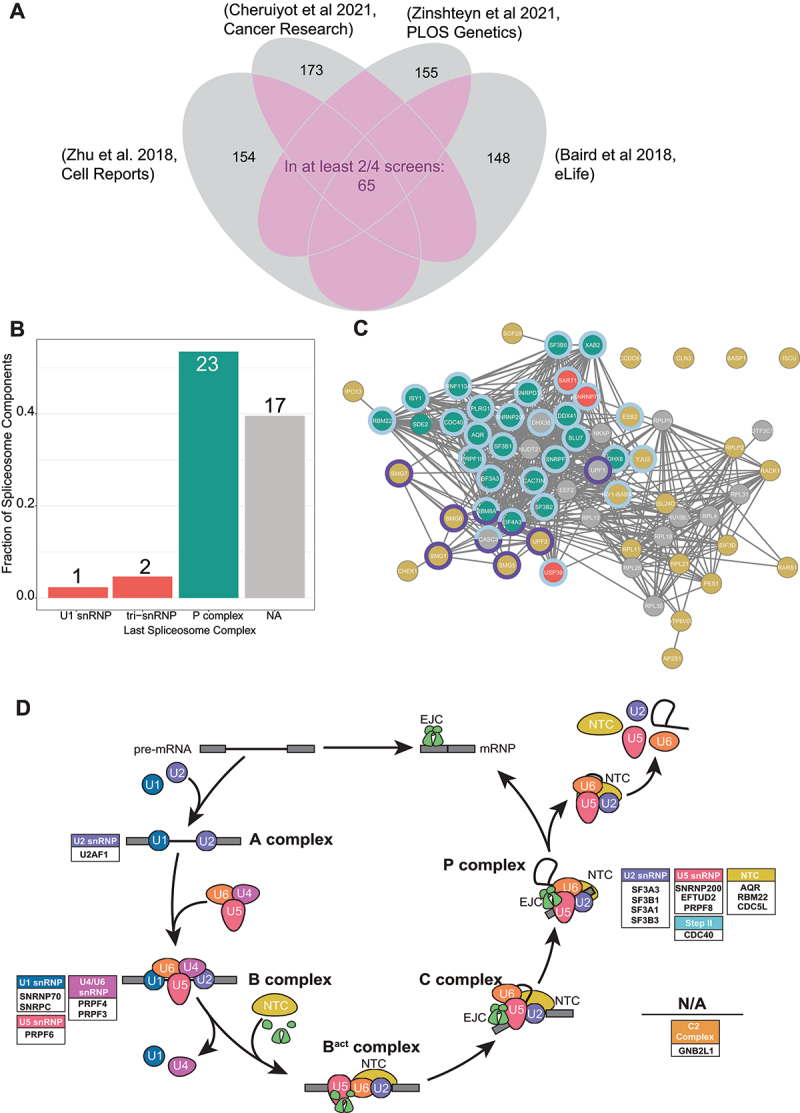
- In four NMD-factor screens, 691 genes appeared in the top 200 lists; 170 of these were spliceosome factors, and among 65 proteins shared by two or more screens, 43 were spliceosome factors. P-complex components were overrepresented compared with the spliceosome database (p < 2.2 × 10⁻¹⁶, χ² goodness-of-fit test).
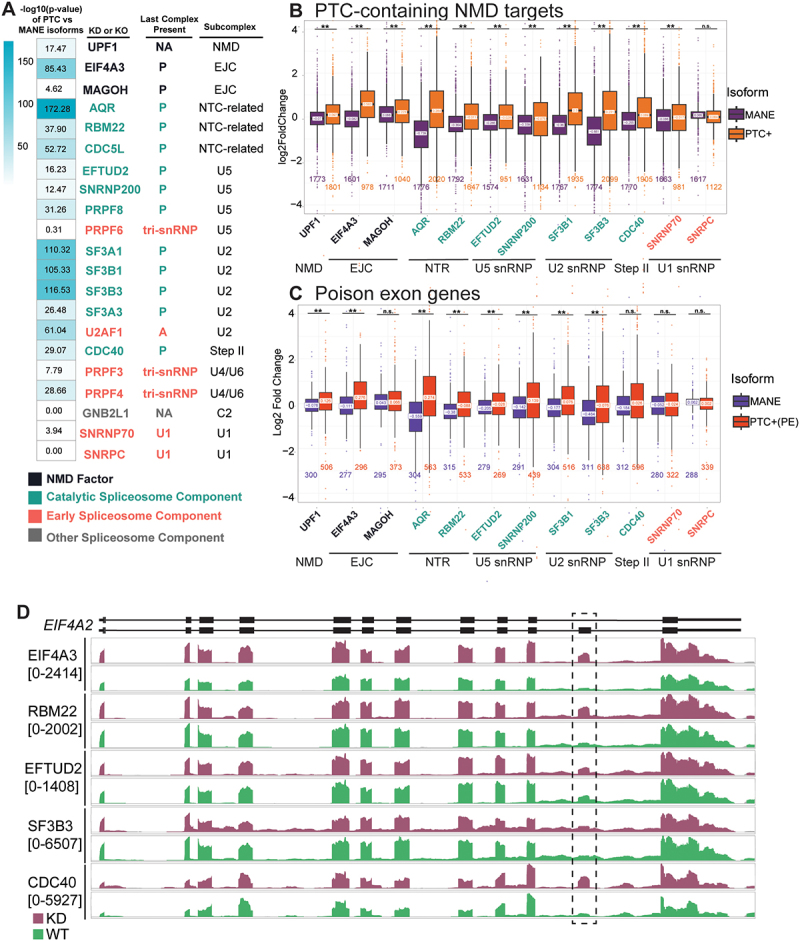
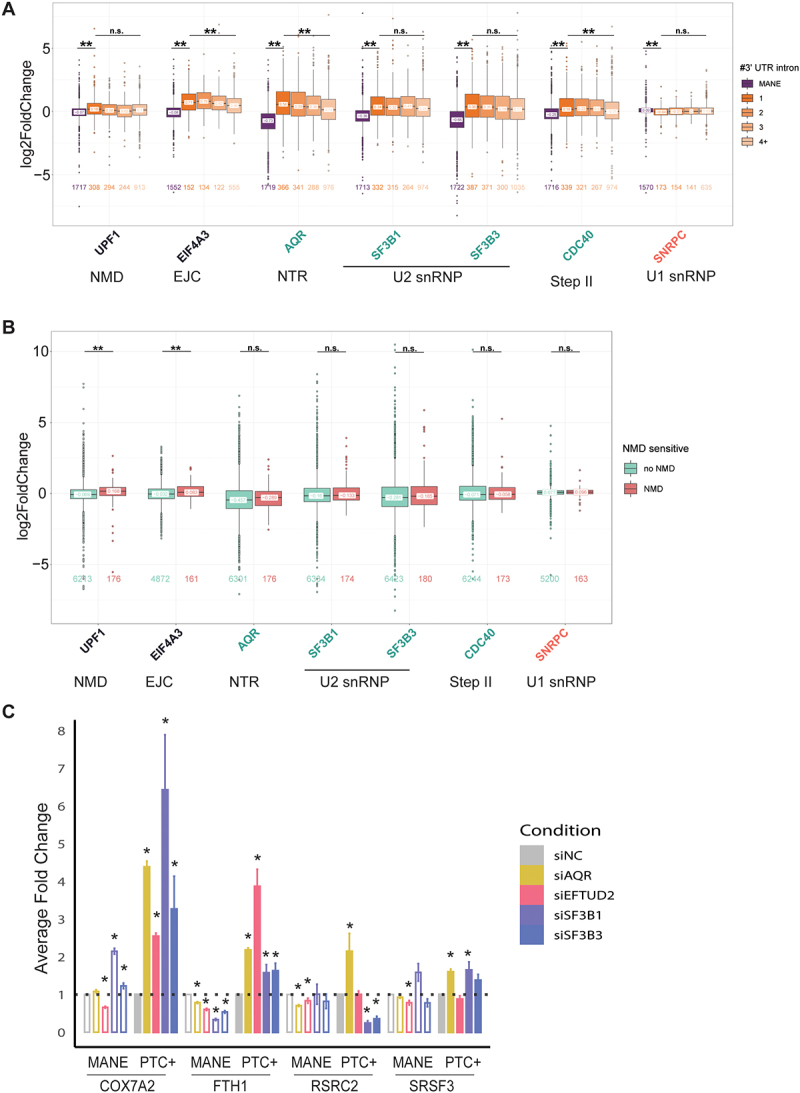
- Across 18 spliceosome components analyzed, PTC+ transcripts were upregulated in 15/18; all 11 catalytic spliceosome components tested showed higher median fold-change for PTC+ transcripts than for corresponding MANE-select isoforms. For example, SF3B1 depletion gave median fold-change 0.3 for PTC+ versus −0.36 for MANE, and SF3B3 gave 0.231 versus −0.661.
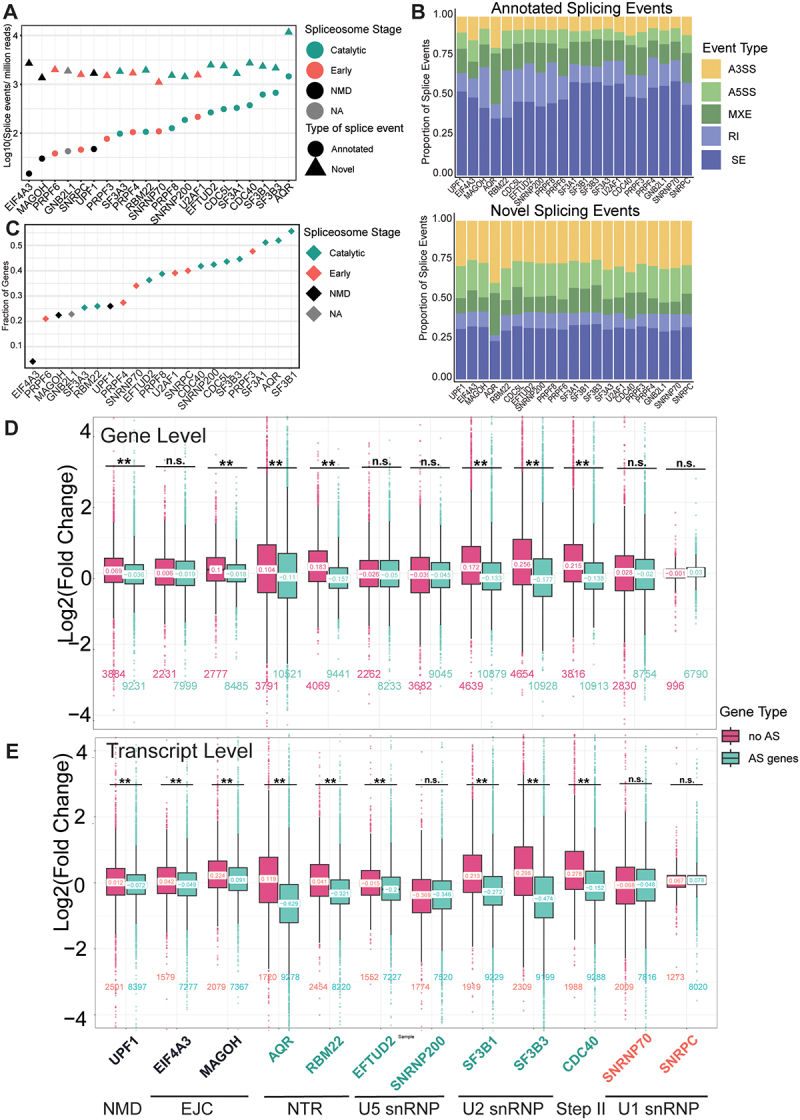
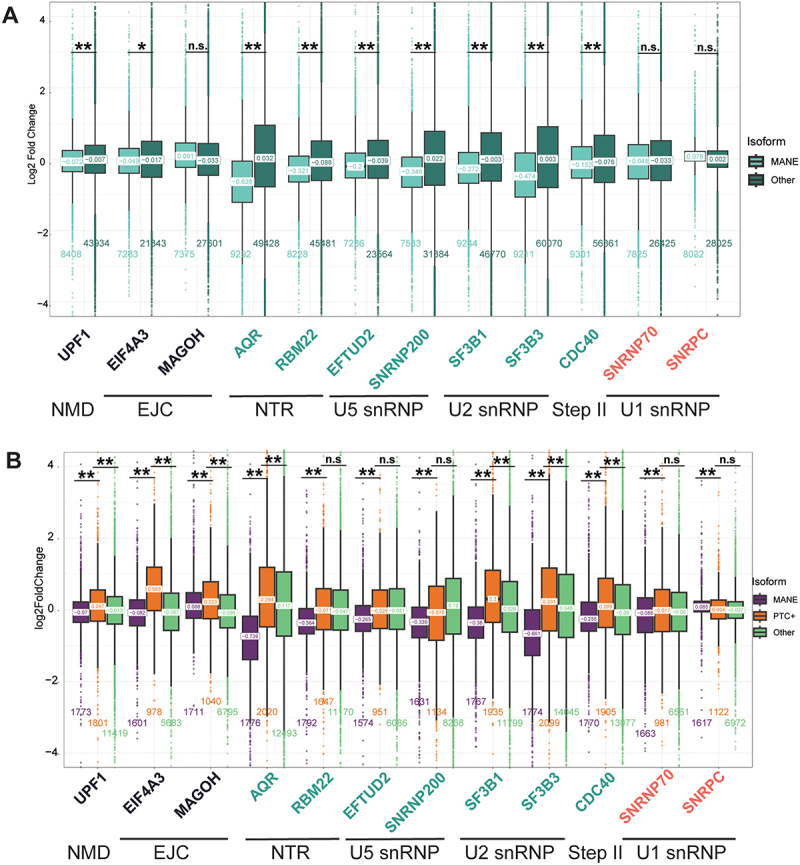
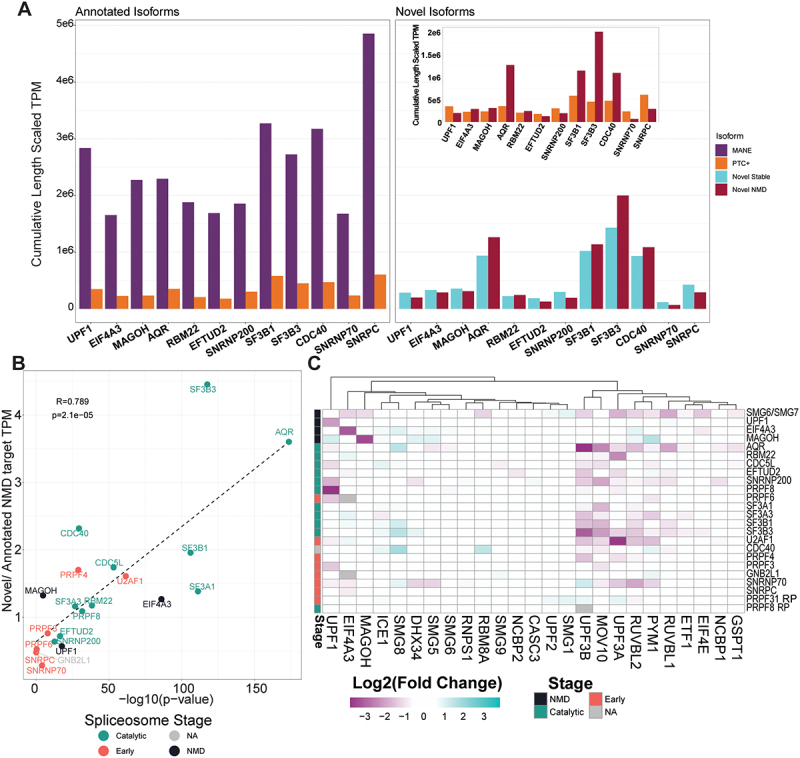
- AQR, SF3B1, SF3B3, and CDC40 (the abstract lists SF3B4 instead of SF3B3) showed more specific upregulation of PTC+ isoforms relative to other non-canonical isoforms. In these knockdowns, novel NMD transcripts were almost two-fold or more abundant than annotated NMD transcripts, and AQR, CDC40, and to a lesser degree SF3B3 showed stronger effects on PTC+ mRNAs with fewer 3′UTR introns, consistent with EJC-dependent NMD.
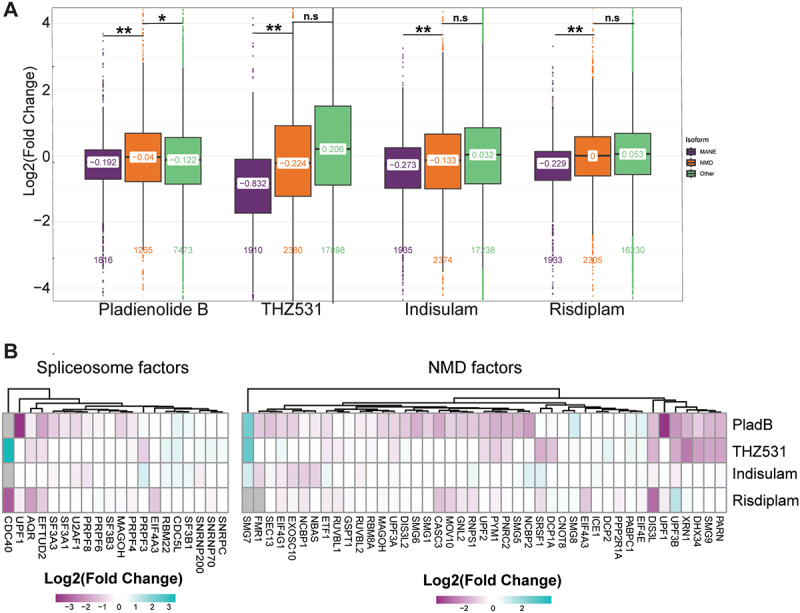
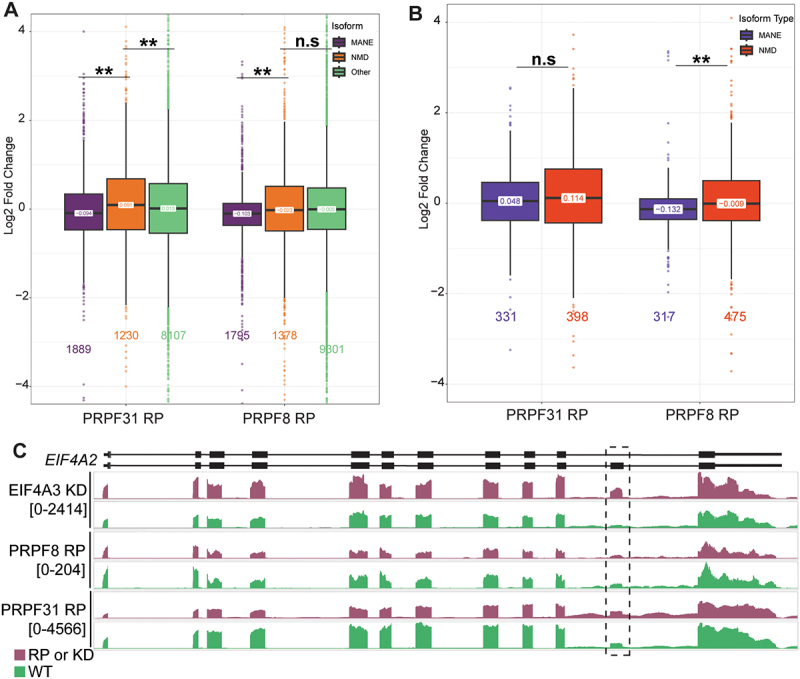
- Spliceosome inhibitors (pladienolide B, indisulam, THZ531, risdiplam) and retinitis pigmentosa patient-derived cells with PRPF8 or PRPF31 mutations also upregulated NMD-targeted isoforms. Examples include NRG1 NMD isoform log2FC 1.34 (padj = 0.001) in PRPF8 mutant cells and PDLIM7 poison-exon NMD isoform log2FC 1.14 (padj = 0.04) in PRPF31 mutant cells; UPF3A, UPF3B, and MOV10 mRNAs were downregulated in multiple catalytic spliceosome knockdowns.
Methods
- Reanalysis of publicly available RNA-seq datasets: ENCODE ENCORE K562 and HepG2 datasets for 18 spliceosome components depleted by siRNA or CRISPR-Cas9, plus non-ENCODE datasets for spliceosome inhibitors and retinitis pigmentosa patient-derived cells; controls included UPF1, EIF4A3, and MAGOH depletions.
- Transcript quantification with kallisto against Ensembl GRCh38 build 109, differential expression with DESeq2, splicing analysis with rMATS turbo, and novel-isoform analysis with HISAT2/StringTie/IsoformSwitchAnalyzeR. PTC+ NMD targets were defined as transcripts upregulated >1.5-fold upon combined SMG6/SMG7 depletion.
- Experimental validation in HCT116 cells using siRNA knockdowns, RT-qPCR and RT-PCR, Western blotting, and SMG1i treatment to inhibit NMD.
Limitations
- Paper-stated: the precise reason for NMD-target upregulation remains unresolved; the authors could not fully separate direct from indirect effects without methods that distinguish RNA production and degradation rates; whether a mere two-fold increase in novel NMD substrates is sufficient to overwhelm NMD remains untested; UPF3 protein levels were not measured; CWC22 and CWC27 ENCODE depletion datasets were unavailable; and too few genes produced an NMD-targeted isoform without evidence of alternative splicing to perform conclusive analysis.
- Evident from the text: the work relies heavily on public RNA-seq datasets and cell-line models, with many conclusions based on correlations and knockdown/knockout pleiotropy; the abstract and results/discussion differ on whether SF3B4 or SF3B3 is among the factors with a more direct NMD role; and direct EJC-deposition assays were not performed.
Model-written summary. Check it against the paper before relying on it.
Integrity signals
Registry
Cites
Statistics
Figures
Verification
Claims the paper makes
0 Valid · 0 Not valid · 49 Not checked · 144 Own results and interpretations
A result the paper reports from its own data — it cites no other source for it, so there is none to check. The quote shows it is in the paper.
In the paper
“Our results show that the depletion of many catalytic spliceosome components leads to an increased abundance of endogenous EJC-dependent NMD targets.”
§ Direct and indirect effects of spliceosome disruption compromise gene regulation by nonsense-mediated mRNA decay > Introduction
plainstates a cause- Asserted: passes — The authors put it forward as true.
- Checkable: passes — It can be checked against evidence.
- Load-bearing: passes — The paper’s conclusions depend on it.
- Based: passes — The paper gives a reason why it holds.
A result the paper reports from its own data — it cites no other source for it, so there is none to check. The quote shows it is in the paper.
In the paper
“Interestingly, depletion of four spliceosomal components, AQR, CDC40, SF3B1, and SF3B4, similar to the knockdown of EJC core protein EIF4A3, causes higher upregulation of NMD-targeted isoforms as compared to other non-canonical isoforms”
§ Direct and indirect effects of spliceosome disruption compromise gene regulation by nonsense-mediated mRNA decay > Introduction
plainstates a cause- Asserted: passes — The authors put it forward as true.
- Checkable: passes — It can be checked against evidence.
- Load-bearing: passes — The paper’s conclusions depend on it.
- Based: passes — The paper gives a reason why it holds.
A result the paper reports from its own data — it cites no other source for it, so there is none to check. The quote shows it is in the paper.
In the paper
“In several cases, we observed a similar increase in the other non-canonical isoforms.”
§ Direct and indirect effects of spliceosome disruption compromise gene regulation by nonsense-mediated mRNA decay > Introduction
plain- Asserted: passes — The authors put it forward as true.
- Checkable: passes — It can be checked against evidence.
- Load-bearing: unclear — It is unclear whether the paper’s conclusions depend on it.
- Based: passes — The paper gives a reason why it holds.
A result the paper reports from its own data — it cites no other source for it, so there is none to check. The quote shows it is in the paper.
In the paper
“Using publicly available RNA-seq datasets from K562 and HepG2 cells depleted of 18 different spliceosome components, we found that natural NMD-targeted mRNA isoforms were upregulated when catalytic spliceosome members were reduced.”
§ Direct and indirect effects of spliceosome disruption compromise gene regulation by nonsense-mediated mRNA decay > Abstract
plainstates a cause- Asserted: passes — The authors put it forward as true.
- Checkable: passes — It can be checked against evidence.
- Load-bearing: passes — The paper’s conclusions depend on it.
- Based: passes — The paper gives a reason why it holds.
- Rests on an assumption not shown here.
A result the paper reports from its own data — it cites no other source for it, so there is none to check. The quote shows it is in the paper.
In the paper
“Notably, in all knockdowns, the number of novel splicing events observed was greater than the number of annotated splicing events that changed significantly (Figure 3(A)).”
§ Direct and indirect effects of spliceosome disruption compromise gene regulation by nonsense-mediated mRNA decay > Results > Compromised splicing activity upon spliceosome component depletion leads to decreased abundance of canonical isoforms
plain- Asserted: passes — The authors put it forward as true.
- Checkable: passes — It can be checked against evidence.
- Load-bearing: unclear — It is unclear whether the paper’s conclusions depend on it.
- Based: passes — The paper gives a reason why it holds.
121 more claims
Create a free account to see all 193 claims and to verify the 90 references still open.
- It may state two separate claims as one. 41
- Probably not a substantial claim. 33
Self-check
Percentages, sums and reported differences re-computed from the paper’s own numbers.
Each contradiction between two passages listed here was confirmed by an independent check.
Rated major: it would touch a result — a value a result rests on, reported and recomputed p-values on opposite sides of the significance level, two passages that conflict with no sign which is right, or a cited work retracted before this paper was published.
In the paper
§ Direct and indirect effects of spliceosome disruption compromise gene regulation by nonsense-mediated mRNA decay > Results > Depletion of several catalytic spliceosome components increases abundance of endogenous NMD targets
“Any datasets where the depletion and WT replicates did not segregate in a principal component analysis or where the primary protein-coding mRNA (as per the MANE select definition [39]) of the protein being depleted was less than 2-fold downregulated were not analysed further (Fig S1).”
§ Direct and indirect effects of spliceosome disruption compromise gene regulation by nonsense-mediated mRNA decay > Methods > Differential expression analysis
“ENCODE datasets in which the MANE isoform of the spliceosome component was not more than 1.5-fold downregulated were also removed from the study (Figure S1).”
Rated minor: it would not touch a result — a value no result rests on, a p-value that stays on the same side of the significance level, or a conflict that is clerical, resolved elsewhere in the paper, or outside its own findings.
In the paper
§ Direct and indirect effects of spliceosome disruption compromise gene regulation by nonsense-mediated mRNA decay > Abstract
“we identified that AQR, SF3B1, SF3B4, and CDC40 may have a more direct role in NMD.”
§ Direct and indirect effects of spliceosome disruption compromise gene regulation by nonsense-mediated mRNA decay > Results > Altered gene expression upon spliceosome component depletion also affects levels of non-NMD-targeted isoforms
“However, in the case of AQR, SF3B1, SF3B3, and CDC40 depletion, the median fold changes of other non-canonical isoforms were significantly lower than those of the PTC+ isoforms (Figure 4(B)).”
Rated minor: it would not touch a result — a value no result rests on, a p-value that stays on the same side of the significance level, or a conflict that is clerical, resolved elsewhere in the paper, or outside its own findings.
In the paper
§ Direct and indirect effects of spliceosome disruption compromise gene regulation by nonsense-mediated mRNA decay > Results > Compromised splicing activity upon spliceosome component depletion leads to decreased abundance of canonical isoforms
“we first quantified global splicing changes in all depletion datasets using rMATS turbo v4.3.0 [41].”
§ Direct and indirect effects of spliceosome disruption compromise gene regulation by nonsense-mediated mRNA decay > Methods > Splicing analysis
“Splicing analysis was performed with rMATS turbo version 4.2.0 [41], using a binary index and GTF from the ensemble GRch38 build 109.”
Rated minor: it would not touch a result — a value no result rests on, a p-value that stays on the same side of the significance level, or a conflict that is clerical, resolved elsewhere in the paper, or outside its own findings.
In the paper
§ Direct and indirect effects of spliceosome disruption compromise gene regulation by nonsense-mediated mRNA decay > Results > Spliceosome inhibitor treatment also leads to increased relative abundance of PTC+ and other non-canonical isoforms
“We performed isoform-level quantification of the RNA-Seq data from Naro et al. [50]”
§ Direct and indirect effects of spliceosome disruption compromise gene regulation by nonsense-mediated mRNA decay > References
“50. Huang L, Lou CH, Chan W, et al. RNA homeostasis governed by cell type-specific and branched feedback loops acting on NMD.”
Citations
Cites
Moderated estimation of fold change and dispersion for RNA-seq data with DESeq2
Love, M. I., Huber, W., & Anders, S. (2014) · Genome Biology · doi:10.1186/s13059-014-0550-8 · Cited by 95,106
Trimmomatic: a flexible trimmer for Illumina sequence data
Bolger, A. M., Lohse, M., & Usadel, B. (2014) · Bioinformatics · doi:10.1093/bioinformatics/btu170 · Cited by 65,548
An integrated encyclopedia of DNA elements in the human genome
The ENCODE Project Consortium (2012) · Nature · doi:10.1038/nature11247 · Cited by 18,072 · cited 2×
“To investigate the impact of spliceosome components on NMD, we analysed data available from the ENCODE consortium as part of the ENCORE project [34–36], where individual proteins were knocked down or knocked out in K562 or HepG2 cell lines using siRNA or CRISPR-Cas9, respectively, followed by total…”
Graph-based genome alignment and genotyping with HISAT2 and HISAT-genotype
Kim, D., Paggi, J. M., Park, C., Bennett, C., & Salzberg, S. L. (2019) · Nature Biotechnology · doi:10.1038/s41587-019-0201-4 · Cited by 15,022
Wickham, H. (2016) · Use R! · doi:10.1007/978-3-319-24277-4_9 · Cited by 12,516
Szklarczyk, D., Kirsch, R., Koutrouli, M., Nastou, K., Mehryary, F., Hachilif, R., Gable, A. L., Fang, T., Doncheva, N. T., Pyysalo, S., et al. (2023) · Nucleic Acids Research · doi:10.1093/nar/gkac1000 · Cited by 9,726 · cited 1×
“Functional protein association analysis between these 691 proteins using STRING [31] showed that gene ontology terms related to mRNA metabolism, including pre-mRNA splicing and NMD, were enriched in this set (Table S2).”
Near-optimal probabilistic RNA-seq quantification
Bray, N. L., Pimentel, H., Melsted, P., & Pachter, L. (2016) · Nature Biotechnology · doi:10.1038/nbt.3519 · Cited by 9,723
Transcript-level expression analysis of RNA-seq experiments with HISAT, StringTie and Ballgown
Pertea, M., Kim, D., Pertea, G. M., Leek, J. T., & Salzberg, S. L. (2016) · Nature Protocols · doi:10.1038/nprot.2016.095 · Cited by 6,845
Shen, S., Park, J. W., Lu, Z.-X., Lin, L., Henry, M. D., Wu, Y. N., Zhou, Q., & Xing, Y. (2014) · Proceedings of the National Academy of Sciences · doi:10.1073/pnas.1419161111 · Cited by 2,713 · cited 2×
“Splicing analysis was performed with rMATS turbo version 4.2.0 [41], using a binary index and GTF from the ensemble GRch38 build 109.”
InfluentialIntegration of biological networks and gene expression data using Cytoscape
Cline, M. S., Smoot, M., Cerami, E., Kuchinsky, A., Landys, N., Workman, C., Christmas, R., Avila-Campilo, I., Creech, M., Gross, B., et al. (2007) · Nature Protocols · doi:10.1038/nprot.2007.324 · Cited by 2,507
The Encyclopedia of DNA elements (ENCODE): data portal update
Davis, C. A., Hitz, B. C., Sloan, C. A., Chan, E. T., Davidson, J. M., Gabdank, I., Hilton, J. A., Jain, K., Baymuradov, U. K., Narayanan, A. K., et al. (2018) · Nucleic Acids Research · doi:10.1093/nar/gkx1081 · Cited by 1,717
GFF Utilities: GffRead and GffCompare
Pertea, G., & Pertea, M. (2020) · F1000Research · doi:10.12688/f1000research.23297.2 · Cited by 1,152 · cited 1×
“12.7 [78] were used as the fasta file.”
InfluentialLewis, B. P., Green, R. E., & Brenner, S. E. (2003) · Proceedings of the National Academy of Sciences · doi:10.1073/pnas.0136770100 · Cited by 1,067
Martin, F. J., Amode, M. R., Aneja, A., Austine-Orimoloye, O., Azov, A. G., Barnes, I., Becker, A., Bennett, R., Berry, A., Bhai, J., et al. (2023) · Nucleic Acids Research · doi:10.1093/nar/gkac958 · Cited by 1,023
The spliceosome deposits multiple proteins 20-24 nucleotides upstream of mRNA exon-exon junctions
Le Hir, H. (2000) · The EMBO Journal · doi:10.1093/emboj/19.24.6860 · Cited by 971
scMC learns biological variation through the alignment of multiple single-cell genomics datasets
Zhang, L., & Nie, Q. (2021) · Genome Biology · doi:10.1186/s13059-020-02238-2 · Cited by 845
Anticancer sulfonamides target splicing by inducing RBM39 degradation via recruitment to DCAF15
Han, T., Goralski, M., Gaskill, N., Capota, E., Kim, J., Ting, T. C., Xie, Y., Williams, N. S., & Nijhawan, D. (2017) · Science · doi:10.1126/science.aal3755 · Cited by 762 · cited 1×
“We performed isoform-level quantification of the RNA-Seq data from Naro et al. [50], in which the prostate cancer 22Rv1 cell line was treated with pladienolide B (an SF3B1 inhibitor [51]), indisulam (targets RBM39 for proteasomal degradation [52]), and THZ531 (CDK12/13 inhibitor [53]).”
RNA Splicing by the Spliceosome
Wilkinson, M. E., Charenton, C., & Nagai, K. (2020) · Annual Review of Biochemistry · doi:10.1146/annurev-biochem-091719-064225 · Cited by 718
Splicing factor SF3b as a target of the antitumor natural product pladienolide
Kotake, Y., Sagane, K., Owa, T., Mimori-Kiyosue, Y., Shimizu, H., Uesugi, M., Ishihama, Y., Iwata, M., & Mizui, Y. (2007) · Nature Chemical Biology · doi:10.1038/nchembio.2007.16 · Cited by 657
A joint NCBI and EMBL-EBI transcript set for clinical genomics and research
Morales, J., Pujar, S., Loveland, J. E., Astashyn, A., Bennett, R., Berry, A., Cox, E., Davidson, C., Ermolaeva, O., Farrell, C. M., et al. (2022) · Nature · doi:10.1038/s41586-022-04558-8 · Cited by 571 · cited 1×
“Any datasets where the depletion and WT replicates did not segregate in a principal component analysis or where the primary protein-coding mRNA (as per the MANE select definition [39]) of the protein being depleted was less than 2-fold downregulated were not analysed further (Fig S1).”
The rules and impact of nonsense-mediated mRNA decay in human cancers
Lindeboom, R. G. H., Supek, F., & Lehner, B. (2016) · Nature Genetics · doi:10.1038/ng.3664 · Cited by 545
Albers, C. A., Paul, D. S., Schulze, H., Freson, K., Stephens, J. C., Smethurst, P. A., Jolley, J. D., Cvejic, A., Kostadima, M., Bertone, P., et al. (2012) · Nature Genetics · doi:10.1038/ng.1083 · Cited by 417
Self-citationAlternative splicing resulting in nonsense-mediated mRNA decay: what is the meaning of nonsense?
McGlincy, N. J., & Smith, C. W. J. (2008) · Trends in Biochemical Sciences · doi:10.1016/j.tibs.2008.06.001 · Cited by 346
The exon junction complex as a node of post-transcriptional networks
Hir, H. L., Saulière, J., & Wang, Z. (2016) · Nature Reviews Molecular Cell Biology · doi:10.1038/nrm.2015.7 · Cited by 288
An Atomic Structure of the Human Spliceosome
Zhang, X., Yan, C., Hang, J., Finci, L. I., Lei, J., & Shi, Y. (2017) · Cell · doi:10.1016/j.cell.2017.04.033 · Cited by 269
Autoregulation of the nonsense-mediated mRNA decay pathway in human cells
Yepiskoposyan, H., Aeschimann, F., Nilsson, D., Okoniewski, M., & Mühlemann, O. (2011) · RNA · doi:10.1261/rna.030247.111 · Cited by 260
The Landscape of Isoform Switches in Human Cancers
Vitting-Seerup, K., & Sandelin, A. (2017) · Molecular Cancer Research · doi:10.1158/1541-7786.mcr-16-0459 · Cited by 256
Cryo-EM structure of a human spliceosome activated for step 2 of splicing
Bertram, K., Agafonov, D. E., Liu, W.-T., Dybkov, O., Will, C. L., Hartmuth, K., Urlaub, H., Kastner, B., Stark, H., & Lührmann, R. (2017) · Nature · doi:10.1038/nature21079 · Cited by 254
RNA Homeostasis Governed by Cell Type-Specific and Branched Feedback Loops Acting on NMD
Huang, L., Lou, C.-H., Chan, W., Shum, E. Y., Shao, A., Stone, E., Karam, R., Song, H.-W., & Wilkinson, M. F. (2011) · Molecular Cell · doi:10.1016/j.molcel.2011.06.031 · Cited by 232
Buskin, A., Zhu, L., Chichagova, V., Basu, B., Mozaffari-Jovin, S., Dolan, D., Droop, A., Collin, J., Bronstein, R., Mehrotra, S., et al. (2018) · Nature Communications · doi:10.1038/s41467-018-06448-y · Cited by 226
Transcription in Living Cells: Molecular Mechanisms of Bursting
Rodriguez, J., & Larson, D. R. (2020) · Annual Review of Biochemistry · doi:10.1146/annurev-biochem-011520-105250 · Cited by 224
The ENCODE Uniform Analysis PipelinesPreprint
Hitz, B. C., Lee, J.-W., Jolanki, O., Kagda, M. S., Graham, K., Sud, P., Gabdank, I., Strattan, J. S., Sloan, C. A., Dreszer, T. R., et al. (2023) · Research Square · doi:10.1101/2023.04.04.535623 · Cited by 215
Lines, M. A., Huang, L., Schwartzentruber, J., Douglas, S. L., Lynch, D. C., Beaulieu, C., Guion-Almeida, M. L., Zechi-Ceide, R. M., Gener, B., Gillessen-Kaesbach, G., et al. (2012) · The American Journal of Human Genetics · doi:10.1016/j.ajhg.2011.12.023 · Cited by 215
Nonsense-Mediated mRNA Decay Begins Where Translation Ends
Karousis, E. D., & Mühlemann, O. (2019) · Cold Spring Harbor Perspectives in Biology · doi:10.1101/cshperspect.a032862 · Cited by 213
Gregersen, L. H., Schueler, M., Munschauer, M., Mastrobuoni, G., Chen, W., Kempa, S., Dieterich, C., & Landthaler, M. (2014) · Molecular Cell · doi:10.1016/j.molcel.2014.03.017 · Cited by 210
Structure of the human activated spliceosome in three conformational states
Zhang, X., Yan, C., Zhan, X., Li, L., Lei, J., & Shi, Y. (2018) · Cell Research · doi:10.1038/cr.2018.14 · Cited by 206
Saltzman, A. L., Kim, Y. K., Pan, Q., Fagnani, M. M., Maquat, L. E., & Blencowe, B. J. (2008) · Molecular and Cellular Biology · doi:10.1128/mcb.00361-08 · Cited by 204
Beyond quality control: The role of nonsense-mediated mRNA decay (NMD) in regulating gene expression
Nasif, S., Contu, L., & Mühlemann, O. (2018) · Seminars in Cell & Developmental Biology · doi:10.1016/j.semcdb.2017.08.053 · Cited by 188
Structural basis of a small molecule targeting RNA for a specific splicing correction
Campagne, S., Boigner, S., Rüdisser, S., Moursy, A., Gillioz, L., Knörlein, A., Hall, J., Ratni, H., Cléry, A., & Allain, F. H.-T. (2019) · Nature Chemical Biology · doi:10.1038/s41589-019-0384-5 · Cited by 162
Nonsense-mediated RNA decay in the brain: Emerging modulator of neural development and disease
Jaffrey, S. R., & Wilkinson, M. F. (2018) · Nature Reviews Neuroscience · doi:10.1038/s41583-018-0079-z · Cited by 160
Structure of a human catalytic step I spliceosome
Zhan, X., Yan, C., Zhang, X., Lei, J., & Shi, Y. (2018) · Science · doi:10.1126/science.aar6401 · Cited by 154
Cryo-EM structure of a human activated spliceosome (early Bact) at 4.9 angstrom.
Zhang, X., Yan, C., Zhan, X., Li, L., Lei, J., & Shi, Y. (2018) · Worldwide Protein Data Bank · doi:10.2210/pdb5z58/pdb · Cited by 139
Spliceosome Database: a tool for tracking components of the spliceosome
Cvitkovic, I., & Jurica, M. S. (2013) · Nucleic Acids Research · doi:10.1093/nar/gks999 · Cited by 139
CWC22 Connects Pre-mRNA Splicing and Exon Junction Complex Assembly
Steckelberg, A., Boehm, V., Ule, A. M., & Gehring, N. H. (2012) · Cell Reports · doi:10.1016/j.celrep.2012.08.017 · Cited by 132
Thomas, J. D., Polaski, J. T., Feng, Q., De Neef, E. J., Hoppe, E. R., McSharry, M. V., Pangallo, J., Gabel, A. M., Belleville, A. E., Watson, J., et al. (2020) · Nature Genetics · doi:10.1038/s41588-019-0555-z · Cited by 129
Exon Junction Complexes: Supervising the Gene Expression Assembly Line
Boehm, V., & Gehring, N. H. (2016) · Trends in Genetics · doi:10.1016/j.tig.2016.09.003 · Cited by 127
Barbosa, I., Haque, N., Fiorini, F., Barrandon, C., Tomasetto, C., Blanchette, M., & Hir, H. L. (2012) · Nature Structural & Molecular Biology · doi:10.1038/nsmb.2380 · Cited by 127
Favaro, F. P., Alvizi, L., Zechi-Ceide, R. M., Bertola, D., Felix, T. M., de Souza, J., Raskin, S., Twigg, S. R. F., Weiner, A. M. J., Armas, P., et al. (2014) · The American Journal of Human Genetics · doi:10.1016/j.ajhg.2013.11.020 · Cited by 121
Transcriptome-wide splicing network reveals specialized regulatory functions of the core spliceosome
Rogalska, M. E., Mancini, E., Bonnal, S., Gohr, A., Dunyak, B. M., Arecco, N., Smith, P. G., Vaillancourt, F. H., & Valcárcel, J. (2024) · Science · doi:10.1126/science.adn8105 · Cited by 112
Identification of pyrimidine derivatives as hSMG-1 inhibitors
Gopalsamy, A., Bennett, E. M., Shi, M., Zhang, W., Bard, J., & Yu, K. (2012) · Bioorganic & Medicinal Chemistry Letters · doi:10.1016/j.bmcl.2012.08.107 · Cited by 109
The Branched Nature of the Nonsense-Mediated mRNA Decay Pathway
Yi, Z., Sanjeev, M., & Singh, G. (2020) · Trends in Genetics · doi:10.1016/j.tig.2020.08.010 · Cited by 109
Self-citationSMG5-SMG7 authorize nonsense-mediated mRNA decay by enabling SMG6 endonucleolytic activity
Boehm, V., Kueckelmann, S., Gerbracht, J. V., Kallabis, S., Britto‐Borges, T., Altmüller, J., Krüger, M., Dieterich, C., & Gehring, N. H. (2021) · Nature Communications · doi:10.1038/s41467-021-24046-3 · Cited by 108
Alexandrov, A., Colognori, D., Shu, M.-D., & STEITZ, J. A. (2012) · Proceedings of the National Academy of Sciences · doi:10.1073/pnas.1219725110 · Cited by 108
Spliceosomopathies: Diseases and mechanisms
Griffin, C., & Saint‐Jeannet, J. (2020) · Developmental Dynamics · doi:10.1002/dvdy.214 · Cited by 104
The exon junction complex: a lifelong guardian of mRNA fate
Woodward, L. A., Mabin, J. W., Gangras, P., & Singh, G. (2017) · WIREs RNA · doi:10.1002/wrna.1411 · Cited by 101
Self-citationThe RNA helicase Aquarius exhibits structural adaptations mediating its recruitment to spliceosomes
De, I., Bessonov, S., Hofele, R., dos Santos, K., Will, C. L., Urlaub, H., Lührmann, R., & Pena, V. (2015) · Nature Structural & Molecular Biology · doi:10.1038/nsmb.2951 · Cited by 89 · cited 1×
“Moreover, the intron-binding complex nucleated by AQR can be chemically cross-linked with SF3A and SF3B proteins [65].”
Global impact of unproductive splicing on human gene expression
Fair, B., Buen Abad Najar, C. F., Zhao, J., Lozano, S., Reilly, A., Mossian, G., Staley, J. P., Wang, J., & Li, Y. I. (2024) · Nature Genetics · doi:10.1038/s41588-024-01872-x · Cited by 88
Lei, L., Yan, S., Yang, R., Chen, J., Li, Y., Bu, Y., Chang, N., Zhou, Q., Zhu, X., Li, C., et al. (2016) · Nucleic Acids Research · doi:10.1093/nar/gkw1043 · Cited by 88
Exon Junction Complex Shapes the Transcriptome by Repressing Recursive Splicing
Blazquez, L., Emmett, W., Faraway, R., Pineda, J. M. B., Bajew, S., Gohr, A., Haberman, N., Sibley, C. R., Bradley, R. K., Irimia, M., et al. (2018) · Molecular Cell · doi:10.1016/j.molcel.2018.09.033 · Cited by 87
Exon Junction Complexes Suppress Spurious Splice Sites to Safeguard Transcriptome Integrity
Boehm, V., Britto-Borges, T., Steckelberg, A.-L., Singh, K. K., Gerbracht, J. V., Gueney, E., Blazquez, L., Altmüller, J., Dieterich, C., & Gehring, N. H. (2018) · Molecular Cell · doi:10.1016/j.molcel.2018.08.030 · Cited by 82
Introns play an essential role in splicing-dependent formation of the exon junction complex
Ideue, T., Sasaki, Y., Hagiwara, M., & Hirose, T. (2007) · Genes & Development · doi:10.1101/gad.1557907 · Cited by 76
Alternative splicing and nonsense‐mediated mRNA decay enforce neural specific gene expression
Zheng, S. (2016) · International Journal of Developmental Neuroscience · doi:10.1016/j.ijdevneu.2016.03.003 · Cited by 76
ICE1 promotes the link between splicing and nonsense-mediated mRNA decay
Baird, T. D., Cheng, K. C.-C., Chen, Y., Buehler, E. C., Martin, S. E., Inglese, J., & Hogg, J. R. (2018) · eLife · doi:10.7554/elife.33178 · Cited by 73
Cheruiyot, A., Li, S., Srivatsan, S. N., Ahmed, T., Chen, Y., Lemacon, D. S., Li, Y., Yang, Z., Wadugu, B. A., Warner, W. A., et al. (2021) · Cancer Research · doi:10.1158/0008-5472.can-20-4016 · Cited by 69
Naro, C., Bielli, P., & Sette, C. (2021) · FEBS Journal · doi:10.1111/febs.16057 · Cited by 59
Yi, Z., Arvola, R. M., Myers, S., Dilsavor, C., Alhasan, R. A., Carter, B. N., Patton, R. D., Bundschuh, R. A., & Singh, G. (2022) · The EMBO Journal · doi:10.15252/embj.2021109202 · Cited by 58
Self-citationGuion-Almeida, M. L., Zechi-Ceide, R. M., Vendramini, S., & Ju´nior, A. T. (2006) · Clinical Dysmorphology · doi:10.1097/01.mcd.0000220603.09661.7e · Cited by 57
Miller, E. E., Kobayashi, G. S., Musso, C. M., Allen, M., Ishiy, F. A. A., de Caires, L. C., Goulart, E., Griesi-Oliveira, K., Zechi-Ceide, R. M., Richieri-Costa, A., et al. (2017) · Human Molecular Genetics · doi:10.1093/hmg/ddx078 · Cited by 55
Zhu, X., Zhang, H., & Mendell, J. T. (2020) · Cell Reports · doi:10.1016/j.celrep.2020.107895 · Cited by 54
The exon junction complex in neural development and neurodevelopmental disease
McMahon, J. J., Miller, E. E., & Silver, D. L. (2016) · International Journal of Developmental Neuroscience · doi:10.1016/j.ijdevneu.2016.03.006 · Cited by 54
Embree, C. M., Alhasan, R. A., & Singh, G. (2022) · Journal of Biological Chemistry · doi:10.1016/j.jbc.2022.102592 · Cited by 51
Self-citationHuman UPF3A and UPF3B enable fault‐tolerant activation of nonsense‐mediated mRNA decay
Wallmeroth, D., Lackmann, J., Kueckelmann, S., Altmüller, J., Dieterich, C., Boehm, V., & Gehring, N. H. (2022) · The EMBO Journal · doi:10.15252/embj.2021109191 · Cited by 47
Busetto, V., Barbosa, I., Basquin, J., Marquenet, E., Hocq, R., Hennion, M., Paternina, J., Namane, A., Conti, E., Bensaude, O., et al. (2020) · Nucleic Acids Research · doi:10.1093/nar/gkaa267 · Cited by 45
Nonsense-mediated mRNA decay mutes the splicing defects of spliceosome component mutations
Kawashima, T., Pellegrini, M. A., & Chanfreau, G. (2009) · RNA · doi:10.1261/rna.1736809 · Cited by 44
Nonsense-mediated decay is highly stable across individuals and tissues
Teran, N. A., Nachun, D. C., Eulalio, T., Ferraro, N. M., Smail, C., Rivas, M. A., & Montgomery, S. B. (2021) · The American Journal of Human Genetics · doi:10.1016/j.ajhg.2021.06.008 · Cited by 44
Overexpressed LIM Mineralization Proteins Do Not Require LIM Domains to Induce Bone
Liu, Y., Hair, G. A., Boden, S. D., Viggeswarapu, M., & Titus, L. (2002) · Journal of Bone and Mineral Research · doi:10.1359/jbmr.2002.17.3.406 · Cited by 43
Translational repression of NMD targets by GIGYF2 and EIF4E2
Zinshteyn, B., Sinha, N. K., Enam, S. U., Koleske, B. N., & Green, R. (2021) · PLoS Genetics · doi:10.1371/journal.pgen.1009813 · Cited by 42
Steckelberg, A., Altmueller, J., Dieterich, C., & Gehring, N. H. (2015) · Nucleic Acids Research · doi:10.1093/nar/gkv320 · Cited by 40
Arzalluz-Luque, Á., Cabrera, J. L., Skottman, H., Benguría, A., Bolinches-Amorós, A., Cuenca, N., Lupo, V., Dopazo, A., Tarazona, S., Delás, B., et al. (2021) · Frontiers in Neuroscience · doi:10.3389/fnins.2021.636969 · Cited by 28
Kovalak, C., Donovan, S., Bicknell, A. A., Metkar, M., & Moore, M. J. (2021) · Genome biology · doi:10.1186/s13059-021-02309-y · Cited by 27
Naro, C., Antonioni, A., Medici, V., Caggiano, C., Jolly, A., de la Grange, P., Bielli, P., Paronetto, M. P., & Sette, C. (2024) · Journal of Experimental & Clinical Cancer Research · doi:10.1186/s13046-024-02986-0 · Cited by 20
Deka, B., Chandra, P., & Singh, K. K. (2020) · Biochimie · doi:10.1016/j.biochi.2020.10.011 · Cited by 18
Chhipi-Shrestha, J. K., Schneider‐Poetsch, T., Suzuki, T., Mito, M., Khan, K., Dohmae, N., Iwasaki, S., & Yoshida, M. (2021) · Cell chemical biology · doi:10.1016/j.chembiol.2021.07.015 · Cited by 17
Gene Variants Involved in Nonsense-Mediated mRNA Decay Suggest a Role in Autism Spectrum Disorder
Marques, A. R., Santos, J. X., Martiniano, H., Vilela, J. E. R., Rasga, C., Romão, L., & Vicente, A. M. (2022) · Biomedicines · doi:10.3390/biomedicines10030665 · Cited by 16
Embree, C. M., Stephanou, A., & Singh, G. (2024) · doi:10.1101/2024.12.27.630533 · Cited by 2
Self-citation
Cited by
Variable efficiency of nonsense-mediated mRNA decay across human tissues, tumors and individuals
Palou-Márquez, G., & Supek, F. (2025) · Genome biology · doi:10.1186/s13059-025-03727-y · Cited by 28
Nonsense-mediated decay controls a negative feedback loop in innate immune sensing
Boudreault, S., Rivera-Lopez, Y., Ferretti, M., Tracey, M. P., Bonner, J., Jacobs, B. L., & Lynch, K. W. (2026) · Proceedings of the National Academy of Sciences · doi:10.1073/pnas.2517478123 · Cited by 7
Alatawi, S. M. (2026) · Clinical & Translational Oncology · doi:10.1007/s12094-025-04217-0 · Cited by 2
Flipper: An advanced framework for identifying differential RNA binding behavior with eCLIP dataPreprint
Flanagan, K., Xu, S., & Yeo, G. W.-M. (2026) · bioRxiv (Cold Spring Harbor Laboratory) · doi:10.64898/2026.03.13.711628 · Cited by 2
Global changes in unproductive splicing and NMD efficiency in tumors
Zavileyskiy, L. G., Миронов, А. А., & Pervouchine, D. D. (2026) · Acta Naturae · doi:10.32607/actanaturae.27892 · Cited by 1
Metadata
- Authors
- Embree, C. M., Paul, D., Stephanou, A., & Singh, G.
- Affiliations
- The Ohio State University (US)
- Corresponding author
- Singh, Guramrit
- Venue
- RNA Biology
- Publisher
- Informa UK Limited
- Published
- 2025-09-08
- Volume
- 22
- Issue
- 1
- Pages
- 1-26
- ISSN
- 1547-6286 (ISSN-L)
- 1555-8584
- PMC
- PMC12427521
- OpenAlex
- W4413709787
- Cited by
- 17
- References
- 84
- Citations by year
- 2026: 16 · 2025: 1
- FWCI
- 3.37
- Type
- journal article
- Language
- en
- Open access
- gold
- doi.org
- Licence
- Locations
- RNA Biology (publishedVersion, cc-by-nc)
- bioRxiv (Cold Spring Harbor Laboratory) (submittedVersion, cc-by-nd)
- PubMed Central (publishedVersion, cc-by-nc)
- PubMed (publishedVersion)
- PubMed Central (submittedVersion, cc-by-nd)
- PubMed (submittedVersion)
- DOAJ (DOAJ: Directory of Open Access Journals) (submittedVersion, cc-by-sa)
- Funders
- NIH T32 training (T32-GM141955)
- Topics
- Life Sciences › Biochemistry, Genetics and Molecular Biology › Molecular Biology › RNA Research and Splicing
- Life Sciences › Biochemistry, Genetics and Molecular Biology › Molecular Biology › RNA and protein synthesis mechanisms
- Life Sciences › Biochemistry, Genetics and Molecular Biology › Molecular Biology › RNA regulation and disease
- Keywords
- nonsense-mediated mRNA decay, spliceosome, pre-mRNA splicing, exon junction complex, premature stop codon, SF3B1, SF3B4, retinitis pigmentosa, PRPF8, PRPF31, spliceosome inhibitors, gene expression regulation, transcriptome
- MeSH terms
- RNA Splicing Factors, Gene Expression Regulation, Humans, RNA Splicing, RNA, Messenger, Spliceosomes, Alternative Splicing, K562 Cells, Hep G2 Cells, Nonsense Mediated mRNA Decay
About these checks
Registry, retraction, Cites and statistics results are computed, not judged, with one exception: a printed reference that no index lists is read once by a model before it counts as a citation error. Claims are extracted by a model and kept only when their quote appears verbatim in the text; each cited source is then checked, with a model’s help, for whether it says what the claim relies on. Those verdicts can be wrong — read the claim’s quote and the cited source before relying on one.
A language model drew the claims from the paper on 2026-11-22, under version 3 of the claim definition (model deepseek-v4.1-flash, prompt extract-v3).
A second model labelled each claim on 2026-11-22 (model jev-1.13-20260917, definition revision gold-guideline-v0.2).
Statistics and arithmetic are recomputed, not judged.
Confidence bands are shown only for fields calibrated on our annotated test set. None is calibrated yet, so no band is shown.
What counts as a claim ›How we measure confidence ›How we check this ›
Are you an author, or do you see a problem with this page? Request a review
Data sources
Bibliographic data: Semantic Scholar, OpenAlex, Crossref.
Contains information from the Semantic Scholar Academic Graph Datasets, made available under the ODC Attribution License (ODC-BY 1.0).
Semantic Scholar’s data is described in: Kinney, R., et al. (2023). The Semantic Scholar Open Data Platform. arXiv:2301.10140.
