

The effects of nicotine withdrawal on exercise-related physical ability and sports performance in nicotine addicts: a systematic review and meta-analysis
Open accessThe DOI matches its Crossref record; 53 of the 53 references it cites were found in a registry or an index; 3 of the 55 sources its claims cite were checked for support.
Abstract
BACKGROUND: Previous research has established that nicotine withdrawal can ameliorate cardiovascular and pulmonary function in smokers. Nevertheless, the impact on physical fitness and athletic performance remains under-investigated. OBJECTIVE: To evaluating the impacts of nicotine withdrawal on both exercise performance and exercise-associated physical capabilities in nicotine-dependent individuals. STUDY DESIGN: A comprehensive systematic review and meta-analysis. DATA SOURCES: The data was compiled from databases such as PubMed, Scopus, Web of Science, Cochrane Central, and EBSCO. STUDY SELECTION: The selection criteria required studies to elucidate the effects of nicotine withdrawal on exercise performance or exercise-related physical abilities. Moreover, the selected studies needed to provide discernible experimental results. DATA SYNTHESIS AND ANALYSIS: The random effects model was employed in data analysis, utilizing the standardized mean difference (SMD) and the 95% confidence intervals (95% CIs) to estimate participants' exercise performance and physical abilities, referencing the Mean ±SD during baseline and withdrawal states. RESULTS: Out of the selected studies, 10 trials were included, encompassing 13,538 participants aged 18 to 65 years. The findings suggest that nicotine withdrawal could potentially enhance sports performance (SMD = 0.45, 95% CI: 0.03 to 0.88; I^2 = 83%), particularly in terms of aerobic capacity. Short-term nicotine withdrawal (spanning 12 to 24 hours) might lead to a decline in participants' physical abilities in certain aspects like reaction time and sustained attention (SMD = -0.83, 95% CI: -1.91 to 0.25; I^2 = 79%), whereas long-term withdrawal (lasting 48 hours or more) demonstrated an opposing trend (SMD = 0.25, 95% CI: 0.12 to 0.39; I^2 = 81%). Overall, the results show that long-term nicotine withdrawal exhibited some positive impacts on sports performance and exercise-related physical ability, with the withdrawal duration being an indicator of subsequent physical performance. CONCLUSIONS: Mid- to long-term (≥3 months) nicotine withdrawal significantly improved the exercisers' exercise-related physical ability and sports performance. Conversely, short-term (≤24 hours) nicotine withdrawal considerably hampered exercisers' performance and physical cognition. It is suggested that exercises avoid abrupt nicotine cessation prior to competitions, as long-term nicotine withdrawal has been shown to significantly enhance exercise-related physiological capacities and athletic performance. By referring to existing literatures we also found that athletes with existing nicotine addiction may could consume nicotine 15-30 minutes before competition to enhance athletic performance and physical function.PROSPERO registration number CRD42023411381.
Overview
CoChat Summary
TL;DR
This systematic review and meta-analysis of 10 studies found that long-term nicotine withdrawal (≥3 months) improved exercise-related physical ability and sports performance, while short-term withdrawal (≤24 hours) impaired performance and physical cognition. The authors advise against abrupt nicotine cessation before competition and suggest nicotine-dependent athletes may consume nicotine 15–30 minutes before competition to enhance performance.
Key findings
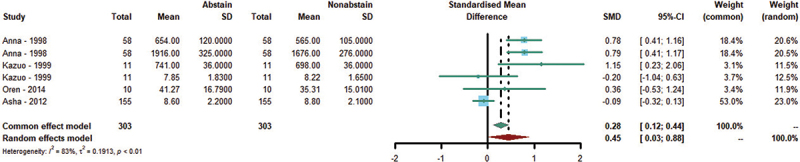
- Sports performance improved after nicotine withdrawal in 4 studies (n = 303): SMD = 0.45, 95% CI 0.03 to 0.88; I² = 83%. Subgroup analysis showed females improved more (SMD = 0.79, 95% CI 0.52 to 1.05) than males (SMD = 0.46, 95% CI −0.87 to 1.79); movement duration (SMD = 0.84, 95% CI 0.49 to 1.19) and peak oxygen consumption (SMD = 0.79, 95% CI 0.41 to 1.17) improved, but hand strength did not.
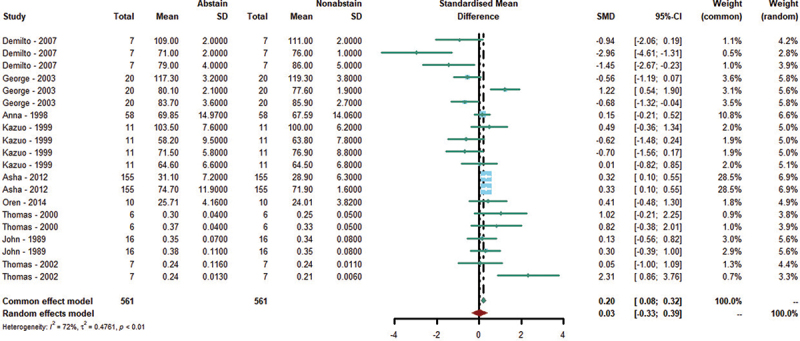
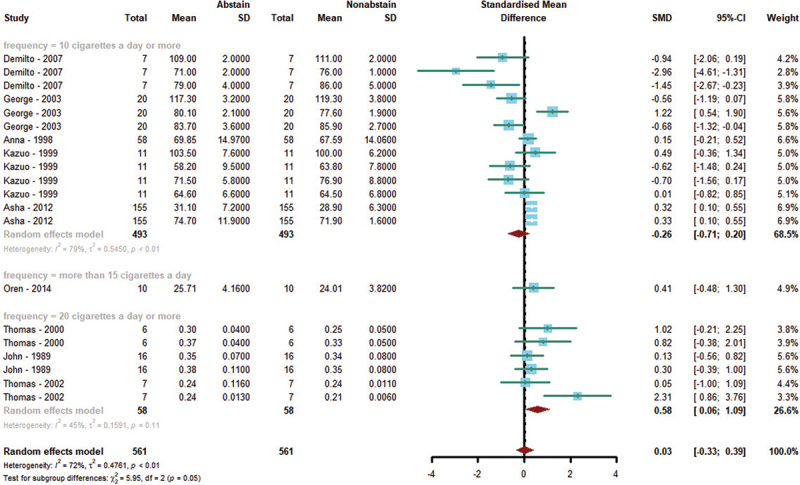
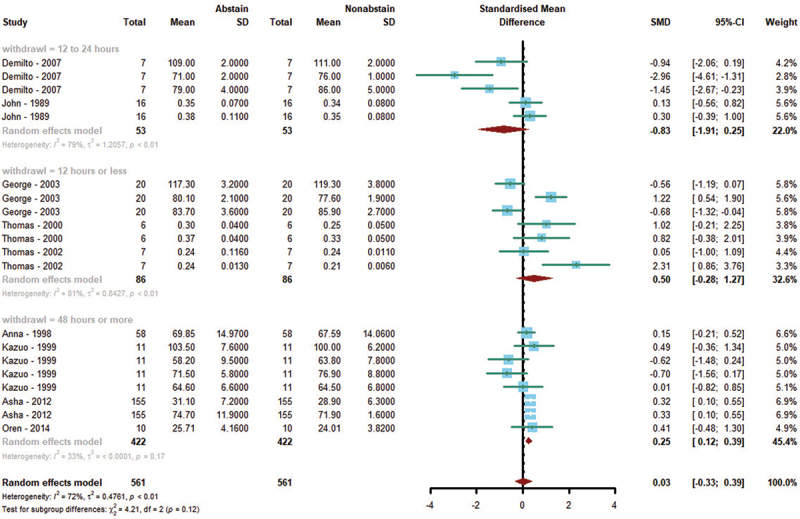
- Exercise-related physical ability across 9 studies (n = 561) showed no overall significant effect: SMD = 0.03, 95% CI −0.33 to 0.39; I² = 72%. Mixed-gender subgroup improved significantly (SMD = 0.33, 95% CI 0.17 to 0.49), as did higher nicotine intake frequency (SMD = 0.58, 95% CI 0.06 to 1.09) and long-term withdrawal (SMD = 0.25, 95% CI 0.12 to 0.39).
- Short-term nicotine withdrawal (12–24 hours) was associated with decline in reaction time and sustained attention: SMD = −0.83, 95% CI −1.91 to 0.25; I² = 79%. Long-term withdrawal (48 hours or more) showed an opposing trend: SMD = 0.25, 95% CI 0.12 to 0.39; I² = 81%.
- The authors conclude that mid- to long-term (≥3 months) nicotine withdrawal significantly improves exercise-related physical ability and sports performance, whereas short-term (≤24 hours) withdrawal considerably hampers performance and physical cognition.
Methods
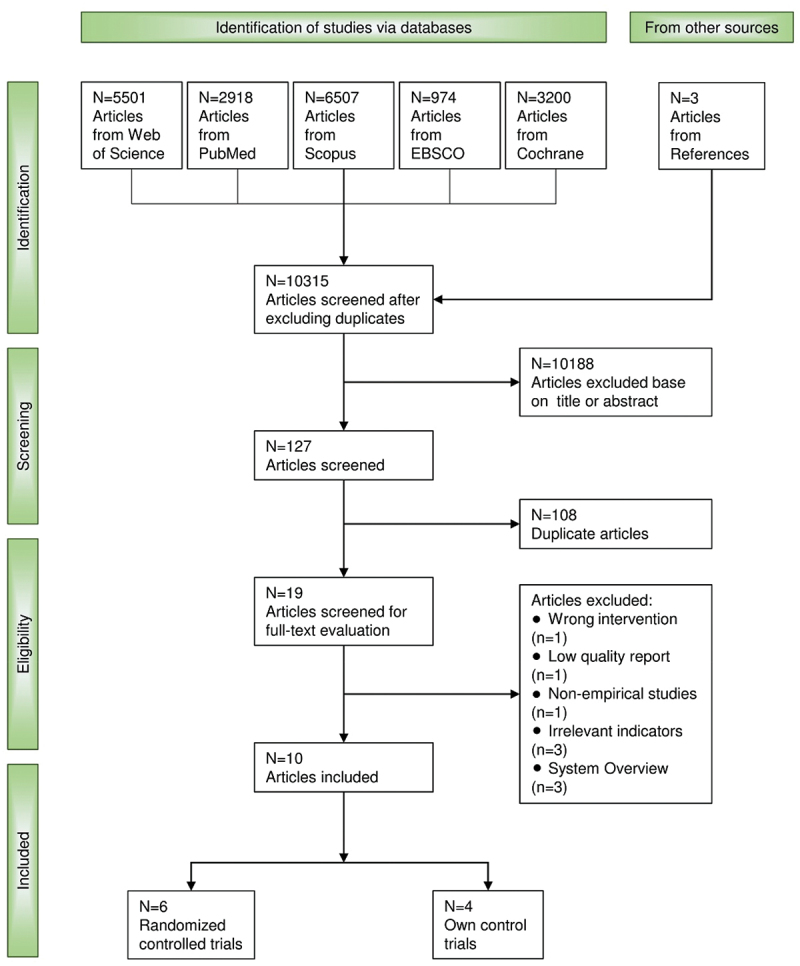
- Systematic review and meta-analysis conducted per PRISMA and PERSIST guidance, registered with PROSPERO (CRD42023411381). Searched PubMed, Scopus, Web of Science, Cochrane Central, and EBSCO from inception to 7 April 2023, including only English-language articles.
- Included 10 studies: 6 randomized controlled trials and 4 self-controlled trials; 7 from the United States, and 1 each from Greece, Brazil, and Israel. Individual trial sample sizes ranged from 6 to 155 participants, plus one study comparing data from over 10,000 Marine recruits. The abstract reports 13,538 participants aged 18 to 65 years; the Results section states 13,520 nicotine-dependent subjects.
- Random-effects model used with standardized mean difference (SMD) and 95% confidence intervals; heterogeneity assessed by I². Subgroup analyses examined withdrawal duration (≤12 hours, 12–48 hours, ≥48 hours), gender, sample size, and nicotine intake frequency. Sensitivity analyses and funnel plots were performed; risk of bias assessed with Rob 2.0.
Limitations
- Stated by the paper: English-only search may omit relevant non-English studies; limited available literature yields less comprehensive evidence; exercise types were not refined and outcome indicators were not standardized; high heterogeneity arose from wide chronological/geographical span and non-uniform research methods and measurement indicators; uncertainty about whether participants can maintain sustained abstinence, especially long-term; carryover effects in cross-over trials may influence subsequent withdrawal stages.
- Stated by the paper: independent selection of “sports performance” and “exercise-related physical abilities” with no standardized metrics amplifies heterogeneity risk; cognitive abilities were used as a surrogate for exercise-related physical capabilities; abstinence-duration research is not diverse, with short-term studies mostly addressing cognitive sports abilities and medium- to long-term studies addressing sports performance.
- Evident from the text: the gender subgroup analysis for sports performance relied on only one female study (Anna et al.); meta-regression was not performed because fewer than 10 studies were included; risk-of-bias assessment reported 40% of studies with some issues, 20% moderate risk, and 10% high risk.
Model-written summary. Check it against the paper before relying on it.
Integrity signals
Registry
Cites
Statistics
Figures
Verification
Claims the paper makes
1 Valid · 2 Not valid · 27 Not checked · 72 Own results and interpretations
None of the sources cited for this claim have been checked yet.
In the paper
“These effects could have a direct impact on exercise performance [22,27,28].”
§ The effects of nicotine withdrawal on exercise-related physical ability and sports performance in nicotine addicts: a systematic review and meta-analysis > Introduction
What the sources say
- Could not verifycites [22] Aubin, H-J, Farley, A, Lycett, D, et al. Weight gain in smokers after quitting cigarettes: meta-analysis. BMJ. 2012; 345(jul10 2): e4439. doi: 10.1136/bmj.e4439 22782848 PMC3393785 sourceExperimental — accuracy not yet measured
Our copy of Aubin et al. (2012, BMJ) is a meta-analysis of weight change after cessation; no passage states or implies that nicotine withdrawal effects impact exercise performance. Searched queries ('withdrawal symptoms', 'exercise performance', 'physical activity', 'cravings') returned only the Methods passage noting that a systematic review showed exercise suppresses cravings to smoke and that 'exercise could reduce weight gain', plus the Discussion's limits of the review — none of which addresses withdrawal effects on performance. The paper's Results/Tables report weight gains (e.g. 4.67 kg at 12 months in untreated quitters), a different point from the one attributed. (LLM, conf=0.72)
- Not checked yetcites [27] Hughes, JR. Effects of abstinence from tobacco: valid symptoms and time course. Nicotine Tob Res. 2007; 9(3): 315– 327. doi: 10.1080/14622200701188919 17365764 source
- Not checked yetcites [28] Sommese, T, Patterson, JC. Acute effects of cigarette smoking withdrawal: a review of the literature. Aviat Space Environ Med. 1995; 66(2): 164– 167. 7726782
hedgedstates a possible cause- Asserted: passes — The authors put it forward as true.
- Checkable: passes — It can be checked against evidence.
- Load-bearing: passes — The paper’s conclusions depend on it.
- Based: passes — The paper gives a reason why it holds.
- Could not verify
The cited sources support only part of this claim — read each source’s verdict below.
In the paper
“The influence of nicotine withdrawal on the enhancement of exercise capacity has primarily been observed in aspects such as aerobic endurance, oxygen uptake, BMI, running speed, muscle strength, bone density, heart rate reserve, and systolic and diastolic blood pressure [29–34].”
§ The effects of nicotine withdrawal on exercise-related physical ability and sports performance in nicotine addicts: a systematic review and meta-analysis > Introduction
What the sources say
- Not checked yetcites [29] Albrecht, AE, Marcus, BH, Roberts, M, et al. Effect of smoking cessation on exercise performance in female smokers participating in exercise training. Am J Cardiol. 1998; 82(8): 950– 955. doi: 10.1016/S0002-9149(98)00511-6 9794350 source
- Partly supportedcites [30] Asthana, A, Piper, ME, McBride, PE, et al. Long-term effects of smoking and smoking cessation on exercise stress testing: three-year outcomes from a randomized clinical trial. Am Heart J. 2012; 163(1): 81– 87.e1. doi: 10.1016/j.ahj.2011.06.023 22172440 PMC3348587 sourceExperimental — accuracy not yet measured
Asthana et al. (2012) supports only part of this list: the Abstract Results (p. 1) and Discussion report that 3-year abstainers had greater improvements than continuing smokers in heart rate reserve, rate-pressure product (peak HR × peak systolic BP) and peak HR increase, so 'heart rate reserve' and a systolic-BP-derived measure are in our copy. However, the same paper explicitly states it did NOT observe improvement in exercise capacity (peak METs) or HR recovery (Limitations, Discussion), and BMI moved the wrong way — 'abstainers had larger increases in body mass index than individuals who continued to smoke' (Discussion) — so 'enhancement of exercise capacity' and BMI-as-benefit are contrary to this source. Aerobic endurance, oxygen uptake, running speed, muscle strength, bone density and diastolic blood pressure as cessation outcomes are not addressed anywhere in our copy (searched: muscle strength/bone density/running speed; systolic/diastolic blood pressure — BP appears only as measured RPP input and as an adjusted covariate). (LLM, conf=0.72)
- Not checked yetcites [31] Feinberg, JH, Ryan, MAK, Johns, M, et al. Smoking cessation and improvement in physical performance among young men. Mil Med. 2015; 180(3): 343– 349. doi: 10.7205/MILMED-D-14-00370 25735027 source
- Not checked yetcites [32] Hashizume, K, Yamaji, K, Kusaka, Y, et al. Effects of abstinence from cigarette smoking on the cardiorespiratory capacity Med Sci Sports Exerc. 2000; 32(2): 386. doi: 10.1097/00005768-200002000-00019 10694121 source
- Not checked yetcites [33] Pureza, DY, Sargentini, L, Laterza, R, et al. Efeitos cardiovasculares da abstinência do fumo no repouso e durante o exercício submáximo em mulheres jovens fumantes. Revista Brasileira de Medicina Do Esporte. 2007; 13(5): 292– 296. doi: 10.1590/S1517-86922007000500003 source
- Not checked yetcites [34] Rom, O, Reznick, AZ, Keidar, Z, et al. Smoking cessation-related weight gain—beneficial effects on muscle mass, strength and bone health. Addiction. 2015; 110(2): 326– 335. doi: 10.1111/add.12761 25312589 source
plainstates a cause- Asserted: passes — The authors put it forward as true.
- Checkable: passes — It can be checked against evidence.
- Load-bearing: unclear — It is unclear whether the paper’s conclusions depend on it.
- Based: passes — The paper gives a reason why it holds.
The cited sources that could be checked couldn’t confirm or dispute this claim.
In the paper
“The results revealed a significant improvement in the study’s heterogeneity following the removal of Asha et al. [30].”
§ The effects of nicotine withdrawal on exercise-related physical ability and sports performance in nicotine addicts: a systematic review and meta-analysis > Results > Sensitivity analysis
What the sources say
- Could not verifycites [30] Asthana, A, Piper, ME, McBride, PE, et al. Long-term effects of smoking and smoking cessation on exercise stress testing: three-year outcomes from a randomized clinical trial. Am Heart J. 2012; 163(1): 81– 87.e1. doi: 10.1016/j.ahj.2011.06.023 22172440 PMC3348587 sourceExperimental — accuracy not yet measured
Our copy of Asthana et al. (2012) is a single-center 3-year randomized clinical trial of smoking-cessation pharmacotherapies with prespecified multivariable regression on TST parameters (Methods > Data analysis; Abstract > Methods; Discussion > Limitations, which states 'this was a randomized clinical trial of smoking cessation interventions'). No passage reports a meta-analysis, pooled estimate, I-squared/Q statistic, or leave-one-out sensitivity analysis — searched: 'heterogeneity', 'sensitivity analysis', 'meta-analysis', 'pooled'. The heterogeneity improvement after removing this study is a result of the citing review's own analysis, not something this source states, and our copy neither supports nor contradicts it. (LLM, conf=0.75)
plainstates a cause- Asserted: passes — The authors put it forward as true.
- Checkable: passes — It can be checked against evidence.
- Load-bearing: unclear — It is unclear whether the paper’s conclusions depend on it.
- Based: passes — The paper gives a reason why it holds.
- Could not verify
A result the paper reports from its own data — it cites no other source for it, so there is none to check. The quote shows it is in the paper.
In the paper
“whereas long-term withdrawal (lasting 48 hours or more) demonstrated an opposing trend (SMD = 0.25, 95% CI: 0.12 to 0.39; I^2 = 81%).”
§ The effects of nicotine withdrawal on exercise-related physical ability and sports performance in nicotine addicts: a systematic review and meta-analysis > Abstract > Results
boostedstates an association- Asserted: passes — The authors put it forward as true.
- Checkable: passes — It can be checked against evidence.
- Load-bearing: passes — The paper’s conclusions depend on it.
- Based: passes — The paper gives a reason why it holds.
A result the paper reports from its own data — it cites no other source for it, so there is none to check. The quote shows it is in the paper.
In the paper
“Short-term nicotine withdrawal (spanning 12 to 24 hours) might lead to a decline in participants’ physical abilities in certain aspects like reaction time and sustained attention (SMD = −0.83, 95% CI: −1.91 to 0.25; I^2 = 79%)”
§ The effects of nicotine withdrawal on exercise-related physical ability and sports performance in nicotine addicts: a systematic review and meta-analysis > Abstract > Results
hedgedstates a possible cause- Asserted: passes — The authors put it forward as true.
- Checkable: passes — It can be checked against evidence.
- Load-bearing: passes — The paper’s conclusions depend on it.
- Based: passes — The paper gives a reason why it holds.
- Rests on an assumption not shown here.
52 more claims
Create a free account to see all 102 claims and to verify the 52 references still open.
- It may state two separate claims as one. 27
- Probably not a substantial claim. 24
Self-check
Percentages, sums and reported differences re-computed from the paper’s own numbers.
Each contradiction between two passages listed here was confirmed by an independent check.
Rated major: it would touch a result — a value a result rests on, reported and recomputed p-values on opposite sides of the significance level, two passages that conflict with no sign which is right, or a cited work retracted before this paper was published.
In the paper
§ The effects of nicotine withdrawal on exercise-related physical ability and sports performance in nicotine addicts: a systematic review and meta-analysis > Discussion > Nicotine withdrawal and exercise-related physical ability
“In every meta-analysis of sports-related physical ability alterations attributable to nicotine withdrawal, we observed a significant Standard Mean Deviation (SMD).”
§ The effects of nicotine withdrawal on exercise-related physical ability and sports performance in nicotine addicts: a systematic review and meta-analysis > Results > Main results from the meta-analysis
“These studies presented a negligible SMD, indicating no statistical significance (SMD = 0.03, 95% CI: −0.33 to 0.39)”
Rated minor: it would not touch a result — a value no result rests on, a p-value that stays on the same side of the significance level, or a conflict that is clerical, resolved elsewhere in the paper, or outside its own findings.
In the paper
§ The effects of nicotine withdrawal on exercise-related physical ability and sports performance in nicotine addicts: a systematic review and meta-analysis > Results > Characteristics of the included studies
“the final two studies evaluated withdrawal periods exceeding one year [30,34].”
§ The effects of nicotine withdrawal on exercise-related physical ability and sports performance in nicotine addicts: a systematic review and meta-analysis > Results > Characteristics of the included studies
“Oren Rom et al. 2014 [34] | Israel | Self-controlled experimentssingle-blind) | Male and Female | 10 | 39.56±22 | 17.77±24(years) | >15 | 12 months”
Rated minor: it would not touch a result — a value no result rests on, a p-value that stays on the same side of the significance level, or a conflict that is clerical, resolved elsewhere in the paper, or outside its own findings.
In the paper
§ The effects of nicotine withdrawal on exercise-related physical ability and sports performance in nicotine addicts: a systematic review and meta-analysis > Results > Risk of bias
“40% of the studies presented certain issues, 20% were evaluated as moderate risk, and 10% were considered high risk.”
§ The effects of nicotine withdrawal on exercise-related physical ability and sports performance in nicotine addicts: a systematic review and meta-analysis > Methods > Study risk of bias assessment
“one study presented a high risk of bias owing to significant baseline differences in subject age, while two others demonstrated some level of bias. The remaining studies were assessed to have a low risk of bias.”
Rated minor: it would not touch a result — a value no result rests on, a p-value that stays on the same side of the significance level, or a conflict that is clerical, resolved elsewhere in the paper, or outside its own findings.
In the paper
§ The effects of nicotine withdrawal on exercise-related physical ability and sports performance in nicotine addicts: a systematic review and meta-analysis > Methods > Data collection and extraction
“Data extraction from the included studies was executed by one reviewer (BCC) and validated by a second reviewer (KZ).”
§ The effects of nicotine withdrawal on exercise-related physical ability and sports performance in nicotine addicts: a systematic review and meta-analysis > Methods > Data collection and extraction
“The data extraction was independently executed by two evaluators (KZ and KZB, respectively), and any discrepancies were reconciled through discussion.”
Citations
Cites
The PRISMA 2020 statement: An updated guideline for reporting systematic reviews
Page, M. J., McKenzie, J. E., Bossuyt, P. M., Boutron, I., Hoffmann, T. C., Mulrow, C. D., Shamseer, L., Tetzlaff, J. M., Akl, E. A., Brennan, S. E., et al. (2021) · BMJ · doi:10.1136/bmj.n71 · Cited by 108,283
Meta-analysis in clinical trials
DerSimonian, R., & Laird, N. (1986) · Controlled Clinical Trials · doi:10.1016/0197-2456(86)90046-2 · Cited by 39,552
Quantifying heterogeneity in a meta‐analysis
Higgins, J. P. T., & Thompson, S. G. (2002) · Statistics in Medicine · doi:10.1002/sim.1186 · Cited by 36,763
RoB 2: a revised tool for assessing risk of bias in randomised trials
Sterne, J. A. C., Savović, J., Page, M. J., Elbers, R. G., Blencowe, N. S., Boutron, I., Cates, C. J., Cheng, H.-Y., Corbett, M. S., Eldridge, S. M., et al. (2019) · BMJ · doi:10.1136/bmj.l4898 · Cited by 34,787
Meta-analyses involving cross-over trials: methodological issues
Elbourne, D. R., Altman, D. G., Higgins, J. P., Curtin, F., Worthington, H. V., & Vail, A. (2002) · International Journal of Epidemiology · doi:10.1093/ije/31.1.140 · Cited by 2,305
Effects of abstinence from tobacco: Valid symptoms and time course
Hughes, J. (2007) · Nicotine & Tobacco Research · doi:10.1080/14622200701188919 · Cited by 801 · cited 2×
“These effects could have a direct impact on exercise performance [22,27,28].”
BackgroundResultValidity, Reliability and Sensitivity of Measures of Sporting Performance
Currell, K., & Jeukendrup, A. E. (2008) · Sports Medicine · doi:10.2165/00007256-200838040-00003 · Cited by 768
Weight gain in smokers after quitting cigarettes: meta-analysis
Aubin, H.-J., Farley, A., Lycett, D., Lahmek, P., & Aveyard, P. (2012) · BMJ · doi:10.1136/bmj.e4439 · Cited by 510 · cited 3×
“Additionally, nicotine can enhance muscle blood flow and elevate cortisol levels [19–22].”
BackgroundResultArdern, C. L., Büttner, F., Andrade, R., Weir, A., Ashe, M. C., Holden, S., Impellizzeri, F. M., Delahunt, E., Dijkstra, H. P., Mathieson, S., et al. (2022) · British Journal of Sports Medicine · doi:10.1136/bjsports-2021-103987 · Cited by 458 · cited 1×
“This research study conducted a comprehensive systematic review and meta-analysis, strictly conforming to the guidelines prescribed by the Preferred Reporting Items for Systematic Reviews and Meta-Analyses (PRISMA) and the PERSIST guidance [39,40].”
MethodReitsma, M. B., Flor, L. S., Mullany, E. C., Gupta, V., Hay, S. I., & Gakidou, E. (2021) · The Lancet Public Health · doi:10.1016/s2468-2667(21)00102-x · Cited by 434
Institute for Health Metrics and Evaluation
Arthur, M. (2014) · Nursing Standard · doi:10.7748/ns.28.42.32.s33 · Cited by 404
Lisha, N. E., & Sussman, S. (2010) · Addictive Behaviors · doi:10.1016/j.addbeh.2009.12.032 · Cited by 357 · cited 1×
“Although research has shown a negative correlation between exercise and nicotine intake [6], with athletes generally consuming less nicotine than the general population, an intriguing contradiction has been observed.”
BackgroundNicotine withdrawal versus other drug withdrawal syndromes: similarities and dissimilarities
HUGHES, J. R., HIGGINS, S. T., & BICKEL, W. K. (1994) · Addiction · doi:10.1111/j.1360-0443.1994.tb03744.x · Cited by 312 · cited 1×
“Heterogeneity was investigated through subgroup analyses by nicotine withdrawal duration (≤12 hours, 12 to 48 hours, and 48 hours or more) [45].”
MethodWhat Keeps Us Awake: the Neuropharmacology of Stimulants and Wakefulness Promoting Medications
Boutrel, B., & Koob, G. F. (2004) · Sleep · doi:10.1093/sleep/27.6.1181 · Cited by 307
A cross-sectional examination of marketing of electronic cigarettes on Twitter
Huang, J., Kornfield, R., Szczypka, G., & Emery, S. L. (2014) · Tobacco Control · doi:10.1136/tobaccocontrol-2014-051551 · Cited by 272
Cognitive Effects of Nicotine: Recent Progress
Valentine, G., & Sofuoglu, M. (2018) · Current Neuropharmacology · doi:10.2174/1570159x15666171103152136 · Cited by 271
Vancampfort, D., Firth, J., Correll, C. U., Solmi, M., Siskind, D., De Hert, M., Carney, R., Koyanagi, A., Carvalho, A. F., Gaughran, F., et al. (2019) · World Psychiatry · doi:10.1002/wps.20614 · Cited by 227
Nicotine withdrawal in chippers and regular smokers: Subjective and cognitive effects.
Shiffman, S., Paty, J. A., Gnys, M., & Kassel, J. D. (1995) · Health Psychology · doi:10.1037//0278-6133.14.4.301 · Cited by 160
Leventhal, A. M., Waters, A. J., Boyd, S., Moolchan, E. T., Lerman, C., & Pickworth, W. B. (2007) · Experimental and Clinical Psychopharmacology · doi:10.1037/1064-1297.15.1.21 · Cited by 149
A contrast of meta and metafor packages for meta‐analyses in R
Lortie, C. J., & Filazzola, A. (2020) · Ecology and Evolution · doi:10.1002/ece3.6747 · Cited by 97
Trecroci, A., Duca, M., Cavaggioni, L., Rossi, A., Scurati, R., Longo, S., Merati, G., Alberti, G., & Formenti, D. (2021) · Brain Sciences · doi:10.3390/brainsci11020227 · Cited by 79
Effects of nicotine withdrawal on verbal working memory and associated brain response
Sweet, L. H., Mulligan, R. C., Mills‐Finnerty, C., Jerskey, B. A., David, S. P., Cohen, R. A., & NIAURA, R. S. (2010) · Psychiatry Research Neuroimaging · doi:10.1016/j.pscychresns.2010.04.014 · Cited by 51
Effects of exercise on cravings to smoke: the role of exercise intensity and cortisol
Scerbo, F., Faulkner, G., Taylor, A., & Thomas, S. (2010) · Journal of Sports Sciences · doi:10.1080/02640410903390089 · Cited by 51
Mesas, A. E., Núñez de Arenas-Arroyo, S., Martinez-Vizcaino, V., Garrido-Miguel, M., Fernández-Rodríguez, R., Bizzozero-Peroni, B., & Torres-Costoso, A. I. (2023) · British Journal of Sports Medicine · doi:10.1136/bjsports-2022-106355 · Cited by 48
Smoking cessation-related weight gain—beneficial effects on muscle mass, strength and bone health
Rom, O., Reznick, A. Z., Keidar, Z., Karkabi, K., & Aizenbud, D. (2015) · Addiction · doi:10.1111/add.12761 · Cited by 40
Effect of tobacco withdrawal on sustained attention
Hughes, J. R., Keenan, R. M., & Yellin, A. (1989) · Addictive Behaviors · doi:10.1016/0306-4603(89)90079-8 · Cited by 38
Smokeless tobacco, sport and the heart
Chagué, F., Guenancia, C., Gudjoncik, A., Moreau, D., Cottin, Y., & Zeller, M. (2015) · Archives of Cardiovascular Diseases · doi:10.1016/j.acvd.2014.10.003 · Cited by 31
Walker, J., Collins, L., Rowell, P., Goldsmith, L. J., Moffatt, R., & Stamford, B. (1999) · Nicotine & Tobacco Research · doi:10.1080/14622299050011501 · Cited by 30
Asthana, A., Piper, M. E., McBride, P. E., Ward, A., Fiore, M. C., Baker, T. B., & Stein, J. H. (2012) · American Heart Journal · doi:10.1016/j.ahj.2011.06.023 · Cited by 29
Lee, C.-L., & Chang, W. D. (2013) · International Journal of Women's Health · doi:10.2147/ijwh.s49220 · Cited by 27
Albrecht, A. E., Marcus, B. H., Roberts, M., Forman, D. E., & Parisi, A. F. (1998) · The American Journal of Cardiology · doi:10.1016/s0002-9149(98)00511-6 · Cited by 22
López-Torrecillas, F., Rueda, M. D. M., López-Quirantes, E. M., Santiago, J. M., & Tapioles, R. R. (2014) · BMC Public Health · doi:10.1186/1471-2458-14-1217 · Cited by 20
Smoking cessation and improvement in physical performance among young men
Feinberg, J. H., Ryan, M. A. K., Johns, M., Marvin, B. A., Reading, J. E., & White, M. R. (2015) · Military Medicine · doi:10.7205/milmed-d-14-00370 · Cited by 18 · cited 2×
“In the study [31], the data lacked Mean/SD calculation, but given the study’s large sample size and the high credibility of the experiment conducted on the Marine Corps population, the study was included in the main analysis.”
BackgroundMethodMündel, T., Machal, M., Cochrane, D. J., & Barnes, M. J. (2017) · Sports Medicine - Open · doi:10.1186/s40798-016-0074-8 · Cited by 18
Effects of abstinence from cigarette smoking on the cardiorespiratory capacity
HASHIZUME, K., YAMAJI, K., KUSAKA, Y., & KAWAHARA, K. (2000) · Medicine & Science in Sports & Exercise · doi:10.1097/00005768-200002000-00019 · Cited by 16
Liebermann‐Jordanidis, H., Roheger, M., Boosfeld, L., Franklin, J. G., & Kalbe, E. (2022) · Journal of Parkinson s Disease · doi:10.3233/jpd-223238 · Cited by 16
Exercise performance increase in smokeless tobacco-user athletes after overnight nicotine abstinence
Zandonai, T., Tam, E., Bruseghini, P., Capelli, C., Baraldo, M., & Chiamulera, C. (2019) · Scandinavian Journal of Medicine & Science in Sports · doi:10.1111/sms.13333 · Cited by 11
The influence of tobacco use on pulmonary function in elite athletes
Đorđević Šaranović, S., Vićić, J., Pešić, I., Tomović, M., Batinić, Đ., Antić, M., Tadic, M., & Mazić, S. (2019) · International Journal of Environmental Research and Public Health · doi:10.3390/ijerph16193515 · Cited by 11
Cigarette smoking: an underused tool in high-performance endurance training
Myers, K. A. (2010) · Canadian Medical Association Journal · doi:10.1503/cmaj.100042 · Cited by 10 · cited 1×
“Conversely, smoking can also augment serum hemoglobin and total lung capacity while promoting weight loss, all of which may potentially enhance endurance sports performance [13].”
BackgroundEffects of habitual smoking on cardiopulmonary function in taekwondo athletes
Jang, D.-J., Kim, H.-C., Kim, J.-K., Jung, S.-Y., & Kim, D.-Y. (2017) · Journal of Exercise Rehabilitation · doi:10.12965/jer.1735172.586 · Cited by 10
Changes in muscle blood flow after smoking a cigarette determined by a new noninvasive method
Weber, F., Anlauf, M., & M�ller, R. D. (1989) · European Journal of Clinical Pharmacology · doi:10.1007/bf00558134 · Cited by 9
Novick, A. M., Duffy, K. A., Johnson, R. L., Sammel, M. D., Cao, W., Strasser, A. A., Sofuoglu, M., Kuzma, A., Loughead, J., Morrow, A. L., et al. (2022) · Biology of Sex Differences · doi:10.1186/s13293-022-00472-w · Cited by 9
Should We be Concerned with Nicotine in Sport? Analysis from 60,802 Doping Control Tests in Italy
Zandonai, T., Botrè, F., Abate, M. G., Peiró, A. M., & Mündel, T. (2023) · Sports Medicine · doi:10.1007/s40279-023-01819-y · Cited by 9
Effects of cigarette smoking on endurance performance levels of 16- to 19-year-old males
Hashizume, K., Kusaka, Y., & Kawahara, K. (1999) · Environmental Health and Preventive Medicine · doi:10.1007/bf02931998 · Cited by 7
NICOTINE DEPRIVATION EFFECTS ON THE DISSOCIATED COMPONENTS OF SIMPLE REACTION TIME
Marzilli, T. S., & Hutcherson, A. B. (2002) · Perceptual and Motor Skills · doi:10.2466/pms.2002.94.3.985 · Cited by 5
EFFECTS OF SMOKING ABSTINENCE ON MOVEMENT REGULATION
Marzilli, T. S., & Shea, J. B. (2000) · Perceptual and Motor Skills · doi:10.2466/pms.2000.90.2.624 · Cited by 5
Changes on executive functions before and after quitting smoking: Pilot study
Noé-Díaz, V., Salinas-Rivera, E., Cruz-Pérez, F., García-Gómez, L. A., Mandujano-Baeza, E., Ortiz-Moncada, G., Ramírez-Venegas, A., & Sansores, R. H. (2018) · Journal of Substance Use · doi:10.1080/14659891.2017.1405087 · Cited by 4
Effect of cigarette and shisha smoking on cognitive functions impairment: a cross sectional study
Bashir, S., Murtaza, G., Meo, S. A., & Al-Masri, A. (2020) · Pakistan Journal of Medical Sciences · doi:10.12669/pjms.36.5.2251 · Cited by 4
Pureza, D. Y. D., Sargentini, L., Laterza, R., Flores, L. J. F., Irigoyen, M. C., & Angelis, K. D. (2007) · Revista Brasileira de Medicina do Esporte · doi:10.1590/s1517-86922007000500003 · Cited by 3
Häuser, W., Schaal, N., Schiedermaier, P., & Görge, G. (2002) · PPmP - Psychotherapie · Psychosomatik · Medizinische Psychologie · doi:10.1055/s-2002-32861 · Cited by 2
EFFECTS OF SMOKING ABSTINENCE ON MOVEMENT REGULATION
MARZILLI, T. S. (2000) · Perceptual and Motor Skills · doi:10.2466/pms.90.2.624-630 · Cited by 1
(2003) · PubMed
(1995) · PubMed
Research works printed but not linked: 1
- Chapter 10: analysing data and undertaking meta-analyses. [cited 21 May 2023]. Available from: https://training.cochrane.org/handbook/current/chapter-10
Cited by
Asar, E., Bulut, Y., Badem, N. D., Örsçelik, A., Şahin, Ç. E., Büyüklüoğlu, G., Kucuk, I., Kocahan, T., & Ergüder, T. (2025) · Healthcare · doi:10.3390/healthcare13020198 · Cited by 8
Dong, F.-W., Wang, D., Chang, Y., & Tang, L. (2025) · Frontiers in Aging Neuroscience · doi:10.3389/fnagi.2025.1519494 · Cited by 4
Body composition and anaerobic power: correlational analysis in male athletes
Ali, H. A., Omoush, R. M., Amawi, A. T., & Ghazzawi, H. (2025) · Frontiers in Sports and Active Living · doi:10.3389/fspor.2025.1666296 · Cited by 4
Tobacco smoking: A stimulus for blood volume expansion
Sotiridis, A., Dardamanis-Aidonas, C., Makris, A., Loukas, I., Geladas, N., & Koskolou, M. (2026) · Respiratory Physiology & Neurobiology · doi:10.1016/j.resp.2025.104505 · Cited by 1
Soldevila-Matías, P., Sánchez‐Ortí, J. V., Correa‐Ghisays, P., Balanzá‐Martínez, V., Selva‐Vera, G., Sanchís-Sanchís, R., García, N. I., Monfort-Pañego, M., Tomás-Martínez, P., Víctor, V. M., et al. (2025) · PLoS ONE · doi:10.1371/journal.pone.0313759 · Cited by 1
Metadata
- Authors
- Bao, K., Zheng, K., Zhou, X., Chen, B., He, Z., & Zhu, D.
- Affiliations
- Zhejiang Normal University (CN)
- Corresponding author
- Zhu, Danyang
- Venue
- Journal of the International Society of Sports Nutrition
- Publisher
- Informa UK Limited
- Published
- 2024-01-11
- Volume
- 21
- Issue
- 1
- Pages
- 2302383-2302383
- ISSN
- 1550-2783 (ISSN-L)
- PMC
- PMC10791090
- OpenAlex
- W4390791613
- Cited by
- 19
- References
- 52
- Citations by year
- 2026: 8 · 2025: 9 · 2024: 2
- FWCI
- 1.02
- Type
- journal article
- Language
- en
- Open access
- gold
- doi.org
- Licence
- Locations
- Journal of the International Society of Sports Nutrition (publishedVersion, cc-by-nc)
- PubMed Central (publishedVersion, cc-by-nc)
- PubMed (publishedVersion)
- DOAJ (DOAJ: Directory of Open Access Journals) (submittedVersion, cc-by-sa)
- Funders
- no funding
- Topics
- Health Sciences › Medicine › Public Health, Environmental and Occupational Health › Smoking Behavior and Cessation
- Health Sciences › Medicine › Physiology (medical) › Cardiovascular and exercise physiology
- Health Sciences › Medicine › Orthopedics and Sports Medicine › Sports Performance and Training
- Keywords
- nicotine withdrawal, nicotine dependence, athletic performance, exercise performance, physical fitness, cardiorespiratory fitness, reaction time, sustained attention, nicotine cessation, athletes, physical abilities, cardiovascular function, lung function
- MeSH terms
- Humans, Nicotine, Physical Fitness, Tobacco Use Disorder, Exercise, Athletic Performance
About these checks
Registry, retraction, Cites and statistics results are computed, not judged, with one exception: a printed reference that no index lists is read once by a model before it counts as a citation error. Claims are extracted by a model and kept only when their quote appears verbatim in the text; each cited source is then checked, with a model’s help, for whether it says what the claim relies on. Those verdicts can be wrong — read the claim’s quote and the cited source before relying on one.
The claim verdicts this report counts are experimental: their accuracy is not yet measured.
A language model drew the claims from the paper on 2026-11-19, under version 3 of the claim definition (model deepseek-v4.1-flash, prompt extract-v3).
A second model labelled each claim on 2026-11-19 (model jev-1.13-20260917, definition revision gold-guideline-v0.2).
Cited sources are checked with a language model’s help (qwen3.8-omni-flash).
Statistics and arithmetic are recomputed, not judged.
Confidence bands are shown only for fields calibrated on our annotated test set. None is calibrated yet, so no band is shown.
What counts as a claim ›How we measure confidence ›How we check this ›
Are you an author, or do you see a problem with this page? Request a review
Data sources
Bibliographic data: Semantic Scholar, OpenAlex, Crossref.
Contains information from the Semantic Scholar Academic Graph Datasets, made available under the ODC Attribution License (ODC-BY 1.0).
Semantic Scholar’s data is described in: Kinney, R., et al. (2023). The Semantic Scholar Open Data Platform. arXiv:2301.10140.
