

Performance-enhancing effects of caffeine and L-Theanine among Iranian elite wrestlers: a focus on cognitive and specific physical performance
Open accessThe DOI matches its Crossref record; 51 of the 52 references it cites were found in a registry or an index.
Abstract
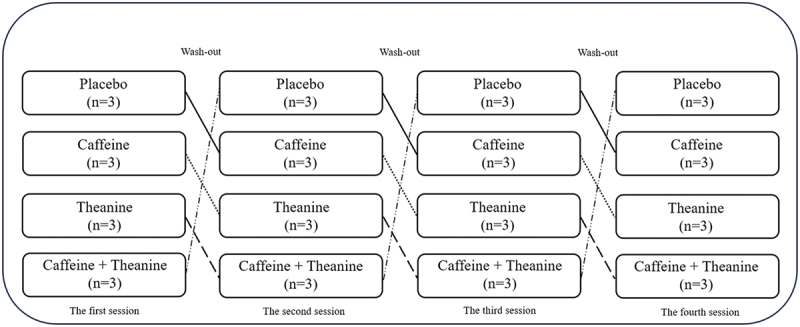
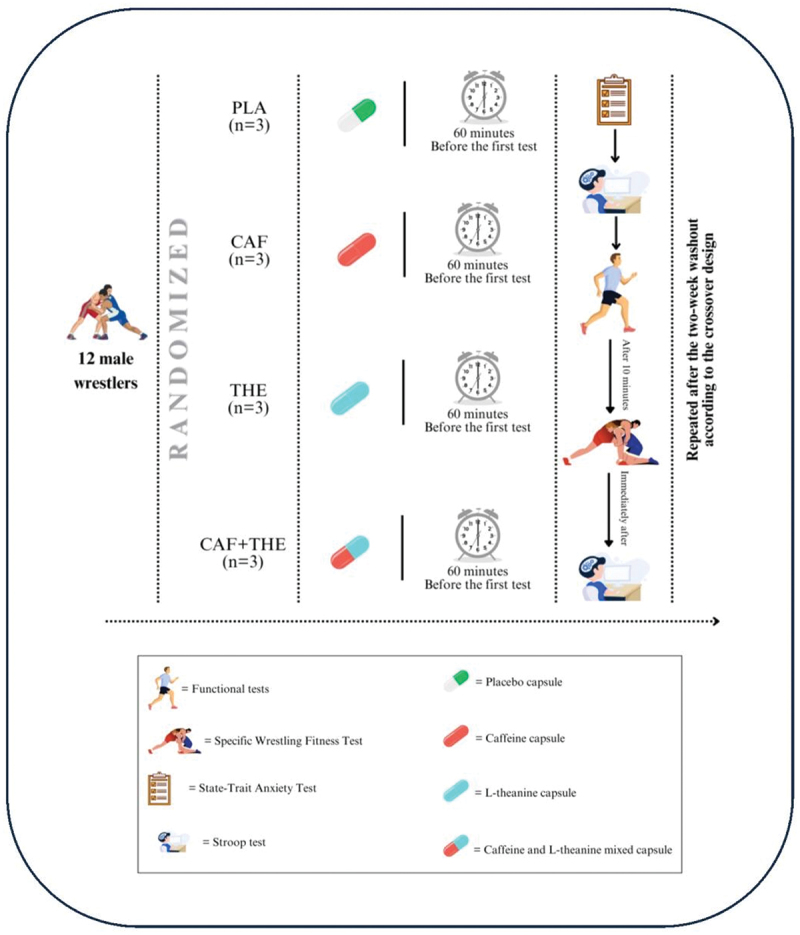
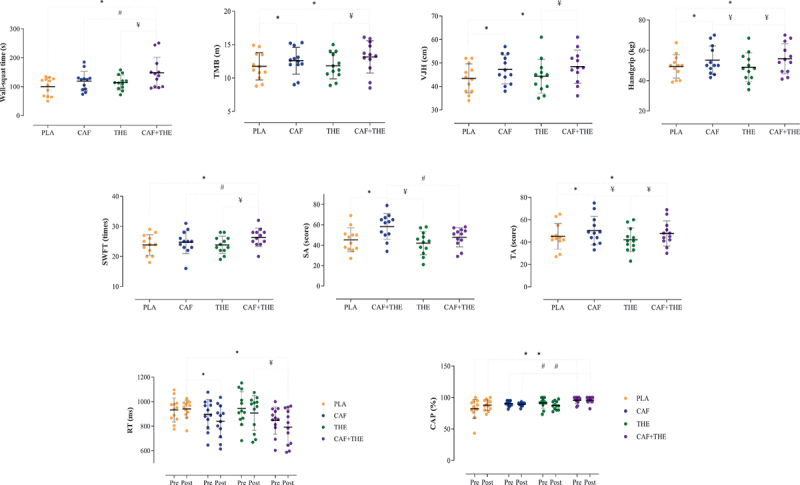
Background Caffeine is a well-known ergogenic aid that can enhance physical and cognitive performance. However, it often induces side effects, such as anxiety and overstimulation, which can be problematic in high-pressure sports like wrestling. L-theanine, a non-stimulant amino acid found in tea, may help mitigate these effects by promoting a calm yet focused mental state. This study aimed to investigate the acute effects of caffeine, L-theanine, and their combination on physical performance, cognitive function, and anxiety in elite male wrestlers.Methods In a double-blind, placebo-controlled, crossover design, 12 elite male wrestlers (21.8 ± 2.1 years) completed four test sessions under randomized conditions: placebo (PLA), caffeine (CAF; 3 mg/kg), L-theanine (THE; 3 mg/kg), and caffeine + L-theanine (CAF+THE; 3 mg/kg each). After 60 minutes, athletes performed the wall-squat test, vertical jump height (VJH), medicine ball throw (MBT), handgrip strength, and the Specific Wrestling Fitness Test (SWFT). Cognitive function was assessed pre- and post-SWFT using a computerized Stroop test. Anxiety was assessed using the State-Trait Anxiety Inventory (STAI), and side effects were recorded.Results CAF+THE outperformed PLA in wall-squat time (p = 0.001), MBT (p = 0.005), VJH (p = 0.011), and grip strength (p = 0.004). SWFT throw count was highest in CAF+THE versus all other conditions (p < 0.001). Post-SWFT Stroop reaction time was faster in CAF+THE than PLA (p = 0.004) and THE (p = 0.036), and accuracy was also higher (p = 0.009 vs PLA). CAF alone increased state anxiety compared to PLA (p = 0.021), while CAF+THE reduced anxiety to below placebo levels (8% incidence vs 33%). Trait anxiety was lower in CAF+THE compared to CAF (p = 0.018). The prevalence of caffeine-induced tachycardia (92%) was notably reduced under CAF+THE (17%).Conclusion CAF+THE (3 mg/kg each) enhances elite wrestlers’ strength, endurance, cognitive speed, and accuracy while reducing anxiety and physiological side effects commonly associated with caffeine alone. This combination represents a safe, practical supplement strategy for combat sports athletes who must maintain explosive performance and mental control under stress. Coaches are encouraged to trial CAF+THE protocols during training to personalize timing and dosage.
Overview
The claims and statistics of this paper haven’t been checked yet.
Free: it reads the open-access text and checks the first 5 claims that cite a source we can check. Create a free account to check every claim.
Integrity signals
Registry
Cites
Statistics
Figures

Verification
Claims the paper makes
The claims and statistics of this paper haven’t been checked yet.
Free: it reads the open-access text and checks the first 5 claims that cite a source we can check. Create a free account to check every claim.
Claims other papers make about this one
Each is checked against this paper’s own text: does it say what the citing paper says it does?
The source backs part of the claim, not all of it — or backs it for a different population, condition or comparison.
In the citing paper
“In addition, there is evidence that L-theanine may be able to buffer some of the adverse effects that can occur as a result of caffeine consumption, such as sleep disturbance and increases in anxiety (26, 55), consistent with findings reported in pre-clinical studies (56–58).”
From Effects of L-theanine on cognition, mood and sleep: evidence from human trials (2026) · cites this paper as [26]
Experimental — accuracy not yet measuredThe cited source says what the claim attributes to it.
In the citing paper
“Individual studies have, however, suggested that co-ingestion of caffeine and L-theanine may have an additive effect, with additional benefits noted compared to when each is administered in isolation (20–27), although such findings have been somewhat inconsistent (28, 29) and would benefit from further behavioral and mechanistic evaluation.”
From Effects of L-theanine on cognition, mood and sleep: evidence from human trials (2026) · cites this paper as [26]
The cited source says what the claim attributes to it.
In the citing paper
“indicating that this plant-derived amino acid may provide a broad spectrum of benefits for human health and performance.”
From Effects of L-theanine on cognition, mood and sleep: evidence from human trials (2026) · cites this paper as [26]
Self-check
Percentages, sums and reported differences re-computed from the paper’s own numbers.
The self-check needs the paper’s full text.
Citations
Cites
Faul, F., Erdfelder, E., Lang, A.-G., & Buchner, A. (2007) · Behavior Research Methods · doi:10.3758/bf03193146 · Cited by 65,971 · cited 1×
“The required sample size was determined using G*Power software (3.1.9.7) [20], based on a significance level of α = 0.05 (two-tailed) and a statistical power (1 − β) of 0.80.”
InfluentialStatistical Power Analysis for the Behavioral Sciences
Cohen, J. (2013) · doi:10.4324/9780203771587 · Cited by 25,373
Studies of interference in serial verbal reactions
Stroop, J. R. (1935) · Journal of Experimental Psychology · doi:10.1037/h0054651 · Cited by 18,622
Roberts, H. C., Denison, H. J., Martin, H. J., Patel, H. P., Syddall, H., Cooper, C., & Sayer, A. A. (2011) · Age and Ageing · doi:10.1093/ageing/afr051 · Cited by 3,001 · cited 1×
“This procedure followed standardized protocols to ensure accuracy and reliability [31].”
International Society of Sports Nutrition Position Stand: Caffeine and Exercise Performance
Guest, N. S., VanDusseldorp, T. A., Nelson, M. T., Grgic, J., Schoenfeld, B. J., Jenkins, N. D. M., Arent, S. M., Antonio, J., Stout, J. R., Trexler, E. T., et al. (2021) · Journal of the International Society of Sports Nutrition · doi:10.1186/s12970-020-00383-4 · Cited by 665 · cited 10×
“Acute caffeine ingestion, typically within the range of 3–9 mg/kg body mass about 60 minutes pre-exercise, enhances fat oxidation, spares glycogen, and stimulates the central nervous system, thereby delaying fatigue and improving overall performance [4,6].”
Influentiall-theanine reduces psychological and physiological stress responses
Kimura, K., Ozeki, M., Juneja, L. R., & Ohira, H. (2007) · Biological Psychology · doi:10.1016/j.biopsycho.2006.06.006 · Cited by 349 · cited 6×
“Additionally, it may promote parasympathetic activation and nitric oxide – mediated vasodilation, mitigating caffeine-induced vasoconstriction [9,10].”
InfluentialAssociation between A2a receptor gene polymorphisms and caffeine-induced anxiety
Alsene, K., Deckert, J., Sand, P., & de Wit, H. (2003) · Neuropsychopharmacology · doi:10.1038/sj.npp.1300232 · Cited by 334 · cited 1×
“Furthermore, individual variation in caffeine sensitivity – potentially driven by ADORA2A gene polymorphisms – may explain the heightened anxiety observed in some athletes following caffeine alone [51].”
The Effects of L-Theanine, Caffeine and Their Combination on Cognition and Mood
Haskell, C. F., Kennedy, D. O., Milne, A. L., Wesnes, K. A., & Scholey, A. B. (2008) · Biological Psychology · doi:10.1016/j.biopsycho.2007.09.008 · Cited by 280 · cited 1×
“These results align with previous studies showing that the combination of caffeine and L-theanine improves mood and cognitive performance while reducing anxiety and overstimulation [9,17,50].”
Maximum Strength-Power-Performance Relationships in Collegiate Throwers
STONE, M. H., SANBORN, K., OʼBRYANT, H. S., HARTMAN, M., STONE, M. E., PROULX, C., WARD, B., & HRUBY, J. (2003) · Journal of Strength and Conditioning Research · doi:10.1519/00124278-200311000-00019 · Cited by 254
Revised Physical Activity Readiness Questionnaire.
Adams, R. (1999) · PubMed · Cited by 209
Trait vs. state anxiety in different threatening situations
Leal, P. C., Goes, T. C., da Silva, L. C. F., & Teixeira-Silva, F. (2017) · Trends in Psychiatry and Psychotherapy · doi:10.1590/2237-6089-2016-0044 · Cited by 209 · cited 1×
“In the context of this study, it was employed to examine the acute effects of caffeine and L-theanine – individually and in combination – on both situational and baseline anxiety among elite wrestlers [23].”
Rogers, P. J., Smith, J. E., Heatherley, S. V., & Pleydell-Pearce, C. W. (2007) · Psychopharmacology · doi:10.1007/s00213-007-0938-1 · Cited by 183 · cited 4×
“Not all studies have found facilitative cognitive effects of the CAF-THE combo; some early research using lower doses indicated L-theanine might even antagonize caffeine’s alertness in certain simple tasks [9,14].”
InfluentialPhysiological and performance adaptations of elite Greco-Roman wrestlers during a one-day tournament
Barbas, I., Fatouros, I. G., Douroudos, I. I., Chatzinikolaou, A., Michailidis, Y., Draganidis, D., Jamurtas, A. Z., Nikolaidis, M. G., Parotsidis, C., Theodorou, A. A., et al. (2011) · European Journal of Applied Physiology · doi:10.1007/s00421-010-1761-7 · Cited by 181 · cited 6×
“Wrestling requires a unique integration of strength, power, anaerobic endurance, and rapid tactical decision-making, all performed under physical fatigue and psychological stress conditions [1–3].”
InfluentialPhysical and Physiological Attributes of Wrestlers: An Update
Chaabene, H., Negra, Y., Bouguezzi, R., Mkaouer, B., Franchini, E., Julio, U., & Hachana, Y. (2017) · Journal of Strength and Conditioning Research · doi:10.1519/jsc.0000000000001738 · Cited by 180 · cited 4×
“Wrestlers using this combination experienced improvements in key performance metrics – grip strength for clinch control, lower-body explosiveness for takedowns, and muscular endurance for sustained effort across rounds [1–3].”
InfluentialCamfield, D. A., Stough, C., Farrimond, J., & Scholey, A. B. (2014) · Nutrition Reviews · doi:10.1111/nure.12120 · Cited by 155 · cited 10×
“L-theanine is a naturally occurring amino acid in green tea leaves, known for promoting relaxation without sedation and reducing stress and anxiety levels [9–12].”
Influential(2008) · PubMed · Cited by 154
Williams, J. L., Everett, J. M., D’Cunha, N. M., Sergi, D., Georgousopoulou, E. N., Keegan, R. J., McKune, A. J., Mellor, D. D., Anstice, N., & Naumovski, N. (2020) · Plant Foods for Human Nutrition · doi:10.1007/s11130-019-00771-5 · Cited by 123 · cited 7×
“L-theanine is a naturally occurring amino acid in green tea leaves, known for promoting relaxation without sedation and reducing stress and anxiety levels [9–12].”
InfluentialDodd, F. L., Kennedy, D. O., Riby, L. M., & Haskell-Ramsay, C. F. (2015) · Psychopharmacology · doi:10.1007/s00213-015-3895-0 · Cited by 102 · cited 3×
“Prior studies confirm that adding theanine to caffeine blunts caffeine’s vasoconstrictive effect on cerebral blood flow and prevents the rise in stress hormones, without causing sedation [16].”
The effect of caffeine on cognitive task performance and motor fatigue
van Duinen, H., Lorist, M. M., & Zijdewind, I. (2005) · Psychopharmacology · doi:10.1007/s00213-005-2191-9 · Cited by 102 · cited 1×
“Additionally, caffeine can increase dopamine and acetylcholine levels, improving focus and decision-making speed [37].”
The effects of caffeine ingestion on isokinetic muscular strength: A meta-analysis
Grgic, J., & Pickering, C. (2019) · Journal of Science and Medicine in Sport · doi:10.1016/j.jsams.2018.08.016 · Cited by 87 · cited 1×
“Since its removal from the World Anti-Doping Agency’s banned list in 2004, its prevalence has increased markedly, supported by a broad base of evidence demonstrating performance-enhancing effects across endurance, strength, and high-intensity activities [4,5].”
White, D., De Klerk, S., Woods, W., Gondalia, S., Noonan, C., & Scholey, A. (2016) · Nutrients · doi:10.3390/nu8010053 · Cited by 85 · cited 1×
“The L-theanine dose reflects concentrations commonly found in brewed green tea and has been previously validated in clinical studies for reducing stress and enhancing attention without sedation [9,22].”
Acute consumption of a caffeinated energy drink enhances aspects of performance in sprint swimmers
Lara, B., Ruiz-Vicente, D., Areces, F., Abián-Vicén, J., Salinero, J. J., Gonzalez-Millán, C., Gallo-Salazar, C., & Del Coso, J. (2015) · British Journal of Nutrition · doi:10.1017/s0007114515002573 · Cited by 80 · cited 1×
“It also improves sodium-potassium pump efficiency and calcium availability in muscle, contributing to greater power output [4,43].”
Caffeine and Exercise Performance: Possible Directions for Definitive Findings
Martins, G. L., Guilherme, J. P. L. F., Ferreira, L. H. B., de Souza-Junior, T. P., & Lancha, A. H. (2020) · Frontiers in Sports and Active Living · doi:10.3389/fspor.2020.574854 · Cited by 79 · cited 1×
“For example, caffeine’s CNS stimulation and its action on skeletal muscle calcium handling augment muscle fiber contractility and power output [35].”
Acute Effects of Theanine, Caffeine and Theanine–Caffeine Combination on Attention
Kahathuduwa, C. N., Dassanayake, T. L., Amarakoon, A. M. T., & Weerasinghe, V. S. (2017) · Nutritional Neuroscience · doi:10.1080/1028415x.2016.1144845 · Cited by 71 · cited 1×
“Evidence from Electroencephalography (EEG) and event-related potential (ERP) studies supports this idea – for example, Kahathuduwa et al. reported that CAF+THE led to more efficient neural resource allocation to target stimuli, correlating with improved reaction time and accuracy [49].”
Delleli, S., Ouergui, I., Messaoudi, H., Trabelsi, K., Ammar, A., Glenn, J. M., & Chtourou, H. (2022) · Nutrients · doi:10.3390/nu14142996 · Cited by 50 · cited 1×
“…findings are consistent with prior research showing caffeine’s efficacy in combat sports such as judo, Brazilian jiu-jitsu, and kickboxing [7,46–48 ,52 ], where caffeine supplementation improved sport-specific sport-specific Athletes and coaches should, however, consider individual variability in…”
Mayhew, J. L., Bird, M., COLE, M. L., Koch, A. J., Jacques, J. A., Ware, J. S., BUFORD, B. N., & Fletcher, K. M. (2005) · The Journal of Strength and Conditioning Research · doi:10.1519/15644.1 · Cited by 47 · cited 1×
“Each athlete performed three trials, and the greatest distance from the throwing line to the first point of contact was recorded [28,29].”
Kahathuduwa, C. N., Dhanasekara, C. S., Chin, S.-H., Davis, T., Weerasinghe, V. S., Dassanayake, T. L., & Binks, M. (2018) · Nutrition Research · doi:10.1016/j.nutres.2017.11.002 · Cited by 46 · cited 6×
“The rationale is that L-theanine’s calming, nootropic effects may synergize with caffeine’s stimulatory benefits, thereby enhancing cognitive performance while mitigating side effects such as jitters or anxiety [15–17].”
InfluentialNegaresh, R., Coso, J. D., Mokhtarzade, M., Lima‐Silva, A. E., Baker, J. S., Willems, M. E. T., Talebvand, S., Khodadoost, M., & Farhani, F. (2018) · European Journal of Sport Science · doi:10.1080/17461391.2018.1534990 · Cited by 45 · cited 2×
“While a substantial body of research has explored caffeine’s effects in disciplines such as boxing, karate, and mixed martial arts, elite wrestlers remain an understudied population, particularly in terms of cognitive outcomes under supplementation [1,2,4].”
Hemmatinafar, M., Zaremoayedi, L., Jahromi, M. K., Alvarez‐Alvarado, S., Wong, A., Niknam, A., Suzuki, K., Imanian, B., & Bagheri, R. (2023) · Nutrients · doi:10.3390/nu15173763 · Cited by 44 · cited 1×
“Participants must do their best to keep the correct position throughout the test while receiving no verbal encouragement [25–27].”
Self-citationMethodological considerations for the quantification of self-reported caffeine use
Addicott, M. A., Yang, L. L., Peiffer, A. M., & Laurienti, P. J. (2009) · Psychopharmacology · doi:10.1007/s00213-008-1403-5 · Cited by 43 · cited 1×
“Habitual caffeine intake was assessed using the Caffeine Content Database provided by the Center for Science in the Public Interest (CSPI) [19], confirming that all participants were classified as low habitual caffeine consumers (≤70 mg/day).”
Durkalec-Michalski, K., Nowaczyk, P. M., Główka, N., & Grygiel, A. (2019) · Journal of the International Society of Sports Nutrition · doi:10.1186/s12970-019-0305-8 · Cited by 41 · cited 3×
“…dosing, it is also important to note that studies using multiple dosing levels – such as Durkalec-Michalski et al. (2019) – have shown that higher intakes (e.g. 6–9 mg/kg) can elicit greater performance improvements in combat sports, particularly for anaerobic power and repeated-effort tasks [8].”
InfluentialReggiani, C. (2020) · Journal of Muscle Research and Cell Motility · doi:10.1007/s10974-020-09574-7 · Cited by 37 · cited 1×
“Caffeine has been shown to enhance calcium release from the sarcoplasmic reticulum, accelerating cross-bridge cycling in muscle fibers [36].”
Validity and reliability of RPE as a measure of intensity during isometric wall squat exercise
Lea, J. W. D., O’Driscoll, J. M., Coleman, D. A., & Wiles, J. D. (2021) · Journal of Clinical and Translational Research · doi:10.18053/jctres.07.202102.007 · Cited by 36
Ozan, M., Buzdağlı, Y., Eyipınar, C. D., Baygutalp, N. K., Yüce, N., Öget, F., Kan, E., & Baygutalp, F. (2022) · Nutrients · doi:10.3390/nu14204399 · Cited by 36 · cited 1×
“For example, co-supplementation of caffeine with taurine in elite boxers significantly enhanced agility, balance, and cognitive reaction time, outperforming the effects of either supplement in isolation [18].”
Acute Caffeine Ingestion on Performance in Young Judo Athletes
Astley, C., de Souza, D. B., & Polito, M. D. (2017) · Pediatric Exercise Science · doi:10.1123/pes.2016-0218 · Cited by 33
Baba, Y., Inagaki, S., Nakagawa, S., Kobayashi, M., Kaneko, T., & Takihara, T. (2021) · Nutrients · doi:10.3390/nu13051700 · Cited by 33 · cited 3×
“Importantly for athletes, L-theanine supplementation has been shown to attenuate stress hormones, such as cortisol and adrenaline, during challenging tasks [11,12], which may help buffer stress-related performance decrements and enhance endurance capacity under fatigue [9,10].”
Juszkiewicz, A., Glapa, A., Basta, P., Petriczko, E., Żołnowski, K., Machaliński, B., Trzeciak, J., Łuczkowska, K., & Skarpańska-Stejnborn, A. (2019) · Journal of the International Society of Sports Nutrition · doi:10.1186/s12970-019-0274-y · Cited by 31 · cited 1×
“While research on L-theanine in exercise settings is still emerging, early studies suggest potential benefits for immune function in athletes and stress reduction during intense training [11,13].”
Bilondi, H. T., Valipour, H., Khoshro, S., Jamilian, P., Ostadrahimi, A., & Zarezadeh, M. (2024) · Heliyon · doi:10.1016/j.heliyon.2024.e35025 · Cited by 30 · cited 1×
“Meanwhile, caffeine likely contributed by elevating catecholamine levels and enhancing lipolysis, thereby sparing muscle glycogen, a known mechanism that supports sustained isometric efforts [45].”
Fernández, M. M., Ruíz‐Moreno, C., Giráldez‐Costas, V., Gonzalez-Millán, C., Duarte, M. M., Gutiérrez‐Hellín, J., & González‐García, J. (2021) · Nutrients · doi:10.3390/nu13051705 · Cited by 25 · cited 1×
“Our findings concur with other research in athletes; for instance, a 3 mg/kg caffeine dose has been shown to increase vertical jump height in elite sportsmen acutely [44].”
Effects of caffeine on isometric handgrip strength: A meta-analysis
Grgić, J. (2021) · Clinical Nutrition ESPEN · doi:10.1016/j.clnesp.2021.12.007 · Cited by 20 · cited 2×
“Caffeine alone also increased grip strength, supported by prior meta-analyses showing caffeine’s efficacy for maximal voluntary contraction strength [39].”
Yilmaz, U., Buzdagli, Y., Polat, M. L., Bakir, Y., Ozhanci, B., Alkazan, S., & Ucar, H. (2023) · Journal of the International Society of Sports Nutrition · doi:10.1080/15502783.2023.2267536 · Cited by 19 · cited 9×
“Compared to caffeine or theanine alone, the CAF+THE group exhibited the fastest Stroop reaction times and lowest error rates, as well as superior performance across all shot types [15].”
InfluentialCarmo, K. E. O., Pérez, D. I. V., Valido, C. N., dos Santos, J. L., Miarka, B., Mendes-Netto, R. S., Leite, M. D. M. R., Antoniêtto, N. R., Aedo–Muñoz, E., & Brito, C. J. (2021) · Nutrition & Metabolism · doi:10.1186/s12986-021-00544-5 · Cited by 18 · cited 1×
“…studies in judo and jiu-jitsu have shown caffeine can improve the number of throws or high-intensity efforts in sport-specific tests Merino-Fernandez et al. (2022) [46], Carmo et al. (2021) [47], and Astley et al. (2021) [48], but those studies typically used higher caffeine doses (6–9 mg/kg).”
Effects of 3 mg/kg Body Mass of Caffeine on the Performance of Jiu-Jitsu Elite Athletes
Merino-Fernández, M., Giráldez‐Costas, V., González‐García, J., Gutiérrez‐Hellín, J., Gonzalez-Millán, C., Duarte, M. M., & Ruíz‐Moreno, C. (2022) · Nutrients · doi:10.3390/nu14030675 · Cited by 18 · cited 3×
“…studies in judo and jiu-jitsu have shown caffeine can improve the number of throws or high-intensity efforts in sport-specific tests Merino-Fernandez et al. (2022) [46], Carmo et al. (2021) [47], and Astley et al. (2021) [48], but those studies typically used higher caffeine doses (6–9 mg/kg).”
Saremi, M., Shahriari, F., Hemmatinafar, M., Rezaei, R., Niknam, A., Nordvall, M., Wong, A., Suzuki, K., & Bagheri, R. (2024) · Current Developments in Nutrition · doi:10.1016/j.cdnut.2024.104538 · Cited by 15 · cited 5×
“These findings are consistent with prior research showing caffeine’s efficacy in combat sports such as judo, Brazilian jiu-jitsu, and kickboxing [7,46–48 ,52 ], where caffeine supplementation improved sport-specific sport-specific Athletes and coaches should, however, consider individual…”
InfluentialSelf-citationTeimouri-Korani, H., Hemmatinafar, M., Willems, M. E. T., Rezaei, R., & Imanian, B. (2025) · Journal of the International Society of Sports Nutrition · doi:10.1080/15502783.2025.2495228 · Cited by 12 · cited 1×
“Caffeine’s role in explosive movements is well documented: by antagonizing adenosine in muscle and nerve tissue, caffeine increases motor neuron firing and enhances muscle fiber contractility [41,42].”
Self-citationReliability of the two new specific wrestling tests: performance, metabolic and cardiac indicators
Marković, M., Dopsaj, M., Kasum, G., Zarić, I., & Toskić, L. (2018) · doi:10.13140/rg.2.2.24083.99362 · Cited by 11 · cited 1×
“As a result, the SWFT serves as a reliable and practical tool for evaluating wrestling-specific fitness and monitoring performance adaptations during training [32,33].”
Farmani, A., Hemmatinafar, M., Jahromi, M. K., Pirmohammadi, S., Imanian, B., & Jahan, Z. (2024) · Journal of the International Society of Sports Nutrition · doi:10.1080/15502783.2024.2340556 · Cited by 11 · cited 1×
“Caffeine’s role in explosive movements is well documented: by antagonizing adenosine in muscle and nerve tissue, caffeine increases motor neuron firing and enhances muscle fiber contractility [41,42].”
Self-citationComparison of Knee Extensor and Hip Extensor Strength According to Wall Squat Performance
Jung, S., Kim, M.-H., Hwang, U., Kim, J., Kim, J., & Kwon, O.-Y. (2017) · Physical Therapy Korea · doi:10.12674/ptk.2017.24.1.079 · Cited by 10 · cited 1×
“Participants must do their best to keep the correct position throughout the test while receiving no verbal encouragement [25–27].”
Škugor, K., Karninčić, H., Žugaj, N., Štajer, V., & Gilić, B. (2024) · Applied Sciences · doi:10.3390/app14093677 · Cited by 5 · cited 1×
“As a result, the SWFT serves as a reliable and practical tool for evaluating wrestling-specific fitness and monitoring performance adaptations during training [32,33].”
Can Caffeine Be an Effective Ergogenic Aid in Combat Sports? A Comprehensive Review
Komorowski, M., Janiszewski, M., Pelczarska, A., Kaczorowski, R., Forenc, T., Hunia, J., Górny, J., Jurek, J., & Kapciak, A. (2025) · Journal of Education Health and Sport · doi:10.12775/jehs.2025.77.57144 · Cited by 3 · cited 2×
“In high-intensity, anaerobic efforts relevant to combat sports, caffeine has also been shown to increase repeated-sprint capacity and neuromuscular output [4,6].”
Theanine (L-gamma-glutamylethylamide) in green tea, and its impact on cognitive function
Baba, Y. (2024) · Elsevier eBooks · doi:10.1016/b978-0-443-14158-4.00023-3 · Cited by 1
Research works printed but not linked: 1
- Stockbrugger BA, Haennel RG. Contributing factors to performance of a medicine ball explosive power test: a comparison between jump and nonjump athletes. J Strength Cond Res. 2003; 17(4): 768– 774. doi: 10.1519/00124278-200311000-00023 14636108 · DOI · Paper page
Cited by
Suzuki, K., Wu, C., & Ma, S. (2025) · Foods · doi:10.3390/foods14234025 · Cited by 12
“In elite wrestlers, combining L-theanine ( ≈ 3 mg/kg) with caffeine ( ≈ 3 mg/kg) enhanced strength, endurance, and Stroop test performance while lowering anxiety and side effects compared to caffeine alone, suggesting this blend more reliably preserves both cognitive and physical performance [83].”
Gautam, H., Das, J., & Jakhar, R. (2026) · International Journal of Physiology Sports and Physical Education · doi:10.33545/26647710.2026.v8.i3a.222 · Cited by 10
Tuncer, S. Y., Özdenk, S., Yıldırım, U. C., Erkan, D., Sarı, C., Gundem, M. C., Şar, H., Yilmaz, B., Karakulak, İ., & Firat, A. K. C. A. (2026) · Frontiers in Nutrition · doi:10.3389/fnut.2025.1751673 · Cited by 4
Yi, Z. (2026) · Food Science & Nutrition · doi:10.1002/fsn3.71819 · Cited by 1
Ma, X., Yang, X., Liu, X., Zhao, W., Zhang, L., Cheng, S., & Du, M. (2026) · Trends in Food Science & Technology · doi:10.1016/j.tifs.2026.106028 · Cited by 1
Metadata
- Authors
- Razazan, R., Hemmatinafar, M., Imanian, B., Jahaniboushehri, N., Rezaei, R., & Nazemzadegan, G.
- Affiliations
- Shiraz University (IR)
- Corresponding author
- Hemmatinafar, Mohammad
- Venue
- Journal of the International Society of Sports Nutrition
- Publisher
- Informa UK Limited
- Published
- 2025-09-22
- Volume
- 22
- Issue
- 1
- Pages
- 2564238-2564238
- ISSN
- 1550-2783 (ISSN-L)
- PMC
- PMC12456047
- OpenAlex
- W4414390350
- Cited by
- 11
- References
- 52
- Citations by year
- 2026: 10 · 2025: 1
- FWCI
- 6.22
- Type
- journal article
- Language
- en
- Open access
- gold
- doi.org
- Licence
- Locations
- Journal of the International Society of Sports Nutrition (publishedVersion, cc-by-nc)
- Europe PMC (PubMed Central) (publishedVersion, cc-by-nc)
- PubMed (publishedVersion)
- PubMed Central (publishedVersion, cc-by-nc)
- DOAJ (DOAJ: Directory of Open Access Journals) (submittedVersion, cc-by-sa)
- Topics
- Health Sciences › Medicine › Pharmacology (medical) › Coffee research and impacts
- Health Sciences › Medicine › Orthopedics and Sports Medicine › Sports Performance and Training
- Social Sciences › Psychology › Developmental and Educational Psychology › Sport Psychology and Performance
- Keywords
- caffeine, theanine, ergogenic aids, wrestlers, cognitive performance, state anxiety, trait anxiety, tachycardia, wall squat, vertical jump, medicine ball throw, grip strength, Stroop task, acute supplementation, elite athletes, reaction time
- MeSH terms
- Adult, Anxiety, Caffeine, Cognition, Double-Blind Method, Glutamates, Humans, Iran, Male, Wrestling, Cross-Over Studies, Hand Strength, Athletic Performance, Young Adult, Athletes, Performance-Enhancing Substances
About these checks
Registry, retraction, Cites and statistics results are computed, not judged, with one exception: a printed reference that no index lists is read once by a model before it counts as a citation error. Claims are extracted by a model and kept only when their quote appears verbatim in the text; each cited source is then checked, with a model’s help, for whether it says what the claim relies on. Those verdicts can be wrong — read the claim’s quote and the cited source before relying on one.
Statistics and arithmetic are recomputed, not judged.
Confidence bands are shown only for fields calibrated on our annotated test set. None is calibrated yet, so no band is shown.
What counts as a claim ›How we measure confidence ›How we check this ›
Are you an author, or do you see a problem with this page? Request a review
Data sources
Bibliographic data: Semantic Scholar, OpenAlex, Crossref.
Contains information from the Semantic Scholar Academic Graph Datasets, made available under the ODC Attribution License (ODC-BY 1.0).
Semantic Scholar’s data is described in: Kinney, R., et al. (2023). The Semantic Scholar Open Data Platform. arXiv:2301.10140.
