

The DOI matches its Crossref record; 65 of the 65 references it cites were found in a registry or an index.
Age- and disease-dependent increase of the mitophagy marker phospho-ubiquitin in normal aging and Lewy body disease
Open accessAbstract
Although exact causes of Parkinson disease (PD) remain enigmatic, mitochondrial dysfunction is increasingly appreciated as a key determinant of dopaminergic neuron susceptibility in both familial and sporadic PD. Two genes associated with recessive, early-onset PD encode the ubiquitin (Ub) kinase PINK1 and the E3 Ub ligase PRKN/PARK2/Parkin, which together orchestrate a protective mitochondrial quality control (mitoQC) pathway. Upon stress, both enzymes cooperatively identify and decorate damaged mitochondria with phosphorylated poly-Ub (p-S65-Ub) chains. This specific label is subsequently recognized by autophagy receptors that further facilitate mitochondrial degradation in lysosomes (mitophagy). Here, we analyzed human post-mortem brain specimens and identified distinct pools of p-S65-Ub-positive structures that partially colocalized with markers of mitochondria, autophagy, lysosomes and/or granulovacuolar degeneration bodies. We further quantified levels and distribution of the 'mitophagy tag' in 2 large cohorts of brain samples from normal aging and Lewy body disease (LBD) cases using unbiased digital pathology. Somatic p-S65-Ub structures independently increased with age and disease in distinct brain regions and enhanced levels in LBD brain were age- and Braak tangle stage-dependent. Additionally, we observed significant correlations of p-S65-Ub with LBs and neurofibrillary tangle levels in disease. The degree of co-existing p-S65-Ub signals and pathological PD hallmarks increased in the pre-mature stage, but decreased in the late stage of LB or tangle aggregation. Altogether, our study provides further evidence for a potential pathogenic overlap among different forms of PD and suggests that p-S65-Ub can serve as a biomarker for mitochondrial damage in aging and disease. ABBREVIATIONS: BLBD: brainstem predominant Lewy body disease; CCCP: carbonyl cyanide m-chlorophenyl hydrazone; DLB: dementia with Lewy bodies; DLBD: diffuse neocortical Lewy body disease; EOPD: early-onset Parkinson disease; GVB: granulovacuolar degeneration body; LB: Lewy body; LBD: Lewy body disease; mitoQC: mitochondrial quality control; nbM: nucleus basalis of Meynert; PD: Parkinson disease; PDD: Parkinson disease with dementia; p-S65-Ub: PINK1-phosphorylated serine 65 ubiquitin; SN: substantia nigra; TLBD: transitional Lewy body disease; Ub: ubiquitin.
Overview
The claims and statistics of this paper haven’t been checked yet.
Run the check — free, no account needed. It reads the open-access text and checks the sources it cites.
Integrity signals
Registry
Cites
Statistics
Figures
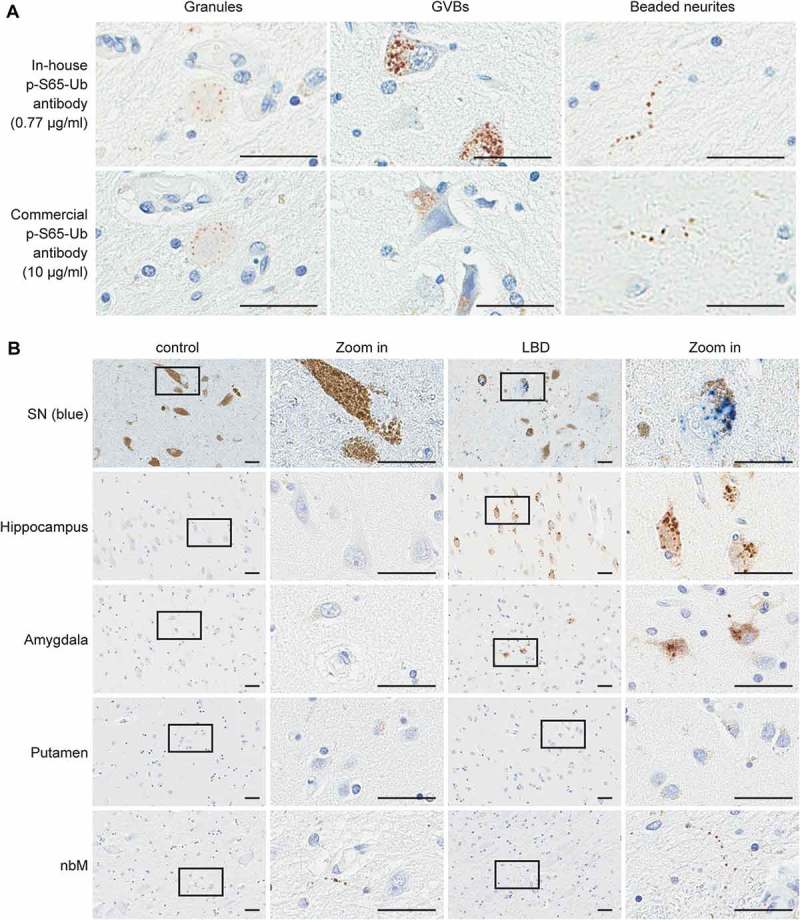
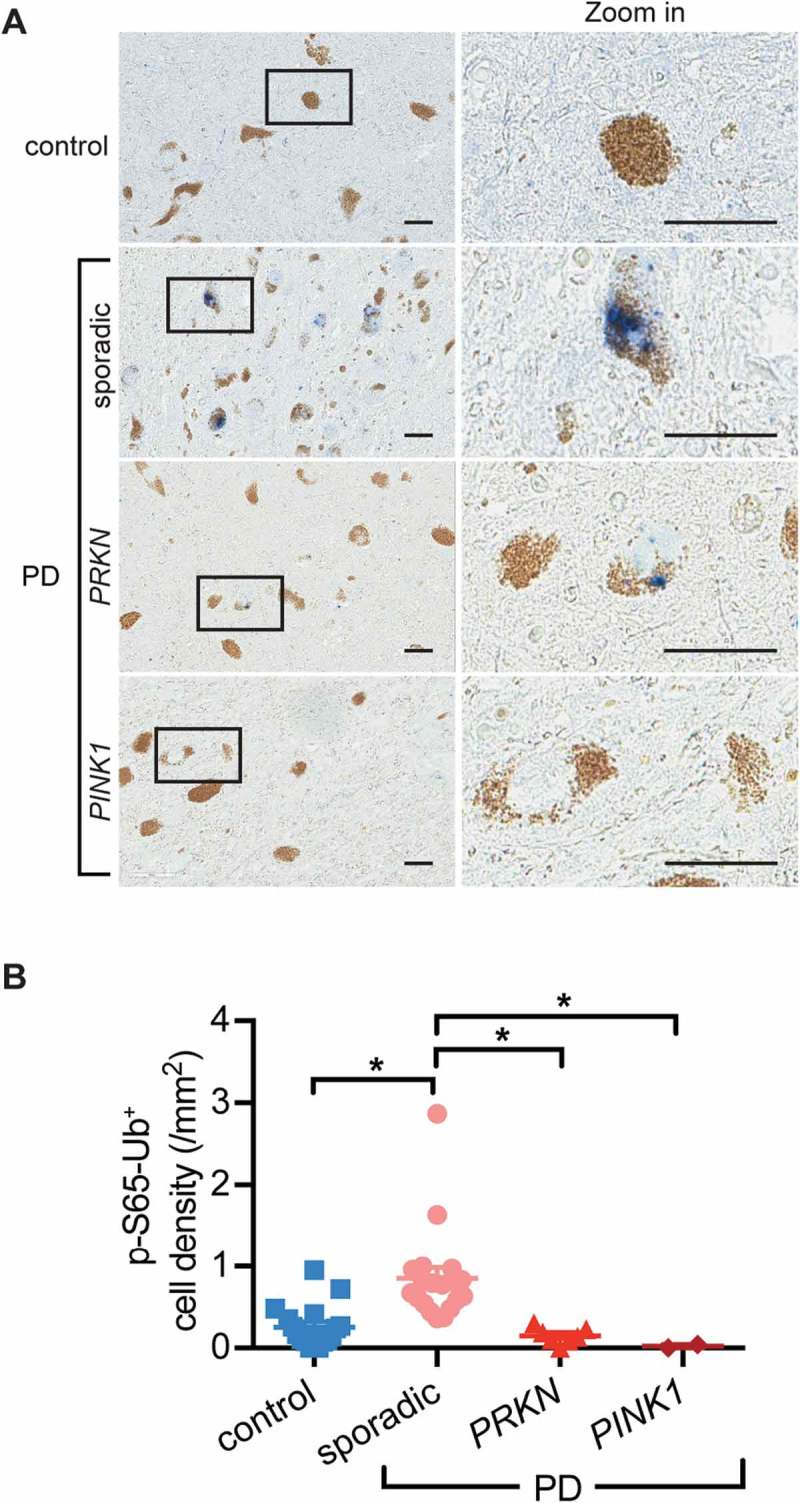
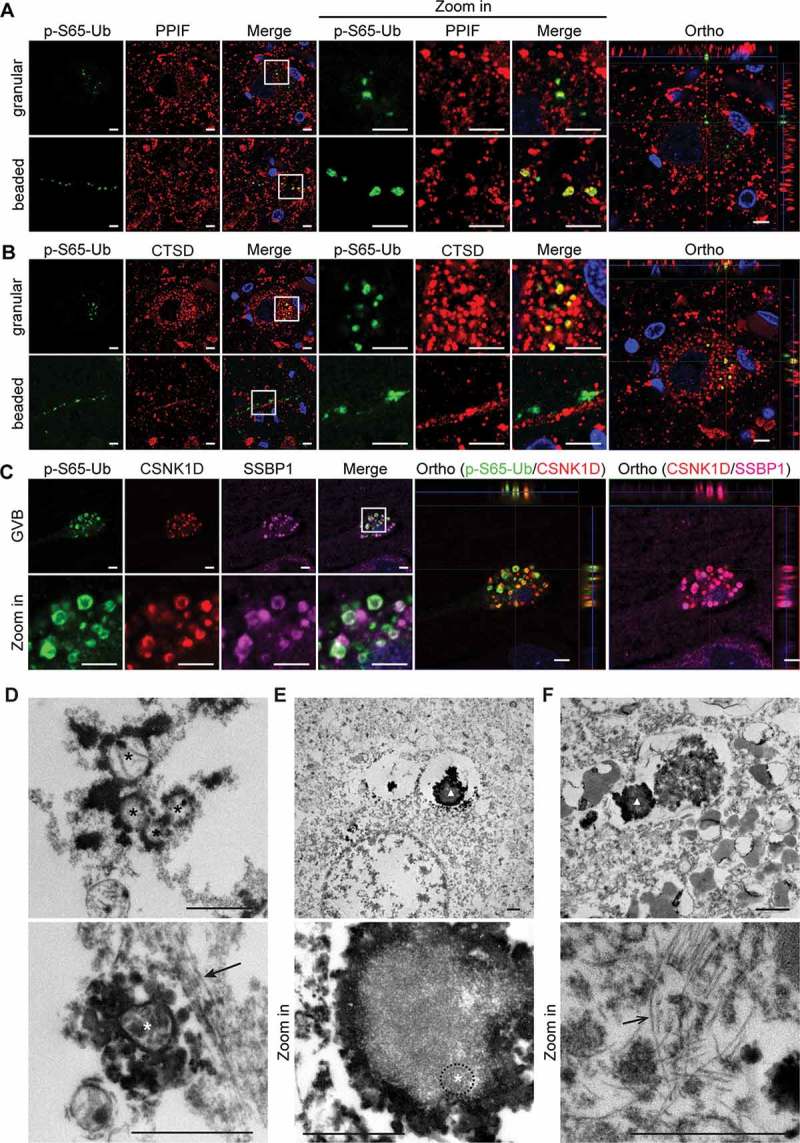
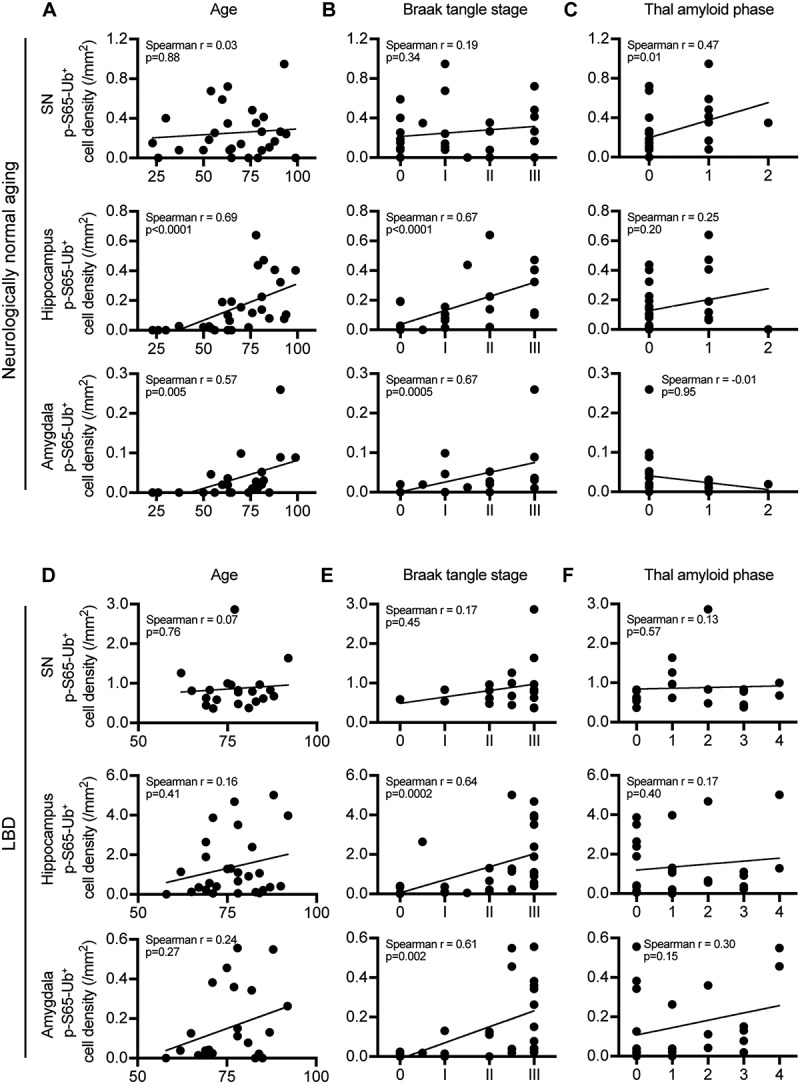
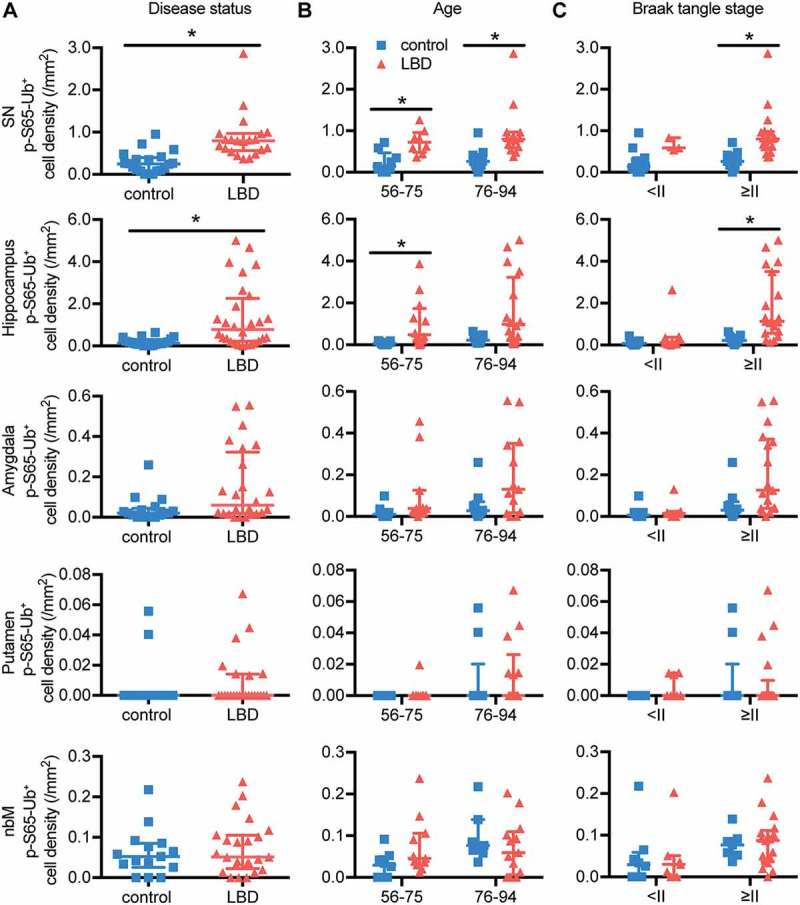
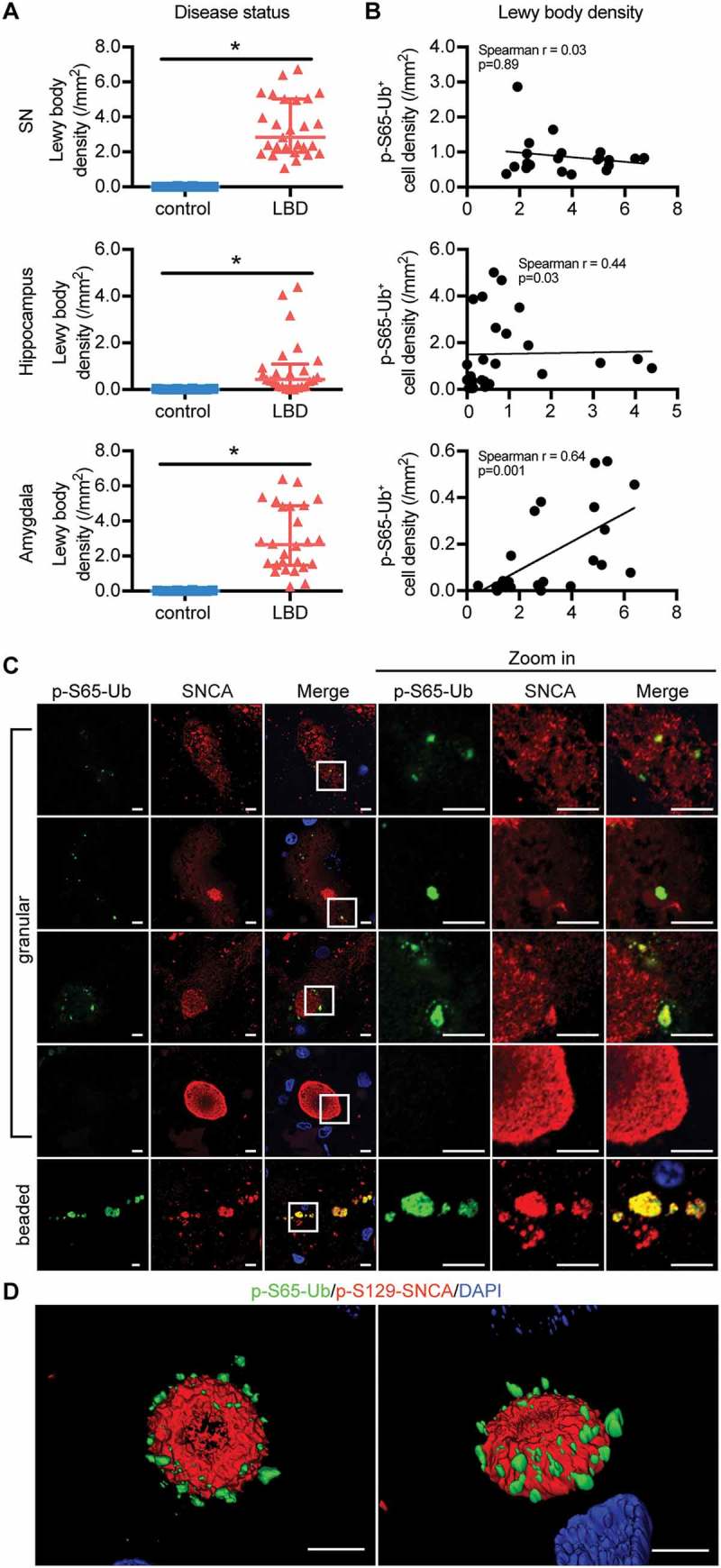
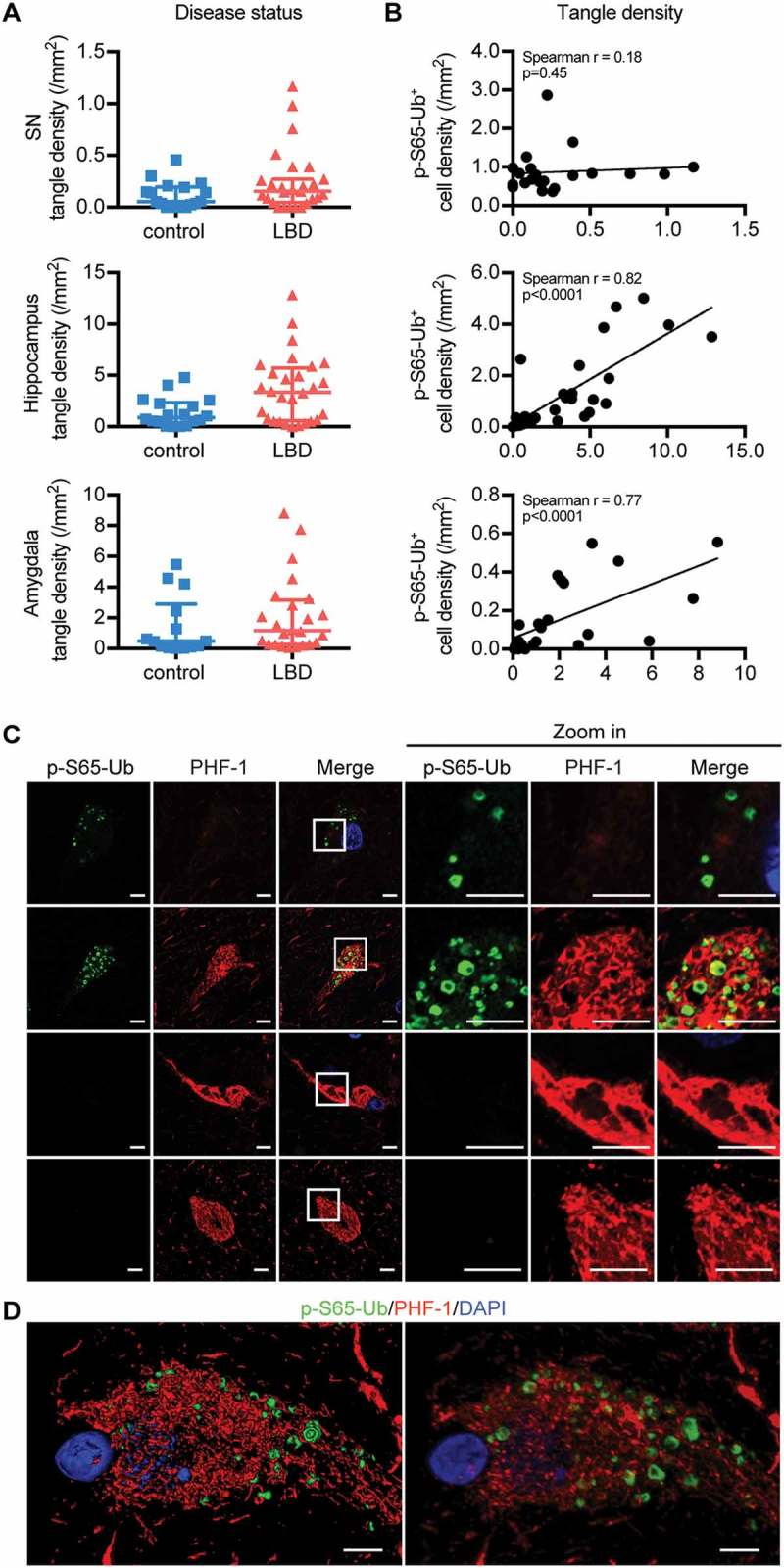
Verification
Claims the paper makes
The claims and statistics of this paper haven’t been checked yet.
Run the check — free, no account needed. It reads the open-access text and checks the sources it cites.
Claims other papers make about this one
Each is checked against this paper’s own text: does it say what the citing paper says it does?
The cited source says what the claim attributes to it.
In the citing paper
“Most recently, phospho-ubiquitin mitophagy markers label granulovacuolar bodies and their abundance has been shown to correlate with neurofibrillary tangle density, suggesting they may be a cellular response to damage in the neurons [80].”
From The neuropathological diagnosis of Alzheimer's disease (2019) · cites this paper as [80]
The cited source says what the claim attributes to it.
In the citing paper
“pS65-Ub has been shown to accumulate during aging, stress, and disease [13, 14]”
From miRNA family miR-29 inhibits PINK1-PRKN signaling via ATG9A (2026) · cites this paper as [14]
Self-check
Percentages, sums and reported differences re-computed from the paper’s own numbers.
The self-check needs the paper’s full text.
Citations
Cites
Staging of brain pathology related to sporadic Parkinson’s disease
Braak, H., Tredici, K. D., Rüb, U., de Vos, R. A. I., Jansen Steur, E. N. H., & Braak, E. (2003) · Neurobiology of Aging · doi:10.1016/s0197-4580(02)00065-9 · Cited by 10,777
Amyloid oligomers exacerbate tau pathology in a mouse model of tauopathy
Selenica, M.-L. B., Brownlow, M., Jimenez, J. P., Lee, D. C., Pena, G., Dickey, C. A., Gordon, M. N., & Morgan, D. (2013) · Neurodegenerative Diseases · doi:10.1159/000337230 · Cited by 10,359
Diagnosis and management of dementia with Lewy bodies: Fourth consensus report of the DLB Consortium
McKeith, I. G., Boeve, B. F., Dickson, D. W., Halliday, G., Taylor, J.-P., Weintraub, D., Aarsland, D., Galvin, J., Attems, J., Ballard, C. G., et al. (2017) · Neurology · doi:10.1212/wnl.0000000000004058 · Cited by 4,476
Self-citationClinical diagnostic criteria for dementia associated with Parkinson’s disease
Emre, M., Aarsland, D., Brown, R., Burn, D. J., Duyckaerts, C., Mizuno, Y., Broe, G. A., Cummings, J., Dickson, D. W., Gauthier, S., et al. (2007) · Movement Disorders · doi:10.1002/mds.21507 · Cited by 3,027
Self-citationPINK1 Is Selectively Stabilized on Impaired Mitochondria to Activate Parkin
Narendra, D. P., Jin, S. M., Tanaka, A., Suen, D.-F., Gautier, C. A., Shen, J., Cookson, M. R., & Youle, R. J. (2010) · PLoS Biology · doi:10.1371/journal.pbio.1000298 · Cited by 2,944
PINK1/Parkin-mediated mitophagy is dependent on VDAC1 and p62/SQSTM1
Geisler, S., Holmström, K. M., Skujat, D., Fiesel, F. C., Rothfuss, O. C., Kahle, P. J., & Springer, W. (2010) · Nature Cell Biology · doi:10.1038/ncb2012 · Cited by 2,835
Self-citationThe ubiquitin kinase PINK1 recruits autophagy receptors to induce mitophagy
Lazarou, M., Sliter, D. A., Kane, L. A., Sarraf, S. A., Wang, C., Burman, J. L., Sideris, D. P., Fogel, A. I., & Youle, R. J. (2015) · Nature · doi:10.1038/nature14893 · Cited by 2,774
Stages of the Pathologic Process in Alzheimer Disease: Age Categories From 1 to 100 Years
Braak, H., Thal, D. R., Ghebremedhin, E., & Del Tredici, K. (2011) · Journal of Neuropathology & Experimental Neurology · doi:10.1097/nen.0b013e318232a379 · Cited by 2,194
Matsuda, N., Sato, S., Shiba, K., Okatsu, K., Saisho, K., Gautier, C. A., Sou, Y.-S., Saiki, S., Kawajiri, S., Sato, F., et al. (2010) · Journal of Cell Biology · doi:10.1083/jcb.200910140 · Cited by 1,969
Lees, A. J., Hardy, J., & Revesz, T. (2009) · The Lancet · doi:10.1016/s0140-6736(09)60492-x · Cited by 1,956
Research works printed but not linked: 2
- Kosaka K, 1984, Clin Neuropathol, 3, 185
- van Elteren PH, 1960, Bull Inst Int Stat, 37, 351
Cited by
Sorted by citations
The neuropathological diagnosis of Alzheimer's disease
DeTure, M. A., & Dickson, D. W. (2019) · Molecular Neurodegeneration · doi:10.1186/s13024-019-0333-5 · Cited by 3,329
“Most recently, phospho-ubiquitin mitophagy markers label granulovacuolar bodies and their abundance has been shown to correlate with neurofibrillary tangle density, suggesting they may be a cellular response to damage in the neurons [80].”
BackgroundSelf-citationPINK1/PARKIN signalling in neurodegeneration and neuroinflammation
Quinn, P. M. J., Moreira, P. I., Ambrósio, A. F., & Alves, C. H. (2020) · Acta Neuropathologica Communications · doi:10.1186/s40478-020-01062-w · Cited by 503
Mitochondrial dysfunction and mitophagy in parkinson’s disease: from mechanism to therapy
Malpartida, A. B., Williamson, M., Narendra, D. P., Wade-Martins, R., & Ryan, B. J. (2021) · Trends in Biochemical Sciences · doi:10.1016/j.tibs.2020.11.007 · Cited by 482
PINK1/Parkin-mediated mitophagy in neurodegenerative diseases
Li, J., Yang, D., Li, Z., Zhao, M., Wang, D., Sun, Z., Wen, P., Dai, Y., Gou, F., Ji, Y., et al. (2022) · Ageing Research Reviews · doi:10.1016/j.arr.2022.101817 · Cited by 406
Mitophagy curtails cytosolic mtDNA-dependent activation of cGAS/STING inflammation during aging
Jiménez‐Loygorri, J. I., Villarejo‐Zori, B., Viedma-Poyatos, Á., Zapata‐Muñoz, J., Benítez‐Fernández, R., Frutos-Lisón, M. D., Tomás-Barberán, F. A., Espı́n, J. C., Área-Gómez, E., Gómez-Durán, A., et al. (2024) · Nature Communications · doi:10.1038/s41467-024-45044-1 · Cited by 394
Autophagy in Parkinson's Disease
Hou, X., Watzlawik, J. O., Fiesel, F. C., & Springer, W. (2020) · Journal of Molecular Biology · doi:10.1016/j.jmb.2020.01.037 · Cited by 361
Self-citationMoloney, C. M., Lowe, V. J., & Murray, M. E. (2021) · Alzheimer s & Dementia · doi:10.1002/alz.12321 · Cited by 358
Self-citationAutophagy, aging, and age-related neurodegeneration
Palmer, J. E., Wilson, N., Son, S. M., Obrocki, P., Wróbel, L., Rob, M., Takla, M., Korolchuk, V. I., & Rubinsztein, D. C. (2024) · Neuron · doi:10.1016/j.neuron.2024.09.015 · Cited by 277
Mitophagy in Parkinson’s Disease: From Pathogenesis to Treatment
Liu, J., Liu, W., Li, R., & Yang, H. (2019) · Cells · doi:10.3390/cells8070712 · Cited by 225
The RING finger protein family in health and disease
Cai, C., Tang, Y., Zhai, J., & Zheng, C. (2022) · Signal Transduction and Targeted Therapy · doi:10.1038/s41392-022-01152-2 · Cited by 204
Picca, A., Guerra, F., Calvani, R., Romano, R., Coelho-Júnior, H. J., Bucci, C., & Marzetti, E. (2021) · Biomolecules · doi:10.3390/biom11101508 · Cited by 189
Autophagic and endo-lysosomal dysfunction in neurodegenerative disease
Malik, B. R., Maddison, D. C., Smith, G. A., & Peters, O. M. (2019) · Molecular Brain · doi:10.1186/s13041-019-0504-x · Cited by 187
Targeting autophagy, oxidative stress, and ER stress for neurodegenerative disease treatment
Esmaeili, Y., Yarjanli, Z., Paknia, F., Bidram, E., Łoś, M., Eshraghi, M., Klionsky, D. J., Ghavami, S., & Zarrabi, A. (2022) · Journal of Controlled Release · doi:10.1016/j.jconrel.2022.03.001 · Cited by 184
Targeting mitophagy in neurodegenerative diseases
Antico, O., Thompson, P. W., Hertz, N. T., Muqit, M. M. K., & Parton, L. E. (2025) · Nature Reviews Drug Discovery · doi:10.1038/s41573-024-01105-0 · Cited by 187
Recent update on the heterogeneity of the Alzheimer’s disease spectrum
Jellinger, K. A. (2021) · Journal of Neural Transmission · doi:10.1007/s00702-021-02449-2 · Cited by 155
Mitochondrial Dysfunction in Parkinson’s Disease: From Mechanistic Insights to Therapy
Gao, X., Yang, T., Gu, Y., & Sun, X.-H. (2022) · Frontiers in Aging Neuroscience · doi:10.3389/fnagi.2022.885500 · Cited by 151
Targeting mitophagy in Parkinson's disease
Clark, E. H., de la Torre, A. V., Hoshikawa, T., & Briston, T. (2020) · Journal of Biological Chemistry · doi:10.1074/jbc.rev120.014294 · Cited by 132
Mechanisms of PINK1, ubiquitin and Parkin interactions in mitochondrial quality control and beyond
Bayne, A. N., & Trempe, J. (2019) · Cellular and Molecular Life Sciences · doi:10.1007/s00018-019-03203-4 · Cited by 121
Agarwal, S., & Muqit, M. M. K. (2021) · Current Opinion in Neurobiology · doi:10.1016/j.conb.2021.09.005 · Cited by 104
Ren, H., Zhai, W., Lu, X., & Wang, G. (2021) · Frontiers in Aging Neuroscience · doi:10.3389/fnagi.2021.691881 · Cited by 106
Autophagy in Parkinson’s Disease
Nechushtai, L., Frenkel, D., & Pinkas‐Kramarski, R. (2023) · Biomolecules · doi:10.3390/biom13101435 · Cited by 109
Mitochondrial dysfunction in chronic neuroinflammatory diseases (Review)
Qin, P., Sun, Y., & Li, L. (2024) · International Journal of Molecular Medicine · doi:10.3892/ijmm.2024.5371 · Cited by 106
Neuropathological assessment of the Alzheimer spectrum
Jellinger, K. A. (2020) · Journal of Neural Transmission · doi:10.1007/s00702-020-02232-9 · Cited by 85
Hou, X., Watzlawik, J. O., Cook, C. N., Liu, C., Kang, S. S., Lin, W., Deture, M. A., Heckman, M. G., Diehl, N. N., Al‐Shaikh, F. S. H., et al. (2020) · Alzheimer s & Dementia · doi:10.1002/alz.12198 · Cited by 72
Self-citationLópez‐Doménech, G., Howden, J. H., Covill‐Cooke, C., Morfill, C., Patel, J. V., Bürli, R. W., Crowther, D. C., Birsa, N., Brandon, N. J., & Kittler, J. T. (2021) · The EMBO Journal · doi:10.15252/embj.2018100715 · Cited by 85
Swerdlow, N., & Wilkins, H. (2020) · International Journal of Molecular Sciences · doi:10.3390/ijms21249661 · Cited by 66
Jing, R., Hu, Z., Lin, F., he, S. T., Zhang, S., Ge, W., Dai, H., Du, X., Lin, J., & Pan, L. (2020) · Frontiers in Cell and Developmental Biology · doi:10.3389/fcell.2020.00819 · Cited by 64
Guha, S. K., Fischer, S., Johnson, G. V. W., & Nehrke, K. W. (2020) · Molecular Neurodegeneration · doi:10.1186/s13024-020-00410-7 · Cited by 60
Cheng, H., Gang, X., Liu, Y., Wang, G., Zhao, X., & Wang, G. (2019) · American Journal of Physiology-Endocrinology and Metabolism · doi:10.1152/ajpendo.00179.2019 · Cited by 63
Soutar, M. P. M., Melandri, D., O’Callaghan, B., Annuario, E., Monaghan, A. E., Welsh, N. J., D’Sa, K., Guelfi, S., Zhang, D., Pittman, A. M., et al. (2022) · Brain · doi:10.1093/brain/awac325 · Cited by 63
Watzlawik, J. O., Hou, X., Fričová, D., Ramnarine, C., Barodia, S. K., Gendron, T. F., Heckman, M. G., Deture, M. A., Siuda, J. S., Wszołek, Z. K., et al. (2020) · Autophagy · doi:10.1080/15548627.2020.1834712 · Cited by 56
Self-citationStructural Mechanisms of Mitochondrial Quality Control Mediated by PINK1 and Parkin
Trempe, J., & Gehring, K. (2023) · Journal of Molecular Biology · doi:10.1016/j.jmb.2023.168090 · Cited by 63
Parkinson’s disease neurons exhibit alterations in mitochondrial quality control proteins
Chen, C., McDonald, D., Blain, A. P., Mossman, E., Atkin, K., Marusich, M. F., Capaldi, R., Bone, L., Smith, A., Filby, A. J., et al. (2023) · npj Parkinson s Disease · doi:10.1038/s41531-023-00564-3 · Cited by 61
How should we be using biomarkers in trials of disease modification in Parkinson’s disease?
Vijiaratnam, N., & Foltynie, T. (2023) · Brain · doi:10.1093/brain/awad265 · Cited by 56
Relevance of Autophagy and Mitophagy Dynamics and Markers in Neurodegenerative Diseases
Giorgi, C., Bouhamida, E., Danese, A., Previati, M., Pinton, P., & Patergnani, S. (2021) · Biomedicines · doi:10.3390/biomedicines9020149 · Cited by 51
Early-Onset Parkinson’s Disease: Creating the Right Environment for a Genetic Disorder
Kolicheski, A., Turcano, P., Tamvaka, N., McLean, P. J., Springer, W., Savica, R., & Ross, O. A. (2022) · Journal of Parkinson s Disease · doi:10.3233/jpd-223380 · Cited by 58
Self-citationCompromised autophagy and mitophagy in brain ageing and Alzheimer’s diseases.
Caponio, D., Veverová, K., Zhang, S.-Q., Shi, L., Wong, G., Vyhnalek, M., & Fang, E. F. (2022) · Aging Brain · doi:10.1016/j.nbas.2022.100056 · Cited by 45
The Long and the Short of PTEN in the Regulation of Mitophagy
Wang, L., Lu, G. X., & Shen, H. (2020) · Frontiers in Cell and Developmental Biology · doi:10.3389/fcell.2020.00299 · Cited by 46
Neuropathology of the Alzheimer's continuum: an update
Jellinger, K. A. (2020) · Free Neuropathology · doi:10.17879/freeneuropathology-2020-3050 · Cited by 52
Alpha‐synuclein‐associated changes in PINK1‐PRKN‐mediated mitophagy are disease context dependent
Hou, X., Chen, T. H., Koga, S., Bredenberg, J. M., Faroqi, A. H., Delenclos, M., Bu, G., Wszołek, Z. K., Carr, J. A., Ross, O. A., et al. (2023) · Brain Pathology · doi:10.1111/bpa.13175 · Cited by 42
Self-citationMitophagy and Neurodegeneration: Between the Knowns and the Unknowns
Jetto, C. T., Nambiar, A., & Manjithaya, R. R. (2022) · Frontiers in Cell and Developmental Biology · doi:10.3389/fcell.2022.837337 · Cited by 44
Pharmacological PINK1 activation ameliorates Pathology in Parkinson’s Disease modelsPreprint
Chin, R., Rakhit, R., Ditsworth, D., Wang, C., Bartholoméüs, J., Liu, S., Mody, A., Laishu, A., Eastes, A., Tai, C., et al. (2023) · bioRxiv (Cold Spring Harbor Laboratory) · doi:10.1101/2023.02.14.528378 · Cited by 42
Discovery of small-molecule positive allosteric modulators of Parkin E3 ligase
Shlevkov, E., Murugan, P., Montagna, D., Stefan, E., Hadzipasic, A., Harvey, J. S., Kumar, P. R., Entova, S., Bansal, N., Bickford, S., et al. (2021) · iScience · doi:10.1016/j.isci.2021.103650 · Cited by 39
Multimodal assessment of mitochondrial function in Parkinson's disease
Payne, T., Burgess, T., Bradley, S., Roscoe, S., Sassani, M., Dunning, M., Hernandez, D. G., Scholz, S. W., McNeill, A., Taylor, R. N., et al. (2023) · Brain · doi:10.1093/brain/awad364 · Cited by 39
Ma, Y., Song, R., & Duan, C. (2025) · Frontiers in Immunology · doi:10.3389/fimmu.2025.1542369 · Cited by 39
PINK1-Dependent Mitophagy Inhibits Elevated Ubiquitin Phosphorylation Caused by Mitochondrial Damage
Lambourne, O. A., Bell, S., Wilhelm, L. P., Yarbrough, E. B., Holly, G. G., Russell, O. M., Alghamdi, A. M., Fdel, A. M., Varricchio, C., Lane, E. L., et al. (2023) · Journal of Medicinal Chemistry · doi:10.1021/acs.jmedchem.3c00555 · Cited by 35
Rosencrans, W. M., Lee, R. W., McGraw, L., Horsburgh, I., Wang, T., Quan, B., Huynh, D., Johnston, J. A., Chan, D. C., & Chou, T. (2025) · Science Advances · doi:10.1126/sciadv.ady0240 · Cited by 39
N-degron-mediated degradation and regulation of mitochondrial PINK1 kinase
Eldeeb, M. A., & Ragheb, M. A. (2020) · Current Genetics · doi:10.1007/s00294-020-01062-2 · Cited by 36
Structure-based design and characterization of Parkin-activating mutations
Stevens, M., Croteau, N., Eldeeb, M. A., Antico, O., Zeng, Z. W., Toth, R. L., Durcan, T. M., Springer, W., Fon, E. A., Muqit, M. M. K., et al. (2023) · Life Science Alliance · doi:10.26508/lsa.202201419 · Cited by 33
Self-citationBasal activity of PINK1 and PRKN in cell models and rodent brain
Watzlawik, J., Fiesel, F. C., Fiorino, G., Bustillos, B. A., Baninameh, Z., Markham, B. N., Hou, X., Hayes, C. S., Bredenberg, J. M., Kurchaba, N. W., et al. (2023) · Autophagy · doi:10.1080/15548627.2023.2286414 · Cited by 28
Self-citationPitcairn, C., Murata, N., Zalon, A. J., Stojkovska, I., & Mazzulli, J. R. (2023) · Journal of Neuroscience · doi:10.1523/jneurosci.0610-22.2023 · Cited by 29
Methamphetamine-induced dopaminergic neurotoxicity as a model of Parkinson’s disease
Shin, E., Jeong, J. H., Hwang, Y., Sharma, N., Dang, D., Nguyen, B.-T., Nah, S.-Y., Jang, C., Bing, G., Nabeshima, T., et al. (2021) · Archives of Pharmacal Research · doi:10.1007/s12272-021-01341-7 · Cited by 31
Jiao, F., Meng, L., Du, K., & Li, X. (2024) · Neural Regeneration Research · doi:10.4103/nrr.nrr-d-23-01195 · Cited by 30
Wiersma, V. I., Hoozemans, J. J. M., & Scheper, W. (2020) · Acta Neuropathologica Communications · doi:10.1186/s40478-020-00996-5 · Cited by 27
Dysregulation of Human Somatic piRNA Expression in Parkinson’s Disease Subtypes and Stages
Zhang, T., & Wong, G. (2022) · International Journal of Molecular Sciences · doi:10.3390/ijms23052469 · Cited by 29
Defects of Nutrient Signaling and Autophagy in Neurodegeneration
Ondaro, J., Hernández-Eguiazu, H., Garciandia-Arcelus, M., Loera‐Valencia, R., Rodríguez-Gómez, L., Jiménez-Zúñiga, A., Goikolea, J., Rodriguez‐Rodriguez, P., Ruiz‐Martínez, J., Moreno, F., et al. (2022) · Frontiers in Cell and Developmental Biology · doi:10.3389/fcell.2022.836196 · Cited by 28
Role of GBA variants in Lewy body disease neuropathology
Walton, R. L., Koga, S., Soto‐Beasley, A. I., White, L. J., Griesacker, T., Murray, M. E., Kasanuki, K., Hou, X., Fiesel, F. C., Springer, W., et al. (2024) · Acta Neuropathologica · doi:10.1007/s00401-024-02699-w · Cited by 27
Self-citationPadmanabhan, S., Polinski, N. K., Menalled, L., Baptista, M. A. S., & Fiske, B. K. (2019) · Biomolecules · doi:10.3390/biom9080296 · Cited by 25
Pharmacological PINK1 activation ameliorates Pathology in Parkinson’s Disease modelsPreprint
Hertz, N. T., Chin, R., Rakhit, R., Ditsworth, D., Wang, C., Bartholoméüs, J., Liu, S., Mody, A., Laihsu, A., Eastes, A., et al. (2024) · Research Square · doi:10.21203/rs.3.rs-4356493/v1 · Cited by 23
Mitophagy in the aging nervous system
Rappe, A., & McWilliams, T. G. (2022) · Frontiers in Cell and Developmental Biology · doi:10.3389/fcell.2022.978142 · Cited by 22
Lu, J., Florio, D. N. D., Boya, P., Maday, S., Springer, W., & Chu, C. T. (2025) · Autophagy · doi:10.1080/15548627.2025.2581217 · Cited by 22
Self-citationInterplay of Impaired Cellular Bioenergetics and Autophagy in PMM2-CDG
Ligezka, A., Budhraja, R., Nishiyama, Y., Fiesel, F. C., Preston, G., Edmondson, A., Ranatunga, W. K., Hove, J. V. V., Watzlawik, J., Springer, W., et al. (2023) · Genes · doi:10.3390/genes14081585 · Cited by 20
Self-citationAutophagy‑regulating miRNAs: Novel therapeutic targets for Parkinson's disease (Review)
Ma, Z., Liang, H., Hu, B., Cai, S., & Dong, Y. (2023) · International Journal of Molecular Medicine · doi:10.3892/ijmm.2023.5253 · Cited by 19
Insights into the molecular mechanisms of malnutrition‐associated steatohepatitis: A review
Sharma, V., & Patial, V. (2024) · Liver International · doi:10.1111/liv.15932 · Cited by 21
Parkin drives pS65‐Ub turnover independently of canonical autophagy in Drosophila
Usher, J. L., Sánchez-Martínez, Á., Terriente-Félix, A., Chen, P., Lee, J. J., Chen, C., & Whitworth, A. J. (2022) · EMBO Reports · doi:10.15252/embr.202153552 · Cited by 17
Zhou, B., Li, J., Wu, A., Wang, X., Cheng, L., Yang, G., Gao, D., & Zhu, C. (2025) · Frontiers in Aging Neuroscience · doi:10.3389/fnagi.2025.1587986 · Cited by 18
NLRP3 Inflammasome Activation and Altered Mitophagy Are Key Pathways in Inclusion Body Myositis
Naddaf, E., Nguyen, T. K. O., Watzlawik, J. O., Gao, H., Hou, X., Fiesel, F. C., Mandrekar, J. N., Kokesh, E., Harmsen, W. S., Lanza, I. R., et al. (2024) · Journal of Cachexia Sarcopenia and Muscle · doi:10.1002/jcsm.13672 · Cited by 17
Self-citationManaging risky assets – mitophagy in vivo
Narendra, D. P. (2021) · Journal of Cell Science · doi:10.1242/jcs.240465 · Cited by 16
The Ubiquitin Proteasome System as a Therapeutic Area in Parkinson’s Disease
Kumar, S., Mattern, M. R., Goldberg, M. S., & Butt, T. R. (2023) · NeuroMolecular Medicine · doi:10.1007/s12017-023-08738-1 · Cited by 16
Possible role of locus coeruleus neuronal loss in age-related memory and attention deficits
Gargano, A., Olabiyi, B. F., Palmisano, M., Zimmer, A., & Bilkei‐Gorzó, A. (2023) · Frontiers in Neuroscience · doi:10.3389/fnins.2023.1264253 · Cited by 17
Tang, C., & Zhang, W. (2019) · Biochemistry · doi:10.1021/acs.biochem.9b00715 · Cited by 15
Canonical and noncanonical autophagy: involvement in Parkinson’s disease
Sakurai, M., & Kuwahara, T. (2025) · Frontiers in Cell and Developmental Biology · doi:10.3389/fcell.2025.1518991 · Cited by 16
Tufi, R., Clark, E. H., Hoshikawa, T., Tsagkaraki, C., Stanley, J., Takeda, K., Staddon, J. M., & Briston, T. (2023) · SLAS DISCOVERY · doi:10.1016/j.slasd.2022.12.004 · Cited by 16
Stress-induced phospho-ubiquitin formation causes parkin degradation
Kovalchuke, L., Mosharov, E. V., Levy, O. A., & Greene, L. A. (2019) · Scientific Reports · doi:10.1038/s41598-019-47952-5 · Cited by 15
Li, A., Huang, S., Cao, S., Lin, J., Zhao, L., Yu, F., Huang, M., Yang, L., Xin, J., Wen, J., et al. (2025) · EMBO Molecular Medicine · doi:10.1038/s44321-025-00323-2 · Cited by 14
Watzlawik, J. O., Hou, X., Richardson, T., Lewicki, S. L., Siuda, J. S., Wszołek, Z. K., Cook, C. N., Petrucelli, L., Deture, M. A., Dickson, D. W., et al. (2024) · Autophagy · doi:10.1080/15548627.2024.2356490 · Cited by 14
Self-citationJeong, D., Park, S. H., Kim, J., Kim, H., Jang, Y., Koh, J., Jeon, Y. K., Tasaki, T., Kwon, Y. T., Han, D., et al. (2025) · Proceedings of the National Academy of Sciences · doi:10.1073/pnas.2425015122 · Cited by 13
Alterations of PINK1-PRKN signaling in mice during normal aging
Baninameh, Z., Watzlawik, J. O., Hou, X., Richardson, T., Kurchaba, N. W., Yan, T., Florio, D. N. D., Fairweather, D., Kang, L., Nguyen, J. H., et al. (2024) · Autophagy Reports · doi:10.1080/27694127.2024.2434379 · Cited by 12
Self-citationInhibition of mTOR improves malnutrition induced hepatic metabolic dysfunction
Kvissberg, M. E. A., Hu, G., Chi, L., Bourdon, C., Ling, C., ChenMi, Y., Germain, K., van de Peppel, I. P., Weise, L., Zhang, L., et al. (2022) · Scientific Reports · doi:10.1038/s41598-022-24428-7 · Cited by 14
Ming, F., Tan, J., Qin, L., Zhang, H., Tang, J., Tan, X., & Wang, C. (2020) · BioMed Research International · doi:10.1155/2020/4658109 · Cited by 12
Ahmed, S., Pasam, T., & Afreen, F. (2026) · International Journal of Molecular Sciences · doi:10.3390/ijms27010486 · Cited by 12
Buck, S. A., Malankhanova, T. B., Strader, S., Eileen, B., Yim, S., Pratt, H. W., Ervin, J. F., Lee, E. B., Wang, S. J., Cohen, T. J., et al. (2025) · Acta Neuropathologica · doi:10.1007/s00401-025-02951-x · Cited by 13
Miro ubiquitination is critical for efficient damage-induced PINK1/Parkin-mediated mitophagyPreprint
López‐Doménech, G., Covill‐Cooke, C., Howden, J. H., Birsa, N., Morfill, C., Brandon, N. J., & Kittler, J. T. (2018) · bioRxiv (Cold Spring Harbor Laboratory) · doi:10.1101/414664 · Cited by 11
Parkinson’s Disease: Are PINK1 Activators Inching Closer to the Clinic?
Mehellou, Y. (2023) · ACS Medicinal Chemistry Letters · doi:10.1021/acsmedchemlett.3c00070 · Cited by 13
Granulovacuolar degeneration bodies are independently induced by tau and α-synuclein pathology
Jorge‐Oliva, M., Smits, J. F. M., Wiersma, V. I., Hoozemans, J. J. M., & Scheper, W. (2022) · Alzheimer s Research & Therapy · doi:10.1186/s13195-022-01128-y · Cited by 13
Gargano, A., Beins, E. C., Zimmer, A., & Bilkei‐Gorzó, A. (2020) · International Journal of Molecular Sciences · doi:10.3390/ijms22010005 · Cited by 10
Development and validation of a sensitive sandwich ELISA against human PINK1
Baninameh, Z., Watzlawik, J. O., Bustillos, B. A., Fiorino, G., Yan, T., Lewicki, S. L., Zhang, H., Dickson, D. W., Siuda, J. S., Wszołek, Z. K., et al. (2025) · Autophagy · doi:10.1080/15548627.2025.2457915 · Cited by 9
Self-citationProteome Dynamics in iPSC-Derived Human Dopaminergic Neurons
Cavarischia-Rega, C., Sharma, K., Fitzgerald, J. C., & Maček, B. (2024) · Molecular & Cellular Proteomics · doi:10.1016/j.mcpro.2024.100838 · Cited by 7
Genome‐wide association analysis identifies APOE as a mitophagy modifier in Lewy body disease
Hou, X., Heckman, M. G., Fiesel, F. C., Koga, S., Soto‐Beasley, A. I., Watzlawik, J. O., Zhao, J., Valentino, R. R., Johnson, P. W., White, L. J., et al. (2025) · Alzheimer s & Dementia · doi:10.1002/alz.70198 · Cited by 9
Self-citationAdvances in autophagy for Parkinson’s disease pathogenesis and treatment
Zhang, X., Zhang, H., Dong, J., Cai, H., & Le, W. (2025) · Ageing and Neurodegenerative Diseases · doi:10.20517/and.2024.33 · Cited by 10
Mitochondrial quality control in human ageing and longevity
Picca, A., & Ferrucci, L. (2026) · Nature Metabolism · doi:10.1038/s42255-026-01563-3 · Cited by 10
Monogenetic Forms of Parkinson’s Disease – Bridging the Gap Between Genetics and Biomarkers
Tönges, L., Kwon, E. H., & Klebe, S. (2022) · Frontiers in Aging Neuroscience · doi:10.3389/fnagi.2022.822949 · Cited by 9
miRNA family miR-29 inhibits PINK1-PRKN dependent mitophagy via ATG9APreprint
Markham, B. N., Ramnarine, C., Kim, S., Grever, W. E., Soto‐Beasley, A. I., Heckman, M. G., Ren, Y., Osborne, A. C., Bhagwate, A. V., Liu, Y., et al. (2024) · bioRxiv (Cold Spring Harbor Laboratory) · doi:10.1101/2024.01.17.576122 · Cited by 7
Self-citationRosado, A. M., Vizcarra, J. C., Sharma, S. R. R., Keene, C. D., White, C. L., Kim, A., Forrest, S. L., Kovács, G. G., Chuah, C., Flanagan, M. E., et al. (2025) · Alzheimer s & Dementia · doi:10.1002/alz.70775 · Cited by 8
Fiesel, F. C., Bustillos, B. A., Watzlawik, J. O., Chen, C., Berryer, M. H., Zhang, J., Boneski, P. K., Hayes, C. S., Bredenberg, J. M., Deneault, É., et al. (2025) · Autophagy · doi:10.1080/15548627.2025.2531025 · Cited by 6
Self-citationHippocampal mitophagy alterations in MAPT-associated frontotemporal dementia with parkinsonism
Richardson, T., Hou, X., Fiesel, F. C., Wszolek, Z., Dickson, D. W., & Springer, W. (2025) · Acta Neuropathologica Communications · doi:10.1186/s40478-025-01955-8 · Cited by 5
Self-citationQin, L., Gong, Z., Liu, K., Dong, X., & Tang, C. (2021) · Biomolecules · doi:10.3390/biom11071008 · Cited by 5
Hou, X., Heckman, M. G., Fiesel, F. C., Koga, S., Soto‐Beasley, A. I., Watzlawik, J. O., Zhao, J., Valentino, R. R., Johnson, P. W., White, L. J., et al. (2023) · medRxiv · doi:10.1101/2023.10.16.23297100 · Cited by 6
Self-citationChen, C., Gao, T.-Y., Yi, H., Zhang, Y., Wang, T., Lou, Z., Wei, T.-F., Lu, Y.-B., Li, T., Tang, C., et al. (2025) · bioRxiv · doi:10.7554/elife.103945 · Cited by 7
Gut Microbiota and Aging: Targets and Anti-aging Interventions
Singh, B., Catanzaro, R., Mal, G., Gautam, S., Mohania, He, F., Yadav, H., Bissi, L., & Marotta, F. (2019) · Elsevier eBooks · doi:10.1016/b978-0-12-801238-3.62181-5 · Cited by 4
Metadata
- Authors
- Hou, X., Fiesel, F. C., Truban, D., Castanedes Casey, M., Lin, W.-L., Soto, A. I., Tacik, P., Rousseau, L. G., Diehl, N. N., Heckman, M. G., Lorenzo-Betancor, O., Ferrer, I., Arbelo, J. M., Steele, J. C., Farrer, M. J., Cornejo-Olivas, M., Torres, L., Mata, I. F., Graff-Radford, N. R., Wszolek, Z. K., Ross, O. A., Murray, M. E., Dickson, D. W., & Springer, W.
- Affiliations
- Mayo Clinic in Florida (US)
- Mayo Clinic (US)
- Department of Neuroscience, Mayo Clinic, Jacksonville, FL, USA
- Institut de Neuropatologia, Servei d’Anatomia Patològica, Hospital Universitari de Bellvitge, Hospitalet del Llobregat, Barcelona, Spain
- Hospital Universitario Insular de Gran Canaria (ES)
- Micronesian Health Study II, Tamuning, Guam
- University of British Columbia (CA)
- Northern Pacific Global Health Research Fellows Training Consortium, Bethesda, MD, USA
- Instituto Nacional de Ciencias Neurológicas (PE)
- University of Washington (US)
- Department of Neurology, Mayo Clinic, Jacksonville, FL, USA
- Corresponding author
- Springer, Wolfdieter
- ORCID
- Venue
- Autophagy
- Publisher
- Informa UK Limited
- Published
- 2018-07-28
- Volume
- 14
- Issue
- 8
- Pages
- 1404-1418
- ISSN
- 1554-8627 (ISSN-L)
- 1554-8635
- PMC
- PMC6372017
- OpenAlex
- W2810603360
- Cited by
- 147
- References
- 65
- Citations by year
- 2026: 18 · 2025: 28 · 2024: 16 · 2023: 19 · 2022: 17 · 2021: 13 · 2020: 25 · 2019: 10 · 2018: 1
- FWCI
- 8.32
- Type
- journal article
- Language
- en
- Open access
- hybrid
- doi.org
- Licence
- cc-by-nc-nd
- Locations
- Autophagy (publishedVersion, cc-by-nc-nd)
- Europe PMC (PubMed Central) (publishedVersion, cc-by-nc-nd)
- PubMed Central (publishedVersion, cc-by-nc-nd)
- PubMed (publishedVersion)
- Dipòsit Digital de la Universitat de Barcelona (Universitat de Barcelona) (acceptedVersion)
- Acceda (Universidad de Las Palmas de Gran Canaria) (submittedVersion)
- RECERCAT (Consorci de Serveis Universitaris de Catalunya) (submittedVersion, public-domain)
- Funders
- HHS | NIH | National Institute of Neurological Disorders and Stroke (R01 NS085070, U54 NS100693, R01 NS078086, P50 NS072187)
- Topics
- Health Sciences › Medicine › Clinical Neurology › Parkinson's Disease Mechanisms and Treatments
- Life Sciences › Biochemistry, Genetics and Molecular Biology › Cell Biology › Autophagy in Disease and Therapy
- Life Sciences › Biochemistry, Genetics and Molecular Biology › Molecular Biology › Nuclear Receptors and Signaling
- Keywords
- mitophagy, Parkinson's disease, Lewy body disease, normal aging, mitochondrial quality control, PINK1, Parkin, ubiquitin phosphorylation, lysosomes, neurofibrillary tangles, biomarkers, dopaminergic neurons, mitochondrial dysfunction
- MeSH terms
- Aged, Aged, 80 and over, Aging, Brain, Female, HeLa Cells, Humans, Male, Middle Aged, Mutation, Phosphorylation, Phosphoserine, Protein Binding, Cohort Studies, Biomarkers, tau Proteins, Lewy Body Disease, Ubiquitin, alpha-Synuclein, Mitophagy
About these checks
Registry, retraction, Cites and statistics results are computed, not judged, with one exception: a printed reference that no index lists is read once by a model before it counts as a citation error. Claims are extracted by a model and kept only when their quote appears verbatim in the text; each cited source is then checked, with a model’s help, for whether it says what the claim relies on. Those verdicts can be wrong — read the claim’s quote and the cited source before relying on one.
Statistics and arithmetic are recomputed, not judged.
Confidence bands are shown only for fields calibrated on our annotated test set. None is calibrated yet, so no band is shown.
What counts as a claim ›How we measure confidence ›How we check this ›
Are you an author, or do you see a problem with this page? Request a review
