

Coastlines, Submerged Landscapes, and Human Evolution: The Red Sea Basin and the Farasan Islands
Open accessThe DOI matches its Crossref record; 116 of the 117 references it cites were found in a registry or an index, and 1 are not checked yet; 2 of the 56 sources its claims cite were checked for support.
Abstract
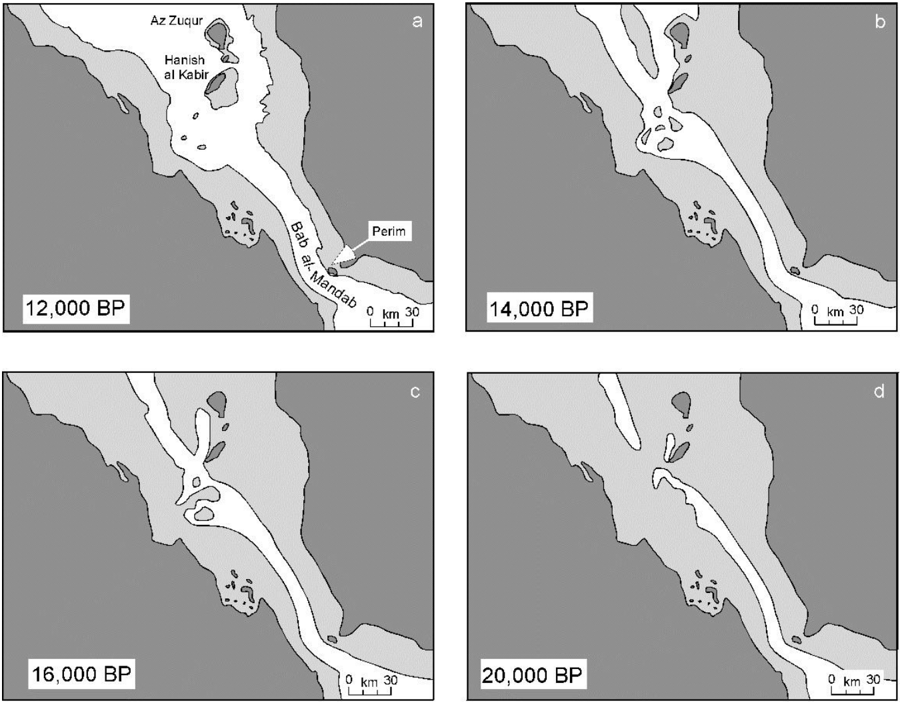
We examine some long-standing assumptions about the early use of coastlines and marine resources and their contribution to the pattern of early human dispersal, and focus on the southern Red Sea Basin and the proposed southern corridor of movement between Africa and Arabia across the Bab al-Mandab Straits. We reconstruct relative sea levels in light of isostatic and tectonic effects, and evaluate their paleogeographical impact on the distribution of resources and human movement. We conclude that the crossing of the Bab al-Mandab posed little significant or long-lasting physical or climatic barrier to human transit during the Pleistocene and that the emerged continental shelf during periods of low sea level enhanced the possibilities for human settlement and dispersal around the coastlines of the Arabian Peninsula. We emphasize the paleogeographical and paleoenvironmental significance of Pleistocene sea-level change and its relationship with changes in paleoclimate, and identify the exploration of the submerged continental shelf as a high priority for future research. We conclude with a brief description of our strategy for underwater work in the Farasan Islands and our preliminary results.
Verified 2026-11-22 · 1 reference not checked yet
Overview
CoChat Summary
## TL;DR
The paper argues that, during much of the Pleistocene, the Bab al-Mandab crossing was not a major barrier to movement between Africa and Arabia, especially when sea levels were low and the exposed continental shelf expanded coastal settlement opportunities. It combines sea-level/isostatic/tectonic reconstruction with a review of archaeological evidence and preliminary underwater survey results from the Farasan Islands.
## Key findings
- The authors conclude that the Bab al-Mandab “posed little significant or long-lasting physical or climatic barrier” to human transit during the Pleistocene, and that high sea levels were the main times when the crossing was more difficult.
- For the last glacial maximum, they state the channel could have been “so shallow and narrow” that it was unclear whether the seabed was above or below sea level, but in any case it would not have formed an effective barrier.
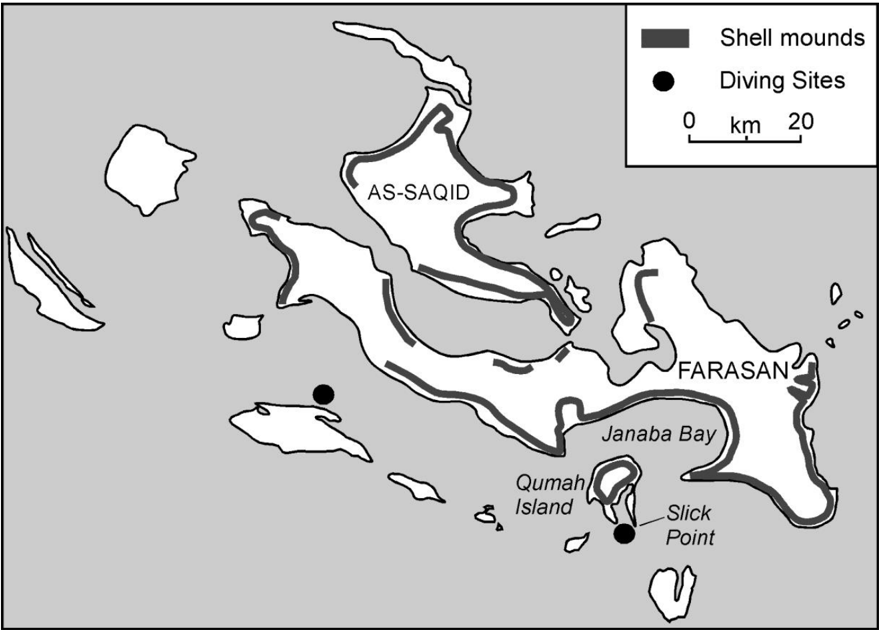
- Their first-season survey on the Farasan Islands revealed “some 1000 archaeological sites,” mostly shell mounds up to 4 m thick, with stratified shell, ash lenses, stone, and fish bone.
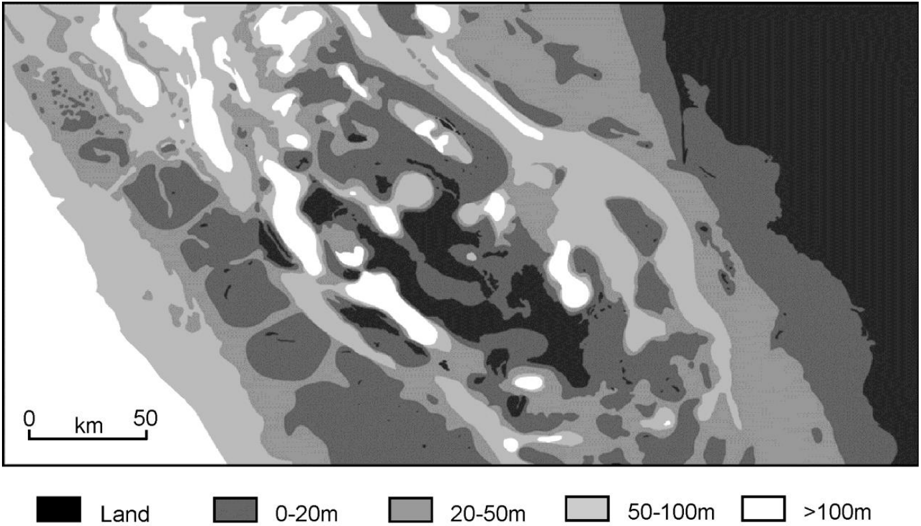
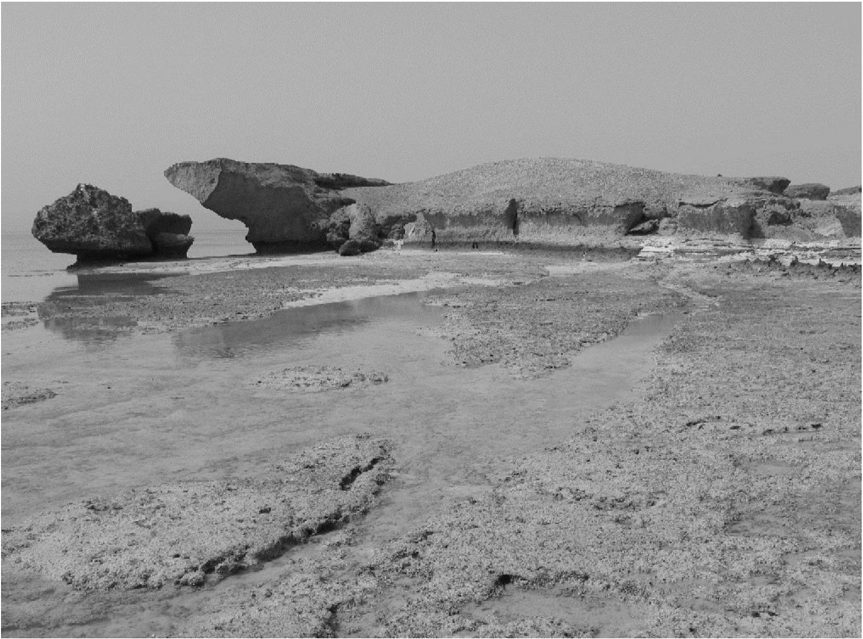
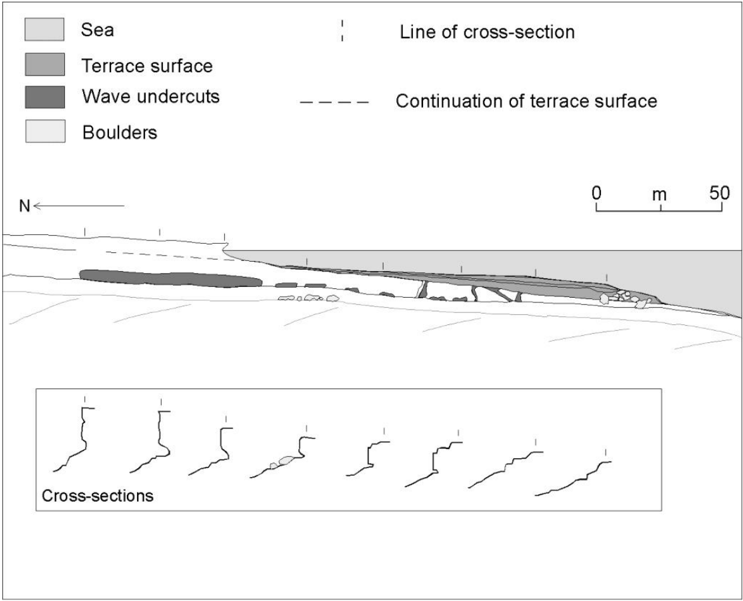
- At Slick Point, they mapped underwater coral terraces and a beach line at about 20 m below present sea level, which they estimate “could have formed at about 80–90,000 years ago” and been re-occupied around 12,000 years ago.
## Methods
- The paper is a synthesis of geological, climatic, and archaeological evidence focused on the southern Red Sea basin, the Bab al-Mandab straits, and the Farasan Islands.
- It reconstructs past shoreline positions using sea-level curves, bathymetry, and corrections for isostatic and tectonic effects, and compares these with archaeological and paleoenvironmental evidence.
- The field component included land survey, radiocarbon sampling, diving, video, remote sensing, acoustic transects, and preliminary underwater survey around the Farasan Islands, especially Zufaf and Qumah/Slick Point.
## Limitations
- The paper states that chronometric control is poor: “only one site has any radiometric dates” in Arabia at the time discussed, and many finds are surface collections with no stratigraphic integrity.
- It says the evidence for marine-resource use is unclear; for example, the Abdur oysters may be a natural death assemblage, and there is “no clear evidence for shellfish consumption” or a significant marine-resource-based adaptation.
- Evident from the text: much of the argument depends on reconstructed sea levels and shoreline positions with substantial uncertainties, including dating margins of error and limited resolution in both isotope and bathymetric data.
Model-written summary. Check it against the paper before relying on it.
Integrity signals
Registry
Cites
Statistics
Figures
Verification
Claims the paper makes
2 Valid · 5 Not valid · 45 Not checked · 139 Own results and interpretations
In the paper
“Here Uranium series dates of calcite concretions on the underside of the artefacts have given two different sets of determinations, at c. 100,000 and 200,000 years (Whalen et al. 1984).”
What the sources say
- Not matchedcites Whalen et al. 1984
An author–year citation the paper’s reference list doesn’t settle. We don’t search these by name.
plain- Asserted: passes — The authors put it forward as true.
- Checkable: passes — It can be checked against evidence.
- Load-bearing: unclear — It is unclear whether the paper’s conclusions depend on it.
- Based: passes — The paper gives a reason why it holds.
- Not matched
None of the sources cited for this claim have been checked yet.
In the paper
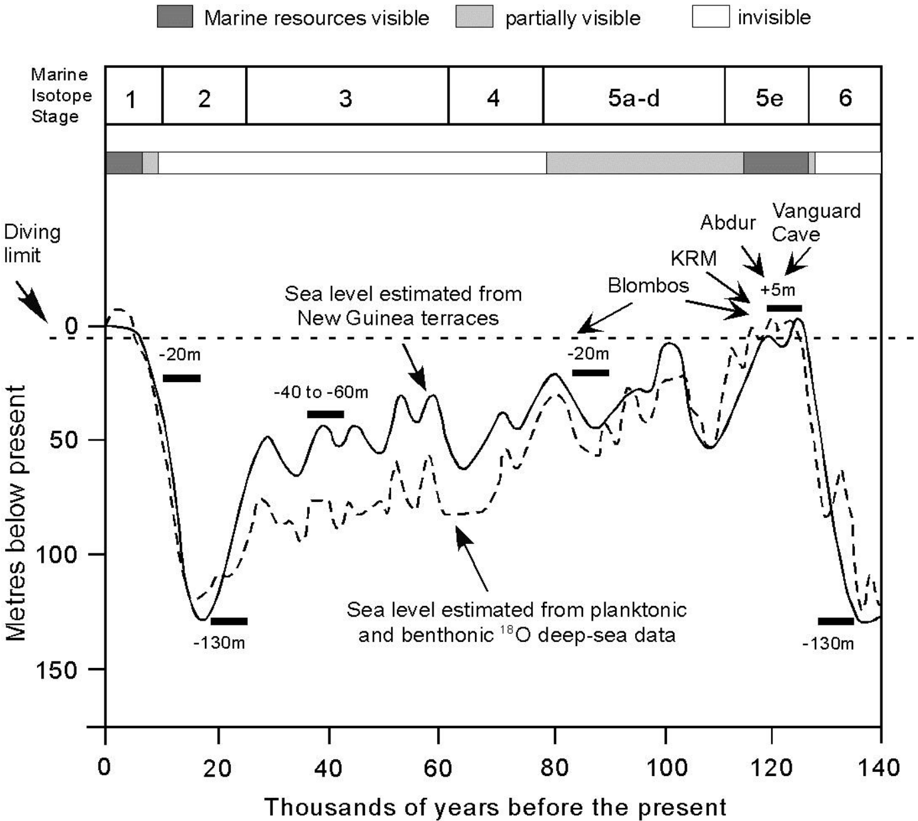
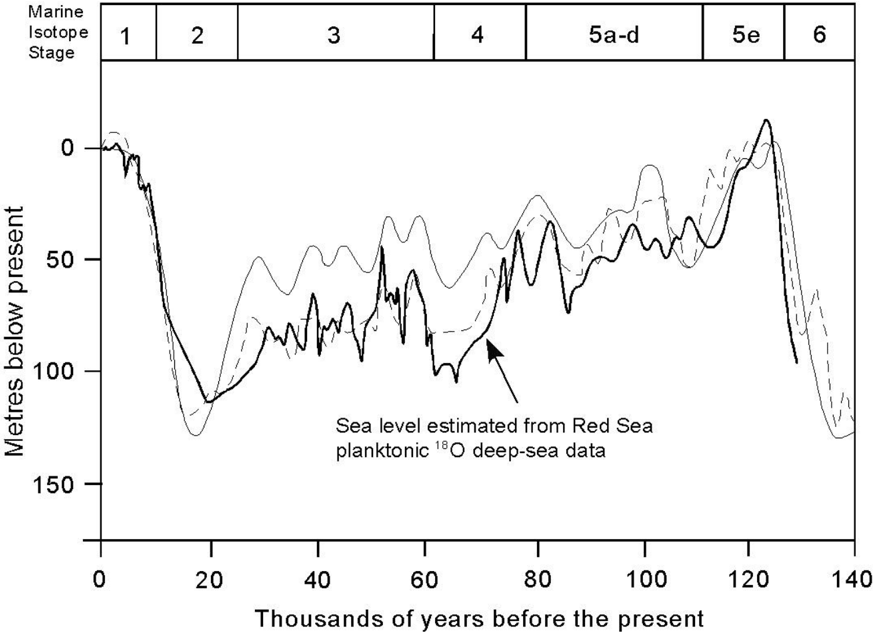
“However, dated elevations of marine beaches on rapidly uplifting coastlines such as the Huon Peninsula of northern New Guinea demonstrate that the isotope record during a large part of the last glacial period is amplified by a drop in sea temperature, which exaggerates the amount of sea-level fall if uncorrected (Figure 2).”
boostedstates a cause- Asserted: passes — The authors put it forward as true.
- Checkable: passes — It can be checked against evidence.
- Load-bearing: unclear — It is unclear whether the paper’s conclusions depend on it.
- Based: passes — The paper gives a reason why it holds.
A result the paper states — it cites no source for it, so there is none to check. The quote shows it is in the paper.
In the paper
“Moreover, sea level change appears to have followed a very similar amplitude and periodicity over the past 800,000 years.”
hedged- Asserted: passes — The authors put it forward as true.
- Checkable: passes — It can be checked against evidence.
- Load-bearing: unclear — It is unclear whether the paper’s conclusions depend on it.
- Based: passes — The paper gives a reason why it holds.
A result the paper states — it cites no source for it, so there is none to check. The quote shows it is in the paper.
In the paper
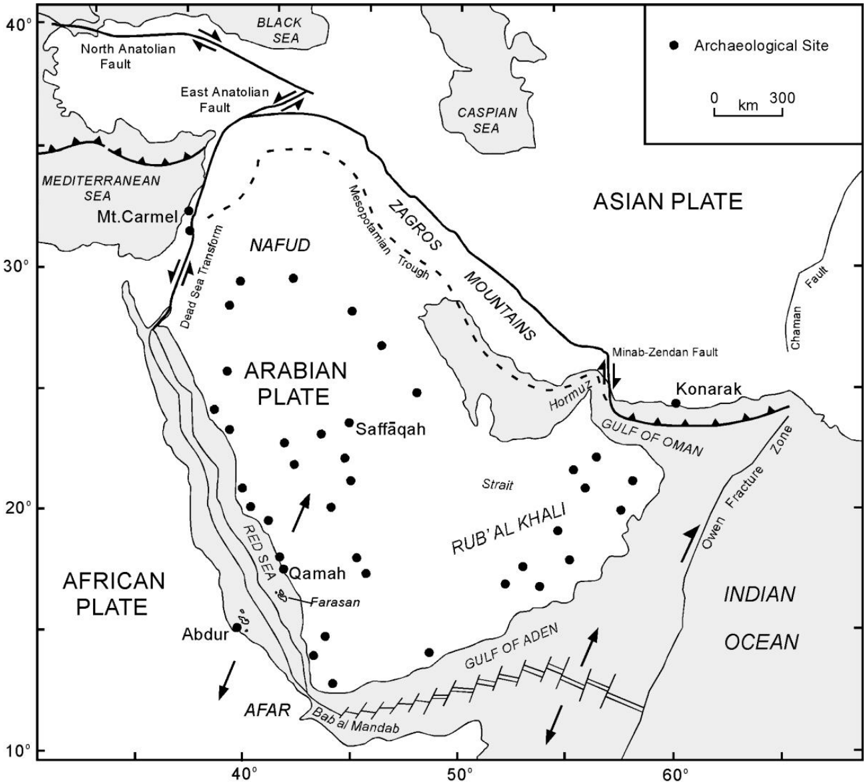
“Currently, only one site has any radiometric dates, and that is Saffāquah, near Dawadmi (Figure 1).”
plain- Asserted: passes — The authors put it forward as true.
- Checkable: passes — It can be checked against evidence.
- Load-bearing: unclear — It is unclear whether the paper’s conclusions depend on it.
- Based: passes — The paper gives a reason why it holds.
A result the paper reports from its own data — it cites no other source for it, so there is none to check. The quote shows it is in the paper.
In the paper
“The most noticeable feature is that Palaeolithic finds are widely distributed across the Arabian Peninsula.”
plain- Asserted: passes — The authors put it forward as true.
- Checkable: passes — It can be checked against evidence.
- Load-bearing: unclear — It is unclear whether the paper’s conclusions depend on it.
- Based: passes — The paper gives a reason why it holds.
85 more claims
Create a free account to see all 191 claims and to verify the 3 references still open.
- It may state two separate claims as one. 87
- Probably not a substantial claim. 29
Citations
Cites
Chappell, J., & Shackleton, N. J. (1986) · Nature · doi:10.1038/324137a0 · Cited by 1,662 · cited 1×
“Visibility of marine resources shows the periods when archaeological sites on or close to the modern coastline were close enough to the paleoshoreline to accumulate remains of marine food resources (data from Chappell and Shackleton 1986; Lambeck and Chappell 2001; Shackleton 1987; Van Andel 1989a; drawn by G. Bailey).”
BackgroundSea-level fluctuations during the last glacial cycle
Siddall, M., Rohling, E. J., Almogi-Labin, A., Hemleben, C., Meischner, D., Schmelzer, I., & Smeed, D. A. (2003) · Nature · doi:10.1038/nature01690 · Cited by 1,626 · cited 1×
“Whether the Bab al-Mandab Straits at the southern end of the Red Sea, currently 29 km wide, remained open throughout the Quaternary is less certain, but variations in salinity as recorded in the isotopic record of deep-sea marine cores suggest that the Red Sea remained narrowly open to exchange of seawater with the In…”
BackgroundSea level change through the last glacial cycle
Lambeck, K., & Chappell, J. (2001) · Science · doi:10.1126/science.1059549 · Cited by 1,619
Self-citationOxygen isotopes, ice volume and sea level
Shackleton, N. J. (1987) · Quaternary Science Reviews · doi:10.1016/0277-3791(87)90003-5 · Cited by 1,456 · cited 1×
“Since variations in δ18O reflect variations in the isotopic composition of the sea water with differential removal of the lighter 16O isotope to feed the growth of the continental ice sheets, this curve is in effect a measure of changes in global ice volume and hence a measure of sea-level change (Shackleton 1987).”
BackgroundTHE HUMAN CAREER: HUMAN BIOLOGICAL AND CULTURAL ORIGINS
McHenry, H. M. (1991) · Evolution · doi:10.1111/j.1558-5646.1991.tb04425.x · Cited by 885
Morgan, L. H. (2008) · doi:10.1522/030110918 · Cited by 850
Single, Rapid Coastal Settlement of Asia Revealed by Analysis of Complete Mitochondrial Genomes
Macaulay, V., Hill, C., Achilli, A., Rengo, C., Clarke, D., Meehan, W., Blackburn, J., Semino, O., Scozzari, R., Cruciani, F., et al. (2005) · Science · doi:10.1126/science.1109792 · Cited by 766 · cited 2×
“Many of the interpretations currently being offered to explain such variability are based on untested assumptions about climatic and paleogeographic change, and human cognitive and technical abilities, or on quite specific inferences from paleontological and genetic data that require corroboration against independent…”
BackgroundThe Archaeology of Aquatic Adaptations: Paradigms for a New Millennium
Erlandson, J. M. (2001) · Journal of Archaeological Research · doi:10.1023/a:1013062712695 · Cited by 744 · cited 1×
“General assessments of the ecology and relative attractiveness of coastal and aquatic resources and increased finds of mollusc shells and other aquatic food remains in Paleolithic deposits ( Erlandson 2001 ), simulation of dispersal patterns ( Mithen 2002 ), modelling of genetic histories ( Macaulay et al.”
BackgroundThe Origin of Modern Human Behavior: Critique of the Models and Their Test Implications
Henshilwood, C. S., & Marean, C. W. (2003) · Current Anthropology · doi:10.1086/377665 · Cited by 735 · cited 2×
“These sites, which include caves such as Die Kelders, Klasies River Mouth and Blombos Cave, and open air sites such as Sea Harvest and Hoedjies Punt ( Avery et al. 1997 ; Henshilwood and Marean 2003 ; Henshilwood et al.”
BackgroundGPS constraints on Africa (Nubia) and Arabia plate motions
McClusky, S., Reilinger, R., Mahmoud, S., Ben Sari, D., & Tealeb, A. (2003) · Geophysical Journal International · doi:10.1046/j.1365-246x.2003.02023.x · Cited by 698 · cited 15×
“JOURNAL OF ISLAND & COASTAL ARCHAEOLOGY 129 Between Africa and Eurasia, particular interest has focused on the ‘southern dispersal route’ (Lahr and Foley 1994), across the southern end of the Red Sea and the Arabian Peninsula to the Indian Subcontinent, with the attractions of coastal and marine resources on this rout…”
MethodInfluential
Research works printed but not linked: 15
- Al-Ma 'mary, A.R. 2002. Archaeological finds in geological layers from Sana'a University. Chroniques Yemenites . Sana'a: French Institute for Archaeological and Social Studies (in Arabic).
- Allen, J. 1989. When did humans first colonise Australia? Search 20:149-154.
- Amirkhanov, K.A. 1991. The Palaeolithic of Southern Arabia . Moscow: Nauka (in Russian).
- Bailey G., 2004, Journal of Interdisciplinary Studies in History and Archaeology, 1, 39
- Bailey G., In prep. Sea-level change and the archaeology of human dispersal in the Red Sea region
- Bailey, G. and Milner, N. In press (2007). Molluscan archives from European Prehistory. In Early Human Impact on Megamolluscs (A. Mantczak and R. Cipriani, eds.). Oxford: British Archaeological Reports International Series.
- Dabbagh, A., Hotzl, H and H. Schnier. 1984. Farasan Islands. General considerations and geological structure. In Quaternary Period in Saudi Arabia Volume 2 (A. R. Jado and J. G. Zotl, eds.): 212-220. Wien, New York, N.Y.: Springer-Verlag.
- Faure H., 1968, Comptes Rendus Hebdomadaires des Seances de l’Académie des Sciences Paris, 267, 18
- Flemming N., 2003, The Maritime and Underwater Heritage, 61
- Hardy, Sir Alister. 1960. Was man more aquatic in the past? New Scientist 7:642-645.
- Head, S.M. 1987. Introduction. In Key Environments: the Red Sea (A. J. Edwards and S.M. Head, eds.): 1-21. Oxford: Pergamon.
- Sauer, C.O. 1962. Seashore -primitive home of man? Proceedings of the American Philosophical Society 106:41-47.
- Stanford, D. & Bradley, B. 2002. Ocean trails and prairie paths? Thoughts about Clovis origins. In The First Americans: The Pleistocene Colonization of the New World (N.G. Jablonski ed.): 255-271. Memoirs of the California Academy of Sciences 27. San Francisco: University of California Press.
- Whalen, N.M., Siraj-Ali, J.S., and W. Davis. 1984. Excavation of Acheulean sites near Saffaqah, Saudi Arabia, 1403 AH 1983. Atlal, the Journal of Saudi Arabian Archaeology 8:9-24.
- Zarins J., Al-Jawad Murad, A., and K.S. Al-Yish. 1981. The Comprehensive Archaeological Survey Program, a. The second preliminary report on the southwestern province. Atlal, the Journal of Saudi Arabian Archaeology 5:9-42.
Cited by
The Southern Route “Out of Africa”: Evidence for an Early Expansion of Modern Humans into Arabia
Armitage, S. J., Jasim, S. A., Marks, A. E., Parker, A. G., Usik, V. I., & Uerpmann, H.-P. (2011) · Science · doi:10.1126/science.1199113 · Cited by 462
BAILEY, G., & FLEMMING, N. (2008) · Quaternary Science Reviews · doi:10.1016/j.quascirev.2008.08.012 · Cited by 386
“…coastal landscapes may have provided more productive conditions on land during glacial periods compared to generally arid or inaccessible hinterlands, and important refugia for plants and animals and hence for human populations (Mandryck et al., 2001; Faure et al., 2002; Bailey et al., 2007a).”
BackgroundInfluentialSelf-citationMarean, C. W. (2010) · Journal of Human Evolution · doi:10.1016/j.jhevol.2010.07.011 · Cited by 342
“Since this shifting coastline holds a set of highly valuable marine resources, coastal archaeologists worldwide have faced the challenge of juxtaposing archaeological occupations against the position of those shifting coastlines (Parkington, 1981; Erlandson, 1988; Bailey et al., 2007).”
BackgroundGenetic and archaeological perspectives on the initial modern human colonization of southern Asia
Mellars, P., Gori, K. C., Carr, M., Soares, P. A., & Richards, M. B. (2013) · Proceedings of the National Academy of Sciences · doi:10.1073/pnas.1306043110 · Cited by 276
“This implies that the discovery of the initial founder settlements of the earliestmodern human groups in South Asia, or in the intermediate regions of southern Arabia and the Persian Gulf, will be dependent on the development of effective techniques of underwater exploration of the kind that are currently being develo…”
BackgroundInfluentialMiddle and Late Pleistocene paleoscape modeling along the southern coast of South Africa
Fisher, E. C., Bar-Matthews, M., Jerardino, A., & Marean, C. W. (2010) · Quaternary Science Reviews · doi:10.1016/j.quascirev.2010.01.015 · Cited by 224
“Recently, Bailey and Flemming (2008) have called for a more rigorous approach to studying coastal adaptations and currently coastal landscapes that were, in the past, significantly altered by changing sea levels.”
BackgroundErlandson, J. M., & Rick, T. C. (2010) · Annual Review of Marine Science · doi:10.1146/annurev.marine.010908.163749 · Cited by 218
“Understanding the antiquity of coastal settlement, marine fishing, and maritime migrations is difficult because global sea levels have risen ∼125 m in the past 20,000 years, drowning ancient shorelines and vast coastal landscapes (Bailey et al. 2007, van Andel 1989).”
BackgroundOn the origin of endemic species in the Red Sea
DiBattista, J. D., Howard Choat, J., Gaither, M. R., Hobbs, J. A., Lozano‐Cortés, D. F., Myers, R. F., Paulay, G., Rocha, L. A., Toonen, R. J., Westneat, M. W., et al. (2016) · Journal of Biogeography · doi:10.1111/jbi.12631 · Cited by 210
“That said, the current consensus is that although Bab al Mandab was reduced to a narrow channel no less than 260 km in length, with a minimum depth of 15 m and an approximate width of 4 km at its narrowest point, complete closure probably did not occur (Bailey et al., 2007; Fig.”
BackgroundInfluentialLambeck, K., Purcell, A., Flemming, N. C., Vita-Finzi, C., Alsharekh, A. M., & Bailey, G. N. (2011) · Quaternary Science Reviews · doi:10.1016/j.quascirev.2011.08.008 · Cited by 205
Self-citationThe prehistory of the Arabian peninsula: Deserts, dispersals, and demography
Groucutt, H. S., & Petraglia, M. D. (2012) · Evolutionary Anthropology: Issues, News, and Reviews · doi:10.1002/evan.21308 · Cited by 183
Sea level, paleogeography, and archeology on California's Northern Channel islands
Reeder-Myers, L. A., Erlandson, J. M., Muhs, D. R., & Rick, T. C. (2015) · Quaternary Research · doi:10.1016/j.yqres.2015.01.002 · Cited by 135
“, southern California) and that allow for more detailed interpretations of regional ecological change and settlement patterns (i.e., Fedje et al., 2005; Bailey et al., 2007; Lambeck et al., 2011; Ghilardi et al., 2014; McLaren et al., 2014).”
BackgroundDelagnes, A., Tribolo, C., Bertran, P., Brenet, M., Crassard, R., Jaubert, J., Khalidi, L., Mercier, N., Nomade, S., Peigné, S., et al. (2012) · Journal of Human Evolution · doi:10.1016/j.jhevol.2012.03.008 · Cited by 121
“Furthermore, the model of a coastal dispersal of modern humans out of Africa ca. 60e50 ka, although plausible, is largely untestable given that most of the Red Sea shorelines from this time period are now submerged (Bailey et al., 2007; Bailey, 2009).”
BackgroundNew Light on Human Prehistory in the Arabo-Persian Gulf Oasis
Rose, J. I. (2010) · Current Anthropology · doi:10.1086/657397 · Cited by 123
“Coastlines, submerged landscapes and human evolution: the Red Sea Basin and the Farasan Islands.”
BackgroundInfluentialErlandson, J. M., & Braje, T. J. (2011) · Quaternary International · doi:10.1016/j.quaint.2011.02.030 · Cited by 139
“Shell middens are commonly studied to elucidate the history of Holocene maritime societies, but their potential is much more limited for the roughly 90 percent of the Pleistocenewhen sea levels were significantly lower than today (Bailey et al., 2007).”
BackgroundInfluentialThe Red Sea, Coastal Landscapes, and Hominin Dispersals
Bailey, G. N. (2009) · Vertebrate paleobiology and paleoanthroplogy series/Vertebrate paleobiology and paleoanthropology series · doi:10.1007/978-90-481-2719-1_2 · Cited by 156
“Many of the shorelines that might provide relevant evidence are of course under water and have yet to be explored (cf. Bailey et al., 2007a,b).”
BackgroundMethodResultInfluentialSelf-citationParker, A. G. (2009) · Vertebrate paleobiology and paleoanthroplogy series/Vertebrate paleobiology and paleoanthropology series · doi:10.1007/978-90-481-2719-1_3 · Cited by 143
Will, M., Parkington, J. E., Kandel, A. W., & Conard, N. J. (2013) · Journal of Human Evolution · doi:10.1016/j.jhevol.2013.02.012 · Cited by 99
Geomorphic and stratigraphic signals of postglacial meltwater pulses on continental shelves
Green, A. N., Cooper, A., & Salzmann, L. (2014) · Geology · doi:10.1130/g35052.1 · Cited by 87
“…et al., 2011), the Great Barrier Reef (Australia; Carter et al., 1986; Carter and Johnson, 1986), South Island, New Zealand (Carter et al., 1986), the Red Sea (Bailey et al., 2007), the Japan Sea (Korotkii, 1985), and the east and west Indian shelves (Bandyopadhyay, 2008; Wagle et al., 1994).”
BackgroundInfluentialBailey, G. N., & King, G. C. P. (2010) · Quaternary Science Reviews · doi:10.1016/j.quascirev.2010.06.019 · Cited by 98
“Modelling of palaeoshorelines taking account of isostatic adjustment suggests that the Straits would have narrowed considerably but not closed completely at maximum sea level regression (Lambeck et al. forthcoming; Bailey et al., 2007), and this is consistent with isotope data from deep sea cores, which show continuou…”
BackgroundResultInfluentialSelf-citationErlandson, J. M., & Braje, T. J. (2015) · Quaternary International · doi:10.1016/j.quaint.2015.03.046 · Cited by 87
Bailey, G. N., Devès, M. H., Inglis, R., Meredith‐Williams, M., Momber, G., Sakellariou, D., Sinclair, A., Rousakis, G., Ghamdi, S. A., & Alsharekh, A. (2015) · Quaternary International · doi:10.1016/j.quaint.2015.01.002 · Cited by 85
“However, the shells are dated to the 6th millennium BP (Bailey et al., 2007b, p. 7), and have nothing to do with the makers of the MSA artefacts, indicating the dangers of interpreting archaeological palimpsests comprising materials of many different ages without independent dating of the…”
BackgroundMethodInfluentialSelf-citationMidden or Molehill: The Role of Coastal Adaptations in Human Evolution and Dispersal
Will, M., Kandel, A. W., & Conard, N. J. (2019) · Journal of World Prehistory · doi:10.1007/s10963-018-09127-4 · Cited by 84
Of boats and string: The maritime colonisation of Australia
Balme, J. (2011) · Quaternary International · doi:10.1016/j.quaint.2011.02.029 · Cited by 89
Shell middens and other anthropogenic soils as global stratigraphic signatures of the Anthropocene
Erlandson, J. M. (2013) · Anthropocene · doi:10.1016/j.ancene.2013.12.001 · Cited by 71
Crassard, R., & Hilbert, Y. H. (2013) · PLoS ONE · doi:10.1371/journal.pone.0069221 · Cited by 65
Will, M., Kandel, A. W., Kyriacou, K., & Conard, N. J. (2015) · Quaternary International · doi:10.1016/j.quaint.2015.10.021 · Cited by 73
Recent Progress, Trends, and Developments in Island and Coastal Archaeology
Fitzpatrick, S. M., Rick, T. C., & Erlandson, J. M. (2015) · The Journal of Island and Coastal Archaeology · doi:10.1080/15564894.2015.1013647 · Cited by 75
“There have also been significant advances in archaeological research on submerged or partially submerged archaeological sites (Figure 1), from shipwrecks to drowned terrestrial sites (see Bailey and Flemming 2008; Bailey et al. 2007; Benjamin et al. 2011; Catsambis et al. 2011; Elder et al. 2014; Faught and Gusick 201…”
BackgroundCultural and human dynamics in southern Arabia at the end of the Middle Paleolithic
Delagnes, A., Crassard, R., Bertran, P., & Sitzia, L. (2013) · Quaternary International · doi:10.1016/j.quaint.2012.12.012 · Cited by 64
“(2) A large portion of the Arabian Pleistocene shorelines and its potential archaeological record are now submerged, in particular for the time periods corresponding to the phases of marine regression, when the distance between the sides of the Red Sea was the most favorable for sea crossing (Bailey et al., 2007; Bail…”
BackgroundShellfishing and shell midden construction in the Saloum Delta, Senegal
Hardy, K., Camara, A., Piqué, R., Dioh, E., Guèye, M., Diadhiou, H. D., Faye, M., & Carré, M. (2015) · Journal of Anthropological Archaeology · doi:10.1016/j.jaa.2015.11.001 · Cited by 58
Cooper, A., Meireles, R., Green, A. N., et al. (2017) · Marine Geology · doi:10.1016/j.margeo.2017.11.011 · Cited by 53
Zecchin, M., Ceramicola, S., Lodolo, E., Casalbore, D., & Chiocci, F. L. (2015) · Marine Geology · doi:10.1016/j.margeo.2015.09.002 · Cited by 59
Food for Thought: The Role of Coastlines and Aquatic Resources in Human Evolution
Erlandson, J. M. (2010) · Wiley eBooks · doi:10.1002/9780470609880.ch7 · Cited by 60
Shell midden research: An interdisciplinary agenda for the Quaternary and Social Sciences
Balbo, A. L., Madella, M., Godino, I. B. I., & Álvarez, M. (2011) · Quaternary International · doi:10.1016/j.quaint.2011.03.032 · Cited by 58
“The conspicuous nature and diffuse presence of shell middens allow a partial overcoming of the limits imposed by the obliteration of archaeological sites following post-glacial sea level rise (Flemming et al., 2003; Bailey et al., 2007; Bailey and Flemming, 2008).”
BackgroundAstrup, P. M., Skriver, C., Benjamín, J., Stankiewicz, F., Ward, I. A. K., McCarthy, J. K., Ross, P. J., Baggaley, P., Ulm, S., & Bailey, G. N. (2019) · The Journal of Island and Coastal Archaeology · doi:10.1080/15564894.2019.1584135 · Cited by 50
“…remained elusive, or else their status as cultural deposits has remained uncertain in the absence of more detailed excavation (Andersen 2009, 2013; Bailey et al. 2007, 2015; Easton 1993; Faught 2014; Gusick and Faught 2011; Jazwa and Mather 2014; Nutley 2014; Pearson et al. 1986; Skaarup and Grøn…”
Self-citationCivile, D., Lodolo, E., Zecchin, M., Ben‐Avraham, Z., Baradello, L., Accettella, D., Cova, A., & Caffau, M. (2014) · Global and Planetary Change · doi:10.1016/j.gloplacha.2014.12.003 · Cited by 41
Ward, I. A. K., Larcombe, P., & Veth, P. (2014) · Geoarchaeology · doi:10.1002/gea.21498 · Cited by 41
“Around the world there is rapidly increasing recognition of submerged archaeological sites and landscapes, and of their potential for research (Gagliano et al., 1982; Flemming, 2004a,b; Bailey et al., 2007; Benjamin et al., 2011; Bailey, Sakellariou, & members of the SPLASHCOS network, 2012).”
BackgroundLudwig, P., & Hochman, A. (2021) · Environmental Research Letters · doi:10.1088/1748-9326/ac46ea · Cited by 39
“Differences around the Gulf of Suez occur because this area was dry during the LGM (Bailey et al 2007).”
BackgroundArab gene geography: From population diversities to personalized medical genomics
Tadmouri, G. O., Sastry, K. S., & Chouchane, L. (2014) · Global Cardiology Science and Practice · doi:10.5339/gcsp.2014.54 · Cited by 43
Sturt, F., Flemming, N. C., Carabias, D., Jöns, H., & Adams, J. (2018) · Proceedings of the Geologists Association · doi:10.1016/j.pgeola.2018.04.008 · Cited by 38
Self-citationOut of Africa, but how and when? The case of hamadryas baboons (Papio hamadryas)
Kopp, G. H., Roos, C., Butynski, T. M., Wildman, D. E., Alagaili, A. N., Groeneveld, L. F., & Zinner, D. P. (2014) · Journal of Human Evolution · doi:10.1016/j.jhevol.2014.08.003 · Cited by 39
“It is also important to note that dispersal via the southern route might have occurred by means other than land bridges (Bailey et al., 2007), e.”
BackgroundFish bones, cut marks, and burial: implications for taphonomy and faunal analysis
Willis, L. M., & Boehm, A. R. (2014) · Journal of Archaeological Science · doi:10.1016/j.jas.2014.01.026 · Cited by 43
Zecchin, M., Gordini, E., & Ramella, R. (2015) · The Holocene · doi:10.1177/0959683615575358 · Cited by 32
“…the Rhone delta (Berné et al., 2007), the Indian shelf (Wagle et al., 1994), the Great Barrier Reef and the South Island, New Zealand (Carter et al., 1986), the Red Sea (Bailey et al., 2007), the Japan Sea (Korotkii, 1985), and the South Africa shelf (Green et al., 2014; Salzmann et al., 2013).”
BackgroundThe “Upper Paleolithic” of South Arabia
Rose, J. I., & Usik, V. I. (2009) · Vertebrate paleobiology and paleoanthroplogy series/Vertebrate paleobiology and paleoanthropology series · doi:10.1007/978-90-481-2719-1_13 · Cited by 43
New Developments in Submerged Prehistoric Archaeology: An Overview
Bailey, G. N. (2014) · Springer eBooks · doi:10.1007/978-1-4614-9635-9_16 · Cited by 37
Self-citationGhasidian, E., Heydari‐Guran, S., & Lahr, M. M. (2019) · Journal of Human Evolution · doi:10.1016/j.jhevol.2019.04.002 · Cited by 33
Abu‐Zied, R. H., & Bantan, R. A. R. (2015) · The Holocene · doi:10.1177/0959683615584204 · Cited by 29
Vyas, D. N., Al‐Meeri, A., & Mulligan, C. J. (2017) · American Journal of Physical Anthropology · doi:10.1002/ajpa.23312 · Cited by 22
Jerardino, A. (2010) · Pyrenae: revista de prehistòria i antiguitat de la Mediterrània Occidental · Cited by 41
Murujuga Rockshelter: First evidence for Pleistocene occupation on the Burrup Peninsula
McDonald, J., Reynen, W., Ditchfield, K., Dortch, J., Leopold, M., Stephenson, B., Whitley, T., Ward, I. A. K., & Veth, P. (2018) · Quaternary Science Reviews · doi:10.1016/j.quascirev.2018.06.002 · Cited by 28
Bronstein, O., Kroh, A., & Haring, E. (2016) · Molecular Phylogenetics and Evolution · doi:10.1016/j.ympev.2016.07.028 · Cited by 25
Lane, P. J. (2012) · Journal of Maritime Archaeology · doi:10.1007/s11457-012-9102-0 · Cited by 34
“Thus far, most research has concentrated in the RSZ (e.g., Walter et al. 2000; Bailey et al. 2007a, b).”
BackgroundMeredith‐Williams, M., Hausmann, N., Bailey, G. N., et al. (2014) · World Archaeology · doi:10.1080/00438243.2014.890913 · Cited by 23
Self-citationBailey, G. N., & Cawthra, H. C. (2021) · Oceanologia · doi:10.1016/j.oceano.2021.10.002 · Cited by 29
Self-citationExtreme value analysis of wave climate around Farasan Islands, southern Red Sea
Shamji, V. R., Aboobacker, V. M., & Vineesh, T. C. (2020) · Ocean Engineering · doi:10.1016/j.oceaneng.2020.107395 · Cited by 22
Lodolo, E., & Ben‐Avraham, Z. (2015) · Journal of Archaeological Science Reports · doi:10.1016/j.jasrep.2015.07.003 · Cited by 24
“…to 25 k year B.P.), a period characterized by several sea-level fluctuations (Siddall et al., 2008), andwhere the discrepancies among the sea-level values obtained from the isotope record of deepsea cores, and those obtained from oceanic coral reefs, are more pronounced (e.g., Bailey et al., 2007).”
BackgroundBeyin, A. (2010) · Journal of Archaeological Science · doi:10.1016/j.jas.2010.01.015 · Cited by 25
“The Red Sea Basin between northeast Africa and the Arabian Peninsula is an important region for understanding the routes of early human dispersals from Africa into Arabia and the Levant (Bailey et al., 2007; Stringer, 2000; Walter et al., 2000).”
BackgroundFlemming, N. C. (2020) · The Journal of Island and Coastal Archaeology · doi:10.1080/15564894.2020.1781712 · Cited by 23
“This section will address two locations, the crossing of the southern Red Sea from Africa to Arabia, and the discovery of Acheuliean handaxes in Table Bay, South Africa.”
BackgroundInfluentialSelf-citationLodolo, E., Galassi, G., Spada, G., Zecchin, M., Civile, D., & Bressoux, M. (2020) · PLoS ONE · doi:10.1371/journal.pone.0228087 · Cited by 19
“[62], coastal habitats are amongst the most attractive for human settlement, and coastlines and seaways not as barriers but as gateways to human movement and contact, from early hominid dispersals to the rise of the great coastal and riverine civilizations.”
BackgroundA large handaxe from Wadi Dabsa and early hominin adaptations within the Arabian Peninsula
Foulds, F., Shuttleworth, A., Sinclair, A., Alsharekh, A., Ghamdi, S. A., Inglis, R., & Bailey, G. N. (2017) · Antiquity · doi:10.15184/aqy.2017.153 · Cited by 21
“…East African Rift, proximity and accessibility to the Rift across a narrow sea-crossing for long periods of the Pleistocene and on relatively beneficial climatic conditions and ecological diversity (King & Bailey 2006; Bailey et al. 2007, 2012, 2015; Reynolds et al. 2011; Winder et al. 2013, 2015).”
BackgroundSelf-citationSubmerged prehistory and anthropological archaeology: Do underwater studies contribute to theory?
Lemke, A. (2020) · The Journal of Island and Coastal Archaeology · doi:10.1080/15564894.2020.1782540 · Cited by 22
“In addition, collaborations with industrial partners can decrease overall expenses (see Bailey et al. 2007).”
BackgroundAl-Mutairi, K. A., El-Bana, M., Mansor, M., et al. (2012) · Arid Land Research and Management · doi:10.1080/15324982.2012.656179 · Cited by 19
“All of the islands are Pleistocene uplifted coral reefs that lie on salt domes of the Miocene (Bailey et al., 2007).”
BackgroundLate Stone Age Shell Middens on the Red Sea Coast of Eritrea
Mayer, D. E. B., & Beyin, A. (2009) · The Journal of Island and Coastal Archaeology · doi:10.1080/15564890802662171 · Cited by 19
“This may account for the preference of the better-watered coastal environment (Bailey et al. 2007b; Marshall and Hildebrand 2002:115–116).”
BackgroundInfluentialFraming Australian Pleistocene coastal occupation and archaeology
Ditchfield, K., Ulm, S., Manne, T., Farr, H., O’Grady, D., & Veth, P. (2022) · Quaternary Science Reviews · doi:10.1016/j.quascirev.2022.107706 · Cited by 18
Erosion of Coastal Archaeological Sites on Santa Rosa Island, California
Jazwa, C. S., & Johnson, K. N. (2018) · Western North American Naturalist · doi:10.3398/064.078.0307 · Cited by 18
Pavlopoulos, K. P., Κουκουσιούρα, Ό., Triantaphyllou, M., Vandarakis, D., de Procé, S. M., Chondraki, V., Fouache, É., & Kapsimalis, V. (2018) · Quaternary International · doi:10.1016/j.quaint.2018.06.004 · Cited by 17
Fernandes, C. (2009) · Vertebrate paleobiology and paleoanthroplogy series/Vertebrate paleobiology and paleoanthropology series · doi:10.1007/978-90-481-2719-1_7 · Cited by 20
Liu, J., Qiu, J., Saito, Y., Zhang, X., Wang, H., Wang, F., Chen, L., Xu, G., Chen, B., Li, M., et al. (2023) · Marine Geology · doi:10.1016/j.margeo.2023.107027 · Cited by 20
ABDEL-DAYEM, M. S., El-Ghiet, U. M. A., Elsheikh, T., Elgharbawy, A. A., Al-Fifi, Z., & Dhafer, H. M. A. (2020) · ZooKeys · doi:10.3897/zookeys.959.51224 · Cited by 16
“Negative human influence on the biodiversity has been frequently documented (Mandura and Khafaji 1993; Van Damme and Banfield 2011; Bailey et al. 2007; Gillespie et al. 2008; Warren et al. 2015; McGill et al. 2015).”
BackgroundLudt, W. B., Morgan, L., Bishop, J. M., & Chakrabarty, P. (2017) · Marine Biodiversity · doi:10.1007/s12526-017-0740-1 · Cited by 15
“While the Red Sea began forming in the Eocene, it did not connect with the Indian Ocean until the late Miocene/early Pliocene, approximately 5 Mya (Bailey et al. 2007), around the same time that the Baja Peninsula separated from mainland Mexico, forming the Gulf of California (Ledesma-Vázquez and Carreño 2010).”
BackgroundCooper, A., Green, A. N., Meireles, R., et al. (2019) · Marine Geology · doi:10.1016/j.margeo.2019.105972 · Cited by 14
4200 New Shell Mound Sites in the Southern Red Sea
Meredith‐Williams, M., Hausmann, N., Inglis, R., & Bailey, G. N. (2014) · Internet Archaeology · doi:10.11141/ia.37.2 · Cited by 15
“An additional site was identified further to the north in Al Birk dating to 5.7 ka cal BP (Bailey et al. 2007), again being lower than 1m.”
BackgroundInfluentialSelf-citationDISPERSE: dynamic landscapes, coastal environments and human dispersals
Bailey, G. N., King, G. C. P., Devès, M. H., Hausmann, N., Inglis, R., Laurie, E., Meredith‐Williams, M., Momber, G., Winder, I. C., Alsharekh, A., et al. (2012) · Antiquity Project Gallery 2002–2016 · doi:10.15184/s2978855200901379 · Cited by 16
“We have already identified submerged palaeoshorelines and other targets with potential for archaeological investigation using deep and shallow diving in the vicinity of the Farasan Islands (Figure 10; Bailey et al., 2007).”
Self-citationMontemor, V. M., West, R. C., Zamani, A., et al. (2019) · Zoology in the Middle East · doi:10.1080/09397140.2020.1675994 · Cited by 13
“Also throughout the Pliocene and Pleistocene, when the level of the Red Sea dropped, there were possibly connections between Arabia and Africa, notably in the southern part (Bailey et al., 2007).”
BackgroundRoberts, A. L., Mollenmans, A., Rigney, L., & Bailey, G. N. (2019) · The Journal of Island and Coastal Archaeology · doi:10.1080/15564894.2019.1570990 · Cited by 17
“…and 5) improved predictive modeling of underwater targets for the location and preservation of archaeological sites (Bailey and Flemming 2008; Bailey et al. 2007, 2017; Benjamin et al. 2011, 2017, 2018; Evans et al. 2014; Flemming et al. 2017; Gaffney et al. 2007, 2009; Harff et al. 2016;…”
BackgroundSelf-citationInvestigating the Palaeoshorelines and Coastal Archaeology of the Southern Red Sea
Inglis, R., Bosworth, W., Rasul, N., Al-Saeedi, A. O., & Bailey, G. N. (2018) · Springer eBooks · doi:10.1007/978-3-319-99408-6_25 · Cited by 18
Self-citationSakellariou, D., Rousakis, G., Panagiotopoulos, I. P., Morfis, I., & Bailey, G. N. (2018) · Springer eBooks · doi:10.1007/978-3-319-99408-6_28 · Cited by 19
Self-citationIsotopic composition of Conomurex fasciatus shells as an environmental proxy for the Red Sea
Hausmann, N., Colonese, A. C., Ponzoni, A. D. L., Hancock, Y., Meredith‐Williams, M., Leng, M. J., & Bailey, G. N. (2015) · Quaternary International · doi:10.1016/j.quaint.2015.08.051 · Cited by 13
Self-citationCoastlines, marine ecology, and maritime dispersals in human history
Erlandson, J. M. (2017) · Cambridge University Press eBooks · doi:10.1017/9781316686942.007 · Cited by 15
A Preliminary Report on a Coastal and Underwater Survey in the Area of Jeddah, Saudi Arabia
Pedersen, R. K. (2014) · American Journal of Archaeology · doi:10.3764/aja.119.1.0125 · Cited by 12
“Investigations there have centered on paleocoastlines (Bailey et al. 2007); ethnographic research, during which a stone anchor was found at Wadi Matar (Cooper and Zazzaro 2012, 408); and epigraphy (de Procé and Phillips 2010).”
BackgroundThe Farasan Islands, Saudi Arabia: towards a chronology of settlement
Cooper, J. P., & Zazzaro, C. (2014) · Arabian archaeology and epigraphy · doi:10.1111/aae.12046 · Cited by 12
Bathymetric LiDAR and Semi‐Automated Feature Extraction Assist Underwater Archaeological Surveys
Davis, D. S., Hale, J. W. C., Hale, N. L., Johnston, T. Z., & Sanger, M. C. (2024) · Archaeological Prospection · doi:10.1002/arp.1939 · Cited by 11
“Key data associated with human adaptations to climate change, sea level rise and human use of coastline zones lie drowned on the continental shelves across the world (Bailey et al. 2007; Bailey and Flemming 2008; Benjamin and Bailey 2017; Fitch 2022; Walker et al. 2022).”
BackgroundSea-level change, palaeotidal modelling and hominin dispersals: The case of the southern Red Sea
Hill, J., Avdis, A., Bailey, G. N., & Lambeck, K. (2022) · Quaternary Science Reviews · doi:10.1016/j.quascirev.2022.107719 · Cited by 11
Self-citationMoutsiou, T. (2020) · Quaternary International · doi:10.1016/j.quaint.2020.09.012 · Cited by 10
Bantan, R. A. R., Ghandour, I. M., & Al-Zubieri, A. G. (2020) · Environmental Earth Sciences · doi:10.1007/s12665-019-8787-x · Cited by 13
“The Red Sea coastal sediments have passed through many paleoenvironmental and sedimentary evolution as well as micropaleontological and geoarchaeological investigations (Bailey et al. 2007; Hein et al. 2011; Abu-Zied and Bantan 2015; Rasul 2015; Ghandour et al. 2016).”
BackgroundBailey, G. N., Sakellariou, D., Alsharekh, A., Nomani, S. M. A., Devès, M. H., Georgiou, P. G., Kallergis, M., Kalogirou, S., Manousakis, L., Mantopoulos, P., et al. (2017) · Coastal research library · doi:10.1007/978-3-319-53160-1_23 · Cited by 14
Self-citationYunus, A. P., Oguchi, T., & Hayakawa, Y. S. (2016) · Journal of Arid Environments · doi:10.1016/j.jaridenv.2016.02.016 · Cited by 10
Werz, B. E. J. S., Cawthra, H. C., & Compton, J. S. (2014) · Springer eBooks · doi:10.1007/978-1-4614-9635-9_13 · Cited by 11
Beyin, A. (2021) · Journal of World Prehistory · doi:10.1007/s10963-021-09157-5 · Cited by 13
The Multi-disciplinary Search for Underwater Archaeology in the Southern Red Sea
Momber, G., Sakellariou, D., Rousakis, G., & Bailey, G. N. (2018) · Springer eBooks · doi:10.1007/978-3-319-99408-6_27 · Cited by 12
Self-citationSinclair, A., Inglis, R., Shuttleworth, A., Foulds, F., & Alsharekh, A. (2018) · Springer eBooks · doi:10.1007/978-3-319-99408-6_24 · Cited by 11
Self-citationSaleh, M. A., Younes, M., Basuony, A. E., Abdel-Hamid, F., Nagy, A., & Badry, A. (2017) · Zoology in the Middle East · doi:10.1080/09397140.2017.1419454 · Cited by 13
“According to Bailey et al. (2007) sea level mostly oscillated between 40–60 m below present level and may have reached as low as -130 m.”
BackgroundInfluentialAl-Mikhlafi, A. S., Edwards, L. R., & Cheng, H. (2017) · Journal of African Earth Sciences · doi:10.1016/j.jafrearsci.2017.10.023 · Cited by 11
Environment and Long-Term Population Trends in Southwest Arabia
Wilkinson, T. J. (2009) · Vertebrate paleobiology and paleoanthroplogy series/Vertebrate paleobiology and paleoanthropology series · doi:10.1007/978-90-481-2719-1_4 · Cited by 10
Yunus, A. P. (2016) · Arabian Journal of Geosciences · doi:10.1007/s12517-015-2179-7 · Cited by 12
A Stone Anchor from the Farasan Islands, Saudi Arabia
Cooper, J. P., & Zazzaro, C. (2012) · The International Journal of Nautical Archaeology · doi:10.1111/j.1095-9270.2012.00349.x · Cited by 9
“The only other published archaeological work on the islands has focused on prehistoric human exploitation of the marine environment (Bailey et al., 2007a; 2007b).”
BackgroundBeyin, A. (2011) · Azania Archaeological Research in Africa · doi:10.1080/0067270x.2011.580139 · Cited by 14
“Ongoing research on the Farasan Islands, off the western coast of Saudi Arabia, has recently documented numerous middens dating to the eighth millennium BP (Bailey et al. 2007).”
BackgroundEvaluating the impact of Black Sea flooding on the Neolithic of northern Turkey
Bikoulis, P. (2015) · World Archaeology · doi:10.1080/00438243.2015.1078740 · Cited by 8
“Changing coastlines most certainly had great impact on prehistoric peoples in the past, and on the preservation of archaeological heritage in the present (Bailey et al. 2007; Cooke 1987; Galili et al. 2009; Kennett and Kennett 2006; Lacroix et al. 2014; Lambeck 1996; Phillips 1993).”
BackgroundCost-Benefit Trade-Offs of Aquatic Resource Exploitation in the Context of Hominin Evolution
de Chevalier, G., Bouret, S., Bardo, A., Simmen, B., Garcia, C., & Prat, S. (2022) · Frontiers in Ecology and Evolution · doi:10.3389/fevo.2022.812804 · Cited by 8
“Firstly, the post-glacial sea level rise during the Holocene has likely limited the archeological record from coastal hominin occupations from the Pleistocene (Bailey et al., 2007; Erlandson, 2017), potentially resulting in a significant loss in evidence of early coastal— and consequently aquatic—resource exploitation.”
BackgroundInfluentialInglis, R., Fanning, P., Stone, A., Barfod, D. N., Sinclair, A., Chang, H., Alsharekh, A., & Bailey, G. N. (2019) · Geoarchaeology · doi:10.1002/gea.21723 · Cited by 9
“The most recently measured K‐Ar ages were obtained from a basalt flow south of the town of Al Birk, 20 km south of Wadi Dabsa, placing it at 1.37 ± 0.02 and 1.25 ± 0 0.02Ma (G. N. Bailey et al., 2007).”
MethodInfluentialSelf-citationThe Evolution of the Red Sea as a Human Habitat During the Quaternary Period
Bailey, G. N. (2015) · Springer earth system sciences · doi:10.1007/978-3-662-45201-1_34 · Cited by 14
Self-citationInglis, R., Sinclair, A. G., Shuttleworth, A., et al. (2014) · White Rose Research Online (University of Leeds, The University of Sheffield, University of York) · Cited by 7
Self-citation
Metadata
- Authors
- Bailey, G. N., Flemming, N. C., King, G. C. P., Lambeck, K., Momber, G., Moran, L. J., Al-Sharekh, A., & Vita-Finzi, C.
- Affiliations
- University of York (GB)
- National Oceanography Centre (GB)
- Institut de physique du globe de Paris (FR)
- Australian National University (AU)
- Venue
- The Journal of Island and Coastal Archaeology
- Publisher
- Informa UK Limited
- Published
- 2007-10-30
- Volume
- 2
- Issue
- 2
- Pages
- 127-160
- ISSN
- 1556-1828 (ISSN-L)
- 1556-4894
- OpenAlex
- W2139322742
- Cited by
- 141
- References
- 113
- Citations by year
- 2026: 2 · 2025: 3 · 2024: 8 · 2023: 5 · 2022: 6 · 2021: 3 · 2020: 9 · 2019: 11 · 2018: 12 · 2017: 8 · 2016: 6 · 2015: 16 · 2014: 15 · 2013: 6 · 2012: 7
- FWCI
- 55.77
- Type
- journal article
- Language
- en
- Open access
- green
- orcid.org
- Locations
- The Journal of Island and Coastal Archaeology (publishedVersion)
- White Rose Research Online (University of Leeds, The University of Sheffield, University of York) (submittedVersion)
- ANU Open Research (Australian National University) (submittedVersion)
- Topics
- Social Sciences › Arts and Humanities › Archeology (arts and humanities) › Maritime and Coastal Archaeology
- Social Sciences › Anthropology › Pleistocene-Era Hominins and Archaeology
- Social Sciences › Arts and Humanities › History › Global Maritime and Colonial Histories
- Keywords
- human dispersal, Red Sea basin, Farasan Islands, relative sea-level change, Pleistocene, paleogeography, paleoclimate, underwater archaeology, isostasy, tectonics
About these checks
Registry, retraction, Cites and statistics results are computed, not judged, with one exception: a printed reference that no index lists is read once by a model before it counts as a citation error. Claims are extracted by a model and kept only when their quote appears verbatim in the text; each cited source is then checked, with a model’s help, for whether it says what the claim relies on. Those verdicts can be wrong — read the claim’s quote and the cited source before relying on one.
The claim verdicts this report counts are experimental: their accuracy is not yet measured.
A language model drew the claims from the paper on 2026-10-11, under version 3 of the claim definition (model deepseek-v4.1-flash, prompt extract-v3).
A second model labelled each claim on 2026-10-11 (model jev-1.13-20260917, definition revision gold-guideline-v0.2).
Statistics and arithmetic are recomputed, not judged.
Confidence bands are shown only for fields calibrated on our annotated test set. None is calibrated yet, so no band is shown.
What counts as a claim ›How we measure confidence ›How we check this ›
Are you an author, or do you see a problem with this page? Request a review
Data sources
Bibliographic data: Semantic Scholar, OpenAlex, Crossref.
Contains information from the Semantic Scholar Academic Graph Datasets, made available under the ODC Attribution License (ODC-BY 1.0).
Semantic Scholar’s data is described in: Kinney, R., et al. (2023). The Semantic Scholar Open Data Platform. arXiv:2301.10140.
