

Influence of N-glycosylation on effector functions and thermal stability of glycoengineered IgG1 monoclonal antibody with homogeneous glycoforms
Open accessThe DOI matches its Crossref record; 76 of the 77 references it cites were found in a registry or an index.
Abstract
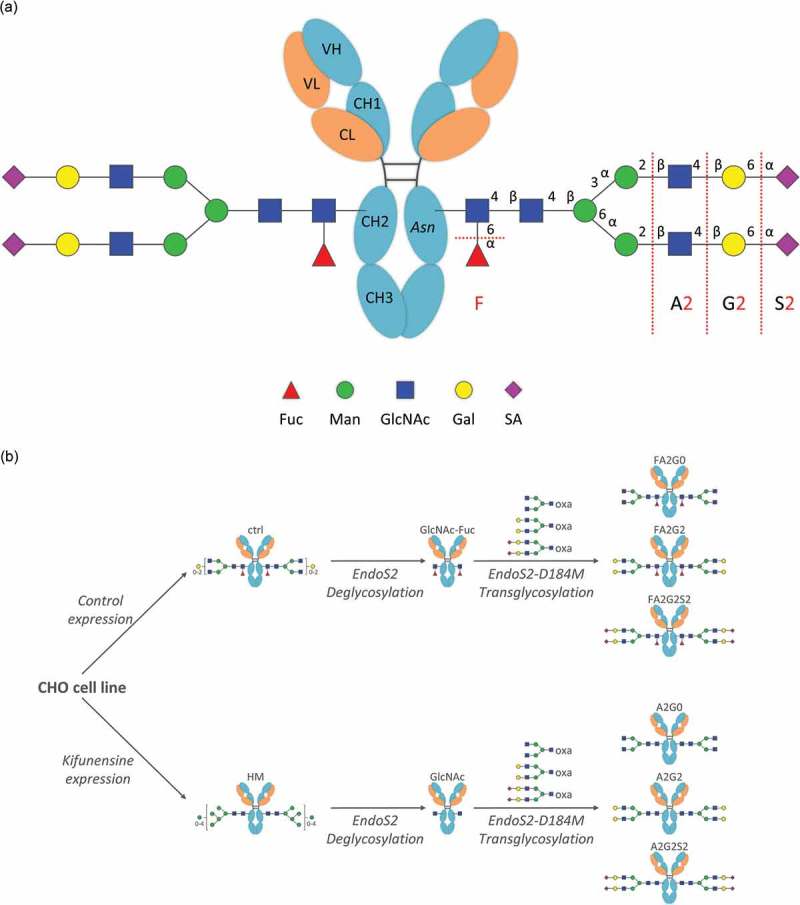
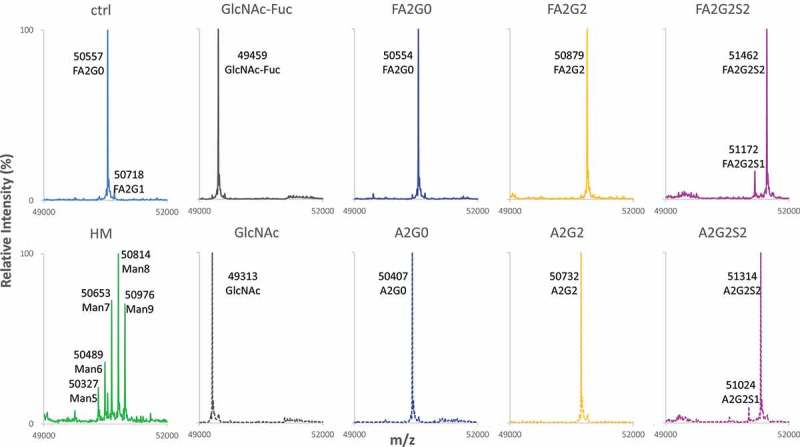
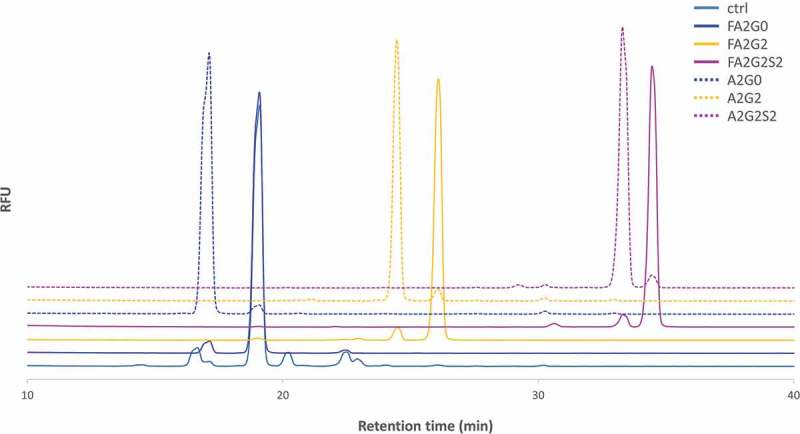
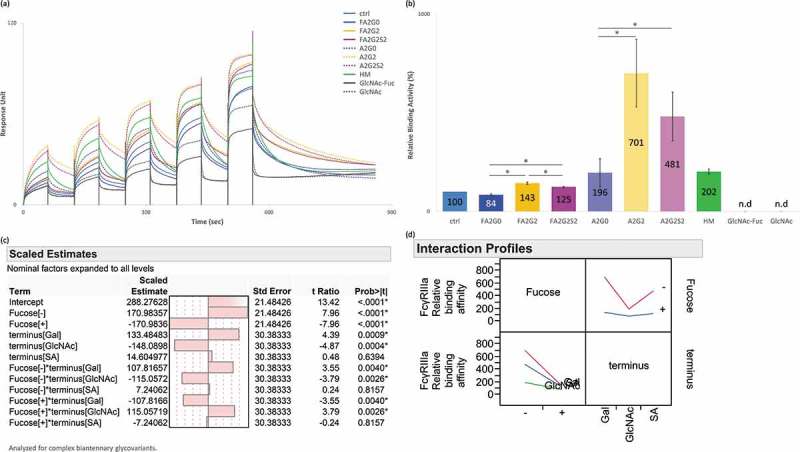
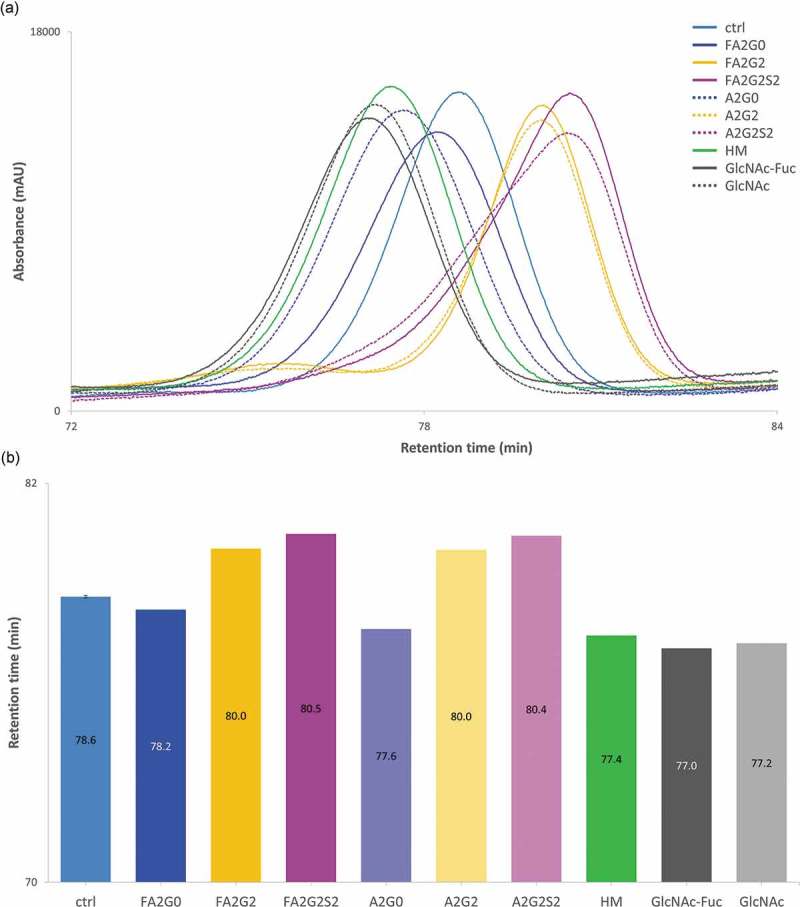
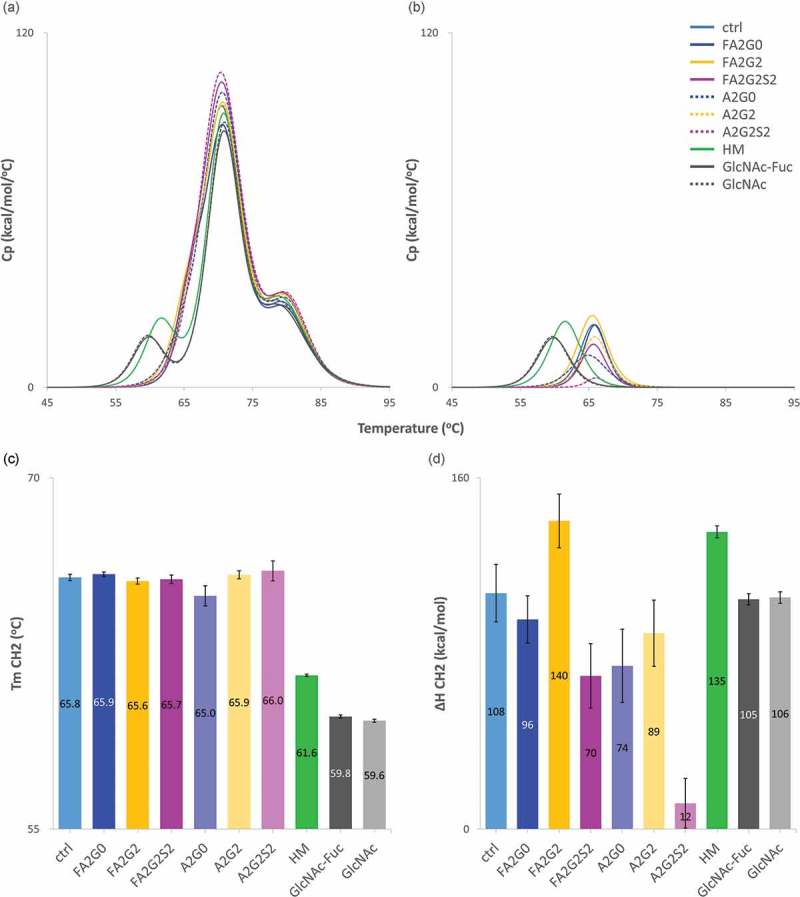
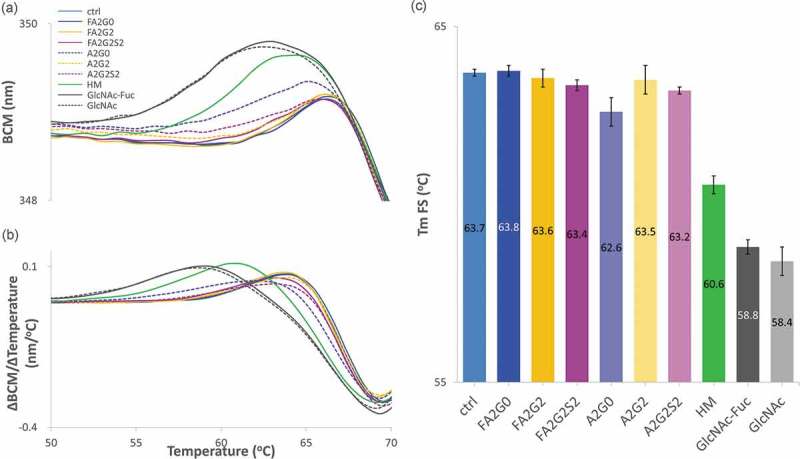
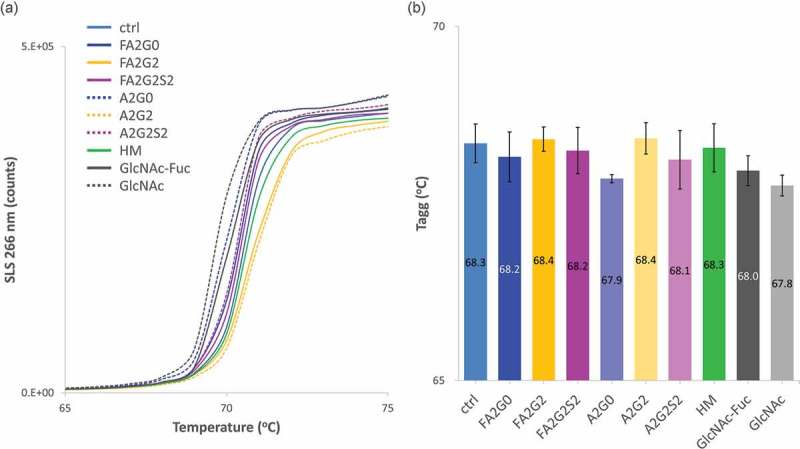
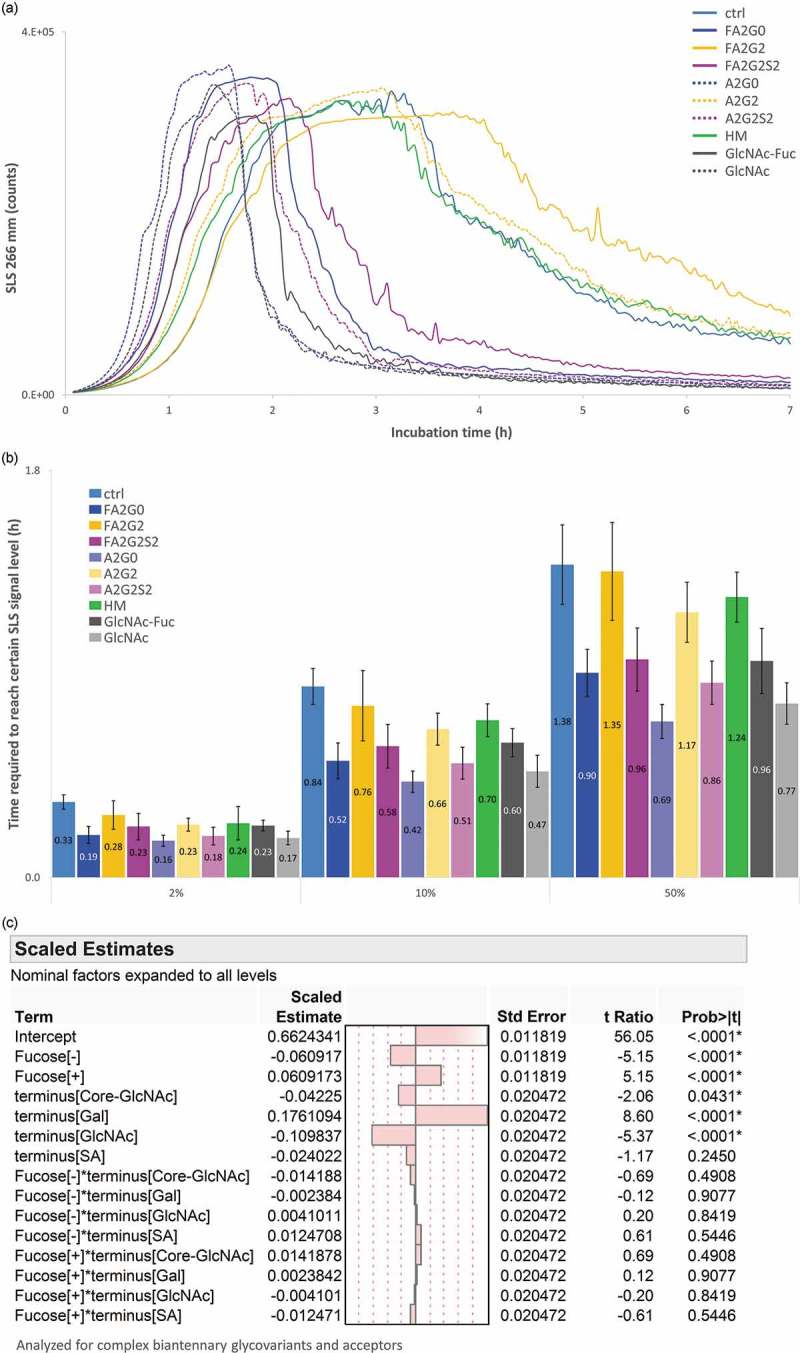
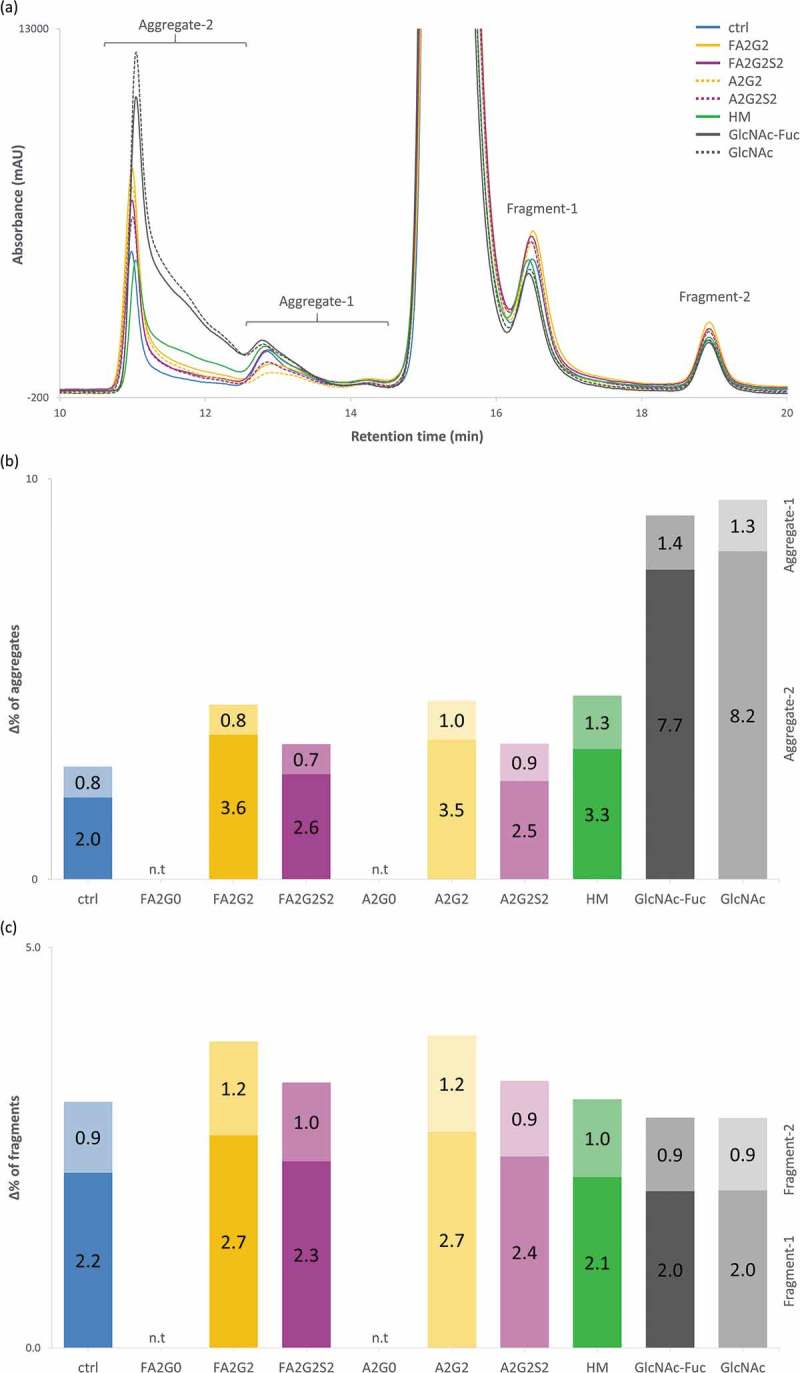
Glycosylation of the conserved asparagine residue in each heavy chain of IgG in the CH2 domain is known as N-glycosylation. It is one of the most common post-translational modifications and important critical quality attributes of monoclonal antibody (mAb) therapeutics. Various studies have demonstrated the effects of the Fc N-glycosylation on safety, Fc effector functions, and pharmacokinetics, both dependent and independent of neonatal Fc receptor (FcRn) pathway. However, separation of various glycoforms to investigate the biological and functional relevance of glycosylation is a major challenge, and existing studies often discuss the overall impact of N-glycans, without considering the individual contributions of each glycoform when evaluating mAbs with highly heterogeneous distributions. In this study, chemoenzymatic glycoengineering incorporating an endo-β-N-acetylglucosaminidase (ENGase) EndoS2 and its mutant with transglycosylation activity was used to generate mAb glycoforms with highly homogeneous and well-defined N-glycans to better understand and precisely evaluate the effect of each N-glycan structure on Fc effector functions and protein stability. We demonstrated that the core fucosylation, non-reducing terminal galactosylation, sialylation, and mannosylation of IgG1 mAb N-glycans impact not only on FcγRIIIa binding, antibody-dependent cell-mediated cytotoxicity, and C1q binding, but also FcRn binding, thermal stability and propensity for protein aggregation.
Overview
The claims and statistics of this paper haven’t been checked yet.
Free: it reads the open-access text and checks the first 5 claims that cite a source we can check. Create a free account to check every claim.
Integrity signals
Registry
Cites
Statistics
Figures
Verification
Claims the paper makes
The claims and statistics of this paper haven’t been checked yet.
Free: it reads the open-access text and checks the first 5 claims that cite a source we can check. Create a free account to check every claim.
Claims other papers make about this one
Each is checked against this paper’s own text: does it say what the citing paper says it does?
The cited source says what the claim attributes to it.
In the citing paper
“while increased galactosylation can enhance C1q and CDC.”
From Impact of process parameters on IgG glycosylation in CHO systems: a comprehensive quantitative analysis (2026) · cites this paper as [76]
The cited source says what the claim attributes to it.
In the citing paper
“For cytotoxic IgG1, lower core fucose generally improve FcγRIIIa binding and ADCC”
From Impact of process parameters on IgG glycosylation in CHO systems: a comprehensive quantitative analysis (2026) · cites this paper as [76]
Self-check
Percentages, sums and reported differences re-computed from the paper’s own numbers.
The self-check needs the paper’s full text.
Citations
Cites
FcRn: the neonatal Fc receptor comes of age
Roopenian, D. C., & Akilesh, S. (2007) · Nature Reviews Immunology · doi:10.1038/nri2155 · Cited by 2,346 · cited 2×
“FcRn is expressed in several organs and tissues.(17) It binds to IgGs under acidic conditions, leading to IgG internalization into the endosome either by pinocytosis or endocytosis.”
BackgroundShields, R. L., Lai, J., Keck, R., O'Connell, L. Y., Hong, K., Meng, Y. G., Weikert, S. H. A., & Presta, L. G. (2002) · Journal of Biological Chemistry · doi:10.1074/jbc.m202069200 · Cited by 1,835
Anti-Inflammatory Activity of Immunoglobulin G Resulting from Fc Sialylation
Kaneko, Y., Nimmerjahn, F., & Ravetch, J. V. (2006) · Science · doi:10.1126/science.1129594 · Cited by 1,754
Cetuximab-Induced Anaphylaxis and IgE Specific for Galactose-α-1,3-Galactose
Chung, C. H., Mirakhur, B., Chan, E., Le, Q.-T., Berlin, J., Morse, M., Murphy, B. A., Satinover, S. M., Hosen, J., Mauro, D., et al. (2008) · New England Journal of Medicine · doi:10.1056/nejmoa074943 · Cited by 1,521
Shinkawa, T., Nakamura, K., Yamane, N., Shoji-Hosaka, E., Kanda, Y., Sakurada, M., Uchida, K., Anazawa, H., Satoh, M., Yamasaki, M., et al. (2003) · Journal of Biological Chemistry · doi:10.1074/jbc.m210665200 · Cited by 1,413
Post-translational modifications in the context of therapeutic proteins
Walsh, G., & Jefferis, R. (2006) · Nature Biotechnology · doi:10.1038/nbt1252 · Cited by 1,005
Recapitulation of IVIG anti-inflammatory activity with a recombinant IgG Fc
Anthony, R. M., Nimmerjahn, F., Ashline, D. J., Reinhold, V. N., Paulson, J. C., & Ravetch, J. V. (2008) · Science · doi:10.1126/science.1154315 · Cited by 849
Properties of mouse and human IgG receptors and their contribution to disease models
Bruhns, P. (2012) · Blood · doi:10.1182/blood-2012-01-380121 · Cited by 847
Therapeutic antibodies for autoimmunity and inflammation
Chan, A. C., & Carter, P. J. (2010) · Nature Reviews Immunology · doi:10.1038/nri2761 · Cited by 837 · cited 1×
“such as antibody-dependent cell-mediated cytotoxicity (ADCC) and complement-dependent cytotoxicity (CDC).(8) Both ADCC and CDC activities induce cytotoxicity through the lysis of target cells.”
BackgroundThe Thermal Stability of Immunoglobulin: Unfolding and Aggregation of a Multi-Domain Protein
Vermeer, A. W. P., & Norde, W. (2000) · Biophysical Journal · doi:10.1016/s0006-3495(00)76602-1 · Cited by 666
Cited by
Items 101–200 of 201
Strategies for controlling afucosylation in monoclonal antibodies during upstream manufacturing
Rish, A. J., Siddiquee, K., Huang, Z., Xu, J., Anderson, C. A., Borys, M., & Khetan, A. (2023) · Biotechnology Journal · doi:10.1002/biot.202200604 · Cited by 8
Removal of Fc Glycans from [89Zr]Zr-DFO-Anti-CD8 Prevents Peripheral Depletion of CD8+ T Cells
White, J. M., Keinänen, O. M., Cook, B. E., Zeglis, B. M., Gibson, H. M., & Viola, N. T. (2020) · Molecular Pharmaceutics · doi:10.1021/acs.molpharmaceut.0c00270 · Cited by 8
Markert, S., Torkler, S., Hohmann, K., & Popp, O. (2020) · Biotechnology Progress · doi:10.1002/btpr.3042 · Cited by 8
NMR assignments of the N-glycans of the Fc fragment of mouse immunoglobulin G2b glycoprotein
Yanaka, S., Yamaguchi, Y., Takizawa, T., Miyanoiri, Y., Yogo, R., Shimada, I., & Kato, K. (2021) · Biomolecular NMR Assignments · doi:10.1007/s12104-020-10004-5 · Cited by 8
Enhanced transglycosylation activity of an Endo-F3 mutant by ligand-directed localization
Zou, X., Liu, Z., Liu, L., Shi, W., Li, W., Guo, Z., Tang, F., & Huang, W. (2022) · Organic & Biomolecular Chemistry · doi:10.1039/d2ob00030j · Cited by 8
Glycosylation-dependent antitumor therapeutic monoclonal antibodies
Zhang, Y., Fan, C., Zhang, L., & Ma, X. (2019) · Progress in molecular biology and translational science · doi:10.1016/bs.pmbts.2019.03.004 · Cited by 9
Host glycosylation of immunoglobulins impairs the immune response to acute Lyme disease
Haslund-Gourley, B. S., Hou, J., Woloszczuk, K., Horn, E. J., Dempsey, G., Haddad, E. K., Wigdahl, B. L., & Comunale, M. A. (2024) · EBioMedicine · doi:10.1016/j.ebiom.2024.104979 · Cited by 7
Improvement of Antibody Activity by Controlling Its Dynamics Using the Glycan–Lectin Interaction
Manabe, Y., Iizuka, Y., Yamamoto, R., Ito, K., Hatano, K., Kabayama, K., & Fukase, K. (2023) · Angewandte Chemie International Edition · doi:10.1002/anie.202304779 · Cited by 7
Zhang, Y., Lai, Z., Yuan, Z., Qu, B., Li, Y., Yan, W., Li, B., Yu, W., Cai, S., & Zhang, H. (2023) · Experimental Eye Research · doi:10.1016/j.exer.2023.109555 · Cited by 7
van Osch, T. L. J., Steuten, J., Nouta, J., Koeleman, C. A. M., Bentlage, A. E. H., Heidt, S., Mulder, A., Voorberg, J., van Ham, S. M., Wuhrer, M., et al. (2022) · Platelets · doi:10.1080/09537104.2022.2129604 · Cited by 7
Bravo-Venegas, J., Rodriguez-Siza, J., Vergara, M., Torres, M., Dickson, A., Toledo, J. R., Molina, M. C., Hermoso, M. A., Berríos, J., & Altamirano, C. (2026) · mAbs · doi:10.1080/19420862.2026.2643039 · Cited by 6
“For cytotoxic IgG1, lower core fucose generally improve FcγRIIIa binding and ADCC, while increased galactosylation can enhance C1q and CDC. 76 When effector silencing is preferred (common for IgG4 or blocking IgG1), human-like, core-fucosylated complex glycans with low high-mannose and some sialylation tend to attenua…”
Selective clearance of monoclonal antibodies via the mannose receptor is dependent on glycan pairing
Baumeister, J., Meudt, M., Wei, W., Ebert, S., Rosenau, F., Mizaikoff, B., Blech, M., Chen, L.-Z., & Higel, F. (2026) · Scientific Reports · doi:10.1038/s41598-026-40268-1 · Cited by 6
“As previously described, the symmetrical high-mannose glyco-pair (M5/ M5) relating to F4 showed slightly lower FcRn binding, but this is unlikely to result in a significant difference in PK in vivo 29–31 .”
Sodium chloride impacts glycosylation and N‐ and O‐glycan site occupancy of an Fc‐fusion protein
Bohl, S., Mignon, M. L., Kilian, T., & Zimmer, A. (2023) · Biotechnology and Bioengineering · doi:10.1002/bit.28512 · Cited by 6
Malik, S., Grunert, I., von Roman, M. F., Walch, H., Dams, T., Thomann, M., & Falkenstein, R. (2021) · Glycobiology · doi:10.1093/glycob/cwab109 · Cited by 6
Development of a [89Zr]Zr-labeled Human Antibody using a Novel Phage-displayed Human scFv Library
Singh, A. K., Lewis, C. D., Boas, C. A. W. V., Diebolder, P., Jethva, P. N., Rhee, A. J., Song, J. H., Goo, Y. A., Li, S., Nickels, M. L., et al. (2024) · Clinical Cancer Research · doi:10.1158/1078-0432.ccr-23-3647 · Cited by 6
Chakrabarti, A., Kervinen, J., Müller, E., Tanaka, T., & Muranaka, K. (2021) · IntechOpen eBooks · doi:10.5772/intechopen.95356 · Cited by 6
Wang, H., Wu, L., Wang, C., Xu, J., Yin, H., Guo, H., Zheng, L., Shao, H., & Gang, C. (2021) · ACS Pharmacology & Translational Science · doi:10.1021/acsptsci.0c00225 · Cited by 6
A Comprehensive Review on the Stability and Degradation of Polysorbates in Biopharmaceuticals
Morker, K. (2025) · European journal of parenteral & pharmaceutical sciences · doi:10.37521/ejpps30301 · Cited by 5
Jang, D., Altern, S. H., & Cramer, S. M. (2024) · Journal of Chromatography A · doi:10.1016/j.chroma.2024.465281 · Cited by 5
Research of saccharides and related biocomplexes: A review with recent techniques and applications
Sirén, H. M. M. (2024) · Journal of Separation Science · doi:10.1002/jssc.202300668 · Cited by 5
Cao, C., Yu, L., Zhang, X., Dong, X., Yuan, J., & Liang, X. (2021) · Analytica Chimica Acta · doi:10.1016/j.aca.2021.338306 · Cited by 5
Peters, B., Bautista, J., Slaney, T. R., Guo, H., Huang, R. Y. ‐., Krause, M. E., Zeng, M., Cheng, J. W.-C., & Chen, Z. (2022) · Electrophoresis · doi:10.1002/elps.202100259 · Cited by 5
Chai, M., Bleiholder, C., & Liu, F. C. (2025) · RSC Chemical Biology · doi:10.1039/d5cb00127g · Cited by 4
Meudt, M., Baumeister, J., Russell, A. C., Dzielak, L., Hansen, G., Mizaikoff, B., Ebert, S., Rosenau, F., Blech, M., & Higel, F. (2026) · mAbs · doi:10.1080/19420862.2026.2652642 · Cited by 4
“39 applied a similar strategy to generate pure glycoforms and used a comparable assay, reporting EC50 patterns that closely align with those observed here for most variants.”
Glycosylation in autoimmune diseases: A bibliometric and visualization study
Deng, G., Chen, X., Le, S., Wu, Q., & Wang, S. (2024) · Heliyon · doi:10.1016/j.heliyon.2024.e30026 · Cited by 4
“The glycosylation of the IgG Fc region, such as fucosylation, galactosylation and sialylation, is crucial for the binding of IgG to Fc γ R and the complement component C1q [24].”
BackgroundSudol, A. S. L., Crispin, M., & Tews, I. (2024) · Journal of Biological Chemistry · doi:10.1016/j.jbc.2024.107245 · Cited by 4
“Glycosylation of the Fc domain is implicated in maintaining Fc structural integrity (11 – 16) and Fc gamma receptor (Fc γ R) and complement-mediated immune activation (3, 14, 17); thus, removal of the glycan impedes Fc-mediated effector functions (16, 18).”
Voruganti, S., Xu, J., Li, X., Balakrishnan, G., Singh, S. M., Kar, S. R., & Das, T. K. (2020) · Journal of Pharmaceutical Sciences · doi:10.1016/j.xphs.2020.09.056 · Cited by 4
Rattanapisit, K., Kitisripanya, T., Konyanee, A., Sae‐Foo, W., Burapapiruin, A., Putalun, W., Sakamoto, S., Phoolcharoen, W., & Yusakul, G. (2021) · Plant Cell Reports · doi:10.1007/s00299-021-02670-z · Cited by 4
Li, K., Bermudez, O., & Forciniti, D. (2022) · Process Biochemistry · doi:10.1016/j.procbio.2022.07.030 · Cited by 4
HPLC- and CE-based methods for the characterization of therapeutic glycoproteins
Butré, C. I., & Delobel, A. (2021) · Elsevier eBooks · doi:10.1016/b978-0-12-821447-3.00014-7 · Cited by 4
Human IgG Glycosylation in Inflammation and Inflammatory Disease
Mimura, Y., & Jefferis, R. (2020) · Elsevier eBooks · doi:10.1016/b978-0-12-819475-1.00047-x · Cited by 4
Immunoglobulin G Glycosylation in Diseases
Pezer, M. (2021) · Experientia supplementum · doi:10.1007/978-3-030-76912-3_13 · Cited by 4
Shuang, Q., Sun, M., Lin, G., Zhang, L., Huang, S., Shen, Q., Jiang, L., Yang, L., Sun, J., Chen, H., et al. (2026) · mAbs · doi:10.1080/19420862.2026.2657099 · Cited by 3
“Circulating B cells were quantified on days 3, 7, 14, 21, 28, 35, and 42.”
InfluentialChanges in the N-glycosylation of porcine immune globulin G during postnatal development
Zlatina, K., Isernhagen, L., Galuska, C. E., Muráni, E., & Galuska, S. P. (2024) · Frontiers in Immunology · doi:10.3389/fimmu.2024.1361240 · Cited by 3
Platform-Specific Fc N-Glycan Profiles of an Antisperm Antibody
Nador, E., Xia, C., Santangelo, P. J., Whaley, K. J., Costello, C. E., & Anderson, D. J. (2024) · Antibodies · doi:10.3390/antib13010017 · Cited by 3
“Glycosylation can alter the pharmacokinetics and pharmacodynamics of an antibody through interactions with the neonatal Fc receptor, the endocytic mannose receptor, the asialoglycoprotein receptor, and other receptors [4].”
BackgroundCE–MS Methods for the Characterization of Monoclonal Antibodies
Reinert, T., Beck, A., Houzé, P., Gahoual, R., & François, Y. (2022) · Wiley eBooks · doi:10.1002/9783527833092.ch11 · Cited by 3
Lou, D., Zhu, Y., Fan, J., Fan, L., Zhu, Q., Lu, Y.-H., & Zhao, S. (2025) · Chromatographia · doi:10.1007/s10337-025-04407-6 · Cited by 2
Analytical Challenges in Analyzing IgM Biotherapeutics
Rolland, A. D., & Heck, A. J. R. (2025) · Wiley eBooks · doi:10.1002/9781394236145.ch3 · Cited by 2
Zhou, Y., Weiss, S. S., Tan, C., Bittner, P., Harrison, J. A., Tjernberg, L. O., Emmer, Å., & Zenobi, R. (2025) · Analytical Chemistry · doi:10.1021/acs.analchem.5c03703 · Cited by 2
Hernandez, F. D. C., Hansen, T., Haslene‐Hox, H., Appelblad, P., & Nordborg, A. (2025) · Journal of Chromatography A · doi:10.1016/j.chroma.2025.466393 · Cited by 2
Menzen, T., Vay, K. K. L., Arsiccio, A., Helbig, C., Hausmann, K., Pabstmann, T., & Hawe, A. (2025) · Journal of Pharmaceutical Sciences · doi:10.1016/j.xphs.2025.104054 · Cited by 2
IgG N-glycosylation in autoimmune diseases
Pumpe, C., & Vermeren, S. (2026) · Frontiers in Immunology · doi:10.3389/fimmu.2026.1933960 · Cited by 2
Liu, G., Kim, J. K., Tang, S., Yan, Y., Hopkins, M. M., Laredo, D., Yang, T., Mutino, J., Kamen, D. E., Graham, K. S., et al. (2025) · mAbs · doi:10.1080/19420862.2025.2543768 · Cited by 2
Kim, W. K., Seong, J. Y., & Lee, G. M. (2024) · Biotechnology and Bioprocess Engineering · doi:10.1007/s12257-024-00147-w · Cited by 3
Pulipeta, M., Iyer, P. K., Palakurthy, R. K., Pullaguri, N., Pinnamaneni, R., & Chilukuri, S. R. (2025) · Biologics · doi:10.3390/biologics5020016 · Cited by 1
“Previous studies have demonstrated that uridine or arginine, ammonia, glucosamine, Mn 2+ , or galactose supplementation to the culture media or the synergistic effects of these components enhances galactosylation of monoclonal antibodies [38,49,54,57–61].”
Liu, C., Wang, Y., Li, X., Xu, X., Xu, R., Tian, C., Chen, Z., Lu, X., Li, Y., Wang, M., et al. (2025) · The EPMA Journal · doi:10.1007/s13167-025-00416-5 · Cited by 1
Song, F., Zhao, Y., Shi, Y., Xu, H., Zou, X., Liu, Z., Liu, X., Ning, S., Husi, H., Shi, W., et al. (2026) · Bioconjugate Chemistry · doi:10.1021/acs.bioconjchem.5c00539 · Cited by 1
Effect of ADCC-enhancing mutations on N -glycan profiles of human IgG1 antibodies
Han, L., Jiang, H., & Chiu, M. L. (2026) · Biochemical Journal · doi:10.1042/bcj20253380 · Cited by 1
Yao, B., Zhang, D., Cao, W., Yang, G., Li, W., Hui, X., Ouyang, P., Chen, G., & Liu, B. (2022) · BioMed Research International · doi:10.1155/2022/7868391 · Cited by 1
“AC is able to separate antibodies according to their affinity to the FcγRIIIa receptor, accompanying with a higher resolution compared with surface plasmon resonance (SPR) or biolayer interferometry (BLI) method [22].”
Matthews, E., Dalvi, N. T., & Butler, M. (2025) · Journal of Biotechnology · doi:10.1016/j.jbiotec.2025.09.008 · Cited by 1
Antibody glycosylation in neuroimmune diseases
Li, K., Luo, M., Xu, L., Ouyang, Y., Zhou, Q., Xiang, W., Ren, Y., Wen, Z., Shi, G., Luo, Z., et al. (2025) · Journal of Translational Medicine · doi:10.1186/s12967-025-07611-y · Cited by 2
“Nevertheless, this effect may be related to the fact that high-mannose form IgG also lacks core fucose [63, 90, 91].”
InfluentialJames, K., Kováč, A., & Majerová, P. (2026) · Biomolecules · doi:10.3390/biom16050738 · Cited by 1
“Glycosylation occurs in both Fc and Fab regions, with common types including N-glycosylation, O-fucosylation, and O-mannosylation, which can affect binding affinity, solubility, immunogenicity, stability, and protein folding (Figure 1B) [9].”
A rapid and high-throughput biotechnology quantifies major glycoforms of human IgG1 mAb drugs
Matsumoto, Y., Zhou, L., Ohno, S., Lu, W., Biel, T. G., Fratz‐Berilla, E. J., Ortega‐Rodriguez, U., Houchens, T., Dean, A. Q., Kim, S.-R., et al. (2026) · Trends in biotechnology · doi:10.1016/j.tibtech.2026.07.004 · Cited by 1
CHENG, Q., Jia, D., ZHANG, B., Xu, J., Zhe, S. H. A. O., Huang, Y., & Zou, X. (2022) · Chinese Journal of Chromatography · doi:10.3724/sp.j.1123.2021.05008 · Cited by 1
Lippold, S., Cadang, L., Schlothauer, T., & Yang, F. (2023) · Analytical Chemistry · doi:10.1021/acs.analchem.3c03015 · Cited by 1
Butré, C. I., Largy, E., Cantais, F., & Delobel, A. (2021) · Methods in molecular biology · doi:10.1007/978-1-0716-1241-5_17 · Cited by 1
Gstöttner, C., Kaur, H., & Wuhrer, M. (2021) · Elsevier eBooks · doi:10.1016/b978-0-12-822318-5.00002-8 · Cited by 1
Assessment of Viral Vaccine N-Glycosylation via Orthogonal Capillary Electrophoresis-Based Methods
Bigelow, S. (2022) · Carleton University's Institutional Repository (MacOdrum Library, Carleton University) · doi:10.22215/etd/2022-15026 · Cited by 1
Tools for the characterization of B and T cells of common carp
Eltijani, A. (2022) · doi:10.18174/574665 · Cited by 1
Fc-functional antibody immunity to HIV: the role of neutrophils and IgA
Worley, M. J. (2020) · Minerva Access (University of Melbourne)
Cambay, F. (2019) · PolyPublie (École Polytechnique de Montréal)
High throughput DNA single cell analysis of CHO-K1 cell surface glycosylation using lectin probes.
Ferreira, F. F. (2020) · Dublin City University Open Access Institutional Repository (Dublin City University)
Glycosylation and Antibody Function
Wang, L. (2022) · Elsevier eBooks · doi:10.1016/b978-0-12-821618-7.00181-4
Improvement of Antibody Activity by Controlling Its Dynamics Using the Glycan–Lectin Interaction
Manabe, Y., Iizuka, Y., Yamamoto, R., Ito, K., Hatano, K., Kabayama, K., & Fukase, K. (2023) · Angewandte Chemie · doi:10.1002/ange.202304779
You, M., Chen, F., Yu, C., Chen, Y., Wang, Y., Liu, X., Guo, X., Zhou, B. N., Wang, X., Zhang, B., et al. (2023) · Frontiers in Pharmacology · doi:10.3389/fphar.2023.1213726
Fc glycosylation of alloantibodies in platelet refractoriness
van Osch, T. L. J. (2024) · Utrecht University Repository (Utrecht University) · doi:10.33540/2046
Öztürk, S., Atakay, M., Avcı, İ., Baltaci, S., Yaman, M. E., Seckin, A. I., & Salih, B. (2024) · Microchemical Journal · doi:10.1016/j.microc.2024.112099
Kirley, T. L. (2025) · bioRxiv (Cold Spring Harbor Laboratory) · doi:10.1101/2025.10.21.683661
Obtaining and characterizing rhodamine B immunoconjugates
Grinevich, A. S., Sadovskaya, Y. O., Karimova, A. O., Ryzhikov, M. A., Khotuleva, M. G., Solopova, O. N., Guseva, E. V., Sigan, A. L., & Gusev, D. V. (2025) · Russian Journal of Oncology · doi:10.17816/onco691726
N-glycosylation Modifications of Immunoglobulins G in Systemic Lupus Erythematosus
Yao-Zhou, L. I. U., Zheng, B. I. A. N., HUANG, C.-C., & Li, Y. (2025) · PROGRESS IN BIOCHEMISTRY AND BIOPHYSICS · doi:10.3724/j.pibb.2025.0020
Geyer, C. E., Almeida, L., Mes, L., Otto, F., Mak, W. A., Heieis, G. A., Veth, J., de Taeye, S. W., Caniels, T. G., Bijl, T. P. L., et al. (2025) · European Journal of Immunology · doi:10.1002/eji.70087
“IgG affinity toward FcRs and affiliated induction of effector functions are strongly dependent on changes in the antibody glycosylation pattern [74, 75].”
Petrushevikj, T. (2024) · Repository of the University of Ljubljana (University of Ljubljana)
Helali, Y. (2024) · Dépôt institutionnel de l'Université libre de Bruxelles (Université Libre de Bruxelles)
NEW APPROACH USING ON LINE PURIFICATION AND PROCAINAMIDE FOR HILIC FLR MS N GLYCAN ANALYSIS
Helali, Y., Bourez, A., Marchant, A., Antwerpen, P. V., & Delporte, C. (2022) · Dépôt institutionnel de l'Université libre de Bruxelles (Université Libre de Bruxelles)
Manabe, S. (2026) · Springer eBooks · doi:10.1007/978-981-95-5335-8_12
Impact of monoclonal antibody diversity on in vitro diagnostics
Kozuka, N., Yoshikawa, K., & Sato, J. (2026) · SEIBUTSU BUTSURI KAGAKU · doi:10.2198/electroph.70.21
SERAFIN, B., Henry, O., & Crescenzo, G. D. (2026) · Glycobiology · doi:10.1093/glycob/cwag019
Yanaka, S., & Kato, K. (2026) · Elsevier eBooks · doi:10.1016/b978-0-443-29808-0.00090-x
Glycan Remodeling Technologies for Enhancing Antibody Function
Manabe, S., & Hiranyakorn, M. (2026) · Advances in experimental medicine and biology · doi:10.1007/978-3-032-04153-1_32
Glycan Structures of Human Immunoglobulins and Their Roles
Suzuki, N. (2026) · Advances in experimental medicine and biology · doi:10.1007/978-3-032-04153-1_8
Deveuve, Q. (2020) · theses.fr (ABES) · doi:10.70675/0846fa89zb47dz41afzaa8bz1aba36466f1d
Etude structurale et fonctionnelle des substances apparentées d’anticorps thérapeutiques
Rouby, G. (2020) · theses.fr (ABES) · doi:10.70675/ad10513ez4b3dz4911z951fza4d423629a6f
Oliviero, B., Kumar, S., Conteianni, D., Donetti, G., Cerino, A., Iraci, A. S., Gaipa, A. L., Ottolini, S., Tengattini, S., Massolini, G., et al. (2026) · Journal of Medicinal Chemistry · doi:10.1021/acs.jmedchem.6c00166
Regulation of immune cell metabolism by therapeutic normal IgG or intravenous immunoglobulin (IVIG)
Rambabu, N. (2020) · theses.fr (ABES) · doi:10.70675/bd594585z3904z4468z87f9zde346d039070
Molecular Dynamics Exploration of Two Full-Length IgG Antibodies: Impact of GlycosylationPreprint
Lin, R. L. F., Bellaiche, A., Diharce, J., & Etchebest, C. (2026) · bioRxiv (Cold Spring Harbor Laboratory) · doi:10.64898/2026.04.14.718417
“Several recent reviews have underlined the impact of Fc glycans on antibody properties 30–35 , and, in particular, on the ability of mAbs to engage the various Fc receptors, an effect attributed to a glycan-induced reduction of Fc flexibility 14,33,36 .”
Glycoprotein-Based Biotechnological Products
Kawasaki, N. (2026) · Springer eBooks · doi:10.1007/978-981-95-7386-8_109
Self-citationNS0 and CHO cell lines generate distinct quality profiles for non‐originator NISTmAbs
Bush, X., Azer, N., Kim, J., Powers, D. N., & Fratz‐Berilla, E. J. (2026) · Biotechnology Progress · doi:10.1002/btpr.88520
“50 The absence of core fucose on the N-glycan, a state known as afuco-sylation, is the most significant factor, dramatically increasing the binding affinity for Fc γ RIIIA and enhancing ADCC by up to 50-fold.”
Allosteric crosstalk between Fc glycans and Fab regions in full-length IgG2 and IgG4 antibodiesPreprint
Etchebest, C., Lin, R. L. F., Bellaiche, A., & Diharce, J. (2026) · Research Square · doi:10.21203/rs.3.rs-9682477/v1
Lippold, S., Chang, K. B., Dürkoop, M., Andersen, J. T., Yang, F., & Schlothauer, T. (2026) · mAbs · doi:10.1080/19420862.2026.2687922
“15,16,28 Furthermore, the high resolution of the AC–MS platform enabled the unique assessment of O-glycosylation within the extended hinge region of IgG3, which showed no discernible impact on retention time.”
Collision Induced Unfolding Predicts the Aggregation of Glycoengineered Monoclonal Antibodies
Bergman, A. E., Armbruster, M. R., Makey, D. M., Rivera-Fuentes, N. A., Rangel-Angarita, V., Theobald, T., & Ruotolo, B. T. (2026) · Analytical Chemistry · doi:10.1021/acs.analchem.6c05321
Glycoengineering of Monoclonal Antibodies with Homogeneous Glycan Isomers with Asymmetric Antennae
Tam, R. Y., Hatfield, G., & Tepliakova, L. (2026) · Methods in molecular biology · doi:10.1007/978-1-0716-5166-7_19
Mucus-penetrating nanocarriers for the enhanced oral delivery of antibody drugs
Valle, M. D., Madinabeitia, A. H., Arellano, M., Irache, J. M., & Pangua, C. (2026) · Nanomedicine · doi:10.1080/17435889.2026.2729135
Beyrouthy, M. J. (2026) · Molecular Pharmaceutics · doi:10.1021/acs.molpharmaceut.6c01004
Glycosylation in Quality and Safety of Therapeutic Proteins
Matsumoto, Y., Kim, J., McKenna, K. R., Biel, T. G., Kirshner, S., Falkowski, V. M., & Ju, T. (2026) · Pharmacological Reviews · doi:10.1016/j.pharmr.2026.100163
Li, X., Wang, H., & Deyanova, E. G. (2026) · Journal of the American Society for Mass Spectrometry · doi:10.1021/jasms.6c00242
SSR4 in cancer: endoplasmic reticulum protein processing, tumor-cell fitness, and B-cell immunity
Chen, L., Cai, H., Yu, W., & Wang, H. (2026) · Frontiers in Cell and Developmental Biology · doi:10.3389/fcell.2026.2006411
Cao, Y., Song, Z., Guo, Z., Zhao, X., Gong, Y., Zhao, K., Qu, C., Huang, Y., Li, Y., Gao, Y., et al. (2022) · doi:10.3389/fimmu.2021.724379.s001
Metadata
- Authors
- Wada, R., Matsui, M., & Kawasaki, N.
- Affiliations
- Astellas Pharma (Japan) (JP)
- Yokohama City University (JP)
- Corresponding author
- Wada, Ryuta
- Venue
- mAbs
- Publisher
- Informa UK Limited
- Published
- 2018-12-10
- Volume
- 11
- Issue
- 2
- Pages
- 350-372
- ISSN
- 1942-0862 (ISSN-L)
- 1942-0870
- PMC
- PMC6380427
- OpenAlex
- W2901207337
- Cited by
- 186
- References
- 77
- Citations by year
- 2026: 27 · 2025: 25 · 2024: 20 · 2023: 18 · 2022: 26 · 2021: 34 · 2020: 26 · 2019: 10
- FWCI
- 12.07
- Type
- journal article
- Language
- en
- Open access
- gold
- doi.org
- Licence
- Locations
- mAbs (publishedVersion, cc-by-nc-nd)
- Europe PMC (PubMed Central) (publishedVersion, cc-by-nc-nd)
- PubMed Central (publishedVersion, cc-by-nc-nd)
- PubMed (publishedVersion)
- Funders
- funded by Astellas Pharma, Inc
- Topics
- Life Sciences › Immunology and Microbiology › Immunology › Monoclonal and Polyclonal Antibodies Research
- Life Sciences › Biochemistry, Genetics and Molecular Biology › Molecular Biology › Glycosylation and Glycoproteins Research
- Life Sciences › Biochemistry, Genetics and Molecular Biology › Molecular Biology › Protein purification and stability
- Keywords
- N-glycosylation, IgG1 monoclonal antibody, glycoengineering, Fc effector functions, FcγRIIIa binding, antibody-dependent cellular cytotoxicity, C1q binding, FcRn binding, thermal stability, protein aggregation, core fucosylation, sialylation, galactosylation, mannosylation, N-glycan structure
- MeSH terms
- Antibodies, Monoclonal, Glycosylation, Humans, Immunoglobulin G, Immunoglobulin Fc Fragments, Polysaccharides, Protein Stability
About these checks
Registry, retraction, Cites and statistics results are computed, not judged, with one exception: a printed reference that no index lists is read once by a model before it counts as a citation error. Claims are extracted by a model and kept only when their quote appears verbatim in the text; each cited source is then checked, with a model’s help, for whether it says what the claim relies on. Those verdicts can be wrong — read the claim’s quote and the cited source before relying on one.
Statistics and arithmetic are recomputed, not judged.
Confidence bands are shown only for fields calibrated on our annotated test set. None is calibrated yet, so no band is shown.
What counts as a claim ›How we measure confidence ›How we check this ›
Are you an author, or do you see a problem with this page? Request a review
Data sources
Bibliographic data: Semantic Scholar, OpenAlex, Crossref.
Contains information from the Semantic Scholar Academic Graph Datasets, made available under the ODC Attribution License (ODC-BY 1.0).
Semantic Scholar’s data is described in: Kinney, R., et al. (2023). The Semantic Scholar Open Data Platform. arXiv:2301.10140.
