

Involvement of the microbiota-gut-brain axis in chronic restraint stress: disturbances of the kynurenine metabolic pathway in both the gut and brain
Open accessThe DOI matches its Crossref record; 52 of the 52 references it cites were found in a registry or an index.
Abstract
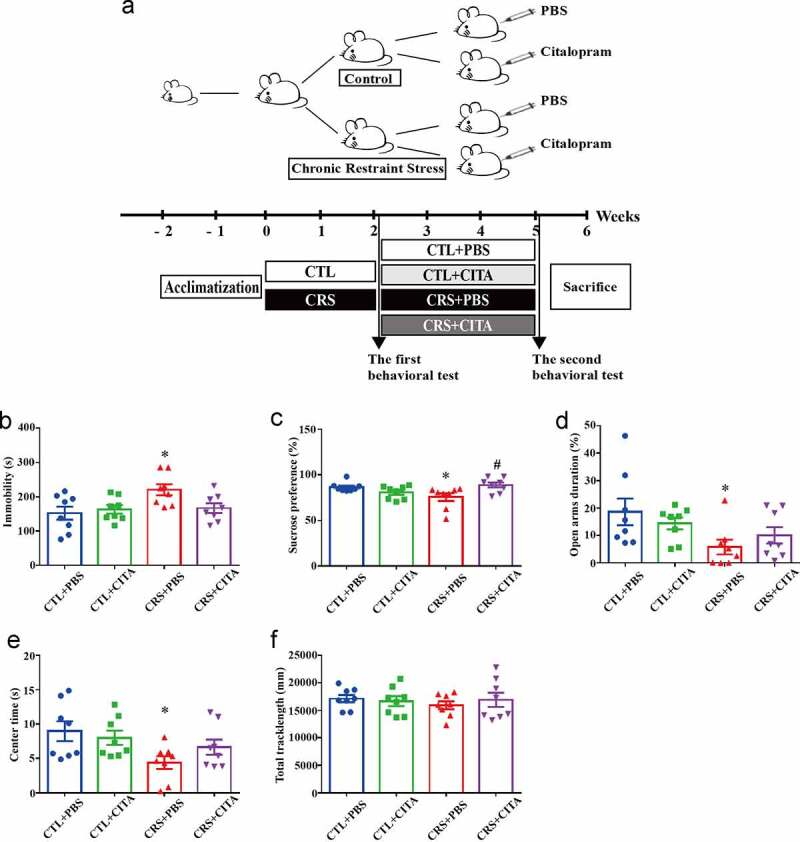
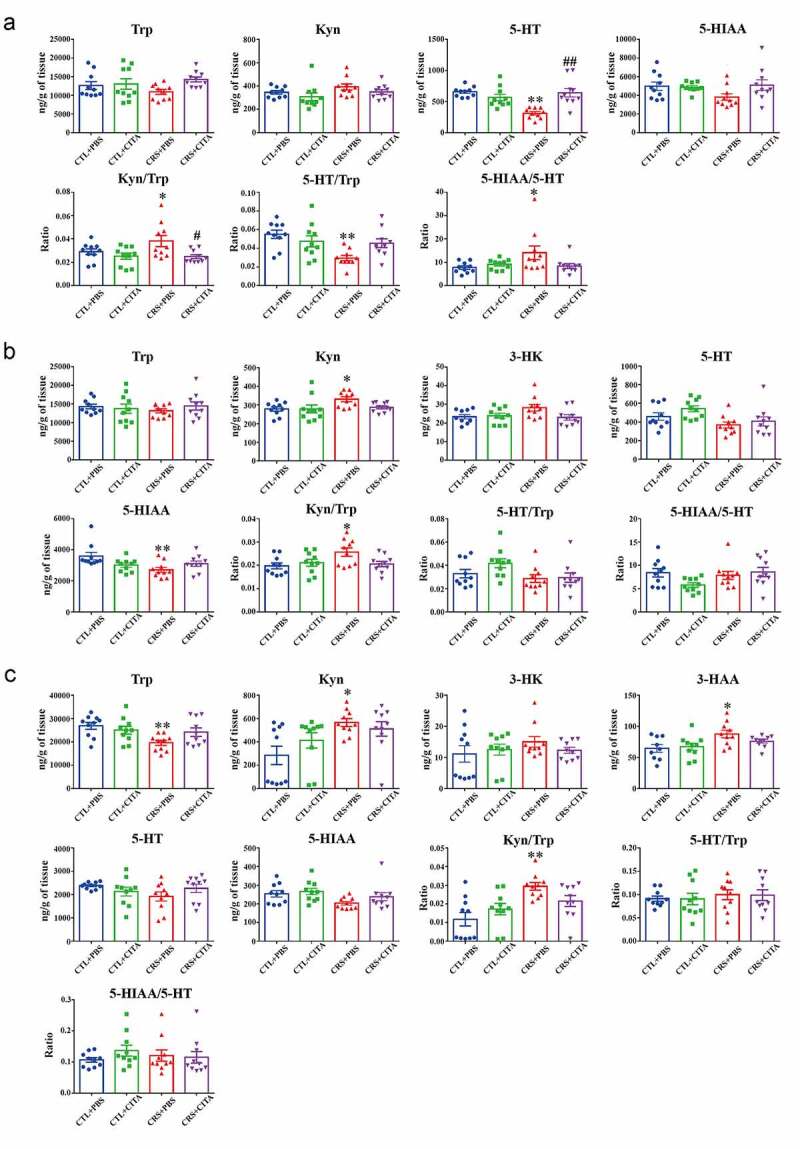
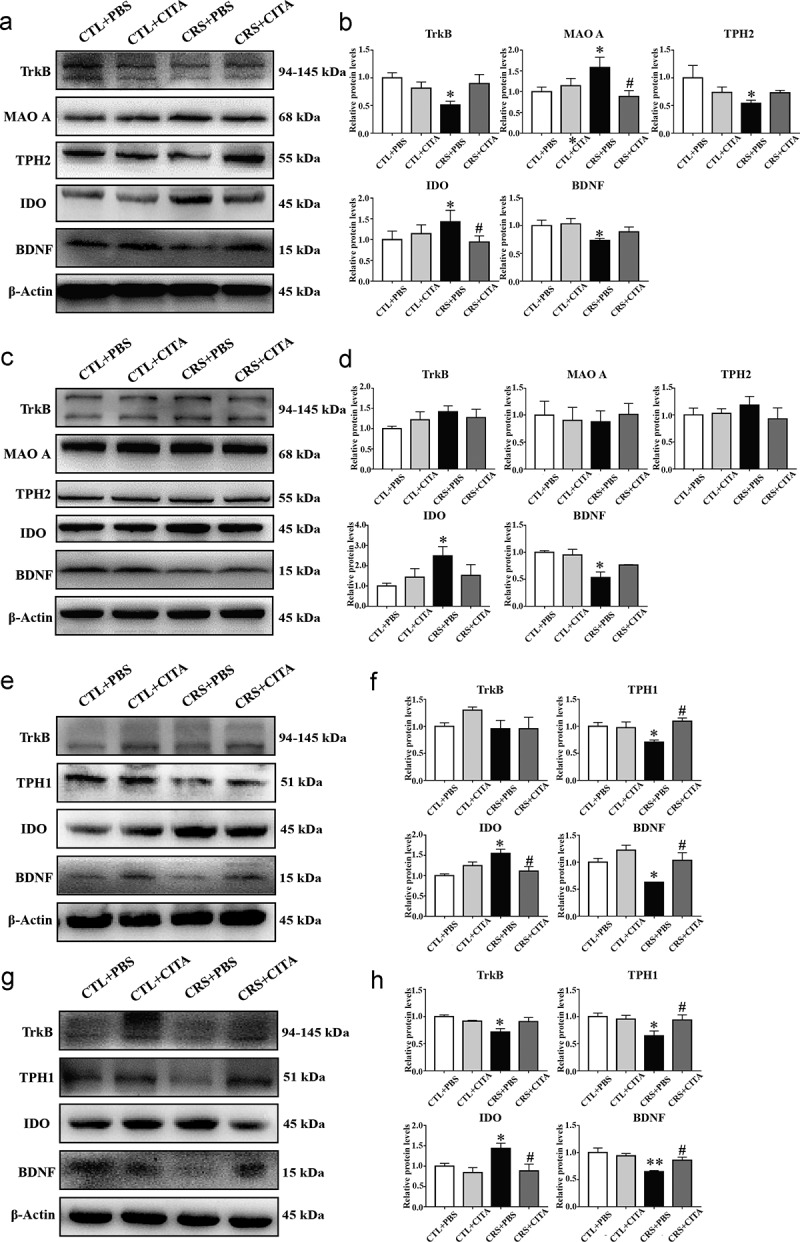
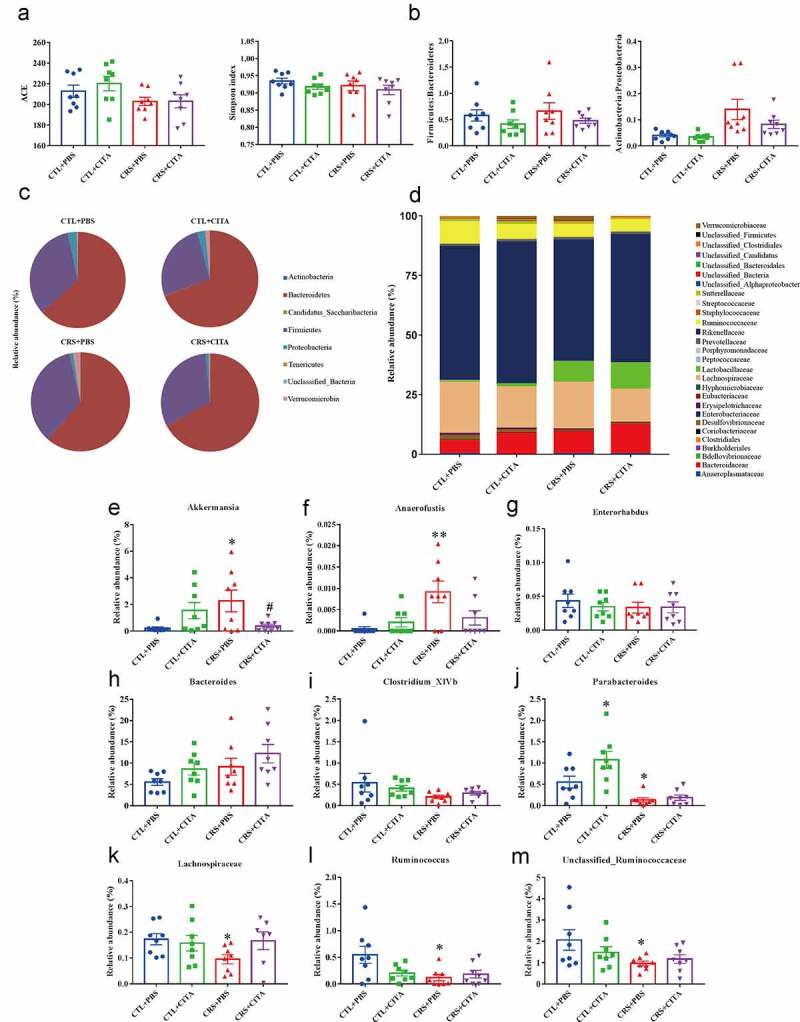
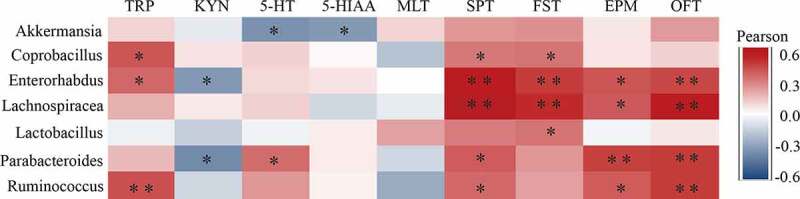
Emerging evidence suggests that the gut microbiota may interact with the host brain and play pivotal roles in the pathogenesis of neuropsychiatric disorders. However, the mechanism underlying reciprocal interactions along the microbiota-gut-brain axis in depression remains unclear. In this study, a murine model of chronic restraint stress (CRS) was established to investigate the metabolic signaling of tryptophan (Trp) neurotransmission at the intestinal and central levels in depression. The results showed that CRS mice displayed depression- and anxiety-like behaviors. Additionally, kynurenine (Kyn) and its metabolites, an important Trp metabolic pathway, were strongly activated in the brain. Intriguingly, the Kyn toxic signaling was exacerbated in the gut, especially in the colon. Indoleamine 2,3-dioxygenase (IDO), a rate-limiting enzyme responsible for Kyn metabolic pathway initiation, was significantly upregulated in the brain and gut in CRS mice compared with control mice, promoting transfer of Trp metabolic pathway to Kyn signaling. Additionally, administration of IDO inhibitor, 1-methyl-tryptophan (1-MT), partially rescued CRS-induced depression- and anxiety-like changes. Moreover, the enhanced intestinal permeability mediated by CRS allowed toxic metabolites to “leak” into the bloodstream. The microbiome profiles of CRS mice displayed obviously altered taxonomic composition and negative correlations were observed between Enterorhabdus, Parabacteroides and Kyn levels in the brain. Reciprocal crosstalk between the brain and gut was further validated by citalopram treatment, IDO inhibitor and microbiota intervention, which counteracted depression-like behavior, Kyn metabolic signaling and microbiota composition in CRS mice. Meanwhile, Parabacteroides treatment affected Trp metabolism in mouse hippocampus, manifesting as elevated concentration of 5-HT as well as ratio of 5-HT to Trp. These results suggest that long-term stress disrupts Kyn metabolism and endocrine function along the gut-brain axis, accompanied by the disrupted homeostasis of certain microbiota, which collectively contribute to the development of depression-like behavior.
Overview
The claims and statistics of this paper haven’t been checked yet.
Free: it reads the open-access text and checks the first 5 claims that cite a source we can check. Create a free account to check every claim.
Integrity signals
Registry
Cites
Statistics
Figures
Verification
Claims the paper makes
The claims and statistics of this paper haven’t been checked yet.
Free: it reads the open-access text and checks the first 5 claims that cite a source we can check. Create a free account to check every claim.
Claims other papers make about this one
Each is checked against this paper’s own text: does it say what the citing paper says it does?
The source backs part of the claim, not all of it — or backs it for a different population, condition or comparison.
In the citing paper
“more than 95% of TRP is metabolized to kynurenine (KYN) and its breakdown products, with only a small portion of TRP being converted to 5-HT. 235”
From Major depressive disorder: hypothesis, mechanism, prevention and treatment (2024) · cites this paper as [235]
Experimental — accuracy not yet measured
Self-check
Percentages, sums and reported differences re-computed from the paper’s own numbers.
The self-check needs the paper’s full text.
Citations
Cites
A human gut microbial gene catalogue established by metagenomic sequencing
MetaHIT Consortium, Qin, J., Li, R., Raes, J., Arumugam, M., Burgdorf, K. S., Manichanh, C., Nielsen, T., Pons, N., Levenez, F., et al. (2010) · Nature · doi:10.1038/nature08821 · Cited by 11,624 · cited 1×
“Furthermore, Ruminococcus, a very common species found in approximately 90% of adults, showed a strong positive correlation with Trp in the PFC, suggesting the potential effects on Trp metabolism along the gut-brain axis in the pathogenesis of depression.(45,46) More strikingly, Lactobacillus, many strains of which ha…”
BackgroundSelf-citationWhiteford, H. A., Degenhardt, L., Rehm, J., Baxter, A. J., Ferrari, A. J., Erskine, H. E., Charlson, F. J., Norman, R. E., Flaxman, A. D., Johns, N., et al. (2013) · The Lancet · doi:10.1016/s0140-6736(13)61611-6 · Cited by 6,006
Mind-altering microorganisms: the impact of the gut microbiota on brain and behaviour
Cryan, J. F., & Dinan, T. G. (2012) · Nature Reviews Neuroscience · doi:10.1038/nrn3346 · Cited by 4,572
Bravo, J. A., Forsythe, P., Chew, M. V., Escaravage, E., Savignac, H. M., Dinan, T. G., Bienenstock, J., & Cryan, J. F. (2011) · Proceedings of the National Academy of Sciences · doi:10.1073/pnas.1102999108 · Cited by 3,888
Indigenous bacteria from the gut microbiota regulate host serotonin biosynthesis
Yano, J. M., Yu, K., Donaldson, G. P., Shastri, G. G., Ann, P., Ma, L., Nagler, C. R., Ismagilov, R. F., Mazmanian, S. K., & Hsiao, E. Y. (2015) · Cell · doi:10.1016/j.cell.2015.02.047 · Cited by 3,614 · cited 1×
“Although the bloodbrain barrier (BBB) is highly selective, Trp and Kyn can directly cross it to exert notable effects on the homeostasis of neurotransmitters.(31,32) In fact, the intestinal Kyn can directly cross the BBB to participate in the CNS synthesis of neuroactive metabolites.”
Gut Microbiota Regulation of Tryptophan Metabolism in Health and Disease
Agus, A., Planchais, J., & Sokol, H. (2018) · Cell Host & Microbe · doi:10.1016/j.chom.2018.05.003 · Cited by 3,180 · cited 1×
“5-HT is mainly located in the gastrointestinal tract and brain, with a few circulating in peripheral blood.(9) The pathophysiology of depression has been closely linked to low levels of 5-HT.”
BackgroundGut–brain axis: How the microbiome influences anxiety and depression
Foster, J. A., & McVey Neufeld, K.-A. (2013) · Trends in Neurosciences · doi:10.1016/j.tins.2013.01.005 · Cited by 2,460 · cited 1×
“Additionally, the translocation of pro-inflammatory mediators (for example, lipopolysaccharide from gram-negative gut bacteria) and the Kyn metabolites pointed out in our study into the peripheral circulation (also called “leaky gut”) and further in the brain through the gut-brain network may play a role in the pathop…”
BackgroundGrand challenges in global mental health
Collins, P. Y., Patel, V., Joestl, S. S., March, D., Insel, T. R., Daar, A. S., Bordin, I. A., Costello, E. J., Durkin, M., Fairburn, C., et al. (2011) · Nature · doi:10.1038/475027a · Cited by 2,043
Clarke, G., Grenham, S., Scully, P., Fitzgerald, P., Moloney, R. D., Shanahan, F., Dinan, T. G., & Cryan, J. F. (2013) · Molecular Psychiatry · doi:10.1038/mp.2012.77 · Cited by 1,893 · cited 1×
“Although the bloodbrain barrier (BBB) is highly selective, Trp and Kyn can directly cross it to exert notable effects on the homeostasis of neurotransmitters.(31,32) In fact, the intestinal Kyn can directly cross the BBB to participate in the CNS synthesis of neuroactive metabolites.”
BackgroundBercik, P., Denou, E., Collins, J., Jackson, W., Lu, J., Jury, J., Deng, Y., Blennerhassett, P., Macri, J., McCoy, K. D., et al. (2011) · Gastroenterology · doi:10.1053/j.gastro.2011.04.052 · Cited by 1,748
Self-citation
Cited by
Items 201–300 of 364
B vitamins as adjunct therapies for depressive disorder
Zheng, Z.-Q., Shen, L., Zhao, L., & Ji, H. (2025) · Trends in Endocrinology and Metabolism · doi:10.1016/j.tem.2025.04.007 · Cited by 7
Barrera-Conde, M., Korchevaya, E., Kossatz, E., Veza-Estévez, E., Pujadas, M., Alechaga, É., Nebot, P., Pozo, Ó. J., de la Torre, R., Pizarro, N., et al. (2025) · Gut Microbes · doi:10.1080/19490976.2025.2551104 · Cited by 5
Tang, X., Wu, J., Hu, Z., Tang, M., Chen, F., Yao, Y., Chen, G., Xiong, X., Zhou, B., Gao, Y., et al. (2025) · The Innovation Life · doi:10.59717/j.xinn-life.2026.100177 · Cited by 6
The gut-brain axis in diabetic neuropathy, cognitive impairment, and emotional disorders
Yu, X., Zhang, K., Kan, C., Ma, Y., Sheng, S., Zheng, T., & Sun, X. (2026) · Neuroscience · doi:10.1016/j.neuroscience.2026.02.006 · Cited by 5
Letenneur, V., Monnoye, M., Philippe, C., Holowacz, S., Rabot, S., Lepage, P., Jacouton, E., & Naudon, L. (2023) · Nutrients · doi:10.3390/nu15214635 · Cited by 7
Pérez, S. E. M., Lah, H. A. L. A., García, N. H., Carreño, U. A. R., & Pérez, I. M. M. (2025) · Gastrointestinal Disorders · doi:10.3390/gidisord7010005 · Cited by 8
Pesantes, N., Barberá, A., Pérez-Rocher, B., Artacho, A., Vargas, S. L., Moyá, A., & Ruiz‐Ruiz, S. (2023) · Frontiers in Microbiology · doi:10.3389/fmicb.2023.1094071 · Cited by 7
Jia, L., Jian, L., Jin, S. K., Manshu, Z., Yajie, J., & Yuhong, W. (2022) · Digital Chinese Medicine · doi:10.1016/j.dcmed.2022.06.010 · Cited by 5
Baptista, L. C. P., Zumbro, E. L., Graham, Z., Hernandez, A. R., Buchanan, T., Sun, Y., Yang, Y., Banerjee, A., Verma, A., Li, Q., et al. (2023) · Journal of Applied Physiology · doi:10.1152/japplphysiol.00508.2022 · Cited by 5
Xu, Z., Hu, C., & Luo, Y. (2025) · Frontiers in Microbiology · doi:10.3389/fmicb.2025.1667164 · Cited by 4
Hao, W., Sun, Y.-R., Zhang, Y.-R., Wang, R.-Y.-Q., Ning, W., Wang, L., Liu, D.-D., Li, Y., Huang, J., & Chen, J. (2025) · Chinese Medicine · doi:10.1186/s13020-025-01212-z · Cited by 7
Gong, Z., Yang, J., Wang, Y., Liang, W., Luo, S., Li, X., & Yue, G. (2025) · Scientific Reports · doi:10.1038/s41598-025-27535-3 · Cited by 4
Hou, S., Ning, T., Liu, S., Yang, X., Ye, H., Zhou, Y., Wang, C., Zhu, J., Lu, S., Zhang, N., et al. (2026) · Gut Microbes · doi:10.1080/19490976.2026.2620124 · Cited by 4
Gut microbiota-derived indole metabolites in depression: mechanisms and therapeutic potential
Wang, X., Liu, R., Liu, J., Lin, Y., & Zhou, M. (2026) · European Journal of Pharmacology · doi:10.1016/j.ejphar.2026.178720 · Cited by 5
Self-citationLiu, Y.-E., Zhao, Z., He, H., Li, L., Xiao, C., Zhou, T., You, Z., & Zhang, J. (2024) · Frontiers in Microbiology · doi:10.3389/fmicb.2024.1381423 · Cited by 9
Investigating acupuncture therapy in depression: mechanisms of synaptic plasticity regulation
Si, Y., Ma, W., Zhang, Q., Zhang, Y., An, J., Zhang, M., Fu, Y., Yu, Y., Zhang, H., Fang, Y., et al. (2025) · Neuroscience · doi:10.1016/j.neuroscience.2025.06.005 · Cited by 6
Unveiling the enigma of anxiety disorders and depression: from pathogenesis to treatment
Pan, H., Xia, T., Zhang, Y., Zhang, H., Xu, M., Guo, J., Liu, Y., Bai, X.-Y., Liu, Q., Liu, W.-Z., et al. (2025) · Science China Life Sciences · doi:10.1007/s11427-025-3024-y · Cited by 8
Self-citationDietary Habits and Gut Microbiome: An Influence on Gut Brain Axis
Yadav, G. V. (2023) · doi:10.37191/mapsci-jidm-1(3)-014 · Cited by 4
Alterations in the “Gut–Liver Axis” on Rats with Immunological Hepatic Fibrosis
Qi, Z., Qi, X., Xu, Y., Sun, H., Li, D., Liu, J., Cong, M., & Liu, T. (2023) · Journal of Immunology Research · doi:10.1155/2023/5577850 · Cited by 4
Zhou, L., Wu, Z., Li, Y., Lin, S., Xiao, L., Wang, H., & Wang, G. (2024) · Neurochemical Research · doi:10.1007/s11064-024-04231-8 · Cited by 4
Zhang, Y., Luo, W., Zhao, M., Li, Y., & Wu, X. (2025) · The International Journal of Artificial Organs · doi:10.1177/03913988251313881 · Cited by 4
The Microbiome Connection: A Common Pathway Linking Cancer and Heart Failure
PARASKEVAIDIS, I. A., Tsougos, E., & Kourek, C. (2025) · Biomedicines · doi:10.3390/biomedicines13061297 · Cited by 5
Gut Feelings: Linking Dysbiosis to Depression—A Narrative Literature Review
Bibolar, A. C., Nechita, V.-I., Lung, F. C., Crecan-Suciu, B. D., & Paunescu, R. (2025) · Medicina · doi:10.3390/medicina61081360 · Cited by 10
Tang, Q., Li, Y., Yang, T., Fan, X., Li, L., & Hong-sheng, C. (2023) · Journal of Traditional Chinese Medical Sciences · doi:10.1016/j.jtcms.2023.12.007 · Cited by 7
A Cross Talking between the Gut Microbiota and Metabolites of Participants in a Confined Environment
Song, X., Wang, Z., Xia, Y., Chen, Z., Wang, G., Yang, Y., Zhu, B., Ai, L., Xu, H., & Wang, C. (2024) · Nutrients · doi:10.3390/nu16111761 · Cited by 6
González, C. Y., Estrada, J. A., Oros‐Pantoja, R., Colín-Ferreyra, M. D. C., Benitez-Arciniega, A. D., Piña, A. E. S., & Garrido, J. F. A. (2024) · Microorganisms · doi:10.3390/microorganisms12122542 · Cited by 4
Yang, S., Tang, Y.-H., Chen, S.-M., Liu, F., Zhang, P., Zou, W., Wang, B., & Tang, X. (2025) · Frontiers in Pharmacology · doi:10.3389/fphar.2025.1691204 · Cited by 3
Campanale, A., Mir, H.-D., Dumais, E., Inserra, A., Flamand, N., Chakravarty, M. M., Gantois, I., Siddiqui, N., Sonenberg, N., Gobbi, G., et al. (2025) · Progress in Neuro-Psychopharmacology and Biological Psychiatry · doi:10.1016/j.pnpbp.2025.111575 · Cited by 3
Zheng, Y., Qu, Y., Yao, M., Li, K., Dong, Y., Xing, X., Yang, T., Guo, H., & Huang, P. (2025) · Frontiers in Microbiology · doi:10.3389/fmicb.2025.1721497 · Cited by 4
Microbiota-metabolome interplay in depression: Metabolic insights and diagnostic potential
Zhao, M., Liu, P., Pan, M., Guo, Y., Sun, T., Ren, Z., Zheng, X., Li, M., Chao, X., Wang, J., et al. (2026) · Cell Reports Medicine · doi:10.1016/j.xcrm.2025.102574 · Cited by 8
Self-citationQi, D., Ba, M., Xuan, S., Huang, D., Yang, T., Pei, X., Lu, D., Yang, J., Zhang, W., Huang, S., et al. (2026) · Investigative Ophthalmology & Visual Science · doi:10.1167/iovs.67.2.15 · Cited by 3
Zhang, M., & Jin, W.-L. (2026) · Cancer Letters · doi:10.1016/j.canlet.2026.218351 · Cited by 4
Gut microbiota in health and disease
Li, Y. N., Xiao, X., Jiang, X., Li, X., WANG, W., & Lin, R. (2026) · Molecular Biomedicine · doi:10.1186/s43556-026-00512-6 · Cited by 8
Wu, C., Dou, J., Song, X., Yang, F., Liu, X., Song, W., & Zhang, X. (2025) · Frontiers in Pharmacology · doi:10.3389/fphar.2025.1572007 · Cited by 7
Fröbel, D., Stanke, D., Langner, M., Žygienė, G., Bechmann, N., & Peitzsch, M. (2023) · Journal of Chromatography B · doi:10.1016/j.jchromb.2023.123870 · Cited by 4
Chronic stress induces Alzheimer’s disease-like pathologies through DNA damage-Chk1-CIP2A signaling
Wang, Z., Zhang, L., Yang, J., Zeng, Y., Su, C., Yao, M., Zhang, H., Hu, W., Liu, Y., Lai, Y., et al. (2024) · Aging · doi:10.18632/aging.205862 · Cited by 3
Dong, Z., Han, K. Q., Xie, Q., Lin, C., Shen, X., Hao, Y., Li, J., Xu, H., He, L., Yu, T., et al. (2024) · Journal of Affective Disorders · doi:10.1016/j.jad.2024.07.106 · Cited by 4
Bibliometric analysis of research on digestive system tumors and depression
Qu, Y., Nie, D., Song, Y., Cai, X., Gong, Y., Chen, S., Ye, J., & Li, J. (2024) · Frontiers in Psychology · doi:10.3389/fpsyg.2024.1414528 · Cited by 4
Chen, P., Yang, L., Li, X., Li, J., Liu, P., Zhang, X., Ma, X., Zhu, Y., Zhang, C., Yang, P., et al. (2025) · Journal of Ethnopharmacology · doi:10.1016/j.jep.2025.119897 · Cited by 4
Ala, M., Khoshdel, M. R. F., Jafari, R. M., Sadrkhanloo, M., Goudarzi, S., Soleimani, M. A., & Dehpour, A. R. (2023) · Pharmacological Reports · doi:10.1007/s43440-023-00470-8 · Cited by 4
Xia, D., Xu, L., Cheng, X., Li, C., Chen, S., & Zhang, Y. (2024) · African Journal of Reproductive Health · doi:10.29063/ajrh2024/v28i12.14 · Cited by 2
Chen, L., Li, J., Zhang, W., & Wang, J. (2025) · Biology · doi:10.3390/biology14050488 · Cited by 3
Self-citationFan, Z., Li, C., Sun, Q., Luo, Y., Lin, H., Cong, B., & Huang, P. (2025) · Spectrochimica Acta Part A Molecular and Biomolecular Spectroscopy · doi:10.1016/j.saa.2025.126379 · Cited by 2
Xu, J.-G., Yuan, Y., Ma, H., Huang, S., Zhu, S.-L., Li, T.-T., Wang, X., Shen, G.-M., & Wang, H. (2025) · World Journal of Psychiatry · doi:10.5498/wjp.v15.i8.107342 · Cited by 3
Yang, L., Chen, H., Zeng, M., Lu, Y., Chen, X., Cao, Z., Zhong, F., Yang, X., Shen, A., Su, Y., et al. (2025) · Frontiers in Immunology · doi:10.3389/fimmu.2025.1669845 · Cited by 4
Estrogenic Effect of Probiotics on Anxiety and Depression: A Narrative Review
Rosas-Sánchez, G. U., Germán-Ponciano, L. J., Rodríguez‐Landa, J. F., Bonilla‐Jaime, H., Limón‐Morales, O., García-Ríos, R. I., Muñoz‐Carrillo, J. L., Gutiérrez-Coronado, O., Villalobos‐Gutiérrez, P. T., & Soria-Fregozo, C. (2025) · International Journal of Molecular Sciences · doi:10.3390/ijms26209948 · Cited by 4
Zhao, X., & Ren, W. (2025) · Neuroscience & Biobehavioral Reviews · doi:10.1016/j.neubiorev.2025.106452 · Cited by 4
Fan, X., Wang, Z., Sun, L., Qin, Y., Liu, Y., Wu, S., & Du, L. (2025) · Molecular Neurobiology · doi:10.1007/s12035-025-05527-8 · Cited by 3
Exploring the Animal Models of Gastrointestinal and Emotional Comorbidity
Wang, Y., Kong, X., Ye, X. F., Pu, S., Ren, X., Huang, Q., Lu, Y., & Wang, H. (2025) · Brain and Behavior · doi:10.1002/brb3.71135 · Cited by 2
Nutritional modulation of biochemical pathways in stress response: A comprehensive review
Gometi, S. A., Ikpahwore, D. O., Evuen, U. F., Omo-Okoroh, M. O., Otovbo, E. J., Okwuenu, P. C., Isoje, A. O., & Onosakponome, I. (2026) · Food and Humanity · doi:10.1016/j.foohum.2026.101017 · Cited by 3
Ma, D., Yang, H., Zhao, M., Luo, Z., Teng, R., Huang, X., Liu, T., Lv, S., & Wang, M. (2026) · Frontiers in Pharmacology · doi:10.3389/fphar.2026.1681709 · Cited by 4
Li, C., Ma, J., Huang, G., Chen, B., Chengwei, H. E., & Wu, R. (2026) · Molecular Nutrition & Food Research · doi:10.1002/mnfr.70388 · Cited by 2
Pancreas-brain axis: exploring the pathogenic mechanisms of pancreatic encephalopathy
Dai, N., Geng, Z., Wang, J., Bu, X., Gong, M.-Y., Qin, C., Zhang, Y., Fu, X.-Y., & Fu, B. (2026) · International Immunopharmacology · doi:10.1016/j.intimp.2026.116332 · Cited by 3
Self-citationLinking the relationship between drug-induced osteoporosis and the gut microbiota
Martiniaková, M., Šarocká, A., Pénzes, N., Mondočková, V., Ševčíková, A., Čierniková, S., Kováčová, V., Bíro, R., Folwarczna, J., & Omelka, R. (2026) · Frontiers in Endocrinology · doi:10.3389/fendo.2026.1818207 · Cited by 2
Hao, L., Li, Z., Qu, Y.-N., Zhao, F. J., Lu, S., Li, B., Zhang, H., & Wang, H. (2026) · Pharmacological Research · doi:10.1016/j.phrs.2026.108284 · Cited by 2
Torraville, S. E., Flynn, C. M., Kendall, T. L., & Yuan, Q. (2023) · Biomedicines · doi:10.3390/biomedicines11071884 · Cited by 4
Zheng, X., Jia, J., He, X., Zhou, C., Shao, Y.-T., Li, B., Lv, G., & Chen, S. (2024) · Journal of Functional Foods · doi:10.1016/j.jff.2024.106275 · Cited by 2
Research Progress of Tryptophan and Its Metabolites in the Microbial-Gut-Brain Axis
唐, 婕. (2024) · Advances in Clinical Medicine · doi:10.12677/acm.2024.1461901 · Cited by 2
Saengmearnuparp, T., Pintana, H., Apaijai, N., Chunchai, T., Thonusin, C., Kongkaew, A., Lojanapiwat, B., Chattipakorn, N., & Chattipakorn, S. C. (2024) · Behavioural Brain Research · doi:10.1016/j.bbr.2024.115155 · Cited by 3
Wang, Y., Guo, C., Zang, B., Wang, P., Yang, C., Shi, R., Kong, Y., Sui, A., Li, S., & Lin, Y. (2025) · Journal of Affective Disorders · doi:10.1016/j.jad.2025.01.104 · Cited by 2
Zhang, Y., Hu, T., Wang, X., Sun, N., Cai, Q., Kim, H. Y., Fan, Y., Liu, D., & Guan, X. (2025) · The FASEB Journal · doi:10.1096/fj.202402839r · Cited by 3
Wang, T., Gao, H., He, C., Gao, L., Wang, B., Hua, R., Du, Y., Liang, C., Xin, S., Shang, H., et al. (2022) · Translational research · doi:10.1016/j.trsl.2022.10.006 · Cited by 2
Huang, Y., Luo, Y., Tian, S.-N., Xie, M., Li, L., Jiang, M.-X., & Yuan, Z. (2024) · Food Science and Human Wellness · doi:10.26599/fshw.2024.9250184 · Cited by 1
Alterations in gut microbiota and metabolites contribute to postoperative sleep disturbances
Zhong, H., Jiang, M., Yuan, K., Sheng, F., Xu, X., Cui, Y., Sun, X.-J., & Tan, W. (2025) · Animal Models and Experimental Medicine · doi:10.1002/ame2.12557 · Cited by 1
The role of microbiome in gut-brain-axis dysbiosis causing depression: From mechanisms to treatment
Mi, J., Morys, J., Nowacka-Chmielewska, M. M., & Burek, M. (2025) · International review of neurobiology · doi:10.1016/bs.irn.2025.03.006 · Cited by 1
Zheng, T.-Z., Xu, J., Li, X., Wei, C., Liang, X., Huang, Q., Wang, Y., & Yuan, C. (2025) · Physiology & Behavior · doi:10.1016/j.physbeh.2025.114944 · Cited by 2
Li, H., Wang, Z., He, S., Zhao, X., Wu, Q., Sun, Y., Fan, Y., Hu, X., Tian, Z., & Zhang, S. (2025) · Microbiology Spectrum · doi:10.1128/spectrum.02302-24 · Cited by 4
Cai, Y., Chen, Y., Gong, X., Chen, Y., Qin, W., & Zhang, X. (2025) · Journal of the Science of Food and Agriculture · doi:10.1002/jsfa.70007 · Cited by 2
Effects of psychosocial stress on laryngeal microbiology and epithelial barrier integrity
Venkatraman, A., Jacobs, K., Binns, J., An, R., Rey, F. E., & Thibeault, S. L. (2025) · Scientific Reports · doi:10.1038/s41598-025-10170-3 · Cited by 2
Castro‐Zavala, A., Nieto-Nieves, A. E., Melgar‐Locatelli, S., Medina-Rodríguez, L., Mañas‐Padilla, M. C., & Castilla‐Ortega, E. (2025) · Behavioural Brain Research · doi:10.1016/j.bbr.2025.115772 · Cited by 3
Gut microbiota: contributing to high CVD prevalence in people living with schizophrenia?
Fu, C., Zhang, X., Qian, Y., Wang, X., Chen, X., Zeng, J. S., Zhang, N., Wang, L., Li, M., Li, Z., et al. (2025) · European Archives of Psychiatry and Clinical Neuroscience · doi:10.1007/s00406-025-02103-y · Cited by 1
Sun, D., Zhao, F., Wang, H., Du, G., Yan, B., & Yu, W. (2025) · Integrative Medicine in Nephrology and Andrology · doi:10.1097/imna-d-24-00065 · Cited by 2
Yu, B.-C., Shi, M.-L., Su, J., Yu, J., Zhou, H., Lin, Q., Chen, S., Lv, G., & Yan, M. (2025) · Journal of Agriculture and Food Research · doi:10.1016/j.jafr.2025.102413 · Cited by 1
Self-citationHe, W., Xu, C., Huang, Y., Yang, Z., & Wang, N. (2025) · Journal of Visualized Experiments · doi:10.3791/69153 · Cited by 1
Wei, Y., Song, X., Jia, Z., Liu, X., Chen, X., Zhan, X., Xue, M., & Liao, L. (2025) · Neuropharmacology · doi:10.1016/j.neuropharm.2025.110748 · Cited by 4
Yang, J., Wang, Y., Wang, S., Liu, Z., Chen, X., Jia, R., Wang, J., Wang, F., Qin, Y., Tang, L., et al. (2025) · Fitoterapia · doi:10.1016/j.fitote.2025.106960 · Cited by 2
Self-citationImpact of Sex, Gonadectomy, and Repeated Restraint Stress on Gut Microbiome in Mice
Mekadim, C., Mrázek, J., Vodička, M., Ergang, P., Fliegerova, K. O., Mahayri, T. M., Chawengsaksophak, K., & Pácha, J. (2025) · Molecular Neurobiology · doi:10.1007/s12035-025-05305-6 · Cited by 1
Tiwari, S., & Paramanik, V. (2025) · Metabolic Brain Disease · doi:10.1007/s11011-025-01748-x · Cited by 1
Li, K., Kong, Y., & Chen, T. (2025) · Microbial Cell Factories · doi:10.1186/s12934-025-02901-y · Cited by 1
HS-Associated Pasteurella multocida Infection Disrupts Gut Microbiota and Metabolism in Mice
Li, K., Jin, C., Yuan, H., Rahim, M. F., Luosong, X., An, T., & Li, J. (2025) · Microorganisms · doi:10.3390/microorganisms14010066 · Cited by 1
Zhao, S.-X., Han, T., Bi, W.-Z., Fei, L.-L., Han, L.-L., Wang, Y.-L., Ping, Z.-G., Wang, C.-J., Hao, C.-F., & Xin, Y.-J. (2026) · World Journal of Psychiatry · doi:10.5498/wjp.v16.i1.111778 · Cited by 4
Du, X., Zhang, J., Wang, Q., Zhou, D., Zhang, W., Song, L., Cui, M., Ge, T., Zhai, X., Yu, Y., et al. (2026) · Communications Biology · doi:10.1038/s42003-026-09574-2 · Cited by 1
The bridging role of gut microbiota-derived metabolites in neuropathic pain comorbid with anxiety
Bian, J., & 白金柱 (2026) · Frontiers in Neuroscience · doi:10.3389/fnins.2026.1752839 · Cited by 3
Chiang, P.-Y., Liao, C.-Y., Wu, C.-Y., Kao, W., Lin, Y.-T., Wei, P.-H., Tung, T.-H., & Huang, S.-Y. (2026) · Journal of Agriculture and Food Research · doi:10.1016/j.jafr.2026.102747 · Cited by 3
Zhang, Y., Gu, K., Xin, L., Xia, Y., Yang, G., Cai, J., He, Z., Qin, L., & Wan, Z. (2026) · npj Science of Food · doi:10.1038/s41538-026-00789-5 · Cited by 3
Li, H., Luo, X., Li, F., Ye, X., Yu, M., & Zou, Z. (2026) · Food Research International · doi:10.1016/j.foodres.2026.118879 · Cited by 2
Physiology of the kynurenine pathway and its implications in CNS disorders
Zhang, Q., Tang, Y.-H., & Tang, X.-Q. (2026) · Reviews in the Neurosciences · doi:10.1515/revneuro-2025-0130 · Cited by 1
Predicting Substance Use in Young Adults: The Role of Childhood Adversity
Sinkevicius, L. V., Sakalauskaitė, S., Poškus, M. S., & Serapinas, D. (2026) · Medicina · doi:10.3390/medicina62040772 · Cited by 1
Yan, H., Zhang, M., Gui, C., Huang, H., Wu, W., Chen, Z., Wu, Y., Chen, S., Huang, H., Lin, H., et al. (2026) · Microorganisms · doi:10.3390/microorganisms14040940 · Cited by 1
Patel, R. A., & Harke, S. N. (2026) · The World Journal of Biological Psychiatry · doi:10.1080/15622975.2026.2660311 · Cited by 1
Nieto, Á. A. V., Díaz, A. H., Millán, M. H., Sagredo, D., & Gacitúa, J. A. (2026) · The Journal of Nutritional Biochemistry · doi:10.1016/j.jnutbio.2026.110424 · Cited by 3
Zhang, Y.-F., Li, Y.-Y., & Jin, J. (2026) · Seminars in Immunology · doi:10.1016/j.smim.2026.102038 · Cited by 1
The architecture of gut microecological networks and the governance of host metabolic homeostasis
Chen, X. G., You, W., & Zhou, S. H. E. N. G. H. (2026) · Mycology: An International Journal on Fungal Biology · doi:10.1080/21501203.2026.2684091 · Cited by 1
Ma, P.-J., Man, Y., Shen, F.-Q., Li, M., Wang, H., Ren, F.-L., Ye, J.-Y., Pan, Y. P., & Wang, Y. (2026) · Comprehensive physiology · doi:10.1002/cph4.70207 · Cited by 2
Tang, Y., Gong, X., Dai, M., Wang, Z., & Shi, D. (2026) · Neurobiology of Stress · doi:10.1016/j.ynstr.2026.100833 · Cited by 1
Zhang, Y., Li, C., Wu, Z., Cao, Y., & Shi, Z. M. (2026) · Epidemiology and Psychiatric Sciences · doi:10.1017/s2045796026100729 · Cited by 1
Neves, L. B. M., Daniel Domingues, S., Jr., Baldessarini, B. L., Laino, P. H., & Lima, B. C. (2026) · Progress in Neuro-Psychopharmacology and Biological Psychiatry · doi:10.1016/j.pnpbp.2026.111860 · Cited by 1
Liu, M., Hu, Y., Xu, M.-D., Chen, Y., & Meng, Q.-B. (2026) · Food & medicine homology. · doi:10.26599/fmh.2027.9420146 · Cited by 8
Zhao, S., Song, Z., Zhang, J., Lou, J., Zhang, S., Liu, B., Wei, Y., Qiu, F., Jiang, T., & Zhang, G. (2026) · Advanced Science · doi:10.1002/advs.77612 · Cited by 1
Peterson, C. T., Iablokov, S. N., Rodionov, D. A., & Peterson, S. N. (2023) · Microorganisms · doi:10.3390/microorganisms11081979 · Cited by 3
Metadata
- Authors
- Deng, Y., Zhou, M., Wang, J., Yao, J., Yu, J., Liu, W., Wu, L., Wang, J., & Gao, R.
- Affiliations
- Nanjing Medical University (CN)
- Department of Physical and Chemical Inspection, Wuxi Center for Disease Control and Prevention
- Corresponding author
- Wang, Jun
- Gao, Rong
- Venue
- Gut Microbes
- Publisher
- Informa UK Limited
- Published
- 2021-01-01
- Volume
- 13
- Issue
- 1
- Pages
- 1-16
- ISSN
- 1949-0976 (ISSN-L)
- 1949-0984
- PMC
- PMC7872056
- OpenAlex
- W3127728724
- Cited by
- 362
- References
- 52
- Citations by year
- 2026: 82 · 2025: 99 · 2024: 69 · 2023: 64 · 2022: 39 · 2021: 9
- FWCI
- 15.14
- Type
- journal article
- Language
- en
- Open access
- gold
- doi.org
- Licence
- cc-by-nc
- creativecommons.org/licenses/by-nc/4.0/ (unspecified)
- doi.org/10.1080/policies-text-data-mining (tdm)
- Locations
- Gut Microbes (publishedVersion, cc-by-nc)
- PubMed Central (publishedVersion, cc-by-nc)
- PubMed (publishedVersion)
- DOAJ (DOAJ: Directory of Open Access Journals) (submittedVersion, cc-by-sa)
- Funders
- National Natural Science Foundation of China (81773484)
- Topnotch Academic Programs Project of Jiangsu Higher Education Institutions (PPZY2015A067)
- Topics
- Life Sciences › Neuroscience › Biological Psychiatry › Tryptophan and brain disorders
- Life Sciences › Biochemistry, Genetics and Molecular Biology › Molecular Biology › Gut microbiota and health
- Life Sciences › Neuroscience › Behavioral Neuroscience › Stress Responses and Cortisol
- Keywords
- microbiota-gut-brain axis, chronic restraint stress, kynurenine pathway, tryptophan metabolism, depression, anxiety-like behavior, indoleamine 2,3-dioxygenase, 1-methyltryptophan, intestinal permeability, gut microbiota, Parabacteroides, Enterorhabdus, citalopram, serotonin, hippocampus, stress-induced depression
- MeSH terms
- Gastrointestinal Microbiome, Brain-Gut Axis, Animals, Brain, Depression, Intestines, Kynurenine, Male, Restraint, Physical, Tryptophan, Neurotransmitter Agents, Probiotics, Bacteroidetes, Indoleamine-Pyrrole 2,3,-Dioxygenase, Mice, Dysbiosis
About these checks
Registry, retraction, Cites and statistics results are computed, not judged, with one exception: a printed reference that no index lists is read once by a model before it counts as a citation error. Claims are extracted by a model and kept only when their quote appears verbatim in the text; each cited source is then checked, with a model’s help, for whether it says what the claim relies on. Those verdicts can be wrong — read the claim’s quote and the cited source before relying on one.
Statistics and arithmetic are recomputed, not judged.
Confidence bands are shown only for fields calibrated on our annotated test set. None is calibrated yet, so no band is shown.
What counts as a claim ›How we measure confidence ›How we check this ›
Are you an author, or do you see a problem with this page? Request a review
Data sources
Bibliographic data: Semantic Scholar, OpenAlex, Crossref.
Contains information from the Semantic Scholar Academic Graph Datasets, made available under the ODC Attribution License (ODC-BY 1.0).
Semantic Scholar’s data is described in: Kinney, R., et al. (2023). The Semantic Scholar Open Data Platform. arXiv:2301.10140.
