

The DOI matches its Crossref record; 154 of the 154 references it cites were found in a registry or an index.
Intestinal phages interact with bacteria and are involved in human diseases
Open accessAbstract
Phages are the most abundant and diverse biological entities on Earth and exert specific effects on bacterial hosts. The coexistence of phages and bacteria in the intestinal tract is dynamic and interdependent. Phages are involved in maintaining the stability and composition of the bacterial community, and an imbalance in phages and bacteria in the intestinal tract can cause diseases. This review elucidates interactions between phages and bacteria in the human intestinal tract and their roles in the pathogenesis and treatment of diseases. Understanding the relationship among phages, bacteria and host diseases is conducive to promoting the application of phages in the treatment of human diseases.List of abbreviations EMBL-EBI The European Bioinformatics Institute; E. coli Escherichia coli; E. faecalis Enterobacter faecalis; B. fragilis Bacteroides fragilis; B. vulgatus Bacteroides vulgatus; SaPIs Staphylococcus aureus pathogenicity islands; ARGs Antibiotic resistance genes; STEC Shiga toxigenic E. coli; Stx Shiga toxin; BLAST Basic Local Alignment Search Tool; TSST-1 Toxic shock toxin 1; RBPs Receptor-binding proteins; LPS lipopolysaccharide; OMVs Outer membrane vesicles; PT Phosphorothioate; BREX Bacteriophage exclusion; OCR Overcome classical restriction; Pgl Phage growth limitation; DISARM Defense island system associated with restrictionmodification; R-M system Restriction-modification system; BREX system Bacteriophage exclusion system; CRISPR Clustered regularly interspaced short palindromic repeats; Cas CRISPR-associated; PAMs Prospacer adjacent motifs; crRNA CRISPR RNA; SIE; OMPs; Superinfection exclusion; Outer membrane proteins; Abi Abortive infection; TA Toxin-antitoxin; TLR Toll-like receptor; APCs Antigen-presenting cells; DSS Dextran sulfate sodium; IELs Intraepithelial lymphocytes; FMT Fecal microbiota transfer; IFN-γ Interferon-gamma; IBD Inflammatory bowel disease; AgNPs Silver nanoparticles; MDSC Myeloid-derived suppressor cell; CRC Colorectal cancer; VLPs Virus-like particles; TMP Tape measure protein; PSMB4 Proteasome subunit beta type-4; ALD Alcohol-related liver disease; GVHD Graft-versus-host disease; ROS Reactive oxygen species; RA Rheumatoid arthritis; CCP Cyclic citrullinated protein; AMGs Accessory metabolic genes; T1DM Type 1 diabetes mellitus; T2DM Type 2 diabetes mellitus; SCFAs Short-chain fatty acids; GLP-1 Glucagon-like peptide-1; A. baumannii Acinetobacter baumannii; CpG Deoxycytidylinate-phosphodeoxyguanosine; PEG Polyethylene glycol; MetS Metabolic syndrome; OprM Outer membrane porin M.
Overview
The claims and statistics of this paper haven’t been checked yet.
Run the check — free, no account needed. It reads the open-access text and checks the sources it cites.
Integrity signals
Registry
Cites
Statistics
Figures
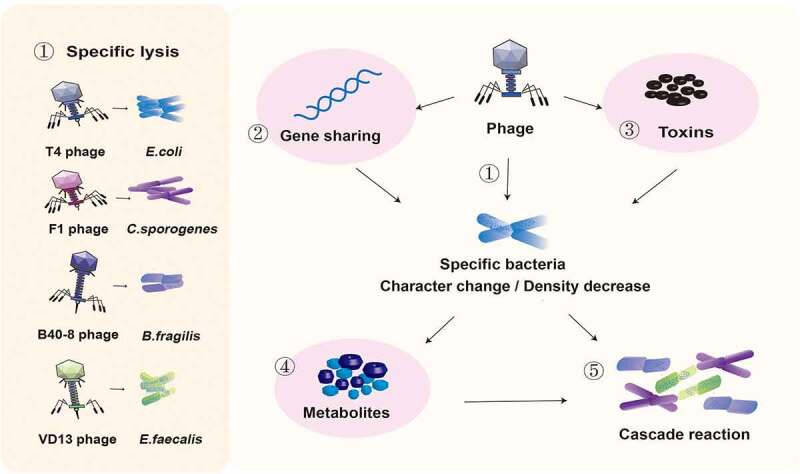
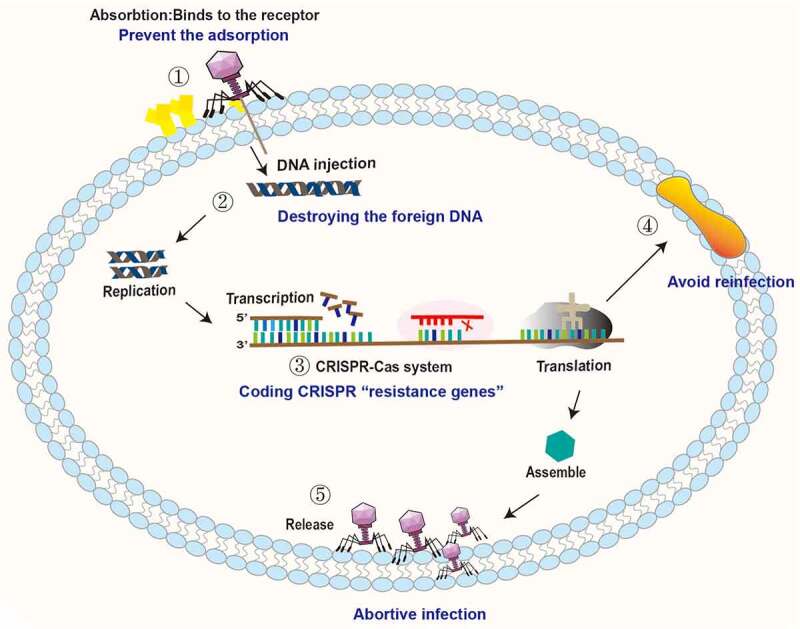
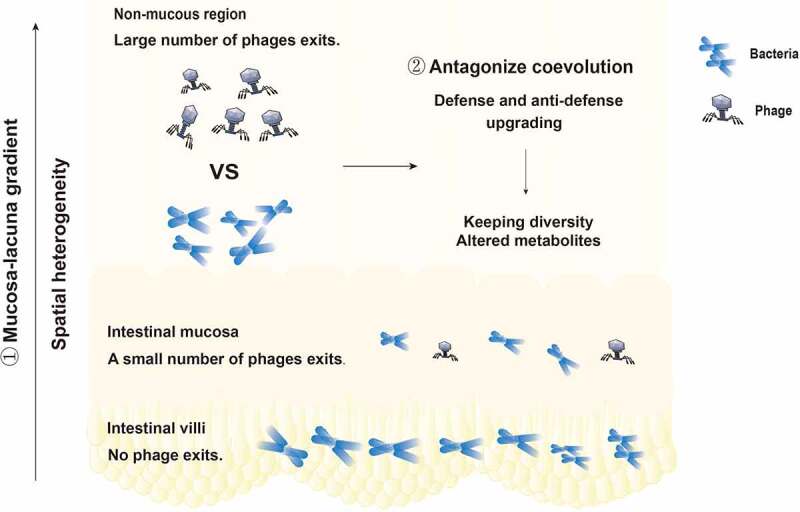
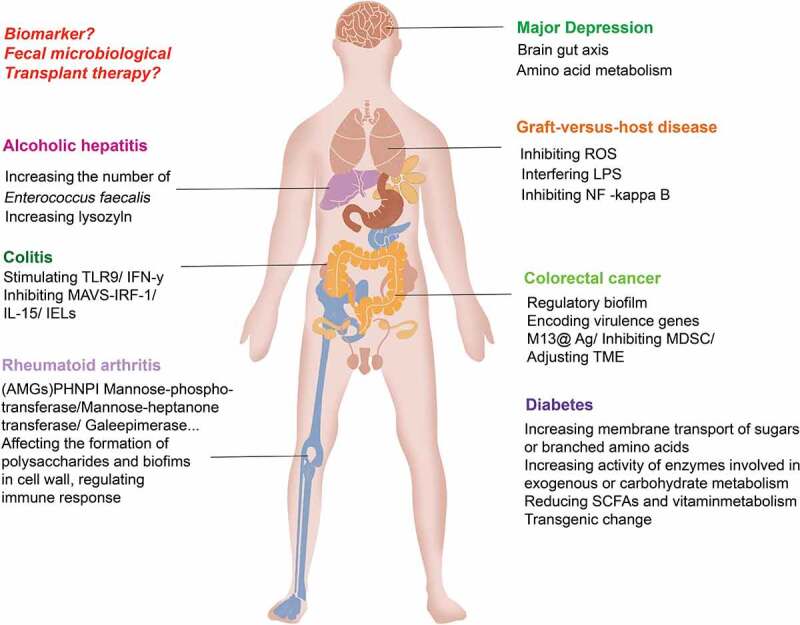
Verification
Claims the paper makes
The claims and statistics of this paper haven’t been checked yet.
Run the check — free, no account needed. It reads the open-access text and checks the sources it cites.
Claims other papers make about this one
Each is checked against this paper’s own text: does it say what the citing paper says it does?
In the citing paper
“Chronic neuroinflammation caused by immune disorders triggers the accumulation of misfolded proteins in nervous system cells and peripheral nerves (76), further leading to neuronal death (77).”
From Modulation of the gut–brain axis via the gut microbiota: a new era in treatment of amyotrophic lateral sclerosis (2023) · cites this paper as [76]
Self-check
Percentages, sums and reported differences re-computed from the paper’s own numbers.
The self-check needs the paper’s full text.
Citations
Cites
Diversity of the Human Intestinal Microbial Flora
Eckburg, P. B., Bik, E. M., Bernstein, C. N., Purdom, E., Dethlefsen, L., Sargent, M., Gill, S. R., Nelson, K. E., & Relman, D. A. (2005) · Science · doi:10.1126/science.1110591 · Cited by 7,913
A metagenome-wide association study of gut microbiota in type 2 diabetes
Qin, J., Li, Y., Cai, Z., Li, S., Zhu, J., Zhang, F., Liang, S., Zhang, W., Guan, Y., Shen, D., et al. (2012) · Nature · doi:10.1038/nature11450 · Cited by 6,762
Gut metagenome in European women with normal, impaired and diabetic glucose control
Karlsson, F. H., Tremaroli, V., Nookaew, I., Bergström, G., Behre, C. J., Fagerberg, B., Nielsen, J., & Bäckhed, F. (2013) · Nature · doi:10.1038/nature12198 · Cited by 3,115
Tolhurst, G., Heffron, H., Lam, Y. S., Parker, H. E., Habib, A. M., Diakogiannaki, E., Cameron, J., Grosse, J., Reimann, F., & Gribble, F. M. (2012) · Diabetes · doi:10.2337/db11-1019 · Cited by 2,404
Fusobacterium nucleatum infection is prevalent in human colorectal carcinoma
Castellarin, M., Warren, R. L., Freeman, J. D., Dreolini, L., Krzywinski, M., Strauss, J., Barnes, R., Watson, P., Allen-Vercoe, E., Moore, R. A., et al. (2012) · Genome Research · doi:10.1101/gr.126516.111 · Cited by 2,043
Lysogenic Conversion by a Filamentous Phage Encoding Cholera Toxin
Waldor, M. K., & Mekalanos, J. J. (1996) · Science · doi:10.1126/science.272.5270.1910 · Cited by 1,851
Disease-Specific Alterations in the Enteric Virome in Inflammatory Bowel Disease
Norman, J. M., Handley, S. A., Baldridge, M. T., Droit, L., Liu, C. Y., Keller, B. C., Kambal, A., Monaco, C. L., Zhao, G., Fleshner, P., et al. (2015) · Cell · doi:10.1016/j.cell.2015.01.002 · Cited by 1,285
Schooley, R. T., Biswas, B., Gill, J. J., Hernandez-Morales, A., Lancaster, J., Lessor, L., Barr, J. J., Reed, S. L., Rohwer, F., Benler, S., et al. (2017) · Antimicrobial Agents and Chemotherapy · doi:10.1128/aac.00954-17 · Cited by 1,254
Viruses in the faecal microbiota of monozygotic twins and their mothers
Reyes, A., Haynes, M. R., Hanson, N., Angly, F. E., Heath, A. C., Rohwer, F. L., & Gordon, J. I. (2010) · Nature · doi:10.1038/nature09199 · Cited by 1,230
Taur, Y., Jenq, R. R., Perales, M.-A., Littmann, E. R., Morjaria, S., Ling, L., No, D., Gobourne, A., Viale, A., Dahi, P. B., et al. (2014) · Blood · doi:10.1182/blood-2014-02-554725 · Cited by 885
Cited by
Sorted by citations
Items 101–124 of 124
Genetic Stability and Public Health Implications of Plasmid-Free Vibrio cholerae
Al-Safi, M. T. (2024) · Academia Open · doi:10.21070/acopen.9.2024.9348
(2024) · Elsevier eBooks · doi:10.1016/b978-0-443-23565-8.09996-8
Bactériophages et polyarthrites rhumatoïdes
Berthelot, J., & Darrieutort‐Laffite, C. (2024) · Revue du Rhumatisme · doi:10.1016/j.rhum.2024.12.008
Tang, C., Hu, W., & Liu, Y. (2025) · American Journal of Reproductive Immunology · doi:10.1111/aji.70115
Tang, C., & Hu, W. (2025) · International Journal of Gynecology & Obstetrics · doi:10.1002/ijgo.70363
What Is the Involvement of Gut Microbiome in the Pathophysiology of Diabetes?
Kiełbowski, K., Plewa, P., Zadworny, J., Stodolak, P., Jędrasiak, A., Bakinowska, E., & Pawlik, A. (2025) · Biomolecules · doi:10.3390/biom15101463 · Cited by 1
Medical ecology and network analyses for the human vaginal virome
Ma, Z. S. (2025) · Medicine in Omics · doi:10.1016/j.meomic.2025.100052
Luo, Y., Lu, Z., Yang, J., Liu, S., Zhao, W., & Jiang, X. (2025) · IEEE International Conference on Bioinformatics and Biomedicine (BIBM) · doi:10.1109/bibm66473.2025.11357039
Alkhalil, S. S. (2026) · Frontiers in Medicine · doi:10.3389/fmed.2026.1709023
Multi‐Omics Analysis of Gut Microecological Variations in Colorectal Cancer
Wu, Y., Jing, Z., Jian, C., Zhiqin, C., Xiaojian, Y., Zefeng, W., Yingchen, W., Peng, Q., & Han, S. (2026) · Environmental Microbiology · doi:10.1111/1462-2920.70292
Chaichana, N., Klaysubun, C., Konglue, S., Chema, R., Boonsan, J., Singkhamanan, K., Wonglapsuwan, M., Pomwised, R., & Surachat, K. (2026) · Applied Food Research · doi:10.1016/j.afres.2026.102572
Multi-kingdom gut microbiota analysis identifies bacterial-viral association in multiple myeloma
Liu, L., Liu, J., He, J., Xing, Y., Zhang, D., Zhang, X., Ma, C., Xu, M., Li, R., 彭苗新, et al. (2026) · Frontiers in Microbiology · doi:10.3389/fmicb.2026.1798330
Current therapeutic interventions for immune dysregulation induced by gut microbiota
Khatami, F., Karimian, S., & Mohammadipanah, F. (2026) · European journal of medical research · doi:10.1186/s40001-026-04579-3
Gençoğlu, H. S., Aydemir, E., & Ayaz, F. (2026) · Antonie van Leeuwenhoek · doi:10.1007/s10482-026-02373-z · Cited by 1
Du, M., Ying, B., 翁歆焙, Lou, Y., Ni, Q., & Zhuo, Q. (2026) · Research Square · doi:10.21203/rs.3.rs-9384036/v1
Wójcicki, M., Cieślik, M., Samborska, K., Barańska, A., & Gientka, I. (2026) · Innovative Food Science & Emerging Technologies · doi:10.1016/j.ifset.2026.104744
Lin, J., Lin, H., Zhang, Z., & Wang, H. (2026) · Frontiers in Immunology · doi:10.3389/fimmu.2026.1892843
Xiong, L., Shen, X., Xiang, Y., Sun, J., Wang, T., Zhou, Q., Xiong, K., Wang, W., Geng, J., & Ji, X. (2026) · Frontiers in Microbiology · doi:10.3389/fmicb.2026.1921205
Virobiome-mediated regulation of microbiota–gut–brain axis signaling and neuroimmune homeostasis
Afkhamian, A., Natanzi, A. S., Jafaridarabjerdi, M., Aghaei, S., Haghjou, A., Shafiei, M., Bashkandi, A. H., Shahraki, S., Reiter, R. J., Kashani, H. H., et al. (2026) · Cell Communication and Signaling · doi:10.1186/s12964-026-03067-9
Viral–Gut Microbiota Interactions: Implications for the Gut Mucosa in Inflammatory Bowel Disease
Wu, Y., Hou, L., Li, Y., Li, J., Hua, X., He, Y., Ding, S., & Fang, J. (2026) · International Journal of Molecular Sciences · doi:10.3390/ijms27198711
Ficoseco, C. A., Carrasco, N., Montemurro, M., Chieffi, D., Fadda, S., Nader-Macı́as, M. E., Fusco, V., Vignolo, G. M., & Fanelli, F. (2026) · Microorganisms · doi:10.3390/microorganisms14102270
Zhang, C., Chen, Q., Sun, Z., Wu, T., Zhang, Y., Huang, B., Huang, S., Zhang, Y., & Han, M. (2026) · Frontiers in Immunology · doi:10.3389/fimmu.2026.1828110
Le, D. T., Devkota, L., Williamson, G., Barr, J. J., Dhital, S., & Subedi, D. (2026) · Gut Microbiology · doi:10.1016/j.gutmic.2026.100022
Bacterial toxin activation and deployment: Context-dependent links to host immune remodeling
Xu, H., Li, C., Yi, X., Huang, C., Zhang, J., Li, Y., Huang, Y., Chen, J., Lu, J., Liu, B., et al. (2026) · Virulence · doi:10.1080/21505594.2026.2753301
Metadata
- Authors
- Shuwen, H., & Kefeng, D.
- Affiliations
- Key Laboratory of Cancer Prevention and Intervention, Ministry of Education, The Second Affiliated Hospital, Zhejiang University School of Medicine
- ORCID
- Shuwen, Han
- Venue
- Gut Microbes
- Publisher
- Informa UK Limited
- Published
- 2022-08-29
- Volume
- 14
- Issue
- 1
- Pages
- 2113717-2113717
- ISSN
- 1949-0976 (ISSN-L)
- 1949-0984
- PMC
- PMC9427043
- OpenAlex
- W4293469418
- Cited by
- 124
- References
- 154
- Citations by year
- 2026: 29 · 2025: 43 · 2024: 28 · 2023: 23 · 2022: 1
- FWCI
- 2.19
- Type
- journal article
- Language
- en
- Open access
- gold
- doi.org
- Licence
- Locations
- Gut Microbes (publishedVersion, cc-by)
- PubMed Central (publishedVersion, cc-by)
- PubMed (publishedVersion)
- DOAJ (DOAJ: Directory of Open Access Journals) (submittedVersion, cc-by-sa)
- Funders
- the Major Science and Technology Projects for Medical and Health Care of Zhejiang Province
- National Natural Science Foundation of China (No. 82072624)
- Topics
- Life Sciences › Immunology and Microbiology › Virology › Bacteriophages and microbial interactions
- Life Sciences › Biochemistry, Genetics and Molecular Biology › Molecular Biology › Gut microbiota and health
- Physical Sciences › Environmental Science › Water Science and Technology › Fecal contamination and water quality
- Keywords
- bacteriophage-bacteria interactions, gut microbiota, phage therapy, phage exclusion, restriction-modification systems, CRISPR-Cas, superinfection exclusion, inflammatory bowel disease, colorectal cancer, alcoholic liver disease, rheumatoid arthritis, graft-versus-host disease
- MeSH terms
- Gastrointestinal Microbiome, Bacteria, Bacteriophages, Diabetes Mellitus, Type 2, Escherichia coli, Humans, Silver, Proteasome Endopeptidase Complex, Metal Nanoparticles
About these checks
Registry, retraction, Cites and statistics results are computed, not judged, with one exception: a printed reference that no index lists is read once by a model before it counts as a citation error. Claims are extracted by a model and kept only when their quote appears verbatim in the text; each cited source is then checked, with a model’s help, for whether it says what the claim relies on. Those verdicts can be wrong — read the claim’s quote and the cited source before relying on one.
Statistics and arithmetic are recomputed, not judged.
Confidence bands are shown only for fields calibrated on our annotated test set. None is calibrated yet, so no band is shown.
What counts as a claim ›How we measure confidence ›How we check this ›
Are you an author, or do you see a problem with this page? Request a review
