

A review on modafinil: the characteristics, function, and use in critical care
Open accessThe DOI matches its Crossref record; 25 of the 25 references it cites were found in a registry or an index.
Abstract
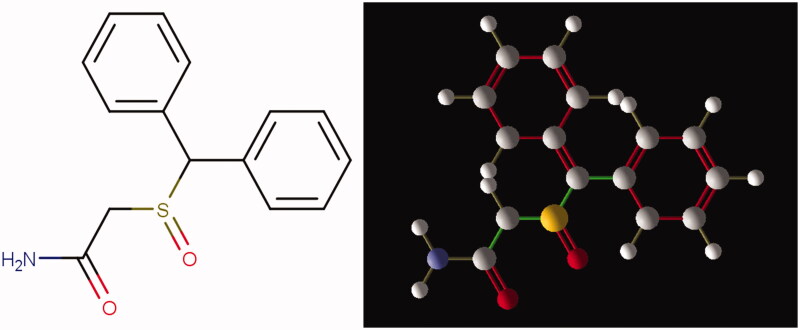
In critically ill patients, sleep is generally interrupted. Some factors that lead to such sleep interruption include the intensive care unit (ICU) circumstance, primary medical disease itself, mental stress, and impacts of many drugs and other managements utilized to treat ICU patients. Another illness that may cause profound daytime somnolence is narcolepsy. Modafinil, methylphenidate and amphetamines are used as stimulants to treat symptoms, such as extreme daytime sleepiness, cataplexy and nocturnal sleep disruption. Such stimulants can increase awareness, improve perception and thinking, as well as assist in keeping people awake. The exact mechanism of action of modafinil is unclear. In vitro studies have demonstrated that binding of modafinil to the dopamine reuptake pump can prevent the reuptake of dopamine, resulting in a boost in extracellular dopamine. Modafinil is a racemic compound containing l and d isomers. Peak plasma concentrations of the drug occur at 2–4 h after administration; therefore, the absorption of modafinil is considered fast. Modafinil is properly distributed in tissues by binding to plasma proteins moderately. Despite the likely role of modafinil in improving cognition and arousal in critically ill patients, the available data on the use of modafinil in the ICU setting is limited. The aim of the study was to review the novel usage of modafinil for alleviation of fatigue, excessive daytime somnolence (EDS), and/or depression in critically ill patients.
Overview
The claims and statistics of this paper haven’t been checked yet.
Free: it reads the open-access text and checks the first 5 claims that cite a source we can check. Create a free account to check every claim.
Integrity signals
Registry
Cites
Statistics
Figures
Verification
Claims the paper makes
The claims and statistics of this paper haven’t been checked yet.
Free: it reads the open-access text and checks the first 5 claims that cite a source we can check. Create a free account to check every claim.
Claims other papers make about this one
Each is checked against this paper’s own text: does it say what the citing paper says it does?
The check wasn’t confident either way, so it gives no verdict — never disputed.
In the citing paper
“The desirable effects of topiramate are somewhat offset by known side effects (eg, cognitive effects, paresthesia) and variable tolerability, which can be improved by slow titration.115”
From The ASAM/AAAP Clinical Practice Guideline on the Management of Stimulant Use Disorder (2024) · cites this paper as [115]
Experimental — accuracy not yet measuredThe check wasn’t confident either way, so it gives no verdict — never disputed.
In the citing paper
“Topiramate can cause appetite suppression; this is an important consideration when treating patients who are underweight or at risk of being underweight.115”
From The ASAM/AAAP Clinical Practice Guideline on the Management of Stimulant Use Disorder (2024) · cites this paper as [115]
Experimental — accuracy not yet measuredThe check wasn’t confident either way, so it gives no verdict — never disputed.
In the citing paper
“The desirable effects of topiramate are somewhat offset by known side effects (eg, cognitive effects, paresthesia) and variable tolerability, which can be improved by slow titration.115”
From The ASAM/AAAP Clinical Practice Guideline on the Management of Stimulant Use Disorder (2024) · cites this paper as [115]
Experimental — accuracy not yet measuredThe check wasn’t confident either way, so it gives no verdict — never disputed.
In the citing paper
“In addition, topiramate can cause appetite suppression, which is an important consideration when treating patients who are underweight or at risk of being underweight.115”
From The ASAM/AAAP Clinical Practice Guideline on the Management of Stimulant Use Disorder (2024) · cites this paper as [115]
Experimental — accuracy not yet measured
Self-check
Percentages, sums and reported differences re-computed from the paper’s own numbers.
The self-check needs the paper’s full text.
Citations
Cites
Barr, J., Fraser, G. L., Puntillo, K., Ely, E. W., Gélinas, C., Dasta, J. F., Davidson, J. E., Devlin, J. W., Kress, J. P., Joffe, A. M., et al. (2013) · Critical Care Medicine · doi:10.1097/ccm.0b013e3182783b72 · Cited by 3,765
Schweickert, W. D., Pohlman, M. C., Pohlman, A. S., Nigos, C., Pawlik, A. J., Esbrook, C. L., Spears, L., Miller, M., Franczyk, M., Deprizio, D., et al. (2009) · The Lancet · doi:10.1016/s0140-6736(09)60658-9 · Cited by 3,339
Needham, D. M., Korupolu, R., Zanni, J. M., Pradhan, P., Colantuoni, E., Palmer, J. B., Brower, R. G., & Fan, E. (2010) · Archives of Physical Medicine and Rehabilitation · doi:10.1016/j.apmr.2010.01.002 · Cited by 731
Early Mobilization in the Intensive Care Unit: A Systematic Review
Adler, J., & Malone, D. (2012) · Cardiopulmonary Physical Therapy Journal · doi:10.1097/01823246-201223010-00002 · Cited by 528
Patel, J., Baldwin, J., Bunting, P., & Laha, S. (2014) · Anaesthesia · doi:10.1111/anae.12638 · Cited by 286
Delirium in the Acute Care Setting: Characteristics, Diagnosis and Treatment
Maldonado, J. R. (2008) · Critical Care Clinics · doi:10.1016/j.ccc.2008.05.008 · Cited by 283
Successful treatment of idiopathic hypersomnia and narcolepsy with modafinil
Bastoji, H., & Jouvet, M. (1988) · Progress in Neuro-Psychopharmacology and Biological Psychiatry · doi:10.1016/0278-5846(88)90014-0 · Cited by 269
Mechanisms of modafinil: A review of current research
Gerrard, P., & Malcolm, R. (2007) · Neuropsychiatric Disease and Treatment · doi:10.2147/ndt.a911 · Cited by 160
Mitler, M. M., Harsh, J., Hirshkowitz, M., & Guilleminault, C. (2000) · Sleep Medicine · doi:10.1016/s1389-9457(00)00031-9 · Cited by 156
Modafinil increases histamine release in the anterior hypothalamus of rats
Ishizuka, T., Sakamoto, Y., Sakurai, T., & Yamatodani, A. (2003) · Neuroscience Letters · doi:10.1016/s0304-3940(03)00006-5 · Cited by 131
Research works printed but not linked: 1
- Olivier Dulac, Maryse Lassonde, Harvey B. Sarnat, editors Pediatric Neurology, Part 2 (Vol. 112, 3rd ed.). Amsterdam: Elsevier; 2013.
Cited by
Wojaczyńska, E., & Wojaczyński, J. (2023) · Current Opinion in Chemical Biology · doi:10.1016/j.cbpa.2023.102340 · Cited by 85
The ASAM/AAAP Clinical Practice Guideline on the Management of Stimulant Use Disorder
(2024) · Journal of Addiction Medicine · doi:10.1097/adm.0000000000001299 · Cited by 78
Benefits and Harms of ‘Smart Drugs’ (Nootropics) in Healthy Individuals
Schifano, F., Catalani, V., Sharif, S., Napoletano, F., Corkery, J., Arillotta, D., Fergus, S., Vento, A. E., & Guirguis, A. (2022) · Drugs · doi:10.1007/s40265-022-01701-7 · Cited by 109
Drug Repurposing: A Network-based Approach to Amyotrophic Lateral Sclerosis
Fiscon, G., Conte, F., Amadio, S., Volonté, C., & Paci, P. (2021) · Neurotherapeutics · doi:10.1007/s13311-021-01064-z · Cited by 49
The potential protective effect of modafinil in intestinal ischemic reperfusion-induced in rats
Kamel, M. Y., Ahmed, S. M., & Abdelzaher, W. Y. (2020) · International Immunopharmacology · doi:10.1016/j.intimp.2020.106983 · Cited by 18
Jones, F., & Newton, P. M. (2024) · Brain and Behavior · doi:10.1002/brb3.3419 · Cited by 17
Oguzcan, E., Köksal, Z., Taşkın‐Tok, T., Uzgören-Baran, A., & Akbay, N. (2021) · Spectrochimica Acta Part A Molecular and Biomolecular Spectroscopy · doi:10.1016/j.saa.2021.120787 · Cited by 13
Pharmacological interventions for the treatment of obstructive sleep apnea syndrome
Liu, J., Yang, X., Li, G., & Liu, P. (2024) · Frontiers in Medicine · doi:10.3389/fmed.2024.1359461 · Cited by 13
Ghazanfar, S., Farooq, M., Qazi, S. U., Chaurasia, B. K., & Kaunzner, U. W. (2024) · Brain and Behavior · doi:10.1002/brb3.3623 · Cited by 10
El-Solh, A., Rudraraju, A., Pasrija, D., & Bui, H. (2022) · Expert Opinion on Pharmacotherapy · doi:10.1080/14656566.2022.2029408 · Cited by 6
Tully, J. L., Bridge, O., Rennie, J. P., Krecké, J., & Stevens, T. (2024) · Frontiers in Psychology · doi:10.3389/fpsyg.2024.1356496 · Cited by 5
Winter, Y., Lang, C., Kallweit, U., Apel, D., Fleischer, V., Ellwardt, E., & Groppa, S. (2023) · Sleep Medicine · doi:10.1016/j.sleep.2023.10.005 · Cited by 4
Bakota, E. L., & Nandrea, J. M. (2024) · Journal of Dietary Supplements · doi:10.1080/19390211.2024.2417673 · Cited by 3
Koester, S. W., Rumalla, K., Catapano, J. S., Sorkhi, S. R., Mahadevan, V., Devine, G., Naik, A., Winkler, E. A., Rudy, R. F., Baranoski, J. F., et al. (2024) · World Neurosurgery · doi:10.1016/j.wneu.2024.02.056 · Cited by 2
Student cognitive enhancement with non-prescribed modafinil: is it cheating? A survey study
Kesta, A., & Newton, P. M. (2025) · International Journal for Educational Integrity · doi:10.1007/s40979-024-00174-3 · Cited by 3
Transcranial Direct Current Stimulation and Aviator Performance During Simulated Flight
Feltman, K. A., & Kelley, A. M. (2023) · Aerospace Medicine and Human Performance · doi:10.3357/amhp.6243.2024 · Cited by 4
The role of pharmacological interventions for sleep deprivation and restriction
Alger, S. E., Stekl, E. K., Allotey-Addo, S., Klosterman, G., & Balkin, T. J. (2021) · Elsevier eBooks · doi:10.1016/b978-0-12-822963-7.00009-8 · Cited by 3
Kapfhammer, H. (2022) · Springer eBooks · doi:10.1007/978-3-662-65873-4_13 · Cited by 1
Khalafi, M., Rostami, H., Malekpour, N., Behrouzian, F., & Boostani, H. (2024) · Jundishapur Journal of Chronic Disease Care · doi:10.5812/jjcdc-143232 · Cited by 1
Methylphenidate and Modafinil Mitigate Scopolamine-Induced Behavioral Alterations
Alam, N., Quddoos, S. A., Khatoon, H., Siddiqui, T., & Kashif, S. S. (2025) · ACS Pharmacology & Translational Science · doi:10.1021/acsptsci.4c00618 · Cited by 1
Ngo, Q., & Plante, D. T. (2022) · Current Sleep Medicine Reports · doi:10.1007/s40675-022-00227-4 · Cited by 1
Özsoy, Ş. (2023) · Journal of Radiation Research and Applied Sciences · doi:10.1016/j.jrras.2023.100684 · Cited by 1
Modafinil in the treatment of selected mental disorders
Dyrda, W., Smułek, D., Wichniak, A., & III Klinika Psychiatryczna i Ośrodek Medycyny Snu, I. P. I. N. W. W. (2021) · Psychiatria i Psychologia Kliniczna · doi:10.15557/pipk.2021.0022 · Cited by 1
Khatija, A., & Gul, S. (2020) · International Journal of Human and Health Sciences (IJHHS) · doi:10.31344/ijhhs.v5i2.251
Improvement of lupus-associated fatigue with modafinil: Report of two cases
Korsten, P., & Piantoni, S. (2021) · Lupus · doi:10.1177/0961203321995252
Psychopharmacology in the Critical Care Setting
Nayak, S. M., Brigham, J., Gerstenblith, T. A., & Prince, E. J. (2021) · Oxford University Press eBooks · doi:10.1093/oso/9780190077013.003.0011 · Cited by 1
Modafinil in the treatment of selected sleep disorders
Dyrda, W., Smułek, D., Wichniak, A., & III Klinika Psychiatryczna i Ośrodek Medycyny Snu, I. P. I. N. W. W. (2021) · Psychiatria i Psychologia Kliniczna · doi:10.15557/pipk.2021.0023 · Cited by 2
Pharmacological actions of commonly used drugs
Yates, J. R. (2023) · Elsevier eBooks · doi:10.1016/b978-0-323-90578-7.00008-6
Anesthetic Concerns in Psychiatric Disease
Martinez-Baladejo, M. T., Liongson, F. A. Z., Wong, D., Spoleti, C., Suyumov, D., Menghani, S. V., McCarthy, C., Divito, A. J., Daniel, S. V., Salpekar, S., et al. (2023) · IntechOpen eBooks · doi:10.5772/intechopen.110173 · Cited by 2
Student Cognitive Enhancement with Non-Prescribed Modafinil. Is it Cheating?Preprint
Kesta, A., & Newton, P. M. (2024) · medRxiv · doi:10.1101/2024.03.01.24303594
Metadata
- Authors
- Hashemian, S. M., & Farhadi, T.
- Affiliations
- Masih Daneshvari Hospital (IR)
- Corresponding author
- Farhadi, Tayebeh
- Venue
- Journal of Drug Assessment
- Publisher
- Informa UK Limited
- Published
- 2020-01-01
- Volume
- 9
- Issue
- 1
- Pages
- 82-86
- ISSN
- 1369-9474 (ISSN-L)
- 2155-6660
- PMC
- PMC7170336
- OpenAlex
- W3012079960
- Cited by
- 30
- References
- 25
- Citations by year
- 2025: 2 · 2024: 9 · 2023: 6 · 2022: 4 · 2021: 7 · 2020: 2
- FWCI
- 0.83
- Type
- journal article
- Language
- en
- Open access
- hybrid
- doi.org
- Licence
- Locations
- Journal of Drug Assessment (publishedVersion, cc-by)
- PubMed Central (publishedVersion, cc-by)
- PubMed (publishedVersion)
- Topics
- Health Sciences › Medicine › Critical Care and Intensive Care Medicine › Intensive Care Unit Cognitive Disorders
- Social Sciences › Psychology › Experimental and Cognitive Psychology › Sleep and Work-Related Fatigue
- Life Sciences › Neuroscience › Cognitive Neuroscience › Sleep and Wakefulness Research
- Keywords
- modafinil, intensive care, intensive care unit, excessive daytime sleepiness, narcolepsy, sleep disruption, dopamine uptake inhibition, stimulants, fatigue, depression, cognitive function, arousal, pharmacokinetics, methylphenidate, amphetamine
About these checks
Registry, retraction, Cites and statistics results are computed, not judged, with one exception: a printed reference that no index lists is read once by a model before it counts as a citation error. Claims are extracted by a model and kept only when their quote appears verbatim in the text; each cited source is then checked, with a model’s help, for whether it says what the claim relies on. Those verdicts can be wrong — read the claim’s quote and the cited source before relying on one.
Statistics and arithmetic are recomputed, not judged.
Confidence bands are shown only for fields calibrated on our annotated test set. None is calibrated yet, so no band is shown.
What counts as a claim ›How we measure confidence ›How we check this ›
Are you an author, or do you see a problem with this page? Request a review
Data sources
Bibliographic data: Semantic Scholar, OpenAlex, Crossref.
Contains information from the Semantic Scholar Academic Graph Datasets, made available under the ODC Attribution License (ODC-BY 1.0).
Semantic Scholar’s data is described in: Kinney, R., et al. (2023). The Semantic Scholar Open Data Platform. arXiv:2301.10140.
