

The potential role of CMC1 as an immunometabolic checkpoint in T cell immunity
Open accessThe DOI matches its Crossref record; 53 of the 53 references it cites were found in a registry or an index.
Abstract
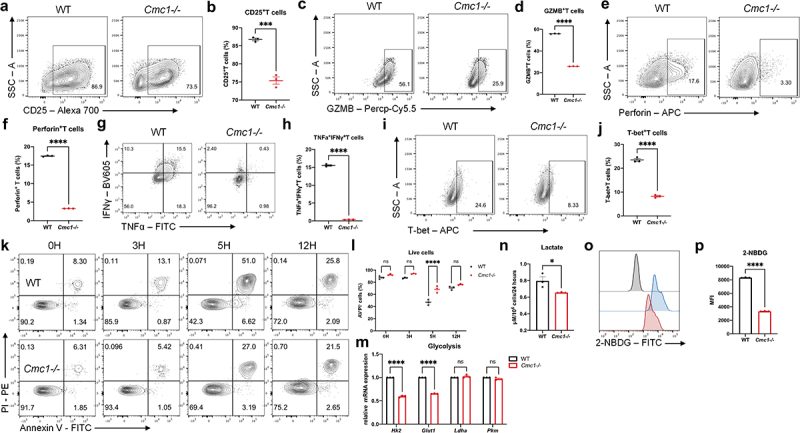
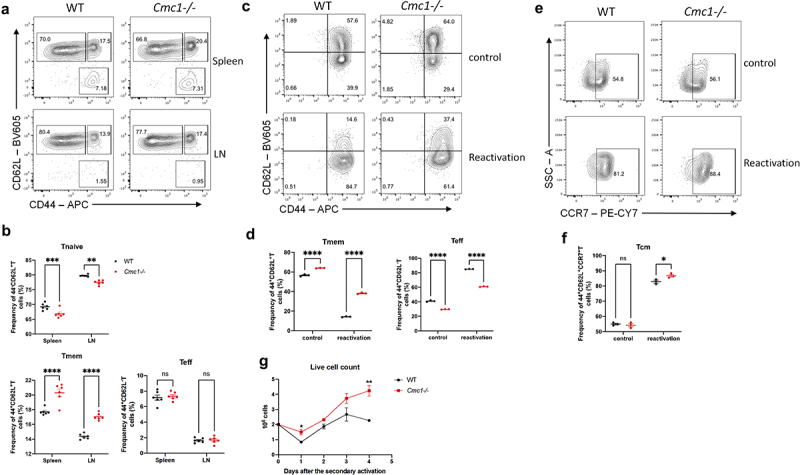
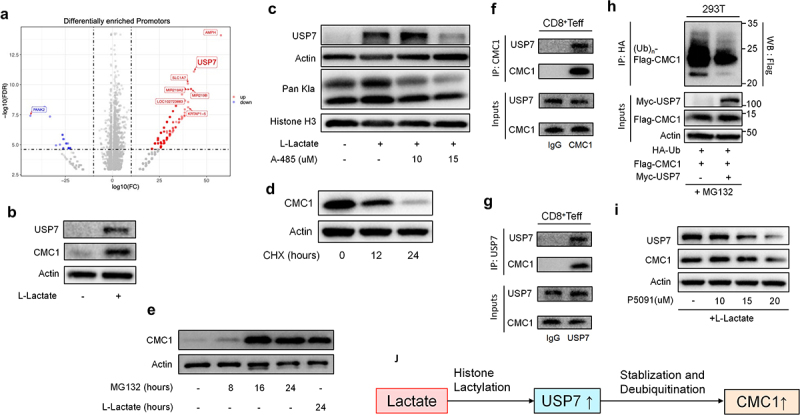
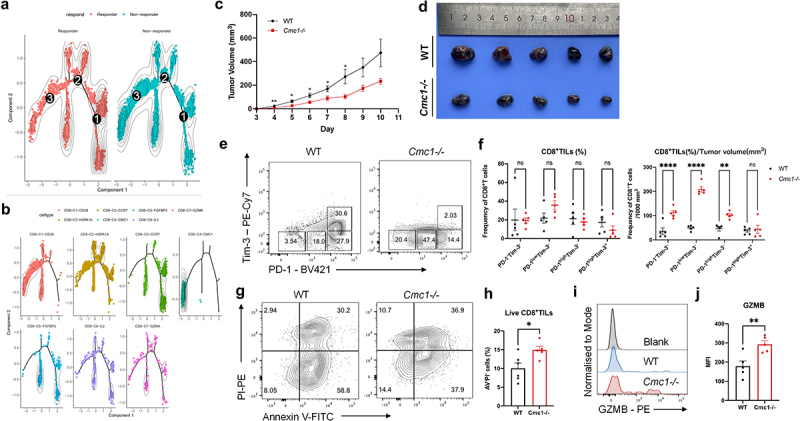
T cell immunity is critical for human defensive immune response. Exploring the key molecules during the process provides new targets for T cell-based immunotherapies. CMC1 is a mitochondrial electron transport chain (ETC) complex IV chaperon protein. By establishing in-vitro cell culture system and Cmc1 gene knock out mice, we evaluated the role of CMC1 in T cell activation and differentiation. The B16-OVA tumor model was used to test the possibility of targeting CMC1 for improving T cell anti-tumor immunity. We identified CMC1 as a positive regulator in CD8+T cells activation and terminal differentiation. Meanwhile, we found that CMC1 increasingly expressed in exhausted T (Tex) cells. Genetic lost of Cmc1 inhibits the development of CD8+T cell exhaustion in mice. Instead, deletion of Cmc1 in T cells prompts cells to differentiate into metabolically and functionally quiescent cells with increased memory-like features and tolerance to cell death upon repetitive or prolonged T cell receptor (TCR) stimulation. Further, the in-vitro mechanistic study revealed that environmental lactate enhances CMC1 expression by inducing USP7, mediated stabilization and de-ubiquitination of CMC1 protein, in which a mechanism we propose here that the lactate-enriched tumor microenvironment (TME) drives CD8+TILs dysfunction through CMC1 regulatory effects on T cells. Taken together, our study unraveled the novel role of CMC1 as a T cell regulator and its possibility to be utilized for anti-tumor immunotherapy.
Overview
The claims and statistics of this paper haven’t been checked yet.
Free: it reads the open-access text and checks the first 5 claims that cite a source we can check. Create a free account to check every claim.
Integrity signals
Registry
Cites
Statistics
Figures
Verification
Claims the paper makes
The claims and statistics of this paper haven’t been checked yet.
Free: it reads the open-access text and checks the first 5 claims that cite a source we can check. Create a free account to check every claim.
Claims other papers make about this one
Each is checked against this paper’s own text: does it say what the citing paper says it does?
The check wasn’t confident either way, so it gives no verdict — never disputed.
In the citing paper
“CD16− (CD56bright) NK cells consisted of a cluster (CD16−IL7R+ NK cells) with high expression of cytokine receptors (IL7R and IL18R1), immunocheckpoint membrane receptor NKG2A (KLRC1), transcription factor (TCF7) and cell migration or tissue-homing genes (CD44, GPR183, SELL and COTL1) and a cluster (CD16−IL7R− NK cells) that contained CD160hiCXCR6hi tissue-resident NK cells that upregulated”
From Single-cell atlas of human liver and blood immune cells across fatty liver disease stages reveals distinct signatures linked to liver dysfunction and fibrogenesis (2025) · cites this paper as [44]
Experimental — accuracy not yet measured
Self-check
Percentages, sums and reported differences re-computed from the paper’s own numbers.
The self-check needs the paper’s full text.
Citations
Cites
Metascape provides a biologist-oriented resource for the analysis of systems-level datasets
Zhou, Y., Zhou, B., Pache, L., Chang, M., Khodabakhshi, A. H., Tanaseichuk, O., Benner, C., & Chanda, S. K. (2019) · Nature Communications · doi:10.1038/s41467-019-09234-6 · Cited by 14,611
Molecular and cellular insights into T cell exhaustion
Wherry, E. J., & Kurachi, M. (2015) · Nature Reviews Immunology · doi:10.1038/nri3862 · Cited by 4,652 · cited 2×
“1,2 9 Mitochondrial biogenesis and reprogramming is a consequence of T cell activation, ensuring the functionality of effector T cell by its governance on anabolism of proteins, lipids, and nucleic acids.”
BackgroundMetabolic regulation of gene expression by histone lactylation
Zhang, D., Tang, Z., Huang, H., Zhou, G., Cui, C., Weng, Y., Liu, W., Kim, S., Lee, S., Perez-Neut, M., et al. (2019) · Nature · doi:10.1038/s41586-019-1678-1 · Cited by 4,371 · cited 2×
“Histone lactylation is thought to be carried out by p300 protein, 32 we utilized a p300 inhibitor, A485, 39 to test if USP7 is indeed modulated by Pan Kla modification.”
BackgroundMethodOtto Warburg's contributions to current concepts of cancer metabolism
Koppenol, W. H., Bounds, P. L., & Dang, C. V. (2011) · Nature Reviews Cancer · doi:10.1038/nrc3038 · Cited by 3,427 · cited 1×
“47 Targeting lactate shuttling of malignant cells has been proposed to be a promising cancer treatment strategy.”
BackgroundMiller, B. C., Sen, D. R., Al Abosy, R., Bi, K., Virkud, Y. V., LaFleur, M. W., Yates, K. B., Lako, A., Felt, K., Naik, G. S., et al. (2019) · Nature Immunology · doi:10.1038/s41590-019-0312-6 · Cited by 2,087
Defining T Cell States Associated with Response to Checkpoint Immunotherapy in Melanoma
Sade-Feldman, M., Yizhak, K., Bjorgaard, S. L., Ray, J. P., de Boer, C. G., Jenkins, R. W., Lieb, D. J., Chen, J. H., Frederick, D. T., Barzily-Rokni, M., et al. (2018) · Cell · doi:10.1016/j.cell.2018.10.038 · Cited by 2,053 · cited 1×
“41 Here we reanalyze published data including responsive and non-responsive melanoma patients, 42 focusing on exploring the role of CMC1 in T cell exhaustion.”
MethodJoshi, N. S., Cui, W., Chandele, A., Lee, H. K., Urso, D. R., Hagman, J., Gapin, L., & Kaech, S. M. (2007) · Immunity · doi:10.1016/j.immuni.2007.07.010 · Cited by 1,861
STEM: a tool for the analysis of short time series gene expression data
Ernst, J., & Bar-Joseph, Z. (2006) · BMC Bioinformatics · doi:10.1186/1471-2105-7-191 · Cited by 1,703 · cited 1×
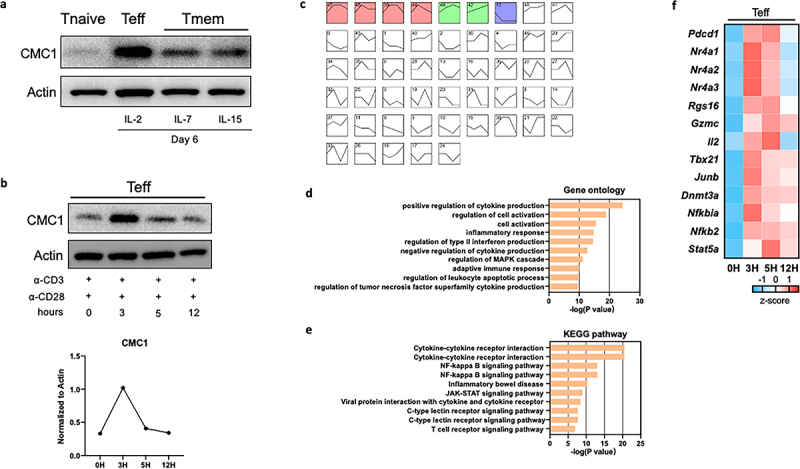
“By using the Short Time-series Expression Miner (STEM) analysis, 20 we identified four clusters of genes that had similar expression patterns as CMC1 (Figure 1(c) and STab.2), which are enriched in the biological process of T cell activation, apoptosis (Figure 1(d–e)).”
MethodMitochondrial Dynamics Controls T Cell Fate through Metabolic Programming
Buck, M. D., O’Sullivan, D., Klein Geltink, R. I., Curtis, J. D., Chang, C.-H., Sanin, D. E., Qiu, J., Kretz, O., Braas, D., van der Windt, G. J. W., et al. (2016) · Cell · doi:10.1016/j.cell.2016.05.035 · Cited by 1,443 · cited 1×
“To understand if Cmc1 is differentially expressed in Teff and Tmem, we purified CD8 + Tnaive cells from the splenocytes of C57/BL6J mice and stimulated them with anti-CD3 and anti-CD28 monoclonal antibodies in the presence of Interleukin-2 (IL-2), IL-7 or IL-15 in vitro 13 (Figure S1(a)).”
MethodPan-cancer single-cell landscape of tumor-infiltrating T cells
Zheng, L., Qin, S., Si, W., Wang, A., Xing, B., Gao, R., Ren, X., Wang, L., Wu, X., Zhang, J., et al. (2021) · Science · doi:10.1126/science.abe6474 · Cited by 1,402 · cited 1×
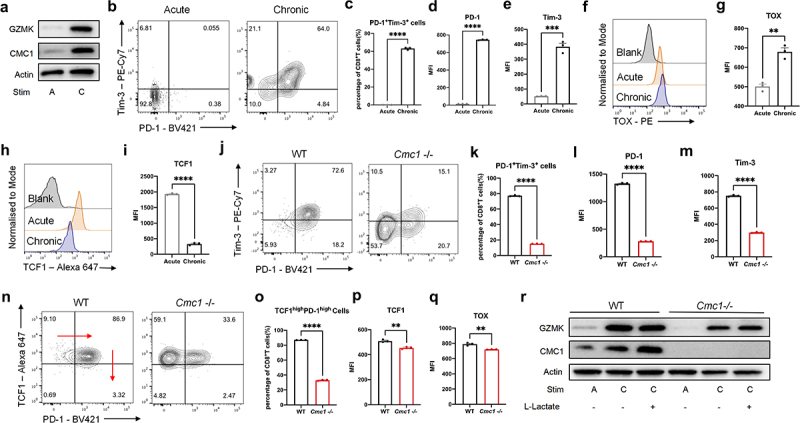
“Given that GZMK and CMC1 were both increased in the chronically stimulated T cells (Figure 4(a)), and the effector memory GZMK + T cells are also defined as the progenitor Tex cells, 29 we next examine the GZMK protein levels in the Cmc1-/- cells.”
Background
Cited by
Martin, O. P., Wallace, M. S., Oetheimer, C., Patel, H. B., Butler, E. C., Wong, L. P., Huang, P., Elbaz, J., Costentin, C., Salloum, S., et al. (2025) · Nature Immunology · doi:10.1038/s41590-025-02255-y · Cited by 45
“CD16 − (CD56 bright ) NK cells consisted of a cluster ( CD16 − IL7R + NK cells) with high expression of cytokine receptors ( IL7R and IL18R1) , immunocheckpoint membrane receptor NKG2A ( KLRC1 ), transcription factor ( TCF7 ) and cell migration or tissue-homing genes ( CD44 , GPR183 , SELL and COTL1 ) and a cluster (…”
Zeng, Y., Huang, Y., Tan, Q., Peng, L., Wang, J., Tong, F., & Dong, X. (2024) · Molecular Medicine Reports · doi:10.3892/mmr.2024.13413 · Cited by 34
“C motif containing 1 (CMC1) protein expression through the induction of ubiquitin specific peptidase 7, a deubiquitinating enzyme that facilitates the stabilization and deubiquitination of CMC1 protein (73).”
Kim, E. Y., Abides, J., Keller, C. R., Martinez, S. R., & Li, W. (2025) · Molecules · doi:10.3390/molecules30081763 · Cited by 32
“This inhibition, which leads to CD8+ T cell exhaustion, is mediated by C-X9-C Motif Containing 1 (CMC1), a mitochondrial electron transport chain complex IV chaperon protein [120].”
Zeng, Z., Zhang, T., Zhang, J., Li, S., Connor, S. C., Zhang, B., Zhao, Y., Wilson, J., Singh, D., Kulikauskas, R. M., et al. (2025) · Nature Communications · doi:10.1038/s41467-024-55059-3 · Cited by 29
“In addition, CMC1 , a mitochondrial electron transport chain (ETC) complex IV chaperone protein that acts as a positive regulator of CD8+T cell activation and differentiation 31 is also upregulated in C1.”
Ubiquitination in cancer: mechanisms and therapeutic opportunities
Zhu, S., Zhang, X., Liu, W., Zhou, Z. G., Xiong, S., Li, J., Chen, X., & Peng, C. (2025) · 癌症:英文版 · doi:10.1002/cac2.70044 · Cited by 28
“Upregulated CMC1 accelerates CD8 + T-cell terminal differentiation and exhaustion, thereby weakening immune responses [229].”
Metadata
- Authors
- Chen, Y., Gao, J., Ma, M., Wang, K., Liu, F., Yang, F., Zou, X., Cheng, Z., & Wu, D.
- Affiliations
- Jinshan Hospital Center for Tumor Diagnosis & Therapy, Jinshan Hospital, Fudan University, Shanghai, China
- Fudan University (CN)
- Shanghai Jiao Tong University (CN)
- Jinshan Hospital of Fudan University (CN)
- Corresponding author
- Wu, Duojiao
- Venue
- OncoImmunology
- Publisher
- Informa UK Limited
- Published
- 2024-04-23
- Volume
- 13
- Issue
- 1
- Pages
- 2344905-2344905
- ISSN
- 2162-4011 (ISSN-L)
- 2162-402X
- PMC
- PMC11042068
- OpenAlex
- W4395031722
- Semantic Scholar
- a4ee64fbb738be9eaf3f19d780795240b4e00e0a
- Cited by
- 13
- References
- 53
- Citations by year
- 2026: 6 · 2025: 6 · 2024: 1
- FWCI
- 2.16
- Type
- journal article
- Language
- en
- Open access
- gold
- doi.org
- Licence
- Locations
- OncoImmunology (publishedVersion, cc-by-nc)
- PubMed Central (publishedVersion, cc-by-nc)
- PubMed (publishedVersion)
- DOAJ (DOAJ: Directory of Open Access Journals) (submittedVersion)
- Funders
- the National Natural Science Foundation of China (82273188)
- Topics
- Life Sciences › Immunology and Microbiology › Immunology › T-cell and B-cell Immunology
- Health Sciences › Medicine › Oncology › Cancer Immunotherapy and Biomarkers
- Life Sciences › Immunology and Microbiology › Immunology › Immunotherapy and Immune Responses
- Keywords
- T cell exhaustion, CD8+ T cells, USP7, deubiquitination, lactate, tumor microenvironment, T cell receptor stimulation, antitumor immunity, T cell-based immunotherapy
- MeSH terms
- Animals, Cell Differentiation, Lymphocyte Activation, Melanoma, Experimental, Mice, Inbred C57BL, Mice, Knockout, CD8-Positive T-Lymphocytes, Mitochondrial Proteins, Ubiquitin Thiolesterase, Mice
About these checks
Registry, retraction, Cites and statistics results are computed, not judged, with one exception: a printed reference that no index lists is read once by a model before it counts as a citation error. Claims are extracted by a model and kept only when their quote appears verbatim in the text; each cited source is then checked, with a model’s help, for whether it says what the claim relies on. Those verdicts can be wrong — read the claim’s quote and the cited source before relying on one.
Statistics and arithmetic are recomputed, not judged.
Confidence bands are shown only for fields calibrated on our annotated test set. None is calibrated yet, so no band is shown.
What counts as a claim ›How we measure confidence ›How we check this ›
Are you an author, or do you see a problem with this page? Request a review
Data sources
Bibliographic data: Semantic Scholar, OpenAlex, Crossref.
Contains information from the Semantic Scholar Academic Graph Datasets, made available under the ODC Attribution License (ODC-BY 1.0).
Semantic Scholar’s data is described in: Kinney, R., et al. (2023). The Semantic Scholar Open Data Platform. arXiv:2301.10140.
