

Dual FOPID-neural network controller based on fast grey wolf optimizer: application to two-inputs two-outputs helicopter
Open accessThe DOI matches its Crossref record; 57 of the 57 references it cites were found in a registry or an index.
Abstract
This research introduces a novel dual Fast Grey Wolf Optimizer (FGWO) combined with Radial Basis Function Neural Networks (RBFNN) for a Fractional-Order PID (FOPID) controller applied to a helicopter simulator. The proposed FGWO improves the standard Grey Wolf Optimizer (GWO) by enhancing hunting during the exploitation phase and increases robustness in convergence to the minimum value. FGWO optimizes the FOPID parameters using a novel objective function. The RBFNN is integrated to address the nonlinearities and uncertainties, while a dual block mitigates the coupling effects. The performance of the proposed controller is characterized by two simulation scenarios. The first scenario involved nine benchmark functions across thirty trials. Results demonstrated that the FGWO offered superior performance in terms of robustness and proximity to the global minimum compared to the GWO. The second scenario involved applying the controllers to the helicopter. Results evidenced that the dual-FOPID-FGWO (DRF-FG) controller achieved a 4.3363% faster response and 1.8199% higher precision than the GWO-based controller (DRF-G). The DRF-FG showed robustness in trajectory tracking compared to the controllers based on the Ant Lion Optimizer (DRF-A) and the Whale Optimization Algorithm (DRF-W). DRF-FG improved the average regulation performance by 1.702% and trajectory tracking by 0.152% compared with DRF-G.
Overview
The claims and statistics of this paper haven’t been checked yet.
Free: it reads the open-access text and checks the first 5 claims that cite a source we can check. Create a free account to check every claim.
Integrity signals
Registry
Cites
Statistics
Figures


Verification
Claims the paper makes
The claims and statistics of this paper haven’t been checked yet.
Free: it reads the open-access text and checks the first 5 claims that cite a source we can check. Create a free account to check every claim.
Claims other papers make about this one
Each is checked against this paper’s own text: does it say what the citing paper says it does?
The source backs part of the claim, not all of it — or backs it for a different population, condition or comparison.
In the citing paper
“These controllers are especially useful in scenarios where traditional control techniques may have difficulty adjusting to rapidly evolving conditions [282].”
From A Review of Modeling and Control Techniques for Unmanned Aerial Vehicles (2025) · cites this paper as [282]
Experimental — accuracy not yet measured
Self-check
Percentages, sums and reported differences re-computed from the paper’s own numbers.
The self-check needs the paper’s full text.
Citations
Cites
Mirjalili, S., Mirjalili, S. M., & Lewis, A. (2014) · Advances in Engineering Software · doi:10.1016/j.advengsoft.2013.12.007 · Cited by 19,343 · cited 3×
“In Mirjalili et al. (2014), the same result was obtained.”
The Whale Optimization Algorithm
Mirjalili, S., & Lewis, A. (2016) · Advances in Engineering Software · doi:10.1016/j.advengsoft.2016.01.008 · Cited by 14,581 · cited 1×
“The hunting behaviour of whales has been modelled in Mirjalili and Lewis (2016) using the Whale Optimization Algorithm (WOA).”
Qu, C., Gai, W., Zhong, M., & Zhang, J. (2020) · Applied Soft Computing · doi:10.1016/j.asoc.2020.106099 · Cited by 334 · cited 1×
“The second approach involves combining GWO with Artificial Intelligence (AI) based algorithms to address the inherent demerits of GWO by Jarray et al. (2022); Lv et al. (2022); Qu et al. (2020).”
PID control of quadrotor UAVs: A survey
Lopez-Sanchez, I., & Moreno-Valenzuela, J. (2023) · Annual Reviews in Control · doi:10.1016/j.arcontrol.2023.100900 · Cited by 271 · cited 2×
“FOPID was applied to UAV systems, as reviewed in Lopez-Sanchez and Moreno-Valenzuela (2023).”
Recent Advances in Grey Wolf Optimizer, its Versions and Applications: Review
Makhadmeh, S. N., Al-Betar, M. A., Doush, I. A., Awadallah, M. A., Kassaymeh, S., Mirjalili, S., & Zitar, R. A. (2024) · IEEE Access · doi:10.1109/access.2023.3304889 · Cited by 240 · cited 3×
“It is reported in Makhadmeh et al. (2024) that owing to its effective exploitation strategy, GWO often exhibits superior convergence properties, whereas other algorithms may require more iterations to converge.”
State of health estimation of lithium-ion battery with improved radial basis function neural network
Wu, J., Fang, L., Dong, G., & Lin, M. (2022) · Energy · doi:10.1016/j.energy.2022.125380 · Cited by 142 · cited 1×
“For the first context, interested readers are referred to notable recent works using GWO such as; Wu et al. (2023) estimated parameters in a lithium-ion battery indicating its state of health, Hussein and Al-Araji (2024) found opti-malparametersinahovercraftindicatingitsoptimalpath, Wang et al.…”
Adaptive bias RBF neural network control for a robotic manipulator
Liu, Q., Li, D., Ge, S. S., Ji, R., Ouyang, Z., & Tee, K. P. (2021) · Neurocomputing · doi:10.1016/j.neucom.2021.03.033 · Cited by 130 · cited 1×
“Relevant notable works on RBFNN include adaptive RBFNN for a robotic manipulator (Liu et al., 2021), adaptive PI and RBFNN PID for a permanent magnet synchronous motor (PMSM) drive (Zeng et al., 2022) and a quadrotor UAV (Guo et al., 2023).”
Tutsoy, O., Asadi, D., Ahmadi, K., Nabavi-Chashmi, S. Y., & Iqbal, J. (2024) · IEEE Transactions on Intelligent Transportation Systems · doi:10.1109/tits.2024.3367769 · Cited by 98 · cited 1×
“Unmanned Aerial Vehicles (UAVs) have been widely employed in military and civilian domains (Tutsoy et al., 2024).”
Self-citationEnhanced grey wolf optimizer with a model for dynamically estimating the location of the prey
Luo, K. (2019) · Applied Soft Computing · doi:10.1016/j.asoc.2019.01.025 · Cited by 85 · cited 2×
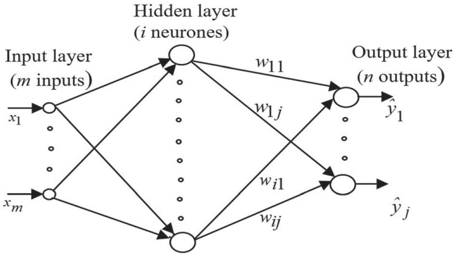
“In an n -dimensional network, the input is directly connected to a hidden layer, where each neuron is defined by an activation function that depends on the Euclidean distance between the input and a vector of dimension n (Luo, 2019).”
WANG, Y., ZHANG, T., CAI, Z., ZHAO, J., & WU, K. (2020) · Chinese Journal of Aeronautics · doi:10.1016/j.cja.2020.04.028 · Cited by 83
Haq, I. U., Khan, Q., Ullah, S., Khan, S., Akmeliawati, R., Khan, M. A., & Iqbal, J. (2022) · PLoS ONE · doi:10.1371/journal.pone.0260480 · Cited by 80
Self-citationJarray, R., Al‐Dhaifallah, M., Rezk, H., & Bouallègue, S. (2022) · Sensors · doi:10.3390/s22051826 · Cited by 75 · cited 1×
“The second approach involves combining GWO with Artificial Intelligence (AI) based algorithms to address the inherent demerits of GWO by Jarray et al. (2022); Lv et al. (2022); Qu et al. (2020).”
Karakoyun, M., Özkış, A., & Kodaz, H. (2020) · Applied Soft Computing · doi:10.1016/j.asoc.2020.106560 · Cited by 68 · cited 2×
“…to FOPID controllers, metaheuristic techniques have also been extensively considered over the last decade for other controllers (Izci & Ekinci, 2023; Izci et al., 2023; Karakoyun et al., 2020; Lv et al., 2022; Oliveira et al., 2020; Sun & Miao, 2023; Zatout et al., 2022; Zhang et al., 2022).”
Optimal fractional-order PID controller based on fractional-order actor-critic algorithm
Shalaby, R., El-Hossainy, M., Abozalam, B. A., & Mahmoud, T. A. (2022) · Neural Computing and Applications · doi:10.1007/s00521-022-07710-7 · Cited by 66 · cited 1×
“A few exemplary works include Faisal and Abdulwahhab (2021); Norsahperi and Danapalasingam (2020); Pathan et al. (2021); Shah et al. (2023); Shalaby et al. (2023); Żegleń-Włodarczyk (2023).”
Guo, H., Chen, M., Jiang, Y., & Lungu, M. (2022) · IEEE Transactions on Industrial Informatics · doi:10.1109/tii.2022.3211508 · Cited by 63
Veerasamy, V., Wahab, N. I. A., Ramachandran, R., Othman, M. L., Hizam, H., Kumar, J. S., & Irudayaraj, A. X. R. (2021) · Expert Systems with Applications · doi:10.1016/j.eswa.2021.116402 · Cited by 60 · cited 2×
“The conventional NN has fundamental problems of slow learning time and stagnation in local minima (Veerasamy et al., 2022).”
UAV Path Planning Algorithm Based on Improved Harris Hawks Optimization
Zhang, R., Li, S., Ding, Y., Qin, X., & Xia, Q. (2022) · Sensors · doi:10.3390/s22145232 · Cited by 60 · cited 1×
“…to FOPID controllers, metaheuristic techniques have also been extensively considered over the last decade for other controllers (Izci & Ekinci, 2023; Izci et al., 2023; Karakoyun et al., 2020; Lv et al., 2022; Oliveira et al., 2020; Sun & Miao, 2023; Zatout et al., 2022; Zhang et al., 2022).”
Iqbal, J., Ullah, M. I., Khan, A. A., & Irfan, M. (2015) · Strojniški vestnik – Journal of Mechanical Engineering · doi:10.5545/sv-jme.2015.2511 · Cited by 54 · cited 1×
“The tuning of FOPID controllers has garnered significant attention from the control community, particularly regarding reducing the number of parameters required when dealing with complex systems (Iqbal et al., 2015).”
Self-citationZatout, M. S., Rezoug, A., Rezoug, A., Baizid, K., & Iqbal, J. (2021) · International Journal of Systems Science · doi:10.1080/00207721.2021.1978012 · Cited by 54
Self-citationLv, J., Yan, L., Chu, S., Cai, Z., Pan, J., He, X., & Xue, J. (2022) · Neural Computing and Applications · doi:10.1007/s00521-022-07080-0 · Cited by 50 · cited 2×
“…to FOPID controllers, metaheuristic techniques have also been extensively considered over the last decade for other controllers (Izci & Ekinci, 2023; Izci et al., 2023; Karakoyun et al., 2020; Lv et al., 2022; Oliveira et al., 2020; Sun & Miao, 2023; Zatout et al., 2022; Zhang et al., 2022).”
Norsahperi, N. M. H., & Danapalasingam, K. A. (2020) · ISA Transactions · doi:10.1016/j.isatra.2020.03.001 · Cited by 48 · cited 3×
“Scientific literature reports several examples of helicopter simulators such as Gopmandal and Ghosh (2022); Hoffman et al. (2018); Norsahperi and Danapalasingam (2020); Zhu and Li (2021).”
Robust fault estimation for a 3-DOF helicopter considering actuator saturation
Zhu, X., & Li, D. (2021) · Mechanical Systems and Signal Processing · doi:10.1016/j.ymssp.2021.107624 · Cited by 46 · cited 2×
“Scientific literature reports several examples of helicopter simulators such as Gopmandal and Ghosh (2022); Hoffman et al. (2018); Norsahperi and Danapalasingam (2020); Zhu and Li (2021).”
Self-Tuning fuzzy controller for sun-tracker system using Gray Wolf Optimization (GWO) technique
Tripathi, S., Shrivastava, A., & Jana, K. C. (2020) · ISA Transactions · doi:10.1016/j.isatra.2020.01.012 · Cited by 35
Irfan, S., Zhao, L., Ullah, S., Javaid, U., & Iqbal, J. (2024) · Drones · doi:10.3390/drones8100527 · Cited by 35 · cited 1×
“In order to stabilize such a system, controllers based on linear and nonlinear methods have been investigated (Irfan et al., 2024).”
Self-citationA Novel Hybrid Discrete Grey Wolf Optimizer Algorithm for Multi-UAV Path Planning
Huang, G., Cai, Y., Liu, J., Qi, Y., & Liu, X. (2021) · Journal of Intelligent & Robotic Systems · doi:10.1007/s10846-021-01490-3 · Cited by 34 · cited 1×
“The objective of the first approach is to modifythestructurebyincludingtermsintheexploration and/or exploitation phase (Huang et al., 2021; Karakoyun et al., 2020; Luo, 2019; Yingxun et al., 2020).”
Tuning of LQR-PID controller to control parallel manipulator
Choubey, C., & Ohri, J. (2021) · Neural Computing and Applications · doi:10.1007/s00521-021-06608-0 · Cited by 31 · cited 2×
“A main rotor and a tail rotor are positioned at either end of the beam (Choubey & Ohri, 2022).”
Prescribed-time constrained feedback control for an uncertain twin rotor helicopter
Singh, V. K., Kamal, S., & Ghosh, S. (2023) · Aerospace Science and Technology · doi:10.1016/j.ast.2023.108483 · Cited by 27 · cited 1×
“A nonlinear controller based on prescribed-time-constrained feedback approach was reported in Singh et al. (2023).”
Fuzzy Neural Network PID Control Based on RBF Neural Network for Variable Configuration Spacecraft
Wang, R., Zhou, Z., & Guang-ji, Q. (2018) · IEEE Advanced Information Technology, Electronic and Automation Control Conference (IAEAC) · doi:10.1109/iaeac.2018.8577860 · Cited by 25 · cited 1×
“To minimize J , the parameters of the output weight, centre vector and basis-width vector are given as follows (Wang et al., 2018): Output weight: Centre vector: Width vector: where η w , η c and η b are real positive learning rates.”
PID control of an omnidirectional mobile platform based on an RBF neural network controller
Zijie, N., Zhang, P., Cui, Y., & Jun, Z. (2021) · Industrial Robot the international journal of robotics research and application · doi:10.1108/ir-01-2021-0015 · Cited by 23 · cited 2×
“PID-and FOPID-based NN controllers have been proposed and applied to various systems (Veerasamy et al., 2022; Zijie et al., 2022).”
Haruna, A., Mohamed, Z., Efe, M. Ö., & Basri, M. A. M. (2019) · ISA Transactions · doi:10.1016/j.isatra.2019.07.016 · Cited by 22 · cited 3×
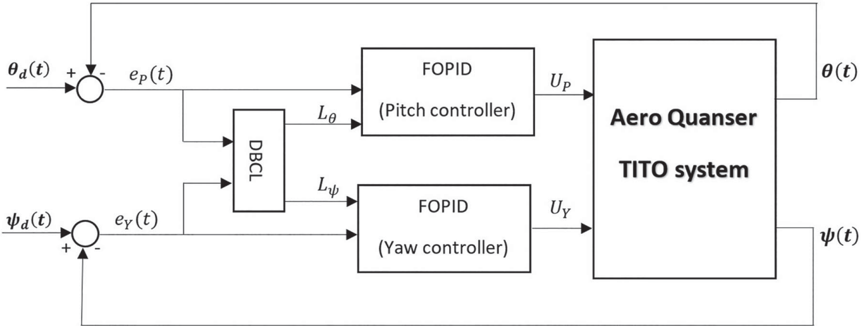
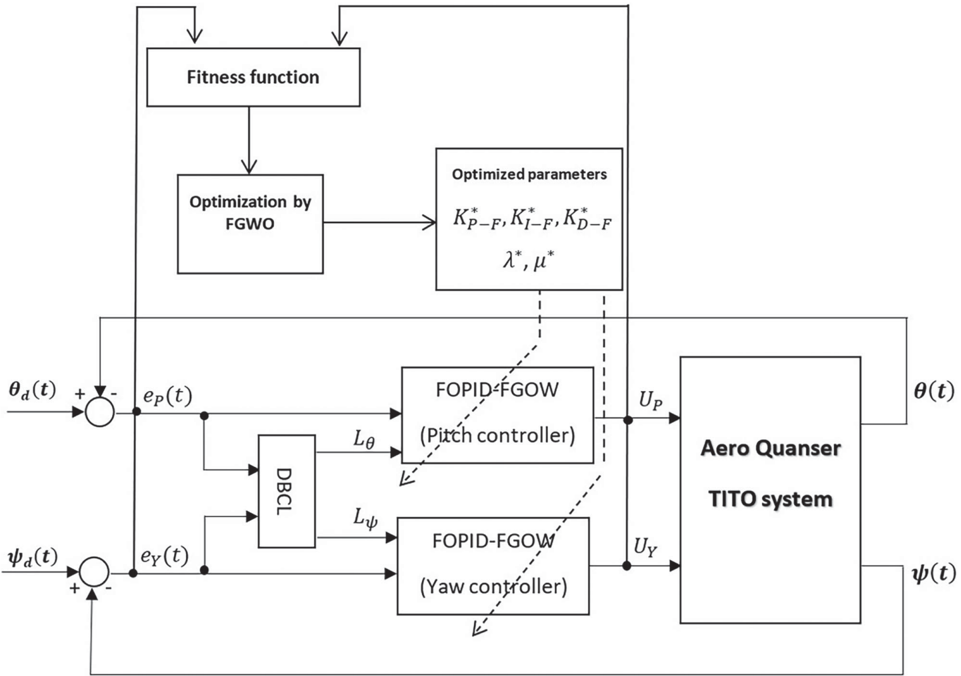
“DBCL provides a relationship between pitch and yaw errors and the integral control parameters and is mathematically given by (15) where i takes values of θ and ψ . z i is the tracking error of the pitch and yaw angles respectively (i.e. z θ = e p and z ψ = e y ), 0 ≤ L ri ≤ L mi where L mi represents the minimum integ…”
Rezoug, A., Iqbal, J., & Tadjine, M. (2022) · Proceedings of the Institution of Mechanical Engineers Part I Journal of Systems and Control Engineering · doi:10.1177/09596518221099768 · Cited by 22 · cited 2×
“Its efficiency has been demonstrated in diverse fields through numerous applications (Makhadmeh et al., 2024; Mirjalili et al., 2014; Rezoug et al., 2022).”
Self-citationİzci, D., & Ekinci, S. (2023) · e-Prime - Advances in Electrical Engineering Electronics and Energy · doi:10.1016/j.prime.2023.100295 · Cited by 22 · cited 1×
“In addition to FOPID controllers, metaheuristic techniques have also been extensively considered over the last decade for other controllers (Izci & Ekinci, 2023; Izci et al., 2023; Karakoyun et al., 2020; Lv et al., 2022; Oliveira et al., 2020; Sun & Miao, 2023; Zatout et al., 2022; Zhang et al.,…”
Rezoug, A., Messah, A., Messaoud, W. A., Baizid, K., & Iqbal, J. (2024) · Journal of the Brazilian Society of Mechanical Sciences and Engineering · doi:10.1007/s40430-024-04714-3 · Cited by 22 · cited 2×
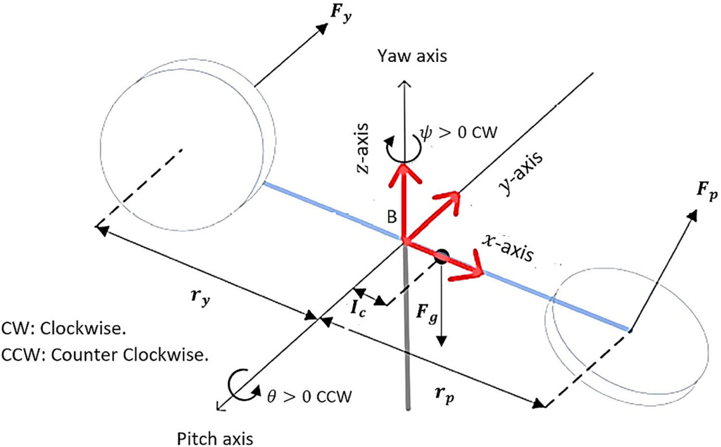
“…frames and forces applied to the system (shown in Figure 2) and given in (1–7), the dynamics of the Quanser Areo system helicopter is expressed as (Rezoug et al., 2024), The model given in (8) indicates that the Quanser Aero system helicopter is a nonlinear and multivariable system with coupled…”
Self-citationShauqee, M. N., Rajendran, P., & Suhadis, N. M. (2021) · Applied Sciences · doi:10.3390/app11062699 · Cited by 20 · cited 1×
“In Shauqee et al. (2021), hybridization of a proportional double derivative with a Linear Quadratic controller (PD2-LQR)-based improvised GWO controller was designed to control a quadrotor system.”
Zeng, X., Wang, W., & Wang, H. (2022) · Energies · doi:10.3390/en15176353 · Cited by 19 · cited 1×
“Relevant notable works on RBFNN include adaptive RBFNN for a robotic manipulator (Liu et al., 2021), adaptive PI and RBFNN PID for a permanent magnet synchronous motor (PMSM) drive (Zeng et al., 2022) and a quadrotor UAV (Guo et al., 2023).”
Quaternion-based Robust Trajectory Tracking Control of a Quadrotor Hover System
Hoffman, D., Rehan, M., MacKunis, W. T., & Reyhanoglu, M. (2018) · International Journal of Control Automation and Systems · doi:10.1007/s12555-018-0112-z · Cited by 16 · cited 1×
“Scientific literature reports several examples of helicopter simulators such as Gopmandal and Ghosh (2022); Hoffman et al. (2018); Norsahperi and Danapalasingam (2020); Zhu and Li (2021).”
LQR-based MIMO PID control of a 2-DOF helicopter system with uncertain cross-coupled gain
Gopmandal, F., & Ghosh, A. (2022) · IFAC-PapersOnLine · doi:10.1016/j.ifacol.2023.03.031 · Cited by 16 · cited 1×
“Scientific literature reports several examples of helicopter simulators such as Gopmandal and Ghosh (2022); Hoffman et al. (2018); Norsahperi and Danapalasingam (2020); Zhu and Li (2021).”
Yang, Q., Wang, H., Yang, C., Wang, Y., Deng, H., Wang, B., & Duan, B. (2024) · Journal of Engineering Research · doi:10.1016/j.jer.2024.01.025 · Cited by 16
Sreedhar, R., Karunanithi, K., Ramesh, S., Raja, S. P., & Pasham, N. K. (2024) · Electrical Engineering · doi:10.1007/s00202-024-02637-9 · Cited by 16 · cited 1×
“An example of the third context is presented in Sreedhar et al. (2024), where GWO has been employed to fine-tune output of RBFNN for the maximum power point tracking (MPPT) problem .”
İzci, D., Köse, E., & Ekinci, S. (2023) · Arabian Journal for Science and Engineering · doi:10.1007/s13369-023-07724-w · Cited by 15 · cited 1×
“…to FOPID controllers, metaheuristic techniques have also been extensively considered over the last decade for other controllers (Izci & Ekinci, 2023; Izci et al., 2023; Karakoyun et al., 2020; Lv et al., 2022; Oliveira et al., 2020; Sun & Miao, 2023; Zatout et al., 2022; Zhang et al., 2022).”
Design of an Adaptive Linear Quadratic Regulator for a Twin Rotor Aerodynamic System
Faisal, R. F., & Abdulwahhab, O. W. (2021) · Journal of Control Automation and Electrical Systems · doi:10.1007/s40313-020-00682-w · Cited by 11 · cited 1×
“A few exemplary works include Faisal and Abdulwahhab (2021); Norsahperi and Danapalasingam (2020); Pathan et al. (2021); Shah et al. (2023); Shalaby et al. (2023); Żegleń-Włodarczyk (2023).”
Evaluation of Hunting-Based Optimizers for a Quadrotor Sliding Mode Flight Controller
de Oliveira, J. B., Oliveira, P. M., Boaventura‐Cunha, J., & Pinho, T. M. (2020) · Robotics · doi:10.3390/robotics9020022 · Cited by 10 · cited 1×
“…to FOPID controllers, metaheuristic techniques have also been extensively considered over the last decade for other controllers (Izci & Ekinci, 2023; Izci et al., 2023; Karakoyun et al., 2020; Lv et al., 2022; Oliveira et al., 2020; Sun & Miao, 2023; Zatout et al., 2022; Zhang et al., 2022).”
GWO-Based Tuning of LQR-PID Controller for a 3-DOF Parallel Manipulator
Choubey, C., & Ohri, J. (2021) · IETE Journal of Research · doi:10.1080/03772063.2021.1958068 · Cited by 10 · cited 1×
“OtherGWOvari-ants have been applied to different systems, such as a serial robotic manipulator (Rezoug et al., 2022) and a 3-Degree Of Freedom (DOF) parallel manipulator (Choubey & Ohri, 2023).”
Electrical Impedance Tomography Based on Grey Wolf Optimized Radial Basis Function Neural Network
Wang, G., Feng, D., & Tang, W. (2022) · Micromachines · doi:10.3390/mi13071120 · Cited by 10 · cited 1×
“…in a lithium-ion battery indicating its state of health, Hussein and Al-Araji (2024) found opti-malparametersinahovercraftindicatingitsoptimalpath, Wang et al. (2022) enhanced image reconstruction accuracy to improve the resolution of electrical impedance tomography imaging and Chen et al. (2022)…”
Haruna, A., Mohamed, Z., Efe, M. Ö., & Abdullahi, A. M. (2023) · ISA Transactions · doi:10.1016/j.isatra.2023.07.002 · Cited by 10 · cited 1×
“Variants of integral backstepping con-trol were proposed in Haruna et al. (2023); Haruna et al. (2020).”
RBFNN-Based Optimized PID Control for a 3-DOF Helicopter System: Design and Validation
Messaoui, A. Z., Mechali, O., Messaoui, A. A., Smaali, I. E., Demim, F., & Djilali, D. B. (2024) · International Conference on Image and Signal Processing and their Applications (ISPA) · doi:10.1109/ispa59904.2024.10536810 · Cited by 10 · cited 1×
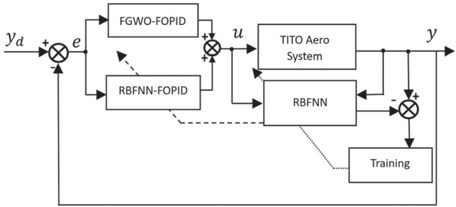
“An example of the second context is reported in Messaoui et al. (2024), where RBFNN has been used to adjust the PID-based GWO controller applied to a 3-DOF helicopter laboratory system.”
A comparative study of linear control strategies on the aerodynamics twin rotor system
Shah, A. Q., Awais, M., Zafar, M., Ahmed, A., Mudassar, M., Muneer, M. A., Saif, M., Razzaq, A., Jang, S., Kim, S., et al. (2023) · Journal of Mechanical Science and Technology · doi:10.1007/s12206-023-0746-5 · Cited by 8 · cited 1×
“A few exemplary works include Faisal and Abdulwahhab (2021); Norsahperi and Danapalasingam (2020); Pathan et al. (2021); Shah et al. (2023); Shalaby et al. (2023); Żegleń-Włodarczyk (2023).”
Mosavi, S. A. B. (2021) · International journal of intelligent engineering and systems · doi:10.22266/ijies2021.0831.44 · Cited by 7
A Multivariable Twin-Rotor System Control Design
Pathan, E., Khan, M. H., Aslam, M. K., Asad, M., Arshad, H., & Rabani, M. I. (2021) · Engineering Technology & Applied Science Research · doi:10.48084/etasr.3947 · Cited by 6 · cited 1×
“A few exemplary works include Faisal and Abdulwahhab (2021); Norsahperi and Danapalasingam (2020); Pathan et al. (2021); Shah et al. (2023); Shalaby et al. (2023); Żegleń-Włodarczyk (2023).”
Żegleń-Włodarczyk, J. (2023) · Lecture notes in networks and systems · doi:10.1007/978-3-031-25844-2_3 · Cited by 4 · cited 2×
“In Norsahperi and Danapalasingam (2020); Sha-laby et al. (2023); Żegleń-Włodarczyk (2023), optimized FOPID controllers based on metaheuristic algorithms were successfully applied, where optimization determined the optimal values of the control parameters.”
Chen, H., Ya, G., Li, J., Cui, H., & Yao, X. (2022) · DOAJ (DOAJ: Directory of Open Access Journals) · doi:10.6180/jase.202301_26(1).0013 · Cited by 4
Par4 Parallel Robot Trajectory Tracking Control Based on DMR-GWO2 and Fuzzy Predictive
Zhang, X., & Ming, Z. (2021) · International Journal of Computational Intelligence Systems · doi:10.2991/ijcis.d.210514.001 · Cited by 3 · cited 1×
“In Zhang and Ming (2021), the dynamic GWO has been proposed to optimize the Type-2 fuzzy logic control law.”
Sun, Y., & Miao, J. (2023) · Workshop on UAVs in Multimedia: Capturing the World from a New Perspective (UAVM) · doi:10.1145/3607834.3616565 · Cited by 1 · cited 1×
“…to FOPID controllers, metaheuristic techniques have also been extensively considered over the last decade for other controllers (Izci & Ekinci, 2023; Izci et al., 2023; Karakoyun et al., 2020; Lv et al., 2022; Oliveira et al., 2020; Sun & Miao, 2023; Zatout et al., 2022; Zhang et al., 2022).”
Fault Detection and Tolerant Control for Aero2 2DOF Two-rotor Helicopter
Dandago, K. K., Zhang, L., & Pan, W. (2024) · International Conference on Unmanned Aircraft Systems (ICUAS) · doi:10.1109/icuas60882.2024.10556901 · Cited by 1 · cited 1×
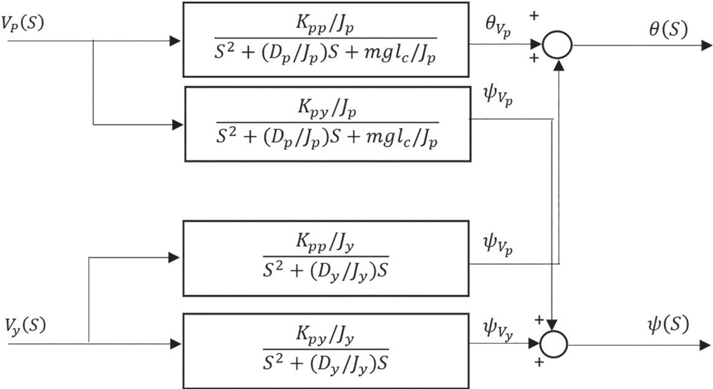
“…as Assuming cos (θ) ≈ θ , the model given in (9) can be written as a linear MIMO system (10), Equation (10) represents a linear MIMO system with cross-coupled dynamics as shown in Figure 3, Similar model is given in Aero 2 (2024) and a more simplified version is reported in Dandago et al. (2024).”
Barbero (2014) · doi:10.1016/j · Cited by 1
Fault Detection and Tolerant Control for Aero2 2D0F Two-rotor HelicopterPreprint
Dandago, K. K., Zhang, L., & Pan, W. (2024) · arXiv (Cornell University) · doi:10.48550/arxiv.2403.09008 · cited 1×
“…as Assuming cos (θ) ≈ θ , the model given in (9) can be written as a linear MIMO system (10), Equation (10) represents a linear MIMO system with cross-coupled dynamics as shown in Figure 3, Similar model is given in Aero 2 (2024) and a more simplified version is reported in Dandago et al. (2024).”
Research works printed but not linked: 1
- 14. Hussein, S. M., & Al-Araji, A. S. (2024). Development of path- finding controller design for hovercraft model via neural net- work technique and meta-heuristic algorithms. International Journal of Intelligent Engineering and Systems, 17(4), 576-597. https://doi.org/10.22266/ijies2021.0831. · doi:10.22266/ijies2021.0831
Cited by
A Review of Modeling and Control Techniques for Unmanned Aerial Vehicles
Gedefaw, E. A., Abera, N. B., & Abdissa, C. M. (2025) · Engineering Reports · doi:10.1002/eng2.70215 · Cited by 54
Irfan, S., Zhao, L., Javaid, U., & Iqbal, J. (2025) · Guidance Navigation and Control · doi:10.1142/s2737480725500281 · Cited by 1
Self-citationPaul Nishanth, F., Dash, S. K., & Mahapatro, S. R. (2026) · International Journal of Dynamics and Control · doi:10.1007/s40435-026-02035-y · Cited by 1
Garg, P., & Mishra, B. (2025) · Chemical Product and Process Modeling · doi:10.1515/cppm-2025-0109
Adaptive evolutionary PID controller using SHADE and L-SHADE for TRIGA mark-II reactor
Lokman, G., İşcan, S., Çelik, E., Sharma, S., & Sharma, G. (2026) · Scientific Reports · doi:10.1038/s41598-026-73146-x
Metadata
- Authors
- Rezoug, A., Iqbal, J., & Nemra, A.
- Affiliations
- École Nationale Supérieure de Techniques Avancées (FR)
- University of Hull (GB)
- Ecole Militaire Polytechniques
- Corresponding author
- Iqbal, Jamshed
- Venue
- Systems Science & Control Engineering
- Publisher
- Informa UK Limited
- Published
- 2025-01-12
- Volume
- 13
- Issue
- 1
- ISSN
- 2164-2583 (ISSN-L)
- OpenAlex
- W4406292824
- Cited by
- 3
- References
- 55
- Citations by year
- 2026: 1 · 2025: 2
- FWCI
- 1.11
- Type
- journal article
- Language
- en
- Update notices
- correction (2025-02-03)
- Open access
- gold
- doi.org
- Licence
- Locations
- Systems Science & Control Engineering (publishedVersion, cc-by)
- Repository@Hull (Worktribe) (University of Hull) (publishedVersion, other-oa)
- DOAJ (DOAJ: Directory of Open Access Journals) (submittedVersion, cc-by-sa)
- Topics
- Physical Sciences › Engineering › Control and Systems Engineering › Advanced Control Systems Design
- Physical Sciences › Computer Science › Artificial Intelligence › Metaheuristic Optimization Algorithms Research
- Physical Sciences › Computer Science › Artificial Intelligence › Fuzzy Logic and Control Systems
- Keywords
- fractional order PID controller, radial basis function neural network, helicopter flight control, trajectory tracking, robustness to uncertainty, metaheuristic parameter tuning, MIMO
About these checks
Registry, retraction, Cites and statistics results are computed, not judged, with one exception: a printed reference that no index lists is read once by a model before it counts as a citation error. Claims are extracted by a model and kept only when their quote appears verbatim in the text; each cited source is then checked, with a model’s help, for whether it says what the claim relies on. Those verdicts can be wrong — read the claim’s quote and the cited source before relying on one.
Statistics and arithmetic are recomputed, not judged.
Confidence bands are shown only for fields calibrated on our annotated test set. None is calibrated yet, so no band is shown.
What counts as a claim ›How we measure confidence ›How we check this ›
Are you an author, or do you see a problem with this page? Request a review
Data sources
Bibliographic data: Semantic Scholar, OpenAlex, Crossref.
Contains information from the Semantic Scholar Academic Graph Datasets, made available under the ODC Attribution License (ODC-BY 1.0).
Semantic Scholar’s data is described in: Kinney, R., et al. (2023). The Semantic Scholar Open Data Platform. arXiv:2301.10140.
