

The DOI matches its Crossref record; 131 of the 132 references it cites were found in a registry or an index.
HPV vaccination in a context of public mistrust and uncertainty: a systematic literature review of determinants of HPV vaccine hesitancy in Europe
Open accessAbstract
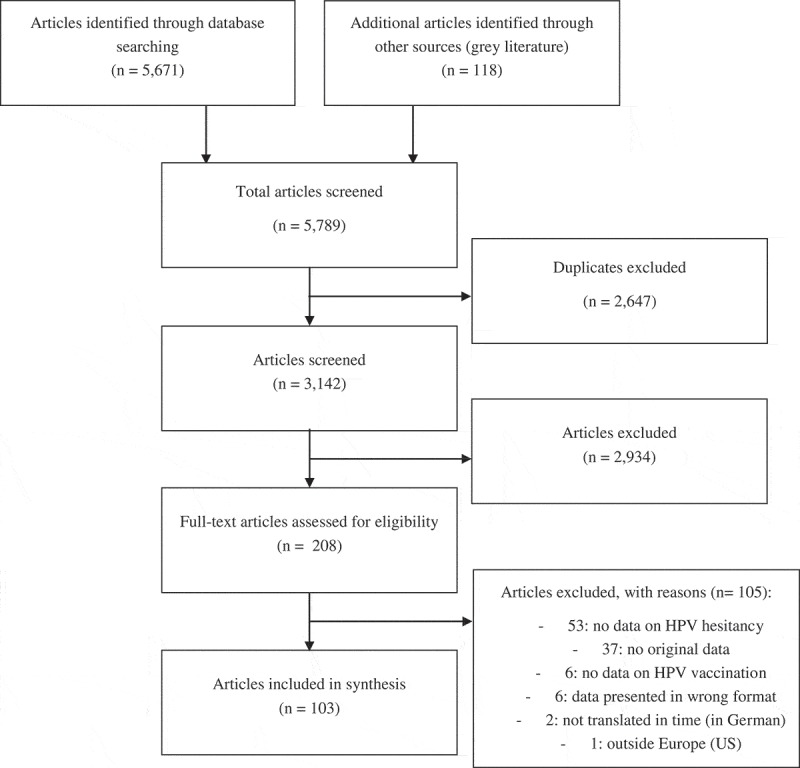
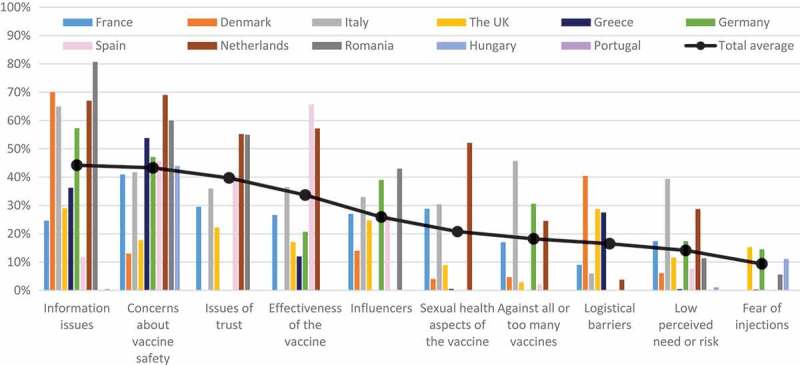
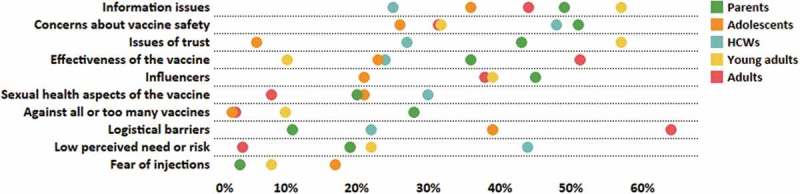
Europe is increasingly described as the region in the world with the least confidence in vaccination, and particularly in the safety of vaccines. The aim of this systematic literature review was to gather and summarise all peer-reviewed and grey literature published about determinants of Human Papillomavirus (HPV) vaccine hesitancy in Europe. Ten thematic categories were identified across the 103 articles which were included in the review. Participants from European studies most commonly reported issues with the quantity and quality of information available about HPV vaccination; followed by concerns about potential side effects of the vaccine; and mistrust of health authorities, healthcare workers, and new vaccines. Comparative analyses indicated that confidence determinants differed by country and population groups. This evidence supports the need to develop context-specific interventions to improve confidence in HPV vaccination and design community engagement strategies aiming to build public trust.
Overview
The claims and statistics of this paper haven’t been checked yet.
Run the check — free, no account needed. It reads the open-access text and checks the sources it cites.
Integrity signals
Registry
Cites
Statistics
Figures
Verification
Claims the paper makes
The claims and statistics of this paper haven’t been checked yet.
Run the check — free, no account needed. It reads the open-access text and checks the sources it cites.
Claims other papers make about this one
Each is checked against this paper’s own text: does it say what the citing paper says it does?
In the citing paper
“Low rates of vaccine compliance, particularly with the HPV vaccine,48 provide additional cautionary notes and highlight the challenges to be faced in overcoming potential vaccine hesitancy regarding SARS-CoV-2 vaccines in children.”
From SARS-CoV-2 vaccine testing and trials in the pediatric population: biologic, ethical, research, and implementation challenges (2021) · cites this paper as [48]
Self-check
Percentages, sums and reported differences re-computed from the paper’s own numbers.
The self-check needs the paper’s full text.
Citations
Cites
Dermyshi, E., Wang, Y., Yan, C., Hong, W., Qiu, G., Gong, X., & Zhang, T. (2017) · Neonatology · doi:10.1159/000454668 · Cited by 24,586
Meta-analysis of Observational Studies in Epidemiology<SUBTITLE>A Proposal for Reporting</SUBTITLE>
Stroup, D. F. (2000) · JAMA · doi:10.1001/jama.283.15.2008 · Cited by 20,623
Critical appraisal skills programme
Singh, J. (2013) · Journal of Pharmacology and Pharmacotherapeutics · doi:10.4103/0976-500x.107697 · Cited by 2,601
Methods for the synthesis of qualitative research: a critical review
Barnett-Page, E., & Thomas, J. (2009) · BMC Medical Research Methodology · doi:10.1186/1471-2288-9-59 · Cited by 2,386
Larson, H. J., Jarrett, C., Eckersberger, E., Smith, D. M. D., & Paterson, P. (2014) · Vaccine · doi:10.1016/j.vaccine.2014.01.081 · Cited by 2,254
Self-citationDubé, È., Laberge, C., Guay, M., Bramadat, P. A., Roy, R., & Bettinger, J. A. (2013) · Human Vaccines & Immunotherapeutics · doi:10.4161/hv.24657 · Cited by 2,178 · cited 1×
“A number of studies have shown that uncertainty can influence as much as empirical evidence in vaccination decision-making.(122,123) Uncertainty is still often framed as something that can be overcome by filling information gaps with more facts; however, mistrust of health authorities and some doctors was commonly rep…”
BackgroundRAMESES publication standards: realist syntheses
Wong, G., Greenhalgh, T., Westhorp, G., Buckingham, J., & Pawson, R. (2013) · BMC Medicine · doi:10.1186/1741-7015-11-21 · Cited by 1,374
The State of Vaccine Confidence 2016: Global Insights Through a 67-Country Survey
Larson, H. J., de Figueiredo, A., Xiahong, Z., Schulz, W. S., Verger, P., Johnston, I. G., Cook, A. R., & Jones, N. S. (2016) · EBioMedicine · doi:10.1016/j.ebiom.2016.08.042 · Cited by 1,264
Self-citationMeta‐synthesis method for qualitative research: a literature review
Walsh, D., & Downe, S. (2005) · Journal of Advanced Nursing · doi:10.1111/j.1365-2648.2005.03380.x · Cited by 1,246
Strategies for addressing vaccine hesitancy–A systematic review
Jarrett, C., Wilson, R., O’Leary, M., Eckersberger, E., & Larson, H. J. (2015) · Vaccine · doi:10.1016/j.vaccine.2015.04.040 · Cited by 1,066
Self-citationHow can systematic reviews incorporate qualitative research? A critical perspective
Dixon-Woods, M., Bonas, S., Booth, A., Jones, D. R., Miller, T., Sutton, A. J., Shaw, R. L., Smith, J. A., & Young, B. (2006) · Qualitative Research · doi:10.1177/1468794106058867 · Cited by 860
Bruni, L., Díaz, M., Barrionuevo-Rosas, L., Herrero, R., Bray, F., Bosch, F. X., de Sanjosé, S., & Castellsagué, X. (2016) · The Lancet Global Health · doi:10.1016/s2214-109x(16)30099-7 · Cited by 854 · cited 2×
“Coverage rates have been suboptimal in some EU countries, particularly in Eastern Europe but also in Ireland, France, and Denmark.(2) Romania had initiated a programme in 2008, but discontinued their HPV vaccination in 2014, due to very low acceptance.”
BackgroundInfluentialCommunicating with parents about vaccination: a framework for health professionals
Leask, J., Kinnersley, P., Jackson, C., Cheater, F., Bedford, H. E., & Rowles, G. (2012) · BMC Pediatrics · doi:10.1186/1471-2431-12-154 · Cited by 654
Strategies intended to address vaccine hesitancy: Review of published reviews
Dubé, È., Gagnon, D., & MacDonald, N. E. (2015) · Vaccine · doi:10.1016/j.vaccine.2015.04.041 · Cited by 649 · cited 2×
“This fear was reported by 19% of hesitant HCWs in studies in France (2007–2015)22,74,107 and 23% of hesitant parents in studies in Italy (2007–2014).27,50,75 Concerns about girls being too young were reported by an average of 13% of hesitant study participants23,26,27,29,30,32,35,45,75 and 30% of general study partici…”
BackgroundRAMESES publication standards: meta-narrative reviews
Wong, G., Greenhalgh, T., Westhorp, G., Buckingham, J., & Pawson, R. (2013) · BMC Medicine · doi:10.1186/1741-7015-11-20 · Cited by 610
RAMESES publication standards: realist syntheses
Wong, G., Greenhalgh, T., Westhorp, G., Buckingham, J., & Pawson, R. (2013) · Journal of Advanced Nursing · doi:10.1111/jan.12095 · Cited by 385
Karafillakis, E., & Larson, H. J. (2017) · Vaccine · doi:10.1016/j.vaccine.2017.07.061 · Cited by 317
Self-citationFuture acceptance of adolescent human papillomavirus vaccination: A survey of parental attitudes
Brabin, L., Roberts, S. A., Farzaneh, F., & Kitchener, H. C. (2006) · Vaccine · doi:10.1016/j.vaccine.2006.01.048 · Cited by 283 · cited 2×
“This fear was reported by 19% of hesitant HCWs in studies in France (2007–2015)22,74,107 and 23% of hesitant parents in studies in Italy (2007–2014).27,50,75 Concerns about girls being too young were reported by an average of 13% of hesitant study participants23,26,27,29,30,32,35,45,75 and 30% of general study partici…”
BackgroundParental attitudes to pre-pubertal HPV vaccination
Marlow, L. A. V., Waller, J., & Wardle, J. (2007) · Vaccine · doi:10.1016/j.vaccine.2007.01.059 · Cited by 245
Understanding vaccination resistance: moving beyond risk
Hobson-West, P. (2003) · Health, Risk & Society · doi:10.1080/13698570310001606978 · Cited by 243 · cited 1×
“A number of studies have shown that uncertainty can influence as much as empirical evidence in vaccination decision-making.(122,123) Uncertainty is still often framed as something that can be overcome by filling information gaps with more facts; however, mistrust of health authorities and some doctors was commonly rep…”
BackgroundBrabin, L., Roberts, S. A., Stretch, R., Baxter, D. N., Chambers, G., Kitchener, H. C., & McCann, R. (2008) · BMJ · doi:10.1136/bmj.39541.534109.be · Cited by 209 · cited 2×
“The belief that HPV vaccination might encourage promiscuity or earlier sexual debut in young girls was observed in an average of 11% of hesitant study participants.(22,23,26,32,50,71) This belief was also reported among 30% of general study participants(51,75,85,89,90,110,118) and 6% of favourable study participants.”
BackgroundGiuseppe, G. D., Abbate, R., Liguori, G., Albano, L., & Angelillo, I. F. (2008) · British Journal of Cancer · doi:10.1038/sj.bjc.6604454 · Cited by 189
Waller, J., Marlow, L. A. V., & Wardle, J. (2006) · Cancer Epidemiology Biomarkers & Prevention · doi:10.1158/1055-9965.epi-06-0041 · Cited by 174 · cited 3×
“Qualitative results Some participants in qualitative studies expressed a perceived lack of need for the HPV vaccine due to a perceived low risk of contracting HPV and/or cervical cancer,(55,59,66,80,100,109,115) a perceived low severity of the disease,(63,66,81) and/or the availability of alternative prevention method…”
BackgroundHendry, M., Lewis, R. A., Clements, A., Damery, S. L., & Wilkinson, C. (2013) · Vaccine · doi:10.1016/j.vaccine.2013.08.091 · Cited by 165
Ethnic differences in human papillomavirus awareness and vaccine acceptability
Marlow, L. A. V., Wardle, J., Forster, A. S., & Waller, J. (2009) · Journal of Epidemiology & Community Health · doi:10.1136/jech.2008.085886 · Cited by 153 · cited 2×
“The belief that HPV vaccination might encourage promiscuity or earlier sexual debut in young girls was observed in an average of 11% of hesitant study participants.(22,23,26,32,50,71) This belief was also reported among 30% of general study participants(51,75,85,89,90,110,118) and 6% of favourable study participants.”
BackgroundCrăciun, I. C., & Băban, A. (2012) · Vaccine · doi:10.1016/j.vaccine.2012.09.016 · Cited by 152 · cited 5×
“Qualitative results Healthcare professionals, including school nurses and GPs, were commonly referred to in qualitative studies as having the most influence on HPV vaccination decisions.(52,57,68,80,99,104,117) Additionally, the influence of family members, friends, and parents of other children who did not vaccinate…”
BackgroundResultInfluentialWoodhall, S. C., Lehtinen, M., Verho, T., Huhtala, H., Hokkanen, M., & Kosunen, E. (2007) · Journal of Adolescent Health · doi:10.1016/j.jadohealth.2007.01.005 · Cited by 138
Trust and Experience as Predictors of HPV Vaccine Acceptance
Marlow, L. A. V., Waller, J., & Wardle, J. (2007) · Human Vaccines · doi:10.4161/hv.3.5.4310 · Cited by 138 · cited 1×
“Mistrust of doctors was raised by 41% of hesitant parents in a 2009 study from the Netherlands,(26) and 45% of general parents and young adults in studies from Hungary (2009)(72) and the UK (2006).(91) Mistrust of new vaccines and concerns about the relative”
BackgroundBlödt, S., Holmberg, C., Müller‐Nordhorn, J., & Rieckmann, N. (2011) · European Journal of Public Health · doi:10.1093/eurpub/ckr188 · Cited by 137
McSherry, L. A., Dombrowski, S. U., Francis, J. J., Murphy, J., Martin, C. M., O’Leary, J. J., Sharp, L., & ATHENS Group (2012) · Implementation Science · doi:10.1186/1748-5908-7-73 · Cited by 129 · cited 4×
“The high cost of the HPV vaccine was mentioned in five qualitative studies, from 2009–2010 in Sweden,64,102 2010–2014 in Bulgaria,98,104 2014 in the UK,98 2014 in Spain,98 and 2012 in Ireland.63 Another access barrier was the inconvenience of going to get multiple injections.67,115 The challenge of vaccinating in scho…”
BackgroundInfluentialPatel, H., Jeve, Y. B., Sherman, S. M., & Moss, E. L. (2016) · Sexually Transmitted Infections · doi:10.1136/sextrans-2015-052341 · Cited by 129
Arnheim‐Dahlström, L., Tran, T. N., Lundholm, C., Young, C., Sundström, K., & Sparén, P. (2009) · International Journal of Cancer · doi:10.1002/ijc.24712 · Cited by 117
Predictors of interest in HPV vaccination: A study of British adolescents
Marlow, L. A. V., Waller, J., Evans, R. E. C., & Wardle, J. (2009) · Vaccine · doi:10.1016/j.vaccine.2009.02.057 · Cited by 113
Salad, J., Verdonk, P., de Boer, F., & Abma, T. (2015) · International Journal for Equity in Health · doi:10.1186/s12939-015-0198-3 · Cited by 94
Communication of risk: choice, consent, and trust
Calman, K. C. (2002) · The Lancet · doi:10.1016/s0140-6736(02)09421-7 · Cited by 93
Human papillomavirus infection and vaccination: Knowledge and attitudes among young males in Italy
Napolitano, F., Napolitano, P., Liguori, G., & Angelillo, I. F. (2016) · Human Vaccines & Immunotherapeutics · doi:10.1080/21645515.2016.1156271 · Cited by 93 · cited 1×
“Quantitative results Concerns about the safety of HPV vaccination and potential long- or short-term side effects were reported by an average of 43% of hesitant study participants.(23-29,31,32,34-38,40,42,46,49,70-81) Fear of side effects was reported by an average of 52% of general study participants(51,82-97) and 17%…”
BackgroundMortensen, G. L. (2010) · BMC Public Health · doi:10.1186/1471-2458-10-68 · Cited by 85 · cited 2×
“Qualitative results Healthcare professionals, including school nurses and GPs, were commonly referred to in qualitative studies as having the most influence on HPV vaccination decisions.(52,57,68,80,99,104,117) Additionally, the influence of family members, friends, and parents of other children who did not vaccinate…”
BackgroundGeneral practitioners’ attitudes and behaviors toward HPV vaccination: A French national survey
Collange, F., Fressard, L., Pulcini, C., Sebbah, R., Peretti‐Watel, P., & Verger, P. (2016) · Vaccine · doi:10.1016/j.vaccine.2015.12.054 · Cited by 84 · cited 2×
“This fear was reported by 19% of hesitant HCWs in studies in France (2007–2015)22,74,107 and 23% of hesitant parents in studies in Italy (2007–2014).27,50,75 Concerns about girls being too young were reported by an average of 13% of hesitant study participants23,26,27,29,30,32,35,45,75 and 30% of general study partici…”
BackgroundSelf-citationHaesebaert, J., Lutringer-Magnin, D., Kalecinski, J., Barone, G., Jacquard, A., Denois, V. R., Léocmach, Y., Vanhems, P., Chauvin, F., & Lasset, C. (2012) · BMC Public Health · doi:10.1186/1471-2458-12-1034 · Cited by 83
Marek, E., Dergez, T., Rébék-Nagy, G., Kricskovics, A., Kovács, K., Bózsa, S., Kiss, I., Ember, I., & Göcze, P. (2011) · Vaccine · doi:10.1016/j.vaccine.2011.09.018 · Cited by 80
Mortensen, G. L., Adam, M., & Idtaleb, L. (2015) · BMC Public Health · doi:10.1186/s12889-015-1863-6 · Cited by 76
Pediatrician knowledge and attitudes regarding human papillomavirus disease and its prevention
Esposito, S., Bosis, S., Pelucchi, C., Begliatti, E., Rognoni, A., Bellasio, M., Tel, F., Consolo, S., & Principi, N. (2007) · Vaccine · doi:10.1016/j.vaccine.2007.06.053 · Cited by 75
Grandahl, M., Oscarsson, M. G., Stenhammar, C., Nevéus, T., Westerling, R., & Tydén, T. (2013) · Acta Paediatrica · doi:10.1111/apa.12545 · Cited by 74 · cited 6×
“Qualitative results Qualitative studies reported beliefs that HPV vaccination might encourage promiscuity or earlier sexual debut in young girls(61,65-67,100,101,106,108,119) and that the vaccine could lead to unsafe sexual behaviour and a decrease in the use of condoms and cervical cancer screening.(55,57,63,64,66,67…”
BackgroundResultInfluentialBianco, A., Pileggi, C., Iozzo, F., Nobile, C. G. A., & Pavía, M. (2014) · Human Vaccines & Immunotherapeutics · doi:10.4161/21645515.2014.969614 · Cited by 73 · cited 3×
“newness of the HPV vaccine was reported by an average of 36% of hesitant study participants.(22,27,45,74,75,107,111,112) In French studies, concerns about the newness of the vaccine,”
BackgroundSimas, C., Muñóz, N., Arregocés-Castillo, L., & Larson, H. J. (2018) · Human Vaccines & Immunotherapeutics · doi:10.1080/21645515.2018.1511667 · Cited by 72 · cited 1×
“tion, which could prevent them from recommending the vaccine.(109,129) As HCWs are often considered the most trustworthy source of medical information,(130) it is important to address their own hesitancy, for instance by improving their training on the introduction of new vaccines.”
BackgroundSelf-citationDonders, G. G. G., Gabrovska, M., Bellen, G., Keirsbilck, J. V., den Bosch, T. V., Riphagen, I., & Verjans, M. (2007) · Archives of Gynecology and Obstetrics · doi:10.1007/s00404-007-0487-1 · Cited by 71
High HPV vaccine acceptance despite low awareness among Swedish upper secondary school students
Gottvall, M., Larsson, M., Höglund, A. T., & Tydén, T. (2009) · The European Journal of Contraception & Reproductive Health Care · doi:10.3109/13625180903229605 · Cited by 70
Mupandawana, E. T., & Cross, R. (2016) · Reproductive Health · doi:10.1186/s12978-016-0209-x · Cited by 68 · cited 3×
“Finally, conspiracy theories about the vaccine allegedly contributing to reducing world population or being an experiment on young girls were reported in studies in Bulgaria (2010–2013),(104) Romania (2010–2012),(52) Sweden (2014),(57) the Netherlands (2015),(65) and the UK (2007–2016).(59,100,105)”
BackgroundResultMass psychogenic response to human papillomavirus vaccination
Buttery, J. P., Madin, S., Crawford, N. W., Elia, S., Vincente, S. F. L., Hanieh, S., Smith, L. J., & Bolam, B. (2008) · The Medical Journal of Australia · doi:10.5694/j.1326-5377.2008.tb02018.x · Cited by 65
Transparency in Europe: A Quantitative Study
Bouder, F. E., Balog‐Way, D. H. P., Löfstedt, R. E., & Evensen, D. T. N. (2015) · Risk Analysis · doi:10.1111/risa.12386 · Cited by 65
Immigrant women's experiences and views on the prevention of cervical cancer: a qualitative study
Grandahl, M., Tydén, T., Gottvall, M., Westerling, R., & Oscarsson, M. G. (2012) · Health Expectations · doi:10.1111/hex.12034 · Cited by 63 · cited 2×
“In addition to worries about the duration of effectiveness of the vaccine, participants in qualitative studies also reported concerns that the vaccine did not protect against all types of HPV.(22,58,101,105,109,115,116) HUMAN VACCINES & IMMUNOTHERAPEUTICS 5”
BackgroundMedeiros, R., & Ramada, D. (2010) · Vaccine · doi:10.1016/j.vaccine.2010.10.068 · Cited by 63 · cited 1×
“administered, recent migration or not being in the target age group were also reported by an average 10% of hesitant participants in studies in the Netherlands (2009),(26) the UK (2011–2013),25,39 Italy (2008–2009),(121) Denmark (2009),(80) and Portugal (2007–2008).(33)”
BackgroundA survey of adolescent experiences of human papillomavirus vaccination in the Manchester study
Brabin, L., Roberts, S. A., Stretch, R., Baxter, D. N., Elton, P., Kitchener, H. C., & McCann, R. (2009) · British Journal of Cancer · doi:10.1038/sj.bjc.6605362 · Cited by 63
Marlow, L. A. V., Wardle, J., & Waller, J. (2009) · Human Vaccines · doi:10.4161/hv.5.2.7368 · Cited by 62 · cited 3×
“Qualitative results Some participants in qualitative studies expressed a perceived lack of need for the HPV vaccine due to a perceived low risk of contracting HPV and/or cervical cancer,(55,59,66,80,100,109,115) a perceived low severity of the disease,(63,66,81) and/or the availability of alternative prevention method…”
BackgroundHilton, S., & Smith, E. (2011) · Vaccine · doi:10.1016/j.vaccine.2011.03.101 · Cited by 58 · cited 2×
“In addition to worries about the duration of effectiveness of the vaccine, participants in qualitative studies also reported concerns that the vaccine did not protect against all types of HPV.(22,58,101,105,109,115,116) HUMAN VACCINES & IMMUNOTHERAPEUTICS 5”
BackgroundSchool nurses' experiences of delivering the UK HPV vaccination programme in its first year
Hilton, S., Hunt, K., Bedford, H. E., & Petticrew, M. P. (2011) · BMC Infectious Diseases · doi:10.1186/1471-2334-11-226 · Cited by 58 · cited 5×
“Qualitative results A few qualitative studies reported that some participants were against all vaccines.(54,57,59,69,99,104) 6 E.”
BackgroundInfluentialBrabin, L., Roberts, S. A., & Kitchener, H. C. (2007) · BMC Public Health · doi:10.1186/1471-2458-7-20 · Cited by 56 · cited 1×
“Qualitative results Healthcare professionals, including school nurses and GPs, were commonly referred to in qualitative studies as having the most influence on HPV vaccination decisions.(52,57,68,80,99,104,117) Additionally, the influence of family members, friends, and parents of other children who did not vaccinate…”
BackgroundParental Response to the Introduction of a Vaccine Against Human Papilloma Virus
Noakes, K., Yarwood, J., & SALISBURY, D. M. (2006) · Human Vaccines · doi:10.4161/hv.2.6.3391 · Cited by 54 · cited 3×
“Qualitative results Some participants in qualitative studies expressed a perceived lack of need for the HPV vaccine due to a perceived low risk of contracting HPV and/or cervical cancer,(55,59,66,80,100,109,115) a perceived low severity of the disease,(63,66,81) and/or the availability of alternative prevention method…”
BackgroundMorison, L. A., Cozzolino, P. J., & Orbell, S. (2009) · British Journal of Health Psychology · doi:10.1348/135910709x437092 · Cited by 53 · cited 3×
“In qualitative studies, the most commonly reported perceived side effect by parents was infertility.(52,57,59,60,65,100,102,106) Other perceived side effects included: autoimmune complications,(56,57,64,99,104,108) resistance of the virus to vaccines and/or treatment,(99,102,105) cancer,(52)menstrual complications,(65…”
BackgroundThe LYSISTRATA Study Group, Sotiriadis, A., Dagklis, T., Siamanta, V., Chatzigeorgiou, K., & Αγοραστός, Θ. (2012) · Archives of Gynecology and Obstetrics · doi:10.1007/s00404-011-2208-z · Cited by 51 · cited 2×
“Concerns about side effects were particularly prevalent among hesitant participants from studies in the Netherlands (2009–2011, 69%),(26,28) Romania (2010, 60%),(79) and Greece (2005–2014, 54%).(31,34,40,42,78)”
BackgroundLutringer-Magnin, D., Kalecinski, J., Barone, G., Léocmach, Y., Denois, V. R., Jacquard, A. C., Soubeyrand, B., Vanhems, P., Chauvin, F., & Lasset, C. (2011) · Vaccine · doi:10.1016/j.vaccine.2011.05.006 · Cited by 50 · cited 4×
“newness of the HPV vaccine was reported by an average of 36% of hesitant study participants.(22,27,45,74,75,107,111,112) In French studies, concerns about the newness of the vaccine,”
BackgroundInfluentialTrust versus concerns—how parents reason when they accept HPV vaccination for their young daughter
Gottvall, M., Grandahl, M., Höglund, A. T., Larsson, M., Stenhammar, C., Andrae, B., & Tydén, T. (2013) · Upsala Journal of Medical Sciences · doi:10.3109/03009734.2013.809039 · Cited by 49 · cited 1×
“In Sweden, study participants in 2012 worried about the safety of HPV vaccination due to reports of narcolepsy following H1N1 vaccination.(56)”
BackgroundGefenaitė, G., Smit, M., Nijman, H. W., Tami, A., Drijfhout, I. H., Pascal, A., Postma, M. J., Wolters, B., van Delden, J. J. M., Wilschut, J., et al. (2012) · BMC Public Health · doi:10.1186/1471-2458-12-498 · Cited by 49 · cited 6×
“Quantitative results Across all studies, an average of 34% of hesitant participants were found to doubt the effectiveness of the vaccine, 75,77,114 as well as 39% of general participants(43,46,82,84-86,96) and 3% of favourable participants.(26,37) Perceived low vaccine effec-”
BackgroundResultInfluentialStöcker, P., Dehnert, M., Schuster, M., Wichmann, O., & Deleré, Y. (2012) · Human Vaccines & Immunotherapeutics · doi:10.4161/hv.22192 · Cited by 47
Parental attitudes and information needs in an adolescent HPV vaccination programme
Stretch, R., Roberts, S. A., McCann, R., Baxter, D. N., Chambers, G., Kitchener, H. C., & Brabin, L. (2008) · British Journal of Cancer · doi:10.1038/sj.bjc.6604766 · Cited by 47 · cited 4×
“The belief that HPV vaccination might encourage promiscuity or earlier sexual debut in young girls was observed in an average of 11% of hesitant study participants.(22,23,26,32,50,71) This belief was also reported among 30% of general study participants(51,75,85,89,90,110,118) and 6% of favourable study participants.”
BackgroundResultInfluentialPredictors of HPV vaccination uptake: a longitudinal study among parents
Hofman, R. M., van Empelen, P., Richardus, J. H., de Kok, I. M. C. M., de Koning, H. J., van Ballegooijen, M., & Korfage, I. J. (2013) · Health Education Research · doi:10.1093/her/cyt092 · Cited by 47
Gordon, D., Waller, J., & Marlow, L. A. V. (2011) · Vaccine · doi:10.1016/j.vaccine.2011.07.083 · Cited by 45
Williams, K., Forster, A. S., Marlow, L. A. V., & Waller, J. (2011) · Journal of Family Planning and Reproductive Health Care · doi:10.1136/jfprhc.2010.0017 · Cited by 44 · cited 3×
“Another access barrier was the inconvenience of going to get multiple injections.(67,115)”
BackgroundResultSundström, K., Tran, T. N., Lundholm, C., Young, C., Sparén, P., & Arnheim‐Dahlström, L. (2010) · Vaccine · doi:10.1016/j.vaccine.2010.09.007 · Cited by 43
Stretch, R., McCann, R., Roberts, S. A., Elton, P., Baxter, D. N., & Brabin, L. (2009) · BMC Public Health · doi:10.1186/1471-2458-9-254 · Cited by 43 · cited 1×
“Additionally, some participants mentioned that the vaccine is being given to girls when they are too young because they have not started to menstruate, are not yet sexually active or married,(54,57,58,61,100,108) or because they are too “naïve and immature” to give their consent.(98,103) Some also reported that it is…”
BackgroundRemschmidt, C., Walter, D., Schmich, P., Wetzstein, M., Deleré, Y., & Wichmann, O. (2014) · Human Vaccines & Immunotherapeutics · doi:10.4161/21645515.2014.970920 · Cited by 41 · cited 2×
“Quantitative results Across all studies, an average of 34% of hesitant participants were found to doubt the effectiveness of the vaccine, 75,77,114 as well as 39% of general participants(43,46,82,84-86,96) and 3% of favourable participants.(26,37) Perceived low vaccine effec-”
BackgroundResultPelullo, C. P., Giuseppe, G. D., & Angelillo, I. F. (2012) · PLoS ONE · doi:10.1371/journal.pone.0042856 · Cited by 39 · cited 2×
“Some also reported that it is not easy to talk about HPV vaccination with girls that are so young.(20,53,54,59,61,63,79,98,99,105,108,114) Finally, cultural and religious influences on vaccine acceptance reported in studies included perceived low risk of infec-”
BackgroundTozzi, A. E., Ravà, L., Stat, D., Pandolfi, E., Marino, M. G., & Ugazio, A. G. (2009) · Vaccine · doi:10.1016/j.vaccine.2009.02.050 · Cited by 37 · cited 3×
“The belief that HPV vaccination might encourage promiscuity or earlier sexual debut in young girls was observed in an average of 11% of hesitant study participants.(22,23,26,32,50,71) This belief was also reported among 30% of general study participants(51,75,85,89,90,110,118) and 6% of favourable study participants.”
BackgroundExploring reasons for non-vaccination against human papillomavirus in Italy
VALORE, L. R. F., Giambi, C., D’Ancona, F. “., Manso, M. D., Mei, B. D., Giovannelli, I., Cattaneo, C., Possenti, V., & Declich, S. (2014) · BMC Infectious Diseases · doi:10.1186/s12879-014-0545-9 · Cited by 34 · cited 2×
“newness of the HPV vaccine was reported by an average of 36% of hesitant study participants.(22,27,45,74,75,107,111,112) In French studies, concerns about the newness of the vaccine,”
BackgroundColes, V., Patel, A. S., Allen, F., Keeping, S. T., & Carroll, S. (2014) · International Journal of STD & AIDS · doi:10.1177/0956462414554629 · Cited by 34
Navarro‐Illana, P., Díez‐Domingo, J., Navarro-Illana, E., Tuells, J., Alemán, S., & Puig‐Barberà, J. (2014) · BMC Public Health · doi:10.1186/1471-2458-14-490 · Cited by 33
Grandahl, M., Tydén, T., Rosenblad, A., Oscarsson, M. G., Nevéus, T., & Stenhammar, C. (2014) · BMC Public Health · doi:10.1186/1471-2458-14-540 · Cited by 33 · cited 2×
“monly reported by hesitant parents in a study in the Netherlands (2009, 52%)(26) and hesitant school nurses in a study in Sweden (2013, 48%).(110) The concern that it is too difficult to discussHPV vaccination with adolescent girls was also discussed in studies by an average of 21% of hesitant parents and paediatricia…”
BackgroundFacilitators and barriers HPV unvaccinated girls after 5 years of program implementation
Firenze, A., Marsala, M. G. L., Bonanno, V., Maranto, M., Ferrara, C., Giovannelli, L., & Restivo, V. (2014) · Human Vaccines & Immunotherapeutics · doi:10.4161/hv.36158 · Cited by 32 · cited 2×
“newness of the HPV vaccine was reported by an average of 36% of hesitant study participants.(22,27,45,74,75,107,111,112) In French studies, concerns about the newness of the vaccine,”
BackgroundMaier, C., Maier, T., Neagu, C., & Vlădăreanu, R. (2015) · European Journal of Obstetrics & Gynecology and Reproductive Biology · doi:10.1016/j.ejogrb.2015.09.029 · Cited by 32 · cited 1×
“Additionally, 11% of hesitant adolescent girls from a 2015 study from Romania reported that their parents thought the vaccine was unsafe.(30) An average of 75% of hesitant parents from a 2010 study from Romania(79) and 39% of hesitant young women from a 2013 study from Germany(37) reported being influenced by”
BackgroundKennedy, C. M., Brunton, C. G., & Hogg, R. (2013) · International Journal of Behavioral Medicine · doi:10.1007/s12529-013-9356-4 · Cited by 31 · cited 2×
“Additionally, some participants recommended providing information in schools, for instance by organising peer discussion groups with vaccinated girls(53,55-57,61,62,67,69); while others preferred social media or communication methods that allow more discretion.(52-54,62,69)”
BackgroundHofman, R., de Bekker-Grob, E. W., Raat, H., Helmerhorst, T. J. M., van Ballegooijen, M., & Korfage, I. J. (2014) · BMC Public Health · doi:10.1186/1471-2458-14-454 · Cited by 30
Challenges and opportunities of a new HPV immunization program
Gottvall, M., Tydén, T., Larsson, M., Stenhammar, C., & Höglund, A. T. (2011) · Vaccine · doi:10.1016/j.vaccine.2011.04.054 · Cited by 29
Understanding adolescents’ intentions to have the HPV vaccine
Forster, A. S., Marlow, L. A. V., Wardle, J., Stephenson, J., & Waller, J. (2009) · Vaccine · doi:10.1016/j.vaccine.2009.11.082 · Cited by 29
Jackson, C., Dyson, L., Bedford, H. E., Cheater, F., Condon, L., Crocker, A., Emslie, C., Ireland, L., Kemsley, P., Kerr, S., et al. (2016) · Health Technology Assessment · doi:10.3310/hta20720 · Cited by 29
Working with vaccine-hesitant parents
MacDonald, N. E., Finlay, J. C., & Canadian Paediatric Society (2013) · Paediatrics & Child Health · doi:10.1093/pch/18.5.265 · Cited by 27
Forster, A. S., Waller, J., Bowyer, H. L., & Marlow, L. A. V. (2015) · BMC Public Health · doi:10.1186/s12889-015-2657-6 · Cited by 27 · cited 5×
“A perceived lack of need for the HPV vaccine was reported by an average of 14% of hesitant study participants,(25,31,32,36,38,70,75,121) 5% of general study participants,(88,95) and 2% of favourable study participants.(25) A perceived low risk of contracting HPV infection or developing cervical cancer was reported by…”
BackgroundInfluentialParental attitudes towards vaccinating sons with human papillomavirus vaccine.
Mortensen, G. L. (2010) · PubMed · Cited by 27
Prue, G., Shapiro, G. K., Maybin, R., Santin, O., & Lawler, M. (2016) · Journal of Cancer Policy · doi:10.1016/j.jcpo.2016.09.009 · Cited by 27
Giuliani, M., Vescio, M. F., Donà, M. G., Latini, A., Frasca, M., Colafigli, M., Farinella, M., Rezza, G., & Cristaudo, A. (2016) · Human Vaccines & Immunotherapeutics · doi:10.1080/21645515.2015.1115935 · Cited by 26 · cited 1×
“attended sexual health clinics reported receiving contradictory advice.(87) Some adolescents also reported being influenced by their parents, with 25% of hesitant adolescent girls from studies in the UK (2008–2013),(23,68) 39% of general adolescent girls from a study in Germany (2010)(95) and 1% of general adolescent…”
BackgroundYoung women’s decision-making process for HPV vaccination
Oscarsson, M. G., Hannerfors, A.-K., & Tydén, T. (2012) · Sexual & Reproductive Healthcare · doi:10.1016/j.srhc.2012.10.002 · Cited by 25 · cited 1×
“In qualitative studies, the most commonly reported perceived side effect by parents was infertility.(52,57,59,60,65,100,102,106) Other perceived side effects included: autoimmune complications,(56,57,64,99,104,108) resistance of the virus to vaccines and/or treatment,(99,102,105) cancer,(52)menstrual complications,(65…”
BackgroundThe world must accept that the HPV vaccine is safe
Larson, H. J. (2015) · Nature · doi:10.1038/528009a · Cited by 25
Self-citationSadlier, C., Lynam, A., O’Dea, S., Delamere, S., Quinlan, M., Clarke, S., Sheils, O. M., & Bergin, C. J. (2016) · Human Vaccines & Immunotherapeutics · doi:10.1080/21645515.2016.1151588 · Cited by 25 · cited 2×
“In quantitative studies, cost was raised as an issue by an average of 32% of hesitant participants,31,38,74,75,80 particularly in studies in Denmark (2009, 62%)80 and Greece (2008–2014, 54%),31 and was also raised as a concern for an average of 47% of general study participants in Germany, Greece, Hungary, Ireland, an…”
BackgroundEstimated acceptance of HPV vaccination among Italian women aged 18–26 years
Giambi, C., Donati, S., Declich, S., Salmaso, S., Atti, M. L. C. D., Alibrandi, M. P., Brezzi, S., Carozzi, F., Collina, N., Franchi, D., et al. (2011) · Vaccine · doi:10.1016/j.vaccine.2011.08.079 · Cited by 24
The evaluation of an evidence-based clinical answer format for pediatricians
Seto, I., Foisy, M., Arkison, B., Klassen, T. P., & Williams, K. J. (2012) · BMC Pediatrics · doi:10.1186/1471-2431-12-34 · Cited by 22
Midwives at youth clinics attitude to HPV vaccination and their role in cervical cancer prevention
Oscarsson, M. G., Dahlberg, A., & Tydén, T. (2011) · Sexual & Reproductive Healthcare · doi:10.1016/j.srhc.2011.09.001 · Cited by 22 · cited 2×
“Almost all qualitative articles described concerns about potential side effects of HPV vaccination,(52-57,59,60,62,64,66,69,98-107) often described as fears of long-term side effects not yet identified through trials.(54,55,59,60,62,64,66,69,81,98-104,106) In qualitative studies, the most commonly reported perceived s…”
BackgroundKaramanidou, C., & Dimopoulos, Κ. (2016) · BMC Public Health · doi:10.1186/s12889-016-2831-5 · Cited by 22 · cited 4×
“Qualitative results Healthcare professionals, including school nurses and GPs, were commonly referred to in qualitative studies as having the most influence on HPV vaccination decisions.(52,57,68,80,99,104,117) Additionally, the influence of family members, friends, and parents of other children who did not vaccinate…”
BackgroundInfluentialHPV vaccination: vaccine acceptance, side effects and screening intentions.
Paul-Ebhohimhen, V., Huc, S., Tissington, H., Oates, K., & Stark, C. R. (2010) · PubMed · Cited by 21
Marek, E., Dergez, T., Kricskovics, A., Kovács, K., Rébék-Nagy, G., Gőcze, K., Kiss, I., Ember, I., & Göcze, P. (2011) · Vaccine · doi:10.1016/j.vaccine.2011.05.048 · Cited by 21
Sabiani, L., Bremond, A. G., Mortier, I., Lécuyer, M., Boubli, L., & Carcopino, X. (2011) · Journal de gynécologie, obstétrique et biologie de la reproduction. Supplément/Journal de gynécologie obstétrique et biologie de la reproduction · doi:10.1016/j.jgyn.2011.10.001 · Cited by 21
Working with vaccine-hesitant parents: An update
MacDonald, N. E., Desai, S. N., & Gerstein, B. (2018) · Paediatrics & Child Health · doi:10.1093/pch/pxy144 · Cited by 21
Sacks, R., Copas, A. J., Wilkinson, D., & Robinson, A. J. (2014) · Sexually Transmitted Infections · doi:10.1136/sextrans-2013-051179 · Cited by 20
Managing Uncertainty: Healthcare Professionals' Meanings Regarding the HPV Vaccine
Todorova, I. L. G., Alexandrova‐Karamanova, A., Panayotova, Y., Dimitrova, E., & Kotzeva, T. (2013) · International Journal of Behavioral Medicine · doi:10.1007/s12529-013-9343-9 · Cited by 19 · cited 3×
“Qualitative results Healthcare professionals, including school nurses and GPs, were commonly referred to in qualitative studies as having the most influence on HPV vaccination decisions.(52,57,68,80,99,104,117) Additionally, the influence of family members, friends, and parents of other children who did not vaccinate…”
BackgroundKorfage, I. J., Essink‐Bot, M., Daamen, R., Mols, F., & van Ballegooijen, M. (2008) · European Journal of Cancer · doi:10.1016/j.ejca.2008.03.018 · Cited by 19 · cited 1×
“Concerns about girls being too young were reported by an average of 13% of hesitant study participants(23,26,27,29,30,32,35,45,75) and 30% of general study participants.(48,110) It was most com-”
BackgroundHPV vaccination acceptability in young boys.
Tisi, G., Salinaro, F., Apostoli, P., Bassani, R., Bellicini, A., Groppi, L., Donarini, P., & Pecorelli, S. (2013) · PubMed · doi:10.4415/ann_13_03_09 · Cited by 19
Parental Decisional Strategies Regarding HPV Vaccination Before Media Debates: A Focus Group Study
Hofman, R., van Empelen, P., Vogel, I., Raat, H., van Ballegooijen, M., & Korfage, I. J. (2013) · Journal of Health Communication · doi:10.1080/10810730.2012.757390 · Cited by 18 · cited 3×
“In qualitative studies, the most commonly reported perceived side effect by parents was infertility.(52,57,59,60,65,100,102,106) Other perceived side effects included: autoimmune complications,(56,57,64,99,104,108) resistance of the virus to vaccines and/or treatment,(99,102,105) cancer,(52)menstrual complications,(65…”
BackgroundMammas, I., Theodoridou, M. N., Koutsaftiki, C., Bertsias, G. K., Sourvinos, G., & Spandidos, D. A. (2015) · Journal of Pediatric and Adolescent Gynecology · doi:10.1016/j.jpag.2015.12.007 · Cited by 18 · cited 2×
“Concerns about side effects were particularly prevalent among hesitant participants from studies in the Netherlands (2009–2011, 69%),(26,28) Romania (2010, 60%),(79) and Greece (2005–2014, 54%).(31,34,40,42,78)”
BackgroundMichail, G., Smaili, M., Vozikis, A., Jelastopulu, E., Adonakis, G. L., & Poulas, K. A. (2014) · Public Health · doi:10.1016/j.puhe.2014.09.005 · Cited by 17 · cited 1×
“Concerns about side effects were particularly prevalent among hesitant participants from studies in the Netherlands (2009–2011, 69%),(26,28) Romania (2010, 60%),(79) and Greece (2005–2014, 54%).(31,34,40,42,78)”
BackgroundOpinions et pratiques des médecins généralistes face à la vaccination anti-Papillomavirus
Piana, L., Noel, G., Uters, M., Laporte, R., & Minodier, P. (2009) · Médecine et Maladies Infectieuses · doi:10.1016/j.medmal.2009.08.007 · Cited by 17
Rachiotis, G., Papagiannis, D., Symvoulakis, E. K., Daponte, A. I., Grivea, I. N., Syrogiannopoulos, G. A., & Hadjichristodoulou, C. S. (2013) · Journal of Multidisciplinary Healthcare · doi:10.2147/jmdh.s49558 · Cited by 17 · cited 2×
“Concerns about side effects were particularly prevalent among hesitant participants from studies in the Netherlands (2009–2011, 69%),(26,28) Romania (2010, 60%),(79) and Greece (2005–2014, 54%).(31,34,40,42,78)”
BackgroundLasset, C., Kalecinski, J., Denois, V. R., Barone, G., Léocmach, Y., Vanhems, P., Chauvin, F., & Lutringer-Magnin, D. (2014) · International Journal of Public Health · doi:10.1007/s00038-014-0555-9 · Cited by 17
HPV vaccine acceptance among female Greek students
Bakogianni, G. D., Nikolakopoulos, K. M., & Nikoleta M Nikolakopoulou (2010) · International Journal of Adolescent Medicine and Health · doi:10.1515/ijamh.2010.22.2.271 · Cited by 14 · cited 1×
“Concerns about side effects were particularly prevalent among hesitant participants from studies in the Netherlands (2009–2011, 69%),(26,28) Romania (2010, 60%),(79) and Greece (2005–2014, 54%).(31,34,40,42,78)”
BackgroundNavarro‐Illana, P., Caballero, P., Tuells, J., Puig‐Barberà, J., & Díez‐Domingo, J. (2015) · Anales de Pediatría · doi:10.1016/j.anpedi.2014.11.018 · Cited by 14
Martinez, L., Tugaut, B., Raineri, F., Arnould, B., Seyler, D., Arnould, P., Benmedjahed, K., Coindard, G., Denis, F., Gallais, J.-L., et al. (2016) · Santé Publique · doi:10.3917/spub.161.0019 · Cited by 14 · cited 4×
“Another access barrier was the inconvenience of going to get multiple injections.(67,115)”
BackgroundInfluentialD’Hauwers, K., Gadet, P. F. E., Donders, A. R. T., & Tjalma, W. A. A. (2013) · Vaccine · doi:10.1016/j.vaccine.2013.09.068 · Cited by 13
Brunton, C. G., Farver-Vestergaard, I., Jaeger, M., Lenneis, A., Parve, K., Patarcic, D., Petrova, D., Hogg, R., Kennedy, C. M., García‐Retamero, R., et al. (2013) · International Journal of Behavioral Medicine · doi:10.1007/s12529-013-9357-3 · Cited by 12 · cited 4×
“and perceptions that doctors were dismissive and deliberately withheld information about side effects.(52,65,98,104) Mistrust of pharmaceutical companies due to their underlying profitmaking motives and doubts about the trustworthiness of vaccine trials and safety claims were also reported in studies in Bulgaria (2009…”
BackgroundInfluentialPérez, R. O., Violeta, V. B., del Campo, A. V., Ruiz, C., Castaño, S. Y., Conde, L. P. P., & López, J. S. J. (2015) · Infectious Agents and Cancer · doi:10.1186/s13027-015-0034-9 · Cited by 12
Sexual healthcare professionals’ views on HPV vaccination for men in the UK
Nadarzynski, T., Smith, H. E., Richardson, D., Ford, E. M., & Llewellyn, C. D. (2015) · British Journal of Cancer · doi:10.1038/bjc.2015.403 · Cited by 12
Pop, C. A. (2014) · Culture Health & Sexuality · doi:10.1080/13691058.2014.948491 · Cited by 11 · cited 1×
“tion because of certain lifestyles (being virgins when marrying, having only one partner),(54,57,60,61,65,99,100,105,108,109) and having a strong sense of fatality and/or belief that God will protect girls.(113)”
BackgroundVacuna contra el virus del papiloma humano en adolescentes: Análisis mediante grupos focales
Puig, R. C., & Sanchis, M. M. (2015) · Revista de Salud Pública · doi:10.15446/rsap.v16n5.41021 · Cited by 9 · cited 2×
“Qualitative results Healthcare professionals, including school nurses and GPs, were commonly referred to in qualitative studies as having the most influence on HPV vaccination decisions.(52,57,68,80,99,104,117) Additionally, the influence of family members, friends, and parents of other children who did not vaccinate…”
BackgroundLutringer-Magnin, D., Kalecinski, J., Barone, G., Borne, H., Denois, V. R., Vanhems, P., Chauvin, F., & Lasset, C. (2011) · Gynécologie Obstétrique & Fertilité · doi:10.1016/j.gyobfe.2011.07.015 · Cited by 9
Pratiques et attitudes des médecins généralistes de Besançon vis-à-vis de la vaccination anti-HPV
Bouvret, P., Mougin, C., Prétet, J., Meurisse, A., Bonnetain, F., & Fiteni, F. (2016) · Journal de gynécologie, obstétrique et biologie de la reproduction. Supplément/Journal de gynécologie obstétrique et biologie de la reproduction · doi:10.1016/j.jgyn.2015.12.002 · Cited by 9
Acceptability of human papillomavirus vaccine in mothers from Valencia (Spain)
Navarro‐Illana, P., Caballero, P., Tuells, J., Puig‐Barberà, J., & Díez‐Domingo, J. (2015) · Anales de Pediatría (English Edition) · doi:10.1016/j.anpede.2015.09.021 · Cited by 9
Perceptions of HPV vaccine amongst UK university students
Martin, E., Senior, N., Abdullah, A., Brown, J., Collings, S., Racktoo, S., Walpole, S. C., Zeiton, M. A., & Heffernan, C. (2011) · Health Education · doi:10.1108/09654281111180481 · Cited by 7 · cited 1×
“Qualitative results Qualitative studies reported beliefs that HPV vaccination might encourage promiscuity or earlier sexual debut in young girls(61,65-67,100,101,106,108,119) and that the vaccine could lead to unsafe sexual behaviour and a decrease in the use of condoms and cervical cancer screening.(55,57,63,64,66,67…”
Backgroundvan der Berg, J. D., Roorda, J., & Westerman, M. J. (2010) · PubMed · Cited by 5
Entscheidungsfindung zur HPV-Impfung – Eine qualitative Studie mit jugendlichen Mädchen
Klötzler, A., & Kolip, P. (2011) · Das Gesundheitswesen · doi:10.1055/s-0031-1286270 · Cited by 4 · cited 5×
“Qualitative results A few qualitative studies reported that some participants were against all vaccines.(54,57,59,69,99,104) 6 E.”
BackgroundInfluentialAllaying parental concerns about the human papillomavirus vaccine
Hutton, S., & Finlay, F. (2009) · Nursing Children and Young People · doi:10.7748/paed2009.11.21.9.20.c7356 · Cited by 3
Hpv vaccination acceptance among women in Greek provincial areas
Βολτυράκη, Ε. Γ., Τσετσέκου, Ε., Marneras, C., Krapis, K., Yfantis, A., & Νούλα, Μ. (2010) · Cited by 3
Kuitto, K., Pickel, S., & Jahn, D. (2010) · Prävention und Gesundheitsförderung · doi:10.1007/s11553-010-0235-4 · Cited by 2
Parents' awareness and acceptance of HPV vaccination in Italy.
Baglioni, A. J., Ceriale, E., Bagnoli, A., Mercone, A., Nante, N., & Messina, G. (2014) · PubMed · Cited by 2
[Vaccination against papillomavirus: words of adolescents].
Fidalgo, C., Mauron, C., Nyffeler, S., Pache, B. C.-E., & Pereira, P. P. (2013) · PubMed · Cited by 2
[Posters at scientific congresses].
Steinert, T. (2012) · PubMed · Cited by 1
Research works printed but not linked: 5
- European Centre for Disease Prevention and Control. Rapid literature review on motivating hesitant population groups in Europe to vaccinate. Stockholm, Sweden: ECDC; 2015.
- Pope C, Mays N, Jennie P. Synthesising qualitative and quantitative health evidence: a guide to methods. Maidenhead, England: Open University Press; 2007.
- The Joanna Briggs Institute. The Joanna Briggs institute reviewers’ manual - methodology for JBI mixed methods systematic reviews. Adelaide, Australia: The University of Adelaide; 2014.
- Camano-Puig R, Sanchis-Martinez MM. Human papilloma virus vaccination in teenage girls: a focus group evaluation. Revista de Salud Publica. 2014;16:646–57.
- Abram Z, Tar G. Health education of mothers about their girls’ vaccination. 4th world conference on educational sciences. Procedia Soc Behav Sci. 2012;462012:5330–34.
Cited by
Sorted by citations
Vaccine hesitancy in the era of COVID-19
Troiano, G., & Nardi, A. (2021) · Public Health · doi:10.1016/j.puhe.2021.02.025 · Cited by 1,342
Freeman, D. H., Loe, B. S., Chadwick, A., Vaccari, C., Waite, F., Rosebrock, L. E., Jenner, L., Petit, A., Lewandowsky, S., Vanderslott, S., et al. (2020) · Psychological Medicine · doi:10.1017/s0033291720005188 · Cited by 802
Larson, H. J., Gakidou, E. E., & Murray, C. J. L. (2022) · New England Journal of Medicine · doi:10.1056/nejmra2106441 · Cited by 516
Self-citationChew, N., Cheong, C., Kong, G., Phua, K., Ngiam, J. N., Tan, B. Y., Wang, B., Hao, F., Tan, W., Han, X., et al. (2021) · International Journal of Infectious Diseases · doi:10.1016/j.ijid.2021.03.069 · Cited by 177
Overcoming COVID-19 vaccine hesitancy among ethnic minorities: A systematic review of UK studies
Hussain, B., Latif, A., Timmons, S., Nkhoma, K. B., & Nellums, L. B. (2022) · Vaccine · doi:10.1016/j.vaccine.2022.04.030 · Cited by 135
“Misconceptions about the immunisation process [45], lack of trust in government or healthcare [46], newness of a vaccine [47], perceived incompatibility of vaccines with religious and cultural beliefs [25] and conspiracy theories [48] were highlighted as factors known to aggravate lack of confidence in vaccines.”
Metadata
- Authors
- Karafillakis, E., Simas, C., Jarrett, C., Verger, P., Peretti-Watel, P., Dib, F., De Angelis, S., Takacs, J., Ali, K. A., Pastore Celentano, L., & Larson, H.
- Affiliations
- London School of Hygiene & Tropical Medicine (GB)
- Swiss Tropical and Public Health Institute (CH)
- Inserm (FR)
- Aix Marseille Univ, IRD, AP-HM, SSA, VITROME, IHU-Méditerranée Infection, Marseille, France
- Vaccine Preventable Disease Programme, European Centre for Disease Prevention and Control, Stockholm, Sweden
- Centre for Social Sciences, Hungarian Academy of Sciences, Budapest, Hungary
- European Centre for Disease Prevention and Control (SE)
- University of Washington (US)
- Corresponding author
- Karafillakis, Emilie
- Venue
- Human Vaccines & Immunotherapeutics
- Publisher
- Informa UK Limited
- Published
- 2019-02-20
- Volume
- 15
- Issue
- 7-8
- Pages
- 1615-1627
- ISSN
- 2164-5515 (ISSN-L)
- 2164-554X
- PMC
- PMC6783136
- OpenAlex
- W2910348912
- Cited by
- 328
- References
- 132
- Citations by year
- 2026: 43 · 2025: 53 · 2024: 49 · 2023: 48 · 2022: 63 · 2021: 36 · 2020: 25 · 2019: 11
- FWCI
- 7.18
- Type
- journal article
- Language
- en
- Open access
- hybrid
- doi.org
- Licence
- Locations
- Human Vaccines & Immunotherapeutics (publishedVersion, cc-by-nc-nd)
- PubMed Central (publishedVersion, cc-by-nc-nd)
- PubMed (publishedVersion)
- edoc (University of Basel) (acceptedVersion)
- Repository of the Academy's Library (Library of the Hungarian Academy of Sciences) (acceptedVersion)
- DOAJ (DOAJ: Directory of Open Access Journals) (acceptedVersion)
- LSHTM Research Online (London School of Hygiene and Tropical Medicine) (acceptedVersion)
- HAL AMU (submittedVersion, cc-by-nc-nd)
- Funders
- European Centre for Disease Prevention and Control (OCS-2016-0UT-2050-MCTeFo)
- Topics
- Social Sciences › Health › Vaccine Coverage and Hesitancy
- Health Sciences › Medicine › Epidemiology › Cervical Cancer and HPV Research
- Health Sciences › Medicine › Public Health, Environmental and Occupational Health › Women's cancer prevention and management
- Keywords
- HPV vaccination, vaccine hesitancy, vaccine confidence, vaccine safety concerns, vaccine side effects, determinants of vaccine hesitancy, community participation, Europe
- MeSH terms
- Vaccination Refusal, Uterine Cervical Neoplasms, Europe, Female, Humans, Health Knowledge, Attitudes, Practice, Patient Acceptance of Health Care, Vaccination, Papillomavirus Infections, Uncertainty, Trust, Papillomavirus Vaccines
About these checks
Registry, retraction, Cites and statistics results are computed, not judged, with one exception: a printed reference that no index lists is read once by a model before it counts as a citation error. Claims are extracted by a model and kept only when their quote appears verbatim in the text; each cited source is then checked, with a model’s help, for whether it says what the claim relies on. Those verdicts can be wrong — read the claim’s quote and the cited source before relying on one.
Statistics and arithmetic are recomputed, not judged.
Confidence bands are shown only for fields calibrated on our annotated test set. None is calibrated yet, so no band is shown.
What counts as a claim ›How we measure confidence ›How we check this ›
Are you an author, or do you see a problem with this page? Request a review
