

Nutrient supplementation strategy improves cell concentration and longevity, monoclonal antibody production and lactate metabolism of Chinese hamster ovary cells
Open accessThe DOI matches its Crossref record; 48 of the 48 references it cites were found in a registry or an index.
Abstract
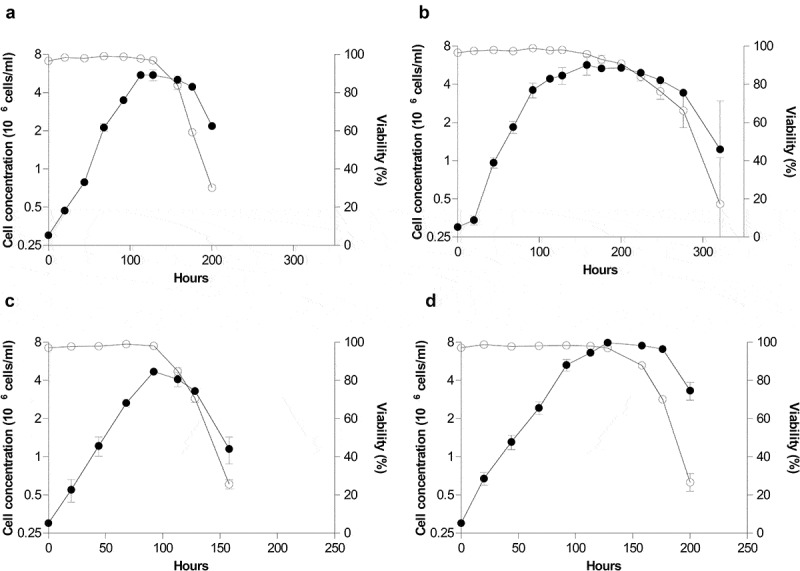
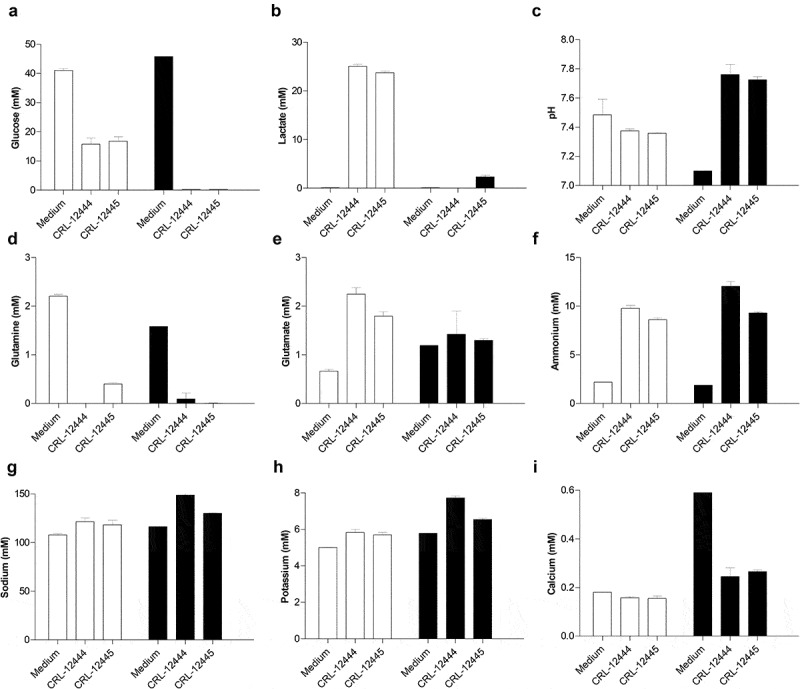
A careful selection of culture mediums and feeds has become necessary to maximize yields of recombinant proteins during bioprocesses of mammalian cells. Supplements contain a variety of concentrate nutrients, and their beneficial effects vary according to recombinant cell lines. In this study, the effects of PowerFeed A on growth kinetics, productivity and cellular metabolism were evaluated for two Chinese hamster ovary cell lines producing a monoclonal antibody in a batch culture. Supplemented cultures increased integral viable cell density of CRL-12444 and CRL-12445 cells by 2.4 and 1.6 times through extension of culture time at which viability was above 90% in 72 and 36 h, respectively, and increment of maximal cell concentration in 3.25 × 10⁶ cells/ml (69%) for CRL-12445 cells. Product titer augmented 1.9 and 2.5 times for CRL-12444 and CRL-12445 cells, respectively, without changes in growth rate and specific productivity. Feed supplementation also stimulated full consumption of glucose and free glutamine and reduced 10 times lactate accumulation, while ammonium, sodium and potassium remained at similar concentrations at the end of the culture. About 44% of calcium, mainly provided by feed, was consumed by both cell lines. Maximization of cellular growth, viability and protein titer through feeding encourages extending its use to other cell lines and exploring novel combinations with other basal mediums or feeds. A thorough investigation of its impact on protein quality and the molecular mechanisms behind these effects will allow designing effective feeds and strategies to rationally optimize protein production in the biomanufacturing industry.
Overview
The claims and statistics of this paper haven’t been checked yet.
Free: it reads the open-access text and checks the first 5 claims that cite a source we can check. Create a free account to check every claim.
Integrity signals
Registry
Cites
Statistics
Figures
Verification
Claims the paper makes
The claims and statistics of this paper haven’t been checked yet.
Free: it reads the open-access text and checks the first 5 claims that cite a source we can check. Create a free account to check every claim.
Claims other papers make about this one
Each is checked against this paper’s own text: does it say what the citing paper says it does?
The source backs part of the claim, not all of it — or backs it for a different population, condition or comparison.
In the citing paper
“The VCD data of run #3 showed that intermittent perfusion could not elevate the cells density, which is mainly attributed to the nutrient shortage (Pérez-Rodriguez et al., 2020; MacDonald et al., 2021).”
From Enhancing and stabilizing monoclonal antibody production by Chinese hamster ovary (CHO) cells with optimized perfusion culture strategies (2023) · cites this paper as Pérez-Rodriguez et al., 2020
Experimental — accuracy not yet measured
Self-check
Percentages, sums and reported differences re-computed from the paper’s own numbers.
The self-check needs the paper’s full text.
Citations
Cites
Trypan Blue Exclusion Test of Cell Viability
Strober, W. (2015) · Current Protocols in Immunology · doi:10.1002/0471142735.ima03bs111 · Cited by 2,597
Trypan Blue Exclusion Test of Cell Viability
Strober, W. (1997) · Current Protocols in Immunology · doi:10.1002/0471142735.ima03bs21 · Cited by 1,345
Biopharmaceutical benchmarks 2018
Walsh, G. (2018) · Nature Biotechnology · doi:10.1038/nbt.4305 · Cited by 978 · cited 1×
“Chinese hamster ovary (CHO) cells have been widely employed for expression of recombinant proteins (RPs); indeed, most of the approved human therapeutic antibodies (84%) have been produced in this cellular platform [1].”
BackgroundAnimal‐cell culture media: History, characteristics, and current issues
Yao, T., & Asayama, Y. (2017) · Reproductive Medicine and Biology · doi:10.1002/rmb2.12024 · Cited by 536
Effects of ammonia and lactate on hybridoma growth, metabolism, and antibody production
Ozturk, S. S., Riley, M. R., & Palsson, B. O. (1992) · Biotechnology and Bioengineering · doi:10.1002/bit.260390408 · Cited by 370
The importance of ammonia in mammalian cell culture
Schneider, M. (1996) · Journal of Biotechnology · doi:10.1016/0168-1656(95)00196-4 · Cited by 343
Ritacco, F. V., Wu, Y., & Khetan, A. (2018) · Biotechnology Progress · doi:10.1002/btpr.2706 · Cited by 273 · cited 2×
“given the biotechnological value of these cells, the development of new culture media, feeds and culture methods and the improvement of those already used for their culture are a continuous process [2].”
BackgroundLao, M.-S., & Toth, D. (1997) · Biotechnology Progress · doi:10.1021/bp9602360 · Cited by 268 · cited 2×
“These findings highlight the importance of using supplements that prevent lactate accumulation during bioprocesses, like those that also maintain low lactate levels facilitating a more efficient consumption of glucose and glutamine and contributing to higher maximal cell concentration, MAb titer and product quality [3…”
BackgroundFan, Y., Jimenez Del Val, I., Müller, C., Wagtberg Sen, J., Rasmussen, S. K., Kontoravdi, C., Weilguny, D., & Andersen, M. R. (2015) · Biotechnology and Bioengineering · doi:10.1002/bit.25450 · Cited by 217
Effects of ammonia on CHO cell growth, erythropoietin production, and glycosylation
Yang, M., & Butler, M. (2000) · Biotechnology and Bioengineering · doi:10.1002/(sici)1097-0290(20000520)68:4<370::aid-bit2>3.0.co;2-k · Cited by 212
Cited by
Osmolality Effects on CHO Cell Growth, Cell Volume, Antibody Productivity and Glycosylation
Alhuthali, S., Kotidis, P., & Kontoravdi, C. (2021) · International Journal of Molecular Sciences · doi:10.3390/ijms22073290 · Cited by 109
Valdez‐Cruz, N. A., García‐Hernández, E., Espitia, C., Cobos-Marín, L., Altamirano, C., Bando-Campos, C. G., Cofas‐Vargas, L. F., Coronado-Aceves, E. W., González-Hernández, R. A., Hernández‐Peralta, P., et al. (2021) · Microbial Cell Factories · doi:10.1186/s12934-021-01576-5 · Cited by 58
Self-citationCarrara, S. C., Ulitzka, M., Grzeschik, J., Kornmann, H., Hock, B. M., & Kolmar, H. (2020) · International Journal of Pharmaceutics · doi:10.1016/j.ijpharm.2020.120164 · Cited by 57
Wei, Q., Ren, Y., Zheng, X., Yang, S., Lü, T., Ji, H., Hua, H., & Shan, K. (2022) · Bioengineered · doi:10.1080/21655979.2022.2074616 · Cited by 50
RetractedExpression of mammalian proteins for diagnostics and therapeutics: a review
Mark, J. K. K., Lim, C. S. Y., Nordin, F., & Tye, G. J. (2022) · Molecular Biology Reports · doi:10.1007/s11033-022-07651-3 · Cited by 48
Liang, K., Luo, H., & Li, Q. (2023) · Frontiers in Bioengineering and Biotechnology · doi:10.3389/fbioe.2023.1112349 · Cited by 37
“The VCD data of run #3 showed that intermittent perfusion could not elevate the cells density, which is mainly attributed to the nutrient shortage (Pérez-Rodriguez et al., 2020; MacDonald et al., 2021).”
BackgroundRodriguez, S. P., Wulff, T., Voldborg, B. G. R., Altamirano, C., Trujillo‐Roldán, M. A., & Valdez‐Cruz, N. A. (2021) · ACS Omega · doi:10.1021/acsomega.0c06030 · Cited by 24
Self-citationHeng, Z. S., Yeo, J. Y., Koh, D. W., Gan, S. K., & Ling, W. (2022) · Antibody Therapeutics · doi:10.1093/abt/tbac003 · Cited by 21
Bioprocess development of a stable FUT8−/−-CHO cell line to produce defucosylated anti-HER2 antibody
Yuan, Y., Zong, H., Bai, J., Han, L., Wang, L., Zhang, X., Zhang, X., Zhang, J., Xu, C., Zhu, J., et al. (2019) · Bioprocess and Biosystems Engineering · doi:10.1007/s00449-019-02124-7 · Cited by 20
Strasser, L., Farrell, A., Ho, J. T. C., Scheffler, K., Cook, K., Pankert, P., Mowlds, P., Viner, R., Karger, B. L., & Bones, J. (2021) · Frontiers in Bioengineering and Biotechnology · doi:10.3389/fbioe.2021.569045 · Cited by 19
Gyorgypal, A., Fratz‐Berilla, E. J., Kohnhorst, C. L., Powers, D. N., & Chundawat, S. P. S. (2025) · Biotechnology and Bioengineering · doi:10.1002/bit.28999 · Cited by 17
Zhao, C., Bai, Y., Fu, S., Wu, L., Xia, C., & Xu, C. (2021) · Frontiers in Veterinary Science · doi:10.3389/fvets.2020.609391 · Cited by 14
Toporova, V. A., Аргентова, В. В., Aliev, T. K., Панина, А. А., Dolgikh, D. A., & Kirpichnikov, M. P. (2023) · Journal of Genetic Engineering and Biotechnology · doi:10.1186/s43141-023-00474-0 · Cited by 13
Shi, Y., Wan, Y., Sun, Y., Yang, J., Lu, Y., Xie, X., Pan, J., Wang, H., & Qu, H. (2024) · Biotechnology Journal · doi:10.1002/biot.202300495 · Cited by 13
Xin, G., Yang, J., Li, R., Gao, Q., Li, R., Wang, J., Zhang, J., & Wang, J. (2022) · Bioengineered · doi:10.1080/21655979.2022.2043018 · Cited by 12
Behravan, A., Hashemi, A., & Marashi, S. (2022) · Biochemical Engineering Journal · doi:10.1016/j.bej.2022.108339 · Cited by 9
Peltret, M., Vetsch, P., Farvaque, E., Mette, R., Tsachaki, M., Duarte, L., Duret, A., Vaxelaire, E., Frank, J., Moritz, B., et al. (2024) · Journal of Biotechnology · doi:10.1016/j.jbiotec.2024.04.017 · Cited by 8
Jarusintanakorn, S., Mastrobattista, E., & Yamabhai, M. (2024) · New Biotechnology · doi:10.1016/j.nbt.2024.06.006 · Cited by 8
Liang, K., Luo, H., & Li, Q. (2024) · Fermentation · doi:10.3390/fermentation10070352 · Cited by 8
Yatipanthalawa, B. S., Lee, Y. Y., Gras, S. L., & Martin, G. J. O. (2026) · Biotechnology Advances · doi:10.1016/j.biotechadv.2026.108866 · Cited by 6
Zhang, D., Qiu, J., Niu, Q., Liu, T., Gu, R., Zhang, X., & Luo, S. (2023) · Preparative Biochemistry & Biotechnology · doi:10.1080/10826068.2023.2166959 · Cited by 5
Fang, Y., Lu, L., Ou, G., Zhu, Q., Sun, Z., Liu, Z., Yeung, M., & Xi, J. (2025) · Process Biochemistry · doi:10.1016/j.procbio.2025.05.001 · Cited by 4
Kim, T., Kim, D. E., Lee, H.-M., Kang, M., Kim, J. H., You, J., Lee, M. K., & Kim, Y. (2025) · Journal of Microbiology and Biotechnology · doi:10.4014/jmb.2501.01036 · Cited by 4
Scherzinger, J., Türk, D., & Aprile-Garcia, F. (2022) · bioRxiv (Cold Spring Harbor Laboratory) · doi:10.1101/2022.12.16.520697 · Cited by 4
Hyperbox Mixture Regression for process performance prediction in antibody production
Nik-Khorasani, A., Khuat, T. T., & Gabryś, B. (2025) · Digital Chemical Engineering · doi:10.1016/j.dche.2025.100221 · Cited by 3
Eriksen‐Stapleton, D., King, M., Dong, G., Srivastava, D., Iskra, T., Aho, V., Nguyen, K., Ingaharro, L., Scarcelli, J. J., Ochocki, J. D., et al. (2025) · Biotechnology and Bioengineering · doi:10.1002/bit.28975 · Cited by 2
Rational engineering to enhance C8-fatty acid biosynthesis in Picosynechococcus sp. PCC 7002
Zuniga, B. E., Abraham, J. P., Jaroensuk, J., Cansino-Loeza, B., Hasenour, C. M., Weidenbach, S. A., Williams, R. B., Zavala, V. M., Allen, D. K., Pfleger, B. F., et al. (2026) · Metabolic Engineering · doi:10.1016/j.ymben.2026.03.014 · Cited by 1
Valdez‐Cruz, N. A., García-Hernández, E., Espitia, C., Cobos-Marín, L., Altamirano, C., Bando-Campos, C. G., Cofas‐Vargas, L. F., Coronado-Aceves, E. W., González-Hernández, R. A., Hernández‐Peralta, P., et al. (2021) · Figshare · doi:10.6084/m9.figshare.14471586
Self-citationQuesada-Rodríguez, J. D. L. C., Núñez-Ortiz, R. R., de la Vega-Velázquez, J. A. F., Duartes-Castro, M. C., & Chico-Véliz, E. (2025) · Vaccimonitor/VacciMonitor
Hamdi, A. (2023) · Portuguese National Funding Agency for Science, Research and Technology (RCAAP Project by FCT)
Desescalado del proceso de fermentación de la proteína recombinante sL22 a un biorreactor de 50 L
Ortiz, R. R. N., Rodríguez, J. D. L. C. Q., Velázquez, J. A. F. D. L. V., Castro, M. C. D., & Dustet-Mendoza, J. C. (2025) · Revista Colombiana de Biotecnología · doi:10.15446/rev.colomb.biote.v27n2.116793
Nemoto, K., Yoshiyama, Y., Morisasa, M., Iwabuchi, J., Hayashi, Y., Badr, S., & Sugiyama, H. (2026) · AIChE Journal · doi:10.1002/aic.70231
Data-Driven Approach for Bioreactor Monitoring and Prediction in Monoclonal Antibody Production
Kubra, K., & Shaik, M. A. (2026) · ACS Omega · doi:10.1021/acsomega.6c04405
Naidu, A., Padhye, K., Dandekar, P. P., & Jain, R. D. (2026) · Bioprocess and Biosystems Engineering · doi:10.1007/s00449-026-03444-1
Metadata
- Authors
- Pérez-Rodriguez, S., Ramírez-Lira, M. D. J., Trujillo-Roldán, M. A., & Valdez-Cruz, N. A.
- Affiliations
- Instituto de Investigaciones Biomédicas, Universidad Nacional Autónoma de México, Coyoacán
- Instituto de Investigaciones Biomédicas, Universidad Nacional Autónoma de México (MX)
- Venue
- Bioengineered
- Publisher
- Informa UK Limited
- Published
- 2020-01
- Volume
- 11
- Issue
- 1
- Pages
- 463-471
- ISSN
- 2165-5979 (ISSN-L)
- 2165-5987
- PMC
- PMC7161567
- OpenAlex
- W3012999366
- Cited by
- 32
- References
- 48
- Citations by year
- 2026: 5 · 2025: 5 · 2024: 4 · 2023: 4 · 2022: 6 · 2021: 6 · 2020: 1
- FWCI
- 1.38
- Type
- journal article
- Language
- en
- Open access
- gold
- doi.org
- Locations
- Bioengineered (publishedVersion, cc-by)
- PubMed Central (publishedVersion, cc-by)
- PubMed (publishedVersion)
- DOAJ (DOAJ: Directory of Open Access Journals) (submittedVersion, cc-by-sa)
- Funders
- Programa de Apoyo a Proyectos de Investigacion e Innovacion Tecnologica, Universidad Nacional Autonoma de Mexico (PAPIIT-UNAM IT-200719, PAPIIT-UNAM IN-210419)
- The Institutional Program of the Instituto de Investigaciones Biomedicas-UNAM (I0-2019)
- Consejo Nacional de Ciencia y Tecnologia (Fellowship 396822 - CONACYT.)
- Topics
- Life Sciences › Biochemistry, Genetics and Molecular Biology › Molecular Biology › Viral Infectious Diseases and Gene Expression in Insects
- Life Sciences › Biochemistry, Genetics and Molecular Biology › Molecular Biology › Protein purification and stability
- Life Sciences › Immunology and Microbiology › Immunology › Monoclonal and Polyclonal Antibodies Research
- Keywords
- nutrient supplementation, CHO cells, monoclonal antibody production, lactate metabolism, cell viability, cell density, recombinant protein expression, glucose utilization, glutamine consumption, batch culture
- MeSH terms
- Animals, Antibodies, Monoclonal, Antibody Formation, Cricetulus, Culture Media, Cricetinae, Longevity, CHO Cells, Lactic Acid, Cell Proliferation
About these checks
Registry, retraction, Cites and statistics results are computed, not judged, with one exception: a printed reference that no index lists is read once by a model before it counts as a citation error. Claims are extracted by a model and kept only when their quote appears verbatim in the text; each cited source is then checked, with a model’s help, for whether it says what the claim relies on. Those verdicts can be wrong — read the claim’s quote and the cited source before relying on one.
Statistics and arithmetic are recomputed, not judged.
Confidence bands are shown only for fields calibrated on our annotated test set. None is calibrated yet, so no band is shown.
What counts as a claim ›How we measure confidence ›How we check this ›
Are you an author, or do you see a problem with this page? Request a review
Data sources
Bibliographic data: Semantic Scholar, OpenAlex, Crossref.
Contains information from the Semantic Scholar Academic Graph Datasets, made available under the ODC Attribution License (ODC-BY 1.0).
Semantic Scholar’s data is described in: Kinney, R., et al. (2023). The Semantic Scholar Open Data Platform. arXiv:2301.10140.
