

Resveratrol acts via the mitogen-activated protein kinase (MAPK) pathway to protect retinal ganglion cells from apoptosis induced by hydrogen peroxide
Open accessThe DOI matches its Crossref record; 35 of the 35 references it cites were found in a registry or an index.
Abstract
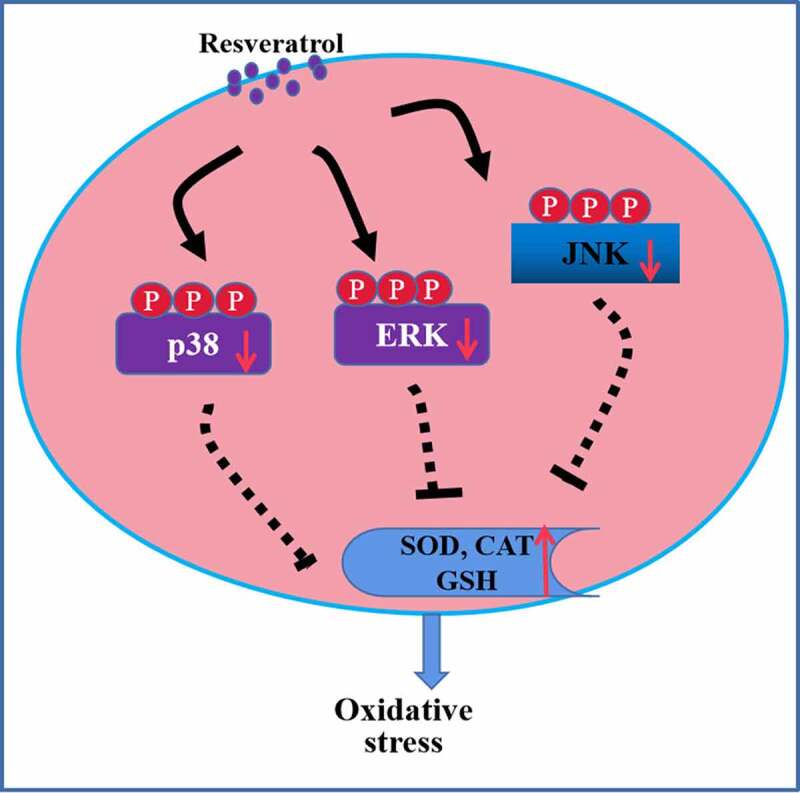
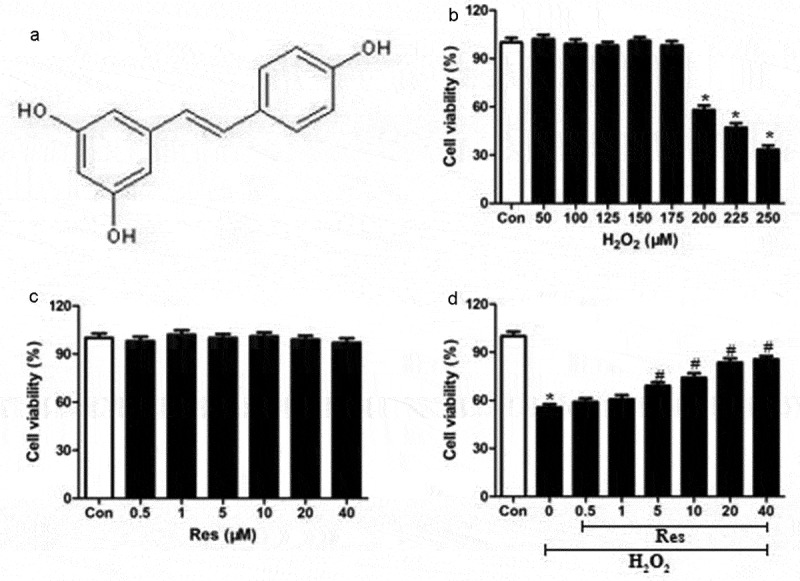
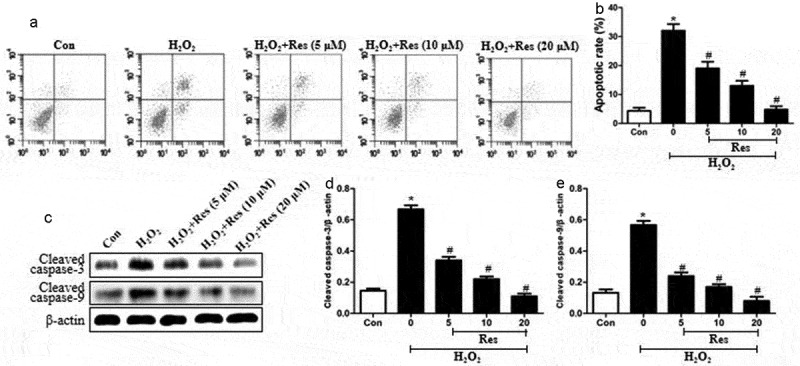
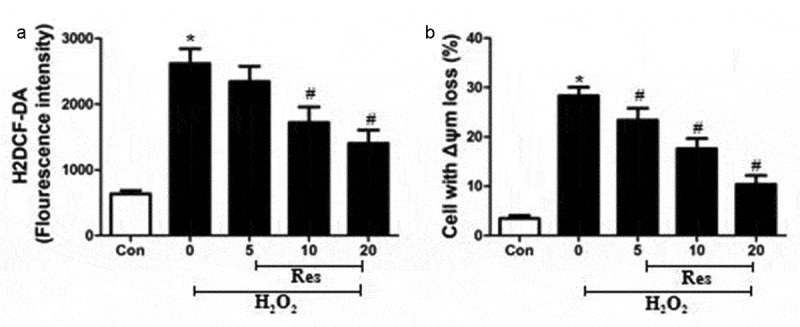
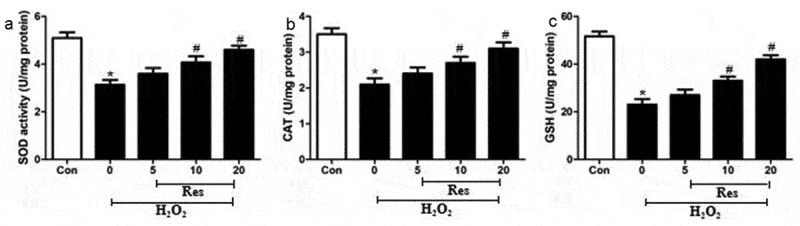
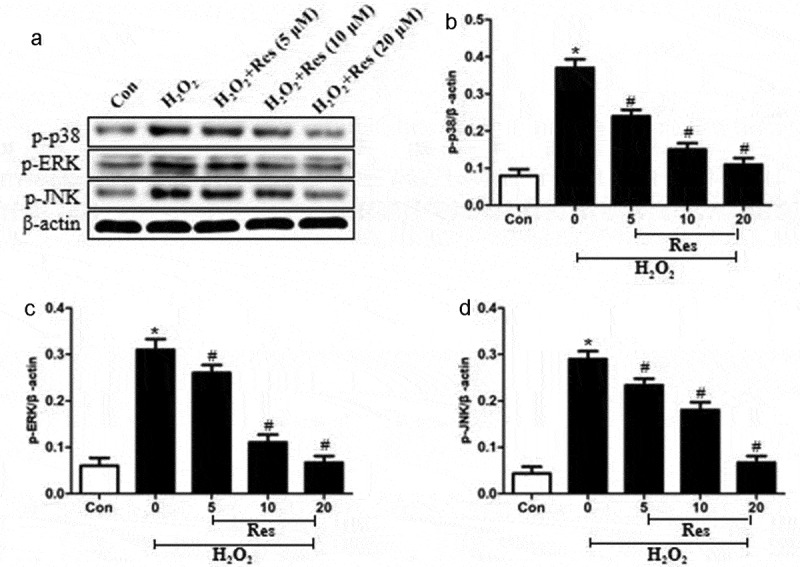
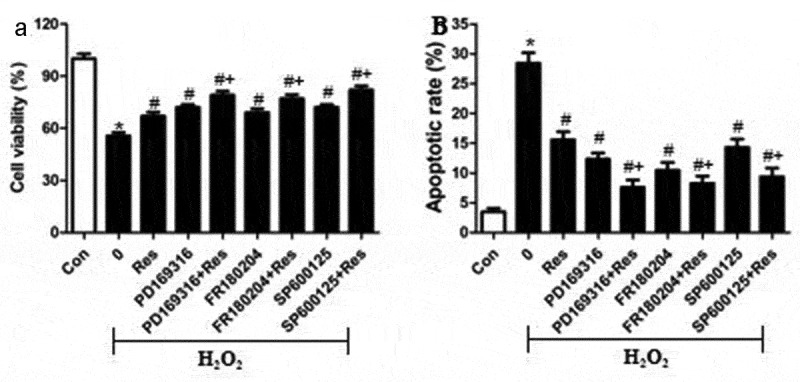
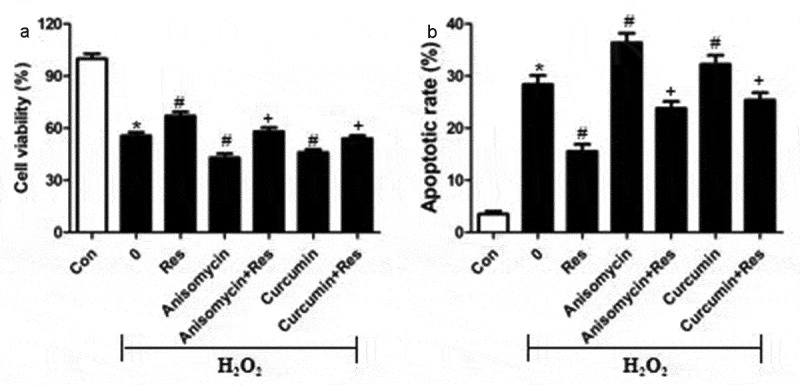
The current study investigated the ability of resveratrol to protect RGC-5 retinal ganglion cells in culture against H2O2-induced apoptosis and the underlying mechanism of protection. RGC-5 cells were pre-exposed to resveratrol (5, 10, or 20 μM), followed by 200 μM H2O2. Cell viability and apoptosis were detected to assess the cell growth, and expression levels of apoptosis-related and MAPK cascade-associated proteins were determined using western blotting. Levels of reactive oxygen species and mitochondrial membrane potential were also tested, as well as the activities of superoxide dismutase (SOD), catalase (CAT), and glutathione S-transferase (GSH). At a concentration-dependent way, resveratrol reversed H2O2-induced increases in expressions of cleaved caspase-3 and cleaved caspase-9, production of ROS, loss of mitochondrial membrane potential and the expressions of p-p38, p-ERK, and p-JNK. It also promoted the activities of SOD, CAT, and GSH. Furthermore, the agonists of p38, ERK, and JNK partially weakened the protective effects of resveratrol against H2O2-induced apoptosis in RGC-5 cells. Thus, resveratrol can protect retinal ganglion cells against H2O2-induced apoptosis by suppressing MAPK cascades. The drug therefore shows potential for preventing glaucoma.
Overview
The claims and statistics of this paper haven’t been checked yet.
Free: it reads the open-access text and checks the first 5 claims that cite a source we can check. Create a free account to check every claim.
Integrity signals
Registry
Cites
Statistics
Figures
Verification
Claims the paper makes
The claims and statistics of this paper haven’t been checked yet.
Free: it reads the open-access text and checks the first 5 claims that cite a source we can check. Create a free account to check every claim.
Claims other papers make about this one
Each is checked against this paper’s own text: does it say what the citing paper says it does?
The cited source doesn’t support the claim as written.
In the citing paper
“In retinal ganglion cells, all three branches of the MAPK cascade have been reported to be protective against hydrogen peroxide-induced apoptosis [ 59 ].”
From MAPK Pathways in Ocular Pathophysiology: Potential Therapeutic Drugs and Challenges (2023) · cites this paper as [59]
Checked by a reasoning model — may be wrong.
Experimental — accuracy not yet measured
Self-check
Percentages, sums and reported differences re-computed from the paper’s own numbers.
The self-check needs the paper’s full text.
Citations
Cites
2 retracted
Chen, Z., Wang, C., Yu, N., Si, L., Zhu, L. F., Zeng, A., Liu, Z., & Wang, X. (2018) · Biomedicine & Pharmacotherapy · doi:10.1016/j.biopha.2018.12.046 · Cited by 94 · cited 1×
“ROSinduced oxidative status and apoptosis are considered key drivers of glaucoma [5,6].”
BackgroundRetractedWang, C., Ren, Y., Zhai, J., Zhou, X., & Wu, J. (2019) · Cell Cycle · doi:10.1080/15384101.2019.1593645 · Cited by 62 · cited 1×
“In addition, previous study also reported that LAMA4 down-regulation may decrease the ROSstimulated death of RGG cells via suppressing the activation of the MAPKs cascade [33].”
BackgroundRetractedPathological roles of MAPK signaling pathways in human diseases
Kim, E. K., & Choi, E.-J. (2010) · Biochimica et Biophysica Acta (BBA) - Molecular Basis of Disease · doi:10.1016/j.bbadis.2009.12.009 · Cited by 2,472 · cited 1×
“The members of MAPKs include ERK, JNK, and p38 [23].”
BackgroundRole of resveratrol in prevention and therapy of cancer: preclinical and clinical studies.
Aggarwal, B. B., Bhardwaj, A., Aggarwal, R. S., Seeram, N. P., Shishodia, S., & Takada, Y. (2004) · PubMed · Cited by 1,605
Caspase Family Proteases and Apoptosis
Fan, T.-J., Han, L.-H., Cong, R.-S., & Liang, J. (2005) · Acta Biochimica et Biophysica Sinica · doi:10.1111/j.1745-7270.2005.00108.x · Cited by 1,246 · cited 1×
“Indeed, we found that H2 O2 increased levels of cleaved caspases-3 and −9, the main initiators and drivers of apoptosis [21], while resveratrol reversed this.”
BackgroundApoptosis and Oxidative Stress in Neurodegenerative Diseases
Radi, E., Formichi, P., Battisti, C., & Federico, A. (2014) · Journal of Alzheimer's Disease · doi:10.3233/jad-132738 · Cited by 630 · cited 1×
“It is well known that oxidative stress is an important factor to induce cell apoptosis, promote ROS production and suppress antioxidant enzyme activity, thus resulting in cell injury [4].”
BackgroundAntioxidant effects of resveratrol in the cardiovascular system
Xia, N., Daiber, A., Förstermann, U., & Li, H. (2017) · British Journal of Pharmacology · doi:10.1111/bph.13492 · Cited by 574 · cited 1×
“Resveratrol exerts anti-cardiovascular, phytoestrogenic and anti-oxidant effects [11,12].”
BackgroundThe role of mitochondrial ROS in the aging brain
Stefanatos, R., & Sanz, A. (2018) · FEBS Letters · doi:10.1002/1873-3468.12902 · Cited by 358 · cited 1×
“In addition, it reversed H2 O2-induced loss of Δψm, thereby reversing a sign of ROS-mediated mitochondrial dysfunction [19] and early apoptosis [20].”
BackgroundDry eye disease and oxidative stress
Seen, S., & Tong, L. (2018) · Acta Ophthalmologica · doi:10.1111/aos.13526 · Cited by 356 · cited 1×
“In clinical study, the levels of ROS were found to be significantly increased in patients with glaucoma [18].”
BackgroundA comprehensive review of the health perspectives of resveratrol
Rauf, A., Imran, M., Suleria, H. A. R., Ahmad, B., Peters, D. G., & Mubarak, M. S. (2017) · Food & Function · doi:10.1039/c7fo01300k · Cited by 286 · cited 1×
“Resveratrol is a natural phytoalexin widely distributed in cereals, fruits, and vegetables [10] and it is a major component of red wine.”
Background
Cited by
Oxidative stress in the eye and its role in the pathophysiology of ocular diseases
Böhm, E. W., Buonfiglio, F., Voigt, A. M., Bachmann, P., Safi, T., Pfeiffer, N., & Gericke, A. (2023) · Redox Biology · doi:10.1016/j.redox.2023.102967 · Cited by 301
“This action involves the suppression of ROS levels and the inhibition of proapoptotic MAPK cascades including p38, pJNK, and pERK [464].”
BackgroundTreatment of Glaucoma with Natural Products and Their Mechanism of Action: An Update
Sim, R. H., Sirasanagandla, S. R., Das, S., & Teoh, S. L. (2022) · Nutrients · doi:10.3390/nu14030534 · Cited by 87
Oxidative Stress: A Suitable Therapeutic Target for Optic Nerve Diseases?
Buonfiglio, F., Böhm, E. W., Pfeiffer, N., & Gericke, A. (2023) · Antioxidants · doi:10.3390/antiox12071465 · Cited by 78
MAPK Pathways in Ocular Pathophysiology: Potential Therapeutic Drugs and Challenges
Moustardas, P., Aberdam, D., & Lagali, N. (2023) · Cells · doi:10.3390/cells12040617 · Cited by 63
“In retinal ganglion cells, all three branches of the MAPK cascade have been reported to be protective against hydrogen peroxide-induced apoptosis [59].”
BackgroundBasavarajappa, D. K., Galindo‐Romero, C., Gupta, V., Agudo‐Barriuso, M., Gupta, V. B., Graham, S. L., & Chitranshi, N. (2023) · Molecular Aspects of Medicine · doi:10.1016/j.mam.2023.101216 · Cited by 51
Diabetic Retinopathy: New Treatment Approaches Targeting Redox and Immune Mechanisms
Tang, Q., Buonfiglio, F., Böhm, E. W., Zhang, L., Pfeiffer, N., Korb, C. A., & Gericke, A. (2024) · Antioxidants · doi:10.3390/antiox13050594 · Cited by 55
Huang, B., Yang, J., & Shen, W. (2022) · Neural Regeneration Research · doi:10.4103/1673-5374.344831 · Cited by 45
“As previously shown, JNK signaling mediates neurodegeneration in glaucoma (Syc-Mazurek et al., 2017; Ye and Meng, 2021).”
BackgroundBai, J., Deng, S., Fu, H., Yang, Q., Ren, F., Zeng, S., Chen, Z., Yang, Y., & Wu, Z. (2023) · The Science of The Total Environment · doi:10.1016/j.scitotenv.2023.166449 · Cited by 40
Immunomodulatory and Antioxidant Drugs in Glaucoma Treatment
Buonfiglio, F., Pfeiffer, N., & Gericke, A. (2023) · Pharmaceuticals · doi:10.3390/ph16091193 · Cited by 36
“Moreover, resveratrol was shown to preserve RGCs from ROS-triggered apoptosis by suppressing MAPK cascades (p38, JNK, ERK) [228].”
BackgroundWang, C., An, Y., Xia, Z., Zhou, X., Li, H., Song, S., Ding, L., & Xia, X. (2022) · Frontiers in Endocrinology · doi:10.3389/fendo.2022.986131 · Cited by 43
Human neural stem cell-derived artificial organelles to improve oxidative phosphorylation
Wang, J., Zhao, M., Wang, M., Fu, D., Lin, K., Xu, Y., Shen, L., Jin, S., Wang, L., & Liu, J. (2024) · Nature Communications · doi:10.1038/s41467-024-52171-2 · Cited by 34
The emerging role of nanozymes in ocular antioxidant therapy
Bai, X., Lu, Y. F., Wang, S., Xiao, Q., Luo, X., Wang, Y., Yan, X., Yang, Z., & Jiang, B. (2024) · Nano Today · doi:10.1016/j.nantod.2024.102448 · Cited by 26
Natural Autophagy Activators to Fight Age-Related Diseases
Rivera, V. M. M., Juárez, J. R. T., Murillo-Melo, N. M., Leyva‐García, N., Magaña, J. J., Cordero‐Martínez, J., & Jiménez-Gutiérrez, G. E. (2024) · Cells · doi:10.3390/cells13191611 · Cited by 31
“…the anti-inflammatory advantages of resveratrol in addressing various age-related eye conditions, its autophagic properties have also shown promise in treating other ocular diseases, including age-related macular degeneration (AMD) [150], diabetic retinopathy [151], glaucoma [152], and cataracts.”
BackgroundAnti-Inflammatory Properties of Resveratrol
Wątroba, M., & Szukiewicz, D. (2025) · International Journal of Molecular Sciences · doi:10.3390/ijms262311710 · Cited by 30
“RSV acting through the MAPK pathway showed a protective effect on retinal ganglion cells by preventing apoptosis induced in vitro by hydrogen peroxide [96].”
A neuronal action of sirtuin 1 suppresses bone mass in young and aging mice
Luo, N., Mosialou, I., Capulli, M., Bisikirska, B. C., Lin, C., Huang, Y.-Y., Shyu, P. T., Guo, X.-D. E., Economides, A. N., Mann, J. J., et al. (2022) · Journal of Clinical Investigation · doi:10.1172/jci152868 · Cited by 22
“Multiple biological effects and mechanisms of action for resveratrol have been reported, including activation of estrogen receptor signaling (67, 68), PARP1 and tyrosyl-tRNA synthetase (69), AMPK (70), and MAPK signaling (71).”
Sahu, R., & Rawal, R. K. (2024) · Phytomedicine Plus · doi:10.1016/j.phyplu.2024.100564 · Cited by 21
A review on eye diseases induced by blue light: pathology, model, active ingredients and mechanisms
Yuan, Y., Wu, Y., Zhao, Y., Yang, Y., An, G., Liu, Z., & Qi, D. (2025) · Frontiers in Pharmacology · doi:10.3389/fphar.2025.1513406 · Cited by 21
Guo, G., & Dong, J. (2022) · Bioengineered · doi:10.1080/21655979.2022.2068755 · Cited by 17
Beneficial Effects of Resveratrol on Testicular Functions: Focus on Its Antioxidant Properties
Chimento, A., Luca, A. D., Venditti, M., Amicis, F. D., & Pezzi, V. (2025) · Cells · doi:10.3390/cells14141122 · Cited by 21
“…antioxidant molecules and the expression of related genes involved in mitochondrial energy biogenesis, mainly through the AMPK/SIRT1/NRF2 [160,161], ERK/p38 MAPK [162], and PTEN/AKT signaling pathways [163]; and (c) inducing autophagy via the mTOR-dependent or TFEB-dependent pathways [164].”
Review on potential effects of traditional Chinese medicine on glaucoma
Qi, S.-M., Zhang, J.-T., Zhu, H., Wang, Z., & Li, W. (2022) · Journal of Ethnopharmacology · doi:10.1016/j.jep.2022.116063 · Cited by 17
Fu, M., Chen, Y., & Yang, A. (2024) · International Ophthalmology · doi:10.1007/s10792-024-03032-w · Cited by 16
“A similar study has reported that H 2 O 2 can cause a reduction in mitochondrial membrane potential and trigger apoptosis in RGC-5 cells [32].”
Zhang, L., Dong, M.-N., Deng, J., Zhang, C.-H., & Liu, M. (2022) · Bioengineered · doi:10.1080/21655979.2022.2045764 · Cited by 17
Zhang, H., Song, T., Kang, R., Ren, F., Liu, J., & Wang, J. (2023) · Nutrition Research · doi:10.1016/j.nutres.2023.10.003 · Cited by 15
Golmohammadi, M., Meibodi, S. A. A., Al‐Hawary, S. I. S., Gupta, J., Sapaev, I. B., Najm, M. A. A., Alwave, M., Nazifi, M., Rahmani, M. R., Zamanian, M. Y., et al. (2024) · Animal Models and Experimental Medicine · doi:10.1002/ame2.12438 · Cited by 13
“18 Moreover, RES exhibits anti-inflammatory characteristics by inhibiting the synthesis of pro-inflammatory molecules and altering inflammatory signaling pathways.”
BackgroundInfluentialGu, Y., Wang, G., & Xu, H. (2022) · Bioengineered · doi:10.1080/21655979.2022.2074770 · Cited by 11
RetractedUnveiling the Neurotoxic Effects of Ochratoxin A and Its Impact on Neuroinflammation
García-Esparza, M. Á., Mateo, E. M., Robles, J. A., Capoferri, M., Jiménez, M., & Soria, J. M. (2025) · Toxins · doi:10.3390/toxins17060264 · Cited by 12
“Moreover, a comparable investigation has also suggested that H 2 O 2 can cause a reduction in MMP, triggering apoptosis in RGC-5 cells [100].”
Antioxidants and neurodegenerative eye disease
Semenova, Y. M., & Bjørklund, G. (2023) · Critical Reviews in Food Science and Nutrition · doi:10.1080/10408398.2023.2215865 · Cited by 13
“…reversed hydrogen peroxide-induced elevated expression of cleaved Caspase-3 and Caspase-9, production of ROS, and expression of phospho-p38, phospho-ERK, and phospho-JNK, protecting RGCs from apoptosis and supporting the theory that resveratrol suppresses MAPK cascades (Ye and Meng 2021).”
Zheng, Z., Gao, J., Ma, Y., & Hou, X. (2025) · Cell Biology International · doi:10.1002/cbin.70011 · Cited by 14
“…epithelial cell injury, promotes gastric mucosa regeneration by decreasing levels of proinflammatory cytokines (IL ‐ 6, TNF ‐ α ) and MDA, and increasing expression of protective factors (CAT, SOD, and GSH) in Wistar rats, thereby exerting anti-ulcer functions (Gupta et al. 2021 (Ye and Meng 2021).”
Intravitreal Trans-Resveratrol Ameliorates NMDA-Induced Optic Nerve and Retinal Injury
Ghapor, A. A. A., Iezhitsa, I. N., Agarwal, R., & Nasir, N. A. A. (2022) · Current Eye Research · doi:10.1080/02713683.2022.2033270 · Cited by 8
“It has been shown to possess anti-oxidative and anti-inflammatory properties, which may contribute to its neuroprotective effect.(22,23) At doses 10–100 lM, TR is reported to have neuroprotective effects in Alzheimer’s disease, Parkinson’s disease, cerebral ischemia as well as Huntington’s disease.”
BackgroundBukowska, P., Bralewska, M., Pietrucha, T., & Sakowicz, A. (2024) · International Journal of Molecular Sciences · doi:10.3390/ijms252212167 · Cited by 9
Ahmadzadeh, A. M., Aliabadi, M. M., Mirheidari, S. B., Hamedi-Asil, M., Garousi, S., Mottahedi, M., & Sahebkar, A. (2024) · Naunyn-Schmiedeberg s Archives of Pharmacology · doi:10.1007/s00210-024-03527-4 · Cited by 7
“Glaucoma is the leading cause of irreversible blindness and is characterized by the loss of retinal ganglion cells (RGCs) (Yih et al. 2022).”
InfluentialDamage and repair in retinal degenerative diseases: Molecular basis through clinical translation
Zhang, Z., Ma, J., Shah, W., Quan, X., Ding, T., & Gao, Y. (2025) · Neural Regeneration Research · doi:10.4103/nrr.nrr-d-24-01016 · Cited by 7
Resveratrol Impairs Insulin Signaling in Hepatic Cells via Activation of PKC and PTP1B Pathways
Hernández-González, K. D., Vinchira-Lamprea, M. A., Hernández-Aranda, J., & Olivares-Reyes, J. A. (2025) · International Journal of Molecular Sciences · doi:10.3390/ijms26157434 · Cited by 4
“Although puzzling, similar observations regarding the effect of RSV on ERK activation [60] or inhibition [35,58] have been reported in different cellular contexts [61,62].”
Roles of Optineurin and Extracellular Vesicles in Glaucomatous Retinal Cell Loss
Duan, C.-Y., Fan, W., & Chen, F. (2023) · Current Medical Science · doi:10.1007/s11596-023-2730-9 · Cited by 5
Ding, H., Zhang, Y., Zha, Y., Zhou, S., Cao, C., Zhu, H., Xu, F., Zhang, X., & Wang, C. (2022) · Food Science and Biotechnology · doi:10.1007/s10068-022-01163-3 · Cited by 3
“Redox homeostasis is essential for normal body functioning (Chen et al., 2019), which is strictly regulated by reducing molecules, antioxidant enzymes, two-phase detoxification enzymes, and other molecules on cell receptor (Ye and Meng, 2021).”
BackgroundAtypical p38 Kinase Signaling in Retinal Vascular Damage and Recovery
Schulz, L., Young, A., Liu, F., Gattineni, S., Ghosh, S., Douglass, E. F., Kroeger, H., Narayanan, S. P., & Grimsey, N. J. (2025) · The FASEB Journal · doi:10.1096/fj.202503114r · Cited by 3
“In the eye, p38α activation has been implicated in endothelial dysfunction, glial activation, and pro-inflammatory signaling across DR [12–20], glaucoma [21–23], AMD [24, 25], and ischemic retinopathies such as ROP [26, 27].”
Autophagy decline during ageing: Molecular regulation, tissue specificity, and therapeutic potential
Goyal, A., Kumari, A., Agrawal, N., & Yadav, H. N. (2026) · Pathology - Research and Practice · doi:10.1016/j.prp.2026.156568 · Cited by 2
Meena, A. K., Tiwari, R., Danaboina, G., Ojha, K. K., Mehta, A., Kamra, J., Dixit, A. K., & Singh, A. (2025) · ChemistrySelect · doi:10.1002/slct.202404950 · Cited by 1
Zhang, L., Wang, J., Yu, J.-M., Zou, L., & Sheng, F. (2026) · Phytomedicine · doi:10.1016/j.phymed.2026.157806 · Cited by 3
Zamanian, M. Y., Golmohammadi, M., Meibodi, S. A. A., Al‐Hawary, S. I. S., Gupta, J., Sapaev, I. B., Najm, M. A. A., Alwave, M., Nazifi, M., & Rahmani, M. R. (2024) · doi:10.22541/au.171018662.27582910/v1
Meena, A. K., Tiwari, R., Danaboina, G., Ojha, K. K., Mehta, A., Kamra, J., Dixit, A. K., & Singh, A. (2024) · SSRN Electronic Journal · doi:10.2139/ssrn.4800680
Paunović, M. G., Matić, M. M., Obradović, A. D., Stanković, V., Jevtić, V. V., & Ognjanović, B. I. (2025) · Journal of Inorganic Biochemistry · doi:10.1016/j.jinorgbio.2025.113137
Resveratrol and its antiinflammatory effects
Pandey, A., Akotkar, L., & Aswar, U. M. (2026) · Elsevier eBooks · doi:10.1016/b978-0-443-29192-0.00015-7
Metadata
- Authors
- Ye, M.-J., & Meng, N.
- Affiliations
- Hubei University of Arts and Science (CN)
- Xiangyang Central Hospital, Affiliated Hospital of Hubei University of Arts and Science
- ORCID
- Meng, Ni
- Venue
- Bioengineered
- Publisher
- Informa UK Limited
- Published
- 2021-01
- Volume
- 12
- Issue
- 1
- Pages
- 4878-4886
- ISSN
- 2165-5979 (ISSN-L)
- 2165-5987
- PMC
- PMC8806786
- OpenAlex
- W3188971087
- Cited by
- 43
- References
- 35
- Citations by year
- 2026: 3 · 2025: 10 · 2024: 11 · 2023: 9 · 2022: 10
- FWCI
- 4.15
- Type
- journal article
- Language
- en
- Open access
- gold
- doi.org
- Locations
- Bioengineered (publishedVersion, cc-by)
- PubMed Central (publishedVersion, cc-by)
- PubMed (publishedVersion)
- DOAJ (DOAJ: Directory of Open Access Journals) (submittedVersion, cc-by-sa)
- Topics
- Health Sciences › Medicine › Geriatrics and Gerontology › Sirtuins and Resveratrol in Medicine
- Health Sciences › Medicine › Ophthalmology › Glaucoma and retinal disorders
- Life Sciences › Neuroscience › Neurology › Neuroprotection in Cerebral Ischemia
- Keywords
- resveratrol, retinal ganglion cells, RGC-5 cells, hydrogen peroxide, oxidative stress, apoptosis, MAPK signaling, p38 MAPK, ERK, JNK, caspase-3, caspase-9, reactive oxygen species, mitochondrial membrane potential, superoxide dismutase, catalase, glutathione, glaucoma
- MeSH terms
- Resveratrol, Animals, Cell Line, Hydrogen Peroxide, Retinal Ganglion Cells, Apoptosis, Oxidative Stress, Protective Agents, MAP Kinase Signaling System, Rats
About these checks
Registry, retraction, Cites and statistics results are computed, not judged, with one exception: a printed reference that no index lists is read once by a model before it counts as a citation error. Claims are extracted by a model and kept only when their quote appears verbatim in the text; each cited source is then checked, with a model’s help, for whether it says what the claim relies on. Those verdicts can be wrong — read the claim’s quote and the cited source before relying on one.
Statistics and arithmetic are recomputed, not judged.
Confidence bands are shown only for fields calibrated on our annotated test set. None is calibrated yet, so no band is shown.
What counts as a claim ›How we measure confidence ›How we check this ›
Are you an author, or do you see a problem with this page? Request a review
Data sources
Bibliographic data: Semantic Scholar, OpenAlex, Crossref.
Contains information from the Semantic Scholar Academic Graph Datasets, made available under the ODC Attribution License (ODC-BY 1.0).
Semantic Scholar’s data is described in: Kinney, R., et al. (2023). The Semantic Scholar Open Data Platform. arXiv:2301.10140.
