

The DOI matches its Crossref record; 1 of the 1 references it cites were found in a registry or an index.
Health hazards of hexavalent chromium (Cr (VI)) and its microbial reduction
Overview
The claims and statistics of this paper haven’t been checked yet.
Run the check — free, no account needed. It reads the open-access text and checks the sources it cites.
Integrity signals
Registry
Cites
Statistics
Figures
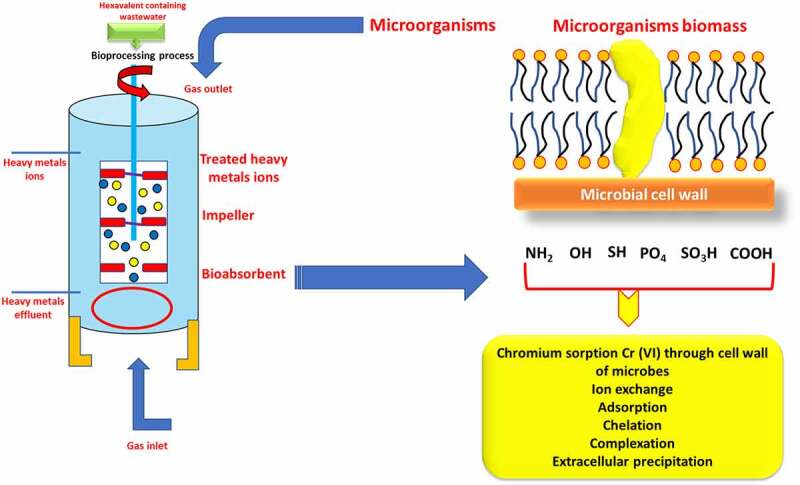
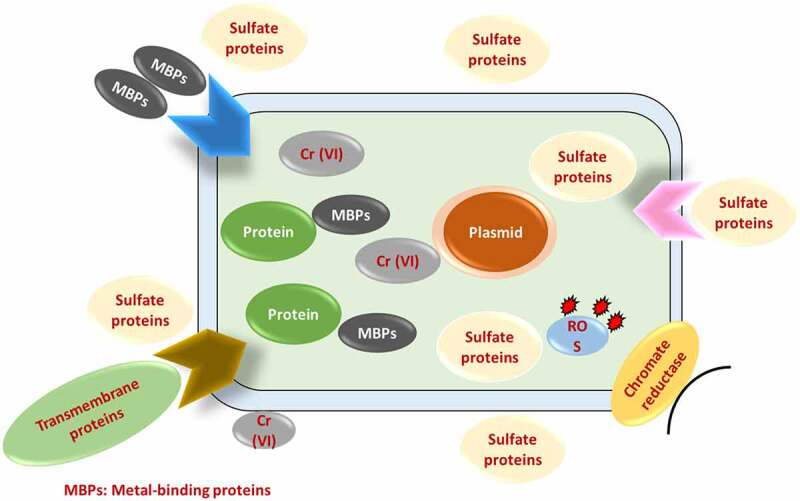
Verification
Claims the paper makes
The claims and statistics of this paper haven’t been checked yet.
Run the check — free, no account needed. It reads the open-access text and checks the sources it cites.
Claims other papers make about this one
Each is checked against this paper’s own text: does it say what the citing paper says it does?
The cited source doesn’t support the claim as written.
In the citing paper
“The absence of bioaccumulation of chromium in aquatic flora, fauna, and microorganisms implies that elevated levels of chromium in the environment can have a severe toxic impact on the affected plants and animals54.”
From Impact of untreated tannery wastewater in the evolution of multidrug-resistant bacteria in Bangladesh (2024) · cites this paper as [54]
Checked by a reasoning model — may be wrong.
Experimental — accuracy not yet measuredThe cited source says what the claim attributes to it.
In the citing paper
“Toxicity in humans can manifest as cutaneous lesions or rashes, as well as renal and hepatic impairment54.”
From Impact of untreated tannery wastewater in the evolution of multidrug-resistant bacteria in Bangladesh (2024) · cites this paper as [54]
Self-check
Percentages, sums and reported differences re-computed from the paper’s own numbers.
The self-check needs the paper’s full text.
Citations
Cites
Mechanisms of chromium-induced toxicity
DesMarias, T. L., & Costa, M. (2019) · Current Opinion in Toxicology · doi:10.1016/j.cotox.2019.05.003 · Cited by 492
Research works printed but not linked: 126
- 10.3390/plants9010100 · DOI
- 10.1021/acs.est.5b03275 · DOI
- Liang J, Huang X, Yan J, et al. A review of the formation of Cr(VI) via Cr(III) oxidation in soils and groundwater. SciTotal Environ. 2021;774:145762.
- Kazakis N, Kougias I, Patsialis T. Assessment of flood hazard areas at a regional scale using an index-based approach and analytical hierarchy process: application in Rhodope–Evros region, Greece. SciTotal Environ. 2015;538:555–563.
- 10.1073/pnas.0701085104 · DOI
- 10.1021/es405118y · DOI
- 10.1016/j.apgeochem.2004.01.011 · DOI
- 10.1111/1365-2664.12478 · DOI
- 10.1590/S0001-37652009000200009 · DOI
- 10.1007/s00128-012-0831-4 · DOI
- US EPA (US Environmental Protection Agency). Data summary of the third unregulated contaminant monitoring rule (UCMR 3). EPA 815-S-17-001. Washington: USEPA; 2017.
- 10.1002/awwa.1044 · DOI
- 10.1021/es0499389 · DOI
- Abdulla HM, Kamal EM, and Mohamed AH, et al., 2010. Chromium removal from tannery wastewater using chemical and biological techniques aiming at zero discharge of pollution. In Proceeding of Fifth Scientific Environmental Conference. Zagazig University, Egypt. (pp. 171–183).
- 10.1016/S0039-9140(01)00677-4 · DOI
- 10.1007/BF00170582 · DOI
- 10.1016/j.jhazmat.2009.03.126 · DOI
- 10.9734/IRJPAC/2016/23315 · DOI
- 10.1080/02757540701653350 · DOI
- 10.18178/ijesd.2017.8.4.959 · DOI
- Stoller M, Sacco O, Vilardi G, et al., 2017. Chromium recovery by membranes for process reuse in the tannery industry. In 15th international conference on environmental science and technology, Rhodes.
- Payel S, Sarker M, and Hashem MA, 2018, February. Banana rachis charcoal to remove chromium from tannery wastewater. In 4th International Conference on Civil and Environmental Engineering for Sustainability (IConCEES 2017)4–5 December 2017, Langkawi, Malaysia (pp. 9–11).
- 10.1007/s10973-009-0284-0 · DOI
- 10.1016/j.envint.2021.106877 · DOI
- 10.1007/s10653-020-00730-z · DOI
- 10.1007/978-981-16-2015-7_10 · DOI
- 10.1016/j.heliyon.2020.e04559 · DOI
- 10.1016/j.biortech.2020.124147 · DOI
- 10.1016/j.biortech.2020.124353 · DOI
- 10.1016/j.biortech.2021.124681 · DOI
- 10.1016/j.biortech.2021.124750 · DOI
- 10.1016/j.biortech.2021.124835 · DOI
- 10.1016/j.chemosphere.2020.126134 · DOI
- Shekhawat K, Chatterjee S, Joshi B. Chromium toxicity and its health hazards. Int J Adv Res. 2015;3(7):167–172.
- 10.1016/j.ibiod.2016.10.008 · DOI
- 10.1007/s11356-016-7463-x · DOI
- 10.1007/s00420-012-0822-0 · DOI
- Focardi S, Pepi M, Focardi SE. Microbial reduction of hexavalent chromium as a mechanism of detoxification and possible bioremediation applications. Biodegrad Life Sci. 2013;321–347.
- 10.1007/s10534-019-00193-5 · DOI
- 10.1007/s00253-020-10533-y · DOI
- 10.1111/j.1574-6976.2001.tb00581.x · DOI
- 10.1016/j.envint.2005.02.003 · DOI
- 10.1016/j.chemosphere.2018.05.050 · DOI
- 10.1016/j.eti.2020.101251 · DOI
- 10.1155/2018/8031213 · DOI
- Ina S. Chromium, an essential nutrient and pollutant: a review. Afr J Pure Appl Chem. 2013;7(9):310–317.
- 10.1007/s10311-020-01114-6 · DOI
- 10.1016/j.aninu.2020.03.005 · DOI
- 10.1007/s11274-018-2447-2 · DOI
- 10.1016/j.envpol.2016.11.045 · DOI
- Li A, Liu B, and He Y, et al. Integrated bacterial and fungal diversity analysis reveals the gut microbial alterations in diarrheic giraffes. Front Microbiol. 2021;2241 12 1–15 .
- 10.3389/fmicb.2020.619766 · DOI
- 10.1016/B978-0-12-821925-6.00010-1 · DOI
- 10.1016/j.jece.2021.105684 · DOI
- 10.1016/j.eti.2021.101826 · DOI
- 10.1016/j.jece.2021.105547 · DOI
- 10.1016/j.eti.2021.101725 · DOI
- 10.1016/j.eti.2021.101774 · DOI
- 10.1016/j.biortech.2021.125518 · DOI
- 10.1016/j.biortech.2021.125589 · DOI
- 10.1016/j.eti.2021.102182 · DOI
- 10.1016/j.copbio.2008.07.012 · DOI
- 10.1039/C8CS00493E · DOI
- 10.1016/j.jclepro.2019.04.117 · DOI · Paper page
- 10.1016/j.chemosphere.2018.05.166 · DOI
- 10.1007/s11356-013-2230-8 · DOI
- 10.1016/j.arabjc.2013.11.008 · DOI
- 10.3389/fmicb.2019.02993 · DOI · Paper page
- 10.1016/j.envint.2009.12.001 · DOI
- 10.1016/j.biortech.2010.02.030 · DOI
- 10.4172/1948-5948.1000219 · DOI
- 10.1155/2018/2568038 · DOI · Paper page
- 10.1007/s11274-016-2117-1 · DOI
- 10.1016/j.jhazmat.2009.01.044 · DOI
- Zabochnicka-Świątek M, and Krzywonos M. Potentials of biosorption and bioaccumulation processes for heavy metal removal. Polish J Environ Stud. 2014;23(2 551–561).
- 10.1007/978-1-4614-2329-4_2 · DOI
- 10.3109/1040841X.2014.974501 · DOI
- 10.2166/wst.2019.060 · DOI
- Joutey NT, Sayel H, Bahafid W, et al. Mechanisms of hexavalent chromium resistance and removal by microorganisms. Rev Environ Contam Toxicol. 2015;233:45–69.
- Javed A. Pollution level analysis in tannery effluents collected from three different cities of Punjab. J Ind Pollut Control Board. 2004 9 3 418–421 .
- Devi BD, Thatheyus AJ, Ramya D. Bioremoval of hexavalent chromium, using Pseudomonas fluorescens. J Microbiol Biotechnol Res. 2012;2(5):727–735.
- Abhipsa S, Chandraraj K. Enzymatic reduction of hexavalent chromium in bacteria. ENVIS Newslett. 2009;7:2–5.
- 10.1046/j.1365-2672.1999.00457.x · DOI
- 10.1016/j.mib.2005.04.011 · DOI
- Thavasi R, Sharma S, and Jayalakshmi S. Evaluation of screening methods for the isolation of biosurfactant producing marine bacteria. J Pet Environ Biotechnol S. 2011;1(2 1–7).
- Asira EE. Factors that determine bioremediation of organic compounds in the soil. Acad J Interdiscip Stud. 2013;2(13):125.
- Naik MG, Duraphe MD. Review paper on-Parameters affecting bioremediation. Int J Life Sci Pharma Res. 2012;2(3):L77–L80.
- Adams GO, Fufeyin PT, Okoro SE, et al. Bioremediation, Biostimulation and Bioaugmention: a Review. Int J Environ Bioremed Biodegrad. 2020;3(1):28–39.
- Cases I, and Lorenzo VD. Genetically modified organisms for the environment: stories of success and failure and what we have learned from them International Microbiology . 2005 8(3) 213 .
- 10.4061/2011/941810 · DOI
- Macaulay BM. Understanding the behaviour of oil-degrading micro-organisms to enhance the microbial remediation of spilled petroleum. Appl Ecol Environ Res. 2015;13(1):247–262.
- 10.1016/S1002-0160(09)60128-4 · DOI
- Singh A. ”Hexavalent Chromium: toxic and genotoxic effects and its bioremediation strategies”. Biomed J Sci Tech Res. 2021;35(3):27637–27643.
- 10.1007/s12275-016-5295-5 · DOI
- 10.1038/s41598-020-70473-5 · DOI
- 10.3390/ijerph121214985 · DOI
- 10.3389/fpls.2017.00778 · DOI
- 10.3126/sw.v11i11.8554 · DOI
- 10.3390/ijerph17176013 · DOI
- 10.1371/journal.pone.0219387 · DOI
- 10.1016/j.jhazmat.2006.12.017 · DOI
- 10.3923/ajbs.2013.312.321 · DOI
- 10.1016/j.heliyon.2019.e01450 · DOI
- 10.18180/tecciencia.2016.21.11 · DOI
- 10.1016/j.chemosphere.2018.10.205 · DOI
- 10.1016/j.jece.2019.103273 · DOI
- 10.1007/s13201-012-0062-1 · DOI
- 10.1155/2021/7694157 · DOI
- 10.1080/10590501.2015.1096883 · DOI · Paper page
- 10.1590/S1517-83822014000200028 · DOI
- 10.1007/s13205-014-0237-6 · DOI
- 10.1002/elsc.200900111 · DOI
- Arbanah M, Miradatul NMR, Halim KKH. Utilization of Pleurotus ostreatus in the removal of Cr (VI) from chemical laboratory waste. Int Refreed J Eng Sci. 2013;2(4):29–39.
- Chhikara S, Hooda A, Rana L, et al. Chromium (VI) biosorption by immobilized Aspergillus Niger in continuous flow system with special reference to FTIR analysis. J Environ Biol. 2010;31(5):561–566.
- 10.1007/s11356-019-05942-0 · DOI
- 10.1016/j.jiec.2017.06.040 · DOI
- 10.1002/j.1554-7531.2008.tb00351.x · DOI
- 10.1038/s41598-017-10160-0 · DOI
- 10.1007/s11356-014-3311-z · DOI
- Ran ZHAO, Bi WANG, Cai QT, et al. Bioremediation of hexavalent chromium pollution by Sporosarcina saromensis M52 isolated from offshore sediments in Xiamen, China. Biomedical and Environmental Sciences. 2016;29(2):127–136.
- 10.1016/j.bej.2019.107292 · DOI
- 10.1016/j.jhazmat.2019.121628 · DOI
- 10.1016/j.ecoenv.2018.06.004 · DOI
- 10.1016/j.eti.2018.04.007 · DOI
- 10.1016/j.jhazmat.2020.122257 · DOI
- 10.1016/j.jhazmat.2018.12.038 · DOI
Cited by
Sorted by citations
Bala, S., Garg, D., Thirumalesh, B. V., Sharma, M., Sridhar, K., Inbaraj, B. S., & Tripathi, M. (2022) · Toxics · doi:10.3390/toxics10080484 · Cited by 763
Mahmud, Z., Manik, M. R. K., Rahman, A., Karim, M. M., & Islam, L. N. (2024) · Scientific Reports · doi:10.1038/s41598-024-71472-6 · Cited by 22
Metadata
- Authors
- Sharma, P., Singh, S. P., Parakh, S. K., & Tong, Y. W.
- Venue
- Bioengineered
- Publisher
- Informa UK Limited
- Published
- 2022-02-14
- Volume
- 13
- Issue
- 3
- Pages
- 4923-4938
- ISSN
- 2165-5979
- 2165-5987
- PMC
- PMC8973695
- Cited by
- 694
- References
- 1
- Language
- en
- Funders
- National Research Foundation, Prime Minister’s Office, Singapore under its Campus for Research Excellence and Technological Enterprise (CREATE) programme (NA)
About these checks
Registry, retraction, Cites and statistics results are computed, not judged, with one exception: a printed reference that no index lists is read once by a model before it counts as a citation error. Claims are extracted by a model and kept only when their quote appears verbatim in the text; each cited source is then checked, with a model’s help, for whether it says what the claim relies on. Those verdicts can be wrong — read the claim’s quote and the cited source before relying on one.
Statistics and arithmetic are recomputed, not judged.
Confidence bands are shown only for fields calibrated on our annotated test set. None is calibrated yet, so no band is shown.
What counts as a claim ›How we measure confidence ›How we check this ›
Are you an author, or do you see a problem with this page? Request a review
