

Diosmetin attenuates oxidative stress-induced damage to lens epithelial cells via the mitogen-activated protein kinase (MAPK) pathway
Open accessThe DOI matches its Crossref record; 40 of the 40 references it cites were found in a registry or an index.
Abstract
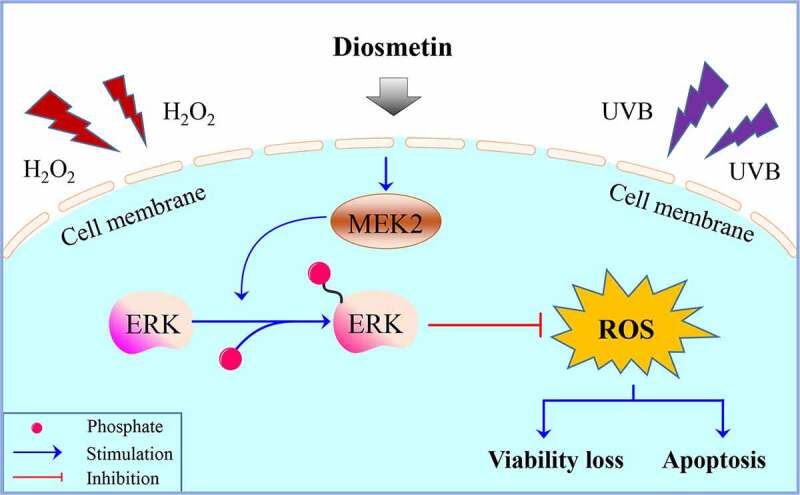
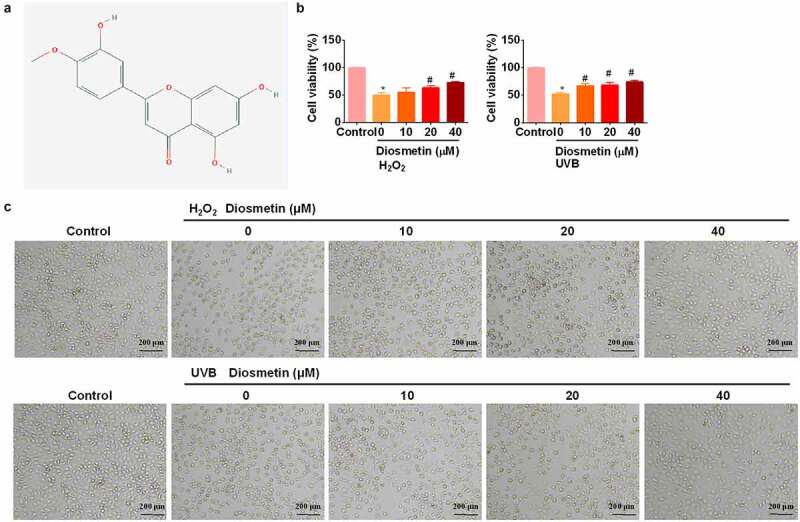
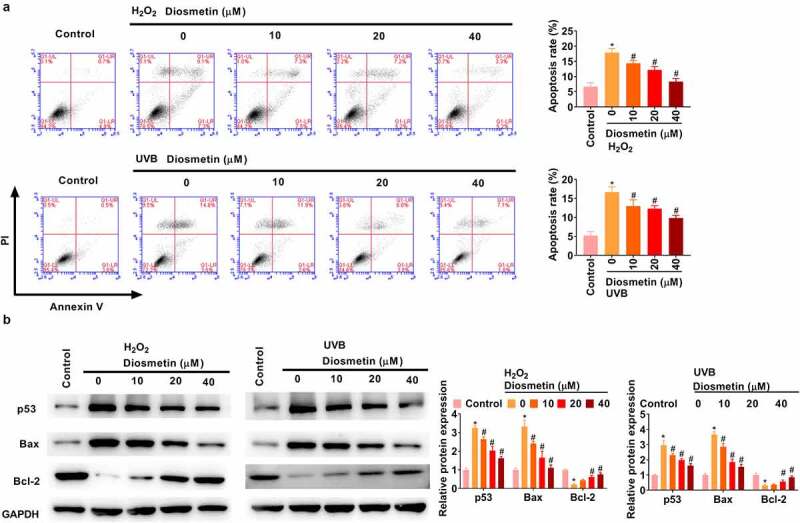
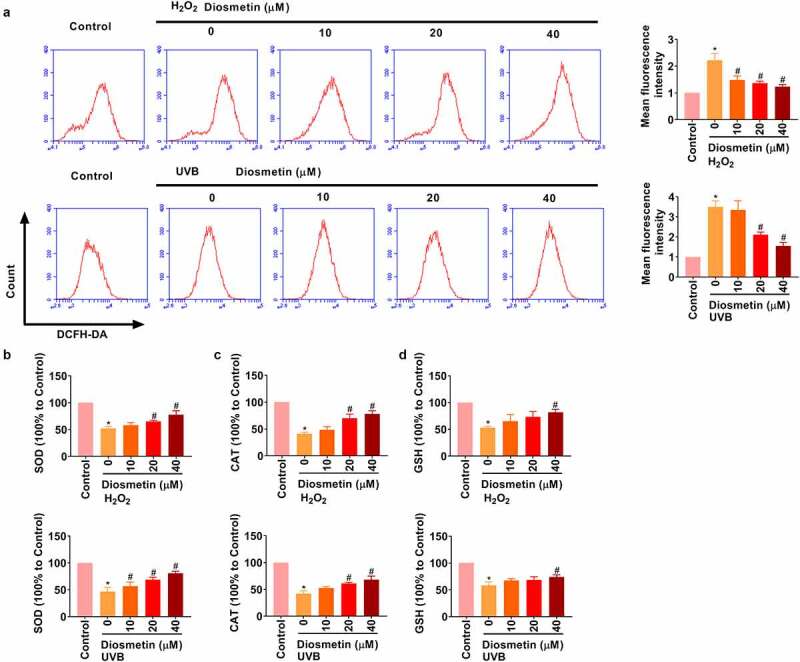
Cataract is a global ophthalmic disease that blinds the eye, and oxidative stress is one of its primary causes. Apoptosis of lens epithelial cells (LECs) is considered the major cytological basis of many cataracts except congenital cataracts. The purpose of this study was to investigate whether diosmetin could reduce oxidative stress-induced damage to LECs, and explore its regulatory pathway. Lens epithelial cell line SRA01/04 was used as the object of study. Using ultraviolet B (UVB) and hydrogen peroxide (H2O2) as sources of oxidative stress, the protective effects of diosmetin at different concentrations on cells were investigated, including inhibition of proliferation, apoptosis, and oxidative stress. Molecular docking was then used to predict the target proteins and validation was performed at the cellular and protein levels. The oxidative stress of SRA01/04 was induced by UVB and H2O2, and inhibition of proliferation and apoptosis were observed. Here, diosmetin has a dose-dependent cell-protecting effect. This effect is achieved by targeting the MEK2 protein and inhibiting the MAPK signaling. In conclusion, diosmetin reduces H2O2- and UVB-induced inhibition of SRA01/04 proliferation and apoptosis by reducing oxidative stress-induced activation of the MAPK pathway.
Overview
The claims and statistics of this paper haven’t been checked yet.
Free: it reads the open-access text and checks the first 5 claims that cite a source we can check. Create a free account to check every claim.
Integrity signals
Registry
Cites
Statistics
Figures
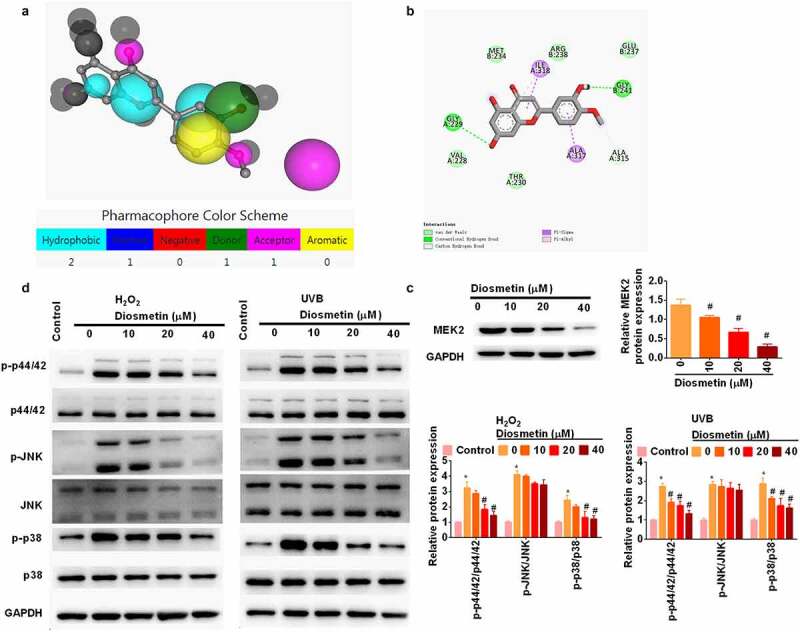
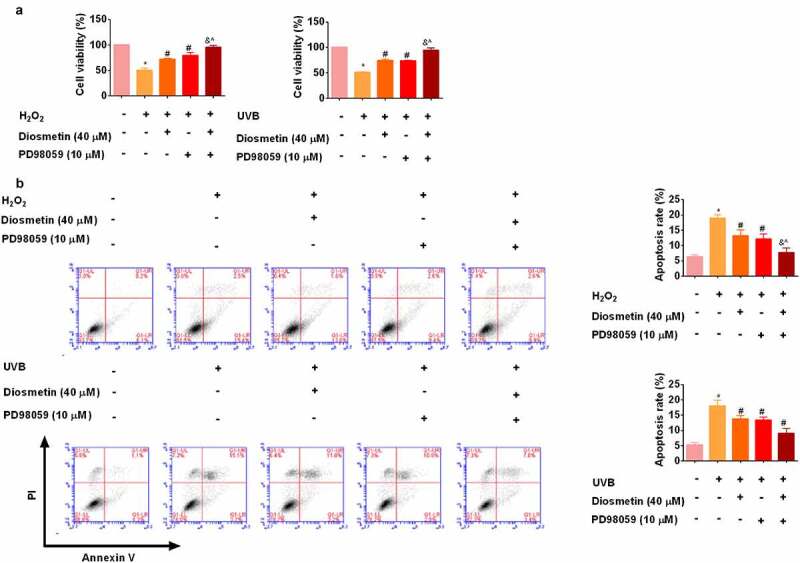
Verification
Claims the paper makes
The claims and statistics of this paper haven’t been checked yet.
Free: it reads the open-access text and checks the first 5 claims that cite a source we can check. Create a free account to check every claim.
Claims other papers make about this one
Each is checked against this paper’s own text: does it say what the citing paper says it does?
The source backs part of the claim, not all of it — or backs it for a different population, condition or comparison.
In the citing paper
“two further in vitro studies reported an amelioration of oxidative stress-related damage by MAPK suppression through regulation of the NLRP3 inflammasome [ 206 ] or through as of yet unelucidated functions of the flavonoid Diosmetin from chrysanthemum, that is used in traditional Chinese medicine [ 207 ]”
From MAPK Pathways in Ocular Pathophysiology: Potential Therapeutic Drugs and Challenges (2023) · cites this paper as [207]
Experimental — accuracy not yet measured
Self-check
Percentages, sums and reported differences re-computed from the paper’s own numbers.
The self-check needs the paper’s full text.
Citations
Cites
2 retracted
Mo, G., He, Y., Zhang, X., Lei, X., & Luo, Q. (2020) · Clinical and Experimental Pharmacology and Physiology · doi:10.1111/1440-1681.13309 · Cited by 33 · cited 1×
“For example, it was recently reported that diosmetin plays a cardioprotective role in myocardial ischemia injury in newborn rats by reducing oxidative stress and myocardial cell apoptosis [10].”
BackgroundRetractedWang, Y., Yu, Y., Yu, W., Bian, X., & Gong, L. (2022) · Bioengineered · doi:10.1080/21655979.2021.2022266 · Cited by 20
RetractedTrott, O., & Olson, A. J. (2010) · Journal of Computational Chemistry · doi:10.1002/jcc.21334 · Cited by 38,412 · cited 1×
“AutoDock Vina was then used to dock diosmetin to the predicted target protein to get minimal free energy [16,17], and Discovery Studio software was used for molecular interaction analysis.”
MethodTGF-β signalling from cell membrane to nucleus through SMAD proteins
Heldin, C.-H., Miyazono, K., & ten Dijke, P. (1997) · Nature · doi:10.1038/37284 · Cited by 3,696
Collins, T. J. (2007) · BioTechniques · doi:10.2144/000112517 · Cited by 2,124 · cited 1×
“Image analysis was performed using the Fiji version of ImageJ [18,19].”
MethodWang, X., Shen, Y., Wang, S., Li, S., Zhang, W., Liu, X., Lai, L., Pei, J., & Li, H. (2017) · Nucleic Acids Research · doi:10.1093/nar/gkx374 · Cited by 1,588
Oxidant signals and oxidative stress
Finkel, T. (2003) · Current Opinion in Cell Biology · doi:10.1016/s0955-0674(03)00002-4 · Cited by 1,393 · cited 1×
“Hydrogen peroxide (H2O2) was significantly increased in the anterior chamber of most cataract patients [1].”
BackgroundLiu, X., Ouyang, S., Yu, B., Liu, Y., Huang, K., Gong, J., Zheng, S., Li, Z., Li, H., & Jiang, H. (2010) · Nucleic Acids Research · doi:10.1093/nar/gkq300 · Cited by 967
The Primary Structure of MEK, a Protein Kinase that Phosphorylates the ERK Gene Product
Crews, C. M., Alessandrini, A., & Erikson, R. L. (1992) · Science · doi:10.1126/science.1411546 · Cited by 913
Membrane depolarization and calcium influx stimulate MEK and MAP kinase via activation of Ras
Rosen, L. (1994) · Neuron · doi:10.1016/0896-6273(94)90438-3 · Cited by 716
Morel, I., Lescoat, G., Cogrel, P., Sergent, O., Pasdeloup, N., Brissot, P., Cillard, P., & Cillard, J. (1993) · Biochemical Pharmacology · doi:10.1016/0006-2952(93)90371-3 · Cited by 635 · cited 1×
“For example, diosmetin also has an iron-chelating ability, protecting cells by chelating excessive iron ions in cells [29].”
BackgroundOhren, J. F., Chen, H., Pavlovsky, A., Whitehead, C., Zhang, E., Kuffa, P., Yan, C., McConnell, P., Spessard, C., Banotai, C., et al. (2004) · Nature Structural & Molecular Biology · doi:10.1038/nsmb859 · Cited by 626 · cited 1×
“Ras/Raf/MEK/ERK signaling pathway of mitogen-activated protein kinase (MAPK) [21].”
BackgroundIdentification of the sites in MAP kinase kinase-1 phosphorylated by p74raf-1.
Alessi, D. R., Saito, Y., Campbell, D. G., Cohen, P., Sithanandam, G., Rapp, U., Ashworth, A., Marshall, C. J., & Cowley, S. (1994) · The EMBO Journal · doi:10.1002/j.1460-2075.1994.tb06424.x · Cited by 559
Targeting the MAPK pathway in KRAS-driven tumors
Drosten, M., & Barbacid, M. (2020) · Cancer Cell · doi:10.1016/j.ccell.2020.03.013 · Cited by 512
Hydrogen peroxide and human cataract
Spector, A., & Garner, W. H. (1981) · Experimental Eye Research · doi:10.1016/s0014-4835(81)80107-8 · Cited by 502 · cited 1×
“reported that oxidative stress occurs in the early stage of cataract development and the H2O2 level of cataract patients is 2 to 7 times the normal range [2].”
BackgroundLi, W. C., Kuszak, J. R., Dunn, K., Wang, R. R., Ma, W., Wang, G. M., Spector, A., Leib, M., Cotliar, A. M., & Weiss, M. (1995) · The Journal of cell biology · doi:10.1083/jcb.130.1.169 · Cited by 396 · cited 1×
“Apoptosis of LECs is considered the common cytological basis of all types of cataracts, except congenital cataracts [6].”
BackgroundWang, X., Pan, C., Gong, J., Liu, X., & Li, H. (2016) · Journal of Chemical Information and Modeling · doi:10.1021/acs.jcim.5b00690 · Cited by 290
Correlation of Tear Lipid Layer Interference Patterns With the Diagnosis and Severity of Dry Eye
YOKOI, N., TAKEHISA, Y., & KINOSHITA, S. (1996) · American Journal of Ophthalmology · doi:10.1016/s0002-9394(14)70378-2 · Cited by 267 · cited 1×
“The ROS concentrations in the anterior chamber and lens of cataract patients were significantly higher than in normal controls [3].”
BackgroundLi, H., Leung, K., Wong, M., & Ballester, P. J. (2015) · Molecular Informatics · doi:10.1002/minf.201400132 · Cited by 252
LigBuilder 2: A Practical de Novo Drug Design Approach
Yuan, Y., Pei, J., & Lai, L. (2011) · Journal of Chemical Information and Modeling · doi:10.1021/ci100350u · Cited by 199 · cited 1×
“PharmMapper applies Cavity to detect the potential-binding sites on the surface of a protein structure and ranks them according to the Druggability scores [28].”
BackgroundChemical compositions of chrysanthemum teas and their anti-inflammatory and antioxidant properties
Li, Y., Yang, P., Luo, Y., Gao, B., Sun, J., Lu, W., Liu, J., Chen, P., Zhang, Y., & Yu, L. (. (2019) · Food Chemistry · doi:10.1016/j.foodchem.2019.02.013 · Cited by 177 · cited 1×
“Recent studies have shown that chrysanthemum extracts have anti-inflammatory, antioxidant, and anti-apoptotic abilities [8,9].”
BackgroundCiolino, H. P., Wang, T. T. Y., & Yeh, G. C. (1998) · PubMed · Cited by 164
Apoptosis in lens development and pathology
Yan, Q., Liu, J., & Li, D. W. (2006) · Differentiation · doi:10.1111/j.1432-0436.2006.00068.x · Cited by 99 · cited 1×
“Absence of epithelial cells in lenses from apoptosis-related death leads to cortical swelling, vacuolation, and subcapsular opacification, which eventually forms cataracts first in the equatorial region and then spreads to the entire lens [7].”
BackgroundNatural therapies for ocular disorders, part two: cataracts and glaucoma.
Head, K. A. (2001) · PubMed · Cited by 98
ImageJ: A Free, Easy, and Reliable Method to Measure Leg Ulcers Using Digital Pictures
Aragón‐Sánchez, J., Quintana-Marrero, Y., Aragón-Hernández, C., & Hernández-Herrero, M. J. (2017) · The International Journal of Lower Extremity Wounds · doi:10.1177/1534734617744951 · Cited by 95 · cited 1×
“Image analysis was performed using the Fiji version of ImageJ [18,19].”
MethodTGFβ Receptor Expression in Lens: Implications for Differentiation and Cataractogenesis
de Iongh, R. U., Gordon‐Thomson, C., Chamberlain, C. G., Hales, A. M., & Avoy, J. W. M. C. (2001) · Experimental Eye Research · doi:10.1006/exer.2001.1001 · Cited by 72 · cited 1×
“They play a crucial role in maintaining lens transparency [5].”
BackgroundZatechka, D. S., & Lou, M. F. (2002) · Experimental Eye Research · doi:10.1006/exer.2002.1168 · Cited by 58 · cited 1×
“H2O2 induces apoptosis of lens epithelial cells (LECs) equivalent to the pathological changes in the eyes of cataract patients [4].”
BackgroundYe, M.-J., & Meng, N. (2021) · Bioengineered · doi:10.1080/21655979.2021.1954742 · Cited by 43
Effect of Nitric Oxide on Human Corneal Epithelial Cell Viability and Corneal Wound Healing
Park, J.-H., Kim, J.-Y., Kim, D. J., Kim, M., Chang, M., Chuck, R. S. H., & Park, C. Y. (2017) · Scientific Reports · doi:10.1038/s41598-017-08576-9 · Cited by 38 · cited 1×
“For example, studies have shown that exogenous nitric oxide (NO) can activate the MAPK pathway to regulate the expression of inflammatory cytokines on the ocular surface and enhance corneal wound healing [39].”
BackgroundYang, X., Wu, K., Li, S., Hu, L., Han, J., Zhu, D., Tian, X., Liu, W., Tian, Z., Zhong, L., et al. (2016) · Oncotarget · doi:10.18632/oncotarget.12446 · Cited by 36 · cited 1×
“Diosmetin has antioxidant, anti-inflammatory, and anti-apoptotic effects and can prevent endotoxin-induced acute liver failure in mice [11].”
BackgroundSun, Y., Rong, X., Li, D., Jiang, Y., Lü, Y., & Ji, Y. (2020) · Biochemical and Biophysical Research Communications · doi:10.1016/j.bbrc.2020.07.028 · Cited by 33 · cited 2×
“When 60% confluence was reached, cells were treated with 200 μM H2O2 for 12 h or irradiated with UVB (2 W/m(2)) for 60 min and incubated for 12 h before the following experiments [12,13].”
MethodResultBLM can regulate cataract progression by influencing cell vitality and apoptosis
Xiang, J., Kang, L., Gao, H., Wu, J., Qin, B., Zhou, T., Zhang, G., & Guan, H. (2018) · Experimental Eye Research · doi:10.1016/j.exer.2018.08.022 · Cited by 32 · cited 1×
“When 60% confluence was reached, cells were treated with 200 μM H2O2 for 12 h or irradiated with UVB (2 W/m(2)) for 60 min and incubated for 12 h before the following experiments [12,13].”
MethodDiosmetin protects against retinal injury via reduction of DNA damage and oxidative stress
Shen, Z., Shao, J., Dai, J., Lin, Y., Yang, X., Ma, J., He, Q., Yang, B., Yao, K., & Luo, P. (2015) · Toxicology Reports · doi:10.1016/j.toxrep.2015.12.004 · Cited by 23 · cited 1×
“Diosmetin has presently been reported as a potential agent for improving eye function by restoring oxidative stress and DNA injury in the retinal pigment epithelium layer [27].”
BackgroundYang, H., Li, X., Ma, J., Lv, X., Zhao, S., Lang, W., & Zhang, Y. (2013) · Experimental Eye Research · doi:10.1016/j.exer.2013.02.015 · Cited by 20 · cited 1×
“In contrast, the MAPK/ERK pathway is involved in epidermal growth factor (EGF)-mediated upregulation of Ca (2+)-K(+)-K(+) channel in the mouse corneal alkali combustion model, and reduces EGF-induced neovascularization [40].”
BackgroundWu, Q., Song, J., Gao, Y., Zou, Y.-Y., Guo, J., Zhang, X., Liu, D., Guo, D., & Bi, H. (2022) · Molecular Medicine Reports · doi:10.3892/mmr.2022.12603 · Cited by 18 · cited 1×
“Epigallocatechin gallate prevented UVB-induced oxidative stress and inhibited apoptosis-related death of LECs [24].”
BackgroundAmine uptake inhibition by diosmin and diosmetin in human neuronal and neuroendocrine cell lines
Sher, E., Codignola, A., Biancardi, E., Cova, D., & Clementi, F. (1992) · Pharmacological Research · doi:10.1016/1043-6618(92)90238-7 · Cited by 17 · cited 1×
“Diosmetin increases vascular tone by inhibiting dopamine and serotonin uptake [30] and inhibits the activation of carcinogens by directly inhibiting cytochrome P450 1A1 (CYP1A1) [31].”
BackgroundZeng, K., Xi, W., Qiao, Y., Huang, X., & Liu, X. (2022) · Bioengineered · doi:10.1080/21655979.2021.2018534 · Cited by 14 · cited 1×
“Paeoniflorin inhibited epithelial– mesenchymal transformation and oxidative damage to LECs and exhibited benefits in preventing diabetic cataracts [26].”
BackgroundZhong, J., Wu, K.-S., Yu, G., Tu, L., & Liu, L. (2021) · International Journal of Ophthalmology · doi:10.18240/ijo.2022.01.02 · Cited by 13 · cited 1×
“For instance, Lycium barbarum polysaccharide delivered by nano-selenium protected LECs against UVB damage [23].”
BackgroundGanoderic acid A protects lens epithelial cells from UVB irradiation and delays lens opacity
Kang, L., Zhang, G., Zhang, J., Qin, B., & Guan, H. (2020) · Chinese Journal of Natural Medicines · doi:10.1016/s1875-5364(20)60037-1 · Cited by 12 · cited 1×
“Ganoderic acid A protected LECs against UVB irradiation and delayed lens opacity [25].”
BackgroundLiang, W., Wen, Y., Huang, F., Hu, Q., Li, X., Zhang, W. K., & Yang, X. (2020) · Food & Function · doi:10.1039/d0fo00695e · Cited by 9 · cited 1×
“Recent studies have shown that chrysanthemum extracts have anti-inflammatory, antioxidant, and anti-apoptotic abilities [8,9].”
Background
Cited by
MAPK Pathways in Ocular Pathophysiology: Potential Therapeutic Drugs and Challenges
Moustardas, P., Aberdam, D., & Lagali, N. (2023) · Cells · doi:10.3390/cells12040617 · Cited by 63
“Recently, two further in vitro studies reported an amelioration of oxidative stress-related damage by MAPK suppression through regulation of the NLRP3 inflammasome [206] or through as of yet unelucidated functions of the flavonoid Diosmetin from chrysanthemum, that is used in traditional Chinese medicine [207].”
BackgroundSun, Z., Liu, K., Liang, C., Wen, L., Wu, J., Liu, X., & Li, X. (2024) · Phytotherapy Research · doi:10.1002/ptr.8214 · Cited by 43
“Furthermore, data obtained from knocking down p62 expression and implementing Nrf2 inhibitors in rat primary cardio-myocytes illustrate that DIO's cardioprotective effect is associated with the Nrf2/HO-1 pathway activation (Guo et al., 2022).”
Salvianolic acid A alleviates H2O2-induced endothelial oxidative injury via miR-204-5p
Qiao, X., Cao, S., Chen, S., Guo, Y. H., Chen, N., Zheng, Y., & Jin, B. (2024) · Scientific Reports · doi:10.1038/s41598-024-62556-4 · Cited by 14
“According to the recent reports and our results 18–20 , the treatment time of 12 h was selected to develop a model of oxidative damage.”
ResultLiang, Q., Li, C., Liu, H., Zhou, H. H., & Tan, T. (2024) · Folia Histochemica et Cytobiologica · doi:10.5603/fhc.100071 · Cited by 8
“Multiple pharmacological activities of diosmetin have been found, such as anti-cancer [10], anti-oxidant [11], anti-microbial [12], anti-apoptotic [13], anti-estrogenic [14], anti-hyperglycemic [15], and anti-diabetic [16].”
BackgroundVarshney, K. K., Gupta, J. K., & Srivastava, R. (2024) · Protein and Peptide Letters · doi:10.2174/0109298665294109240323033601 · Cited by 10
Metadata
- Authors
- Guo, G., & Dong, J.
- Affiliations
- Department of Ophthalmology, Feicheng Hospital of Shandong Yiyang Health Group, Shandong, Feicheng, P.R. China
- Department of Clinical Laboratory, Feicheng Hospital of Shandong Yiyang Health Group, Shandong, Feicheng, P.R. China
- Corresponding author
- Dong, Jin
- ORCID
- Dong, Jin
- Venue
- Bioengineered
- Publisher
- Informa UK Limited
- Published
- 2022-04-01
- Volume
- 13
- Issue
- 4
- Pages
- 11072-11081
- ISSN
- 2165-5979 (ISSN-L)
- 2165-5987
- PMC
- PMC9208454
- OpenAlex
- W4225007563
- Semantic Scholar
- 07b6b97284eea5d280f0633ca9c3a73f766e799b
- Cited by
- 17
- References
- 40
- Citations by year
- 2026: 5 · 2025: 3 · 2024: 7 · 2023: 2
- FWCI
- 0.98
- Type
- journal article
- Language
- en
- Open access
- gold
- doi.org
- Locations
- Bioengineered (publishedVersion, cc-by)
- PubMed Central (publishedVersion, cc-by)
- PubMed (publishedVersion)
- Funders
- reported there is no funding associated with the work
- Topics
- Life Sciences › Biochemistry, Genetics and Molecular Biology › Molecular Biology › Connexins and lens biology
- Health Sciences › Medicine › Ophthalmology › Intraocular Surgery and Lenses
- Health Sciences › Medicine › Biochemistry (medical) › Antioxidant Activity and Oxidative Stress
- Keywords
- diosmetin, cataract, oxidative stress, lens epithelial cells, apoptosis, cell proliferation, MAPK signaling, MEK2, UV-B radiation, hydrogen peroxide, flavonoids
- MeSH terms
- Cataract, Epithelial Cells, Flavonoids, Humans, Hydrogen Peroxide, Oxidative Stress, Mitogen-Activated Protein Kinases, Molecular Docking Simulation
About these checks
Registry, retraction, Cites and statistics results are computed, not judged, with one exception: a printed reference that no index lists is read once by a model before it counts as a citation error. Claims are extracted by a model and kept only when their quote appears verbatim in the text; each cited source is then checked, with a model’s help, for whether it says what the claim relies on. Those verdicts can be wrong — read the claim’s quote and the cited source before relying on one.
Statistics and arithmetic are recomputed, not judged.
Confidence bands are shown only for fields calibrated on our annotated test set. None is calibrated yet, so no band is shown.
What counts as a claim ›How we measure confidence ›How we check this ›
Are you an author, or do you see a problem with this page? Request a review
Data sources
Bibliographic data: Semantic Scholar, OpenAlex, Crossref.
Contains information from the Semantic Scholar Academic Graph Datasets, made available under the ODC Attribution License (ODC-BY 1.0).
Semantic Scholar’s data is described in: Kinney, R., et al. (2023). The Semantic Scholar Open Data Platform. arXiv:2301.10140.
