

The 10 Elements of Agroecology: enabling transitions towards sustainable agriculture and food systems through visual narratives
Open accessThe DOI matches its Crossref record; 145 of the 145 references it cites were found in a registry or an index; none of the 146 sources its claims cite is checked for support yet.
Abstract
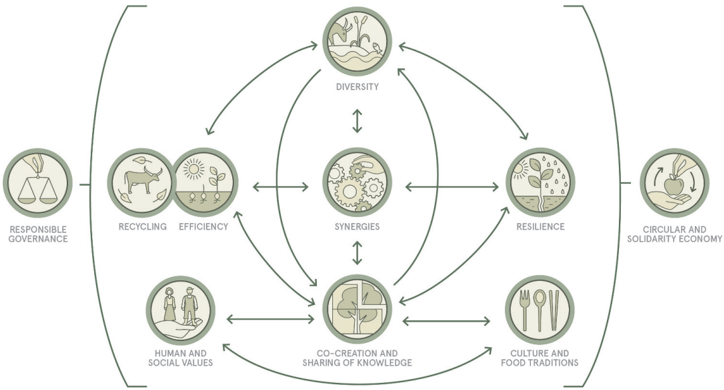
The magnitude and urgency of the challenges facing agriculture and food systems demand profound modifications in different aspects of human activity to achieve real transformative change and sustainability. Recognizing that the inherent complexity of achieving sustainability is commonly seen as a deterrent to decision-making, the Food and Agriculture Organization of the United Nations (FAO) has approved the 10 Elements of Agroecology as an analytical framework to support the design of differentiated paths for agriculture and food systems transformation, hence facilitating improved decision-making by policymakers, practitioners and other stakeholders in differing contexts at a range of levels on a number of scales. Biodiversity, consumers, education and governance are identified as promising entry points to build a structured process using visual narratives that rely on the 10 Elements of Agroecology to graphically dissect prospective social-ecological transition trajectories. We illustrate such applications with examples from agroforestry worldwide, public food procurement in Brazil and the United States of America, and agroecology education vis-à-vis secure access to land in Senegal. Nexus approaches are used to highlight and examine salient interactions among different sectors and entry points, and to develop visual narratives describing plausible theories of transformative change towards sustainable agriculture and food systems.
Overview
CoChat Summary
TL;DR
The paper presents FAO’s 10 Elements of Agroecology as an analytical framework to support differentiated transitions towards sustainable agriculture and food systems. It uses visual narratives and nexus approaches to illustrate how biodiversity, consumers, education, and governance can serve as entry points, with examples from agroforestry, public food procurement, and agroecology education.
Key findings
- The 10 Elements of Agroecology framework was developed between 2015 and 2019 through three phases and was approved by the 197 Members of FAO to guide FAO’s vision on agroecology; the regional meetings involved more than 1,400 participants representing 170 Member Countries and nearly 500 organizations.
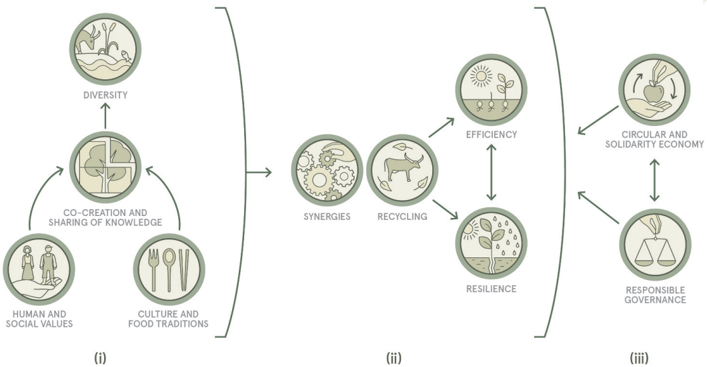
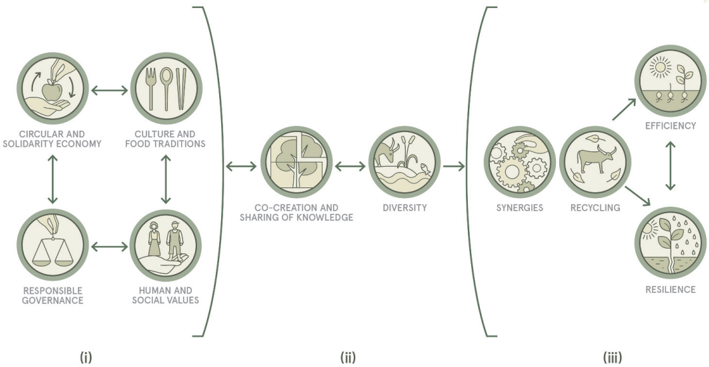
- Four promising entry points are identified—biodiversity, consumers, education, and governance—each linked to a nexus and a stepwise visual narrative using the 10 Elements icons to describe plausible theories of transformative change.
- Illustrative examples include agroforestry, associated with 43% of all agricultural land globally, with 71% of African countries including agroforestry in their Nationally Determined Contributions; Brazil’s PNAE requires at least 30% of school food purchases directly from family farmers and provides 45 million public school students with a daily meal; the Los Angeles Good Food Purchasing Program serves over 700,000 meals per day, makes more than USD 17 million in annual purchases from sustainable local producers, and has created at least 220 new jobs; and in Senegal, KAS graduates receive official titles to 1 ha of municipal land initially for 10 years.
- The paper also notes that in 2012, coffee produced in compliance with a voluntary sustainability standard amounted to 40% of global coffee production.
Methods
- This is a review/conceptual paper. The 10 Elements framework was developed through information gathering (scientific and grey literature review, multi-actor consultations, and seven FAO regional/international meetings), synthesis by FAO and external experts, and FAO approval.
- The authors use four entry points and nexus approaches to construct visual narratives and plausible theories of transformative change, illustrated with examples from agroforestry worldwide, public food procurement in Brazil and the United States, and agroecology education linked to secure land access in Senegal.
- The main analysis is qualitative synthesis and illustrative case description; no primary quantitative data collection or statistical analysis is reported.
Limitations
- The paper states that the 10 Elements framework is not without criticism, particularly because of the heterogeneity of the elements, systems with numerous components where interactions can be nonlinear, interdependent, and involve feedback loops, and the difficulty of identifying valid thresholds to assess more sustainable development trajectories.
- The paper identifies key knowledge gaps: need for methodological tools to facilitate integrative thinking and co-creation; better understanding of what works in what contexts across spatial and temporal scales, including feedback mechanisms; limited knowledge of how system components react to more than one environmental or social factor at a time; and need for multidimensional assessment tools.
- Evident from the text: the nexus examples and visual narratives are illustrative rather than systematically evaluated, and the paper reports no empirical testing of the proposed transition trajectories.
Model-written summary. Check it against the paper before relying on it.
Integrity signals
Registry
Cites
Statistics
Figures

Verification
Claims the paper makes
0 Valid · 2 Not valid · 85 Not checked · 21 Own results and interpretations
None of the sources cited for this claim have been checked yet.
In the paper
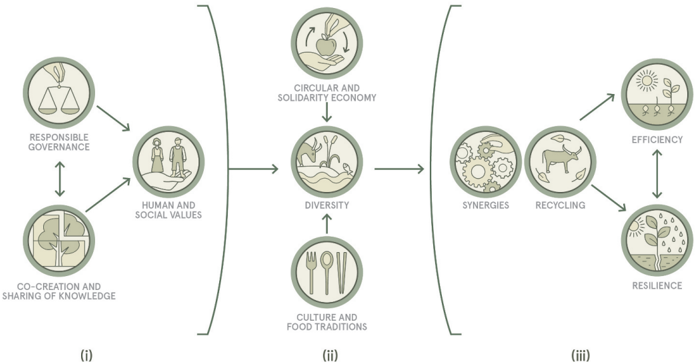
“Prominent themes from presentations delivered during the First International Symposium on Agroecology for Food Security and Nutrition (FAO 2015) provided an initial coherent structure: recycling, efficiency, diversity, resilience and synergies as central ecological features of agroecology (Tittonell 2015).”
What the sources say
- Not checked yetcites FAO 2015
- Not checked yetcites Tittonell 2015
plainstates a cause- Asserted: passes — The authors put it forward as true.
- Checkable: passes — It can be checked against evidence.
- Load-bearing: passes — The paper’s conclusions depend on it.
- Based: passes — The paper gives a reason why it holds.
In the paper
“Nevertheless, calls in regional meetings for reinforcing social and political aspects of agroecology were also strong.”
What the sources say
- Not checked yetcites FAO 2018c
boosted- Asserted: passes — The authors put it forward as true.
- Checkable: passes — It can be checked against evidence.
- Load-bearing: passes — The paper’s conclusions depend on it.
- Based: passes — The paper gives a reason why it holds.
In the paper
“The world's agriculture and food systems are not presently delivering desirable outcomes on food security and nutrition (FAO 2019a).”
What the sources say
- Not checked yetcites FAO 2019a
plain- Asserted: passes — The authors put it forward as true.
- Checkable: passes — It can be checked against evidence.
- Load-bearing: passes — The paper’s conclusions depend on it.
- Based: passes — The paper gives a reason why it holds.
What the paper did — it cites no source for this, so there is none to check. The quote shows it is in the paper.
In the paper
“The 10 Elements of Agroecology resulted from a multi-stakeholder process intended to generate a system and process re-design framework to be optimized and adapted to local contexts.”
plainstates a cause- Asserted: passes — The authors put it forward as true.
- Checkable: passes — It can be checked against evidence.
- Load-bearing: unclear — It is unclear whether the paper’s conclusions depend on it.
- Based: passes — The paper gives a reason why it holds.
In the paper
“the 10 Elements of Agroecology were approved by the 197 Members of the Food and Agriculture Organization of the United Nations to guide FAO's vision on Agroecology (FAO 2019c).”
What the sources say
- Not checked yetcites FAO 2019c
plain- Asserted: passes — The authors put it forward as true.
- Checkable: passes — It can be checked against evidence.
- Load-bearing: unclear — It is unclear whether the paper’s conclusions depend on it.
- Based: passes — The paper gives a reason why it holds.
37 more claims
Create a free account to see all 108 claims and to verify the 146 references still open.
- It may state two separate claims as one. 36
- Probably not a substantial claim. 45
- The quote only partly states this claim. 1
Claims other papers make about this one
Each is checked against this paper’s own text: does it say what the citing paper says it does?
The source backs part of the claim, not all of it — or backs it for a different population, condition or comparison.
In the citing paper
“Aiming to achieve a sustainable agricultural production, the theoretical agroecological framework offers the opportunity to meet food needs on a global scale, harness ecosystem services through the management of service-providing organisms, and achieve other social and environmental goals (Barrios et al. 2020; Bommarco, Kleijn, and Potts 2013; Tittonel 2014).”
From Perspectives on agroecological transition: the case of Guachetá municipality, Colombia (2023) · cites this paper as Barrios et al. 2020
Experimental — accuracy not yet measuredThe cited source says what the claim attributes to it.
In the citing paper
“Agroecology is based on several principles that include biophysical and socio-technical dimensions (Barrios et al. 2020; FAO 2019; Leippert et al. 2020).”
From Methodological challenges in assessing the viability of agroecological practices: lessons from a multi-case study in Africa (2025) · cites this paper as Barrios et al. 2020
The cited source says what the claim attributes to it.
In the citing paper
“Context reflects the situated nature of agroecological initiatives (Méndez et al. 2017, Barrios et al. 2020).”
From A heuristic framework to portray agroecological transition initiatives in reflexive arrangements, illustrated with a conservation agriculture network in Denmark (2025) · cites this paper as Barrios et al. 2020
The cited source says what the claim attributes to it.
In the citing paper
“These practices are also likely to have positive effects on other elements of evaluated CAET, like diversity and synergies (Table 2), reflecting the interrelation between the elements of agroecology (Barrios et al. 2020).”
From Perspectives on agroecological transition: the case of Guachetá municipality, Colombia (2023) · cites this paper as Barrios et al. 2020
The cited source says what the claim attributes to it.
In the citing paper
“In fact, this is a core element within the agroecological theoretical framework, since it drives proper deci sion-making (Barrios et al. 2020).”
From Perspectives on agroecological transition: the case of Guachetá municipality, Colombia (2023) · cites this paper as Barrios et al. 2020
1 more claim about this paper
Create a free account to see every claim other papers make about this one.
Citations
Cites
null (2016) · Philosophy Study · doi:10.17265/2159-5313/2016.09.003 · Cited by 28,317
Transforming Our World: The 2030 Agenda for Sustainable Development
(2018) · A New Era in Global Health · doi:10.1891/9780826190123.ap02 · Cited by 19,351
Planetary boundaries: Guiding human development on a changing planet
Steffen, W., Richardson, K., Rockström, J., Cornell, S. E., Fetzer, I., Bennett, E. M., Biggs, R., Carpenter, S. R., de Vries, W., de Wit, C. A., et al. (2015) · Science · doi:10.1126/science.1259855 · Cited by 12,527 · cited 1×
“…on existing analyses that have advanced agroecology as a science, a practice and a social movement (Altieri 1995; Tomich et al. 2011; Tittonell 2014; Wezel et al. 2014; Gliessman 2015) as well as efforts to address global sustainability challenges (Steffen et al. 2015; Springmann et al. 2018).”
BackgroundFood in the Anthropocene: the EAT–Lancet Commission on healthy diets from sustainable food systems
Willett, W., Rockström, J., Loken, B., Springmann, M., Lang, T., Vermeulen, S., Garnett, T., Tilman, D., DeClerck, F., Wood, A., et al. (2019) · The Lancet · doi:10.1016/s0140-6736(18)31788-4 · Cited by 10,880 · cited 1×
“Changing consumption patterns towards nutritious and healthy foods can have major impacts on value chains and markets thus highlighting the close link between human health and environmental sustainability (Caron et al. 2018; Willett et al. 2019).”
BackgroundResilience, Adaptability and Transformability in Social–ecological Systems
Walker, B., Holling, C. S., Carpenter, S. R., & Kinzig, A. P. (2004) · Ecology and Society · doi:10.5751/es-00650-090205 · Cited by 7,821 · cited 1×
“Resilience is considered here as ‘the capacity of a system to absorb disturbance and reorganize while undergoing change so as to still retain essentially the same function, structure, identity, and feedbacks’ (Walker et al. 2004; Folke et al. 2010).”
BackgroundGhisellini, P., Cialani, C., & Ulgiati, S. (2016) · Journal of Cleaner Production · doi:10.1016/j.jclepro.2015.09.007 · Cited by 6,536 · cited 1×
“Re-designing food systems based on the principles of the circular economy can also contribute to face the global food loss and waste challenge by enhancing recycling, making food value chains shorter and more resource-use efficient (Ghisellini et al. 2015; FAO 2019d).”
BackgroundResilience Thinking: Integrating Resilience, Adaptability and Transformability
Folke, C., Carpenter, S. R., Walker, B., Scheffer, M., Chapin, T., & Rockström, J. (2010) · Ecology and Society · doi:10.5751/es-03610-150420 · Cited by 4,764 · cited 1×
“Resilience is considered here as ‘the capacity of a system to absorb disturbance and reorganize while undergoing change so as to still retain essentially the same function, structure, identity, and feedbacks’ (Walker et al. 2004; Folke et al. 2010).”
BackgroundLandscape perspectives on agricultural intensification and biodiversity—Ecosystem service management
Tscharntke, T., Klein, A. M., Kruess, A., Steffan‐Dewenter, I., & Thies, C. (2005) · Ecology Letters · doi:10.1111/j.1461-0248.2005.00782.x · Cited by 4,455 · cited 3×
“…regulation of pest and diseases, through habitat modifications that enhance the abundance and diversity of natural enemies and predators (Landis et al. 2000; Tscharntke et al. 2005; Pumariño et al. 2015), thus reducing the need for pesticide inputs that compromise food safety (Carvalho 2006).”
BackgroundKnowledge systems for sustainable development
Cash, D. W., Clark, W. C., Alcock, F., Dickson, N. M., Eckley, N., Guston, D. H., Jäger, J., & Mitchell, R. B. (2003) · Proceedings of the National Academy of Sciences · doi:10.1073/pnas.1231332100 · Cited by 3,660 · cited 2×
“Hence, fostering co-creation processes that build relevance, credibility and legitimacy is integral to the crafting of knowledge that is useful for sustainable development (Cash et al. 2003; Warner 2007; Barrios et al. 2012a; Clark et al. 2016; Lemos et al. 2018).”
BackgroundOptions for keeping the food system within environmental limits
Springmann, M., Clark, M., Mason-D’Croz, D., Wiebe, K., Bodirsky, B. L., Lassaletta, L., de Vries, W., Vermeulen, S. J., Herrero, M., Carlson, K. M., et al. (2018) · Nature · doi:10.1038/s41586-018-0594-0 · Cited by 3,380 · cited 3×
“…on existing analyses that have advanced agroecology as a science, a practice and a social movement (Altieri 1995; Tomich et al. 2011; Tittonell 2014; Wezel et al. 2014; Gliessman 2015) as well as efforts to address global sustainability challenges (Steffen et al. 2015; Springmann et al. 2018).”
Background
Research works printed but not linked: 18
- FAO. 2011a. Save and Grow: A policy-makers guide to the sustainable intensification of smallholder crop produc tion. Rome: Food and Agriculture Organization of the United Nations. http://www.fao.org/3/a-i2215e.pdf.
- FAO. 2011b. The state of food and agriculture. Women in agriculture: closing the gender gap for development. Rome: Food and Agriculture Organization of the United Nations. http://www.fao.org/3/a-i2050e.pdf.
- FAO. 2014. Building a common vision for sustainable food and agriculture. Rome: Food and Agriculture Organization of the United Nations. http://www.fao.org/3/a-i3940e.pdf.
- FAO. 2015. Proceedings of the FAO international sympo sium on agroecology for food security and nutrition. Rome: Food and Agriculture Organization of the United Nations. http://www.fao.org/3/a-i4729e.pdf.
- FAO. 2018a. Transforming food and agriculture to achieve the SDGs - 20 interconnected actions to guide decisionmakers. Rome: Food and Agriculture Organization of the United Nations. http://www.fao.org/3/I9900EN/ i9900en.pdf.
- FAO. 2018b. The 10 Elements of Agroecology: guiding the transition to sustainable food and agricultural systems. Rome: Food and Agriculture Organization of the United Nations. http://www.fao.org/3/i9037en/ i9037en.pdf.
- FAO. 2018c. Catalyzing dialogue and cooperation to scale up agroecology: outcomes of the FAO regional seminars on agroecology. Rome: Food and Agriculture Organization of the United Nations. http://www.fao. org/3/I8992EN/i8992en.pdf.
- FAO. 2018e. Characteristics, dynamics and drivers of rural migration in Senegal. Case study in Kaolack and Matam. Main facts and statistics. Rome: Food and Agriculture Organization of the United Nations. http://www.fao.org/ 3/ca2510en/CA2510EN.pdf.
- FAO. 2019a. The state of food security and nutrition in the world - safeguarding against economic slowdowns and downturns. Rome: Food and Agriculture Organization of the United Nations. http://www.fao.org/3/ca5162en/ca5162en.pdf.
- FAO 2019b. Scaling up Agroecology to achieve the sustain able development goals. Proceedings of the Second FAO International Symposium; Apr 3-5 2018; Rome: Food and Agriculture Organization of the United Nations. http://www.fao.org/3/ca3666en/ca3666en.pdf
- FAO. 2019c. Council. 163rd Session. The Ten Elements of Agroecology. Document CL 163/13 Rev.1. Rome: Food and Agriculture Organization of the United Nations. http://www.fao.org/3/ca7173en/ca7173en.pdf.
- FAO. 2019d. The state of food and agriculture. Moving forward on food loss and waste reduction. Rome: Food and Agriculture Organization of the United Nations. http://www.fao.org/3/ca6030en/ca6030en.pdf.
- FAO. 2019g. Tool for Agroecology Performance Evaluation (TAPE) - process of development and guidelines for application. Test version. Rome: Food and Agriculture Organization of the United Nations. http://www.fao.org/ 3/ca7407en/ca7407en.pdf.
- Nobre M, Hora K, Brito C, Parada S. 2017. Atlas de las mujeres rurales de América Latina y el Caribe - al tiempo de la vida y de los hechos. Santiago de Chile: FAO-RLC; p. 82.
- Potts J, Lynch M, Wilkings A, Huppé G, Cunningham M, Voora V. 2014. The state of sustainability reviews 2014 standards and the green economy. Winnipeg, Canada: International Institute for Sustainable Development (IISD) and the International Institute for Environment and Development (IIED); p. 363.
- Siliprandi EC, Cintrão RP, 2013. As mulheres rurais e a diversidade de produtos no programa de Aquisição de Alimentos. In: MDS - Ministério do Desenvolvimento Social e Combate à Fome. PAA - 10 anos de Aquisição de Alimentos; Brasília-Brasil: MDS. pp. 114-151.
- TEEB. 2018. The Economics of Ecosystems and Biodiversity. Measuring what matters in agriculture and food systems: a synthesis of the results and recom mendations of TEEB for Agriculture and Food's Scientific and Economic Foundations report. Geneva: UN Environment.
- Tittonell P 2015. Food security and ecosystem services in a changing world: it is time for agroecology. In FAO. Agroecology for Food Security and Nutrition: Proceedings of the FAO International Symposium; Rome. pp. 16-35.
Cited by
Wezel, A., Herren, B. G., Kerr, R. B., Barrios, E., Gonçalves, A. L. R., & Sinclair, F. (2020) · Agronomy for Sustainable Development · doi:10.1007/s13593-020-00646-z · Cited by 926
“In addition to the five levels described above, the FAO agroecology framework recognises all 10 elements as potential entry points for transformative change towards sustainable food and agricultural systems and the facilitative role of visual narratives and nexus analysis (Barrios et al. 2020).”
BackgroundInfluentialSelf-citationAssessment and Principles of Environmentally Sustainable Food and Agriculture Systems
Çakmakçı, R., Salık, M. A., & Çakmakçı, S. (2023) · Agriculture · doi:10.3390/agriculture13051073 · Cited by 269
“The agroecology approach, which applies ecological and social principles to the design and management of food and agricultural systems [46], is among the agricultural policies of the future and is adopted for the sustainability of European agriculture, to reduce the negative effects of agri-food…”
BackgroundFood, Fibre and Other Ecosystem Products
(IPCC), I. P. O. C. C. (2023) · Cambridge University Press eBooks · doi:10.1017/9781009325844.007 · Cited by 347
Mottet, A., Bicksler, A., Lucantoni, D., De Rosa, F., Scherf, B., Scopel, E., López-Ridaura, S., Gemmil-Herren, B., Bezner Kerr, R., Sourisseau, J.-M., et al. (2020) · Frontiers in Sustainable Food Systems · doi:10.3389/fsufs.2020.579154 · Cited by 238
“It also should be able to contribute to evaluating a wide range of agricultural systems against the 10 Elements of Agroecology approved by FAO member nations (FAO, 2018a; Barrios et al., 2020).”
BackgroundSelf-citationRegenerative agriculture—agroecology without politics?
Tittonell, P., El Mujtar, V., Felix, G., Kebede, Y., Laborda, L., Luján Soto, R., & de Vente, J. (2022) · Frontiers in Sustainable Food Systems · doi:10.3389/fsufs.2022.844261 · Cited by 164
Self-citationRichard, B., Qi, A., & Fitt, B. D. L. (2021) · Plant Pathology · doi:10.1111/ppa.13493 · Cited by 194
“These techniques will need to rely more on ecosystem services and agroecology (Barrios et al., 2020; Wezel et al., 2020) to help mitigate and adapt to climate change and contribute to the European Union “Farm- to- Fork” strategy (https://ec.europa.eu/ food/horiz ontal - topic s/farm- fork- strat…”
BackgroundAkanmu, A. O., Akol, A. M., Ndolo, D. O., Kutu, F. R., & Babalola, O. O. (2023) · Frontiers in Sustainable Food Systems · doi:10.3389/fsufs.2023.1143061 · Cited by 163
“Agroecologists have therefore redesigned and optimized smallholders’ agricultural systems using agroecological concepts and techniques in order to make them more responsive to these factors and potentially viable in a world that is changing rapidly (Barrios et al., 2020).”
BackgroundBless, A., Davila, F., & Plant, R. A. J. (2023) · Agriculture and Human Values · doi:10.1007/s10460-023-10444-4 · Cited by 129
“In 2019, the FAO approved its ’10 elements of agroecol - ogy’, a principles-based document promoting the central role of AE in a sustainable agri-food system (Barrios et al. 2020 ).”
BackgroundA review of megatrends in the global dairy sector: what are the socioecological implications?
Bojovic, M., & McGregor, A. (2022) · Agriculture and Human Values · doi:10.1007/s10460-022-10338-x · Cited by 125
Climate change and food security in Sri Lanka: towards food sovereignty
Gunaratne, M. S., Firdaus, R. B. R., & Rathnasooriya, S. I. (2021) · Humanities and Social Sciences Communications · doi:10.1057/s41599-021-00917-4 · Cited by 124
Human and social values in agroecology
Bezner Kerr, R., Liebert, J., Kansanga, M., & Kpienbaareh, D. (2022) · Elementa: Science of the Anthropocene · doi:10.1525/elementa.2021.00090 · Cited by 95
Dittmer, K. M., Rose, S., Snapp, S. S., Kebede, Y., Brickman, S., Shelton, S., Egler, C., Stier, M., & Wollenberg, E. (2023) · Environmental Management · doi:10.1007/s00267-023-01816-x · Cited by 102
“…fundamentally, agroecology promotes diverse farming systems, nutrient recycling, soil health, and biological pest control (The High Level Panel of Experts on Food Security and Nutrition 2019) and encompasses social dimensions such as farmer co-creation and knowledge sharing (Barrios et al. 2020).”
BackgroundClimate-Smart Pest Management in Sustainable Agriculture: Promises and Challenges
Bouri, M., Arslan, K. S., & Şahin, F. (2023) · Sustainability · doi:10.3390/su15054592 · Cited by 95
“For instance, the European Union’s “Farm-to-Fork” strategy needs to provide more ecosystems and agroecology services [99,100] to help farmers make economic decisions to choose the right pest management technique for mitigation and adaptation to climate change, as reported by Richard et al. [5].”
BackgroundFamily farming in climate change: Strategies for resilient and sustainable food systems
Chao, K. (2024) · Heliyon · doi:10.1016/j.heliyon.2024.e28599 · Cited by 101
“Fostering climate-resilient food systems requires the adoption of sustainable land management techniques, such as conservation agriculture [37], agroforestry [38], and soil and water conservation [39].”
BackgroundZaremba, H., Elias, M., Rietveld, A. M., & Bergamini, N. (2021) · Sustainability · doi:10.3390/su132011244 · Cited by 96
“” As such, agroecological transitions and transformations are often recognized for their potential to support the empowerment of marginalized groups and individuals and reduce gender inequities in agricultural communities “if they are designed to address underlying power imbalances women face, such as norms, relations…”
BackgroundSocio-Technical Innovation Bundles for Agri-Food Systems Transformation
Barrett, C. B., Benton, T. G., Fanzo, J., Herrero, M., Nelson, R., Bageant, E., Buckler, E. S., Cooper, K., Culotta, I., Fan, S., et al. (2022) · Sustainable development goals series · doi:10.1007/978-3-030-88802-2 · Cited by 92
Stratton, A. E., Wittman, H., & Blesh, J. (2021) · Agronomy for Sustainable Development · doi:10.1007/s13593-021-00688-x · Cited by 70
Sietz, D., Klimek, S., & Dauber, J. (2022) · Communications Earth & Environment · doi:10.1038/s43247-022-00527-1 · Cited by 65
Positive but variable effects of crop diversification on biodiversity and ecosystem servicesPreprint
Beillouin, D., Ari, T. B., Malézieux, É., Seufert, V., & Makowski, D. (2020) · bioRxiv (Cold Spring Harbor Laboratory) · doi:10.1101/2020.09.30.320309 · Cited by 61
Evidence on the multidimensional performance of agroecology in Mali using TAPE
Lucantoni, D., Sy, M. R., Goïta, M., Veyret-Picot, M., Vicovaro, M., Bicksler, A., & Mottet, A. (2023) · Agricultural Systems · doi:10.1016/j.agsy.2022.103499 · Cited by 53
Self-citationHrabanski, M., & Le Coq, J. F. (2022) · Environmental Science & Policy · doi:10.1016/j.envsci.2021.10.022 · Cited by 53
Multidimensional and multiscale assessment of agroecological transitions. A review
Darmaun, M., Chevallier, T., Hossard, L., Lairez, J., Scopel, É., Chotte, J., Lambert-Derkimba, A., & de Tourdonnet, S. (2023) · International Journal of Agricultural Sustainability · doi:10.1080/14735903.2023.2193028 · Cited by 54
“…considered publications related to sustainability or resilience because they are the main stated goals of the transition to agroecological systems (Altieri & Nicholls, 2012; Barrios et al., 2020; Dendoncker et al., 2018; Gliessman, 2016; Miles et al., 2017; Mottet et al., 2020; Wezel et al., 2020).”
BackgroundMethodInfluentialRestoring functional integrity of the global production ecosystem through biological control
Wyckhuys, K. A. G., Gu, B., Fekih, I. B., Finger, R., Kenis, M., Lu, Y., Subramanian, S., Tang, F. H. M., Weber, D. C., Zhang, W., et al. (2024) · Journal of Environmental Management · doi:10.1016/j.jenvman.2024.122446 · Cited by 58
Vargas, D. C. M., Hoyos, C. D. P. Q., & Hernández-Manrique, O. L. (2023) · Heliyon · doi:10.1016/j.heliyon.2023.e17016 · Cited by 58
“…of WEF-nexus literature without mentioning the possible interlinks with biodiversity in the sustainability transitions analysis of agri-food systems, compels a narrowed vision of management in sustainable-use protected areas, landscape restoration actions [24], and elements of agroecology [27].”
BackgroundAn Ecosystem-Based Approach to Climate-Smart Agriculture with Some Considerations for Social Equity
Akamani, K. (2021) · Agronomy · doi:10.3390/agronomy11081564 · Cited by 54
Zenda, M., & Rudolph, M. J. (2024) · Climate · doi:10.3390/cli12030033 · Cited by 55
“The FAO’s 10 Elements of Agroecology framework is a holistic tool that helps countries achieve transformative change towards sustainable agriculture and food systems (Barrios et al., 2020) [38].”
BackgroundEcological Intensification of Food Production by Integrating Forages
Franco, J. G., Berti, M. T., Grabber, J. H., Hendrickson, J., Nieman, C. C., Pinto, P., Tassel, D. L. V., & Picasso, V. (2021) · Agronomy · doi:10.3390/agronomy11122580 · Cited by 51
Promoting equity and justice: harnessing the right to food for Africa's food security
Onyeaka, H. N., Siyanbola, K. F., Akinsemolu, A. A., Tamasiga, P., Mbaeyi‐Nwaoha, I. E., Okonkwo, C. E., Odeyemi, O. A., & Oladipo, E. K. (2024) · Agriculture & Food Security · doi:10.1186/s40066-024-00505-0 · Cited by 47
Pathways to Advance Agroecology for a Successful Transformation to Sustainable Food Systems
Niggli, U. A., Sonnevelt, M., & Kummer, S. (2023) · Springer eBooks · doi:10.1007/978-3-031-15703-5_18 · Cited by 52
Land governance for agroecology
Wittman, H. K., & James, D. (2022) · Elementa Science of the Anthropocene · doi:10.1525/elementa.2021.00100 · Cited by 49
Dierks, J., Blaser, W. J., Gamper, H., Nyoka, I. B., Barrios, E., & Six, J. (2021) · Agriculture Ecosystems & Environment · doi:10.1016/j.agee.2021.107487 · Cited by 39
Self-citationElouattassi, Y., Ferioun, M., Ghachtouli, N. E., Derraz, K., & Rachidi, F. (2023) · Journal of Agriculture and Environment for International Development (JAEID) · doi:10.36253/jaeid-14672 · Cited by 50
Elements of agroecological pest and disease management
Belmain, S. R., Tembo, Y. L. B., Mkindi, A. G., Arnold, S. E. J., & Stevenson, P. C. (2022) · Elementa Science of the Anthropocene · doi:10.1525/elementa.2021.00099 · Cited by 39
Wang, Z., Huang, L., Yin, L., Wang, Z., & Zheng, D. (2022) · Frontiers in Environmental Science · doi:10.3389/fenvs.2022.836002 · Cited by 39
“SA has played a notable role in sustaining all human activities (Barrios et al., 2020).”
BackgroundAgroecological transitions in the mind
Soini, E., & Coe, R. (2023) · Elementa Science of the Anthropocene · doi:10.1525/elementa.2022.00026 · Cited by 36
Revamping Ecosystem Services through Agroecology—The Case of Cereals
Sethuraman, G., Zain, N. A. M., Yusoff, S. B., Ng, Y. M., Baisakh, N., & Cheng, A. (2021) · Agriculture · doi:10.3390/agriculture11030204 · Cited by 33
“Each of the goals outlines a specific set of targets that are interconnected in addressing different aspects of the global issues that call for holistic approaches [6].”
BackgroundDuncan, A. J., Ayantunde, A. A., Blümmel, M., Amole, T. A., Padmakumar, V., & Moran, D. (2023) · Outlook on Agriculture · doi:10.1177/00307270231199116 · Cited by 30
“For example, Barrios et al. (2020) include the “ circular and solidarity economy ” as one of ten elements of agroecology.”
The Role of Actor Networks in Enabling Agroecological Innovation: Lessons from Laos
Castella, J., Lestrelin, G., Phimmasone, S., Quoc, H. T., & Lienhard, P. (2022) · Sustainability · doi:10.3390/su14063550 · Cited by 33
“Final Report: International Symposium on Agroecology for Food Security and Nutrition, 18 and 19 September 2014, Food and Agriculture Organization of the United Nations; FAO: Rome, Italy, 2015.”
BackgroundInfluentialScience on ecosystems and people to support the Kunming-Montreal Global Biodiversity Framework
Schröter, M., Berbés‐Blázquez, M., Albert, C., Hill, R., Krause, T., Loos, J., Mannetti, L. M., Martín‐López, B., Neelakantan, A., Parrotta, J. A., et al. (2023) · Ecosystems and People · doi:10.1080/26395916.2023.2220913 · Cited by 33
“Biodiversity is a key entry point to enable transformative change and facilitate agroecological transitions towards sustainable agri-culture and food systems (Barrios et al. 2020).”
BackgroundSelf-citationThe Social Ecology of Food: Where Agroecology and Heritage Meet
Rahman, D. F., Moussouri, T., & Alexopoulos, G. (2021) · Sustainability · doi:10.3390/su132413981 · Cited by 32
Reflecting on the Concept of Local Agroecological Food Systems
Sanz-Cañada, J., Hernández, J. L. S., & García, D. L. (2023) · Land · doi:10.3390/land12061147 · Cited by 32
The 10 elements of agroecology interconnected: making them operational in FAO’S work on agroecology
Bicksler, A. J., Mottet, A., Lucantoni, D., Sy, M. R., & Barrios, E. (2023) · Elem Sci Anth · doi:10.1525/elementa.2022.00041 · Cited by 27
Self-citationPhytotoxic Substances Involved in Teak Allelopathy and Agroforestry
Kato‐Noguchi, H. (2021) · Applied Sciences · doi:10.3390/app11083314 · Cited by 28
“However, it is essential to design agroforestry systems with an appropriate selection of tree and crop combinations, and the distribution of resources, such as light, water, nutrients, and space requirements, for those combinations [74,79].”
BackgroundDumont, B., Barlagne, C., Cassart, P., Duval, J. E., Fanchone, A., Gourdine, J.-L., Huguenin‐Elie, O., Kazakova-Mateva, Y., Klötzli, J., LÜSCHER, A., et al. (2024) · animal · doi:10.1016/j.animal.2024.101367 · Cited by 30
Impacts of Scaling up Agroecology on the Sustainability of European Agriculture in 2050
Mayer, A. C. R., Kalt, G., Kaufmann, L., Röös, E., Müller, A. W., Weißhaidinger, R., Frehner, A., Roux, N., Smith, P., Theurl, M. C., et al. (2022) · EuroChoices · doi:10.1111/1746-692x.12373 · Cited by 28
Mujtar, V. A. E., Zamor, R., Salmerón, F. J., Guerrero, A. D. S., Laborda, L., Tittonell, P. A., & Hogan, R. (2023) · Agricultural Systems · doi:10.1016/j.agsy.2023.103686 · Cited by 27
Self-citationMekuria, W., Dessalegn, M., Amare, D., Belay, B., Getnet, B., Girma, G., & Tegegne, D. (2022) · Frontiers in Environmental Science · doi:10.3389/fenvs.2022.965408 · Cited by 27
Lucantoni, D., & Domarle, J. (2023) · Agroecology and Sustainable Food Systems · doi:10.1080/21683565.2023.2230931 · Cited by 26
Building an Agroecology Knowledge Network for Agrobiodiversity Conservation
Nimmo, E. R., Nelson, E., Gómez-Tovar, L., García, M. M., Spring, A., de Lacerda, A. E. B., de Carvalho, A. I., & Blay‐Palmer, A. (2023) · Conservation · doi:10.3390/conservation3040032 · Cited by 25
Savels, R., Dessein, J., Lucantoni, D., & Speelman, S. (2024) · Frontiers in Sustainable Food Systems · doi:10.3389/fsufs.2024.1359083 · Cited by 23
The ties that bind: how trees can enhance agroecological transitions
Isaac, M. E., Sinclair, F., Laroche, G., Olivier, A., & Thapa, A. (2024) · Agroforestry Systems · doi:10.1007/s10457-024-01014-6 · Cited by 28
“Agroforestry can contribute substantially to a biodi-versity-nutrition-climate change nexus (Barrios et al. 2020; FAO 2023).”
Perspectives on agroecological transition: the case of Guachetá municipality, Colombia
Barrios Latorre, S. A., Sadovska, V., & Chongtham, I. R. (2023) · Agroecology and Sustainable Food Systems · doi:10.1080/21683565.2022.2163449 · Cited by 22
Sustainability analysis of apple orchards: Integrating environmental and economic perspectives
Baima, L., Nari, L., Nari, D., Bossolasco, A., Blanc, S., & Brun, F. (2024) · Heliyon · doi:10.1016/j.heliyon.2024.e38397 · Cited by 22
“Rooted in ten fundamental principles [11] - including diversity, co-creation and knowledge sharing, synergies, efficiency, recycling, resilience, human and social values, food culture and traditions, responsible governance, and circular and solidarity economy - this approach adopts a holistic…”
BackgroundCiaccia, C., Testani, E., Fiore, A., Iocola, I., Pierro, M. D., Mele, G., Ferlito, F., Cutuli, M., Montemurro, F., Farina, R., et al. (2021) · Sustainability · doi:10.3390/su13105532 · Cited by 24
“Finally, the already carried out workshops and open discussions raised the need of involved actors to upscale from the field and the farm contexts, finding in consumers and policy makers involvement the recognized strategy for an effective system redesign towards and agroecological territory definition, as reported by…”
BackgroundResultRota-Aguilera, M. J. L., Delgadillo-Vargas, O. L., & Tello, E. (2021) · Ecological Economics · doi:10.1016/j.ecolecon.2021.107310 · Cited by 25
O’Connor, G., Reis, K., Desha, C., & Burkett, I. (2024) · Agriculture and Human Values · doi:10.1007/s10460-024-10601-3 · Cited by 25
“Furthermore, approaches such as agroecology incorporate or originated from Indigenous peoples and knowledges (Barrios et al. 2020; Levidow et al. 2014; Rosset and Martinez-Torres 2013; Suárez-Torres et al. 2017).”
Advancing agroecology and sustainability with agricultural robots at field level: A scoping review
Naim, M., Rizzo, D., Sauvée, L., & Medici, M. (2025) · Computers and Electronics in Agriculture · doi:10.1016/j.compag.2025.110650 · Cited by 24
Smith, P., Singh, P. K., Ballal, V. P., Cherubini, F., Díaz‐José, J., Duchková, H., Gupta, H., Hori, M., Ito, A., Khan, S., et al. (2025) · Global Change Biology · doi:10.1111/gcb.70444 · Cited by 24
Cartagena, L. B., Hegger, D. L. T., Tittonell, P. A., & Runhaar, H. A. C. (2024) · Agroecology and Sustainable Food Systems · doi:10.1080/21683565.2024.2405885 · Cited by 23
“These concepts are relevant for the field of agroecology as “ fostering co-creation processes that build relevance, credibility and legitimacy is integral to the crafting of [agroecological] knowledge that is useful [. . .] ” (Barrios et al. 2020, 234).”
InfluentialSelf-citationÇakmakçı, R., Çakmakçı, S., & Çakmakçi, M. F. (2025) · TURKISH JOURNAL OF BIOLOGY · doi:10.55730/1300-0152.2764 · Cited by 25
Rana, J. C., Bisht, I. S., Mathur, P., Fadda, C., Mittra, S., Ahlawat, S. P., Vishwakarma, H., & Yadav, R. (2024) · Sustainability · doi:10.3390/su16219417 · Cited by 26
Crop Diversity in Agroecosystems for Pest Management and Food Production
Lenné, J. M., & Wood, D. M. (2024) · Plants · doi:10.3390/plants13081164 · Cited by 22
“There has been increasing emphasis in the past 30 years on the need to diversify agroecosystems based on the premise that such diversity is an important source of predators and parasitoids of crop pests and, as a result, pests will be managed naturally [2–5].”
BackgroundStone, T. F., Alami, S., Bach, J. L., Bindelle, J., Busse, M., Ciaccia, C., Rivera‐Ferre, M. G., García, D. L., Kozar, R., Plaas, E., et al. (2025) · Agroecology and Sustainable Food Systems · doi:10.1080/21683565.2025.2560915 · Cited by 24
“…as a holistic, inclusive paradigm that can further food system transitions due to the inclusion of multiple dimensions of sustainability and a growing focus on social sciences and on territorial scales beyond the farm (Gliessman 2016; El Bilali 2019a; Barrios et al. 2020; Mason et al. 2021).”
From evidence to value-based transition: the agroecological redesign of farming systems
Hazard, L., Couix, N., & Lacombe, C. (2021) · Agriculture and Human Values · doi:10.1007/s10460-021-10258-2 · Cited by 24
James, D., Blesh, J., Levers, C., Ramankutty, N., Bicksler, A., Mottet, A., & Wittman, H. K. (2023) · Elementa Science of the Anthropocene · doi:10.1525/elementa.2023.00011 · Cited by 20
Self-citationAwoke, M. D., Hafner, J. M., Kimaro, A. A., Lana, M., Löhr, K., & Sieber, S. (2023) · International Journal of Agricultural Sustainability · doi:10.1080/14735903.2023.2285161 · Cited by 19
“…resilience; culture and food traditions; human and social values; responsible governance; recycling; as well as circular and solidarity economy) (Barrios et al., 2020); ii) The seven sustainability attributes (productivity, stability, reliability, resilience, adaptability, equity, and…”
BackgroundWalsh, C., Renn, M., Klauser, D., Pinto, A. D., Haggar, J., Abdur, R. M., Hopkins, R. J., & Zamil, F. (2024) · Agricultural Systems · doi:10.1016/j.agsy.2024.104060 · Cited by 18
Generating regenerative agriculture
Garbisu, C., Unamunzaga, O., & Alkorta, I. (2025) · Frontiers in Sustainable Food Systems · doi:10.3389/fsufs.2025.1545811 · Cited by 17
Dagoudo, B. A., Ssekyewa, C., Tovignan, S., Ssekandi, J., & Nina, P. M. (2023) · International Journal of Current Science Research and Review · doi:10.47191/ijcsrr/v6-i1-31 · Cited by 19
“…and multiple other Sustainable Development Goals (SDGs), the following 10 elements emanated from the FAO regional seminars on Agroecology [22, 36]: Diversity; synergies; efficiency; resilience; recycling; co-creation and sharing of knowledge (describing common characteristics of…”
BackgroundKelinsky‐Jones, L. R., Niewolny, K. L., & Stephenson, M. O., Jr. (2023) · Frontiers in Sustainable Food Systems · doi:10.3389/fsufs.2023.1128430 · Cited by 19
“Ecological processes include integrated pest management, composting, and crop diversification, among other locally-specific-initiatives (Food and Agriculture Organization, 2019; Barrios et al., 2020).”
BackgroundAmloy, A., Wonglangka, W., Ounchanum, P., Ruangwitthayanusorn, S., Siriphon, A., & Oranratmanee, R. (2024) · Sustainable Development · doi:10.1002/sd.2919 · Cited by 18
Territorial embeddedness of sustainable agri-food systems: A systematic review
Duarte, L. A., Rivera, M., & Muñoz‐Rojas, J. (2025) · Agroecology and Sustainable Food Systems · doi:10.1080/21683565.2024.2448201 · Cited by 17
“Two other papers provide reports for different types of initiatives, like the report by FAO “The 10 Elements of Agroecology” (Barrios et al. 2020) and the Agroecology Europe Forum 2017 (Wezel et al. 2018).”
InfluentialAgroecological Approach to Farming for Sustainable Development: The Indian Scenario
Singh Bisht, I., Chand Rana, J., Jones, S., Estrada-Carmona, N., & Yadav, R. (2022) · Biodiversity of Ecosystems · doi:10.5772/intechopen.100281 · Cited by 15
Tarsiguel, L., Dorey, E., Dorel, M., & Andrieu, N. (2023) · Agricultural Systems · doi:10.1016/j.agsy.2023.103710 · Cited by 17
Nikiema, T., Ezin, E. C., & Chogou, S. K. (2023) · Sustainability · doi:10.3390/su152115616 · Cited by 16
Sachet, E., Mertz, O., Vanegas, M., García, G. S. C., Beltrán, M., Ángel-Sánchez, Y. K., Zapata, Y. C., Lavelle, P., Solarte, A., Suarez, J. C., et al. (2023) · Agroecology and Sustainable Food Systems · doi:10.1080/21683565.2022.2164638 · Cited by 16
“…(as in Aare, Lund, and HauggaardNielsen 2021; Holt-Giménez 2002b); and use of game-influenced methods (GIM) and agent-based modeling to trigger discussions, collective learning and planning action (as in Aare, Lund, and Hauggaard-Nielsen 2021; García-Barrios et al. 2020; Resque et al. 2021).”
BackgroundMethodPlant breeding is needed to meet agroecological requirements: Legume crops as a case study
Rubiales, D. (2023) · Outlook on Agriculture · doi:10.1177/00307270231195641 · Cited by 14
Soil governance in Tunisia: analyzing the potentials for agroecology transformations
Schütze, N., Thiel, A., Buhrow, A., Fouzai, A., & Götz, A. (2025) · Agroecology and Sustainable Food Systems · doi:10.1080/21683565.2025.2456912 · Cited by 15
“Agroecology has been taken up by many international organizations, such as the FAO (Barrios et al. 2020) or the United Nations (2021).”
InfluentialENVIRONMENTAL ASPECTS IN THE DEVELOPMENT OF SUSTAINABLE FOOD SYSTEMS
Дем’янюк, О. С., Gumeniuk, I., Levishko, A. S., Vakulenko, S., & Poltava, O. (2022) · Balanced nature using · doi:10.33730/2310-4678.4.2022.275863 · Cited by 13
What good is agroecology? Predominant narratives about agroecology in Africa
Madsen, S., Laske, E., Fisher, J., Sall, A. N., Enloe, S. K., & Kerr, R. B. (2025) · Journal of Rural Studies · doi:10.1016/j.jrurstud.2025.103706 · Cited by 15
Wordofa, M. G., Aweke, C. S., Endris, G. S., Tolesa, G. N., Lemma, T., Hassen, J. Y., Lucantoni, D., & Mottet, A. (2023) · Data in Brief · doi:10.1016/j.dib.2023.109988 · Cited by 13
“The average scores for CAET and 10 elements characterizing agroecological transition [ 4 , 5 ] are given in Fig.”
Evaluación del desempeño agroecológico de sistemas hortícolas del partido de General Pueyrredon
Zulaica, L., Molpeceres, C., Rouvier, M., Cendón, M. L., & Lucantoni, D. (2021) · Revista Estudios Ambientales - Environmental Studies Journal · doi:10.47069/estudios-ambientales.v9i2.1263 · Cited by 17
Lohrum, N., Normand, S., Dalgaard, T., & Graversgaard, M. (2024) · Journal of Environmental Management · doi:10.1016/j.jenvman.2024.120934 · Cited by 12
Agroecology and resilient supply chains: Building sustainability from farm to fork
Alum, E. U. (2025) · Sustainable Futures · doi:10.1016/j.sftr.2025.101135 · Cited by 12
Giger, M., & Musselli, I. (2023) · Discover Sustainability · doi:10.1007/s43621-023-00130-0 · Cited by 14
Wordofa, M. G., Aweke, C. S., Endris, G. S., Tolesa, G. N., Lemma, T., Hassen, J. Y., Lucantoni, D., & Mottet, A. (2024) · Agroecology and Sustainable Food Systems · doi:10.1080/21683565.2024.2370316 · Cited by 13
“…and improve socio-economic, ecological, and environmental outcomes (Gliessman 2016; Pronti and Coccia 2021; Wezel et al. 2009), political and cultural aspects of food systems (Barrios et al. 2020; Wezel et al. 2020), and achieve resilience and sustainable development (Leippert et al. 2020).”
Concept and Measurement of the Food System Sustainability: A Bibliometric Research
Kalachevska, L., Koblianska, I., & Holzner, J. (2022) · Scientific Horizons · doi:10.48077/scihor.25(1).2022.104-119 · Cited by 18
“…(Heller & Keoleian, 2003; Notarnicola et al., 2017), explore the research priorities in assessment of food system sustainability (Soussana, 2014), investigate organisational issues promoting the innovation-based food system sustainable development (Berti & Mulligan, 2016; Meynard et al., 2017).”
BackgroundPenvern, S., Lamine, C., Derbez, F., Ollivier, G., Rénier, L., Roche, R., & Tuscano, M. (2023) · Agroecology and Sustainable Food Systems · doi:10.1080/21683565.2023.2246395 · Cited by 13
Why Agroecology, Why Systems, Why Now?
Tittonell, P. A. (2023) · Springer eBooks · doi:10.1007/978-3-031-42939-2_1 · Cited by 12
Self-citationAutonomous regenerative agriculture: Swarm robotics to change farm economics
Al-Amin, A. K. M. A., Lowenberg-DeBoer, J. M., Franklin, K., Dickin, E. T., Monaghan, J., & Behrendt, K. (2025) · Smart Agricultural Technology · doi:10.1016/j.atech.2025.101005 · Cited by 14
Decision analytical methods for assessing the efficacy of agroecology interventions
Whitney, C., Biber‐Freudenberger, L., & Luedeling, E. (2023) · CABI Agriculture and Bioscience · doi:10.1186/s43170-023-00151-9 · Cited by 12
“One of the major issues is that agroecological research is generally at small spatial scales whereas related decisions around implementation are at larger national and geopolitical scales (Dalgaard et al. 2003; Tittonell et al. 2020; Barrios et al. 2020).”
BackgroundInfluentialVelly, R. L., Goulet, F., Dufeu, I., Loconto, A. M., & Niederle, P. A. (2023) · Journal of Innovation Economics & Management · doi:10.3917/jie.pr1.0146 · Cited by 13
Datta, D., Biswas, S., Barman, D., Mandal, E., & Das, B. (2024) · Environmental science and engineering · doi:10.1007/978-3-031-52167-6_23 · Cited by 15
Food (di)lemmas: disentangling the Italian Local Food Policy narratives
Mazzocchi, G., Giarè, F., Sardone, R., Manetti, I., Henke, R., Giuca, S., & Borsotto, P. (2024) · RIVISTA DI ECONOMIA AGRARIA · doi:10.36253/rea-14511 · Cited by 11
“As already happened in the case of narratives around rural development (Fløysand, Jakobsen, 2007) and, more recently, agroecology (Barrios et al. , 2020), also in the case of FP the programmatic documents are flattened on a “positive prejudice” bias with respect to the goals and needs of more…”
BackgroundLoconto, A. M. (2023) · Innovations · doi:10.3917/inno.070.0153 · Cited by 13
Fighting rural poverty in Colombia: circular agriculture by using insects as feed in aquaculture
Barragán–Fonseca, K. B., Ramírez, A. P. M., Cune, N. M., Pineda, J., Dicke, M., & Cortés, J. (2022) · doi:10.18174/561878 · Cited by 18
Oladele, O. I., & Ngidi, M. S. C. (2025) · Climate Services · doi:10.1016/j.cliser.2025.100541 · Cited by 10
“Agroecology practices enhance social well-being, livelihoods, meaningful work, and gender and social equity [Barrios et al 2020].”
Cruz, J. L., Hewitt, R. J., & Hernández-Jiménez, V. (2023) · Agroecology and Sustainable Food Systems · doi:10.1080/21683565.2023.2248917 · Cited by 11
“New structures created under co-design principles are likely to be more resilient and to respond better to users’ needs (Barrios et al. 2020; FAO 2018a; Huttunen, Turunen, and Kaljonen 2022) By identifying specific barriers for action on food sustainability and proposing pathways to move forwards,…”
BackgroundAstegiano, J., Carbone, L. M., Zamudio, F., Tavella, J., Ashworth, L., Aguilar, R., Beccacece, H. M., Mulieri, P. R., Nolasco, M., Torretta, J. P., et al. (2023) · Agriculture Ecosystems & Environment · doi:10.1016/j.agee.2023.108816 · Cited by 12
Innovating sustainable agriculture: Perspectives from economy and biology professionals
Malau, A. G., Malau, A. G., & Simanjuntak, M. B. (2024) · JPBI (Jurnal Pendidikan Biologi Indonesia) · doi:10.22219/jpbi.v10i1.32587 · Cited by 11
“…a qualitative descriptive approach, leveraging interviews and focus group discussions to explore multidisciplinary innovations for sustainable agricultural economics from the perspectives of agricultural professionals, applied biological scientists, and economical farmers (Barrios et al., 2020).”
Metadata
- Authors
- Barrios, E., Gemmill-Herren, B., Bicksler, A., Siliprandi, E., Brathwaite, R., Moller, S., Batello, C., & Tittonell, P.
- Affiliations
- Food and Agriculture Organization of the United Nations (IT)
- Resilient Livelihoods Systems, World Agroforestry Centre, Nairobi, Kenya
- Agroécologie (FR)
- Centre de Coopération Internationale en Recherche Agronomique pour le Développement (FR)
- Corresponding author
- Barrios, Edmundo
- Venue
- Ecosystems and People
- Publisher
- Informa UK Limited
- Published
- 2020-01
- Volume
- 16
- Issue
- 1
- Pages
- 230-247
- ISSN
- 2639-5908 (ISSN-L)
- 2639-5916
- OpenAlex
- W3084426055
- Cited by
- 293
- References
- 143
- Citations by year
- 2026: 51 · 2025: 60 · 2024: 60 · 2023: 70 · 2022: 27 · 2021: 19 · 2020: 6
- FWCI
- 46.17
- Type
- journal article
- Language
- en
- Open access
- gold
- doi.org
- Locations
- Ecosystems and People (publishedVersion, cc-by)
- HAL (submittedVersion, cc-by)
- Agritrop (Cirad) (submittedVersion, cc-by)
- DOAJ (DOAJ: Directory of Open Access Journals) (submittedVersion, cc-by-sa)
- University of Groningen research database (University of Groningen / Centre for Information Technology) (submittedVersion, cc-by)
- Topics
- Social Sciences › Development › Agriculture, Land Use, Rural Development
- Physical Sciences › Environmental Science › Global and Planetary Change › Sustainability and Climate Change Governance
- Life Sciences › Agricultural and Biological Sciences › Agronomy and Crop Science › Sustainable Agricultural Systems Analysis
- Keywords
- agroecology, sustainable agriculture, food system transformation, visual narrative, transformative change, agroforestry, public food procurement, agroecology education, land access, biodiversity, governance, customer engagement, nexus approach
About these checks
Registry, retraction, Cites and statistics results are computed, not judged, with one exception: a printed reference that no index lists is read once by a model before it counts as a citation error. Claims are extracted by a model and kept only when their quote appears verbatim in the text; each cited source is then checked, with a model’s help, for whether it says what the claim relies on. Those verdicts can be wrong — read the claim’s quote and the cited source before relying on one.
A language model drew the claims from the paper on 2026-10-05, under version 3 of the claim definition (model deepseek-v4.1-flash, prompt extract-v3).
A second model labelled each claim on 2026-10-05 (model jev-1.13-20260917, definition revision gold-guideline-v0.2).
Statistics and arithmetic are recomputed, not judged.
Confidence bands are shown only for fields calibrated on our annotated test set. None is calibrated yet, so no band is shown.
What counts as a claim ›How we measure confidence ›How we check this ›
Are you an author, or do you see a problem with this page? Request a review
Data sources
Bibliographic data: Semantic Scholar, OpenAlex, Crossref.
Contains information from the Semantic Scholar Academic Graph Datasets, made available under the ODC Attribution License (ODC-BY 1.0).
Semantic Scholar’s data is described in: Kinney, R., et al. (2023). The Semantic Scholar Open Data Platform. arXiv:2301.10140.
