

The DOI matches its Crossref record; 70 of the 72 references it cites were found in a registry or an index.
Gata-3 Induces T Helper Cell Type 2 (Th2) Cytokine Expression and Chromatin Remodeling in Committed Th1 Cells
Open accessAbstract
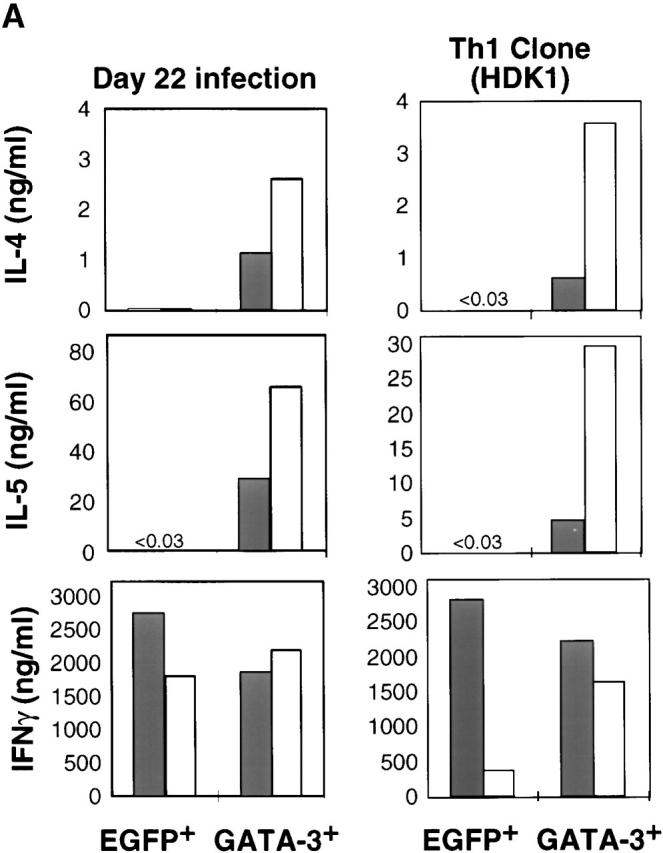
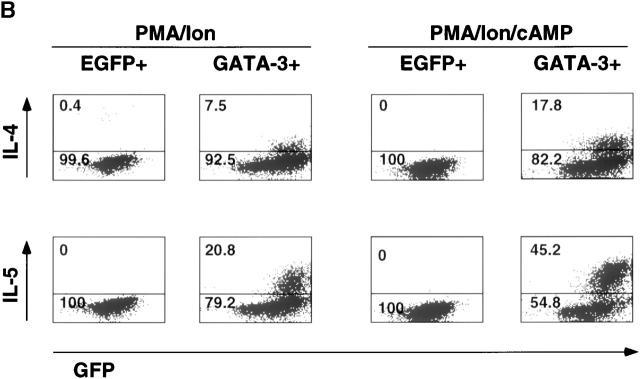
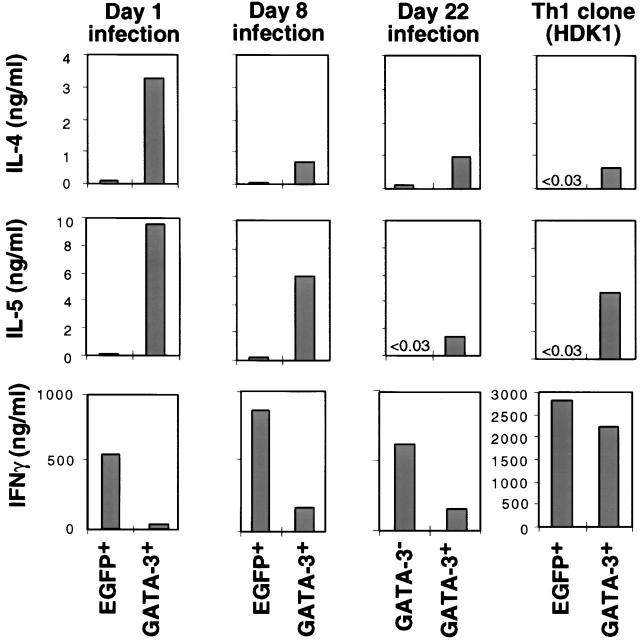
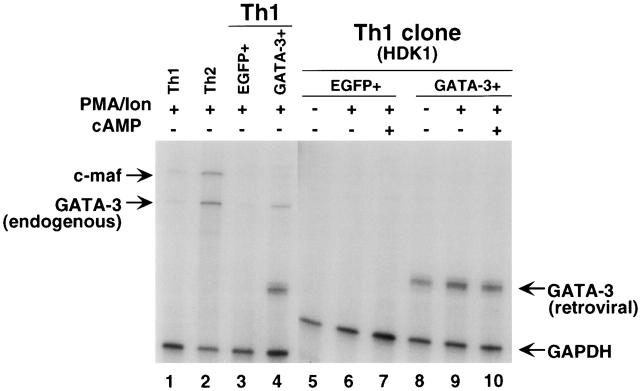
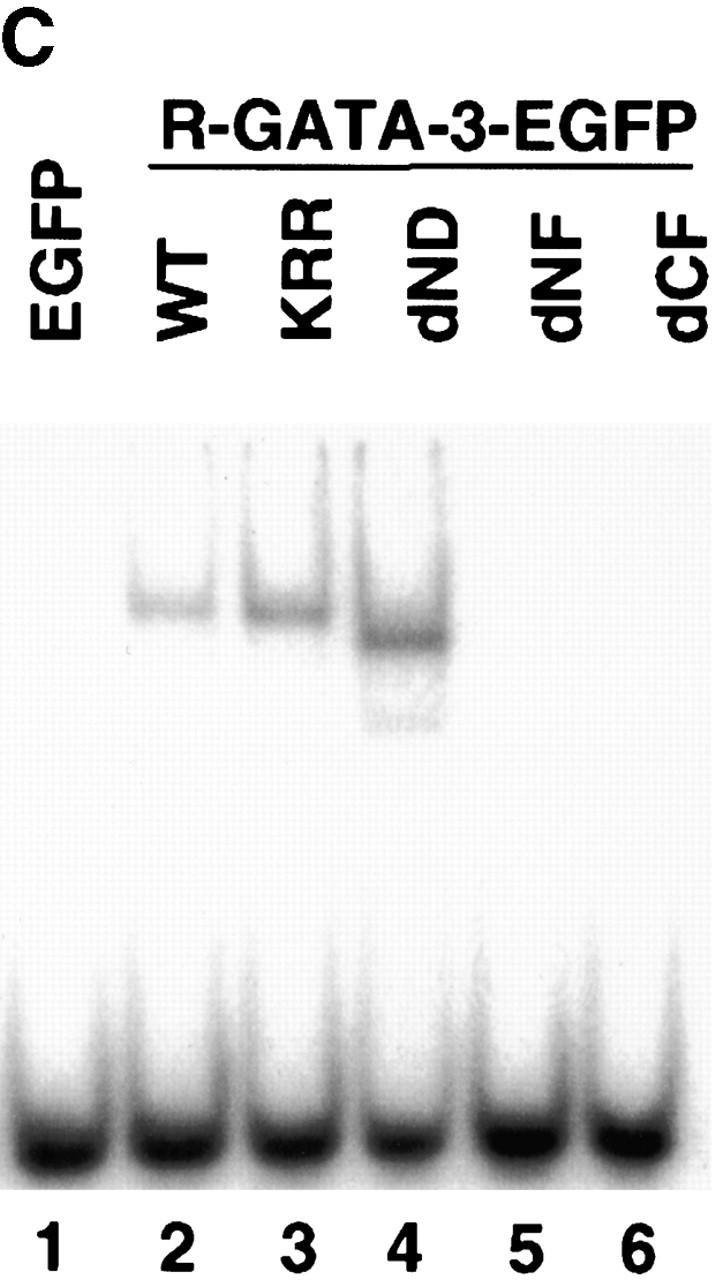
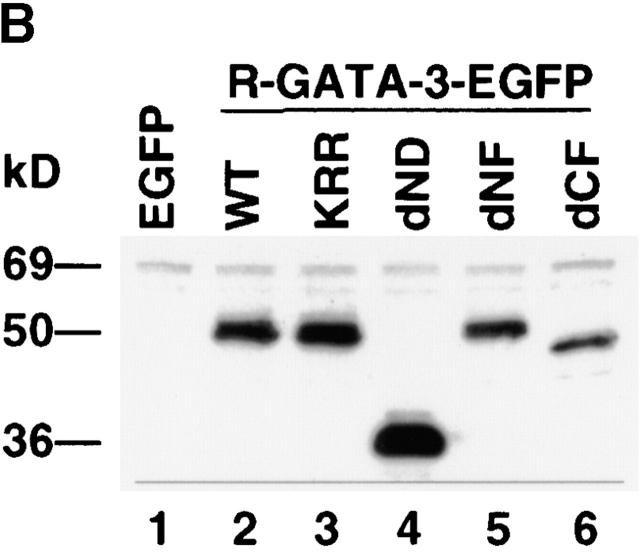
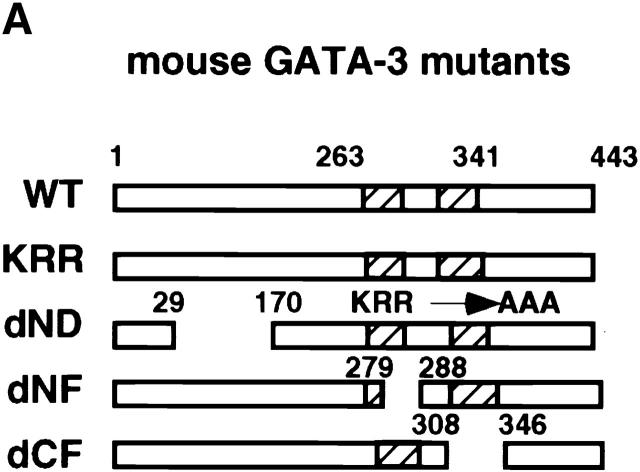
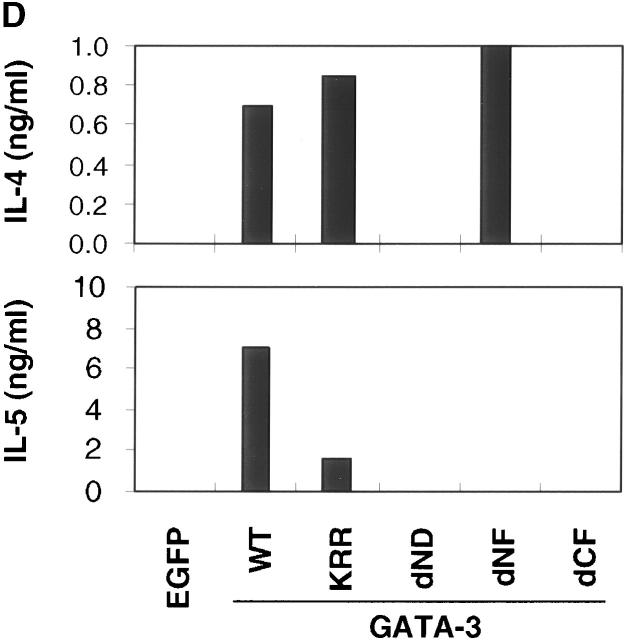
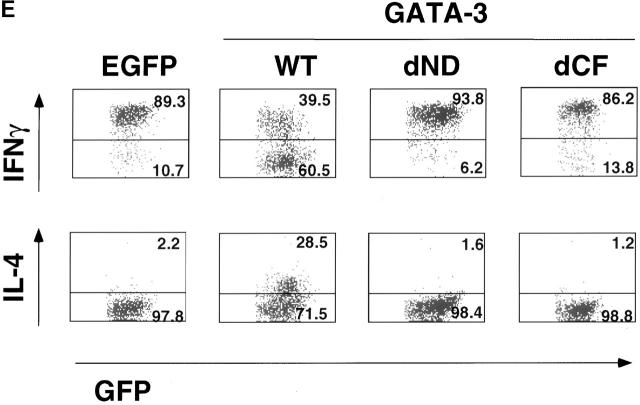
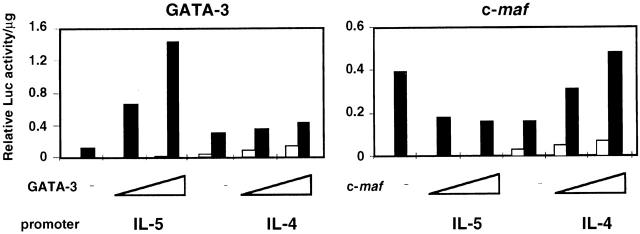
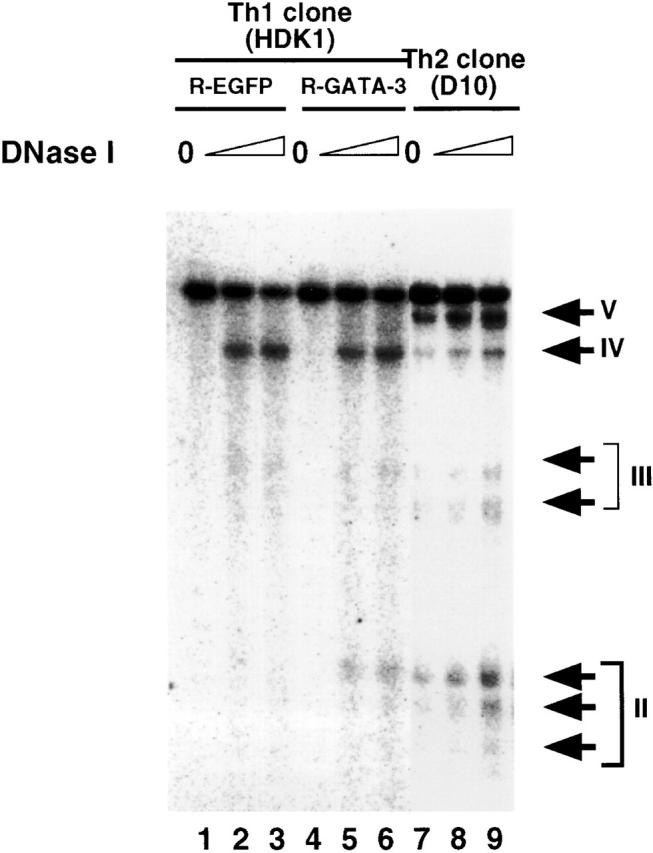
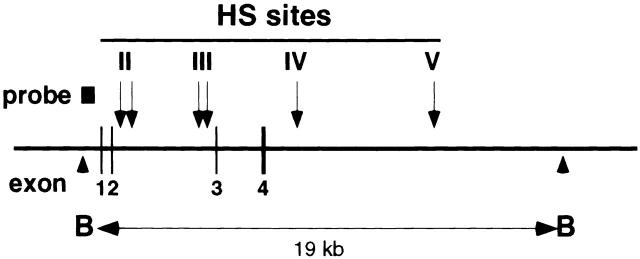
Committed T helper type 1 (Th1) and Th2 effector cells, resulting from chronic antigenic stimulation in interleukin (IL)-12 and IL-4, are implicated in the pathology of autoimmune and allergic diseases. Committed Th1 cells cannot be induced to change their cytokine profiles in response to antigenic stimulation and Th2 cytokine–inducing conditions. Here, we report that ectopic expression of GATA-3 induced Th2-specific cytokine expression not only in developing Th1 cells but also in otherwise irreversibly committed Th1 cells and a Th1 clone, HDK1. Moreover, cAMP, an inhibitor of cytokine production by Th1 cells, markedly augmented Th2 cytokine production in GATA-3–expressing Th1 cells. Ectopic expression of GATA-3 in developing Th1 cells, but not in Th1 clone HDK1, induced endogenous GATA-3, suggesting an autoregulatory mechanism for maintenance of GATA-3 expression in Th2 cells. Structure–function analyses of GATA-3 revealed that the NH2-terminal transactivation domain and the COOH-terminal zinc finger domain of GATA-3 were critical, whereas the NH2-terminal zinc finger domain was dispensable for the induction of IL-4. Both zinc fingers, however, were required for IL-5 induction. A Th2-specific DNaseI-hypersensitive site of the IL-4 locus was detected in GATA-3–expressing Th1 cells. Thus, GATA-3 can change the phenotype of committed Th1 cells, previously considered to be irreversible.
Overview
The claims and statistics of this paper haven’t been checked yet.
Run the check — free, no account needed. It reads the open-access text and checks the sources it cites.
Integrity signals
Registry
Cites
Statistics
Figures
Verification
Claims the paper makes
The claims and statistics of this paper haven’t been checked yet.
Run the check — free, no account needed. It reads the open-access text and checks the sources it cites.
Claims other papers make about this one
Each is checked against this paper’s own text: does it say what the citing paper says it does?
The source backs part of the claim, not all of it — or backs it for a different population, condition or comparison.
In the citing paper
“the SNS outflow that occurs in depression (see Irwin et al., 1991) may suppress transcription of antiviral immune response genes (S. W. Cole et al., 1998; Lee et al., 2000), leading to increased susceptibility to viruses”
From From stress to inflammation and major depressive disorder: A social signal transduction theory of depression. (2014) · cites this paper as Lee et al., 2000
Experimental — accuracy not yet measuredThe check wasn’t confident either way, so it gives no verdict — never disputed.
In the citing paper
“This adrenergic signaling cascade suppresses transcription of antiviral type I IFN genes”
From From stress to inflammation and major depressive disorder: A social signal transduction theory of depression. (2014) · cites this paper as Lee et al., 2000
Experimental — accuracy not yet measured
Self-check
Percentages, sums and reported differences re-computed from the paper’s own numbers.
The self-check needs the paper’s full text.
Citations
Cites
Mosmann, T. R., Cherwinski, H. M., Bond, M. W., Giedlin, M. A., & Coffman, R. L. (1986) · The Journal of Immunology · doi:10.4049/jimmunol.136.7.2348 · Cited by 7,553
Functional diversity of helper T lymphocytes
Abbas, A. K., MURPHY, K. M. M., & Sher, A. (1996) · Nature · doi:10.1038/383787a0 · Cited by 4,432
Zheng, W.-P., & Flavell, R. A. (1997) · Cell · doi:10.1016/s0092-8674(00)80240-8 · Cited by 2,384
Trinchieri, G. (1995) · Annual Review of Immunology · doi:10.1146/annurev.iy.13.040195.001343 · Cited by 2,379
Lymphocyte responses and cytokines
Paul, W. E., & Seder, R. A. (1994) · Cell · doi:10.1016/0092-8674(94)90332-8 · Cited by 1,832
Induction by Antigen of Intrathymic Apoptosis of CD4 + CD8 + TCR lo Thymocytes in Vivo
MURPHY, K. M. M., Heimberger, A. B., & Loh, D. Y. (1990) · Science · doi:10.1126/science.2125367 · Cited by 1,714
Cytokines Induce the Development of Functionally Heterogeneous T Helper Cell Subsets
O’Garra, A. (1998) · Immunity · doi:10.1016/s1074-7613(00)80533-6 · Cited by 1,527
Self-citationLymphokine Production by Human T Cells in Disease States
Romagnani, S. (1994) · Annual Review of Immunology · doi:10.1146/annurev.iy.12.040194.001303 · Cited by 1,332
Cherwinski, H., Schumacher, J., Brown, K., & Mosmann, T. (1987) · Journal of Experimental Medicine · doi:10.1084/jem.166.5.1229 · Cited by 1,118
Th1 and Th2 CD4+ T cells in the pathogenesis of organ-specific autoimmune diseases
Liblau, R., Singer, S. M., & McDevitt, H. O. (1995) · Immunology Today · doi:10.1016/0167-5699(95)80068-9 · Cited by 1,111
Cited by
Sorted by citations
Differentiation of Effector CD4 T Cell Populations
Zhu, J., Yamane, H., & Paul, W. E. (2010) · Annual Review of Immunology · doi:10.1146/annurev-immunol-030409-101212 · Cited by 3,452
Slavich, G. M., & Irwin, M. R. (2014) · Psychological Bulletin · doi:10.1037/a0035302 · Cited by 2,206
The lineage decisions of helper T cells
MURPHY, K. M. M., & Reiner, S. L. (2002) · Nature reviews. Immunology · doi:10.1038/nri954 · Cited by 1,690
A Critical Role for Dnmt1 and DNA Methylation in T Cell Development, Function, and Survival
Lee, P. P., Fitzpatrick, D. R., Beard, C., Jessup, H. K., Lehar, S. M., Makar, K. W., Pérez‐Melgosa, M., Sweetser, M. T., Schlissel, M. S., Nguyen, S., et al. (2001) · Immunity · doi:10.1016/s1074-7613(01)00227-8 · Cited by 1,282
Barrat, F. J., Cua, D. J., Boonstra, A., Richards, D. F., Crain, C., Savelkoul, H. F. J., Malefyt, R. D. W., Coffman, R. L., Hawrylowicz, C. M., & O’Garra, A. (2002) · The Journal of Experimental Medicine · doi:10.1084/jem.20011629 · Cited by 1,161
Self-citation
Metadata
- Authors
- Lee, H. J., Takemoto, N., Kurata, H., Kamogawa, Y., Miyatake, S., O'Garra, A., & Arai, N.
- Affiliations
- aDepartment of Immunology, DNAX Research Institute, Palo Alto, California 94304-1104
- Institute of Medical Science, The University of Tokyo (JP)
- Venue
- The Journal of Experimental Medicine
- Publisher
- Rockefeller University Press
- Published
- 2000-07-03
- Volume
- 192
- Issue
- 1
- Pages
- 105-116
- ISSN
- 0022-1007 (ISSN-L)
- 1540-9538
- PMC
- PMC1887713
- OpenAlex
- W2119767265
- Cited by
- 393
- References
- 72
- Citations by year
- 2026: 4 · 2025: 5 · 2024: 8 · 2023: 5 · 2022: 1 · 2021: 9 · 2020: 7 · 2019: 4 · 2018: 11 · 2017: 7 · 2016: 13 · 2015: 8 · 2014: 22 · 2013: 13 · 2012: 9
- FWCI
- 10.63
- Type
- journal article
- Language
- en
- Open access
- green
- www.ncbi.nlm.nih.gov
- Licence
- cc-by-nc-sa
- Locations
- The Journal of Experimental Medicine (publishedVersion)
- PubMed Central (publishedVersion, cc-by-nc-sa)
- PubMed (publishedVersion)
- Topics
- Life Sciences › Immunology and Microbiology › Immunology › T-cell and B-cell Immunology
- Life Sciences › Immunology and Microbiology › Immunology › Psoriasis: Treatment and Pathogenesis
- Life Sciences › Biochemistry, Genetics and Molecular Biology › Molecular Biology › Genomics and Chromatin Dynamics
- Keywords
- GATA3, Th1 cells, Th2 cytokines, IL-4, IL-5, chromatin remodeling, DNase I hypersensitive sites, cyclic AMP, zinc finger, transactivation domain, T helper cell differentiation, cytokine gene expression
- MeSH terms
- Animals, Cells, Cultured, Chromatin, DNA-Binding Proteins, Gene Expression Regulation, Genetic Vectors, Interferon-gamma, Mice, Inbred BALB C, Moloney murine leukemia virus, Recombinant Proteins, Transfection, CD4-Positive T-Lymphocytes, Trans-Activators, Interleukin-4, Interleukin-5, Cytokines, Zinc Fingers, Th1 Cells, Th2 Cells, GATA3 Transcription Factor, Mice
About these checks
Registry, retraction, Cites and statistics results are computed, not judged, with one exception: a printed reference that no index lists is read once by a model before it counts as a citation error. Claims are extracted by a model and kept only when their quote appears verbatim in the text; each cited source is then checked, with a model’s help, for whether it says what the claim relies on. Those verdicts can be wrong — read the claim’s quote and the cited source before relying on one.
Statistics and arithmetic are recomputed, not judged.
Confidence bands are shown only for fields calibrated on our annotated test set. None is calibrated yet, so no band is shown.
What counts as a claim ›How we measure confidence ›How we check this ›
Are you an author, or do you see a problem with this page? Request a review
