

A novel glyco-conjugate vaccine against fungal pathogens
Open accessThe DOI matches its Crossref record; 49 of the 49 references it cites were found in a registry or an index.
Abstract
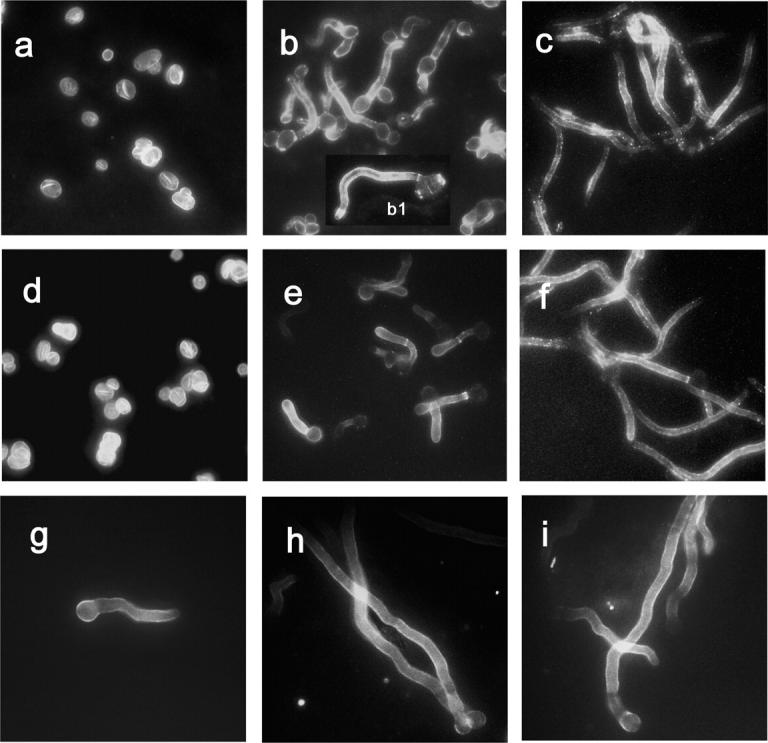
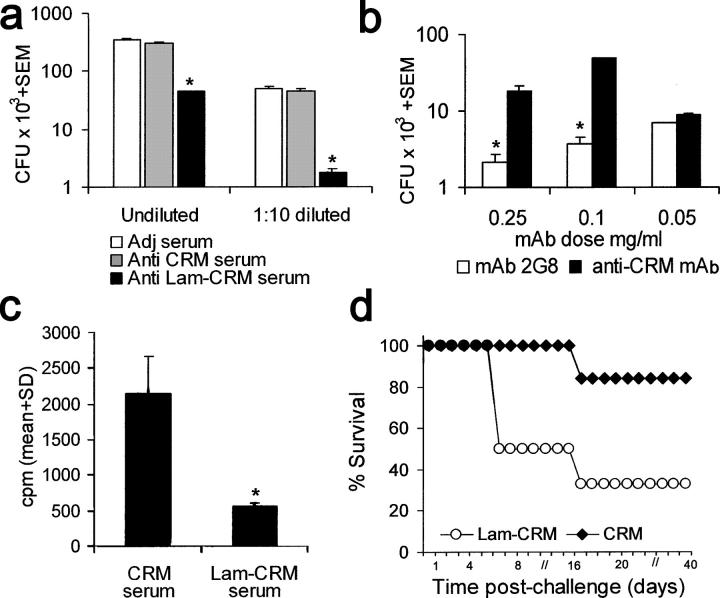
To generate a vaccine to protect against a variety of human pathogenic fungi, we conjugated laminarin (Lam), a well-characterized but poorly immunogenic β-glucan preparation from the brown alga Laminaria digitata, with the diphtheria toxoid CRM197, a carrier protein used in some glyco-conjugate bacterial vaccines. This Lam-CRM conjugate proved to be immunogenic and protective as immunoprophylactic vaccine against both systemic and mucosal (vaginal) infections by Candida albicans. Protection probably was mediated by anti-β-glucan antibodies as demonstrated by passive transfer of protection to naive mice by the whole immune serum, the immune vaginal fluid, and the affinity-purified anti-β-glucan IgG fractions, as well as by administration of a β-glucan–directed IgG2b mAb. Passive protection was prevented by adsorption of antibodies on Candida cells or β-glucan particles before transfer. Anti-β-glucan antibodies bound to C. albicans hyphae and inhibited their growth in vitro in the absence of immune-effector cells. Remarkably, Lam-CRM–vaccinated mice also were protected from a lethal challenge with conidia of Aspergillus fumigatus, and their serum also bound to and markedly inhibited the growth of A. fumigatus hyphae. Thus, this novel conjugate vaccine can efficiently immunize and protect against two major fungal pathogens by mechanisms that may include direct antifungal properties of anti-β-glucan antibodies.
Overview
The claims and statistics of this paper haven’t been checked yet.
Free: it reads the open-access text and checks the first 5 claims that cite a source we can check. Create a free account to check every claim.
Integrity signals
Registry
Cites
Statistics
Figures
Verification
Claims the paper makes
The claims and statistics of this paper haven’t been checked yet.
Free: it reads the open-access text and checks the first 5 claims that cite a source we can check. Create a free account to check every claim.
Claims other papers make about this one
Each is checked against this paper’s own text: does it say what the citing paper says it does?
The cited source doesn’t support the claim as written.
In the citing paper
“These projects have not produced significant results”
From Aspergillus fumigatus and Aspergillosis in 2019 (2019) · cites this paper as [714]
Checked by a reasoning model — may be wrong.
Experimental — accuracy not yet measuredThe source backs part of the claim, not all of it — or backs it for a different population, condition or comparison.
In the citing paper
“the inhibitory effects of anti-β-(1,3) glucan and enolase monoclonal antibody are transitory (714–716)”
From Aspergillus fumigatus and Aspergillosis in 2019 (2019) · cites this paper as [714]
Experimental — accuracy not yet measuredThe source backs part of the claim, not all of it — or backs it for a different population, condition or comparison.
In the citing paper
“These projects have not produced significant results; antigen vaccination is not applicable for immunocompromised patients (713), and the inhibitory effects of anti-β-(1,3) glucan and enolase monoclonal antibody are transitory (714–716).”
From Aspergillus fumigatus and Aspergillosis in 2019 (2019) · cites this paper as [714]
Experimental — accuracy not yet measured
Self-check
Percentages, sums and reported differences re-computed from the paper’s own numbers.
The self-check needs the paper’s full text.
Citations
Cites
Colorimetric Method for Determination of Sugars and Related Substances
DuBois, M., Gilles, K. A., Hamilton, J. K., Rebers, P. A., & Smith, F. (1956) · Analytical Chemistry · doi:10.1021/ac60111a017 · Cited by 52,269
Determination of free amino groups in proteins by trinitrobenzenesulfonic acid
Habeeb, A. F. S. A. (1966) · Analytical Biochemistry · doi:10.1016/0003-2697(66)90275-2 · Cited by 2,038
Romani, L. (2011) · Nature Reviews Immunology · doi:10.1038/nri2939 · Cited by 1,793
Nosocomial Bloodstream Infections in United States Hospitals: A Three‐Year Analysis
Edmond, M. B., Wallace, S. E., McClish, D. K., Pfaller, M. A., Jones, R. N., & Wenzel, R. P. (1999) · Clinical Infectious Diseases · doi:10.1086/520192 · Cited by 1,387
Virulence factors of Candida albicans
Calderone, R. A., & Fonzi, W. A. (2001) · Trends in Microbiology · doi:10.1016/s0966-842x(01)02094-7 · Cited by 1,331
Romani, L. (2004) · Nature Reviews Immunology · doi:10.1038/nri1255 · Cited by 758
Traggiai, E., Becker, S., Subbarao, K., Kolesnikova, L., Uematsu, Y., Gismondo, M. R., Murphy, B. R., Rappuoli, R., & Lanzavecchia, A. (2004) · Nature Medicine · doi:10.1038/nm1080 · Cited by 697
Self-citationDectin‐1 mediates macrophage recognition of Candida albicans yeast but not filaments
Gantner, B. N., Simmons, R. M., & Underhill, D. M. (2005) · The EMBO Journal · doi:10.1038/sj.emboj.7600594 · Cited by 662
Architecture of the Yeast Cell Wall
Kollár, R., Reinhold, B. B., Petráková, E., Yeh, H. J. C., Ashwell, G., Drgonová, J., Kapteyn, J. C., Klis, F. M., & Cabib, E. (1997) · Journal of Biological Chemistry · doi:10.1074/jbc.272.28.17762 · Cited by 644
Passive antibody therapy for infectious diseases
Casadevall, A., Dadachova, E., & Pirofski, L.-A. (2004) · Nature Reviews Microbiology · doi:10.1038/nrmicro974 · Cited by 531
Research works printed but not linked: 6
- 2001, Vaccine., 19, 716
- 2002, Curr. Opin. Microbiol., 9, 327
- 1998, Med. Mycol., 36, 95
- 1999, Haematologica., 84, 114
- 2004, Nat. Rev. Immunol., 4, 1
- 2003, Curr. Infect. Dis. Rep., 4, 387
Cited by
Items 201–300 of 478
Opportunistic fungi and fungal infections: the challenge of a single, general antifungal vaccine
Cassone, A., & Torosantucci, A. (2006) · Expert Review of Vaccines · doi:10.1586/14760584.5.6.859 · Cited by 34
Self-citationRomán, E., Correia, I., Salazin, A., Fradin, C., Jouault, T., Poulain, D., Liu, F., & Plá, J. (2016) · Virulence · doi:10.1080/21505594.2016.1163458 · Cited by 35
Therapeutic potential of carbohydrates as regulators of macrophage activation
Lundahl, M. L. E., Scanlan, E. M., & Lavelle, E. C. (2017) · Biochemical Pharmacology · doi:10.1016/j.bcp.2017.09.003 · Cited by 34
Granger, B. L. (2018) · PLoS ONE · doi:10.1371/journal.pone.0191194 · Cited by 33
Radioimmunotherapy as a Novel Approach in HIV, Bacterial, and Fungal Infectious Diseases
Helal, M. H. S., & Dadachova, E. (2018) · Cancer Biotherapy and Radiopharmaceuticals · doi:10.1089/cbr.2018.2481 · Cited by 32
Fernandes, C. M., Normile, T. G., Fabri, J. H. T. M., Brauer, V. S., Araújo, G. R. D. S., Frasés, S., Nimrichter, L., Malavazi, I., & Poeta, M. D. (2022) · mBio · doi:10.1128/mbio.02328-22 · Cited by 32
Vaccination with mannan protects mice against systemic aspergillosis
Liu, M., Machová, E., Neščáková, Z., Medovarská, I., Clemons, K. V., Martinez, M., Chen, V., Bystrický, S., & Stevens, D. A. (2012) · Medical Mycology · doi:10.3109/13693786.2012.683539 · Cited by 32
Emerging Complexity and the Need for Advanced Drug Delivery in Targeting Candida Species
Wadhwa, R., Pandey, P., Gupta, G., Aggarwal, T., Kumar, N., Mehta, M., Satija, S., Gulati, M., Madan, J., Dureja, H., et al. (2019) · Current Topics in Medicinal Chemistry · doi:10.2174/1568026619666191026105308 · Cited by 30
Application of anti-fungal vaccines as a tool against emerging anti-fungal resistance
Kumar, R., & Srivastava, V. (2023) · Frontiers in Fungal Biology · doi:10.3389/ffunb.2023.1241539 · Cited by 30
Nosanchuk, J. D., & Dadachova, E. (2012) · Frontiers in Microbiology · doi:10.3389/fmicb.2011.00283 · Cited by 30
Synthesis of 3-aminopropyl glycosides of linear β-(1→3)-d-glucooligosaccharides
Yashunsky, D. V., Tsvetkov, Y. E., Grachev, A. A., Chizhov, A. O., & Nifantiev, N. E. (2015) · Carbohydrate Research · doi:10.1016/j.carres.2015.10.012 · Cited by 30
Ferreira-Gomes, M., Wich, M., Böde, S., Hube, B., Jacobsen, I. D., & Jungnickel, B. (2021) · Frontiers in Immunology · doi:10.3389/fimmu.2021.698849 · Cited by 29
Naglik, J. R. (2014) · New Journal of Science · doi:10.1155/2014/390241 · Cited by 29
Wickerhamomyces Yeast Killer Toxins’ Medical Applications
Giovati, L., Ciociola, T., Simone, T. D., Conti, S., & Magliani, W. (2021) · Toxins · doi:10.3390/toxins13090655 · Cited by 29
Pimienta, D. A., Mosquera, F. E. C., Velasco, I. P., Rodas, M. G., Oñate-Garzón, J., & Liscano, Y. (2022) · Journal of Fungi · doi:10.3390/jof9010042 · Cited by 29
Potential of Anti- Candida Antibodies in Immunoprophylaxis
Cabezas, J., Albaina, O., Montañez, D., Sevilla, M. J., Moragues, M. D., & Pontón, J. (2010) · Immunotherapy · doi:10.2217/imt.09.76 · Cited by 29
Lavigne, L. M., O’Brien, X. M., Kim, M., Janowski, J. W., Albina, J. E., & Reichner, J. S. (2007) · The Journal of Immunology · doi:10.4049/jimmunol.178.11.7276 · Cited by 28
A Convergent Synthesis of 6‐O‐Branched β‐Glucan Oligosaccharides
Liao, G., Burgula, S., Zhou, Z., & Zhongwu, G. (2015) · European Journal of Organic Chemistry · doi:10.1002/ejoc.201500229 · Cited by 28
Chemical structures of water-soluble polysaccharides from Rhizoma Panacis Japonici
Huang, Z., & Zhang, L. (2009) · Carbohydrate Research · doi:10.1016/j.carres.2009.02.014 · Cited by 28
Aspergillosis and stem cell transplantation: An overview of experimental pathogenesis studies
Al-Bader, N., & Sheppard, D. C. (2016) · Virulence · doi:10.1080/21505594.2016.1231278 · Cited by 29
Innate immunity based cancer immunotherapy: B16-F10 murine melanoma model
Caisová, V., Vieru, A., Kumžáková, Z., Glaserová, S., Husníková, H., Vácová, N., Krejčová, G., Paďouková, L., Jochmanová, I., Wolf, K. I., et al. (2016) · BMC Cancer · doi:10.1186/s12885-016-2982-x · Cited by 28
Monoclonal Antibodies and Invasive Aspergillosis: Diagnostic and Therapeutic Perspectives
Lian, X., Scott-Thomas, A., Lewis, J. G., Bhatia, M., MacPherson, S. A., Zeng, Y., & Chambers, S. T. (2022) · International Journal of Molecular Sciences · doi:10.3390/ijms23105563 · Cited by 27
Shi, H., Dong, S., Zhang, X., Chen, X., Gao, X., & Wang, L. (2018) · Vaccine · doi:10.1016/j.vaccine.2018.08.011 · Cited by 27
Ravenscroft, N., Costantino, P., Talaga, P., Rodríguez–Jiménez, R., & Egan, W. (2014) · Springer eBooks · doi:10.1007/978-3-662-45024-6_8 · Cited by 27
Self-citationAlbuquerque, P. C., Cordero, R. J. B., Fonseca, F. L., da Silva, R. P., Ramos, C. L., de Miranda, K. R., Casadevall, A., Puccia, R., Nosanchuk, J. D., Nimrichter, L., et al. (2012) · Fungal Genetics and Biology · doi:10.1016/j.fgb.2012.09.002 · Cited by 26
Abraham, A., Ostroff, G. R., Levitz, S. M., & Oyston, P. C. F. (2019) · Clinical & Experimental Immunology · doi:10.1111/cei.13356 · Cited by 26
Liu, X., Xu, Y., Li, Y., Pan, Y., Zhao, S., & Hou, Y. (2021) · International Journal of Medical Sciences · doi:10.7150/ijms.61525 · Cited by 26
Bujdáková, H., Paulovičová, E., Borecká, S., Gašperík, J., Kucharíková, S., Kolecka, A., Lell, C. P., Jensen, D. B., Würzner, R., Chorvat, D., Jr., et al. (2008) · Journal of Medical Microbiology · doi:10.1099/jmm.0.2008/001479-0 · Cited by 26
Immunoproteomics of Aspergillus for the development of biomarkers and immunotherapies
Kniemeyer, O., Ebel, F., Krüger, T., Bächer, P., Scheffold, A., Luo, T., Straßburger, M., & Brakhage, A. A. (2016) · PROTEOMICS - CLINICAL APPLICATIONS · doi:10.1002/prca.201600053 · Cited by 26
Lessons Learned and Future Challenges in the Design and Manufacture of Glycoconjugate Vaccines
Hennessey, J. P., Costantino, P., Talaga, P., Beurret, M., Ravenscroft, N., Alderson, M. R., Zablackis, E., Prasad, A. K., & Frasch, C. E. (2018) · ACS symposium series · doi:10.1021/bk-2018-1290.ch013 · Cited by 25
Self-citationTherapeutic Interventions Targeting Innate Immune Receptors: A Balancing Act
Cao, X., Cordova, A. F., & Li, L. (2021) · Chemical Reviews · doi:10.1021/acs.chemrev.1c00716 · Cited by 26
Dectin-1 Stimulation Selectively Reinforces LPS-driven IgG1 Production by Mouse B Cells
Seo, B.-S., Lee, S. H., Lee, J.-E., Yoo, Y., Lee, J., & Park, S. (2013) · Immune Network · doi:10.4110/in.2013.13.5.205 · Cited by 26
Xin, H., & Cutler, J. E. (2006) · Infection and Immunity · doi:10.1128/iai.00234-06 · Cited by 25
Interactions of the Fungal Pathogen Candida Albicans with the Host
Rupp, S. (2007) · Future Microbiology · doi:10.2217/17460913.2.2.141 · Cited by 26
Elalouf, A., Elalouf, H., & Rosenfeld, A. (2023) · Frontiers in Immunology · doi:10.3389/fimmu.2023.1292625 · Cited by 24
Paulovičová, E., Paulovičová, L., Pilišiová, R., Bystrický, S., Yashunsky, D. V., Karelin, A. A., Tsvetkov, Y. E., & Nifantiev, N. E. (2013) · FEMS Yeast Research · doi:10.1111/1567-1364.12065 · Cited by 25
Host Defense Pathways Against Fungi: The Basis for Vaccines and Immunotherapy
Carvalho, A., Cunha, C., Iannitti, R. G., Casagrande, A., Bistoni, F., Aversa, F., & Romani, L. R. (2012) · Frontiers in Microbiology · doi:10.3389/fmicb.2012.00176 · Cited by 24
Sendid, B., Jouault, T., Standaert‐Vitse, A., Fradin, C., Colombel, J., & Poulain, D. (2009) · médecine/sciences · doi:10.1051/medsci/2009255473 · Cited by 24
Immune Modulators as Adjuncts for the Prevention and Treatment of Invasive Fungal Infections
Pikman, R., & Ben‐Ami, R. (2012) · Immunotherapy · doi:10.2217/imt.12.127 · Cited by 25
Progress Toward a Human Vaccine Against Coccidioidomycosis
Cole, G. T., Hurtgen, B. J., & Hung, C.-Y. (2012) · Current Fungal Infection Reports · doi:10.1007/s12281-012-0105-y · Cited by 23
Whole glucan particles as a vaccine against systemic coccidioidomycosis
Clemons, K. V., Antonysamy, M. A., Danielson, M. E., Michel, K. S., Martinez, M., Chen, V., & Stevens, D. A. (2015) · Journal of Medical Microbiology · doi:10.1099/jmm.0.000138 · Cited by 23
Bundle, D. R., Paszkiewicz, E., Elsaidi, H. R. H., Mandal, S. S., & Sarkar, S. (2018) · Molecules · doi:10.3390/molecules23081961 · Cited by 23
Xin, H. (2018) · Medical Mycology · doi:10.1093/mmy/myy122 · Cited by 22
Pedraza‐Sánchez, S., Méndez-León, J. I., González, Y., Ventura-Ayala, M. L., Herrera, M. T., Lezana, J. L., Bellanti, J. A., & Torres, M. (2018) · Frontiers in Immunology · doi:10.3389/fimmu.2018.02956 · Cited by 22
Thornton, C. R. (2014) · Expert Review of Clinical Immunology · doi:10.1586/1744666x.2014.904747 · Cited by 23
A new view on development of aStaphylococcus aureusvaccine: Insights from mice and men
Spellberg, B. J., & Daum, R. S. (2010) · Human Vaccines · doi:10.4161/hv.6.10.12469 · Cited by 21
Antibody Peptide Based Antifungal Immunotherapy
Magliani, W., Conti, S., Giovati, L., Zanello, P. P., Sperindè, M., Ciociola, T., & Polonelli, L. (2012) · Frontiers in Microbiology · doi:10.3389/fmicb.2012.00190 · Cited by 21
Self-citationTesini, B. L., Wright, T. W., Malone, J. E., Haidaris, C. G., Harber, M., Sant, A. J., Nayak, J. L., & Gigliotti, F. (2016) · Infection and Immunity · doi:10.1128/iai.00850-16 · Cited by 21
Janotová, T., Jalovecká, M., Auerová, M., Ivana, Š., Pavlína, B., Veronika, M., Kumžáková, Z., Čunátová, Š., Zuzana, V., Caisová, V., et al. (2014) · PLoS ONE · doi:10.1371/journal.pone.0085222 · Cited by 21
Tsvetkov, Y. E., Khatuntseva, E. A., Yashunsky, D. V., & Nifantiev, N. E. (2015) · Russian Chemical Bulletin · doi:10.1007/s11172-015-0969-4 · Cited by 21
Waldmannová, E., Caisová, V., Fáberová, J., Sváčková, P., Kovářová, M., Sváčková, D., Kumžáková, Z., Jačková, A., Vácová, N., Nedbalová, P., et al. (2016) · International Immunopharmacology · doi:10.1016/j.intimp.2016.08.004 · Cited by 21
Activity of laminarin in control of strawberry diseases
Meszka, B., & Bielenin, A. (2011) · Phytopathologia · Cited by 20
Augustyniak, D., Majkowska-Skrobek, G., Roszkowiak, J., & Dorotkiewicz‐Jach, A. (2017) · Current Medicinal Chemistry · doi:10.2174/0929867324666170508110222 · Cited by 21
Difficult but Not Impossible: in Search of an Anti-Candida Vaccine
Piccione, D., Mirabelli, S., Minto, N., & Bouklas, T. (2019) · Current Tropical Medicine Reports · doi:10.1007/s40475-019-00173-2 · Cited by 20
Medina, R., Wang, H., Caisová, V., Cui, J., Indig, I. H., Uher, O., Ye, J., Nwankwo, A., Sánchez, V., Wu, T., et al. (2020) · Advanced Therapeutics · doi:10.1002/adtp.202000044 · Cited by 21
Synthetic carbohydrate based anti-fungal vaccines
Krylov, V. B., & Nifantiev, N. E. (2020) · Drug Discovery Today Technologies · doi:10.1016/j.ddtec.2020.11.002 · Cited by 21
Khatuntseva, E. A., & Nifantiev, N. E. (2022) · International Journal of Biological Macromolecules · doi:10.1016/j.ijbiomac.2022.07.137 · Cited by 21
Meng, J., Cao, Y. B., Meng, Y., Luo, H., Gao, X., & Shan, F. (2014) · International Journal of Biological Macromolecules · doi:10.1016/j.ijbiomac.2014.05.018 · Cited by 20
Cryptococcusantigens and immune responses: implications for a vaccine
Chaturvedi, A. K., & Wormley, F. L. (2013) · Expert Review of Vaccines · doi:10.1586/14760584.2013.840094 · Cited by 20
Riet, J. T., Reinieren-Beeren, I., Figdor, C. G., & Cambi, A. (2015) · Journal of Molecular Recognition · doi:10.1002/jmr.2481 · Cited by 20
Fungal vaccines and immunotherapy
Segal, E., & Elad, D. (2006) · Journal de Mycologie Médicale · doi:10.1016/j.mycmed.2006.06.004 · Cited by 20
Anti-beta-glucan-like immunoprotective candidacidal antiidiotypic antibodies
Magliani, W., Conti, S., Giovati, L., Maffei, D. L., & Polonelli, L. (2008) · Frontiers in bioscience · doi:10.2741/3199 · Cited by 20
Self-citationIto, J. I., Lyons, J. M., Díaz-Arévalo, D., Hong, T., & Kalkum, M. (2009) · Medical Mycology · doi:10.1080/13693780802552614 · Cited by 20
Hof, H. (2006) · Der Gynäkologe · doi:10.1007/s00129-005-1799-5 · Cited by 20
T cell Immunity and Vaccines Against Invasive Fungal Diseases
Ito, J. I. (2011) · Immunological Investigations · doi:10.3109/08820139.2011.595472 · Cited by 21
Protective Effector Cells of the Recombinant Asp f3 Anti-Aspergillosis Vaccine
Díaz-Arévalo, D., Ito, J. I., & Kalkum, M. (2012) · Frontiers in Microbiology · doi:10.3389/fmicb.2012.00299 · Cited by 19
Slarve, M. J., Holznecht, N. J., Reza, H., Gilkes, A. P., Slarve, I., Olson, J. A., Ernst, W. A., Ho, S. O., Adler‐Moore, J., & Fujii, G. (2022) · Vaccine · doi:10.1016/j.vaccine.2022.05.057 · Cited by 18
Polonelli, L., Beninati, C., Teti, G., Felici, F., Ciociola, T., Giovati, L., Sperindè, M., Passo, C. L., Pernice, I., Domina, M., et al. (2014) · PLoS ONE · doi:10.1371/journal.pone.0105727 · Cited by 18
Self-citationToll-like receptors: Recent advances, open questions and implications for aspergillosis control
Luther, K., & Ebel, F. (2006) · Medical Mycology · doi:10.1080/13693780600892972 · Cited by 18
Paulovičová, E., Paulovičová, L., Farkaš, P., Karelin, A. A., Tsvetkov, Y. E., Krylov, V. B., & Nifantiev, N. E. (2019) · Frontiers in Cellular and Infection Microbiology · doi:10.3389/fcimb.2019.00378 · Cited by 18
Radioimmunotherapy of Blastomycosis in a Mouse Model With a (1→3)-β-Glucans Targeting Antibody
Helal, M. H. S., Allen, K. J. H., van Dijk, B., Nosanchuk, J. D., Snead, E. C. R., & Dadachova, E. (2020) · Frontiers in Microbiology · doi:10.3389/fmicb.2020.00147 · Cited by 18
Antibodies to Combat Fungal Infections: Development Strategies and Progress
Rabaan, A. A., Alfaraj, A. H., Alshengeti, A., Alawfi, A., Alwarthan, S. M., Alhajri, M. M., Al-Najjar, A. H., Fares, M. A. A., Najim, M. A., Almuthree, S. A., et al. (2023) · Microorganisms · doi:10.3390/microorganisms11030671 · Cited by 19
Universal fungal vaccines: Could there be light at the end of the tunnel?
Hamad, M. A. (2012) · Human Vaccines & Immunotherapeutics · doi:10.4161/hv.21838 · Cited by 18
Protection against experimental aspergillosis by heat-killed yeast is not antibody dependent
Clemons, K. V., Martinez, M., Chen, V., Liu, M., Yoon, H. J., & Stevens, D. A. (2014) · Medical Mycology · doi:10.1093/mmy/myt015 · Cited by 18
Schmidhuber, S. M., Scheiblhofer, S., Weiss, R., Cserepes, M., Tóvári, J., Gadermaier, G., Bézard, E., Giorgi, F. D., Ichas, F., Strunk, D., et al. (2022) · Vaccines · doi:10.3390/vaccines10091432 · Cited by 17
Hyr1 Protein and β‐Glucan Conjugates as Anti‐CandidaVaccines
Cassone, A., Bromuro, C., Chiani, P., & Torosantucci, A. (2010) · The Journal of Infectious Diseases · doi:10.1086/657417 · Cited by 17
Self-citationZito, A., Bromuro, C., Mandili, G., Chiani, P., Horenstein, A. L., Malavasi, F., Cauda, R., Cassone, A., & Torosantucci, A. (2016) · PLoS ONE · doi:10.1371/journal.pone.0148714 · Cited by 16
Self-citationMussio, I., & Rusig, A.-M. (2008) · Journal of Applied Phycology · doi:10.1007/s10811-008-9359-8 · Cited by 16
Terra, L., Abreu, P. A., Teixeira, V. L., Paixão, I. C. N. D. P., Pereira, R., Leal, B., Lourenço, A. L., Rampelotto, P. H., & Castro, H. C. (2014) · Frontiers in Marine Science · doi:10.3389/fmars.2014.00012 · Cited by 16
The evaluation of β-(1 → 3)-nonaglucoside as an anti-Candida albicansimmune response inducer
Paulovičová, E., Paulovičová, L., Pilišiová, R., Jančinová, V., Yashunsky, D. V., Karelin, A. A., Tsvetkov, Y. E., & Nifantiev, N. E. (2016) · Cellular Microbiology · doi:10.1111/cmi.12631 · Cited by 16
Costello, C., & Bundle, D. R. (2012) · Carbohydrate Research · doi:10.1016/j.carres.2012.03.019 · Cited by 16
Immunology of fungal infections: lessons learned from animal models
Steele, C. H., & Wormley, F. L. (2012) · Current Opinion in Microbiology · doi:10.1016/j.mib.2012.05.017 · Cited by 16
Immunotherapy against Invasive Mold Infections
Antachopoulos, C., Katragkou, A., & Roilides, E. (2011) · Immunotherapy · doi:10.2217/imt.11.159 · Cited by 15
Glycomaterials for probing host–pathogen interactions and the immune response
Huang, M. L., Fisher, C., & Godula, K. (2016) · Experimental Biology and Medicine · doi:10.1177/1535370216647811 · Cited by 15
Targeting Glycans on Human Pathogens for Vaccine Design
Krumm, S. A., & Doores, K. J. (2018) · Current topics in microbiology and immunology · doi:10.1007/82_2018_103 · Cited by 15
Candida : What Should Clinicians and Scientists Be Talking About?
Spellberg, B. J., Marr, K. A., & Filler, S. G. (2014) · ASM Press eBooks · doi:10.1128/9781555817176.ch1 · Cited by 15
Figueiredo, A. B. C., Fonseca, F. L., Kuczera, D., Conte, F. D. P., Arissawa, M., & Rodrigues, M. L. (2021) · Antimicrobial Agents and Chemotherapy · doi:10.1128/aac.01181-21 · Cited by 15
Elsaidi, H. R. H., Paszkiewicz, E., & Bundle, D. R. (2015) · Carbohydrate Research · doi:10.1016/j.carres.2015.03.007 · Cited by 14
Noval, C., Ruiz, S., Gonçalves, D. D. S., Ferreira, M. D. S., Honorato, L., Peralta, J. M., Nimrichter, L., & Guimaraes, A. J. (2020) · Journal of Fungi · doi:10.3390/jof6040250 · Cited by 14
Neglia, R. G., Colombari, B., Peppoloni, S., Orsi, C. F., Tavanti, A., Senesi, S., & Blasi, E. (2006) · Microbial Pathogenesis · doi:10.1016/j.micpath.2006.08.001 · Cited by 14
Paulovičová, E., Bujdáková, H., Dekkerová, J., Paulovičová, L., Kertys, P., & Hrubiško, M. (2015) · FEMS Yeast Research · doi:10.1093/femsyr/fou001 · Cited by 14
Radiolabeled Antibodies for Therapy of Infectious Diseases
Dadachova, E., & Casadevall, A. (2014) · Microbiology Spectrum · doi:10.1128/microbiolspec.aid-0023-2014 · Cited by 14
Advances in fungal vaccine development: Progress in the face of emerging challenges
Moses, M., Huang, X., Xue, X., & Chen, C. (2025) · iScience · doi:10.1016/j.isci.2025.114091 · Cited by 13
rWTC-MBTA: autologous vaccine prevents metastases via antitumor immune responses
Ye, J., Wang, H., Medina, R., Chakraborty, S., Sun, M., Valenzuela, A., Sang, X., Zhang, Y., Uher, O., Ženka, J., et al. (2023) · Journal of Experimental & Clinical Cancer Research · doi:10.1186/s13046-023-02744-8 · Cited by 14
Recent advances in the synthesis of fungal antigenic oligosaccharides
Krylov, V. B., Paulovičová, L., Paulovičová, E., Tsvetkov, Y. E., & Nifantiev, N. E. (2016) · Pure and Applied Chemistry · doi:10.1515/pac-2016-1011 · Cited by 13
A novel monoclonal antibody recognizing β(1–3) glucans in intact cells of Candida and Cryptococcus
Kondori, N., Edebo, L., & Mattsby‐Baltzer, I. (2008) · Apmis · doi:10.1111/j.1600-0463.2008.01013.x · Cited by 13
Heat-Killed Yeast as a Pan-Fungal Vaccine
Martinez, M., Clemons, K. V., & Stevens, D. A. (2017) · Methods in molecular biology · doi:10.1007/978-1-4939-7104-6_2 · Cited by 13
Li, W.-J., Long, K., Dong, H., & Gao, X. (2013) · Clinical and Vaccine Immunology · doi:10.1128/cvi.00689-12 · Cited by 13
Role of carbohydrate antigens in antifungal glycoconjugate vaccines and immunotherapy
Bino, L. D., & Romano, M. R. (2020) · Drug Discovery Today Technologies · doi:10.1016/j.ddtec.2021.02.002 · Cited by 12
Katrlík, J., Holazová, A., Medovarská, I., Seilerová, I., Gemeiner, P., & Bystrický, S. (2021) · Sensors and Actuators B Chemical · doi:10.1016/j.snb.2021.130883 · Cited by 12
Metadata
- Authors
- Torosantucci, A., Bromuro, C., Chiani, P., De Bernardis, F., Berti, F., Galli, C., Norelli, F., Bellucci, C., Polonelli, L., Costantino, P., Rappuoli, R., & Cassone, A.
- Affiliations
- Istituto Superiore di Sanità (IT)
- 1Department of Infectious, Parasitic and Immune-mediated Diseases, Istituto Superiore di Sanità, 00186 Rome, Italy
- 2Chiron Vaccines, 53100 Siena, Italy
- University of Parma (IT)
- ORCID
- Venue
- The Journal of Experimental Medicine
- Publisher
- Rockefeller University Press
- Published
- 2005-09-05
- Volume
- 202
- Issue
- 5
- Pages
- 597-606
- ISSN
- 0022-1007 (ISSN-L)
- 1540-9538
- PMC
- PMC2212864
- OpenAlex
- W2134941291
- Cited by
- 442
- References
- 49
- Citations by year
- 2026: 5 · 2025: 9 · 2024: 9 · 2023: 14 · 2022: 16 · 2021: 18 · 2020: 21 · 2019: 16 · 2018: 22 · 2017: 31 · 2016: 19 · 2015: 25 · 2014: 33 · 2013: 10 · 2012: 35
- FWCI
- 16.42
- Type
- journal article
- Language
- en
- Open access
- green
- europepmc.org
- Licence
- cc-by-nc-sa
- Locations
- The Journal of Experimental Medicine (publishedVersion)
- Europe PMC (PubMed Central) (publishedVersion, cc-by-nc-sa)
- PubMed Central (publishedVersion, cc-by-nc-sa)
- PubMed (publishedVersion)
- Topics
- Health Sciences › Medicine › Infectious Diseases › Antifungal resistance and susceptibility
- Health Sciences › Medicine › Infectious Diseases › Fungal Infections and Studies
- Life Sciences › Biochemistry, Genetics and Molecular Biology › Molecular Biology › Fungal and yeast genetics research
- Keywords
- laminarin, CRM197, β-glucan, Candida albicans, Aspergillus fumigatus, mucosal infection, vaginal candidiasis, antifungal immunity, fungal pathogens
- MeSH terms
- Analysis of Variance, Animals, Antibodies, Monoclonal, Aspergillosis, Aspergillus fumigatus, Bacterial Proteins, Candida albicans, Candidiasis, Vulvovaginal, Female, Fungal Vaccines, Glucans, Mice, Mutant Strains, Magnetic Resonance Spectroscopy, Polysaccharides, Serologic Tests, Rats, Wistar, Vaccines, Conjugate, beta-Glucans, Mice, Rats
About these checks
Registry, retraction, Cites and statistics results are computed, not judged, with one exception: a printed reference that no index lists is read once by a model before it counts as a citation error. Claims are extracted by a model and kept only when their quote appears verbatim in the text; each cited source is then checked, with a model’s help, for whether it says what the claim relies on. Those verdicts can be wrong — read the claim’s quote and the cited source before relying on one.
Statistics and arithmetic are recomputed, not judged.
Confidence bands are shown only for fields calibrated on our annotated test set. None is calibrated yet, so no band is shown.
What counts as a claim ›How we measure confidence ›How we check this ›
Are you an author, or do you see a problem with this page? Request a review
Data sources
Bibliographic data: Semantic Scholar, OpenAlex, Crossref.
Contains information from the Semantic Scholar Academic Graph Datasets, made available under the ODC Attribution License (ODC-BY 1.0).
Semantic Scholar’s data is described in: Kinney, R., et al. (2023). The Semantic Scholar Open Data Platform. arXiv:2301.10140.
