

The DOI matches its Crossref record; 29 of the 29 references it cites were found in a registry or an index.
Mutually exclusive redox forms of HMGB1 promote cell recruitment or proinflammatory cytokine release
Open accessAbstract
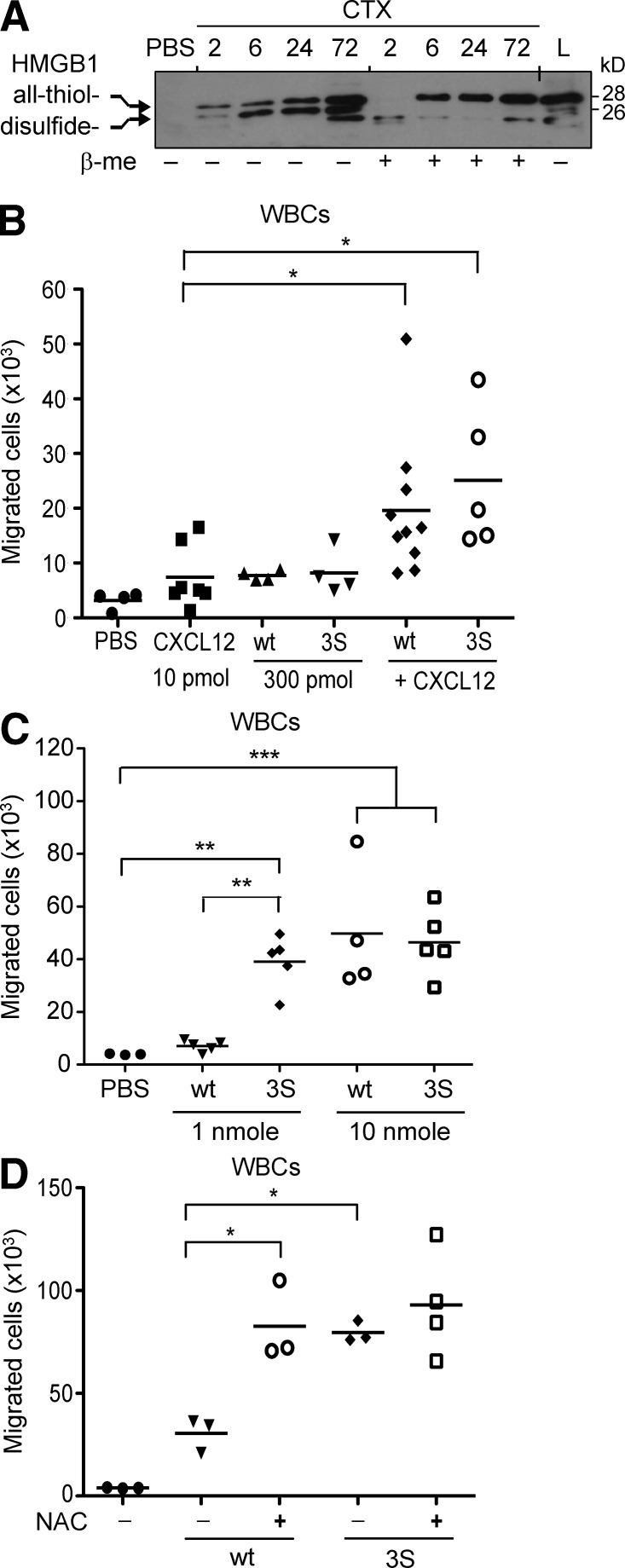
Tissue damage causes inflammation, by recruiting leukocytes and activating them to release proinflammatory mediators. We show that high-mobility group box 1 protein (HMGB1) orchestrates both processes by switching among mutually exclusive redox states. Reduced cysteines make HMGB1 a chemoattractant, whereas a disulfide bond makes it a proinflammatory cytokine and further cysteine oxidation to sulfonates by reactive oxygen species abrogates both activities. We show that leukocyte recruitment and activation can be separated. A nonoxidizable HMGB1 mutant in which serines replace all cysteines (3S-HMGB1) does not promote cytokine production, but is more effective than wild-type HMGB1 in recruiting leukocytes in vivo. BoxA, a HMGB1 inhibitor, interferes with leukocyte recruitment but not with activation. We detected the different redox forms of HMGB1 ex vivo within injured muscle. HMGB1 is completely reduced at first and disulfide-bonded later. Thus, HMGB1 orchestrates both key events in sterile inflammation, leukocyte recruitment and their induction to secrete inflammatory cytokines, by adopting mutually exclusive redox states.
Overview
The claims and statistics of this paper haven’t been checked yet.
Run the check — free, no account needed. It reads the open-access text and checks the sources it cites.
Integrity signals
Registry
Cites
Statistics
Figures
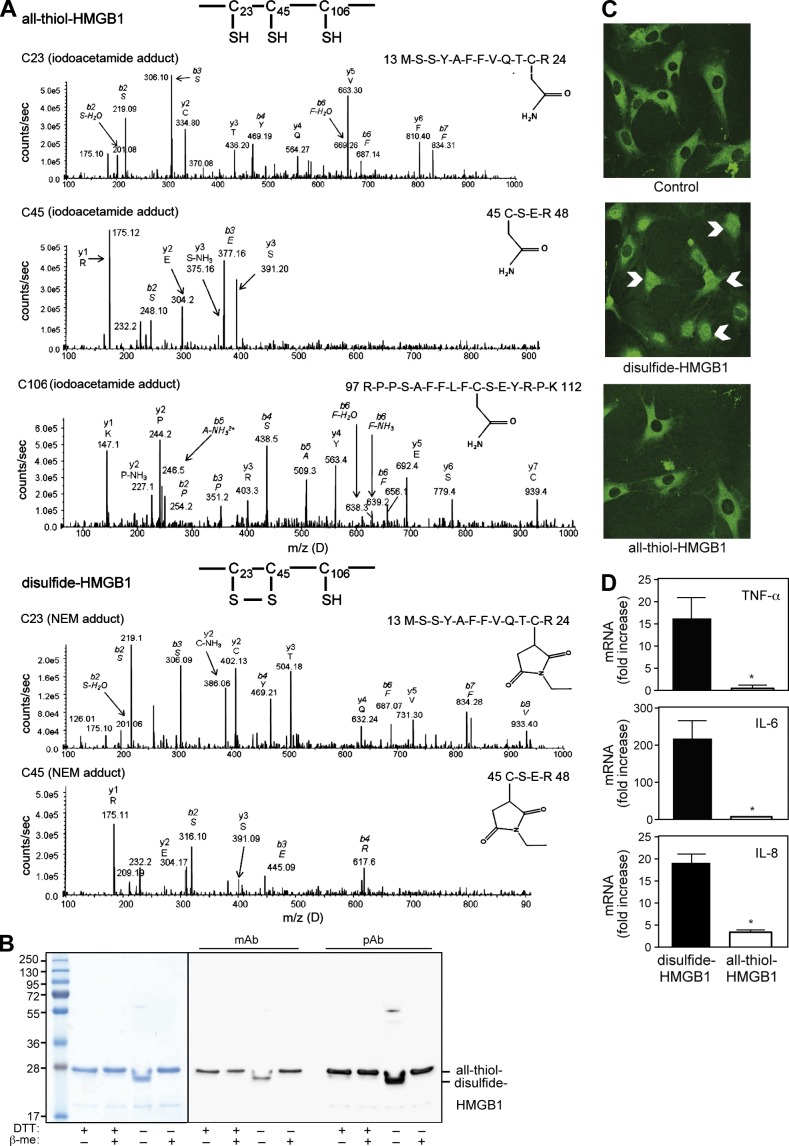
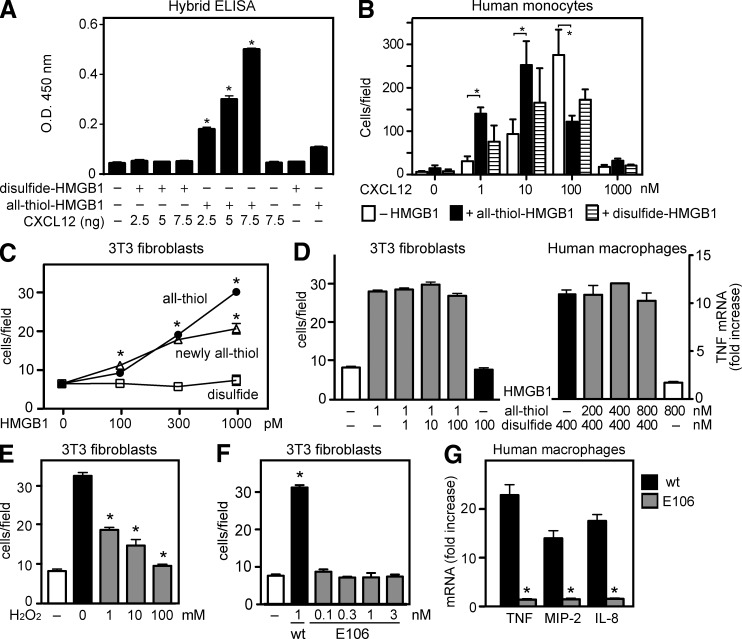
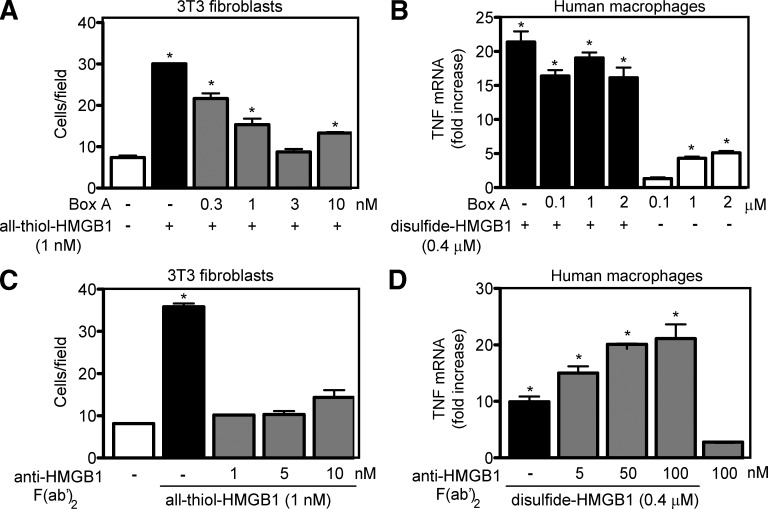
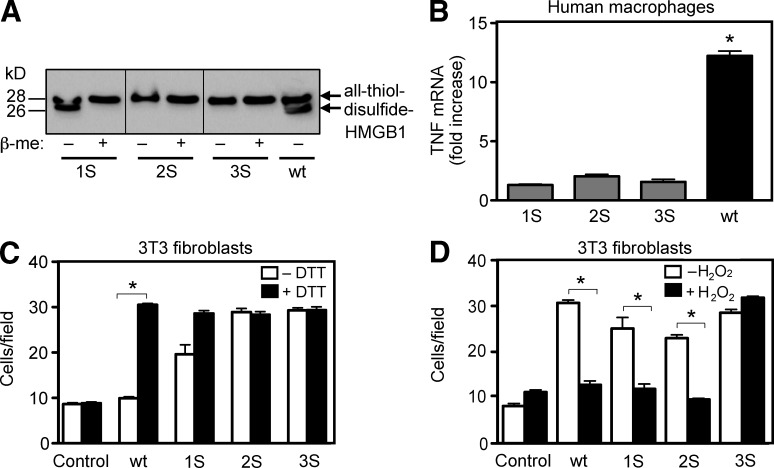
Verification
Claims the paper makes
The claims and statistics of this paper haven’t been checked yet.
Run the check — free, no account needed. It reads the open-access text and checks the sources it cites.
Claims other papers make about this one
Each is checked against this paper’s own text: does it say what the citing paper says it does?
In the citing paper
“That said, it should be noted that biological activities of HMGB1 may flip from pro-inflammatory to anti-inflammatory depending on multiple variables including its oxidation state [917–923].”
From Molecular mechanisms of cell death: recommendations of the nomenclature committee on cell death 2018. (2018) · cites this paper as [918]
In the citing paper
“The disulfide form mediates the proinflammatory effects of HMGB1 by signaling through TLR4, whereas the reduced form mediates the chemotactic properties of HMGB1 by forming a complex with the chemokine CXCL12 and signaling through CXCR4.”
From Danger Signals and Inflammasomes: Stress-Evoked Sterile Inflammation in Mood Disorders (2017) · cites this paper as Venereau et al, 2012
In the citing paper
“HMGB1 can function either as a chemotactic or proinflammatory mediator depending on the redox state of three critical cysteines (Venereau et al, 2012).”
From Danger Signals and Inflammasomes: Stress-Evoked Sterile Inflammation in Mood Disorders (2017) · cites this paper as Venereau et al, 2012
In the citing paper
“The disulfide form mediates the proinflammatory effects of HMGB1 by signaling through TLR4, whereas the reduced form mediates the chemotactic properties of HMGB1 by forming a complex with the chemokine CXCL12 and signaling through CXCR4.”
From Danger Signals and Inflammasomes: Stress-Evoked Sterile Inflammation in Mood Disorders (2017) · cites this paper as Venereau et al, 2012
Self-check
Percentages, sums and reported differences re-computed from the paper’s own numbers.
The self-check needs the paper’s full text.
Citations
Cites
1 retracted
Yang, H., Lundbäck, P., Ottosson, L., Erlandsson-Harris, H., Venereau, E., Bianchi, M. E., Al-Abed, Y., Andersson, U., Tracey, K. J., & Antoine, D. J. (2012) · Molecular Medicine · doi:10.2119/molmed.2011.00389 · Cited by 407
Self-citationRetractedDAMPs, PAMPs and alarmins: all we need to know about danger
Bianchi, M. E. (2007) · Journal of Leukocyte Biology · doi:10.1189/jlb.0306164 · Cited by 2,794 · cited 1×
“High-mobility group box 1 (HMGB1) is a nuclear protein that signals tissue damage when released into the extracellular medium, and thus works as a damage-associated molecular pattern (DAMP; Bianchi, 2007).”
BackgroundSelf-citationHMGB1 is a therapeutic target for sterile inflammation and infection
Andersson, U., & Tracey, K. J. (2011) · Annual Review of Immunology · doi:10.1146/annurev-immunol-030409-101323 · Cited by 1,437 · cited 1×
“Notably, immune cells secrete HMGB1 when activated by infection or tissue damage (Andersson and Tracey, 2011); mesothelioma and other cancer cells secrete HMGB1 constitutively (Jube et al., 2012).”
BackgroundSelf-citationAndersson, U., Wang, H., Palmblad, K., Aveberger, A.-C., Bloom, O., Erlandsson-Harris, H., Janson, A., Kokkola, R., Zhang, M., Yang, H., et al. (2000) · The Journal of Experimental Medicine · doi:10.1084/jem.192.4.565 · Cited by 1,401
Self-citationGardella, S., Andrei, C., Ferrera, D., Lotti, L. V., Torrisi, M. R., Bianchi, M. E., & Rubartelli, A. (2002) · EMBO Reports · doi:10.1093/embo-reports/kvf198 · Cited by 926 · cited 1×
“HMGB1 is released passively into the extracellular medium during necrosis and is secreted actively by monocytes and macrophages after stimulation with LPS and ATP (Gardella et al., 2002).”
BackgroundSelf-citationYang, H., Hreggvidsdottir, H. S., Palmblad, K., Wang, H., Ochani, M., Li, J., Lü, B., Chavan, S. S., Rosas‐Ballina, M., Al‐Abed, Y., et al. (2010) · Proceedings of the National Academy of Sciences · doi:10.1073/pnas.1003893107 · Cited by 812
Self-citationSchiraldi, M., Raucci, A., Martínez‐Muñoz, L., Livoti, E., Celona, B., Vénéreau, E., Apuzzo, T., Marchis, F. D., Pedotti, M., Bachi, A., et al. (2012) · The Journal of Experimental Medicine · doi:10.1084/jem.20111739 · Cited by 676
Self-citationHigh-Mobility Group Box-1 in Ischemia-Reperfusion Injury of the Heart
Andrassy, M., Volz, H. C., Igwe, J. C., Funke, B., Eichberger, S. N., Kaya, Z., Buss, S. J., Autschbach, F., Pleger, S. T., Lukić, I. K., et al. (2008) · Circulation · doi:10.1161/circulationaha.108.769331 · Cited by 635 · cited 1×
“…effects of BoxA in models of hepatitis (Sitia et al., 2007), peritonitis (Orlova et al., 2007), ischemia/reperfusion of the heart and the brain (Andrassy et al., 2008; Muhammad et al., 2008), and other ailments, may be entirely attributable to the reduced recruitment of inflammatory cells in…”
BackgroundSelf-citationKazama, H., Ricci, J.-E., Herndon, J. M., Hoppe, G., Green, D. R., & Ferguson, T. A. (2008) · Immunity · doi:10.1016/j.immuni.2008.05.013 · Cited by 627 · cited 1×
“High ROS levels produced during apoptosis cause terminal oxidation of HMGB1, redirecting its ability to activate acquired immune responses toward tolerance (Kazama et al., 2008).”
BackgroundBianchi, M. E. (2009) · Journal of Leukocyte Biology · doi:10.1189/jlb.1008585 · Cited by 419 · cited 2×
“, 2000), several studies could not reproduce these results, leading us to conclude that HMGB1 can only act in synergy with other inflammatory mediators (Bianchi, 2009).”
ResultSelf-citation
Cited by
Sorted by citations
Items 401–500 of 723
Hsa_circ_0003645 Promotes Breast Cancer Progression by Regulating miR-139-3p/HMGB1 Axis
Zhang, J., Ke, S., Zheng, W., Zhu, Z., & Wu, Y. S. (2020) · OncoTargets and Therapy · doi:10.2147/ott.s265796 · Cited by 25
Protease-Activated Receptor 4 Induces Bladder Pain through High Mobility Group Box-1
Kouzoukas, D. E., Ma, F., Meyer‐Siegler, K. L., Westlund, K. N., Hunt, D. E., & Vera, P. L. (2016) · PLoS ONE · doi:10.1371/journal.pone.0152055 · Cited by 24
Immunogenic Cell Death Driven by Radiation—Impact on the Tumor Microenvironment
Yamazaki, T., Vanpouille‐Box, C., Demaria, S., & Galluzzi, L. (2020) · Cancer treatment and research · doi:10.1007/978-3-030-38862-1_10 · Cited by 28
Effect of Metformin on Development of Tendinopathy Due to Mechanical Overloading in an Animal Model
Zhang, J., Li, F., Nie, D., Onishi, K., Hogan, M. V., & Wang, J. H. (2020) · Foot & Ankle International · doi:10.1177/1071100720966318 · Cited by 24
Jessop, F., Schwarz, B. H., Scott, D. P., Roberts, L. M., Bohrnsen, E., Hoidal, J. R., & Bosio, C. M. (2022) · JCI Insight · doi:10.1172/jci.insight.155896 · Cited by 25
Lee, H. J., Kim, A., Song, I. H., Park, I. A., Yu, J. H., Ahn, J. H., & Gong, G. (2016) · Pathology International · doi:10.1111/pin.12393 · Cited by 24
Epithelial Cell Apoptosis in Recurrent Aphthous Ulcers
Al‐Samadi, A., Drozd, A., Salem, A., Hietanen, J. H., Häyrinen‐Immonen, R., & Konttinen, Y. T. (2015) · Journal of Dental Research · doi:10.1177/0022034515581012 · Cited by 24
Safety biomarkers for drug-induced liver injury – current status and future perspectives
Antoine, D. J., Harrill, A. H., Watkins, P. B., & Park, B. K. (2013) · Toxicology Research · doi:10.1039/c3tx50077b · Cited by 24
Self-citationInvolvement of HMGB1 in Resistance to Tumor Vessel-Targeted, Monoclonal Antibody-Based Immunotherapy
Pistoia, V., & Pezzolo, A. (2016) · Journal of Immunology Research · doi:10.1155/2016/3142365 · Cited by 23
Jiang, Z., Cai, G., Liu, H., Liu, L., Huang, R., Nie, X., Gui, R., Li, J., Ma, J., Cao, K., et al. (2024) · Journal of Nanobiotechnology · doi:10.1186/s12951-024-02525-1 · Cited by 23
Targeting HMGB1 and Its Interaction with Receptors: Challenges and Future Directions
Shen, P., Zhang, L., Jiang, X., Yu, B., & Zhang, J. (2024) · Journal of Medicinal Chemistry · doi:10.1021/acs.jmedchem.4c01912 · Cited by 25
Witkowski, A., Carta, S., Lu, R., Yokoyama, S., Rubartelli, A., & Cavigiolio, G. (2019) · Journal of Biological Chemistry · doi:10.1074/jbc.ra118.005663 · Cited by 22
Role of the Redox State of Human Peroxiredoxin-5 on Its TLR4-Activating DAMP Function
Poncin, M. A., Meerbeeck, P. V., Simpson, J. D., et al. (2021) · Antioxidants · doi:10.3390/antiox10121902 · Cited by 22
The role of HMGB1 in inflammatory skin diseases
Satoh, T. K. (2022) · Journal of Dermatological Science · doi:10.1016/j.jdermsci.2022.07.005 · Cited by 22
The Expression of HMGB 1 on Microparticles from Jurkat and HL ‐60 Cells Undergoing Apoptosisin vitro
Spencer, D. M., Mobarrez, F., Wallén, H., & Pisetsky, D. S. (2014) · Scandinavian Journal of Immunology · doi:10.1111/sji.12191 · Cited by 22
Hernández‐Pando, R., Barrios‐Payán, J., Mata‐Espinosa, D., Marquina‐Castillo, B., Hernández‐Ramírez, D. F., Botasso, O. A., & Bini, E. I. (2015) · PLoS ONE · doi:10.1371/journal.pone.0133200 · Cited by 23
Cornide‐Petronio, M. E., Negrete-Sánchez, E., Mendes-Braz, M., Casillas-Ramírez, A., Bujaldon, E., Meroño, N., Martínez-Carreres, L., Gracia‐Sancho, J., Rodés, J., Jiménez‐Castro, M. B., et al. (2015) · American Journal of Transplantation · doi:10.1111/ajt.13560 · Cited by 21
Mardente, S., Mari, E., Massimi, I., Tafani, M., Guerriero, R., Morsilli, O., Pulcinelli, F. M., Bianchi, M. E., & Zicari, A. (2018) · Frontiers in Immunology · doi:10.3389/fimmu.2017.01946 · Cited by 22
Self-citationVadivel, S., Vincent, P., Sekaran, S., Ambi, S. V., Muralidar, S., Vimalraj, S., Palaniappan, B., & Diraviyam, T. (2020) · Life Sciences · doi:10.1016/j.lfs.2020.117582 · Cited by 22
Teng, R., Jing, X., Martin, D. P., et al. (2021) · Free Radical Biology and Medicine · doi:10.1016/j.freeradbiomed.2021.02.006 · Cited by 21
Yu, W., He, H., Yao, J.-Y., et al. (2015) · Biomolecules & Therapeutics · doi:10.4062/biomolther.2015.048 · Cited by 21
HMGB1 Translocation After Ischemia in the Ovine Fetal Brain
Zhang, J., Klufas, D., Manalo, K., Adjepong, K., Davidson, J. O., Wassink, G., Bennet, L., Gunn, A. J., Stopa, E. G., Liu, K., et al. (2016) · Journal of Neuropathology & Experimental Neurology · doi:10.1093/jnen/nlw030 · Cited by 21
A microfluidic thyroid-liver platform to assess chemical safety in humans
Kuehnlenz, J. (2022) · ALTEX · doi:10.14573/altex.2108261 · Cited by 26
Nucleosome loss facilitates the chemotactic response of macrophages
Toma, I. D., Rossetti, G., Zambrano, S., Bianchi, M. E., & Agresti, A. (2014) · Journal of Internal Medicine · doi:10.1111/joim.12286 · Cited by 21
Self-citationPropagation of senescent phenotypes by extracellular HMGB1 is dependent on its redox state
Shin, J.-W., Jang, D., Kim, S. Y., Lee, J., Gil, T., Shim, E., Kim, J. Y., Kim, H. S., Conboy, M. J., Conboy, I. M., et al. (2025) · Metabolism · doi:10.1016/j.metabol.2025.156259 · Cited by 21
Arkoudi, K., Yuan, Y., Cumine, A. P., Dyer, C., Busch‐Nentwich, E. M., Bravo, I. R., Feng, Y., & Knight, R. D. (2025) · npj Regenerative Medicine · doi:10.1038/s41536-025-00414-1 · Cited by 20
Sialoglycan recognition is a common connection linking acidosis, zinc, and HMGB1 in sepsis
Siddiqui, S. S., Dhar, C., Sundaramurthy, V., Sasmal, A., Yu, H., Bandala‐Sanchez, E., Li, M., Zhang, X., Chen, X., Harrison, L. C., et al. (2021) · Proceedings of the National Academy of Sciences · doi:10.1073/pnas.2018090118 · Cited by 20
Systematic Development of Peptide Inhibitors Targeting the CXCL12/HMGB1 Interaction
Sgrignani, J., Cecchinato, V., Fassi, E. M. A., D’Agostino, G., Garofalo, M., Danelon, G., Pedotti, M., Simonelli, L., Varani, L., Grazioso, G., et al. (2021) · Journal of Medicinal Chemistry · doi:10.1021/acs.jmedchem.1c00852 · Cited by 22
Self-citationRuskowski, K., Neb, H., Talbot, S. R., Choorapoikayil, S., Adam, E., von Knethen, A., Zacharowski, K. D., & Heinicke, U. (2022) · American Journal of Respiratory Cell and Molecular Biology · doi:10.1165/rcmb.2022-0039le · Cited by 21
Role of high mobility group box protein 1 in depression: A mechanistic and therapeutic perspective
Wang, S., Guan, Y., Zhu, Y., & Wang, M. (2022) · World Journal of Psychiatry · doi:10.5498/wjp.v12.i6.779 · Cited by 20
Stavely, R. G., Sahakian, L., Filippone, R. T., Stojanovska, V., Bornstein, J. C., Sakkal, S., & Nurgali, K. (2022) · Biomolecules · doi:10.3390/biom12121831 · Cited by 20
Single cell analysis reveals satellite cell heterogeneity for proinflammatory chemokine expression
Andre, A. B., Rees, K. P., O’Connor, S. A., Severson, G. W., Newbern, J. M., Wilson‐Rawls, J., Plaisier, C. L., & Rawls, A. (2023) · Frontiers in Cell and Developmental Biology · doi:10.3389/fcell.2023.1084068 · Cited by 22
Histone H1 Differentially Inhibits DNA Bending by Reduced and Oxidized HMGB1 Protein
Štros, M., Polanská, E., Kučírek, M., & Pospı́šilová, Š. (2015) · PLoS ONE · doi:10.1371/journal.pone.0138774 · Cited by 20
Maugeri, N., Rovere, P. Q., & Manfredi, A. A. (2016) · Frontiers in Immunology · doi:10.3389/fimmu.2016.00182 · Cited by 21
Treatment with Anti-HMGB1 Monoclonal Antibody Does Not Affect Lupus Nephritis in MRL/lpr Mice
Schaper, F., van Timmeren, M. M., Petersen, A. H., Horst, G., Bijl, M., Limburg, P. C., Westra, J., & Heeringa, P. (2016) · Molecular Medicine · doi:10.2119/molmed.2015.00176 · Cited by 21
Ding, L., Buckwalter, J. A., & Martin, J. A. (2017) · Mediators of Inflammation · doi:10.1155/2017/2642549 · Cited by 21
Gougeon, M., Poirier-Beaudouin, B., Durant, J., Lebrun‐Frénay, C., Saïdi, H., Seffer, V., Ticchioni, M., Chanalet, S., Carsenti, H., Harvey-Langton, A., et al. (2017) · Heliyon · doi:10.1016/j.heliyon.2017.e00259 · Cited by 20
Advances in understanding and treating dystrophic epidermolysis bullosa
Oever, M. V., & Tolar, J. (2014) · F1000Prime Reports · doi:10.12703/p6-35 · Cited by 19
Düzgün, M. B., Theofilatos, K., Georgakilas, A. G., & Pavlopoulou, A. (2019) · Oxidative Medicine and Cellular Longevity · doi:10.1155/2019/4606219 · Cited by 19
Lu, H., Zhu, M., Qu, L., Shao, H., Zhang, R., & Li, Y. (2022) · Cancers · doi:10.3390/cancers14194875 · Cited by 19
The Role of Alarmins in Osteoarthritis Pathogenesis: HMGB1, S100B and IL-33
Palumbo, A., Atzeni, F., Murdaca, G., & Gangemi, S. (2023) · International Journal of Molecular Sciences · doi:10.3390/ijms241512143 · Cited by 20
Laursen, T. L., Støy, S. H., Deleuran, B. W., Vilstrup, H., Grønbæk, H., & Sandahl, T. D. (2016) · Apmis · doi:10.1111/apm.12568 · Cited by 19
Hatta, M., Sirait, R., Ramli, M., Islam, A., & Arief, S. K. (2018) · Saudi Journal of Anaesthesia · doi:10.4103/sja.sja_685_17 · Cited by 19
Wang, B., Lian, Y., Su, W., Liu, L., Li, J., Jiang, C., & Wang, Y. (2019) · Molecular Medicine Reports · doi:10.3892/mmr.2019.10225 · Cited by 19
Bally, I., Dalonneau, F., Chouquet, A., Gröbner, R., Amberger, A., Kapferer‐Seebacher, I., Stoiber, H., Zschocke, J., Thielens, N. M., Rossi, V., et al. (2019) · Frontiers in Immunology · doi:10.3389/fimmu.2019.02962 · Cited by 19
Tsujita, R., Tsubota, M., Hayashi, Y., et al. (2017) · Journal of Neuroimmune Pharmacology · doi:10.1007/s11481-017-9773-2 · Cited by 18
Gillespie, K. P., Pirnie, R., Mesaros, C., & Blair, I. A. (2023) · Biomolecules · doi:10.3390/biom13091335 · Cited by 19
Yu, B., Bolik-Coulon, N., Rangadurai, A., et al. (2024) · Journal of the American Chemical Society · doi:10.1021/jacs.4c04433 · Cited by 18
Zhou, H., Ji, X., Wu, Y.-Y., Xuan, J., Qi, Z., Shen, L., Lan, L., Li, Q.-Q., Yin, Z., Li, Z., et al. (2014) · PLoS ONE · doi:10.1371/journal.pone.0089634 · Cited by 18
Autoantibodies to box A of high mobility group box 1 in systemic lupus erythematosus
Schaper, F., de Leeuw, K., Horst, G., Maas, F., Bootsma, H., Heeringa, P., Limburg, P. C., & Westra, J. M. (2017) · Clinical & Experimental Immunology · doi:10.1111/cei.12951 · Cited by 18
Anti-high Mobility Group Box 1 Antibody Ameliorates Albuminuria in MRL/lpr Lupus-Prone Mice
Watanabe, H., Sunahori-Watanabe, K., Liu, K., Hiramatsu, S., Zeggar, S., Katsuyama, E., Tatebe, N. T., Akahoshi, A., Takenaka, F., Hanada, T., et al. (2017) · Molecular Therapy — Methods & Clinical Development · doi:10.1016/j.omtm.2017.05.006 · Cited by 18
The role of high‐mobility group protein box 1 in lung cancer
Wu, X., Chen, Y., Gong, C., & Pei, D. (2018) · Journal of Cellular Biochemistry · doi:10.1002/jcb.26837 · Cited by 18
HMGB1 is a Potential and Challenging Therapeutic Target for Parkinson’s Disease
Tian, Y., Chen, R., & Su, Z. (2021) · Cellular and Molecular Neurobiology · doi:10.1007/s10571-021-01170-8 · Cited by 17
Old known and possible new biomarkers of ANCA-associated vasculitis
Scurt, F. G., Bose, K., Hammoud, B., Brandt, S., Bernhardt, A., Gross, C., Mertens, P. R., & Chatzikyrkou, C. (2022) · Journal of Autoimmunity · doi:10.1016/j.jaut.2022.102953 · Cited by 18
Tumor cells express and maintain HMGB1 in the reduced isoform to enhance CXCR4-mediated migration
Pirani, E., Paparoditis, P., Pecoraro, M., et al. (2024) · Frontiers in Immunology · doi:10.3389/fimmu.2024.1358800 · Cited by 17
Self-citationLocal ablation disrupts immune evasion in pancreatic cancer
Musiu, C., Adamo, A., Caligola, S., Agostini, A., Frusteri, C., Lupo, F., Boschi, F., Busato, A., Poffe, O., Anselmi, C., et al. (2024) · Cancer Letters · doi:10.1016/j.canlet.2024.217327 · Cited by 17
Mohamed, R., Rafikova, O., O'Connor, P. M., & Sullivan, J. C. (2020) · Clinical Science · doi:10.1042/cs20200575 · Cited by 17
Manojlović, M., Juto, A., Jónasdóttir, Á. D., Colic, J., Vojinović, J., Nordin, A., Bruchfeld, A. N., Gunnarsson, I., Mobarrez, F., & Antovič, A. (2020) · Journal of Molecular Medicine · doi:10.1007/s00109-020-01955-2 · Cited by 17
Carraro, U., & Yablonka‐Reuveni, Z. (2021) · European Journal of Translational Myology · doi:10.4081/ejtm.2021.9743 · Cited by 18
Thorgersen, E. B., Asvall, J., Frøysnes, I. S., et al. (2021) · Annals of Surgical Oncology · doi:10.1245/s10434-021-10022-0 · Cited by 17
Gougeon, M., Poirier-Beaudouin, B., Durant, J., Lebrun‐Frénay, C., Saïdi, H., Seffer, V., Ticchioni, M., Chanalet, S., Carsenti, H., Harvey-Langton, A., et al. (2017) · Heliyon · doi:10.1016/j.heliyon.2017.e00245 · Cited by 18
Hayashi, Y., Tsujita, R., Tsubota, M., et al. (2017) · Biochemical and Biophysical Research Communications · doi:10.1016/j.bbrc.2017.11.079 · Cited by 17
Aberrant Expression of High Mobility Group Box Protein 1 in the Idiopathic Inflammatory Myopathies
Day, J. A., Otto, S., Cash, K., Eldi, P., Hissaria, P., Proudman, S., Limaye, V. S., & Hayball, J. D. (2020) · Frontiers in Cell and Developmental Biology · doi:10.3389/fcell.2020.00226 · Cited by 16
Wang, P., Peng, H. F., Chen, X., Li, L., Zhou, Y., Zhang, X., Zhu, L., Ying, M., Han, R., Wang, L., et al. (2022) · Frontiers in Pharmacology · doi:10.3389/fphar.2022.841267 · Cited by 16
Zhang, J., Brown, R., Hogan, M. V., Onishi, K., & Wang, J. H. (2022) · Journal of Orthopaedic Research® · doi:10.1002/jor.25470 · Cited by 18
Mesoangioblasts at 20: From the embryonic aorta to the patient bed
Cossu, G., Tonlorenzi, R., Brunelli, S., Sampaolesi, M., Messina, G., Azzoni, E., Benedetti, S., Biressi, S., Bonfanti, C., Bragg, L., et al. (2023) · Frontiers in Genetics · doi:10.3389/fgene.2022.1056114 · Cited by 17
Cleavage of HMGB1 by Proteolytic Enzymes Associated with Inflammatory Conditions
Sowińska, A., Rensing, M., Klevenvall, L., Neog, M. K., Lundbäck, P., & Harris, H. E. (2020) · Frontiers in Immunology · doi:10.3389/fimmu.2020.448262 · Cited by 16
Wolf, M. F., Lossdörfer, S., Craveiro, R. B., & Jäger, A. (2013) · Innate Immunity · doi:10.1177/1753425913505121 · Cited by 16
Dlugos, D., Worrell, G. A., Davis, K. A., Stacey, W. C., Szaflarski, J. P., Kanner, A. M., Sunderam, S., Rogawski, M., Jackson-Ayotunde, P. L., Loddenkemper, T., et al. (2016) · Epiliepsy currents/Epilepsy currents · doi:10.5698/1535-7511-16.3.192 · Cited by 16
Kwak, M. S., Han, M., Lee, Y. J., Choi, S., Kim, J. H., Park, I. H., & Shin, J. (2025) · Redox Biology · doi:10.1016/j.redox.2025.103521 · Cited by 16
Sterile inflammation in liver transplantation
Kahan, R., Cray, P. L., Abraham, N., Gao, Q., Hartwig, M. G., Pollara, J., & Barbas, A. S. (2023) · Frontiers in Medicine · doi:10.3389/fmed.2023.1223224 · Cited by 16
Tumbath, S., Jiang, L., Li, X., Zhang, T., Zahid, K. R., Zhao, Y., Zhou, H., Yin, Z., Lu, T., Jiang, S., et al. (2024) · OncoImmunology · doi:10.1080/2162402x.2024.2363000 · Cited by 15
Approaching a Unified Theory for Particle-Induced Inflammation
Bunderson‐Schelvan, M., Hamilton, R. F., Trout, K. L., Jessop, F., Gulumian, M., & Holian, A. (2015) · Current topics in environmental health and preventive medicine · doi:10.1007/978-4-431-55732-6_3 · Cited by 15
Wang, S.-Y., Li, J., Xu, J., Xia, Z., Cheng, D., Zhong, W., Lai, Y., Yu, T., & Chen, Q. (2018) · Journal of Pharmacological Sciences · doi:10.1016/j.jphs.2018.07.012 · Cited by 15
Jung, A. R., Kim, G. E., Kim, M. Y., et al. (2021) · PubMed · Cited by 15
Progress in Assays of HMGB1 Levels in Human Plasma—The Potential Prognostic Value in COVID-19
Štros, M., Polanská, E., Hlaváčová, T., & Skládal, P. (2022) · Biomolecules · doi:10.3390/biom12040544 · Cited by 16
Chen, S., Wang, Y., Gong, G., Chen, J., Niu, Y., & Kong, W. (2015) · Experimental Biology and Medicine · doi:10.1177/1535370214566563 · Cited by 16
Inhibition of high-mobility group box 1 as therapeutic option in autoimmune disease
Schaper, F., Heeringa, P., Bijl, M., & Westra, J. (2012) · Current Opinion in Rheumatology · doi:10.1097/bor.0b013e32835cee2d · Cited by 15
Zhang, Y., Liu, Z., Hao, X., Li, A., Zhang, J., Carey, C. D., Falo, L. D., & You, Z. (2017) · Cancer Immunology Immunotherapy · doi:10.1007/s00262-017-2087-7 · Cited by 15
The Mutual Relation of Platelet Activation and Innate Immunity
Eisinger, F., & Langer, H. F. (2018) · Hämostaseologie · doi:10.1055/s-0038-1669450 · Cited by 15
Al‐Moujahed, A., Tian, B., Efstathiou, N. E., Konstantinou, E. K., Hoang, M. V., Lin, H., Miller, J. W., & Vavvas, D. G. (2019) · Stem Cell Research · doi:10.1016/j.scr.2019.101387 · Cited by 15
Salminen, A. (2025) · Ageing Research Reviews · doi:10.1016/j.arr.2025.102926 · Cited by 15
Crews, F. T., & Vetreno, R. P. (2022) · Frontiers in Molecular Neuroscience · doi:10.3389/fnmol.2022.992627 · Cited by 16
Bcl6 drives stem-like memory macrophages differentiation to foster tumor progression
Zhang, W., Han, Q., Ding, Y., Zhou, H., Chen, Z., Wang, J., Xiang, J., Song, Z., Abbas, M., & Shi, L. (2022) · Cellular and Molecular Life Sciences · doi:10.1007/s00018-022-04660-0 · Cited by 15
Structure and Functions of HMGB3 Protein
Chikhirzhina, E. V., Сергеевна, Ц. А., Tomilin, A. N., & Polyanichko, A. M. (2024) · International Journal of Molecular Sciences · doi:10.3390/ijms25147656 · Cited by 14
Chemoproteogenomic stratification of the missense variant cysteinome
Desai, H. S., Andrews, K. H., Bergersen, K. V., Ofori, S., Yu, F., Shikwana, F., Arbing, M. A., Boatner, L. M., Villanueva, M., Ung, N., et al. (2024) · Nature Communications · doi:10.1038/s41467-024-53520-x · Cited by 24
Pain in Axial Spondyloarthritis
Pathan, E., & Inman, R. D. (2021) · Rheumatic Disease Clinics of North America · doi:10.1016/j.rdc.2020.12.007 · Cited by 14
Tao, Z., Helms, M. N., Leach, B. C. B., & Wu, X. (2022) · Journal of Cellular and Molecular Medicine · doi:10.1111/jcmm.17448 · Cited by 14
Effects of mimicked acetylated HMGB1 on macrophages and dendritic cells
Chen, X., Xu, Y. X., Xiong, P., Tan, Z., Gong, F., Hou, X., & Zheng, F. (2018) · Molecular Medicine Reports · doi:10.3892/mmr.2018.9584 · Cited by 14
Liu, Y., Yuan, W., Fang, M., et al. (2023) · Frontiers in Pharmacology · doi:10.3389/fphar.2022.1031790 · Cited by 13
HMGB1 promotes CXCL12‐dependent egress of murine B cells from Peyer's patches in homeostasis
Spagnuolo, L., Puddinu, V., Boss, N., Spinetti, T., Oberson, A., Widmer, J., Mottas, I., Hotz, C., Bianchi, M. E., Uguccioni, M., et al. (2021) · European Journal of Immunology · doi:10.1002/eji.202049120 · Cited by 14
Self-citationMutually exclusive redox forms of HMGB1 promote cell recruitment or proinflammatory cytokine release
Vénéreau, E., Casalgrandi, M., Schiraldi, M., Antoine, D. J., Cattaneo, A., Marchis, F. D., Liu, J., Antonelli, A., Preti, A., Raeli, L., et al. (2012) · The Journal of General Physiology · doi:10.1085/jgp1403oia3 · Cited by 13
Self-citationSeol, S.-I., Davaanyam, D., Oh, S.-A., Lee, E. H., Han, P., Kim, S., & Lee, J.-K. (2024) · Cells · doi:10.3390/cells13020189 · Cited by 15
Goto, K., Honda, Y., Ikeda, K., et al. (2021) · Scientific Reports · doi:10.1038/s41598-021-93414-2 · Cited by 12
Tang, S., Xu, B., Pang, H., Xiao, L., Mei, Q., & He, X. (2023) · Journal of Hepatocellular Carcinoma · doi:10.2147/jhc.s394074 · Cited by 12
Extracellular HMGB-1 activates inflammatory signaling in tendon cells and tissues
Zhang, C., Gu, X.-F., Zhao, G., Wang, W., Shao, J., Zhu, J., Yuan, T., Sun, J., Nie, D., & Zhou, Y. (2020) · Therapeutic Advances in Chronic Disease · doi:10.1177/2040622320956429 · Cited by 12
HMGB1 as a drug target in staphylococcal pneumonia
Fink, M. P. (2014) · Critical Care · doi:10.1186/cc13810 · Cited by 12
Anti-HMGB1 auto-Abs influence fatigue in patients with Crohn’s disease
Kvivik, I., Grimstad, T. B., Jonsson, G., Kvaløy, J. T., & Omdal, R. (2021) · Innate Immunity · doi:10.1177/17534259211014252 · Cited by 11
Trimebutine prevents corneal inflammation in a rat alkali burn model
Goto, M., Arima, T., Takahashi, A., Tobita, Y., Nakano, Y., Toda, E., Shimizu, A., & Okamoto, F. (2024) · Scientific Reports · doi:10.1038/s41598-024-61112-4 · Cited by 11
Metadata
- Authors
- Venereau, E., Casalgrandi, M., Schiraldi, M., Antoine, D. J., Cattaneo, A., De Marchis, F., Liu, J., Antonelli, A., Preti, A., Raeli, L., Shams, S. S., Yang, H., Varani, L., Andersson, U., Tracey, K. J., Bachi, A., Uguccioni, M., & Bianchi, M. E.
- Affiliations
- Division of Genetics and Cell Biology, San Raffaele Scientific Institute, 20132 Milan, Italy 1
- HMGBiotech Srl, 20133 Milan, Italy 2
- Institute for Research in Biomedicine (CH)
- University of Liverpool (GB)
- IRCCS Ospedale San Raffaele (IT)
- Vita-Salute San Raffaele University (IT)
- Feinstein Institute for Medical Research (US)
- Karolinska University Hospital (SE)
- Corresponding author
- Bianchi, Marco E.
- ORCID
- Venue
- Journal of Experimental Medicine
- Publisher
- Rockefeller University Press
- Published
- 2012-08-06
- Volume
- 209
- Issue
- 9
- Pages
- 1519-1528
- ISSN
- 0022-1007 (ISSN-L)
- 1540-9538
- PMC
- PMC3428943
- OpenAlex
- W2141438911
- Semantic Scholar
- 17d0978fd742005f41f9a10b50083eec9ce6ff3d
- Cited by
- 720
- References
- 29
- Citations by year
- 2026: 48 · 2025: 38 · 2024: 54 · 2023: 46 · 2022: 38 · 2021: 44 · 2020: 56 · 2019: 40 · 2018: 60 · 2017: 58 · 2016: 52 · 2015: 64 · 2014: 66 · 2013: 46 · 2012: 10
- FWCI
- 38.20
- Type
- journal article
- Language
- en
- Open access
- bronze
- doi.org
- Locations
- The Journal of Experimental Medicine (publishedVersion)
- Europe PMC (PubMed Central) (publishedVersion, cc-by-nc-sa)
- PubMed Central (publishedVersion, cc-by-nc-sa)
- PubMed (publishedVersion)
- reroDoc Digital Library (submittedVersion)
- Funders
- European Commission (281608, 280873)
- National Institute of General Medical Sciences (R01GM062508)
- Topics
- Life Sciences › Biochemistry, Genetics and Molecular Biology › Clinical Biochemistry › Advanced Glycation End Products research
- Life Sciences › Immunology and Microbiology › Immunology › Immune Response and Inflammation
- Life Sciences › Immunology and Microbiology › Immunology › Neutrophil, Myeloperoxidase and Oxidative Mechanisms
- Keywords
- HMGB1, high mobility group box 1, redox regulation, cysteine oxidation, disulfide bonds, leukocyte recruitment, sterile inflammation, tissue damage, muscle damage, reactive oxygen species, chemoattractants, leukocyte activation
- MeSH terms
- Animals, Antibodies, Monoclonal, Cell Movement, Chemotactic Factors, Cysteine, Disulfides, Inflammation, Leukocytes, Male, Mice, Inbred C57BL, Mutation, Recombinant Proteins, Cytokines, Reactive Oxygen Species, Muscle, Skeletal, HMGB1 Protein, Mice, Rats
About these checks
Registry, retraction, Cites and statistics results are computed, not judged, with one exception: a printed reference that no index lists is read once by a model before it counts as a citation error. Claims are extracted by a model and kept only when their quote appears verbatim in the text; each cited source is then checked, with a model’s help, for whether it says what the claim relies on. Those verdicts can be wrong — read the claim’s quote and the cited source before relying on one.
Statistics and arithmetic are recomputed, not judged.
Confidence bands are shown only for fields calibrated on our annotated test set. None is calibrated yet, so no band is shown.
What counts as a claim ›How we measure confidence ›How we check this ›
Are you an author, or do you see a problem with this page? Request a review
