

BRAND: a platform for closed-loop experiments with deep network models
Open accessPublished version of a preprint
The DOI matches its Crossref record; 38 of the 38 references it cites were found in a registry or an index.
Abstract
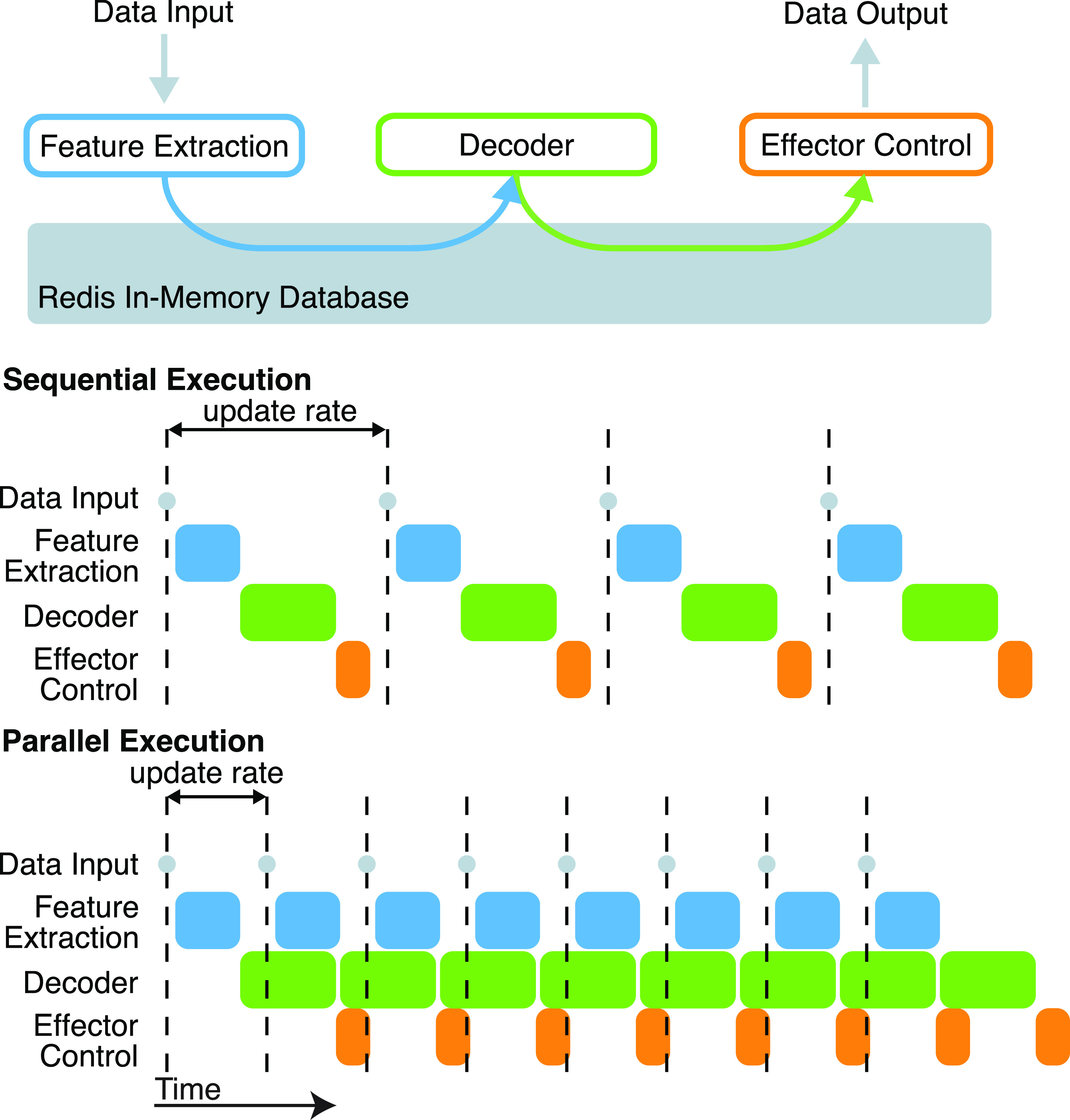
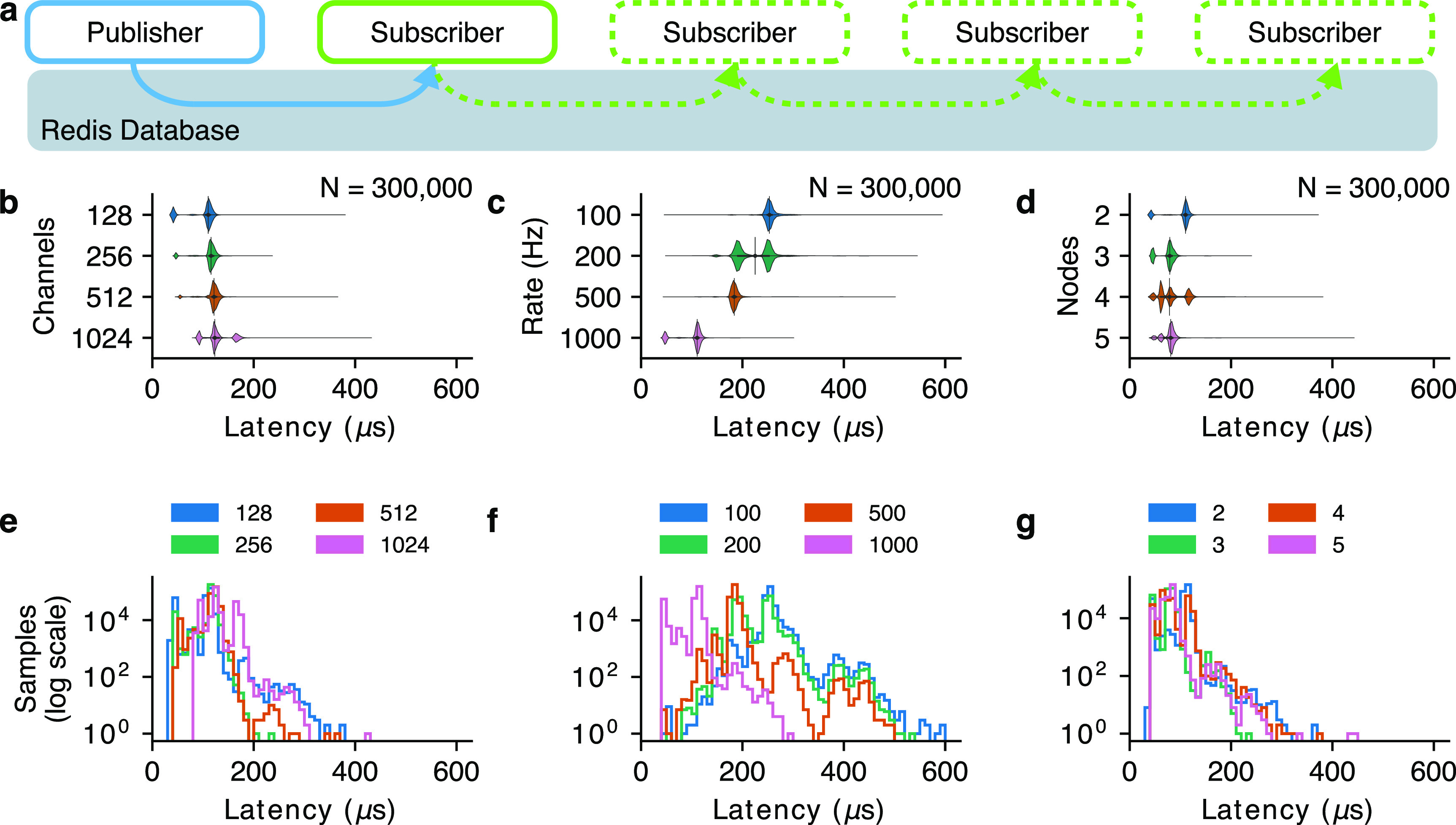
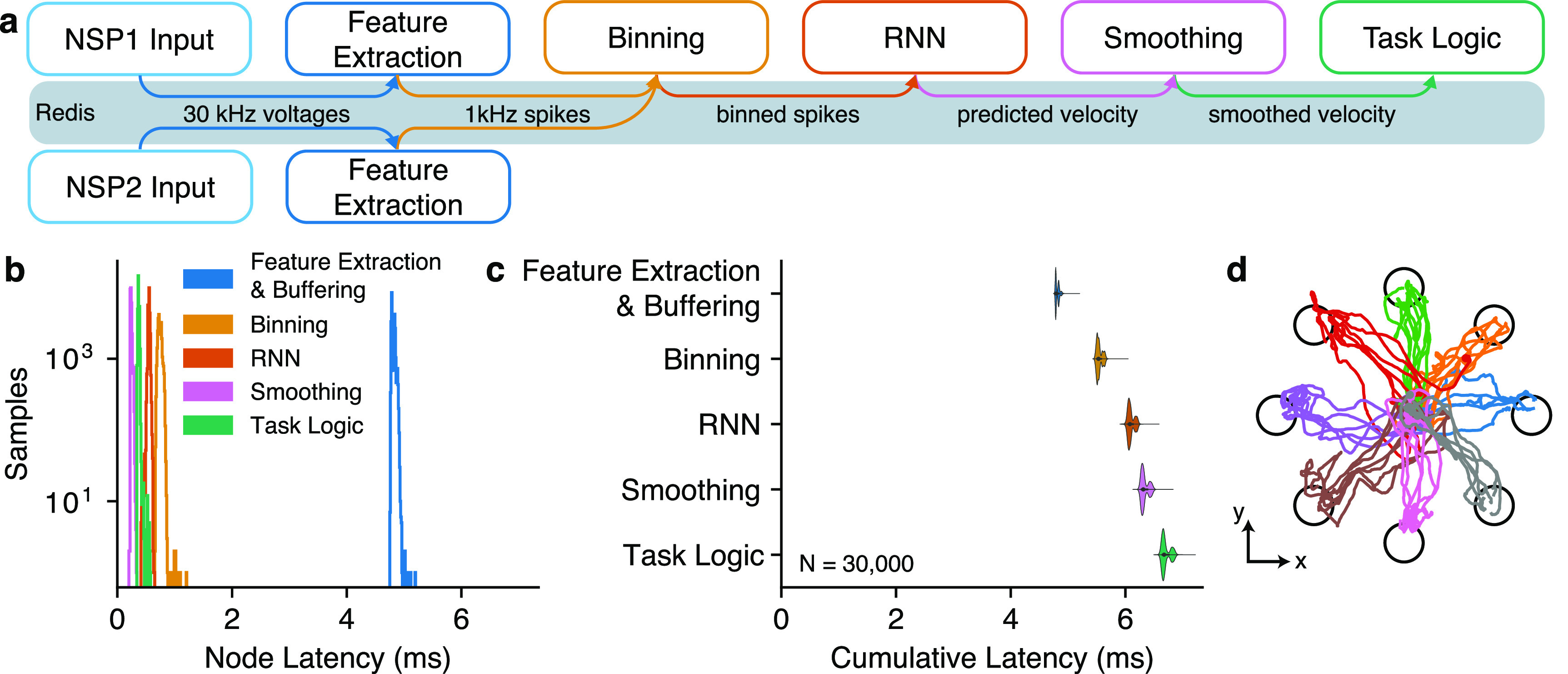
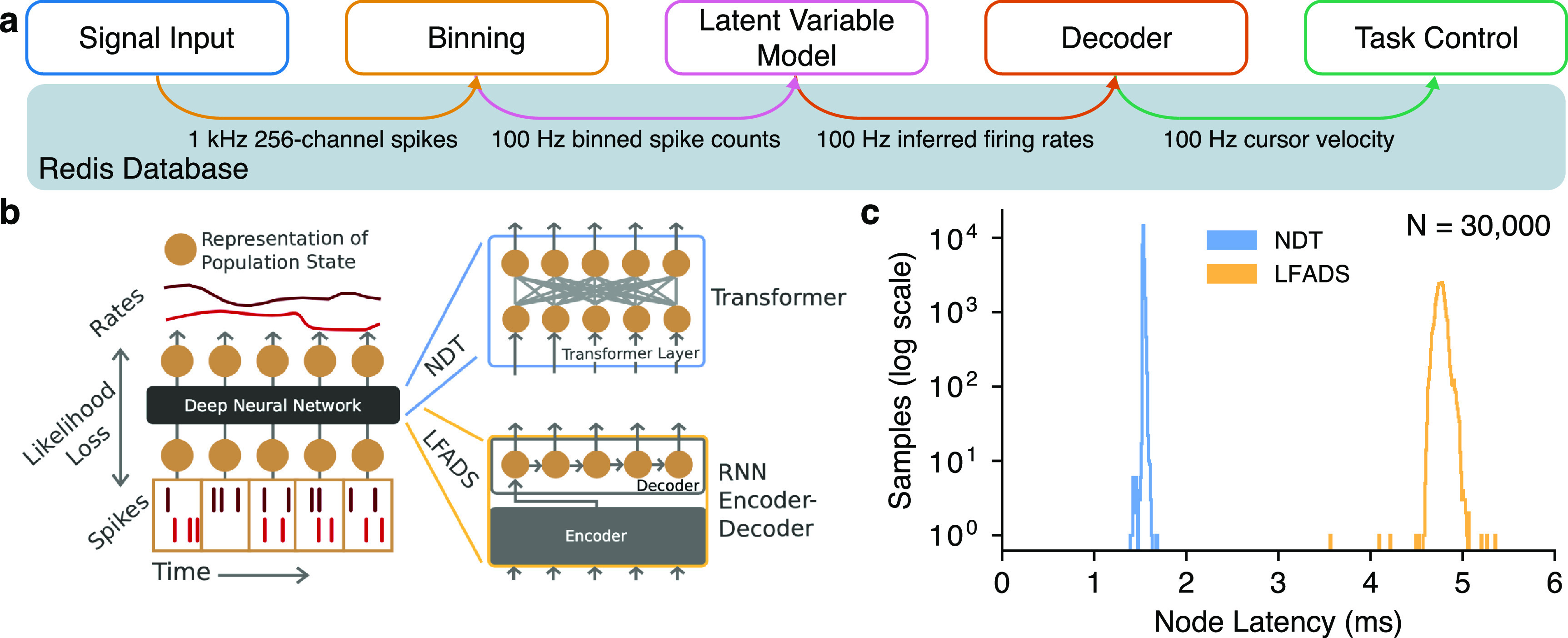
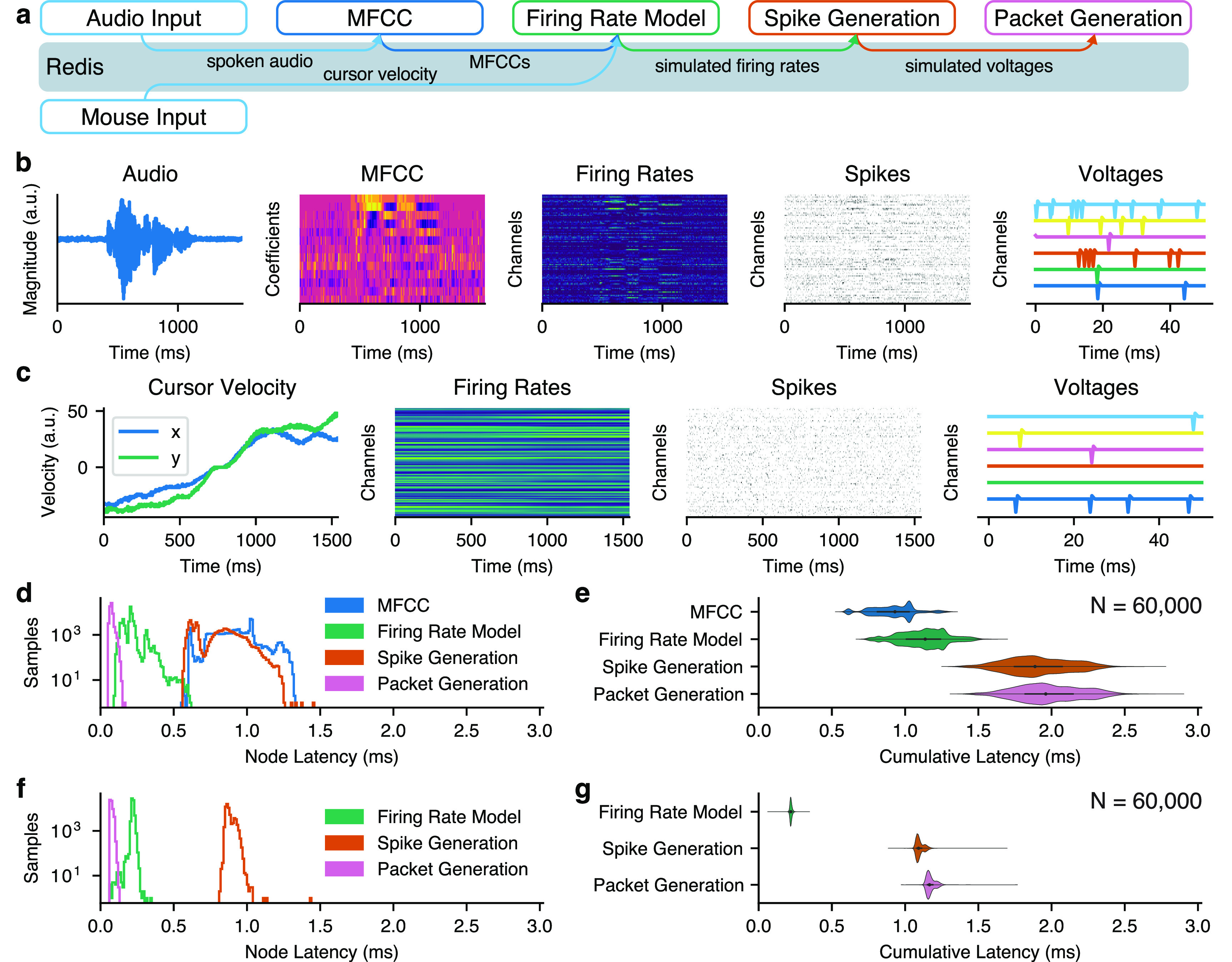
Objective. Artificial neural networks (ANNs) are state-of-the-art tools for modeling and decoding neural activity, but deploying them in closed-loop experiments with tight timing constraints is challenging due to their limited support in existing real-time frameworks. Researchers need a platform that fully supports high-level languages for running ANNs (e.g. Python and Julia) while maintaining support for languages that are critical for low-latency data acquisition and processing (e.g. C and C++). Approach. To address these needs, we introduce the Backend for Realtime Asynchronous Neural Decoding (BRAND). BRAND comprises Linux processes, termed nodes , which communicate with each other in a graph via streams of data. Its asynchronous design allows for acquisition, control, and analysis to be executed in parallel on streams of data that may operate at different timescales. BRAND uses Redis, an in-memory database, to send data between nodes, which enables fast inter-process communication and supports 54 different programming languages. Thus, developers can easily deploy existing ANN models in BRAND with minimal implementation changes. Main results. In our tests, BRAND achieved <600 microsecond latency between processes when sending large quantities of data (1024 channels of 30 kHz neural data in 1 ms chunks). BRAND runs a brain-computer interface with a recurrent neural network (RNN) decoder with less than 8 ms of latency from neural data input to decoder prediction. In a real-world demonstration of the system, participant T11 in the BrainGate2 clinical trial (ClinicalTrials.gov Identifier: NCT00912041) performed a standard cursor control task, in which 30 kHz signal processing, RNN decoding, task control, and graphics were all executed in BRAND. This system also supports real-time inference with complex latent variable models like Latent Factor Analysis via Dynamical Systems. Significance. By providing a framework that is fast, modular, and language-agnostic, BRAND lowers the barriers to integrating the latest tools in neuroscience and machine learning into closed-loop experiments.
Overview
The claims and statistics of this paper haven’t been checked yet.
Free: it reads the open-access text and checks the first 5 claims that cite a source we can check. Create a free account to check every claim.
Integrity signals
Registry
Cites
Statistics
Figures
Verification
Claims the paper makes
The claims and statistics of this paper haven’t been checked yet.
Free: it reads the open-access text and checks the first 5 claims that cite a source we can check. Create a free account to check every claim.
Self-check
Percentages, sums and reported differences re-computed from the paper’s own numbers.
The self-check needs the paper’s full text.
Citations
Cites
Topological domains in mammalian genomes identified by analysis of chromatin interactions
Dixon, J. R., Selvaraj, S., Yue, F., Kim, A., Li, Y., Shen, Y., Hu, M., Liu, J. S., & Ren, B. (2012) · Nature · doi:10.1038/nature11082 · Cited by 6,829
Davis, S., & Mermelstein, P. (1980) · IEEE Transactions on Acoustics, Speech, and Signal Processing · doi:10.1109/tassp.1980.1163420 · Cited by 5,465
BCI2000: A General-Purpose Brain-Computer Interface (BCI) System
Schalk, G., McFarland, D. J., Hinterberger, T., Birbaumer, N., & Wolpaw, J. R. (2004) · IEEE Transactions on Biomedical Engineering · doi:10.1109/tbme.2004.827072 · Cited by 3,024
Reach and grasp by people with tetraplegia using a neurally controlled robotic arm
Hochberg, L. R., Bacher, D., Jarosiewicz, B., Masse, N. Y., Simeral, J. D., Vogel, J., Haddadin, S., Liu, J., Cash, S. S., van der Smagt, P., et al. (2012) · Nature · doi:10.1038/nature11076 · Cited by 2,719 · cited 1×
“In research with intracortical BCIs (iBCI), closed-loop systems have enabled people with paralysis to control a robotic arm, spell sentences, move limbs with functional electrical stimulation, and speak [1]–[6].”
BackgroundSelf-citationHigh-performance neuroprosthetic control by an individual with tetraplegia
Collinger, J. L., Wodlinger, B., Downey, J. E., Wang, W., Tyler-Kabara, E. C., Weber, D. J., McMorland, A. J., Velliste, M., Boninger, M. L., & Schwartz, A. B. (2013) · The Lancet · doi:10.1016/s0140-6736(12)61816-9 · Cited by 1,848
Direct Cortical Control of 3D Neuroprosthetic Devices
Taylor, D. M., Tillery, S. I. H., & Schwartz, A. B. (2002) · Science · doi:10.1126/science.1070291 · Cited by 1,540 · cited 1×
“The intended cursor velocity was approximated as the vector resulting from subtracting the cursor’s position from the target’s position scaled to the original OLE prediction’s magnitude or zeroed if the cursor reached the target [23].”
MethodHigh-performance brain-to-text communication via handwriting
Willett, F. R., Avansino, D. T., Hochberg, L. R., Henderson, J. M., & Shenoy, K. V. (2021) · Nature · doi:10.1038/s41586-021-03506-2 · Cited by 1,024
Self-citationAjiboye, A. B., Willett, F. R., Young, D. R., Memberg, W. D., Murphy, B. A., Miller, J. P., Walter, B. L., Sweet, J. A., Hoyen, H. A., Keith, M. W., et al. (2017) · The Lancet · doi:10.1016/s0140-6736(17)30601-3 · Cited by 862
Self-citationInferring single-trial neural population dynamics using sequential auto-encoders
Pandarinath, C., O’Shea, D. J., Collins, J., Jozefowicz, R., Stavisky, S. D., Kao, J. C., Trautmann, E. M., Kaufman, M. T., Ryu, S. I., Hochberg, L. R., et al. (2018) · Nature Methods · doi:10.1038/s41592-018-0109-9 · Cited by 686 · cited 2×
“To further evaluate the advanced ANN inference capabilities that BRAND provides, we sought to benchmark the latencies of two state-of-the-art latent variable models: LFADS and NDT [19, 20].”
MethodSelf-citationBonsai: an event-based framework for processing and controlling data streams
Lopes, G., Bonacchi, N., Frazão, J., Neto, J. P., Atallah, B. V., Soares, S., Moreira, L., Matias, S., Itskov, P. M., Correia, P. A., et al. (2015) · Frontiers in Neuroinformatics · doi:10.3389/fninf.2015.00007 · Cited by 593 · cited 1×
“Previous real-time systems that lacked Python support would have required a full reimplementation of these models in another language like C or C ++ to run this test [11, 27].”
Method
Cited by
An Accurate and Rapidly Calibrating Speech Neuroprosthesis
Card, N. S., Wairagkar, M., Iacobacci, C., Hou, X., Singer-Clark, T., Willett, F. R., Kunz, E. M., Fan, C., Vahdati Nia, M., Deo, D. R., et al. (2024) · New England Journal of Medicine · doi:10.1056/nejmoa2314132 · Cited by 268
Self-citationThe lab streaming layer for synchronized multimodal recording
Kothe, C., Shirazi, S. Y., Stenner, T., Medine, D., Boulay, C., Grivich, M. I., Artoni, F., Mullen, T., Delorme, A., & Makeig, S. (2025) · Imaging Neuroscience · doi:10.1162/imag.a.136 · Cited by 195
“For example, BRAND reported up to 0.5 ms in its “inter-node” communication, that is, prior to running additional processing or feature extraction pipelines ( Ali et al., 2023).”
InfluentialAn instantaneous voice-synthesis neuroprosthesis
Wairagkar, M., Card, N. S., Singer-Clark, T., Hou, X., Iacobacci, C., Miller, L. M., Hochberg, L. R., Brandman, D. M., & Stavisky, S. D. (2025) · Nature · doi:10.1038/s41586-025-09127-3 · Cited by 150
Self-citationStabilizing brain-computer interfaces through alignment of latent dynamics
Karpowicz, B. M., Ali, Y. H., Wimalasena, L. N., Sedler, A. R., Keshtkaran, M. R., Bodkin, K. L., Ma, X., Rubin, D. B., Williams, Z. M., Cash, S. S., et al. (2025) · Nature Communications · doi:10.1038/s41467-025-59652-y · Cited by 115
Self-citationStabilizing brain-computer interfaces through alignment of latent dynamics
Karpowicz, B. M., Ali, Y. H., Wimalasena, L. N., Sedler, A. R., Keshtkaran, M. R., Bodkin, K., Ma, X., Miller, L. E., & Pandarinath, C. (2022) · doi:10.1101/2022.04.06.487388 · Cited by 71
Self-citationInner speech in motor cortex and implications for speech neuroprostheses
Kunz, E. M., Abramovich Krasa, B., Kamdar, F., Avansino, D. T., Hahn, N., Yoon, S., Singh, A., Nason-Tomaszewski, S. R., Card, N. S., Jude, J. J., et al. (2025) · Cell · doi:10.1016/j.cell.2025.06.015 · Cited by 55
“For T12 sessions starting in December, T15, T16, and T17, BRAND 74 was used to implement modular, Python-based neural data processing and task software.”
InfluentialSelf-citationSpeech motor cortex enables BCI cursor control and click
Singer-Clark, T., Hou, X., Card, N. S., Wairagkar, M., Iacobacci, C., Peracha, H., Hochberg, L. R., Stavisky, S. D., & Brandman, D. M. (2025) · Journal of Neural Engineering · doi:10.1088/1741-2552/add0e5 · Cited by 26
“Feature extraction, behavioral tasks, and neural decoders were implemented in Python 3.8 and 3.9, and were run using the BRAND framework [40].”
InfluentialSelf-citationAn accurate and rapidly calibrating speech neuroprosthesis
Card, N. S., Wairagkar, M., Iacobacci, C., Hou, X., Singer-Clark, T., Willett, F. R., Kunz, E. M., Fan, C., Vahdati Nia, M., Deo, D. R., et al. (2023) · doi:10.1101/2023.12.26.23300110 · Cited by 244
“A signal processing system (NeuroPort System, Blackrock Neurotech) was used to acquire signals from the 256 implanted electrodes and transmit them to a computer running custom software 22 (Section S1.”
MethodSelf-citationLong-term independent use of an intracortical brain–computer interface for speech and cursor control
Card, N. S., Singer-Clark, T., Peracha, H., Iacobacci, C., Hou, X., Wairagkar, M., Fogg, Z., Offenberg, E. C., Hochberg, L. R., Stavisky, S. D., et al. (2026) · Nature Medicine · doi:10.1038/s41591-026-04414-6 · Cited by 39
“The BCI system was implemented using a distributed, multicomputer setup designed to support both high-bandwidth neural data collection and low-latency, real-time multimodal neural decoding and user interfaces 22 .”
Self-citationDold, M., Pereira, J., Sajonz, B., Coenen, V. A., Thielen, J., Janssen, M. L. F., & Tangermann, M. (2025) · Journal of Neural Engineering · doi:10.1088/1741-2552/adbb20 · Cited by 17
“Other platforms have considered a closed-loop performance as feasible, if round-trip times of less than 15 ms [50, 51] can achieved.”
Representation of verbal thought in motor cortex and implications for speech neuroprosthesesPreprint
Kunz, E. M., Meschede-Krasa, B., Kamdar, F. B., Avansino, D. T., Nason, S. R., Card, N. S., Jacques, B. G., Bechefsky, P. H., Hahn, N. V., Iacobacci, C., et al. (2024) · bioRxiv (Cold Spring Harbor Laboratory) · doi:10.1101/2024.10.04.616375 · Cited by 8
Self-citationJude, J. J., Levi-Aharoni, H., Acosta, A. J., Allcroft, S. B., Nicolas, C., Lacayo, B. E., Card, N. S., Wairagkar, M., Brandman, D. M., Stavisky, S. D., et al. (2025) · medRxiv · doi:10.1101/2025.04.01.25324990 · Cited by 7
Self-citationError encoding in human speech motor cortexPreprint
Hou, X., Iacobacci, C., Card, N. S., Wairagkar, M., Singer-Clark, T., Kunz, E. M., Fan, C., Kamdar, F. B., Hahn, N. V., Hochberg, L. R., et al. (2025) · bioRxiv (Cold Spring Harbor Laboratory) · doi:10.1101/2025.06.07.658426 · Cited by 8
“The digitized packets were then received by our downstream data processing and decoding platform implemented using the BRAND framework 41 .”
Self-citationA software platform for real-time and adaptive neuroscience experiments
Draelos, A., Loring, M. D., Nikitchenko, M., Sriworarat, C., Gupta, P., Sprague, D., Pnevmatikakis, E. A., Giovannucci, A., Benster, T., Deisseroth, K. A., et al. (2025) · Nature Communications · doi:10.1038/s41467-025-64856-3 · Cited by 10
Jude, J. J., Haro, S., Levi-Aharoni, H., Hashimoto, H., Acosta, A. J., Card, N. S., Wairagkar, M., Brandman, D. M., Stavisky, S. D., Williams, Z. M., et al. (2026) · Cell Reports · doi:10.1016/j.celrep.2026.117162 · Cited by 17
Self-citationEncoding of speech modes and loudness in ventral precentral gyrus
Srinivasan, A., Wairagkar, M., Iacobacci, C., Hou, X., Card, N. S., Jacques, B. G., Pritchard, A. L., Bechefsky, P. H., Hochberg, L. R., Yong, N. A., et al. (2026) · Nature Communications · doi:10.1038/s41467-026-71284-4 · Cited by 9
“All real-time signal processing, feature extraction, and neural decoding were executed using the BRAND framework 37 , which modularized these components into separate software nodes that ran asynchronously on multiple Linux computers.”
Self-citationGuggisberg, A. G., Siebner, H. R., Lundell, H., Madsen, M. A. J., Madsen, K. H., Wiggermann, V., Mégevand, P., Proix, T., Dalal, S. S., Grouiller, F., et al. (2025) · Clinical Neurophysiology · doi:10.1016/j.clinph.2025.2110942 · Cited by 5
Restoring rapid natural bimanual typing with a neuroprosthesis after paralysis
Jude, J. J., Levi-Aharoni, H., Acosta, A. J., Allcroft, S., Nicolas, C., Lacayo, B. E., Card, N. S., Wairagkar, M., Levin, A. D., Brandman, D. M., et al. (2026) · Nature Neuroscience · doi:10.1038/s41593-026-02218-y · Cited by 19
“Feature extraction (threshold crossings and spike band power), binning, decoding and task phase control were performed through the Python-based, modular BRAND 67 framework, where each process is instantiated as a self-contained node-based Python program.”
Self-citationA transient neural code for feedback-driven motor corrections during reachingPreprint
Kudryashova, N., Hurwitz, C., Perich, M. G., & Hennig, M. H. (2025) · bioRxiv (Cold Spring Harbor Laboratory) · doi:10.1101/2025.03.21.644350 · Cited by 8
“While the current analysis was done on structured data, with trials aligned to go cue or movement onset, it can, in principle, be applied to recordings of freely behaving animals and continuous streams of data in real-time (as in [29]).”
Cross-brain transfer of high-performance intracortical speech and handwriting BCIsPreprint
Levin, A. D., Avansino, D. T., Kamdar, F. B., Card, N. S., Wairagkar, M., Jacques, B. G., Jude, J. J., Iacobacci, C., Lacayo, B. E., Bechefsky, P. H., et al. (2026) · bioRxiv (Cold Spring Harbor Laboratory) · doi:10.64898/2026.01.12.699110 · Cited by 7
“Signals were analog filtered (4th order Butterworth with corners at 0.3 Hz to 7.5 kHz), digitized at 30 kHz (250 nV resolution), and fed into a custom MATLAB Simulink or Python-based BRAND software 28 for digital filtering and feature extraction.”
InfluentialSelf-citationJude, J. J., Haro, S., Levi-Aharoni, H., Hashimoto, H., Acosta, A. J., Card, N. S., Wairagkar, M., Brandman, D. M., Stavisky, S. D., Williams, Z. M., et al. (2025) · bioRxiv (Cold Spring Harbor Laboratory) · doi:10.1101/2025.08.12.668516 · Cited by 3
“Feature extraction (threshold crossings and spike band power), binning, decoding and task phase control were performed through the Python based, modular BRAND 53 framework, where each process is instantiated as a self-contained node-based python program.”
Self-citationNason, S. R., Deevi, P. I., Jude, J. J., Rabbani, Q., Jacques, B. G., Pritchard, A. L., Wimalasena, L. N., Richards, B. A., Karpowicz, B. M., Bechefsky, P. H., et al. (2026) · medRxiv · doi:10.64898/2026.02.19.26346583 · Cited by 8
Self-citationA Personalized and Adaptable User Interface for a Speech and Cursor Brain-Computer Interface
Peracha, H., Iacobacci, C., Singer-Clark, T., Hochberg, L. R., Stavisky, S. D., Brandman, D. M., & Card, N. S. (2026) · CHI Conference on Human Factors in Computing Systems · doi:10.1145/3772318.3790750 · Cited by 5
“Our approach combined continuous at-home deployment of new features along with periodic assessment of the BCI system, drawing from technology probe approaches that focus on real-world deployment and iterative design improvements [40].”
Self-citationimprov : A software platform for real-time and adaptive neuroscience experimentsPreprint
Draelos, A., Loring, M. D., Nikitchenko, M., Sriworarat, C., Gupta, P., Sprague, D., Pnevmatikakis, E. A., Giovannucci, A., Benster, T., Deisseroth, K. A., et al. (2021) · bioRxiv (Cold Spring Harbor Laboratory) · doi:10.1101/2021.02.22.432006 · Cited by 2
Reducing power requirements for high-accuracy decoding in iBCIs
Karpowicz, B. M., Bhaduri, B., Nason, S. R., Jacques, B. G., Ali, Y. H., Flint, R. D., Bechefsky, P. H., Hochberg, L. R., Yong, N. A., Slutzky, M. W., et al. (2024) · Journal of Neural Engineering · doi:10.1088/1741-2552/ad88a4 · Cited by 1
“We recorded and processed broadband data at 30 kHz using the Backend for Realtime Asynchronous Neural Decoding (BRAND) platform [51].”
Self-citationRegister, C. (2025) · Philosophers Imprint · doi:10.3998/phimp.7576 · Cited by 1
Preparatory encoding of diverse features of intended movement in the human motor cortexPreprint
Rigotti-Thompson, M., Nason, S. R., Bechefsky, P. H., Acosta, A. J., Hahn, N. V., Avansino, D. T., Richards, B., Nicolas, C., Ali, Y. H., Henderson, J. M., et al. (2025) · bioRxiv (Cold Spring Harbor Laboratory) · doi:10.1101/2025.09.24.678356
“The OLE control data with participant T11 has been partially released in previous work 50 .”
Self-citationMartins, A. L., Laborde, A., & Orger, M. B. (2026) · PLoS ONE · doi:10.1371/journal.pone.0330591
Premotor cortex uses a compositional neural geometry to plan wordsPreprint
Meschede-Krasa, B., Kunz, E. M., Kamdar, F. B., Avansino, D. T., Hahn, N. V., Singh, A., Card, N. S., Wairagkar, M., Iacobacci, C., Hochberg, L. R., et al. (2026) · bioRxiv (Cold Spring Harbor Laboratory) · doi:10.64898/2026.04.27.721195 · Cited by 3
Self-citationNeural decoding of speech using deep neural ensemblesPreprint
Yoon, S., Avansino, D. T., Madugula, S. S., Levin, A. D., Fan, C., Meschede-Krasa, B., Singh, A., Vo, C., Hahn, N. V., Card, N. S., et al. (2026) · bioRxiv (Cold Spring Harbor Laboratory) · doi:10.64898/2026.06.02.729705 · Cited by 1
Self-citationHashimoto, H., Jude, J. J., Levi-Aharoni, H., Williams, Z. M., Simeral, J. D., Hochberg, L. R., & Rubin, D. B. (2026) · bioRxiv (Cold Spring Harbor Laboratory) · doi:10.64898/2026.07.02.736059 · Cited by 1
Self-citationDecoding Turn-Taking State Transitions in Conversational Speech from Motor Cortex Ensemble Activity
Brown, D. E., Wairagkar, M., Iacobacci, C., Okorokova, E. V., Singer-Clark, T., Card, N. S., Hochberg, L. R., Brandman, D. M., & Stavisky, S. D. (2025) · International IEEE/EMBS Conference on Neural Engineering · doi:10.1109/ner61569.2025.11588941
“The participant performed the task during recording “sessions” on post-implant days 256 and 594 in their home using a custom research interface [19].”
Self-citationRigotti-Thompson, M., Nason, S. R., Bechefsky, P. H., Acosta, A. J., Hahn, N. V., Avansino, D. T., Richards, B. A., Nicolas, C., Ali, Y. H., Henderson, J. M., et al. (2026) · Current Biology · doi:10.1016/j.cub.2026.07.040 · Cited by 1
Self-citationIntrinsic neuromorphic functionality in organic mixed ionic–electronic conductors and devices
Rozylowicz, K., Park, Y., Dijk, G., Mele, L. J., Weber, S., Maini, L., Ng, S. E., Liu, M., & Salleo, A. (2026) · Journal of materials research/Pratt's guide to venture capital sources · doi:10.1557/s43578-026-02002-5
Metadata
- Authors
- Ali, Y. H., Bodkin, K., Rigotti-Thompson, M., Patel, K., Card, N. S., Bhaduri, B., Nason-Tomaszewski, S. R., Mifsud, D. M., Hou, X., Nicolas, C., Allcroft, S., Hochberg, L. R., Au Yong, N., Stavisky, S. D., Miller, L. E., Brandman, D. M., & Pandarinath, C.
- Affiliations
- Georgia Institute of Technology (US)
- Northwestern University (US)
- University of California, Davis (US)
- Massachusetts General Hospital (US)
- Brown University (US)
- Harvard University (US)
- Corresponding author
- Pandarinath, Chethan
- ORCID
- Venue
- Journal of Neural Engineering
- Publisher
- IOP Publishing
- Published
- 2024-04-01
- Volume
- 21
- Issue
- 2
- Pages
- 026046
- ISSN
- 1741-2552 (ISSN-L)
- 1741-2560
- PMC
- PMC11021878
- OpenAlex
- W4393970686
- Cited by
- 32
- References
- 37
- Citations by year
- 2026: 13 · 2025: 15 · 2024: 3
- FWCI
- 7.51
- Type
- journal article
- Language
- en
- Open access
- hybrid
- doi.org
- Licence
- cc-by
- creativecommons.org/licenses/by/4.0 (vor, 16 d)
- iopscience.iop.org/info/page/text-and-data-mining (tdm, 16 d)
- Locations
- Journal of Neural Engineering (publishedVersion, cc-by)
- bioRxiv (Cold Spring Harbor Laboratory) (acceptedVersion)
- PubMed Central (publishedVersion, cc-by)
- PubMed (publishedVersion)
- eScholarship (California Digital Library) (submittedVersion, cc-by)
- PubMed Central (submittedVersion)
- Funders
- Emory Neuromodulation and Technology Innovation Center
- Eunice Kennedy Shriver National Institute of Child Health and Human Development (F32HD112173)
- National Institute on Deafness and Other Communication Disorders (DP2DC021055)
- Simons Foundation (872146SPI)
- Rehabilitation Research and Development Service (A2295R)
- National Institute of Neurological Disorders and Stroke (DP2NS127291)
- National Institute of Biomedical Imaging and Bioengineering (T32EB025816)
- Topics
- Life Sciences › Neuroscience › Cognitive Neuroscience › EEG and Brain-Computer Interfaces
- Physical Sciences › Engineering › Control and Systems Engineering › Embedded Systems and FPGA Design
- Social Sciences › Education › Undergraduate Neuroscience Education and Research
- Keywords
- brand, closed-loop experiments, real-time neural decoding, interprocess communication, Redis, brain-computer interface, cursor control, modular software architecture
About these checks
Registry, retraction, Cites and statistics results are computed, not judged, with one exception: a printed reference that no index lists is read once by a model before it counts as a citation error. Claims are extracted by a model and kept only when their quote appears verbatim in the text; each cited source is then checked, with a model’s help, for whether it says what the claim relies on. Those verdicts can be wrong — read the claim’s quote and the cited source before relying on one.
Statistics and arithmetic are recomputed, not judged.
Confidence bands are shown only for fields calibrated on our annotated test set. None is calibrated yet, so no band is shown.
What counts as a claim ›How we measure confidence ›How we check this ›
Are you an author, or do you see a problem with this page? Request a review
Data sources
Bibliographic data: Semantic Scholar, OpenAlex, Crossref.
Contains information from the Semantic Scholar Academic Graph Datasets, made available under the ODC Attribution License (ODC-BY 1.0).
Semantic Scholar’s data is described in: Kinney, R., et al. (2023). The Semantic Scholar Open Data Platform. arXiv:2301.10140.
